fbpx

April 19, 2021

What Jewish Summer Camp Will Look Like This Year

(JTA) — Last year at this time, the message out of Jewish summer camps was one of doom and gloom.

In April 2020, the Union for Reform Judaism announced that COVID would force a closure of its camps for the summer, affecting some 10,000 kids. In May, the Conservative movement’s Ramah camps across the country followed suit.

This year, the outlook could not be more different.

Camps in the United States are opening again with a combination of testing and vaccinations, along with a better understanding of how COVID-19 spreads.

“It’s absolutely exhausting but incredibly exhilarating,” said Rabbi Mitchell Cohen, national director of the National Ramah Commission, which runs the Ramah camps across the U.S. and Canada.

Cohen’s exhaustion has to do with the extra planning involved in fitting campers into existing space while allowing for social distancing and keeping campers in pods and outdoors as much as possible. And while most of Ramah’s 10 overnight camps are expected to open without issue, the group’s Canadian camp may have trouble due to Canada’s sluggish vaccine rollout and rising infection rates in Ontario, where the camp is located. (Cohen said the camp is exploring options for a new U.S. campus to serve campers from New York and Ohio who would typically attend the Canadian camp.)

At most Ramah camps, campers will be kept in pods of one or two cabins for most of their activities. Spaces like the dining hall, where hundreds of campers and staff would come together for meal times, will be subdivided with temporary walls or plastic sheeting to separate pods. Where birkat hamazon, the blessing after meals, was once a rollicking campwide songfest, some campers will have to step outside the dining hall to a tent to say the blessings this year to allow another shift of campers to eat in the hall at a reduced capacity.

“The last thing you want to do is to have a superspreader event at camp,” Cohen said. “We don’t need that. We can go one summer without everyone davening [praying] together or singing together.”

Most camps will be able to aggressively test their campers and staff, and receive results quickly enough to isolate and prevent the spread of the virus. Vaccinated staffers will add another layer of protection, ensuring that the adults at camp, who are more vulnerable to death and serious illness from COVID than children, will be protected. And with increased understanding of how COVID spreads and preventative measures — namely through mask wearing, social distancing and activities held outdoors or in buildings with improved ventilation — keeping the virus under control seems doable, even if it does require extra preparation.

Helping to cover some of the extra costs for camps to buy tents, upgrade buildings and increase capacity is $3.8 million in funding from the Foundation for Jewish Camp. Its grants are set to add capacity for 4,000 campers and will help the camps recoup some of the money that was lost last year. (Jeremy Fingerman, the foundation’s chief executive officer, said Jewish overnight camps lost about $150 million last year, the vast majority of which was covered by loans, cost reductions, donations and tuition rolled over to this year.)

“We’re estimating that as a result of this grant, it’ll raise more than $16 million of revenue that will drop to the bottom line,” Fingerman said.

At the Olin-Sang-Ruby Union Institute, a URJ camp in Wisconsin more commonly known as OSRUI, camp director Solly Kane is looking forward to welcoming back about 900 campers after closing last year. Staffers, including about 35 from Israel, will be required to be vaccinated, and there will be surveillance testing throughout the summer.

While the camp won’t be bringing everyone together in one room for singing the way it usually might, OSRUI has ideas about gathering the entire camp.

“Something like a Friday-night song session, instead of being all together [inside], we’re in a soccer field with kids sitting in pods and wearing masks,” Kane said.

But no matter how much testing has to be done and how many events have to be reconfigured to work outside, the most important thing to Kane is to get the kids back to camp.

“It’s been a hard last year for everybody,” Kane said. “Kids need camp this summer more than ever before.”

Camp Modin in Belgrade Lakes, Maine, was one of the few Jewish camps to open last year,hosting about 300 children for one five-week session. The camp asked families to quarantine before camp, and tested campers and staff multiple times in the first weeks.

Co-director Howard Salzberg plans to follow the same playbook this year, though at a significantly reduced cost now that testing has become cheaper and more widely available.

“We learned a lot last year, so we don’t need to reinvent the wheel,” Salzberg said.

Modin campers will be asked to get a COVID test in the days before camp and will be tested on the first day — and possibly again with a rapid antigen test before boarding buses to camp.

“We have the ability to test, test, test,” Salzberg said. “That is so much more than we even had at our disposal last year and costwise it’s now affordable.”

Still, Salzberg is worried that parents this year may be less on guard than they were in 2020, when parents were overjoyed to be able to send their kids to camp at all.

“The thing that was most effective was that the parents were partners with us and they really, really locked down and they tested negative,” he said.

What Jewish Summer Camp Will Look Like This Year Read More »

Making Senescence Negligible, Like Galapagos’s Tortoises


That observation that Galapagos’s geriatric tortoises
are able to make slow contortions caused by their negligible senescence,
contradicts what all our elders have erroneously taught us is
inevitable, as we, by old age obtunded, unlike tortoises, face obsolescence.
Sadly, though, I think that our senescence will take longer than a million
years to catch up with that of an elderly Galapagos reptilian.

In Ageless: The New Science of Getting Older Without Getting Old, Andrew Steele, quoted in a review in the New York Times, offers the Galapagos tortoise as evidence that negligible senescence “doesn’t break any laws of biology,” while suggesting that maintaining ourselves in this negligible mode might constitute a plausible goal for humans.

Gershon Hepner

4/18/21


Gershon Hepner is a poet who has written over 25,000 poems on subjects ranging from music to literature, politics to Torah. He grew up in England and moved to Los Angeles in 1976.  Using his varied interests and experiences, he has authored dozens of papers in medical and academic journals, and authored “Legal Friction: Law, Narrative, and Identity Politics in Biblical Israel.” He can be reached at gershonhepner@gmail.com.

Making Senescence Negligible, Like Galapagos’s Tortoises Read More »

Clubhouse Says It ‘Shut Down a Number of Rooms’ After Anti-Semitism Complaints

(JTA) — Clubhouse, the new audio-based social network, announced that it “shut down a number of rooms” in the wake of complaints about anti-Semitism.

On Sunday, a Twitter user with the handle @EliKohn3 wrote about a chat on Clubhouse that discussed “Jewish Privilege,” where they said users were repeating and promoting anti-Semitic stereotypes.

“Nearly 200 people talking about how Jews control the federal reserve, Jews were behind the trans Atlantic slave trade, minorities are pawns for the Jews to destroy whites,” @EliKohn3 wrote. “I can’t believe the amount of antisemitism omg.”

Later that day, Clubhouse announced that it had shut down groups that violated its anti-discrimination policies.

“We shut down a number of rooms found to be in violation and, where appropriate, issued suspensions and removed users indefinitely,” it said, responding to @EliKohn3’s tweet but not referring specifically to any accounts or groups. “All forms of racism, antisemitism, hate speech and abuse are prohibited on Clubhouse and are a direct violation of the Community Guidelines.”

The app, which was launched about a year ago and already boasts over 8 million downloads, connects users by allowing them to join together in “rooms” to talk with each other. It has faced accusations of allowing anti-Semitism in the past, and in September the Verge, a tech publication, reported that it “is still struggling with moderation.”

“The antisemitism that we have seen spread on Clubhouse in recent weeks, particularly the ugly surge this weekend, is a painful reminder of the persistence of anti-Jewish hate and how it infects so much of social media,” Anti-Defamation League CEO Jonathan Greenblatt told Jewish Insider. “This weekend we know that there was a torrent of ugly, indisputable hatred, from raw Holocaust denialism to disgusting lies about the Jewish people and slanderous claims against the Jewish state.”

Clubhouse Says It ‘Shut Down a Number of Rooms’ After Anti-Semitism Complaints Read More »

The Natanz Attack Gets the U.S. Closer to a Better Iran Deal

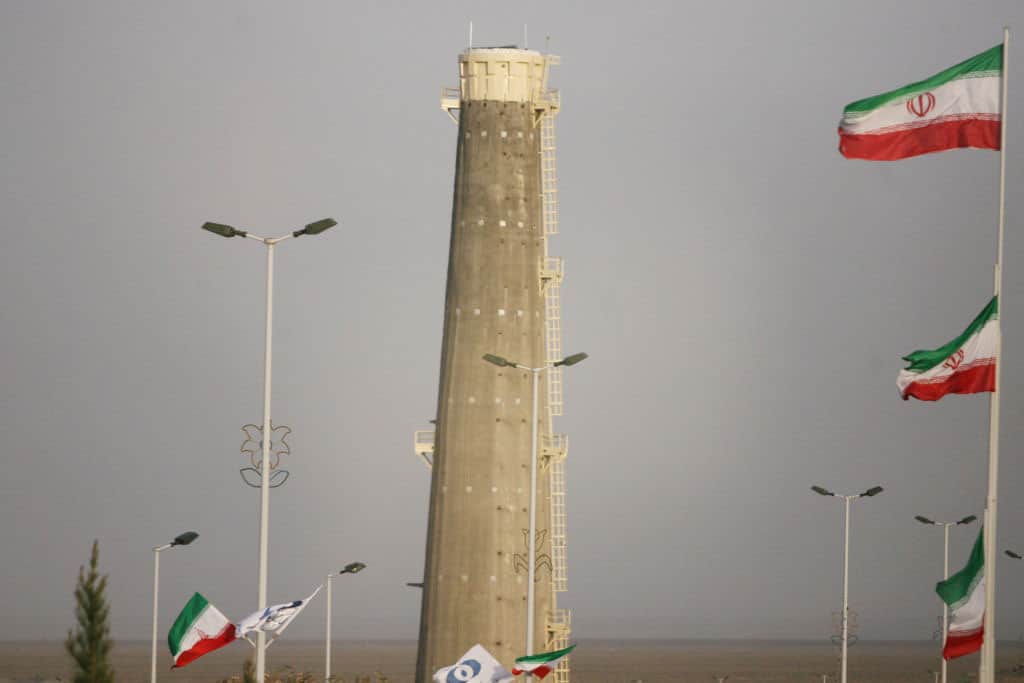
Benjamin Netanyahu has many rhetorical gifts, but playing coy is not one of them. So although Israel’s leaders did not claim credit for the explosion at Iran’s Natanz nuclear site last week, resulting in several months of delay to Iran’s nuclear progress, they certainly did not go out of their way to deny responsibility. Netanyahu’s opponents should grant him the benefit of the doubt that the attack he may or may not have authorized was motivated primarily by the safety of his country and its people. But even his strongest supporters should concede that the political ramifications of the cyber-strike work to his benefit by reinforcing his greatest strength: reminding voters of his commitment to Israel’s security over his years in office.

Any day that COVID-19, the Haredi or Netanyahu’s legal challenges do not dominate the headlines is a good day for the prime minister, and the ongoing international frenzy over Natanz certainly has accomplished that goal. But Bibi has played this particular card many times before, and given that the leaders of the opposition all hold similar views to Netanyahu on Iran-related issues, this distraction is likely not sufficient to help him achieve a governing majority. The most probable outcome of last month’s election is yet another round of voting in the fall. But between now and the time Israeli voters go to the polls yet again, the damage that anonymous perpetrators have inflicted on Natanz will make life much easier for Netanyahu’s successor.

When somebody attacked Natanz last week, the repercussions were so powerful that aftershocks were felt not just in Tehran but more than 2500 miles away in Vienna. The Austrian capitol has been the site of negotiations between Washington and Tehran over Iran’s nuclear capacity, which were proceeding at glacier-like speed even before the cyber-strike took place. Now, there are even more obstacles in the path of a new agreement, which makes most Israelis very happy.

There are even more obstacles in the path of a new agreement, which makes most Israelis very happy.

This delay will be of great benefit to U.S. negotiators, who now have the luxury of patience while their Iranian counterparts continue to procrastinate. The months required for Iran to repair the damage caused at Natanz will not permanently derail Iran’s nuclear ambitions, of course, but they will allow the Biden Administration to feel more comfortable in pressing for additional enhancements to the original deal. For months, Biden and his team have sent mixed messages about the necessity of adding the topics of Iran’s ballistic missile capability and support for terrorist activity to current negotiations. But in the days after the Natanz blackout, one of Biden’s top foreign policy advisors explicitly focused on the importance of addressing these non-nuclear issues at the same time as current negotiations — rather than waiting until the Vienna talks had concluded.

Victoria Nuland, the president’s nominee for undersecretary of state for political affairs, testified last week before the Senate Foreign Relations Committee in her confirmation hearing and pointedly refused to endorse a return to the original Joint Comprehensive Plan of Action (JCPOA) without any changes. Nuland, considered to be one of Biden’s most aggressive and hardline appointees, instead stressed the importance of taking on a wider range of topics.

“I think we’ve got to pursue all of these problems in tandem. Whether that is a question of a comprehensive agreement, I think there are many players and many different pieces of this,” Nuland said. “Walk and chew gum would be my answer.”

That’s not as definitive an answer as the bipartisan group of 43 Senators who signed a bipartisan letter urging a more comprehensive deal would have liked. But in diplomatic-speak, it signals growing comfort on the part of Biden administration to take their time and push for a broader agreement that addresses a full range of potential Iranian threats rather than rushing to reinstate the JCPOA in its previous form. In the aftermath of the attack, Biden administration spokespersons have continued to sound optimistic about the possibility for progress. But it’s still unclear whether there is real motivation beyond the obligatory public statements.

That would suit Israel — and should suit the United States — just fine. A stronger, longer and more wide-ranging treaty is the best and safest way to minimize Iranian bad behavior. The attack on Natanz that someone or other mounted last week gets us closer to that goal.


Dan Schnur teaches political communications at UC Berkeley, USC and Pepperdine. He hosts the weekly webinar “Politics in the Time of Coronavirus” for the Los Angeles World Affairs Council & Town Hall.

The Natanz Attack Gets the U.S. Closer to a Better Iran Deal Read More »

Lifting of Outdoor Mask Mandate is ‘Liberating,’ Israelis Say

(The Media Line) With the majority of Israel’s population now vaccinated against COVID-19, its citizens are no longer required to wear masks outdoors.

Under the new health regulations that went into effect on Sunday, Israelis still need to wear face masks in indoor public spaces but are no longer required to be masked when they are outside. Schools also have been fully reopened for the first time in over a year.

The Media Line took to the streets of Jerusalem to ask Israelis how they feel about slowly returning to normal.

Lifting of Outdoor Mask Mandate is ‘Liberating,’ Israelis Say Read More »

Trusting the Day’s News

Here’s a fairly recent anecdote about how Germans regard their media: On New Year’s Eve, 2015, 2,000 immigrants from North Africa and the Middle East, many of whom were asylum seekers, sexually assaulted 1,200 German women of European origin. It happened in cities all across the country.

You may recall that Germany’s chancellor, Angela Merkel, was the primary European patron with policies to welcome fleeing Syrian refugees, along with other Arabs seeking a better life. She made the case that, morally, Germany had no other choice. Many Germans, however, were not as sure. Other nations, such as Poland, took in virtually no one.

This incident was spectacularly bad timing for Merkel. She invested all of her political capital in this humanitarian initiative. Now she was hearing that the male suspects felt no special kinship with Germany, and that marauding sexual assaults were not uncommon in their host countries. One Imam from Cologne suggested that one possible explanation was that the women were half-naked and wearing, well, cologne.

Meanwhile, Merkel didn’t want to change her policies, and the mainstream press was equally in favor of open borders for Syrian refugees. So, the story went underreported, or misreported — that the New Year’s festivities were mostly “peaceful,” the word “rape” went unmentioned and the ethnic profiles of the male suspects were unknown.

It wasn’t until April that the press finally decided to do some serious reporting on the ordeal these 1,200 German women experienced. The German public never forgave the press. Nor should they have.

There’s an object lesson here for American media. Reporting the news accurately is an obligation, even if it undermines the policies that the media is rooting for. Our Founding Fathers were especially ardent about freedom of the press. The public can’t very well exercise their freedom of speech if they have no knowledge about the actual events of the day.

Reporting the news accurately is an obligation, even if it undermines the policies that the media is rooting for.

It is an essential task that can’t be performed if the press has become a wholly owned subsidiary of the executive branch. President Joe Biden, so far, has every reason to believe that the Fourth Estate is just another one of his houses — this one providing a very important homecourt advantage.

Fox and Newsmax is mostly covering the southern border crisis, but CNN and MSNBC have shown little interest in the border, and, like President Biden, have no plans calling it a crisis. Instead, they are focused on the Derek Chauvin trial, but not so much on the renewed protests and violence coming from Minneapolis, all due to yet another police shooting of an African American. With closing arguments in the Chauvin trial set for Monday and Tuesday, everyone is worried about more rioting and vandalism around the country. The mainstream media, however, will mostly call it peaceful, no matter what it looks like on the ground.

We’ve seen this before, but it has never been this bad. President Barack Obama had a pretty easy time with the journalists who covered the White House. They admired him; some even loved him, and their reporting reflected more fawning and adoring than incisive and impairing.

Donald Trump invented the term “Fake News” precisely because he felt that the press was covering him unfairly. He wasn’t entirely wrong. The media was singularly focused on getting Trump out of the White House. All their instincts for objectivity went on a four-year hiatus. He deserved a lot of blame, for sure — picking fights, speaking cruelly, a sloppy caretaker of presidential dignity. But he was never given the benefit of the doubt, and his successes — record growth in median household income for Blacks, Hispanics and Asians before the pandemic; poverty declining to record low numbers for those same groups of Americans — never seemed to make the front page, or any page.

Meanwhile, Biden waited an eternity to schedule his first press conference. One White House correspondent from PBS made it known that he was perceived as a “moral, decent man.” Was that a question? Are press briefings now just a recitation of virtues? The Press Briefing Room at the White House is not for press agents, common hacks getting ready to write puff pieces; it is designated for credentialed overseers of the President of the United States.

The press are not partisans; they must be truth-tellers.

Meanwhile, no one seems interested in Hunter Biden’s associations with the Chinese at a time when China appears to have overtaken the United States as a superpower. He has a rap sheet that would impress a rapper, but apparently not the press.

There are things we want to know. Do we really still need to wear masks if fully vaccinated? What about indoor dining? How bad is it really at the southern border with abandoned children? Is China responsible for the coronavirus in nefarious ways? Yes, police shootings of unarmed Black males are very important, but so, too, is the far more murderous condition of Black-on-Black crime in inner cities. The murderer of Capitol Police Officer William Evans happens to have been a follower of rabid anti-Semite and homophobe Louis Farrakhan. Yet, the assailant’s motive and the teachings that influenced him aren’t considered newsworthy. What if, instead, he had been one of the Proud Boys, or an Oath Keeper, or a conspiracist with QAnon?

The biggest problems we face as a nation all stem from the same thing: We don’t trust our institutions. They have all failed us and never cease to surprise us. Scandals with the clergy. Cronyism and sexual indiscretion in politics. The self-interest of public school teachers, apparently, the most susceptible of all to COVID-19. Universities and private schools indoctrinating our children with Critical Race Theory that has but one purpose: to hate America and, if you’re white, to hate yourself.

The press now shapes stories rather than reports on them. They determine what is news, and the implications of yesterday’s news, all the while splashing yellow journalism a spectrum too far.

How this is all going to turn out is anyone’s guess. The world is throwing curve balls; the press is tossing soft balls; and the Biden administrations is loading the bases.


Thane Rosenbaum is a novelist, essayist, law professor and Distinguished University Professor at Touro College, where he directs the Forum on Life, Culture & Society. He is the legal analyst for CBS News Radio. His most recent book is titled “Saving Free Speech … From Itself.”

Trusting the Day’s News Read More »

No, Israel is not an Apartheid

On February 9, 2021, the University of California Irvine (UCI) student government passed a Boycott, Divestment and Sanctions (BDS) resolution against Israel in a vote of 19-3. The resolution touted the libel-filled reporting of the Israeli NGO B’tselem, which makes use of demonstrably false terms such as “apartheid” and “Jewish supremacy” to describe Israeli actions.

The resolution itself is anti-Semitic, as the BDS movement runs afoul of the International Holocaust Remembrance Alliance’s (IHRA) Working Definition of Antisemitism, which includes “Denying the Jewish people their right to self-determination” as one tenet of anti-Semitism. But perhaps the most egregious passage from the resolution states, “Israeli apartheid is highlighted in four different categories: land, citizenship, freedom of movement, and political participation.”

Not only is this statement a lie, but it also distorts a complex geopolitical conflict and normalizes blatantly anti-Semitic rhetoric. It’s time to combat the myth that Israel is an apartheid — on each campus.

Myth 1: Israel is an Apartheid of Land

An apartheid of land indicates a formal process of segregation and discrimination of land on the basis of unchangeable characteristics. The most infamous example is South Africa, which discriminated legally, politically, socially and economically against non-white population members. Many individuals wrongly characterize Israelis and Palestinians’ dispute over Jerusalem, for example, into a black-and-white framework that cannot capture the complex geopolitics that created the situation. By using the inaccurate catch-all of apartheid, these critics delegitimize the state of Israel.

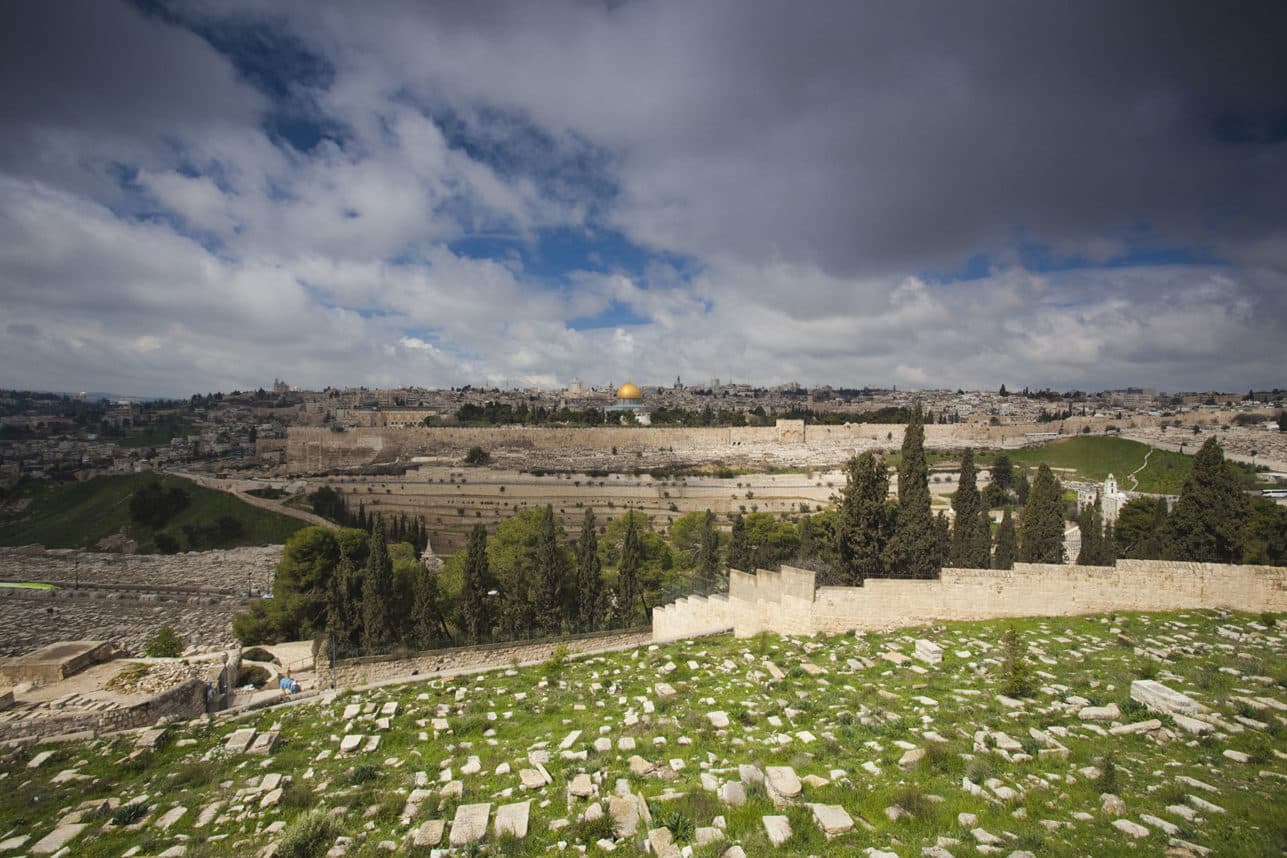
Israel, Jerusalem, city walls from the Mount of Olives Jewish cemetery (Photo by Walter Bibikow/Getty Images)

The difference in land allocation between Israelis and Palestinians is a consequence of the Palestinian leadership’s refusal to take yes for an answer. The Palestinian Authority (PA), the leaders of the majority of West Bank Palestinians, and Hamas, the leaders in Gaza, have repeatedly rejected any and all peace plans that exchange land for peace. They rejected the 1947 United Nations partition plan, former U.S. President Bill Clinton’s plan at Camp David in 2000 and former Israeli Prime Minister Ehud Olmert’s offer in 2008.

Myth 2: Israel is an Apartheid in Citizenship

Those who claim that Israel is an apartheid in its citizenship requirements base their argument on the fact that Israel extends citizenship to any Jew seeking refuge in the state of Israel. By doing so, critics claim, Israel discriminates against others, such as Palestinians living in the West Bank who may wish to inhabit the same land. But many Palestinians refused citizenship when offered because they disagreed with Israel’s right to exist. What’s more, if Israel issued a Palestinian carte blanche “right of return,” it would effectively be dissolving the Jewish state, a topic that CAMERA has covered extensively.

Citizenship, by definition, discriminates.

Israel’s “law of return” allows Jews everywhere to easily obtain citizenship — such a law resembles that of many other nations, such as India and Pakistan. And, like most other nations, citizenship, by definition, discriminates; in a world of nation-states, there will always be some granted citizenship to any given state, while the majority of the planet’s population will not enjoy that same right. But that does not mean a country is an apartheid.

Myth 3: Israel is an Apartheid in Freedom of Movement

Those claiming Israel is an apartheid point to the existence of checkpoints and crossings between Israel and Palestinian territories as proof of Palestinians’ lack of free movement. But there is a crucial distinction to make between crossings and checkpoints:

Crossings exist on the borders between the West Bank and Israel, and they delineate areas of Israeli control and those in which Palestinian Authorities (or Hamas) are in power. They are equivalent to the postings on the border between two nations. Checkpoints exist as well, but those are for heightened security environments, not merely for border crossings. Crossings and checkpoints differ in their level of security, amount of time each person spends in the facility and the stated goals of the Israeli government in their operation.

Security measures to counter terrorism and weapons transportations are not mutually exclusive with Palestinians’ freedom of movement. In fact, “in 2013, there were over 10.9 million entries at all crossings combined. This figure has been rising steadily since 2010, with an 18.3% annual increase from 2012,” says the head of crossings of the IDF’s Coordinator of Government Activities in the Territories.

To equate security checkpoints with an apartheid system is to turn a blind eye to historical context. The number of checkpoints across Israel has drastically decreased over time and varies based on the situation and threat to Israeli citizens’ security (There were 40 original checkpoints created in 2006 but now 13 active checkpoints). These security measures are part of Israel’s right to maintain the security of its citizens. According to a former IDF spokesperson for the Judea and Samaria Division, Israel’s security is currently relatively stable due to the existence of these checkpoints, especially compared to the height of the Second Intifada in 2002, when 47 terror attacks from the West Bank and Gaza left thousands of Israeli civilians dead. Israel has continually reported attempts at illegal entry or weapons smuggling from the West Bank to Israel, thus justifying the crossings and checkpoints as avenues of protection. As a result, equating security precautions with apartheid grossly mischaracterizes the Israeli government’s intentions towards protection.

Myth 4: Israel is an Apartheid in Political Participation

Palestinian activists point to the lack of Palestinian participation in Israeli government as proof of Israel exercising apartheid. But these critics ignore that the Palestinian Authority (PA) and Hamas control their respective jurisdictions; equating a separation of politics with “apartheid” indicates either deceptive malice or colossal ignorance.

Within its borders, Israel ensures citizens equal opportunity to participate in its political system. Arab leaders sit on the supreme court and craft Israeli law. But for those in the West Bank and Gaza, political participation is limited to the PA and Hamas-led governmental agencies. The PA has scheduled an election for May 22, 2021, and Palestinians will be able to voice their political will in their own jurisdictions. This separation of power creates a lose-lose situation for Israel; should Israel allow Palestinians in those territories to become involved in Israel’s political processes, they would surely face accusations of “occupation” and “abuse of power,” but by allowing these leaders to self-determine, Palestinian leadership can divert funds from international organizations away from supporting its citizens and towards rewarding terror against Israelis.

Ironically, the UCI resolution maintains that the resolution “is in no way related to Judaism, we acknowledge and condemn the rising antisemitism and stand in full solidarity with Jewish communities across campus, the nation, and the world.” But the student government fails to appreciate that striking at one integral aspect of the Jewish identity and equating it with racism, settler-colonialism and “apartheid” is anti-Semitic, according to the IHRA definition.

The IHRA definition explains that anti-Semitism includes “Denying the Jewish people their right to self-determination, e.g., by claiming that the existence of a State of Israel is a racist endeavor.” Claiming that all Israelis are settlers, colonizers or racists denies our historic link to the Jewish State and plants seeds of anti-Zionist beliefs that can quickly turn to anti-Semitic thoughts and actions.

College campuses around the world have fallen victim to spreading anti-Semitic falsehoods about Israel — just witness the apartheid weeks at places like Yale, Columbia, Rutgers and Brown. Luckily, there are steps that student governments, administrations and universities can take to prevent the seepage of anti-Semitism into their legislation and messaging. The IHRA definition, which is gaining traction at universities, clubs and governments worldwide, is an incredibly productive tool in educating and informing individuals about what constitutes anti-Semitism.

At NYU, for example, when Jewish students complained of an atmosphere of discrimination at the hands of SJP (the group burned Israeli flags, physically harassed a Jewish student and engaged in a rampant social media account discriminating against various Zionist Jews at NYU), they reached a settlement that advocated for adopting the IHRA definition to address anti-Semitic voices and educate the NYU community.

The first step colleges can take in addressing the rise in anti-Semitism nationwide is ensuring that their campuses remain inclusive. Adopting BDS works directly against that; however, adopting the IHRA definition can be an incredible tool. We must continue to speak out and counter lies about the Jewish state wherever they appear.


Toby Irenstein is a 2020-2021 fellow for the Committee for Accuracy in Middle East Reporting & Analysis.

No, Israel is not an Apartheid Read More »

Saint Vincent Volcano Disaster Relief

FROM GO FUND ME: Saint Vincent Volcano Disaster Relief

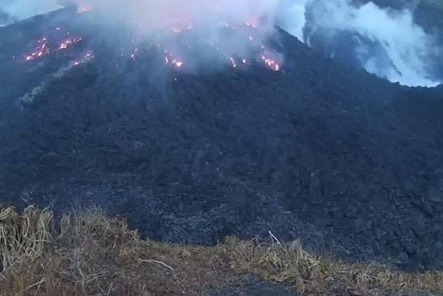
The La Soufrière volcano in the small Eastern Caribbean island of Saint Vincent and the Grenadines erupted on April 9th 2021 for the first time in 42 years.

This natural disaster has displaced tens of thousands of people from their homes and has uprooted families as they have been forced to leave everything behind and flee St. Vincent and the Grenadines with just a back pack to seek refuge in neighboring countries like Barbados, Dominica, Antigua & Barbuda and Saint Lucia. Many were already impacted economically by the COVID-19 pandemic.

The UWI Seismic Unit said the eruption is ongoing and it is a culmination of the seismic activity that began on April 8th. Plumes up to 20,000 ft are headed east.

“I am heartbroken about what is happening right now in St. Vincent and the Grenadines,” said Felicia J. Persaud, the founder and CEO Of Invest Caribbean, the US-based global private sector investment agency of the Caribbean. “My associate Danielle Corbin, from The Ritzury Group, with boots on the ground in Barbados, and I, are 1000% committed to helping the country and its people get relief from the modern day Pompeii that is occurring right now in our US backyard. We invite everyone to partner with us by supporting the Saint Vincent Volcano Disaster Relief on GoFundMe to support the thousands of lives that have been devastated and displaced. The daily eruption has left the entire northern third of the island completely desolate, decimating the lives of thousands, including houses, agriculture and livestock. Your support, no matter how big or small, will assist us in getting critical supplies on the ground this week and into the hands of people who need them the most.”

Evacuations continue by land and sea, and explosive eruptions are likely to continue over the coming days – weeks.

Invest Caribbean  – the global private sector investment agency of the Caribbean, along with its partner, The Ritzury Group in Barbados, are pitching into action to help financially support the many Vincentian families, students and children who have been displaced and are now in need of urgent financial support in the islands they have fled.

Invest Caribbean, the the global private sector investment agency of the Caribbean. The company is US-based company founded by Caribbean immigrant, journalist, entrepreneur and advocate in 2011 and its focus is on empowerment of Caribbean people.

55940182_1617990285996418_r.jpeg

The proceeds  of this disaster relief fundraiser will go towards:

1. Financial support for Vincentians forced to leave their country for 3 months post disaster.

2. Financial support for households in neighboring countries who have opened their homes to displaced Vincentians.

3: Financial support for on the ground organizations helping to supply urgently needed items for the survival of the evacuees.

Funds are needed immediately to assist with urgent needs.

Please help us to help now!

Short Term Relief: In the form of immediate necessities- food, water, non-perishables including canned goods and juice, toothpaste, toothbrushes, toilet paper, soap, deodorant, shampoos, sleeping mats, blankets, feminine hygiene products, masks, water tanks, portable potties, field tents, field kitchen, respirator masks with filters, goggles, reflective vests, hygiene kits, baby diapers, hand sanitizers, manual can openers, buckets, masks, mosquito repellent, first-aid kits, and antibiotic ointments.

Medium Term Relief: Housing, relocation, clean up efforts, humanitarian aid.

55940182_1618097660818864_r.jpeg

Long Term Relief: Financial aid for affected persons who have fled to neighboring countries, financial aid for families still in SVG, care of elderly, care of students and access to continued education. The goal is to help financially support the long-term needs of many Vincentian families, students and children who will be displaced for months to come.

ICN + Ritzury will provide full transparency in all monies raised, including video documentation of donations. Operational costs will be the only monies deducted from any raise to cover shipping and any other needed logistical support of our partners in this effort.

55940182_1617990119889921_r.jpeg

BBC: St Vincent volcano: Eruptions likely in coming days, experts warn

INFORMATION : University of the West Indies Seismic Research Centre

Saint Vincent Volcano Disaster Relief Read More »

Can Jews Agree on Welcoming Refugees and Immigrants?

“For you were once slaves in the land of Egypt.”

During Passover 2021, any Jew who knew the difference between charoset and a hole in a bagel probably heard this phrase a dozen times. So many times, in fact, with so many associations — from salt tears to lying reclined and eating hurried bread — that it is easy to forget the phrase is part of a larger mitzvah, one so central to Judaism that the Talmud reminds us that its mentioned in the Torah “36 times.”

“You shall not oppress or wrong the stranger, for you were once slaves in the land of Egypt.”

It’s a self-deprecating truism that Jews will disagree about almost everything. But this time of year, when our ancestors became migrants crossing an inhospitable desert, now marks the single greatest opportunity for the Jewish community to agree to come together to make a difference in the lives of “the stranger” in our own community.

At present, a record 79.5 million individuals around the globe stand displaced by violence, persecution, famine and natural disasters — all exacerbated by climate change. 46 million have left their home countries and are defined as refugees. And 11 million immigrants are living and working in the United States, including DREAMers, TPS designees, green card holders and undocumented immigrants.

Of those, more than 1 million are documented seekers of asylum, and tens of thousands of them are being detained, often in horrific conditions, as their claims are processed. Although raw numbers are hard to pin down because of shifting conditions and lack of transparency, we do know that more than 21,000 of these asylum seekers are unaccompanied children, many of whom have lost at least one parent and are fleeing violence and persecution in their home countries — from gang kidnappings, sexual violence and murder to LGBTQ discrimination and abuse.

U.S. and international law grant these human beings the legal right to cross the border and seek asylum. And yet, at our government’s behest, asylum seekers are still forced to “Remain in Mexico” due to the Trump-era Migrant Protection Protocols, and most lack the legal aid and translation services that are a near-requirement for successfully gaining refugee or asylum status. Tents serve as both courtrooms and living quarters in massive refugee camps in Matamoros and Tijuana. Children are still being torn from parents or guardians with whom they’ve made treacherous, life-threatening journeys. We still see case after case of parents trying to learn where their child was taken. It is taking months, sometimes years, to track down separated families. And all this is occurring during a once-in-a-lifetime pandemic, with deaths from COVID-19 still, sadly, on the rise.

The traumas of these moments are not singular, and they do not disappear with reunification.

What we see at our southern border calls all Jews who believe in that phrase we recite at Passover  — and indeed any human being with a shred of compassion — to attention and action.

What we see at our southern border calls all Jews who believe in that phrase we recite at Passover to attention and action.

Jews are no strangers to persecution and migration. In fact, the refugee and asylum resettlement system we have today was established under the 1951 UN Geneva Convention (and signed by both the United States and Israel) in direct response to Jews’ inability to safely seek refuge from the Shoah. The Jewish community of Los Angeles — home to hundreds of thousands of Jewish immigrants who fled pogroms, the Holocaust, the former Soviet Union, Iran and other expulsions from throughout the Middle East, North Africa and beyond — would not exist if not for these laws. It is our obligation to uphold, expand and perfect them.

We are bombarded with images of suffering at the border and in refugee camps around the world, and we Jews in Los Angeles watch and ask: What can we do? We know that as Jews we are obligated “Lo ta’amod al dam re’echa” — “not to sit idly by.”

That’s why a group of over 40 congregations, organizations and individuals dedicated to the core Jewish values of welcoming the stranger have joined HIAS, the oldest refugee aid organization in the country, in solidarity to form the Jewish Coalition Assisting Refugees and Immigrants — Los Angeles (JCARI-LA). Our goal is to bring the myriad Jewish organizations and synagogues supporting immigrants and refugees all together.

Through our listserv and quarterly meetings, we amplify the important work already being done in the space, breaking down silos between Jewish religious movements, secular organizations and individual activists and organizers. Our mission is to support immigrants and refugees, plain and simple, through advocacy, education and direct service. Our first campaign, in partnership with Miles4Migrants, seeks donations of airline miles or rewards, which go towards reuniting asylum seekers and their families, allowing them to restart their lives in the United States.

Since February 26, 2021, alone, Miles4Migrants has used nearly one million donated frequent flyer miles to airlift over 60 people fleeing the southern border. Many of those flights have reunited families with children with the assistance of JCARI-LA member organization Every.Last.One. Just last week, Miles4Migrants flew a mother from New York to San Diego to free her young daughter, who had been hospitalized after contracting COVID-19 while in detention at the San Diego Convention Center. She won’t be the last child rightfully reunited with her family, and Miles4Migrants still needs frequent flyer miles and credit card point pledges to go towards reuniting more families.

We cannot sit out this crisis. Our families were refugees. Our history is a refugee story. Especially in the wake of Passover, it is Jewish to welcome the stranger. Especially as COVID-19 plagues the world, we cannot ignore the suffering of the vulnerable.

The Torah commands us 36 times: Welcome the stranger. So together, let’s welcome new neighbors, new citizens, asylum seekers, immigrants and refugees to our communities. And let’s not just welcome them but also serve them, support them, advocate on behalf of them and stand with them — because their stories are innately tied to our own story, legacy and identity as American Jews.

Agreed?


Haley Broder is a member of IKAR. Jess Winfield is a member of Congregation Kol Ami, West Hollywood. They are Co-chairs of the Jewish Coalition Assisting Refugees and Immigrants – Los Angeles (JCARI-LA).

Can Jews Agree on Welcoming Refugees and Immigrants? Read More »

Grandchildren Tell the Stories of their Survivor Grandparents in New Films

When the riots were happening in Los Angeles last year, Congregation Beth Israel was vandalized with anti-Semitic graffiti. For Carolyn Siegel, this event was a tipping point. It was the fifth or sixth anti-Semitic incident she’d heard about in the past year, and she had enough.

Siegel remembered what her grandfather, a Holocaust survivor, made her promise when she was eight years old: that her generation would not forget the Holocaust. “It hit me in that moment that I had to do something,” she said.

She came up with idea of recording Holocaust survivors’ grandchildren telling their grandparents’ stories. Although Steven Spielberg had already recorded many survivors through his more than 3,000 USC Shoah Foundation interviews, Siegel wanted to make something that would be more accessible to people in her generation, who may not have the attention span to sit down and watch these long-form films.

“I feel very grateful that Spielberg captured those survivors’ stories,” Siegel said. “But now, it’s 30 years later, and the world is starting to forget. Something had to be done so that these stories would resonate for today.”

“Something had to be done so that these stories would resonate for today.”

She added, “Maybe if you hear my story and the interviews I captured in the shorter form, you’d be interested to watch a longer one from the survivors themselves.”

Even though Siegel had no prior filmmaking experience, the LA native and Milken Community High School alumna set out making the short films. She asked on social media if anyone wanted to participate and received over 12 responses within 24 hours. Two participants are Siegel’s friends and former co-counselors from Camp Alonim.

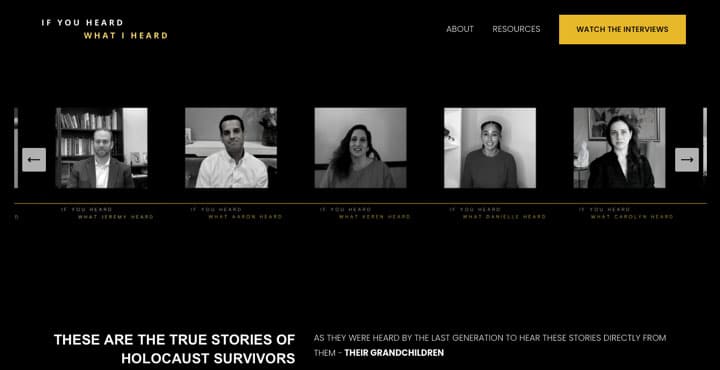
To capture everyone’s stories, she filmed 15 interviews remotely between December of 2020 and this past March, releasing them on April 7, the day before Yom HaShoah. Each of them is around 15 to 30 minutes long. The project, titled “If You Heard What I Heard,” can be found on Siegel’s dedicated project website. Clips from it are on the project’s Instagram as well.

In her own recording, Siegel talks about her grandfather, Moses Locker, who joined the Polish Army to avoid Nazi persecution. He lost his entire immediate family in the Holocaust and ended up meeting Siegel’s grandmother, Leah, in a displaced persons camp in Germany. From there, they emigrated to the United States and rebuilt their lives.

“While the stories captured in these interviews, including my own, are difficult stories of loss and destruction, what those watching will also hear are stories of hope, resilience and strength,” said Siegel.


Kylie Ora Lobell is a writer for the Jewish Journal of Los Angeles, The Forward, Tablet Magazine, Aish, and Chabad.org and the author of the first children’s book for the children of Jewish converts, “Jewish Just Like You.”

Grandchildren Tell the Stories of their Survivor Grandparents in New Films Read More »