fbpx

April 16, 2021

Jewish Community Marks Loss of Prince Philip, Beginning with Prayer

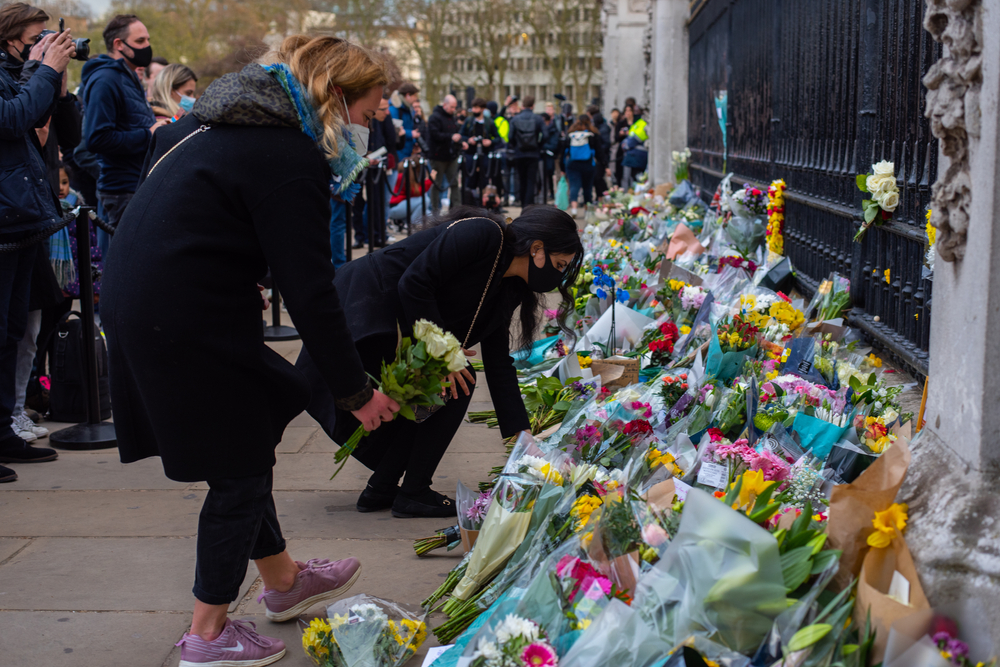
As the United Kingdom honored Prince Philip, who died on April 9 at the age 99, with a gun salute, flags at half-staff and the many who paid tribute outside of Buckingham Palace, Sabbath prayers for the longest-serving royal consort were a bit different in synagogues across England.

For decades, the blessings recited for the royal family—“He who gives salvation to kings … may He bless our sovereign lady, Queen Elizabeth, Philip, Duke of Edinburgh … and all the royal family”—were missing for the first time for Prince Philip.

“There was a glaring omission,” noted Rabbi Yitzchok Schochet, religious leader of the Mill Hill Synagogue and one of the most influential rabbis in the United Kingdom. “All of a sudden, for the first time, we modified the prayer. It made everybody reflect on the end of an era.”

Born in 1921, the Duke of Edinburgh watched the tumorous decades of 20th century and the atrocities in his backyard against the Jews. In 1994, in what was the first trip by a British royal to the State of Israel, he reflected on how he personally witnessed anti-Semitism.

He was 12 years old and he had transferred from England to a boarding school in South Germany. The school would appoint one of the older students to look after the school’s new enrollees. The “helper,” as he was called, who was appointed when he arrived, was a Jew.

One night, the helper was forcibly held down, while all of his hair was shaved off to shame him. “You can imagine what an effect this had on us junior boys,” he says, “Nothing could have given us a clearer indication of the meaning of persecution.”

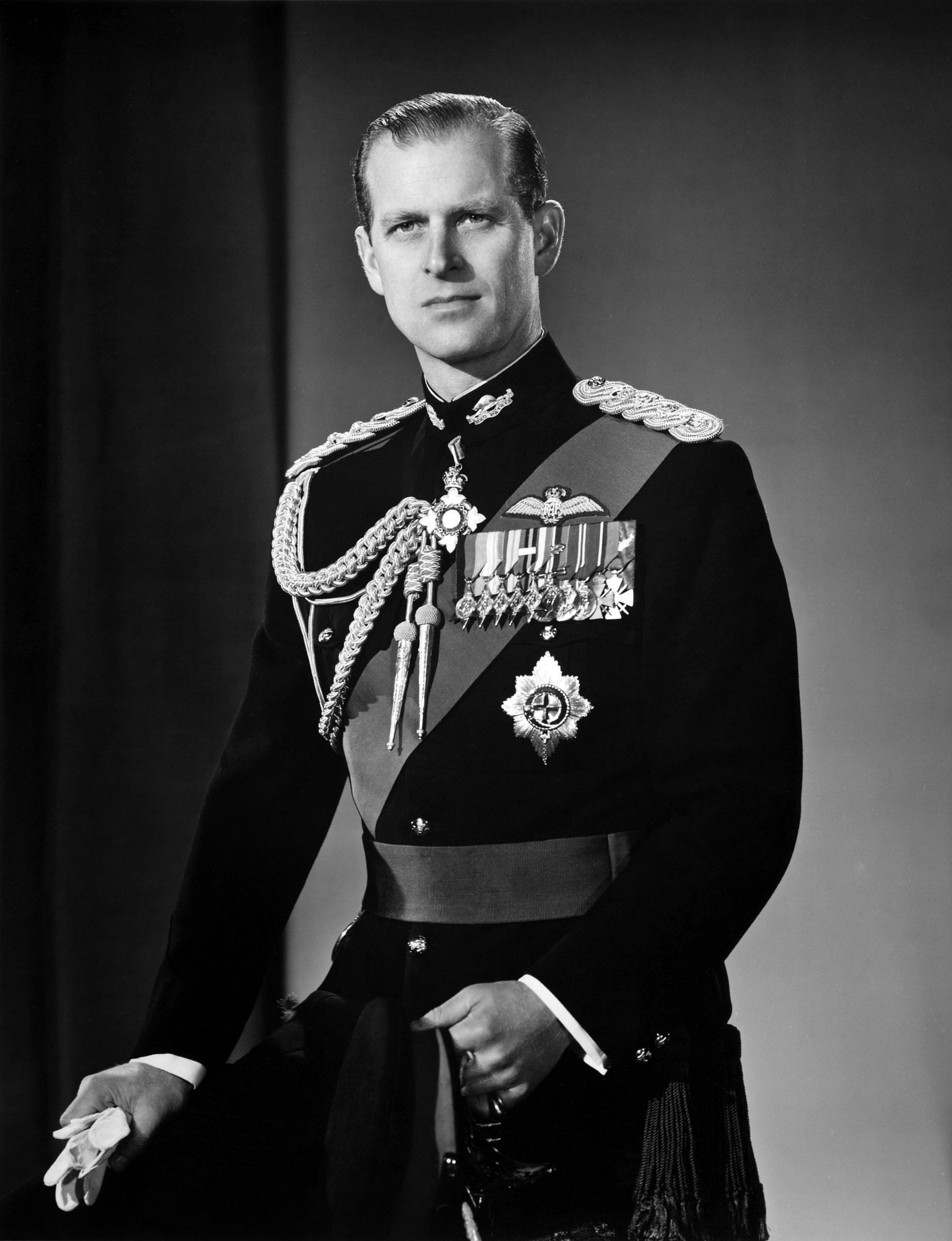
An official portrait of the Duke of Edinburgh. Credit: Wikimedia Commons.

The young Philip gave him his cricket cap, which the helper wore to cover his bald head. “It taught me a very important lesson about man’s capacity for inhumanity, and I have never forgotten it.”

One may dislike, or disagree with someone’s politics or opinions, he said, “but that should never allow us to condemn their whole community simply because of the race or religion of its members.”

Despite this, Prince Philip, who stemmed from royalty, told Jonathan Petropoulos for his 2008 book Royals and the Reich, that there were people in his immediate family that had inhibitions about the Jews and were jealous of their success. There was “a lot of enthusiasm for the Nazis at the time, the economy was good, we were anti-Communist, and who knew what was going to happen to the regime?”

Even during those tumultuous times, he said that “he was never conscious of anybody in the family actually expressing anti-Semitic views.” With that, three of his sisters became members of the Nazi party, and they married German princes, with one of them heading a division of German’s espionage network and killed during the war in 1943. Philip, on the other hand, was on the other side as a member of the British Royal Navy.

In 1947 he would marry Princess Elizabeth, who was crowned Queen of the United Kingdom in 1953. It was in the position as Consort that he served the country as the assistant to the Queen, usually remaining in the background, known mostly for his gaffes, verbal and otherwise, including several about Jews.

“Prince Philip reinforced his reputation for ill-chosen utterances,” The New York Times reported in 2005 after Prince Harry wore a Nazi swastika at a party, “when he addressed Chancellor Helmut Kohl of Germany as Reichskanzler—the title used by Hitler.”

Mourners lay flowers at Buckingham Palace on the death of Prince Philip. Credit: Ance K/Shutterstock.

‘In the memory of all future generations’

Still, Jewish leaders tended to agree that there was no malice in the prince’s mistakes.

“Philip is gruff and impetuous, but neither a boor nor a snob,” reflected Michael Berkowitz, professor of Modern Jewish History at University College London. “He’s a complicated man, and, I think, a good soul. He is what we call, in the Jewish history trade, a mensch.”

In a 1990 Los Angeles Times profile of Marvin Hier, director of the Simon Wiesenthal Center, it tells of how Hier went to a reception of the Queen and Prince Phillip. Then a rabbi in Canada, Hier insisted on keeping his head covered with a traditional kipah, with which a noted Jewish Canadian jurist took issue. “To his dismay,” the Times wrote, “the royal couple was captivated by the head covering, engaging Hier and his wife in friendly conversation and ignored the judge.”

Philip’s greatest impact is the Duke of Edinburgh Awards, today present in 144 countries, which was inspired by Jewish educator Kurt Hahn. The need for self-improvement and exercise was a part of Hahn’s theory of education. Philip was a student at Schule Schloss Salem in Germany and the Gordonstoun School in Scotland, two of the schools Hahn founded.

“The founder of the school,” Philip said of Hahn, moved to the United Kingdom because he “had already been driven out of Germany by Nazi persecution, and this was well known throughout the school.”

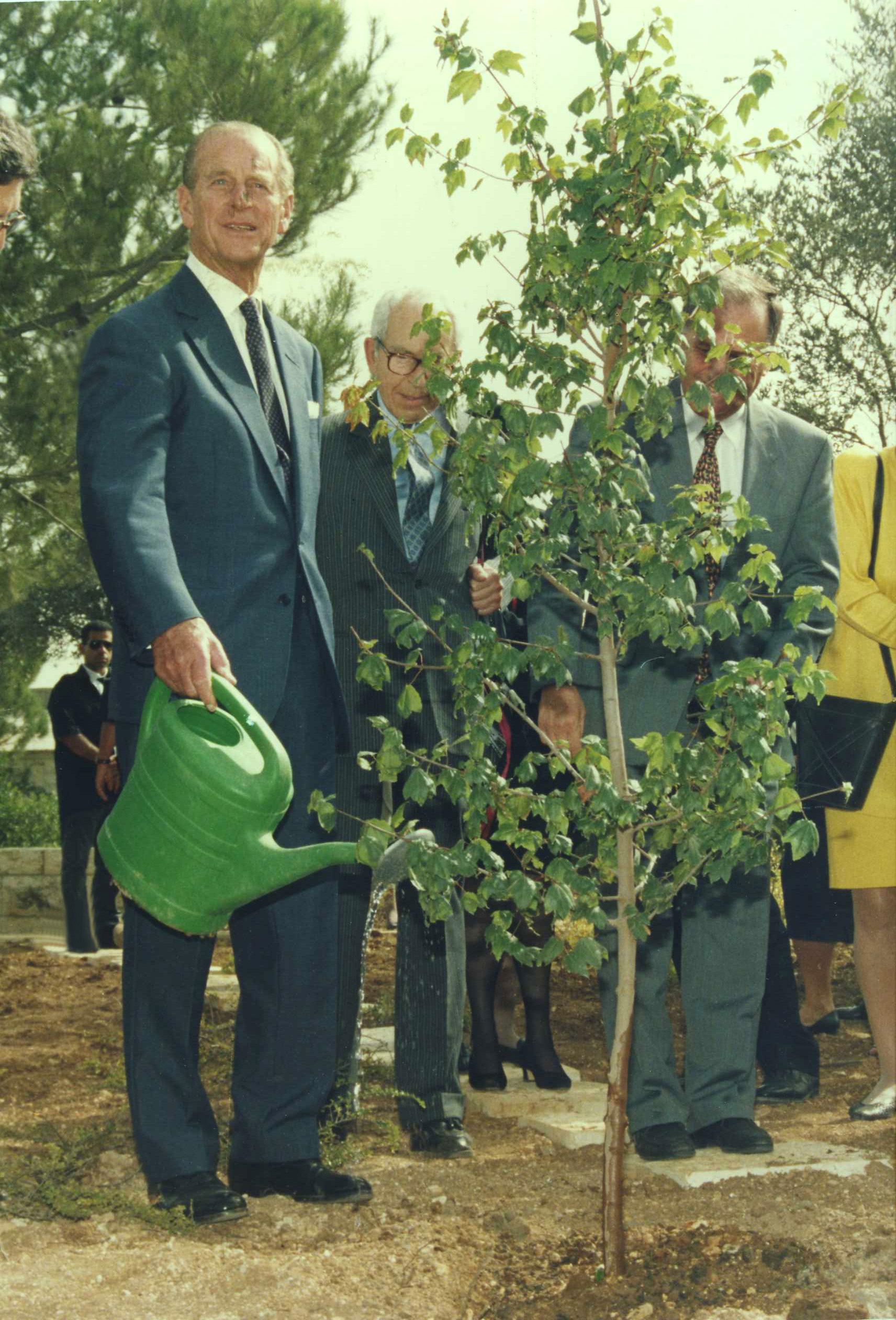
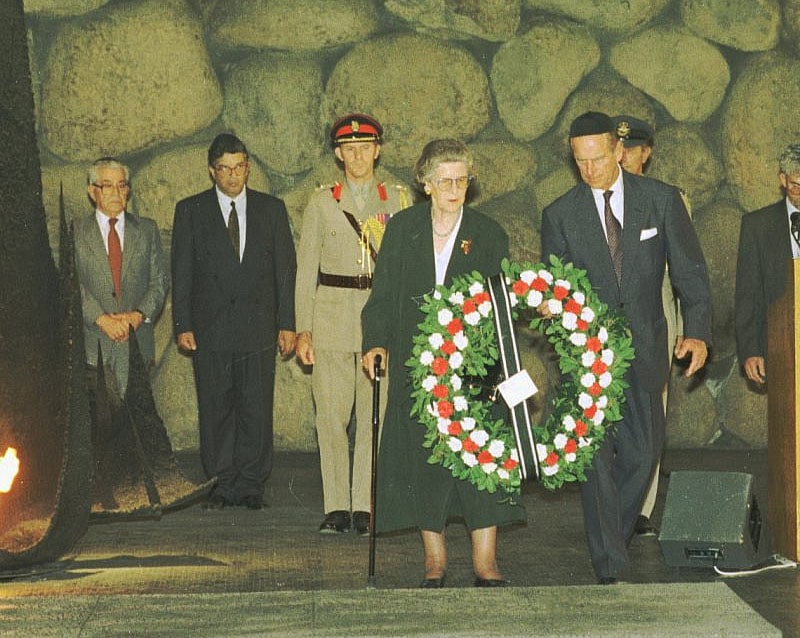
Prince Philip waters a maple tree in memory of his mother, Princess Alice at Yad Vashem in Jerusalem, Oct. 31, 1994. Credit: Beni Birk/The National Library of Israel.

The awards are for community service, learning physical activities and skills, and going on expeditions, such as a mountain trek or a sailing trip. “Gordonstoun gave Prince Philip a much-needed sense of stability,” Philip Eade, author of The Young Prince Philip, told the BBC in 2016.  Hahn’s emphasis on obstacle races, seamanship and teamwork made a deep impression on him, “that has remained with him throughout his life and has doubtless helped him in all sorts of ways.”

In 2015, the Prince and Queen visited a concentration camp for the first time. They met survivors at Bergen-Belsen. Karen Pollock, chief executive of the UK Holocaust Educational Trust, later said that the survivors were touched by Prince Philip’s respect, affection and humor. “For the survivors who are with me,” she told The Guardian, “they’ve been saying to me this will be a very special day.”

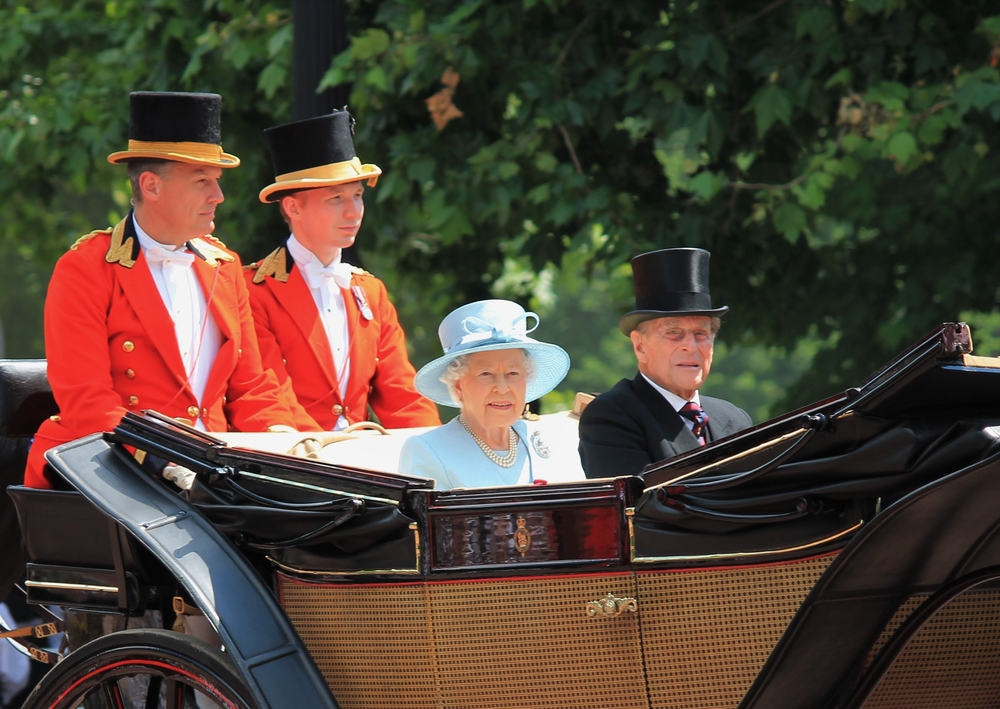
Queen Elizabeth II and Prince Philip in London, June 2017. Credit: Lorna Roberts/Shutterstock.

On his Israel trip, Philip accepted on behalf of his mother, Princess Alice, the Righteous Among the Nations award for her saving a Jewish family during World War II. “The Holocaust was the most horrific event in all Jewish history,” he told those gathered at Yad Vashem Holocaust memorial center, “and it will remain in the memory of all future generations. It is, therefore, a very generous gesture that also remembered here are the many millions of non-Jews, like my mother, who shared in your pain and anguish, and did what they could in small ways to alleviate the horror.”

He said that the essential message of Yad Vashem is that all of those who were alive during the Holocaust understand that “it is only too apparent that this message needs to get through to present and future generations of all races and religions. The Holocaust may be over, but there are altogether too many examples in the world today of man’s capacity for inhumanity.”

Prince Philip will be laid to rest on April 19 as part of a Royal Family ceremony, albeit with far fewer attendees than usual due to current coronavirus restrictions.

Jewish Community Marks Loss of Prince Philip, Beginning with Prayer Read More »

Blinken: US Commitment to Israel ‘Ironclad’

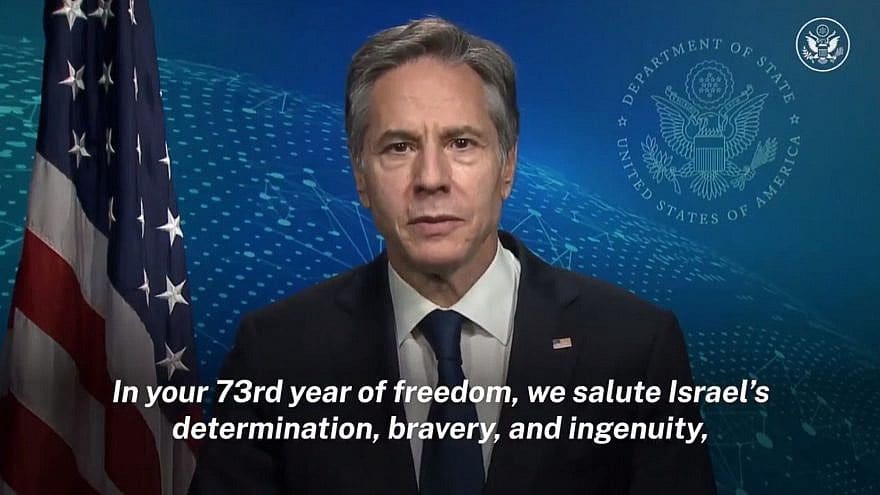
U.S. Secretary of State Antony Blinken said that America’s commitment to Israel is “ironclad,” and that he—and the Biden administration—supports more normalization agreements.

Blinken appeared as part of a virtual event hosted by Israel’s embassy in Washington for Israeli Independence Day, which also featured U.S. Senate Majority Leader Chuck Schumer (D-N.Y.) and Minority Leader Mitch McConnell (R-Ky.), and was viewed by more than 20,000 people online.

“In your 73rd year of freedom, we salute Israel’s determination, bravery and ingenuity, which have made possible your country’s prosperity and hard-won security,” said Blinken. “The United States commitment to Israel’s security is ironclad, and together, we work strengthening all aspects of our partnership, just like we’ve been doing since the United States first recognized Israel in 1948.”

Blinken noted that the past year coping with the coronavirus has been difficult, but it has “allowed Israel once again to demonstrate its resilience, strength and compassion, whether by leading the world in your vaccination rate or making new friends from Morocco all the way to Bhutan.”

“The United States welcomes and supports the recent normalization agreements,” he continued. “We will continue to urge more countries to normalize relations with Israel, and we’ll look for other opportunities to expand cooperation among countries in the region. As a result, I expect Israel’s group of friends to grow even wider in the years ahead.”

In his remarks, Schumer applauded Israel for overcoming so many different challenges since its founding, including “threats from the outside; violence and terror; economic distress; and, of course, the greatest health crisis the world has seen in a hundred years.”

He also affirmed that the United States will continue to stand as Israel’s friend, and is “ready to affirm [our] decades-long alliance and to work together, to build a secure and prosperous future for our two countries. The relationship between Israel and the United States, as long as I am majority leader, will remain like this.”

Similarly, McConnell noted that Israel’s endurance “is a proud legacy for its people and for millions of friends around the world who celebrate alongside you.”

Israeli Ambassador to the United States and the United Nations Gilad Erdan said that while America and Israel may occasionally have disagreements, we “stand united on our guiding principles.”

He added that he’s “certain that there will be more countries in the region that will choose the path of peace and coexistence with Israel. And together with this opportunity, we face the challenge of countering radical regimes, especially Iran, and the murderous terrorist groups they support.”

Blinken: US Commitment to Israel ‘Ironclad’ Read More »

The Week Removes Image Criticized As Anti-Semitic

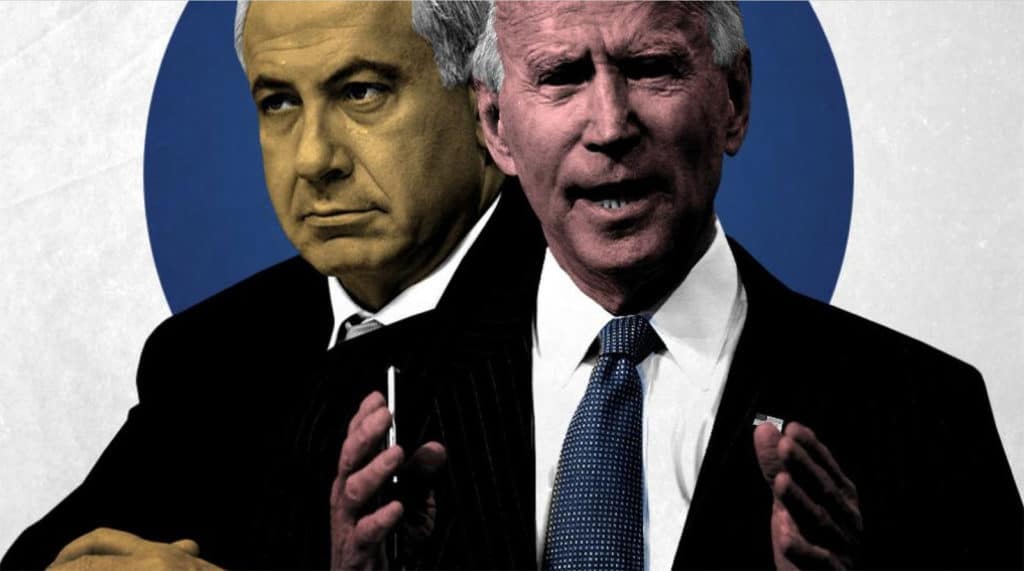
The Week magazine replaced a featured image on one of their pieces that various social media users were criticizing as being anti-Semitic. The Algemeiner reported that that the image, which was used on an April 15 piece titled “Israel is testing Biden,” featured a Star of David superimposed over President Joe Biden.

Associate Dean and Director of Global Social Action Agenda at the Simon Wiesenthal Center Rabbi Abraham Cooper told The Algemeiner that the image gives the impression “that Israel controls America” and would appeal to “antisemites, conspiracy theorists, and — first and foremost — the Iranians and their acolytes here in the United States.” The American Jewish Committee similarly tweeted that the photo “is a clear depiction of the age-old antisemitic trope of Jewish ‘control.’ This false accusation blames Jews for leading world leaders — often depicted as ‘blind’ — into war and debt.”

The photo has since been replaced with an image showing Biden and Israeli Prime Minister Benjamin Netanyahu next to each other without any explanation. The Stop Antisemitism.org watchdog tweeted that The Week should have issued an apology stating, “All of us at @TheWeek apologize for the blatant antisemitic, neo nazi type graphic that was used earlier today in a story about Israel. Instead they quietly swapped out the feature photos hoping no one would notice? Pathetic,” they wrote.

International human rights lawyer Arsen Ostrovsky similarly tweeted, “Will there at least be an apology or clarification forthcoming?”

The Week did not respond to the Journal’s requests for comment.

UPDATE: The Week’s piece now has an editor’s note stating, “This article was previously illustrated by a collage that mixed the Israeli flag with a photo of Biden in a way that was insensitive and offensive. The website often creates illustrations that combine flags with important political figures, but we should have been much more attuned to the symbolism in this case. The image has been replaced and we apologize unreservedly.”

The Week Removes Image Criticized As Anti-Semitic Read More »

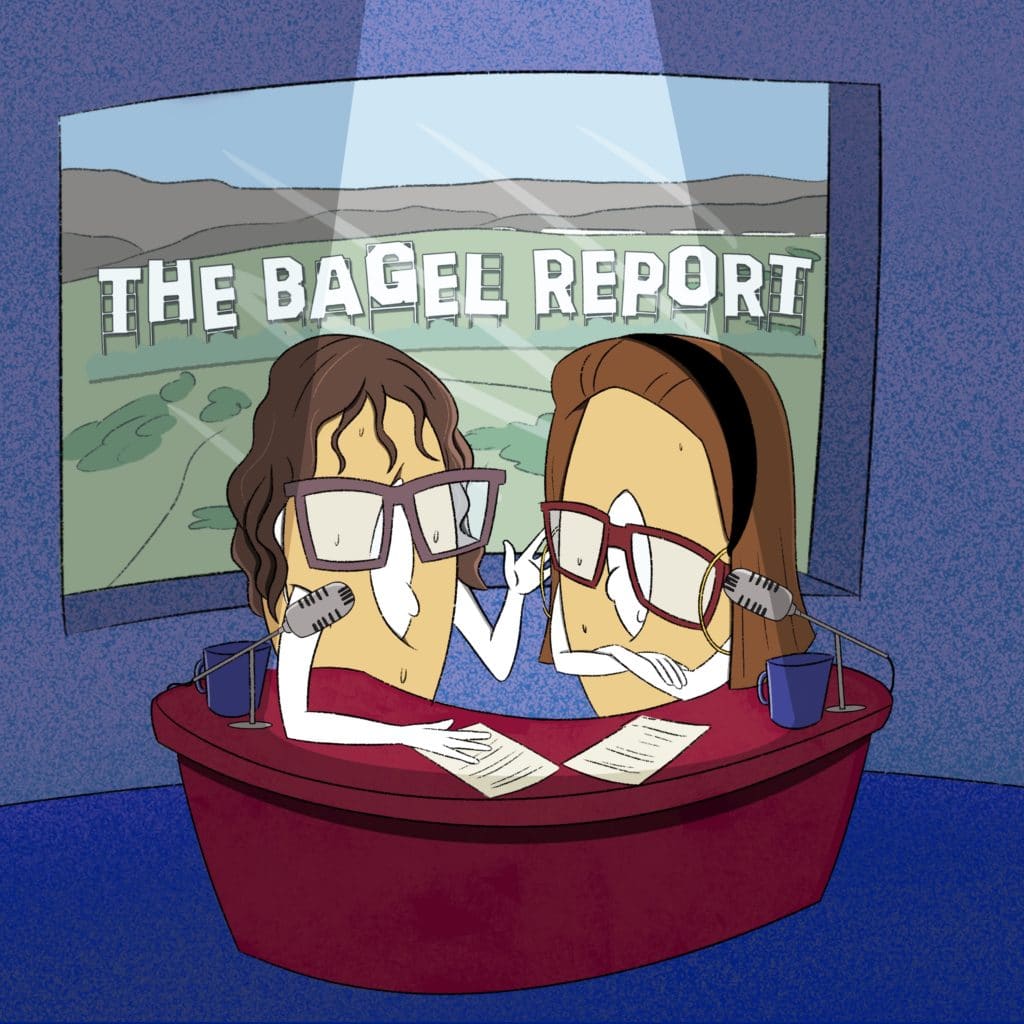
The Bagel Report

Shtisel, Shiva and Donny Oy Vey!

What do shivas and b’nai mitzvah have in common? Bagels, of course, and this week, it’s the new films “Shiva Baby” and “Donny’s Bar Mitzvah” that are getting The Bagel Report treatment. While one film is subtle and intense, the other takes caricature to 11. The Bagels review them both and reflect on their own b’nai mitzvah and shiva experiences. Esther wants more character and content and less caricature, while Erin looks back on her Detroit-area bat mitzvah years with nostalgia and horror. Plus, the pair reflect on their Passover experiences, talk about the popularity of the “‘Schitt’s Creek’ Haggadah” and get into some “Shtisel,” which Erin still can’t sit down and watch.

Follow ErinEsther and The Bagel Report on Twitter! 

Shtisel, Shiva and Donny Oy Vey! Read More »

Why Don’t More People Know About the Atrocities in Myanmar?

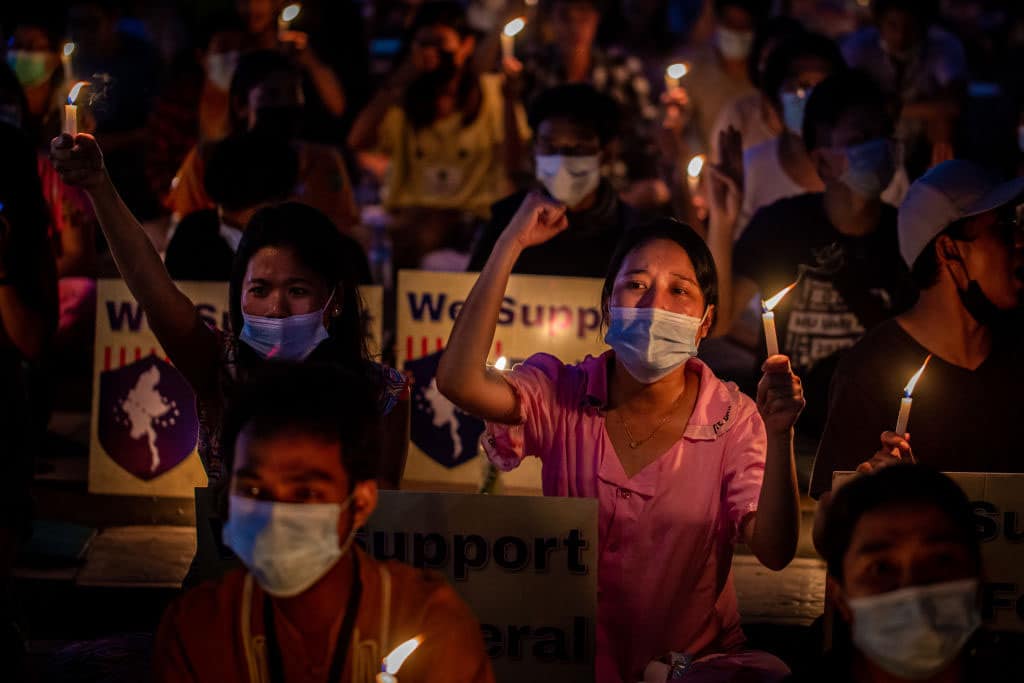
Myanmar (also known as Burma) is a Southeast Asian nation that borders Bangladesh, Laos, Thailand, China and India. This February, the Burmese military junta staged a coup and nullified election results from November 2020, in which the civilian political party National League for Democracy, won 83% of the seats in parliament. Since then, the military has brutally suppressed peaceful protests, arresting hundreds of people (including politicians and civil society activists) and killing over 700 people, including children. Last Friday, the military butchered over 80 protestors near Yangon. Thousands of others have disappeared.

To say that the country is spiraling into civil war is an understatement. By most accounts, it’s already a failed state. And that’s just the tip of the iceberg.

Since March, the Biden administration (as well as the European Union) has levied two rounds of sanctions against Burma, and the crisis has proved to be a rare bipartisan issue for American leaders. President Joe Biden consulted with Senate Minority Leader Mitch McConnell about the crisis. Referring to Biden officials, McConnell told Politico, “Their instincts are good,” but added,

“Our ability to influence this from halfway around the world is limited.”

McConnell’s right. But you know who does have tremendous influence in Burma? Russia and China, whom the E.U. has accused of helping to perpetuate the bloodshed by blocking arms embargoes from the United Nations Security Council. The Trump administration tried to counter Chinese influence in Burma while being careful not to interfere with the fragile democratic progress slowly taking hold.

Before the February 2021 coup, the situation in Burma was extremely delicate, as democracy was slowly unfurling in the country. Burma gained independence from the British in 1948, but the army seized power in 1962 and changed the state’s name to Myanmar (the United States still uses “Burma”). By 2011, civilian rule was slowly taking hold again and optimism was high.

But shortly thereafter, Myanmar took on a campaign against an ethnic minority of which most Americans have never heard: the Rohingya. Myanmar, a Buddhist-majority country of 54 million people, has been accused of ethnic cleansing and genocide against the Rohingya, a Muslim ethnic minority whom Burma doesn’t even recognize as citizens, even excluding them from the 2014 census. At least 25,000 Rohingya have been killed in a conflict that began in 2012, when a group of Rohingya men were accused of raping and murdering a Buddhist woman, and Buddhist nationalists responded by burning Rohingya homes and killing and raping many people. The military, non-Muslim locals (especially fanaticized Buddhist monks) and police forces in the country’s northwestern Rakhine State (where most Rohingya lived) carried out the bulk of atrocities. One report by the Ontario International Development Agency in Canada revealed that 18,000 women and girls had been raped by the army and the police and that 34,000 Rohingya had been thrown into fires.

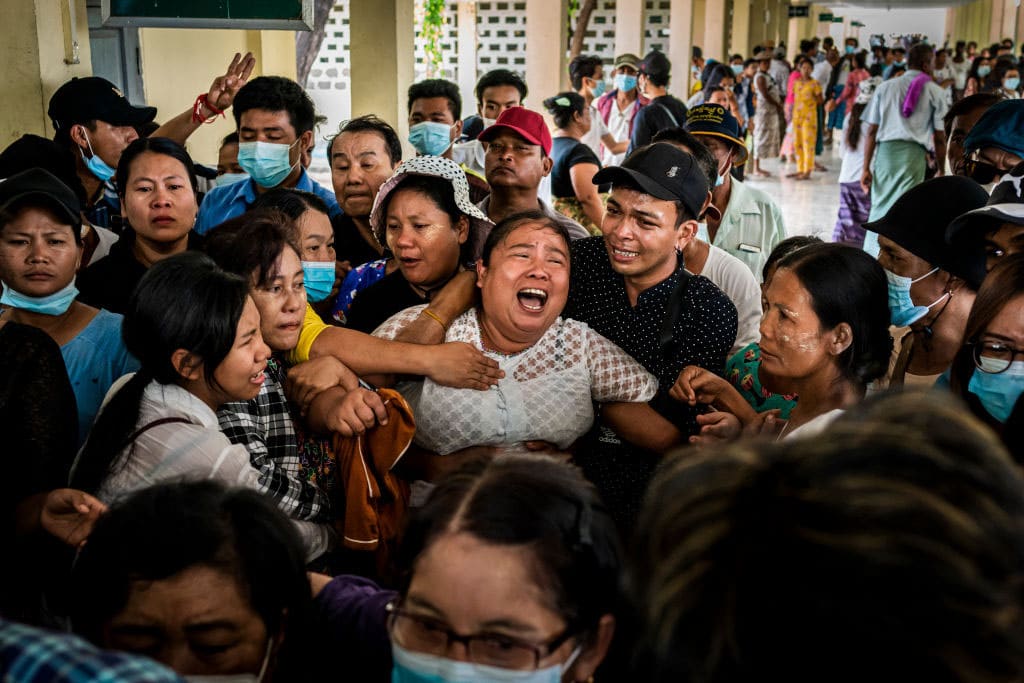
The mother (center) of Aung Kaung Htet wails while mourning during a funeral for Aung, 15, who was killed when military junta forces opened fire on anti-coup protesters, on March 21, 2021 in Yangon, Myanmar. (Photo by Stringer/Getty Images)

Before the violence really escalated in 2017, there were 1.4 million Rohingya in Burma. Over 740,000 of them have fled to Bangladesh, creating a tragic refugee crisis. The military offensive that Burma has unleashed against the Rohingya has been a “textbook example of ethnic cleansing” (according to Zeid Ra’ad Al Hussein, a U.N. human rights official). U.N. Secretary-General António Guterres has called the Rohingya “one of, if not the, most discriminated people in the world.” The U.N. as well as various human rights groups have officially applied the term “genocide” to the Rohingya crisis in Myanmar.

Officials from both the Biden and Trump administrations have also condemned Myanmar for its atrocities. But what has truly been amazing is the utter silence of Muslim countries around the world, some of which, like Iran, continue to obsessively demonize Israel, falsely claiming that the Jewish Israelis are ethnically cleansing Muslim Palestinians. Meanwhile, in Myanmar, Buddhists are being accused committing genocide against the Rohingya, the majority of whom are Muslim. What utter hypocrisy on the part of the Muslim world. Why would official Muslim states such as Iran express so much outrage over purported Jewish treatment of Muslims but not lift a finger over actual Buddhist genocide of Muslims? The double standard points to egregious anti-Semitism (which Iran cloaks as anti-Zionism). Of course, the most urgent task is to save the Rohingya, but Muslim countries also are missing a critical opportunity to speak with a rare unified voice against Burmese atrocities.

What has truly been amazing is the utter silence of Muslim countries around the world.

But Muslim countries are not the only ones silent on this issue. Why haven’t we seen major protests outside the Burmese embassy in Washington, D.C. or the consulate in Los Angeles? Because most Americans can’t identify Burma on a map, few know about the treatment of the Rohingya and, more recently, many don’t know that the military junta has butchered and arrested countless people. Ironically, the Myanmar consulate is located in a space called Equitable Plaza on Wilshire Boulevard.

There’s also another overlooked component of the Burmese situation: The world hasn’t held the country’s former de facto leader, Aung San Suu Kyi, accountable for the suffering of the Rohingya, most likely because she used to be a human rights icon. In 1991, she was awarded the Nobel Peace Prize for peacefully resisting the former military dictatorship that imprisoned her for fifteen years. In November 2020, she won a landslide election, but her government was toppled by the military junta a few months ago, and she’s since been arrested again. Kyi should nevertheless be held accountable for a genocide that began while she was still in power, but she’s even denied genocide allegations. Despite knowing of the atrocities the Burmese government was committing against the Rohingya, she spoke at the Hague in 2019 and described the brutality as “intercommunal violence.”

Burma is part of the International Criminal Court (ICC), but a group of former lawmakers (who were helping to shape the new civilian government) is probing the ICC to investigate crimes against humanity as a result of the February coup.

A military coup, murdered protestors, ousted democratic lawmakers and actual ethnic cleaning: these are some of Burma’s human rights abuses, and yet, the ICC remains impotent regarding this crisis. Can you imagine if Israel, a thriving and compassionate democracy, were to engage in even one of these human rights violations?

As things stand, the ICC recently announced that it will probe Israel for possible war crimes. Twenty-five thousand Rohingya have been butchered by Buddhist Burmese and the ICC is investigating Israel? I actually can’t make this stuff up. And that’s to say nothing of the ICC’s utter failure to do anything about the deadly conflict in Syria, which, since 2011, has killed nearly 400,000 people (and created one of the world’s largest refugee crises).

I’m waiting for the day when the plight of the Rohingya appears on the front page of every major American newspaper and is championed by every leader in the Muslim word. As Hannah Arendt said, “Only crime and the criminal, it is true, confront us with the perplexity of radical evil; but only the hypocrite is really rotten to the core.”


Tabby Refael is a Los Angeles-based writer, speaker and activist. Follow her on Twitter @RefaelTabby

Why Don’t More People Know About the Atrocities in Myanmar? Read More »

Has Free Speech Been Cancelled?

Introduction

“Speak the speech,” says Shakespeare’s Hamlet.  “Own your voice” and “speak truth to power” we hear in the streets. All sentiments ring true, but may also be taken for granted. Freedom of speech did not come about easily, and it may not be so free.

50,000 to 100,000 years ago, early humans in deserts, mountains, beachfronts, forests and farmlands established language to allow for invention, specialization, negotiation and trade.

So began speech, a social technology that is compositional. Animals bark and meow, grunt and roar, and have sophisticated non-verbal communication, but they cannot tell a story, recount the past, discuss the future, or create poetry, plays or prose.

René Descartes posited, “I think, therefore I am,” and in so doing established the philosophical principle of personal existence. Human evolution’s implicit claim, on the other hand, is “we speak, therefore we relate.”

There are some 7,000 spoken languages on our planet today, and about half as many written ones. Billions of independent human minds evidence an obviously diverse range of existence, but the concept of our individual “freedom” of speech had to be developed, enshrined, protected and nurtured.

As we shall discover, the right to speak or write one’s mind is a messy but meaningful natural right, one worth affirming rather than censoring or cancelling.

My series of columns on free speech begins with religious guidance that demands morality in our speech and then reveals a history of governmental rule that continues to punish unauthorized speech.

My series of columns on free speech begins with religious guidance that demands morality in our speech and then reveals a history of governmental rule that continues to punish unauthorized speech.

We then observe the western Enlightenment, which advocated for individual conscience and helped to influence the First Amendment to the United States Constitution and the legal jurisprudence expanding its protections.

The recent “progressive” counter-trend away from free speech principles in academia, the press, Hollywood, and other institutions has been driven by the new politics of political correctness, racial identitarianism, and the rise of what many have identified as the woke “cancel culture.”

The censorship of authors, books and opinions is now causing an equally dangerous phenomenon of self-censorship. The unique power of “Big Tech” challenges us to address private internet companies that are unilaterally and unfairly de-platforming citizens.

Fortunately, many heroes of free speech are fighting back, and they merit our attention. Innovation may help new voices emerge, as on the quickly growing app Clubhouse, a new type of social network based on voice, where people from around the world can engage in uncensored conversation in real time.

Finally, we seek to rediscover some first principles of civility in our speech. Assuming we protect our democratic right to speak freely, how can we converse and argue to our mutual benefit?

“Hear O’ Israel.” Listen with moral seriousness and an open heart. Today, public expression of views is under sustained challenge from what both Alexander Hamilton and Abraham Lincoln would have referred to as a “mobocratic spirit.” The American experiment in self-government requires nothing less than a serious contemplation of the rise, fall and potential reinvigoration of our freedom to speak and our right and duty to listen productively to one another.

Controlling Our Speech: Ethics and Authority

The Ethical Tradition: Religion and Speech

In the Jewish tradition we are called the “medaber,” creatures with the ability to form relationships through speech, which enables us to move beyond mere animal survival to philosophical inquiry and moral and ethical choice.

In the Garden of Eden, the serpent tempts Eve, and soon she and Adam verbally deceive God, as does their son Cain, who says Am I my brother’s keeper?” (Gen 4:9).  Genesis features countless family stories that reveal our collective struggle between deception and truthful expression.

Exodus (4:11) teaches, Who gives man speech, is it not I, the Lord? God’s covenant includes his ethical words of command—the aseret hadibrot, (Ten Commandments) — including the 9th Commandment, Do Not Bear False Witness (Ex 20:16).

King Solomon asserted that life and death are in the hands of the tongue (Proverbs 18:21).  And yet, in “The Ethics of the Fathers,” a great sage says in all my life, I have found nothing wiser than silence.” This beautiful sentiment is elegantly echoed by Rabbi David Wolpe in his book “In Speech and in Silence: The Jewish Quest for God,” where he notes that while songs, parables and prayers form a lasting culture, we make allowance with sensitivity for the injured and mute, and for non-verbal communication that reflects our tears and our fears.

Moses the lawgiver grappled with a speech impediment (“I am not a man of words…for I am of slow speech”), and yet he was chosen to speak to God. Before the plagues and the escape, Moses also spoke to Pharaoh on behalf of God, asserting Let my people go.”

God too speaks, commanding the Jewish people to pass on their inheritance and destiny by telling their children the Passover story of liberation. “And you shall tell your child on that day, saying, ‘It is because of what the Lord did for me when I went forth from Egypt’” (Exodus 13:8).

The Torah seeks to balance the many stories of prevarication—recall the deception of Jacob, who pretended to be his brother Esau in order to steal his inheritance—with those of truth-tellers, like the righteous Noah and the suffering Job, who states with integrity “my lips will speak no wrong, nor my tongue utter deceit” (Job 27:3-5).

The religious priority for human speech then is to respect the sovereignty of God and use care not to denigrate spiritual authority. Also of great importance is the mandate to speak with care and to avoid using our words to harm others.

The religious priority for human speech then is to respect the sovereignty of God and use care not to denigrate spiritual authority.

Featured prominently in the rich Talmudic teachings are the laws of “lashon hara,” the imperative against “evil” speech, which is blamed for the destruction of the Holy Temple and seen in the punishment of Moses’ sister Miriam (Numbers 12:1-14).

We learn in the Mishnah, the first major book of Rabbinic literature, about the sages Hillel and Shammai, and their vigorous but respectful disagreements (some 300) over Jewish law, belief, and ritual practice. As a model, the house of Hillel is admired for showing humility and respect to opposing views, even verbalizing them with accuracy before presenting the counter-argument.

We are not to contradict a teacher or to speak before one who is wiser and we have an affirmative duty to speak up to protect an innocent or to prevent harm. The Chofetz Chaim, a leading rabbi at the turn of the 20th century, considered the prohibitions against unholy speech as the key to maintaining personal reputations and our spiritual relationship with God.

Reverence for God and religion is a serious principle. In Leviticus 24:10-13 the penalty for the offense of blasphemy is capital punishment (though not applied).

Christian theology adopted the Hebrew Bible’s (or the Old Testament’s) strict demand for respect in speaking about God. Jesus himself was accused of blasphemy and crucified for political offenses. His follower Stephen was stoned to death in the first century C.E. for publicly condemning the execution of Jesus, and other early Christians were killed for refusing to be silent about their beliefs.

As the Church grew powerful it sometimes enforced its objection to other faiths, and Christians whose views differed were persecuted. In the pre-Enlightenment period John Southworth, a Roman Catholic, was executed in 1654 for refusing to stop preaching. A Protestant, John Bunyan, who wrote “Pilgrim’s Progress,” was jailed in 1660 for preaching without a license.

Today, of course, many Christians profess a sincere advocacy for the ethical teachings of the Bible, including speaking up for the voiceless; not taking to heart all criticism; avoiding quarrel over opinions; refraining from turning a truth-teller into an enemy; being patient and kind in speech and quick to hear and slow to speak; and understanding that we will give an accounting for our careless words. Christians are taught that from the same mouth comes both blessings and curses. Proverbs 18:21 teaches death and life are in the power of the tongue, and those who love it will eat its fruits.”

Many Islamic scholars observe a strict tradition of “scholarly consensus” that “abrogates” newer, alternative interpretive voices in the study of religious rulings based on Koranic law.

Upon the 1988 publication of Salman Rushdie’s novel “The Satanic Verses,” inspired in part by the life of Muhammad, violent demonstrations exploded across the Middle East and Europe. Iranian leader Ayatollah Khomeini banned the book and announced a $5 million fatwa on author Rushdie’s head. In 2004, Dutch filmmaker Theo Van Gogh directed a short film called “Submission” meant to support women’s rights in Muslim communities. He was shot and stabbed to death by an Islamic assailant.

The Sikh community reacted violently in London to the 2004 play titled “Behzti” (“Dishonor”). In 2005, Danish newspaper Jyllands-Posten published a sketch of the prophet Muhammad with a bomb in his turban. The cartoon was republished and broadcast across the Middle East, and hundreds of people were killed in protests. From Syria to Nigeria to Indonesia, Danish embassies were attacked, bombed, and burned, as were Italian and Norwegian missions. The anger continued in 2006 when a “day of rage” killed scores more.

Political cartoons labeled as disrespectful to Muhammad inspired the 2015 terror attack on the offices of the French satirical publication Charlie Hebdo.

In recent years many Christian publishers such as Necati Aydin, Ugur Yuksel, and Tilmann Geske have been murdered by Muslim Turks. Rami Ayyad, a Palestinian Christian, was found dead after receiving death threats.

The Wall Street Journal reporter Daniel Pearl was murdered in 2002 for his journalistic investigations of Al Qaeda, and the paper has since covered many instances of the criminalization of criticism of radical Islam.

Authoritarianism: Governments and Speech

This record of religious authority against unwelcome opinions has been matched in both eastern and western secular societies.

The first emperor of China, Qin Shi Huang, sought to control all political thought by executing scholars and burning all books of history and philosophy as subversive. Failure to adhere to these directives was punished by sending offenders off to hard labor to build the Great Wall of China.

In contrast, the ancient Greek word “parrhesia,” (“to speak candidly”) was favored as foundational to the pursuit of democracy. The rise of philosophers, playwrights, and poets in Athens offered early momentum for open discussion of politics and religion.

However, in 399, BC, perhaps the greatest of Greek philosophers, Socrates, was condemned to death for his independence of thought.  His student Plato revealed his simple defense: “the unexamined life is not worth living.”

Skeptics, stoics and cynics who agreed on not much else all admired Socrates, the father of western philosophy, as the model proponent for questioning everything in the pursuit of truth and wisdom. Law students learn through the “Socratic method,” which sharply challenges views until clarity is found.

In Campo de’ Fiori, Rome’s famous marketplace near the place where Julius Caesar was murdered, Italian heretics were executed, such as magician and gnostic cultist Giordano Bruno, who was burned alive after 6 years of imprisonment.  His final defense declared, “Perhaps your fear in passing judgment on me is greater than mine in receiving it.”

Englishman William Tyndale, translator of the first Bible printed in English, was executed, as was printer John Twyn, who published a pamphlet justifying the right to rebellion. Sir Thomas More was famously killed for exercising the freedom not to speak at all (in support of the annulment of the marriage of King Henry VIII and Catherine of Aragon.)

In the modern era, of course, totalitarian governments have targeted free speech. The Nazis banned books, pamphlets, and meetings and persecuted the famous White Rose movement of brave students at the University of Munich, led by the martyred Sophie Scholl.

In the modern era, of course, totalitarian governments have targeted free speech.

Free thinkers oppressed by the former Soviet Union included famous Soviet novelist Alexander Solzhenitsyn, nuclear physicist Andrei Sakharov, and Jewish refusenik Anatoly Sharansky among many others.

The Russian state has allegedly resorted to poisonings of political opponents and continues its oppression of independent-minded business leaders such as the noted journalist of the Chechen wars Anna Politkovskaya.

The long list of writers and activists from around the world persecuted for their speech includes South African anti-apartheid campaigner and writer Steve Biko, Lasantha Wickrematunge from Sri Lanka, Hrant Dink from Turkey and prominent Mexican journalists, including Javier Valdez Cárdenas and Jonathan Rodríguez Córdova.

Unfortunately, even the early American experience included the witch trials in the Massachusetts Bay Colony, where 19 colonial victims were killed based on a public hysteria.

Eventually, the western Enlightenment set the foundation for the expansion of freedom of religious conscience and political expression, found most prominently in the American First Amendment. As we shall discover, however, our legal path to secure freedom of speech from government regulation will still invite our analysis of those within our culture who seek to police and punish what they deem to be offensive speech.


Larry Greenfield is a Fellow of The Claremont Institute for the Study of Statesmanship & Political Philosophy.


The Speech Project is an initiative of the Jewish Journal that brings together some of the most compelling voices from across the political spectrum to address the topic of free speech. In a cultural moment where civil liberties often seem to be under siege, we encourage freedom of expression, independent thinking, and personal choice. The articles, podcasts, books, and other resources you’ll find here all challenge the growing illiberalism of our time in their pursuit of balance and authenticity.
Has Free Speech Been Cancelled? Read More »

Report: Nearly a Dozen European Countries Failing to Meet Anti-Semitism Challenges

Nearly a dozen European countries are “insufficient” in their efforts to meet the challenges of anti-Semitism, a report by the United States Commission on International Religious Freedom found.

“Sadly, 2020 was another difficult year for global anti-Semitism” between COVID-19 unleashing an “avalanche” of anti-Semitic propaganda to physical attacks on Jews worldwide, said Gary Bauer, a commissioner with the organization, as well as president of the American Values think tank.

His comments came during an hour-long briefing on the just-released “Antisemitism in Europe: Implications for U.S. Policy” from the commission, a U.S. government body established by the International Religious Freedom Act of 1998.

“Even dead Jews were not allowed to rest in peace,” said Bauer, noting that Jewish cemeteries were frequent targets for graffiti and vandalism with headstones overturned.

The report examined anti-Semitism in 11 European countries—Belgium, France, Germany, Hungary, the Netherlands, Norway, Poland, Russia, Sweden, Ukraine and the United Kingdom—and sought to answer the fundamental question of: “Are Jews able to live openly and freely as Jews, in whatever manner they wish?”

The sizes of the Jewish communities ranged from 1,500 in Norway to 448,000 in France, and found that in 10 out of 11 of the countries featured efforts to meet the challenges of anti-Semitism remain “insufficient.”

The only country to avoid this designation and “exceed” efforts to combat anti-Semitism was Norway, which has a comprehensive national plan to combat the scourge, as well as sufficient funds for security measures to protect the Jewish community, among other positive measures.

According to Andrew Srulevitch, director of European affairs and assistant director of international affairs for the Anti-Defamation League, who worked on the report, there is “massive underreporting” of anti-Semitic acts in Europe. He pointed to a 2019 survey by the E.U.’s Agency for Fundamental Rights that asked members of the Jewish communities whether they had reported to the police or any other organization the “most serious” anti-Semitic incident that occurred in the last five years.

“In every country, the vast majority of victims had not reported the incident,” he said, adding that this is hugely “problematic.”

In France, for instance, which has a large Jewish community, it would seem as if they have a lower rate of anti-Semitism than other places with smaller communities, but the reason for their numbers correspond to incidents not being reported.

According to Srulevitch, Jewish leaders are also noting a reporting “fatigue,” as the Jewish community feels their reports are often not taken or treated seriously. That, he said, leads to less reporting—a “trap we have to avoid.”

He added that the Jewish community’s lack of trust in their local authorities is another “critical” issue.

Perhaps the one place where underreporting is not the norm is in the United Kingdom, where Jewish communal leaders have stressed the importance of reporting any and all incidents and acts of anti-Semitism to the Community Security Trust, which is devoted to protecting the U.K. Jewish community.

Battling the tendency to get ‘demoralized’

David Weinberg, ADL’s Washington director for international affairs who also worked on the report, noted that while the United States cannot go in and fix another country’s anti-Semitism problems, it definitely has a role to play in helping to combat it.

For instance, he said, the United States can provide European countries with training and best practices to combat anti-Semitism and counterterrorism. It should also urge every nation in the European Union to appoint a coordinator whose sole focus should be on anti-Semitism and not hate in general.

Also, said Weinberg, the U.S. Commission for American’s Heritage Abroad can play a larger role at calling out vandalism at Jewish sites like synagogues and cemeteries, and the congressionally approved and authorized Office to Monitor and Combat anti-Semitism should be fully staffed as quickly as possible.

Among the report’s recommendations are that European governments wholly fund security requirements of Jewish communities, which Srulevitch noted is currently done in only Hungary, Norway and the United Kingdom; reform education to include positive portrayals of Jews and their contributions to the individual country and the world; and improve law enforcement’s handling of anti-Semitic crimes.

Acknowledging that not only Jews but all people can get “quite depressed and demoralized” at the “enduring nature of anti-Semitism,” Bauer tried to offer a bit of hope during the presentation when he noted that “it is important to take heart that the nations’ most known for their oppression of Jews are long gone.”

Report: Nearly a Dozen European Countries Failing to Meet Anti-Semitism Challenges Read More »

Spielberg Launches Drive to Film Jewish Stories

Hollywood, which was founded largely by Jewish immigrants from Eastern Europe who strove to hide or downplay their ethnicity from the American public has come fully out of the closet with the founding of Jewish Story Partners, it was announced Thursday (April 15).

Its purpose, according to a news release, is to “tell stories about a diverse spectrum of Jewish experiences, histories and cultures.”

Success of the new venture is guaranteed, even in fickle Hollywood, since its parents are Steven Spielberg, the golden boy of the movie capital, and his wife, actress Kate Capshaw, who heads the Righteous Persons Foundation which emphasizes issues of social justice, power of story telling and Holocaust-based moral lessons.

Capshaw converted to Judaism before marrying Spielberg.

“There is nothing like story telling to foster connections and help us understand life’s deepest truths,” the couple said in a joint statement. “We are especially proud to help establish the initiative – which will make visible a fuller range of Jewish voices, identities, experiences and perspectives—at a time when social divisions run painfully deep and mainstream depictions oo often fail to reflect the Jewish community in all its complexity. We hope that Jewish Story Partners (JSP) will long be a source of meaning within the Jewish community and beyond.”

Other key JPS figures are co-directors Roberta Grossman and Caroline Libresco; Sarah Abrevaya Stein, professor of modern Jewish culture; and Nancy Spielberg, sister of Steven Spielberg.

Also on board is show runner Marta Kauffman, who said “I am looking forward to helping create a stable and lasting funding organization that can fill the funding gap for independent filmmakers who wan to tell a Jewish story.”

JSP was launched with profits from Spielberg’s movie “Schindler’s List” and additional profits from two of his subsequent films “Munich” and “Lincoln” (see Footnote).

For starters, the Foundation will announce its inaugural round of grantees shortly. Submissions are open for a second funding round with applications due July 1. For information, go to www.jewishstorypartners.org.

FOOTNOTE: In November 1993, one month before the scheduled release of “Schindler’s List,” this reporter sat down in Steven Spielberg’s office for an uninterrupted one-hour interview that ranged across his childhood, his early encounter with anti-Semitism, and his struggle to create as uncommercial a movie as “Schindler’s List.”

He vividly described a tense meeting with Universal Studios honchos, who became visibly upset as Spielberg described his project.

“You mean you want to make a black-and-white movie about the Holocaust, with a ‘good’ German as the star?” the studio bosses asked incredulously. “Tell you what if you feel you must do something to remember the Holocaust, why don’t you make a nice donation to a Holocaust museum, but spare the studio a box office disaster.”

Only because he was already the “800 pound gorilla” on the Hollywood scene was Spielberg able to finally get the studio’s backing but he had no illusion about its commercial potential.

“I know the movie is going to lose a whole lot of money, but I felt I had to make it,” Spielberg told me.

Well, “Schindler’s List” went on to earn $22.3 million worldwide, opened the eyes of a German post-war generation to the reality of the Holocaust, and won a best-picture Oscar.

Proving again that nothing in Hollywood filmmaking is predictable.

Spielberg Launches Drive to Film Jewish Stories Read More »

The Threat to Boycott JNF Threatens American Jews

In February 2021, the board of the Jewish National Fund (JNF) – Keren Kayemet L’Israel, which has been developing the Land of Israel for over a century, voted to authorize the purchase of private land in or adjacent to Jewish communities in Judea-Samaria (the West Bank). A final vote will be held next week.

In response, some liberal Jewish groups, such as J Street and the New Israel Fund, threatened to boycott the organization on the grounds that Jews buying land there “sets back the chances of a peaceful resolution to the Israeli-Palestinian conflict and irrevocably harms the credibility of the Jewish National Fund in Jewish communities around the world.”

These threats to boycott the JNF are deeply troubling on many levels. But they also present a welcome opportunity for some serious clarification of the broader Jewish debate on these issues.

There is nothing improper about the policy of making such purchases. As JNF-KKL chairman Avraham Duvdevani pointed out, the JNF has been buying land in those regions for more than a century. In fact, Duvdevani’s predecessor, Danny Atar of the Labor Party, approved and presided over such purchases on an even greater scale than what the new authorization will cover. The only difference is that the new authorization puts the ongoing policy officially on record. There’s nothing wrong with that. (Note: The JNF-USA raises funds in the United States for land development but is legally and operationally separate from the JNF-KKL.)

Jewish land purchases in Judea-Samaria weren’t always a point of contention in the Jewish world. The last time a government attempted to restrict such purchases — in the British White Paper of 1939 — there was wall-to-wall opposition among world Jewry.

After the 1967 Six-Day War, Israel’s Labor-led governments established the first Jewish communities in Judea-Samaria, creating 36 such towns from 1967 to 1977. All the storied leaders of Labor Zionism  — some retired, some still active — supported those efforts. David Ben-Gurion. Golda Meir. Yitzhak Rabin. Shimon Peres. Yigal Allon.

There now seems to be some division of opinion within the Labor movement over the issue of land purchases. For example, Habonim Dror, a Labor Zionist youth movement, is one of the signatories on the public letter threatening boycott. On the other hand, the Labor Zionist women’s movement, Na’amat, was one of the groups that voted in favor of the purchase.

Another vocal opponent of the JNF-KKL policy is Rabbi Rick Jacobs, head of the Union for Reform Judaism. He released a statement asserting, “Especially at this moment when Israel is looking to forge a strong relationship with the Biden Administration this unilateral move could be inflammatory and harmful.” But that’s a self-fulfilling prophecy: If the Biden administration decides to harangue Israel over these private land purchases, it will be, in part, because Israel’s Jewish critics are leading the charge. U.S. officials always keep an eye on what American Jewish leaders say on such issues and are sometimes influenced by them.

Rabbi Jacobs could help head off that anticipated tension by explaining to U.S. officials that it’s morally wrong to prevent Jews from buying plots of land from Arabs. Jews should be free to live anywhere in the Land of Israel; this is not a right-wing position, but rather a sacred Zionist principle that has been at the center of the Zionist movement since its inception. Banning Jews from buying land is not only morally wrong, but also a threat to several cherished Jewish-American principles:

First, boycotting JNF is a threat to democracy in Jewish life. The JNF-KKL decision was made in a democratic vote by all the various groups, from left to right, represented on its board. You have to accept votes that you lose just as you accept the ones that you win. Threatening to boycott an organization when you lose a vote is the kind of approach that undermines civil discourse.

Second, the boycott is a threat to the orderly functioning of the Jewish community. None of the opponents claim that the policy violates any laws or agreed-upon principles. All they’re saying is that they don’t agree with it. If you boycott everybody you disagree with, balkanization ensues, in which each side seals itself off in its own camp, associating only with like-minded factions and refusing to interact with those who differ. Such extreme disunity is not only perilous for Jews, but also for the cause of Middle East peace.

In one very important way, however, the boycott threat could clear away some of the smoke that has been clouding this whole debate. The organizations threatening to boycott the JNF include American Friends of Peace Now, J Street, the Reform Zionist youth movement and the New Israel Fund. In their literature and press releases, these groups deny that they favor dividing Jerusalem.

The organizations threatening to boycott the JNF deny that they favor dividing Jerusalem.

But when these groups say they will boycott JNF over buying land in the “West Bank,” they are, in fact, adopting language that the Palestinian Authority uses to refer to the “West Bank” and Jerusalem. To the PA, anything beyond the 1967 line is “occupied Palestinian territory,” be it a Jerusalem neighborhood such as Gilo or a Jewish town in the heart of Judea-Samaria. They don’t make any distinction between the Western Wall Plaza and a Jewish settlement near Hebron or Ramallah. It’s all the “West Bank.” (They also call Israel within the 1967 lines “occupied Palestine” — but that’s a separate issue.)

But Peace Now or J Street have not specifically announced if their boycott threat applies to purchases of land in parts of Jerusalem that are past the 1967 line. As a result, we must assume that they are boycotting those parts of Jerusalem, too.

If the Jewish left intends to boycott Gilo or Ramot or other parts of Jerusalem, that’s their prerogative. But the Jewish public has a right to know if that’s what their position is. Their threat to boycott the JNF puts the ball in their court concerning Jerusalem. They have an obligation to tell us: How, exactly, do they define the “West Bank”? Where do they draw the line? Precisely which parts of the Land of Israel do they believe belong to the Palestinians and should be off-limits to Jewish development?

Ultimately, it is Israelis, not American Jews, who will decide the shape of the country’s borders. American friends of Israel can still hope that our views will be taken into consideration by our Israeli brothers and sisters. But if we expect Israel to pay attention to our views, we need to clarify exactly where we stand. Israelis have a right to know where left-wing Jewish critics stand on Jerusalem.


Moshe Phillips is national director of Herut North America’s U.S. division. Herut is an international movement for Zionist pride and education and its U.S. website is https://herutna.org/

The Threat to Boycott JNF Threatens American Jews Read More »