fbpx

April 7, 2021

Holocaust Education Won’t Succeed Without Storytelling

It’s ironic (and unacceptable) that the more we teach about the Holocaust in American schools, the less kids seem to remember it. As Jeff Jacoby writes this week in the Boston Globe, “Instruction about the Holocaust has proliferated in American classrooms in recent decades. Units on the subject are taught in countless schools, and mandated by law in 17 states.”

And yet, Jacoby quotes a recent Claims Conference survey showing that, among other worrying signs, “Sixty-three percent of millennials and Gen Z-ers did not know that 6 million Jews were murdered by Nazi Germany.”

One reason for this lack of specific recall is the universalizing of a unique Jewish tragedy. As Jacoby writes, “the reason for requiring Holocaust education is to sensitize students to the evils of bigotry, intolerance, and oppression. The goal is not to make clear the distinctively virulent and destructive poison of antisemitism, an enmity older than and different from any other in human history.”

I get the instinct to universalize tragedies. Even within the Jewish community, we have this tendency to show the world that our tragedies can also become theirs (“canaries in the coal mine”: if they come after us, they’ll come after you). We’re an insecure lot. We don’t want to look like we care only about our own. Maybe we figure we’ll get more support and be taken more seriously if we convey that “we’re all in this together.”

In any case, using the Holocaust to “sensitize students to the evils of bigotry, intolerance, and oppression” doesn’t seem like an unreasonable idea. How can anyone be against a universal message that fights hate and intolerance?

The problem is that when you get too general and universal, it’s hard to remember anything. Everything becomes hazy. The teaching and the moralizing can easily get lost in a sea of clichés.

Since Holocaust Remembrance Day falls this week, it’s a good time to remember a timeless truth: Nothing sticks to the memory like human stories.

You can quote endless facts about the Holocaust and preach all you want against hate and bigotry, but if you want people to “never forget,” show them human beings with real, compelling stories.

IF YOU WANT PEOPLE TO “NEVER FORGET,” SHOW THEM HUMAN BEINGS WITH REAL, COMPELLING STORIES.

It turns out that one the great storytellers of our time, Stephen Spielberg, figured that out years ago and put his money and talent where his mouth was. The group he helped start, the USC Shoah Foundation, has filmed and archived more than 55,000 stories and testimonies of Holocaust survivors. Those stories are a treasure trove that have nourished countless memories and can nourish millions more.

In my own family, we never fail to remember our late neighbor Eva Brown, who lost 59 members of her family during the Holocaust and was sent to several concentration camps at the age of 16. What we remember most about Eva are the many stories she would tell over Shabbat and holiday tables. Stories of her childhood, stories about her siblings, stories of darkness and stories of hope.

It’s incredible to think that Spielberg has helped gather more than 55,000 of these stories and testimonies. It’s even more incredible to imagine these stories reaching millions of students of all ages throughout America.

Most of the preaching and teaching we need to convey the singular, unspeakable horror of the Holocaust lies in those stories. That is the magic of stories– they allow people space to enter and draw their own conclusions.

The meta story is not that complicated: Six million Jews were murdered in the Holocaust. Let’s show their individual stories to help make sure it never happens again to anyone.

That is as universal as it gets, and it’s a lot easier to never forget.

Holocaust Education Won’t Succeed Without Storytelling Read More »

Parshat Shemini and the “Jew Is Always Sober” Myth

The famous aphorism, “a Jewish drunk is hard to find,” couldn’t be further from the truth. For example, Rabbi Eliyahu Guttmacher (1796-1874) — Tsadik of Grätz and a brilliant Talmudic scholar — received kvitlach (notes for blessings) for drinking problems that were destroying families. In his book “Yankel’s Tavern: Jews, Liquor, and Life in the Kingdom of Poland,” Glenn Dynner outlines some of these notes, such as one from Solomon ben Reizel, who asked for God to “have mercy on him and guard him so that he doesn’t drink anymore.”

Problematic drinking was not restricted to scattered individuals; a popular Mussar work from the late 1600s, Kav Hayashar, condemns those who drink early in the morning and show up to synagogue drunk. But at the same time, drinking was far less prevalent in the Polish Jewish community than in the surrounding population, hence the observations from non-Jews in nineteenth-century Poland that the “Jew is always sober.” This pattern continued on to the United States, where several studies from the 1950s through 1980s showed that Jews continued to have lower rates of alcoholism, perhaps due to a genetic aversion to drinking too much.

However, this past advantage should not make us complacent; substance abuse and alcohol abuse is on the rise in the United States, and there is no reason to think that it is not increasing within the Jewish community as well. More significantly, the myth that Jews don’t get drunk makes recovery far more difficult for Jewish alcoholics, who are afraid to reveal their condition because it makes them feel like they have failed the community.

Discussions about Judaism and drinking often focus on theories about why Jews drink less. Some argue that perhaps Jews learn to drink in moderation through the Shabbat Kiddush, which offers a ritual framework for the use of alcohol. (And Judaism, from the Bible onward, sees drinking in moderation as both respectable and enjoyable.) Another theory postulates that Jews see drinking as a defining difference between themselves and their non-Jewish neighbors. But there is really no evidence to back either view, and it is hard to know if any of these theories are valid.

One must look beyond sociology and ask a different question: What is the Torah’s view of intoxication?

One of the attractions of drinking and drug usage is the search for an alternate reality. The Midrash Tanchuma tells a story about a Torah scholar who tries to convince his alcoholic father to change his ways. One day, the son sees a man drunk in the gutter; the Torah scholar hurries home to bring his father to witness the drunk’s humiliation, hoping it will change his father’s behavior. Instead, the father asks the drunken man where he bought his wine! The son asks his father how he can continue to drink, when it is so obviously bad for him. The father responds: “My son, in my life there is no greater pleasure, no greater Garden of Eden than this (drinking).” Intoxication offers the possibility of a quick high, one that feels like ascending to heaven.

It is easy to confuse spirits with the spiritual. The very terminology of drinking overlaps with the religious, and drugs and alcohol are seen as a way to become “high.” In some religious cultures, like the Cult of Dionysus, intoxication became a spiritual experience. And according to ancient Hindu scripture, Soma, a mind-altering plant, was used to attain spiritual greatness.

In our Torah reading this week, a very different view of intoxication is offered. On the final day of the dedication ceremony for the new Sanctuary, Aharon’s sons, Nadav and Avihu, enter the Sanctuary and are struck dead for unclear reasons. The Midrash cites the opinion of Rabbi Yishmael, who notes that immediately after their deaths, the Torah commands, “drink no wine or other intoxicant, you or your sons, when you enter the Tent of Meeting, that you may not die.”

In our Torah reading this week, a very different view of intoxication is offered.

Rabbi Yishmael infers from this juxtaposition that Nadav and Avihu were drunk when they entered the Sanctuary, which is why they were killed. But other scholars, such as Samuel David Luzzatto, argue that “It is impossible to believe that Nadav and Avihu drank wine on the morning of that awesome day.”

But there may be another interpretation of Rabbi Yishmael’s view. He could be saying that Aharon’s sons drank wine for ritual purposes. In Ancient Egypt, during the second millennium BCE, there was a “Tekh Festival,” or “Feast of Drunkenness,” in which “worshippers got drunk, slept, and then were woken by drummers to commune with the goddess Mut,” according to Egyptologist Carolyn Graves-Brown. Sacred drinking existed in ancient Egypt; perhaps Aharon’s sons found that to be appealing, too. Intoxication, with its ability to alter one’s mind, can be misunderstood as a pathway to the spiritual.

Rabbi Yishmael’s interpretation offers us a powerful lesson: Inspiration is never found through intoxication. We do not find a higher purpose by trying to escape reality, and drinking wine is not the road to spirituality. (It should be noted that although wine is used for Kiddush, it can be replaced with challah or grape juice. We use wine in Kiddush due to its social significance because it is a beverage that is appropriate to offer to an honored guest.) The Talmud extends this lesson and forbids one to pray after drinking just a few ounces of wine. Intoxication is a false form of inspiration.

Peak performance in Judaism needs no enhancement; on the contrary, when you alter reality, you lose the clarity of mind needed to find true inspiration. As painful as life may be at times, salvation is not found in an alternative reality. And even when carrying a difficult emotional load, inspiration can be found by turning back to life.

When I have given sermons on drinking in the past, people have approached me afterward and say: “My name is XY, and I’m an alcoholic.” These people inspire me; they have taken the long road to recovery, despite the pain and difficulty involved. Recovery is about recognizing that life is more satisfying than any drug and that a sense of purpose is more meaningful than any pleasure. That is the lesson of this passage in the Torah.

Happiness is not found in a wine bottle or a pill container; true inspiration can only come from within. This lesson is fundamental to recovery, but it is a valuable lesson for anyone seeking a meaningful life.


Rabbi Chaim Steinmetz is the Senior Rabbi of Congregation Kehilath Jeshurun in New York.

Parshat Shemini and the “Jew Is Always Sober” Myth Read More »

Sudan Cabinet Votes to End Israel Boycott

The Sudanese cabinet voted on April 6 to nullify a 1958 law forbidding the country from forging relations with Israel.

The Jerusalem Post and Jewish News reported that in order for the move to be finalized, it needs to be approved by Sudan’s Sovereignty Council. The Sudanese cabinet, known as the Council of Ministers, also reiterated its support for a Palestinian state to be established as part of a two-state solution.

Israeli Intelligence Minister Eli Cohen hailed the move as “an important and necessary step toward signing a peace agreement between the countries. Cooperation between the countries will help Israel and Sudan and contribute to regional security and stability.”

Jewish groups praised the move. “This is a crucial step toward increased engagement between the two countries,” the American Jewish Committee tweeted.

The Simon Wiesenthal Center similarly tweeted, “#BDS [Boycott, Divestment and Sanctions] be damned. A historic step that will benefit Sudan and Israel, normalize ties between people and accelerate momentum from #AbrahamAccords.”


International human rights lawyer Arsen Ostrovsky also tweeted, “Amidst all the turmoil in the region, the #AbrahamAccords continue to be a shining beacon of hope for better future!”


In October 2020, Sudan became the fourth Arab nation to normalize relations with Israel as part of the Abraham Accords. The capital of Sudan, Khartoum, was where the Arab League developed the “Three Nos” against Israel in the aftermath of the 1967 Six Day War: “No peace, no recognition, and no negotiation.”
The other Arab nations that are party to the Abraham Accords are the United Arab Emirates, Bahrain and Morocco.

Sudan Cabinet Votes to End Israel Boycott Read More »

LA Organizations Partner with March of the Living for Virtual Yom HaShoah Conference

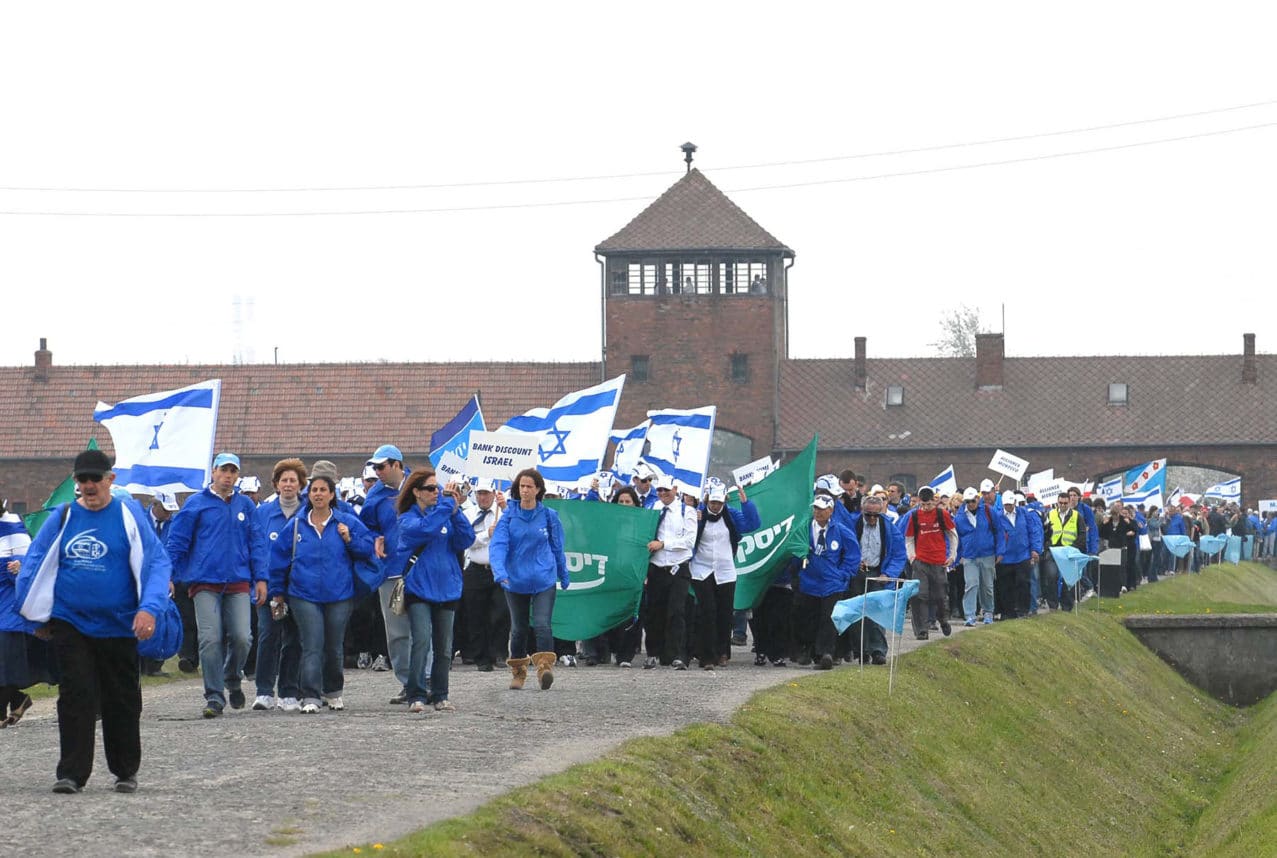
For many high school students in Los Angeles, participating in the March of the Living program is a rite of passage. Instead of learning about the Shoah through a history book, thousands visit Auschwitz-Birkenau in person each year.

In response to the cancellation of this year’s March of the Living, Milken Community Schools, the International March of the Living (MOTL), Holocaust Museum LA and Builders of Jewish Education Los Angeles have come together to create Gesher, a virtual two-day conference on Yom HaShoah.

On April 7 and 8, the virtual program will allow Jewish high school seniors from 10 schools in California, Boston, Atlanta, Philadelphia, Panama and Poland to learn about the Shoah.
The first day of the conference begins with a virtual tour of Auschwitz-Birkenau, followed by two group interactions with survivors. The second day offers an in-depth look at different topics and themes related to the Holocaust, Jewish history and culture. More than 30 different educators will lead programs, including Holocaust Museum LA Board Chair Michele Gold, Stephen Wise Temple Rabbi David Woznica, AJU Professor Michael Berenbaum and POLIN Museum Chief Curator Dr. Barbara Kirshenblatt-Gimblett.

Maya Aharon — BJE’s director of teen experiential education programs and a Milken alumna — said before the pandemic, BJE’s MOTL delegation typically included more than 220 Los Angeles students from over 20 different local high schools. Her experience attending the March of the Living only motivated her more to make the virtual experience just as meaningful.

“[MOTL] is an incredible journey where the stories so often only studied from the pages of history textbooks come to life while walking through the places themselves. The BJE MOTL journey is contextualized with historical framing guided by Holocaust educators and enhanced by the testimonies and personal anecdotes [from] Holocaust survivors,” Aharon said. “As a Milken alum[a] and the director of the BJE March of the Living program, I am proud, humbled, grateful and inspired to be a part of this incredible two-day event.”

During the conference, students will be able to choose from a variety of sessions focusing on Jewish culture, film, humor, art, theology, medical ethics and the contemporary implications of the Holocaust.

Jordanna Gessler, vice president of education and exhibits at the Holocaust Museum L.A., said that the sessions dive into aspects of the Holocaust that students don’t often think about. In order to keep students engaged, the partners asked students what they would want to experience if MOTL turned virtual. One of the ideas integrated into the conference is the notion that the Holocaust impacted Sephardic, Southern European and North African Jews as well as Ashkenazi Jews. These conference discussions overlap with the  museum’s Yom HaShoah programming, which will occur on April 11.

“Even though the Holocaust is this thing we are taught [within the Jewish community], there is still so much to unpack,” she said. “We wanted students to feel it was their program… We want it to be a dialogue… We wanted to offer…  topics and themes that honestly most people don’t think about until graduate school. We felt that students who are curious and interested in music and film, humor, or history or writing would have the opportunity to connect their interests within the larger context of Holocaust history, which I think is really unique for high school students.”

A key element of the March of the Living experience is connecting students with Holocaust survivors.

Gessler said a key element of the March of the Living experience is connecting students with Holocaust survivors. The Museum and fellow coordinators wanted to make sure students still heard survivor testimonies during the virtual conference.

Throughout the two-day conference, 30 Holocaust survivors will share their stories with students. While nothing can replace marching through Auschwitz-Birkenau in person, the educators hope that students will still take away a deeper understanding of the Holocaust through the personal oral history provided by the survivors.

Eva Perlman, a Holocaust survivor in L.A., attended the March of the Living ceremony nine times before the pandemic prevented her from attending for a 10th time. She will be involved in the virtual conference and enjoys sharing her story of survival with young people.

During the Holocaust, Perlman and her siblings fled to the French mountain village of Autrans and lived in a residential Catholic school, where the owners protected their identities. When she shares her story, she not only shares her message of resistance and hope but also what can happen when communities protect one another.

“We must always remember and continue telling [the stories.] The students become the witnesses of the witnesses,” Perlman said. “It seems like the world is becoming more and more disunited… Many non-Jewish people helped us… Many people risked their lives. I’m sure some lost their lives. It’s so important to be good people… to be good Jewish people… to never give up and to have faith and hope and to do the best you can in any circumstance.”

Milken Rabbi Gordon Bernat-Kunin is excited to offer a communal space where students of different backgrounds can come together and remember the Holocaust. As rabbinic director at Milken for 28 years, he knows how significant this trip is for seniors. Milken students travel to Poland and Israel as a class, learning about the Holocaust by actually walking through concentration camps. They form bonds with students around the world who are doing the same thing.

“I’m looking forward to them being able to differentiate what they’re interested in, but everyone on some level coming together to ask, ‘what are my responsibilities for the Jewish future?’” he said. “This technology allows [students] to teach each other and debrief… This is a way future generations can build together… and bring the idea of the Jewish covenant forward.”

Sophia Kangavari was looking forward to attending the March of the Living this year as a high school senior, but she’s also excited for the virtual experience. She appreciated that the Gesher partners asked for student input and ensured that they felt heard in the creation process.

“[2020] was very difficult for a lot of high schoolers around the world [who were] isolated from peers,” Kangavari said. “We wanted to maintain the connection that usually happens in person… We want to honor survivors through strengthening the Jewish future. We want to see that come out in these breakout rooms that are planned.”

Fellow Milken senior Sarah Lande is a granddaughter of Holocaust survivors and will offer closing remarks at the conference. She heard her family’s stories about the Holocaust since she was a child, but she now realizes the impact and pride she has in making sure those stories aren’t forgotten.

“Knowing what they’ve gone through and knowing that all their grandchildren carry on the Jewish tradition makes me really grateful,” Lande said. “It’s important for more and more people to hear stories of survivors and keep stories going for [generations.] When people ask me, I am very open in explaining what my family went through and also where they are today and how they have overcome it. ”

A major component of March of the Living and Yom HaShoah programming is keeping stories of people like Lande’s grandparents alive so everyone knows what happened during the Holocaust. Whether virtual or in-person, Gessler said Gesher aims to provide meaningful in-person testimonies so students can carry the torch for future generations.

“We can’t replicate standing on the soils where a grand atrocity took place,” she said. “Instead of trying to replicate that, we want to have conversations about how the themes that are discussed in a place like Auschwitz can still exist. In that way, we invite students to honor those who perished in a different way. We take the lessons of the Holocaust and turn them into action to honor those people.”

LA Organizations Partner with March of the Living for Virtual Yom HaShoah Conference Read More »

Book Review: “Hadassah: An American Story”

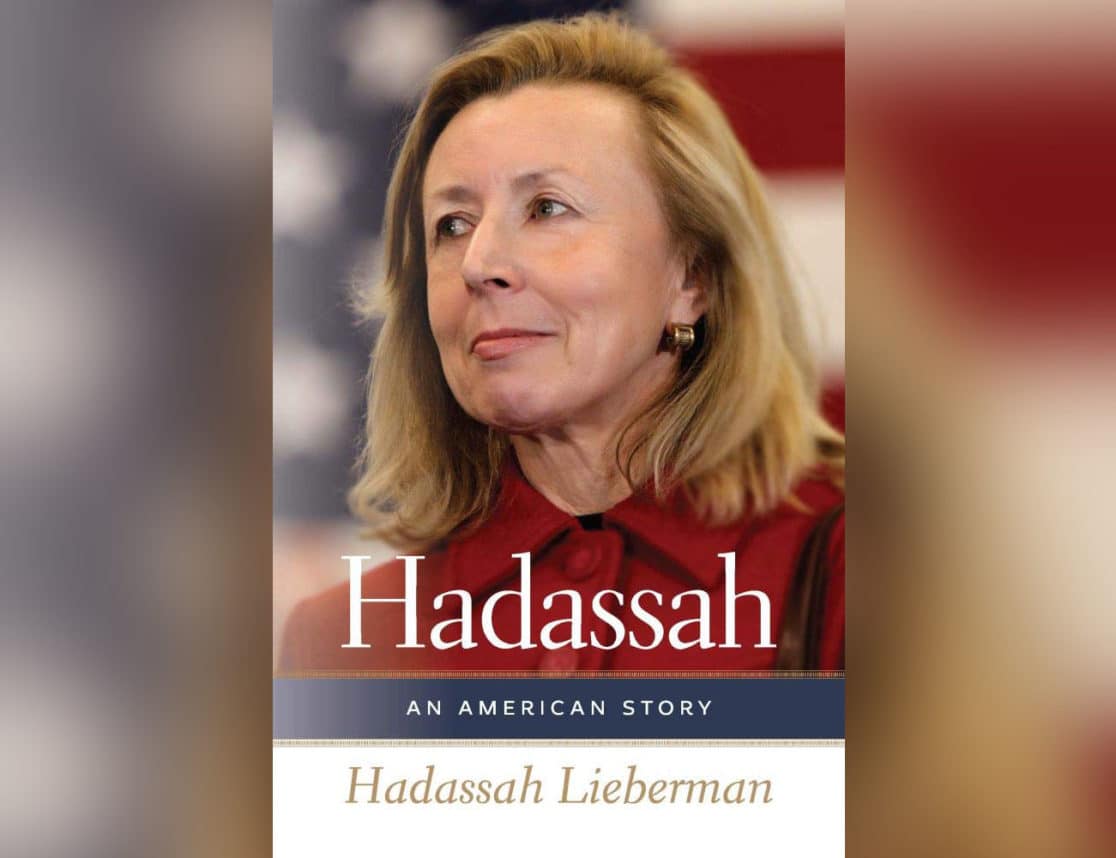
Hadassah Lieberman does something unusual in her memoir — she includes observations from her four children. In doing so, this daughter of Holocaust survivors is making a statement: “Their existence represents my ultimate defiance of Hitler’s goal: the extermination of the Jewish people.”

In “Hadassah: An American Story,” published by Brandeis University Press as part of their HBI Series on Jewish Women, Lieberman voices the pain she carries as the daughter of survivors, her gratitude as an immigrant and naturalized citizen and her alarm over what she sees as increasing xenophobia now taking hold. Whether writing about marriage, motherhood, illness, being on the campaign trail or an official visit to the concentration camps, Lieberman expresses herself with honesty, dignity, heart and wisdom.
Born in Prague in 1948, Esther (Hadassah) Freilich was the daughter of Ella Wieder Freilich, a survivor of both Auschwitz and Dachau, and Rabbi Samuel Freilich, who was conscripted by the Hungarian army during World War II. Of the 60,000 Hungarian Jews conscripted, only 15,000 survived. By the war’s end, Rabbi Freilich had typhus, was blind in one eye and weighed only seventy pounds. But he was alive. After the war, Samuel and Ella met and married in Prague, then immigrated to the United States when Hadassah was a baby and the Soviets had taken over the Czech Republic.

Lieberman chronicles her parents’ lives and experiences in the first chapters as a way of bearing witness. Her mother, she shares, suffered frequent nightmares from her war experiences but was “a force of nature… the memories she leaves with us and the lessons she taught are now part of our life force. They are her legacy to us—our responsibility to keep alive.” Lieberman also relates that “Even in the face of calamity my father always believed there was some purpose to everything in life.” These questions have infused and animated Lieberman’s life, teaching her how to make a difference and how to live a life of meaning that is also faithful to Jewish tradition.

Hadassah grew up in a small New England town where her father worked as a rabbi. She married Rabbi Gordon Tucker and had one son with him. When her marriage ended in divorce and she became a single mother, she felt that “the foundation that I built my life on was crumbling.” However, she soon realized that “the possibilities of the future are more endless and positive than are the difficulties of the past. The future was something I held in my own hands.”

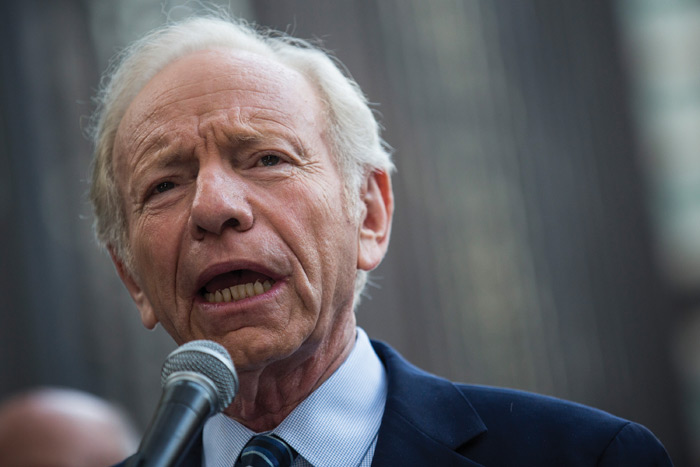
In 1982,  a mutual friend suggested that Joe Lieberman, who was then running for Connecticut attorney general, meet Hadassah, who was then living in New York with her young son. Joe was also divorced with teenagers — a son and daughter. Despite the hurdles of dating — given his campaign schedule, physical distance and their obligations to their jobs and their children — their attraction was instant and mutual. Joe helped Hadassah overcome her reticence about a second marriage for several reasons: she recognized that his ambition was “not to hold public office merely as an end in itself” but for the goal of tikkun olam — repairing the world. He also played board games with her son, who liked him very much. And yes, she thought he was handsome, too.

Although they had a blended family, the Liebermans “made a conscious decision” never to refer to any of the children with the “step” prefix. (The couple had a daughter together in 1988, during Joe’s first senate campaign.) According to Hadassah, their full embrace of each child “and verbalizing them as full children… made a critical difference to us. I consider this my greatest accomplishment: creating a fully integrated, tightly knit, and loving family.”

“I consider this my greatest accomplishment: creating a fully integrated, tightly knit, and loving family.”

After Lieberman won his campaign, the family moved within walking distance of the Senate because as the first Shomer-Shabbat senator, Joe planned to vote even on a Friday night or Saturday. “His personal religious convictions mirrored his approach to serving his country… The private went hand in hand with the public,” she writes.

Hadassah’s career in the healthcare field was interrupted when she became a Senate wife. But in Washington, she became a consultant on educational issues, public affairs and global women’s health issues. Everything in her life became more complicated since she and Joe were in the public eye, but she accepted that “it was all part of the job.”

The couple’s prominence grew when Vice President Al Gore tapped Senator Lieberman as his running mate for the presidential election of 2000. Hadassah campaigned actively, often “speaking from the heart” as opposed to from a prepared script, emphasizing her story as an immigrant living out the promise of America. Even during the campaign, the Liebermans’ Shabbat observance was non-negotiable: “To us, the Sabbath was just as important as making an extra campaign stop—more important actually. If we didn’t stay true to who we were, what was the point of running for office in the first place?” Joe and Hadassah both refused to check their religious beliefs on the campaign trail, despite advice to the contrary. The Gore-Lieberman ticket won the popular vote but lost by a single vote in the electoral college after the Supreme Court affirmed the legitimacy of contested votes in three Florida counties.

Hadassah Lieberman expresses no rancor or bitterness over political or personal disappointments. Instead, in this slim but substantial memoir, she expresses gratitude for her life of privileges and challenges, showing how she has worked “to establish a distinct identity as Hadassah Freilich, Hadassah Lieberman and as just plain Hadassah, so that I can make a difference in places where I was previously unknown.”


Judy Gruen is a writer and editor. Her books include “The Skeptic and the Rabbi: Falling in Love with Faith.”

Book Review: “Hadassah: An American Story” Read More »

Life After Pesach: The Minor League Holidays

As soon as the Passover Seders end, many Jews are content to NOT celebrate so much for a while. And yet there are another six days plus a dozen holidays and commemorations in the space of a month and a half, leading up to the anniversary of receiving the Torah, Shavuot. Any description of the Jewish festive cycle must make mention of these milestones typically left out of the holiday hall of fame.

As the Borscht-belt comedian Alan King famously summarized, all Jewish holidays can be summarized as “They tried to kill us, we won, let’s eat!” I’m illuminating all of the lesser blips on the radar so we don’t miss out on anything.
Whoever said “it is hard to be a Jew” clearly missed the point; being Jewish is a PARTY!

These special dates are listed according to their placement on the lunar calendar. To figure out their solar counterpart, simply consult a current Jewish-Gregorian calendar, like Hebcal.com.

The 15/16th of Nissan — Leil Seder

The Passover Seder nights.

The 16th of Nissan — S’firat Ha’omer

As soon as the first day of Pesach is over, we start a unique period called S’firat Ha’omer, during which we count the forty-nine days until Shavuot. Forty-nine is a crucial number in Judaism; since the number seven runs throughout the fabric of reality (days of week, colors in rainbow, notes in a scale), logically, seven squared is significant.

In the days of the Temple, a certain measurement known as an omer (about ten cups) of barley was offered by the Cohanim (priests) beginning on the second day of Pesach. We would start the count of one a day, building up our anticipation of the new wheat harvest and the upcoming offering of whole bread loaves on Shavuot. This counting recreates our initial preparation for the Revelation at Mount Sinai in the year 2448 and allows us to refine our character traits to prepare for the ultimate kabbalah, personally receiving the Torah.

According to the Talmud, 12,000 pairs of Rabbi Akiva’s students died during S’firat Ha’omer as punishment for not treating each other with proper respect. This period became associated with an awareness of the importance of achdut (Jewish unity) and a state of semi-mourning. Celebrations like weddings, Bar/Bat Mitzvah parties, concerts or even niceties like a shave or haircut are prohibited. What should have been a time of joyous anticipation is now subdued.

The 17th of Nissan — Chol Hamo’ed

The Chol Hamo’ed (intermediate days) of Passover begin as soon as the second day of the holiday (or the first day in Israel) has ended. The four days retain a festive nature but most types of melacha (creative acts forbidden on holidays) can be done. Our prayers are of the weekday variety with special holiday insertions, plus the addition of Hallel (a series of celebratory Psalms), Torah readings and Mussaf.

The Shabbat of Chol Hamo’ed is a unique collision of holiday joy and Sabbath sanctity. The services that day are particularly animated and, in most synagogues, are enhanced with the public reading of the evocative love poetry of King Solomon’s Shir Hashirim, the Song of Songs.

21st/22nd of Nissan—Sh’vi’i and Acharon of Pesach

These are the last two days of Pesach. They have the same restrictions as any Jewish holiday, but cooking and carrying things from one place to another is permitted. There are no special observances other than the pleasure of hearing the Torah portion featuring the splitting of the Red Sea on the anniversary of our crossing. The eighth day of the holiday is one of the few formal times we pause to remember those loved ones who passed away in a short memorial ceremony called Yizkor. 

The 26th of Nissan — Yom Hashoah

The first of many commemorations on the heels of Pesach is Yom Hashoah (Holocaust Day). This date was chosen by the Israeli government to memorialize the six million who perished in the Holocaust since it is close to the anniversary of the Warsaw Ghetto uprising. Clearly, the authorities chose this famous revolt because it represents the indomitable Jewish spirit, even though it was doomed.

Whereas some Orthodox pundits maintain that Tisha B’Av memorializes all maladies throughout history, I think it is appropriate that the Holocaust has its own milestone. While it is more of an event in the Holy Land, Diaspora organizations typically hold memorials featuring survivor testimonials. It is also the day on which over 10,000 March of the Living participants meet in Auschwitz.

The 1st and 2nd of Iyar — Rosh Chodesh Iyar

The next special day is actually a holiday occurring every month. Rosh Chodesh is the celebration of the new moon. Chodesh (month) is also closely related to the word for newness, chadash. This mitzvah is the very first given to the Jews as a free people right before leaving Egypt. Two weeks after the beginning of Pesach is the next Rosh Chodesh, this time for the month of Iyar. The Rosh Chodesh service includes Hallel and a special Mussaf.

The 3rd of Iyar — Yom Hazikaron

Yom Hazikaron is Israel’s official Memorial Day in remembrance of those who fell in war or acts of terrorism. Back in 1951, the Israeli government decided to separate the ecstatic celebration of Independence Day from mourning and memory, so Yom Hazikaron shifted to the day before. One-minute sirens are sounded at the start of the day at 8:00 pm and then again the following morning at 11:00 am when the official ceremonies begin. This practice of solemnity before jubilation heightens the awareness of the price paid for Jewish independence.

The 4th of Iyar — Yom Ha’atzma’ut

Yom Ha’atzma’ut, Independence Day, is a serious party in Israel. Crowds gather for concerts and dancing, and Israelis proudly display Israeli flags on their apartments, cars and bodies. Since we usually don’t have this day off in the Diaspora, citywide outdoor concerts are scheduled on a proximal Sunday. Yom Ha’atzma’ut is an uplifting time of Jewish unity.

The 14th of Iyar — Pesach Sheini

Rabbi Shlomo Carlebach called Pesach Sheini the “capital of second chances.” It was initiated thanks to spiritually impure Israelites arguing to Moshe Rabbeinu that they, too, had a right to a Passover celebration. One month after the official Seder, God established the designated time when such individuals could bring the Pesach offering.

The 18th of Iyar — Lag B’omer

Lag B’omer is an acronym of the Hebrew letters lamed and gimel, signifying the 33rd day of the counting of the omer. This day commemorates the yahrzeit(death anniversary) of Rabbi Shimon Bar Yochai, the great mystic who popularized the esoteric teachings of Kabbalah in his text, the Zohar. He commanded his disciples to rejoice on this day; parties replete with bonfires, concerts and dancing celebrate his life and the revelation of the hidden secrets of Torah.

The 28th of Iyar — Yom Yerushalayim

Yom Yerushalayim commemorates the reunification of Jerusalem following the 1967 Six-Day War. Many remember this milestone as the modern-day apex of international Jewish pride. King David established Jerusalem as the seat of his monarchy around 1000 BCE. The 1967 victory marked the first time in thousands of years that all Jerusalem, including the Kotel, came under Jewish control.

The 1st of Sivan — Rosh Chodesh Sivan

Rosh Chodesh once again! That makes for a total of a dozen “holidays” for our enjoyment between the Seders and Shavuot on the 6th/7th of Sivan. Welcome to the Minor Leagues. Whoever said “it is hard to be a Jew” clearly missed the point; being Jewish is a PARTY! May we all celebrate together in Jerusalem.


Sam Glaser is a performer, composer, producer and author in Los Angeles. He has released 25 albums of his music, he produces music for various media in his Glaser Musicworks recording studio and his book The Joy of Judaism is an Amazon bestseller. Visit him online at www.samglaser.com. Join Sam for a weekly uplifting hour of study every Wednesday night (7:00 pm PST, Zoom Meeting ID: 71646005392) for learners of all ages and levels of knowledge.

Life After Pesach: The Minor League Holidays Read More »

Happy Birthday Dad. I Still Miss You

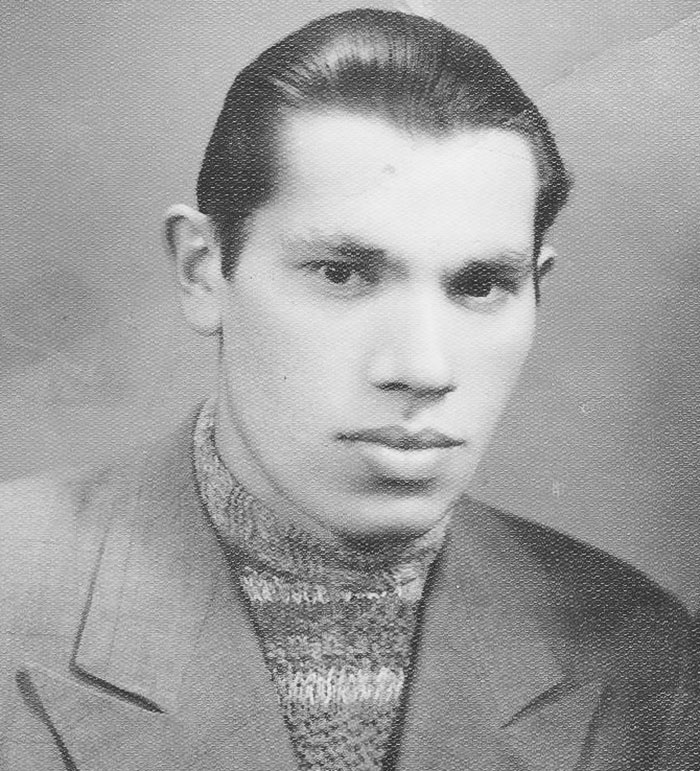
In a few weeks, it will be my father’s 100th birthday. But tragically, there will be no celebration. He passed away 55 years ago, after he suffered heart attack just a few weeks after Passover. He never fully recovered, and three weeks later, he died. Had his heart lasted a few more decades, modern medicine would have saved him. But it was during the dark ages of cardiology, when too little was known about treating heart disease.

It’s been a lifetime since my dad’s life ended. Yet I think of him every day. I mostly think how unfair it was for him to die at the young age of 45, just as I was entering my teen years. But I’ve also come to the realization that being obsessed with his premature death, and my life growing up without a father, is an equal tragedy. My father not only died — he also lived.

My father was born Azriel Farkovitz (later Americanized to Irving Farr) in a Czechoslovakia shtetl near the Carpathian Mountains. He was one of eight siblings, five boys and three girls. His father was a teacher in the local cheder, a one-room, makeshift school where he taught local Jewish boys sacred Hebrew texts. From the stories he told me when I was a kid, I learned their small house didn’t have basic necessities such as plumbing, gas or electricity. I guess the next line should be “but they were happy.” I have no idea if they were. I somehow doubt it.

Like millions of fellow Eastern European Jews, his life turned upside down when the Germans invaded his small village. My father was shipped off to a German labor camp, where he spent two years working, starving and enduring regular beatings. He rarely spoke of his time in the camps, preferring to live in the present. But there was one story he told me that stayed with me all these years. He was walking on the camp grounds and spotted a potato under a barrack. He grabbed it and hid it under his coat. Somehow, word got out, and Nazi soldiers dragged him outside, where they tied his wrists together behind his back. They hung him from a pole for all to see. After two days serving as an example to the other prisoners, he passed out. He never again took “unauthorized” food.

After liberation he emigrated to America, where he eventually located two surviving brothers. Two years later he met my mother. They were a perfect match. She was also from Czechoslovakia and survived three death camps, including Auschwitz. She was her family’s only survivor.

As a kid growing up without a father, I often think what my life would be like had he lived longer. Would I take over my parents’ butcher shop and grocery store in San Jose, California, where we lived? Would he teach me to lead synagogue services with the precision and skill that came naturally to him as the shul cantor? I doubt it, since I have no interest in the food business and can’t sing a note.

Being a teenager without a father was tough. I missed father-son nights at school. I envied seeing friends sit next to their dads in synagogue while I sat alone or next to a stranger. More than anything else, I hated when my friends complained about their fathers. It would trigger thoughts of how lucky they were to have a dad, even if he wasn’t perfect. What father is?

I envied seeing friends sit next to their dads in synagogue while I sat alone or next to a stranger.

Most of all I wish my father could have known my wife, three children and two grandchildren. He certainly would see them as living proof that his survival and re-building of his life had meaning and, most of all, that Hitler didn’t win.

My father’s yahrzeit and birthday fall just a couple of weeks apart. This year, as I recite the kaddish,

I suspect I will also think about his birthday and what could have been.

So happy 100th birthday, dad. If they have the internet in heaven and you read this, just know your short time on this earth had lasting meaning, and you will never be forgotten.


Harvey Farr is a Los Angeles-based marketing consultant, writer and photographer.

Happy Birthday Dad. I Still Miss You Read More »