fbpx

April 6, 2021

Israeli President Tasks Netanyahu with Forming Next Government

Israeli President Reuven Rivlin gave Prime Minister Benjamin Netanyahu the mandate on Tuesday to form the country’s next government.

In his address, broadcast from the President’s Residence in Jerusalem, Rivlin noted that in the seven years since his election by the 19th Knesset, there have been five Knesset elections, four of them in just two years.

“I did not imagine and I did not expect that, time after time, five times, I would be faced with the difficult task of deciding whom to entrust with forming a government,” he said.

During his consultations with the representatives of all Knesset factions on Monday, he said 52 Knesset members had requested that Netanyahu be tasked with forming a government, while 45 recommended Yesh Atid Party head Yair Lapid. Seven MKs had requested that Yamina Party leader Naftali Bennett be asked to form a government, while 16 had made no recommendation, he added.

“The results of the consultations, which were open to all, led me to believe that no candidate has a realistic chance of forming a government that will have the confidence of the Knesset,” he said.

“Given this state of affairs, when there is no majority of 61 Knesset members supporting a particular candidate and without additional considerations indicating the chances of the candidates to form a government, I have come to a decision based on the numbers of recommendations, which indicates that MK Benjamin Netanyahu has a slightly higher chance of forming a government. Accordingly, I have decided to entrust him with the task of doing so,” he said.

The president concluded his remarks by quoting U.S. President Abraham Lincoln: “With malice toward none; with charity for all; with firmness in the right … let us strive on to finish the work we are in; to bind up the nation’s wounds.”

Israeli President Tasks Netanyahu with Forming Next Government Read More »

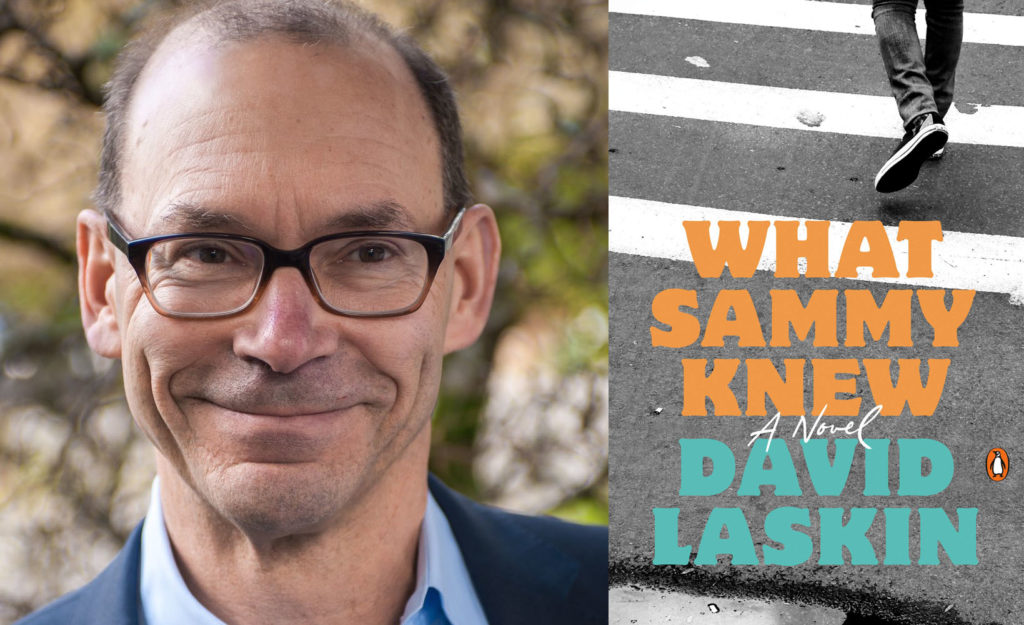
David Laskin Breaks New Ground in ‘What Sammy Knew’

Like many other readers, I felt chills while reading David Laskin’s new novel, “What Sammy Knew” (March 2021), a captivating coming-of-age story about a Jewish teenager faced with the racial unrest of the 1960s and 1970s; however, some of my goosebumps arose from more personal reasons. I grew up in the same privileged neighborhood as Laskin and his freckled protagonist, Sam Stein. We attended the same public high school on Long Island. We experienced the same hormone-fueled loathing of suburbia and our “bedroom community stuffed with rag-trade impresarios, pill-popping trophy wives, and their brilliant beautiful Ivy League-or-bust offspring.”

I suppose that makes me and Laskin such “offspring.”

Laskin originally began writing “What Sammy Knew” as a nonfiction book like his past works, which include “The Children’s Blizzard” and “The Long Way Home”. The award-winning author set out to write a memoir about his childhood relationship with Ethel Beane Foreman, his family’s live-in domestic worker. After writing “The Family: A Journey into the Heart of the Twentieth Century,” Laskin became determined to learn more about Foreman, who passed away when he was only ten.

“I became really, really curious — to the point of obsession — about Ethel’s life,” Laskin noted during our recent phone conversation. That “obsession” drove the Seattle-based writer to northern Virginia. Laskin found Foreman’s childhood home, church and ancestors’ graveyard. He researched her family two generations back into slavery. He even tracked down the last family that held Foreman’s grandparents in bondage.

Yet despite his extensive research, Laskin felt something was lacking. “It didn’t feel that I had done justice to the character of Ethel, but I knew that I wasn’t done with the story. I knew that there was something about her life and her example and her voice that I wanted to continue to portray and take to a deeper level. But in the absence of journals, diaries or letters, I just didn’t have enough to work with. And that was when I thought, ‘You know what? I [have] to make it up. I’m going to write this as a novel.’”

The gripping and heartfelt story marks the author’s first foray into fiction. Laskin was aware that many nonfiction writers have struggled with the transition. He also knew that he was taking a risk in switching genres relatively late in his career. Even his agent warned him how hard it was to jump the fence.

“But I gave it a go and it worked out,” the author explained. “It was almost like screwing my head on in a different way.”

Laskin skillfully folded the themes of his memoir into his quasi-autobiographical novel. Like Laskin, Stein is raised as a nice Jewish boy from a middle-class family in Great Neck (or “Fat Neck on Lone Guyland,” as Stein charmingly views it). After Stein’s parents decide to lay off their live-in Black housekeeper, Tutu Carter, Stein escapes to New York City with his radical girlfriend as a form of blackmail. The idealistic teens quickly find themselves plummeting headfirst into the electrifying and increasingly violent political and racial undercurrents of the 1960s.

The striking similarities between the politically-charged drama and today’s social movements are unmistakable. Laskin confirmed that he deliberately mapped the nation’s current political situation onto the past while developing the plot. “I was very much aware that we were living in an era of injustice, swelling, protest and alienation from our government. It was eerily parallel to a lot of what was happening in that period of our history. What I wanted to do when I wrote ‘Sammy’ was have readers today go, ‘Wait a minute! Whoa, that happened fifty years ago? It’s so much like what’s happening now.’”

The striking similarities between “What Sammy Knew” and today’s social movements are unmistakable.

One of the most memorable moments in “What Sammy Knew” is an encounter between Tutu’s grandson, Leon Carter, and a mysterious gray-haired man known as “the Rabbi.” Following an ill-fated audition with a Jewish producer, Carter visits the Rabbi’s office, where they harmonize and bond over the Shema. In addition to illustrating the beauty of Jewish spirituality, the poignant scene represents Laskin’s desire to evoke a period where Black and Jewish Americans united for social justice.

“I’m thinking of the Freedom Riders, the kind of early stages of the civil rights movement, when Jewish Americans were very involved in that protest movement in supporting civil rights…. Sadly, later in the sixties, it went south and there was a lot of conflict. I think that the Black Power movement and, to some extent, the Black Muslim movement drove a wedge between Jewish Americans and African Americans. But I wanted to heal that,” Laskin said. “I think that the Rabbi and Leon harmonizing together was my way of referring to and maybe healing… that rift.”

Laskin became so immersed in the atmosphere of the 1960s that he assembled a YouTube playlist to accompany the novel. “The Sammy Playlist” includes hit songs referenced by the characters, such as “Bridge Over Troubled Water” and “Like a Rolling Stone.” The protagonist is consumed by Dylan’s quintessential anthem after being mugged for the first time. The lyrics reflect Stein’s naivete and the reader’s own ignorance in a society bursting with racial tension and public upheaval. Laskin expertly paints a timely and haunting tale about the loss of innocence and importance of optimism.

“I wanted the arc of Sammy’s life to [go] from innocence to disillusionment to reconciliation,” Laskin noted. “I think, maybe in some ways, there’s a little bit of wishful thinking for [a] sort of reconciliation, political and social, for African Americans and Jewish Americans.” “What Sammy Knew” leaves us hopeful for one.


Eve Rotman is a writer on the West Coast.

David Laskin Breaks New Ground in ‘What Sammy Knew’ Read More »

More Than 350 Academics Sign Letter Supporting IHRA

More than 350 academics, professionals and intellectuals worldwide signed a letter supporting the International Holocaust Remembrance Alliance (IHRA) definition of anti-Semitism.

The letter, which was signed by UCLA Computer Science Professor Judea Pearl, University of Ottawa Holocaust History Professor Jan Grabowski and McGill University Professor Gil Troy, stated that while all of the various scholars hold differing political viewpoints, they all believe that the IHRA definition is an “invaluable tool” in combating the rise of anti-Semitism globally.

“This new antisemitism has its roots in a noxious mixture of classical, modern racial, Islamic and Soviet anti-Zionist antisemitism,” the letter stated. “It marks out the Jewish state as uniquely demonic, deserving of boycott and opprobrium. In a world full of states and national movements, it calls for the dismantling and ultimately violent destruction of the State of Israel. This antisemitism justifies the harassment, exclusion and ostracism of Israelis and Jews worldwide. It continues centuries old traditions of boycotting, rejecting and shunning Jews.”

The letter noted that modern anti-Semitism singles out Zionism and attempts to delineate between Zionism and Judaism. “Many of our parents and grandparents fled persecution in Europe and the Arab and Muslim worlds due to their Jewish identity,” the letter stated. “The State of Israel has provided Jews worldwide with a homeland, a place to develop our unique culture and the ability to protect ourselves from external threats. Therefore, calls to dismantle the Jewish state cannot be understood as anything but an assault on Jewish history, identity and safety.”

The scholars added that those who say that IHRA silences criticism of Israel are engaging in a “strawman” argument and that IHRA specifically targets rhetoric that delegitimizes and threatens Israel’s existence.

“The hatred directed against Israel, when left unchecked, seeps out and targets Jewish communities in the Diaspora, who largely identify with and support the State of Israel in essence, not necessarily with one policy or another,” the letter stated. “These anti-Israel conspiracy theories and false accusations have fueled harassment, assault and even murder of Jews in North America and Europe. We are incredulous at the suggestion that the adoption of the IHRA definition and the commitment to rooting out antisemitism is somehow opposed to the wider struggle against racism and oppression.”

International human rights lawyer Arsen Ostrovsky, who is also the chair and CEO of the International Legal Forum, which endorsed the letter, said in a statement, “At a time when there is a spate of alternate definitions of antisemitism, in blatant attempt to water down and undermine the fight against this oldest and most enduring of hatreds, as well as its modern manifestation in the assault against Zionism and the State of Israel, it is inspiring to see so many academics and intellectuals from around the world, united behind the IHRA working definition as an indispensable tool in identifying and combating antisemitism.”

Sussex Friends of Israel tweeted that the letter shows that IHRA is “gaining global momentum” and that “attempts to undermine the widely accepted definition by a tiny minority is neither needed nor wanted.”

Sharaka, an organization that leads interfaith delegations to connect Israelis with people in the Gulf Arab nations, also tweeted that they are “proud to stand with” the scholars who endorsed the IHRA definition.

Five Holocaust survivors also recently signed a letter endorsing the IHRA definition, stating: “The IHRA definition of antisemitism is the majority consensus of the global Jewish community and, like every other group that has ever faced persecution, we have every right to name the prejudice and hatred we face. That right is ours.”

More Than 350 Academics Sign Letter Supporting IHRA Read More »

David Suissa Podcast Curious Times

Curious Times Episode 18: How Can Synagogues Up Their Game Post Pandemic?


In conversation with Shanni on programming for the Jewish future, and remembering the late Eva Brown during Holocaust Remembrance.

Enjoy the conversation.

Listen on Apple Podcasts

Listen on Spotify

Listen on Stitcher

Follow David Suissa on FacebookTwitter and Instagram

Curious Times Episode 18: How Can Synagogues Up Their Game Post Pandemic? Read More »

Marty Friedman On His New Album “Tokyo Jukebox 3,” Life During COVID-19 & More

In the best way possible, Marty Friedman is an anomaly within the musical world. He started off in the 1980s as a guitar-centric recording artist for Shrapnel Records, which had also signed his metal band Cacophony. The start of the 1990s brought him into the Megadeth fold, in which Friedman would go on to sell millions of albums. But the success he experienced before leaving Megadeth in 2000 would only be a fraction of what was to come for Friedman.

Marty Friedman moved to Japan in 2003 and quickly found work as a sideman for several Japanese prominent recording artists. Nowadays, he is not only a prominent solo artist and session player, but also an in-demand host and actor with 700+ television appearances to his credit. Friedman has written an autobiography and is the focus of a forthcoming documentary. Friedman is also an Ambassador of Japan Heritage by the Japanese Government. However, the guitar hero chooses not to rest of the laurels of his stardom in Asia, instead – pre-COVID-19 — opting to tour the U.S. regularly in recent years.

The latest solo album from Marty Friedman is “Tokyo Jukebox 3,” as due out via the Mascot Label Group on April 16, 2021. “Tokyo Jukebox 3” is the third in a series that began with 2009’s “Tokyo Jukebox” and continued with “Tokyo Jukebox 2.” The album’s recording process started in January 2020 and was due to end in March 2020 with a release in May 2020. Then the COVID-19 pandemic struck, and everything was pushed back. Alongside bassist Kiyoshi and drummer Anup Sastry, “Tokyo Jukebox 3” features Friedman’s interpretations of favorites by LiSA, Official Hige Dandism, Da Pump, Zard, Everything Little Things and Sekai No Owari.

On March 15, 2021, I had the pleasure of speaking with Marty Friedman via Zoom, as embedded below. Beyond “Tokyo Jukebox 3,” we talked about long-term career goals, life during COVID-19, musical influences and plenty more.


More on Marty Friedman can be found here, here and here.

Marty Friedman On His New Album “Tokyo Jukebox 3,” Life During COVID-19 & More Read More »

From Waste to Paste

A new development makes it possible to convert discarded plastic bags left to pollute into strong, adhesive glue substances. Will this succeed in reducing the ongoing environmental damage perpetrated by disposable plastic?

In cooperation with the Nature and Parks Authority, the Ministry of Environmental Protection announced that it was promoting a ban on bringing disposables, including utensils, into nature reserve areas and national parks this past January.  Around the same time coincidentally, Coca-Cola issued a statement stating that by 2030, it would stop using plastic for their beverage bottles and transition to paper-based bottles, which are currently undergoing a series of tests and trials.

If both the Israeli government and one of the largest companies in the world (one of the top-ranking plastic polluters) understand that the use of disposable plastic is one of the most significant environmental challenges, then it is probably time to act. According to expert estimates, the weight of plastic in the oceans is on track to exceed the weight of all oceanic fish by 2050 if no significant changes are applied to plastic production and treatment policies

Luckily, a new American development proposes to convert plastic bags into sticky adhesives as a creative way to upcycle plastic and slash the egregious amounts plastic waste buildup.

Not as Recyclable as You Think

One of the major problems in the field of plastic waste treatment is that the plastic recycling process is expensive, requires lots of energy, uses water, heavily relies on transportation, all of which come at a significant environmental cost. But on the other hand, the production of new plastic from oil remains cheap and available.

“There are products, such as plastic beams used for camping, that can be made from different types of plastic that are melted together whether its the packaging for cleaning materials, cups, or pipe parts,” explains Prof. Ofira Ayalon of the Samuel Neaman Institute at the University of Haifa.

“However, for the production of many other products, such as recycled ketchup bottles, only a uniform raw material can be used. As a result, it is necessary to separate the waste according to plastic type, which complicates the recycling process, making it more expensive.”

Plastic bags are usually made of polyethylene, a type of plastic that makes up about a third of all plastic produced in the world. According to Ayalon, the process of recycling polyethylene is not economically viable.

“Bags made of polyethylene are inferior raw materials, which will make the recycling process even more cumbersome,” she says. “Therefore, almost no bags are recycled today.”

From Hard Plastic to Adhesive Material

In a new study, the researchers propose to turn plastic waste into a high strength glue through a specially developed chemical process, which enables polyethylene to function as an adhesive that binds to metal.

As part of the process, the researchers added hydroxyl groups to the polyethylene: an oxygen atom covalently bonded to a hydrogen atom that can bond to other atoms like carbon, for example, whose thousands of atoms are connected in a chain of polymer components similar to polyethylene. To do this, they used a catalyst, a substance capable of accelerating chemical reactions, based on ruthenium (a hard metal that withstands high temperatures).

The researchers also discovered during the development of the method that adding a small amount of alcohol to the material increases its stickiness by a factor of 20. The researchers made chemical changes in less than 10% of the polyethylene polymer, but that was enough to turn it from hard plastic into an adhesive material

According to the researchers, turning polyethylene into a sticky material does not impair its other properties that are useful in industry, such as its ability to process, its thermal stability, and its mechanical properties. Unlike regular polyethylene, the upgraded material can even be painted, using a water-based latex paint.

Alternative Uses

Admittedly, the process of turning plastic bags into glue has not yet been proven to be profitable on an industrial scale, but researchers believe it can be and that it can be a starting point for adding other useful properties to polyethylene besides adhesiveness. The researchers’ success may indicate that other catalysts may change the properties of other types of plastics such as polypropylene, which is used to make recycled plastic bottles. In the future, this may allow other useful materials with economic value to be produced from used and discarded plastics.

According to the researchers, adhesive polyethylene can also be useful for many other purposes including the improvement of artificial knee implants and hip sockets, which are often made of polyethylene combined with metallic components. Additionally, it can be used in the production of electrical wiring and can be utilized to manufacture more durable toys made from plastic and metal compounds.

Tackle the Problem at its Source

If and when it becomes commercial, the new development may help solve the problem of plastic bag waste buildup, at the very least partially. However, according to Ayalon, in order to properly understand the scope of its environmental contribution, a life cycle analysis (LCA) must be performed. That is, a comprehensive assessment of the product’s environmental impact throughout its life (from the raw material stage, to production and use, to the end of its life as waste).

“If all of this impact is taken into account and the process is found to be environmentally worthwhile, it may be a good solution,” she says.

This new development joins with several other recent creative ideas designed to reduce the amount of plastic waste we as a society generate. For example, a study currently being conducted at Ben-Gurion University, in collaboration with the Portuguese recycling company ECOIBÉRIA, found bacteria capable of breaking down PET (polyethylene terephthalate) into monomers, its subunits, in order to reuse them as a raw material for other plastic products. At the same time, researchers in Sweden are currently developing an industrial process through which it will be possible to turn plastic waste into raw material for new plastic products.

However, Ayalon emphasizes that in the end, the best solution to the plastic waste problem is to simply produce less of it.

“Many times, thanks to the recycling bin, people who dispose of their plastic waste there feel that they are ‘allowed’ to waste plastic,” she says. “However, it is always better to tackle the problem at its source. In this case, manufacturing and using fewer plastic bags and other plastic products should be our primary objective.”

ZAVIT – Science and Environment News Agency

From Waste to Paste Read More »

How Writing Changed Me

For years, I was under the impression that I could not write and sing at the same time.

The world had successfully brainwashed me into believing that women were allowed one thing, but not two.

I feared writing publically would somehow make me look wierd as a singer. Or it would just blow my cover, exposing the rawer, more unsavory parts of me that I was trying to hide under the prettily curated singer’s image.

Writing and singing are actually two sides of a wonderfully healthy creative coin, but I did not know that yet.

In my teens and early twenties I experienced the longing for visibility and the overwhelming desire to hide as agonizingly problematic. Later I understood it as a gift.

Having that woefully human tension built inside you, creatively speaking, is like being kissed on the forehead by God. It’s like being given the richest soil to plant your crops.

I don’t mean you must be miserable to make art. But if you have no clue what suffering feels like, if you float through the world like a perfect, enlightened, blissed-out yogi who transcends all and has no inner mess, and is “good vibes only” your art will not touch many hearts.

But as teen I was convinced I needed to choose one thing and one thing only, like a child whose Mom has said they may select one candy treat at the supermarket.

That is why at sixteen I saved my babysitting money and went to psychic on the Venice Boardwalk. I told him I didn’t know what to do: I had two great overwhelming loves: singing and writing, and didn’t know which to choose. He told me to focus my energy on the singing and that later in life, that would give me lots to write about.

I took his advice. My thing would be opera. I liked his words about how one day, it would give me something to write about. (and damn was he right.)

But also, at the time, opera seemed the bigger challenge. Opera seemed the bigger triumph over the world who I thought saw me as a weird, scared, awkward, solitary, nerdy type.

And so a part of me understood, even at that young age, that with the challenges I came into the world with— self-consciousness, perfectionism, extreme sensitivity—performing opera would require me to evolve in a more dramatic way than writing would.

Opera would mean I’d have to get off the sidelines, come out of my shell. That was terrifying and also so attractive. I suspect I chose opera at least in part out of defiance.

That is why the girl who had an almost finished memoire by age nineteen, a notebook full of song lyrics, a half-collection of a poetry anthology, and a screenplay one third of the way done, did not write anything at all for twenty years.. There was never any conflict or anguish in writing, unlike with performing. And maybe I was a glutton for punishment or just a daredevil or always needed to do the harder thing. But I just simply stopped.

But the thing about being a writer, that took me until now to realize, is that you are always writing even when you are not. What I mean is, in my head, I was always forming stories, forming a cohesive narrative of what was happening to me. I was collecting material, and chosing how to frame what was happening to me, and around me, even though I never put pen to paper.

But the thing about being a writer, that took me until now to realize, is that you are always writing even when you are not.

And then one day in 2016, I started again. I started because I accidentally jogged past a concentration camp while on a gig, and it cracked something open inside me. So I wrote about it and then posted on Facebook. I’d never shared anything vulnerable here before.

Facebook was something that initially puzzled and repelled me. Why would anyone give a rat’s ass what I was thinking, or what I ate or what my perspective was?

But something was shifting. On Facebook I saw people I knew from high school who had become writers and they used it to share excerpts of their work. Something in me perked up.

So I posted my essay, sweaty, heart racing, and hands shaking.

Clicking the mouse that day changed my life. It marked a line in the sand–namely my refusal to adhere to someone else’s definition of what opera singer should look like or behave like.

I’ve heard it said that depression and anxiety are your soul’s way of saying you are tired of playing your avatar. I do think this played a great role in my own battles. I got very tired of playing my avatar—namely, that of a perfect, nicely behaved, cooperative, pretty young lady singer who had no opinions or feelings or observations other then what lipstick matched her performance outfit and how her passagio was coming along.

Starting to write again was a big part of what healed me.

Opera is larger than life and when done right, has to the power to touch the heart in extraordinary , grand ways. Writing, by comparison, feels smaller, simpler, and yet weirdly more vulnerable. It’s more pointed, more like a scalpel. Or not a scalpel, maybe more like a soft pointed paintbrush. Because of this, I think sometimes writing can reach people in a way opera, with its huge, epic brush strokes, cannot.

They both remain profoundly valid and important and I will never give either one up. Just two separate approaches, knocking at the door of the human condition, extending a soft, trembling hand, whispering, let me in and I promise you will feel less alone.

How Writing Changed Me Read More »

The Existence of JDA Only Serves to Bolster the Argument for IHRA

Last week, we celebrated Passover, commemorating the first time the Jewish people fled persecution and found refuge in Zion. For 3000 years, we have celebrated this first Zionist voyage with cries of “Next Year in Jerusalem!”

Three weeks ago, a Jewish congressional staffer found a U.S. Capitol officer reading the “Protocols of the Elders of Zion” on the job — just two months after neo-Nazis stormed the epicenter of American democracy. This reemergence of the “Protocols” reminded us that the demonization of Jews as “Zionists” (“Elders of Zion”) long predates the Israeli-Palestinian conflict and the establishment of the modern State of Israel.

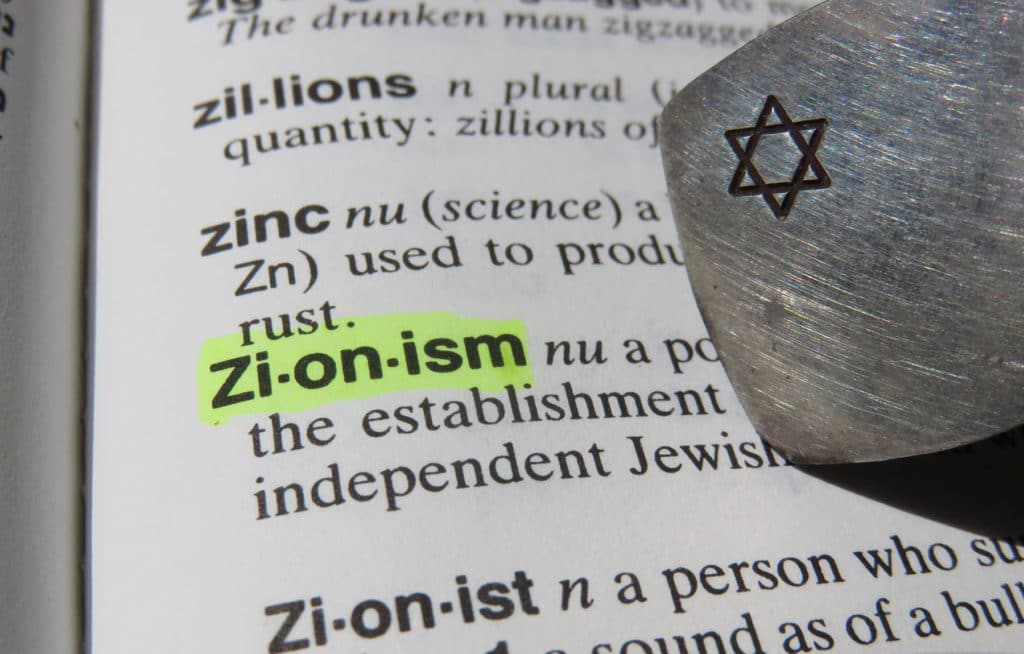
Paradoxically, two weeks ago, 200 academics, some Jewish and some not, signed a declaration denying that “anti-Zionism” is explicitly anti-Jewish. The goal of the new “Jerusalem Declaration on Antisemitism” (JDA) is to undermine overwhelming support for the globally-established International Holocaust Remembrance Alliance (IHRA) definition of antisemitism, or at least to muddy the waters enough that application of IHRA’s definition becomes taboo.

Ironically, though, by its very existence, JDA clearly demonstrates why IHRA is not only important, but also entirely appropriate — and why certain criticisms of IHRA leveled by some of JDA’s signatories have always been somewhere between confused and intellectually dishonest.

JDA claims it exists to answer one urgent question: “When does political speech about Israel or Zionism cross the line into antisemitism and when should it be protected?” But if this is JDA’s primary raison d’être, it was all for naught, as this question is itself a false choice, a manufactured binary.

Any American lawyer could have told JDA’s drafters that all political speech about Israel or Zionism is protected — even when it crosses the line into antisemitism. That’s why neither JDA’s nor IHRA’s definition could possibly criminalize or ban any speech, antisemitic or not. Antisemitic speech, like all hate speech, is quintessentially protected in the United States, unless it incites imminent lawless action. Whether certain speech was identified as antisemitic under IHRA or JDA (or both), it would remain constitutionally protected. This tells us that the histrionics about IHRA “violating free speech” were always a pretext, and that JDA’s proponents have no problem with “policing speech” — just as long as they are the ones wearing the badge and drawing the lines.

The problem with the lines that JDA aims to draw is that they seem significantly more concerned with protecting accused antisemites than protecting victimized Jews. While IHRA describes scenarios that “could, taking into account the overall context,”be antisemitic, JDA dedicates ample space to “examples that, on the face of it, are not antisemitic.” IHRA warns us to proceed with caution after entering potentially antisemitic territory, while JDA provides cover for anyone approaching the danger zone unless and until they pass a threshold of gross bigotry. In creating a bright-line rule about what is not antisemitic, JDA deflects from the most common — antisemitic — manifestations of the issues it addresses to intellectually rationalize the liquidation of the Jewish state.

Moreover, the IHRA definition already incorporates examples that, on their face, are not antisemitic. By describing scenarios that could be antisemitic, IHRA necessarily confirms that these examples are not antisemitic per se. So why did JDA’s drafters consider it necessary to, quite literally, flip the script? Ostensibly, to define antisemitism in a way that’s comfortable for people who hold clear anti-Jewish prejudices, like disgraced UN rapporteur Richard Falk, who signed the JDA, and Linda Sarsour, who appeared on a panel championing it.

Is it possible to gaslight Jews more cynically or to a greater extent than this? But JDA goes further, dispensing with language fundamental to any understanding of antisemitism, relating to the double standards to which Jews are constantly held. The definition of a “double standard” is unfairly holding one group to a different standard from another in a discriminatory fashion, and the double standards applied to Israel are arguably the most commonplace, institutionalized, politically correct manifestations of antisemitism that exist today. Exclusively criticizing Israel is not necessarily antisemitic, but JDA is silent on a phenomenon that can only be called an obsession with the Jewish state as compared to every other state on earth. Take, for example, the fact that, in 2020, the United Nations General Assembly condemned Israel 17 times, while issuing only six resolutions condemning the rest of the world, combined.

But JDA goes further, dispensing with language fundamental to any understanding of antisemitism.

It isn’t a coincidence that removing references to the double standard is the only way that JDA could deny that it is antisemitic to be “anti-Israel” — rejecting the legitimate existence of one state on earth — or claim it’s appropriate to argue against “Zionism as a form of nationalism” — despite the fact that the vast majority of those making that argument are, in the same breath, arguing for Palestinian nationalism. Their problem with Zionism is not nationalism, it’s Jewish nationalism.

It is understandable that the signatories of the JDA want to stand in solidarity with Palestinians facing a devastating reality in Israel-Palestine; they could even be called well-intentioned. It is also true that for some Palestinians, opposition to Israel is not antisemitic per se, but is a product of their lived experience. But it is undeniable that most people who will use JDA as a shield against claims of antisemitism are not Palestinian and know next to nothing about the actual history or complexities of the Middle East. This is the difference between an idealistic and a realistic definition of antisemitism — only the latter of which stands a chance at protecting Jews.

Intentions aside, the JDA is wildly out of touch — about what antisemitism actually is, how American Jews report experiencing it, and how it has always appeared in the world: as an attack not just on individual Jews or Jewish religious observance, but on Jewish peoplehood and the Jewish collective. There is nothing more representative of that than the Jewish movement for liberation — Zionism — and the sovereign Jewish state it ultimately (re)produced — Israel.

Anti-Jewish bigotry is not abstract, philosophical or academic; it is tangible, visceral and dangerous, and it appears at times and in spaces where Jews who live it do not have the luxury of nuanced academic parsing. For some, the creation of JDA is yet another chapter in the interminable story of the Jewish people: In any given room of Jews, there are more opinions than there are bodies. But for many, this new intellectual definition of antisemitism is an affront to their actual, real-life experiences of antisemitism on their campuses, in their workplaces, in their social lives and in the justice movements to which they commit time, resources and heart.

While the IHRA definition of antisemitism is imperfect, the gaslighting effect of JDA only affirms to thousands of American Jews who actually experience contemporary antisemitism how important IHRA really is. By exposing that the claims about IHRA violating free speech were always mendacious, JDA reinforces that IHRA is wholly appropriate as a non-legally binding reference. And by comparing IHRA to JDA, any observer who cares principally about protecting Jews will know which definition is more likely to accomplish that imperative.

Perhaps if, in the past, we had a global consensus on antisemitism as powerful as the one supporting IHRA, Jewish lives would have been spared. The only guarantee stronger for those Jewish lives would have been — to the great frustration of the JDA authors — the State of Israel itself.


Amanda Berman, Esq. is the founder and executive director of Zioness.

The Existence of JDA Only Serves to Bolster the Argument for IHRA Read More »

Cloud of Lockdown Still Hovering Above California Schoolchildren

After a little more than a year, it looks like the dark cloud of COVID-19 might finally be lifting.

Even though there are still increases in cases and hospitalizations in many states, the winter surge seems to have subsided with the onset of warmer weather. Even though there are countries in Europe, Asia and elsewhere still struggling with shutdowns, the rapidly spreading availability of vaccines has lifted a logistical and psychological burden from most of us. And even though the emergence of new coronavirus variants poses an ongoing threat, we seem to have turned an emotional corner, as levels of voter optimism have been rising across the country.

No politician’s fortunes have been buoyed more than those of California Governor Gavin Newsom. Vaccines will be available to all state residents over the age of 16 later this month. Sports fans are attending their favorite teams’ games, movie theaters and gyms have re-opened, and opportunities to travel are becoming available. It now looks likely that the state’s mask mandate will be lifted at some point over the summer. At that point, the dark cloud will have lifted — for most of us.

But for California’s schoolchildren, most of whom have suffered through a year of inadequate distance learning, that cloud is still hanging over their heads and does not appear to be going away anytime soon. Last summer, even as Newsom opened and closed the state’s economy, exerting strong pressure on local and county governments to follow his lead, he largely deferred to individual school districts to set their own policies for how to educate their students. With no coherent statewide plan in place, most public schools remained closed through the fall and relied on a hodgepodge of inadequate online learning techniques that fell far short of most students’ educational needs.

For California’s schoolchildren, most of whom have suffered through a year of inadequate distance learning, that cloud is still hanging over their heads and does not appear to be going away anytime soon.

It wasn’t until December that Newsom outlined his own plan for school re-openings, but the patched-together proposal was ignored by legislators and teachers’ unions. As the recall campaign against him moved toward qualification this spring, Newsom tried again. But as a result of more union foot-dragging, the pace of re-openings has been excruciatingly slow. Primary grades are just now taking their first tentative steps toward bringing students back, while middle schools and high schools are moving even more slowly.

The impact of a year of lost learning has been catastrophic. Studies show that students who have been out of the classroom since last March have regressed academically and that the social and psychological impacts will take years to unravel. The most devastating impact has been on low-income students and those from minority communities, with an even greater toll taken on the sizable percentage of California schoolchildren for whom English is a second language. Learning English even in a traditional in-person classroom is extremely difficult for these students: Relying on online classes has made it virtually impossible. Even as the state begins to open up, this fight is far from over. The United Teachers of Los Angeles (UTLA) union announced that their members should not be forced to return to their classrooms until they have been granted fully subsidized child care. Other unions around the state have made it clear that they will not return in full force until other demands are met.

Some of the necessary resources to get students back on track are included in the Biden administration’s stimulus package. It provides money for summer school, extended school hours and tutoring support. But while California sits on a budget surplus bonanza, there has been little talk about how to create the educational infrastructure necessary to help the state’s children make up for their lost classroom time.

For most of us, the dark cloud is rising. And once the kids are back in their classes, it will be easy to forget the residual damage they have suffered over the last year. But unless we commit the necessary resources and attention to help those children overcome their year of lost learning, that dark cloud will follow them around for the rest of their lives. The question for our elected leaders — from Newsom on down — is how they intend to handle the next COVID educational emergency any better than the first one.


Dan Schnur teaches political communications at UC Berkeley, USC and Pepperdine. He hosts the weekly webinar “Politics in the Time of Coronavirus” for the Los Angeles World Affairs Council & Town Hall.

Cloud of Lockdown Still Hovering Above California Schoolchildren Read More »

Pesach Yizkor: We Are Meaning Makers

I don’t remember feeling so much simultaneous appreciation and scorn for something other than what I feel towards Zoom right now. Without Zoom, there is no digital minyan, no congregation seder during COVID, no virtual family reunions or school or just about anything over the last 13 months. And, like many of you, I am just done with screens and reducing prayer and communal gatherings and work meetings to what looks like the opening credits of the Brady Bunch. Thank God for Zoom. Truly. And may God spare us from Zoom. We should add that line to the Avinu Malkeynu.

These dual and opposing feelings towards Zoom were on full display in our community over the last few weeks. We are back in the orange zone, and infections are, for now, low and vaccination rates high. We can begin to gather regularly, again, outdoors on Ziering Field, like many of us are doing for Shabbat, holidays and b’nei mitzvah. Beyond that, we started this past week gathering for daily minyan indoors in our sanctuary. Limited to 15. Still masked and distanced, of course. But… what a moment! What a return! What a not-so-small triumph! All good news, right?

Not right. Within our wonderful and very committed daily minyan community — who share personal updates and ideas when we gather and on a special daily minyan WhatsApp group — there was some uproar. If you are gathering a minyan in person, does that mean I can no longer lead a part of the service on Zoom? If you are gathering a minyan in person, and everyone disperses after services are over, will anyone be listening as I share memories of my mother on her yahrtzeit? If you are gathering a minyan in person, re-forming as a community, and I am not yet comfortable being in person…or I don’t live in LA…am I about to lose my sense of community, again?

Versions of these concerns were articulated with heart and vulnerability by several minyan regulars, including those who have somehow found us in the last year, even though they don’t live in LA, and for whom our virtual minyan has been a lifejacket, an anchor, a source of tremendous nourishment.

All of us rued the move from actual to virtual. How could prayer possibly be meaningful in that setting? But now some of us are lamenting the move from virtual back to actual, as if that, too, is another loss to suffer. How do we make sense of that phenomenon, of people mourning the surrender of something that was always meant to be a second-best stop-gap?

I am reminded of conversations I have had with people in the aftermath of a loved one’s death, particularly someone the person was intimately and at times overwhelmingly responsible for as the person aged or suffered from a debilitating illness. I remember a specific conversation with a member of my shul in New York. She was an active pediatrician in her late 70s and early 80s. Her husband, also a pediatrician, suffered a brutal decline into Alzheimer’s, robbing them of the golden years they had anticipated together.

Her life was circumscribed and both logistically and emotionally draining. She got more help as her husband declined, but she was still the primary caregiver and was psychologically tied to his infirmity. They had shared a truly profound and legendary love before he got ill. The intensity of the love thus matched the intensity of her sorrow as he deteriorated. She admitted to me, more than once, with guilt I wish I could have relieved from her, that she was ready for him to go. There was nothing left of him, and her life was profoundly hard. She ached for a release.

Then, he died. We buried him. She mourned through shiva. Soon after, we talked. She said two things to me, one obvious, one less so. The obvious one was that she was sad, and she missed him. The less obvious one was that she missed the caretaking, the onerous task of keeping him well and clean and safe. She missed being needed. She missed the burden. She finally had what she had been aching for — a redemption from endless and heartbreaking care for her debilitated husband. And she wished, on some level, to have it back. Not just to have him well and healthy. But to have that era of her intense care of him back.

I think of those mourning the end of Zoom, and I think of my congregant mourning her husband and the burden of caring for him, and I think of something extraordinary in the human condition: We are meaning-makers. We pull meaning and purpose from even the hardest of circumstances. We vent and we cry about the challenges upon us. But amidst the crucible of those challenges, our souls are active. We are producing memories and meaning. We are living, even when it seems so hard to live.

We pull meaning and purpose from even the hardest of circumstances.

Our ancestors were the same, rhapsodizing in the desert about how good they had it in Egypt. In Bemidbar Ch 11, v. 5, the Israelites are dissatisfied with the manna from heaven. You know, the stuff that came down, every day, in a miracle, and which according to the midrash tasted like anything you wanted it to?! Even Willy Wonka couldn’t do better than that. But it was not enough for the Israelites.

זָכַ֙רְנוּ֙ אֶת־הַדָּגָ֔ה אֲשֶׁר־נאֹכַ֥ל בְּמִצְרַ֖יםִ חִסָּ֑ם אֵ֣ת הַרִּשֻּׁאִ֗ים ואְֵת֙ הָֽאֲבַטִּחִ֔ים ואְֶת־הֶחָצִ֥יר
ואְֶת־הַבְּצָלִ֖ים ואְֶת־הַשּוּמִֽים׃

We remember the tasty fish we used to eat in Egypt. For free! And the cucumbers, the juicy watermelon. The leeks, the onions. And even the garlic.

A cynical read on the scene suggests the Israelites are insufferable and lack gratitude. (Has much changed?) A more psychologically astute read might be that even though they were ensconced and trapped in Egypt, enslaved to a tyrant, longing for freedom… they were living. And making life meaningful. Even tasty.

Are there more poignant midrashim than the ones that imagine Israelite men and women making themselves beautiful to woo one another while slaves in Egypt? Forcing themselves to find love and meaning amidst despair and thus ensuring the next generation?

In book after book and movie after movie about the horrors of the experience of slavery in America, few sub-themes move me more than how slaves found a way to build families, even as their masters tore them apart. How they kissed and made love amidst filth and endless suffering. And how they sang and created a culture of storytelling whose conceptual descendants animate our modern American culture to this day. Would any freed slave actually want to go back to slavery? I would think not. But while there, they were suffering. And living. And making meaning.

Any instinct or tendency in excess is problematic and dangerous. An overly sympathetic association with one’s own incarceration can lead to Stockholm Syndrome or to giving up on the hope of liberation and thus to the death of the spirit. But an insufficiency of extracting meaning out of difficulties leaves days, weeks, months and years of our lives devoid of meaning. We can both wish for an era to end and realize how much we have grown and gained.

Pulling meaning out of just about anything is a human instinct. It is a Jewish art form as well. And we tend to do it particularly well around loss and grief and mourning. I want to give you an exquisite example of this in the form of a recent situation a dear colleague was in:

A few weeks ago, he officiated a funeral where it was just him at the grave because of COVID-19. The funeral director stood at a distance, and the cemetery workers were even farther away. In my friend’s words, “I was the only person there who knew the man who died.” Can you imagine the scene? And what it must have felt like for him? As he recounts, “I recited all of the appropriate prayers, and then I offered my eulogy. Everyone deserves to have words said at their funerals.” Imagine standing at the grave. No one else present. Just the unhearing body of a man who lived, being told words about him now that he died.

My friend shared, “I spoke to the man who died and told him that I was sorry that I was the only person there at this holy moment. I shared the words that his family members wanted me to share at the grave, and I reflected on some of his qualities. I concluded the eulogy by telling this man that I hoped he did not feel alone. I was there. People who loved him were with him in spirit. Our shul and the Jewish people were standing by as well. And I offered the prayer that God’s presence would bring his soul gently under the wings of the Shechinah and that he would feel loved, held and safe. I told him that I hoped he could rest in peace.”

I am astounded and moved by my friend’s actions and words. He told the deceased he was not alone, and he wasn’t. My friend ensured that would be the case. This, to me, is an exemplary model of extracting meaning from the most hopeless of situations. I know two things: that my friend hopes never to do such a funeral again. And that he might never feel as holy at any future funeral.

My dear friends, Yizkor makes the same request of us and offers us the same opportunity: to convert wallowing into wonder, to allow reverie to be restorative, to draw meaning out of mourning. The Holocaust survivor and renowned psychoanalyst, Viktor Frankl, wrote that man can endure any hardship as long as he can find meaning in the experience. We know that depression is both a true medical malady and often the natural result of living a life without purpose, independent of one’s circumstances. Those objectively blessed can be bereft if they derive no meaning from their pleasures. And those objectively cursed can have their souls soar if they impute meaning to their moments, even and especially their hardest ones.

So let your memories, during this Yizkor, rouse you and hold you. May your tears be awakened by the pain of your loss, itself a measure of your love. And may you also cry, with some sense of tender pride, at the very meaning you have drawn not only from the lives of those you mourn but also from the process of losing them, mourning them and learning to live without them. We recall the past. And we march forward. And we continue to live. And to love.


Rabbi Adam Kligfeld is the senior rabbi at Temple Beth Am. 

Pesach Yizkor: We Are Meaning Makers Read More »