fbpx

March 25, 2021

Please Don’t Eat My Leg — A poem for Torah Portion Tzav

For I have taken the breast of the waving and the
thigh of the elevation from the children of Israel
Leviticus 7:34

It makes me wonder what unique purposes
the other parts of the body may have…

The kneecap of judgment
The elbow of the solemn oath
The uvula of solitude
The fingernails of it’s really time
to cut the fingernails

The capillary of getting the mail
The left nostril that goes to the Lord
The spleen of Schenectady
The gizzard of, wait-a-minute
human beings don’t have gizzards

The eyeball of silent movies
The earlobe of am I being too loud
The epidermis of fluffy pillows
The tongue of all the words
that spill out of your mouth

The eyelash of attraction
The nipple of delight
The tingling of the you know what
The spleen of what is this pain
in the side of my body

The tooth of has the mail come
The eyebrow of science fiction
The bicep of city planning
The leg of please don’t eat my leg
The palm of the hand that soothes
the cheek of your lover

The lip of the bee sting
The heel of the long road ahead
The navel of the peace among men
The divine plan of it all as the
holy smoke rises up to the sky


God Wrestler: a poem for every Torah Portion by Rick LupertLos Angeles poet Rick Lupert created the Poetry Super Highway (an online publication and resource for poets), and hosted the Cobalt Cafe weekly poetry reading for almost 21 years. He’s authored 25 collections of poetry, including “God Wrestler: A Poem for Every Torah Portion“, “I’m a Jew, Are You” (Jewish themed poems) and “Feeding Holy Cats” (Poetry written while a staff member on the first Birthright Israel trip), and most recently “The Tokyo-Van Nuys Express” (Poems written in Japan – Ain’t Got No Press, August 2020) and edited the anthologies “Ekphrastia Gone Wild”, “A Poet’s Haggadah”, and “The Night Goes on All Night.” He writes the daily web comic “Cat and Banana” with fellow Los Angeles poet Brendan Constantine. He’s widely published and reads his poetry wherever they let him.

Please Don’t Eat My Leg — A poem for Torah Portion Tzav Read More »

Noah’s Ark Exhibit at Skirball Reaches Classrooms Virtually

The story of Noah’s Ark transcends religions and culture. One of the oldest stories in history, it preaches lessons of weathering the storm, hope, community and peace. Its lasting values are why the Skirball Cultural Center wanted to reimagine its beloved Noah’s Ark exhibit virtually.

Since opening to the public in 2007, Noah’s Ark at the Skirball — the 8,000-foot gallery featuring a floor-to-ceiling wooden ark and more than 300 life-sized animal puppets and sculptures made from recycled materials — has welcomed hundreds of thousands of students to take part in the play-based, interactive gallery.

Since the Skirball Center launched the digital Noah’s Ark: Art of Imagination content on Jan. 26, 135 classrooms and after-school groups in Los Angeles have booked tours, with more than 40 on a waitlist.

Centered on themes of resilience and hope, Rachel Stark, director of education at Skirball, said the pandemic wasn’t going to stop their team from finding ways for teachers and students to utilize the exhibit safely.

Behind the scenes (photo courtesy of Skirball)

“We as a community are experiencing this huge storm,” Stark said. “To come together in this virtual classroom space and take a breath together, learn how to be centered and calm and then dive into the learning is really foundational to our pedagogy and was a need from our students and teachers.”

Stark, along with Anna Schwarz, head of school and teacher programs at the Skirball, asked teachers across the country how the Skirball could best support them during the pandemic. With social and emotional learning at the forefront, they developed virtual lesson plans, a series of videos and virtual field trips for students, along with teacher professional development sessions and open houses. Most of the lessons are meant for grades pre-K through fifth and sixth grade.

Throughout the year, Skirball has been using Noah’s Ark to educated teachers, nurses and parents on how to incorporate mindfulness and movement into their new schedules at home. Schwarz said the lessons and videos in the virtual classroom work in sequence or out of order. It’s all flexible depending on what works for the teachers.

Since students, especially younger elementary students, are reliant on screens more than normal due to virtual learning, the Skirball wanted to utilize the colors, imagery and movement of Noah’s Ark so kids can be active while learning. The Noah’s Ark storytellers are essential to the lessons and engage with the students in a multitude of ways. During the virtual tours, the storytellers are live and direct students to move and share thoughts during certain parts of the flood story.

During the virtual tours, the storytellers are live and direct students to move and share thoughts during certain parts of the flood story.

There have been a huge wave of positive comments since its 2021 launch, but the best response Stark hears is when students who normally wouldn’t turn their camera on during class felt comfortable and engaged enough to turn it on for the virtual tour. “For some students who are more shy, through the virtual experience, they are turning on their camera,” Stark said. “We are seeing a lot of success for the young ones. This means the translation worked.”

“The main point of these resources is to bring the joy and the playfulness that happens on the Ark naturally [to the screen] and figuring out… which elements of the ark they remember or associate with the flood story and building on that to give them something useful,” Schwarz said. “Students can feel they have a moment of fun.”

Thematically, Schwarz said, the flood story is associated with building a better community. Teaching students and their families that they are like Noah and can also shape the world to be a more just place is embedded in the Skirball’s mission.

Ximena, a student from Los Angeles Unified School District (LAUSD), said that the virtual tour was amazing and inspiring to her and her family. “[The storytellers] appreciate what we say,” she said. “They want us to participate and to feel welcome… They really got us to use our voice, to speak up.”

Jayden, a fellow LAUSD student, also told the Journal in a statement that the virtual Noah’s Ark experience taught him that “with perseverance and strength you can always get through [challenges], no matter what challenge it is. And if you never give up, you’ll always be able to persevere and get through it.”

Jane Fung, who is in her 34th year of teaching at Belvedere Elementary School in East Los Angeles, has been taking her students to Skirball for more than two decades. Since she teaches at a Title 1 school, many of her kids didn’t have access to computers at the start of the pandemic. In addition to overcoming technological challenges, she wanted to make learning was still fun and accessible for her entire classroom, which also includes students with varying learning and non-learning disabilities.

“Noah’s Ark has always focused on the themes of storytelling, imagination, inclusion and teamwork, and those are the most amazing themes you can use to teach early childhood education,” Fung said.

The pre-K teacher also joined the Skirball education advisory board this year so she could learn new ways to incorporate motion and meaning into virtual learning. She said she’s all for anything that can make her students want to return to school every day. Noah’s Ark’s virtual storytellers especially helped shake things up in her virtual classroom.

Storyteller Dena welcomes virtual visitors (photo courtesy of Skirball)

“Anybody who comes into your Zoom class that isn’t you will stir up interest,” Fung said. “When they bring in really wonderful stories with animals and rainbows and they bring in motion, it’s something I really really like. [Skirball] knows kids need to move and be a part of the story to understand the story. They tell [the flood story] with their whole bodies. Especially at this age, imagination helps build their social and emotional skills that they need right now.”

Schwarz added that while they are very pleased with the response to Noah’s Ark, the support they were able to provide to teachers was also significant.

“We are grateful for teachers for being our partners; we can only do what we do because of them,” Schwarz said. “That’s the only way we can grow. This virtual content is here to stay. We are glad that teachers are still wanting the messages of the Ark in their classroom.”

For more information about Noah’s Ark at the Skirball: The Art of Imagination, visit their website.

Noah’s Ark Exhibit at Skirball Reaches Classrooms Virtually Read More »

George Segal, Vanguard of 1960s Wave of Young Jewish Actors, Dies at 87

(JTA) — George Segal, whose career as an actor ranged from shattering Jewish stereotypes in his youth to cheerfully indulging them in his dotage, has died at 87.

The fact that early in his career Segal had to field questions about why he didn’t change his name or fix his nose was a testament to how unusual it was at the time for a Jewish actor who could play a plausible tough guy and romantic lead to present as Jewish.

“I didn’t change my name because I don’t think George Segal is an unwieldy name,” Segal told The New York Times in 1971. “It’s a Jewish name, but not unwieldy. Nor do I think my nose is unwieldy. I think a nose job is unwieldy. I can always spot ’em. Having a nose job says more about a person than not having one. You always wonder what that person would be like without a nose job.”

Segal’s meld of defiance and self-deprecation helped pave the way for actors like Elliott Gould, Dustin Hoffman and Richard Benjamin. The days of Jewish actors and actresses like John Garfield and Lauren Bacall changing their names in order to present as desirable were over.

Segal brought sex and athleticism to his 1966 role as a naive academic caught in a trap by a destructive couple in “Who’s Afraid of Virginia Woolf?” Segal played opposite Elizabeth Taylor and Richard Burton in the film, which earned him his only Academy Award nomination.

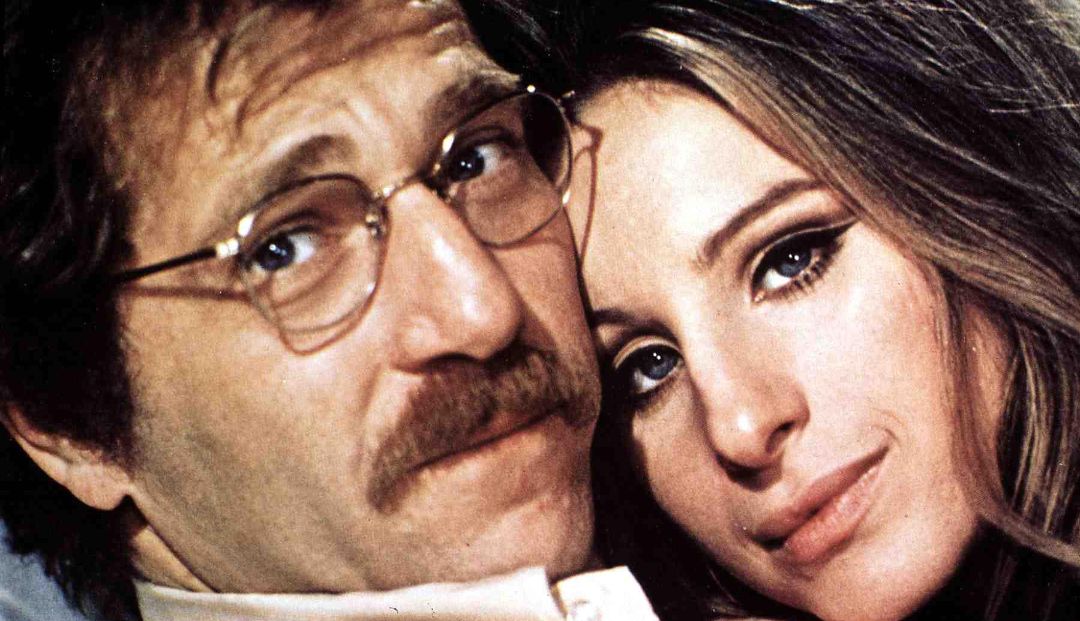
George Segal and Barbra Streisand in a still from the 1970 movie “The Owl and the Pussycat.” (FilmPublicityArchive/United Archives via Getty Images)

His roles were soon Jewish as well, in films like “Bye Bye Braverman” in 1968 and “Blume in Love” in 1973. In 1970, he shattered Jewish stereotypes in “The Owl and the Pussycat,” where he starred opposite Barbra Streisand.

His most emblematically Jewish role from that time was not obviously Jewish: He played the eponymous hero in the 1966 spy thriller “The Quiller Memorandum,” tracking down a ring of postwar Nazis. Harold Pinter, the Jewish playwright who wrote the screenplay, reshaped the laconic British spy in Elleston Trevor’s novel into an American furious at Europe for allowing the Nazis to flourish and for never truly crushing them.

George Segal kicks a man in a scene from the film “The Quiller Memorandum,” 1966. (20th Century Fox/Getty Images)

“Nobody wears a brown shirt now, no banners, you see,” Quiller’s British handler, played by Alec Guinness, tells him. “Consequently, they’re difficult to recognize, they look like everybody else.”

Quiller is ultimately betrayed (spoiler alert) by his young German girlfriend. He is captured by the Nazis and resists their torture to escape. He meets with his handler and they have a Pinter-esque exchange that alludes to the postwar anomaly of being Jewish in a continent that has made Jews disappear.

“Met a man called Oktober,” Quiller says of his encounter with the head Nazi. “At the end of our conversation, he ordered them to kill me.” The handler rejoins: “And did they?”

Segal continued to play romantic leads, notably teaming up with Glenda Jackson in “A Touch of Class” in 1973. He filmed the crime caper classic, “The Hot Rock,” opposite Robert Redford, in 1972, and joined with Elliott Gould in 1974 in “California Split,” considered one of the best gambling films ever.

His career went into a downward spiral in the early 1980s, fueled by what he said was self-destructive behavior, including drugs. His rehabilitation included touring with a band he led with his banjo, the Beverly Hills Unlisted Jazz Band. In an appearance with the band in Israel in 1982, he was welcomed as a hero.

Segal played minor roles and then reemerged in 1996 in a role as Ben Stiller’s father in “Flirting with Disaster.” That character would define the rest of his career: the neurotic, self-effacing Jewish dad. It was a role he replicated in the television sitcoms “Just Shoot Me!” (albeit as an ostensible Italian) and “The Goldbergs,” from 2013 until now.

Actors Wendi McLendon-Covey and George Segal attend an event celebrating the 100th episode of “The Goldbergs” in Culver City, Calif., Oct. 4, 2017. (Rich Polk/Getty Images for Sony Pictures Television)

Segal was born in 1934 in New York. He is survived by two daughters, Polly and Elizabeth, from his first marriage to Marion Sobel, and his third wife, Sonia Schultz Greenbaum, a high school girlfriend with whom he reunited after the death of his second wife, Linda Rogoff. Sonia said Segal died of complications following bypass surgery.

George Segal, Vanguard of 1960s Wave of Young Jewish Actors, Dies at 87 Read More »

Record Number of Women Win on Israel’s Election Day, but Progress Remains Elusive

(The Media Line) A projected 30 women will enter the Israeli legislature, a record for an Election Day, but it appears female representation in parliament will remain roughly the same for the 24th Knesset as in past sessions.

“It’s likely more women will get in [once a new government is formed] because of the ‘Norwegian Law’ that a minister can be replaced with a new MK, but for an Election Day, it’s a record,” Michal Gera Margaliot, former executive director of the Israel Women’s Network, told The Media Line.

Emily Schrader, research fellow at the Tel Aviv Institute and an Israeli political consultant, notes that this achievement is not so advanced when considering other factors.

“While 30 female MKs is the record [for the beginning of a Knesset session], it’s actually not an increase from the previous Knesset and it’s certainly not representative of 50% of the population. I’m relieved to see that the number hasn’t dropped given how few parties are led by women, however we are far away from actual equality in representation,” she told The Media Line.

“Being 25% of the Knesset was a great step, a decade ago. … Women of all kinds belong at the decision-making table: religious, secular, Jewish and Arab,” Schrader said.

On the candidates list of Likud, the party of Prime Minister Binyamin Netanyahu, fourth-ranked Miri Regev, currently transportation minister, is the most senior woman out of 30 party members projected to enter the Knesset, followed by Environmental Protection Minister Gila Gamliel (No. 8); novelist and radio personality Galit Distal Atbaryan (12); MK Etty Atia (20); MK Keren Barak (23); Community Empowerment and Advancement Minister Orly Levi-Abekasis (26); MK Keti Shitrit (27); and MK May Golan (30).

In the centrist Yesh Atid, headed by Yair Lapid, six women are forecast to enter the Knesset out of 18 predicted mandates: MK Orna Barbivai (No. 2), Israel’s only ever female major-general; MK Karin Elharrar (4); former Social Equality Minister MK Meirav Cohen (5); former MK Merav Ben-Ari (9); Yesh Atid Western Negev head Nira Shpak (17); and Karmiel Deputy Mayor Tania Mazarsky (18).

On the center-left Blue and White List, headed by Benny Gantz, Immigrant Absorption Minister Pnina Tamano-Shata (No. 2) and Tourism Minister Orit Farkash-Hacohen (5) are set to return to the legislature along with six male counterparts.

Out of seven projected seats for the right-wing Yamina party, former Justice Minister MK Ayelet Shaked (No. 2) is the sole woman.

In Labor, the only party to be headed by a woman, MK Merav Michaeli, three other women round out the seven projected slots: journalist and political consultant Emilie Moatti (3), attorney Efrat Rayten (5) and filmmaker Ibtisam Mara’ana (7).

The female representatives for the left-wing Meretz and the Islamist United Arab List, each projected to get five mandates, are MK Tamar Zandberg (No. 2) and peace activist Ghaida Rinawie Zoabi (4) of the former, and social worker MK Iman Khatib-Yasin (5) of the latter.

The female representatives in the parties projected to win six seats include activist in the field of mental health Michal Woldiger (No. 2) and MK Orit Strock (5) of the far-right Religious Zionism party, former Housing Minister MK Yifat Shasha-Biton (2) and MK Sharren Haskel (5) of the right-wing anti-Netanyahu New Hope party, MK Aida Touma-Sliman (4) of the Arab Joint List, and MK Yulia Malinovsky (5) of right-wing anti-Netanyahu Yisrael Beitenu.

The ultra-Orthodox Shas and United Torah Judaism parties, with seven and nine projected seats, respectively, do not allow women to run for Knesset.

Dr. Yofi Tirosh, a gender equality expert at the Tel Aviv University Faculty of Law, argues that this is one of the reasons women’s representation in Israel is low.

“That’s 15 or 16 Knesset members, which is approximately 15%, that don’t allow women to take part,” she told The Media Line. “It’s unfortunately something that the Knesset allows and I think it’s a modern form of disenfranchisement to ban women.

“This is the kind of atmosphere where religious rights and piety are combined with a very extreme form of modesty where the very presence of a woman in the public sphere is an interference, impure,” Tirosh continued.

“The idea of separation segregation of sexes is okay in Israel. Parts of the potential [Netanyahu] coalition we might see here, like the ultra-Orthodox parties and Religious Zionism, either actively promote segregated hours at public places, segregated driving courses, academic studies, military units, etc., or have been indifferent [toward the practice], like [the [Yamina party of Naftali] Bennett and Likud,” she said.

This attitude, she said, has spilled over to the Knesset floor, with female legislators being admonished for immodesty and a Shas lawmaker asking a female Likud MK to be moved after she was assigned a seat next to him.

“He asked for them to switch her, which was shocking in itself, and what was more shocking was that the Knesset agreed,” Tirosh said.

Following UTJ and Shas, Yamina is set to have the worst female representation, at some 14.1% of its delegation. Female representation is about 16.7% for both Yisrael Beitenu and the Arab Joint List. The United Arab List includes 20% female representation, Blue and White 25% and Likud has about 26.7%.

A third of the Religious Zionism, New Hope and Yesh Atid candidate lists are women.

The two left-wing parties have the highest female representation, with Meretz at 40% and Labor at 57.1%.

Margaliot said that it is no accident that Labor has the highest proportion of female Knesset representation.

“It’s the only party that built its list as a woman, man, woman, man, which is why four women got in; they have more women than men,” she said. “Merav Michaeli has accomplished a major achievement: She took a party that everyone thought was finished and now she got seven mandates, which is more than many people dreamed of.”

Schrader agrees.

“I am… extremely happy that Labor exceeded expectations, as the only party led by a woman, and the only party with gender representation that reflects the population,” she said. “Regardless of whether or not one agrees with her policies, Merav Michaeli has been a champion for women’s equality throughout her career and deserves a lot of respect for that and for living by her principles as a leader, which is something that’s lacking severely in political leadership.”

Margaliot argues it is not just important to look at the number of women elected, but also at their level of seniority.

A record seven significant parties entered into the election with women at the No. 2 spot, and they almost all made it into parliament: Meretz, New Hope, Religious Zionism, Yamina, Blue and White, and Yesh Atid. The New Economy party was the sole one that failed to meet the 3.25 electoral threshold.

Margaliot also said Likud fares well in this regard.

“It’s the first time in Likud history that there are three women in the first 10 places, which is significant,” she said.

The third way Margaliot said representation needs to be scrutinized is how feminist the legislators are.

“It’s a parameter about women, but it’s also a parameter that we look at men, because we need strong allies to promote more feminist policies,” she said.


Record Number of Women Win on Israel’s Election Day, but Progress Remains Elusive Read More »

NYT Criticized for Article on Orthodox Jewish Organizations and Trump Pardons

The New York Times has been criticized for running a March 21 article highlighting the role of Orthodox Jewish organizations in then-President Donald Trump’s pardons.

The story focused on two organizations — the Aleph Institute and Tzedek Association, both of which lobby for criminal justice reform — that helped get Trump to commute the sentences of several individuals. According to the Times, the Aleph Institute was successful in getting 27 sentences pardoned or commuted out of 238 total; four of those individuals were people who had donated to the organization. The pardons and commutations involved convictions of various white collar crimes, such as money laundering and health insurance fraud.

The Times also highlighted the two organizations’ connections to attorney and law professor Alan Dershowitz, who was part of Trump’s first impeachment defense team, as well as to the Kushner family. Jared Kushner, Trump’s son-in-law, served as a senior White House adviser during the Trump presidency.

Anti-Defamation League (ADL) CEO Jonathan Greenblatt criticized the article in a Twitter thread, stating that while the issue of Trump’s pardons is important, the article “is problematic in its coverage of Orthodox Jewish organizations.” “What does the Orthodox Jewish nature of the [organization] have to do with the point of the story?” Greenblatt wrote. “Did the journalist identify the religion of every person exonerated and identify a pattern? This isn’t a wink and a nod toward some Jewish conspiracy, it’s outright misleading.”

Greenblatt added that the Times also depicted Orthodox Jews as “singularly spreading COVID-19” in early 2020. “So it begs the question, why are Orthodox Jews still singled out, almost as if they were a reasonable target for prejudice? Why is it OK for reporters to focus again and again to call out the level of observance of these groups? It has no bearing on the story and must stop.”


Batya Ungar-Sargon, deputy opinion editor of Newsweek, also tweeted, “Anyone else who had done as much to mitigate mass incarceration would be lauder as a hero. But when Orthodox Jews do it, the whole enterprise is tainted by their ‘lobbying,’ their ‘lawyers,’ their ‘loose network’ and of course, the crime of being Orthodox Jews to begin with!”

Ari Ingel, director of Creative Community for Peace, tweeted, “What does them being Jewish have to do with anything? Let alone Orthodox Jews? At a time when more than half of all hate crimes in NY are against Jews, this née article of yours makes you complicit in this.” He linked to a New York Times article from February 2020 about how Hasidic Jews are afraid of being targeted for their religion.


Ilan Sinelnikov, founder and president of Students Supporting Israel, similarly tweeted: “This is how the New York Times helps and promotes the spread of Antisemitism. The same newspaper that pushed reporters on the Holocaust to its back pages.”


The Times did not respond to the Journal’s request for comment.

NYT Criticized for Article on Orthodox Jewish Organizations and Trump Pardons Read More »

There Are No Israeli Political Blocs

(Israel Policy Forum) — For two years, anyone who pays attention to Israeli politics has been bombarded with election news and political analysis about Israel’s political blocs. The first two elections were structured by analysts and pollsters into a right-wing bloc and a left-wing bloc, which never made any sense given that the left-wing bloc included Kachol Lavan–a centrist party that leans to the right–and eventually came to include Avigdor Liberman’s Yisrael Beiteinu, which cannot be described as left in any meaningful sense of the word. At some point before the third election and then in earnest prior to this week’s fourth election, people started describing the blocs as pro-Netanyahu and anti-Netanyahu. This seemed to better comport with the landscape, as you had a decidedly right-wing party in Gideon Sa’ar’s New Hope in the anti-Netanyahu bloc and another one in Naftali Bennett’s Yamina not making any ironclad promises in either direction. Yet if there is anything to be learned from the preliminary results of Tuesday’s election–and full results will not be known until Friday–it is that talking about any type of coherent bloc in Israeli politics is silly.

A political bloc is a grouping of political parties all committed to working together, and what makes a bloc is a tie that binds them that also outstrips the wedges that push them apart. You are never going to have complete agreement among every party in a bloc on every issue, since if you did those parties would have no cause to exist as separate entities. But having a similar overarching worldview, or a principle that connects all of the parties together, is enough to ensure cooperation.

Looking at the deadlocked results of the fourth election, which come on the heels of the deadlocked results of the first two elections and the wholly predictable collapse of the unwieldy compromise following the third election, demonstrates that there are no sustainable Israeli political blocs. Assuming that the preliminary results hold, Netanyahu is going to be a seat or two short of 61, and he is going to go looking for those additional seats in different places. One place will be the core of the anti-Netanyahu bloc in trying to peel off defectors from New Hope’s sinking ship or convince Benny Gantz to once again betray his anti-Netanyahu pledge. This in itself betrays the fallacy of looking at Israeli politics right now as a struggle between two definable entities. The fact that it is conceivable that Likud defectors who left solely because they want to see Netanyahu ousted may return to the fold if it means retaining some measure of political power, or the fact that it is even more conceivable that an appeal to Gantz’s ego to once again “save Israel” by joining with Netanyahu and thereby keep Kahanists out of a coalition will be successful, shows why everything is so fluid. There are no black boundary lines in Israeli politics in the current era, only a muddled haze where any combination is theoretically conceivable.

There are no black boundary lines in Israeli politics in the current era, only a muddled haze where any combination is theoretically conceivable.

But conceivable combinations are not the same as likely combinations, and that is where the Netanyahu factor does insert itself. Because Netanyahu is so polarizing, he effectively acts as a dam that blocks the natural flow of Israeli politics in a couple of ways. Without him, the outcome of the election would not have been in doubt; everyone would have predicted a large right-wing coalition of 70-75 seats and the actual results bear that out. His presence drives Sa’ar away from that theoretical right-wing coalition, and it partially drives Liberman–who also has to contend with the Haredi parties in that grouping–out as well. The other way in which Netanyahu creates a jam is that in addition to being the obstacle to a right-wing government, he removes the possibility of a center-right coalition too. If you knew nothing about Israeli politics beyond where parties stand on actual issues and had none of the background context, you would think that the most logical government is Likud, Yesh Atid, Kachol Lavan, New Hope, and Yisrael Beiteinu. That is a 70 seat coalition that is hawkish on security but short of being fully annexationist, centrist on social issues, and secular but respectful of religious observance. Netanyahu’s presence makes a coalition like this, and coalitions similar to ones that he himself constructed in the past, impossible today.

Netanyahu is not the only variable turning conceivable coalitions into fantasy ones. The past weeks were filled with anointing Bennett as a potential kingmaker, and the past days have been filled with anointing Ra’am chief Mansour Abbas as the new fulcrum who will determine which side gets to form a government. I’m not sure that either of them will get to play this designated role, since blithe predictions about critical deciders allegedly sitting in between two otherwise fully formed blocs ignore the interparty and interpersonal dynamics that have caused Israeli politicians to hem themselves in. The group of Likud, Shas, UTJ, and Religious Zionism that needs both Bennett and Abbas in order to form a government means the two most hawkish parties in Israel sitting with Israel’s only Islamist party, and a party whose platform and identity rest on anti-Arab racism sitting with an Arab party. It also means Netanyahu throwing out his repeated pledge from the past few weeks that he would not form a coalition with the support of Ra’am and multiple Likud MKs definitively ruling it out as well, let alone the awkward Yair Netanyahu tweet from a few months ago calling Abbas and Ra’am the Israeli branch of Hamas. Even if you somehow subtract Ra’am and are able to get to 61, Bennett still has to sit in a coalition with Smotrich, whom he broke away from before the first election in forming the now-defunct New Right party and then split with again before the current election.

These problems do not exist only for Netanyahu and his side. The theoretical anti-Netanyahu coalition is even more unwieldy. It would require Bennett joining a government under Lapid after signing a pledge on live television this past weekend not to do so. It would require Liberman joining with Arab parties, whether the Joint List or Ra’am. It would require the Joint List and Abbas to reconcile after splitting before this election. It would require Lapid and Gantz to reconcile after splitting when Gantz entered negotiations with Netanyahu last spring and after Gantz spent months publicly disparaging Lapid, including alleging that Lapid “hates people.” While none of these can be definitively ruled out, particularly not after some of the head spinning reversals we have seen in recent years, they do make everything far more complicated than would be otherwise necessary.

Finally, there are two more complicating factors that create different incentives for Netanyahu and what he does next and that will jumble things even further. On the one hand, there is Netanyahu’s trial and his never-ending quest for immunity, which points to him trying to construct a coalition that will pass the legislation he wants in this sphere. That means including Religious Zionism, which not only voiced support for prime ministerial immunity but went so far as to demand it during the campaign as a condition for joining the government. Going down this path may get Netanyahu what he wants, but also makes his life much harder since it makes it harder to actually form a government, and if he succeeds it means being hostage to the whims of the most odious party in the Knesset and dealing with the domestic and international fallout of allying with Meir Kahane’s political heirs.

On the other hand, if Netanyahu goes down this road and fails and no new coalition agreement is signed, the government that was just dissolved remains in place and with it the ticking timebomb of Gantz automatically becoming prime minister in November. The question is what Netanyahu fears more: a government that does not give him immunity, or a government that will make his life even more miserable by dint of whom it must include?

I suspect what we will see over the next few weeks is an effort by Netanyahu to sideline Itamar Ben Gvir and Otzma Yehudit by trying to get Smotrich to join without his more infamous partner, putting the pressure on Gantz to be the person who prevents the awful precedent of Kahanists sitting in a coalition, trying to pick off Sa’ar’s acolytes who know that they have to return to Likud in order to remain in the Knesset beyond this one, and laying the groundwork to fend off criticism should he form a coalition with Ra’am’s votes. And if none of this works, he will bite the bullet and turn to Religious Zionism if that is what ultimately puts him over the top. Whatever happens though, let’s finally put to rest this notion that Israel has two established camps with only two parties sitting in the middle that are undecided about their allegiances.


Michael Koplow is Israel Policy Forum’s policy director, based in Washington, DC. To contact Michael, please email him at mkoplow@ipforum.org.

There Are No Israeli Political Blocs Read More »

Moses was the Best… Sponsor?

Did you know that some midrashists suggest that less than 20% of the Jewish people actually left Egypt during the exodus? Change can be difficult, even if it’s for the best. As we celebrate the miracle in those days at this time, we can see ourselves as if we’re leaving our own Egypts today, whether that is addiction, anxiety, depression or something else.

Rabbi Mendy Lipskier, Rabbi Dr. Chaim Tureff and Rabbi Yosef Lipsker — three rabbis who specialize in addiction recovery — shared just some of the symbols and opportunities of Passover that can inspire our personal journeys to freedom.

Hannah Prager: How would you compare slavery in Egypt to slavery in addiction?

Rabbi Mendy Lipskier: What is a slave? Someone who doesn’t have the freedom to do what they want to do. They are beholden to a master. They cannot decide when they want to go to sleep, wake up, what profession to go into — they have to do whatever their master says they must do. That’s what the Jews experienced in Egypt… Egypt is not just a geographical place. Egypt is a state of being, a state of mind.

Any recovering addict will definitely confirm that when in addiction, you are a slave to your addiction, to your substance [or behavior] of choice, whether that’s alcohol, pornography, gambling or drugs. Your entire life is consumed by that addiction. That addiction is going to dictate to you when you go to sleep, if you go to sleep, who you hang around with, what kind of job you get, whether you keep that job… It is a sort of slavery to that addiction.

HP: What comes to mind when you think of Pharaoh?

Rabbi Mendy Lipskier: Pharaoh represents ego, the master of slavery, of our own personal Egypts. It is ego, this sense that I cannot let go, the only thing I have is control, that holds us back from being free… It may be helpful for the addict to know, I’ll only really know who I am once I surrender. Once that fake ego gets out of the way, I can meet my true self, and my true self is really one with G-d, which is so powerful. [It takes courage to let go of the] fake ego that will never let go of this sense of control.

Rabbi Yosef Lipsker: I like to joke that Pharaoh himself was an addict. He swore up and down he wouldn’t do another plague, and then he kept on relapsing with his behavior… He relapsed after the worst plague of all, the death of the firstborn. He still couldn’t stop himself, even though his life was in danger. He was about to be killed, and he knew it.

HP: What does Moses symbolize?

Rabbi Yosef Lipsker: Moses was a sponsor, basically. Moses was someone who was objective, and he was able to look at the situation and guide people. The failure of the golden calf is often misunderstood because the people felt that Moses may have been a problem. They wanted to have something that can’t talk back, something static. But that’s addictive thinking: No one should tell me what to do, I’ll create an object, this object will tell me what to do, but I don’t want anyone telling me what to do, looking at me, critiquing me. They were not necessarily bad; they were thinking, this is the best thing.

Like most people, they don’t think they’re doing something wrong… But eventually when you step back, you’re able to see the value of [an objective person] integrated into your life, and that’s why the idea of having a sponsor is so important. This is also an idea for those that don’t want recovery, for those people who need guidance.

HP: What is freedom?

Rabbi Dr. Chaim Tureff: Being more present, being in the moment. It’s not easy, and that has nothing to do with addiction. I think for most people, it’s difficult to be in the moment. It’s hard not to live in the past or in the future. Not being a slave is the ability to be in that moment.

“Not being a slave is the ability to be in that moment.”

This relates to an idea in Derech Hamelech, Ushpizat Yitzchak, taught by Yiscah Smith. “Each person is obligated to see himself (as if he left Egypt) — if, in fact, he is present. For if he has already come out of Egypt, and he experiences life through the lens of presence, there is no longer the need to be in exile in order to find pieces of his soul. For the state of being in exile is only when a person is not present.”

HP: What does breaking the matzah relate to?

Rabbi Mendy Lipskier: [When breaking the matzah, we remember the breaking point of the Jewish people. Moses asked Pharaoh to let them go, creating a flicker of hope. Pharaoh then responded by assigning more intensive labor. This was too much to handle… ] There was one last straw that G-d was waiting for to break the camel’s back… When the Jews were so demoralized, so broken, completely surrendered, at that point, G-d can say, now I’m able to take them out of Egypt.

Rabbi Yosef Lipsker: Sometimes you have to be broken. I see it every day — people when they’re broken. [Breaking the matzah is like breaking the shell around someone’s heart — all of a sudden, you can reach in.] It allows people to enter into your sphere. The toughest people I see, people that are lawyers, doctors, leaders, they never open up about their own personal challenges. [But] here you see brokenness gives them the chance to feel vulnerable, and that vulnerability is a good thing. It’s a time to be open.

HP: How often should we remember the exodus?

Rabbi Yosef Lipsker: Every single day, we have to remember the exodus from Egypt. The reason is every single day, we have to get up and begin the process of recovery again, the process of redemption.

I once said to myself, I’m going to release myself from any resentments I have… And then I started a fresh day. I got up in the morning, I’m all clean, all ready to take on the work, [but] by 11:00 in the morning, I already have 25 new resentments. Our MO is always looking for why didn’t this person do this, why didn’t this happen that way… so you can’t say I’m going to just do it, I’m going to get rid of my problems, and then I’m all free. Like a diet, every single day, you’ve got to do it.

HP: What’s the best way to tell the story of Passover?

Rabbi Mendy Lipskier: When we sit down at the seder table — hopefully with family and friends — we’re not just going to share our shared history as a people, but [we will also share] a personal experience, [how] G-d took me out of my own Egypt.

When I can be vulnerable at my seder table, that’s the greatest thing I can do for my fellow Jew who may be suffering silently, who doesn’t know that this is something that everyone deals with on some level. But if I’m willing to share my story of liberation from bondage at the seder table, that will allow someone else to find the courage for some humility and to surrender and find their own redemption.

May we find a deeper level of freedom every year.

Chag Sameach!

This interview has been edited for clarity.


Hannah Prager is the Community Relations Specialist for Soberman’s Estate, and a volunteer for Moishe House. Soberman’s Estate is a treatment center for men with alcoholism, substance use disorders and co-occurring issues, and provides kosher food accommodations and rabbinical support. To learn more or for personalized resources, call the Admissions Director at 480-595-2222 or visit www.SobermansEstate.com.

Moses was the Best… Sponsor? Read More »

American Jewish University Seeking Partner to Share Bel Air Campus Space

American Jewish University announced this week that it has begun an exploratory process to identify a strategic partner to make use of underutilized space at its Sunny & Isadore Familian Campus, the 35-acre property in Los Angeles’ Bel Air neighborhood that has housed the university’s administration and academic facilities for more than four decades.

AJU President Dr. Jeffrey Herbst notified the community on Thursday morning of the formation of the exploratory committee, writing in a prepared statement that brokering a relationship with a partner that shares the university’s values will be a critical step in helping to “enhance the vibrancy of the Familian campus.” Herbst noted that other organizations across the country were also conducting similar reviews.

AJU, previously known as the University of Judaism, moved to the Familian Campus, an expansive hilltop facility that overlooks the San Fernando Valley and Santa Monica Mountains, in 1977. Situated in one of Los Angeles’s most desirable locations, the campus houses the university’s Ostrow and Burton Libraries, two of the largest repositories of Jewish wisdom on the West Coast, as well as a raft of dormitories, administrative offices and lecture halls.

The university operates a second facility in Simi Valley — the 2,200-acre Brandeis-Bardin Campus — which will not be included in the scope of the review, Herbst’s statement noted. The verdant Brandeis-Bardin Campus hosts the Brandeis Collegiate Institute and Camp Alonim.

Herbst said that the decision to reevaluate AJU’s land use and facility holdings is part of the university’s “strategic planning to envision the post-COVID future,” as AJU is seeking to implement a suite of online and in-person educational offerings. In initiating this review, the university’s board hopes to “both navigate the pandemic and effectively position AJU for the future long after the pandemic recedes,” Herbst wrote.

Herbst said that the decision to reevaluate AJU’s land use and facility holdings is part of the university’s “strategic planning to envision the post-COVID future.”

“The Board of Directors believes that it is important to explore whether we could better allocate resources to serve our mission, as we continue to invest in our educational programs and grow our digital capabilities,” he wrote in Thursday’s statement. “AJU is at the beginning of this exploration and no decisions have been made.”

Since the onset of the pandemic last March, the university has invested in a number of innovative platforms and curricula to continue to offer students — and the wider Los Angeles Jewish community — high-quality educational content that elevates Jewish life and advances Jewish wisdom, Herbst said.

B’Yachad Together, the university’s virtual platform for conversations centered on Jewish thought and culture, is among AJU’s most significant new programs. Since its launch in the opening weeks of the pandemic, B’Yachad Together has reached thousands of viewers in the Jewish community, hosting conversations between AJU leaders and political and cultural luminaries like writer Bari Weiss, Ambassador Michael Oren and Rabbi Steve Leder.

The university also invested significantly in the relaunch of its business school. Under the leadership of Dean David Groshoff, AJU’s School of Enterprise Management and Social Impact (SEMSI) was revamped last fall to better equip students for the post-pandemic business sphere.

These programs, Herbst’s statement maintained, are complemented by the university’s ongoing efforts to bolster its engagement in the Jewish community through the Ziegler School of Rabbinic Studies and the newly launched Maas Center for Jewish Journeys, a program tailored to the needs of those “at the periphery of Jewish life” and funded by one of the largest donations in the school’s history.

“Over the past year, we have seen the profound and wide-ranging ways that AJU is uniquely positioned to meet the needs of the 21st Century Jewish community,” read Herbst’s statement. “We look forward to continuing our work to advance Jewish wisdom and elevate Jewish life across North America.”


Benjamin Raziel is an Israeli journalist and novelist based in Tel Aviv.

American Jewish University Seeking Partner to Share Bel Air Campus Space Read More »

Unscrolled, Tzav: A Cherished Illusion

In New Hampshire, not far from where my father currently lives, is the house my family lived in when I was a child. Walking down the road, kicking a stone, I slow my stride to peer down the driveway. The windows look dark, as if no one lives there. It’s still the same color it used to be, as if it’s still ours.

In the novel “Daniel Deronda,” George Eliot wrote that a human’s life should be “well rooted in some spot of a native land, where it may get the love of tender kinship for the face of the earth.” For me, that place is this house at the end of the driveway. But that was a long time ago.

I’m here in town for Pesach, which will be celebrated this year with fewer than five people at the table. The weight of time — both that of the last year and also that of all those other years separating now from then — is heavy on my shoulders. I look away and keep walking.

When I get back to my father’s house, I take up my place in my favorite rocking chair and open my Tanakh to study Parashat Tzav. With alternating boredom and intrigue, I study the procedures of the Temple Service: how animal sacrifices are to be brought to the priests in order to atone for sin or commemorate blessing.

According to Rabbi Ishmael, the Temple Service was ultimately for humans and not for God. God didn’t need our sacrifices, but He indulged us by accepting them. According to Maimonides, the Temple Service was merely God’s way of weening the Israelites off idolatrous practices as they became accustomed to a more enlightened and elevated form of religion.

Against this rationalist view of the Temple service, however, there exists a parallel stream of thought. Opposing Rabbi Ishmael was Rabbi Akiva, who saw the Temple as the purest embodiment of God’s majesty and presence. Opposing Maimonides was Nahmanides, who believed that the sacrifices had profound mystical significance.

In looking at Parashat Tzav first through one of these lenses and then through the other, two radically different images come into view. The Ishmaelian/Maimonidean lens reveals an historic portrait: a depiction of the ways things used to be before times changed and before we knew better. The Akivan/Nahmanideal lens, by contrast, shows a utopic portrait: a depiction of the way things used to be and will be again (if only we are worthy).

I find myself torn between these viewpoints. The destruction of the Temple, which began our people’s exile, was a great tragedy, but it initiated a period of intellectual, cultural and spiritual expansion for the Jewish people. It allowed us to grow up and become who we are.

On the other hand, there is something alluring about that long gone era, when Jewish life was rooted to land, when worship was embodied, when we were innocent enough to believe that God had a house.

There is something alluring about that long gone era.

As the midrashists like to ask: to what can this thing be compared? The answer: to the home one grew up in — to those parcels of “native land” that formed us and then cast us out.

Each time I pass our old house, I can’t help but stop and loiter. I stare through the windows and try to conjure in my mind’s eye the exact details of that unseen interior and the life that was lived there.

Is this what we’re doing when we study Parashat Tzav — peering in through the windows of an old childhood home? If so, what do we see?

A truth forgotten.

A cherished illusion.

A place of wholeness that held us when we were whole.


Matthew Schultz is the author of the essay collection “What Came Before” (2020). He is a rabbinical student at Hebrew College in Newton, Massachusetts.

Unscrolled, Tzav: A Cherished Illusion Read More »