Secretary of State Antony Blinken wrote in a February 23 letter to American Zionist Movement President Richard D. Heideman that the Biden administration “enthusiastically embraces” the International Holocaust Remembrance Alliance (IHRA) definition of anti-Semitism.
The letter, which was obtained by Jewish Insider, stated that the administration will counter “efforts to delegitimize Israel” as well as efforts to “isolate” Israel as the United States and Israel work toward a two-state solution.
“As the stepson of a Holocaust survivor, I wholeheartedly believe that we must remain vigilant in speaking out against bigotry, intolerance, and those who seek to undermine democracy,” Blinken wrote. “The Biden Administration enthusiastically embraces the International Holocaust Remembrance Alliance’s Working Definition of Anti-Semitism, including its examples. We are eager to work with allies and partners to counter Holocaust distortion and combat anti-Semitism and other forms of intolerance abroad while we strengthen our efforts at home, including redoubling our efforts to counter violent extremism.”
The American Jewish Committee praised Blinken in a tweet. “We welcome the Biden administration’s ‘enthusiastic’ support for @TheIHRA definition of antisemitism,” they wrote. “Utilizing the definition is a critical step in combating this age-old hatred in America and around the world.”
We welcome the Biden administration's "enthusiastic" support for @TheIHRA definition of antisemitism.
Utilizing the definition is a critical step in combating this age-old hatred in America and around the world.https://t.co/2J0vZT6U6C
— American Jewish Committee (@AJCGlobal) March 2, 2021
Conference of Presidents CEO William Daroff told Jewish Insider that Blinken’s letter shows how the IHRA definition has become the “gold standard” definition of anti-Semitism. “It’s more acceptable, unfortunately, to call someone a ‘dirty Israeli’ than it is to call them a ‘dirty Jew,’” Daroff said. “And we see this brand of antisemitism all over the world. It doesn’t mean it’s the only manifestation of antisemitism, it doesn’t mean that all criticism of Israel is antisemitic, but it reflects the reality of this growing plague.”
The progressive group IfNotNow, on the other hand, criticized Blinken’s support for IHRA. “We know this won’t keep us safe,” they tweeted. “We’ve seen how it’s only been used by the right to curb the free speech of Palestinians and their allies.”
We just learned that Secretary of State Blinken recently voiced support for the controversial IHRA definition of antisemitism.
We know this won't keep us safe.
We've seen how it's only been used by the right to curb the free speech of Palestinians and their allies. pic.twitter.com/fHy12gzVxD
The Biden administration had previously announced in February that they were going to champion the IHRA definition. The definition states that the demonization and delegitimization of Israel as well as subjecting it to double standards amounts to anti-Semitism.
In a new round of COVID-19 relief grants, The Jewish Community Foundation of Los Angeles (The Foundation) announced on March 2 that it’s awarding $1.3 million to five local organizations to address urgent healthcare needs in the community.
Through its ongoing outreach with local nonprofits and other funders, The Foundation zeroed in on helping the elderly, small businesses and minority communities to ensure they receive everything they need during the ongoing pandemic. President and CEO Marvin I. Schotland said the pandemic has resulted in greater isolation of many seniors who lack the technology or knowledge to access essential care.
“This a global health crisis of a magnitude never experienced in our lifetimes. Vast needs continue to emerge that require support,” Schotland said in a statement to the Journal. “Because The Foundation is in regular contact with non-profits, we are able to respond quickly as critical needs are identified, including funding for urgent physical and mental healthcare disparities and businesses that are struggling. With these significant grants to five organizations, our dollars will favorably impact thousands of individuals in need in the Jewish and larger community.”
“Because The Foundation is in regular contact with non-profits, we are able to respond quickly as critical needs are identified.”
The funding for JFS will help provide Chromebooks and internet so elderly clients can access services and connection with others through technology. Due to the pandemic, JFLA has received a significantly higher number of applications for interest-free loans, which average $20,000, for struggling businesses and for launching new enterprises. This grant will help grow its loan fund and allow JFLA to continue offering loans without turning applicants away.
The Brandman Centers for Senior Care—Program for All-inclusive Care for the Elderly (PACE) at LA Jewish Home provides a complete range of health, social and nutritional services for nursing home-eligible seniors. This latest grant will enable staff to take resources to PACE seniors —more than 250 are enrolled— who, due to COVID, are unable to come into the facility for services.
“I would like to express deep appreciation for this generous grant. This award ensures we will be able to continue providing the highest quality of medical care – including essential safety materials – to meet the challenges of COVID-19, while also purchasing communications devices such as iPads for the residents, to help maintain a sense of normalcy during these extraordinary times,” Dale Surowitz, CEO and president of Los Angeles Jewish Home, said in a statement.
Venice Family Clinic (VFC) is also using the funding for Telehealth and technology infrastructure. The grant will allow VFC to purchase an integrated telehealth video tool enabling patients to complete pre-visit paperwork, have fully encrypted visits, and receive post-visit details via video.
The pandemic has hit Black and Latino communities served by MLKCH the hardest, and the hospital is addressing new critical needs to ensure its COVID patients receive proper care with the use of the Foundation’s funding. MLKCH converted an entire floor into an intensive care unit to meet the unanticipated level of critical care needed for COVID patients.
The facility also supports patients who continue to experience symptoms or require additional care. The post-COVID clinic has also seen a surge. MLKCH converted existing space into a clinic where patients receive comprehensive services including pulmonary appointments, respiratory therapy services, mental health services, and continuing support from their ICU medical team.
“Access to quality health care is one of the ultimate acts of social justice,” Dyan Sublett, president of Martin Luther King Jr. Community Health Foundation, said.
“Through its generous support, the Jewish Community Foundation has lifted our community in the full continuum of caring and healing. The Foundation’s supportive partnership of our work throughout the pandemic has enabled MLKCH to expand our care to accommodate all the critically ill COVID patients who need us in South Los Angeles — and we’ve supported our innovative post-discharge COVID clinic, making sure our patients continue to see the nurses and doctors who cared for them as they continue their recovery at home.”
In 2020, The Foundation and its donors distributed $127 million to 2,700 nonprofits with programs that span the range of philanthropic giving. Over the past 12 years, it has distributed more than $1 billion to thousands of nonprofits across a diverse spectrum.
Mazel Tovs are in order for “Wonder Woman” actress Gal Gadot and husband Yaron Varsano who are expecting their third child together.
“Here we go again,” the Israeli actress said, smiles all around. Gadot shared the news on Instagram on March 1 with Varsano and their two daughters Alma, 9, and Maya, 3.
The announcement was made the morning after Gadot graced the Golden Globes stage in a white Givenchy swing dress and presented the Golden Globe for best foreign language picture.
Varsano, who also posted the announcement on his Instagram, shared an intimate photo of his daughters admiring their super-mom during the awards show Sunday night.
Gadot’s family recently appeared in a cameo during the latest DC superhero film, “Wonder Woman 1984.” Gadot, who was pregnant with her second during “WW84” reshoots, told GoodDayDC’s Kevin McCarthy how meaningful it was to have them all on set in certain ways.
“To have them captured in the film with me, because they are a part of it, meant a lot,” she said, “and it’s an amazing, amazing souvenir that we will forever cherish.”
Lawmakers in Kentucky voted to adopt the definition developed by the International Holocaust Remembrance Association, known as IHRA, on Wednesday as part of a broad resolution aimed at condemning anti-Semitism.
The hearing and vote, which was unanimous, came as a surprise to the state legislature’s only Jewish member, according to the Louisville Courier Journal. But state Sen. Karen Berg quickly signed on as a co-sponsor.
“The desecration of Jewish cemeteries and congregations and community centers — it’s increasing,” Berg, a Louisville Democrat, told the newspaper. “And everybody knows it’s increasing. It’s part of the whole hate that we got to put away.”
Rabbi Shlomo Litvin of Chabad of the Bluegrass told the newspaper he helped craft the resolution as a response to what he said were “disturbing incidents here in Kentucky.” Chabad of the Bluegrass has reported multiple incidents at its Lexington building, including an assault during Hanukkah.
The resolution does not make clear what force the adoption will hold, if any, in the state. Advocates for the definition, which was first published in 2016, say having a clear and common definition of anti-Semitism is helpful in identifying Jew-hatred. But its critics say it stifles free speech by identifying some forms of Israel criticism as anti-Semitic.
There’s no greater demon these days than Critical Race Theory (CRT), a field of criticism devoted to understanding the ways in which racism has systematically harmed people of color. Or at least that’s how it would seem, judging by the number of op-eds and media discussions from both conservative and liberal sources that regularly denounce it. It’s infiltrating our schools, we’re told. It’s quickly becoming the primary ideology that undergirds all of our most sacred American institutions, from schools to businesses to government. We must root it out or risk going down with the sinking ship that is American culture, critics lament.
And then there are those who see CRT as savior to a country filled with systemic racial injustices and rampant inequality. It’s a way to finally help people understand some of the most glaring differences between communities when it comes to resources, funding and upward mobility. For those who advocate using CRT as the primary lens through which to see the world, all social problems stem from racial inequality and inequity. To correct this and to guarantee that the world becomes a better place for marginalized communities, we must understand everything from a position of race first and foremost.
CRT was defined by legal scholar Kimberlé Crenshaw in the late 1980s to describe the intellectual movements that begin to emerge in the 1970s in the circles of activists and academics who felt that the work of the civil rights era was incomplete. By the early 1990s, CRT had become a full-fledged school of literary criticism — a way of reading not just literature and film in classrooms but also everything that we come into contact with in the world. For many proponents of CRT, racism is not something that happens between people on an individual level. It’s structural. It undergirds every single one of our institutions going back to and preceding the founding of America. This means that even if the majority of individuals are not racists, the effects of racism will continue to be seen because they are embedded in everyday life. Racism is inescapable.
It does feel that CRT is suddenly everywhere, and if it is, it’s because our collective moral outrage following the killings of unarmed Black people at the hands of police officers has propelled it to the top. When we are angry at someone or something, it’s all we see. There’s a reason the phrase “blind rage” exists. When we feel powerless in the face of righteous anger, our outrage increases exponentially. Sometimes, as a result, we become blinded.
Outrage is important. Without it, there wouldn’t have been a civil rights movement, a women’s suffrage movement, or a Boston Tea Party. The Stonewall Riots, which ultimately increased legal protections for the LGBT community, wouldn’t have happened without outrage. Nor would the Free Soviet Jewry movement, which resulted in the release of countless Russian Jews from the Soviet Union, have transpired if people hadn’t gotten angry. So many moments in American history that make our country what it is could not have happened if people had not become outraged by the injustices they saw around them. Often it takes getting really angry to effect necessary change. Outrage is vital. But if not carefully calibrated, moral outrage can quickly descend into something less moral and increasingly unethical.
That seems to be where we are now. Critical Race Theory, a valid and important way of looking at societal structures, has become caught between the imperative to right historical wrongs when it comes to race and the importance of acknowledging that there are many factors, not just race, that contribute to problems in American society.
Unfortunately, CRT is often misused in a way that reduces every problem to race, giving people who do not have an understanding of the field the idea that race is always the only factor at play. Is a person of color poor? It’s because of racism. Is a person of color being denied a job? It’s because of racism. Are there a disproportionate number of non-Black students enrolled at a university compared to Black students? It’s because of racism. And sometimes — a lot of times, actually — it is because of racism.
But there are also times when it isn’t about race. That it can also be about class and other forms of power is a lesson we are beginning to learn the hard way, if the recent situation at Smith college, where a janitor and cafeteria worker were accused of racism, is any indication of the direction these discussions are beginning to take.
Many conservatives and an increasing number of liberals see flaws in an argument that blames all inequalities on systemic racism. They see it as a revival of segregation. They see it as an attack on free speech, a movement that keeps shifting the goal posts for what is acceptable and discovering new marginalized groups to protect and new words to render inappropriate. It’s a war, they believe, that can never be won. They aren’t entirely wrong in this regard. In the early 1990s, scholar Henry Louis Gates Jr. wrote an essay called “War of Words: Critical Race Theory and the First Amendment” for a collection he co-edited about some these issues. “By progressively redefining our terms,” he wrote, “we could always say of the economic gap between black and white America: The problem is still racism . . . and, by stipulation, it would be true.” Writer Wesley Yang, among many others, sees in Gates’s words an implicit dismantling of the CRT movement that was to come.
They see CRT as an attack on free speech, a movement that keeps shifting the goal posts for what is acceptable and discovering new marginalized groups to protect and new words to render inappropriate.
The irony is that Gates’s work is often taught in university CRT courses as part of the canon. The work of CRT writers and thinkers may be demonized as an enormous behemoth moving to swallow American culture, but the truth is that there are also dissenting voices within its ranks. However, average Americans — Americans outside of academia, that is — don’t know this.
Perhaps this ignorance exists because voices like Ibram X. Kendi are elevated above all others. For Kendi, one is either a racist or an anti-racist (someone working actively against racism). It’s not enough to simply not be a racist. One must become an activist. It’s an argument devoid of nuance and complexity and critiqued fiercely by many other Black scholars like John McWhorter, Thomas Chatterton Williams, Coleman Hughes and Glenn Loury, among others. But those voices tend to be ignored or silenced by the masses because they distract from the popular and simplified discourse about racism in America.
The result of ignoring such voices results in more than half the country seeing CRT as not just problematic but also toxic and dangerous. In response, people lash out against the teaching of CRT in schools or the application of it to social situations and civil liberties. It’s become the dirtiest of phrases.
Progressives, on the other hand, see this attack on CRT as a blatant expression of racism that proves how necessary the field is. It’s Black ideas that are being attacked. It’s the truth of a history of racial oppression that is being questioned. They see conservatives as wanting to paint anything that addresses the problem of race as evil. And this argument is all the more reason to double-down on the rhetoric of racial essentialism. The idea of color blindness is anathema to those who push for CRT, given that we must see a person’s Blackness or whiteness to understand where they are in the binary of oppressor and oppressed.
Even those who fight on behalf of what’s labeled as CRT are not necessarily fighting for the Black voices that push back against some of its tenets. They are fighting instead to maintain the simplistic idea of the oppressor and the oppressed as the foundation for our society. And in this model, people of color are the oppressed and those who are white (or “conditionally white” or “white adjacent,” terms often applied to Asians and Jews) are always the oppressor no matter how hard they work against oppression. Given that skin color cannot so easily be changed, one wonders if there is any way out of this dichotomy.
If you’re someone with the gift of being able to look at both sides objectively, you might see that they are both right and both wrong. This leads me to one question: what if the problem is not CRT itself, but rather that it has replaced all other means of examining history and culture?
There’s no question that racism is perpetuated by some of our legal structures, for example. This is not a partisan statement. CRT exists as an important tool to examine those structures so that we can understand how they can be improved. While many thinkers within the school of CRT continue to see Jews as “white” or part of an oppressive group, it’s also a tool that can be used to discuss legal discrimination against Jews in the United States, as scholar Mia Brett has noted. And if it’s an important tool in the legal world, why shouldn’t it also be an important tool in institutions of learning, where the point is to learn how to think? And if there are elements of it that become problematic for Jews or other groups, why can’t that be discussed too?
Regardless of how important a tool it is, it’s not the only tool. The proposed California Ethnic Studies curriculum, for example, passionately debated in many Jewish circles, uses CRT as the basis for all analyses of race and ethnicity. People on both sides have different motives for either supporting or opposing the curriculum. But given how one-dimensional parts of it seem to be, one wonders whether it won’t hurt the very groups that it is most intended to help by depicting them as victims first and foremost and ignoring the positive role models in minority groups. Some argue that it will promote victimhood and violence.
As more and more situations where CRT is misused in classrooms come to light, this argument gains momentum. At an elementary school in Cupertino, California that is 94% non-white, young children were forced to deconstruct their racial identities and rank themselves “according to power and privilege.” Many parents, some of whom fled Communist regimes, see the division of children into oppressed and oppressors as not simply divisive but also reminiscent of the Chinese Cultural Revolution.
Contrary to what some proponents of CRT would have us believe, some individuals within non-white groups want to see themselves as integral parts of society rather than victims of it. The situation in Cupertino sounds like an anomaly, but ideas borrowed from CRT are being infused into school curricula across the country. Curricula from organizations like Black Lives Matter in School and Teaching Tolerance (recently rebranded as Learn for Justice) are increasingly popular, especially in Los Angeles private schools. Teaching Tolerance, for instance, advocates “centering Black and brown children” in the classroom and argues that math should be political. It’s no wonder that people who want to work actively toward equality see CRT as destructive when it is being used in this way.
Contrary to what some proponents of CRT would have us believe, some individuals within non-white groups want to see themselves as integral parts of society rather than victims of it.
And as the situation at Smith suggests, when we discard all other tools for understanding oppression in favor of using just one, we run the risk of hurting people in unrecoverable ways. The janitor and cafeteria food worker at Smith, both of whose annual salaries are far less than what the accusing student pays in yearly tuition, were painted as racists for asking a Black student not to eat in a dorm that was off-limits to everyone — a label that has destroyed their lives. Even though they are now exonerated from these charges, the damage remains.
How different would the situation have been if, instead of jumping to one conclusion (race), multiple conclusions were considered before taking action?
As a literature professor, I used to ask my students a seemingly silly question. Let’s say this room were to be emptied out entirely, I would say. No more chairs, tables, desks, humans — except for one. Imagine that one is you, standing in the center of the room, looking around the empty room, with no objects obscuring your view. There’s nothing in your way. What can you see?
Despite the fact that nothing but one person remains in the room in this fictional scenario, the resounding answer from students was always: everything, we can see everything. But I would remind them that there’s one thing they can’t see, something hidden. In courses that draw heavily on critical theory, students often think they are being asked to over-think the scenario or that it’s a trick question, and that they are being charged with out-thinking the professor. But the answer involved no trickery. “You can’t see what what’s under your feet. It’s where you’re standing that’s the problem. And even if you move in an attempt to reveal that which was hidden, you’ll simply be standing elsewhere, creating one blind spot after another.”
We all have blind spots. Although I typically used this lesson as a starting point to talk about trauma studies, it works for other critical lenses as well. We need to allow space for other perspectives. We need to be in dialogue with each other rather than attempting elevate one perspective as the only or most important one. When I taught Critical Theory at various universities, I would ask students to choose a “lens” through which to read the same novel. Some chose Critical Race Theory, while others chose Feminist Theory or Postcolonial Theory or Psychoanalytic Theory or Marxist Theory, among others. Students would then present the novel to the class through the lens of their chosen school of thought. The result was vastly different readings of the same story. They weren’t in competition with each other. They were all allowed to exist at the same time. They all had a seat at the table.
It might be hard to figure out how that works in the real world, but maybe we should be up for the challenge. Dialogue is never easy, but that’s no reason to shut it down in favor of one perspective. And besides, it’s not always about having to choose. Nothing is more revolutionary than the idea that the needs of different communities can be met simultaneously. Nothing is more radical than embracing the idea that we can reject classism, sexism, and anti-Semitism while fighting against racism. We can look simultaneously at how issues of race, sex and class intersect in our society without putting the fight against racism on a backburner. CRT deserves a seat at the table. But there are other seats at the same table that can be filled with other ways of analyzing our country’s problems.
Monica Osborne is a writer and former professor of literature, film, and trauma studies. She is the author of “The Midrashic Impulse and the Contemporary Literary Response to Trauma.” Follow her on Twitter: @DrMonicaOsborne
I have known Karen Guth for many years, both as a friend and as a fellow English teacher in Israel. We are accustomed to sharing with each other our successes, challenges and methods to introduce creativity into our classrooms.
So it was no surprise to me to see Karen, who has been writing an educator’s blog — “ETC English Teaching with Creativity” — start another blog called “Tell Me a Story Bubie,” which seeks to share original stories with the world, specifically (but not only), the world of grandchildren and grandparents.
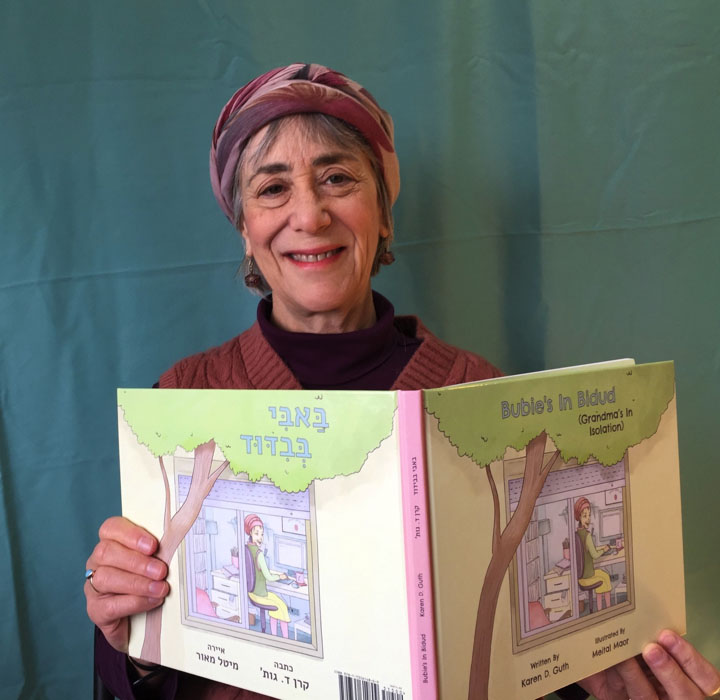
One of the stories on her blog evolved into a book that Guth recently published, called “Bubie’s in Bidud” (Grandma’s in Isolation), a bilingual (English and Hebrew) children’s book about what it’s like when Bubie and Zadi (Grandma and Grandpa) are in isolation. It is written in delightful verse, appropriate for ages three and up.
Guth describes in easy and non-scary language the realities of isolation, masks, hand-washing, what activities one can do on one’s own and missing one’s family and friends. It also deals with the emotions of quarantining:
What does it mean to be in Bidud? Are you sad, are you angry, or maybe scared too? With all that free time, is it boring for you?
Guth bases her story when she went into bidud in June 2020. She shared, “I couldn’t visit my grandchildren then because I was in bidud, and they didn’t know what it meant. You had to be inside your house and be careful; you had to try to not expose anyone and once you were out, [and] there was a time that you could only go within a 100-meter limit.”
That personal history gives the book’s lessons a deeply personal touch.
I’m not angry at all; I’m just trying to think, What can I do with all this time on my hands, To make others happy and come up with new plans?
The book is charmingly illustrated with characters who lightly resemble her, her husband and their real-life grandchildren. But how could Guth inject such a personal element while appealing to general audiences?
Creating wide appeal was a challenge for Guth, as she and her husband are modern Orthodox, but their son and daughter-in-law are part of an extreme Chassidic group. Their grandson and granddaughters, from the age of three, have worn only black clothing, as do their parents. “The women and girls are in capes. My daughter-in-law wears a black scarf all the way down to the floor and a black cape over her black dress,” says Karen.
Guth wanted her grandchildren to enjoy the book and not have it banned by their parents, so the compromise she arrived at was to have the children in the book dress in modest Haredi (ultra-Orthodox) clothing, but in lovely pastel colors, as is the dress mode in most Haredi communities. “The grandchildren see themselves in the book,” says Guth, “and I told their parents, ‘You can’t do a children’s book with the children in all black clothing.’”
The book reflects Guth’s desire to help her own grandchildren and others deal with the reality of COVID-19 and lockdowns. But it also became a cathartic way reach out to her Chassidic family. “The ‘Tell me a story Bubie’ that I began to write on my blog, pre-COVID, was therapy, a way to face the reality in which we were living. We were told that our grandchildren couldn’t eat in our home anymore and we couldn’t take them to most places,” she shared. “Their parents didn’t want us to read to them anything in English, with the exception of stories about tzadikim (legendary righteous people), and they didn’t want Hebrew either, as they only speak Yiddish, so I started writing children’s stories.”
For instance, Guth shared that she decided to “write the stories in a high level of English because they’re not just for our grandchildren. All grandchildren want to hear stories about their grandparents’ lives and about things that happened to us in the past, as well as made up stories.”
But when Guth heard about other grandparents who deal with similar situations, she thought, “maybe this is a way for me to express our values and pass them on.” In the book, she shares her religious philosophy and optimism:
It won’t help to be scared Because everything happens for a reason, “The cure was invented before the disease,” The Rabbis teach us, And I have faith that a vaccine will very soon reach us.
Fortunately, her grandchildren loved the book. “They keep it on the bookshelf so they can take it down and read it and they are very excited about it,” she shared.
The book is illustrated by Meital Maor, a graphic artist who illustrated two of Guth’s other books. Michal Yechieli Coppenhagen, a former student of Guth’s, translated from English to Hebrew and did a wonderful job of maintaining the rhyme of the verse. “Now,” shares Guth, “it is truly a bilingual book, as one side is in English and the other side is in Hebrew.”
Guth hopes to have the book on Amazon or with another distributer soon. In the meantime, the book can be ordered on her Tell Me A Story Bubie website and shipped anywhere from Israel. “Some people have asked if this book will be available after there’s no more COVID-19,” she shared, but she noted that the grandchildren of Rochel Sylvetzky, op-ed and Judaism editor for Arutz 7, said to Rochel, “this is a book about what we went through, and it’s going to be about our history.”
But while COVID-19 is still around, this little book will help children of every age get through it with a bit more joy.
Toby Klein Greenwald is an award-winning journalist, director of Raise Your Spirits Theatre and editor-in-chief of WholeFamily.com. She has not been in ‘bidud’ but her grandchildren are enjoying this book.
A Ferris State University professor in Michigan was fired on February 25 after allegedly issuing anti-Semitic tweets.
The professor, Thomas Brennan, had been placed on leave since November after the university’s student newspaper, The Torch, reported that Brennan had called COVID-19 “another Jewish revolution” and tweeted that the Holocaust was a “Zionist eugenics program.”
Brennan tweeted on February 27 that he had been fired from the university; a university spokesperson confirmed this to the Detroit Free Press.
Brennan’s tweet linked to a defense statement he had given to the university earlier in the month. In the statement, Brennan claimed that the tweets had come during a time when he was dealing with “intense pain” from migraines and sensitivity to electromagnetic fields while break-ins were occurring at his house. He said that his private Twitter account was his outlet to voice his “despair” and he had developed the mindset of “‘f* it, f* everybody and everything.’ That’s what chronic head trauma will do to you.”
Brennan claimed that the tweets had come during a time when he was dealing with “intense pain” from migraines and sensitivity to electromagnetic fields.
The former professor also claimed that by the summer he was feeling better, and that the break-ins had stopped after he nailed his windows shut. Brennan speculated that the university may have started compiling a “portfolio” against him after he started criticizing the university’s policy requiring faculty to wear masks on campus and wrote in a Zoom chat with faculty and administrators, “The pandemic and [Black Lives Matter] riots are a leftist stunt to overthrow the U.S.”
“From the standpoint of the law, it could be argued that the migraine pain and possible delusions constitute a disability,” Brennan’s statement read. “Since I had no way to speak about my disability at work, I was exercising my free speech rights on twitter as a result of my disability. Therefore the things I said on twitter were not expressed in order to discriminate against people of different races or social categories but were uttered as a result of my disability. This is one of many reasons why freedom of speech exists.”
Brennan also claimed that The Torch reporter who unveiled his tweets reached out to him about the tweets “a day or two” before it was published but rejected overtures from the report to interview him about his COVID-19 views. The Torch claims that Brennan only declined their interview requests once before he stopped responding to them altogether. The Torch also claims that they reached out to Brennan multiple times about the tweets for about a month before publication.
The Hungarian-Jewish filmmaker Janos Szasz is best known in the United States for his 2013 film “The Notebook (Le Grand Cahier),” released here in the summer of 2014. It’s based on the international bestseller of the same name, written in French by the Hungarian-born novelist Ágota Kristóf. “The Notebook” is an almost fairy-tale parable of Holocaust resistance and resilience, focusing on two twins who live out the war with their witch-like grandmother in rural Hungary, learning not to feel in order to survive.
Now, Janos Szasz is going through his own parable of resistance.
Some years ago, Szasz made a film for USC Shoah Foundation, using our archive of survivor testimony. In 2014, he spent some time in Los Angeles, and we got to know each other. He came to my house; we shared meals. His parents survived the Holocaust, and we’re both interested in history and legacy, in the truth of that horrible time and how it affects future generations. We kept in touch, and he has written to me over the years in some despair.
Since Victor Orbán came to power in 2010, Hungary has been a prominent example of democratic backsliding in Europe. Szasz has felt targeted, both as an academic and as a Jew. For more than 20 years, he’d been a teacher at the prestigious, 155-year-old Academy of Drama and Film in Budapest. In 2020, however, Orbán’s government took over the Academy, stripping its faculty of their autonomy. Szasz, like many of his colleagues, quit. “Hungary is no place to raise Jewish children,” he has said to me. “Everyone is hostile. It is difficult to be a high-profile Jew here.” I’ve told him I’d look out for opportunities, but, even in Los Angeles, academics like me don’t regularly trip over job postings for film directors.
A recent letter from Szasz was much more urgent. In the early morning hours of February 5, 2021, his home was raided by government forces. Eight or so officers arrived with guns on their belts. They spent hours searching his house. Szasz and his wife, a breast cancer survivor, were recovering from COVID-19, but that didn’t matter to the authorities. Officers searched the bedrooms of their two sons, eight and 15 years old, and interrogated the older boy. Szasz was not permitted to call his lawyer. He and his wife were not permitted to take their medications. The authorities seized much of their technology — computers, cell phones, hard drives. Without that tech, the boys lost their ability to continue with remote schooling.
What were the authorities searching for? It’s not clear.
Szasz’s latest project is a documentary about a Hungarian surgeon in Bangladesh who attempted to separate a pair of conjoined twins. Miraculously, both survived. The surgeon has not signed a release, so the project is on hold. Szasz hasn’t even begun editing the footage — and he won’t, unless and until he gets a release.
This is, at heart, a rights dispute, not a crime. And without any work underway, it’s not even a rights dispute yet. But the surgeon complained to important people. And so Szasz’s home was raided.
In Eastern Europe, people are being targeted because of who they are, what they study, the stories they tell.
Was this crackdown anti-Semitic? It’s hard to say. Szasz has a prominent identity as a Jew. When he took on a project about a medieval Hungarian hero, János Hunyadi, several years ago, he was attacked by the government press: What right did a liberal Jew have to tell a classically Hungarian story?
Szasz also recognizes he is carrying historical trauma. He lives just a short walk away from the Danube, on whose banks half his family was shot. Other relatives died in the camps. He has difficulty giving Hungarian society the benefit of the doubt.
But across Europe today, many societies don’t seem to deserve the benefit of the doubt. Orbán’s government is increasingly nationalistic. Earlier this month in Poland, another Eastern European democracy that’s backsliding, a court ordered two historians to apologize to the niece of a mayor who, according to Holocaust testimony they cited in a two-volume academic history, was complicit in some Nazi crimes.
How can courts adjudicate academic debates? How can police ransack a home because of an unsigned release form?
In Eastern Europe today, people are being targeted because of who they are, what they study, the stories they tell. They are losing their academic freedom, their creative freedom, their freedom to think critically.
We know how that story can end. We must not let it.
Stephen D. Smith is Finci-Viterbi Executive Director Chair of the USC Shoah Foundation. He is also the UNESCO Chair on Genocide Education.
On December 31, 1977, President Jimmy Carter stood before the Shah of Iran during a state dinner in Tehran and declared, “Iran, because of the great leadership of the Shah, is an island of stability in one of the most troubled areas of the world.” The following August, the CIA informed the president that “Iran is not in a revolutionary or even a ‘pre-revolutionary’ situation.”
But for millions of Iranians, including 17-year-old Jacqueline Saper, the reality on the ground was starkly different.
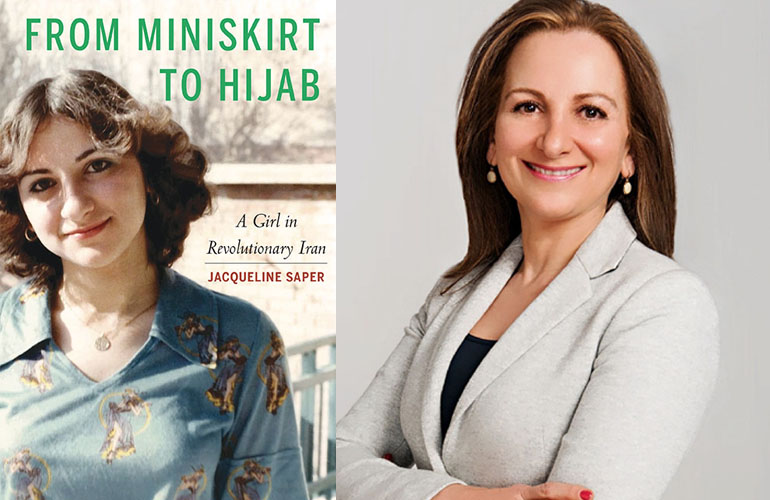
“President Carter had not walked the streets of Tehran like I had,” Saper writes in her memoir, “From Miniskirt to Hijab: A Girl in Revolutionary Iran” (University of Nebraska Press-Potomac Books, 2019). “He had not ridden in a taxi and listened to the driver’s complaints. He had not had lunch with the University of Tehran students expressing anti-Shah rhetoric. Iran was not an ‘island of stability’ (as Carter had fawned), but a land of warring values poised on a fault line.”
Only one year after Carter’s famous remarks, in January 1979, the Shah and his family fled Iran, and the country succumbed to the fanaticism of the Ayatollah Khomeini and his followers. They radically changed Iran into an official Shiite theocracy that enforced sharia law, including the hijab, or Islamic headscarf, which became mandatory for women of all faiths, young and old.
Other memoirs have been written about life in post-revolutionary Iran, including ones by prominent Iranian Jews living in exile in the West. Saper’s, however, is different because Saper herself isn’t your typical Iranian author.
Born to an Iranian Mizrachi father and an English Ashkenazi mother, Saper is what Iranians refer to as doerageh (“from two distinct nationalities”). Her parents’ marriage was an unimaginable rarity in 1950s Iran (her mother, Stella Averley, moved from London to Tehran and married her father, Rahmat Lavi). “As a Jewish doerageh in a Muslim society, I was a minority within a minority,” she writes.
Saper’s mother at work (Photo courtesy Jacqueline Saper)
There’s something else different about Saper: Unlike me, she wasn’t born into the Islamic Revolution; in fact, she spent some of her happiest years in Iran before the revolution. And unlike my mother, Saper wasn’t a middle-aged woman when tumult erupted in the country. Saper was eighteen and in the prime of her life — old enough to be aware of the surrounding instability yet too young to have her youth hijacked by the new regime’s tyranny. And at the tender age of 19, when the Iran-Iraq War broke out, Saper was already married and had a baby girl (she met and married her husband, Ebi, when she was 18).
“I experienced Iran in its three distinctive eras: a teenager in the monarchy, an adult during the revolution and a wife and mother in the Islamic Republic,” Saper told the Journal.
It’s not every day that you’re able to review the memoir of someone who attended your former school. It’s even rarer that the school is back in Iran. Like me, Saper attended Ettefagh School in Tehran, famously located across from the University of Tehran. Iraqi Jews founded the school decades earlier. In the 1950s, Saper’s father served as a teacher and principal of the school.
Only four months apart in age from the crown prince, Reza Pahlavi, Saper grew up in the northern Tehran neighborhood of Yousefabad. Her father was a well-respected professor who taught chemical engineering at two prestigious universities. He also worked part-time for Iranian Jewish businessman and philanthropist Habib Elghanian. Worldly and sophisticated, Saper’s mother worked for an airline company. Unlike most Iranian Jews, Saper grew up being privy to the middle-and upper-class lives of fellow Jews and the pious (and often poverty-ridden) world of lower-class Muslims. The family’s four consecutive live-in maids — devout Muslim women who lived in southern Tehran — offered her a glimpse into a world against the Shah’s obsession with turning Iran into a secular, Westernized state.
“As a teenager with deep Iranian roots, I felt the tremors of unease,” she writes. I knew and loved citizens who belonged to two different worlds, separated by an uncrossable boundary. I learned about the opposing values that affected our daily lives, causing resentment and dividing Iran.” As a young girl, Saper knew that one of those maids was in a polygamous marriage.
“From Miniskirt to Hijab” won the Chicago Writers Association 2020 Book of the Year Award for traditional nonfiction. The memoir is also a finalist for the 2020 Clara Johnson Book Award and a finalist for the 2021 Feathered Quill Book Award and has received rave reviews.
Saper has divided the book into five parts: “Hope,” “Fear,” “Adapt,” “Veil” and “Resolve.” Some exceptionally titled chapters, such as “Cracks Along the Avenue,” illustrate how the Iranian revolution wasn’t an overnight coup or quick upheaval. Instead, the process was the slow and steady result of years of resentment by religious and anti-Western individuals.
Saper spent every summer with her maternal family in England. One September evening in 1978, her older sister, Victoria, called from Iran with an ominous message: “Jacqueline, listen to me. Don’t come back. I can’t say much over the phone, but things are rapidly changing here… the Jewish community is alarmed.” That event turned out to be Black Friday, the name given to September 8, 1978, when pro-Shah forces shot and killed hundreds of people in Tehran’s Jaleh Square. But Saper returned to Iran — only to find Tehran under martial law. A few weeks later, her high school shut down. Graffiti declaring “Marg bah Shah!” (Death to the Shah) was seemingly everywhere.
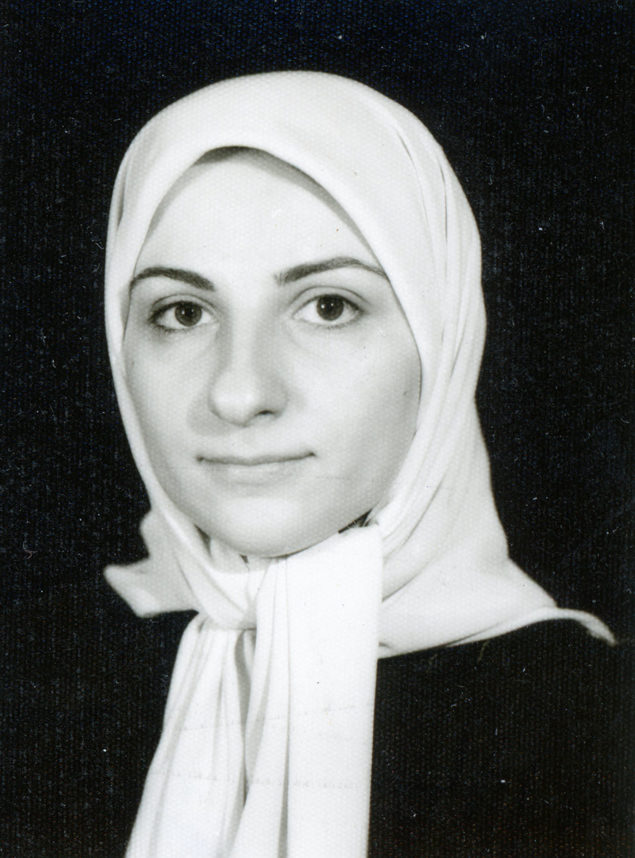
Saper, age 18, before hijab (Photo courtesy Jacqueline Paper)
Nearly one year later, as Saper was window shopping in Tehran, she heard the violent chants of “Death to America” as angry mobs approached the American embassy and took dozens of Americans hostage. She shrewdly refers to such fanaticism as “the ecstasy of dissent.”
On February 1, 1979, Ayatollah Khomeini returned to Iran after 15 years of exile. Schools and universities reopened, and Saper noticed that most of her classmates and teachers had fled Iran. The new textbooks praised martyrdom and demonized the West. Saper was shocked to see that there were only a few Jewish students left in her class. “Most of the Jewish teachers were also missing, and the Jewish principal of our school had been replaced by a Muslim woman who wore the hijab,” she recalled. Her history teacher taught that religion and governance were inseparable, and her Persian literature teacher told students to write about how the Islamic revolution had been a gift.
To read Saper’s vivid descriptions of such incidents is to gain a tremendous appreciation for the precious power of storytelling. The book serves as a critical primary source for anyone who’s ever wanted to know what life was like in one of the most volatile countries in the world — a land of magic and misery, where modern propaganda tars ancient tales, where “modesty police” sniffed a woman’s neck for any traces of perfume and where owning VHS tapes of foreign movies became an act of great rebellion.
“From Miniskirt to Hijab” will leave readers with the ability to understand the deeper issues related to post-revolutionary Iran. Simply put, anyone who wants to understand the human element behind American policy vis-à-vis Iran should read (and quote) this book, which should be read widely in college classrooms, among other places.
Anyone who wants to understand the human element behind American policy vis-à-vis Iran should read (and quote) this book.
The memoir also provides crucial context for the modern question of whether anti-Zionism is a form of anti-Semitism. In a decades-old televised interview, Ayatollah Khomeini famously said, “We know that the Jewish community and the Zionists are different from each other…the Zionists are not Jewish. They’re political people who commit actions under the pretense of Judaism. The Jewish people themselves hate the Zionists. In fact, all human beings hate the Zionists.” Over 40 years ago, Khomeini attempted to separate Zionists and Jews so could he pathologically vilify the latter but purportedly leave the former alone. Today, many anti-Zionists, including those in America, have followed his lead. Saper, however, considered Israel her “third homeland” after Iran and England. Once she realized the dangers of being associated with Israel in Iran, even its culture, she helped her mother break all their Israeli music records.
Just months after the revolution, Elghanian was arrested and charged with spying for Israel and “friendship with the enemies of God” (Elghanian had given to many Israeli charities). A firing squad shot him to death on May 9, 1979. Elghanian was the first Jew to be killed in post-revolutionary Iran, and the news devastated Saper’s father.
Saper’s ability to recall minute details of events and conversations is spellbinding, whether she describes how a table was set or the 2,500-year celebration of the Persian Empire in 1971. For their part, Saper’s mother and father believed that turmoil was all part of living in the Middle East. Her father continued to insist that such instability would soon pass, though his wisest advice was rooted in the reality of the region: “Never get involved with authorities in this region of the world,” he astutely warned.
Such advice proved invaluable when a female modesty enforcer in Tehran confronted Saper for not wearing the hijab. “You bloody whore!” the woman yelled while she searched Saper’s handbag. “You deserve to be treated as a sex object for men.”
In an age when the rights of women worldwide have never been more critical, Saper shines a subtle but brilliant light on a particular plight that has ravaged Iran for 42 years: the harassment of women… by women, most notably, the dreaded modesty enforcers who continue to confront “immodest-looking” women, harassing and sometimes even arresting them.
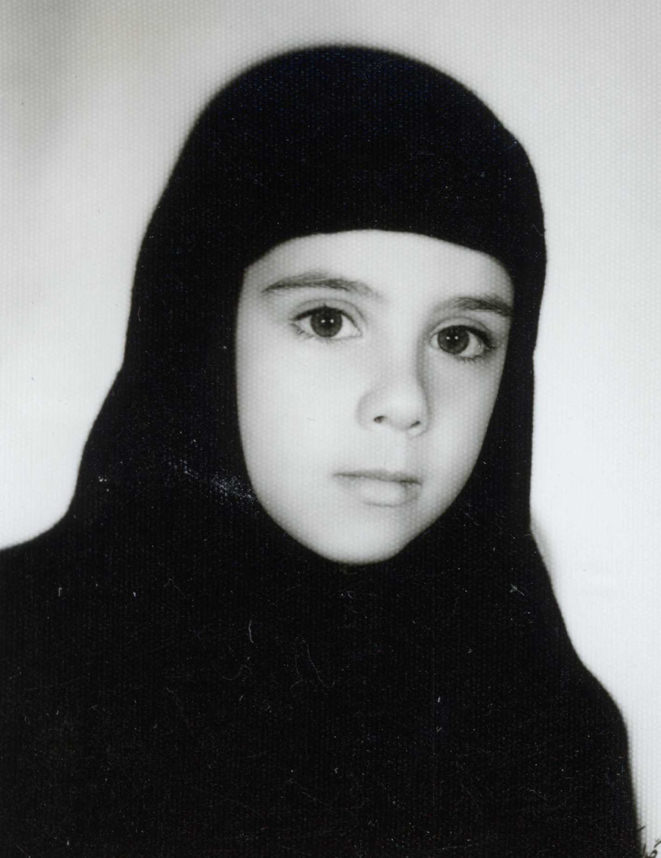
Saper age 23, Shiraz, Iran 1982 (Photo courtesy Jacqueline Saper)
Saper’s astute observations about the nuances of the mandatory hijab in Iran are of critical importance to anyone committed to women’s rights. She rightly observes that whereas we consider the hijab today as a sign of traditional piety, on the eve of the Iranian revolution, it actually symbolized rebellion against the establishment (in this case, the Shah). She writes, “Until this period of revolutionary fervor, I had rarely seen women or girls wearing thick large headscarves that covered part of their faces. Traditional women had been content with wearing the chador, but now covering heads and wearing loose clothing had become an expression of rebellion.”
On March 7, 1979, Ayatollah Khomeini announced that women should cover their hair in the workplace. It was only a matter of time before the hijab became mandatory in all public spaces, and the gap between religion and politics was irrevocably closed. Soon, street chants morphed from “Marg bar Israel” (Death to Israel) and “Marg bar Amreeka” (Death to America) to “Marg bar bi-hijab” (Death to those without the hijab”).
Buses became segregated, so that men stood in the front and women were forced to stand in the back. The warning, “Sister, guard your hijab,” was ubiquitous. Saper recalls passing a large street banner that read, “If a woman shows one strand of her hair, in her afterlife they will hang her from that same strand of hair.”
After marriage, Saper moved from Tehran to Shiraz, where her husband was a surgery resident at Shiraz (formerly known as Pahlavi) University. Ebi treated thousands of wounded soldiers of the Iran-Iraq War who were airlifted from the battlefields. Like her maternal relatives, who endured the London blitz in the 1940s, Saper soon found herself forced to survive through all-out war. During nightly air raids by Iraqi warplanes, she slept in a full hijab in case she had to run out of the house in the middle of the night.
Saper knew she needed to leave Iran, but the regime had placed harsh restrictions against Jewish families, often separating them so they could not leave the country together.
Once she realized that her daughter, Leora (age six), was shouting death chants in her first grade class in Shiraz, Saper’s mission to leave the country became clear. “During recess,” Saper writes, “Leora and her friends would play a game where they formed a funeral procession and carried an object over their heads pretending it was a martyr being taken to the cemetery.”
After reading the book, the reader will appreciate the harrowing experience of how Saper, her husband, and two young children escaped Iran in March 1987. The family temporarily settled in Houston, where Leora shed her mandatory hijab for cowboy boots. They then settled in Chicago, where Saper could finally enroll in college at age 28. She graduated with a business degree and earned the designation of CPA (Certified Public Accountant). Her husband worked painstakingly hard to start his career over as a surgeon in America.
In 1999, Saper began teaching as an adjunct faculty at Oakton College in Des Plaines, Illinois. “I initially taught business courses, but as I became more entrenched with studying and speaking about Iranian issues, the college asked me to teach Iran’s history, culture, people and government,” she said.
Her father’s death in 2014 prompted Saper to write her memoir, as she realized that precious family stories were at risk of being lost. “My children and grandchildren deserved to know about our family’s history and what happened,” she said. “As my children grew up, I realized they knew nothing about our past family history, their childhood or their ancestral homeland. [And] my granddaughter would grow up knowing nothing about her grandparents’ story.”
Today, Saper’s daughter is a lawyer and her son is a doctor. She wants to write a second book about “the unusual union” between her mother and father. “In telling their love story, I will study Jewish ethnic diversity and Jewish intra-marriage that was an unheard-of phenomenon in the Iranian Jewish community of 70 years ago,” she said.
She still remembers the fanatic street chants of those who welcomed Khomeini and the Islamic Revolution over four decades ago: “Esteglal, azadi, Jomhuri-e Islami!” (Independence, freedom and an Islamic Republic!). Her memoir provides irrefutable evidence of the tragic irony that the third call to action (an Islamic Republic) resulted in the demise of independence and freedom.