fbpx

February 24, 2021

From Boo-ing to (K)no(w)ing This Purim

My earliest memories of Purim are of sitting beside my grandmother in synagogue with a large wooden gragger that I excitedly spun at each mention of “Haman.” For the next 50 years, I would do the very same thing. This year, though, I will not be boo-ing. Instead, I will be no-ing. I will shout the word “no” with fervor as I try to drown out the name of one of our many oppressors.

Although the events of the past four years have polarized our country and a pandemic has isolated much of the world, Jewish traditions and holidays have not ceased. Instead, we have been afforded an opportunity to look deeply at how and why we practice our faith. This is in large part because very small gatherings now take with a heightened level of importance and provide space for deeper reflection of those practices and traditions.

In a discussion centered around Purim that I lead for the bachelor’s degree class I teach, early childhood teachers and directors were talking hamantaschen, Haman and traditions. It shifted dramatically when one student, Suzana Tsimerman, questioned the practice of boo-ing Haman. She feared that teaching and “instilling the idea of booing out anyone’s name stands in contradiction to my personal values and the greater human values we try to teach. Our role is to foster kindness and compassion to all and to [instill] conflict resolution skills [in] the hearts of our youngest children.”

As the group went back and forth between what was a time-honored tradition of drowning out the names of those that wish us dead versus teaching young children only passive and non-violent resolutions to prejudice and oppression, I asked Suzana if she would be comfortable with children learning to say “NO!” instead of booing. I could see the gallery of faces on Zoom stop to consider this middle ground. I felt myself also stopping, and upon hearing what I had offered as a solution, I recognized that even for me, a professor of early childhood education, I had much to think about in terms of my own practices and what I was teaching to others.

I had much to think about in terms of my own practices and what I was teaching to others.

Purim is a story unlike any other. It is a story of the Jewish people fighting for themselves without God’s outward assistance — unlike the story of Passover. It is the Jewish people against a common enemy — unlike the story of Hanukkah, in which one Jewish faction was at war with another. It is unlike the happy celebrations of Sukkot, Rosh Hashanah and Tu Bishvat.

Purim is a story unlike any other, and as such, it provides us with an opportunity to be a people unlike any other: to stand up for ourselves in the face of adversity, in the face of possible genocide, and to do so in ways that we can be proud of. It teaches us that we must stand up, we must fight to survive, and we can do so while still adhering to the basic tenets of being mensches.

As a Jewish parent, I have taught my children these values and skills since they were in early childhood programs. And as Suzana has taught me, “booing isn’t one of those skills. Standing up for oneself is.” As a class, we came to the realization that booing accomplishes nothing. Standing tall and proud and exclaiming “No!” is a much more powerful statement.

So this year, when I take my grandchildren Maya and Daniella to hear the megillah and hand them my grandmother’s large wooden gragger, we will excitedly wait for the name of Haman to be recited, and together, we will shout “NO!”


Dr. Tamar Andrews is the director of the BA and MA degree programs in ECE at the American Jewish University and ECE director at Temple Isaiah in Los Angeles.

From Boo-ing to (K)no(w)ing This Purim Read More »

Debunking a Hoax About Ahasuerus

The claim that French by Frenchmen is not spoken reminds me
of the hoax that Ahasuerus was a stable boy
before he ever became king, an allegation we
when reading in the Talmud texts may quite enjoy,

although it may not claim he was a stableboy. It claims
that Vashti’s grandfather’s mere stable boy could hold his liquor
far better than her husband. This amended reading shames
the royal shikker by reminding us that he was hicker

than a low status stableboy of Queen Vashti’s grandfather,
Nebuchadnezzar, Asiatic conquistador whose status
was high above her husband’s, which, it thus implies, was rather
similar to that of any stable horse’s flatus.

Amending versions of the texts….. ingenious way to end a hoax!
No hoax that French is spoken by the French, but Esther
inspired many hoaxes, nearly all of them quite harmless jokes,
such as the anal analogue suggested by this jester.

The textual emendation of bMegillah 12b on which this poem is based was inspired by an article in a seforim blog by Yaakov Jaffe (“No, Achashverosh never served as a stable-boy”).

Gershon Hepner
Purim 5781


Gershon Hepner is a poet who has written over 25,000 poems on subjects ranging from music to literature, politics to Torah. He grew up in England and moved to Los Angeles in 1976.  Using his varied interests and experiences, he has authored dozens of papers in medical and academic journals, and authored “Legal Friction: Law, Narrative, and Identity Politics in Biblical Israel.” He can be reached at gershonhepner@gmail.com.

Debunking a Hoax About Ahasuerus Read More »

Tiger Woods, A Car Crash and Our Pandemic Year

I have a tendency to daydream over certain images. Yesterday I couldn’t stop staring at the news photo of the smashed SUV that saved Tiger Woods’s life. After Woods lost control of his vehicle, 10 airbags were deployed as it rolled over in a ditch. It was a nasty single car crash, which shattered one of his legs and ankles. But after all-day surgery, it looks like he’ll walk again.

Oh, and he survived.

In my dreamy state, I saw in the accident a symbol of the horrific pandemic that has upended our lives in countless ways.

I saw in the accident a symbol of the horrific pandemic that has upended our lives in countless ways.

The damage has been enormous. The deaths, the lost jobs, the depression and loneliness — we can never undo the limitless pain inflicted upon our world by the lethal virus. I saw some of that in the smashed vehicle.

When I thought of the brand new SUV and all of its safety features, I thought of the built-in institutions throughout society that combat the damage triggered by the pandemic.

When I thought of the medical team and surgeons who worked frantically on Woods all day, I thought of the first responders who worked under the most difficult circumstances to care for patients who never stopped coming in.

When I thought of what the surgeons did to save his leg — with special rods and screws and other innovations of modern medicine — I thought of the thousands of scientists around the globe who burned the midnight oil month after month to develop treatments and vaccines to keep us alive.

And when I imagined Tiger Woods coming out of the hospital — whenever that will be — I saw a somewhat battered human being, limping a little, but deeply grateful to be alive.

I imagine that’s how many of us are feeling these days — limping a little, grieving for our battered society’s losses, but deeply grateful for the “air bags” that have kept us alive.

Tiger Woods, A Car Crash and Our Pandemic Year Read More »

NBC’s “Nurses” Criticized for Orthodox Jews Scene

The NBC show “Nurses” is being accused of anti-Semitism as a result of a scene involving Orthodox Jews.

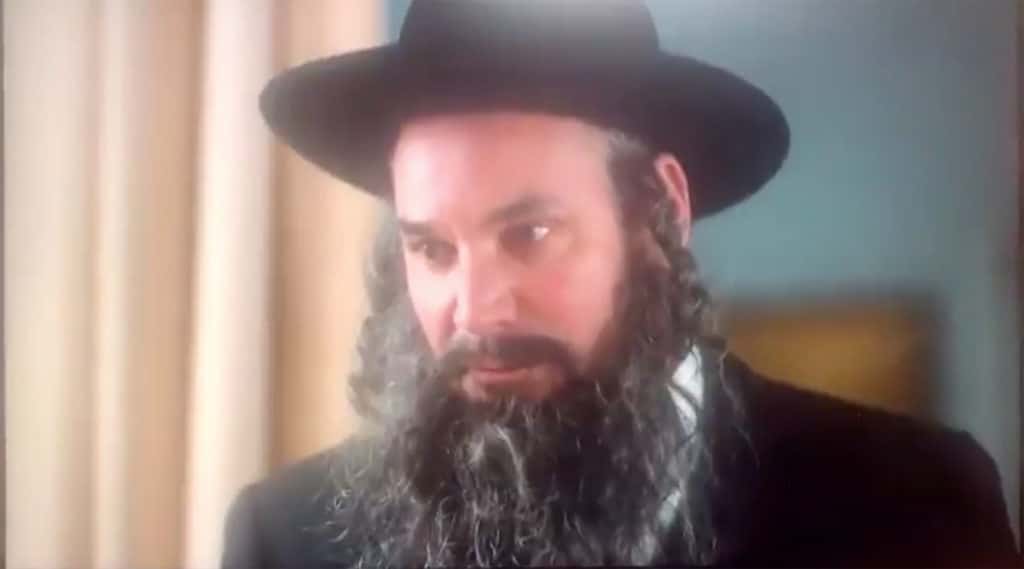
The scene, which came from an episode that aired on February 9, shows a young Hasidic patient being told he needs a bone graft from a deceased donor to heal his leg. The patient gets emotional and shakes his head at the idea, while his dad points out that the leg could be “a goyim leg. From anyone. An Arab. A woman.” A female nurse then chimes in, “God forbid an Arab woman!” Ultimately, the patient chooses not to get the surgery.


The scene was roundly condemned by Jewish groups.

“First we heard Michael Che’s antisemitic falsehood on @NBCSNL,” the American Jewish Committee tweeted. “Now ‘Nurses’ employs this disgusting depiction of Orthodox Jews. Continuous, negative portrayal of Jews invites antisemitism to flourish. This must stop.”

The Simon Wiesenthal Center similarly tweeted, “Insulting, demonizing religious Jews & Judaism. Overreaction? Orthodox Jews are targeted for violent hate crimes in #NewYork, Jews #1 target of hate crimes in US. What’s @NBC going to do about it?”


George Mason University Law Professor Eugene Kontorovich tweeted that a friend of his, who is a nurse at an Israeli hospital, told him, “We care for Gazans, Eritreans, Jews, women; people receive blood transfusions, and no one asks if it’s Arab, or ‘G-d forbid,’ woman’s blood. This is just unbelievable.”

Allison Josephs of the “Jew in the City” blog, who first broke the story, wrote that a surgically infused dead leg is compatible with Jewish law, even if it’s from an Arab or a woman.

“Are there Orthodox Jews who look down on non-Jews and Arabs? You betcha,” she wrote. “And are there Orthodox Jews who are misogynists? Unfortunately, yes for that one too. But the idea that such a surgery would be problematic in general or problematic because of where the bone came from not only is categorically false according to Jewish law, it is a vicious lie that endangers men who walk around with curled side locks and black hats.”

UPDATE: NBC removed the episode from its streaming platforms on February 24, Deadline reported. The episode also won’t be replaying on NBC’s cable programming.

NBC’s “Nurses” Criticized for Orthodox Jews Scene Read More »

Tufts Jewish Student Says He’s Harassed for Pro-Israel Activity

A Jewish student at Tufts University is alleging anti-Semitic harassment over his involvement with pro-Israel groups.

Jewish Insider and Jewish News Syndicate (JNS) reported that the student, Max Price, currently serves on the Tufts Community Union Judiciary (TCUJ), which reviews referendums from the student government. During the fall of 2020, Price had concluded that a Students for Justice in Palestine (SJP)-sponsored referendum condemning the university for participating in what’s been dubbed as the “Deadly Exchange Campaign” security program with Israel was riddled with factual inaccuracies. Price alleges that SJP then proceeded to question his bias on the matter given his involvement with pro-Israel groups.

“They wanted me to back down and to silence me, and when I didn’t, SJP expanded their campaign to slander me in the student newspaper, had me interrogated numerous times as to whether I was fit to hold office, attacked me with age-old anti-Semitic tropes about money and power, threatened me with impeachment,” Price told JNS.

In a February 3 statement to the university, Price, in conjunction with the Louis Brandeis Center for Human Rights Under law, wrote that SJP pressured TCUJ to recuse Price on multiple occasions. Each time, the TCUJ concluded that there wasn’t sufficient evidence to show that Price needed to recuse himself.

In a November 2020 meeting discussing the language of the referendum, Price claims that SJP brought a speaker who has promulgated anti-Semitic conspiracy theories to speak in favor of referendum uninterrupted, whereas he and his third-party speaker — pro-Israel activist Joshua Washington — were constantly interrupted; the TCUJ chair allegedly even muted Price on the Zoom call. The referendum language was subsequently approved, and the student body overwhelmingly voted in favor of it.

Price claimed in the statement that SJP is now attempting to remove him from office before they move forward with their Boycott, Divestment and Sanctions (BDS) referendum in the spring. Price is being brought in front of the student senate on February 28 and faces possible expulsion from his position on the TCUJ. “I fully anticipate that if the university doesn’t stop this trial, that I’ll be unjustly removed from my position,” Price told Jewish Insider.

Brandeis Center President Alyza Lewin told JNS that what’s been happening to Price is “is the worst case of incessant, continuous, non-stop harassment of a Jewish student that I have seen on campus. Max happens to be a strong young man, and I commend him for his strength, but no student should have to go through this.”

She accused the university of abandoning Price. “They have abdicated their responsibility,” Lewin said. “It’s shameful. The university should reverse course, intervene immediately and start taking effective measures to address the anti-Semitism on campus.”

“It’s shameful. The university should reverse course, intervene immediately and start taking effective measures to address the anti-Semitism on campus.”

StandWithUs CEO and co-founder Roz Rothstein similarly said in a statement to the Journal, “We are outraged by SJP’s campaign of targeted harassment against a Jewish and Zionist student. No student should face such an inappropriate impeachment attempt solely based on identity. Let the record be explicitly clear: there is no conflict of interest for a Jewish member of student government to fight antisemitism and discrimination against their own. It is only fitting that this smear comes at the conclusion of SJP’s ‘Deadly Exchange’’campaign, which is itself an antisemitic conspiracy alleging nefarious Jewish influence.

“We call on the TCU Senate and Tufts administration to dismiss this reckless hearing, and commit to ensuring that Jewish and pro-Israel students can enjoy their campus experience free from antisemitic harassment and discrimination.”

AMCHA Initiative Director Tammi Rossman-Benjamin also said in a statement to the Journal, “Here we have yet another example of the growing number of Jewish and pro-Israel student government officials being maliciously bullied and silenced. An accusation of ‘bias’ now means being Jewish or having an affinity to Israel. As Price’s statement explained, the relentless harassment campaign by SJP at Tufts is an attempt to ensure that there are no Jewish or Zionist student representatives within the student government to challenge SJP’s anti-Semitic activities or rhetoric, and no one to represent the Jewish and Zionist student constituents on campus. When does the purge stop?”

A university spokesperson told Jewish Insider that the university takes “any allegation of discrimination” very seriously and that the student government, “like all student organizations, is subject to the university’s non-discrimination policies.”

Tufts SJP did not respond to the Journal’s request for comment.

Tufts Jewish Student Says He’s Harassed for Pro-Israel Activity Read More »

Rick Recht on JKids Radio Offering Families 24/7 Access to Jewish Music, Education, Purim Programming

JKids Radio, formerly known as, PJ Library Radio, has recently relaunched to become a musical kid-centric hub for Jewish music, education and inspiration 24 hours a day seven days a week. The new online radio station streams contemporary Jewish music via its website and mobile app and is accessible around the world.

Led by Jewish musician Rick Recht, he told the Journal over Zoom that JKids Radio should be a resource for Jewish organizations, parents and teachers to utilize so Jewish music can be an introduction into Jewish life.

JKids Radio offers a wide variety of digital programming including short-story videos from Jewish storytellers across North America called “StoryTime”; “SleepyTime” mode; print out coloring pages; monthly music shows; and weekly Shabbat Block programming. The streaming station supplies hundreds of music videos, songs and activities to children and parents.

“We look at music as the open door, it captures the eyes and ears, but then we have a responsibility to do next steps after we bring them in,” Recht, who is founder of non-profit umbrella organization Judaism Alive that hosts Jewish Rock Radio, said. “We’ve got visual art, storytelling art [and] audio art, it’s all these different ways of connecting with people through music and media.”

JKids Radio features energetic and enthusiastic programming from top Jewish artists and song leaders. Recht said this platform serves as a primary platform for the field of Jewish children’s music. Grammy nominee Joanie Leeds; recording artist, and educator of 40-plus years Ellen Allard; Latin Grammy award winner Mister G and Jewish artist Eliana Light are all featured performers on JKids Radio.

Recht has spent decades touring and sharing his music at Jewish summer camps and other Jewish institutions and understands the power Jewish artists have to connect to young people and make a difference in their lives. It is a major reason why he wants to offer a place where Jewish artists can share and create their work.

“We want to make sure we are supporting Jewish artists and Jewish storytellers so they make more and more high-quality art and that their music reaches more people. It all starts with the artists,” Recht said. “[They’re] incredibly powerful educators. They’re educators in a rockstar package.”

Recht also understands that “holidays are milestones” for reaching young Jewish families. It’s why listeners can experience songs, shows and videos geared toward the Jewish holidays. With virtual Purim festivities taking place this week JKids Radio has already published exclusive music videos from Mama Mac (aka Amy Elkins) and Carla Friend of Tkiya. Families, schools and organizations can listen to its Purim for Kids Spotify playlist that features 22 songs from various Jewish song leaders.

“I absolutely love how JKids Radio is taking it to the next level with such a deep commitment to expanding Jewish engagement and education opportunities through the JKids broadcast, website and social media,” said Allard, who is a JKids Radio show host and featured on the Purim playlist. “I’m especially thrilled to host “Everyday Jewish Kids” and help show a new generation of kids about how being Jewish can be so meaningful and fun.”

JKids Radio is funded and supported by PJ Library, The Kranzberg Family Foundation, The Morton H. Meyerson Family Foundation, Sharron and Ophir Laizerovich, The Rubin Family Foundation, Ken and Jill Steinberg and Craig and Cathy Weiss.

JKids Radio also has major support from The Los Angeles Founders Collective, a group of funders who provide financial support. Samantha Garelick, Heidi and Jon Monkarsh, Courtney Mizel, and Isabella and Zoe Green are part of the L.A.-based collective.

Mizel, who lives in Beverlywood, told the Journal the team is deeply committed to Jewish Life in Los Angeles and realized that JKids Radio is an excellent way to reach kids and families, especially when it comes to connecting them to content in a Jewish way.

“JKids radio goes beyond any specific community as it connects kids and families wherever they are located, something that we have learned is essential especially during the past 12 months,” Mizel said. “I send information about JKids Radio to friends with young children and grandchildren. My children are teenagers so they are a bit out of the demographic, but PJ Library was a huge part of their Jewish identities growing up and I know that the medium of music has even greater potential to inspire kids.”

Both of her daughters attend Camp Ramah in Ojai where Recht performs annually. Seeing how the Jewish music impacted her family, she “strongly” believes that the connection kids and their families have to Judaism and Jewish life must start early.

“We know that science supports the effectiveness of music for brain development even in the womb,” Mizel said, “so JKids Radio is an incredible medium that the larger Jewish world has at its fingertips.”

Listen to JKids Radio here.

Rick Recht on JKids Radio Offering Families 24/7 Access to Jewish Music, Education, Purim Programming Read More »

Looking for the Silver Lining

I’m usually a silver lining kind of person. The first movie I ever saw was “Till The Clouds Roll By,” and I remember the thrill when Judy Garland sang “Look for The Silver Lining.” I have watched that movie at least a dozen times, and I still tear up when my screen idol sings, “…so always look for the silver lining and try to find the sunny side of life.”

The silver lining in our grown-up world has become deeply tarnished, and it’s hard to be convinced that “somewhere the sun is shining” when the “sadness and strife” of the song covers the treasures of our democracy behind dark clouds. Is this pervasive state of disbelief, uncertainty and fear our new reality?

I’m well-schooled in the ideas and practices of disagreeing agreeably, engaging in civil discourse across political and ideological divides, reaching across the aisle and seeking common ground. But I, too, often find myself reaching my limits, especially when it comes to speech and actions that pollute the foundations of our democratic system.

It seems as though I’m not the only one looking for a silver lining. Every day the imperative for consensus and compromise seems to battle against the instinct to dig in our heels and hold our ground.

Realizing how long ago I took to heart the words of that song in “Till The Clouds Roll By” with the same trust and naivete as my first screen idol, I now recognize that there can be a silver lining — but it isn’t going to reappear until we all do the hard work of restoring the shine to our tarnished political and societal norms. If we are to preserve and perpetuate what is precious to us — those immutable values that we deem unnegotiable — we have to back up our convictions with support, engagement and concrete action.

We can’t justify standing by helplessly and retreating into our cocoons of personal comforts.There are actually things we can do to bridge the partisan divide: Become fully informed. Read and listen. Watch and learn. Have the courage and willingness to not just waft in the warm comfort of voices that please us and support our leanings but also expose ourselves to voices that discomfort us and make us reevaluate our long-held ideas and understandings. By doing so, even when we don’t agree with dissenting voices, we might better understand the underpinnings of their dissent and expand our capacity for sitting under the same tent. Empathy with the other is the beginning of coming together.

Empathy with the other is the beginning of coming together.

We can get involved in concrete ways. Just as we create plans for most things we want to accomplish, we can create plans to support causes and issues that we care about. With planned intentionality, we can avoid responding impulsively to emotional tugs at our heartstrings, which we finally satisfy with one desperate “click” at the very last hour.

And if we are committed to dialogue and empathy, we can make efforts to ensure that everyone’s voice is heard in our civic realm, too. We must protect voters’ rights and fight voter suppression, volunteering outside of our own neighborhoods to walk precincts to encourage voters to complete and submit their ballots. We can refocus on local governments, learning the issues and supporting the candidates who will work in the best interests of the community they seek to represent. We can add our names to petitions. We can volunteer on phone banks. By broadening our circles of engagement, we create reciprocity of communication rather than creating ever-higher walls that permanently seal the partisanship that divides us.

One thing we all have learned this year is that when people demand attention, they get it. When they demand to be noticed, they are seen. When they demand to be listened to, they are heard. Sometimes this brings us together, and sometimes it separates us, but the clarion call for attention requires us to abandon complacency. Only in a state of attention do we sharpen our vision and activate our senses. Only in a state of attention are we prompted to act. We can’t allow the fabric that binds us together to rip apart at the seams. Sustaining effort may be tedious, but neither relying on hope nor succumbing to despair are viable options.

Judy Garland’s singing “remember somewhere, the sun is shining, so the right thing to do is make it shine for you” wasn’t so naïve after all. While reassuring herself, she firmly decided not just to sit there and hope and wait but to get up and make it happen. She didn’t promise immediacy. She just initiated the act.

The “sunny side of life” can seem very far away these days. We have a lot more to do than “look for the silver lining.” We have to scrub away the

accumulated layers of tarnish on our national ideals and aspirations. Count me among those who pledge to stand up, initiate the act and do my best to make it happen.


Rochelle Ginsburg, educator, facilitates book group discussions for adult readers.

Looking for the Silver Lining Read More »

New Scroll of Esther Honors another Esther, Recent Terror Victim Esther Horgen

It is always amazing to me how there are families who react to unbearable tragedy by creating something deeply meaningful and beautiful for the Jewish people and, indeed, for the world.

This is what the family of Esther Horgen has done. Esther, 52, was brutally murdered by a terrorist on December 20, 2020, while out jogging in the Reihan forest near her home in Tal Menashe, in Samaria.

She died on a beautiful winter day, the kind that happens in climates like Israel, where rather than snow on the ground, there is crisp air, the aroma of leaves and wildflowers, and a bright sun. Esther herself, many people have said, was a ray of light. She was a therapist and an artist who had been living with her husband, Benjamin, and six children in Tal Menashe since 2001. They also have several grandchildren. Esther wanted to make aliya from France since she visited Israel as a child, and she finally arrived when she was 18.

Her family has decided to not let her light be extinguished and has created The Israel Bible Scroll of Esther in her memory, in partnership with The Israel Bible series, edited by Rabbi Tuly Weisz. I have perused this new Megilla, and it is unlike any other I have seen. I write that as someone who has studied and taught Megillat Esther and has co-authored and directed an entire biblical musical on Esther.

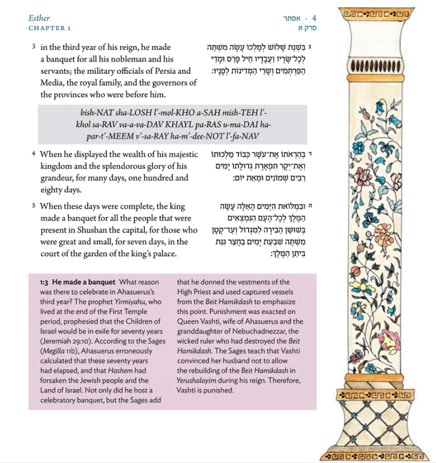
The Israel Bible Scroll of Esther is unique. It features Esther’s exquisite illustrations alongside the text of the Megilla in Hebrew and English and a new commentary from Rabbi Weisz. Some key verses also appear in transliteration, as do the blessings before and after the Megilla and some additional texts, such as a Prayer for the State of Israel, a Prayer for The Welfare of Israel’s Soldiers and Hatikvah. It also has photographs of Esther on her hikes in that same forest.

Esther’s Megilla includes an essay on the historical background to Purim, a list of the prophets and their locations in the biblical texts, the Hebrew months and their holidays with explanations, a map of the empire of Ahasuerus and, for context, a map of modern-day Israel and its neighbors. The scroll includes blessings from Israel’s President Reuven Rivlin and from Prime Minister Benjamin Netanyahu.

Esther’s husband of more than 30 years, Benjamin Horgen, writes in his heartfelt introduction, “My Esther was blessed with a rare quality — she saw the good in everyone, every place and every moment. She was a deeply spiritual person, who, like the Jewish Sages whose teachings had a profound influence upon her, viewed the world in three realms: Olam, Shana and Nefesh…”

He describes how Esther loved to explore the land of Israel and the entire world “From Australia to Ireland, Sweden to India, Hungary to Brazil and many, many more, she loved every place and marveled at the beauties of this world with an infinite appetite.” She loved all the holidays, he writes, but especially Yom Kippur and Purim.

Upon concluding the week of mourning for Esther, the Horgen family went to the site of her brutal murder and planted a tree in her memory so that it would remain a place of peace, not a forest of fear. Proceeds from the sale of this scroll of Esther will go to developing the Esther Horgen Memorial Forest and Park in Tal Menashe.

Benjamin told me in a phone interview, “Both I and my daughter, Avigayil, took an active part in the creation of the Megilla. We are very moved by this project and are grateful to Rav Tuly Weiz and all those involved. I believe that it reflects quite well Esther’s personality in the aspects of her artworks. Art was an important part of her life and it was inspired by nature, which she loved.”

I spoke with, Avigail, 21, the fourth of the Horgen children, who helped create the Megilla. She told the publisher about her mother, sent them photos and helped with the technical side. Avigail did her National Service in Hilma — an organization that helps non-profits, hospitals and social services with internet and technological services. Now she is seeking work in high-tech.

“I was home in Tal Menashe, and around four o’clock, I was looking for my mother and she wasn’t there so I assumed she was outside somewhere, as it was sunny. The truth is I was a bit worried; she was not answering her phone or replying to messages. But I told myself that it is nothing so I distracted myself,” she shared.

“Then my father came home at 6PM after work. He went to look for her and asked me to stay home in case she returns. My neighbor arrived and she said that maybe her husband could locate my mother through her cellphone through the internet, so he tried, and I tried with all the applications I know, but [we] didn’t succeed in finding her. After the fact, we realized that her phone was off and the murderer had removed her sim card.

“Then my siblings came home, and everyone went out looking for her; the security forces came to speak to us and also started to search for her. We slowly understood that something happened to her and that it was intentional. They asked me for her clothes, so the dogs of the rescue unit would be able to look for her. Eventually they found her and came to tell us what happened.”

Avigail described Esther as a mother. “In the Megilla you see that Queen Esther was brave; she goes to Achashverosh though she knew it was the death sentence [for going unsummoned] in order to save the Jews. My mother was also courageous… She wasn’t afraid of the unknown, she asked questions. I think that we need to learn from her, though it was a horrifying event. We have to go forward and not be afraid but to continue our lives with courage.”

The Megilla also includes a poem, originally written as prose, called “Fear,” which Esther wrote in 2015, following a series of terrorist murders, including one in which a boy was stabbed just weeks before his bar mitzvah:

And whenever a situation reminds me of my helplessness,
like seeing a child stabbed a month before his Bar Mitzvah,
our prayers join with his mother’s prayers,
crossing hearts beyond the oceans,
imploring the Divine Mercy that lies dormant within us.

It is from the depths of our helplessness that we encounter Omnipotence.
You have to live it to understand it.

Benjamin writes, “As the tragic abduction of Queen Esther led to the salvation of the entire Nation of Israel… we believe that my Esther’s fate is also the harbinger for future blessings and ultimate goodness for the Jewish people and all of humanity.”

The Jewish people have had many Esthers of every gender — courageous individuals who love and serve their people. As our collective memory of the miracle of Purim approaches, let us pray that the murder of this one will be the last.

The Israel Bible Scroll of Esther can also be ordered as a PDF file.


Toby Klein Greenwald lives in Israel. She is an award-winning journalist, artistic director of Raise Your Spirits Theatre, and the editor-in-chief of WholeFamily.com.

New Scroll of Esther Honors another Esther, Recent Terror Victim Esther Horgen Read More »

How This Country Fails Individuals with Disabilities

Ten years ago, as a promising Ph.D. student at UC Davis on a full research fellowship, I had a very different plan for my life. Told nothing was out of my grasp, I had big plans. But without warning, past health problems surged and flared, putting me in the hospital and leading to a diagnosis of Crohn’s. It would not be long before it became clear I had a form of Crohn’s that is most pernicious and most resistant to traditional, insurance-covered treatments.

Crohn’s has caused problems in multiple organs and brought crushing symptom after symptom. And time is ticking — the damage to my organs is cumulative and progressively irreversible.

Bedridden for most of the last decade, I struggled alone and worked with doctors and other experts to formulate an integrative science solution to my problem: a treatment regimen that has included prescription, compounded, specialty and over-the-counter medications, liniments and herbal treatments of many different kinds — some of which I prepare for myself — to manage a host of difficulties: nausea, serious spine and joint problems, skin problems and heavy damage to my nervous system from the pain.

The last decade has been filled with incredible suffering, with hundreds of hospital stays and with serious abuse, even from members of my own family. Doctors certified I would likely never be able to work again. I have moved from one temporary living arrangement to another, facing emotional and physical abuse, attacks, bugs, serious problems and danger almost everywhere I stayed. I stayed at one shelter full of rats and roaches and another with someone who was unable to control homicidal ideation. I’ve rarely even felt safe where I lived, and where I lived was all too often a hospital bed.

Without an income, it was only recently, and with the help of my Rabbi and other friends, that I was able to find a more stable place. I have never given up my faith in the future that I believe is possible: that I can work towards the healing I believe is possible for the world. I have been fortunate to have a great resume filled with accolades and achievement and friends and teachers that speak highly of me, but because of my complex condition and partial disability, I am trapped in a difficult situation.

This country’s disability system simply does not work for people like me. I’m too young to have had a chance to work, with an exotic condition difficult and expensive to treat with full Medicare, let alone the minimal care I qualify for with social security/partial disability. Full disability depends only on years worked paying taxes in the federal disability system. As a young graduate student, I did not meet the requirements (The standard is ten years; it can be reduced through programs, but not enough for me to qualify).

We need more support for those not qualified for full disability.

Instead, I survive on an income that is a small fraction of unemployment insurance, which I have not been able to receive either. After applying in April 2020, my claim is still pending. California’s Employment Development Department will not answer calls or emails, and even the unemployment expert I hired was unable to help except to suggest trying a new claim when I can.

Medicaid/Medi-Cal insurance covers my hospital stays, but it dominates my time with calls and forms and covers almost nothing else. Even worse, my unusual situation and complex condition have systematically disqualified me for aid and charities of all kinds. Instead, I have had to find what I need through whatever work, fundraising or anything else I can manage. What I need most is financial support to pay these medical costs and, if possible, to pay off medical debt, in order to get my condition towards remission and give me a chance to return to school or work.

The pandemic has complicated my situation: my normal transportation option — AccessLA — is not pandemic-safe, leaving me to rely on friends and Ubers; I am also unable to qualify for the vaccine — as I am under 65 — so I must stay home, even at a heavy cost. (My condition and its many complications qualify for a vaccine once it opens to those with high risk, but I have been told by doctors and hospitals that there are already shortages and to expect worse to come.) My medical costs have skyrocketed. Serious problems keep erupting because of Crohn’s; some mornings I awake to painful temporary skin sores, new crippling sources of pain or to any number of other excruciating problems, including malnutrition, anemia and dehydration. My friends have had crises of their own, limiting their ability to help me and fundraise with me.

Many things need to change in our system to help create a future for disabled individuals. But from my experience, we need more support for those not qualified for full disability and for those with extreme conditions whose treatment needs are not addressed by Medicaid and Medicare. More housing options should be compatible for individuals with conditions like mine, as the alternative, homelessness and shared housing, put them at risk. And more support for existing programs is needed; for example, I have been approved for 20 hours a week from In-Home Supportive Services, but I have been unable to find anyone to work with for over a year despite help from friends.

Although my condition continues to worsen, I am resolved to build the future I believe in. I am driven by my faith in the eternal, in the healing and the future I believe in for myself and for the world. My faith has meant that even when hope has felt lost, I continue to take every step necessary to survive, believing that one day my steps would carry me into a brighter tomorrow. And you can help build this future with me, too.


Michael Mandel is a published scientist, Ph.D. student and award-winning educator on long-term medical leave. All proceeds to his fund will go towards helping him towards remission, recovery and returning to independence.

How This Country Fails Individuals with Disabilities Read More »

WandaViznitz

As if there are not enough things for a rabbi to do on Friday afternoons, I now have to squeeze in “WandaVision” on Disney+.

Luckily, as the author of “Up, Up and Oy Vey,” the first book to chronicle the Jewish influence on superheroes, and as a self-proclaimed “comic book rabbi,” I can call it research.

In the show, Wanda and Vision are two super-powered beings living their best suburban life. Each episode pays aesthetic homage to a previous decade of sitcom television; the results are clever and visually engaging. But spoiler alert: not everything is as it seems.

For one thing, Vision died in the Marvel cinematic universe — actually twice, by my count. In this show, Wanda seems not to be actually inhabiting these different televisual universes but actually manipulating space and time to create an idealized — though false — life with Vision, seemingly to cope (or rather, not cope) with pain and loss.

To paraphrase Batman, “WandaVision” may not be the show we deserve, but it’s the one we need right now, as Wanda’s coping mechanism seems to be tragically popular in homes during the pandemic. How many of us have spent the last year submerged in comfort culture food? Isolation, political turmoil and social unrest have forced many of us to retreat into nostalgia.

I see so many in my generation reverting back into the 90s. There must be a reason why “Friends” is so popular now because I don’t remember it being very good. And in the comic book sphere, it’s not just Marvel who’s interested in transporting us to less turbulent times: There is a reason the new DC movie was called “Wonder Woman 1984.” Anyone remember what happened in 1984? Not a pandemic, that’s for sure.

Nostalgia has its purposes, for sure: It can become a vehicle that takes us to a happy place, or at least what we remember or perceive to be a happy place, and we all deserve a little escapism right now. Certainly, when our safety relies on us literally hiding out in our homes, it makes sense we’d overindulge in television, particularly the kind that isn’t intellectually taxing.

But unfortunately for Wanda (and ourselves), insulating in a bubble of nostalgia is ultimately as unhealthy as stuffing ourselves with hamantaschen or davening obsessively over whether Ross and Rachel were really on a break.  

Insulating in a bubble of nostalgia is as unhealthy as stuffing ourselves with hamantaschen.

Wanda may be hiding another reason for her retreat into nostalgia. She first appeared in the Marvel universe in 1964, yet it wasn’t until 1983 that her villainous yechus confirmed her father was X-Men anti-hero Magneto (born Max Eisenhardt), a Jewish survivor of the Holocaust. It was in Auschwitz that Magneto was reunited with his childhood crush (and Wanda’s Romanian mother) Magda.

Holocaust trauma was part of Wanda’s heritage, as it was in the actual heritage of Jack Kirby and Stan Lee, who created these characters. No wonder these characters and their authors wanted to hide from their traumatic truth.

Like the superheroes they created, these writers also understood the experience of having different identities at home and work. The historical need to hide Jewish identity by masquerading goes back to Biblical times and is famously present in the Purim story, in which our heroine, Queen Esther, hides her Jewish heritage from her husband, King Ahasuerus, out of fear she would be persecuted.

In this most recent telling of Wanda’s story, Marvel seems to have whitewashed Wanda’s Semitic heritage, but I can’t kvetch too much. Yiddish-speaking immigrant families created many classic comic books, and I could never have imagined when I wrote my book that over a decade later Marvel would come calling.

It was a rabbi-fanboy dream to be included in “Marvel’s Behind the Mask,” a recent documentary exploring the secret identity behind the iconic superheroes. Yes, I’m streaming on the same channel as “WandaVision.”

Yet like Wanda, Queen Esther or ourselves, we can’t hide from trauma. Esther summons her courage to reveal her true self to her husband and is rewarded for it. The ending of the Purim is a happy one in that the Jews longer need to hide their identities.

Maybe it’s time for Wanda and us all to come out from behind the mask, however painful the experience might be.


Rabbi Simcha Weinstein is a best-selling author who chairs the Religious Affairs Committee at Pratt Institute. He is the founder of the Jewish Autism Network (www.JewishAutismNetwork.com) and resides in Brooklyn.

WandaViznitz Read More »