fbpx

February 19, 2021

Attention as an Expression of Love

In his daily word of inspiration this morning, Rabbi David Wolpe drew from French philosopher Simone Weil who, he said, “got it exactly right: Attention is a form of love.”

Weil, whom Albert Camus described as “the only great spirit of our times,” wrote beautifully about the art of attention, calling it “the rarest and purest form of generosity.”

Is there a better time than today to contemplate the human ideal of paying attention?

We’re living, as Wolpe said, “in an age of distraction, when so many things pull us away from one another and even from seeing the world.”

The simple act of focusing our attention on one thing — a person, an idea, a flower, a sign of pain — now competes with the multitude of distractions that come at us by the minute.

It is precisely because it has become so difficult that we must go out of our way to donate our attention. There is a dark side, of course, to paying attention, as, for example, when it is used in an obsessive way or to judge and attack.

It is precisely because it has become so difficult that we must go out of our way to donate our attention.

But when the act of attention is seen as a generous act of receiving, of empathy, of understanding, it ennobles the moment. It turns it, as Wolpe says, into “an expression of love.”

If today’s ultra-modern world of constant distraction compels us to pay greater attention to the very act of attention, an ancient tradition provides the ideal “app” to practice the art.

It’s called Shabbat, and it starts at sundown tonight.

Shabbat Shalom.

Attention as an Expression of Love Read More »

ADL Report Highlights European Anti-Semitism

The Anti-Defamation League (ADL) released a report on February 18 highlighting how anti-Semitism has been politicized in Europe and its harmful impact on Jews.

The report begins with highlighting how anti-Semitism is prominent in Russian “disinformation campaigns” about the political situation in Ukraine. For instance, when then Ukrainian President Viktor Yanukovych was ousted in 2014, Russian President Vladimir Putin alleged that Ukraine had been taken over by anti-Semites and neo-Nazis.

“While an antisemitic party, Svoboda, had a small role in the initial post-Yanukovych government, its official role and political support were short-lived,” the report stated. “Jews were not repressed and very few genuine antisemitic incidents occurred. In fact, some of the most powerful figures in Ukrainian politics since 2014 have been Jews.” Additionally, Russian television programs have claimed that some Ukrainian politicians are “secret Jews.”

The report also noted that during the July 2020 presidential elections in Poland, the opposition candidate, Warsaw Mayor Rafal Trzaskowski, was accused of wanting to sell out Poland to “Jewish interests” because he said he was willing to discuss the issue of restituting the Jewish property that Poland’s communist government kept after the Holocaust. The ADL’s 2019 Global 100 Survey found that 75% of Poles believe that Jews talk about the Holocaust too much and 40% thinks Jews have outsized power over “global affairs.”

The report then stated that in 2017, a United States law was implemented mandating the federal government to issue reports encouraging European government on following through on their pledges of Jewish property restitution from the Holocaust. Polish nationalists claimed that it was a Jewish effort to extort money from Poland and that the country was under attack by the “Holocaust Industry.”

The report argues that in Hungary, rhetoric against billionaire philanthropist George Soros, who is of Jewish descent, is littered with “associations of Jewish nefariousness, of Jews with money and commerce, and allegations that Jews place their transnational ethnic affiliations ahead of the interests of their non-Jewish neighbors.” As evidence, the report pointed to how anti-Soros posters in the country have been vandalized with anti-Semitic graffiti.

The report then turned to Britain, arguing that the country’s Labour Party under the leadership of Jeremy Corbyn showed how rhetoric against Israel, Zionism and capitalism can descend into anti-Semitism. The report highlighted how there were “incidents of Jewish [Labour] members being harassed at party meetings where they were called ‘Zio scum,’ told ‘Hitler was right’ and informed that there was an ‘over-representation of Jews in the capitalist ruling class that gives the Israel-Zionist lobby its power.’” The report concludes that the Labour Party failed to eradicate its issues with anti-Semitism under Corbyn’s leadership, and a rise in online anti-Semitism in the country has been attributed to Corbyn supporters.

Other examples highlighted in the report include Ukrainian nationalists glorifying figures who fought against the Soviets alongside the Nazis and murdered Jews independently, as well as German nationalists who currently rail against “Holocaust fatigue.”

The report concluded: “It may be too much to wish that antisemitism never appear in politics, but it must not be too much to ask that any appearance be denounced.”

Read the full report here.

ADL Report Highlights European Anti-Semitism Read More »

A Conference on “Healing a Fractured World”

After the 2020 general election, many hoped that the days of hyperpartisanship were behind us. But the Jewish community, like so many others across the country, has still been trying to exactly why they remain polarized.

According to a new report released by Nishma Research, a sociology research firm focusing on the Jewish community, there’s a reason why: a vast difference in priorities between Democratic and Republican Jews. Nishma surveyed 449 members of the Orthodox community and asked Trump voters and Biden voters how important 35 issues were in their decision. Participants ranked issues as “not so important,” “somewhat important,” “quite important” and “my most critical factors.”

When it came to issues voters saw as “most critical” in their choice of candidate, Trump supporters appeared to prioritize foreign policy: 80% of Trump voters cited Israel as “most critical,” whereas only 29% of Biden voters did; similarly, 57% of Trump voters cited Iran as a “most critical factor,” but only 8% of Biden voters did so.

By contrast, domestic policy seemed to be a higher priority for Biden voters: 78% of Biden voters saw the coronavirus pandemic as “most critical,” whereas only 12% of Trump voters saw it as such; “bringing the country together” was a “most critical” factor in deciding the vote for 49% of Biden voters, but only 8% for Trump voters.

Given these clear divisions between Orthodox Jews, many Jewish leaders and community members are seeking ways to bridge the divide. And on February 15, 2021, the Jewish Alliance for Dialogue & Engagement (JADE) hosted a panel discussing exactly that.

Given clear divisions between Orthodox Jews, many Jewish leaders and community members are seeking ways to bridge the divide.

The event featured moderator Ari Goldman, professor at Columbia’s School of Journalism, in conversation with Jacob Kornbluh, senior political reporter at The Forward; Mark Trencher, founder of Nishma Research; Ester Fuchs, Professor at Columbia’s School of International and Public Affairs; Rabbi Barry Kornblau of Young Israel of Hollis Hills-Windsor Park and Doctor Elana Stein Hain, director of faculty and senior fellow at Shalom Hartman Institute.

Goldman opened the conversation by noting the historic divisiveness with the Orthodox community. He asked, when, for example, did “Orthodox become synonymous with right-wing politics?” How did so many Orthodox Jews embrace Trump, and why do so many cling to his legacy?

The Origins of the Divide

Trencher reiterated that there was more partisanship within the Jewish community than past decades — and even within the past four years. But he cautioned that when he looked back at previous surveys, “the emotional connection to Israel among [lean-Democrat voters] was pretty much the same as it was among people who vote Republican… The issues that guided voters might be different from the issues that underline the day-to-day importance.” When it comes to healing, there are areas of common ground, he observed.

Fuchs contextualized the divide Trencher’s survey observed. Jews still remain one of the most consistent groups of Democratic voters, but “as Jews became wealthier,” she noted, “they didn’t become Republican.” This was odd because people tend to vote their economic interest.

Fuchs argued that the Republican shift came before Trump, and could be attributed to Orthodox Jews becoming more well off and moving to the suburbs, where they became “more insular” and “less liberal,” favoring noninterventionist governments and lower taxes. Kornbluh agreed, adding, “I think the shift started [with] George W. Bush, where people … identified not only with the politics of the Republican party but also moved away from the ideology and policy [of] the Democratic party.”

Why Trump

Kornbluh theorized that one reason why Orthodox Jews voted for Trump was because he “upped the rhetoric” against Democrats. He also argued that Orthodox Jews see a “resemblance” between Trump and in their own rabbis. As a result, Orthodox Jews were more politically active in the past five years than ever before.

Stein Hain explained how Israel became a rallying point for Orthodox support of Trump. The Iran deal, she noted, was a major moment of “distrust” within the Orthodox community; also critical was anti-Semitism and criticism of Israel among progressives. Trump was the person who called BDS anti-Semitic, pulled out of the Iran deal and hired and appointed Orthodox Jews to manage Israeli policy; “Orthodox Jews sa[id] to themselves, ‘well here’s somebody who understands my story.’”

Mending Fences

Each panelist concluded with their hopes for bridging the divide. Stein Hain noted that when it comes to Orthodox communities with more internal divisions, such as the Modern Orthodox community, “we need to develop a way of discussing these issue through a lens of values and not just bickering.”

Kornbluh also touched upon discourse, noting that Orthodox Jews need to “engage based on data” and refrain from judgment. He shared that he was attacked while reporting on an anti-lockdown protest in Borough Park, what he attributes to his “channeling information” from what the community saw as untrustworthy sources (state and local government). Education on a communal and personal level, he shared, will be crucial.

Trencher agreed, arguing that the responsibility for creating healthy discourse lies with rabbis and schools. Fuchs echoed Kornbluh’s desire for respectful discourse, but noted that our fundamental goal is to “protect our democracy” and focus on anti-Semitism on the left and right.

Kornblau concluded that he draws faith from halacha, which speaks to obligations and duties, not rights. What we need to do, he said, is “listen without rancor” and express “ourselves and our motives without rancor.” He shared that he started an a group of like-minded rabbis and Torah leaders who are working to “liberate the Torah” from one political party versus the other and to revive dialogue.

COVID-19, Goldman said, gives us a chance to “reset” as a community and pursue these goals.

A Conference on “Healing a Fractured World” Read More »

David Suissa Podcast Curious Times

Curious Times Episode 6: My weekly roundup, from COVID to Texas to love and goodness

Reflections on the lockdown controversy, the Texas nightmare, progress on the vaccine, sharing our goodness, and this week’s Torah portion.

Enjoy the conversation.

Listen on Apple Podcasts

Listen on Spotify

Listen on Stitcher

Follow David Suissa on FacebookTwitter and Instagram

Curious Times Episode 6: My weekly roundup, from COVID to Texas to love and goodness Read More »

Adam Grant and The Case for Nuance in Jewish Education

The word “nuance” is more than a buzzword, but often it can feel like one. Nuance is the single most important element of a healthy educational experience. What is nuance, and how does using a nuanced approach to a difficult question lead to surprising outcomes and cause us to rethink our previously held assumptions? And why does it matter in education?

A nuanced approach breaks through echo chambers by exploring the wide contours of dispute that exist on any given issue. When we encounter diverse perspectives on any given issue, we gain a more complete understanding of the issue and people who are different from us.

This approach is needed now more than ever because it will counter the polarization in our politics, media and social lives. And bringing a nuanced approach into our classrooms is not only necessary if we want to break down the silos in the Jewish world and expand understanding of one another; this approach is also fundamental to Judaism and our responsibility as Jewish educators.

In the Talmud (Eruvin 13b), there is a well-known debate concerning whether the law ought to follow the opinion of Beit Hillel or Beit Shammai. For three years, this was debated. These two schools of thought had fundamentally different approaches to education and the law.

Beit Shammai was what the Talmud describes as “charifei tuva,” meaning they were significantly sharper than Beit Hillel. They knew the facts involved and had a clear answer to every legal question. In modern parlance, one might say they were adept at logical argumentation and analysis of an issue. Perhaps that is why there is a tradition of believing  that in the Messianic era, the opinions of Shammai will prevail.

But until that Messianic Era, Beit Hillel is the victor for decision making in Jewish law. The Talmud provides three reasons for this:

  1. Beit Hillel was “nochin vi’aluvin,” often translated as “agreeable, patient, humble and forbearing.”
  2. Beit Hillel studied their own opinions and the opinions of Beit Shammai in their academy.
  3. When they formulated their teachings and cited a dispute, Beit Hillel made the decision to prioritize or give precedence to Beit Shammai’s statements over their own statements.

Beit Shammai was also a deeply important part of the Jewish tradition, but they only engaged in their own positions. Micah Goodman, in his new book “Chazara Bli Teshuva” (“The Wandering Jew”), explains that Beit Shammai was “an echo chamber.” Beit Hillel, who we are the descendants of and whose legacy we inherited, behaved differently. They reached outside of their own school of thought and learned the positions of Beit Shammai as well as their own.

The two schools’ different behaviors likely stemmed from their radically different ideas about the goals of Jewish education. To quote the organizational psychologist Adam Grant in his recent book, “Think Again: The Power of Knowing What You Don’t Know,” Beit Hillel understood that “the purpose of learning isn’t to affirm our beliefs; it’s to evolve our beliefs.”

Beit Hillel understood that “the purpose of learning isn’t to affirm our beliefs; it’s to evolve our beliefs.”

Beit Hillel was not merely interested in proving their existing views right. Rather, by including Beit Shammai’s views, they sought a complete understanding of the issue as well as the “other.” They viewed their intellectual and religious rival with respect, integrity and dignity. This approach is the Jewish people’s foundational narrative of what it means to engage in education.

To be clear, applying Beit Hillel’s approach — a nuanced educational approach — does not mean being relativistic or having less conviction. We ought to remember that Beit Hillel and Beit Shammai agreed on the fundamental truths of Judaism and disagreed on 300 cases of law and lore. Both schools ultimately had clear positions on these matters.

Where the two schools differed was in how they arrived at those positions. Specifically, Beit Hillel considered diverse perspectives as part of their standard process of forming opinions and reaching conclusions. By proactively including Beit Shammai’s opinions and genuinely considering them, Beit Hillel was able to reduce the chance of falling into two common psychological traps Grant discusses in his book: confirmation bias (seeing what we expect to see) and desirability bias (seeing what we want to see).

We may have the impulse to follow the example of Beit Shammai and be “right,” but that is not our heritage as Jewish educators. So, how can we follow in the footsteps of Beit Hillel and bring a nuanced approach into our classrooms?

  1. Model being curious, and reward your students for showing curiosity. Openly share with your students and peers when you are curious or even ambivalent about an issue. Encourage your students and peers to lead with their curiosity, rather than immediately looking to prove a point. Some of the most profound moments I had as a student happened when I asked my teacher or rabbi a difficult question, and they responded, “I don’t know. I need to think about it.” As Grant wrote, “When someone knowledgeable admits uncertainty, it surprises people and they end up paying more attention.” Teach your students that it’s okay to say, “I don’t know.”
  2. Showcase a range of perspectives on any topic. There are rarely only “two sides of a coin” for any given complex issue. Whether you are teaching about the binding of Isaac, the Spanish Inquisition or the emergence of the state of Israel, present multiple historical and philosophical viewpoints so your students can appreciate the topic’s complexity and consider different perspectives. There is no need to overwhelm students with 25 perspectives on a given topic: highlighting three or five perspectives will allow students to see the textures of an issue.
  3. Motivate your students to consider nuanced perspectives between two extremes. Help your students overcome the tendency to think about issues in binary terms by asking them, “Are there any additional perspectives that could be missing between the extremes?” Consider discussion questions like, “Should Israel allow public transportation on Shabbat?” and “Was King David a courageous hero, a flawed leader or both?” “Does God intervene in the world?” Let’s help our students engage in what is called “spectrum thinking,” exploring perspectives in the grey zone.

Two thousand years ago, Beit Hillel modeled a way to reach beyond the silos in the Jewish world, explore the perspectives of their religious counterparts and gain a more complete understanding of any given topic. As Jewish educators, lay leaders or parents, we are all descendants of Beit Hillel, and it is our responsibility to follow in their footsteps and break through the echo chambers and division that characterize our own times.

In a world in which too many people have huddled into their silos and taken hardline partisan positions, we need to make nuanced Jewish education accessible to everyone. As Beit Hillel demonstrated, nuance does not mean having less conviction; it means bringing more people into the discussion. Nuance does not mean being less passionate; it means being more compassionate.

The world has a population of almost eight billion people. Comparatively, the Jewish people are merely trying to crack the 15 million mark. Because of our relatively small population size, we simply do not have the luxury of shunning others within our Jewish family. By using nuanced educational approaches, we can help reverse polarization trends in our community and build a Jewish future that is more compassionate, empathetic, informed and connected to Judaism and each other. We have no time to waste.


Dr. Noam Weissman is senior vice president and head of content at OpenDor Media and Unpacked for Educators, a Jewish educational non-profit company that is creating videos, podcasts, articles and films that are animated by a nuanced educational approach.

Adam Grant and The Case for Nuance in Jewish Education Read More »

In Texas, Jewish Communities Join a Desperately Needed Response

Now the community has repurposed the team, consisting of rabbis from each denomination and the CEOs of local Jewish agencies, to take on a very different kind of crisis: the unfolding effects of an unusual winter storm named Uri that has crippled large swaths of Texas and left millions of people without reliable access to heat, electricity or clean water.

So far, the group has gotten aid to seniors and people without electricity. Synagogues and their congregants are offering shelter to those without power. And the Jewish Federation of Greater Dallas partnered with Kosher Palate, a local kosher restaurant, to deliver thousands of meals to Jews without power — a project the restaurant began on its own and accelerated with the federation’s aid.

“I keep saying this is what Federation was built for,” said Mariam Shpeen Feist, the group’s president and CEO. “We were built to respond to crisis.”

Texas is home to around 130,000 Jews, the majority located in the Dallas and Houston areas. The state, and its Jewish population, has experienced no shortage of recent crises. In 2017, Hurricane Harvey decimated the Houston area, flooding thousands of Jewish homes and causing millions of dollars in catastrophic damage to several synagogues and other Jewish institutions. In 2019, a Category 3 tornado struck Dallas, bringing more property damage to Jewish communities. And of course the pandemic has challenged every aspect of Jewish and communal life.

The toll of the latest disaster — rare in a state with a generally temperate winter climate — is still taking shape. As of Thursday morning, nearly 500,000 homes and businesses remained without power, with large swaths of the state’s grid remaining down. Hospitals are running out of water. Some 7 million residents are under a boil-water advisory. At least 30 deaths linked to the storm have been reported. And residents are burning furniture to stay warm, according to reports.

Meanwhile, another storm is on the way.

“It’s pretty dire in the city right now,” Steve Adler, the Jewish mayor of Austin, the state capital, told a local TV station on Thursday morning as he joined many Texans in asking why the state’s energy grid was not prepared for sub-zero temperatures. “It’s too much to ask of anybody. People are angry and confused and frustrated, and I am, too.”

The Jewish Response and Action Network in Houston distributed thousands of water bottles to residents Feb. 18 in response to a boil-water advisory affecting most of the area in the wake of winter storms that decimated the state’s water service. (Courtesy of the Jewish Federation of Greater Houston)

For many, the anger is being driven by what they perceive as a lackluster response by state leaders. Former governor Rick Perry suggested that Texans would prefer a few days without heat to federal intervention in their power system, and Sen. Ted Cruz flew to Cancun for a planned vacation on Wednesday night in the Mexican resort city. Both are Republicans.

Jewish communities, like others across the state, are taking steps to address their own needs. In Dallas, one of the region’s two Jewish senior living centers lost both its main power and backup generator, forcing the staff to quickly relocate residents to the area’s other senior center — fortunately it had spare room, having just recently opened.

Two Orthodox Jewish-run emergency response units, Hatzalah of Dallas and the newly formed Texas Chaverim, both founded by a local resident, Baruch Shawel, sent out patrols to assist residents with dead car batteries, medical emergencies and other issues.

“It’s been pretty wild out here,” Hannah Lebovits, a professor at the University of Texas-Arlington who lives in an Orthodox community in north Dallas, said of the rolling blackouts, which accompany other problems like loss of heat and water pressure. “Thankfully in the Jewish community, very often we quickly create our own mutual aid systems.”

Still, Lebovits said, “It shouldn’t be Chaverim doing that. It should be the city of Dallas knocking on my door and checking on me.”

In Houston, too, Jewish leaders are leaning on coordination groundwork laid long before the unusual cold snap set in. Traumatized by the patchwork Jewish response to Hurricane Harvey’s devastating floods, the Jewish Federation of Greater Houston had convened the Jewish Response and Action Network in early 2020, even before the pandemic.

“After Harvey, each shul made its own response. They made their own food. It wasn’t coordinated,” said Jackie Fisherman, the network’s director and the Houston federation’s director of government affairs. “We thought there must be a better way.”

This week, the Houston federation has taken steps to mitigate the impact of the winter storm on greater Houston’s Jewish community, which numbers around 55,000 and skews older. The group has helped procure fuel for a backup generator at an assisted living facility, been part of the distribution of 10,000 water bottles to the community and assisted a few individuals in need of electricity secure generators from the city — while continuing to work with local Jewish leaders on an ongoing COVID response plan.

Some on the ground in Houston, including representatives of the federation, say many Houston Jews live in areas that have avoided the worst of the outages, although the lack of reliable cellphone service and other communication issues all week has prevented response teams from drawing a clear picture. But challenges still lie ahead, as the Houston area, like much of Texas, has fallen under a boil-water advisory. Many frozen pipes are expected to burst when they thaw.

“Training makes you better, and there’s really no way to train through a disaster until you’ve lived through it,” Fisherman said. Nevertheless, she added, “I’m looking forward to a really boring job in the future.”

Houston’s Jewish community has also helped the city’s broader response when it comes to the COVID vaccine. Power outages have affected statewide distribution of the vaccine, which needs to be kept at freezing temperatures until it’s ready to be used. In response to a sudden urgent need this week to distribute doses of the vaccine, United Orthodox Synagogues in Houston quickly offered its building as a vaccination center, and successfully orchestrated 350 doses to the community in a manner of hours.

Austin Bar Mitzvah

Austin resident Sam Robinson celebrates becoming a bar mitzvah in his backyard after a power outage at his synagogue from Winter Storm Uri scrapped his plans to read from three Torahs on the bimah. (Photo courtesy of the Robinson family)

Amid the challenges of the moment, Jewish life for some Texans has found a way to continue. In Austin, Sam Robinson became a bar mitzvah last weekend.

The family had already made plans to conduct the service over Zoom due to COVID, but found that they still had to scramble last minute to meet the challenges of the moment when their synagogue, Congregation Agudas Achim, lost power and had to contend with an iced-over parking lot that prevented them from even getting close enough to the building to handle the Torahs.

Instead of reading from three of the congregation’s Torahs from the bimah, as he had been planning to do to correspond with Rosh Chodesh and Shabbat Shekalim, Sam had to perform the service from his house, reading off of photos of the Torah portions his dad had taken on his phone.

“All our plans, we basically had to scrap them and frantically get the house ready,” Sam said. “We did it on the dining room table. We just shoved everything off it.”

Less than 24 hours after Sam’s bar mitzvah, the Robinson household lost power, too. With the sudden drop in temperature, Sam’s mother, Rachel, also found a use for the many hats, scarves and blankets she had taken to knitting in her spare time since the start of COVID. Rachel added that the Robinson family may find themselves dipping into their year-old supply of Passover matzah if they are unable to cook.

“It certainly kept us on our toes, tested our resiliency,” Sam’s father, Alex, said. He thanked his congregation for its flexibility in putting on the event.

Sam said he’s “still salty about not getting three Torahs,” but he’s happy with how his bar mitzvah went.

“Wow, this week was weird,” he said.

Agudas Achim’s leader, Rabbi Neil Blumofe, wrote on Facebook Thursday morning that conditions in Austin remained difficult, even as his own power had returned after more than 50 hours.

“While this crisis will eventually pass, we will not forget the misery of these past few days — how some in our community are fully possessed by hesed and how others lead with indifference and callow self-interest,” Blumofe wrote, using the Hebrew word for kindness to those in need.
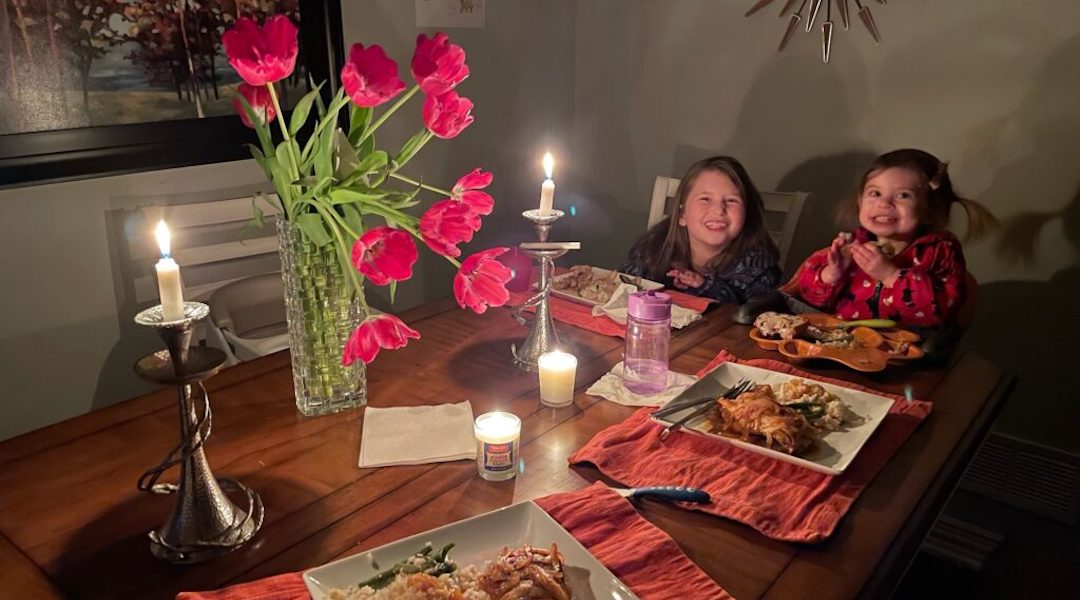
Rabbi Shira Wallach’s children thought the Shabbat and yahrzeit candles used to light their home when the power was out meant it was Shabbat. (Courtesy of Wallach)

In Dallas, Rabbi Shira Wallach of Congregation Shearith Israel, a Conservative synagogue, dug into her supply of Shabbat and yahrzeit candles to keep her family’s household warm when their power went out. She said the couple’s two daughters, aged 1 and 5, instinctively covered their faces, thinking it was time to recite the blessings.

That moment provided levity during a challenging time — one that Wallach’s husband and fellow rabbi, Adam Roffman, said was appropriate for this moment on the Jewish calendar. Purim, a festive holiday in which celebrations are supposed to give a sense of topsy-turviness, begins next week — when the temperature is forecast to climb to a more typical 70 degrees.

“Here we are in Dallas, Texas,” Roffman said. “The rest of the country’s laughing at us because we’re the energy producer capital of the country and we have no heat or power. That’s a pretty Purim-type situation.”

In Texas, Jewish Communities Join a Desperately Needed Response Read More »

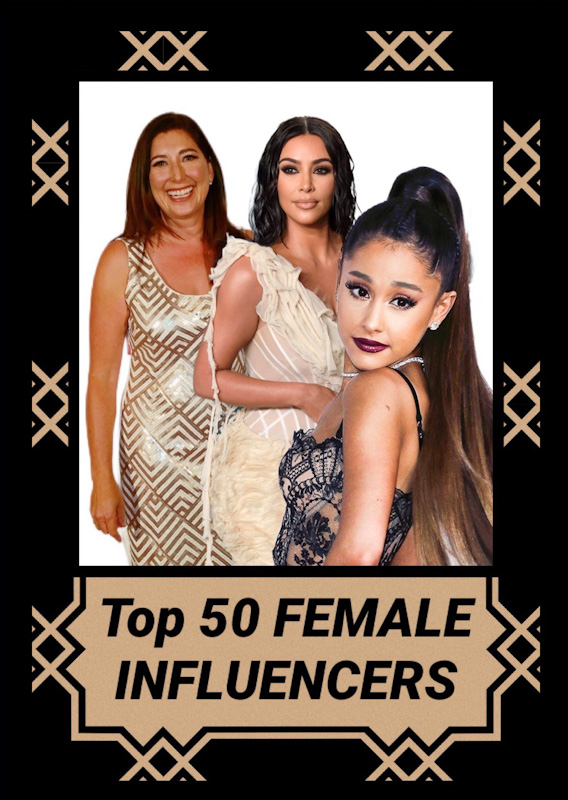
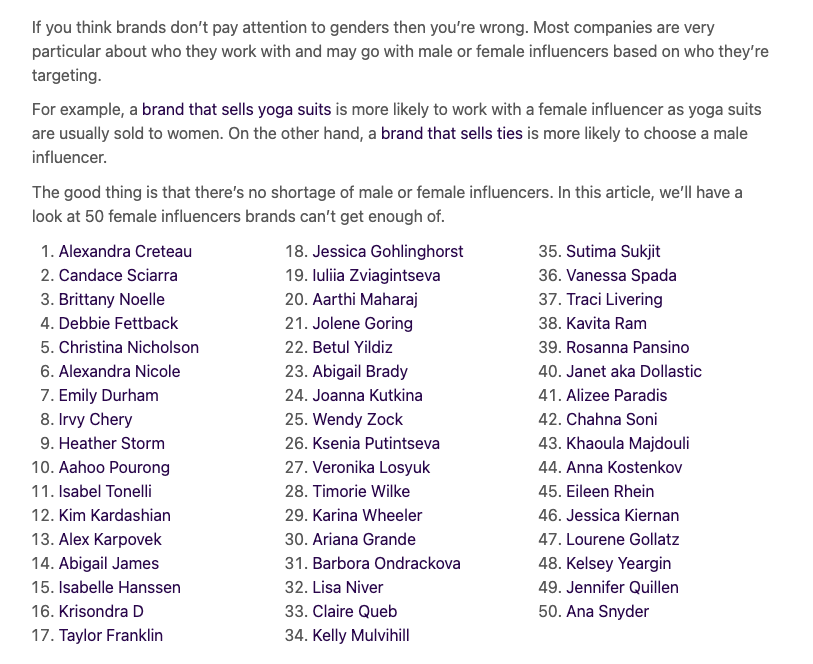
What do Ariana Grande, Kim Kardashian and Lisa Niver have in common?

Thank you Afluencer for including me on your list:

50 Female Influencers Brands Can’t Get Enough Of

I am honored to be #32!!!!

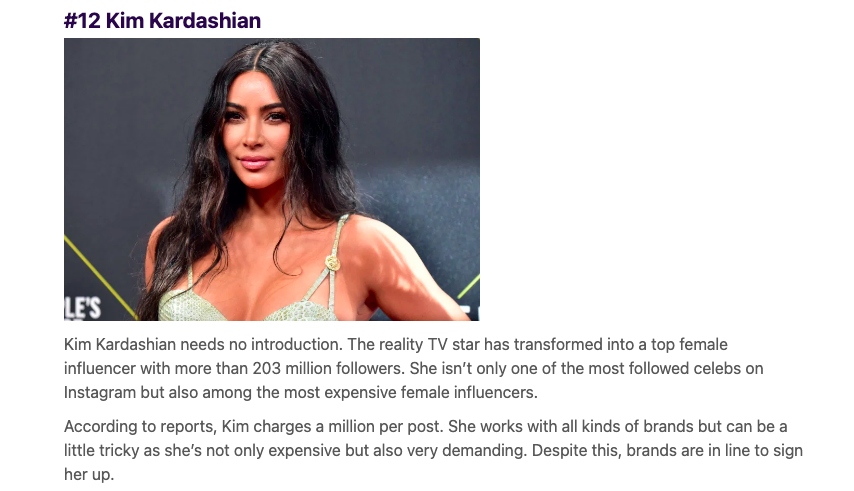
Kim Kardashian is #12 and Ariana Grande is #30!

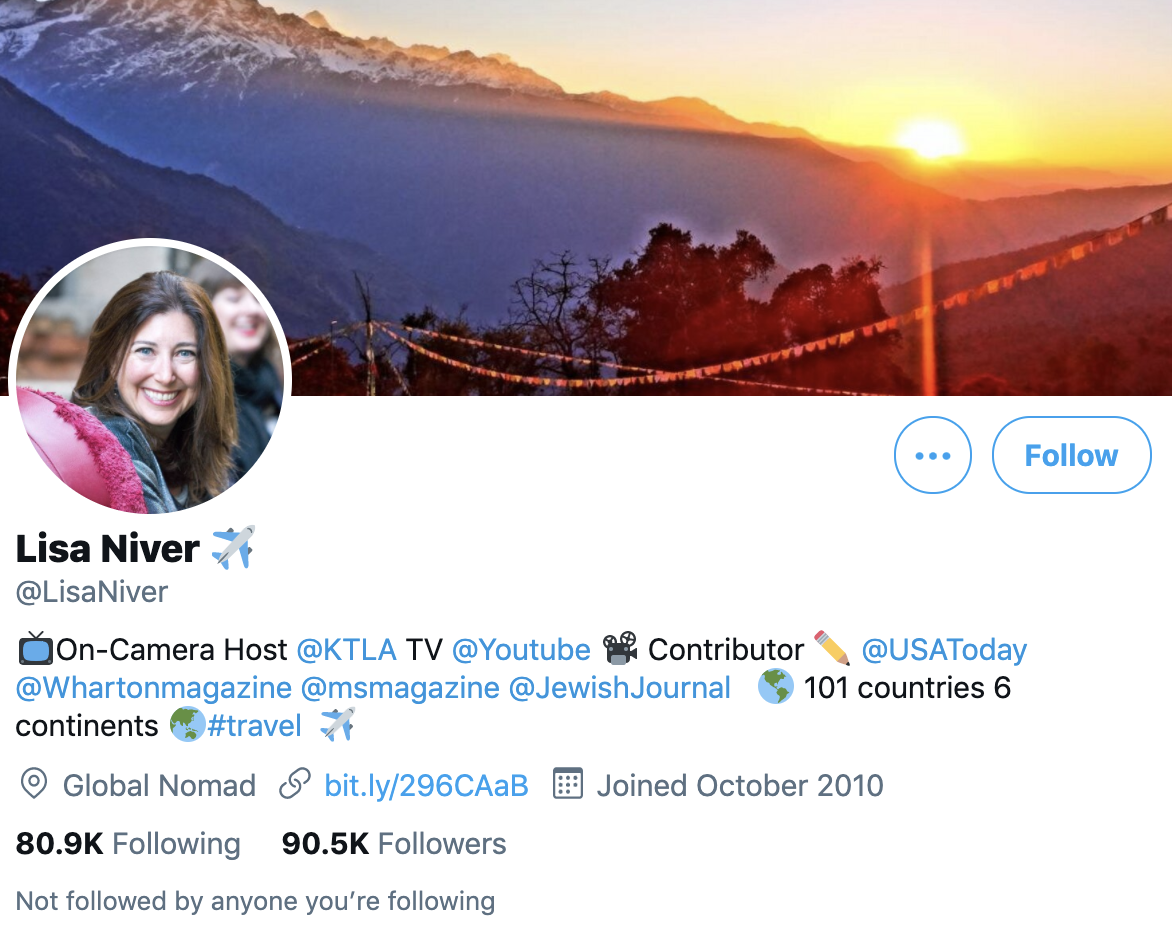
#32 Lisa Niver

Lisa Niver | Travel Blogger and Writer

Lisa Niver is an award-winning travel blogger and writer. She has been to 101 countries and six continents.

Unlike most female influencers on this list, Lisa doesn’t mainly concentrate on Instagram and is most popular on Twitter with more than 90,500 followers who keep an eye on what she posts.

The star wears several hats and is not just a blogger but also a host and contributor. She has been nominated as a finalist for the 62nd Southern California Journalism Awards including the 2020 Online Journalist of the Year.

Brands that work with her don’t only get to benefit from her wide reach but also her clout. She contributes to some major platforms like USAToday and can help you carve a niche and appear authentic.

https://afluencer.com/top-female-influencers-brands-cant-get-enough-of/
https://twitter.com/afluencerlyfe/status/1360000566890553351
https://www.facebook.com/afluencer/photos/a.1120411661452684/1686899658137212

Find out more about Lisa Niver on Afluencer!

Read about all fifty: “50 Female Influencers Brands Can’t Get Enough Of

What do Ariana Grande, Kim Kardashian and Lisa Niver have in common? Read More »

IDF Asks Wikipedia to Edit ‘Hezbollah’ Entry to Reflect Terror Designation

(The Media Line) The official IDF Twitter account posted a call on Tuesday for Wikipedia in English to edit its article on the Lebanese organization Hizbullah (spelled “Hezbollah” in Wikipedia) to reflect its identification by 26 countries as a terrorist organization. Wikipedia is a battleground for competing viewpoints, experts say, and the “Hezbollah” page is no exception.

The Shi’ite organization Hizbullah is a Lebanese political party with a military wing. It is also known for its virulent animosity towards Israel, and its actions against the country situated on its southern border – including against civilian targets. These have brought more than 20 countries and international organizations to designate it a terrorist organization, including the US, the Gulf Cooperation Council, the Arab League and the European Union.

Yet, the organization’s English Wikipedia entry currently describes Hizbullah as “a Shia Islamist political party and militant group,” adding only further in the paragraph that many countries have designated it as terroristic in nature. This prompted the IDF Spokesperson’s Unit on Tuesday to tweet that “it’s time for an update,” calling for the organization’s definition to reflect its labeling as a terrorist group.

David Gerard is a veteran Wikipedia editor based in the UK. In a conversation with The Media Line, he explained the contentious phrasing, as well as Wikipedia’s treatment of controversial subjects in general, saying that the site’s “political position is basically very centrist about things, and always gives both sides of every issue.” Because of this, he said, “you end up with these understated, overly polite descriptions that people may consider quite controversial.”

He did, however, also point to the issue of politicization on the platform. “This is an example of a general phenomenon,” he said, referring to the Hizbullah dispute. “There’s a lot of things that are very controversial matters and a lot of people want a Wikipedia entry to read a particular way. This has been going on since the beginning. One of the worst sorts of ongoing permanent conflicts was anything relating to Israel and Palestine. This was one of the first perpetually running edit wars on Wikipedia.”

Edit wars are the name given to the repeated editing and re-editing of entries to reflect particular beliefs and narratives.

With controversial issues, Gerard explains, there are editors pulling in different directions and the final product has to be acceptable for all parties. Therefore, the aim is to create readable entries, but better entries could be written.

The editor also points out that Hizbullah’s entry “makes the point that they’ve been designated a terrorist organization and it makes that point unambiguously.” He further adds that “the article contains all the information you need.”

But Lt. Col. Jonathan Conricus, international spokesperson for the IDF, explains that including the information simply isn’t enough – it is an issue of location and weight. “Most of us read the headline at best, and maybe the subtitle, and then we move on. I want the essential matters, what the organization does, what its raison d’être is, to be the most visible,” he told The Media Line.

IDF Asks Wikipedia to Edit ‘Hezbollah’ Entry to Reflect Terror Designation Read More »

Flirting with the First Amendment

In the aftermath of the January 6 riots on the Capitol, we have witnessed a change in how tech companies view, regulate speechand control speech. In the days and weeks since January 6, multiheaded pseudo private actors have fundamentally altered the bedrock of American democracy — free speech. No longer can private companies like Facebook, Twitter, Google, Instagram, Snapchat and others hide behind the veil of their “private” shield, because they created themselves for the sole purpose of being thrust into the mitochondria of all that is public.

According to a CRS Report prepared for members and committees of Congress, the Supreme Court will only apply the First Amendment against private parties (companies) if they have a “sufficiently close relationship” to the government. This will occur where a private company finds itself under extensive state regulation.

While some plaintiffs have argued that various internet companies should be treated as state actors for the purposes of the First Amendment, when those companies decide to dispose of or restrict access to their speech, courts have rejected their claims. In other words, just because social media companies hold themselves open for use by the public, that is not enough to make them subject to the First Amendment.

But the Constitution of the United States — together with its deafeningly powerful First Amendment — did not foresee the age of social media and what it would do to the public, how it would intertwine public and private interests of communities and how the lines between state actors and private actors would not only become blurry but also almost invisible. The existing doctrine doesn’t fit the times; it teases, it mercilessly flirts with the laurels of the First Amendment.

We all marvel at the Constitution’s elasticity, designed for us by those who knew nothing of Facebook, but everything about the abyss of the future’s unpredictability. After all, what was the intent behind the First Amendment? So that American citizens would never feel the imposition of powerful actors infringing on one of their inalienable rights, their freedom of expression.

In the 1700s and 1800s, the most powerful actors in the country were the state actors. America had just freed itself from the clutches of the British monarch. The government itself was the most powerful actor that was connected to the public. Therefore, within the amendment, people were protected not from actions of private parties but from actions of the State.

It is not so today. The world, and especially America, is controlled by private monopolies of social media giants, which regulate our entire existence (as well as the government’s existence). The internet, along with social media, did not just shake up the old world: it remolded it. All of this was done for the public.  These social media titans not only provide services for the public, such as search engines, they also serve as vessels through which the public carries its thoughts and influences the thinking of others.

David L. Hudson Jr. writes in his article “In the Age of Social Media, Expand the Reach of the First Amendment” that “two key justifications for robust protection of the First Amendment right to freedom of expression are the marketplace of ideas and individual self-fulfillment. These justifications don’t require government presence. Powerful private actors can infringe on free expression rights as much as public actors.” This is exactly what Facebook, Twitter and others were guilty of when they decided to silence President Trump after the January 6 riots.

David L. Hudson, Jr. continues, “when an entity like Facebook engages in censorship, individuals don’t get to participate in the marketplace of ideas and are not allowed the liberty to engage in individual self-fulfillment — just like when the government entity engages in censorship.”

In his article, Hudson also states that even though the state action doctrine traditionally limits the application of the First Amendment to private actors, that classification is outdated. He cites a 2017 case in which the U.S. Supreme Court recognized the new reality of identifying the new kind of public space. A new reality has been molded, where, “when a private actor has control over communications and online forums, these private actors are analogous to a governmental actor.”

The ogres of social media have erected platforms for exchange of public information. In his article, “The Great Tech Panic,” Nicholas Thomson writes about the role of social media on freedom of expression: “In 2009, Facebook declared its mission “to make the world more open and connected.” In her essay, “The Free Speech Black Hole: Can The Internet Escape the Gravitational Pull of the First Amendment?” Ann Marie Franks writes, “This free speech rhetoric has for years been employed to justify [tech] companies’ laissez-faire approach to controversial content, from terrorist training videos to ‘revenge porn.’”

So why is it that suddenly, in the wake of the events of January 6, the entire tech industry decided to ban Trump from their sites? They do so by the cowardly act of taking refuge under the protective shield of their private status, knowing full well that under modern circumstances, their private actor status is a fiction, no more than a smoking mirror.

Tech companies’ private actor status is a fiction, no more than a smoking mirror.

These companies behave dishonestly when on the one hand they take advantage of the fruits of the First Amendment and give Holocaust deniers, criminals, terrorists, porn stars, law professors, comedians, addicts, movie stars, pop musicians, politicians, reality TV stars and many others the opportunity to present their uncensored sentiments and ideas, but then at the same time decide to silence a particular individual. The tactic is liable to have the most severe consequences.

The First Amendment is not a device that we can use as a cherry-picking mechanism. The First Amendment is not a neat amendment; it is not a kind amendment; it’s a messy amendment. It is not about people, it’s about substance; it isn’t even about speech itself, it is about self-expression, it is about the individuality not of one person, but of a country, and therefore of each person individually.

Social media companies have become public actors, and, as such, they have no right to censor those who post or otherwise express unpopular opinions. Afterall, there are always ways to contradict those unpopular, dubious, immoral views; this is one of the great strengths of social media.

I knew the words of the Declaration of Independence and the First Amendment in Russian and English even before I began school. I understand that media companies are trying to appease, to do what sells best; when Trump sold best, they sold him too. But social media insulted American democracy when it silenced one individual capriciously and arbitrarily. Social media must stop playing games. It is either for all people — which is why it is free and available to all who have access to it — or for the privileged few, like a private club, in which case a club owner is within his rights to impose specific rules for his club members.

America ceases to be America when it not only denies people’s ability to self-express but also when it does so by taking advantage of the public’s trust in its democratic values. American freedom of speech protects, it frees, it tantalizes, but it also bites. There can be no compromise about it.

The First Amendment was created to oppose tyranny because within it is hidden, just like in all law perhaps, the power of balance. Everyone wants to be heard, everyone wants to tell a story — their own story — and so as long as no-one is muted (even if some decide to remain deaf) there will be balance, and where there is balance there is a chance that tyranny may be avoided.


Anya Gillinson is a published author of poetry in Russian and English. She practices law in New York, where she lives with her husband and two daughters.

Flirting with the First Amendment Read More »

Clubhouse, Harry Potter, and the Problem With Magical Thinking

In the debate over Israel in America, many on the left (of which I am a proud member) are completely misguided. And the new frontier of this debate is shaping up to be the sticky new social network Clubhouse.

Last week I was invited to join Clubhouse, an audio drop in app where you can tap in and out of live podcasts at all hours of the day and night. The app is phenomenal, like the pre-cesspool-of-hate days of Twitter, with strict guidelines that support community inclusion. Since I joined, I found myself spending way too many hours of the day listening to everyone from Eric Weinstein to Elon Musk to musicians and shamans to people sharing their deepest, darkest secrets in the most beautiful ways. Being a proud Israeli-American, I also searched for chats about Israel, and I was horrified by what I found.

True to liberal values of open mindedness and inclusion, I looked for contrarian conversations. One was called something to the effect of “demystifying Zionism.”  The conversation was passionate, in the usual anti-Israel way I learned to know so well.

At some point the moderator interceded. In a somber voice, she announced: “Guys, I am sorry to stop you, but it looks like we have a Zionist in the room.  So naturally, I raised my hand to speak. After much back and forth of me getting kicked off of stage (turning off my mic)  and put back on, I was finally able to address the crowd.

I started by thanking the moderators for getting me on stage. I acknowledged that I was an Israeli-American-Zionist. But I added I am also pro-Palestinian and would like nothing more than to find a way for both our people to coexist. I told them nothing in life is black and white and we should always aim to have nuanced conversation to understand the other side.

That did not go down well. I was immediately kicked off of stage for my peace-nik views and became the punching bag of the rest of the mods. “There is no conversation to be had” started one of them. “There is no other point of view, there is no grey area, and it is all black and white.” “I will not be talking to anyone who holds your views, nothing to talk about until there is no more Israel and the Zionists repent for their sins,” continued another. “I am unwilling to have a conversation with you.” I wanted to reply to these accusations, but I didn’t get the chance to do so. Since I was already kicked off of stage, I couldn’t speak anymore.

Clubhouse is just the new flashy manifestation of our current reality, but it is obviously not unique. So many in the cancel culture generation are unwilling to engage in any conversation which they deem triggering. I remembered a story I read in Haaretz a while back about that entire cancel culture generation, who grew up reading Harry Potter. Their absolutist attitude may have been somewhat inspired by the black-and-white world created by JK Rowling, (who has been also cancelled for her comments against trans individuals). To this generation, you’re either team Dumbledore or team Voldemort. End of discussion.

Clubhouse is just the new flashy manifestation of our current reality.

This is, of course, absurd. Critical thinking and nuanced debate is called for in life, and more so when it comes to Israel.  If you want to have a debate about Israel, you need to know at least some basic facts, like that Israel is the only country in the Middle East that has been an uninterrupted democracy since its founding in 1948, after the United Nations granted the Jews a state following the horrors of the Holocaust. The Arabs were also granted a state at the time, but they chose to refuse it and start a war. People on Clubhouse constantly call Israel a colonialist state, which is absurd, as it is a refugee state that was literally decolonized from British rule. Israel is also called an apartheid state, which is also absurd if you know that the third largest political party in Israel is an Arab party.

In the real world, as on Clubhouse, some people are not willing to even have that conversation. There is never going to be a perfect solution in the middle east, but we should all aim to find a good enough one. And call me a Gen-Xer, but I still think conversations and facts are a must.

Stirred not shaken, I went back to Clubhouse to find people like me, and so I did. I cohosted my next room with Shani Suissa and Danielle Ames Spivak, and we brought onstage Rami, a third generation Palestinian from Lebanon, to discuss the Right of Return and Muhamad from Egypt, where we all joked about who, exactly, reappropriated hummus from whom.

I love Clubhouse, and I intend to keep doing my best to speak about what I know, listen and learn from others. I am going to be back every Thursday at 12:00-2:00 PST to host a room and find people who are also willing to have intense, thoughtful and fact-based conversation about Israel, the Middle East and life at large.

This is after all, the liberal thing to do.


Noa Tishby is and Israeli American producer, actress, activist and writer and the author of the forthcoming book “Israel: A Simple Guide to the Most Misunderstood Country on Earth (Free Press).”

Clubhouse, Harry Potter, and the Problem With Magical Thinking Read More »