fbpx

January 25, 2021

What the War Over the IHRA Definition Obscures

On January 13, one of Montreal’s largest synagogues was vandalized and defaced with anti-Semitic symbols, including a swastika. The perpetrator was a supporter of anti-Israel boycotts and had been influenced by their propaganda campaigns. And a few days earlier, three Israel-linked restaurants in Portland, Oregon, were vandalized with “free Palestine” graffiti. These attacks add to the lengthening list of anti-Semitic incidents around the world, including murderous attacks on synagogues, museums and Israeli institutions, triggered by Jew-haters from the left and the right.

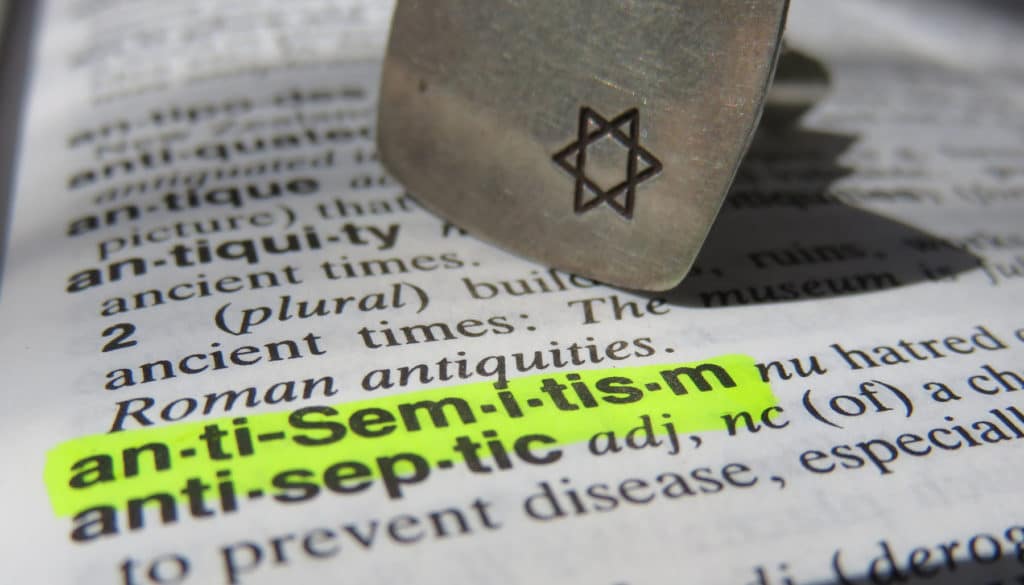
In parallel, an acrimonious and seemingly independent debate is taking place around the working definition of anti-Semitism developed by the International Holocaust Remembrance Alliance (IHRA). This framework was formed by a number of governments in 1998 in response to the increasing levels of Holocaust denialism and anti-Semitism. As part of this process, the organization developed a working definition of anti-Semitism, including a number of examples, some of which relate to Israel and the anti-Zionist form of anti-Semitism. These include “denying the Jewish people their right to self-determination,” applying double standards not “demanded of any other democratic nation,” using symbols “associated with classic antisemitism…to characterize Israel or Israelis” or comparing “contemporary Israeli policy to that of the Nazis.”

Since 2016, this document has been formally adopted by 30 governments, mainly in Europe, North America and Australia, as well as by international institutions. In addition, a number of parliaments have endorsed the text, and, in many cases, universities and other important institutions use the definition in the form of guidelines for assessing anti-Semitic behavior.

But for some vocal organizations and individuals, the Israel-related examples of anti-Semitism are unacceptable and are portrayed, or distorted, as attempts to “silence criticism” of Israeli policies in the conflict with the Palestinians or even as “threats to democracy.” NGOs at the forefront of the Boycott, Divestment and Sanctions (BDS) movement, such as Human Rights Watch and Amnesty International, are among the most vocal in attacking the IHRA definition. Using the “silence criticism” excuse, a group described as German cultural leaders launched an effort to rescind the Bundestag resolution that adopted the working definition and referred to BDS as a form of anti-Semitism. And the World Council of Churches has repeated the slogans rejecting the definition while still questioning the very concept of Jewish sovereign equality.

Like so much of the discourse on Israel, the Jewish people and anti-Semitism, the IHRA debate has become entangled in fierce ideological wars and the accompanying symbolic politics. Joining the campaign under the banner of “progressive values,” influential groups that frequently critique Israel — including J-Street, the New Israel Fund and American Friends of Peace Now — claim that the “codification of the IHRA working definition,” specifically its “contemporary examples,” create the potential for misuse to “suppress legitimate free speech” and prevent “criticism of Israeli government actions.” ”

In reality, there is no such misuse — there is plenty of room to criticize Israeli policies without resorting to discriminatory boycotts, comparing the IDF to the Nazis or labeling the Jewish state as inherently racist.

Amidst the mudslinging, the core issues of anti-Semitism and the escalating attacks against Jews and Jewish institutions are marginalized and even forgotten. By contrast, the IHRA working definition reflects the international consensus on what constitutes anti-Semitism and the most effective means of countering the poisonous incitement that leads to assaults. By politicizing and undermining this consensus, the counter-IHRA campaign is opening the door for even more violence targeting Israeli and Jewish institutions.

The counter-IHRA campaign is opening the door for even more violence targeting Israeli and Jewish institutions.

Contrary to the political campaigns, a number of important measures have been taken recently to strengthen this consensus and accelerate the implementation of the working definition. Of particular importance is the European Union’s new “Handbook for the practical use of the IHRA Working Definition of Antisemitism,” which includes a section on applying its terms to the “funding by governments and international actors.” For many years, the EU and a number of European governments ignored the anti-Semitic activities of the NGOs that they fund under the banners of human rights, international aid and even peacebuilding. The Handbook should serve as a useful tool to hold grantees accountable for incitement and hate.

In the United States, it is important that Biden administration officials give serious attention to the fights against anti-Semitism and implement the IHRA working definition. Samantha Power, who has been designated by Biden to head the US Agency for International Development (USAID) and will preside over a massive increase in funding for NGOs, should follow the EU’s lead and ensure that any group that promotes anti-Semitism will be ineligible for American government funding.

Defeating the perpetrators of twenty-first-century anti-Semitism, from the left and from the right, will require a sustained international effort on many fronts. In this context, the IHRA working definition represents a major source of clarity and legitimacy, and expanding its implementation is directly tied to progress in the war against hatred.


Gerald M. Steinberg is emeritus professor of political science at Bar Ilan University in Israel, and heads the Institute for NGO Research in Jerusalem. 

What the War Over the IHRA Definition Obscures Read More »

Netanyahu Might Miss Trump as Israel Goes to the Polls Again

The Media Line — Joe Biden was sworn in on Wednesday as the 46th president of the United States, turning a new page in American history after four tumultuous years that culminated in one of the most contentious and ugliest election cycles ever.

Yet while the U.S. prepares to move on from its own controversial campaign, Israel, one of its closest allies, is just getting started.

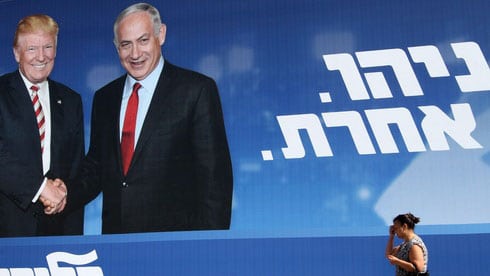
A 2019 Likud election poster boasts of party leader Benjamin Netanyahu’s close ties to then-U.S. president Donald Trump (Photo: AFP)

In two months, Israeli voters will head to the polls for the fourth time in two years, as the political stalemate that briefly seemed to have been resolved in May continues in full force.

But not everything is the same in this endless cycle. For the first time since 2015, Prime Minister Benjamin Netanyahu, already dogged by a challenging political landscape and a crippling corruption trial, will run for office without his trusted friend occupying the White House.

In the previous three elections, Netanyahu knew he could rely on President Donald Trump.

Time and again, the former president came through for the embattled prime minister, offering diplomatic and political gestures aimed at bolstering Netanyahu’s standing in the polls mere days before Election Day.

In late March 2019, with less than two weeks remaining before the first round of Israeli elections, Trump announced his decision to officially recognize Israeli sovereignty over the Golan Heights, captured by Israel during the 1967 Six-Day War.

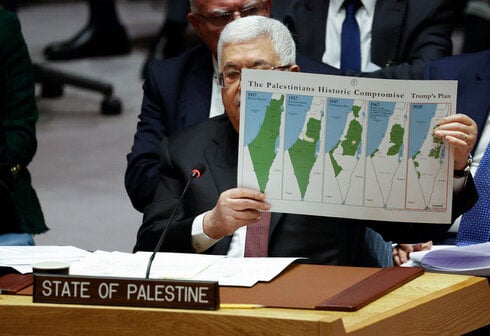
In January 2020, a month before the third election, Trump called a special summit at the White House to unroll his Mideast peace plan. The proposal skewed heavily in Israel’s favor and was rejected outright by the Palestinian Authority, which refused to even attend the ceremony or participate in the preliminary meetings.

Palestinian President Mahmoud Abbas rails against the Trump peace plan during a meeting at the UN General Assembly, Feb. 2020 (Photo: EPA)

Netanyahu, to no one’s surprise, wasted no time in featuring his Washington trip and the Golan Heights declaration in his campaign adverts, boasting of his special ties with the leader of the free world and his ability to elicit more gifts from the president than any of his competitors.

Trump’s involvement in Israeli campaigns, while perhaps the most obvious and unapologetic, was certainly not the first time a sitting U.S. president attempted to tip the scale in one side’s favor.

It’s not unprecedented at all,” says Michael Oren, Israel’s former ambassador to the U.S. under Netanyahu.

“[Former U.S. president Bill] Clinton was exceptional about this, really open about it. When [Netanyahu] was elected in 1996, the first thing he said was ‘I’m not going to deal with [then-U.S. ambassador to Israel] Martin Indyk,’ because of his open support for [opponent] Shimon Peres.”

Then-U.S. President Barack Obama came to Israel in 2013 “and made a speech where he called on people to protest against their own government! That was incredible,” Oren says.

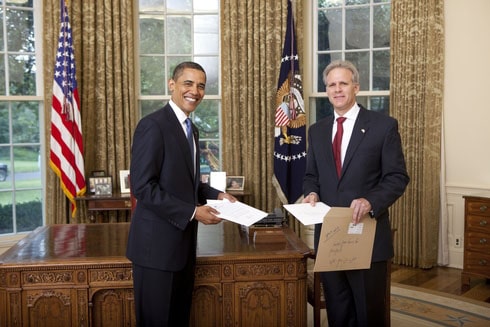
Michael Oren with then-president Barack Obama in the White House during his stint as Israeli ambassador to the U.S. (Photo: Lawrence Jackson)

“Presidents can also punish, instead of giving gifts,” Oren says, noting that former president George H.W. Bush did that to former prime minister Yitzhak Shamir.

“A lot of people say that Shamir lost his elections because he fell out with Bush,” Oren says, referring to the 1992 elections.

As for whether Biden will follow in his predecessor’s footsteps and involve himself in Israel’s upcoming elections, experts were split.

“I doubt very highly that Biden would make the same mistakes Trump made,” says Elana Sztokman, vice chair for media relations and policy for Democrats Abroad in Israel.

“That wasn’t sound foreign policy. Biden is very strong on restoring the idea of Israel as a bipartisan issue. It’s a priority for him.”

“I think he’ll stay out of it,” Oren agrees. “He may adopt policies that will make things maybe a bit more difficult for Netanyahu, like rejoining the Iran nuclear deal. That’ll definitely affect the elections. Netanyahu’s adversaries would in that case say ‘you failed.’ But Biden won’t do it because of that, but just because it’s his policy.”

Marc Zell, chairman of Republicans Overseas Israel, believes that “many of the people advising [Biden] are champing at the bit” to tip the scales against Netanyahu, “because they did it before, during the Obama administration.”

“I certainly hope they won’t, I hope they’ve learned their lesson and won’t interfere with the elections, but that may be wishful thinking,” Zell says.

Netanyahu may not require any assistance at all. While he does face a tough task in gaining enough seats to form a government, the longest-serving prime minister in Israeli history currently does not have a clear challenger.

The opposing center-left wing, decimated by in-house fighting and splintered into a handful of small, and even smaller, parties, has yet to produce a candidate to unite and lead the camp, similar to Benny Gantz in 2019.

Gideon Saar, left, welcomes Benny Begin, the son of Likud founder Menachem Begin to his new party (Photo: Courtesy)

Netanyahu’s problems likely will come from within his own right wing. Former Likud lawmaker and prominent politician Gideon Saar last month formed a new party and declared his intention to unseat his former colleague and party boss.

He has since added several Likud lawmakers to his list, and appears poised to nab 20 seats, enough, perhaps, to precipitate Netanyahu’s defeat.

If the prime minister does manage to retain his seat, he’ll face an entirely different landscape on his next trip to Washington.

Netanyahu is “an expert politician and statesman,” Zell said. “I think he recognizes that the playing field has changed, and he has to adjust accordingly. I have every confidence he will be able to gauge the political map accurately and adapt accordingly.”

Zell said that the Israeli leader’s “cordial relations, on a personal level, with Biden” will enable him to establish a working relationship with the administration. “While they disagree fundamentally on policy matters, they seem to have a fairly friendly, amicable relationship. It’s a good start,” he says.

In a message to whomever wins on March 23, Sztokman says: “If they choose to be smart about their relationship with the president, will find the door open to them.”

Netanyahu Might Miss Trump as Israel Goes to the Polls Again Read More »

Serious Semite: You Can’t Go Home Again

Years go by quickly — unless that year is called “2020.” Time usually flies, but not this time. Thomas Wolfe’s 1940 novel was titled “You Can’t Go Home Again,” except, along with so many others, I too have gone home. At least for now. Within the span of 11 months, some of my friends flew away from Los Angeles and are now living in Tel Aviv, North Carolina, Pennsylvania, Texas and Hawaii. Some Israeli families left Los Angeles and moved to Miami. Early last week, one beleaguered family even left Washington, D.C. and went home to Mar-a-Lago.

A lyric from “Hamilton” feels especially timely. One song goes “The world turns upside down…and so the American experiment begins, with my friends all scattered to the wind.” What better way to describe 2021?

I find it surreal that one year ago, we were in Los Angeles having in-person meetings. They now take place via Zoom across different cities, countries and time zones. There was no clue in February 2020 that the world was about to be turned upside down.

Last August, I landed in England on what was initially planned as a six-month visit to be closer to my family during the lockdown. Little did I know that America would turn into a no-fly zone for non-citizens, and it is unclear when the skies will open once again.

As an American visa holder, I want to return to the United States, but from watching a steady diet of Fox News and CNN, it is unclear what I will be returning to. But walking around the streets of England, the place I have returned to, is also unfamiliar. Despite growing up in England and living part of my adult life here, a decade in California can change a person.

Despite growing up in England, a decade in California can change a person.

A British refrain about America is that people say “have a nice day” but don’t mean it. On a good day, a British shop assistant might vaguely acknowledge your presence with a paleolithic grunt or murmur. I would say that in the English dictionary there is no word for “hello,” but there are a lot of words in the Oxford English Dictionary.

In America, someone might throw out a “hello, how are you?” without waiting for an answer. It took me a few visits to the shopping mall in West Hollywood before I understood that the answer to “how are you?” was not to respond with a detailed 10-minute explanation of how I was recovering from the childhood trauma of going into British shops and being ignored.

On a recent walk in the Great British countryside, I decided to count how many people initiated a “hello.” It averaged a grand total of one person in every 100. So much for English manners, although we do a great job of exporting it to the world. One justification for this apparent lack of English friendliness is that “you know where you stand” with someone, and that you are fully aware if they don’t really like you. As a born-again Californian, I would rather a fake smile than not smile at all. It’s best to assume that everyone you meet in Los Angeles is an actor. All you need to do is remember your lines.

There is a Talmudic principle that even if you do something for the wrong reason, it eventually becomes the right reason. A false hello may eventually become a real one. There is a Torah principle to greet everyone with a happy face, although there is no Rabbinic injunction that you have to mean what you say and no Biblical phrase for “once more with feeling.”

There is a British cultural sophistication and refinement that I sometimes missed in Los Angeles. We are drip fed Shakespeare from an early age, taken to the theatre on school trips and whisked off on day trips to France as soon as we begin learning the language. Although my linguistic memory is hazy from the tender age of 11, I probably said something like “Bonjour! Je m’appelle Marcus. J’aime cool bands like Wham! et Duran Duran. J’ai kosher sandwiches dans mon duffel bag. Voulez-vous couchez avec moi ce soir?”

You can never go home again. But if you do, start a Zoom drinking session with your friends in other cities, and make sure you have a very nice day.


Marcus J Freed is an actor, writer and born-again Californian. www.marcusjfreed.com https://www.instagram.com/marcusjfreed/

Serious Semite: You Can’t Go Home Again Read More »