fbpx

January 22, 2021

Trust and Action: The US president’s First 100 Days

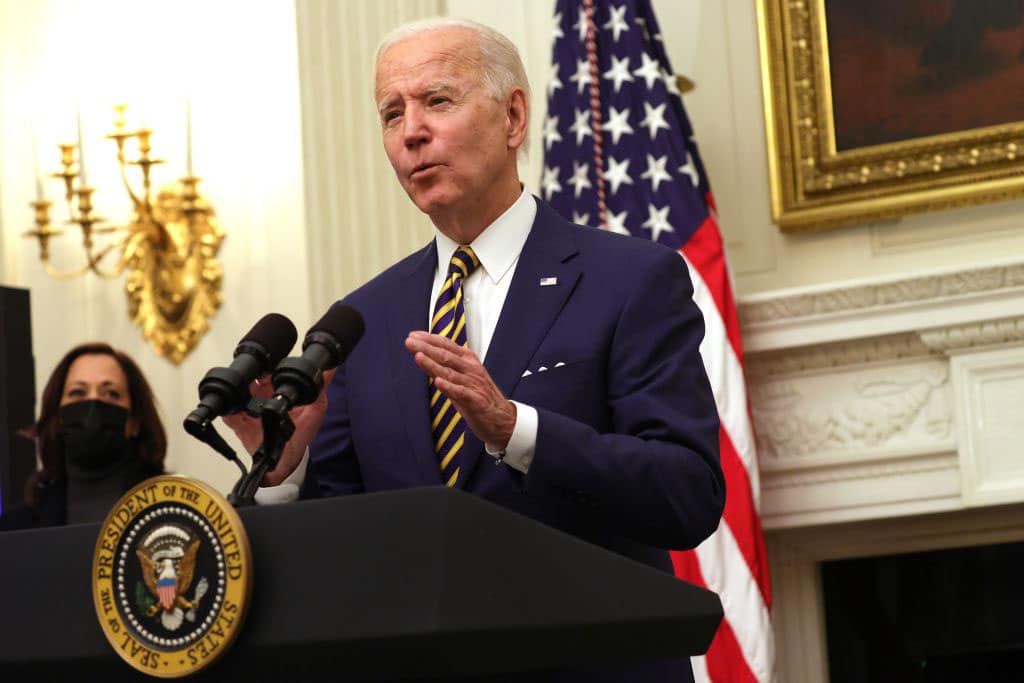
The first days of any new job are difficult, but critical—for the president of the United States more than for anyone else on the planet, perhaps. This particularly applies to newly inaugurated U.S. President Joe Biden.

The concept of a president’s “first 100 days” was coined by President Franklin D. Roosevelt, who entered office during a time of crisis in America, when there was division and pain, and the country sought solutions and healing. Since then, the first 100 days of a presidential term has taken on symbolic significance, and the period is considered a benchmark to measure the early success of a president.

Our new American chief executive is no novice and fortunately doesn’t need to adjust to his role in government. What he does need is to establish trust with the American people and with America’s allies around the world.

President Biden has had a long relationship with the Jewish community and Israel. Since his first trip there in 1973, he has stated time and again his commitment to Israel’s security. He has stood up against BDS policies, supported initiatives like the Iron Dome missile-defense system and campaigned with a pledge to “guarantee that Israel will always maintain its qualitative military edge.”

He now has a challenge—which is also an opportunity—to gain the trust of Israel and its supporters. He can do this if he is careful at the start to demonstrate that he understands and respects the need for Israel’s security.

On June 5, 2012, I had the honor of attending a meeting in the White House with President Barack Obama and some of the major leaders of the Jewish community. The meeting arose out of issues between the pro-Israel Jewish community and the president during the first few years of his administration. Many of his policies and actions seemed to pressure Israel in an unproductive way. We attended the meeting with the hope that it could open up a productive dialogue.

One of the amazing moments was when then-RCA president Rabbi Shmuel Goldin said to Obama: “We are here because 70 years ago Jews couldn’t get in through the front door of the White House,” alluding to the lack of reception to Jews lobbying to stop the Holocaust. Obama retorted: “70 years ago, neither of us would have been sitting in this room.”

It was a sobering and powerful moment, at a time when both the Jewish community and the African-American community found solace in how far we had come.

Following this critical meeting, things did, in fact, begin to brighten in the relationship between Obama and the pro-Israel community. He appointed the first full-time White House Jewish Liaison, Jarrod Bernstein, who was excellent at building relationships within the Jewish community.

Unfortunately, however, within a few years, Obama agreed to what many feel has been a disastrous deal with the ayatollahs in Iran over their nuclear enrichment. In addition to endangering Israel and the stability of the Middle East, it reversed much of the work that had been done to improve that relationship.

The pro-Israel Jewish community is constantly looking for two things: trust and action, the key ingredients of a working relationship between Israel and the U.S. The Obama administration did not build its trust with Israel early on, which led to a lack of confidence in any initiative that the U.S. government proposed.

While working to mend the trust fence with Israel, the U.S. agreed to a nuclear-enrichment deal with Iran that Israel—and every Arab neighbor of Iran—opposed. The fact that Iran’s leaders publicly continued to threaten to “finish Hitler’s job” by wiping Israel off the map did not seem to have an impact on the policies that the public was told were in pursuit of peace. By the time the Obama administration had gained trust, it failed vis-à-vis action.

The administration of now-former U.S. President Donald Trump worked hard and with the intent to build trust with Israel and take action from the beginning of his tenure. There was rhetoric in the early days about moving the U.S. embassy in Israel from Tel Aviv to Jerusalem. And then action was taken.

We saw overtures made but also experienced Jared Kushner, Jason Greenblatt, Avi Berkowitz, David Friedman, Aryeh Lightstone and others work tirelessly at establishing real ties of substance between Israel and many Arab countries in the region, including the United Arab Emirates, Bahrain, Sudan and Morocco. There were also new policies and decisions that demonstrated a deep understanding of the threat to Israel (and the rest of the region) from Iran.

While Biden has fundamental disagreements with the Trump administration, he certainly must recognize what they have in common is defining a successful strategy to achieve broad peace agreements among many nations in the Middle East. The president has a historic opportunity to continue to pursue a peaceful Middle East and build on the accomplishments of the last four years.

The 1800 election between President John Adams and his successor, President Thomas Jefferson reached a level of personal animosity seldom equaled in American politics, and the former did not attend the inauguration of the latter. (Former friends, the two would maintain a hostile silence for 12 years before resuming correspondence.)

While Jefferson disagreed with many of Adams’s world views and changed policies accordingly, he still had the temerity and courage to continue those policies that were proven to work.

Biden must recognize that the majority of the Arab world and Israel are unified in opposing the Iran deal. The majority of the Arab world and Israel are unified. What a miraculous statement that reflects just how unanimous and deep the threat from Iran truly is. The world knows that Iran is the leading global state sponsor of terrorism.

A few weeks ago, American Emad Shargi was sentenced to 10 years in an Iranian prison for espionage—without a trial. Are these the actions of a peace partner?

Biden’s campaign site states that sanctions were working against Iran and we must return to them. Only through economic pain, however, can Iran be brought to rein in its support of terror around the globe. A weakening of Iran’s current regime and a more peaceful Middle East is better for the Iranian people, clearly better for the United States and for its allies, including, but not exclusively, Israel. The sanctions must be given time to have the desired effect.

Biden knows that the inroads to a more stable Middle East, a completion of the demise of an “Arab-Israeli conflict” and a world no longer living in terror of Iran’s nuclear program will allow him to establish this crucial trust with Israel and its supporters early on. It is clear that by taking such critical action, he will also be establishing that trust with much of the rest of the Middle East at the start of his administration.

If the Biden administration shows itself not to be an Obama administration redux, and understands that the original Iran deal was flawed and cannot be revisited in its current form; if trust and action can be aligned between the United States and Israel, then Biden will build this critical trust in the early days of his presidency and will be remembered as the president who made the world a safer and more peaceful place.


Rabbi Steven Burg is the CEO of Aish Global. 

Trust and Action: The US president’s First 100 Days Read More »

Andrew Yang Says BDS Harkens ‘Back to Fascist Boycotts of Jewish Businesses’

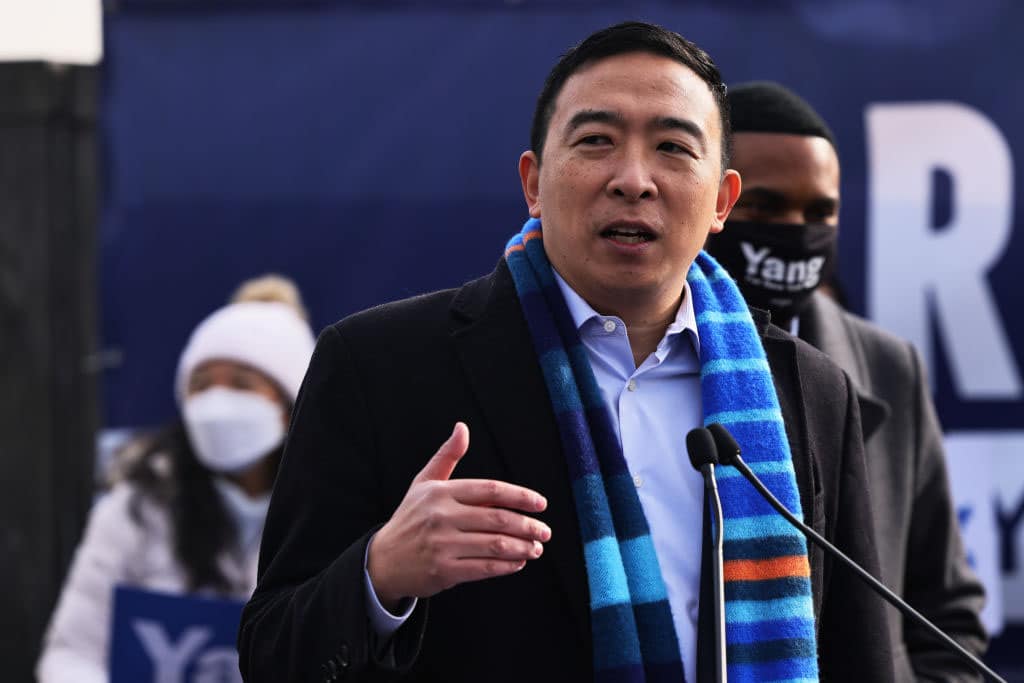
New York City Mayoral Candidate Andrew Yang wrote in The Forward that the Boycott, Divestment and Sanctions (BDS) movement harkens “back to fascist boycotts of Jewish businesses” in a January 22 op-ed in The Forward.

Yang, who previously ran in the 2020 Democratic presidential primary, noted that Jews were the victims in nearly 60% of the hate crime complaints in New York City. He also pointed out that neo-Nazis aren’t the only source of hate crimes.

“A Yang administration will push back against the BDS movement, which singles out Israel for unfair economic punishment,” Yang wrote. “Not only is BDS rooted in antisemitic thought and history, hearkening back to fascist boycotts of Jewish businesses, it’s also a direct shot at New York City’s economy. Strong ties with Israel are essential for a global city such as ours, which boasts the highest Jewish population in the world outside of Israel.”

He concluded the op-ed by stating: “If I am elected Mayor, I will continue to look to the Jewish community as a source of inspiration for what is possible in New York City. And I will stand with my Jewish neighbors against antisemitism and anti-Jewish violence. New York is New York thanks to our city’s Jewish population — past, present and future.”

Pro-Israel Twitter users praised Yang.

“A powerful op-ed from @AndrewYang recognizing the vibrancy of NYC’s historic immigrant communities, emphasizing the importance of strong U.S.-Israel ties, and opposing BDS, which he notes is ‘rooted in antisemitic thought and history,’” Democratic Majority for Israel tweeted.


International human rights lawyer Arsen Ostrovsky similarly tweeted, “Thank you @AndrewYang for your unequivocal commitment to support the Jewish community, including in the fight against Antisemitism and unequivocal condemnation of BDS.”

Activist Yoni Michanie also tweeted: “BDS is detrimental to both Israelis and Palestinians. Many of the movement’s supporters — however — choose to ignore this because of a malignant obsession to demonize the world’s only Jewish state. Great on @AndrewYang to have recognized this.”


Ostrovsky also tweeted out some screenshots of those criticizing Yang’s op-ed, including former Women’s March, Inc. leader Linda Sarsour.


According to Jewish Virtual Library, Yang said in December 2019 that he doesn’t support BDS because it “does not help us get closer to achieving a two-state solution, but I will always defend Americans’ First Amendment rights.”

Yang is one of 34 candidates who have thrown their hat in the ring for the New York City mayoral race; the primaries occur in June and the general election is on November 2.

Andrew Yang Says BDS Harkens ‘Back to Fascist Boycotts of Jewish Businesses’ Read More »

Can the Latest American Political Hit Squad Decide Israel’s Election?

The Lincoln Project was one of the biggest winners of the 2020 presidential election. That’s not because the group of former Republican “Never Trump” political consultants actually did much to help elect President Joe Biden. The group’s ad campaign made headlines and engendered adoring media coverage, though there’s no evidence that its efforts made any sort of a dent in its target audience: Republican voters. It not only made its founders a fortune, but it’s also using its high-profile reputation to market itself to new clients and has already landed one big account.

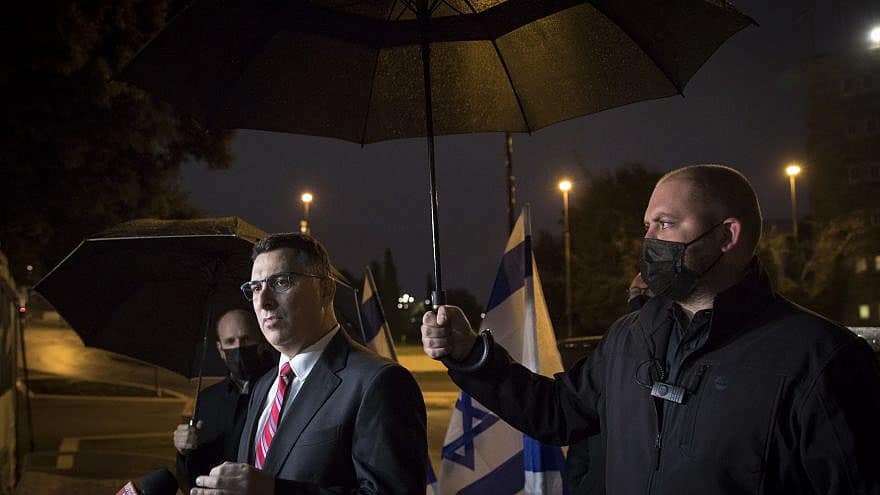
Former Likud cabinet minister Gideon Sa’ar’s New Hope Party has hired the quartet of political hitmen—Steve Schmidt, Rick Wilson, Stuart Stevens and Reed Galen—that led the group to work on his efforts to unseat Prime Minister Benjamin Netanyahu in the upcoming March 23 election.

They are far from the first Americans that Israeli politicians have sought out to change their political fortunes.

The late Arthur Finkelstein, who was widely considered to be the master of the negative ad and one whose efforts turned “liberal” into a dirty word in dozens of successful GOP campaigns, was the man behind Netanyahu’s 1996 victory over Shimon Peres. Three years later, liberal consultants like James Carville, Bob Shrum and Stan Greenberg, who had helped Bill Clinton win the presidency, played a part in Ehud Barak’s defeat of Netanyahu.

Since then, American consultants have become commonplace in Israeli politics, although the imported gurus have been associated with as many, if not more, losing campaigns as they have winners.

Finkelstein couldn’t save Netanyahu from defeat in 1999 and Barak’s Democratic veterans couldn’t prevent him from being defeated for re-election in an epic 2001 landslide. More recently, Republican pollster John McLaughlin has aided recent Netanyahu victories. At the same time, Jeremy Bird—a veteran of President Barack Obama’s successful campaign—helped lead an effort that aimed to get out the vote to defeat Netanyahu in 2015 that not only failed miserably, but was also exposed for improperly using U.S. taxpayer dollars that were supposed to foster Middle East peace via grants from the Obama State Department.

The key to success is, after all, not so much having clever ads, but good candidates and positions on the issues that the voters like. That’s especially true in a country like Israel, where stricter limits are in place on campaign spending than in the United States.

Nevertheless, Sa’ar’s decision to make such a high-profile hire is one of a number of moves—along with bringing over to his party former top Netanyahu aide Zev Elkin and Benny Begin, the son of the late prime minister and Likud icon—that have, at least for the moment, helped elevate New Hope to second place in most polls and boosted the notion that he’s a credible alternative to Netanyahu.

Sa’ar is seen as a more tough-minded foe than the Blue and White Party’s Benny Gantz, who wound up being badly outmaneuvered by the prime minister. And since he’s always been regarded as a right-winger, it will be harder for Netanyahu’s loyalists to label him a leftist (which is political poison to a center-right Israeli electorate), though that hasn’t stopped them from trying. Sa’ar’s hope is to woo enough Likud voters to go along with disillusioned anti-Bibi centrists who previously backed Blue and White to somehow cobble together a coalition of smaller parties that will end Netanyahu’s record 12-year run as prime minister.

That remains to be seen. Still, having them parachute into Israeli politics has raised the hopes of the anti-Netanyahu crowd that believes their chances of taking out a prime minister weighed down by the problems of coping with the coronavirus pandemic and his legal troubles have never been better.

Some left-wing pundits have positively crowed about the possibility of the Americans trolling Netanyahu the way the Lincoln Project quartet needled the Trump clan. In particular, Anshel Pfeffer, a Haaretzcolumnist and author of a highly critical Netanyahu biography, has suggested that they concentrate on comparing the prime minister with former Israeli Prime Minister Menachem Begin. The point would be to contrast Netanyahu’s affluence and ruthless political skills with Begin’s asceticism and courtly respect for the rule of law, and as the Lincoln Project claims about its anti-Trump efforts, get under the prime minister’s skin.

Before Schmidt, Wilson, Stevens and Galen are anointed as the saviors of the anti-Bibi cause, Israelis ought to look a little closer at their credentials, and what exactly they did and did not accomplish in 2020.

Biden’s victory validates the old cliché that victory has a thousand fathers but defeat is but an orphan. While the Lincoln Project’s hot shots claim that they helped defeat Trump, that boast has been widely debunked.

Their campaign scored a public-relations coup when it trolled Ivanka Trump with a Times Square billboard blaming her for the toll of deaths from the pandemic. And while that delighted Trump haters, it didn’t sway many votes in a New York metropolitan area in which Republicans are a small minority.

If the goal was to convince Republican voters to abandon Trump, then they failed. Exit polls showed that in 2020, 94 percent of GOP voters backed Trump—an increase over the 88 percent he received in 2016—showing that his conservative policies won over Republicans who didn’t trust him in his first run. Trump lost because of his poor performance among independents, and particularly among new Democratic voters, not because the Lincoln Project increased the relatively small number of “Never Trump” Republicans.

That’s a point that hasn’t escaped Democrats like Rep. Alexandria Ocasio-Cortez (D-N.Y.) who labeled the Lincoln Project as a “scam.” The group raised a reported $67 million largely from Democratic donors, causing magazines like Jacobin to label them as “grifters.” Yet it didn’t deliver on its promises, especially since so much of its efforts were poured into red states like South Carolina, where the Democrats were badly beaten.

The main beneficiaries of the Lincoln Project’s extensive fundraising were its founders. Though few in the general public understand this, political consultants make most of their money from the commissions on the ad buys that they advise candidates to make. That means that as much as 15 percent of the money the group raised from Democrats to buy those ads likely went straight into their own pockets. While they didn’t actually do much to elect Biden, that feat did make them among the political world’s big winners of 2020.

Is Sa’ar wasting his money on the quartet? Their ads may help him, though if he does wind up toppling Netanyahu by one means or another it won’t be because his advertisements will be better than the prime minister’s (and over the years, Netanyahu’s had some good ones, like this from 2015 and another from 2019), but because enough of Israel’s voters will have tired of him.

In this case, as with all the other foreign consultants—true masterminds like Finkelstein and hacks like the Lincoln Project crew alike—the Knesset campaigns are reversing the trend by which Israelis receive financial aid from Americans. When it comes to elections, it’s the Americans who are fleecing the Israelis.


Jonathan S. Tobin is editor in chief of JNS—Jewish News Syndicate. Follow him on Twitter at: @jonathans_tobin.

Can the Latest American Political Hit Squad Decide Israel’s Election? Read More »

The Power of Example

This was, most assuredly, not the largest audience ever to witness a presidential inauguration.

This time, what we saw was what we got. A Capitol gathering where the crowd was sparse, socially distanced and radiating safety. Where everyone wore a mask. Where the sad reality of our time was displayed with a transparency for all to see.

Period.

If we have learned one thing over the past four years, it’s that it matters who we seek to emulate. When leadership asks that we distrust our own senses, consequences ensue. When leaders trust us to exercise our own judgment, we begin to find our way back to adult democratic governance.

Two modes of leadership took center stage this week (neither of which involves the man you’re thinking about). First, we honored the memory and the legacy of Dr. Martin Luther King, Jr. Dr. King modeled for us the holy work of nonviolent protest. He knew well the historical barriers faced by our African American brethren, the enormity of the obstacles they faced finding their way to the mountaintop, and he doubted he would ever reach that promised land himself. But he did not waver in his mission — he preached justice, he preached nonviolence. It is his example we revere each January.

Then, we witnessed an American transition of power. It may not have been exactly peaceful  given the context of the past two weeks, with the heavy military presence surrounding the Capitol. But it was majestic. And we celebrated the ascension of a man who has already modeled so much of what it means to be an American leader.

Throughout the summer and fall, President Biden faced an avalanche of derisive tweets — “corrupt politician,” “a disaster,” “a puppet,” ”globalist sellout” and the like. Biden remained above the fray. He did not respond to the pettiness of the tweets, focusing instead on the pandemic and the economy. Months before he was elected president, he was acting presidential.

Nature, of course, abhors a vacuum. Biden gave the people a glimpse of the dignity that was theirs for the taking. After four years of exhausting rancor, the nation took it.

Biden gave the people a glimpse of dignity. After four years of exhausting rancor, the nation took it.

But President Biden wasn’t elected because of his soaring rhetoric. “We’ll lead not merely by the example of our power, but by the power of our example,” he declared in his inaugural address. How true that was — Joe Biden was indeed chosen because of the power of his example. And so, the man who ignored juvenile taunts about his mask wearing (“this guy has some big issues”), the man who would not respond to taunts of “Sleepy Joe” with similar jabs of juvenile retort, the man who took heat for working with segregationist fellow senators in the 1970s became president.

On Monday, still as president-elect, Biden tweeted that Dr. King’s words “remind us that darkness and hate cannot drive out hate — only light and love can.” To that end, on the eve of the inauguration, he led the nation in a memorial of 400 lights at the Lincoln Memorial Reflecting Pool symbolizing the 400,000 people lost thus far to the pandemic. It was facing that pool, of course, where Dr. King shared that most famous of American visions: “I have a dream that one day this nation will rise up and live out the true meaning of its creed; We hold these truths to be self-evident, that all men are created equal.”

“Here we stand looking out to the great Mall where Dr. King spoke of his dream,” President Biden said from the Capitol steps in his inaugural address, and he declared that “the dream of justice for all will be deferred no longer.”

And from this place of justice, Biden called for unity. “My whole soul is in it,” he said, invoking another ethical model, Abraham Lincoln, who faced our last serious test of national disunion. Biden continued, “We must end this uncivil war. We can do this if we open our souls instead of hardening our hearts. If we show a little tolerance and humility.”

We are a nation sorely in need of models of behavior, dignity and discourse, all distilled through the power of example. As the last traces of demagoguery and presidentially-inspired vigilante mobs dissipate from the Capitol, Biden slowly reminds us of the power of quiet, personal inspiration. We breathe a deep sigh of relief as presidential messaging begins to dwell not on endless personal grievance but on the dire needs of a nation.

The last four years were enormously dispiriting to many of us. Yet we remember Dr. King’s teaching: “The arc of the moral universe is long, but it bends toward justice.” As we heed the power of example from this refreshingly inspiring week, we can begin to repair the damage from the past four years and move ever closer to our Constitution’s still-elusive promise of a “more perfect union.”


Stuart Tochner is an employment attorney and is also the president of Temple Beth Am in Los Angeles. The views expressed here are his alone.

The Power of Example Read More »

CA State Bar Won’t Disbar Lawyer Over Alleged Anti-Semitic Posts

The State Bar of California has said that they won’t disbar a lawyer who is currently under fire for making allegedly anti-Semitic social media posts.

David Lange documented the posts in his Israellycool blog screenshots from the lawyer, Farhad Khorasani, who runs his own law firm. According to Lange, the alleged posts included a statement about how Jews are an “existential threat” and that “we need a new Hitler.” Khorasani is also alleged to have said that “the main enemy of the human race is Israel and the satanic cartel behind it.”

The posts that Lange highlighted in screenshots appear to have been deleted, but a post about how Representative Mary Miller (R-Ill.) being “under fire” for saying that “Hitler was right about one thing” still appears on Khorasani’s feed. “Freedom of speech is under assault by the Jewish-Israeli lobbies and their allies in the US, including the big techs,” the post states.

In a statement to the Journal, the State Bar condemned Khorasani’s posts as “hateful, morally reprehensible, and inconsistent with the expectations of a California licensed attorney,” but that isn’t grounds to disbar him.

“All California attorneys as officers of the court take an oath to conduct themselves ‘at all times with dignity, courtesy, and integrity,’” the State Bar’s statement read. “This oath, however, is aspirational, and unfortunately, the State Bar generally cannot take action against attorneys who engage, as Mr. Khorasani has, in offensive speech in their private nonprofessional lives, no matter how objectionable.

“Further, not all hateful, discriminatory, or harassing conduct in the practice of law constitutes grounds for disciplinary action against an attorney because of constitutional, free speech rights. A former statute that required attorneys to ‘abstain from all offensive personality’ was repealed in 2001 after a United States Court of Appeals found it unconstitutional.”

Khorasani responded to allegations of anti-Semitism in an Instagram post accusing “Zionist-Israeli newspapers” of running “extremely Iranophobic, racist, & Islamophobic statements that clearly libel and incite violence against me. I am exploring all possible next steps, including law suits to be taken regarding this matter.” He also applauded the State Bar for not taking action against him.

“I have been reached out by many in the community including the Alt-right communities, to offer me support and applauding me for ‘telling the truth in a world of lies,’ & ‘calling out the zionists for their crimes against humanity,’ based on the Jewish media articles,” Khorasani wrote. “They also relayed to me that ‘we need more attorneys like you in CA,’ and called on GOP to ‘come 2024 & put [me] in the ballot if [they] want [their] vote,’ & to ‘make [me] president now because the white people can’t do the job,’ & asked me ‘what is the solution to this problem?’ And that ‘it takes a courageous man to speak out against zionists in the USA.’”

He also denied calling for genocide, stating that he has “spoken out against the ongoing Holocaust of six million Palestinians at the hands of the genocidal Israeli government, & have said never again to the Holocaust of millions of Iranians during World War One at the hands of the English.”

The Anti-Defamation League has defined the alt-right as the “new white supremacy.”

The Simon Wiesenthal Center tweeted, “Iranian regime executes one wrestler, another awaits execution. Has this lawyer condemned the #Ayatollah or is he too busy spouting anti-Semitic slurs? Bar Association needs to look again at this Jew-hater!”

Lange responded to Khorasani’s Instagram post by stating, “As for convincing people that the accusations against him are false, I wouldn’t have thought mentioning support from the alt-right, speaking of the Jewish media, or accusing Israel of a Holocaust of 6 million palestinians (not just a grotesque lie, but clearly meant to elicit comparisons with the Holocaust of the Jewish people) would disabuse people of that notion.”

UPDATE: Khorasani wrote in a January 22 Instagram post that his social media accounts were hacked and issued an apology to the Jewish community.
“I would like to apologize to the Jewish community worldwide, and let them know that my DNA tests show that I have 3% Ashkenazi Jewish in me, and I have Jewish acquaintances and friends whom I embrace & treasure,” the post stated. “Furthermore, I understand many in the Jewish community do not agree with the policies of the state of Israel, the same way people in the USA or Iran may not agree with some of their governments’ policies, which shows seeking democracy & change is what our societies have in common. Hope this would remedy the concern of anybody involved in this matter.”

CA State Bar Won’t Disbar Lawyer Over Alleged Anti-Semitic Posts Read More »

The Bagel Report

Inaugural Bagels

After some initial reflections on the Inauguration—in an episode recorded before Bernie Sanders became a coat-swaddled meme—the Bagels talk about Jewish rituals that mark moments of change. Erin is both bored by and getting costume inspiration from “Pretend It’s a City,” Netflix’s Fran Lebowitz documentary series. Plus, a conversation about the new season of “The Marvelous Mrs. Maisel” inspires an Esther tangent about how people get their names and which Jewish themes the series should tackle next. And in the Bagel Wishful Casting Department, tackling rumors about Sorkin’s “I Love Lucy” film and a wish list of young Willy Wonkas.

Follow ErinEsther and The Bagel Report on Twitter! 

Inaugural Bagels Read More »

Time to Take a Shehecheyanu Moment

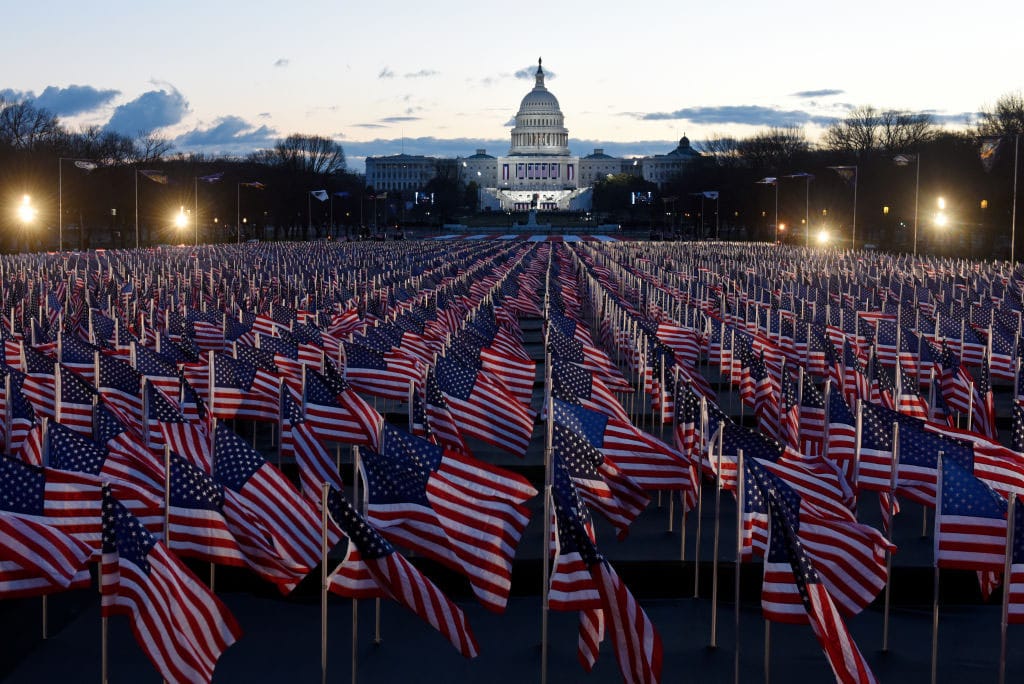
The American flag never looked as beautiful as it did on Inauguration Day.  The sea of flags on the mall. The festoons that created the backdrop for the pageantry of the inauguration ceremonies. Beautiful. Absolutely beautiful.

These were no different from the flags that were marched through the streets of our capital only two weeks ago, and whose long wooden poles were used to incur destruction upon our Capitol building with the intent to injure our elected leaders. How different those flags looked that day among a sea of faces distorted by anger and fury, a weapon of chaos and destruction. Only two weeks later, those same flags were restored to a symbol of order and hope.

And so we begin. Some people are elated. Others are wary. Some people feel that our new president’s call for unity has a chance of succeeding if only we can convince each other to try. Others are not so sanguine. Some people are jumping in with both feet to pave new paths to civil agreement — or even disagreement — with the emphasis still on “civil.” Others can muster no more than a “wait-and-see” attitude, standing on the sidelines with their arms folded.

And there are those who insist that our new beginnings will be washed away into a sea of old disappointments. Within a half-hour of the president entering the Oval Office and sitting behind his desk, one news commentator couldn’t wait to observe that the president looked tired. He also scoffed that when the president referred to notes as he listed the bills he was about to sign, he didn’t really know what he was doing. Flanked by four network colleagues, whose silence conceded the right-of-way for the commentator to continue, he prattled on with derision, distrust and ridicule. That was only the first half-hour in.

U.S. President Joe Biden signs an executive order during an event in the State Dining Room of the White House January 21, 2021 in Washington, DC. (Photo by Alex Wong/Getty Images)

On other networks, before the newly-elected president had even loosened his tie, pundits were already discussing whether or not he will make progress on his agenda, achieve his promises or work with a deeply divided legislature. These pundits were counting votes on matters that haven’t yet been put on the newly-set table for consideration.

Is the institution of government not similar to any other organization? Is it not impossible for an individual, a household or any institution to tackle everything at once and solve complex problems with immediacy?

Many of the issues facing the president, from pandemic management to immigration, international diplomacy and domestic economic relief, are not new. But the climate surrounding them is — or it could be if we could just step back and recalibrate before we make premature predictions and conclusions.

This is a good time to start at the beginning. We need to examine the content of our issues before we consider the contests they will engender. We must begin by finding the right questions to ask before reaching solutions, which might not actually solve the problems they intend to address. A full representation of constituent leaders must be present in every conversation — whether we agree with them or not — because dissent, by its very nature, leads to rigorous debate. Rigorous debate exacts the highest level of critical thought, and critical thought results in reasoned and nuanced outcomes.

The inauguration is a good time to start at the beginning.

Our reporters, journalists and pundits have an important role to play. We, the public, rely on them to provide us with information. We rely on that information to be responsibly sourced and factual. We rely on them telling the truth — not as they wish it to be but as they indisputably know it to be.  We can’t be expected to stand on the same street corner, with some of us thinking that a red signal indicates “stop” but others believing that the red light indicates “go.” We rely heavily upon those who have chosen to inform us to formulate our understanding and fashion our opinions.

But there are still the glimmers of hope, of the role we can play. If you didn’t hear Youth Poet Laureate Amanda Goddard recite her poem on Inauguration Day, do it now. If you did, listen to it or read it again — and again. Many of us have selected our favorite lines from her masterpiece. These are mine:

So while once we ask, “how could we possibly prevail over catastrophe”

Now we assert, “How could catastrophe possibly prevail over us?”

We will not march back to what was

But move to what shall be a country that is bruised but whole,

Benevolent but bold,

Fierce and free.

Amanda Gorman reads a poem during the the 59th inaugural ceremony on the West Front of the U.S. Capitol on January 20, 2021 in Washington, DC. (Photo by Patrick Semansky-Pool/Getty Images)

The young woman who wrote those words is a leader among the many young people who will carry our flag into the future. She understands that our country “is bruised but whole.” She understands that the way to close the divide is “to put our future first.” Because of young people like Amanda Goddard, I am optimistic that we will not succumb as a nation to our baser instincts. She will lead her generation — and maybe mine and the ones in between and those that will follow — to “lift our gazes not to what stands between us / But what stands before us.”  

I have a friend who frequently reminds me when it is a “Shehecheyanu moment.” This week, indeed, we have arrived at a  “Shehecheyanu moment” in our history. We are blessed to be alive, to have been sustained and to have arrived at this season of renewal for our nation.

May our flag continue to fly high as the beautiful symbol of our democracy, and may we start at the beginning. Y’hi Ratzon.


Rochelle Ginsburg, educator, facilitates book group discussions for adult readers.

Time to Take a Shehecheyanu Moment Read More »

A Moment in Time: One Small Step …. One Giant Leap!

Dear all,
Two incredible things happened on January 20, 2021. In the Shapiro-Galperin household, Maya Ruth learned to walk with confidence! They were small, baby steps. But the smile on her face and the pride in her eyes lit up our hearts.
At just about the same time, in our nation’s Capitol, Kamala Harris became the first black person to become our Vice President, the first Asian-American to become our Vice President, and the first female to become our Vice President. A true giant leap for our country!
Life is truly about honoring both the small steps and the giant leaps. Neal Armstrong really got the phrasing right when he walked on the moon in 1969!
And as our Torah teaches: “Lech L’cha/ L’chi Lach – go forward … and be a blessing!” (Gen 12:1-2).
While the small steps and giant leaps both take place within a moment in time, the impact opens the doors to infinite possibilities!
What will your small steps be? And what giant leaps will you aspire to?
With love and shalom,
Rabbi Zach Shapiro

A Moment in Time: One Small Step …. One Giant Leap! Read More »

Meet the Woman Crushing White Supremacists in Court

(JTA) — When I interviewed Roberta Kaplan on Dec. 15, neither of us might have guessed how frighteningly prescient her words would be.

Kaplan has had a prolific legal career, representing corporate giants and cultural icons alike. Formerly a litigation partner at Paul, Weiss, a top Manhattan-based law firm, she formed her own firm in 2017 to handle public interest cases as well as commercial litigation. In recent years, she has been raising the alarm about the dangers of domestic terrorism, and made headlines for suing the organizers of the 2017 “Unite the Right” rally in Charlottesville.

In December, Kaplan’s firm filed a U.S. Supreme Court brief defending the Commonwealth of Pennsylvania against claims of election fraud, and is also representing Mary Trump, President Trump’s cousin, and E. Jean Carroll, who has accused the former president of rape, in civil cases against him.

“I don’t think I appreciated when we brought this [Charlottesville] case the degree to which it has become a harbinger of so many of the troubling things we are seeing in our country today,” Kaplan told me just weeks before a pro-Trump mob broke into the Capitol building. “In ways that I never anticipated, Charlottesville has become a predictor, and sadly a symbol, of so many of the very serious problems that plague our society.”

Many across the political spectrum are hoping that the Biden presidency will bring with it a return to civility. But Kaplan reminds us why, until we face the most violent forces at work in our society today, we shouldn’t get too comfortable just yet.  

This interview has been edited for length and clarity. 

JTA: In August 2017, within months of opening your law firm, Kaplan Hecker & Fink, the Charlottesville rally took place. What you were thinking and feeling? And what did you do as you were watching it unfold?

Kaplan: The Monday after, I decided — looking back on it, somewhat naively — that we would all have lunch together and order in pizza and watch the press coverage of what had happened in Charlottesville. I say naively because it was shocking to everyone. And I remember one of the paralegals had to leave the room, they were very upset by the whole thing.

But as I was watching what happened that weekend, the thought immediately occurred to me that something needed to be done about it. And I was very concerned that then-Attorney General Jeff Sessions, who does not exactly have a great record on civil rights, to say the least, was not going to be devoting a lot of Department of Justice resources to investigating and prosecuting the widespread conspiracy that had happened.

In keeping with my nature, I said to myself, if the DOJ is not going to do it, then I will.
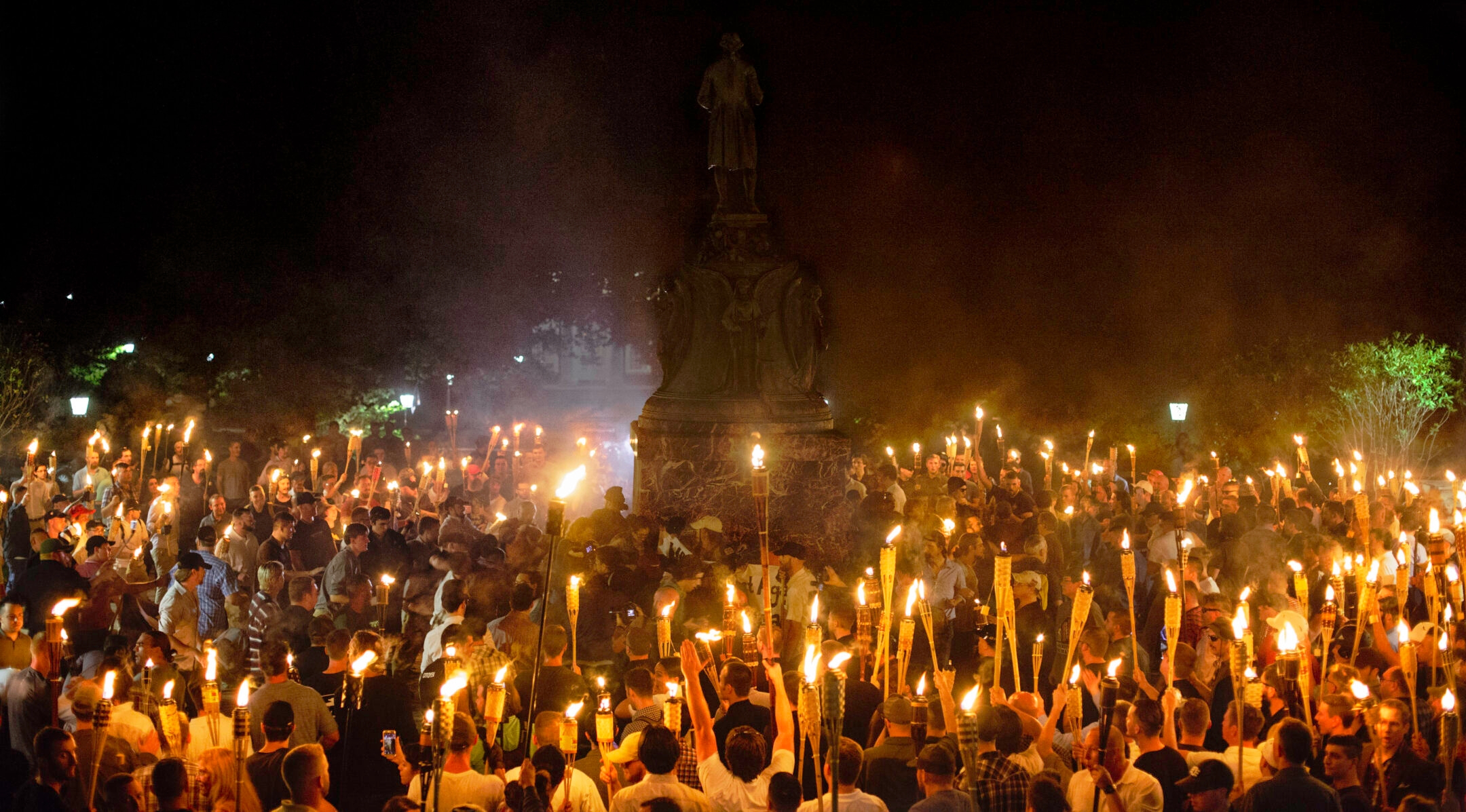
Neo-Nazis and white supremacists encircle counterprotesters at the base of a statue of Thomas Jefferson after marching through the University of Virginia campus with torches in Charlottesville, Va., Aug. 11, 2017. (Shay Horse/NurPhoto via Getty Images)

I also thought back to a case that a mentor of mine at Paul, Weiss had done in the early days of the internet. A website that was called the Nuremberg Files, believe it or not, had on it the names, personal contact information and photos of doctors who performed abortions, mostly in the West and South. When those doctors were hurt — and one of them was killed — they would put a red X over those doctors. The argument in that case was that [the website] was a violation of the Violence Against Women Act, and it was obviously incitement to do violence against other doctors on the site.

And I thought to myself, could we use something like that here? In the end, a huge, multimillion-dollar judgment was sustained against the defendants, and Paul, Weiss had devoted significant resources to enforcing that judgment by following defendants around and seizing their homes and garnishing their wages.

So in the Charlottesville case, we got a very lucky break. Someone managed to get into the Discord chat that the organizers of Charlottesville used to plan Charlottesville going back for weeks before Aug. 11 and 12, and published those chats on a website called Unicorn Riot.

Typically in cases, you don’t get discovery [the formal process of obtaining evidence from the parties] before you file a complaint. But here, this stuff was out there, so we effectively had a lot of documents that we wouldn’t otherwise have.

With all of those pieces in place, I called Dahlia Lithwick, who is a good friend, who writes about the Supreme Court and other issues for Slate. At the time, she lived in Charlottesville and had lived there for a long time.

I said, look, I have this crazy idea in my head. What do you think? And she says I think it’s a great idea. Why don’t I introduce you to some folks? Within 48 or 72 hours, we were on a plane to Charlottesville.

When we arrived, the town was really still in shock. A lot of the men — and it’s fair to say there were very few women — who descended upon Charlottesville that weekend to commit racialized or racially motivated violence drove around town in these all-white Mercedes vans. When we were there several days later, those vans were still driving around town, particularly in the African-American neighborhoods.

So people were still freaked out, to use a fancy legal term. We met with a whole bunch of people, several of whom became plaintiffs in our case. That includes Rev. Seth Wispelwey, who during the weeks leading up to Charlottesville and during the events on Aug. 11 and 12 organized these huge interfaith protests against what was going on with rabbis and others.
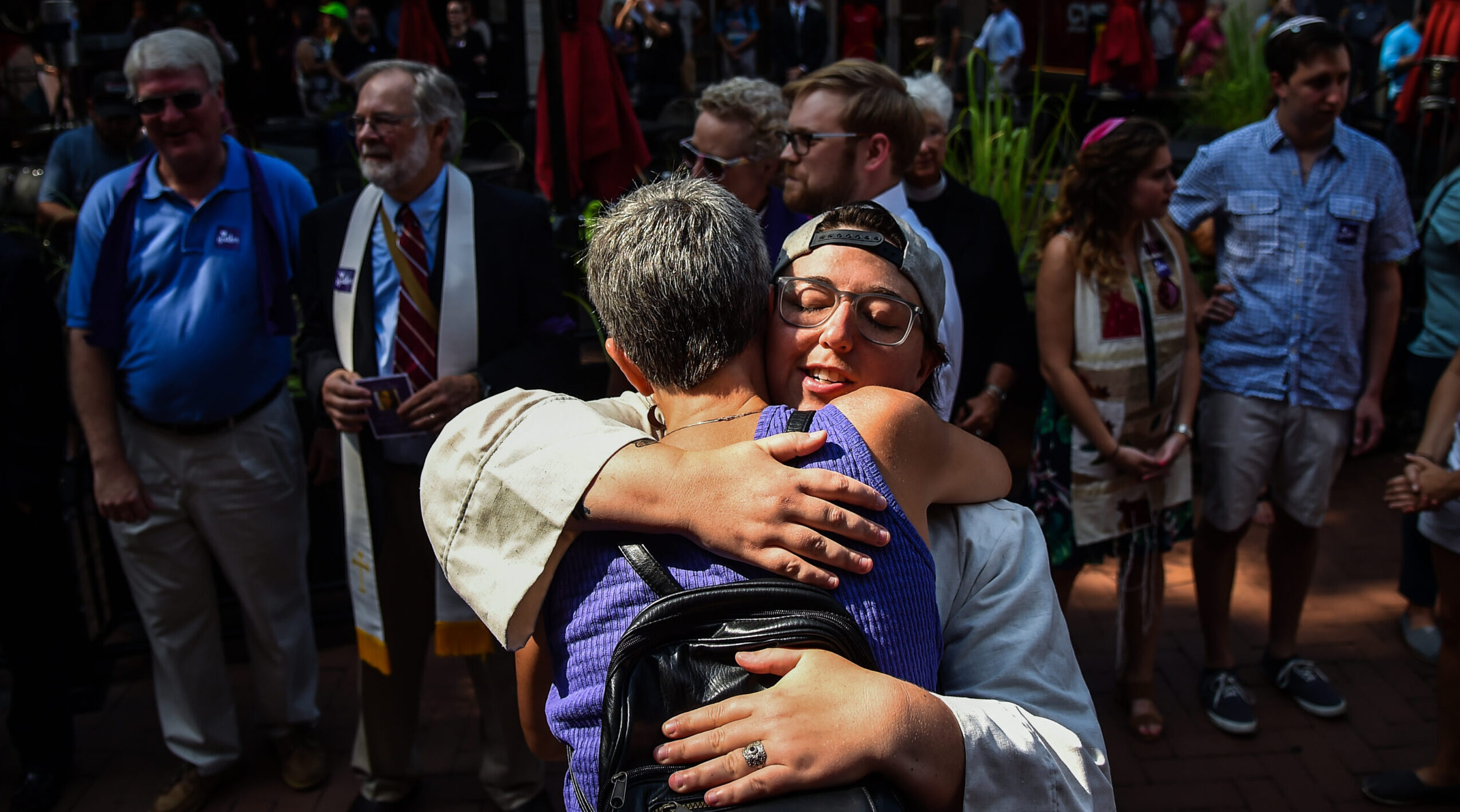
Brittany Caine-Conley hugs a member of the local church outside the Paramount Theater, where a funeral service was held for Heather Heyer, a counterprotester of the pro-right rally in Charlottesville, Aug. 16, 2017. (Salwan Georges/The Washington Post via Getty Images)

But it was a really intense trip. When we were driving back to the airport, one of the associates in the car was crying. I remember saying to her, “Buck up. You’ve got a lot of work to do. We’ve all got to buck up and be tough and do this case.”

What is the relationship between your law firm and Integrity First America, the civil rights group backing your federal lawsuit?

There’s only one case in which we have a relationship with Integrity First America, and that’s the Charlottesville case. When I came back to New York, I realized that this was going to be an expensive proposition. I’ve been involved with the people who were starting IFA, but I’ve never had a position there. I suggested to Integrity First that this might be the kind of case they’d be interested in getting involved in.

A lot of the expenses related to the case mostly fall into two big buckets. One is security for lawyers, plaintiffs and experts — [Holocaust scholar] Deborah Lipstadt, for example, is an expert in our case. The security costs of making sure that all of those people are safe are substantial, to say the least.

Two, the defendants in our case have the mentality of … maybe teenage juvenile delinquents, and they refuse to comply with court orders about discovery. In fact, one of them has been jailed and a bunch of them have been sanctioned about it. But ultimately, in order to get any evidence from them at all, we had to agree to pay the costs of getting their devices — their laptops, their phones, etc. —  and having those devices sent to a vendor who then scraped the data from the devices and then ran the searches that the parties had agreed on. It’s like $500 per device to do that.

Kaplan Hecker & Fink officially opened in July of 2017. President Trump assumed office in January of 2017. Was the timing coincidental, or did his election play a role in your decision to start your own firm?

It definitely is not coincidental.

I’ve been thinking for some time that I wanted to create a firm like Kaplan Hecker & Fink. But I thought that before I did something like that, I would first, if I could, have the privilege of serving in what I thought was going to be the Clinton administration. [laughs]

And so I was very hopeful, had Hillary been elected, that I would have been honored to get a job in the Justice Department and to work for our first woman president in that capacity. When that didn’t happen, it kind of forced the matter. And so then I began to think more and more about what I wanted to do with the rest of my life. And what I wanted to do with the rest of my life was to practice law the way that our firm is currently practicing.

What are some of the hallmarks of what your firm is trying to do?

I believe very strongly, and Paul, Weiss had a culture that believed very strongly, that every lawyer has an obligation to serve the public interest in some capacity. Whether that’s through pro bono cases, like the Windsor case that I did at Paul, Weiss [leading to the legalization of marriage equality], or whether it’s serving on bar committees, or other things like that, it’s important that every lawyer — certainly every litigator — do something positive to support the administration of justice in our society.
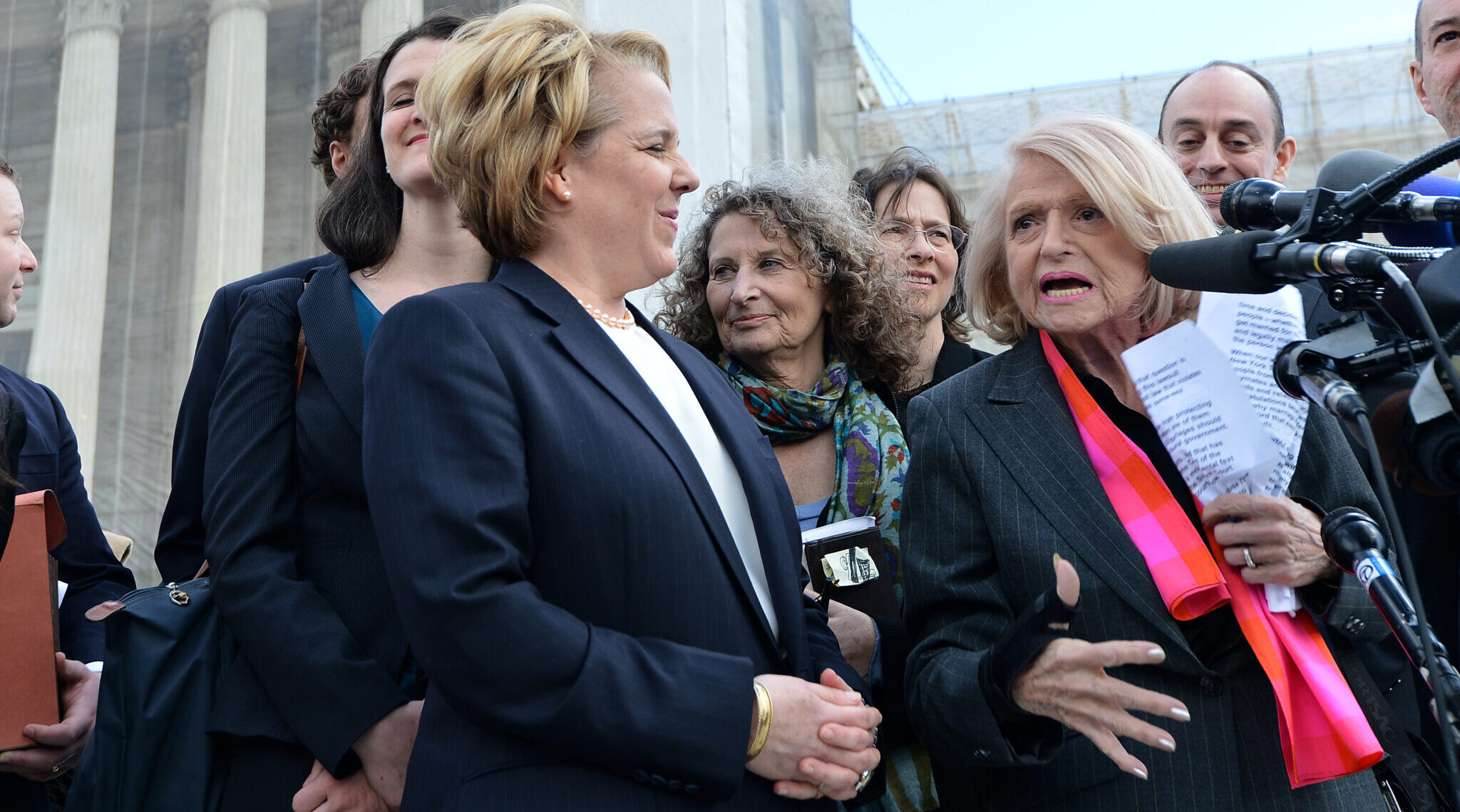
Edie Windsor, right, an 83-year-old lesbian widower, makes a statement to the media as her lawyer Roberta Kaplan looks on in front of the Supreme Court in Washington, March 27, 2013. (AFP/Jewel Samad via Getty Images)

And even when I left to start the firm, While I didn’t expect it to be good, that’s for sure, I don’t think I fully contemplated or could have imagined the many serious threats to our Constitution and to our justice system that the Trump administration posed — including the challenge to the votes of the American people.

So I thought from the very beginning that, even putting Trump aside, that our firm would be one that was very dedicated to doing work that’s in the public interest. And not just run-of-the-mill pro bono cases like many firms do — I’m not criticizing those cases, they are important. But we aim for high-impact cases that really make a broader impact on society rather than just affecting one litigant.

Two, I believe very strongly in my heart and in my bones that the same skills that I put to litigating for Airbnb or Uber, or Goldman Sachs, or you name it, we at our firm should use the same resources and time and care to the cases of Mary Trump and E. Jean Carroll and the plaintiffs in the Charlottesville case, and other public interest cases.

I had a sense that if you created a firm with that as the cornerstone, you would be able to attract really incredibly talented lawyers who will want to practice law that way, and I’m proud to say that has certainly been the case for us.

I get the sense reading your case history that you also — and correct me if I’m wrong — are very much a spring-into-action-quickly type of person. 

There’s a joke in my law firm: “Robbie acts.” One of my friends was counseling a more junior partner, saying that “if you say something to Robbie, you better make sure that it has support because she may act on it.”

Even before the Windsor case, but I certainly saw while working on the Windsor case how a small group of dedicated, smart lawyers can make fundamental change.

Returning to the Charlottesville case, where does it stand? 

There have been a lot of sanctions in the case. Elliot Kline (an organizer of the Unite the Right rally] was put in jail for a couple of days. And a lot of the other defendants have had monetary sanctions awarded against them. But the most recent ruling is a big deal because the judge ordered what are called adverse inferences.

That is a very, very negative development for the defendants in the case.

What that means is when we get to a jury trial — this spring, we hope, but likely fall because of COVID-19 — the judge will instruct the jurors that certain facts in the case that we allege they have to assume are true. Those facts include things like that Kline, who was one of the two ringleaders of the conspiracy, was motivated by animus against racial minorities, Jewish people and their supporters, and conspired to engage in acts of intimidation and violence on Aug. 11 and 12 in Charlottesville; that it was reasonably foreseeable to Kline and intended by Kline that his co-conspirators would commit acts of racially motivated violence and intimidation at the torchlight event on Aug. 11; that it was reasonably foreseeable and intended by him that co-conspirators would commit acts of violence at the Unite the Right event on Aug. 12, etc., etc.

And that kind of a sanction is very rare. It’s very hard to get. But it’s evidence of the kind of contempt for court orders and normal court processes that defendants in this case have shown throughout the case.

What are both the short-term and long-term goals in bringing this case?

Short term, our goal is to have a jury trial. We were supposed to have one this past fall; that obviously didn’t take place because of COVID. Our clients have been waiting a very long time. No civil cases move quickly, but this case is moving much slower than most because of the defendants’ intransigence. It’s really time to get the show on the road and get this going.

Long term, we really hope that the trial will be a wake-up call for Americans who have not — and certainly for Jews who have not — appreciated how dangerous this threat was and continues to be.

One of the reasons why I did this case is to deter other white supremacists, neo-Nazis and others from trying to organize anything like Charlottesville ever again. And making them understand that if they do, these will be the consequences.

Some of the defendants in this case have already complained about how hard this trial is making it for them to organize and to raise money, people like Richard Spencer. And to our knowledge, none of them participated in person in the events at the Capitol on January 6. In other words, they at least have been deterred.

It’s pretty hard to surprise me. I’ve been practicing law for a long time, I’ve seen a lot and I’m not exactly a spring chicken anymore. So my skin tends to be pretty thick. But the one part of this case, I have to say, that truly astounded me was once we got into the defendants’ text messages and emails back and forth, it was astounding to me that something like 90% of the discriminatory hateful things they say are directed at the Jews.

That’s not to say that they don’t hate Black people, that they don’t hate Muslim people, that they’re not crazy about immigrants. But their overwhelming, overriding passion is anti-Semitism. And what was so shocking to me about that, among other things, was that most of them come from rural communities from all over the country. So I assume that most of them don’t know many Jewish people. And the idea that there was this kind of underwater river of virulent anti-Semitism in our country was shocking.

The other thing that surprised me over time is that I don’t think I appreciated when we brought this case the degree to which it has become a harbinger of so many of the troubling things we are seeing in our country today.
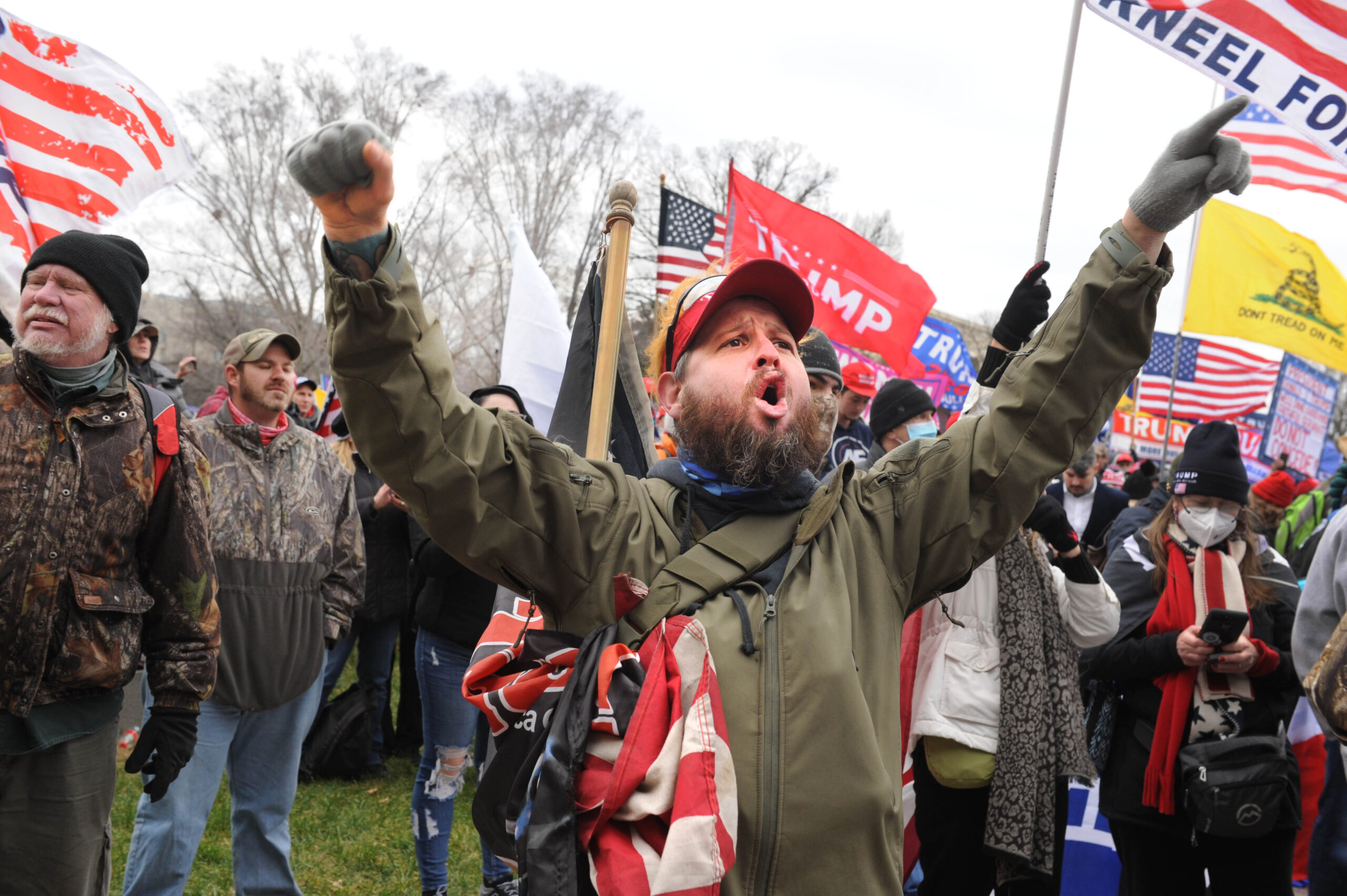
Protesters in Washington, Jan. 6, 2021 (Lloyd Wolf)

The dispute in Charlottesville, at least to hear the neo-Nazis tell it, was all about attempts by the Charlottesville city government to take down the statue of Robert E. Lee. We don’t think that that was what it was really about.

The defendants in the case and the organizers of the Charlottesville violence also often blamed everything on “antifa.” That they were going there because of antifa, and the problem was antifa. This specter of this huge, menacing thing called “antifa” was also something that has become all too prevalent in response to Black Lives Matter protests and in the recent election protests.

The use of disinformation is also significant. They talked a lot in the weeks leading up to Charlottesville about how they would make it look like self-defense and strategies for making it look like self-defense.

Today, if you follow groups like Identity Evropa and Proud Boys and others, they will often go and commit looting and throw stuff into shop windows and make it look like it was the Black Lives Matters protesters who did the vandalism.

And fourth, perhaps most disturbingly, is the use of cars to commit violence against protesters. A lot of the pre-Aug. 11 communication these guys had was about driving vehicles into protesters. In the last six months, I think there have been more than 60 incidents of people driving cars or other vehicles into protesters. So in ways that I never anticipated, Charlottesville has become a predictor, and sadly a symbol, of so many of the very serious problems that plague our society today.

We’ve also seen, since Charlottesville, two synagogue shootings, not to mention many other anti-Semitic attacks that, when you trace the shooters’ online activity, look very similar in terms of these chats.

There are all kinds of connections. The guy who did the shooting at the Tree of Life was in communication with defendants in our case. The guy who did the [mosque] shooting in Christchurch [New Zealand] had on his rifle a symbol called a fash tag, which is using fascist and hashtag, which was created by one of the defendants in our case, Matthew Heimbach.

We are suing the Charlottesville rioters under the KKK Act of 1871. But back then, and even in the 1920s, when the KKK got together to plan violence, they had to go into the forest wearing white hoods. Today, they just have to come up with a name for themselves, a hashtag on one of these websites. And I don’t think we fully come to appreciate how incredibly ominous all of this is.

It seems that your efforts are focused on litigating violence that occurs and tracing backwards to see where it comes from. But I wonder if there are more direct ways to prevent future attacks and slow the spread of online ideologies using legal tools?

Absolutely. So the FBI acknowledged at one point that they had kind of been asleep at the switch when it comes to the threat of right-wing, ultranationalist, white supremacist violence. They now say that it’s the No. 1 single security problem facing this country.

And law enforcement, especially federal law enforcement, knows what to do to counter groups like this. After all, they were very effective in doing it after 9/11. The only difference between those groups after 9/11 and the groups today is that the groups today are homegrown, and they’re not coming to the U.S. from countries in the Middle East.

But that shouldn’t make a difference. There’s no such thing as domestic terrorism under our statutes today. But those same efforts to track those groups need to happen — and honestly, I believe they are happening. And I’m quite sure that under the Biden administration, they will — I mean, given that Joe Biden has talked about Charlottesville so many times — that they will devote substantial resources to this.

The ACLU has taken a lot of flak for suing the city of Charlottesville to essentially help make this march happen. Do you think they were wrong to do so? 

As far as I understand, they have acknowledged that they made a mistake. If all the guys had come to Charlottesville and just held up flags and swastikas, and just said, as horrific as it is, “back to the ovens,” as horrible as that is, they probably have a First Amendment right to do it.

But that’s not what happened in Charlottesville. Motivated by those beliefs, they came to Charlottesville intending to commit violence. And I think the ACLU has now acknowledged that had they known that, they never would have represented them in court.

This highlights a tension for me between the absolutist free speech position and the desire to prevent societal unrest and violence. Does this highlight something new that’s happening in American society to you? Has our legal system not caught up with how society is changing? 

Legally, in terms of Supreme Court precedents and cases, we’ve always understood that there is a very clear line under the law between espousing hateful views and planning violence. Espousing hateful views, as bad as it is, and as damaging as it can be to society, the First Amendment protects that. On the other hand, everyone has always agreed that planning violence motivated by hateful views is illegal and can be prosecuted.

One of the problems that you have here is that technology and social media allow hateful views to be circulated in such a wide and instantaneous manner. It’s not like a bunch of neo-Nazis standing on a street corner in Skokie. Instead it’s literally hundreds, if not thousands of messages every hour on social media espousing these views.

Second, these groups have gotten very sophisticated about knowing when something looks like a threat and being careful not to make it look like a threat, even though they’re planning violence. Because they themselves have gotten schooled, sadly enough, in the principles of First Amendment law. And so they are very careful, while they sometimes cross the line, they are very careful in trying to say things that do not cross the line.

But regardless, if someone is saying things about planning violence at a rally, and using weapons and the kinds of things they were saying about Charlottesville before Aug. 11, there’s never been any doubt that that kind of stuff is illegal.

But what the government needs to do, I believe, is have more investigative techniques to follow these groups and catch them when they’re doing it.

I can’t help but ask, since you studied Russian history and literature and were active working with Soviet Jews, are there parallels that you see in American culture that echo some of the things that you witnessed while studying Soviet culture?

Thank God, and I really mean that, thank God that American society has institutions like courts and laws and professions in place that so far have been strong enough to withstand what these guys want, which is a fascist authoritarian state that enslaves minorities essentially.

So far, our institutions have held up. Those institutions did not exist in the Soviet Union. They didn’t exist in Russia before the Soviet Union. And that’s why Russian society is and was very different from the rest of the world, at least compared to other Western countries.

But I can say that growing up and living the life I did, I honestly never — I think many of us feel this way —  never thought that I would be living through times that truly felt historic.

This country has obviously welcomed Jews in a way that no other country in the Diaspora ever has, and Jews have reached a level of success in the United States that is unprecedented. If you had told me while I was in college the kind of threats we’re facing in our country today, I would have told you that you were nuts.

After studying Russia and spending a semester in Russia in 1987, I never thought that we would be living in times that felt as important and as significant in terms of the future as things often felt in Russia and certainly felt in Russia when I was there in 1987.

When I was there, I was stupidly fearless. I was a college kid. And one of the things I did is I was at the train station and then a party when Yuli Edelstein was released from the gulag [after he was put there] for teaching Hebrew. I have a picture of me with Yuli and his father at the time. I’m not suggesting anything rises to that level — we’re not putting people in gulags — and I certainly never knew that Yuli Edelstein was going to become a leader in the Knesset. But I just thought that our society was protected from all that. Our country. And the truth is, we’re not.

You mentioned in an interview years ago that you “developed the philosophical sense that religion can serve as a bulwark against totalitarian governments.” Can you say a little bit more about that?

I very much believe that.

We know that human beings have great capacity for evil. And the institutions that have held back against that, that have somehow worked to make sure human beings treat each other with loving kindness, with chesed and with justice, with tzedakah, have been religious institutions.

Not that religion doesn’t have enormous, grievous harms that it has committed throughout human history. But it’s one of the institutions that has the ability to foster those values.

Seth Wispelwey, the reverend in our case, is a perfect example of that. And you can look at pictures of him during the events of Aug. 11 and 12 standing arm and arm with Cornel West and with the junior rabbi from the local synagogue and others. I don’t know how he had the bravery to do that, quite honestly. I think that bravery came from his faith. But I don’t want to suggest that that’s the only way for human beings to treat each other with dignity and respect, because it certainly isn’t.

If we can end on a positive note, what are you most looking forward to in the hopefully few months ahead once the pandemic is behind us.

Post-pandemic? I thought you were going to say post-inauguration!

Post-inauguration, I’m really looking forward to sleeping. Post-pandemic? One of the great things about living in New York City is being able to go to live theater, which I do a lot and I really miss it. And so I really look forward to the day I go to see a Broadway show as soon as it’s safe after the pandemic.

And being able to go to synagogue not on a computer screen.

Meet the Woman Crushing White Supremacists in Court Read More »

david suissa podcast curious times

Pandemic Times Episode 119: Elisha Wiesel on Spreading Goodness

New David Suissa Podcast Every Tuesday and Friday.

The son of Elie Wiesel talks about his family’s efforts to help the Ethiopian community in Israel.

How do we manage our lives during the coronavirus crisis? How do we keep our sanity? How do we use this quarantine to bring out the best in ourselves? Tune in and share your stories with podcast@jewishjournal.com.

Listen on Apple Podcasts

Listen on Spotify

Listen on Stitcher

Follow David Suissa on FacebookTwitter and Instagram

Pandemic Times Episode 119: Elisha Wiesel on Spreading Goodness Read More »