fbpx

January 20, 2021

Poem for Mourning

I wanted to share something I’ve been teaching these past years in helping and supporting the expression of sadness, loss, and grief through ones’ tears. I touched its purpose and meaning once again this afternoon, sharing a moment with the country, the acknowledgement of those who have died, the necessary remembrance, and the many tears throughout the land, that were permitted to flow.

As a child of Holocaust survivors, witnessing the many tears that flowed from my mother, a lonely survivor of grief and guilt (as all her family died), I have come to understand the blessing, the healing, and transformation that tears offer. In the many moments of shifting identity or preparation for personal ritual, we enter the Mikveh, walk down seven steps, immerse three times, refreshed, renewed, and reborn. Like the Tree of Life, the number ten (7+3) a metaphorical reminder of the healing capacity to become cleansed and whole.

Each one of us carries within an ‘internal Mikveh,’ a gathering of healing water, that we can draw on in moments of loss, grief, and even in an empathic response to others.

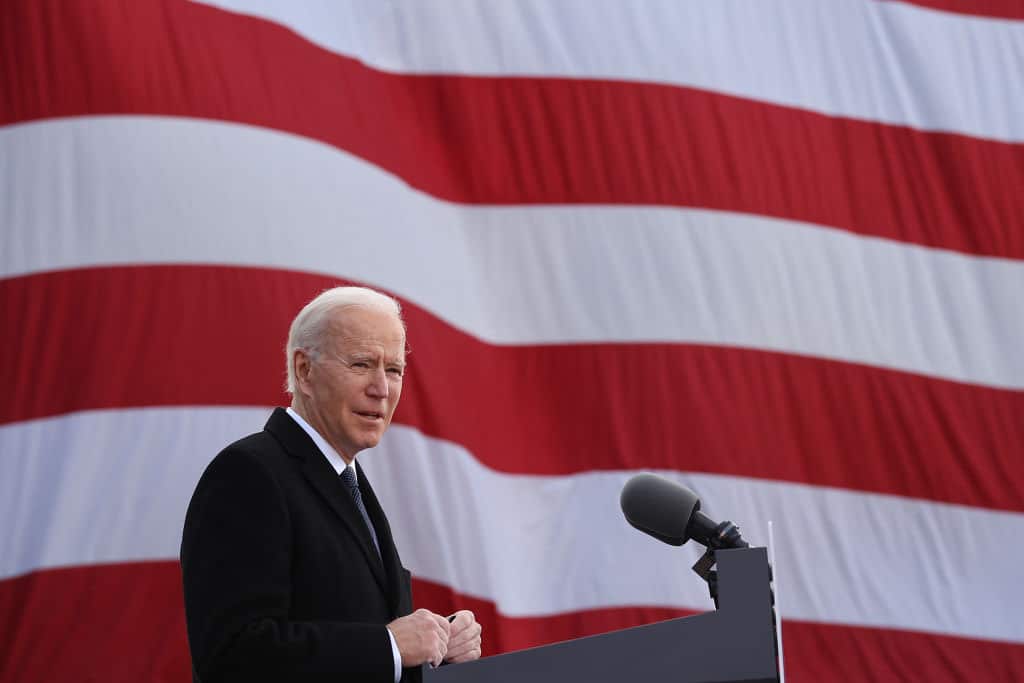
Each one of us carries within an ‘internal Mikveh,’ a gathering of healing water, that we can draw on in moments of loss, grief, and even in an empathic response to others. There are so many in this country (actually in the world at large) who have needed to grieve, share a moment of unified sadness, and Vice-President Biden and Senator Harris have created that moment, using simplicity, permission, and the power of light, to remember and let tears flow. What a gift to the many, alone, starved of the empathy and connection these many months. I am so grateful to finally have adults in the room, who understand, empathize, and ritualize, as part of their leadership.

The Mikveh Within

How I long for you, oh loved one, oh friend

Separated and taken to a world beyond end;

Frightened your soul departed alone

In discomfort and pain I constantly bemoan.

The images and memories I hold so dear

Of you and I that remain so clear;

Yet sadness and grief overcome me so much

I need to weep and let tears caress with a tender touch.

My well of water that lies within, I access and offer upon my skin.

The Mikveh I hold and enter in grief so I can cleanse my disbelief;

The gift of tears we possess, so healing abounds in tenderness.

I gratefully embody the liquid of the Divine that gathers together as a shrine,

To be released and shed in need, tears of healing, a Mikveh indeed.


Eva Robbins is a rabbi, cantor, artist and the author of “Spiritual Surgery: A Journey of Healing Mind, Body and Spirit.”

Poem for Mourning Read More »

The Memory of an Old Building

Driving through mid-town Los Angeles often allows me to take a detour to my childhood dwelling on old Alfred St, a block east of La Cienega. 1211 to be exact. The four-unit apartment building has seen better days. Iron bars cover every window now. It’s painted a dismal grey. The lawn — what little is left of it — shows more brown than green.

Occasionally, I pull my car over to the curb and reminisce. There is a sense of comfort each time I visit here — which, unfortunately, isn’t very often. This was the building I was raised in, along with my uncles Marv, Morrie, their families and my grandparents. We each occupied one of the four apartments. As my mind wanders back in time, I become a child again, and life is good.

My mother kept me home from school today, which was okay with me. I hate fourth grade. It was a beautiful spring day, but I complained of a headache this morning, and she worries about me getting sick. I also pretended I had the sniffles, which usually seals the deal. 

Around noon, my grandma came over to give my mother a break, offering to take me on her weekly shopping excursion. She’s the chain-smoking matriarch of our family and usually gets her way. At a stocky 5’2, she’s not much of a physical presence, but she exudes an old-world toughness that lets you know she can handle any situation. “Can I go mom, can I,” I pleaded. “I’m feeling much better.” My mother reluctantly agreed, only after getting a promise from grandma not to stay out too long.  

So off to Koch’s we went, the small storefront deli in the heart of the Jewish section of Pico Blvd. It’s our neighborhood, and grandma paraded down this busy street like she was the queen of some European fiefdom. Everywhere we went, she saw people she knew. “There’s Mr. Moskowitz,” she pointed. “He lost his job last week, poor guy. I feel sorry for his children.” Grandma loves to gossip. She’s always talking, but she hardly ever listens. “Grandma, can we stop at the candy store, please?” I asked as we trudged down the street. “Not now,” she replied, which is her usual response to my requests.

Like always, Koch’s Deli was jammed with loud and unruly customers. A half-dozen small tables lined one side of the store, while display cases and busy countermen occupied the other. Further back was a lunch counter, seating maybe 15 people on old-fashioned swivel stools. Florescent lighting did nothing to enhance the atmosphere, while framed faded photos of what L.A. looked like in old days lined the smoke stained walls. This place was not for the timid.

Koch’s was not the place for the timid.

“Hello, Mrs. Stromberg!” yelled Eddie Meyers, the jovial, rotund owner of the deli, who stood next to the cash register, wiping his soiled apron with greasy hands. “Who’s the new boyfriend?” Laughter rang out as grandma clutched my hand, and she pulled me past the kibitzing crowd, working her way to the lunch counter in the rear of the store.

 On our way, we passed those deli cases that dazzled the eye and crushed the hopes of would-be dieters. The overworked counter men, all experts in deli fare, scurried to fill orders from impatient customers. “Number 43, who’s got 43,” someone shouted. 

As I walked along the rubber floor mats and looked through the glass cases in the “take out section,” my eyes became fixed on the varied offerings; trays of juicy corned beefs, pastramis and briskets sat next to bulging platters of tuna and egg salad. There was also the aromatic chopped liver, which, when combined with a spiced meat in one of Koch’s famous combo sandwiches, could ignite the palate into a Hebrew feeding frenzy. Rye breads, pumpernickels, challahs and bagels fresh out of the oven lay waiting to be sliced, along with pickles and sauerkraut, coleslaw, vats of flavored cream cheeses, potato and macaroni salad, stuffed cabbage and pickled beets — a Jewish cornucopia of smells and flavors.

In the next case lay the remnants of the Pacific Ocean, mysterious creatures from the sea, sitting on a bed of ice, side by side, staring up at me with dead eyes, some already filleted and ready for slicing. The names danced in my imagination; lox, sable, whitefish, chub, baked cod and sturgeon. Why, I wondered, are these delicacies so prized among these eager patrons?

Our neighbor from down the street, Mrs. Mendelsohn, who wears a wool sweater, even in summer, and a babushka, a floral head scarf, like women do in the old country, blocked our path and told my grandma how big I’m getting, while leaning over and pinching my cheek. Her cigarette and onion fouled breath was more than I could bear, and I recoiled at the touch of her scaly fingers. Impolitely edging past the inquisitive Mrs. Nosey, grandma pushed her way to the lunch counter and glided her ample posterior onto a stool alongside of me. 

“What do you vant?” she mumbled, as if she hadn’t ever heard of the letter w. “I don’t know” I responded. “Good,” she said quickly, “Ve’ll share a corned beef and Sviss on a Kaiser roll, some coleslaw, French fries and a couple of Dr. Brown’s Cream Sodas. Vat do you say, totella?” I quickly looked around, hoping no one heard her call me this embarrassing sobriquet. I’m ten years old, for God’s sake and she still calls me baby names.

Fay was our foul-mouth waitress with a waxy face, red painted lips and an off-the-shoulders peasant blouse. Grandma said she used to be a contortionist in the circus. She placed two glasses of ice water on the counter, took our order, made a lewd comment about Eddie Meyer’s shlong (whatever that is) and hurried away after giving me a wink. Why is it that all these old women find me so appealing?   

Before our food arrived, I told grandma I had to pee. She offered to take me to the bathroom, but I refused, letting her know I’m not a child anymore. She laughed and nodded her approval, and off I went.

 Our order arrived just as I returned, and grandma asked if I washed my hands as she began lathering our sandwich with gobs of Russian dressing, which she knows I’m fond of. “Of course I did,” I lied. Handing me my half, she started to work on her portion of this prodigious creation.

Grandma didn’t chew, she chomped, making these squishy sounds as she dabbed at the sides of her mouth with a crumbled napkin. Like a human wood chipper, she slowly but steadily plowed through her sandwich, sucking down a large kosher pickle along the way. “Eat, baby,” she urged me, as I pushed my fries around the plate. After a few small bites, I told grandma I was full, but she already anticipated this and had requested two sheets of wax paper from Fay. Grandma wrapped the uneaten portion of my sandwich to take home with us. “Let’s get going little one,” she encouraged, “we’ve been gone too long and your mother will be upset.”

I slurped down the rest of my soda as grandma grabbed the check and headed to the cashier to pay our bill. I followed her lead as she waved goodbye to our deli congregation. Eddie Meyers spotted me as we approached the cash register and asked how I’m doing in Little League. He’s heard I’m a terrific first baseman, he said. “We could be looking at the next Hank Greenberg,” he shouted to no one in particular, as I smiled shyly and headed to the front door. Zay gezunt,” he offered, the Yiddish goodbye. 

Grandma loved her weekly visits to Koch’s, and I enjoyed going with her, even though most of her friends seemed really crazy. On the way home, grandma grabbed my hand, pulled me close, bent down and looked me in the eye. “I got a great idea,” she said. “Let’s stop at the candy store for a little treat!”

A car pulls up alongside me, honking gently and snapping me out of my reverie. “You leaving?” the guy behind the wheel inquires. “Yeah,” I nod in his direction. “I just came for a visit!”


Gary Stromberg has headed a highly successful entertainment business PR firm, written and produced two major motion pictures and owned a high-profile, independent, contemporary music record label.


The Memory of an Old Building Read More »

Poem: Bo

This poem was originally posted on January 29, 2020.

Locusts

A few months after we moved into our house
the ants felt bold enought to join us.
Their line from the back door to
the trash can, a plague that inspired us
to hire a monthly pest-control service.
We were like modern day Pharaohs
ignoring the miracles of the wilderness
in our quest to build a treasure city
in the heart of Van Nuys.
We haven’t seen them since.
But soon after the meal worms came, and
we had to learn to shut the front door quickly
so the moths, attracted to our light
wouldn’t join our inside festivities.
You can build a home in the desert.
But the desert will never let you forget
what you did.

Darkness

It’s not like turning out the lights
or the altogether absence of electricity.
Or being in the wilderness where
the light of long dead stars
creates a natural majesty.
It is thick. It is palpable.
You can feel the nothing
with your eyes.
Even your torches
reveal only more nothing.
That is the darkness that came.
That is the darkness you never want.
Not even to sleep by.
A living death.
Nothing to see here.

Slaying of the First Born

You’d think, after the river turned to blood
after the cattle death, and
the wild beasts walking down Main Street
Pharaoh might have gotten the message.
After the frogs and the realization that
you can’t find a good skin doctor in Egypt.
The locusts, the darkness, should have
been enough to soften a heart.
I know if someone told me it was
find a new staff or my son would die
I’d be on Craig’s List, faster than you
could say Help Wanted.
It’s a stupid man who outlives his son,
who finds his kingdom filled only with
empty neighborhoods,
who hears the cries of the departing
Better get used to flat bread.
That’s all the time we have.


Rick Lupert, a poet, songleader and graphic designer, is the author of 23 books including “God Wrestler: A Poem for Every Torah Portion.”

Poem: Bo Read More »

100 Days in Joe Biden’s America

For Joe Biden, the success of the first two years of his presidency comes down to two numbers — 223 and 50. With both houses of Congress divided and the Democrats narrowly holding on to a majority, there is no margin for error. In fact, rumors are swirling that two Democratic members of the House of Representatives are fighting illnesses, which could further narrow the margin for a majority (218). Add this numerical uncertainty to the insurgency earlier this month, and you have  a historic level of division. Some on the extreme right want to depose Biden, some on the extreme left want to push him toward more progressive stances and the nominal center is somehow still hoping this all settles into an uneventful term.

Even though Democrats technically control the executive branch and both houses of Congress, we can expect them to take a more conciliatory approach to their governing. Biden even floated the possibility of appointing conservatives to his cabinet in an attempt to find a middle ground in a deeply divided country. What’s more, the Democratic party is in the midst of a schism between its progressive wing and traditional moderates. All of this is to say, attempting to find a middle ground between and within parties will drive Biden’s governance.

Biden was elected on a long list of policy platforms, from environmentalism to immigration reform. But politics is a game of strategy and compromise, and the Democratic Party’s grip on power is neither unified nor secure — and with Trump’s impeachment trial all but certain in the Senate, a mixed bag of Cabinet member approvals and small steps around COVID-19 relief are the likeliest low-hanging fruit. What can we realistically expect to take precedence in the first hundred days of the new administration?

(L-R) Douglas Emhoff, U.S. Vice President-elect Kamala Harris, Dr. Jill Biden and U.S. President-elect Joe Biden look down the National Mall as lamps are lit to honor the nearly 400,000 American victims of the coronavirus pandemic at the Lincoln Memorial Reflecting Pool January 19, 2021 in Washington, DC. (Photo by Chip Somodevilla/Getty Images)

Executive Orders and Reconciliation

It was George H.W. Bush that began the slippery slope of executive orders as a way to move along a policy agenda, and Joe Biden will be no exception. Expect executive orders on climate, travel restrictions, COVID-19 restrictions, and economic reform, as well as and symbolic orders around global engagement.

But there is only so much Biden can do without Congress. And in Congress, you have two tracks to passing laws, regular order — which requires a supermajority and bipartisanship — or reconciliation — which only requires 51 votes in the Senate or 218 in the House. That will be the way most items of legislation go, but it’s a laborious process, and not every issue fits the mold.

Domestic Security

It should go without saying that the January 6 attack on the Capitol building is cause for concern: the fact that the invasion was openly discussed on social media for weeks and yet still caught security forces flat-footed, the fact that some police forces assigned to disperse the insurgents posed for selfies during the looting of congressional offices, and the fact that anti-Semitic, racist, Confederate flag-waving and Q-anon-believing crowds were on display for the world to see.

Biden, for all his conciliatory rhetoric, is being pushed to make a show of force. Despite a spate of arrests, law enforcement has treated the attackers relatively mildly: they are being charged with disorderly conduct and theft rather than sedition, meaning that the insurgency is being treated as a misdemeanor rather than a felony. Several attackers are being released on bail and are even being indulged in their pseudo-religious demands. Many of the actual architects of the insurgency are essentially still at large, including Army Captain Emily Rainey and retired Air Force Reserve Officer Larry Rendell Brock, who are under investigation but have not yet been charged.

Last year, a draft report by DHS identified white supremacists as the biggest threat to national security. The failure of U.S. law enforcement and national security to anticipate and respond to the attack on the Capitol is now firmly in the spotlight and demands a response. Rep. Tim Ryan (D-Ohio) summed up the matter succinctly: “You can bet your ass that we’re going to get to the bottom of it…there’s going to be a number of people who are going to be without employment very, very soon.”

Anything less than comprehensive reform and consequences will embolden more attacks in D.C. and state legislatures, not to mention signal weakness to enemies abroad. Biden has no choice but to stand behind a crackdown. Arrests and prosecutions are necessary to the long-term survival of our democracy, even though they will undoubtedly spark more unrest in the short term. Biden’s pick to head the Department of Homeland Security, Alejandro Mayorkas, will certainly have his hands full with restructuring to prevent future attacks, both foreign and domestic.

A Plan for COVID-19

Days after the election, Biden unveiled his pandemic response team, co-chaired by former FDA commissioner Dr. David Kessler, former Surgeon General Vivek Murthy and Associate Dean for Health Equity Research at the Yale School of Medicine Dr. Marcella Nunez-Smith. With strong qualifications and a long track record of pandemic response, the team’s priorities include vaccine distribution, increasing PPE availability, restarting packages for small businesses, and strengthening testing capabilities — including, notably, mobilizing a U.S. Public Health Jobs Corps of at least 100,000 Americans to carry out contact tracing and other protective measures. The team has also announced $1.9 trillion in new spending and efforts to help schools reopen.

President-elect Joe Biden (L) receives the second dose of a COVID-19 Vaccination from Chief Nurse Executive Ric Cuming (R) at ChristianaCare Christiana Hospital on January 11, 2021 in Newark, Delaware. (Photo by Alex Wong/Getty Images)

But Biden’s plan for 100 million vaccines in 100 days will prove to be an unrealistic goal — Dr. Fauci may have faith in the country’s distribution capabilities, but the actual buy-in from residents will be very different. Already, we’ve seen swaths of front-line and health care workers opting out of the vaccine and distrust of the vaccine among everyday Americans is likely to match.

The true battle against the pandemic will be waged in the infosphere. Misinformation, conspiracy theories and a full-blown anti-vaccination movement are driving America’s record number of cases and deaths. Transparency and culturally-competent outreach will be necessary to convince the American people that COVID-19 is a serious threat and that the offered solutions against it are actually worth following.

Foreign Policy

Biden has pledged to end the Muslim travel ban and lift refugee admissions within the first 100 days. He has committed to ending family separations at the border, establishing a task force dedicated to reunification and perhaps supporting TPS and DACA on day one, but he is likely to back off from anything stronger than that. Comprehensive immigration reform is one of Biden’s many campaign promises, and we will see a bill to that end, but there is little likelihood that it moves in his first year, particularly so soon after the insurgency in Washington, D.C.

Trump knows that foreign policy is easy to tangle and hard to diffuse, which is why he’s moving quickly to ensure that Biden inherits a hostile playing field by elevating tensions with Iran, designating Cuba as a state sponsor of terrorism, sabotaging peace talks in Yemen by designating the Houthis as a terrorist group and so on. These issues all hit the headlines hours apart, but the consequences will span the entirety of Biden’s term and beyond.

The first hundred days will likely feature a soft power tour to signify America’s new era after the erosion of our international standing over the past four years. Rather than diving straight into negotiating the Iran deal or confronting China, Biden will focus on re-engaging institutions like NATO and the UN, where he hopes the United States will be able to regain influence. Expect a return to the Paris climate agreement to be full of fanfare. Outreach to key allies such as the United Kingdom, Israel, Japan, and Mexico will also be instrumental to signaling the return to U.S. leadership.

Thus far, Biden’s appointments for national security and foreign policy roles boil down to “the Obama foreign policy team, albeit in different positions,” which he will leverage to stress the message of a return to the pre-Trump era of multilateralism, with the U.S. at the helm. It remains to be seen if countries will bite, or if the United States will find itself permanently demoted.

I recently had discussions with the individuals that are going into the White House — folks whom I have worked with in the Obama and Clinton administrations — and their feeling about the first 100 days is one of cautious optimism. Many feel that the narrow Democratic majority in both houses of Congress will mean that going “big” with a new policy agenda will not be an option. Although the first hundred days of the new administration may not bring us everything we hope for, they will at least set a tone for what we can expect.


Seth Jacobson is the founder and principal of JCI Worldwide, a Los Angeles-based communications and research firm. He spent several years in the Carter and Clinton administrations in positions focused on economic development, foreign policy, and media relations. He is a frequent lecturer on policy and public affairs at Pepperdine University and UCLA.


100 Days in Joe Biden’s America Read More »

Table for Five: Bo

One verse, five voices. Edited by Salvador Litvak, the Accidental Talmudist

The people picked up their dough when it was not yet leavened, their leftovers bound in their garments on their shoulders. -Ex. 12:34


Rabbi Nolan Lebovitz
Adat Shalom

In his classic novel Ivanhoe, published in 1819, Sir Walter Scott references the image of the wandering Jew. The Jewish character Isaac explains, “…disinherited and wandering as we are, the worst evil which befalls our race is, that when we are wronged and plundered, all the world laughs around, and we are compelled to suppress our sense of injury, and to smile tamely…”

There is a powerlessness in wandering, always relying on the tolerance of others. This verse from Exodus 12 establishes a connection between matzah and our existential wandering. The thin, bland Passover cracker can only carry the taste of that which we pile on its back – spicy horseradish, sweet charoset, etc. Matzah is powerless, as we once were.

The opposite of matzah is challah, not only because of its leavening, but also because challah is a statement by people who are free to choose to rest and make a statement that Shabbat, and our Jewish identity, is important. Good challah needs no help in terms of taste. “Good matzah” is a phrase I’ve never used. Whenever we’re in Israel, my children always ask my wife and me why the food tastes so good. “Why don’t tomatoes taste like this in Los Angeles?” The answer doesn’t rest in articles about pesticide usage and agricultural understanding. Taste is an expression of choice and power and privilege. Those tomatoes taste like the end of our wandering. Those tomatoes taste like our return home.


Rabbi/Cantor Eva Robbins
N’vay Shalom

Year after year we reread Torah from beginning to end and yet we always find something unique; a word, a phrase, a sentence that stands out in a way as never before. As I re-read Chapter Twelve it was clear that God gives Moses instructions for the Passover rite and the Exodus, but it is in sentence 33, when the Egyptians “impose themselves strongly on the people to leave quickly,” because they are dying, that the Israelites pick up their dough, their leftovers, and leave.

It is not Moshe or even God that hurries them out of Egypt. It is the cries and the suffering of the Egyptians that moves the people to respond. Despite hundreds of years of slavery, somehow, they have retained a level of humanity and the ability to empathize with their neighbors. Perhaps they understood that as long as they were present the death and loss would continue. They seemed capable of a level of deep compassion despite all they had endured, for they too were mothers and fathers; they lost their children as well because of Pharaoh’s edicts.

Isn’t that what we are called upon to learn, just as we did when Joseph forgives his brothers for their outrageous actions towards him? No matter what evil we face, we must hold on to our humanity, compassion, and empathy for the other. When we celebrate the death of Pharaoh’s army who followed us into the sea, the midrash reminds us, “They too were God’s children.”


Heftsibah Cohen-Montagu
Arevot Women’s Beit Midrash of the Sephardic Educational Center

Does liberation from slavery mean disconnecting completely from the world we were liberated from? The verse teaches us that the children of Israel were in a state of transition between slavery and freedom: they went out in haste, pulled out of slavery without being completely prepared, in spite of the long period leading up to the Exodus from Egypt. The unrisen dough symbolizes this state of transition.

The word misharot, which means kneading bowls, is interpreted by the Mechilta and the commentators as “leftovers”, which has a similar Hebrew root. The children of Israel didn’t leave everything behind in Egypt, but went out carrying leftovers in their garments and on their shoulders.

When we move from one place to another we take our experiences with us as “leftovers”. For the generation that left Egypt, slavery was part of their roots, the only life they knew. The leftovers that they carried out on their shoulders after 400 years included the memory of slavery, the hope for true liberty and the struggle for freedom, which stayed with them as a reminder in the face of all kinds of slavery that still fill the world. These leftovers are a universal reminder that when the Jewish people left Egypt it did not proclaim liberty only for itself but, as Rav Benzion Meir Hai Uziel writes, “with head held high and courageous spirit, the Jewish people proclaims liberty for itself and calls for freedom and liberation for the entire world.” (Michmanei Uzziel 1, 2:7:1)


Ilan Reiner
passovertablerunners.com

This unusually descriptive verse not only tells us what the people did, picking up their unleavened dough, but also how they carried it – bound on their shoulders. Seems like a spontaneous action of taking whatever food they had on their rapid departure from Egypt.

I’ve got a Passover table runner that shows how along with the dough, they also took gold and silver from the Egyptians, which was mounted on their cattle and livestock. However, the unleavened dough they chose to carry on their shoulders! Rashi emphasizes that this shows affection to the mitzvah of matzah.

It can also be considered as their first act of freedom. Slaves have little or no control over what, when and where they eat. Even the time of leaving Egypt wasn’t up to them. Rushing out, they held tight to the dough, carrying it on them. From now on, they will decide when to bake it and how to eat it.

Another aspect of freedom is emphasized in the choice of words describing how the dough was taken. The first half of the verse is in singular, and the second – in plural. Everyone picked up their dough, and they all thought of carrying it the same way. Even the choice of word for ‘bound’, “tz’rurot” in Hebrew, is unique in the Torah, emphasizing the unity in mind and action of the people. No longer separate individuals, families and tribes, they are now one nation, heading out to freedom, in route to the Promised Land of Israel.


David Porush
student, teacher, writer @davidporush.com

How many of us have this snapshot burned in our imaginations, if not of our own grandparents coming to America then of countless others through history? It’s the iconic image of the refugee, exile, and runaway, what they could salvage bundled in clothing slung over their shoulders fleeing in the nick of time. But in that bundle the Torah here hides a dire prophecy, a gift, for us. As Shabtai ben Yosef Bass put it, “The Egyptians did not let them procrastinate long enough to become chametz.”

He probably meant their matzah, but it applies to the Hebrews, those remnants and the half-baked. Don’t stay long enough to leaven yourselves into comfortable arrogance in that fatal fourth or fifth generation in exile. Pharaoh is tuned to all the media channels showing your inflation and self-satisfaction, you media moguls and university presidents and scientists and artists and writers and billionaires and entrepreneurs and influencers, and he sees a whole population of Josephs, if not Benjamins, replacing his people in the marketplace. If you don’t run of your own accord, trust me, your hosts won’t let you dally. Neither you nor your matzah shall rise. And don’t let the door hit you on the way out.

Needless to stay, the millennia have taught us this lesson too many times. We will never feel the time is right. Yes, the bread’s still bakin’, but grab yourselves, the half-baked dough, the remnants, and go.

Table for Five: Bo Read More »