fbpx

January 6, 2021

Gal Gadot Gets Real with Docuseries ‘Impact’

Having made a huge global impact with “Wonder Woman 1984,” which racked up $118 million in ticket sales in its first week of release, Gal Gadot hopes that her new women-focused National Geographic docuseries “Impact” will make a similar impression. With her husband Jaron Varsano, she’s producing the six-part series that tells the stories of resilient young women around the world who overcome obstacles and do extraordinary things despite hardship and extreme circumstances.

“So thrilled to kick off 2021 on a positive note and finally give you a sneak peek at ‘Impact.’We have been working on this incredible project for over a year,” Gadot posted on Instagram. “It’s a powerful docuseries that tells the stories of exceptional women making a true impact in their communities – we have stories about women from California all the way to Brazil. I cannot wait to share their stories.”

No premiere date has been announced, but “Impact” is expected in the first half of 2021.

Gal Gadot Gets Real with Docuseries ‘Impact’ Read More »

The Farms Keep Flooding

As the winter months approach and settle in, so too comes the heavy rain and its familiar side effects—urban flooding, including instances of flooded streets obstructing traffic and residents fleeing their flooded homes. Beyond the impact to residential areas, agricultural fields have also been affected more frequently in recent years thereby disrupting the livelihoods of the farmers and damaging the fruits and vegetables we all eat.

“When large areas of land are flooded, there is a danger of damaging crops that are susceptible to lack of soil ventilation or excess water,” says Dr. Roey Egozi of the Soil Erosion Research Station in the Department of Land Conservation and Drainage. “Trees may be uprooted, and crops may be torn apart.”

One major solution used by farmers to prevent the lack of aeration in soil and to protect the roots in the process is to create rows of artificially raised areas in the soil where crops or trees are planted. That way when it rains, the water does not weigh down on the roots, but instead flow to the furrows between the mounds where it can accumulate.

Beyond that, farmers are advised to take into account possible flooding when choosing what to sow in their field. “The type of growth needs to be adjusted to the potential risk of flooding in the area where they are planted,” says Egozi. “There are crops that are more susceptible to flooding, such as avocados or deciduous trees. So, if you plant a sensitive orchard near a stream that could overflow during rain periods and flood its surroundings, some trees may experience severe stress and mortality.”

Development Oversight

In addition to the steps farmers take to limit flood damage, multiple drainage authorities operating through municipal runoff treatment channels work to prevent flood damage from taking a toll on cropland. Flooding usually begins as a result of heavy rainfall combined with the impermeable composition of asphalt and concrete, preventing rainwater from seeping into the ground.

“Migdal HaEmek, for example, is currently building a neighborhood that produces very large amounts of runoff, and as a result the agricultural areas down the neighborhood are flooded,” says Haim Hemi, director of the Kishon Drainage and Streams Authority. “However, today we are building a system to regulate floods in the area in collaboration with the Ministry of Housing. We are creating a kind of terrace and pool where the water accumulates as soon as it rains. The system slows the flow and even stops it, and as the storm passes, it automatically releases the water gradually so that no flooding will occur.”

Two Sides of the Same Coin

Other possible beneficial measures to prevent flooding in agricultural fields are not currently being carried out in Israel. One of them is the planting of natural vegetation to serve as a buffer between agricultural land and nearby streams. “When flooding occurs, the water flows into the buffer zone where the vegetation can slow its spread into the agricultural area, thereby absorbing most of the energy of the flow,” says Egozi. He and his team are currently promoting a pilot for the use of the method in Israel in Nachal Nahalal in collaboration with the Agricultural Research Center of the Volcanic Institute in Neve Ya’ar, the Kishon Drainage and Streams Authority, and the Information Center for Basins, Runoff, and Streams Management.

Creating such a buffer also works in favor of the stream by protecting it from pesticides, fertilizer, and soil grains—substances that can very easily damage its ecosystem. Another way to reduce flood damage to agriculture is to create vegetation strips within the agricultural area itself and increase the density of vegetation cover by sowing crops such as oats, wheat, or clover. Although this method serves as a way to weaken the flow of water running through a farm, it is hardly applied in Israel.

“The creek and the field feed each other,” Egozi says. “If there is a significant land drift in the agricultural field and the stream is blocked as a result, the chance of flooding will increase. These are two sides of the same coin.”

A Worsening Trend

The need to address the problem of flooding in agricultural fields is particularly critical in light of the fact that the phenomenon has become more frequent in recent years than in the past, and it is expected to worsen in the coming years. According to data from Kanat––the Insurance Fund for Natural Risks in Agriculture­­––25,000 dunams (6,177 acres) of agricultural land flooded in the last three years, and Kanat distributed about NIS 20 million to the affected farmers. In the three years prior to this, a total area of only about 3,500 dunams (864 acres) were flooded, and farmers were accordingly compensated with NIS 3 million.

One clear reason for the flood phenomenon’s intensification is the climate crisis. As the world warms, the amount of water evaporating from oceans, lakes, streams, and soils increases, as does the amount of humidity contained in the air, thus causing heavier and more frequent downpour events to occur. “The climate crisis is already hurting Israeli agriculture,” says Shmulik Turgeman, CEO of Kanat. “The various climatic events are becoming more powerful and unpredictable, and the expectation is that the situation will worsen in the coming years.”

Turning to the floods occurring within city boundaries, the acceleration of construction and development in cities are exacerbating the phenomenon of urban runoff because urbanization often means the installation of additional impermeable surfaces like pavements and asphalt roads. “There is no doubt that these are significant processes, which often progress even faster than the effects of climate change,” says Egozi.

“The agreed upon understanding across many institutions, is that certain changes need to be made in order to meet the challenges that are expected in the future, and that efforts must be made to continue the proper maintenance of open agricultural areas,” says Egozi. “Agriculture is very important and so is development, and we need to find ways to balance the different needs.”

According to him, transitioning to greener farming methods is one of the most important steps that can be taken regarding the issue of flood damage to field crops. “Although the percentage of agricultural land shifting towards areas of biodiverse conservation is presently growing, conventional farmland still vastly dominates the majority of agriculture. Instead, the future lies in environmentally sustainable agriculture, which includes the development of cultivation interfaces such that they effectively preserve the soil and the water within it,” he concludes.

ZAVIT – Science and Environment News Agency

The Farms Keep Flooding Read More »

Teen Talk App Expands Its Reach

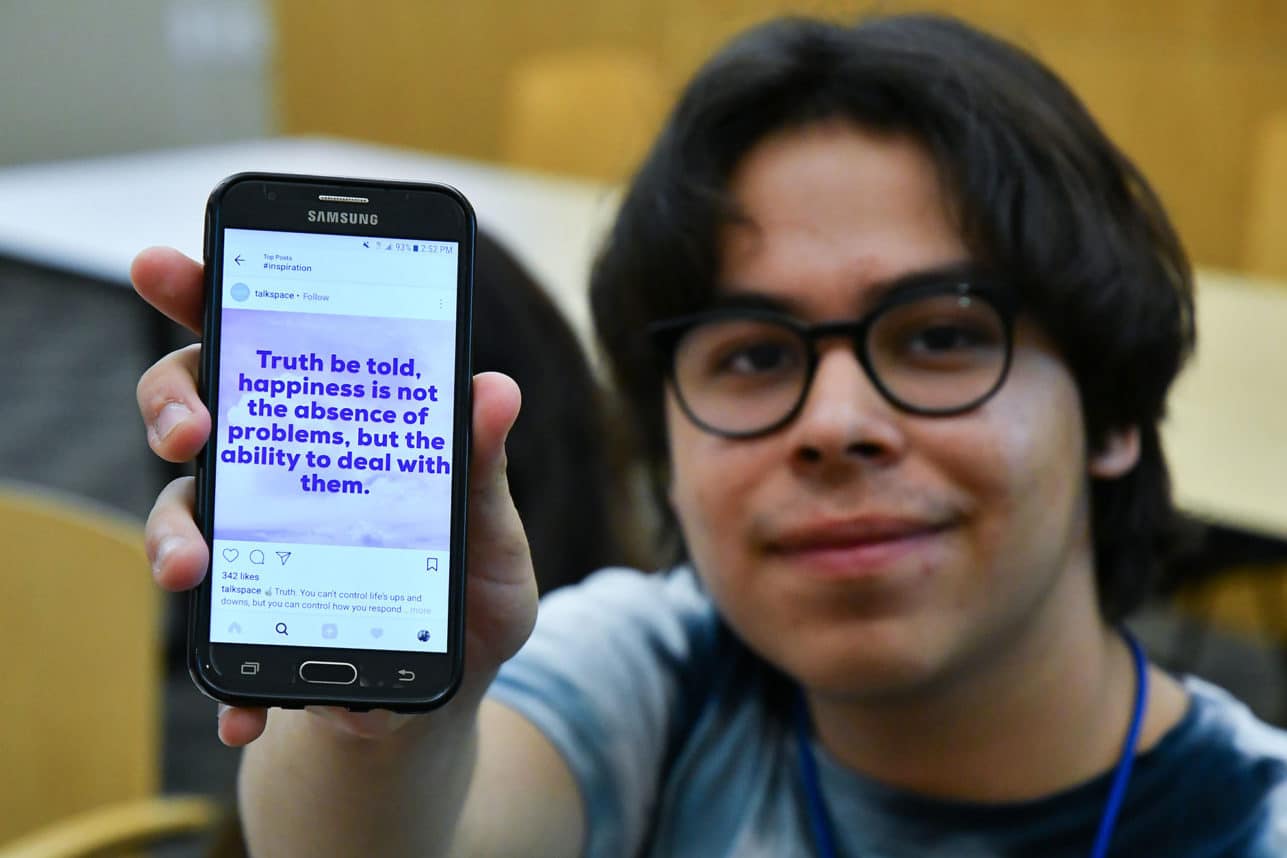
Jewish Big Brothers Big Sisters of Los Angeles (JBBBSLA) announced on Jan. 6 that their updated Teen Talk mental health shared platform can now operate on both iOS and Android devices. With this technology update, Teen Talk can reach more teen users and support their mental health during the pandemic.

Since May of 2018, Teen Talk, the free app that provides mental health support to teenagers, has been an important resource, but only available to teens using an Apple or iOS device.

When COVID-19 hit, JBBBSLA was able to add Android from donations from the Jewish Community Foundation of Los Angeles, W.M. Keck Foundation, The Jay and Rose Phillips Family Foundation of California, and Beverly Hills Rotary Community Foundation.

“Teen Talk has allowed our agency to expand its reach in the most innovative way,” departing CEO of JBBBSLA, Randy Schwab said in a statement to the Journal. Schwab, who was instrumental in developing the app, added, “For the first time, teens can access real-time social [and] emotional help when and where they need it, right in the palm of their hand.”

Through the app, tens of thousands of teens from around the world can receive compassionate support from trained teen advisors. The teens who offer support are 14 to 18 years old and must complete 50 hours of training that typically met live, but adapted during the pandemic to meet virtually. The app is also supervised by experienced mental health clinicians. The supervisors have crisis experience and provide support to teen advisors during each of their 2-hour long shifts.

Since its launch, the app has had more than 36,000 downloads in more than 100 countries. Teens as young as 13 or as old as 19 can post anonymously 24/7 on the app. Teen advisors who are logged on can answer posts providing an outlet for peer-to-peer support. Teen Talk Community Relations Manager Leeron Tzalka told the Journal there are currently 120 active teen advisors in Los Angeles and around 135 in California.

The next training is in partnership with the L.A. Jewish Teen Initiative (co-founded through the Jewish Federation of Greater Los Angeles) in February. Teen Talk plans to train 15 to 20 new teen advisors.

On the updated app, teen advisors have a streamlined dashboard for them to quickly respond to incoming posts. Posts are color-coded by topic allowing for an easier review and quicker response time. Supervisors can now utilize the innovative dashboard technology to monitor responses, supervise the teens and provide feedback.

According to a statement from JBBBSLA, teens post about a wide range of topics including sexuality, self-harm, depression, abuse, anxiety and relationships. Before the COVID-19 pandemic, teens struggled with feelings of isolation and limited access to mental health resources. The pandemic only amplified their needs which is why Cari B. Uslan, current CEO of JBBBSLA said they wanted to ensure any teen on any device could access the mental wellness app.

“Teens are feeling increasingly isolated, depressed, hopeless, and fearful. The Teen Talk app is a critical resource to provide help to these teens when they need it most,” Uslan said.

“Since the launch of this incredible program, Jewish Big Brothers Big Sisters has been working toward the creation of an app that is accessible on both iPhone and Android platforms”

Since its genesis, JBBBSLA has created programs for vulnerable youth with positive role models. The agency has more than 100 years of expertise in helping children succeed.

According to the non-profit peer organization, teens in crisis often turn to their peers for help, rather than parents or teachers. Through Teen Talk, they can receive advice from trained and supervised teens virtually.

With the new launch, both the iOS and Android users can benefit from the enhancements such as a new modern look and interactive features. Most importantly, Ulsan notes, teens can see that they are not alone and there are other teens out there in the world who get it.

“We are proud to launch that new app and give many more teens the help they need from the people they trust most, their peers,” Ulsan said.

Teen Talk is now available on iOS and Android devices. Download the app here.

Teen Talk App Expands Its Reach Read More »

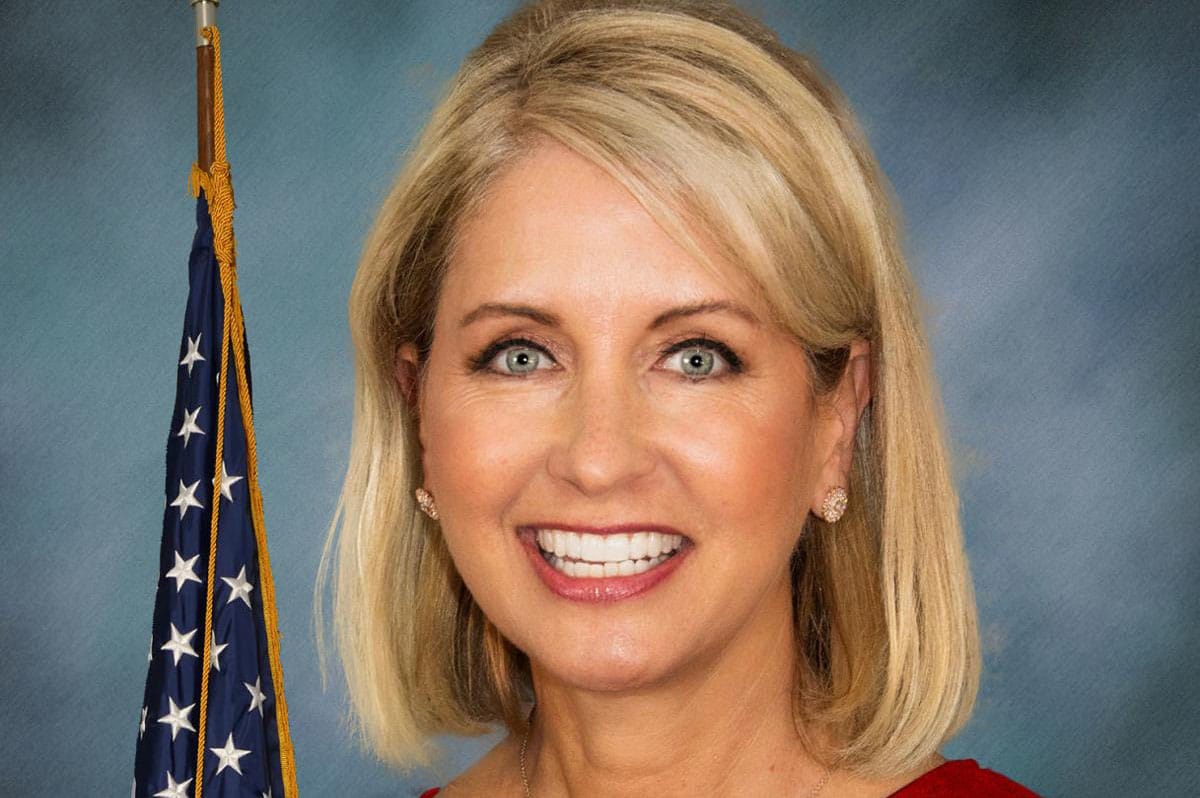
Newly Elected GOP Rep Says “Hitler Was Right About One Thing”

A newly elected member of Congress is under fire for saying “Hitler was right about one thing!” during the protests against the Electoral College certification in Washington, D.C., on January 6.

WCIA reported Representative Mary Miller (R-Ill.) was a speaking at a rally organized by the nonprofit group Moms for America. Miller said from prepared remarks, “Hitler was right on one thing. He said, ‘Whoever has the youth has the future.’”

Her remarks were roundly condemned.

“Hitler wasn’t right on anything – and invoking his name in this or any other context is wildly offensive & disrespects the millions who perished due to the Nazis’ hateful, genocidal regime,” Anti-Defamation League CEO Jonathan Greenblatt tweeted. “An apology is the least you can do for your constituents & our country.”

The Stop Antisemitism.org watchdog similarly tweeted, “What sort of LUNACY are we living in that anyone would think uttering such words would be EVER deemed ok?!”

They added: “When speaking about the future of our children, some experts to possible quote – William Sears Benjamin Spock Richard Ferber HITLER IS NOT ONE OF THEM!”


World Jewish Congress President Ronald S. Lauder said in a statement, “It is simply outrageous and obscene for anyone to hold out Hitler, who perpetrated the greatest genocide in history, as a role model for any reason. One might expect this from white supremacists or neo-Nazis, but hearing the words ‘Hitler was right’ from the mouth of a member of the United States Congress is beyond acceptable behavior by any standards.”

Illinois Governor J.B. Pritzker, a Democrat, also denounced Miller’s remarks. “Hitler got nothing right,” Pritzker said in a press conference updating the state on COVID-19. “This reprehensible rhetoric has no place in our politics.”

Outgoing Illinois GOP chairman Tim Schneider also said, “That language is wrong and disgusting. We urge Congresswoman Miller to apologize.”

Newly Elected GOP Rep Says “Hitler Was Right About One Thing” Read More »

Members Under Siege in Congress Give Their Accounts

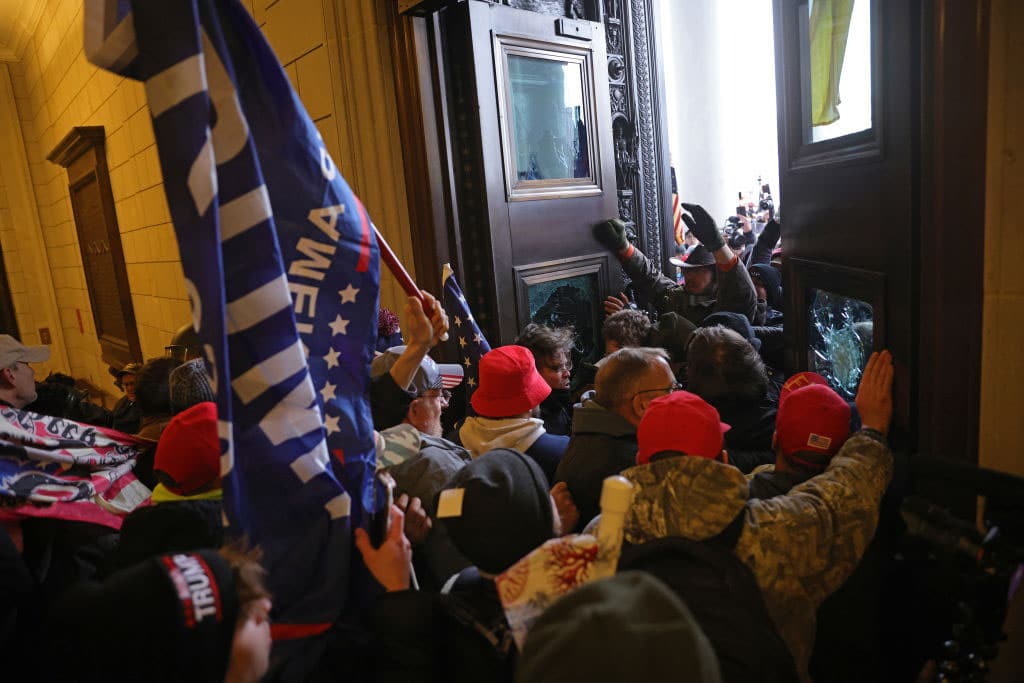
(JTA) — It’s been a day unlike any in modern American history: An armed mob broke through police into the U.S. Capitol building, vandalizing offices and taking over the dais on the Senate floor. Lawmakers have gone under lock and key. At least one person was shot and critically injured.

Capitol Police evacuated Congress members who were going through the ceremonial function of counting the electoral votes — which a group of Republicans, led by Sens. Josh Hawley and Ted Cruz, had sought to derail. President Donald Trump, still refusing to accept his loss, had urged protesters to march to the Capitol.

There are at least 33 Jewish members of the new Congress, in the House and in the Senate, among those who would have been present today. There also are hundreds of Jewish staffers, although because of the pandemic many are working remotely.

Here are some snapshots of their experiences, gathered from social media postings by Jewish lawmakers and in interviews.

This article will be updated throughout the day.

Rep. Elaine Luria

“Just had to evacuate my office because of a bomb reported outside, while the President’s anarchists are trying to force their way into the Capitol,” tweeted Luria, a Virginia Democrat recently re-elected to her sophomore term. “I heard what sounds like multiple gunshots.”

Luria, like virtually every other lawmaker — a handful of leaders are the exception — are housed in buildings adjacent to the Capitol.

She is a retired Naval commander.

“I don’t recognize our country today and the members of Congress who have supported this anarchy do not deserve to represent their fellow Americans,” she said.

Rep. Elissa Slotkin

Two other Jewish Democratic sophomores from Michigan were taking shelter together.

“I am remaining safely in my office, as are my staff who were directed to stay home,” said Rep. Elissa Slotkin, a onetime CIA analyst. “Rep. Andy Levin is with me since his office building was evacuated.”

Rep. Andy Levin

Levin, Michigan Jewish royalty whose father is retired longtime Rep. Sander Levin, posted video to social media to say he was safe, and smiled at first: He was still steeped in the good news for his party, that Raphael Warnock and Jon Ossoff had won Senate races in Georgia, handing the Senate to Democratic control.

“The joy of that is washed to the side at the moment as we are going through an assault on our democracy right here in the Capitol complex,” he said. “The president of the united states has encouraged his supporters to overrun the U.S. Capitol.”

Levin recalled seeing affronts to popular protests as a longtime human rights campaigner, interviewing dissidents in hiding in Haiti and China.

“I’ve never experienced anything like this here as a member of Congress,” he said.

Reps. Adam Schiff, Jerry Nadler, Kathy Manning and David Cicilline

Adam Schiff of California, the chairman of the House Intelligence Committee who led impeachment hearings,  and Kathy Manning of North Carolina, a past chairwoman of the Jewish Federations of North America, declined interviews for now. Both Democrats told JTA that they were safe.

Jerry Nadler of New York, the chairman of the Judiciary Committee who was Schiff’s impeachment deputy, said on Twitter that he was safe. and sheltering in place. “Make no mistake: President Trump and his enablers are directly responsible for this violence,” he said.

David Cicilline of Rhode Island had a similar message on Twitter, where he said he was safe. “This is outrageous, and the president caused it,” the Democrat said. “We should impeach and convict him tomorrow.”

Members Under Siege in Congress Give Their Accounts Read More »

Everything You Need to Know About the Newest Jewish Democratic Senator

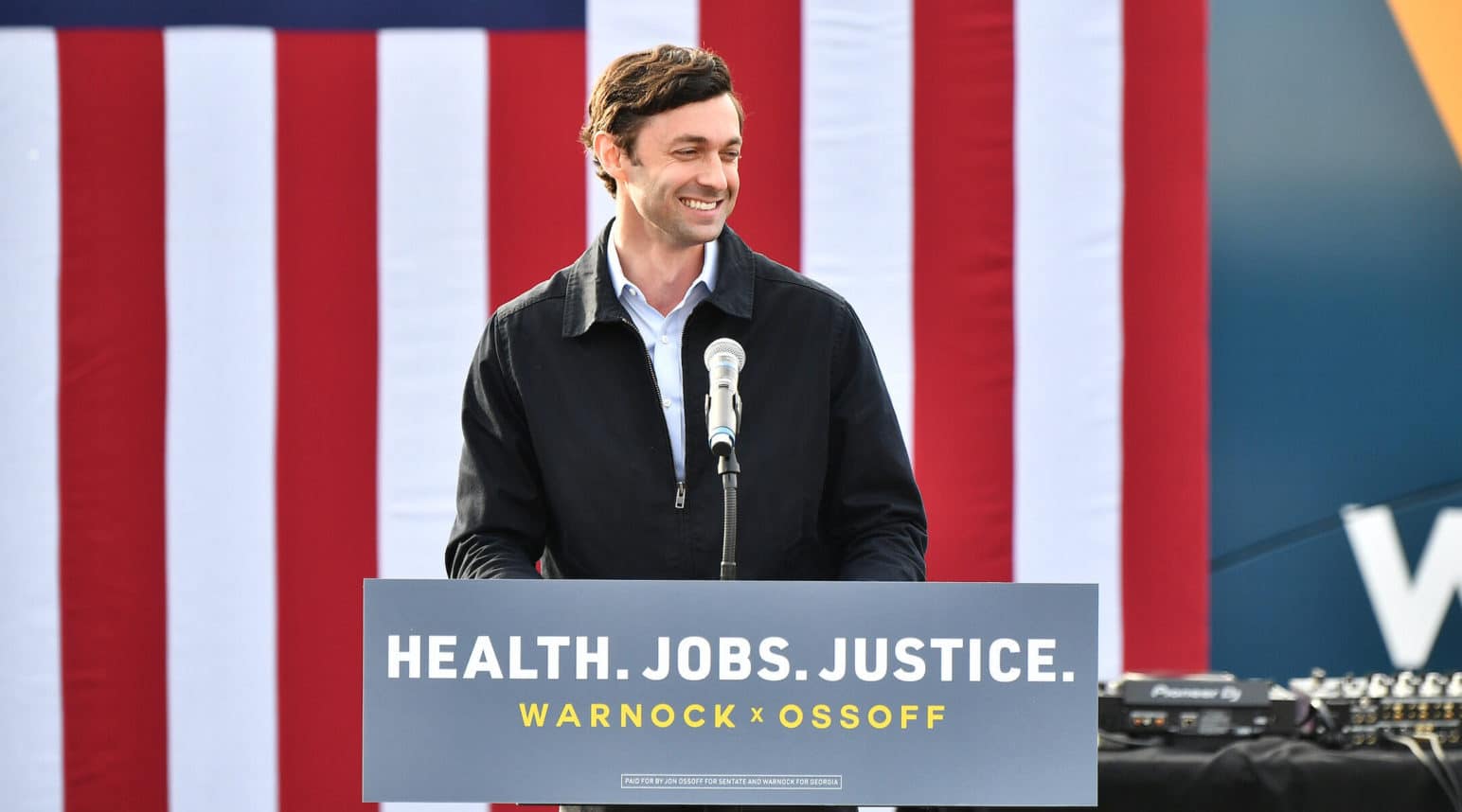
(JTA) — Jon Ossoff, a Jewish 33-year-old former executive of a documentary film company, has done what seemed nearly impossible just a few years ago: won a Senate election as a Democrat in formerly deep-red Georgia. Along with his fellow Democratic Senate winner, Rev. Raphael Warnock, the pair has flipped control of the U.S. Senate.
Ossoff’s young age and relatively short resume — in politics, at least — have left him a somewhat unknown figure. Here’s what you need to get acquainted with the newest Jewish member of Congress.

His path to politics was unusual. Ossoff demonstrated political interests early on, famously gaining an internship with Georgia Sen. John Lewis after writing the civil rights leader a fan letter as a teenager. He also worked as a speechwriter after college. But then he took a detour to work in documentary film before mounting a congressional bid in a 2017 special election. While he fell just short in that race, it elevated his name nationally and in his home state, positioning him to run for Senate. He has never held any elected office before.

He’s the youngest senator elected since 1973. That was Joe Biden, elected in Delaware at just over 30 years old. At 33, Ossoff is also the only senator too young to become president.

He’ll join a robust Jewish Senate delegation. Eight other Senate Democrats identify as Jewish, including New York Sen. Chuck Schumer, who goes from minority leader to majority leader with Ossoff and Warnock’s elections. (Michael Bennet of Colorado does not identify as Jewish, but his mother is a Holocaust survivor and he says his family history informs his values.) But it’s far from the largest Jewish Senate delegation in history: 13 Jews were among the senators sworn in in 2007.

He’s motivated by his Jewish background. Ossoff wrote a letter addressed to his state’s Jewish community last month and published it in the Atlanta Jewish Times. In it, he wrote that his Jewish upbringing “instilled in me a conviction to fight for the marginalized, the persecuted and the dispossessed.” He has delved into that territory more deeply in other venues, including in a 2017 interview with Moment magazine, where he said, “I think that Jews share a story that compels us to approach the world with empathy.”

Yes, he had a bar mitzvah. “I was bar mitzvahed at the Temple, which is a Reform synagogue,” he told JTA in 2017, during his first Senate run. “My Jewish upbringing imbued me with certain values, a commitment to justice and peace.”

He supports Israel and opposes BDS. In a position paper from July, Ossoff wrote that he is “committed to Israel’s security as a homeland for the Jewish people.” (He personally has family there, he told the Atlanta Jewish Times.) To that end, he “vigorously” opposes the boycott Israel movement, supports continuing the robust American military aid to Israel and wants to see a two-state solution to the Israeli-Palestinian conflict. He also supports diplomacy with Iran, through a nuclear deal and otherwise, to curb its nuclear arsenal.

He’s got an immigration story. Ossoff’s father’s parents fled pogroms in Eastern Europe, while his mother moved to the United States from Australia at 23. (Because she is not Jewish, he formally converted before his bar mitzvah.) “American Jews all share that immigrant story,” he told JTA in 2017, “and that perspective hardens my resolve to fight for an open and optimistic vision of our country where if you work hard you can get ahead, where we welcome those who come here to build the country.”

He’s married to a Jewish doctor. Alisha Kramer is an obstetrician working in Atlanta. She was working an overnight shift Tuesday night, Ossoff said, so she wasn’t with him as promising returns came in.

He’s got a favorite Jewish food. “I’m always in the mood for matzah ball soup. Even if it’s 100 degrees outside,” he told Moment in 2017.

He can sing. Ossoff was in an a capella group in college at Georgetown University, a fact that one attack ad tried to spin against him. Here are the videos.

He’s a millennial sex symbol. Some of Ossoff’s backers like him because of his political views and potential to shift American politics. Others are into all that and more. “The internet thirst for Ossoff is strong,” Vogue reported this week, noting that the politician resembles popular Jewish actor Timothee Chalamet. Among the evidence cited: a November piece in Alma titled, “We need hot Jews like Jon Ossoff in the Senate.

He’s not afraid to stand up when he sees bigotry. Over the summer, Perdue’s campaign ran an ad that digitally lengthened Ossoff’s nose. (Perdue said the change was unintended and took down the ad.) Ossoff brought up the incident during a debate with Perdue in October, accusing him of “lengthening my nose in attack ads to remind everybody that I’m Jewish.” And last week he used a brief Fox News interview to say repeatedly that Kelly Loeffler “campaigned with a klansman,” a reference to her appearances with a white supremacist that she later disavowed.

He’s (almost) the first Jew elected to the Senate from a southern state. Even some states with relatively few Jews have had Jewish senators, including Vermont and Hawaii right now. But Southern states have not been among the dozens of states to elect Jewish senators in the contemporary era — with the exception of Florida, which sent Richard Stone, a Miami-area Democrat, to the Senate in 1975. (Judah Benjamin represented Louisiana in the Senate in the 1850s, but that was before he became the highest-ranking Jew in the Confederacy. Benjamin Jonas, a former Confederate leader, represented Louisiana during Reconstruction.)

He’s worked to center Black voters. Ossoff has acknowledged throughout his rise in Georgia politics that he is indebted to Black voters and the history of progressive Black activism in the state. He often mentions the influence of civil rights leaders like Lewis and Martin Luther King, Jr., describing himself and Warnock as “the young Jewish son of an immigrant mentored by John Lewis and a Black pastor who holds Dr (Martin Luther) King’s pulpit at Ebenezer Baptist Church.” Lewis was an early supporter of Ossoff in his run for a House seat in 2017.

In a video declaring victory on Wednesday morning, Ossoff said he and Warnock would seek to follow “in the footsteps of leaders who have departed us in this last year, like Congressman John Lewis and C.T. Vivian,” referencing another civil rights leader.

Everything You Need to Know About the Newest Jewish Democratic Senator Read More »

Why January 6, 2021 Will Live in Infamy

I never thought I’d ever read this paragraph in an American paper:

“A mob of people loyal to President Trump stormed the Capitol on Wednesday, halting Congress’s counting of the electoral votes to confirm President-elect Joseph R. Biden Jr.’s victory as the police evacuated lawmakers from the building in a scene of violence, chaos and disruption that shook the core of American democracy.”

It’s the words “police evacuated lawmakers from the building” in The New York Times report that especially gave me the chills. I can see evacuating lawmakers because of a natural catastrophe or a terrorist attack—but because of angry protestors storming the gates? That is a new low. That is a desecration of a sacred national space.

As I write this, the Army is activating the entire District of Columbia National Guard — 1,100 troops — in response to a request from Mayor Muriel Bowser of Washington. Several people have been injured and been taken to the hospital. Wherever this goes, this is a day that will live in infamy.

Sadly, we’re not sitting in a movie theater and watching a tense thriller about an out-of-control president. This is not the grand finale when all hell breaks loose, when the leader of the nation tells his followers at a rally a few hours before they stormed the gates, “We will never concede.”

This is real life.

But in an odd and tragic way, it’s par for the course for a reality television star-turned-president who revels in chaos. The very essence of chaos is that it has no limits. The more craziness and madness, the greater the chaos.

I wrote recently that when it became clear that Trump had lost the election, he was forced to face his worst nightmare– looking like a loser. For a brand-obsessed president, losing the status of “most powerful man in the world” is unbearable.

So he threw every weapon at his disposal to soften the blow and shift the story. He blamed the loss on election fraud. He showed his supporters he’d go down fighting to the bitter end. And, when push came to shove on the final day of certification, he held a rally and triggered chaos in the capital.

Seeing the madness, Trump himself must have realized he went too far when he tweeted:

“Please support our Capitol Police and Law Enforcement. They are truly on the side of our Country. Stay peaceful!”

A little late and a little lame, I would say. After his inflammatory rhetoric exhorting his supporters to go to the Capitol and register their discontent, what did he expect, a “peaceful” outcome?

Maybe, just maybe, the ugly scenes of his supporters storming the Capitol was a bridge too far even for a narcissistic president drowning in his pathos and hypnotized by his ego.

We all have our breaking points. We can only hope that Trump has reached his.

We all have our breaking points. We can only hope that Trump has reached his. When we get to a point where lawmakers are being evacuated from their legislative chambers, that concentrates the mind. There is nothing else to discuss.

For Trump, today is D-Day, Defeat Day. The only thing he must do now is restore order so lawmakers can complete their task.

The movie’s over.

Why January 6, 2021 Will Live in Infamy Read More »

Warnock: Heschel and King ‘Are Smiling in This Moment’

(JTA) — Rabbi Abraham Joshua Heschel made the news Wednesday morning when Raphael Warnock, the Democrat who won one of two Georgia Senate elections Tuesday, invoked the rabbi during an interview on CNN.
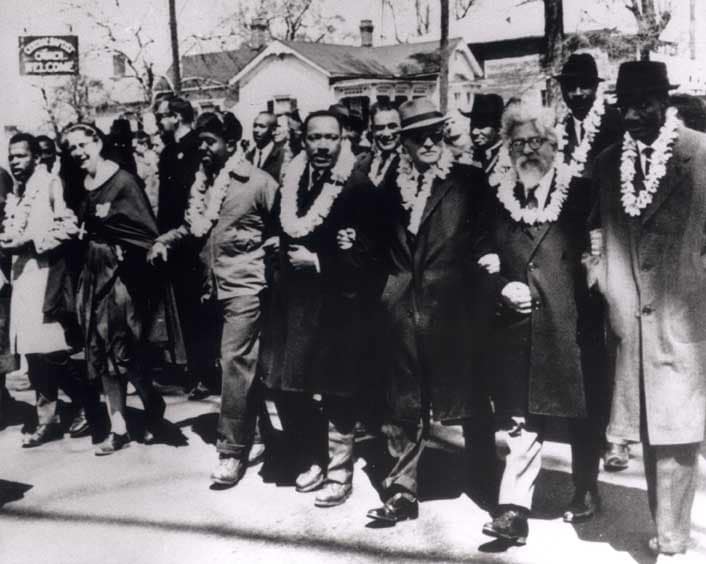
“I think Abraham Joshua Heschel, the rabbi who said, when he marched with Dr. King, he felt like his legs were praying, I think he and Dr. King are smiling in this moment,” said Warnock, who will be Georgia’s first-ever Black senator.

Warnock was referring to the 1965 march by civil rights leaders from Selma to Montgomery, Alabama. Martin Luther King, Jr. invited Heschel to take a position of honor with him at the front of the march, and Heschel later said about the experience, “I prayed with my feet.”

At the time, JTA reported that hundreds of marchers wore yarmulkes out of respect for the rabbis who were participating in the demonstrations. Five rabbis were put in jail for participating in the march, and they recited Hebrew prayers from their cells.

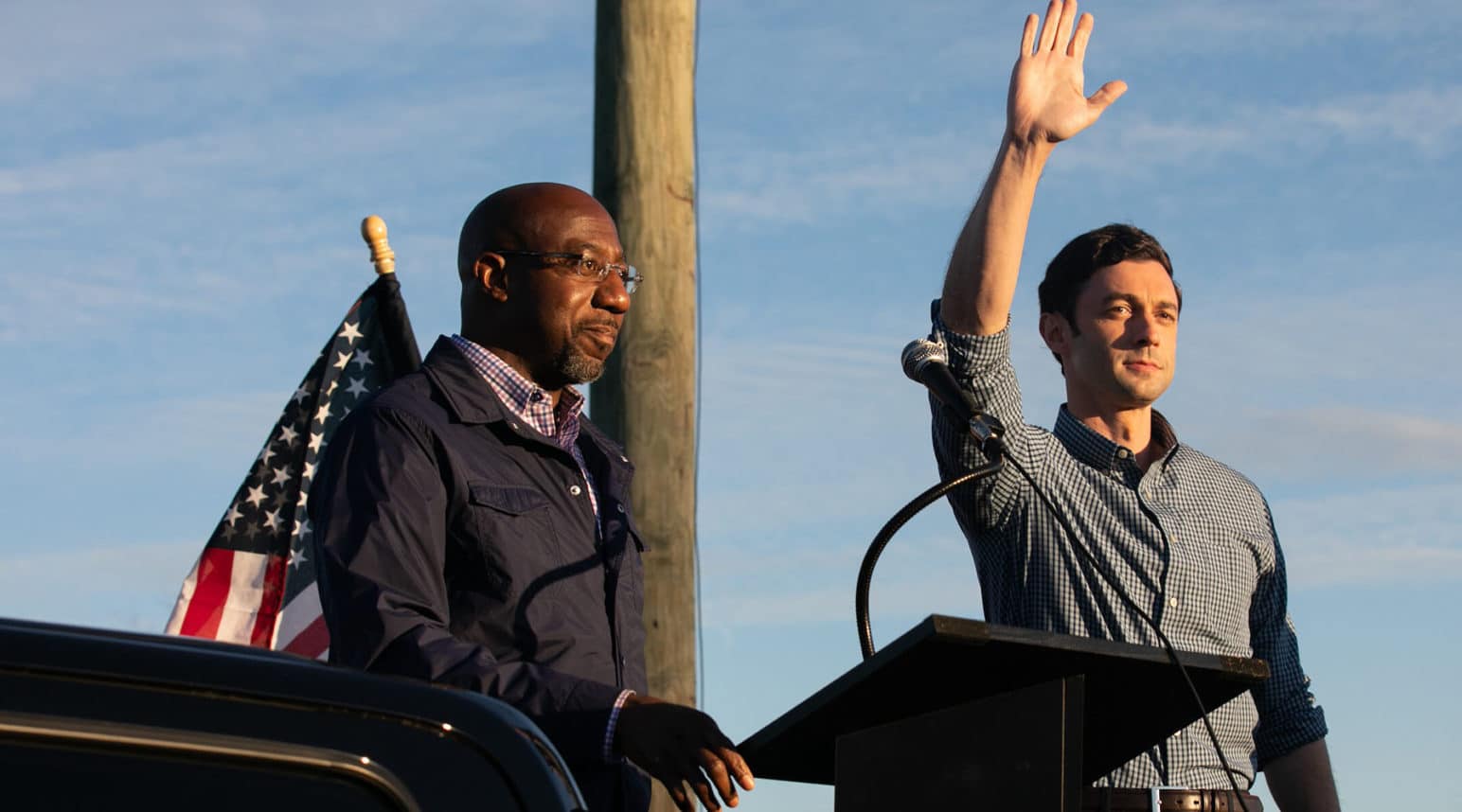
Rev. Raphael Warnock seen after a campaign rally in LaGrange, Georgia, Oct. 29, 2020. (Tom Williams/CQ-Roll Call, Inc via Getty Images)

Warnock referred to the march, and the supportive relationship between Jewish and Black Americans that it epitomized, multiple times on the campaign trail, including in an ad produced by the Jewish Democratic Council of America.

“You’ve got a young Jewish man, an African African pastor, running together with shared values, shared commitment,” Warnock said in the campaign ad, which showed footage of him and Jewish Democrat Jon Ossoff campaigning together. The video also showed 1960s newsreel items, including the murder of three voting rights activists — two Black and one Jewish — in Mississippi.

Ossoff is ahead in the polls and considered likely to be declared the winner in his race, against incumbent Republican David Perdue. He would be Georgia’s first Jewish senator.

“I’m very proud of Georgia right now,” Warnock told CNN today. “That we are sending an African American man, the pastor of Ebenezer Baptist Church where Martin Luther King, Jr. served and John Lewis worshipped, and Jon Ossoff, a young Jewish man, the son of an immigrant, mentored by John Lewis, to the United States Senate.”

Warnock: Heschel and King ‘Are Smiling in This Moment’ Read More »

Georgia Makes Black and Jewish History

(JTA) — Georgia appears poised to send a Jew and an African American to the U.S. Senate for the first time — and to shift control of the Senate to Democrats at a pivotal moment.

Raphael Warnock, the senior pastor at the Atlanta church made famous by Martin Luther King, was declared the winner of his race early Thursday morning, beating out Kelly Loeffler. Jon Ossoff, a 33-year-old Jewish documentarian who was mentored by the late civil rights icon John Lewis, held a narrow lead over incumbent David Purdue.

Hanging in the balance is the Senate and the possibility of President-elect Joe Biden, a Democrat, helming a one-party government: If Ossoff and Warnock both win, the Senate will be split 50-50 and the tie-breaking vote will go to Vice President Kamala Harris. Democrats control the U.S. House of Representatives.

Warnock and Ossoff have campaigned together and have often invoked, in ads and in stump speeches, the Black-Jewish alliance that characterized America’s civil rights movement in the 1960s.

Issues of Jewish significance figured into the races. Warnock has previously criticized Israel in sermons, and Loeffler and others called attention to those comments to argue that he would not be an ally to American Jews in the Senate. He said he would be a stalwart supporter of the U.S.-Israel relationship, and Jewish Democratic groups lobbied hard for his election.

Meanwhile, Loeffler has been photographed with white supremacists, a fact that Ossoff called attention to in a notable appearance on Fox News this week. She subsequently disavowed those relationships but has stood by her new friendship with a newly elected Georgia congresswoman who is identified with QAnon, the conspiracy movement laced with anti-Semitic themes.

During the general election, Perdue ran Facebook ads depicting Ossoff with a nose digitally altered to seem larger, which Ossoff said was anti-Semitic — including during an attention-grabbing debate exchange this fall. Perdue pulled the ads but did not apologize for them.

Perdue and Loeffler also appeared to have been damaged by their close embrace of President Donald Trump, who has refused to accept his loss to Biden and who has repeatedly called into question the integrity of the U.S. elections system, without citing evidence. Loeffler had said she would object to certification of the election results, due to take place in Congress today.

Georgia Makes Black and Jewish History Read More »

Virtual Theater: Telling Tales of Sudden Clarity in ‘AHA Moment’

Dictionaries define ‘aha moment’ as a moment of discovery, realization, inspiration, insight, or recognition that suddenly hit us and give us clarity. In its latest salon show, The Braid (formerly Jewish Women’s Theatre) defines it as the moment you knew your life was about to change, offering examples in a collection of tales called “AHA Moment.” Originally slated to debut last year but derailed by COVID-19, the show will be presented virtually via Zoom.

“We didn’t want coronavirus to prevent us from bringing much-needed fresh and enriching new theatre to our loyal audiences or to all the new guests we have met since we began Zooming performances earlier this year,” explained Ronda Spinak, The Braid’s artistic director. “The totally unexpected upside of this awful year is that digital theatre has allowed us to reach new people all over the world, and we are so gratified to learn that they love our unique salon theatre and heartwarming stories.”

Among them: a Chinese woman who converted to Judaism shares a shocking secret with her daughter; the family of a Holocaust survivor takes her to revisit Auschwitz; and life changes for a new college grad when she’s forced to return home because of the pandemic. Also, the Braid’s producing director, Susan Morgenstern, shares how she met her husband at a bar and how one steamy night possibly ruined a beautiful friendship.

Directed by Lisa Cirincione, “AHA Moment” will be staged four times: Jan. 9 at 8 p.m., Jan. 10 at 11 a.m., Jan. 14 at 7:30 p.m. and Jan. 18 at 7:30 p.m. PST. Tickets are $10 for students, $20 for a general single ticket, $25 for a household ticket, and $36 for a VIP ticket including a pre-performance discussion with Spinak and special guests. All tickets include a post-show Q&A. Register here.

Virtual Theater: Telling Tales of Sudden Clarity in ‘AHA Moment’ Read More »