

fbpx

December 18, 2020

Looking to 2021: A Hanukkah of Resilience

It’s hard to be apart in the season of togetherness. Tonight marks the last night of Hanukkah and I’m missing a good party! In fact, like you, I’m missing a lot of things these days.

Every Hanukkah, my family opens our home to friends for latkes, donuts and a diaper drive for our local diaper bank. We continued the tradition this year, for the fifth consecutive year, albeit as a drive thru event. It wasn’t the same, but one thing I’ve observed about 2020 is that it’s the “little things” that have kept me going.

As we close out Hanukkah — and an altogether very strange year — I’ve been thinking a lot about the Hanukkah story and the miracle of resilience: the miracle of finding light in the darkness and kindling it for longer than anybody could have imagined.

Arianna Huffington recently wrote that resilience is her word of the year. The “single word,” she concluded, that could encapsulate the shared experience of billions of people around the globe in 2020 is “the quality that allows us to overcome challenges, obstacles, hardship and adversity, instead of being defeated by them.”

She’s spot on about 2020 (of course she is—she’s Arianna Huffington!), and her piece serves as a great reminder that we’re all living our own little Hanukkah miracle daily: testing the strength and the limits of our resilience every single day.

As we look towards 2021, we are still going to need to kindle the flame of our resilience for at least a few more months. This year, I’m looking to how the two core messages from the Hanukkah story hold the key to our resilience at work this coming year:

Look for the ember — not the spark — then kindle it

One of the things I observe as a coach is that people often spend time looking outside of themselves for the answers. We live in a culture that’s obsessed with asking “what’s missing?” that would make us feel more fulfilled or successful at work. Identifying goals for what you want to create in your work life is critical but — pro tip — you have to get the order of operations right.

This is something the Maccabees got right: they didn’t leave the Temple to search for more oil (and, to be fair, that wasn’t exactly an option). They clung to what little bit they already had. The same goes for cultivating our resilience and fulfillment: it’s not about searching high and low for a piece of flint so that you can light some elusive spark. It’s about finding the embers that are already burning inside of you so that you can fan the flames. That’s why a more effective question than “what’s missing?” is “what’s important to me in my life and what actions can I take to make that more of a priority every single day?” 

Find the embers that are already burning inside of you so that you can fan the flames.

I often have clients explore this question across all different facets of their life: from their core values to their personal, professional, financial and family/relationship goals. Even when we can feel far from those goals, there’s usually at least a teeny, tiny ember of each one burning inside of us. For example, if you’re in a job you dislike, it’s illuminating to identify even a single thing you like about it. Be it the people, the mission, the work, the pay, the benefits or the flexibility. If you’re a leader who feels stretched thin, it’s illuminating to identify the parts of the job that you enjoy most or that make you feel most impactful.

It’s counterintuitive, but finding the embers of the things we want to “keep” can help us fast-track results when it comes to the things we wish to “fix.” While the rush to remediation can be tempting, if we put too much energy into “fixing,” it can actually distract us from optimizing our overall performance or goals.

To put it like Marcus Buckingham, a business consultant who began his professional career at Gallup (designer of the famous Strengthsfinder assessment), “We live in a remedial world [and] you don’t remediate your way to excellence.” Yes, certainly there is a case for change, but we can often achieve our goals faster when we take time to kindle what’s already inside instead of letting that flame burn out while we look for a spark we imagine will be brighter or shinier.

Spreading the light for others

Whether we’re at the top or bottom of our organization’s food chain, the actions we take impact everyone around us, even — and especially — when we’re zooming alone from home. There is a Kabbalistic belief that each thought, action and word we speak can tilt the balance of the universe towards good or evil. Or, in the case of 2020 workplace culture, towards helping cultivate resilience for others or contributing to burnout culture.

Are you exhausted? Drained? So is everybody else around you. It can be tempting to throw up our arms, but it is even more impactful to spread your light — even if it’s just a tiny ember — for others.

So hit pause before firing off that email, choose your words carefully on that call and check in with people to ask them how they’re doing. Then, don’t try to solve their problems, just listen. It can be enough for them just to know another colleague cares.

As Rabbi Nechemia Schusterman asks, “Remember the old JFK line: ask not what your country can do for you, but what you can do for your country? I propose that a deeper message of Hannukah is: ask not what your lights will do for you, but what your lights will do for others?”

One of the benefits of spreading your light for others (aside from just being a good person or a thoughtful steward to your team) is that it may actually help you kindle your own flame. Neuroscientific research confirms that helping others can actually increase our own happiness.

Looking towards 2021

My longing for each one of you is that you find that light in the darkness as we begin a new year — perhaps it’s just an ember right now — and that you keep kindling it, even when that feels impossible. Happy Hanukkah and Happy New Year.


Randi Braun is an executive coach, consultant, speaker and the founder of Something Major

Looking to 2021: A Hanukkah of Resilience Read More »
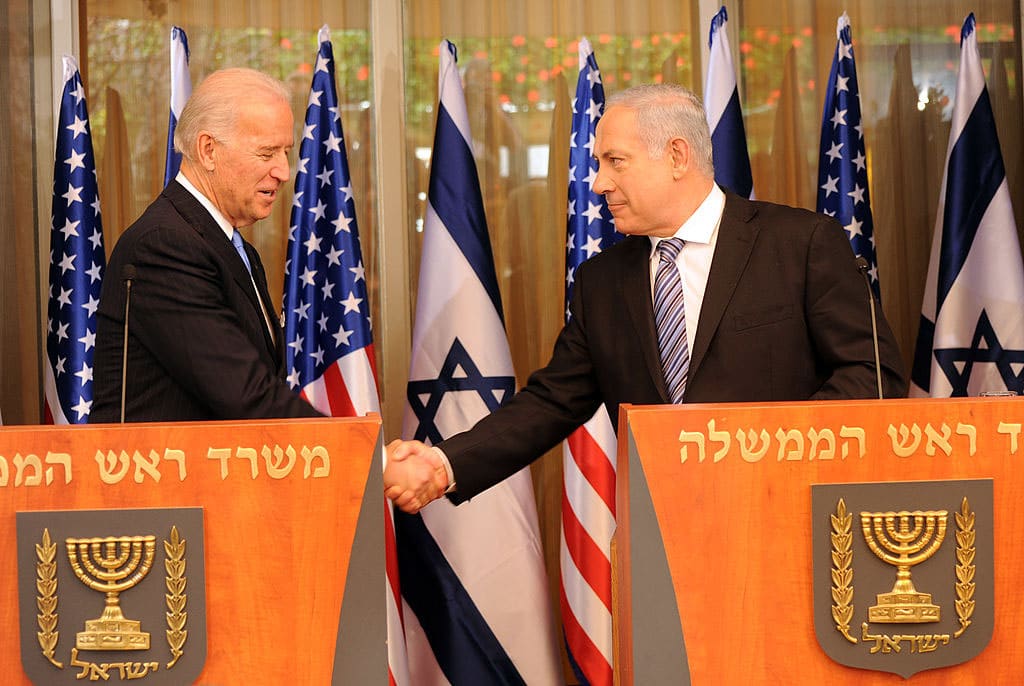
Biden and Israel: Friends or Foes?

After four years of “America First,” President-elect Joe Biden has pledged “to make America respected around the world again and to unite us here at home.” U.S. allies are breathing a sigh of relief at the expected return of international cooperation. But should we expect Israel to be among them?

Israeli Prime Minister Benjamin Netanyahu enjoyed a close relationship with President Trump, forged on mutual interests and a similar leadership style. The election of Trump’s political rival has understandably caused some concern, but Biden will be focused on repairing any damages from the last four years, not on reversing any gains. And the Trump administration certainly had those: the historic Abraham Accords are here to stay, and Biden has already signalled a willingness to pursue further Israeli diplomatic normalizations, such as with Saudi Arabia.

The incoming Secretary of State Antony Blinken has committed to restoring aid to the Palestinian authorities and reopening the Palestinian Liberation Organization’s offices in Washington, moves that Israel is not in favor of. But that doesn’t mean that U.S.-Israel relations will necessarily worsen. For one, Blinken has indicated that Biden is not one to air out disagreements in public, unlike the Obama administration’s overt denunciation of Israeli settlement expansion. And any political disagreements that do happen will have no bearing on the broader U.S. commitment to Israel’s security. Blinken has been particularly emphatic on that front, stressing that “[Biden] will not tie military assistance to Israel to any political decisions that it makes. Period. Full stop.”

Blinken, who was Biden’s national security adviser when he was vice-president and was deputy secretary of state from 2015 to 2017, is a career diplomat and strong believer in multilateralism. He is also not one to shy away from intervention, recently arguing in a Brookings blog that “[in] Syria, we rightly sought to avoid another Iraq by not doing too much, but we made the opposite error of doing too little. Without bringing appropriate power to bear, no peace could be negotiated, much less imposed.”

This balance of diplomacy and deterrence will serve Blinken well in pursuing one of the incoming administration’s main foreign policy priorities: a return to a nuclear deal with Iran. Blinken was involved in the original talks with Iran regarding the Joint Comprehensive Plan of Action and told CBS News the deal as “working until President Trump tore it up.” This move will undoubtedly be met with resistance and reservations from the GOP, Israel and many Jewish Americans.

But Blinken’s tough stance and reputation for interventionism should win over enough of the hardliners to make the renewed deal a reality, especially because Blinken has expressed a willingness to push back against the “sunset clause.” In fact, Iran’s President Hassan Rouhani has already indicated his willingness to sign onto a deal. Granted, reentering the Iran deal won’t be an easy task for the Biden administration: the GOP, capitalizing on the blue-wave-that-wasn’t, will be loath to allow a victory for any part of the new president’s agenda, particularly on such a polarizing issue as Iran.

Biden will also have to navigate another core issue in U.S.-Israel relations: Netanyahu’s tenure. With Israel on the verge of its fourth election in less than two years and Netanyahu facing a potential fourth indictment in the courts (on top of a corruption trial set for February 2021), there’s no guarantee he can hold on to power. What this could mean for Israeli leadership — another failed unity government, a new conservative premier from Likud or Yamina, the potential rise of another major party — remains to be seen, but the United States will certainly hold Netanyahu at arm’s length. Israel is an invaluable ally for defense and intelligence-gathering, and the Biden administration will prioritize the general relationship over supporting one specific leader, especially when said leader’s political future looks tenuous.

What’s more, Biden may be facing pressure from the changing Democratic party. “The Squad” of Representatives Alexandria Ocasio-Cortez (D-N.Y.), Ayanna Pressley (D-Mass.), Ilhan Omar (D-Minn.) and Rashida Tlaib (D-Mich.) will be joined in the 117th Congress by newly-elected progressives such as Cori Bush (D-Mo.), Jamaal Bowman (D-N.Y.) and Marie Newman (D-Ill.) — all of whom have criticized Israeli policies and supported Palestinian rights. But while Biden may be facing pressure from the progressive wing of the Democratic Party, he’s likely to play it safe by taking a centrist route until after the midterm elections in 2022, lest he lose the Democratic majority in the House of Representatives.

Amidst all this uncertainty, it is safe to make one prediction for U.S.-Israel relations: business as usual, at least for the next two years. Foreign policy is rarely a priority for incoming administrations, and this is especially true for the Biden-Harris team, which will be focused on combating the COVID-19 pandemic and restarting the economy, along with domestic security issues such as police brutality, hate crimes and gun violence.

Foreign policy is rarely a priority for incoming administrations, and this is especially true for the Biden-Harris team.

Foreign policy watchers can expect the United States to focus on regaining its role as a global leader: recovering the Iran deal, rejoining the Paris Climate Agreement and so on. That means support for a two-state solution based on the Oslo Accords. That means a continued bipartisan commitment to maintaining Israel’s qualitative military edge, or QME. That means the U.S. Embassy will remain in Jerusalem, but with the addition of an outreach office in East Jerusalem.

What can we expect to change? Now that Netanyahu doesn’t have the president’s ear     , AIPAC lobbyists will be back in business, working to combat a decline in support for Israel among the small but growing faction of progressive Democrats. These same progressives will attempt to elevate their rhetoric into mainstream Democratic policies — but their      concerns      are largely domestic, and their successes will be limited by moderates. Where the action will most certainly be is in the House of Representatives, state capitals and college campuses. With the progressive wing of the Democratic party having a stronger role and with the Republican minority looking to make them a political boogeyman, there will undoubtedly be friction and fractionalization. Throw in the fact that the Democrats cannot afford to lose more congressional seats during midterm elections, and you get both more compromise and more discord.

Israel may look toward the Biden administration with some trepidation, but as the president-elect has already stated, his focus will be on unity, not on creating new conflicts. Facing an uphill battle on several domestic crises, the last thing he’ll want to do is antagonize a longtime U.S. ally and critical national security partner.

We are already seeing pro-government media outlets in Israel framing U.S.-Israel relations under Biden as negative before they’ve even begun. This is likely done with an eye on galvanizing voters for the potential new elections in Israel in spring 2021 — an understandable, but unsettling tactic as the new administration attempts to restore U.S. influence in the Middle East. Look for signs from the president-elect that he will make one of his first trips overseas to Israel or at the very least, invite a dialogue with the new government.


Seth Jacobson is the founder and principal of JCI Worldwide, a Los Angeles-based communications and research firm. He spent several years in the Carter and Clinton administrations in positions focused on economic development, foreign policy, and media relations. He is a frequent lecturer on policy and public affairs at Pepperdine University and UCLA.

Biden and Israel: Friends or Foes? Read More »