fbpx

November 16, 2020

A Dreidel for Hanukkah

Song by Emily Stern from Rebbe Nachman’s teaching about the mystical meaning of the dreidel.

What did a star do

to be awarded thus?

and what did a beast do

to be embodied thus?


Why is it not upside down?

Why is it not upside down?

Why is it not the other way around?


Why is the head ahead?

Why is the foot the foot?

Why is it not upside down?

Why is it not upside down?

Why is it not the other way around?


The whole world is like a wheel

that revolves and is called a dreidel.


because, at its root, all is one

and it is called a dreidel.


Everything returns to its beginning

and swaps human for an angel.

Everything returns to its beginning

and swaps human for a – – – –


Happy Hanukkah!

A Dreidel for Hanukkah Read More »

The Uighurs’ Nightmare — In Their Own Words

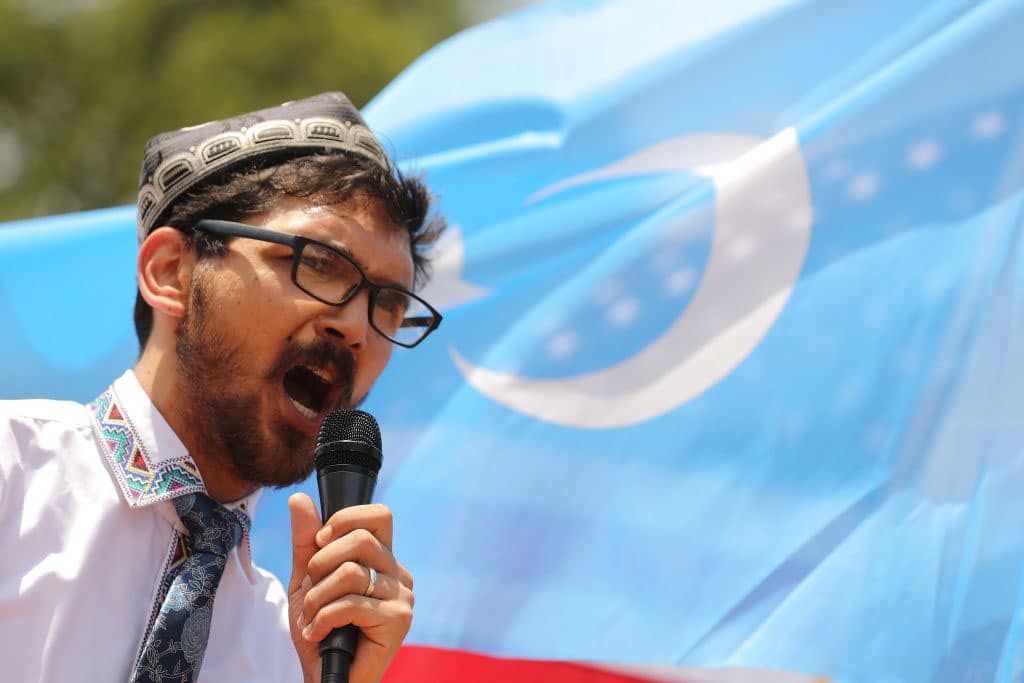
For years, the Chinese government has pursued a relentless campaign against the Uighurs, a Turkic-speaking Muslim ethnic group that resides in the northwestern region of China, called “East Turkestan” by those live there and “Xinjiang” by the Chinese government.

Since 2015, China has imprisoned a million Uighurs in “reeducation camps,” where they have been indoctrinated into model Chinese citizens, forcibly sterilized and raped, and forced into slave labor to make masks, shoes, and cotton. Those who are lucky enough to not be in camps live under the most intrusive police state to ever exist: the Chinese government catalogues all of the Uighur in biometric registries, regularly suppresses their ideas, speech, culture and religious beliefs, and watches their every communication.

Tahir Hamut Izgil, one of the great living Uighur poets, conveys in speech the lived nightmare of the millions of Uighurs and other indigenous Turkic groups: 

Your Unknown Place

“Here people’s names were not contagious,

we said they were, it came to be.

There was no sand here growing roots,

we said there was, it came to be.

Here time did not drip from the walls,

we said it did, it came to be.

Here loneliness did not multiply,

we said it did, it came to be.

Here a thousand eyes did not fleck the skies,

we said they did, it came to be.

Here there were no fugitive forgettings,

we said there were, it came to be.

Yet our words could undo nothing here,

even the things we brought to be.”

–Tahir Hamut Izgil, translated by Joshua Freeman


Jonah Kaye is communications coordinator at The Jewish Movement for Uyghur Freedom, an international and multi-denominational Jewish movement countering the Chinese government’s internment and abuse of the Uighur people. 

The Uighurs’ Nightmare — In Their Own Words Read More »

The Bagel Report

Bagels Go Rogue

This week, Erin and Esther talked Jewish community with Caroline Dorn and Ellie Klein Goldman, the newly-revealed co-authors of @RogueShul, a Twitter account that provided an anonymous, empathetic and often funny look inside the walls of synagogues and Jewish community organizations. After discovering a shared love for “Schitt’s Creek,” discussion of the comedy’s magic emerges as a poignant metaphor for both the RogueShul account and for Jewish community life. Plus some Harry Potter references (from Esther, unexpectedly), a Hanukkah Hallmark movie brainstorm session and a shout out to “The Queen’s Gambit” for making chess interesting.

Follow ErinEsther and The Bagel Report on Twitter! 

Bagels Go Rogue Read More »

Home Shalom Monday Message #31

Home Shalom promotes healthy relationships and facilitates the creation of judgement free, safe spaces in the Jewish community. Home Shalom is a program of The Advot Project.

Please contact us if you are interested in a workshop and presentation about healthy relationships, self-worth or communication tools.

“A dream is according to the interpreter.” – Talmud Berahot 56a

Everybody dreams. Some dreams are simple, everyday dreams like getting married, having healthy children and being able to buy a house. Some dreams are visions of grandeur like achieving stardom, discovering a medical cure, or starting the next billion-dollar tech company. In truth, dreams come to us whether we want them to or not nearly every night of our lives.

The sages of Jewish tradition recognized the power of dreams and had much to say about their potential impact on our lives. They recognized that, as poet Carl Sandburg once wrote, “Nothing happens unless first we dream.” Striving to better our lives, working to improve our society, discovering cures for diseases, creating innovations in every field, writing music, creating art, writing dramas, inventing new ways of communication or traveling all begin with a dream. In the Torah, Jacob’s dream of a ladder extending from earth to heaven teaches us that we are all on a spiritual journey that is bigger than any one of us alone. Joseph becomes successful enough to rescue the entire future of Jewish civilization because he is brilliant at interpreting dreams. The Talmud teaches that it is through dreams that God communicates directly with each of us: “Although I hide my face from them, I shall speak to them in a dream” (Hagigah 5b).

There is a story in the Talmud of a rabbi who said, “I took my dream to twenty-four interpreters in Jerusalem and each one interpreted my dream differently, and they all came true” (Berahot 55b). From this story, we are taught the power of interpretation and that ultimately it is up to each of us to decide the power of our dreams and what they mean. That is why the Talmud states so clearly, “A dream is according to the interpreter.”

When life is difficult or painful, when we feel suffering or loss, when we experience discrimination or injustice, those are the moments when we need dreams more than ever and to remember that we have the power both to dream of the future we desire and to create that future for ourselves and those we love.

Rabbi Steven Carr Reuben, Home Shalom
Naomi Ackerman, The Advot Project

Home Shalom Monday Message #31 Read More »

UIUC Acknowledges Zionism Is ‘Integral’ to Jewish Identity

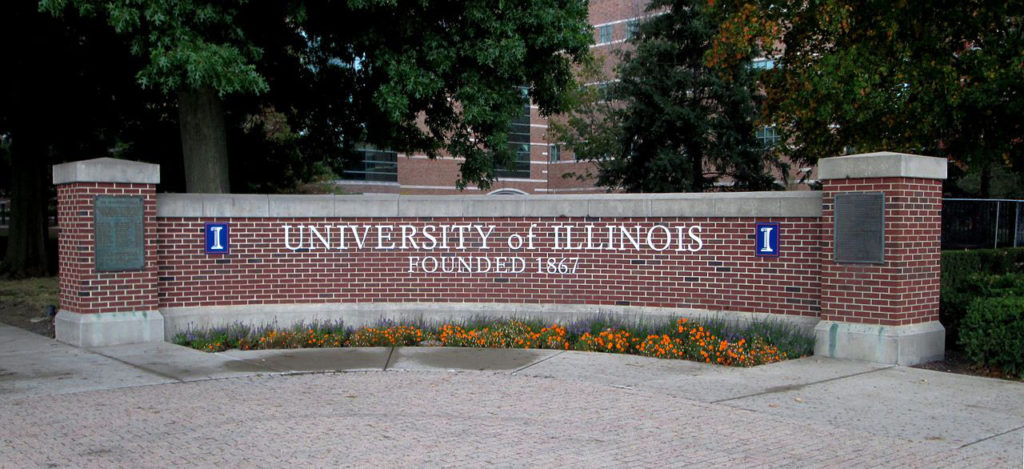
The University of Illinois Urbana-Champaign (UIUC) released a joint statement with Jewish groups on November 16 condemning anti-Semitism as well as acknowledging the importance of Zionism to Jewish identity.

The statement, which was issued in conjunction with the university’s Hillel and Chabad, Hillel International, Jewish United Fund Chicago, the Louis D. Brandeis Center for Human Rights Under Law and the Arnold & Porter law firm, acknowledges that the university needs “to do more” to address anti-Semitism on campus.

“Acts and expressions of anti-Semitism—in any form—actively undermine the educational process and are in direct opposition to our core values,” the statement read. “For many Jewish students, Zionism is an integral part of their identity and their ethnic and ancestral heritage. These students have the right to openly express identification with Israel. The university will safeguard the abilities of these students, as well as all students, to participate in university-sponsored activities free from discrimination and harassment.”

The statement added that the demonization and delegitimization of Israel as well as subjecting the Jewish state to double standards are anti-Semitic and that Jewish students shouldn’t be excluded from social justice activism on campus.

“All Jewish students should be able to proudly display religious emblems without fear of being targeted by their fellow students,” the statement read. “All Jewish students should feel confident that if they encounter a swastika on campus, the university stands with them in rejecting symbols of hate. Anti-Semitism, anti-Semitic forms of anti-Zionism and other forms of discrimination have no place at this university. We will stand united against all forms of anti-Semitism.”

“All Jewish students should be able to proudly display religious emblems without fear of being targeted by their fellow students.”

The university then outlined various measures to help combat anti-Semitism on campus, including creating an Advisory Council on Jewish and Campus Life, implementing educational programming on anti-Semitism, and re-evaluating their procedures for handling instances of anti-Semitism and other forms of discrimination on campus.

“Though these steps will further our shared goals, they alone will not effectively dispel the environment that many Jewish students have felt to be unwelcoming,” the statement concluded. “Thus, our collective and collaborative efforts will not end with these actions. The university, the undersigned organizations and Jewish students will meet before the end of the semester to discuss additional steps. We will work together to demonstrate that the University of Illinois is a place where people of all faiths, races, gender identities, ethnicities, national origins and viewpoints can live, learn and thrive.”

Carly Gammill, Director of the StandWithUs Center for Combating Antisemitism, praised the joint statement.

“We are encouraged and gratified by UIUC’s statement today acknowledging and condemning the many antisemitic acts on its campus in recent months and promising to take decisive action to help ensure a more welcoming environment for Jewish students,” Gammill said in a statement to the Journal. “The university’s recognition of Zionism as an integral component of Jewish identity for many students is a crucial step in this process. We are grateful to the organizations that worked so hard to help bring about this significant result and look forward to continuing our own work supporting UIUC students in this new campus climate.”

Alyza Lewin, President of Louis D. Brandeis Center for Human Rights Under Law, similarly said in a statement to the Journal, “Jewish and pro-Israel students at UIUC have been subjected to anti-Semitic and anti-Zionist harassment for far too long. We are gratified that the University of Illinois has publicly acknowledged the urgency of the problem, has engaged in serious discussion with our community over the last couple of weeks in preparation of this statement, and has pledged to work with the Jewish community to implement remedies to address anti-Semitism on campus.”

She added that the university’s statement “is a significant first step, but there is a long way to go.  We look forward to working with the University in the days, weeks and months ahead to convert these words into concrete measures designed to improve the campus climate for Jewish and pro-Israel students.”

The UIUC statement comes after it was announced in October that Jewish students had filed a complaint to Department of Education against the university, alleging that the university’s efforts to address anti-Semitism on campus have been “wholly inadequate” and in some instances the university has been “complicit.”

UIUC Acknowledges Zionism Is ‘Integral’ to Jewish Identity Read More »

Have We Stopped Talking About Happiness?

In all of the anxiety and chronic seriousness and righteous pursuits of 2020, I’ve noticed that very few people are talking about happiness.

We’re talking about getting through these bewildering times, about resilience, about systemic racism, about how we’re right and anyone who disagrees with us is wrong.

We’re talking about continuing our fights, about gaining power, about changing our country. We’re talking about pain and job losses and lives lost, and, above all, the need to stay safe.

But who’s talking about happiness?

A perfect storm of crises has hit us in 2020 to make the search for happiness the last thing on our minds. After all, how can anyone be “happy” while our country is mired in such “systemic racism?” Who’s got time for happiness when there’s such a broken world to fix?

Indeed, it feels positively selfish to think of happiness when there’s so much darkness and division around us.

But is happiness really a selfish idea? I’d like to suggest another view.

Happiness is selfish only when it’s geared exclusively to the self. But when we see it as something we give to others, it takes on a whole other meaning.

Happiness is selfish only when it’s geared exclusively to the self. But when we see it as something we give to others, it takes on a whole other meaning.

This is not my idea. I first heard it 10 years ago, when Dennis Prager spoke at the Seventh Annual Ariel Avrech Memorial Lecture at Young Israel of Century City.

In my weekly column following the event, I wrote:

“Prager’s thesis — which he expounds on in a book (‘Happiness Is a Serious Problem’) and a weekly ‘Happiness Hour’ on his radio show — is that happiness isn’t a selfish act at all, but might be, in fact, the ultimate mitzvah.

“To dramatize his point, Prager used the religious language of altruism. If the Torah commands us to look beyond ourselves and consider the welfare of others, what better way than to act happy around others and elevate their own happiness? It’s a worthy sacrifice, Prager explained, not to allow one’s negative feelings to bring others down.”

But that was 10 years ago. Is a happy disposition even possible in a horrible year such as 2020? Given that we’ve been awash in such negative and destructive energy, how do we manage all that negativity and allow a sunnier disposition to surface?

I think the idea of viewing happiness as a mitzvah– as something we share with others– applies even more in this pandemic year, when so many of us have been mired in anxiety. The power of a giving mindset is that it takes us out of our own angst. Instead of worrying so much about our happiness, we bring happiness to others.

It’s as simple as thinking of all the people in our lives—especially the isolated and lonely ones—and asking ourselves: how can we bring them a little happiness?

It could be sending old photos or videos, having upbeat conversations, providing a meal, helping with an errand, sharing something enlightening or beautiful, and so on. Above all, if we are serious about bringing happiness to others, we must try to act happy ourselves when we are in their company.

These happiness moments won’t fix the world’s problems or get your political opposites to agree with you. But they may put a smile on someone’s face, including your own.

In the kind of year we’ve been having, that is plenty.

Have We Stopped Talking About Happiness? Read More »

Keeping The Social Media Monster At Bay

Often, your oldest friends are the ones who tell you the truth you don’t want to hear.

“Everything you do is for external validation.”

With one statement, my friend erased the positive impact of my entire life. “Why?” She continued, “Because you didn’t feel loved by your mother, and your father abandoned you for drugs.”

Stunningly painful. I don’t want to be a classic unloved “child of an addict.”

Her words triggered a major existential crisis. Since she says the motivation for everything I’ve done was insecurity, does it erase the positive impact I’ve made?

How does G-d judge? When my life ends, will my good deeds count even if my motivation was selfish? Are all the couples I set up, friends I introduced, people I helped get jobs, seekers I brought closer to Judaism, communities I built, millions I raised for nonprofits and Israeli startups — was it all worthless, because deep down I felt worthless?

I dove down a dark rabbit hole of despair. To claw my way out, I turned to Torah.

The Talmud teaches a principle that if you do the right thing for the wrong intention, it will eventually become the right intention. For example, if you give tzedakah (charity) for the glory rather than for the selfless act of the mitzvah, ultimately it will change you, and you’ll do it for the right reason.

She is a tzaddeket (righteous woman) and anonymously performs her acts of kindness.

My friend kept pressing the Jewish virtue of humility. She cited how for my 50th birthday, I did a Facebook fundraiser for an organization and encouraged others to join me to donate, when instead she quietly did the hard work for the same organization, volunteering hundreds of hours and not bragging about it. “You know you can do mitzvahs (good deeds) without promoting them on Facebook.”

We both do good in the world. But we approach it in different ways.

We both do good in the world. But we approach it in different ways.


I defended myself. “I use Facebook as my platform to fulfill my mission. Remember my personal mission statement I wrote when I was 17? ‘To be a catalyst for positive change by educating and inspiring individuals and communities.’ I promote on social media what I do in order to inspire others to help themselves and others.”

“No you don’t,” she snapped, “you just want to be center stage. You used to literally be on stage with your last couple of careers, but now you’ve turned to writing to reveal your wounded soul. Now the Jewish Journal is your stage? Don’t you think you’ve gone too far?”

“No, writing is my gift not only to help myself and hold myself accountable, but also to lift others alongside me.”

“Yes, you can write well and you can publish, but you don’t have to promote it on Facebook in a way that you’re begging for validation.”

“But I’m doing the work! I’m going to therapy! I’m working on self-love.”

“Well then, you don’t need all the people on Facebook to love you now, do you?”

I was crushed. She was right on that aspect. Social media has turned me into a monster.

Last night I watched the Netflix documentary “The Social Dilemma,” which focuses on the evils of social media. In watching it, I saw how I, too, have become codependent on the virtual validation, the “likes” and approving comments.

Throughout my day I view my life as an external third party PR team evaluating if that moment is “post worthy” — will it inspire others and …. will it generate a lot of likes.

That’s gross. I’ve become a social media addict. I must stop, but do I stop everything? No.

I will stop posting every aspect of my life on social media into the phony love echo chamber.

But I will not stop doing acts of kindness, serving individuals and my community and writing about my journey.

There are different ways to serve G-d. There are 12 tribes of Israel and each has different skill sets suited to their role. The Levi’im are the priests and the singers. It wouldn’t help if they were silent and quiet. Being humble and modest doesn’t mean you stay quiet if your role is to be a fire starter or a leader.

I am a catalyst for positive change. I am a fire starter and a leader in the Jewish community.

But my friend is right, I can strive towards a balance of being a leader and serving G-d with a bit more grace and humility.

Hopefully she will “like” that. But what matters is G-d and I “like” it.


Audrey Jacobs is a financial adviser and has three sons. 

Keeping The Social Media Monster At Bay Read More »

Alec Baldwin: Trump Should Be Buried ‘In a Nazi Graveyard’

Actor Alec Baldwin said that President Donald Trump should be buried “in a Nazi graveyard” in a November 16 tweet from his foundation.

The Hilaria and Alec Baldwin Foundation, the account which Baldwin called for his followers to follow him at, tweeted: “Bury Trump in a Nazi graveyard and put a swastika on his grave. The majority of Americans made the right choice. Trump is a maniac.”

https://twitter.com/ABFalecbaldwin/status/1328107093111558144?s=20

Jewish groups denounced the tweet.

“The Nazis murdered 11 million people, including 6 millions Jews,” the Stop Antisemitism.org watchdog tweeted. “Please stop sanitizing the atrocities of the Holocaust and [World War II] to justify your political viewpoint.”

Bryan Leib, chairman of the recently formed organization for Jewish millennials HaShevet, tweeted that Baldwin “is a national disgrace” and asked, “Is this the unity you are calling for @JoeBiden @KamalaHarris @SpeakerPelosi @SenSchumer?”


The Washington Examiner noted that in February, the Hilaria and Alec Baldwin Foundation tweeted, “You wonder how Hitler took control of a once great country. For those of you too young to recall the War or its aftermath, simply watch how this GOP-controlled Senate behaves. Their sniveling fealty and lack of courage. And you begin to get it.”

https://twitter.com/ABFalecbaldwin/status/1227946723269652481

Baldwin has become known for his impersonation of Trump on Saturday Night Live, although Baldwin has expressed disdain for doing that impersonation.

Alec Baldwin: Trump Should Be Buried ‘In a Nazi Graveyard’ Read More »

A Mystery Unfolds as the Syrian Civil War Rages in ‘No Man’s Land’

After the Arab Spring, when anti-regime protests erupted and ISIS gained a foothold in Northern Syria amid the chaos, a full-scale civil war consumed the country, claiming over half a million lives and displacing millions more. The bloody conflict is the setting for the eight-part Hulu series “No Man’s Land,” which tells the story of a Frenchman (Félix Moati) who travels to Syria in search of his estranged sister, who’s missing and presumed to be dead. There, he joins forces with a band of Kurdish and international female freedom fighters called the YPJ in their battle against ISIS.

Premiering Nov. 18, the drama was created and written by Israelis Ron Leshem and Amit Cohen, whose Yom Kippur War series “Valley of Tears” is now streaming on HBO Max.

“We wanted to explore the idea of crossing borders, crossing a virtual line and you can be in a different world. We wanted to deal with the events that happened in Syria and what makes someone go and fight someone else’s war,” Cohen said in a Zoom interview with Leshem and the Journal. “It was about finding the right characters and the right tone.”

“We were fascinated by the fact that there’s only one thing that ISIS fighters are afraid of. In their belief, if you’re killed by a woman you don’t get to heaven and don’t get 72 virgins. That seemed like an interesting starting point for a story,” continued Leshem. “We combined that story of underground resistance with the story of a guy from Paris who sees how much they need him. He becomes addicted to the cause and wants to make the world a better place, and we’re making the journey with him.”

The story begins in the summer of 2014 when Isis expanded from Iraq to Syria. “All of the characters are completely fictional, but the story and timeline are accurate,” noted Cohen. “We also wanted to explore what would make three friends in England leave their comfortable lives and take part in genocide and atrocities.” Another theme is Western interference in the war in Syria, personified by a character who is revealed to be a Mossad agent.

“When the West realized you can’t keep things contained over there, they sent special units to assassinate certain people The U.K. and France did it too, not only Mossad,” Cohen said. “This was a way for us to show how you can meddle behind the scenes in big events without public knowledge.”

“These Mossad type of characters treat these things like a chessboard, it’s a game for them. But it never ends the war and almost never saves lives,” Leshem said.

As Israelis, the pair was prohibited from going to Syria, but that didn’t prevent them from talking to people on the ground there in their preparation for writing the series, which was shot in Europe for a few weeks and more than four months in Morocco. “We were obsessed with making it look and feel like Syria, the villages and people and the nuances of the language,” Leshem said.

“The timeline was challenging,” Cohen said. “We had a very strict deadline. We had a cast from 10 different countries and the production crew was international as well, working for one common goal. We had many languages going and that was also a challenge.”

“We wanted to deal with the events that happened in Syria and what makes someone go and fight someone else’s war. It was about finding the right characters and the right tone”—Amit Cohen

Having two series premiere nearly simultaneously has been overwhelming for the pair, but in a good way. Both “No Man’s Land” and “Valley of Tears” made the top ten in the international Series Mania television competition, and Leshem and Cohen have been invited to “No Man’s Land” premieres in Saudi Arabia and Dubai. “Because of the pandemic we’re not going, but we can go over Zoom,” Leshem said. “They know we’re Israeli, so for them to invite us to talk at the premiere was one of the most exciting moments of this process.”

“It’s the most intense launch we’ve had in our lives or ever dreamed of,” added Leshem. “These are two very different adventures but every day we’re thankful that we’re waking up in the morning and making a living doing something we love. Right now, a lot of creators and actors are unemployed because of the pandemic. We’re grateful that we had the support of people who believed in us enough to tell these stories.”

Pre-COVID, the writers traveled every month to Israel and/or Europe. But Cohen, who has lived in Los Angeles since 2014 and Leshem, who moved to Boston the previous year when his husband, a reconstructive surgeon, got a job there, haven’t met in person since February. That hasn’t stopped them from collaborating, however, and they have new projects in the works.

“When you create in one genre, they expect you to do more in that genre,” Leshem said. “We’re typically asked, ‘What’s your next war story?’  But we’ve done so many different things. We’ve done espionage, comedies, ‘Euphoria,’ script editing. We love reinventing ourselves and learning. We just finished filming a thriller in Israel and we’re writing a pilot for a romantic dramedy. We haven’t pitched it yet.”

Their own family histories might be sources of stories as well. Leshem’s great-uncle was in the French Resistance during World War II, got caught, and was on the last train to Auschwitz. Cohen’s Romanian maternal grandmother survived the war in a ghetto and at just 12 years old boarded a boat for Palestine with other orphaned kids. “They were stopped at sea by the British Navy and she was sent to a detention camp in Cyprus,” he said. “I told my 13-year-old son the story, and he said, ‘You have to do this as your next thing.’”

Leshem, the son of Sabras, was born and raised in Tel Aviv, and Cohen, whose mother is Israeli and father was born in Iraq, met when they served together as intelligence officers in the Israeli army. Leshem recalled the 1998 peace talks that President Clinton hosted between Israel and the Palestinians, where he first realized he wanted to be a journalist. “My job was to gather the intelligence in order to brief [Yitzhak Rabin] before the peace talks began. I realized he cared much more what the journalists think than the intelligence [officers],” he said.

After finding law school too boring, Cohen became a software engineer. But Leshem, who was by then a news editor at the daily paper Maariv, coaxed Cohen into joining him. “I was a Palestinian correspondent during the second Intifada. Ron used to send me to the most dangerous places,” Cohen said. But after five years, Leshem had enough of horrific stories and photos of bombings and terror attacks, and accepted a job as head of programming and content at Keshet. While there, he authored a bestseller that he adapted for the screen as “Beaufort,” nominated for the Best Foreign Language Film award in 2008. He left to pursue screenwriting full-time, and asked Cohen to join him.

“Life can be so senseless and have no logic and bad things can happen to good people,” Cohen said. “What I like about writing scripts is everything must have logic and every bad thing must have a purpose to move the drama forward. It gives me some control, which we don’t have in life. For me it’s therapy.”

“No Man’s Land” begins streaming Nov. 18 on Hulu.

A Mystery Unfolds as the Syrian Civil War Rages in ‘No Man’s Land’ Read More »

Palestinian Authority Seen Losing Control of Pandemic

The Media Line — The epidemiological situation in the West Bank has become extremely dangerous, say experts, who blame the lack of both a government strategy and a commitment by citizens.

On Sunday, the Preventive Medicine unit at the Palestinian Authority Health Ministry announced that novel coronavirus infections were on the increase across societal sectors, with many centers of contagion yet to be identified.

Meanwhile, the flu season will soon arrive.

Dr. Waleed al-Basha, a microbiologist and a lecturer at An-Najah University’s Faculty of Medicine in Nablus, told The Media Line the official number of coronavirus cases represented only a third of the real figure.

“We have lost control of the spread of the virus. For instance, I’m visiting [the West Bank city of] Jenin today, and hardly anyone here is wearing a mask – as if it were something weird to do,” Basha said.

“We have lost control of the spread of the virus. For instance, I’m visiting Jenin today, and hardly anyone here is wearing a mask – as if it were something weird to do.”

The situation deteriorated due to the government’s lack of a strategic, step-by step plan, as well as the absence of strict safety-measure enforcement, he explained.

“While dealing with an epidemiological situation, safety measures don’t come in the form of campaigns,” he stated. “One day, there’s a policeman to monitor people’s behavior; another day, there isn’t.”

“One day, there’s a policeman to monitor people’s behavior; another day, there isn’t.”

Basha added that people had been acting as if the situation were completely normal, assuming the virus was not that serious.

“There’s no planning. The dangerous deterioration in the situation proves there isn’t,” he related.

“For example, Jordan implemented a strict three-month closure and was one of the safest countries, but as soon as authorities reopened things and became lenient in implementing the safety measures, the virus spread widely,” he said.

Basha nevertheless points out that a complete closure is not the answer, as countries cannot not implement such a policy in the long term. Rather, there must be a strict system of safety measures that are constantly monitored by authorities.

“Citizens must be bound by the law. Otherwise, it will not work,” he said. “And even if we try to close things down, we don’t have the ability to completely close down cities and villages.”

“Citizens must be bound by the law. Otherwise, it will not work. And even if we try to close things down, we don’t have the ability to completely close down cities and villages.”

He urged that a law be enacted to stringently fine those who do not follow the measures. As just one example, he cited facemasks.

“Anyone without one should be fined – citizens, officials, everyone,” he stated. “Our officials should always set an example for citizens by wearing masks and committing to safety measures, as most people aren’t aware of the danger of the virus.”

On Thursday, the Central Command of Israel’s military imposed a month-long ban on Israeli citizens entering Area B of the West Bank, which the 1995 Oslo II Accord stipulates as being under PA civilian control and Israeli security control. It did so in an effort to stem a rise in cases among Israeli Arabs, many of whom visit the area.

Israelis are already banned from entering Area A, which is under complete PA control.

Area B comprises about 22% of the West Bank, and Area A, where the Palestinian cities are located, makes up about 18%.

As of Monday, more than 72,900 Palestinians had been infected by the coronavirus.

PA Health Minister Mai Alkaila said on Monday that the Gaza Strip recorded 453 new coronavirus cases in the previous 24 hours, the most yet in a single day. The WAFA news agency reported 383 new cases and seven deaths in the West Bank.

In addition, Alkaila said that 297 patients in the West Bank and 310 in the Gaza Strip had recovered.

Samer al-Assaad, director of preventive medicine at the PA’s Health Ministry, clarified to The Media Line that after a period of stability in the number of infections, there was now a slight increase, which, with winter coming, had been expected.

“This increase is normal in comparison to countries around the world. The number of infections is increasing everywhere,” he said.

“This increase is normal in comparison to countries around the world. The number of infections is increasing everywhere.”

Assaad points out that the origin of infection is unknown for most people who have recently fallen ill, as many carriers are not tested.

“Citizens aren’t really committed to the safety measures,” he noted.

“Where gatherings still take place, their commitment to wearing masks isn’t at the required level, and social distancing isn’t practiced, while there are people around infected with the virus, so logically, there will always be undiagnosed cases,” he said.

Imposing a full closure would not be an easy decision, he said, adding that it has been used as a tool to reduce the number of cases, but cannot solve the problem.

“The epidemiological situation is currently escalating due to the ease of the virus’s transmission during the winter and people’s lack of commitment to safety measures,” Assaad stated.

“Look at Jordan, for instance. They imposed a full closure,” he said, “and now they are dealing with thousands of cases.”

The Emergency Committee in the Nablus Governorate decided on Sunday to impose a five-day evening closure starting Monday from 7 pm until 6 am amid a large increase in infections and fears that hospitals will soon reach maximum capacity.

Shawki Sabha, head of the Palestinian Physicians Union, told The Media Line that the situation will become dangerous when hospitals can no longer receive patients, adding that the West Bank is not properly prepared.

“Globally, it’s expected that over 70% of the population will be infected, but the issue is how many of these cases require hospitalization,” he said. “It could lead to a total collapse of the medical sector.”

“Globally, it’s expected that over 70% of the population will be infected, but the issue is how many of these cases require hospitalization. It could lead to a total collapse of the medical sector.”

Sabha notes that, based on international standards, Palestinian hospitals lack equipment and preparation.

“Yes, we recently expanded our facilities because of the pandemic, but it’s still not enough,” he pointed out.

He adds that the danger is not in the number of infections, “but in the number of those who need admission to hospitals.”

The virus has spread so much that it can no longer be brought under control, he stated. The government tried to stop social gatherings, but without success.

“Weddings were forbidden, but they were happening anyway in homes and elsewhere, sometimes in closed spaces, especially now with winter weather,” Sabha said. “Cafés and restaurants are open, all amid a lack of commitment by people to safety measures.”

Palestinian Authority Seen Losing Control of Pandemic Read More »