fbpx

November 13, 2020

Two Phrases That May Explain Why Giving Comes Naturally

This article originally appeared in jewishcincinnati.org.

Two women pass a beggar on the street. They have the same income and expenses. The first weeps at the suffering of the beggar and gives him $5 out of the goodness of her heart. The second notices but rushes past.

Later in the day, however, she feels compelled because of her religious beliefs and returns to give the beggar $100. Who is the better person?

Why are Jews so generous?

Many people who are not familiar with the Jewish community are often surprised at the large annual gifts that Jewish Federations and other Jewish non-profit organizations receive year in and year out. Are Jews more generous than other people? Have Jewish organizations cooked up some kind of secret fundraising sauce?

I have been privileged to work with the Jewish Federation of Cincinnati for 12 years and identify as a Reform Jew. I hope the following observations will shed some light on the nature of Jewish philanthropy.

What does it mean to be Jewish? Well, that’s like saying, “Describe an orchid,” or asking, “What does wine taste like?”

There is immense variety among Jews, and trying to make generalizations can be misleading.

Nevertheless, the following comments that describe more traditional types of Jewish giving are the basis for Jewish giving and are the motivations even for many who are not as religious in their day-to-day practice of Judaism. These age-old traditions and beliefs permeate today and help explain why Jewish giving is disproportionately high.

What about the Jewish “obligation?”

Tzedakah is a Hebrew word that often gets mistranslated as “charity.” But it’s much more like a righteous obligation than a charitable gift. Most of us pay our taxes every year more because it’s the right thing to do as a U.S. citizen. It’s not considered discretionary. We might complain a little, but we do it.

Tzedakah is like that. Give away 10 percent or more to help the Jewish people and you are doing your duty. It’s not something you think about, and it doesn’t even matter if you feel like doing it. Just do it! The concept may sound harsh to those on the outside. But it’s all part of the Jewish endeavor to act in concert with God, lead a good life, act justly, and care for those in need.

A very old man is planting a fruit tree. A passer-by wonders why he would bother to plant a tree that won’t bear fruit until decades after he is dead. The old man responds, “As my father planted before me, so do I plant for my children.”

This story from the Talmud models tikkun olam, a Hebrew phrase that means loosely, “repair the world.” The traditional Jewish belief is that we have an obligation to leave this world better than we found it. What we give is not so much for our own enjoyment, but to sustain and improve the world for the current as well as the next generation. It is really not a choice, but rather a requirement, to make our entire community a better place for everyone.

This is different from faith-based giving. This is peoplehood giving. Jewish history is rooted in persecution through the ages, and time and again Jews have found themselves unwelcome in the countries where they’ve lived. So there is an element of, “If we don’t take care of each other, who will?”

Now, back to the story in the beginning. Who is the better person — the one who gave $5 out of emotional impulse or the one who gave $100 out of obligation? If you chose the first person, here’s a follow-up question: Would your answer be different if you were the beggar?


Jim Friedman is Director of Planned Giving and Endowments for the Jewish Federation of Cincinnati.

Two Phrases That May Explain Why Giving Comes Naturally Read More »

Eight Degrees of Giving Help Both Sides for Jews

This article originally appeared in chabad.org.

Human nature is to desire to be self-sufficient. Most of us are uncomfortable being takers and prefer earning our own keep. If, due to dire circumstances, we find ourselves on the receiving end, our reaction is generally one of mortification.

The Torah is acutely sensitive to the precarious dynamic between patrons and their beneficiaries. The Torah’s word for the act of giving to the needy, tzedakah, although commonly translated as “charity,” more accurately means “justice.” G‑d selects certain people as agents to disburse His bounty to others. Thus, when we are in a position to assist someone else, we are not behaving altruistically by giving away something that is rightfully ours. Rather, we are doing justice, by dispensing the money that G‑d entrusted to us in the way that He desires.

Although we generally associate the mitzvah of tzedakah with giving money, the mitzvah encompasses all forms of kindness. Tzedakah can be as basic as offering someone a lift or shlepping a friend’s heavy load. Tzedakah can also take forms that are more “spiritual” — cheering up a friend who is depressed, or sharing your knowledge or insights with another.

Whatever form it takes, the Torah regards preserving the dignity and self-respect of the receiver as a cornerstone of tzedakah. Accordingly, the great codifier of Jewish law, Maimonides formulated a list of eight levels of giving, correlating to the degree to which the giver is sensitive to the needs and feelings of the recipient.

Level Eight: Giving grudgingly, with a sour countenance.

Giving grudgingly is certainly better than not giving at all, and thus merits the eighth place on Maimonides’ list. But this is the lowest of all forms of charity. This form of giving is ironically selfish — it is not motivated by true caring or love, but rather by a sense of guilt or obligation. True tzedakah is accompanied by warm words and gentleness.

Level Seven: Giving less than you can afford, but doing so pleasantly.

The benefit of a friendly response is so powerful that it even offsets the sting of an underwhelming donation. Even if you don’t feel ready to commit yourself to meeting someone else’s needs to the full extent of your capacity, you can express genuine interest and empathy. A sincere expression of caring can satisfy the person emotionally and give him the strength to go on, even if you weren’t able or willing to grant his request completely.

Level Six: Giving generously, but only after being asked.

While it’s certainly preferable to be pro-active, at the very least, don’t give a cold shoulder to those who approach you for help. You can never know just how laborious and awkward it was for them to ask you for a favor, and how desperately they are counting on you to respond graciously.

Our society tends to encourage us to say “no” to the demands and requests of others. We are made to feel like fools or wimps if we allow people to appeal to our soft nature. The Torah certainly does not advocate that we abrogate all personal boundaries and let others walk all over us. However, if we are honest with ourselves we can always find a way to fill the other person’s need, or refer them to someone else who can.

Level Five: Giving before you are asked.

Learn to anticipate the needs of others even before they approach you. Don’t wait for the self-destructive behavior or the cry for help before stepping in to lend a hand. Don’t limit your involvement to those who appeal to you; seek out opportunities where you can make a difference.

Level Four: The recipient knows the giver, but the giver does not know the recipient.

In levels five through eight, the recipient and the giver are both known to each other. So even when the giving is done with utmost sensitivity and happiness to help, theirs is a relationship of superiority: the giver’s ego is gratified, and the recipient feels shame and inferiority because of his dependency.

This is partially rectified in the form of charity that occupies Level Four in Maimonides’ list: the giving is done in such a way that the recipient is aware of the identity of his benefactor, but remains anonymous to him. In this case, the donor feels humbler, since he is not aware of to whom he is giving. However, the recipient’s feelings are not spared to the same extent, since he knows who gave him the charity.

Level Three: The giver knows the recipient, but the recipient does not know the giver.

In this level of tzedakah — which is the converse of Level Four — the donor’s ego has some room to express itself. Since the giver knows who is receiving his bounty, there is room for some sense of one-upmanship or dominance over the receiver. However, the beneficiary is unaware of who the donor is, and so his dignity is preserved.

(The fact that Level Three is higher than Level Four is proof of the Chassidic adage that we should take into account the other’s benefit before considering the possible disadvantages to ourselves — in spiritual matters as well as material. While it is certainly important to avoid ego and arrogance wherever possible, it is more important to salvage the dignity of someone else.)

Level Two: Giving anonymously, where the recipient does not know the giver and vice versa.

Receiving mutually anonymous tzedakah takes much of the sting out of being on the receiving end. It is far better when we lend aid to others unconsciously — when we give ourselves over to others so completely that our egos merge with theirs, and neither is conscious of being in a superior or inferior position.

Thus, Jewish communities of all generations established charity funds, administered by individuals of supreme honesty and discreetness, who acted on a voluntary basis (with nothing deducted for “overhead”) to collect and distribute funds to the needy in a way that facilitated this high level of tzedakah.

Level One: Helping someone become self-sufficient.

The most basic need of a human being is to feel needed and capable. Thus, the highest form of tzedakah is to help someone find a job or set them up in business. This preserves their dignity, and at the same time transforms them from being a recipient into one with the capacity to give to others. Similarly, if you are in a position to counsel or give advice to someone, it is important to instill in them confidence in their own ability to find solutions to their dilemmas, and even be a source of strength to others.

Our sages say, “In the measure one metes out to others, so is meted out to him.” In the course of our lives we face many situations when we are dependent on the kindness and generosity of others to make it through difficult times. The way we reach out to others when fortune is on our side will often determine how fate will treat us in our moment of need.

Tzedakah is actually a cycle — the gifts that we give to others will eventually return to us. Furthermore, G‑d is acutely tuned in to our small acts of goodness and kindness. Our acts of giving stimulate G‑d’s blessings to shower down upon all of us, the giver and the receiver alike.


Chaya Shuchat is the author of “A Diamond a Day,” an adaptation of the Chassidic classic “Hayom Yom”for children. She is a pediatric nurse practitioner.

Eight Degrees of Giving Help Both Sides for Jews Read More »

One Form of Giving: Spreading Kindness

This article originally appeared in jewinthecity.com

“It started as a spreadsheet, a very basic spreadsheet,” Elana Sichel, a recent graduate of University of Maryland says.

She and Hadassah Raskas, a U Penn rising senior, are the co-founders of Corona Connects, an initiative that pairs volunteers with organizations needing the extra hands during this chaotic time of living through the Coronavirus pandemic.

The idea originated in a strong desire to be of service, stemming from their observant upbringing. Raskas explains, “I think it really was our Jewish values that really created this thing inside of us…it’s so deeply ingrained.”

Both share similar lifestyles by being raised on the east coast, going to Orthodox schools, and taking the classic gap year in Israel before attending secular college. Even though their time on campus this year was shortened due to COVID-19, they recognize the blessings of their health while acknowledging the struggle of staying at home.

Sitting at home alone months ago and catching up with friends virtually, they were shocked that all of them shared a common sentiment, “There’s gotta be something I could do to play a little tiny role, not being a frontline worker, not being a healthcare worker.”

Raskas says she “was just looking for something to grasp onto.” These days, people have unprecedented time on their side. “They want to help but they can’t figure out how to…we said ‘how could we bridge this gap? How could we make it easy for volunteers to connect to the existing opportunities and needs?’”

The Corona Connects website is built with two options to choose from. One is for individuals to connect with organizations requesting assistance and the second is for the organizations themselves to submit a need.

Once logging onto CoronaConnects.org, those options then lead to selecting filters for location, availability, type of work, a job done remotely or in-person, and more.

“There are over 170 opportunities on there for you to choose. It [is] an easy process,” Sichel says. People can choose to tutor kids or help serve and deliver at food pantries or train to be a crisis counselor via the Crisis TextLine, which has been the most popular service so far. Transforming the project from an Excel sheet to a professional website was simple, thanks to the help of a web developer, a product designer, and a social media point person all of whom connected to the young women through Facebook.

They created a team of 25 diverse individuals within the Jewish community as well as the non-Jewish one to help with their networking efforts and the site’s maintenance. This has allowed the co-founders to make kiddushei Hashem on numerous occasions.

Once the project spread, they received an overwhelming amount of responses to contribute, Raskas shares, “I think there’s just this amazing energy and desire to pitch in and to help all over the world.”

The project also includes regional coordinators who gather information on opportunities from their area and upload them to the site, which now spans across 15 states and counting. Everyone on the board is a volunteer and their funding comes from generous sponsorship. Working with basic, free WordPress tools has limited their progress, they explain “we’ve been kind of looking… to take it to the next step and really do more and drive our impact more.”

Since their founding only a few months ago, they’ve been featured in the Washington Post and U.S. News and World Report, and have attracted thousands of visitors to the site. Some have returned for a second round of volunteering after a successful first match. The site can’t confirm who participates and follows through with the service chosen; for now their process is to simply connect prospective volunteers opportunities.

What Sichel and Raskas do know is that they’ve had thousands of “connect now” clicks. The feedback is heartwarming. Visitors tell Sichel, “I’m not being told that I have to stay home and do nothing. I’m really told [to] use this time wisely and make a difference.” This is the Corona Connects mission during this challenging time: it’s about linking people with each other by spreading kindness instead of the virus.

One Form of Giving: Spreading Kindness Read More »

What Do We Need?

My mom and I began to discuss Thanksgiving, a favorite holiday among the Guzik family. Usually, the dining room is bursting with relatives, new friends, tons of food, and a warm fire that gives the illusion that we experience seasons in California. Last year, my brother and sister-in-law announced their engagement, and life felt content, a moment preserved in time.

This year, the planning is different. A slim guest list, plans to eat al fresco, donned masks, and limited exposure to the people we love the most. Past Thanksgivings, we baked pumpkin and brownie pies and traditionally picked up apple, pecan, cherry and blueberry. So many pies. So much dessert. So many smiles. This year, my mom said, “Nicole, it’s just not that many people. What do we really need?”

And although she was referencing the baking, the question remains: What do we really need?

It continues to be a hard time in which life cycles and holidays look drastically different. But we are revealing the true significance and meaning behind life’s most poignant moments. Do we need a thousand pies? Not really. Do we need 100 guests at a wedding or bar mitzvah? Not necessary. Do we need to mark time with sacred ritual? Absolutely. Do we need moments in which gratitude and blessing are practiced and shared? More than ever.

What we want and expect are very different than what we need and grow from. It is sometimes through the unexpected and unanticipated in which we discover veiled layers of our soul. And it is through initial disappointment that we learn what it is that keeps us standing, what keeps us whole.

Each morning we recite the words, “Praised are You, Adonai our God, Sovereign of time and space, who gives sight to the blind.” Literally, these are the words we chant upon opening our eyes. Figuratively, they may be words we should say when faced with situations in which we wish to keep our eyes glued shut. Not wanting change. Not desiring a world that keeps tumbling beyond recognition. But God gifted us sight and clarity to absorb our surroundings, adapt, innovate, react and thrive.

With renewed sight, it will be a Thanksgiving — perhaps not of wants, but God-willing, filled with undiscovered meaning. A Thanksgiving enriched with blessings pointing to a brighter tomorrow.

Shabbat Shalom


Rabbi Nicole Guzik is a rabbi at Sinai Temple. She can be reached at her Facebook page at Rabbi Nicole Guzik.

What Do We Need? Read More »

Tiffany Haddish Attends ‘The Afterparty’ with Other MOTs

Tiffany Haddish has added the murder-mystery comedy series “The Afterparty” to her long list of upcoming projects. She’ll play a detective tasked with solving a murder that takes place after a high school reunion in the Apple TV+ series, which also stars Tribe members Ike Barinholtz, Ilana Glazer, Dave Franco, and Ben Schwartz. Chris Miller and Phil Lord (“Spiderman: Into the Spiderverse,” “Cloudy with a Chance of Meatballs,” “21 Jump Street”) are the executive producers.

On the film side, Haddish has several projects that are in production or awaiting release in 2021. She’ll play a gambling financier in Paul Schrader’s “The Card Counter” opposite Oscar Isaac; appear with Henry Winkler in the dark comic thriller “On the Count of Three;” star in “Here Today” as a street singer who befriends a comedy writer played by Billy Crystal; and join Nicolas Cage in “The Unbearable Weight of Massive Talent.”

Haddish is also in the all-female cast of the Amazon Prime comedy special “Yearly Departed,” which will bid farewell and good riddance to 2020 in comedic eulogies about the trials and upheavals of the past year.

Premiering Dec. 30 and hosted by Phoebe Robinson, the show also includes Sarah Silverman, Natasha Leggero and Rachel Brosnahan, who is one of the producers. The “Marvelous Mrs. Maisel” star will soon be seen as a woman on the run in the thriller “I’m Your Woman,” opening in theaters Dec. 4 and launching on Amazon Prime Dec. 11.

Tiffany Haddish Attends ‘The Afterparty’ with Other MOTs Read More »

Shira Haas, ‘Asia’ Win Israel’s Ophir Awards

The mother-daughter drama “Asia” was named Best Picture at the Israeli Academy of Film and Television’s Ophir Awards, automatically becoming Israel’s entry in the Best International Feature category at the Oscars next spring. “Unorthodox” Emmy nominee Shira Haas adds another accolade to her resumé with her win as Best Supporting Actress for the film, which won nine Ophirs, Best Actress (Alena Yiv) and Best Cinematography (Daniella Nowitz) among them.

Asia tells the story of a Russian immigrant mother (Yiv) and her complex relationship with her ailing daughter (Haas). “It’s such an amazing script,” Haas told the Journal earlier this year. “The daughter is sick and it’s their last time together. It’s depressing subject about death and grief but it’s more about life and their relationship. There’s so much love and empathy in this movie.”  It’s the fifth Ophir nomination and second win for Haas, who won for “Pere Atzil” in 2018.

“Asia” had its world premiere at the Tribeca Film Festival last spring, where Haas won the Best Actress Award. She is currently shooting the latest season of “Shtisel,” which will premiere on Netflix in 2021.

Another big Ophir Award winner was “Here We Are,” a father-son road trip story that took honors for its two actors, Shai Avivi and Noam Inber, director Nir Bergman, and screenwriter Dada Idisis.

Shira Haas, ‘Asia’ Win Israel’s Ophir Awards Read More »

Post-Election: Examining Pro-Israel Records of Key Senate Races

JNS — While Joe Biden has been projected as the next president of the United States, control of the U.S. Senate is almost just as important due to the Democrats hinting at, if they win the majority of seats in the chamber over the Republican Party, changes such as ending the legislative filibuster and packing the U.S. Supreme Court.

As it pertains to issues relevant to the Jewish and pro-Israel community, GOP control of the Senate would block nominees to the executive branch, including Cabinet members, who may be hostile towards Israel, prevent conditional U.S. assistance to Israel and pass amendments blocking possible moves that would be detrimental to the Jewish state.

Control of the Senate will come down to two runoffs in Georgia on Jan. 5 between incumbent Republican Sen. David Perdue and Democrat Jon Ossoff, and incumbent Republican Sen. Kelly Loeffler and Democrat Rev. Raphael Warnock. While many say the Republicans are expected to keep its Senate majority, it’s not over until the runoff votes have been counted.

With the GOP currently holding a 50-48 Senate majority, Democrats winning both Georgia seats would give them the majority due to U.S. Vice President-elect Kamala Harris, who will serve as the president of the Senate, being one more Democrat for any tie-breaking votes.

Note: Jewish population figures are from the American Jewish Year Book 2019. Reporting percentages are based on the Associated Press.
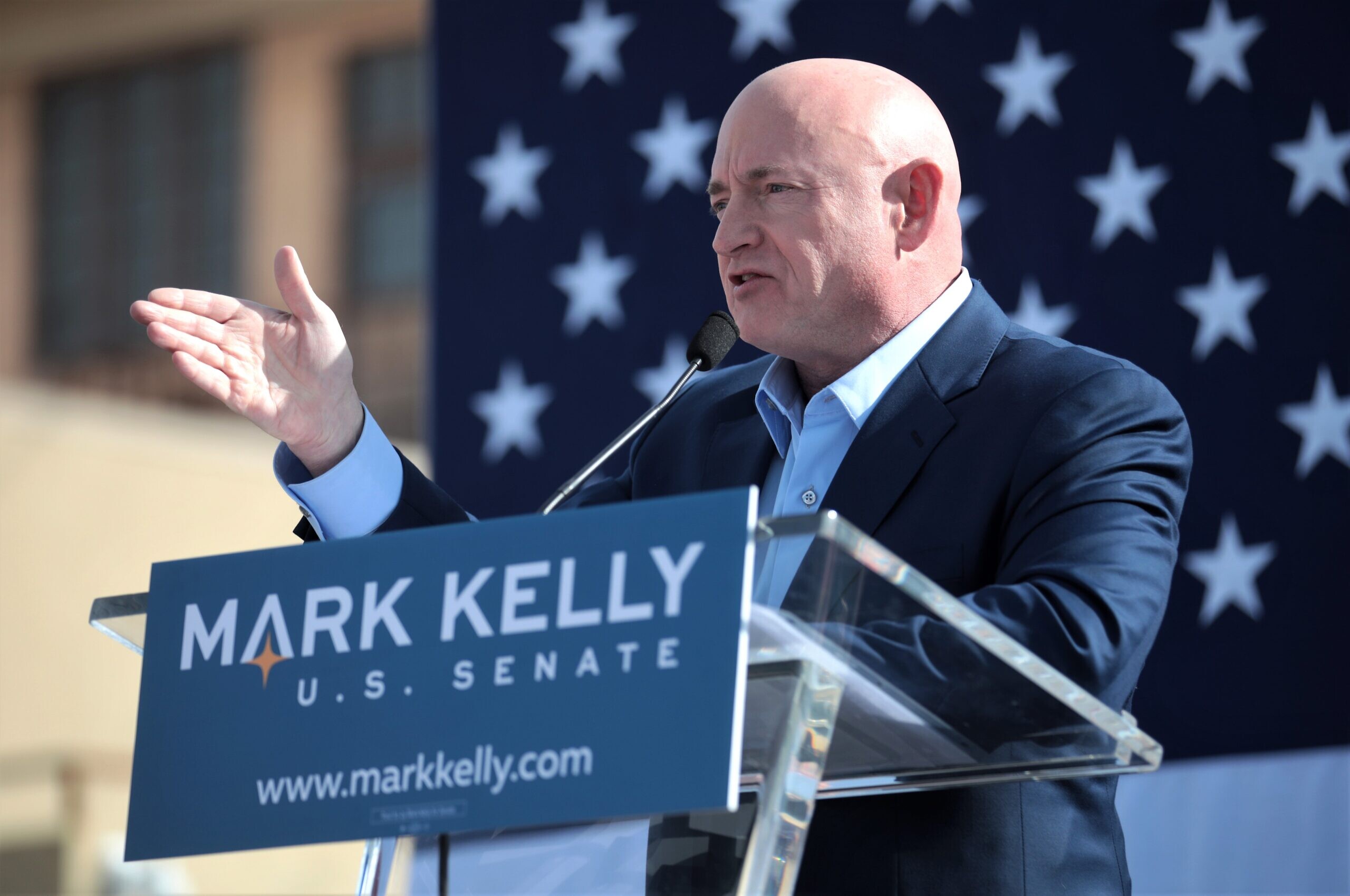
Mark Kelly speaking with supporters at the launch of his U.S. Senate campaign at the Van Buren in Phoenix, Ariz. Credit: Gage Skidmore via Wikimedia Commons.

ARIZONA 

Jewish population: 108,075 (1.48 percent of state population)

Result: Astronaut and Democrat Mark Kelly defeated incumbent Republican Sen. Martha McSally, 51.2 percent to 48.8 percent, respectively.

Kelly is expected to be sworn in by the end of the month and finish the final two years of the late Sen. John McCain’s term. McSally was appointed by Gov. Doug Ducey in December 2018 after she lost a regular election the previous month to succeed retiring Sen. Jeff Flake (Jon Kyl, who previously served in the Senate between 1995 and 2013, was appointed by Ducey to succeed McCain after McCain died in August 2018; Kyl resigned due to health reasons at the end of 2018).

McSally supported U.S. President Donald Trump’s pro-Israel agenda. Kelly told Jewish Insider in a recent interview that he supports a two-state solution to the Israeli-Palestinian conflict and called the U.S. withdrawal from the 2015 Iran nuclear deal “a rather poor decision.” He did say that Iranian Gen. Qassem Soleimani, who was eliminated in a U.S. airstrike in January, “was a bad actor in the region for a long period of time” and that “it’s good that he’s not in the job anymore.”

Former Colorado Gov. John Hickenlooper at a campaign rally on Oct. 24, 2020. Source: John Hickenlooper via Facebook.

COLORADO 

Jewish population: 98,400 (1.7 percent of state population)

Result: Former Colorado Gov. John Hickenlooper, a Democrat, won 53.4 percent of the vote over incumbent Republican Sen. Cory Gardner, who got 44.4 percent.

Gardner was supportive of the president’s pro-Israel agenda, including eliminating Soleimani. In a statement, Hickenlooper said, “Soleimani was a terrorist responsible for the death of U.S. service members and innocent civilians. We shed no tears for him. In the aftermath of this strike, we need to understand the full rationale for this action and see a clear strategy to keep American troops and diplomats safe in the face of likely Iranian retaliation and further regional destabilization.”

In a statement to Jewish Insider, Hickenlooper said that, regarding Israel possibly applying sovereignty to the West Bank, “The two-state solution remains the best way to achieve long term peace and stability for both Israelis and Palestinians. I oppose unilateral actions that move us away from this goal, including annexation of the West Bank. In the Senate, I will continue to advocate for advancing Israel’s security and stability and work with J Street towards achieving lasting peace in the region.”

GEORGIA

Jewish population: 128,720 (1.21 percent of state population)

Result: A Jan. 5 runoff in Georgia between incumbent Republican Sen. David Perdue and Democrat Jon Ossoff, who is Jewish, appears likely as neither candidate has reached the 50 percent voter threshold required to win.

With 99 percent of votes reported, Perdue received 49.7 percent of the vote, while Ossoff got 47.9 percent.

In accordance with Georgia electoral law, if no candidate gets at least 50 percent of the vote, a runoff between the top two finishers will be held in January.

At a mid-October rally for Trump, Perdue seemed to poke fun of Democratic vice-presidential running mate and his colleague in the U.S. Senate, California Sen. Kamala Harris, calling her “KAH-mah-la, Kah-MAH-la, Kamala-mala-mala. I don’t know, whatever.” Ossoff and others criticized the comment.

Perdue also came under fire in July for a digital advertisement featuring a picture of Ossoff with an enlarged nose “even as other parts of his face stayed the same size and proportions,” according to The Forward, which first reported the ad.

The black-and-white ad solicited donations for Perdue’s campaign and also included a picture of Senate Minority Leader Chuck Schumer (D-N.Y.), who is also Jewish, and a caption, “Democrats are trying to buy Georgia.”

The apparently Photoshopped ad appeared to invoke the anti-Semitic tropes of Jews having long noses and that they control politics.

A Perdue campaign spokesperson told The Forward that the campaign ad was inadvertent and was removed, though Ossoff tweeted that the explanation didn’t pass muster.

Perdue, who co-sponsored an anti-BDS law in 2017, has supportedTrump’s pro-Israel agenda, while Ossoff has supported the Iran nuclear deal and, in a statement to Jewish Insider, warned that Israel applying sovereignty to the West Bank would undermine “efforts to achieve a two-state solution. A sustainable and humane resolution of conflict can only be achieved by diplomacy.”

A second runoff will take place on Jan. 5 between incumbent Republican Sen. Kelly Loeffler and Rev. Raphael Warnock, a Democrat in the special election to serve the remaining two years of the term of Sen. Johnny Isakson (R-Ga.).

Warnock received 32.9 percent of the vote while Loeffler got 25.9 percent, knocking off Republicans, including Rep. Doug Collins, and eight Democrats, including Matt Lieberman, a son of former Sen. Joe Lieberman (I-Conn.).

Loeffler has supported Trump’s pro-Israel agenda, while Warnock, pastor of the historic Ebenezer Baptist Church in Atlanta, has defended anti-Semitic comments made by Rev. Jeremiah Wright, gave a May 2018 sermon in which he accused Israel of shooting non-violent Palestinian protesters and signed onto an anti-Israel statement last year.

This month, Warnock released an editorial by the Democrat titled “I Stand With Israel.”

Despite signing onto a statement that compared Israeli control of the West Bank to “apartheid South Africa,” in the editorial, Warnock wrote, “Claims that I believe Israel is an apartheid state are patently false—I do not believe that.”

“I understand and recognize Israel’s unique historical importance as the greatest proponent of democracy in the Middle East and America’s most important partner in the region. I understand the many threats that face Israel, and as a U.S. senator, I will work to ensure Iran does not obtain a nuclear weapon,” he wrote.

He called the BDS movement against Israel as “​anti-Semitic” and a “refusal to acknowledge Israel’s right to exist.”

And he expressed opposition to conditioning U.S. assistance to Israel.
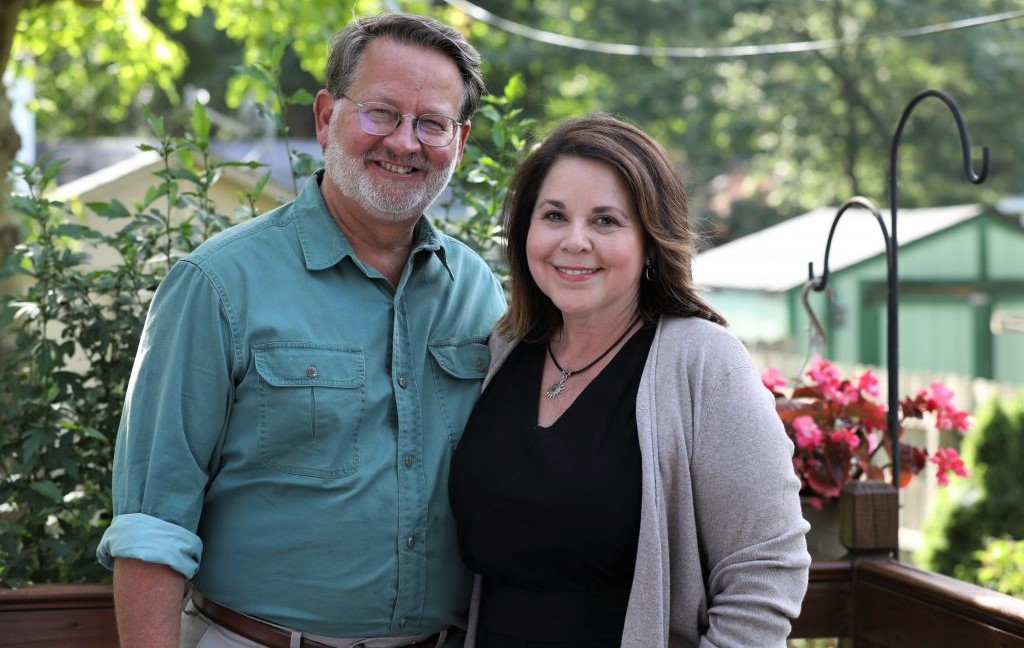
Sen. Gary Peters (D-Mich.) and his wife, Colleen. Credit: Gary Peters campaign page.

MICHIGAN 

Jewish population: 87,905 (0.9 percent of state population)

Result: Incumbent Democratic Sen. Gary Peters held off a strong challenger in Republican businessman and U.S. Army veteran John James, 49.8 percent to 48.3 percent, respectively.

Peters backed the Combating BDS Act and the Israel Anti-Boycott Act, both in 2017, and voted last year in favor of a pro-Israel legislative package that included an anti-BDS measure. He also supported the Iran nuclear deal. And while he said that Soleimani was “a bad actor” and “basically a terrorist” who was “responsible for an awful lot of mayhem in the Middle East,” he expressed concern over the “long-term strategy” of the Trump administration, especially as it pertains to protecting U.S. troops abroad and the U.S. homeland.

James, in addition to backing Trump’s pro-Israel agenda, supported the strike on Soleimani and expressed opposition to the Iran deal.
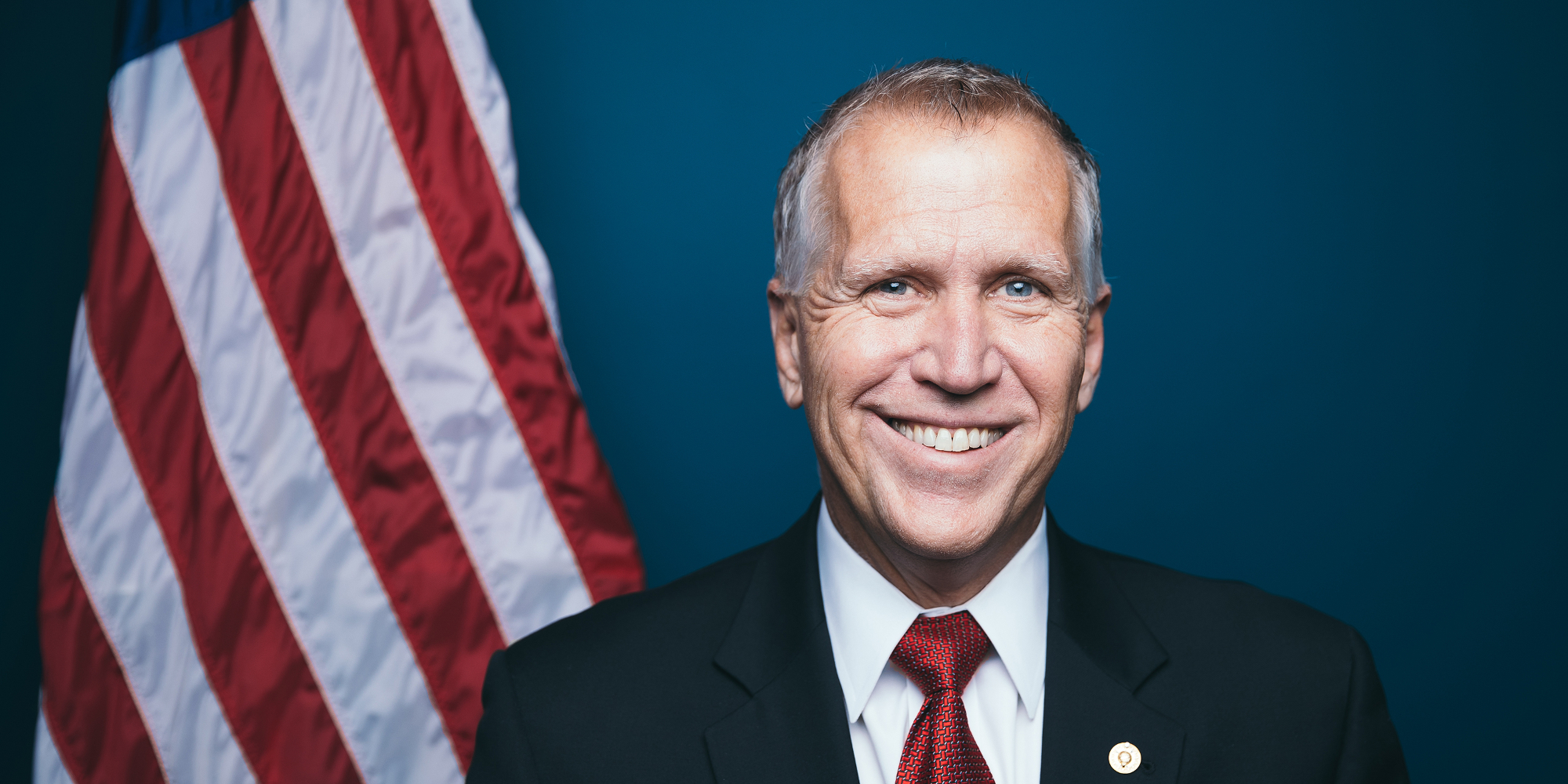
Sen. Thom Tillis (R-N.C.) Credit: Senate.gov.

NORTH CAROLINA

Jewish population: 45,935 (0.44 percent of state population)

Result: Incumbent Republican Thom Tillis defeated Democrat and former state senator Cal Cunningham, 48.7 percent to 47 percent, respectively.

Tillis has supported Trump’s pro-Israel agenda, while Cunningham expressed support for re-entering the Iran nuclear deal and has statedthat Israel applying sovereignty to the West Bank would “deal a significant blow to our shared goal of a two-state solution, and could damage long-standing relationships that are key to security.”

“Unilateral action, by any party, could set the region back and foreclose the opportunity to achieve the long-term peace that is key to the prosperity, security and freedom of Israelis and Palestinians,” said Cunningham.

Tillis told JNS last month that Cunningham “would be detrimental for the Jewish and pro-Israel community,” as he would be a “rubber stamp for far-left policies” that include rejoining the Iran deal and will “work with anti-Israel Democrats who have voted against anti-BDS legislation.”

He pledged that, if re-elected, “I will continue to be a champion for the Jewish and pro-Israel community because their success is intertwined with the success of democracy worldwide.”


Post-Election: Examining Pro-Israel Records of Key Senate Races Read More »

A Moment in Time: St🛑p before you Start

Dear all,
On a recent bike ride, I came across a sign shaped like a stop sign, but that read, “start.” It reminded me of a piece of wisdom I learned long ago: “If it gives you pause, pause.”
In other words, we need to think deeply about the consequences of our words, our actions, and our expressions. Those consequences often have a lasting impact. But that moment in time we take to stop before we start … that moment can give recalibrate our compass, and we can then start with greater integrity.
With love and shalom,
Rabbi Zach Shapiro

A Moment in Time: St🛑p before you Start Read More »

GM Howard Kaplan Announces Retirement from Mount Sinai Memorial Parks

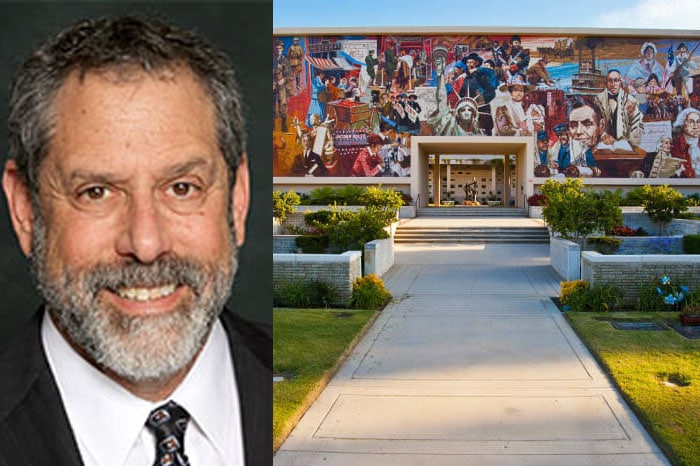
Howard Kaplan, general manager of Mount Sinai Memorial Parks and Mortuaries, is set to retire on June 30, 2021. Chief Executive Officer of Jewish Big Brothers Big Sisters of Los Angeles (JBBBSLA) Randy Schwab is slated to replace him.

Kaplan joined Mount Sinai in 2018 to oversee operations and find ways to keep the cost of Jewish burial accessible for grieving families. He helped develop new sections in both the Hollywood Hills and Simi Valley cemeteries to provide the local Jewish community with a variety of options to meet every need. Kaplan also created the Traditions Program for Chevra Kadisha at Mount Sinai, ensuring the financial accessibility of Jewish burial.

Since 1964, the cemeteries at Hollywood Hills and Simi Valley have been owned and operated by Sinai Temple of Los Angeles, but they serve families throughout Southern California.

Before joining Mount Sinai, Kaplan served for 13 years as Executive Director of Wilshire Boulevard Temple (WBT). Before joining WBT, he spent ten years as Director of the Wilshire Boulevard Temple Camps and Conference Center and also held key positions at Temple Aliyah and the Brandeis-Bardin Institute.

With more than 30 years of Jewish communal work under his belt, Kaplan is now choosing to spend his time adoring his family, including his new granddaughter.

With more than 30 years of Jewish communal work under his belt, Kaplan is now choosing to spend his time adoring his family, including his new granddaughter.

“At age 65, I was given the opportunity to work in a completely new industry while still serving the Jewish community. However, at this point in my life I want to be able to spend more time with my wife and family,” he said in a statement to the Journal. “I have been truly blessed throughout my career, and my three-and-a-half years at Mount Sinai have been nothing short of wonderful. I love our dedicated staff and will miss seeing them on a daily basis.”

In a letter written by Eric J. Diamond, chair of Sinai Temple Cemetery Management Committee, he said the hiring of Schwab was “unanimously approved.”

For the past 15 years, Schwab has demonstrated leadership and community building experience through serving on the Bureau of Jewish Education of Los Angeles, as CEO of JBBBSLA, and as board president of Temple Isaiah, to name a few.

During his tenure at JBBBSLA, Schwab established new programs to benefit thousands of young people in Los Angeles. Before his work in the non-profit community, Schwab owned a design and manufacturing company for 22 years. After selling his business, he was inspired to follow his passion and utilize his business management skills to serve those in need in the Jewish community.

“I am inspired by the care and excellence that Mount Sinai Memorial Parks provides the community and am looking forward to working with the staff and Cemetery Management Committee to provide support and service to families during their time of need,” he said in a statement.

Kaplan said he was pleased that the management committee followed his recommendation to hire Schwab. Kaplan added, “Our shared goal is to provide our staff and community with a seamless transition, and I hope to be able to contribute to Mount Sinai’s continued success in the coming years.”

GM Howard Kaplan Announces Retirement from Mount Sinai Memorial Parks Read More »

Christiane Amanpour Criticized for Comparing Trump to Nazis

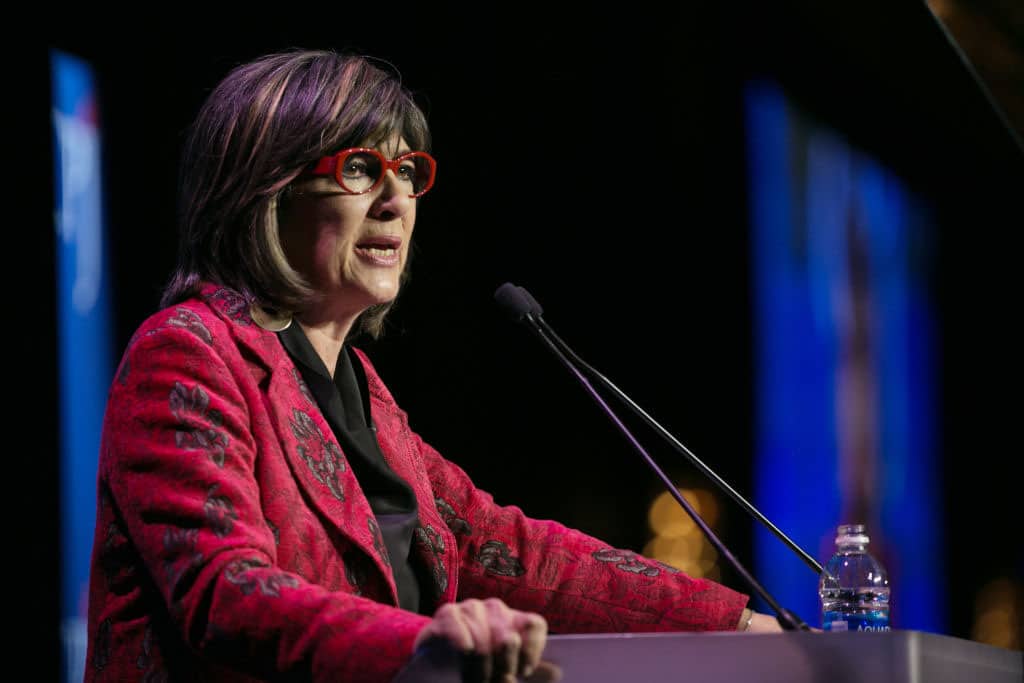
CNN International Anchor Christiane Amanpour is currently being criticized on social media for a seeming comparison between President Donald Trump and the Nazis.

During a November 12 broadcast, Amanpour began a segment pointing out that it was the 82nd anniversary of Kristallnacht (Night of the Broken Glass).

“It was the Nazis’ warning shot across the bow of our human civilization that led to genocide against a whole identity,” Amanpour said, “and, in that tower of burning books, it led to an attack on fact, knowledge, history and truth.”

She then pivoted to Trump.

“After four years of a modern-day assault on those same values by Donald Trump, the [Joe] Biden [and] [Kamala] Harris team pledges a return to norms, including the truth. And, every day, Joe Biden makes presidential announcements about good governance and the health and security of the American people, while the great brooding figure of his defeated opponent rages, conducting purges of perceived enemies and preventing a transition.”

Amanpour pointed to a poll showing that 80% of Americans accept that Biden is the projected winner of the 2020 presidential election despite Trump’s claims of voter fraud, and that “there have been no serious protests on the streets contesting the result, while secretaries of state around the nation, Republican and Democrat, say there has been no meaningful fraud, and they have found nothing that would overturn the result.”

Various Jewish and pro-Israel Twitter account denounced Amanpour’s remarks.

“Please stop using the horrors of the Holocaust to justify an agenda,” the Stop Antisemitism.org watchdog tweeted. “Our suffering is not yours to play political ping pong with.”


International human rights lawyer Arsen Ostrovsky tweeted, “Shame on you @camanpour @CNN for invoking the Holocaust in such manner. Whatever policy differences you may have with Trump, to compare his Admin. to Kristallnacht is grossly offensive & only demeans the memory of the 6 million Jews systematically murdered in the Holocaust!”


Morton Klein, who heads the Zionist Organization of America and whose parents were Holocaust survivors, also tweeted: “When Amanpour spoke about The Nazis she never mentioned the word ‘Jew’ but then disgracefully compared the Nazis to Trump. Fire her.”


Journalist Glenn Greenwald tweeted that media outlets need to “stop exploiting Jews and the Holocaust and Nazi camps for your own sick psychodramas and desperate need for attention, purpose and ratings, you divisive ghouls.”

CNN did not respond to the Journal’s request for comment.

Christiane Amanpour Criticized for Comparing Trump to Nazis Read More »