fbpx

November 3, 2020

A Widely Circulated Video Showed Jews Being Harassed at Black Lives Matter Protest. The Attacker is Part of a Fringe Group.

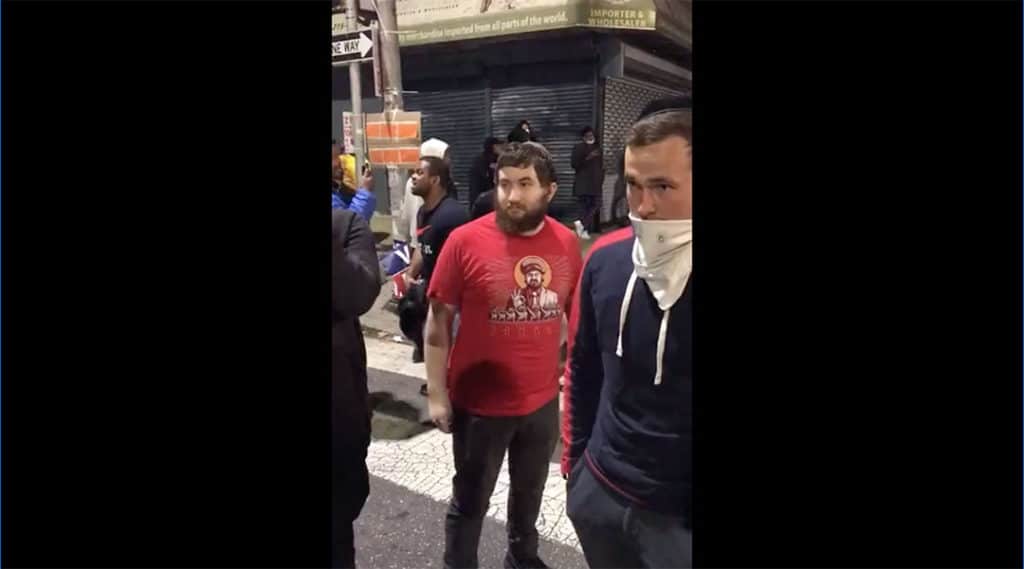
(JTA) — An episode in which three visibly Jewish men were harassed with slurs during the aftermath of a racial justice protest in Philadelphia this week was instigated by an adherent of a fringe extremist movement connected to an anti-Semitic shooting last year.

The incident, which was captured in a video circulated widely on social media, happened late Tuesday night, after demonstrations erupted across the city protesting the killing one day earlier by police of Walter Wallace, an African American man.

“Amalek, Amalek, what are y’all doing down here?” a man off camera says, referencing a biblical tribe traditionally seen as the eternal enemy of the Jews. “Y’all know that we’re the real Jews, right?”

A handful of people then advance on the three Jews, urging them to leave. At one point, someone pushes one of the three Jews, who later moves behind a line of police officers. One man appears to try to shield the Jews from the man holding the camera, who later calls the Jews “synagogue of Satan.”

That term is used by extremist sectors of the Black Hebrew Israelite movement (which is different from Jews of color) and offered one clue about what had taken place. But the video left some questions unanswered: What happened before it began? Who was doing the shouting? Was one of the Jews wearing a t-shirt with a white power symbol?

Interviews with two of the Jewish men and a longer video of the same incident provided answers. They paint a picture of an unprovoked verbal assault on a group of people who said they were there out of curiosity.

At least one of the Jewish men has shared content from far-right activists and returned home believing, as he had previously, that the Black Lives Matter movement is anti-Semitic — even though the verbal abuse he received reflected the rhetoric of a separate movement.

Parts of the Black Hebrew Israelites constitute a fringe group that operates independently of racial justice activists, and long predates and is unconnected to Black Lives Matter. The extremist segments of the movement see Jews as impostors and believe themselves to be the true representatives of Judaism, making anti-Jewish rhetoric a regular part of their activity.

That movement, according to Brian Levin, a professor who studies hate crimes, also has a tendency to “kind of glom onto any kind of event or controversy,” and frequently aims to instigate conflict. The shooters in the attack on a Jersey City kosher supermarket last year were also Black Hebrew Israelites.

“Around election times and particularly when there are conspiracy theories and discussions of elites, the first stop is always the Jews,” said Brian Levin, director of the Center for the Study of Hate and Extremism at California State University, San Bernardino. “But the Black Hebrew Israelites are anti-Semitic no matter where you run into them.”

For the Jewish men in the videos, two of whom were wearing yarmulkes, the encounter came as they stood at an intersection in West Philadelphia when they were approached, unprompted, by a man yelling the anti-Semitic slurs. The man had previously been taunting a row of police standing with shields at the intersection.

In another video shot that night at the same intersection, a voice can be heard saying, “Get your Jewish ass on.”

The Philadelphia Police Department told the Jewish Telegraphic Agency it has no further information on the incident.

The man who appears to have shot the extended video and uploaded it to Instagram has the handle @hoi_philly. HOI, or the House of Israel, is a subgroup of Black Hebrew Israelites that also took part in a widely publicized altercation at the March for Life in 2019.

The owner of the Instagram account has posted other content disparaging Jews. This week, he posted a meme juxtaposing a photo of an Orthodox man wearing a yarmulke with a photo of a Black man. The caption reads “Jew-ish” below the Orthodox man and “Jew” below the Black man.

While extremist Black Hebrew Israelite activity hasn’t changed recently, it now exists in the context of a rising tide of polarization and extremism nationally surrounding Election Day. But the group’s extremist activists do not fit neatly onto the country’s polarized political divide, and are not progressive. Some members are known to shout misogynistic, homophobic and anti-Semitic epithets on the street.

“In such a fraught environment, extremists of all kinds are starting to take to the streets,” said Heidi Beirich, co-founder of the Global Project Against Hate and Extremism. “We’ve already been in a period of heightened street activity. We’re also going to see more street activity in the days to come and this is emblematic of the things that are happening.”

Two of the Jewish men in the video spoke with JTA, though both asked that their names not be printed and denied knowing each other before meeting that night, shortly before the video was taken. One of the Jews, a student at a yeshiva in New Jersey, said he and a friend had come to Philadelphia to visit acquaintances and later came to the protest to see firsthand what they had seen in the news and pay tribute to Wallace’s life.

“We went down there to pay our respects and assess the situation,” he said. When people began saying anti-Semitic things to him, he said, “We didn’t think that it would escalate. We were nodding in approval and listening and understanding their hurt. There was a life lost. I didn’t read too much into the details.”

Another Jewish man in the video has publicly criticized the Black Lives Matter movement and came to the protest wearing a shirt bearing the OK hand gesture, which in the shirt’s context is a white supremacist symbol, in addition to dogs seemingly making Nazi salutes. (The shirt was created by a far-right activist who first gained notoriety after he was prosecuted for teaching his girlfriend’s dog to make a Nazi salute.)

The Jewish man’s recent Twitter feed is a stream of almost exclusively pro-Trump and anti-left-wing posts, including retweets of a few people associated with the far right. He has written and retweeted tweets that call the Black Lives Matter movement a terrorist organization as well as anti-Semitic. After first telling the Jewish Telegraphic Agency that he had come to the protests just to observe, he later acknowledged that he had prior opinions about it and wanted to see if he would experience anti-Semitism.

“I did have a preconceived opinion,” he said. “I came there because I wanted to get my own first person perspective and see, what’s this all about? Are they actually going to say anti-Semitic things to me? It’s hard to believe until it actually happens to you. I didn’t think they were actually going to and I was shocked out of my mind when they did.”

He said that police officers also shoved him as he was leaving the protest.

That man’s takeaway from the incident is what Graie Hagans, a Jew of color who lives in West Philadelphia and has participated in this week’s racial justice protests, said he was concerned about this week. Hagans says he is “deeply heartbroken” because of Wallace’s death and police abuse he’s seen, and he is concerned that the video will reinforce the mistaken idea, among some Jews, that crowds of Black people are inherently dangerous.

“It’s what gets reaffirmed for us as Jewish people when the story and the setup continue to be the danger posed by gathered Black folks,” said Hagans, the vision praxis director for Bend The Arc, a progressive Jewish organization. “Me and three other Black folks gathered has a very different story and feel to it than four white folks gathered.”

The entire incident comes against a context in which a vocal minority of American Jews are deeply skeptical of or opposed to Black Lives Matter, accusing it of anti-Semitism. They have pointed to instances where synagogues were vandalized amid protests and to anti-Israel rhetoric from parts of the movement’s loose network.

But the majority of the Jewish community does not appear to share those feelings. Hundreds of synagogues and Jewish organizations have pledged their support for the Black Lives Matter movement, and Jewish leaders have taken part in the racial justice protests that swept the country earlier this year, including this week in Philadelphia.

Earlier Tuesday night, a group of rabbis joined an interfaith clergy contingent in Philadelphia’s racial justice protests. Rabbi Annie Lewis, co-president of the Board of Rabbis of Philadelphia, said the alliance between Jewish and African-American clergy in the city is more representative of the Jewish role in the protests than an anti-Semitic act by a member of a fringe group.

“Everywhere in the world, there’s anti-Semitism and racism, but the stories that need to be told in Philadelphia are of Black clergy working in partnership with White Jewish clergy, all of us, to call out for justice and work against all kinds of hate. We’re trying to lift up, together, ways we can work together peacefully.”

A Widely Circulated Video Showed Jews Being Harassed at Black Lives Matter Protest. The Attacker is Part of a Fringe Group. Read More »

When Do Polls Close In Each State?

Today, November 3, is Election Day, as millions of Americans head to the polls. Here is a list of when the polls close in each state, with all times being in Pacific Time Zone (PST).

3 P.M.
According to CBS News, 80 counties in Indiana close at 3 pm.

4 P.M.
Polls close in Georgia, Indiana, Kentucky, South Carolina, Vermont, Virginia. At 4:30 pm, the polls close in North Carolina, Ohio and West Virginia.

5 P.M.
Polls close in Alabama, Connecticut, Delaware, Florida, Illinois, Maine, Maryland, Massachusetts, Mississippi, Missouri, New Hampshire, New Jersey, Oklahoma, Pennsylvania, Rhode Island, Tennessee and Washington, D.C. (Noted exceptions: In Florida, polls close at 4 pm in counties outside of the northwestern area of the state. In New Hampshire and Tennessee, poll closing times vary in differing localities, per CBS.)

At 5:30 pm, the polls close in Arkansas.

6 P.M.
Polls close in Colorado, Michigan, Minnesota, Nebraska, New York, North Dakota, South Dakota, Texas and Wyoming. (Noted exceptions: In Kansas, Michigan, Nebraska and South Dakota, polls close in myriad eastern counties 5 pm, as do various western counties in Texas, according to CBS. North Dakota’s polling times vary on the county.)

7 P.M.
Polls close in Iowa, Montana, Nevada and Utah.

8 P.M.
Polls close California, Idaho, Oregon and Washington. In Idaho’s southern counties, the polls close at 7 pm, according to CBS.

9 P.M.
Polls close in Hawaii.

10 P.M.
Polls close in Alaska.

All polling times via Jerusalem Post.

When Do Polls Close In Each State? Read More »

If Election Day Making You a Nervous Wreck, See This Burger King Ad Promoting McDonald’s

Advertising is a cutthroat business where you fight tooth and nail for every breadcrumb of market share.

For decades, two of the biggest combatants have been McDonald’s and Burger King. It’s the marketing equivalent of UFC. These warriors make the battle between Democrats and Republicans feel like kundelini yoga.

So, what did Burger King in the UK decide to do this week? They ran an ad for McDonald’s.

Under the headline, “Order from McDonald’s,” the company released a short message that is blowing up on the internet.

“We never thought we’d be asking you to do this,” the message starts. “Just like we never thought we’d be encouraging you to order from KFC, Subway, Domino’s Pizza, Pizza Hut, Five Guys, Greggs, Taco Bell, Papa John’s, Leon…or any of the other food outlets, too numerous to mention here.”

I felt my arteries clog up just writing all those names, but that’s not the point. The point is: Why did Burger King do it? Because, the message continues, “restaurants employing thousands of staff really need your support at the moment.”

If we ever needed another reminder of the times we are living in, this is as poignant as it gets: Cutthroat competitors helping each other out.

If we ever needed another reminder of the times we are living in, this is as poignant as it gets.

The last phrase is my favorite: “Getting a Whopper is always best, but getting a Big Mac is also not such a bad thing.”

It adds a touch of realism while keeping everything in perspective. It says, “Sure, we’d much prefer if you ordered our product, but we’re cool if you pick our competitor.” In other words, if you choose the other guy, it won’t be the end of the world.

With all the press attention Burger King is sure to get from its unusual gesture, it’s easy to be cynical and call it just another brilliant marketing maneuver. Maybe it is. But even then, the underlying idea is just as powerful: We’re living in uniquely painful times that demand uniquely compassionate thinking.

We’re living in uniquely painful times that demand uniquely compassionate thinking.

Maybe it’s divine coincidence that Burger King’s altruistic message showed up on a day when our nation is in a state of ultra-high anxiety, when years of tension and division are climaxing in an epic presidential Judgement Day.

A fast food chain is reminding our country that if our fellow Americans choose whomever we consider the “other guy,” it will be bad, even very bad, but it won’t be the end of the world.

No matter how cutthroat we may appear to be, we’re still in this together.

If Election Day Making You a Nervous Wreck, See This Burger King Ad Promoting McDonald’s Read More »

Trump or Biden? Jewish Israelis Weigh In on US Vote (VIDEO REPORT)

THE MEDIA LINE — As Americans head to the polls on Tuesday, many in Israel have expressed hope that US President Donald Trump would emerge victorious because they believe he would be better for regional peace.

Unlike others in the Middle East, the Jewish Israeli public has mostly viewed Trump’s presidency in a positive light. In fact, in a survey conducted by the Israel Democracy Institute that was published on Tuesday, 70% of Jewish Israelis said that Trump was the better presidential candidate, especially when it came to Israel’s interests, but only 13% said the same of his Democratic challenger, former vice president Joe Biden.

Nevertheless, not all Israelis are convinced that Trump holds Israel’s best interests at heart.

The Media Line took to the streets of Jerusalem to find out what they had to say.

Trump or Biden? Jewish Israelis Weigh In on US Vote (VIDEO REPORT) Read More »

Palestinians Hoping a Biden Victory Will Enable Restoration of Relations With Washington (with VIDEO)

THE MEDIA LINE — As Americans head to the polls on Tuesday, the world is watching.

In the Palestinian territories, many feel the results will have a direct impact on their lives.

Ahmed Rafiq Awad, president of the Jerusalem Center for Future Studies at Al-Quds University, told The Media Line that this time the Palestinians are attentively following the US presidential election.

“Palestinian media is covering the US election closely and in great detail. It’s involved emotionally because of [President Donald] Trump’s decisions. The Palestinians regard Trump as Israel’s ‘foreign minister,’” Awad says.

Nour Odeh, a political analyst in the West Bank, also told The Media Line that Trump’s policies toward the Palestinians have a lot to do with the broad interest in the race.

“The Trump Administration has destroyed much of the hope they were hanging on to. There’s a lot of interest in how Americans vote,” she says.

Palestinians almost unanimously condemn the policies of the incumbent. Under Trump, the US recognized Jerusalem as Israel’s capital and moved its embassy there from Tel Aviv. Washington also suspended millions of dollars of annual financial aid to the PA and ordered the Palestine Liberation Organization office in the American capital shuttered.

In response, the Palestinian Authority cut off communication with the White House. The PA views east Jerusalem as the future capital of a Palestinian state.

“This last four years has seen an onslaught against the Palestinians. Trump has fulfilled a wish list for Israel that they could never have imagined,” says Palestinian-American business consultant Sam Bahour. “I don’t know what else they could ask him to do. It’s been devastating for the Palestinians.”

Palestinians believe this election is not only about American domestic policy but will directly affect what happens to them in the coming years.

Awad insist the PA is eager to restore friendlier relations with Washington.

“As far as I can say, the Palestinian street, and the official Palestinian side, prefer [former vice president Joe] Biden,” he adds.

Bahour says a Biden administration will restore the US traditional stance on the Israeli-Palestinian conflict.

“I believe that if Biden wins, first and foremost the hemorrhaging damage that has been going on the last four years may stop or slow down. Positive in itself,” he says.

After a promising start under Trump four years ago, the relationship with Washington soured. Palestinians feel he has treated them unfairly. Now, they are holding their breath awaiting the outcome of the election.

The Palestinians have made no secret of their desire to see a new American president in office. They see it as an opportunity to restore the relationship with the United States.

Awad concedes, however, that Biden’s approach is in line with previous US administrations regarding the Palestinian issue.

“We know that Biden supports Israel and Israel’s security, but he believes in a two-state solution.”

Odeh agrees, saying Palestinians are not delusional about where Biden and his running mate, Senator Kamala Harris, stand on the issue.

“There’s a very clear understanding in Palestine that Biden is a committed Zionist; we know what his track record is. There are no illusions here about what a Biden administration can deliver to Palestinians,” Odeh continues. But she says Biden will approach the matter with a different attitude. “At least it will be a break from this confrontation, hostility, the toxic atmosphere that Trump has brought.”

Still, the former Palestinian Authority spokeswoman has a warning for her fellow Palestinians: Don’t get your hopes up too high.

“Biden is not going to be the messiah for Palestinians; quite frankly, the interest in a Biden victory in Palestine stems from the fact that President Trump is so terrible. There are no illusions here about what a Biden administration can deliver to Palestinians,” Odeh says.

It will take a lot of effort to build trust with a Biden administration, she adds.

“It’s not going to be easy to initiate dialogue with a Biden administration if Biden wins. Any administration will need years to undo the damage Trump has done in the Middle East.”

On the other hand, Odeh says Palestinians should not bother reinitiating dialogue with Trump if he wins.

“It’s a waste of time because Donald Trump will accept nothing less than absolute surrender and humiliation.”

Many Palestinians foresee a similarly bleak scenario if Trump wins.

“If there is to be another four years of President Trump, most likely we’re going to see an outbreak of violence here,” Odeh says.

Palestinians Hoping a Biden Victory Will Enable Restoration of Relations With Washington (with VIDEO) Read More »

For Most American Jews, Immigration Looms Large in the Voting Booth — And They Don’t Like What Trump Has Done

(JTA) — Donald Trump has leaned heavily on his Israel policy record to make his case to Jewish voters. But polls show that most American Jews first weigh domestic issues when deciding whom to support. And on one issue in particular, immigration, the president’s policies are especially unlikely to have won them over.

Fueled by an awareness of their roots as perpetual refugees and recent immigrants, American Jews have long been at the forefront of immigration advocacy in the United States.

So when, just one week after being sworn in as president, Trump halted travel and immigration from seven predominantly Muslim countries, Jews were disproportionately represented in the crowds of protesters who turned out at the nation’s airports.

“It’s an absolute outrage that we are keeping people from coming here for refuge,” Rabbi Suzanne Singer, who traveled 70 miles from her home to protest at Los Angeles International Airport, said at the time. “My mother was a survivor from Auschwitz. As Jews, we know what it’s like to be persecuted.”

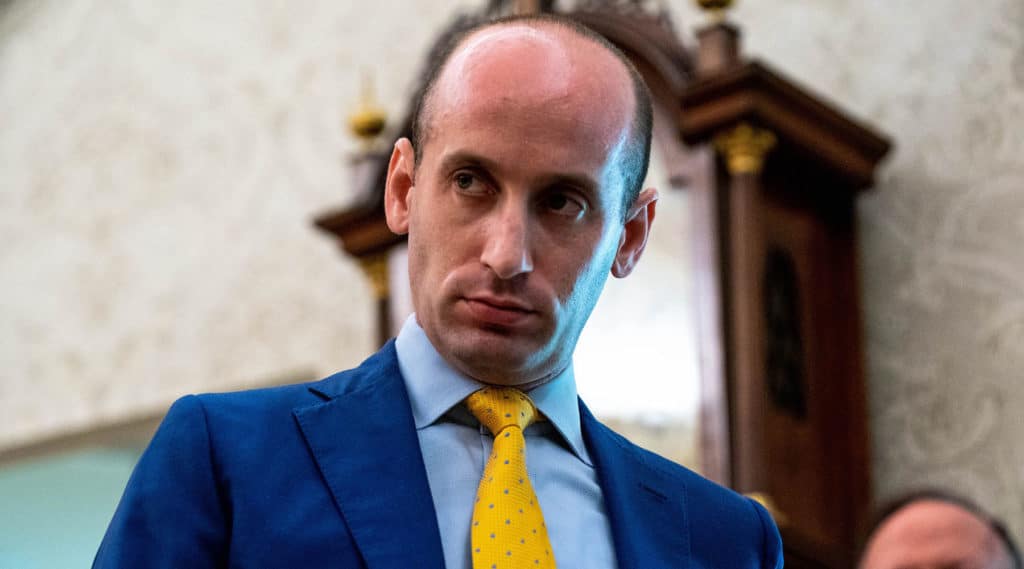
Four years later, Trump’s immigration record includes previously unprecedented policies, such as separating families at the border and reducing the cap on refugee admissions to just 15,000 per year. Stephen Miller, the White House aide who has crafted much of that policy, says he wants to further restrict immigration if Trump is reelected, including by zeroing out refugee admissions entirely.

Many American Jews are thinking about that record — and Miller’s ambitions — as they vote in the presidential election. Polls show that three quarters of them are likely to vote for his challenger, Democrat Joe Biden, who has vowed to roll back Trump’s anti-immigration initiatives early in his presidency.

Data about American Jewish attitudes on immigration specifically is limited, but a 2017 American Jewish Committee poll found that three quarters of American Jews disapproved of Trump’s immigration policies, far more than the 59% of Americans overall found by a Washington Post poll the following year.

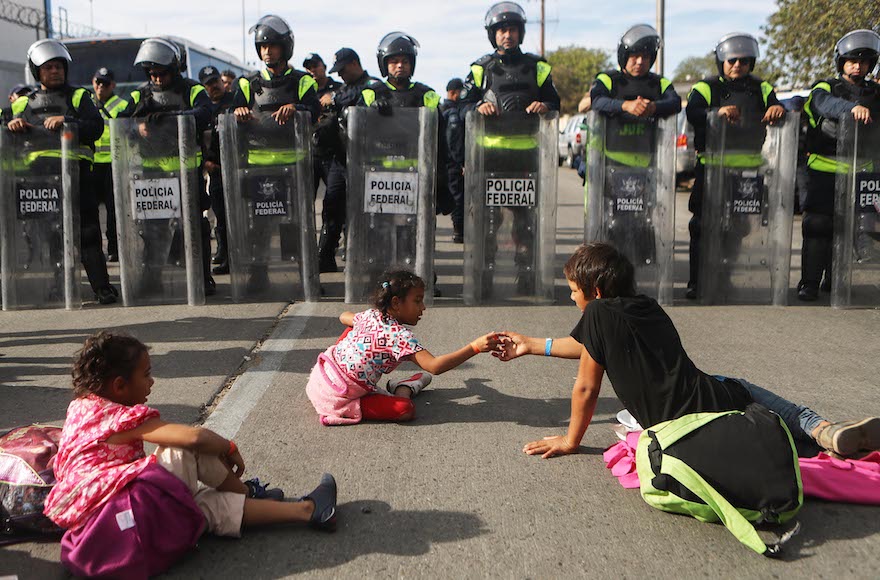
Migrant children sit in front of Mexican riot police outside the El Chaparral port of entry in Tijuana, Mexico, Nov. 22, 2018. (Mario Tama/Getty Images)

That corresponds to American Jews’ overall voter patterns: About 70% tend to vote Democratic in national elections, one of the highest rates for any ethnic group. But while Jews tend to be progressive on most political issues, their history imparts an added emotional drive to immigration issues.

“It goes beyond our experience as immigrants,” said Melanie Nezer, the senior vice president for public affairs at HIAS, the Jewish immigration advocacy group. “There’s also our historical experiences, refugees, in particular people who were persecuted based on their faith and ethnic ethnicity, throughout many, many generations.”

Jewish Democratic groups, and liberal groups like Bend the Arc and J Street, have emphatically opposed Trump’s immigration restrictions in their advocacy. But American Jewish immigration advocacy predates the Holocaust, when liberal refugee admissions by the United States could have changed the course of Jewish history. In the 1920s, American Jewish groups rallied against a bill that drastically reduced immigration from Europe, which ultimately resulted in Jews being stranded on the continent under Nazi rule.

So American Jews were supportive in 2013 when President Barack Obama proposed immigration reforms that would create a path to legal citizenship for undocumented immigrants and streamline the legal immigration system while beefing up border security and cracking down on employers who hire undocumented workers.

“Scripture tells us that we shall not oppress a stranger, for we know the heart of a stranger — we were strangers once, too,” Obama said, citing the biblical commandment that has fueled many a conversation at a Passover Seder.

That commandment is the most oft-repeated in the Torah, appearing at least 36 times. Barbara Weinstein, the associate director of the Reform movement’s Religious Action Center, at the time called it “one of the core biblical basics.”

Trump ran on a promise of undoing Obama’s reforms, and his campaign routinely trafficked in xenophobic rhetoric.

Once in office, he quickly set to work making good on those promises, issuing that early executive order, which came to be known as the Muslim ban, and fighting to preserve it against multiple legal challenges, some of them mounted by Jewish advocacy groups.

The Jewish presence at protests against the order was evidenced by the hastily drawn signs some were bearing (“Our Jewish family stands with refugees” read one at Dulles Airport near Washington D.C.) and by the kippot dotting heads in the crowd.

A call went out to lawyers to assist folks who might be blocked from entering the country after landing at U.S. airports (some people from banned countries were caught mid-travel), and there were Jews among those as well. Chava Brandress, a lawyer who said a pro-bono listserv she belonged to “exploded,” was among the Dulles protesters.

“I felt, ‘I can’t understand how this is happening again,’” she said then, referring to the restrictive laws in the early 20th century that prevented many European Jews from finding refuge in the United States, often with deadly consequences.

Nezer cited the Muslim ban as one of three immigration episodes that galvanized American Jews. Another, she said, was the Trump administration’s practice of separating children and their parents at the southern border, which resulted in thousands of families being separated. The administration still cannot find the parents of hundreds of children.

Nezer said the family separations especially hit a nerve for Jews raised on stories of World War II-era children separated from their parents. She described a typical call: “I’m appalled to hear that babies are being taken from their parents, what can I do?”

The third episode Nezer cited was the 2018 shooting at Tree of Life Synagogue in Pittsburgh, the deadliest attack on Jews in American history. The gunman, who killed 11 worshipers, said he targeted Tree of Life because one of its congregations worked with HIAS through the group’s Welcome Campaign, which advocates for refugees and helps to settle them in their communities.

At the time, Trump and his allies were warning of an “invasion” by migrant caravans heading for the southern border,  leading many to draw a connection between that rhetoric and the gunman’s actions.

The shooting fueled a spike in donations to HIAS, from $7.4 million in 2017 to $17.3 million in 2018. The group used those funds to supplement government funds to settle refugees — and to expand the number of synagogues in the Welcome Campaign. There are now 455 in 37 states.

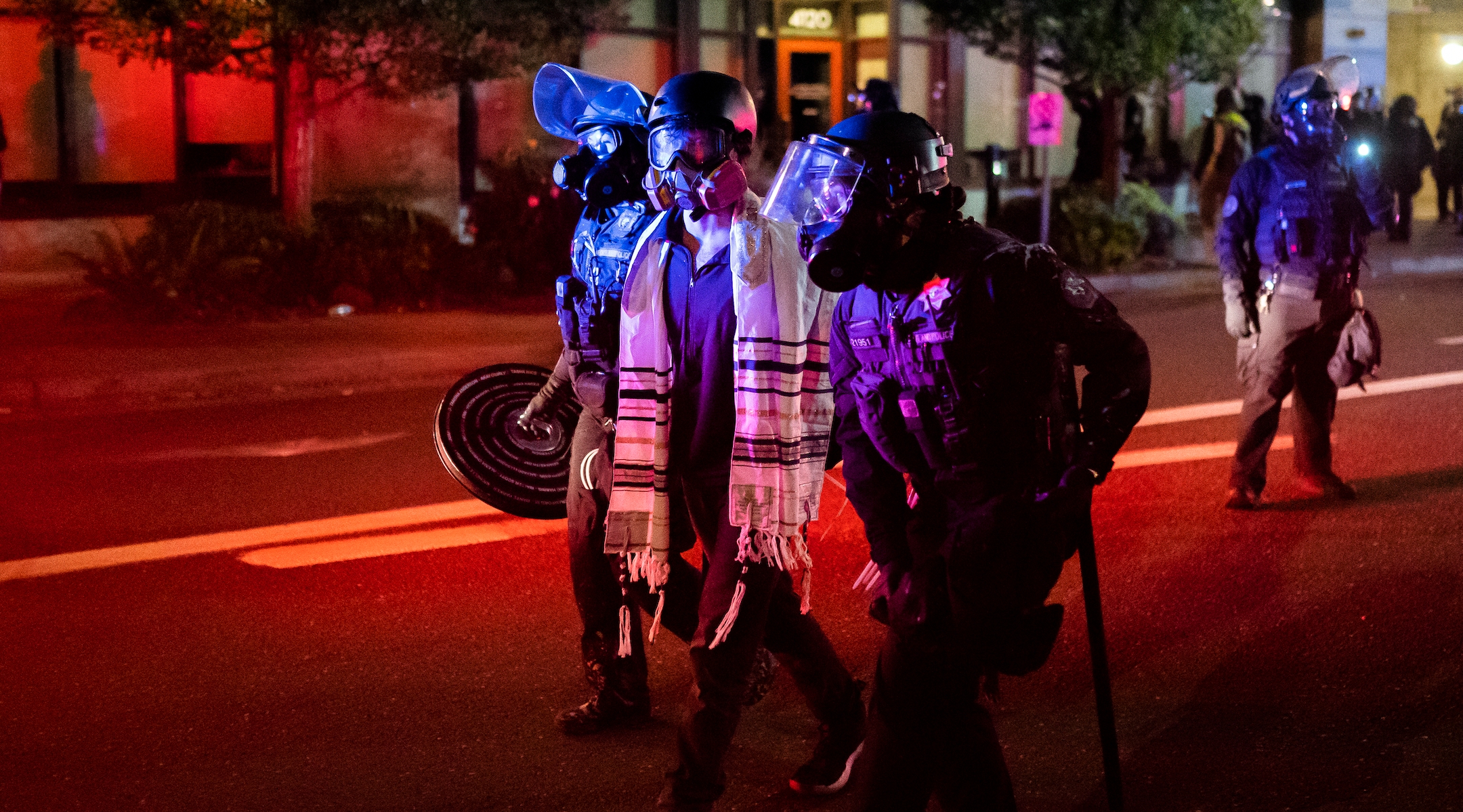
Police arrest a protester wearing a tallis early in the morning of Oct. 7, 2020 in Portland, Ore. Federal officers and Portland police responded with arrests and tear gas after protesters marched on an Immigration and Customs Enforcement detention center. (Nathan Howard/Getty Images)

Few if any of the synagogues working with HIAS are Orthodox, a reflection of the political divide between them and the majority of American Jews. Nezer said a handful of Orthodox congregations joined the campaign at its inception but now appear not to be active participants.

One recent poll commissioned by an Orthodox magazine found that 83% of Orthodox Jews said they would vote for Trump, and haredi Orthodox communities especially have been outspoken in their support for the president.

But even among the minority of Jews who are politically conservative, immigration has not been a prominent issue — and some of Trump’s Jewish supporters say they can’t back his approach to immigration.

“I love Trump but I still don’t agree with him on immigration,” Heschy Tischler, a leading right-wing activist in Orthodox Brooklyn, told JTA this fall. “I believe this country should be open to everyone.”

The Republican Jewish Coalition did not respond to a request for comment about the role immigration is playing in this year’s election. But it has never prioritized immigration in its advocacy. It criticized Obama’s immigration moves only on procedural grounds, sidestepping any statements about their content at a time when many other Republican groups lambasted them.

More recently, Trump got a hero’s welcome at the Republican Jewish Coalition’s April 2019 conference, particularly for his Israel policies. But when he brought up his strictures on immigration, the reaction was more muted, especially when he repeated “we’re full,” a discomfiting reminder of how U.S. authorities turned away refugees from Nazi Germany in the 1930s.

Sen. Lindsey Graham, the Republican from South Carolina who is one of Trump’s staunchest supporters, was in the room and took note of the muted reaction. He told the Jewish Telegraphic Agency at the time that he wished Trump had put it differently.

“America does not need more St. Louis,” Graham said, referring to the shipful of Jewish refugees turned away from America in 1939. “The asylum laws in this country represent the best of who we are. They’re broken, let’s repair them, but let’s not lose the concept of asylum. I wish [Trump] would have started with that context.”

Some of America’s immigrant Jews are more politically conservative, in part because they are fearful that the political conditions that drove them from their home countries could be replicated in a Democratic-led United States. That can translate into support for some of Trump’s immigration policies.

“They believe that the anti-Semitism that is carried through much of the Muslim world is something that could easily spread in the United States,” David Wolpe, the rabbi of Sinai Temple, a large Conservative synagogue in Los Angeles, said about his many Iranian-born congregants.

At the same time, Wolpe said about his congregation, “There’s a tremendous sympathy to immigrants, and I think anger at the ill-treatment of immigrants.”

Biden has appealed to that sympathy and anger in making his case to American Jews. “We must welcome the stranger by reasserting our founding promise as a nation of immigrants and asylum seekers,” he wrote in a JTA op-ed last month.

He has vowed to increase refugee admissions to 125,000 a year, to create a task force to reunite separated families and to preserve Obama’s reforms so that people who were brought to the country illegally as children can stay. Those promises are likely to resonate with the vast majority of American Jews.

“We understand what it means to be displaced, to be marginalized, and to be homeless,” said Gayle Pomerantz, the rabbi of Temple Beth Sholom in Miami. “It is therefore central to our mission as Jews to welcome the stranger and ease their suffering.”

For Most American Jews, Immigration Looms Large in the Voting Booth — And They Don’t Like What Trump Has Done Read More »

For Orthodox Jews, Election Day Caps a Season of Unprecedented Partisan Activity

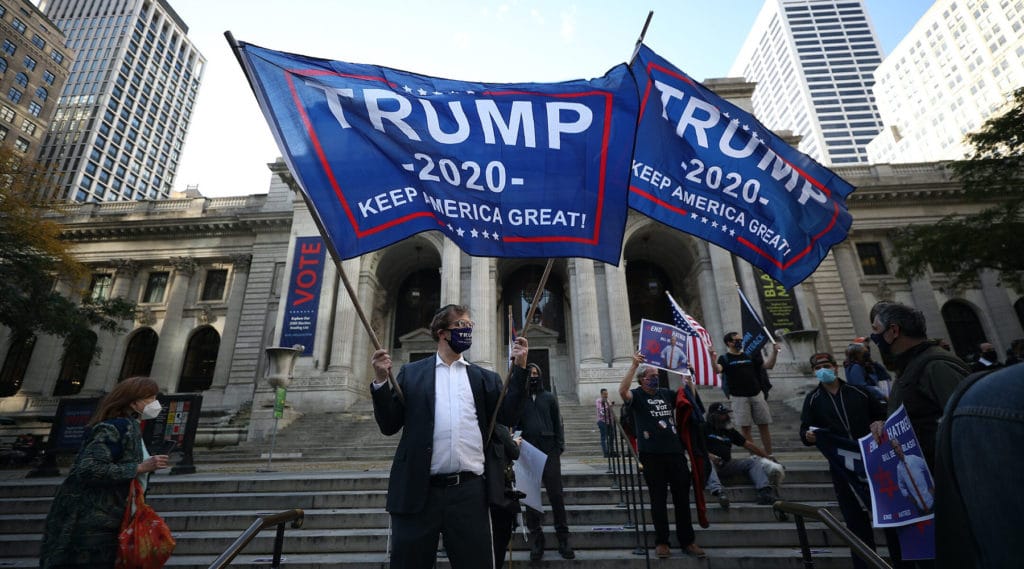
(JTA) — Rayne Lunger had known for some time that many in her community supported Donald Trump for president. But it was just in the last few weeks when “Trump 2020” and “Blue Lives Matter” flags were hung from street lamps on a main avenue in her community in Borough Park that it became crystal clear.

“The dominant narrative is that Trump is the greatest president in American history and Jews never had a greater ally in the White House,” Lunger said.

Lunger isn’t a fan of the president. But in the Orthodox community, she’s in the minority. The majority of Orthodox Jews are expected to vote to give him a second term.

And in contrast with 2016, when Trump garnered a slight majority of the Orthodox votebut less open enthusiasm for his candidacy, Orthodox rabbis have endorsed Trump and his Orthodox supporters have rallied in support of him.

“A big part of the increase in enthusiasm is how President Trump…went from an unknown commodity to a known commodity,” said Eli Steinberg, an Orthodox writer and consultant in Lakewood, New Jersey. “He definitely has a stronger, more robust base of support in the community now.” Steinberg is among that increased base of support, having gone from writing in “anybody else” in the 2016 election to supporting Trump in this year’s election.

This summer, a haredi Orthodox rabbi endorsed Trump, saying the president had “done a good job.” A well-known Orthodox pop singer rewrote one of his hit songs in the president’s honor and performed it at a Jewish summer camp. And 13 leading Orthodox rabbis thanked the president for his executive order declaring religious services “essential” in a letter that was released last week in what looked like an endorsement in the presidential race. “Thank you Rabbis!” the president tweeted in response.

Over the past two Sundays, Orthodox Jews have organized rallies in support of Trump with supporters joining in from Orthodox communities across the New York City area.

And in recent days, new endorsements of the president have come out of a number of Hasidic communities.

In New Square, a town in upstate New York that is home to a large community of Skverer Hasidim, the village board endorsed Trump in fliers posted around the town, according to a tweet from Jake Turx, a reporter for Ami Magazine. The flier encouraged everyone in the town, which voted overwhelmingly for Hillary Clinton in 2016, to vote for Trump.

For some Orthodox Jews supporting Trump, Israel is an important selling point for the president. In addition to moving the U.S. embassy in Israel to Jerusalem and recognizing the Golan Heights as Israeli territory, in the last several months, Trump has brokered multiple agreements between Israel and Arab countries.

But for many Orthodox Jews, support for Trump doesn’t come down to Israel alone.

Vos Iz Neias, a popular source of online news in Hasidic communities, endorsed Trump Sunday in an editorial that accused Biden of being a socialist and of general senility. The endorsement also noted Trump’s actions on Israel and his support for school vouchers, which Orthodox organizations have long advocated for because they would allow families to use public funds to pay yeshiva tuition.

“For Jews, Americans and Jewish-Americans, the choice couldn’t be more clear. We can look forward to four more years of strength, progress and realization of our nation’s greatness…or to relinquishing the gains we have enjoyed under the leadership of President Trump,” Vos Iz Neias wrote.

A Twitter account called Satmar HQ, which frequently tweets announcements and statements from a faction of the Satmar Hasidic community, posted a set of fliers endorsing Trump on behalf of the Satmar community in Kiryas Joel in upstate New York. The fliers specifically named prison reform as something for which the community had to show its gratitude to the president and noted that there was no minyan in Otisville, a prison known for accommodating Orthodox Jewish observance, on the holiday of Sukkot this year, apparently because so many Jews who were imprisoned there had been released.

For some in the community, the release of Sholom Rubashkin, a Hasidic meatpacking plant executive who was convicted of financial fraud in 2009 and sentenced to 27 years in prison, was a turning point. In December 2017, Trump commuted his sentence, leading to celebrations in some Hasidic communities, where the mitzvah of pidyon shvuyim, redeeming prisoners, is an important value.

“For a lot of people, the Rubashkin thing was a big issue,” Steinberg said. “All these have this common thread that runs through them, that he positioned himself as a friend of the Orthodox community. The things that people care about, he’s made priorities.”

For Steinberg, the primary issue driving him to embrace the president was religious liberty.

Particularly during the pandemic, he said, as synagogues in New York were subject to rules that were, at times, stricter than other gathering places like restaurants, Steinberg said it became even clearer that he aligned with the president’s understanding of religious liberty.

“It clarified where the parties assigned value to religious worship,” Steinberg said, noting an executive order Trump signed in May declaring houses of worship “essential,” and ordering governors to allow houses of worship to reopen.

“It meant a lot when he said that houses of worship are considered essential,” he said.

He also noted the way that Democrats responded to incidents of anti-Semitism as a factor driving Orthodox Jews towards the Republican party. He pointed to a bill passed by the House in May 2019 which denounced anti-Semitism along with a number of other forms of bigotry. The bill was originally written in response to comments made by Rep. Ilhan Omar that were considered by many to be anti-Semitic. Set against the backdrop of increased anti-Semitic incidents in New York City and surrounding communities in previous months, particularly targeting visibly Orthodox Jews, the handling of that bill upset Steinberg.

“That radicalized me,” he said.

Of course, with most Orthodox Jews living in states with large Democratic majorities, it’s unlikely that the Orthodox vote will impact Trump’s chances. But the fierceness of support for Trump in Orthodox communities has had an impact on the communities themselves and left Biden supporters feeling marginalized.

“It’s completely different than the last election,” Lunger said.

Then, she said, “A lot of people didn’t vote, a lot of people they’d vote, but there wasn’t a lot of investment the way there is now with people being so passionate about it.

Lunger started tweeting with the hashtag #yidenforbiden last week in a bid to show that Orthodox Jews who supported Biden were not alone.

“Like a lot of things in the community, speaking out against the dominant narrative is taboo,” she said. “There are people who, speaking out, they’re worried about their job being in danger, their kids being bullied, they’re worried about shidduchim,” or arranged marriages.

Hundreds liked her tweet and dozens retweeted it or shared their own reasons for supporting Biden, using the hashtag. The tweets made clear that Trump’s hold on the community is not as all-encompassing as it may seem from the Trump flags in the street and the eye-catching rallies organized by his Orthodox supporters in New York City Sunday.

“There is much enthusiasm for the president among haredim, if only out of concern for what a Democratic administration may do on the religious rights front, and out of gratitude to Mr. Trump for his actions vis a vis Israel and the Middle East,” Rabbi Avi Shafran, a spokesperson for the haredi Orthodox umbrella organization Agudath Israel, said in an email. “There is also, though, I should add, a quiet minority of haredim who are not enamored of the president and favor Mr. Biden.”

For Orthodox Jews, Election Day Caps a Season of Unprecedented Partisan Activity Read More »

100 Days of Burnout: Surviving COVID-19 as a Jewish Resident Doctor

There is no question in my mind that the pandemic has impacted my relationship with Judaism. COVID-19 has made me in awe of the uncanny superpower of the Jewish People. Call it what you will — the invincible willpower, the unwavering spirit — but the result is the creation of something sublime.

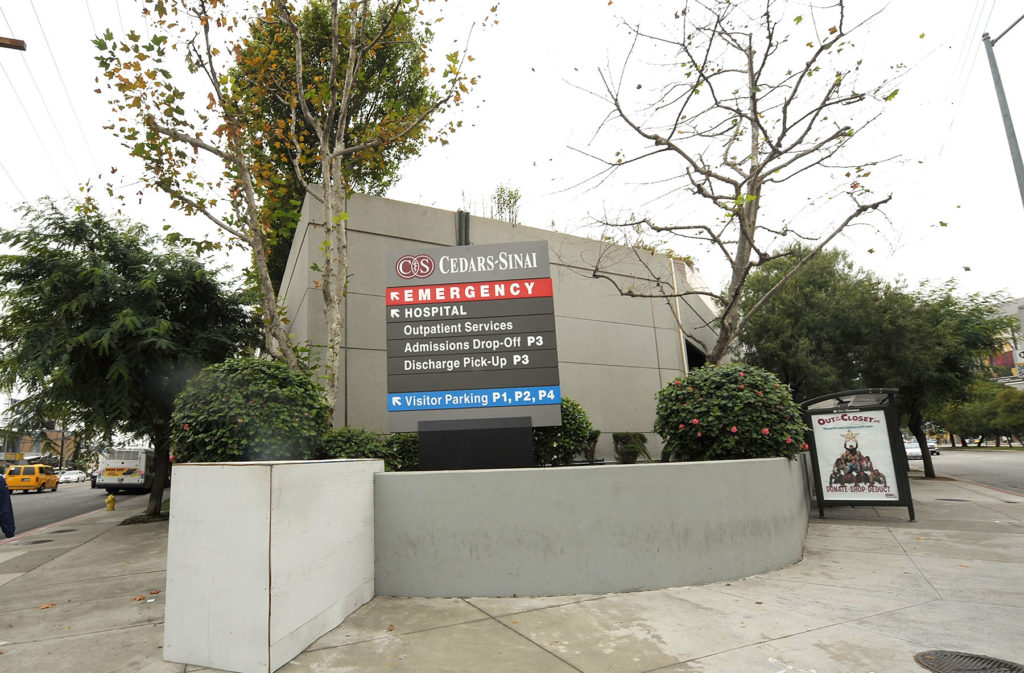
I am specifically referring to the Cedars-Sinai Medical Center, where I am a resident. Today, I cannot call this merely a “Jewish” hospital. The diversity of the people, ethnicities, cultural backgrounds, languages and countries of origin that work in this institution is staggering, to say the least. But the foundation of this hospital was based on the Jewish values of patient care, dignity, and respect. As Cedars-Sinai Health System President and CEO, Thomas M. Priselac, aptly put it, the “…core Judaic value remains visible and deeply embedded in the very fabric of today’s Cedars-Sinai, as evidenced by the diversity of people and communities we care for…”

Cedars Sinai has always been a part of my Jewish identity. Growing up in the San Fernando Valley, my childhood dream was to become a doctor and work at the foremost “Jewish” hospital in Los Angeles. You know, the one with the statue of Moses in the Steven Spielberg Building parking lot, mezuzahs on every patient room doorway, and if that wasn’t clear enough, a giant twelve-foot Star of David affixed to the front! Some people call it Cedars-Sinai. I called it my grandparents’ hospital because that is where they went for their care.

And it finally paid off. A decade of studying, sleepless nights and too many prayers to count led to me opening my match letter this year and seeing my dream transform into reality. It’s funny, though, these blissful moments. They never truly take into account what’s happening around you — for instance, that I would be starting my residency in June 2020, right smack in the middle of one of the worst worldwide pandemics in the last century.

During the last several months of my residency, times have truly been dark. I have seen things my nightmares couldn’t come up with. In the Medical Intensive Care Unit (MICU), I’ve had end-of-life discussions with family members of patients dying from COVID-19. I informed one family that their father’s organs were failing, despite maximum ventilatory support and hemodialysis. He would likely not survive the night. I still can hear their shrieks after telling them the news. It makes me light-headed.

In other instances, such as when I worked in the Acute Care Surgery/Trauma Unit, I participated in primary and secondary exams of patients after horrible accidents. I still shudder every time I remember the little girl whose head had been torn into by the family dog. The memory of seeing her parents nervously circling outside the trauma bay still sends shivers down my spine.

There are so many of these moments on a daily basis that words … just can’t cover it.

But when you work at the place where dreams are built, during a time when nightmares come to life, something incredible happens. At every instance of pain, sorrow and sickness, there has been a team of healthcare providers critically dedicated to offering patients the best and highest level of care I have ever seen. I can only count my blessings to have been a part of these teams.

Each day, I am reminded of why I started this journey. I’m constantly reinvigorated by the people around me. As a result, I have never worked so hard in my life, often working the maximum number of permitted hours. At times, I’ve felt so defeated, yet simultaneously so rewarded for the work that has been done by everyone. These are the moments when we remember to turn on the light.

The year 2020 has brought with it terrible tragedies to the world and to Los Angeles that will forever remain in our hearts; they will also guide us to a future our grandparents could have never imagined. The pandemic has only sparked in us one intangible Jewish value, heating it down to its rawest alloy and quenching it in icy water, forging something believed lost long ago: ownership.

Ownership is the sense that we cannot watch idly by as an unseen enemy takes hold of our loved ones and our community as a whole. It is in our hands to fight for a better future for families. That’s what this pandemic has taught me about my own Jewish values: we will never be content with the way things are because there is always something better that we can offer our future selves.

We will never be content with the way things are because there is always something better that we can offer our future selves.

It is time to take a deep breath. Take a look at all the ancestors that came before us. We are just another generation of survivors. This year is our ordeal. Like all the previous generations, we also will prevail. Like the immigrants who formed the Cedars of Lebanon Hospital and the European Jewry who began the Mount Sinai Hospital, Cedars-Sinai stands today as more than just a Valley boy’s dream hospital — it is a battleground for the lives of a community I call home. 


Dr. David Chernobylsky is a Resident Physician at Cedars Sinai Medical Center. He is the author of “The Perspective: A Medical Volunteer Experience” and has authored over 16 chapters in the forthcoming textbook, “Clinical Physiology in Anesthetic Practice,” due out this year. His most recent medical invention is being overseen by Cedars-Sinai Technology Ventures Department. He is proud of his time serving as president of Los Angeles Pierce College Hillel, Los Angeles Valley College Hillel, and as a Board Member of Hillel 818 before transferring to UCLA.

*Disclaimer: All patient identifying information has been altered or removed in accordance with HIPAA patient privacy policy*


100 Days of Burnout: Surviving COVID-19 as a Jewish Resident Doctor Read More »

david suissa podcast curious times

Pandemic Times Episode 101: What Should We Watch for on Election Day?

New David Suissa Podcast Every Tuesday and Friday.

Reflections on the most divisive election in recent history.

How do we manage our lives during the coronavirus crisis? How do we keep our sanity? How do we use this quarantine to bring out the best in ourselves? Tune in and share your stories with podcast@jewishjournal.com.

Pandemic Times Episode 101: What Should We Watch for on Election Day? Read More »

Fighter: Violent Escalation With Israel Inevitable

[Gaza — The Media Line] There is growing tension and concern of a new escalation of violence between Hamas in Gaza and Israel after the deadline given by Hamas two months ago requiring Israel to fulfill Palestinian demands as part of a truce passed on Sunday.

In late August, Egyptian and Qatari negotiators succeeded in reaching a conditional truce agreement between Israel and Hamas in the Gaza Strip, ending a round of violence that began in early August in protest of harsh conditions on Gaza.

As part of the understandings, Hamas agreed to suspend its border attacks in exchange for Israel allowing an increase in financial support to the Strip provided by Qatar in the form of humanitarian aid, in addition to implementing projects aimed at reducing the unemployment rate and solving the problem of frequent power cuts.

Hamas has accused Israel of neglecting most of the Palestinian demands and has threatened to robustly respond if it continues.

Khalil al-Hayya, a senior Hamas official, said in a statement on Wednesday that “the occupation insists on maintaining the siege imposed on the Gaza Strip, isolating Palestinian people in the West Bank, continuing the Judaization of Jerusalem, and building settlements.”

Al-Hayya confirmed that his movement “will no longer endure the siege imposed on the Gaza Strip,” signaling the possibility of a further escalation in violence.

A similar concern has been reported in Israeli media, including a report in the daily Haaretz, which quoted defense officials as being concerned about a “possible escalation in tensions with the Gaza Strip in the near future, perhaps even as early as the US presidential election on Tuesday.”

The Haaretz report noted that “Hamas is also frustrated at the slow pace of Israel’s implementation of steps it had agreed to in understandings achieved through Egyptian mediation. According to these understandings, Israel was to have lifted restrictions holding up Gaza infrastructure projects.”

“So far, Israel has not eased these restrictions,” Haaretz reported.

“Again, the Israeli occupation is trying to retract from all commitments aiming at mitigating the catastrophic conditions of the Strip especially amid the COVID-19 pandemic and with the huge numbers of infected cases and the collapse of the [Gaza] health system.”

Nael Abuowdeh, Gaza-based head of the political bureau of the Almujahideen Palestinian movement, told The Media Line that “again, the Israeli occupation is trying to retract from all commitments aiming at mitigating the catastrophic conditions of the Strip especially amid the COVID-19 pandemic and with the huge numbers of infected cases and the collapse of the [Gaza] health system.”

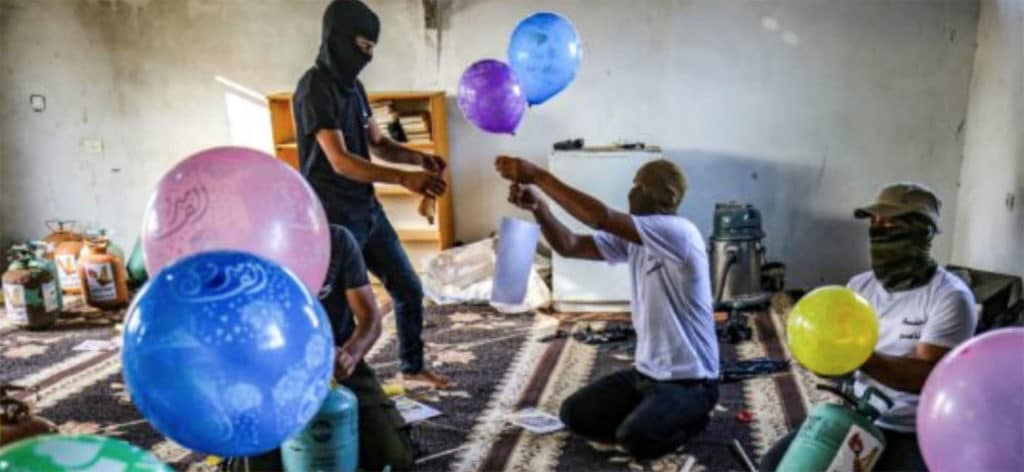
Abuowdeh continued: “Given such procrastination, the public resistance sent several messages, 20 days ago, by launching waves of incendiary balloons toward the border areas to tell the occupation that we will not accept further prevarication nor imposing a new equation.”

“We are waiting for the green light from the higher leadership that if Israel continues to ignore our demands, violent escalation will be inevitable. All units will be on full alert and we will start firing incendiary balloons toward the border areas of the enclave.”

Abu Malek, the spokesperson of Ahfad Al-Nasser, the incendiary balloons unit in Gaza, told The Media Line that “we are in the process of preparing for the next stage.”

He added: “We are waiting for the green light from the higher leadership that if Israel continues to ignore our demands, violent escalation will be inevitable. All units will be on full alert and we will start firing incendiary balloons toward the border areas of the enclave.”

With the challenge of the coming winter’s rainy weather, Abu Malek said that the unit will use new firing methods, such as an explosive charge that has the effect of a rocket.

Abuowdeh suggested that there will be a dramatic and gradual escalation of public resistance activities beginning with launching balloons and up to a “military confrontation with the Israeli occupation.”

Most of the current indications support that theory; however, some observers are more optimistic.

“Everyone, including Hamas and the Palestinian Authority, is waiting for the results of the US presidential election.”

Mkhaimar Abusada, associate professor of political sciences at Al-Azhar University in Gaza City, believes that none of the parties is concerned about an escalation, for several reasons.

“First of all, everyone, including Hamas and the Palestinian Authority, is waiting for the results of the US presidential election … and none is concerned with provoking tension until things get sorted out,” Abusada told The Media Line.

He continued: “Israel has fulfilled some of the demands regarding providing facilitation over the past two months. It allowed fishermen to work within 15 nautical miles, and the Kerem Shalom crossing border remained open, allowing the entrance of more goods.”

For Abusada, lifting the Israeli blockade and fulfilling Palestinian demands is closely tied to achieving progress in a prisoner swap deal between the two sides, which is unlikely to happen now.

Hamas has held two Israeli civilians in Gaza for five years, and is also believed to be holding the remains of two Israeli soldiers killed during the 2014 Gaza war.

“There is a strong pressure by the right and by the soldiers’ families on [Israeli Prime Minister Binyamin] Netanyahu to halt any facilitation for Hamas in order to reach a swap deal. However, the process is taking place at a very slow pace,” Abusada said.

Fighter: Violent Escalation With Israel Inevitable Read More »