fbpx

October 28, 2020

Officials: Visa-Free Israel-UAE Pact Historic – Although Familiar

THE MEDIA LINE — Israel and the United Arab Emirates made history last week by signing a visa exemption treaty, the first such agreement between an Arab nation and the Jewish state.

While Israel has similar pacts with more than 100 countries, border officials and travel security experts explained the differences and challenges the treaty could pose.

“We’re not there yet; this still has to go through several stages of ratification before it comes into effect,” Sabin Hadad, spokeswoman for the Israeli Population and Migration Authority, told The Media Line.

“It might take up to two or three months,” she noted. “For now, Emiratis will still need to apply for a visa at one of our consulates abroad.”

The unprecedented move was announced during last week’s one-day visit by a UAE delegation to Israel. The summit, while lasting only five hours, marked the first official diplomatic foray there by Emirati representatives.

Last month, Israel and the UAE signed the Abraham Accords, which formalize the normalization of diplomatic and trade relations between the two countries.

Pini Schiff, who directed security operations at Ben-Gurion Airport before serving as deputy director general of the Israel Airports Authority, believes the systems and protocols currently in place are sufficient to handle the addition of the UAE to the visa-free list.

“I don’t see any outstanding risk from this, not at all,” he told The Media Line.

“For the past 73 years, people of all nationalities have entered Israel. We have our own resources to monitor potential threats or travelers who pose some level of danger,” he said.

“Basically, there is no real difference if the person entering the country is from an Arab state or European. The protocols are essentially identical,” he explains.

Left unsaid is the fact that the nationals of Egypt and Jordan, with which Israel has long had diplomatic relations, must apply for a visa before traveling to Israel.

Hadad says all the necessary security assessments were conducted before signing the deal.

“Of course, the security authorities expressed their opinion about this,” she said. “Everybody involved had their say and reached the conclusion that we can go through with this.”

The pact between Jerusalem and Abu Dhabi will be identical to all other visa-free agreements, the Interior Ministry told The Media Line. It will allow citizens of the UAE to enter Israel for tourism purposes only for up to three months.

“This is standard. We will treat Emirati tourists just like American ones,” Hadad promised.

“But just like with the US and other countries, there may be exceptions,” she added. “If we identify someone as a security threat or for any other reason, we can decide to ban their entry.”

Fleur Hassan-Nahoum, deputy mayor of Jerusalem in charge of foreign relations, international economic development and tourism, notes the symbolism of the agreement.

“While it’s true that screening people entering Israel for the first time at the airport may pose a security challenge, this shows mutual trust. That’s very important,” she told The Media Line.

Hassan-Nahoum, who founded the UAE-Israel Business Council, has noticed an enormous spike in Emirati interest in traveling to Israel and dealing with its companies.

“The willingness to cooperate with Israel is very high,” she said. “I see it at both the government and business levels.”

Israeli Prime Minister Binyamin Netanyahu promised the landmark deal would “significantly enhance tourism and business between the two nations.” The visa exemption, along with the dozens of weekly flights scheduled to connect the countries, will ensure easy and cheap travel, he said.

“This is a big advantage, sure,” agrees Schiff. “Add that to the fact that the UAE and Saudi Arabia are allowing Israeli planes to fly [through their airspace] and you get huge savings of time and fuel.”

Schiff, who represented the Israeli government in similar air travel negotiations before the signing of the peace treaty with Jordan in 1994, stressed that there is no need to adjust flight security when traveling to or over Gulf states, which until recently refused to recognize Israel’s right to exist.

“Israel has more or less the same strategy or thinking applied when flying over country X and country Y. It’s not like we now have to sit and think this over,” he noted.

While Israel has announced it will normalize ties with Bahrain and Sudan, for now it has reached a visa exemption agreement only with the UAE. But Hadad believes it is only a matter of time before the treaty is expanded.

“I believe Bahrain will happen shortly. Sudan I’m not sure. We’ve only just begun [discussions],” she said. “But it usually comes together, sort of a gesture of goodwill.”

Officials: Visa-Free Israel-UAE Pact Historic – Although Familiar Read More »

Two Weeks After Twitter Bans Holocaust Denial, Twitter’s CEO Says It’s Still Allowed

(JTA) — Two weeks ago, Twitter banned Holocaust denial.

Or did it?

The company announced earlier this month that it would ban posts that “deny or diminish” violent events, including the Holocaust. But in a Senate hearing Wednesday, CEO Jack Dorsey appeared to say that Twitter did not have a policy of removing content denying the Holocaust.

Responding to a question from Sen. Cory Gardner, R-Co., Dorsey said that Holocaust denial is not included among the types of misinformation Twitter bans.

“We have a policy against misinformation in three categories, which are manipulated media, public health, specifically COVID, and civic integrity, election interference and voter suppression,” Dorsey said in a video shared by Yahoo News reporter Alexander Nazaryan. “We do not have a policy or enforcement for any other types of misleading information that you’re mentioning.”

Gardner specifically asked Dorsey: “If somebody denied the Holocaust happened, it’s not misinformation?”

“It’s misleading information,” Dorsey responded. “But we don’t have a policy against that type of misleading information.”

Dorsey’s comments appear to contradict a company spokesperson’s statement to Bloomberg News on October 14 that while the company doesn’t have an explicit policy barring Holocaust denial, it would remove “attempts to deny or diminish” violent events, including the Holocaust.

“We strongly condemn anti-semitism, and hateful conduct has absolutely no place on our service,” a Twitter spokesperson told  “We also have a robust ‘glorification of violence’ policy in place and take action against content that glorifies or praises historical acts of violence and genocide, including the Holocaust.”

Dorsey has yet to publicly clarify his comments, but a Twitter spokesperson responded to a query from the Jewish Telegraphic Agency that appeared to reiterate the company’s earlier statement to Bloomberg.

“Our Hateful Conduct policy prohibits attempts to deny or diminish violent events, and our glorification of violence policy prohibit glorification of genocide including the Holocaust,” the spokesperson said.

Gardner’s questions came during a hearing on social media content moderation in the Senate Commerce Committee. The hearing was convened after social media platforms, including Twitter, limited or blocked the spread of an article reporting unsubstantiated corruption allegations about Joe Biden and his family. Twitter has also hidden or flagged previous posts by President Donald Trump for contravening its guidelines.

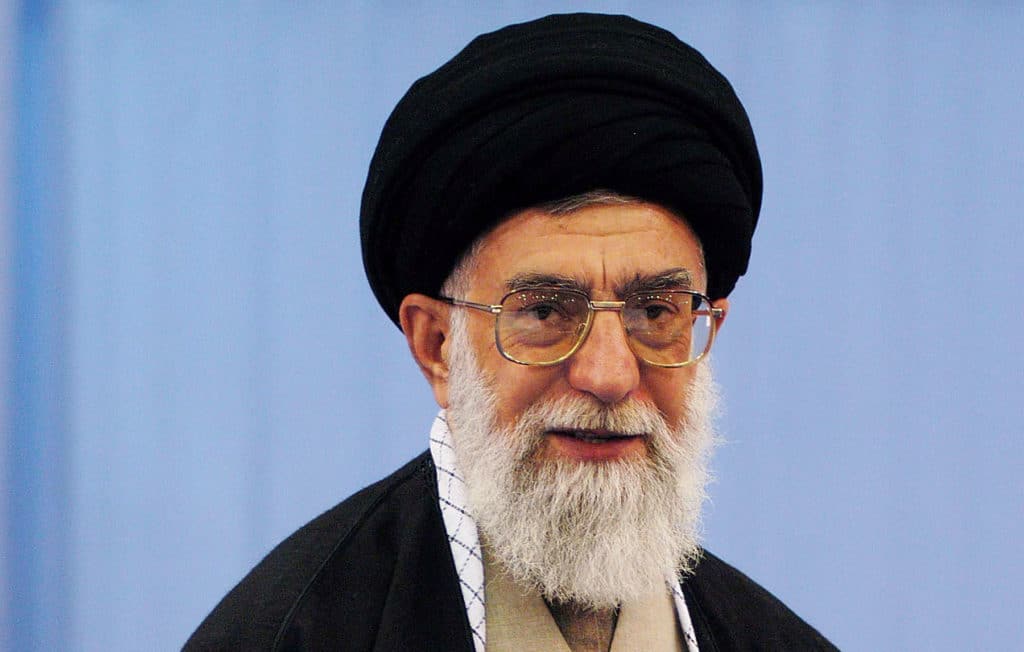
Given that Twitter had taken action against Trump’s tweets, Gardner asked Dorsey why Twitter did not block posts by Iranian Ayatollah Ali Khamenei that question the veracity of the Holocaust. As if to test the policy, Khamenei tweeted Wednesday, following Dorsey’s comments, “why is it a crime to raise doubts about the Holocaust?”

The Senate hearing is also discussing Section 230 of the Communications Decency Act, a legal provision that absolves social media companies of responsibility for most illegal content published on their platforms. Officials on both sides of the aisle have called for Section 230 to be reexamined.

Twitter’s earlier announcement of a ban on Holocaust denial came amid a crackdown by social media companies on anti-Semitism and hate speech. Two days earlier, Facebook announced a ban on Holocaust denial after years in which the company’s CEO, Mark Zuckerberg, had repeatedly defended Holocaust denial as acceptable speech. In recent weeks, YouTube and TikTok have also announced policies limiting hate speech and disinformation.

Twitter’s approach to Khamenei’s tweets, particularly those that call for the elimination of Israel, was also questioned earlier this year in a hearing in the Israeli Knesset. A Twitter official said those tweets did not violate company guidelines.

“We have an approach toward leaders that says that direct interactions with fellow public figures, comments on political issues of the day, or foreign policy saber-rattling on military-economic issues are generally not in violation of our rules,” said Ylwa Pettersson, Twitter’s policy head for Israel and Nordic countries.

Two Weeks After Twitter Bans Holocaust Denial, Twitter’s CEO Says It’s Still Allowed Read More »

Khamenei Tweets ‘Why Is It a Crime to Raise Questions About the Holocaust?’ After Twitter Says It Won’t Ban Holocaust Denial

Ayatollah Ali Khamenei issued a tweet on October 28 raising questions about the Holocaust after Twitter CEO Jack Dorsey said earlier in the day Twitter is not banning Holocaust denial from its platform.

Khamenei’s full tweet read: “The next question to ask is: why is it a crime to raise doubts about the Holocaust? Why should anyone who writes about such doubts be imprisoned while insulting the Prophet (pbuh) is allowed?”


Jewish groups asked Twitter why Khamenei’s tweet is allowed to remain on the platform.

“Holocaust denialism is #hate, pure & simple,” Anti-Defamation League CEO Jonathan Greenblatt tweeted. “If you had any doubts about the decency of Iran’s leadership, this tells you everything you need to know. Moreover, why is Khameni permitted to consistently espouse #antisemitism that clearly violates Twitter’s policy on #hate speech?”


The Simon Wiesenthal Center similarly tweeted, “No Ayatollah the real question is why @Twitter gives you free pass to use their platform to push your genocidal threats of Final Solution against the world’s largest Jewish community-the Democratic State of #Israel.”


Earlier in the day, Sen. Cory Gardner (R-Col.) asked Dorsey during a Senate hearing about the social media platform’s stance on Holocaust denial, prompting to Dorsey to respond: “We have a policy against misinformation in three categories, which are manipulated media, public health, specifically COVID, and civic integrity, election interference and voter suppression. We do not have a policy or enforcement for any other types of misleading information that you’re mentioning.”

Dorsey then said that Holocaust denial is “misleading information, but we don’t have a policy against that type of misleading information.”

Former New York Times Opinions Editor Bari Weiss tweeted, “Just making sure I’ve got this @Twitter, @jack: oppo dump on [Joe] Biden is misinformation and Holocaust denial is not?” Weiss seemed to be referencing Twitter blocking people from linking to a New York Post article on Hunter Biden’s laptop.


Brooke Goldstein, executive director of The Lawfare Project, similarly said in a statement, “Jack Dorsey told the U.S. Senate that Twitter has no problem with Holocaust denial, one of the most despicable and dangerous forms of Jew Hatred. Allowing the proliferation of Holocaust denial while suppressing other forms of speech is sending a message that it is ok to target Jews.”

However, a Twitter spokesperson seemed to contradict Dorsey in a statement to Jewish Telegraphic Agency.

“Our Hateful Conduct policy prohibits attempts to deny or diminish violent events, and our glorification of violence policy prohibit glorification of genocide including the Holocaust,” the spokesperson said.

In July, a Twitter official told the Israeli Knesset that Khamenei’s tweets are allowed because they’re just “foreign policy saber rattling.”

Khamenei Tweets ‘Why Is It a Crime to Raise Questions About the Holocaust?’ After Twitter Says It Won’t Ban Holocaust Denial Read More »

US Lifts Limits on Scientific Grants to Israel in West Bank, Golan

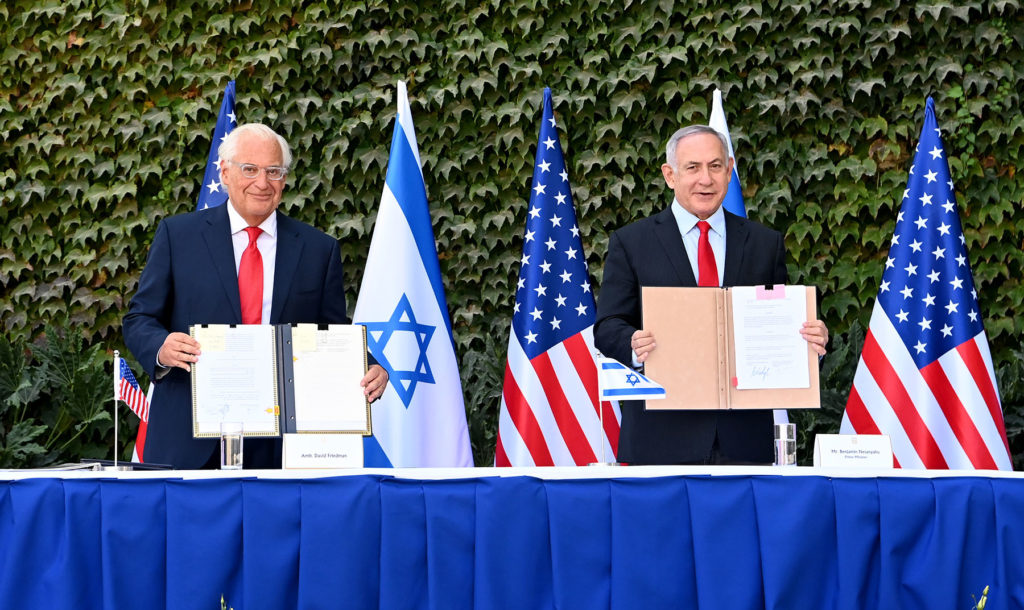
THE MEDIA LINE — Israeli Prime Minister Binyamin Netanyahu and US Ambassador to Israel David Friedman signed an agreement on Wednesday to extend scientific cooperation to Israeli projects in the West Bank and Golan Heights, which the Jewish state conquered in the 1967 war.

The contract, which removes geographical limitations on joint US-Israeli research-and-development projects, marks a significant shift from Washington’s long-held policy of withholding taxpayers’ money from projects conducted on disputed land.

The signing ceremony occurred at Ariel University, in the West Bank settlement of Ariel.

“These geographic restrictions no longer comport with our foreign policy,” Friedman said in his opening remarks.

Since President Donald Trump’s administration no longer views Israeli settlements “as per se inconsistent with international law,” this decision is “righting an old wrong,” he said.

“We are depoliticizing a process that should never have been political in the first place,” he stated.

Netanyahu thanked the US government, saying the policy change marked an “important victory against all who seek to delegitimize everything Israeli” beyond the old pre-1967 border.

“By rejecting the failed mantras of the past, the Trump vision opens Judea and Samaria to academic, commercial and scientific engagement with the US,” he said, using the West Bank’s biblical names.

“To those malevolent boycotters,” he continued, “I have a simple message today: You are wrong and you will fail.”

The agreements modified on Wednesday concern three funds established after the 1967 war, when the US and Israeli governments opened formal ties in academic, research and technological cooperation regarding science, industry and agriculture.

The 1972 Binational Science Foundation, the 1976 Binational Industrial Research and Development foundation and the 1977 Binational Agricultural Research and Development Fund all contained – until Wednesday – language barring investments in institutions or research projects in the West Bank or Golan Heights.

“Until today, funds from the US government were shut off for Ariel University researchers; we just couldn’t apply for them,” its vice chairman and dean for research and development, Prof. Itzhaq Shai, told The Media Line.

“We’re talking about pretty big money,” he noted. “Entire labs can live off these grants, and researchers have built their entire academic careers with their help. This could be a real accelerator.”

Yet Shai also tempered expectations.

“It’s hard to say [what effect this will have]. They’ve only just been opened to us today, and not everyone who applies will receive grants. These are very competitive and prestigious foundations,” he explained.

“It might take some time, but our researchers will begin applying as soon as the next round opens this December,” he continued. “I hope some will win.”

Ariel University’s legitimacy has been controversial.

Because it is beyond the so-called Green Line – meaning in territory that is not under Israeli civilian law – the university was once considered separate from the rest of the country’s higher-education system. In the past few years, though, Netanyahu and successive education ministers have successfully fought Israel’s independent Council for Higher Education, which balked at providing funds and official recognition for the university out of fear of alienating European partners and global cooperation ventures.

“I’ve been [in Ariel] since 2012, and this subject of legitimacy and foreign grants has come up over and over again,” Shai said. “Our pressure on the decision-makers has been consistent, and today it paid off.”

Last year, Trump signed a proclamation recognizing Israeli sovereignty over the northern Golan Heights, and later declared that the US would no longer consider West Bank settlements to be in violation of international law.

The Palestinian Authority condemned Wednesday’s changes.

“Today’s event affirms that annexation is an ongoing process under full US support,” the PA’s Negotiations Affairs Department said in a statement.

“The international community has a responsibility… to exclude Israeli settlements from any deals with Israel…. We reiterate our call upon all educational institutions worldwide not to cooperate or engage with any Israeli institution operating in the occupied state of Palestine,” it added.

Osama Al-Qawasmi, a spokesperson for the Fatah movement, whose members include Palestinian Authority President Mahmoud Abbas, told The Media Line: “This agreement will contribute negatively to peace, will deepen the occupation and will damage the two-state solution.”

As such, he said, Fatah condemns these actions.

“The only way to achieve peace and security for all is the two-state solution, based on international law, equality and freedom for all,” Qawasmi added.

Nevertheless, many see Wednesday’s American gesture as a consolation prize from the Trump Administration to Netanyahu, who said he was postponing plans to annex parts of the West Bank in order to sign normalization accords with the United Arab Emirates and Bahrain.

In a sign of just how unhappy many settlers have become with the prime minister over this issue, the mayors of all Jewish townships in the West Bank boycotted Wednesday’s event.

Ever since Netanyahu announced that the annexation was being delayed to an unspecified date, local right-wing leaders have repeatedly accused him of betraying Jewish settlers.

US Lifts Limits on Scientific Grants to Israel in West Bank, Golan Read More »

The Simple Mindset Change That Would Transform the Israel-Diaspora Relationship

American and Israeli Jews have a sharp difference of opinion about President Trump, the Israeli-Palestinian peace process, and what it means to be Jewish. More than just a harmless  ideological gap, these differences can drive an intense cultural wedge between the two communities. What should we do about it?

Two years ago, I attended the General Assembly of the Jewish Federations of North America in Tel Aviv. One of the best presenters at the conference polled the audience on the relationship between Israeli and North American Jews. Although 20 percent of the audience described the relationship as “thriving” or “stable,” the remaining 80 percent said it was “wounded” or “in critical condition.”

Statistics from a 2017 Pew Research Center survey illustrated this divide. When asked to describe Israel’s biggest long-term problem, two-thirds of American Jews — but just 38 percent of Israeli Jews — cited security issues. And 39 percent of Israeli Jews — but only one percent of American Jews — mentioned economic difficulties.

The differences between the two communities also applied to their religious observance and social circles. Fifty-six percent of Israelis said they usually light candles on Shabbat, compared to only 23 percent of Americans. Ninety-eight percent of Israeli Jews said that either all or most of their friends are Jewish, compared to only 32 percent of American Jews.

But no topic highlights the split between American and Israeli Jews better than their views of President Donald Trump and former Vice President Joe Biden. According to a survey published by the American Jewish Committee (AJC) last week, 75 percent of American Jews would choose Biden, and 22 percent would choose Trump. According to an i24News poll released earlier this month, 63 percent of Israelis prefer Trump, compared to only 19 percent who preferred Biden. We know that after the election results are in, the majority of Jews in one group will react in one way, while most in the other will have the opposite response.

Faced with the reality of these differences, what do we do next?

First, we need to understand that differences in Jewish opinion is not the problem. While this notion has almost become hackneyed at this point, we need to internalize and embrace this reality as part of our spiritual DNA. Healthy disagreement and civil debate are core values of our tradition. We know the rabbis of the Talmud held competing views. We know that rejected opinions are integral to our religious literature. And we know that while the medieval commentators, the Rishonim, agreed on most of the pillars of Judaism, they engaged in fiery debates about the chronology, historicity, and meaning of the Torah.

we need to understand that differences in Jewish opinion is not the problem.

But it’s more than that. Trying to get American and Israeli Jews to see every issue in the same way not only runs counter to our tradition — it is Sisyphean. In “The Righteous Mind: Why Good People are Divided by Politics and Religion,” Jonathan Haidt argues that people are “groupish” in addition to being driven by (enlightened) self-interest. We promote our interests in competition with our peers, but we also promote our group’s interest in competition with other groups. We have been hardwired for this behavior through a few hundred thousand years of evolution, in which the more cohesive a group was, the more likely it was to succeed. We are unlikely to “convert” members of other groups to see things the way our own does.

Although Haidt cautions that our groupish instincts can facilitate war, genocide, and aggression, he notes that groupishness can be leveraged to promote altruism, morality, and cooperation. According to his “hive psychology hypothesis,” human nature is 90 percent like “chimpanzees” and 10 percent like “bees.” Although we are mostly driven for individual competition, we have the ability, under special circumstances, to cooperate with members of our own group and with other groups as well.

Commenting on this phenomenon, the evolutionary biologist Richard Dawkins wrote we need to “maximize the benefits of our hivishness while minimizing its negative externalities.” How can we work together beyond our immediate circles? How can we use our groupish tendencies to promote cooperation between American and Israeli Jews rather than division?

We need to accept that these two communities have different experiences and perspectives. Rather than trying to convert one another, let’s try to understand one another.

We need to accept that these two communities have different experiences and perspectives. Rather than trying to convert one another, let’s try to understand one another.

Where are Israelis coming from? Although Israel is one of the most powerful countries in the world, it is surrounded by Hezbollah, Hamas, ISIS, and other terrorist groups. Israelis experience a sense of vulnerability as their daily reality, and they want security. Because they are repeatedly singled out for unfair treatment at the UN and often feel maligned by European governments, Israelis want the support of other countries and leaders. So to have Donald Trump say that he unwaveringly supports Israel — and to have him move the embassy to Jerusalem and announce the normalization of relations with the UAE, Bahrain, and Sudan — allays these doubts and concerns. And it runs even deeper: Israelis are often tired of promises of world peace, and some are now suggesting to try to shrink the conflict as opposed to “solve” it. Trump is viewed as the leader who understands that; former President Barack Obama and Vice President Biden are perceived as reflecting a misguided and naive idea that the Middle East conflict will be solved.

The American Jewish community lives with a different daily reality. They are likely to vote based on their own set of immediate concerns: the COVID-19 pandemic, health care, the economy, and race relations, according to the AJC survey. For many American Jews, the values of social justice and tikkun olam, including equal rights and dignity for all people, are essential to who they are and how they vote. Given their values and experience, it’s not surprising that a majority would vote for Biden, especially as he, too, has a record of supporting Israel.

Mutually understanding one another is an important step toward healing the divide between the two communities, but our efforts cannot stop there. Haidt argues that to activate the 10 percent of our nature that is inclined to collaborate, we need to rally around a common purpose. To improve the relationship between Israeli and American Jews, we need to recognize our shared destiny and commit to working toward that future together. A story in the Torah illustrates what this transformation in mindset looks like.

To improve the relationship between Israeli and American Jews, we need to recognize our shared destiny and commit to working toward that future together.

When the Jewish people were about to enter the Promised Land, they had already endured years of slavery and persecution in Egypt. They had spent 40 years in the wilderness, living without normal security or provisions outside of divine protection and not knowing what the future would hold. After undergoing all of these trials, the tribes of Reuben and Gad say they do not want to enter the Promised Land.

Initially, Moses balks at their request, asking almost incredulously, “Shall your brothers go to war while you sit here?” Ultimately, the tribes of Reuben and Gad give their commitment to Moses that they would not abandon the community, Knesset Yisrael, in fulfilling its shared mission and would never sow discord. The tribes firmly assert, “We will not return to our homes until each one of the Israelites has inherited his portion.” They join the rest of the tribes in the conquest of the Land of Israel and, along with half of the tribe of Menashe, settle on the other side of the Jordan River.

This story is instructive for dealing with divisions in the Jewish community today. Moses does not try to force the two tribes to live in the Land of Israel against their own best interests. Instead, he accepts their desires but stipulates that they cannot abdicate their responsibility to the Jewish people and the destiny they all shared (conquering Israel and creating a Jewish national entity). For their part, the tribes of Reuben and Gad do not abandon their own values and self-interest. But they are willing to make sacrifices out of a recognition that they are part of Knesset Yisrael.

Making this story even more pertinent is the often omitted epilogue, which appears in the book of Joshua. After Canaan is conquered and the two tribes want to return to their plots outside the promised land, they again face backlash. This time, Joshua’s main concern is that living in separate geographical locations will result in separate religions. In response, the tribes of Reuben and Gad create a pact that they will continue to worship the same God. The message of this story, which reinforces the beginning of it, is that we share a creed, a message, and a bond that transcends our zipcode.

There are times when we need to transcend the interests of our own group and work together with our entire community. The reality is that as Jews, we have automatic membership in the Jewish people — whether or not we see ourselves that way. Rabbi Joseph B. Soloveitchik captured this idea when he wrote that the Jewish people are bound by a “covenant of fate” (brit goral) and a “covenant of destiny” (brit yeud). The “covenant of fate” refers to what happens to us as a collective Jewish community, regardless of where we live, who we vote for, and which synagogue we attend. The “covenant of destiny” refers to our actions and the work the Jewish people are called to do together.

There are some who would respond to what I am arguing by saying, “It sounds good in theory to work together and focus on the goals we all share, but this won’t work in practice because my values are incompatible with their values. How will this work when the two groups have values that conflict?”

Years ago, Rabbi David Cooper of Kehilla Community Synagogue suggested that there are both “prophets” and “guardians” within the Jewish community. The priority of “prophets” is to hold Israel and the Jewish people accountable for being a light unto the nations, call out oppression against all people, and build a future that is more just and compassionate. The instinct of “guardians” is to ensure the security of Israel and the Jewish people, preserve our lives and traditions, and continue to have autonomy in our ancient homeland.

Of course, it’s a gross oversimplification to say that everyone is either a “prophet” or a “guardian.” Most of us can relate to both of these perspectives, and both personae can reside within the same individual. At the same time, many of us may be inclined toward one approach over the other.

But let’s assume, for the moment, that the world is divided into “prophets” and “guardians.” Although these two perspectives can seem worlds apart, they make us who we are as a Jewish community. If we can accept that reality and people with different perspectives, then we will not only improve our coexistence — we will also strengthen one another and our communities as well. At the end of the day, the guardian and the prophet need each other. The guardian needs to be reminded by the prophet: “If we are only for ourselves, who are we?” And the prophet needs to be reminded by the guardian: “If we are not for ourselves, who will be?”

Too often, however, we see things only through our own lens. Social media amplifies this tunnel vision. We don’t need to change our fundamental views, but we must get out of our virtual and real-life echo chambers. Let’s “zoom out” of our perspective to recognize that the way we see things is a vital and necessary part of the big picture. Without acknowledging and appreciating the value of other perspectives, our own ideas are weaker. It is not a matter of courtesy to do this, but a necessity.

We don’t need to change our fundamental views, but we must get out of our virtual and real-life echo chambers.

We should apply this approach to the relationship between Israeli and American Jews. Already, some organizations — such as the Z3 Project, Reverse Birthright, Interwoven, and the Jewish Peoplehood Coalition — are helping bridge this divide. At OpenDor Media, a non-profit Jewish media company, where I am senior vice president, we are collaborating with the Z3 Project to create a series of short films about pressing Jewish issues that impact and connect Israeli, American, and world Jewry. The Z3 Project experiments in new ways for these two communities to connect, exchange ideas, and even make collective decisions together. We share their commitment to helping the Jewish community transcend our differences, strengthen our sense of peoplehood, and embrace our shared destiny together.

Soloveitchik’s covenants of fate and destiny still bind our entire community today. Having this awareness and being willing to work together to build our shared future is critical to Israeli and American Jews’ relationship. After all, we are members not only of the American Jewish community or the Israeli Jewish community, but also of Knesset Yisrael, with work that is meant for all of us to do together. If enough of us make this simple yet powerful switch in mindset, we will have a chance to heal this rift and work together to create a brighter future for the Jewish people.


Dr. Noam L. Weissman is the Senior Vice President of OpenDor Media, which seeks to explore Israel and the Jewish story in all its complexity.

The Simple Mindset Change That Would Transform the Israel-Diaspora Relationship Read More »

A Children’s Jewish Book that Addresses Parental Conversion

Midrash Tanhuma (Lech Lecha 6:32) states, “Dearer to God than all of the Israelites who stood at Mount Sinai is the convert. Had the Israelites not witnessed the lightning, thunder, and quaking mountain, and had they not heard the sounds of the shofar, they would not have accepted the Torah. But the convert, who did not see or hear any of these things, surrendered to God and accepted the yoke of heaven. Can anyone be dearer to God than such a person?”

After reading Kylie Ora Lobell’s new children’s book, Jewish Just Like You, about a parent’s conversion to Judaism, one has to ask whether any piece of Jewish children’s literature can be dearer than the heartwarming words of a mother who chose to become Jewish.

Lobell, a Los Angeles-based writer and regular contributor to the Journal, told me she had the idea for the book even before she became pregnant with her daughter, Tzofia Chana, who recently turned one.

Through charming rhymes and vibrant illustrations by Barbara Mendes, Jewish Just Like You is told through the voice of a mother who shares her story of conversion in a way that’s simple, yet deeply meaningful: “Mommy was a kid like you, but Mommy was not born a Jew.”

“I’ve read hundreds of different stories to my children, and now, I read them to my grandchildren, and this is the first book I have seen that helps explain the concept of conversion to young children,” said Judy Gruen, author of The Skeptic and the Rabbi: Falling in Love with Faith. “It is a welcome addition to Jewish kiddie lit that embraces the growing diversity within the religious Jewish world.”

One of the most endearing and important traits of Lobell’s book is its positive and inclusive recognition of non-Jewish grandparents, which might resonate with many Jewish converts who want to ensure a deep connection between their parents and their children.

It often was the case that a parent waited until a child was older to share the story of a conversion, but Lobell shows it can be done from the earliest stage in a child’s life. In doing so, she reminds us that storytelling is a powerful tool in creating a new, more welcoming era of Jewish inclusion — one that focuses on reclaiming previously stigmatized issues.

Lobell reminds us that storytelling is a powerful tool in creating a new, more welcoming era of Jewish inclusion.

Lobell, 31, who converted to Judaism in 2015 after five years of study, shared about the journey that led to Jewish Just Like You, which debuted in mid-October and currently is ranked number one for children’s Jewish fiction books on Amazon.

Jewish Journal: When did you first begin thinking of a children’s book about a parent’s conversion?

Kylie Ora Lobell: I was in an arts program at American Jewish University for Jewish artists around Los Angeles. We met in the lovely library there every month. During one session, I was looking around the library at the books and thought, “Why isn’t there a children’s book on conversion?” It was my lightbulb moment. I looked it up and it didn’t exist. I knew I had to be the one to write it. I’ve been writing about my conversion ever since I started the process.

JJ: What inspired you to write Jewish Just Like You

KL: I started the book in 2018, before I became pregnant with our first child. I didn’t know I was going to get pregnant soon, and I certainly didn’t know I was going to have a girl — we found out when I gave birth. So I wrote it with the Ruach HaKodesh (the spirit of a holy God) that I’d get pregnant and have a girl.

And the book didn’t exist. Children of converts may be very confused when they go to their non-Jewish side of the family’s house and everyone is eating non-kosher and celebrating Christmas. How do you explain that? I wanted my future children to know that both the non-Jewish and Jewish family members have their own unique traditions, and no matter what, everybody loves them just the same. My husband, Daniel, and I consider ourselves Orthodox Jews. We’re already a minority of a minority and since I’m a convert, a triple minority. I wanted our future children to understand where they came from and how sincere my conversion was.

JJ: Yours is the first book of its kind for the children of converts. Why is such a book necessary?

KL: It can be confusing to be the child of a convert. There might also be a stigma attached to it. I wanted our future children to know that they, and their mommy, were just as Jewish as people who were born Jewish. That’s what the Torah teaches us. They should never forget it.

JJ: Can you share more about how the book came together?

KL: Barbara Mendes is my favorite artist. My husband and I met her a few years ago after passing her beautiful studio on Robertson Boulevard. I knew I wanted her to illustrate it, and she did a beautiful job. I wrote the book and then got help from our friend Zach Sherwin, an incredible rapper and comedian who wrote “JAP Battle” from “Crazy Ex-Girlfriend,” which is one of the best Jewish songs of all time. He helped me perfect my rhymes. Then, my sister-in-law, Jordana Lobell, who does ketubah art, beautifully illustrated my borders, and I hired Rae Shagalov, a Jewish coloring book artist in the La Brea neighborhood, to help me lay it out. I self-published on Amazon two years after starting it. It takes a long time, but it’s well worth it.

JJ: What made you decide to self-publish?

KL: I shopped it around to every Jewish publisher, and only one wanted to take it on. But they wanted to change a lot about it. This was my vision and I wasn’t having it. I mistakenly thought self-publishing was not a good idea because it’s looked down upon. Then I met so many self-published authors and they told me it’s a better option because it’s cheaper and you make a lot more money per book. I was so disappointed by the publishers rejecting me and it held me up for several months. But then I thought, who cares? In today’s day and age, you don’t need to please the gatekeepers anymore. The gate is wide open for everyone. And I encourage everyone who has a creative idea to take advantage of it.

JJ: How does it feel to read the book to your daughter?

KL: Whenever I read to my daughter, she usually tries to eat the book. She loves the colorful illustrations. I look forward to reading it to her and explaining my background when she can understand it. I hope she finds the book tasty too, though.

JJ: Who is the intended audience for this book?

KL: All Jewish kids. But adults too! Who doesn’t know a convert? And if they do, do they really know what it’s like to be one? It could really help people understand converts much better. Everyone will love the cool rhymes, the heartwarming story, and the beautiful illustrations.

JJ: How would you suggest that mothers who were born Jewish read the book to their children?

KL: As I said, everyone knows a convert. And if you think you don’t, you still do. Or someone in their family converted. It can be a touchy subject, so sometimes people don’t want to bring it up. This is a way of showing all Jewish people that people who convert are very sincere and it’s as if they were born Jews in the first place. It can teach everyone to be more respectful toward us and include us in their communities.

JJ: Any future children’s books in the works, including one for a father who’s converted?

KL: This is intended to be for the children of converts first and foremost, whether it’s the mother or father. The wheels are still turning for more ideas. But perhaps I’ll write some on Sukkot and Shavuot, two of my favorite Jewish holidays! Pesach is the absolute best, but that market is saturated I’m sure.

JJ: Have any publishers or organizations, including PJ Library, approached you about the book?

KL: No. They all rejected me. I hope they come around.


Tabby Refael is a Los Angeles-based writer, speaker and activist.

A Children’s Jewish Book that Addresses Parental Conversion Read More »

Philadelphia BLM Protesters Call Jews ‘Synagogue of Satan’

A video circulating on social media shows a group of Black Lives Matter (BLM) protesters in Philadelphia telling Jews to leave, with one protester calling them the “Synagogue of Satan.”

The video, which was taken on October 27, shows the person filming approaching three Jewish men — two of whom are wearing kippot — and stating, “Amalek. Amalek. What y’all doing down here? You don’t live here!”

Amalek is a likely reference to the ancient Amalek tribe, the first enemy of the ancient Israelites, according to Jewish Virtual Library.

One of the Jewish men says they don’t live too far away from the protest; another says they’re there “to show solidarity.” Others can be heard saying “this ain’t your fight” and “get the f— out of here” to the Jewish men. One individual in a mask can be seen pushing one of the Jewish men.

As the Jewish men walk away, the man filming the encounter can be heard saying, “Philly waking up! Revelation 2:9 Synagogue of Satan!”

https://twitter.com/KittyLists/status/1321340465724026880?s=20

Various Twitter accounts condemned the filmed encounter as anti-Semitic.

“40 years of Farrakhan’s @LouisFarrakhan themes of poisonous Jew hatred now embedded among young protesters,” the Simon Wiesenthal Center tweeted. “Synagogue of Satan, denial that we are real Jews. Political leaders, media silent.”


Yaacov Behrman, who does public relations for Chabad Lubavitch and the public safety chair for a local Democratic Party district committee, similarly tweeted, “Orthodox Jews violently attacked by mob @ BLM protest last night in Philly. They told protesters they were there to show solidarity. Mob shouted anti Semitic & racist hate as they assaulted victims. Spoke to victim, says he feared for his life. This needs to be condemned by all!”

Liora Rez, director of the Stop Antisemitism.org watchdog, said in a statement to the Journal, “From the Civil Rights Movement to Ferguson to today’s BLM protest nationally, Jews have been right by the side of the African American community. This physical and verbal assault is a spit in our faces and we demand this be addressed by the likes of Al Sharpton, Jesse Jackson, and the NAACP. We have enough division in this country, the African American leaders need to step up and denounce this immediately!”

The protests occurred after police shot and killed 27-year-old Walter Wallace Jr., a Black man, in front of his family. Video footage shows Wallace holding a knife and starting to walk toward a couple of officers before the police officers fire their weapons at him. Wallace’s family has said that he suffered from mental health issues and that an ambulance was called first before the police were called.

Shaka Johnson, the Wallace family attorney, told CNN, “The officers did not have what they needed. There wasn’t a less than lethal option available. They didn’t have Tasers. A person is in mental decline and in crisis.”

Police Commissioner Danielle Outlaw told a local ABC affiliate, “Every police officer is not issued a taser at this time. We requested additional funds so we could continue to outfit our officers with tasers.”

Philadelphia BLM Protesters Call Jews ‘Synagogue of Satan’ Read More »

Award-winning Documentary ‘The Last Sermon’ Set for Digital Release (with VIDEO)

THE MEDIA LINE — The award-winning documentary film The Last Sermon is set to premiere on digital platforms on December 15, Gravitas Ventures, a Red Arrow Studios company and leading distributor of independent films, has announced.

Directed and produced by Jack Baxter and Joshua Faudem, the movie follows the two filmmakers, who survived the 2003 suicide bombing attack at Mike’s Place music bar in Tel Aviv, as they travel across Europe in a bid to uncover the roots of religious extremism.

The Tel Aviv bombing was perpetrated by British Muslims affiliated with Hamas and the Al Aqsa Martyrs Brigades at the height of the Second Intifada, resulting in the deaths of three people and wounding of 50 others.

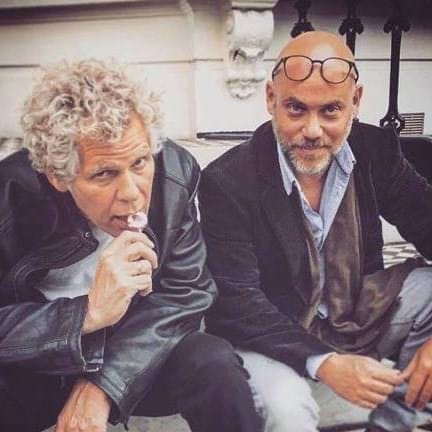
Jack Baxter and Joshua Faudem are shown in London in 2017. (Avi Levi)

In the film, Baxter and Faudem visit refugee camps, mosques and other sites as they attempt to learn more about the terrorists who tried to kill them.

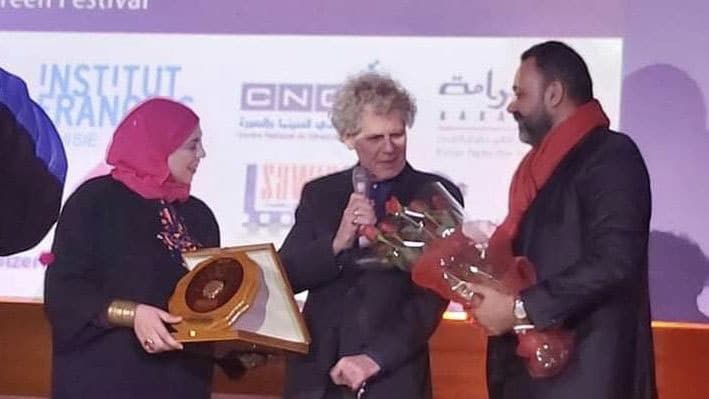
The Last Sermon had its world premiere at the 2020 International Human Rights Film Festival in Tunis, where it won the Prix de l’Espoir. In the United States, the film premiered at the 10th Queens World Film Festival, where it won Best Documentary Feature and the Truth Seeker Award.

To view the film trailer, click below.


“I truly believe that The Last Sermon of Prophet Muhammad, peace be upon him, has the power to change the perceptions of Muslims and non-Muslims alike,” Baxter told The Media Line.

“It is a message of our common humanity, regardless of race and ethnicity, that needs to be known and understood by everyone, everywhere. Our film is a vehicle to communicate that sentiment to a worldwide audience,” he said.

Felice Friedson, president and CEO of The Media Line and a producer of The Last Sermon, said: “Jack Baxter and Joshua Faudem faced evil in the eye the day Mike’s Place was blown up. The Last Sermon is a film that sheds light on their search for understanding Islam.”

A version with German subtitles will be released before the wider global digital release, with a 48-hour public streaming window exclusively within Germany from December 4 to 6.

The event will feature Dr. Iyad Al-Dajani, a Palestinian peacemaker and reconciliation scholar, as well as a musical performance from Palestinian-Syrian refugee Aeham Ahmad, also known as “The Pianist of Yarmouk.”

Funds raised from the event are earmarked for the Moabit hilft e.V. Refugee Aid Initiative in Berlin, which is featured in the documentary.

Baxter notes he is hoping to broadcast the film in Israel as well in December, pending distribution deals that are already in the works.

“When I awoke from my coma after three days at Tel Aviv’s Ichilov Hospital, the reporters asked me what I thought about the two British Muslim terrorists who attacked Mike’s Place,” he recounted.

“I told them that the essence of Islam is Prophet Muhammad’s Last Sermon, and ‘murder’ is not part of Islam,” he said. “I believed that in 2003, and I stand by it now in 2020.”

Friedson moderated an interfaith panel that included Dijani, Baxter, Faudem, Rabbi Yehuda Glick, Imam Mustafa Sway, Osnat Kollek, Rabbi Michael Melchior and journalist Dima Abu Maria.

“The Media Line was proudly involved in the opening stages of production and is delighted to see this documentary given the exposure it well deserves,” she said.

Award-winning Documentary ‘The Last Sermon’ Set for Digital Release (with VIDEO) Read More »

Table for Five: Lech Lecha

Edited by Salvador Litvak, the Accidental Talmudist

I will not take so much as a thread or a sandal strap from what is yours, so that you shall not say, ‘I made Abram wealthy.’ – Gen. 14:23


Rabbanit Alissa Thomas-Newborn

B’nai David-Judea Congregation

Avram’s response is curious. He accepted gifts from Pharaoh and later from Avimelech, so why not from the king of Sodom? Tur HaAroch explains that Avram intended not to benefit from an ‘adam rasha’ (a wicked person). This detail transforms Avram’s potentially arbitrary stance into a deep lesson in morality, including upholding it when it’s inconvenient.

It is clear to Avram that benefitting from someone who has acted immorally (as the king of Sodom had) makes him complicit in that same wickedness. What’s all the more fascinating is that our tradition teaches that Avram’s decision is rewarded with the mitzvot of tzitzit and tefillin– both mitzvot that emphasize an awareness of God at all times.

This story yields a two-fold lesson: First, we can choose to distance ourselves from immorality, which can sometimes mean forgoing personal benefit. And second, ultimately everything we have in this world comes from God. Neither Pharaoh, nor the king of Sodom, nor Avimelech made Avram prosperous. God did. And the spiritual reward for Avram’s words confirms it.

As we read the entire story of Avraham, let’s reflect on how we can better walk in his footsteps as Jews. What and whom do we choose to surround ourselves with and why? What does it look like for us to personally uphold morality even when it’s inconvenient? How can we better internalize gratitude to God for all we have and enjoy? May God bless us as He did Avraham– with the riches of wisdom, courage, and faith.


Rabbi Avraham Greenstein

AJRCA Professor of Hebrew

In this verse, the patriarch Abraham (at this moment still called Abram) displays the generosity and humble faith for which he is well known in Jewish tradition. He refuses payment of any sort for defeating the four eastern kings, and he allows the king of Sodom to keep all of the spoils of war. Abraham trusts that God will fulfill His promise to make him wealthy in a manner that more directly shows that it was the fulfillment of a divine promise rather than serendipity or the product of Abraham’s own initiative. He prefers that the name of God be glorified rather than his own.

The Mishna in Avot (5:19) describes those who emulate Abraham’s generosity, selflessness, and humility as his “students.” Abraham the patriarch is not merely the progenitor of a nation, an Abram (a “Distinguished Father”). Rather he is also a teacher and role model for all of humanity, an Abraham, a “Father Figure to a Multitude of Nations.”

With this in mind, it is worth noting whom Abraham is addressing in this verse. He is addressing the king of Sodom, a city known for its official lack of generosity (Avot 5:10). Abraham is modeling to Sodom a generosity and lack of self-interest that he hopes makes an impression on this people and its culture. Even later when Sodom proves irredeemable and is sentenced to destruction, like a good father Abraham prays on their behalf. Abraham does not give up on any human being, and neither should we.


Rabbi Miriam Hamrell

ahavattorahla.org

We recite in our daily prayers that for doing Gemilut Hasadim, Deeds of Loving-Kindness, one is rewarded with a portion both in this world and in the world to come. When Abram rescued his nephew Lot from captivity, he not only risked his own life and displayed a supreme degree of love, but he also Rescued the Captive, Pidyon Shevuyim which is considered throughout our tumultuous history as a cardinal obligation.

According to Maimonides (12C), Rescuing the Captive is more important than giving charity to the poor. The Talmud teaches that one may even use money saved for building a synagogue for rescuing Jews from captivity. If for some reason one delays freeing the captive, it is considered as if he was murdered. Abram became our ethical model for this important Mitzvah. He believed that Loving-Kindness and Freeing the Captive were among the highest ways to serve God. When the king offered Abram the riches of war spoils, Abram refuses to accept, “even a thread or a sandal’s strap!” He refused to “owe” him a favor, or for the king to take credit for his wealth. After all, why should Abram accept monetary wealth when the real reward is being in a loving-kindness relationship with God, which is worth more than all the riches of the world.

May we be blessed with many opportunities to show loving-kindness to the captives we free from prison, and not let riches blind our eyes and distract our hearts from Deeds of Loving-Kindness toward each other. Amen.


Miriam Yerushalmi

CEO SANE, Counselor, Author

With these words, Abram publicly declared his belief in the One G-d, Who supports him with all his needs. With minimal human assistance but obvious major Divine providence, Abram had just rescued his nephew Lot from the clutches of the warring kings. The king of Sodom, acknowledging Abram’s impact on his own narrow victory, offered to split the spoils with him: he would take the people, and Abram could take their things. But Abram—now, and later as Avraham—understood, and wanted others to understand, that neither his personal efforts nor those of any other human being were responsible for his wealth and success.

Abram took the opportunity to teach a lesson in emunah and bitachon, faith and trust in Hashem, to the people of his household who had fought alongside him as well as to the kings involved in the conflict. Just as G-d controls the major details of life, such as war, so too does He provide our mundane, minor needs such as thread. We are of course responsible to pursue a livelihood, but G-d decrees our parnassah for the year on Rosh Hashanah. Excessive efforts in this area will not reap additional income. Obsessive focus on material pursuits may even obstruct our blessings and interfere with our spiritual growth. However, in the spiritual sphere, minimal effort can reap maximal reward.

Our prayers and gratitude to Hashem increase the flow of blessings from Above. We may be satisfied with a shoe-strap, but Hashem wants to reward our faith with a treasure-house.


Rabbi Scott N. Bolton

Congregation Or Zarua

Abraham fought to free his nephew Lot. Allying himself with Canaanite kings he was victorious! There we see that Jewish roots go back to Canaanite connections. The battles of chapter 14 are as important as the Lekh L’kha moment or the Akeidah. Our Jewish roots are bound up in that Canaanite-Israelite pact. After the war, it is Malkhi-Tzedek, King of Shalem, who was the first to say “Barukh HaShem!” (14:20)

Early Zionists interested in reclaiming our ancient roots and friendships looked to the kings of the Tanakh for inspiration. This informed Yitzhak Danziger’s famous sculpture: “Nimrod.” Why did the art-piece become such a point of focus and discussion among new Israelis? Nimrod is the first king in the Tanakh, a man of flesh and blood establishing presence. While he pursued the wrong project with the Tower of Babel, Nimrod relied upon unity and connection. He was even willing to rebel against God! (Don’t we see that today?!)

Abraham tapped into the spiritual strength he needed to fight the war that he must. With the right friends in the region, the Jewish People could survive and thrive. The Abrahamic strike-force was as important in our history as Abraham’s pledges to pursue peace and tzedakah or his arguments with God about injustices regarding Sodom and Gemorrah. Pledging to take and receive only the blessings God had in store for him and check his greed; his faith and power journey was truly blessed.

Table for Five: Lech Lecha Read More »

Table for Five: Noach

Edited by Salvador Litvak, the Accidental Talmudist

And I will establish My covenant with you, and you shall enter the ark, with your sons, your wife, and your sons’ wives. And of all that lives, of all flesh, you shall take two of each into the ark to keep alive with you; they shall be male and female. Gen 6:18-19


Lt Yoni Troy

IDF Officer

G-d’s instruction to Noah to preserve each animal species two by two, then repopulate, makes me wonder, why rely on Noah, when G-d can do it all?

G-d is sending a message: by giving us Free Will, we are active partners in this world. We can succeed – or we can wreck the world. If G-d reset everything every time things went wrong, we humans would fail to appreciate our responsibility.

Too many people are passive – complaining that if they had what others had, they, too, would succeed. Such grumblers don’t appreciate their abilities – and great potential.

Attitude is the great x-factor in life. G-d gives us certain abilities but being proactive and staying positive usually determines whether we succeed or fail.

When I made Aliyah I set a goal to become a great Hebrew speaker. It took years of practice, many mistakes, and even laughing off occasional ridicule. Today, I am a fluent enough speaker that people are surprised when I tell them I was born abroad.

When some read the word “Covenant,” they think that G-d feels badly about the flood and now promises to take care of us in the future. But they miss the fact that essentially, the flood changed nothing on a fundamental level. By preserving all the animals and plants, G-d was saying, the world doesn’t need a reset, we humans need an attitude shift.

The Covenant is mutual, and thus empowering as well as harrowing because G-d is giving us responsibility: true Free Will.


Kylie Ora Lobell

Contributing Writer, Jewish Journal

Noach spent 120 years building his ark. It took that long because all the wicked people were supposed to see what Noach was doing, ask him about it and be inspired to repent. They did not, and Noach didn’t do his part to get them to repent, either. Instead, he was constructing his ark to protect his family and himself. Though he was righteous, he failed in one major way: unlike Avraham, who begged G-d to spare the wicked Sodom, Noach didn’t care to make a plea for others. He was like Jonah, another Biblical figure who ran away from the responsibility of trying to save the wicked in Nineveh.

The Torah is telling us is that we are all responsible for each other. If you see someone who is suffering, you cannot sit idly by. G-d does not want to punish his creations. It pains Him. He’d much rather see us turn ourselves around and become better people. Right now, I see so many people in pain because of the pandemic. A lot of friends and members of my community are suffering from anxiety and depression. Even though we’re all in our own arks – our homes – we cannot isolate ourselves like Noach did. We need to reach out, even if it’s a quick text or a phone call, and look out for each other. Only when we are “our brother’s keeper” will we survive these rough waters and make it onto the other side, stronger and holier than ever.


Rabbi Aryeh Markman

Executive Director, Aish LA

The Story of Noah’s Ark seems improbable. How did all those animals fit in the boat?! But does its impossibility undermine the story? No! Rather, it gives us an insight into how we are to accomplish our own miraculous aspirations.

Admittedly it took a miracle to pack in all those animals and their food. A chaotic snorting, roaring, buzzing, slithering crammed multitude. Best guestimate is that the Ark was somewhere between 50 -75% the size of the Titanic. It was built solely by Noah over a span of 120 years.

Side bar: The world devolved into decadence after ten generations since the first human being, through sexual immortality beyond one’s imagination, idol worship and the deciding factor, wholesale robbery. God was resetting the world and warning of its impending water pandemic by having Noah singlehandedly build the Ark over a 120 year period. The generation dismissed the warning.

The Ark, unique in its day, had to be big enough to lessen the magnitude of the miracle of its cargo – every land-based organism known to man.

The Ramban writes that this is the standard of all miracles that the Torah and Prophets speak of. Mankind is expected to do whatever is possible and leave the rest, that which is beyond human ability, to be completed by Divine Intervention.

The moral to the story of Noah’s Ark: Set your sights high, strive for the near impossible and believe that God will partner in your achievement once you exhaust all other means.


Rabbi Rebecca Schatz

Assistant Rabbi, Temple Beth Am

God will establish a covenant with Noah. But first, a sample of every living thing must be brought into the Teiva. A source of every kind of earthbound life must come aboard. The Teiva, Ark, is a God-ordered flood-worthy vessel. But in the story of Moshe, the teiva is a tiny basket in which the baby is swaddled and floated to safety on Nile waters, away from the slaughtering of Hebrew baby boys. Noah’s teiva and Moshe’s teiva are not just conveyances, but connectors between safe harbors, over the waters, lifelines joining humanity to God.

God tells Noah whom to bring: his children, spouses and all other living things male and female, were to crowd into this life vessel to seed the future. According to Bereshit Rabbah, our rabbis thought even spirits were asked in, but only if partnered. There is something profound in this requirement. To what or whom are we partnered?

For seven months we’ve been living in a teiva. Some with partners at home, some alone and partnering through Zoom or by phone. How will we prepare ourselves to leave this teiva? If we are going to exit this teiva ready to improve our world, we need to recognize and exist in partnership. A teiva is a home and time of change, of creating life and of finding spiritual guidance and connection. Will we be ready to move forward anew? Only in partnership.


Ilan Reiner

Architect & Author of “Israel History Maps”

The “covenant” is introduced here for the first time. To understand what it means in other places throughout the Torah, we should clarify what it signifies in this case. What kind of commitment was involved? Was this a conditional covenant? If so, what were the conditions? The verses imply that God commanded Noah to go into the ark with his family and animals. Was that what Noah needed to do to fulfill his side of the covenant?

Many commentaries explain that this covenant was a divine commitment to keep Noah, and everyone with him, alive. Therefore, Noah’s commitment was to stay alive, inside the ark with all the animals, while a flood is raging outside. A divine covenant isn’t like a contract. In a contract, there’s compromise and each side tries to get the most out of the situation. This covenant sets the precedent of a mutual vision, where each side is invested and fully committed. A vision that would come true only with faith and willingness to make every effort.

A later divine covenant involves the Land of Israel as a home for the Jewish people. From Noah’s first covenant, we learn that this covenant too, is one of trust and faith. A covenant that means to never despair and keep seeking the good. A mutual commitment to live by the ways of the Torah and God’s values, as we live and prosper in the land of Israel.

Table for Five: Noach Read More »