fbpx

October 20, 2020

French President Says Pro-Hamas Group Connected to Beheading of Teacher

French President Emmanuel Macron announced on October 20 that a pro-Hamas group is connected to the recent beheading of a Paris history teacher.

The suspect behind the beheading, which occurred on October 18, has been reportedly identified as 18-year-old Abdullakh Anzorov, a Chechen. Police shot and killed Anzorov following the beheading, as Anzorov reportedly attempted to attack police while shouting, “Allahu Akbar!” Police said that they found a video on Anzorov’s phone of him confessing to the killing.

The victim, identified as 47-year-old Samuel Paty, had recently showed a cartoon of the Islamic prophet Muhammad to his history class as part of a discussion on freedom of speech. The Associated Press reported that, according to Macron, the group Collective Cheikh Yassine has been “directly implicated” in the attack and will be dissolved on October 21. Interior Minister Gerald Darmanin told Europe 1 radio that the group “apparently launched a fatwa against [Paty].”

According to The Times of Israel, the Collective Cheikh Yassine is named after Sheikh Ahmed Yassin, one of the founders of Hamas.

The father of one of Paty’s students had lambasted Paty on social media for showing the cartoon, sharing Paty’s name as well as the address of the school. The father called for Paty to be fired.

The Collective Cheikh Yassine shared the father’s post, as did a mosque in a Paris suburb. Consequently, the French government is shutting down the mosque for six months.

The Collective Cheikh Yassine shared the father’s post, as did a mosque in a Paris suburb. Consequently, the French government is shutting down the mosque for six months.

A total of 16 people were initially detained for the beheading; at least six have since been released, according to the Associated Press. Macron has vowed to wage war against “Islamic separatism” in the country.

Dr. Arié Bensemhoun, CEO of the European Leadership Network (ELNET)-France, said in a statement to the Journal, “The beheading of Samuel Paty sparked a tsunami of powerful reactions and shock throughout France, from ordinary citizens to the President of the Republic. It seems that this time around, after two decades of procrastination, our society is finally ready to lead the fight against radical Islamist ideology. There is a collective awareness that we must take the necessary steps — that we have called for over many years — to confront this threat.”

French President Says Pro-Hamas Group Connected to Beheading of Teacher Read More »

Traffic Lights – It’s A Dirty Job, But Somebody’s Gotta Do It

Good news for people living in my neighborhood!

The traffic light on Crescent Heights and Olympic has always been a bit of a Shabbat nightmare. There’s only a crosswalk on the west side of the street. There’s a right turn arrow in the lane going South. And the crosswalk never turns green unless someone presses the button, something a Shomer Shabbat person can’t do. So 9/10 times we and others end up needing to Jaywalk (or violate Shabbat) on that dangerous road.

So Boaz got to work months ago. I noticed a bunch of lights in the city were part of a COVID-friendly program where it notified you not to press the button (high-touch surface for germs) and they just turn green when you wait. So I reached out to my very helpful and friendly contact Jay Greenstein at Paul Koretz City Council’s office, and he looked into it but found it wasn’t eligible there. But then I heard from my friend David Spain about a Sabbath program where lights are on timer just on Shabbat and you don’t have to press the button, which he helped adjust on Pico and Crescent Heights. So I requested that and got many signatures on a petition from the neighborhood. But alas, Jay warned me that the adding a street to that program was on hold until after the pandemic, so that wasn’t an option for quite some time.

Well, I nudged a bit more this weekend, the timing was right, and Paul Koretz pushed hard for the pandemic timing on the light, and as of today, it’s changed!! No need to press the button, it’ll turn green each time for pedestrians.

And just to further clarify, when the pandemic ends and these COVID-friendly traffic signals end, their office will take my petition and start the process to see if they can put it on the Sabbatical-timing. That will take a while and there will be a gap, but I think it’ll work out. 

In the meantime, people in my area, stop jaywalking there or even bothering pressing the button, it’s taken care of, thanks to your friendly neighborhood Spi…Boaz and City Council. 🙂


Boaz Hepner grew up in LA in Pico/Robertson and now lives here with his wife and baby girl. Thus, the neighborhood is very important to him. He helped clean up the area by adding the dozens of trash cans that can still be seen from Roxbury to La Cienega. When he is not working as Registered Nurse in Santa Monica, he can be found with his wife and daughter enjoying his passions: his multitude of friends, movies, poker and traveling.

Traffic Lights – It’s A Dirty Job, But Somebody’s Gotta Do It Read More »

Zoom Says They Won’t Host University of Hawaii Webinar Featuring Leila Khaled

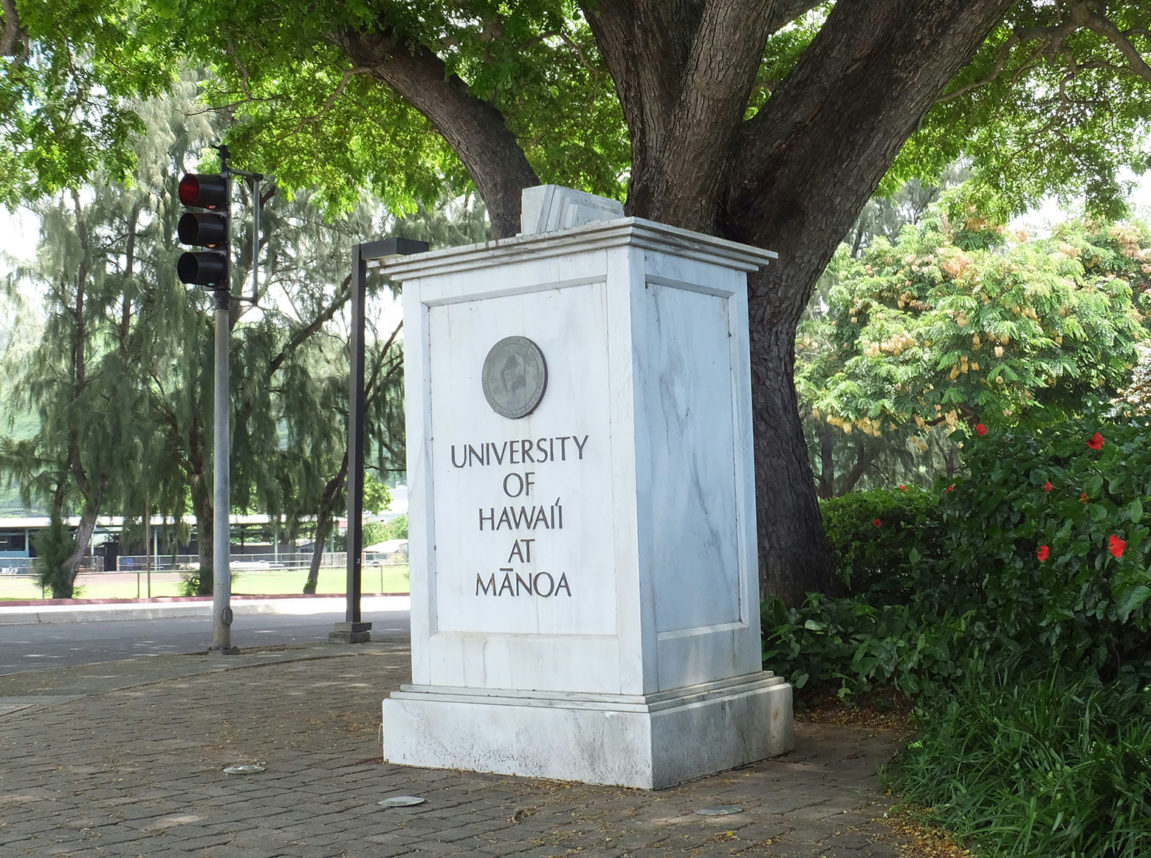
A spokesperson for Zoom told the Journal that they won’t be allowing an upcoming University of Hawaii (UH) webinar featuring Popular Front for the Liberation of Palestine member Leila Khaled as a guest speaker to use their platform.
“Zoom is committed to supporting the open exchange of ideas and conversations, subject to certain limitations contained in our publicly available Terms of Service, Acceptable Use Policy, and Community Standards,” the spokesperson said. “We determined that this event is in violation of one or more of these policies and have let the host know that they may not use Zoom for this particular event.”

The October 23 event, which is co-sponsored by the UH Mānoa (UHM) Departments of Ethnic Studies and Political Science and Students and Faculty for Justice in Palestine (SFJP) at UH, is part of the U.S. Campaign for the Academic and Cultural Boycott of Israel group’s “Day of Action Against the Criminalization and Censorship of Campus Political Speech.” The Day of Action was prompted by Zoom, Facebook, and YouTube deplatforming San Francisco State University’s (SFSU) September 23 webinar, which had also featured Khaled as a speaker. Zoom had announced on September 22 that it was deplatforming the event because of Khaled’s membership with “a U.S. designated foreign terrorist organization.”

Prior to the Zoom’s spokesperson’s statement, UH spokesman Daniel Meisenzahl  told the Journal, “The University of Hawaii is an institution where controversial viewpoints can be peacefully and openly considered and discussed. The sharing and debate of diverse and difficult ideas and opinions is fundamental to the mission of higher education in our society.” Following the Zoom statement, Meisenzahl said, “This event does not reflect the views of the university. It is being organized by an independent organization. Not sure how that organization will address this latest development.”

SFJP and USACBI did not respond to the Journal’s request for comment.

This is a developing story.

Zoom Says They Won’t Host University of Hawaii Webinar Featuring Leila Khaled Read More »

‘Seinfeld’ Cast Reunites for Texas Democrats Fundraiser

The cast of “Seinfeld” is reuniting — virtually — for a political cause.

In a “Fundraiser About Something” — a play on the hit sitcom’s “a show about nothing” catch phrase — the event will benefit the Texas Democratic Party. Julia Louis-Dreyfus and Jason Alexander, who famously played Elaine Benes and George Costanza, will join “Seinfeld” creator Larry David to try to help turn Texas into a blue state on Election Day, Nov. 3.

The last time fans enjoyed a cast reunion was in 2009, during the season finale of David’s “Curb Your Enthusiasm,” which brought back original cast members Louis-Dreyfus, Alexander, Jerry Seinfeld and Michael Richards, who played Cosmo Kramer.

Hosted by NBC “Late Night” host Seth Meyers, the reunion will be live-streamed once at 5 p.m. PDT Friday, Oct. 23, and will feature behind-the-scenes stories and memories from the nine-season show that premiered 31 years ago. A donation of any amount is required to attend.

Hosted by NBC “Late Night” host Seth Meyers, the reunion will be live-streamed once at 5 p.m. PDT Friday, Oct. 23, and will feature behind-the-scenes stories and memories from the nine-season show that premiered 31 years ago.
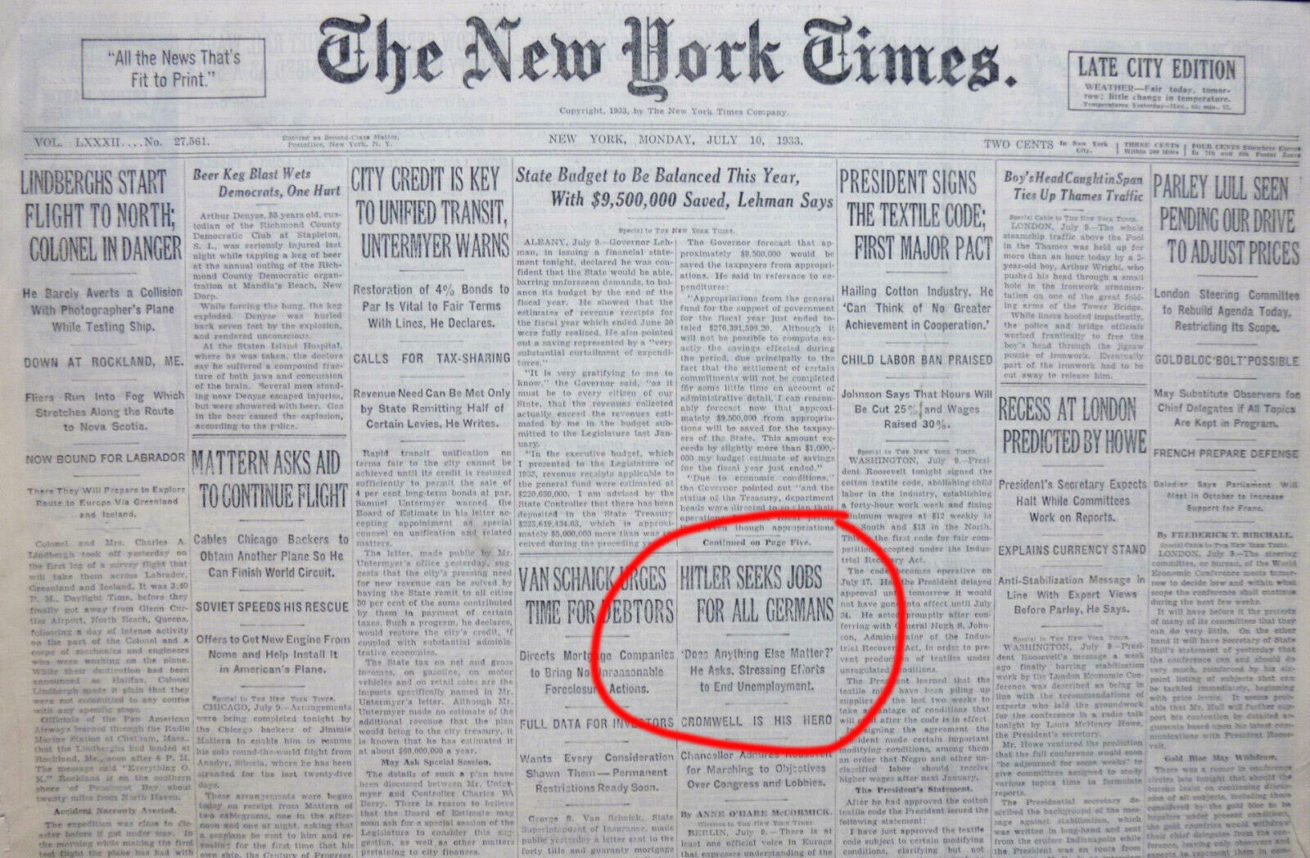

“Texas is a battleground state, period. We knew that we had to reunite for something special and the movement on the ground for Texas Democrats up and down the ballot is the perfect opportunity to do just that,” Louis-Dreyfus, Alexander and David said in a joint statement to the Hollywood Reporter. “Texans are getting out to vote in droves and showing the world that Texas has never been a red state, it’s been a non-voting state. We couldn’t be more thrilled to host a ‘fundraiser about something’ for a terrific organization like the Texas Democratic Party, who are building the movement necessary to turn Texas blue in 14 days.”

Louis-Dreyfus, a multiple Emmy winner for the HBO comedy “Veep,” also will join “Veep” showrunner and former “Seinfeld” and “Curb Your Enthusiasm” executive producer David Mandel on Thursday, Oct. 22, for a “Veep” reunion to help North Carolina Democratic candidates running for the U.S. Senate.

 “Seinfeld” joins the list of series holding politically themed reunions in 2020 including “Parks and Recreation,” “Veep,” “The West Wing” and, most recently, the upcoming “Happy Days” and “Private Practice” reunions.


To learn more about the event click here.

‘Seinfeld’ Cast Reunites for Texas Democrats Fundraiser Read More »

Farrakhan, Hitler and the N.Y. Times: Here We Go Again

The New York Times is under fire for publishing an article about one of the world’s most notorious anti-Semites, without any mention of his anti-Semitism. Sadly, it’s not the first time; the Times did something similar with Adolf Hitler.

In an October 17 essay in the Times, Professor Natalie Hopkinson of Howard University portrayed Reverand Louis Farrakhan as an admirable leader, who planned his 1995 “Million Man March” on Washington as a men-only event but then recognized the need to bring African-American women into the organizing process. “Amid critiques that the [march] was exclusionary and sexist, he took the advice of the women,” Hopkinson wrote. As a result, women played an important behind the scenes role in Farrakhan’s “great feat.”

Hopkinson made no mention of the fact that anti-Semitism is one of the central themes of Farrakhan’s ideology. Nor did Hopkinson acknowledge that Farrakhan has called Jews “termites,” “bloodsuckers,” and “Satanic.” She did not even note the impact of anti-Semitism on the march itself—that is, the refusal of African-American civil rights leaders such as Congressman John Lewis to attend because of what Lewis called Farrakhan’s “divisive and bigoted” statements.

Challenged on Twitter about these omissions, Hopkinson responded that “Ppl who have become white” — seemingly a euphemism for Jews — “should not be lecturing Black ppl about oppression.” She urged her critics to focus their ire on President Trump, since after all, “Hitler never had more than 38% of popular vote.”

Funny she should mention Hitler. In 1933, he, too, was the beneficiary of a puff piece in the New York Times.

During Hitler’s first months in power, there was extensive coverage in the American press of his anti-Jewish policies, such as the mass firing of Jews from their jobs, public burnings of books by Jewish authors, and sporadic anti-Semitic mob violence. To counter this negative attention, Hitler in July 1933 granted Anne O’Hare McCormick of the New York Times his first exclusive interview with an American reporter since becoming chancellor of Germany.

McCormick was a Pulitzer Prize recipient (the first woman to win the prize in a major journalism category) with a reputation for landing big-name interviewees. But snagging an interview is not the same as making the best use of it.

There is no evidence that McCormick harbored any sympathy for the Nazi leader’s views. But her choice of questions, non-confrontational manner, and flattering description of his appearance and demeanor contributed to a generally positive portrayal of Hitler.

There is no evidence that McCormick harbored any sympathy for the Nazi leader’s views. But her choice of questions, non-confrontational manner, and flattering description of his appearance and demeanor contributed to a generally positive portrayal of Hitler.

Hitler Seeks Jobs for All Germans” was the headline of McCormick’s page one, top-of-the fold interview. Here’s how she introduced Times readers to the Fuehrer: “At first sight the dictator of Germany seems a rather shy and simple man, younger than one expects, more robust, taller. His sun-browned face is full and is the mobile face of an orator.”

She continued: “His eyes are almost the color the blue larkspur in a vase behind him, curiously childlike and candid. He appears untired and unworried. His voice is as quiet as his black tie and his double-breasted black suit….Herr Hitler has the sensitive hand of the artist.”

It got worse from there, as McCormick lobbed soft ball question after soft ball question, giving Hitler a platform from which to expound his views in a reasonable-sounding tone without any serious challenges.

Just as Natalie Hopkinson portrayed the role of women in Farrakhan’s march in glowing terms, Anne O’Hare McCormick gave Hitler several paragraphs to explain the positive role of women in the Third Reich. “Women have always been among my most sta[u]nchest supporters,” he boasted. “While our aims encourage women to marry and stay home, unmarried women are in free competition with men. Only military service, service on the bench and certain political posts are closed to women.” No follow-up on that from McCormick.

Just as Natalie Hopkinson portrayed the role of women in Farrakhan’s march in glowing terms, Anne O’Hare McCormick gave Hitler several paragraphs to explain the positive role of women in the Third Reich.

Unlike Hopkinson, McCormick did not completely ignore the question of the Jews, although she badly mishandled it. In her 29th paragraph (out of 41 total), she asked: “How about the Jews? At this stage how do you measure the gains and losses of your anti-Semitic policies?”

She then gave the Nazi leader four uninterrupted paragraphs in which to explain—in what she called “his extraordinary fluency” — that the reports of his anti-Jewish persecution were all exaggerated, that many other people were enduring hardships, and that the Jews’ suffering was all their own fault anyway.

From there, McCormick pivoted to what she evidently felt was a more pressing question: “What character in history do you admire most, Caesar, Napoleon, or Frederick the Great?”

Although McCormick did not set out to soften the Nazi leader’s image, her interview may have had that effect. Improving Hitler’s reputation in the United States was important to the Nazis. Germany sought to postpone repaying of its World War I wartime debts to the U.S. and its allies. Hitler also hoped to dissuade American companies from joining the growing boycott of German goods. And he was anxious to keep the United States from interfering as he rebuilt the German military. That’s also why Hitler authorized an American publisher, Houghton Mifflin, to omit the most extreme and violent passages from his autobiography, Mein Kampf, when it published English-language editions of the book in the 1930s.

Farrakhan is not another Hitler, although he might like to be. He has praised the Nazi dictator as “a very great man” and asserted that “there’s a similarity” between the two of them in that “he raised Germany up from nothing [and] we are raising our people up from nothing.”

Farrakhan is not another Hitler, although he might like to be.

Farrakhan’s Nation of Islam has, according to the Southern Poverty Law Center, “earned a prominent position in the ranks of organized hate,” and its leader is, in the words of the Anti-Defamation League, “the leading anti-Semite in America.” Tens of thousands have attended his rallies in recent years; he has more than one million Facebook followers, and nearly half a million followers on Twitter. That makes him a dangerous figure, whose anti-Semitism should be taken seriously by the most influential newspaper in the world. Natalie Hopkinson was wrong to omit it, and the editors of the New York Times were wrong to let that omission stand.


Dr. Rafael Medoff is director of The David S. Wyman Institute for Holocaust Studies, in Washington DC, and author of more than 20 books about the Holocaust and Jewish history. His latest book is The Jews Should Keep Quiet: Franklin D. Roosevelt, Rabbi Stephen S. Wise, and the Holocaust, published by the Jewish Publication Society/University of Nebraska Press.

Farrakhan, Hitler and the N.Y. Times: Here We Go Again Read More »

Why Did God Create Mosquitos? A Jewish Perspective

I’m plagued by a perpetual problem at home: My mosquitos don’t listen to me.

I asked them not to bite the tender flesh beneath my arm, but they did. I asked them not to bite my neck, explaining how hard it is to restrain oneself from desperate scratching during a Zoom meeting. But they bit me, anyway. One managed to bite my ankle through my jeans and my thick socks, and I’ll admit I was a little impressed by its can-do attitude.

I requested that instead of biting my legs, the mosquitos would consider flying into the comforting blue light of the powerful bug zapper I’d placed next to my foot. Instead, some of them bypassed the zapper and attacked my calves. There was only one thing to do: I asked the smarter mosquitos to help me write a one-star Amazon review of the product.

One mosquito flew past me during a recent Shabbat, a day when Jews are not permitted to trap or kill living things unless it’s to save a life. As one mother to another (only female mosquitos bite because they require blood to produce eggs), I pleaded with her to not buzz near my family or me until Sunday, when I could once again weaponize my house slippers.

As one mother to another (only female mosquitos bite because they require blood to produce eggs), I pleaded with her to not buzz near my family or me until Sunday, when I could once again weaponize my house slippers.

It’s an awful thing when no one listens to you. So I decided to take matters into my own hands: I ate a head of garlic in one day; not a clove, but a whole head. I drank cupfuls of diluted apple cider vinegar and sprayed myself from head to toe with pungent essential oils and mosquito repellant. And then I went to bed. The mosquitos started behaving, but I couldn’t find my husband for a few days.

Recently, a technician from the Greater Los Angeles County Vector Control District visited our neighborhood and informed us that a combination of insufferable heatwaves and not enough street cleaning (due to more lenient parking restrictions due to COVID-19) have resulted in a major spike in mosquito infestations. All over Los Angeles, people are being terrorized by a particularly smaller variety of the loathsome insect.

Last week in his kindergarten class, my son began learning about the creation of the world as part of Parashat Bereshit. When he saw me on the floor, practically gnawing at my legs, he asked, “Mama, why did Hashem have to create mosquitos?”

I toyed with a few responses:

“Because Mama has done bad things, and this is her comeuppance.”

“Because Mama was supposed to get COVID-19, but God was in a good mood and afflicted her with something more merciful.”

I didn’t know what to say. And when I googled the question, I mostly found answers on Christian websites. In an article for the Institute for Creation Research, research associate Brian Thomas wrote, “The first mosquitos God made didn’t seek to suck blood. Nor did He make their piercing-sucking mouthparts to transmit deadly diseases like yellow fever or malaria.” Thomas continued, “So, something happened to turn those originally ‘very good’ insects into the flying mini-vampires that terrorize us today.”

That something, according to Thomas, was Adam and Eve being banished from the Garden of Eden, which resulted in God telling Eve, “I shall surely increase your sorrow and your pregnancy; in pain you shall bear children” (Genesis 3:16). Many interpret this as a euphemism for general physical pain. Thomas believes “the creation is under the curse of sin, and so are mosquitos.”

I find this explanation about sin painfully simplistic. Are mosquito bites an extension of birth pangs? Come to think of it, are root canals, stubbed toes, and accidentally biting one’s tongue all a result of a woman who wanted a taste of exotic fruit (and powerful knowledge)? I couldn’t possibly explain all this to my four-year-old. I’m not even sure I believe it. So I kept digging.

“Mosquitos bite because that’s the way Hashem created them,” Rabbi Mendel Cunin of Chabad of Larchmont told me. He said that the Lubavitcher Rebbe believed mosquito bites taught people a valuable lesson: metaphorically “scratching” something now (such as repeatedly indulging in inappropriate behavior) may feel good in the short term, but ultimately causes much more pain and hardship.

“Mosquitos bite because that’s the way Hashem created them.” — Rabbi Mendel Cunin

The sages teach that King David once asked God why He created mosquitos and spiders. Perhaps he got his answer when he was hiding from King Saul in a cave, and God sent a spider to spin a huge web at the cave’s opening so that Saul’s soldiers would believe no one had entered the cave for a long time. In another instance, the sages teach that God sent a mosquito to bite Saul’s general, Abner, so that David could run away to safety.

The Talmud offers an even deeper answer for mosquitos. In explaining why God created animals before humans, the Talmud suggests that should man ever become arrogant, he should be told that “even a mosquito preceded you” (Sanhedrin 38a).

Rabbi Cunin also said the Messianic era will be a time of peace between man and beast — a time when no animals will be a threat to humans. Does that mean no more mosquito bites? For that reason alone, I hope to be around when Moshiach arrives.

To the non-believer, what purpose can such a blood-sucking creature possibly serve? One can ask the same question about fleas and tax collectors. In her 1986 television debut on “The Tonight Show with Johnny Carson,” comedian Ellen DeGeneres famously pretended to call God and ask about fleas. “No, I didn’t realize how many were employed by the flea collar industry,” she said while pretending to hold a phone. “Not to mention sprays.” Ellen got her answer, but the mosquito conundrum remains.

As it turns out, mosquitos help pollinate plants and flowers. They’re also part of the food chain that feeds other insects and fish. Their larvae play such an important role in aquatic ecology that if they were to go extinct, the animals that feed on them, including game fish and raptorial birds, would suffer.

But what about the suffering of humans? According to the World Health Organization, in 2018, nearly half of the world’s population was at risk of contracting malaria — a dangerous disease transmitted by mosquito bites. According to UNICEF, every 30 seconds, a child dies of malaria. That’s 3,000 children dying each day. Over 1 million people die from malaria each year — mostly children under age five — with 90% of cases in Sub-Saharan Africa. There’s a reason why philanthropist and Microsoft co-founder Bill Gates has called mosquitos “the deadliest animal in the world.”

There’s a reason why philanthropist and Microsoft co-founder Bill Gates has called mosquitos “the deadliest animal in the world.”

In southern California in particular, Culex mosquitos pose the risk of the West Nile disease, which arrived here in 2003. In December 2018, Barbara Yaroslavsky, longtime community leader and wife of former Los Angeles County Supervisor Zev Yaroslavsky, died of complications during treatment for West Nile. “Every one of those little insects is like a missile flying toward you,” her husband told The Los Angeles Times. “And you have no idea which one carries the atom bomb.”

I knew Barbara. She was a tour-de-force of activism and leadership, and it’s still difficult to imagine that a tiny, infected insect brought down her and thousands of others. To put it plainly, it’s not fair.

I asked Rabbi Yitzhok Adlerstein, co-founder of Cross-Currents, an online journal of Orthodox Jewish thought, about the Jewish response to why mosquitos exist. He went beyond the simplistic Garden of Eden explanation and reminded me that my narrower inquiry fits into a much bigger question: Why would a good God allow for evil?

“We can ask the same question about a hurricane, which is basically wind, at an extreme,” he said. “Our question with a lot of natural phenomena, whether hurricanes or mosquitos, are that they’re important, but sometimes, they get out of hand.”

Adlerstein continued, “Why couldn’t these things have been more tightly designed? The answer is that it’s really part of man’s responsibility. Even the natural laws that He (God) built into creation have enough wiggle room that, depending on man’s response and whether we’re closer to building a more perfect world, can be altered. Yes, these phenomena are extreme, but our job is to move the goalposts at the ends a little closer to the middle.”

After six months of lockdown, I couldn’t wait to enjoy the outdoors with a few family members during a recent outing. As it turned out, I didn’t need a mask, social distancing signs, or even park rangers to keep others away from me. In fearful anticipation of mosquito bites, we’d all resorted to so much garlic, vinegar, and bug repellant that we managed to be alone, together.

But I’ve learned something from these horrible creatures (the mosquitos, not my relatives): In life, give more than you take. This lesson underscored all of Rabbi Cunin’s reflections.

If a mosquito took some of my blood and made me feel very itchy and uncomfortable but at least left me with an antidote of some kind, that’d be one thing. But mosquitos only know how to take. Whether in insects or people, I find that most repellant of all. So the mosquitos can keep on biting. But I’m remembering Rabbi Adlerstein’s words and trying to do my part to take on “man’s responsibility,” and that includes giving as joyfully and selflessly as I can.


Tabby Refael is a Los Angeles-based writer, speaker and activist.

Why Did God Create Mosquitos? A Jewish Perspective Read More »

Republicans Already Gearing Up for 2024

For those of you who are more than ready for the 2020 presidential election to be over, I’m afraid I have some unpleasant news. It seems the 2024 campaign is now underway.
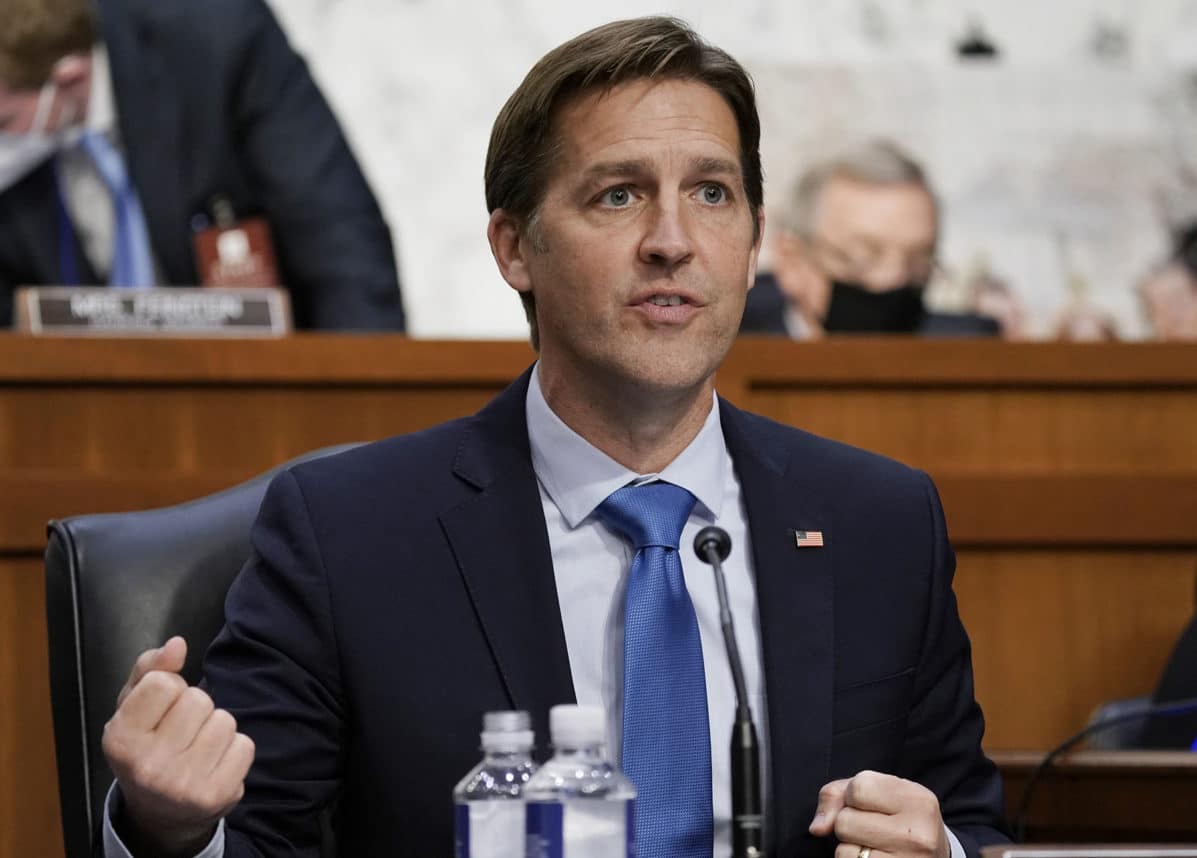
Republican Senator Ben Sasse of Nebraska, long-rumored to have his eye on the White House, unofficially kicked off the 2024 GOP primary contest last week on a well-attended telephone town hall event that his staff eagerly promoted for broader media coverage.

On the call, Sasse excoriated Trump. “I’m not at all apologetic for having fought for my values against his in places where I think his are deficient, not just for a Republican, but for an American,” Sasse told his constituents on the call. Sasse then delivered a series of diatribes against Trump that would make Nancy Pelosi or Adam Schiff sing and shout.

Sasse criticized the president for treating the COVID-19 pandemic “like a PR crisis,” and for “the way he kisses dictators’ butts,” “sells out allies,” “mocks evangelicals behind closed doors,” “flirt[s] with White supremacists”—and so on.

Sasse is no progressive. He is not a Susan Collins moderate or part of the party’s Romney-Bush-McCain establishment. He is a committed and passionate conservative from whom most Democrats would flee if he became the Republican nominee four years from now.

Another never-Trump Republican who has inched closer to the 2024 campaign is Maryland Governor Larry Hogan, who announced last week that he would write in Ronald Reagan’s name in this year’s election. Hogan’s symbolic action was not nearly as demonstrative or combative as Sasse’s assault, but it still sent a message to what remains of the GOP’s moderate wing that he is weighing his options.

Maryland Governor Larry Hogan makes remarks after a tour at the distribution center of Coastal Sunbelt Produce May 15, 2020 in Laurel, Maryland. (Photo by Alex Wong/Getty Images)

Whether Trump is re-elected or not, the Republican Party is splitting into two distinct camps of a heated intra-party debate over the current president’s legacy. The pro-Trumpers, including Secretary of State Mike Pompeo, Vice President Mike Pence, Senators Tom Cotton, Rick Scott and Josh Hawley, and very possibly Donald Trump, Jr., will fight to deepen Trump’s imprint on the party. Sasse and Hogan will be part of an even larger group called “post-Trump (or pre-Trump) conservatives.” This group will likely include some of the defeated 2016 contenders, such as Senators Marco Rubio and Ted Cruz and former governor John Kasich. Former United Nations Ambassador Nikki Haley will be able to straddle that divide and opt in either direction.

Trump’s own fate this fall will provide a considerable advantage to one of these two factions. If the president is re-elected, his loyalists will have the benefit of a White House bully pulpit to solidify their support from party activists for the next four years. But if Trump falls short, it becomes much more likely that Republicans will search for a new — or old — direction away from him as they try to re-brand their party.

Trump’s own fate this fall will provide a considerable advantage to one of these two Republican factions.

By the president’s own admission, the latter outcome is becoming more likely (though certainly not definite). In campaign remarks on Friday night in Georgia, Trump wondered out loud what would happen if he is defeated.

“Could you imagine if I lose?” he asked his supporters. “I’m going to say, ‘I lost to the worst candidate in the history of politics.’ I’m not going to feel so good. Maybe I’ll have to leave the country.”

Some of this uncharacteristically self-deprecating language may have been tactical. Trump enjoys being underestimated and understands the motivational benefits of this approach. But his increasingly plaintive appeals to suburban women and senior voters in recent days suggests an awareness that his path to re-election is decidedly uphill.

Other leading Republicans are beginning to sound the alarm about the possibility of a sizable defeat for their faction. Trump stalwart Lindsay Graham told Democratic members of the Senate Judiciary Committee last week that “You all have a good chance of winning the White House.” Other leading GOP operatives have also begun publicly second-guessing Trump’s campaign management team for strategic and spending errors.

But the final outcome is still very much in doubt. In the meantime, though, know that the 2024 election is a mere 1476 days away.


Dan Schnur teaches political communications at UC Berkeley, USC and Pepperdine. He hosts the weekly webinar “Politics in the Time of Coronavirus” for the Los Angeles World Affairs Council & Town Hall.

Republicans Already Gearing Up for 2024 Read More »

My Intersectionality Problem

One of the most influential and challenging social theories of the early twenty-first century has been the idea of intersectionality. As defined by the Merriam Webster dictionary, intersectionality is “the complex, cumulative manner in which the effects of different forms of discrimination combine, overlap or intersect.” Race, class, language, education, sexuality, age, gender, ethnicity, and culture are factors in this commonality. For most people, intersectionality seems to boil down to race and gender. In fact, the discourse among intersectionalists often involves a discussion of who qualifies, with various communities proffering their tribulations as the price of admission.

There are practical inconsistencies with intersectionality. As a friend has pointed out to me, intersectionality theorists know that being oppressed in one way does not make people less oppressive in another. For example, there are white feminists who could be racists and Blacks who could be exploitative of one another. A mature intersectionality does not just put colonialism, heteropatriarchy, and racism into a stew and valorize the individuals with the most points on their scorecard. However, not everyone is mature.

There are practical inconsistencies with intersectionality. As a friend has pointed out to me, intersectionality theorists know that being oppressed in one way does not make people less oppressive in another.

The spread of this doctrine has led many young Jews to argue for their non-whiteness, as if the American Jewish experience of the last one hundred and twenty years has caused them similar oppression. This is a dubious premise for some of us “Ellis Island generation” Jews, descendants of the millions of Eastern Europeans to the United States at the turn of the twentieth century. I think that the products of that migration have been the beneficiaries of the whitest of privilege, despite the fluid and mutating nature of anti-Semitism. Then again, I can’t speak for a Bukhari or Kavkazi Jewish kid growing up in a tough neighborhood in Queens, or a Persian or Israeli child in the San Fernando Valley, or a young Russian or Ukrainian émigré in West Hollywood or Brighton Beach. They may be struggling, and the Jewish establishment needs to support them more, not that it does.

Elements of my religious and academic training make me instinctively distrust the doctrine of intersectionality. The intellectual traditions that were formative for me regard the doctrine as a dishonest way of viewing ideas and society. In turn, a false comparison can lead one group to a  distorted perception of the other, as evidenced by the projections and schisms of contemporary society.

Incompatible Ontologies

My distrust of intersectionality derives from the years that I spent at Yeshiva University in the 1970s, at a time when Rabbi Joseph Dov Soloveitchik (the “Rav”) was the regnant social force. In his teachings, the Rav was fond of the expression “ontology,” meaning the nature or study of being. And the Rav’s own ontology was such that no two things were alike or altogether comparable. This view of the world, which he had inherited from his ancestors, the Rabbis of Brisk, a town in Belarus, looked at a given topic and reduced the subject to its essence. In his teaching of the Talmud, the Rav’s methodology was to discard sentiment and illusions to isolate the essence of a given problem or teaching.

One area in which the Rav was not at all reticent was in the area of interfaith dialogue; he opposed it. At that time, the Vatican had issued its proclamations forgiving the Jews for Jesus’ death. The more liberal Jewish denominations seemed to be jumping into bed with the Christians. The Reform leaders said that all Christians and Jews should sit down and build relationships. The regnant Conservative movement held back more, saying that only the clergy should dialogue, that perhaps if the laity got into the act, it would be “dangerous.”

One area in which the Rav was not at all reticent was in the area of interfaith dialogue; he opposed it.

The Rav was having none of it. In his essay “Confrontation,” he asserted that just because Esau wanted to see Jacob after long years of enmity didn’t mean that Jacob had to go. Every religion had its own ethos, its own inner nature, and these could be compared no more than people could compare their spousal relationships. The religions in America should cooperate for their mutual benefit, but to actually sit down, compare, and, inevitably, debate their ideas was a pointless endeavor.

The Rav loved America and Boston, in particular, and his favorite yom tov may have been Thanksgiving. More than most, the Rav appreciated his autonomy as an American. Yet he declared that Christianity and Judaism were “intrinsically antithetic.” In his view, “the language of faith of a particular community is totally incomprehensible to the man of a different faith community.” Hence, dialogue should only take place between religious groups at a mundane level—but not as a dialogue about the “truth claims” or objects of their faiths. The truth claims of Islam and Christianity, for instance, are that they supersede Judaism. And there really is no point in discussing that.

My more benighted opinion of interfaith dialogue was influenced by the comedian Lenny Bruce’s portrayal of “Religions, Incorporated.” That routine depicts the religious leaders of his era—such as Billy Graham, Oral Roberts, the Pope, and Rabbi Steven Wise—sitting down to divide up the spiritual landscape of America like struggling theatrical agents in dusty offices off of Broadway. Whether one followed Lenny Bruce or the Rav, the recognition of potential corruption was the same.

Later, as a graduate student in the history of religion, I found another application for this point of view. My primary field was Kabbalah, or, as we called it, “Jewish mysticism.” William James coined the very idea of a universal kind of mysticism in his work ”The Varieties of Religious Experience,” which was based on a series of lectures that he gave at the University of Edinburgh in 1901 and 1902. James was followed by a number of scholars, such as Evelyn Underhill, R.C. Zaehner, Jacques Mauritain, and many others. The idea of universal mysticism—a creaturely human experience that was the same cross-culturally—began to take on a rather Christian template over time, until, finally, Aldous Huxley advanced the idea that one could attain this experience through the use of drugs such as LSD.

I was leery of this trend and, thankfully, found a rebbe in Professor Steven Katz, currently at Boston University, and his community of scholars. Over the course of several volumes, Katz maintained that people were different and religions were different, with varying structures and dissimilar objects and goals to which they aspired. The intense religious experience of a Catholic, therefore, was not necessarily the same as that of a Buddhist or a kabbalist. Religions were distinct, and their mysticisms—their most intense religious experiences—were distinct as well, so that there was not a universal core of “mysticism.” Rather, there was only the most intense experience of each religion, which was its particular mysticism. I preferred this view; it seemed to me to be how the Rav would consider the subject. In recent years, my friend Boaz Huss, a professor at Ben Gurion University, has advanced the idea that there is no Jewish “mysticism.” Instead, he asserts that there are merely a set of esoteric traditions that don’t fit into the “cross-cultural model of mysticism” at all.

Unique and Sacred to Itself

I suspect that the Rav would have been skeptical of intersectionality, although he was conceptually open to many philosophical trends in America. The elevation of oppression as an organizing principle would probably have seemed too broad. The concerns of women in academia, trans people in the third world, and Black people on the streets of America are distinct and nuanced, with different levels of pain and safety. I believe that the Rav would have said that their ontic natures were different. Every comparison could be an act of violence to the integrity of the initial phenomenon. The same would go for comparing the Shoah to American slavery. The memory of each atrocity is unique to itself, sacred to its descendants and taboo to the outside world.

Every comparison could be an act of violence to the integrity of the initial phenomenon.

In a contemporary application, the current “Black Lives Matter” movement seems to inspire, on the part of American Jews, a need to subjectivize, appropriate, compare, and generally feed the topic into the Great Jewish Word Machine. One only needs to review the archives of this publication or scour social media for examples of this phenomenon. In fact, it would be better to hear the problem for what it is, namely that the Black experience in America is sui generis. It is not time for the Jewish community to jump on the bandwagon and offer, unsolicited, their take on the matter, how it relates to the Jewish experience, and how that experience is really comparable. Frankly, until American Jews are at risk of being seized and killed by the police, the respective Jewish and Black experiences will remain different.

The better and more difficult task would be to listen to—and act on behalf of—the Black community to respect the special nature and ethos of a different community’s real problems. It is better to not be distracted by any ancillary concerns that don’t directly protect a Black teenager who wants to walk home at night, a young woman driving to a new job as a college administrator, someone sitting in their own home and minding their own business, or any other victims of police impunity and internal culture.

To paraphrase the words of the Hasidic rebbe Menachem Mendel of Kotzk, “If I am myself because you are you, then neither of us is ourselves, but if I am I because I am I and you are you because you are you, then I am myself and you are yourself.” The perverse, spontaneous recrudescence of anti-Semitism in America is a unique phenomenon, comparable to nothing else. The same is true of white supremacy’s irruption as a unifying social force in the early part of this century. With regards to supporting the Black community in this present hour of travail, Jews may find, in the short term, that the best response is to listen and the best tikkun is silence.

My Intersectionality Problem Read More »

Leila Khaled to Speak During University of Hawaii Zoom Webinar

Popular Front for the Liberation of Palestine (PFLP) member Leila Khaled is scheduled to speak during a webinar hosted by Students and Faculty for Justice in Palestine at the University of Hawaii (UH) on October 23.

The event, which is co-sponsored by the UH Mānoa (UHM) Departments of Ethnic Studies and Political Science, is part of the U.S. Campaign for the Academic and Cultural Boycott of Israel group’s “Day of Action Against the Criminalization and Censorship of Campus Political Speech.” The Day of Action was prompted by Zoom, Facebook and YouTube deplatforming San Francisco State University’s (SFSU) September 23 webinar featuring Khaled as a speaker.

“This is a hitherto unprecedented act of Big Tech compliance with public-private silencing of speech: academic speech, Palestinian speech, and political and social justice speech,” the Facebook page for the UH webinar stated. “It is emblematic of the corporate takeover of our universities and the influence of Zionist and right-wing organizations and individuals, along with the power of information capital, to set the agenda for what can and cannot be said or taught in a public university.

“Webinars such as the one at UH will be held throughout the day on Zoom itself, if possible with livestreaming on YouTube or Facebook, along with announcements on Facebook and Instagram, so as to challenge these corporations and force our universities to stand in support of students and faculty, our right to academic freedom, and struggles for justice and liberation, from the US to Palestine.”

https://www.facebook.com/SFJPUH/photos/gm.1879089705579129/206526874172515


StandWithUs CEO and co-founder Roz Rothstein, Center for Combating Anti-Semitism Director Carly Gammill, and Saidoff Legal Department Director Yael Lerman sent a letter to Zoom CEO and founder Eric Yuan urging him to deplatform the event.

“In light of Khaled’s membership in the Popular Front for the Liberation of Palestine (PFLP), a U.S. State Department-designated Foreign Terrorist Organization, and, more importantly, her terrorism convictions in connection with the 1969 hijacking of TWA Flight 840 and the 1970 hijacking of El Al Flight 219, we ask that you immediately take all necessary steps to ensure that a convicted terrorist not receive a platform on Zoom,” they wrote.

Rothstein, Gammill, and Lerman also stated that the argument that academic freedom protects Khaled’s right to speak is “specious” because “refusing to provide convicted terrorists or supporters of terrorism a platform is a sound decision that protects your company legally, distances Zoom from appearing to support morally repugnant individuals, and in no way interferes with academic freedom. Terrorists can still speak elsewhere. You simply send the message that they are not welcome on your platform, just as Facebook and Twitter have recently communicated similarly in new policies banning Holocaust denial on their platforms.”

Tammi Rossman-Benjamin, director of the AMCHA Initiative nonprofit that fights anti-Semitism on college campuses, said in a statement to the Journal, “It is important to recognize that this is so much larger than one or two or even a half dozen Leila Khaled events.  This is about the abuse happening on dozens of campuses where, under the mantle of academic freedom, faculty are permitted to use their positions and the name and resources of their university to host events whose goal is not to educate, but to indoctrinate students into anti-Zionist views, condone terrorism and promote BDS [Boycott, Divestment and Sanctions].

“Universities must stop turning a blind eye to this abuse, which not only undermines the academic mission of the university, but all too often results in an uptick in anti-Semitic assaults, vandalism, threats and harassment. It’s time for university leaders to step up to the plate and take action against this blatant faculty abuse.  Otherwise we’re going to be playing whack-a-mole as the Leila Khaleds of the world go on their hateful tours on virtual campuses across the country, and our children suffer the consequences.”

“Universities must stop turning a blind eye to this abuse, which not only undermines the academic mission of the university, but all too often results in an uptick in anti-Semitic assaults, vandalism, threats and harassment.” — Tammi Rossman-Benjamin

The University of Hawaii and Zoom did not respond to the Journal’s requests for comment.

The September 23 SFSU event, which was sponsored the university’s Arab and Muslim Ethnicities Diaspora Studies and Women and Gender Studies Departments, had been scheduled to feature Khaled as part of a panel. Zoom announced on September 22 that it wouldn’t allow the event on their platform; the next day, Facebook scrubbed the webinar’s link and event page, and YouTube cut off the livestream of the event a little more than 20 minutes in. SFSU Professor Rabab Abdulhai, co-moderator for the event, blamed SFSU for joining the “Zionist chorus,” alleging that the university responded with “radio silence” when she reached out to campus officials for alternative platforms to hold the webinar.

University President Lynn Mahoney wrote in an email to the campus community that day stating that SFSU disagreed with Zoom’s decision to deplatform the event.

“We cannot embrace the silencing of controversial views, even if they are hurtful to others,” Mahoney wrote. “We must commit to [free] speech and to the right to dissent, including condemning ideologies of hatred and violence against unarmed civilians.”

UPDATE 1: Daniel Meisenzahl, a spokesman for the university, said in a statement to the Journal, “The organization sponsoring the event is one of 200-plus registered independent organizations at UH Mānoa. The administration was just informed yesterday about the event via this and similar inquiries. The University of Hawaii is an institution where controversial viewpoints can be peacefully and openly considered and discussed. The sharing and debate of diverse and difficult ideas and opinions is fundamental to the mission of higher education in our society.”

UPDATE 2: Zoom is not allowing the webinar to be held on its platform.

Leila Khaled to Speak During University of Hawaii Zoom Webinar Read More »

The Case for Enjoying the Present in a Pandemic

This is a strange and unprecedented time in my life—as it is for everyone. I am living conscientiously by the guidelines prescribed by the CDC during this COVID-19 pandemic. These restrictions have upended my 80 years of life as I have known it. I am surrounded by people who are frustrated, angry, depressed, pessimistic, and sad. I am trying not to be any of those things, and, so far, I have been reasonably successful.

Around me, I hear people saying things like “after this is over…”, or “I can’t wait until…”, or “this is the new normal…”, or wondering what the new normal will actually be and when. But I am thinking differently.

At my age, the age of most of my peers, I can only imagine the future as a big question mark. For example, what are the chances that I will travel again beyond the distance dictated by my bladder? This fall, my husband Eli and I intended to visit our college-age grandchildren on the east coast: a trip to Rhode Island, Massachusetts, Georgia, and New York City. By next fall, will traveling be an option for us? Will we be able to sustain such a trip? Will we ever go to Disney Hall, the Wallis theater, or to movies at the Landmark again? Will we ever settle into a comfortable booth at the Grill on the Alley with good friends and a perfect martini again?

Unclear. The pandemic isn’t on our side. Time isn’t on our side either, as we are reminded over and over again, by the loss of friends and acquaintances with alarming rapidity, that time doesn’t have a placeholder.

Time, only this time, is what we have now. I want the pandemic to be over, but I will not sit around in despair waiting for it to pass. Every day, the here and now is the only thing we know for sure that we’ve got and there’s no sense wasting it. Clichés like “Wake up and smell the coffee” mean something now. Really — wake up and smell it.

Clichés like “Wake up and smell the coffee” mean something now. Really— wake up and smell it.

The saplings that we planted in five-gallon cans more than 50 years ago have become majestic trees, with multiple trunks and spreading branches. Now, we are really noticing their dramatic beauty and enjoying the shade they cast over the hot bricks in our yard. Dinnertime — which was often a necessary intermission between work and work — is now an occasion that punctuates the day. Watching a series like The Crown, two episodes in a sitting, a luxury we never enjoyed before, is a new indulgence.

At this end of the spectrum of our lives, taking time to reminisce provides reassurance as well. Remembering all of the things we have done, the places we’ve gone, the people we’ve worked with and learned from and been comforted by is uplifting. A helicopter landing on a mountaintop, an exploration of Petra, a raft down the rapids of an Amazon tributary, a walk on the Great Wall of China during a snow storm—all of these remarkable experiences are worthy of revisiting at leisure.

Remembering those glorious experiences is a much better way to spend our time than repeating a litany of all that we are deprived of today. Remembering occasions like sitting in the Kennedy seats at the Bork hearing, meeting with Palestinians in Ramallah, and having dinner with Ray Bradbury reminds us of the extraordinary people we have met who have painted our lives in brilliant color.

So now, as the pandemic requires us to stay home, we do it with gratitude for the beauty of the rooms that we have curated for five decades but have rarely stayed put in long enough to breathe. The urgency that has driven us all of our lives to search and to seek, to compete and to accomplish, to aspire and to reach can be replaced with calm tranquility now—if we allow it to. We can sift through our relationships to deepen those that we treasure most and acknowledge that there are many we value but cannot nurture right now. We can do a lot of things other than miss what we are missing, grieve for what we can’t do or have, or worry about what will be.

On the glorious day that we can open our doors again, set the table for ten, welcome our guests, hug our families, blow out the candles on a birthday cake, board a plane, eat in a restaurant, sit next to a stranger in the theater, and walk outside mask-free, I’ll be as happy as the happiest person anywhere. In the meantime, I’ll look for the compensations of this time and recognize that they are not substitutions for the real thing; today, they are the real thing. It’s what we’ve got, and I’ll take it.


Rochelle Ginsburg, educator, facilitates book group discussions for adult readers.

The Case for Enjoying the Present in a Pandemic Read More »