fbpx

September 13, 2020

When Rabbis Should Not Keep Quiet

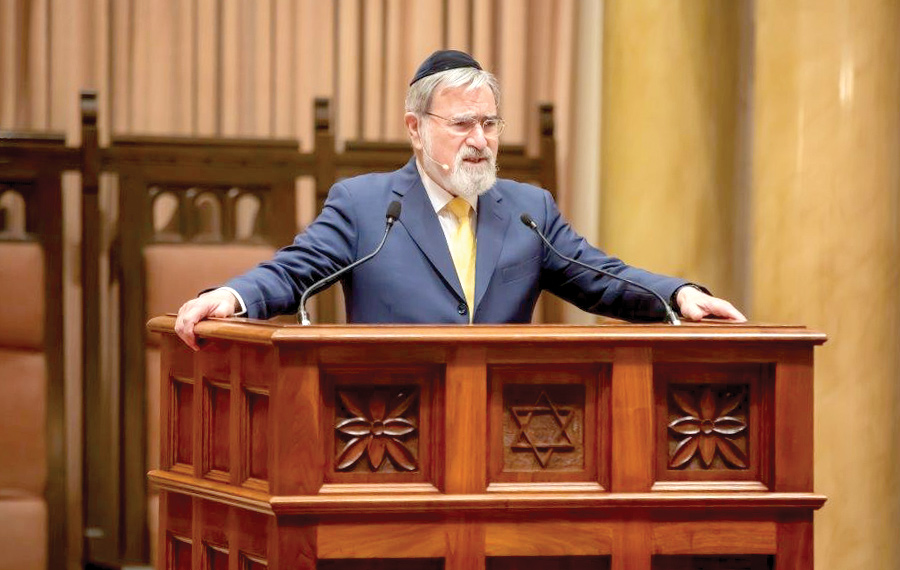
The former chief rabbi of the United Kingdom, Jonathan Sacks, has come in for some stick over remarks he recently made about religion and politics.

In an interview with JTA, he was asked what he thought about the observation by Rabbi Shmuel Kamenetsky, the head of the Agudath Israel Council of Torah Sages, that Jews should vote to re-elect President Donald Trump out of gratitude for the things he has done for the Jewish people.

Rabbi Lord Sacks, who was made an independent member of the House of Lords in 2009, delivered an impassioned reply. “The division between politics and religion is absolutely fundamental,” he said. “It’s one of the greatest things Judaism ever taught the world: Don’t mix religion and politics. You mix religion and politics, you get terrible politics and even worse religion. It’s an absolute and total outrage.”

As he said, he himself has written numerous books about political ideas. He has achieved justified global renown for his thinking about social, cultural and political trends. But as he also said, he has never taken a party political stand, never used his pulpit for a political address and never said how he votes.

He added: “And I’m afraid I did not allow my rabbis to use the pulpit for political purposes either. And I can see that that is not the case in America. And I’m afraid American Jewry is making a big, big, big mistake. This is not a small thing. It’s a very, very big thing.”

When he was the chief rabbi of the United Kingdom, Sacks drew some criticism from the Jewish community that he was politically timid. He always insisted, however, that rabbis had a duty to keep out of contentious political debate.

As he said in his recent interview, politics was inherently divisive while religion should be about bringing people together. In Israel, the mix of politics and religion was “a catastrophe and may one day threaten the very survival of the state.” As soon as religion became political, it, too, inevitably became divisive.

The truth of that last remark was promptly demonstrated in the reaction to his comments. Jews who supported Trump said Sacks should have spoken in support of him. Jews who were against Trump said Sacks should have spoken against him. Ironically, therefore, Sacks’s denunciation of political divisiveness produced division.

Trump is a deeply divisive figure, not least among Jews. Obviously, therefore, either saying anything or refusing to say anything about him will alienate one section of the community or the other.

There’s a difference, however, between these two camps. One is empirical, the other ideological.

Jewish pro-Trumpers—many of whom swallow their distaste at various aspects of his character and performance—are empirical. They support him on account of his specific policies over such matters as Iran, or Israel and the Palestinians.

Left-wing anti-Trumpers, on the other hand, are ideological. They frame everything Trump does as bad because his uncompromising repudiation of their worldview means that he is existentially bad and can do nothing that’s good. So to them, it’s a total outrage that any Jew could ever support him.

That’s why Ben Gould wrote in The Forward: “My fellow Jews: getting rid of Trump is a religious imperative.”

This eschatological view of the president is usually linked to the belief on the left that no Jew should support Israel’s policies on the Palestinians, or any action by Israeli Prime Minister Benjamin Netanyahu, or anything that contradicts left-wing cultural orthodoxies.

That’s why Peter Beinart wrote, also in The Forward, that his previous hero-worship of Sacks had now taken a hit. Despite Sacks’s unrivaled intellectual accomplishments as “the most acclaimed rabbi in the United States,” wrote Beinart, he had “not challenged a single action of either Benjamin Netanyahu or Donald Trump’s.”

There then followed a long litany of the alleged evil deeds of both the Trump and the Israeli governments that Sacks had unaccountably failed to criticize (migrants, settlements) along with evil deeds that he had unaccountably supported (war in Iraq, moving the U.S. embassy to Jerusalem).

For such Jews, moral responsibility is strictly a one-way street. They think that rabbis certainly should express political views, but only those that accord with left-wing dogma. And they think that rabbis should express one political view in particular: that Jews should not vote for Trump.

Many American rabbis follow this doctrine. Last year, the leaders of all 12 institutions associated with the Union of Reform Judaism accused Trump of spreading hate, leveling the unsubstantiated and defamatory charge that he was associated with white supremacy and racism.

Many progressive rabbis go much further than merely demonizing Trump himself. They support the enemies of the Jewish people—whether these are “The Squad” of venomously anti-Israel congresswomen, or the anti-Israel and anti-Jewish activists of Black Lives Matter, or the Democratic Party, which is increasingly embracing these and other enemies of the Jewish people.

Such rabbis have bought into the whole package of identity politics, victim culture and intersectionality. These doctrines are all based on a repudiation of the core Jewish ethical principles of moral responsibility, resisting abuses of power and upholding truth against lies.

Yet such Jews tell themselves that these doctrines conform to Jewish ethical principles. In other words, these rabbis aren’t just Jews expressing political views. They have replaced Judaism by politics.

While rabbis should indeed avoid divisive political partisanship, they surely have a political duty to stand up for their own community if it is under threat. That’s why Rabbi Sacks’s successor as chief rabbi, Ephraim Mirvis, denounced the Labour Party’s previous leader, Jeremy Corbyn, for promoting anti-Semitism.

America’s wartime rabbinic leader, Stephen Wise, was a baleful example of a rabbi who failed to fulfil this duty.

As Rafael Medoff observes in his devastating book, The Jews Should Keep Quiet, Wise allowed himself to be so compromised by his friendship with President Franklin D. Roosevelt that in the early 1940s, he suppressed any disclosure of Roosevelt’s apparent indifference to the fate of the Jews in Nazi Europe and his refusal to allow desperate Jewish refugees into America.

Instead, Wise sanitized Roosevelt’s policy, allowed no public criticism of the president and tried to undermine those who were desperately trying to sound the alarm about the Holocaust.

In order to stifle Jewish criticism of Roosevelt’s appeasement of Nazi Germany and his refusal to rescue large numbers of European Jews, the president exploited and manipulated Wise “to help ensure that the Jews would keep quiet.”

Rabbis surely have a duty to speak up against any danger that threatens either the Jewish community or the fundamental precepts of civilized life. What’s crucial, however, is that they make a correct judgment-call on such matters—one that accurately reflects Jewish ethical principles of truth and justice.

While it may well be unwise for rabbis to speak in favor of Trump, it’s therefore wrong for them not to speak out against the threat posed by the Democrats’ lurch into far-left policies that threaten both Jews and the core values of the West.

The tragedy is that so many American rabbis and other Jews—making the wrong judgment-call that the greatest danger comes not from the enemies of the Jewish people and the West but from their true defenders—not only keep quiet, but actually support the enemies of civilization.


Melanie Phillips, a British journalist, broadcaster and author, writes a weekly column for JNS. Currently a columnist for “The Times of London,” her personal and political memoir, “Guardian Angel,” has been published by Bombardier, which also published her first novel, “The Legacy,” in 2018. Go to melaniephillips.substack.com to access her work.

When Rabbis Should Not Keep Quiet Read More »

Amid Increasing COVID Alarm, Packed Services Held at Chabad’s Brooklyn Headquarters Saturday Night

(JTA) — Men packed into a late-night prayer service at Chabad’s main synagogue in Brooklyn Saturday night, in violation of New York’s health rules and against the advice of local doctors.

On Friday, the Gedaliah Society, a collective of doctors that has been advising Orthodox Jews in Crown Heights during the coronavirus pandemic, issued a stern exhortation against attending services at the synagogue, located inside Chabad’s headquarters at 770 Eastern Parkway.

“Given the recent developments of continued positive cases in our community, many of which are associated with 770, and given the inherent crowded indoor mixing nature of 770, we strongly advise that all people avoid davening in 770 for the time being,” the doctors wrote in an update posted to their blog and amplified by multiple news sites serving the Crown Heights Orthodox community. “There is significant risk of contracting the virus in 770 currently.”

Also on Friday, the synagogue’s managers decreed that masks would be required for anyone entering and said that a service on Saturday night would be limited to a small number of participants, according to the Orthodox news service COLlive. Photos showed piles of surgical masks ready to be distributed to visitors.

Yet a livestream from the main synagogue at Chabad’s headquarters showed the cavernous space filled with men packed closely together during the Selichot service, which is traditionally held the Saturday night before Rosh Hashanah. While some wore masks, many did not.

The service did not conform to current New York health regulations, which allow houses of worship to operate at up to one-third of their capacity, provided that six feet of distance can be maintained between people from different households. (A lawsuit this summer argued that houses of worship should not be held to a higher standard than other indoor gathering places; malls are currently allowed to operate at 50% capacity.)

The gathering — which was likely the largest but by no means the only crowded service taking place Saturday night — comes as the number of cases appears to be on the rise in New York’s Orthodox communities, inducing fear about whether schools and synagogues can safely continue to operate. COVID tests in another heavily Orthodox Brooklyn neighborhood, Borough Park, have come back positive at more than four times the citywide rate recently, and large gatherings such as weddings have been eyed as a culprit in the virus’ spread there.

770 Eastern Parkway closed for the first time ever in March as the pandemic settled over New York City. Its reopening in June, which featured dense and largely unmasked crowds, was a sign that many in Brooklyn’s Orthodox communities felt the worst had passed.

Local doctors and community leaders are now trying to shake that sense of security. “Over the past 24 hours we have become aware of multiple new cases of COVID here in Crown Heights, both in residents and those from out of town,” the Gedaliah Society posted early Sunday morning. “This represents for the first time since Purim [in March] a very worrisome surge in new cases.”

Amid Increasing COVID Alarm, Packed Services Held at Chabad’s Brooklyn Headquarters Saturday Night Read More »

Allow the Private Sector to Revive the Israeli Economy

Only a year ago, Israel’s economy was one of the world’s most prosperous. Today, harsh lockdowns and other policies meant to combat the spread of COVID-19 have led to Israel’s worst economic downturn in 45 years, matched only by the collapse that came in the wake of the 1973 Yom Kippur War.

Its gross domestic product plunged by nearly 30 percent in the second quarter of 2020, and, according to the country’s Central Bureau of Statistics (CBS), private consumption shrunk by more than 43 percent as a direct result of lockdown measures imposed throughout March and April. Imports also dropped by a similar amount. Collectively, improperly thought-out government restrictions have wiped out four years of economic growth.

The unemployment rate is perhaps the starkest indicator of all. Before the crisis, Israeli unemployment stood at a record low of under 3.5 percent. In the six-month period from February to August, ineffective COVID policies and improper economic management brought the number of jobless to a staggering 11.5 percent; many more have been furloughed. It’s also predicted that 20 percent of businesses will fail by the end of the year.

Stories of Israel’s small business sector collapsing are everywhere. Many have been widely reported on national media and social-media platforms. One case in particular has become a symbol for the nation’s crisis as a whole. Four months ago, Yuval Carmi, a falafel-shop owner in the city of Rechovot, was interviewed on primetime news. During the interview, Carmi broke down in tears, telling the crew how his business had collapsed overnight. “I’m embarrassed to face my children, to tell them I have nothing I can buy for you. I have nothing to give them. I have nothing to give them to eat. I don’t know what to do,” he said.

Israelis across the spectrum resonated with Carmi, knowing that his story was that of the country as a whole. The 56-year-old food stand owner was later hospitalized due to heart complications doctors attributed to stress.

To make matters worse, many of the measures taken by the government to maintain some semblance of economic stability have largely failed. Long after the program was put into place, it was reported that only 3,000 of 41,000 requests to the government’s small business loan fund were actually considered, and fewer than 2,000 approved. Similarly, stimulus aid to independent workers has had a few glitches in its disbursement. While many independents were promised installments of NIS 7,500 ($2,195), reports have surfaced of those eligible receiving half that amount or even no payments at all.

But perhaps the biggest failure in the government’s response is its complete disconnect with the commercial and business landscape it claims to seek to rehabilitate and protect.

Roee Cohen, president of the Israel Chamber of Independent Organizations and Businesses, known as LAHAV, put it most succinctly: “The weird plan that was developed in the Finance Ministry reflects its unreceptive nature and lack of understanding of the scale of the crisis in the business sector. … There are no other words but to say that the Finance Ministry and the Budget Department are leading us to an unprecedented economic catastrophe.”

Cohen’s words dovetail with what researchers into the adverse effects of lockdowns have been pointing to for the past several months. The sheer scale of the market impacts caused by lockdowns means that governments simply cannot supplement the losses. Showing just how far off the mark governments have been in staving off economic collapse, the ones affected the most by this downturn—being bereft of basic necessities and cut off from supply chains—have been the lowest strataof societies and the poorest countries in the world.

Moreover, from a pure public-health perspective, the long-term efficacy of lockdowns in preventing the spread of the disease is far from certain. While lockdowns have the immediate effect of minimizing infections, this only slows the rate of the spread and cannot keep it at bay permanently. This has been one of the central points argued by former Health Ministry head Yoram Lass, a fierce critic of the government’s current policy track. As Lass warned back in March, lockdowns are not a complete solution.

“Whoever thinks that the government ends viruses is completely wrong,” stated Lass emphatically.

Alternative voices

As data on the pandemic piles up and our understanding of the disease develops, many on Israel’s political scene have offered common-sense alternatives to solving the crisis. Entrepreneur-turned-politician Naftali Bennett, the head of the Yamina Party, has been a strong proponent of targeted measures to quell breakouts while keeping the bulk of industry and the country’s economy open. To date, he argues, blanket restrictions on the whole country have been illogical, only bringing damage to the society without any positive effects. Knesset coronavirus committee head Yifat Shasha-Biton raised the same issue in her criticism of recommended restrictions back in July.

After exposing the holes in data the government claimed supported lockdowns, Biton rejected wholesale restrictions on businesses such as restaurants and gyms. “The committee cannot vote on anything that we cannot explain to the public,” she said to reporters.

Biton’s position followed that of her predecessor, opposition lawmaker Ofer Shelah (Yesh Atid) who back in April published a scathing reportcontending that the government’s public health policies could cause “irreversible” economic and social damage.

These officials, originating from across the political spectrum, understand that the government’s failure in managing the pandemic stems from a fundamental mistake in its approach, namely, the attempt to micromanage a global crisis. In all cases in which officials try to rigidly orchestrate complex systems, the results are the same: the negative consequences of intervention will explode, while the benefits will be minimal at best.

Perhaps the most noticeable example of this is seen in the dynamics of the current unemployment crisis. Instead of encouraging Israel’s markets to adapt and grow, officials have created, either directly or through incentives, a situation in which the country is experiencing self-imposed atrophy.

After an extensive tour in Jerusalem in recent weeks interviewing business owners, Bennett was bemused at how many were struggling to hire, as furloughed workers preferred to remain on unemployment benefits, which have been guaranteed until June 2021. This is creating an “insane situation that even though unemployment is at an all-time high […] business owners can’t find workers,” Bennett told the media.

Further highlighting this argument is the fact that the longer restrictions persist, the harder it will be to return to economic normalcy. After a year without a job, the average worker will find it harder to come back. Already the sentiments of many workers support Bennett’s prediction. According to Israeli media, nearly a fifth of those currently furloughed due to the coronavirus have no interest in returning to their previous jobs due to worsening conditions and pay cuts.

For Bennett, the endgame is all about economic revival—namely unleashing the country’s private sector. Much of his strategy involves the private sector leading the COVID battle, while also paving the road for the next phase of the country’s startup boom.

Unlike the targeted lockdowns, however, even the simplest attempts to harness private sector assets to provide solutions have been thwarted. For instance, MyHeritage, a genetics firm based in Or Yehuda, was expected to conduct and analyze 20,000 tests a day, an initiative pushed by Bennett to expand testing capacity. However, the Health Ministry never followed through.

The government, mired in petty infighting and early election talk, is simply incapacitated, and arguably too inept to devise a coherent strategy. For Israel to overcome the pandemic and unleash its economy, an entrepreneurial mindset is what is needed. With this, Israel can become, as Bennett puts it, “a better, more innovative version of itself.”


Dennis Mitzner is a Tel Aviv-based writer and entrepreneur. Follow him on Twitter at @DennisMitzner or connect with him on Linkedin.

Allow the Private Sector to Revive the Israeli Economy Read More »

Israel File Appendix: Litzman Out

Another week, another polling average. Israel is currently in campaign mode, even if a clear date for the next election is not yet set.

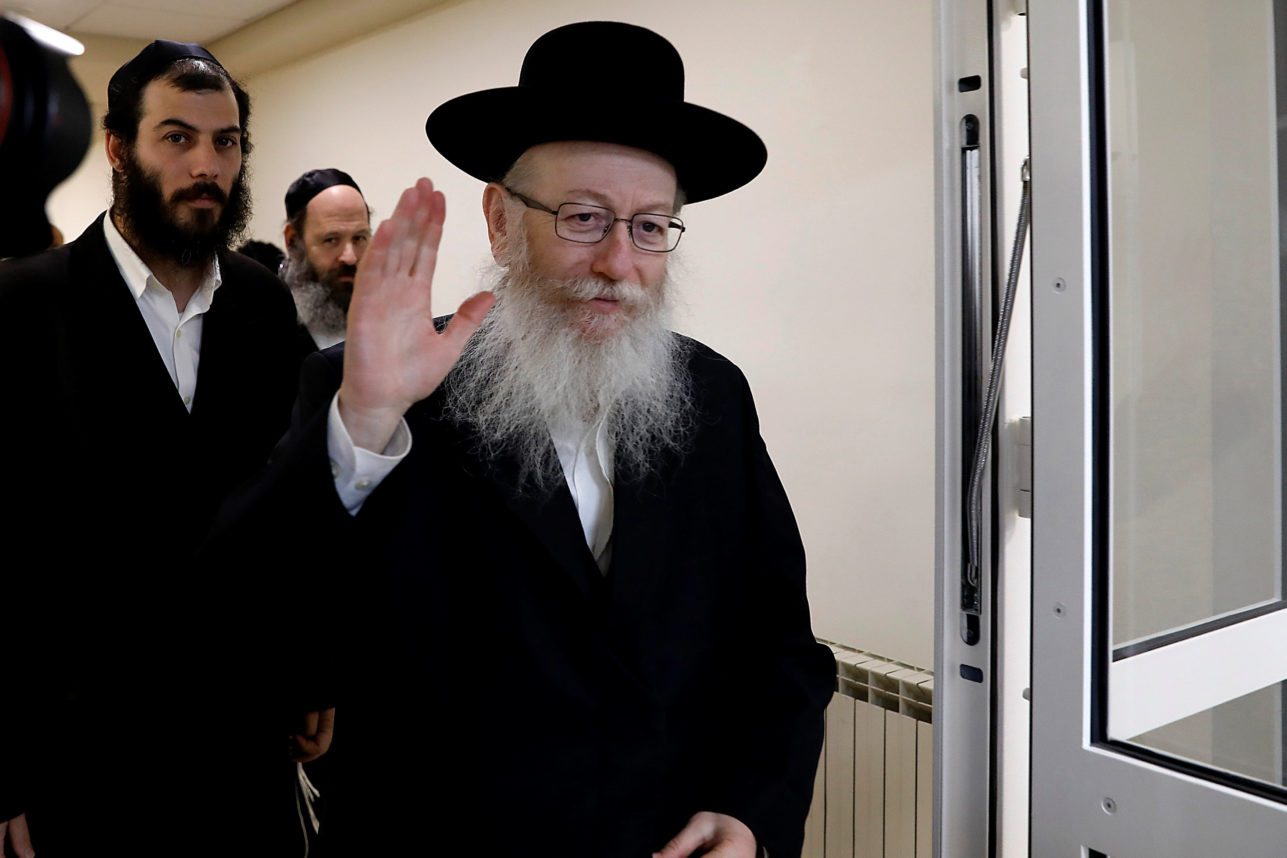
Yaakov Litzman of UTJ resigned. His party is the most stable in the coalition. In fact, it is the most stable of all parties, so his resignation does not really change the political landscape. No one expects any voter to move from UTJ to another party as a result or for UTJ to suddenly become a party of the left.

The weighted average does not yet show it, but in most polls, Yamina, not Yesh Atid, is the second largest party. However, past experience show that Yamina voters tend to be disloyal. The weighted average takes this into account.

In recent polls, Yamina’s Naftali Bennett also is seen as the most fit to be prime minister, following Netanyahu.

The right’s advantage only exists because of the rise of Yamina — an opposition party that we still count as part of the right-religious bloc. The question is, in the future, would Yamina still be part of the bloc, and if so, under what terms?

If Tel Aviv Mayor Ron Huldai forms a new party with former IDF Commander Gadi Eizenkot the polls predict they will receive 13 seats —  mostly from Yesh Atid, Blue and White, and a few from Yamina. The bloc situation remains the same.


Israel File Appendix: Litzman Out Read More »