fbpx

August 24, 2020

Two Local Young DNC Delegates Share Their Experiences

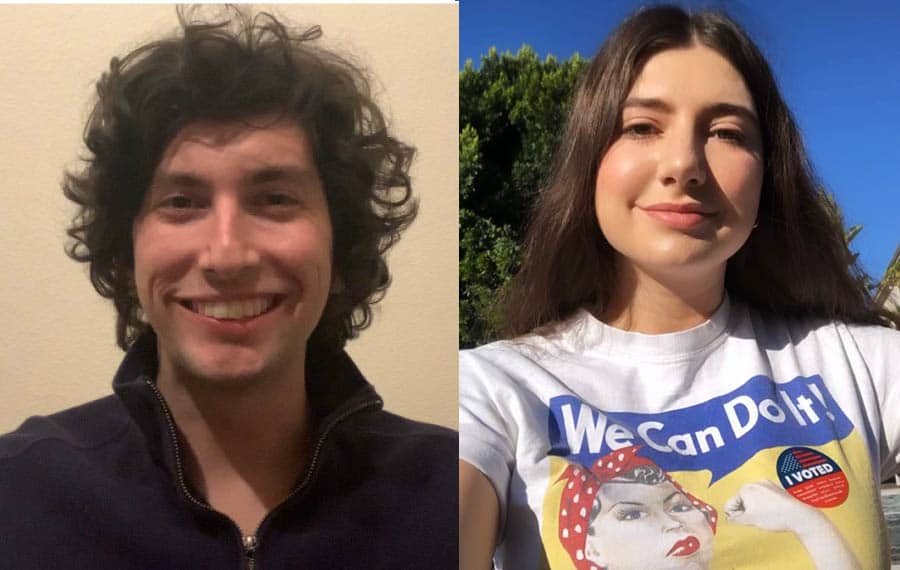
Among the local delegates at last week’s Democratic National Convention to officially nominate Joe Biden and Kamala Harris as the party’s 2020 presidential ticket were two young Jewish delegates: Abby Kingsley, a Duke University student studying labor law, and Nick Gaines, who works in the office of state Sen. Henry Stern (D-Canoga Park). They spoke separately with the Journal about the highlights and disappointments of their virtual DNC experience. 

“The primary responsibility is to vote for the candidate and represent the candidate that you pledged to vote for during the roll call, and then also to vote to confirm or deny the party platform,” said Kingsley, a registered delegate for Sen. Elizabeth Warren (D-Mass.). 

Each state receives a certain number of pledged delegates, selected at the state/local level with the understanding they will support a particular candidate. If their candidate drops out, the delegate is free to vote for another candidate. Candidates must win a majority of combined delegate votes at the DNC to secure the nomination. Kingsley voted for Biden to honor her pledge of support to Warren, “because Elizabeth Warren has been such a forceful advocate for him.” 

Gaines was a delegate for Sen. Bernie Sanders (I-Vt.) but plans to vote for Biden in November. “We still need a mass movement that is going to advocate for a progressive vision for this country and, not but, we need to elect Joe Biden as the next president of the United States and Kamala Harris as the next vice president,” Gaines said.

A primary responsibility for delegates is to be among the Democratic Party’s most engaged representatives, said Kingsley, also a fellow for the Jewish Democratic Council of America, doing volunteer recruitment in key swing states. 

“The convention itself has been a little bit of a letdown,” Gaines said, acknowledging the difficulty of the party’s task to “fundamentally redesign” the convention due to the coronavirus pandemic. He said he wished there had been a “Zoom-in” for the roll call so delegates could hold up signs as was traditional at past conventions.

Opportunities to network or submit recommendations to various task forces involved in shaping the party platform were “very, very much lost in a virtual convention,” Kingsley said. Many webinar meetings with key constituencies disabled chat to avoid online trolls, thereby closing off opportunities for delegates to interact. 

Kingsley was born in Tarzana, grew up in Encino and attended Valley Beth Shalom and Stephen S. Wise for Hebrew school. She attended the Aug. 18 DNC Jewish Community Meeting webinar, featuring prominent Jewish political figures addressing Jewish community issues. Kingsley found Sanders’ absence “disappointing … considering he is arguably the most famous Jewish political figure of our time.” 

 “I think both [Joe Biden and Kamala Harris] have a renewed commitment to criminal justice issues and have shown that they are open to critique. I hope that they listen to the will of the Democrats.” — Abby Kingsley

“[Sanders] never really made it a big part of his campaign,” Gaines said. “But as a Jewish person, I found it really exciting to see the values of our community — that universal sense of compassion and justice, that we have to fight for everyone not just ourselves — that kind of tradition of Jewish socialism and Jewish compassion on the national stage. I wish it had been more a part of the campaign.” 

Kingsley, who has done extensive research about income inequality and its role as an issue in the 2020 primary, was encouraged by the DNC’s emphasis on labor issues “as a core tenet of Democratic values. I’m really proud that the party is moving away from the more corporate- and business-emphasized party of Bill Clinton and back toward the labor-focused party of FDR,” she said, referring to President Franklin Delano Roosevelt. 

Kingsley is looking forward to “the first Jewish second spouse,” Doug Emhoff, who is married to Harris, and acknowledged the historic nature of Harris’ nomination, but she remains critical of the nominees’ criminal justice policies. 

“I think both have a renewed commitment to criminal justice issues and have shown that they are open to critique. I hope that they listen to the will of the Democrats,” she said.

Kingsley and Gaines are both involved in the newly founded Young Delegates Coalition (YDC), a space for delegates under 35 across the ideological spectrum. In a foreign policy platform discussion through the group, Kingsley had a conversation about the Israel-Palestinian conflict that was “one of the most respectful that I’ve ever been a part of.” Kingsley explained how anti-Zionism and anti-Semitism are often conflated and how people hide anti-Semitic beliefs behind anti-Zionism. People were respectful and grateful for her input, she said, sending her comments like “we will strive to do better” and “we have a lot to learn from each other.”

Kingsley considers herself “both pro-Israel and pro-Palestinian,” and believes that sovereignty, self-determination and prosperity can be achieved for “both groups, who I think have very important ties to the land. It’s definitely a hard conversation, but I’m not someone who shies away from hard conversations,” she said. 

Other Democratic spaces Kingsley has been a part of have had strong Jewish representation, but with the YDC, she “sometimes felt like the lone voice identifying issues of anti-Semitism.” She sought out other Jewish members of the coalition but very few have self-identified as Jewish. 

When the YDC was considering Rep. Ilhan Omar (D-Minn.) as a young DNC speaker, Kingsley objected, noting Omar’s use of anti-Semitic tropes to advance her support for the boycott, divestment and sanctions (BDS) movement and the Palestinian cause. One YDC member said Kingsley was “pushing forth a right-wing conspiracy.” Kingsley replied with examples of Omar “saying Israel is hypnotizing the world” and Omar responding to the American Israel Public Affairs Committee (AIPAC) by saying, “It’s all about the Benjamins.”

“I don’t think it’s bad to uplift Palestinian voices and advocate for Palestinian rights, but never by using anti-Semitic tropes,” Kingsley said. “I think she wants to genuinely uplift all groups but does have a blind spot for her Jewish constituents.” 

Gaines said he completely supports Israel but not in the same way as older members of the Jewish community who advocate for Israeli security because they are “worried that the existence of Israel is under threat. Israel will continue to exist.” he said. “But the thing that is in question is what’s going to happen to the Palestinians. When young Jews on the left speak in favor of the Palestinians, we do so fully supporting the rights of Israelis and Israeli Jews to live in peace and security, as well. We are just trying to lift other people up. We are not trying to push anybody down.”

Gaines said he is looking to April 30, 2021, the 100-day mark in a potential Biden presidency, at which point, he said, “Joe Biden and Kamala Harris can either choose to recognize the historic moment we are in and govern accordingly, or there will be a lot of people like me who will demand extreme accountability of the party that we are putting in power at the expense of our own immediate kind of values.”

Two Local Young DNC Delegates Share Their Experiences Read More »

Israel, the Trumps and the Extremism Question: What We’re Watching at the RNC

WASHINGTON (JTA) — The Republican convention starting this week will have plenty of what appears to be Jewish-specific messaging, but the messaging’s more pertinent target may be evangelical Christians.

President Donald Trump made that clear on Friday in a speech on the eve of the convention to a conservative group.

Speaking to the Council for National Policy, Trump reviewed his radical shifts in Israel policy that included moving the embassy to Jerusalem and quitting the Iran nuclear deal, as well as launching an Israel-United Arab Emirates normalization process.

“I could run in Israel, and I think they set up probably a 98% approval rating in Israel,” he said to applause. “So it’s been — it’s been good. And you know who appreciates it the most are the evangelical Christians. They appreciate it the most.”

Trump still has overwhelming evangelical support, but it has softened lately. He’s seeking to shore it up in an election that could hang on a few votes in middle America. Trump also wants to safeguard Jewish votes, especially in Florida, where both parties believe the race could be close enough to hinge on Jewish voters.

The convention could reveal the degree to which the racist and anti-Semitic theories embraced by some members have spread within the party, and how far party leaders are willing to go to repudiate the extremists. While top party leaders have lately disavowed the QAnon theory that a handful of Republicans have advanced in successful primary campaigns, it remains to be seen whether that translates to an overall tone at the convention, where Trump is set to speak nightly for up to an hour.

Here’s what we’ll be watching as the convention gets underway.

The Israel moments

The convention schedule seems geared for many big Israel moments, chief among them Secretary of State Mike Pompeo’s scheduled appearance Tuesday night from Jerusalem, reportedly in a video filmed with the Old City as a backdrop. In itself, Pompeo’s appearance is unusual; until now it has been considered unseemly for the nation’s top diplomat to join a political event. The location of his speech, which comes a day into Pompeo’s five-day Middle East trip, makes it stand out even more.

Israel likely will also feature large on Monday night when Nikki Haley, the former ambassador to the United Nations and an Israel champion, is scheduled to speak, and on Wednesday, when New York Rep. Lee Zeldin, who is Jewish and the GOP’s top pro-Israel spokesman in Congress, is on the schedule.

While Trump has explicitly said that some of his Israel policy shifts were designed to appeal to evangelicals, it’s clear that the party is counting on Israel to appeal to Jewish Republicans, too.

During a pre-convention call with Sen. Ted Cruz of Texas on Sunday night, the director of the Republican Jewish Coalition, Matt Brooks, emphasized that his group plans to “go into the critical battleground states around the country in Florida, Ohio, Pennsylvania, Georgia, Arizona and Michigan to really make sure that in what is going to be a very close election, that the Jewish community shows its support for this president.”

After Brooks asked Cruz what his message was to the Jewish community, Cruz painted a dire picture of an administration that would be worse on Israel than the Obama administration — although Biden, Obama’s vice president, was perhaps the Cabinet official who had the closest ties to Israel and was the most sympathetic to its concerns. Biden, Cruz said, was surrounded by Israel-hostile radicals and could make Vermont Sen. Bernie Sanders secretary of state.

Progressives critical of Israel have registered gains in recent years, and conservatives have decried the selection of Karine Jean-Pierre — earlier this year she urged Democratic candidates to boycott the AIPAC conference — as a senior campaign adviser. But Biden has shown no signs of backpedaling from his decades-long commitment to strong U.S. support for Israel.

Biden, in securing the endorsement of Sanders, his closest rival in the primaries, agreed to concessions in a number of areas, but none of them had to do with foreign policy, and the party’s platform did not yield to progressives who sought more criticism of Israel. Sanders, moreover, has prioritized domestic issues and has not shown any interest in joining his Cabinet (nor has he been mentioned as a likely contender for secretary of state).

Going to extremes

The convention also will add an important new answer to an ongoing question about whether the Republican Party is a welcoming home for far-right activists and candidates who embrace racist rhetoric and conspiracy theories, or whether they are merely tolerated as part of a broader conservative coalition.

Last week’s Democratic convention, including Biden’s speech accepting the presidential nomination, focused heavily on the 2017 neo-Nazi march on Charlottesville, Virginia, and Trump’s response, which included saying that there were “very fine people on both sides,” to make the case that Trump’s leadership has fueled bigotry and racism in America.

Cruz’s comments at the Republican Jewish Coalition event Sunday suggest a possible playbook for downplaying that criticism. After Brooks asked Cruz to dismantle the claim that Trump equivocated after Charlottesville, Cruz noted that Trump also said he condemned neo-Nazis and white supremacists. Cruz also tried to flip the violence equation, conflating Democrats with violent activists who have joined otherwise peaceful anti-police brutality protests across the country.

But whether the convention speakers, including Trump, stick to an even-keeled message even as a number of mainstage speakers have come to be identified with the extreme right is a major question. Among the featured speakers are Madison Cawthorn, who had posted on social media photos of his tour of Adolf Hitler’s vacation retreat, and Burgess Owens, a Utahan who is among a handful of Republican nominees who have associations with the conspiracist cult QAnon. Congressional Republicans, including House Minority Leader Kevin McCarthy, have tried to distance themselves from QAnon, but Trump has said he welcomes support from its aficionados.

Another question is whether the convention will feature language that Democrats and watchdogs such as the Anti-Defamation League have warned reflects anti-Semitic dog whistles. That includes attacks on George Soros, the Jewish billionaire donor to liberal causes and politicians who has been attacked by convention speakers including McCarthy and former New York Mayor Rudy Giuliani.

Last year, McCarthy claimed that Soros and other Jewish billionaires were trying to “buy” the election (but later deleted his tweet). Giuliani, now Trump’s personal lawyer, said recently that Soros, a Holocaust survivor, has a “sick background.”

Since last year, the ADL and others have called out multiple Republicans for using language and imagery rooted in anti-Semitic stereotypes — such as Missouri Sen. Josh Hawley, who decried “cosmopolitan elites,” and Georgia Sen. David Perdue, who ran an ad against his Jewish opponent Jon Ossoff in which Ossoff’s nose was artificially elongated. The Trump campaign was criticized as well for using an image in an ad that the ADL said closely resembled a Nazi symbol.

Another potential flashpoint is a convention resolution, first reported by The Associated Press, that would refute “the legitimacy of the Southern Poverty Law Center to identify hate groups.” The resolution instead would accuse the group, which is allied with a number of Jewish civil rights groups including the ADL, of “putting conservative groups or voices at risk of attack.”

It’s the Trumps’ party

One of the many departures from convention norms this year is that Trump plans to speak at length every night. Traditionally, the nominees appear briefly the first three nights and reserve their longform speech for the final night.

It’s a sign of the degree to which Trump has reshaped the party. The conservative Fox News Channel featured a segment last week on what it described as the convention’s 12 key speakers; six were Trumps, including his Jewish daughter, Ivanka. (Notably absent is his son-in-law, Jared Kushner, the de facto chief of staff who handles multiple portfolios, including Middle East peace.)

In an unprecedented move, the party resolved not to adopt a policy platform, substituting instead a statement declaring that it “enthusiastically supports President Trump.”

Will that pay off? The Biden campaign on Monday released the names of 27 former GOP lawmakers, including Arizona Sen. Jeff Flake, who are endorsing Biden, in addition to the three former presidential candidates who endorsed him last week.

Cruz, who has had a contentious relationship with Trump and was not invited to speak, suggested that focusing too much on Trump could be a problem. Trump’s policies are popular, he told the RJC meeting; Trump is not.

Democrats “want this election to be a referendum on Donald Trump. They want it to be a personality test,” Cruz said. “Do you like him personally? Do you like his tweets? And the Democrats believe if that’s the deciding issue as a personality referendum, they think they win that. I don’t know if they do or not.”

Israel, the Trumps and the Extremism Question: What We’re Watching at the RNC Read More »

Home Shalom Monday Message #22

Home Shalom promotes healthy relationships and facilitates the creation of judgement free, safe spaces in the Jewish community. Home Shalom is a program of The Advot Project.

Please contact us if you are interested in a workshop and presentation about healthy relationships, self-worth or communication tools.

The famous French saying that “the more things change, the more they stay the same” comes to mind whenever we address the challenges of domestic and intimate person abuse. Rabbi Shimon b. Tzemach from North Africa (1361-1440 CE), author of the spiritual work Tashbetz, in response to a question about a long-suffering wife whose husband was a difficult person whom she could not stand, wrote, “You can write that he should divorce her and give her the Ketubah…for she was given for life, not for sorrow…and does not have to live in close quarters with a snake.” Later in his response, he goes so far as to write that “Any rabbinic judge who forces a woman who rebelled to go back to her abusive husband is following the law of the Ishmaelites (rather than the compassion he perceived in Jewish law) and should be excommunicated!” 

Even earlier, Rabbi Simhah b. Samuel of Speyer (who died in 1230 CE) wrote that a man has to honor his wife more than himself and that is why his wife and not his fellow man should be his greater concern. Rabbi Simhah argued that, like Eve, “the mother of all living,” a wife is given to a man for living, not for suffering. Since she is supposed to trust him, it is therefore worse if he hits her than if he hits a stranger.  This was echoed by Rabbi Meir of Rothenburg (1215-1293 CE) who writes, “A Jew must honor his wife more than he honors himself. If one strikes one’s wife, he should be punished more severely than for striking another person, for one is enjoined to honor one’s wife and if he persists he should be excommunicated, lashed, and suffer the severest punishments.”

Here we are nearly a thousand years later and domestic abuse remains the number one cause of injury to women in America. Especially in these extraordinary times under stay-at-home orders, women and those most vulnerable in our society are at greater risk of physical and emotional harm than ever before. May we all aspire to emulate the Talmudic sage (Megillah 28a) who when asked to what he attributed his long life replied, “I never said a cross word in my home.” 

Rabbi Steven Carr Reuben, Home Shalom and Naomi Ackerman, The Advot Project

Home Shalom Monday Message #22 Read More »

Doctor Who Tweeted That She Would Give Jews the Wrong Medications Loses Ohio Medical Certificate

(JTA) — The State Medical Board of Ohio permanently revoked the medical training certificate of a doctor who was fired from two residency programs after old anti-Semitic tweets surfaced — including one in which she threatened to give Jews the wrong medications.

Lara Kollab is permanently prohibited from practicing osteopathic medicine or surgery in Ohio, Cleveland.com reported. She surrendered her certificate prior to its revocation Aug. 12, according to the report, and cannot participate in another medical training program in the state.

Kollab wrote scores of anti-Semitic social media posts between 2011 to 2013 but deleted them after being accepted by the Touro College of Osteopathic Medicine in New York, which calls itself “the largest private university in the U.S. with Jewish roots.” In an apology after her tweets drew public attention, Kollab said she had written them because she had “difficulty constructively expressing my intense feelings about what I witnessed in my ancestral land,” following visits to Israel and the West Bank.

She was fired from a residency at the Cleveland Clinic after three months there in 2018, and was expelled from a second residency program at Kern Medical Center in Bakersfield, California, several months later.

Doctor Who Tweeted That She Would Give Jews the Wrong Medications Loses Ohio Medical Certificate Read More »

Pauly Shore on His New Movie ‘Guest House,’ and the Future of ‘The Comedy Store’

Pauly Shore first broke into the mainstream in the late 1980s as an early-20-something, working as a VJ and on-air host for MTV. Shore’s MTV success, which was preceded by years as a stand-up comic – as notably mentored by the legendary Sam Kinison – ran concurrently with a great run of starring roles in major comedy films.

Simply put, Pauly Shore never stopped working. Beyond producing, writing, directing and/or starring films in the decades since “Encino Man” was released, Shore has continued doing stand-up (e.g. “Stick With The Dancing: Funny Stories From My Childhood” is his upcoming Vegas-bound one man show), appeared on television (e.g. 2005’s “Minding The Store” reality show about family business The Comedy Store), and hosted podcasts (e.g. “Pauly Shore’s Random Rants” is a weekly audio and video podcast about living alone and whatever else is on Shore’s mind).

Pauly Shore’s latest film is “Guest House.” Released this year, “Guest House,” follows engaged couple Sarah (Aimee Teegarden) and Blake (Mike Castle) who have purchased their dream home, but there is indeed a catch: a party animal named Randy (Shore) in the guest house who refuses to leave. “Guest House” also stars Billy Zane, Steve-O, Charlotte McKinney, Erik Griffin, Felipe Esparza, and Bobby Lee, and is scheduled to hit on-demand and digital demand outlets on September 4, 2020.

On August 24, 2020, I had the pleasure of interviewing Pauly Shore by phone, as embedded below. Beyond “Guest House,” we talked about his podcast, his show in Vegas, The Comedy Store, how he manages to stay so prolific, and whether or not he was bar mitzvahed.

More on Pauly Shore can be found here and here.

Pauly Shore on His New Movie ‘Guest House,’ and the Future of ‘The Comedy Store’ Read More »

Indiana School Investigating Reported Photo of Students Forming Human Swastika

An Indiana school said on Aug. 22 it is investigating a photo posted on social media that reportedly shows nine students forming a human swastika.

The Kokomo Tribune reported that the photo appears to show eight students lying on their backs on the Daleville Community Schools’ high school gym floor and one student standing in the middle and they all have their arms raised in a Nazi salute.

Daleville Community Schools Superintendent Paul Garrison said in a statement on the school’s website, “We are profoundly disappointed and shocked by the apparent actions of the students as depicted in the images we have seen posted on social media. This type of insensitive behavior is devastating to our school community and in no way does this incident represent the high expectations we have for our students, teachers, staff, and administrators.”

He added that the school is investigating the matter and “will determine an appropriate course of action and will follow all applicable policies and law.”

A similar incident occurred in March 2019, when a photo surfaced of students at Newport Harbor High School in Orange County forming a swastika with red plastic cups while doing Nazi salutes. Anti-Defamation League CEO Jonathan Greenblatt tweeted at the time, “This is not the first time we’ve recently seen high school students giving Nazi salutes and using Nazi imagery. This further proves how important it is for us to pass legislation requiring #Holocaust education in schools.”

Indiana School Investigating Reported Photo of Students Forming Human Swastika Read More »

An Unforgettable Asian Noodle Salad

“I dream about your Asian noodle salad. Will you please share the recipe?” wrote Maayan, my cousin Rafi’s wife. 

I have lots of first cousins. Some live in Tel Aviv and Jerusalem and Modi’in, like Rafi and Maayan; some in Sydney and Melbourne; and others in New York. Whenever any of them pass through Los Angeles, it is the greatest honor to set up long tables in my backyard and host a festive Shabbat lunch. With three generations gathered, there’s a lot of  joking and talking politics, singing and reminiscing. 

Although browned eggs, roasted eggplant and Israeli salad are de rigueur, I love to be creative with the other salads I serve. One of the simplest recipes, Asian noodle salad, has proven to be one of the most popular with adults and children. My guests remember it and always request it whenever they’re invited back for a meal.

The secret to a delicious salad lies in a killer dressing: My Asian dressing hits all the right sweet and sour and acidic notes. I always keep a huge jar of it in my fridge because it works on Chinese coleslaw, Chinese chicken salad and even mixed-greens salads. I very rarely use store-bought salad dressing. Mixing healthy oils, good quality vinegar, organic honey and some spices is much more appealing to me than the high-fructose corn syrup and soybean oil featured in many bottled dressings. Preparing jars of different dressings ahead of time is a huge investment. If you’re not serving the salad to young children, you can up the heat factor by adding Sriracha or spicy chili sauce or a sprinkle of red chili flakes.

The secret to flavorful noodles is adding the dressing to the noodles immediately after cooking. Roasted broccolini, green scallions and sugar snap peas, shredded carrots and purple cabbage, black and white sesame seeds and crushed peanuts add crunch and flavor, and the colors are truly striking. Pure comfort food that’s perfect for a hot summer day. 

Thanks to Maayan for paying me the huge compliment of asking me for my recipe, which forced me to write it down. 

ASIAN NOODLE SALAD

Dressing:

1 cup avocado or safflower or expeller pressed canola oil
1/2 cup toasted sesame oil
1/2 cup soy sauce
1 cup seasoned rice vinegar
1/2 cup organic honey
1 tablespoon ginger powder
1 tablespoon granulated garlic powder
Optional: 1 teaspoon sriracha, spicy chili sauce or red chili flakes

Salad:

2 cups broccolini or broccoli, cut into narrow florets
2 pounds thin spaghetti or angel-hair pasta
2 cups sugar snap peas, cut into diagonal strips
2 cups purple cabbage, shredded
2 cups carrots, julienned
4 green scallions, diced
1 cup peanuts, crushed
1 tablespoon sesame seeds, toasted
1 tablespoon black sesame seeds
3 tablespoons oil for roasting 

For the dressing: Combine all ingredients and chill.

For the salad: Preheat oven to 400 F.

Place broccolini on oiled baking sheet and cook 10-15 minutes. Set aside. 

Boil pasta according to package directions.

Drain, then pour 1 cup dressing onto warm pasta and toss well until all pasta is coated in dressing. 

Chill in refrigerator. 

Place pasta in serving bowl, then place vegetables, nuts and seeds on top. Just before serving, pour 1/2 cup dressing over vegetables.

Serves 12.

Rachel Sheff and Sharon Gomperts will answer cooking questions on Instagram at SephardicSpiceGirls or on Facebook at Sephardic Spice SEC Food. They have collaborated on Sephardic Educational Center projects and community cooking classes.

An Unforgettable Asian Noodle Salad Read More »

Yiddish Meets English in Funny Dictionary ‘Schmegoogle’

As one might surmise from its title, “Schmegoogle” is not a serious book. Subtitled “Yiddish Words for Modern Times,” it’s a pun-filled compendium that amusingly mashes up modern English with words and phrases from the mama-loshen (mother tongue). 

The glossary includes such portmanteaus as cyberschmooze (gossipy online conversation); cashew (a half-Catholic, half-Jew); tsuriasis (a psychogenic skin disorder); schlockbroker (seller of worthless items); and schmegoogle, a person so insignificant that a Google search of their name yields zero results. Each entry includes a definition, usage and Yiddish derivation, and sidebars cover various etymological topics related to the characteristics, sound and evolution of the Yiddish language.

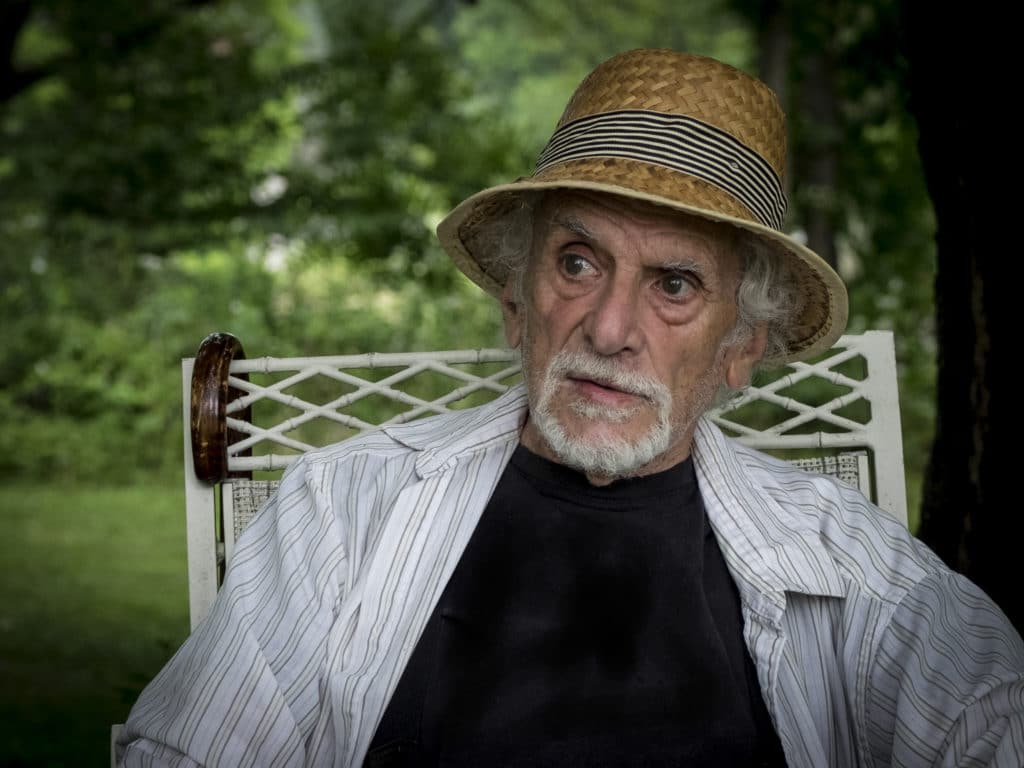
“Yiddish is just inherently funny. It’s so ironic, and there’s more stuff to be ironic about now,” author Daniel Klein said, pointing out that he wrote the book “before the world started to come to an end with the virus.” For Klein, 81, best known for the bestsellers “Plato and a Platypus Walk into a Bar: Understanding Philosophy Through Jokes” (co-written with Thomas Cathcart) and “Travels With Epicurus,” “It was the perfect project for me to do at my age, with my reduced bandwidth,” he wryly told the Journal. “Wordplay has always been part of my life.” 

Klein got the idea for the book when his hybrid neologisms like schmegoogle made his friends laugh. “So, I got really stoned and started thinking about more of these,” he said. “I love putting words together. It gives me pleasure and helps me think.” 

Klein’s introduction to then-illegal mind-altering substances was at Harvard, where he was a philosophy and theology student in the late 1950s and early 1960s. “Timothy Leary was one of my professors, also Richard Alpert, aka Baba Ram Das. I was young and innocent. I experimented. I went from Manischewitz to psilocybin,” he said. 

“Yiddish is just inherently funny. It’s so ironic, and there’s more stuff to be ironic about now.” — Daniel Klein

It comes as no surprise that Klein, still a pot smoker, coined weed-related expressions like meshuga-nug (a marijuana fanatic) and baruch-a-toke (a blessing for a blunt). “We’ve gotten a lot of reaction from weed sites,” he said. ‘They love it.” Other categories include food, insults, social media, health, dating and romance, and feature some terms that already have made it into the vernacular, like Chrismukkah and Black mitzvah, coined by TV’s “The O.C.” and Tiffany Haddish, respectively. Klein estimates that “a good 80-85%” of the entries are his invention.

“I’ve been a punster all my life,” he said, noting that one of his first jobs was writing for a comedy quiz show called “Let’s Play Post Office,” produced by Merv Griffin. “You had to write funny letters from famous people that had double meanings that gave a clue to who the author was,” he said. “It’s where I was first exposed to Yiddish. The staff at Merv Griffin was all Jewish guys from ‘Mad’ magazine. They would pepper everything with Yiddish. I loved how colorful it was, the way it melted in the mouth and all the insults.”

Klein was born in Wilmington, Del., where his parents had moved from Milwaukee for his father’s Manhattan Project job at DuPont. His family was not observant and did not speak Yiddish at home. “But I realized later that my mother knew it,” Klein said. “Her side came from Poland and strongly identified as Jewish and spoke Yiddish. She came from a much more traditional home than my father. His family came over from Hungary in the 19th century. They were assimilated to the point of not identifying. He didn’t even know that Hebrew went from right to left. He was useless at Pesach. But he was a good sport about it.”

Later, religion became a matter of contention between father and son. “I’ve always identified strongly as Jewish and I have a strong spiritual sense. My father got very angry at me when I studied theology. As an atheist, he thought spiritual thinking made you soft in the head,” Klein said.  

Klein’s wife is a convert to Judaism and his daughter works for the Harold Grinspoon Foundation, which makes Jewish books available for free to children around the world. He lives in the Berkshires in western Massachusetts, not far from his daughter and 8-year-old granddaughter, “the light of my life.”

Before the COVID-19 pandemic, Klein began work on a medical mystery novel called “Spare Parts,” which he has completed and submitted to his agent. “But if I do another [book] it will be something more like [‘Schmegoogle’] that makes me laugh, my friends laugh,” he said, hoping that his current release provides levity and distraction from the current circumstances. He also hopes that some of his neologisms make it into the vernacular.

“Words slip into English when there’s no other word for it,” he said, offering shlep and the German schadenfreude as examples. “I hope these words slip into the language. I hope I’m in a café in New York and hear one of these expressions. That would be thrilling. I’d love it if people start making up some of their own. I don’t know if it would sell more books, but it would give me pleasure.”

“Schmegoogle” will be available Sept. 1.

Yiddish Meets English in Funny Dictionary ‘Schmegoogle’ Read More »

Gal Gadot Promotes ‘Wonder Woman 1984’ at Virtual Fan Event

Gal Gadot, director Patty Jenkins and other key members of the cast—including Kristen Wiig, the new villain Cheetah—appeared at the DC FanDome virtual convention on Saturday to promote “Wonder Woman 1984” and unveil a new trailer for the film.

“This is a great opportunity to thank our fans and share something from the movie,” Gadot said, eager for fans to see it this fall. “We had an amazing time working together. We have great chemistry and love and adore each other.”

Fan-submitted art, photos and questions were part of the presentation, and Gadot was especially moved by a drawing of a young girl gazing at a portrait of her character. “We’ve seen so many male superheroes but we haven’t seen enough female superheroes,” she said. “For little girls to be exposed to Wonder Woman or any other female-driven movie in this genre is so important, so empowering.”

Lynda Carter, TV’s original Wonder Woman, joined the panel and the new crew gave credit where it was due. “You are a true-life Wonder Woman and I can’t be more grateful to have your guidance and be able to call you Mama Bear,” Gadot said. “Thank you for everything you’ve done personally for me and for the world. Now this thing is whole, because you’re here.”

Also taking part was Chris Pine, alive and well as Steve Trevor in the clip after his apparent demise in the previous film, and Pedro Pascal, who plays the villain Maxwell Lord. 

“Wonder Woman 1984” is schedule to be released in theaters Oct. 2, but that could change depending on the COVID-19 pandemic. Watch the trailer here:

Gal Gadot Promotes ‘Wonder Woman 1984’ at Virtual Fan Event Read More »

Suspect Arrested for Trying to Attack Jewish Leader in Graz, Austria, With a Baseball Bat

(JTA) – A Syrian man was arrested Monday for attacking the president of the Jewish Community organization in Graz, Austria with a wooden bat on Saturday evening.

A spokesperson for the Jewish Community said Elie Rosen, 49, had been driving onto the grounds of the community’s synagogue when he passed a man on a bicycle who had a stone in his hand. Rosen got out of his car to ask the man what he was doing there.

Instead of answering, the man “came at me” with what appeared to be a baseball bat, Rosen reported. He managed to jump back into his car and lock the doors. The man “hit the car several times” with the bat then rode off on his bike.

According to the Austrian Press Agency, Rosen said the perpetrator resembled a man seen on surveillance videos vandalizing the synagogue twice last week. On Wednesday, someone wrote pro-Palestinian slogans on the synagogue exterior, and on Friday night, someone threw pieces of concrete against the building’s north side, breaking one window and damaging others.

Police have increased security for the site and for Rosen. Meanwhile, Austrian Interior Minister Karl Nehammer announced increased surveillance of all Jewish institutions in the country and has invited Jewish leaders in Austria to a meeting this coming week.

“An attack on one member is an attack against Austria,” Oskar Deutsch, president of Austria’s Jewish Religious Community, told Austrian media, adding that “the best response to anti-Semitism is to celebrate Jewish life and culture. We will not be intimidated.”

Austria’s Jewish community has approximately 7,000 members, most of whom live in Vienna. The Graz community has about 70 members today, as compared to about 2,000 in 1910, according to Israel’s Museum of the Jewish People at Beit Hatfutsot.

Rosen, an attorney and economist who has headed the Graz community since 2016, said he would not let the attacks intimidate him.

Following news of the attack, citizens – including local politicians and representatives of the Islamic cultural center – reportedly gathered in front of the synagogue Saturday night for a vigil.

Suspect Arrested for Trying to Attack Jewish Leader in Graz, Austria, With a Baseball Bat Read More »