fbpx

August 22, 2020

Israel File Appendix: The Rise of Yamina

Twenty-four hours before the deadline for a (possible) new election, the graph below shows the political pros and cons of such election is clear:

Prime Minister Benjamin Netanyahu can hope to form a right-religious coalition after a new election (currently, this coalition gets 62 seats at the polls). More importantly, he cannot see anyone else having the ability to form a coherent coalition, because while Likud’s seat numbers declined, the voters that abandon Likud do not move to parties from the other “bloc,” they stay with Naftali Bennet’s Yamina.

What happens if Bennet decides to abandon Netanyahu and form a coalition, maybe with Bennet as the prime minister for half the time (alternating with Lapid), with the center-left? It is an option people are talking about, but the numbers make it seem quite difficult to see this playing out.

Note: We added a column of “weighted” average to this table that takes into account when was the poll taken, and how many participated. This gives more weight to more recent and larger polls.

Two weeks ago, Yamina, the right-wing religious party was rising in the polls. These latest polls show that when the Unity Government was formed, and Yamina stayed out, its stock somewhat declined. It rose again when the public realized that the new government was not functioning, and the pandemic came back with vengeance.

Even when he was in the government Bennet, was the lone voice on this subject. He barely spoke about anything else (not even annexation) and kept hammering the government for putting politics before the pandemic. In interviews, Bennet sounded informed, focused, ready to take charge. He sounded like an adult in a room of bickering children. His new book, “How to Beat a Pandemic,” is due to be released, and this will only reinforce his political message.

So Bennet is doing well in the polls, taking votes away from Likud, and some from Blue and White. The question is, will it last? In previous election cycles Bennet always did better in pre-election polls than he on election day. His support is fragile and tends to fall prey to last-minute Netanyahu campaigns. Will this time be different? That depends on many factors, including timing. But for now, Yamina has reasons to be optimistic and has no reason to join the current coalition.


Israel File Appendix: The Rise of Yamina Read More »

Can Diaspora Jews Visit Israel During the COVID-19 Crisis? The Rules Keep Changing

JERUSALEM (JTA) — Like many French Jews, Agnes Mimoun used to take her ability to freely travel to Israel for granted. Getting here was as easy as booking a ticket online and grabbing a cab to Charles de Gaulle Airport for the 4 1/2-hour flight to Tel Aviv.

But for the past month, this mother of three from the heavily Jewish Paris suburb of Sarcelles has been desperately trying to convince the Israeli Embassy in Paris to let her enter the country to attend her son’s wedding next month.

“They don’t answer, either by phone or by mail,” Mimoun complained. “On their website there’s an option to make an appointment, but it’s only in October. I feel like I’m trying to get out of Egypt. It’s very stressful not to know if I’ll be able to be there.”

Mimoun’s experience is far from unique.

In March, with COVID-19 cases mounting, Israel, which has long billed itself as a refuge for world Jewry, shut its doors to non-citizens, effectively barring half of the world’s Jews from the Jewish state during one of the worst public health crises in decades.

Jews around the world were disappointed. One prominent French Jewish media personality called the ban an “existential issue” in an April interview with the Israeli newspaper Haaretz, saying it was unprecedented for Israelis to bar visitors to protect themselves from other Jews.

In recent months, the country has worked to loosen some restrictions while preserving others, creating a patchwork of policies that have left Jews worldwide confused about whether they can visit Israel and what it takes to get there.

Multiple high-profile cases have drawn attention to the difficulties of coming and going amid the current restrictions. In one, first reported by Reuters, it took months for a 3-year-old Israeli girl who had gone to visit her grandmother in Ukraine to be able to get home because her grandmother could not escort her under Israel’s rules. In another, Indian citizens who study and work in Israel were unable to return to their jobs and schools because of the ban on non-citizen entrants.

And a small but significant number of couples — those with one member who is not Israeli, whose interfaith or same-sex marriages are not recognized by Israel’s rabbinic authorities — have also been separated because of the travel restrictions.

“It’s really a scandal,” an Israeli human rights attorney said last month about the separations.

As Israel’s coronavirus response has evolved, the government has taken some steps to address family reunification. On July 13, the Population and Immigration Authority announced that limited classes of non-citizens, primarily nuclear family members, would be allowed into the country for lifecycle events such as births and weddings.

But navigating Israel’s bureaucracy is difficult at the best of times. Now, with the country in crisis, many are finding navigating the new regulations to be intensely frustrating and difficult.

Anyone coming for a family event must fill out an online form, provide a copy of their passport and ticket, and get special medical insurance to cover them if they get COVID-19 in Israel. They also must prove a familial relationship, submit copies of the Israeli ID cards of the people they are coming to visit and provide the address where they will quarantine for two weeks upon arrival.

Grandparents coming to meet new grandchildren must obtain a doctor’s note stating the due date. People traveling to celebrate a bar or bat mitzvah must supply an invitation. Israelis who wish to bring in their spouses from abroad must submit paperwork to the Interior Ministry — and provide a copy of their ketubah, or Jewish wedding contract, which not everyone has.

One French Jew told the Jewish Telegraphic Agency that she has spent the last month seeking permission to visit her pregnant daughter in Israel but has run into obstacle after obstacle.

“They always tell me that there is something missing,” the woman said about officials at the Israeli consulate. She asked to be identified only as Joelle because she did not want to jeopardize her efforts to gain entry.

“I submitted all of the paperwork at least five times,” she added. “It’s very frustrating. I’m not asking to come on vacation and suntan on the beach. My daughter is giving birth soon.”

Rina Greenwald of Cedarhurst, N.Y. whose daughter Eliana, left, is planning to spend her second year at an Israeli seminary. (Courtesy of Greenwald)

Israel continues to allow new immigrants into the country through a process that now includes a quarantine period. (Most of the new immigrants who have arrived began the process before the pandemic, although a group that helps North American Jews make the move says applications reached record levels in recent months. Applications from French Jews have tripled this year, according to a report by the French news agency AFP.)

Fed up with trying to get a permit to visit, Joelle considered applying for Israeli citizenship in order to make it in time for her grandchild’s birth. It didn’t come to that: After weeks of grappling with documents and bureaucrats, she successfully navigated the new rules and now is in quarantine in Israel.

The process could soon become easier for grandparents of babies born in Israel since March 1. Michal Cotler-Wunsh, a member of the Knesset, posted a video message on Facebook on Tuesday announcing a new process for bringing grandparents into the country.

“After hundreds of you reached out to my office, and after weeks of hard work, I am so happy to report that your parents will now be able to come meet your new babies and that you will be able to get the hug and the help you deserve!” Cotler-Wunsh said in a message addressed to those  have immigrated to Israel. Applications must be filed by Sept. 18, she said.

But even as lawmakers come up with case-by-case solutions, another policy is exacerbating tensions around Israel’s pandemic travel restrictions.

In June, the government announced that some foreign university students — primarily graduate students involved in research projects — could begin returning. After some back and forth, the government also included students coming to study in the country’s yeshivas and seminaries in what has become a rite of passage in the American Orthodox community.

Now more than 17,000 foreign students are in the process of flowing into the country, even as other Jews abroad are unable to gain entrance. Dr. Ronni Gamzu, a leading physician who was appointed in late July to get Israel’s coronavirus outbreak under control, expressed concern about the yeshiva plan but said the decision had preceded his appointment. He said inspectors would be deployed to make sure the students adhere to public health regulations, including studying only in small pods.

Interior Minister Aryeh Deri defended the decision to allow in yeshiva students, calling Israel “the national home of all the Jews in the world” and comparing it to a mother who cannot reject her children.

Yet the parents of yeshiva students will not be allowed to visit under Israel’s current rules. That has even parents who are happy that the pandemic has not derailed their children’s plan to study in Israel unnerved by the travel restrictions.

“I’m so happy that she’s going,” said Rina Greenwald of Cedarhurst, New York, whose daughter Eliana is planning to spend her second year at an Israeli seminary. “She’ll grow as a person and in her love of Israel.”

But while she was happy that her daughter would be able to return, Greenwald also said that she found it disturbing that travel to Israel — including her own — is still restricted.

“It’s a little bit scary,” she said. “You want to know you always have Israel there for you.”

Can Diaspora Jews Visit Israel During the COVID-19 Crisis? The Rules Keep Changing Read More »

UAE-Israel Pact: Sacrificing Substance for Ceremony?

“The major issue is not [attaining] an agreement, but ensuring the actual implementation of the agreement in practice. The number of agreements which the Arabs have violated is no less than number which they have kept.” — Shimon Peres, Tomorrow Is Now, Keter: Jerusalem, p. 255

“Poor Menachem … After all, I got back … the Sinai and the Alma oil fields, and what has Menachem got? A piece of paper.” — Former Egyptian President Anwar Sadat in The New York Times, Oct. 19, 1980

“Qatar established trade relations with Israel in 1996, the first state bordering the Persian Gulf to do so. In 2000, Israel’s trade office in Qatar was closed down by authorities. Qatar permanently severed trade relations with Israel in 2009 following ‘Operation Cast Lead.’ ” — Professor Uzi Rabi, The Middle East Journal, Vol. 63, No. 3, Summer 2009

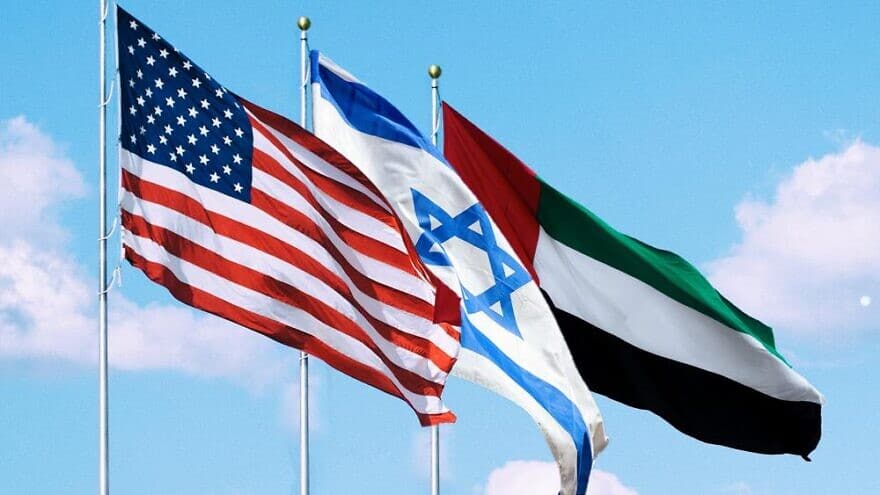
Since Aug. 13, when it was made public, rivers of ink have been spilled analyzing the pro and cons of the Israel-UAE peace (or rather, “normalization”) deal weighing the prospective rewards against the potential risks.

There was speculation as to how it upended past precedents that dictated approaches to the perennially faltering “peace process,” as well as conjecture as to whether other “moderate” Arab states (read “nepotistic despotic Sunni sheikdoms”) will follow suit and forge a similar compact with the Jewish state.

While all these aspects are certainly pertinent and worthy of attention, in many respects, they miss the major point: The agreement is merely a prop in the choreography for a much bigger drama. After all, formalizing the ongoing relationship between Israel and the United Arab Emirates, which despite its perceptions of great affluence and opulence has a GDP per capita lower than Israel’s and a domestic population of around 1 million(almost 90 percent of the UAE population are migrants/expatriates), is hardly likely to be a measure with enormous strategic significance.

Beyond the considerations of the agreement’s permanence, potential and possible extension, the issue that is liable to have the most profound and durable strategic impact for Israel is whether the Israel-UAE agreement will reap the Trump administration sufficient credit to nudge it to victory in the November elections.

Clearly, Israel will find itself in two very different — indeed, divergent — strategic universes depending on who wins that crucial ballot. It will be one thing if the largely pro-Israel GOP, with its strong evangelical Christian base, is victorious, and quite another thing if the increasingly anti-Israel Democratic Party with its vociferous and ever-more dominant radical wing carries the day.

Two divergent strategic universes for Israel

The outcome of the December polls will determine the fate of much for Israel, just as the outcome of the 2016 vote did.

Had the result then gone as expected, the U.S. embassy would still be in Tel Aviv; there would be no U.S. recognition of Jerusalem as Israel’s capital; there would be no defunding of the fraudulent UNRWA or the pernicious PLO; there would be no American recognition of Israel’s sovereignty over the Golan; there would be no U.S. withdrawal from the atrocious 2015 Iran nuclear deal and punishing sanctions on Tehran; there would be no recognition by Washington of the legal standings of the Jewish communities beyond the 1967-Green Line.

Some — indeed, possibly all — of these historic gains could well be reversed if the Democratic Party takes the White House. Therefore, if the Israel-UAE pact is received as a significant foreign-policy success for the Trump administration, which helps it retain power in the November polls, that would be the greatest strategic benefit that would derive from it for Israel.

This does not mean that the emerging pact does not have inherent benefits in its own right. Much of the touted payoffs — both diplomatic and economic, perhaps even security — are not implausible prospects. However, it’s still early days to break open that champagne and celebrate their scope, and certainly their durability.

A succession of castles in the sand

In the past, agreements with Arab states have hardly lived up to the rosy expectations they raised when signed.

This is certainly true with regard to the Oslo Accords, concluded with great pomp and ceremony in 1993 on the White House Lawn. Purported to usher in the dawn of a “New Middle East” from Kuwait to Casablanca, with peace and prosperity replacing animosity and aggression, it proved to instead to be a harbinger of trauma and tragedy for the Israelis, and death and destruction on an even larger scale for the Palestinian Arabs.

Neither has the agreement with Jordan fostered much of the hoped-for harmony and reciprocal goodwill. Although the Hashemite regime, largely due to a sense of enlightened self-interest, has engaged in effective security cooperation with Israel and has managed to keep the Jewish state’s longest border relatively without incident, there is growing domestic resistance to the accord.

As one Middle East analyst pointed out: “Although it has been more than twenty years since Jordan and Israel signed a historic peace agreement to end decades of war, many visitors to the region could be forgiven for thinking that the two sides remain enemies, particularly at a popular level.”

High hopes left high and dry?

Indeed, from the economic perspective, the direct benefits of peace have been meager. Few, if any, of the many visionary projects originally foreseen have been implemented.

Clearly then, formal relations have not produced any significant lessening of popular mistrust and hostility — something the architects of the Israel-UAE pact will ignore at each other’s peril.

Therefore, in the words of one experienced pundit: “… criticism of the peace treaty with Israel, anti-Zionism, and calls for curtailing “normalization” of relations and even to abolish the treaty itself, form a common denominator — in fact, one of the only common denominators — and a ‘glue,’ for opposition and protest movements of many stripes: leftist, Pan-Arab, liberal-democratic, progressive and Islamic.”

Significantly, he notes: “The growth in Jordan of civil society and open discourse, and the uncontrollable increase in transparency, makes it more costly for the regime to pursue policies which are not popular. There is much more consideration for public opinion than in the past. It is important to note that social media has become very significant in the Kingdom (despite steps to limit it since 2012-13). The Palace is very cognizant of it, and reacts to it.”

The agreement, therefore, is not likely to survive a regime change should the Hashemite dynasty lose power to a more radical successor, or even if it becomes sufficiently weakened so as to be unable to resist demands to annul it.

Egypt: Non-belligerency rather than peace? 

Likewise, the agreement signed with Egypt, has, for most of the more than 40 years since its signature, been far more a resentful non-belligerency pact than a harmonious peace treaty sustained by mutual goodwill. Indeed, with the ominous wave of jihadi insurgency in the Sinai Peninsula and the inability of the Egyptian authorities to constrain the violence with the limited forces allowed by the agreement, Israel’s greatest benefit — the demilitarization of Sinai — is being eroded away.

Thus, Cairo is boosting its military presence beyond the agreed limits — often, with Israeli consent — in an endeavor to deal with Islamists warlords, who pervade and ravage swathes of the wild desert peninsula, which lies between the strategic waterways of the Gulf of Suez and the Red Sea. 

Indeed, in Egypt, as in Jordan, decades of formal peace have done little to attenuate public acrimony against the Jewish state.

Significantly, for those who underscore that the agreement with the UAE was concluded without any progress on resolving the conflict with the Palestinians, some experts point out that the anti-Israel sentiment in the Arab world is not necessarily a product of the Palestinian issue. Therefore, following the 2011 assault on the Israeli embassy in Cairo, Egyptian expert Eric Trager of the Washington Institute wrote ominously that anti-Israeli sentiment in Egypt has nothing to do with Palestine: “ … to assume that the Egyptian protesters who attacked the Israeli Embassy in Cairo last Friday … were motivated by cosmopolitan, pro-Palestinian concerns is to completely ignore the sad truth that Egyptians overwhelmingly hate Israel for wholly Egyptian reasons … .”

He goes on to argue that despite over three decades of contractual peace: “Egyptian national pride remains tied to the country’s previous wars with the Jewish state … accompanied by [a] powerful … anti-Israeli sentiment.”

Political winds and the weathercock of public sentiment 

For those who might invoke the warm pro-Israel public sentiment toward Israel/Israelis that exists in the Emirates, a word of caution is called for. After all, vibrant multifaceted ties prevailed between two non-Arab Muslim countries that transitioned from being close strategic allies to bitter strategic adversaries: Iran and Turkey. Indeed, Turkey was the first Muslim country to recognize Israel as a sovereign state (March 1949) and Iran, the second (March 1950).

From the early 1950s to the late 1970s until the fall of the Shah (1979), Israel and Iran conducted very close relations. Following the 1967 Six-Day War, a major portion of Israeli oil requirements was provided for by Iran.

Moreover, Iranian oil was shipped to European destinations via the joint Israeli-Iranian Eilat-Ashkelon pipeline. There was brisk trade between the countries. Israeli construction firms and engineers worked extensively throughout the country. Israel’s national air carrier, El Al, operated frequent direct flights between Tel Aviv and Tehran. Iranian-Israeli military links and projects were largely classified but reportedly extensive—possibly including missile development.

The scale and scope of the Israeli-Iranian collaboration are dramatically illustrated by the words of Yaakov Shapiro, the defense ministry official in charge of coordinating the negotiations with Iran from 1975 to 1978: “In Iran, they treated us like kings. We did business with them on a stunning scale. Without the ties with Iran, we would not have had the money to develop weaponry that is today in the front line of the defense of the State of Israel.”

Clearly, there has been a sea change in Iranian attitudes towards Israel, now widely denigrated with the anti-Zionist epithet “little Satan,” subjected to chants of “Death to Israel” at mass rallies and to threats of utter annihilation by the leaders of Iran.

A Turkish turnabout

Turco-Israeli relations followed a somewhat similar pattern to those of Iranian-Israeli ones.

Up until a little more than a decade-and-a-half ago, and the ascendance of Recep Tayyip Erdoğan’s Islamist Justice and Development Party(AKP), Israel and Turkey saw each other as having much in common—two non-Arab countries in an otherwise almost exclusively Arab region, sharing a western looking perspective with regard to the future development of both countries—with Ankara a far less problematic member of NATO than it is today, and with a then-firm ambition to accede to the European Union.

Indeed, so close and robust were the bilateral contacts between Ankara and Jerusalem, that The New York Times wrote in an August 1999 piece: “Over the last few years, Israel and Turkey have built a strategic partnership that has altered the face of Middle East politics. Trade and tourism are booming in both directions. Israeli pilots practice maneuvers in Turkish airspace, and Israeli technicians are modernizing Turkish combat jets. There are plans for Israel to share its high-tech skills with Turkey, and for Turkey to send some of its plentiful fresh water to [pre-desalination era] Israel.”

Relations began to deteriorate with the rise of the AKP and its increasingly firm grip on power in Turkey, but particularly following the 2008-09 IDF’s “Operation Cast Lead” in Gaza.

Although Turkey’s relations with Israel have not reached the same level of enmity as those of Iran, they are a far cry from those that prevailed in the 1990s, with Erdoğan even comparing Israel to Nazi Germany and the events in Gaza to the Holocaust in an address to the U.N. General Assembly.

Is the ‘quid’ worth the ‘quo’

This then is the empirical backdrop to the Israel-UAE normalization agreement, the price, of which Israel was asked to pay, was the forgoing the extension of its sovereignty of important areas of Judea-Samaria.

The cardinal question that must be addressed, therefore, is this: Is the “quid” worth the “quo.”

In an ideal world, devoid of political constraints and international pressures, the answer is clear. Even without broaching the topic of whether the deal was contingent on the supply of ultra-modern F-35 combat planes to the UAE and how significant this would be relative to the modernization of the Egyptian military in the wake of the 1979 peace agreement: Sovereignty is significantly more important than a possibly ephemeral deal with the Emirates.

One of the most important national imperatives for Israel is to ensure that the highlands overlooking the heavily populated coastal plain and the Jordan Valley never fall into potentially hostile hands. Clearly, extending Israeli sovereignty over additional areas of Judea and Samaria is an important step in achieving this goal.

What is unknown is what pressures were exerted on Netanyahu to yield—only temporarily, according to him—on the issue of sovereignty. There are, however, several factors that militate against delay.

Sacrificing substance for ceremony?

One is that if there is a Democratic victory in November, any measure to extend sovereignty will be off the table indefinitely.

Another is that prior to the November election, Trump is electorally dependent on this fervently pro-sovereignty evangelical constituency. After the election, their support will be largely irrelevant.

The third is that if normalization with Israel is a UAE national interest, why should Israel be called on to pay anything to facilitate the pursuit of that interest, especially as much of the interaction between the two countries is already being conducted informally? It is difficult to accept that the mere formalization of ongoing ties is worth forgoing sovereignty over strategic territory. Moreover, several experts believe that annexation (aka extension of sovereignty) would not seriously imperil UAE-Israel ties (see for example here, here and here).

Indeed, formalizing them may, in fact, jeopardize them—as across the Arab world this has raised resistance. Despite a display of bonhomie among certain sectors of the UAE public, in a recent article, Al-Monitor presents what might be the start of a brewing storm: “Palestinian leaders have cast the deal as a ‘betrayal,’ a view shared by many in the capitals of the oil-rich region, even if the allegiance to that cause has faded somewhat among the younger generation. … On social networks, the hashtag ‘Normalisation is Treason’ has been trending across the region in the past few days, particularly among young Saudi activists.”

These are signs that the architects of the deal in Jerusalem, Abu Dhabi and Washington will be wise not to disregard.

We are therefore left to hope that Israel-UAE normalization will indeed turn out to be an effective prop in the successful choreography of the really crucial drama — the elections on Nov. 3.

How the Israel-UAE deal plays out and how it is judged hinges critically on the outcome.


Martin Sherman is the founder and executive director of the Israel Institute for Strategic Studies.


UAE-Israel Pact: Sacrificing Substance for Ceremony? Read More »

Judge Dismisses Lawsuit Against ‘Resist Jewish Power’ Protests in Front of Michigan Synagogue

A federal district judge dismissed a lawsuit on Aug. 19 against protests that frequently occur in front of Beth Israel Synagogue in Ann Arbor, Mich., every Saturday morning during Shabbat services.

The lawsuit, which was filed in December by a Beth Israel congregant, alleged that the protests — which first began in 2003 — feature some “flagrantly anti-Semitic” signs and protesters who harass and insult congregants. The lawsuit argued that the protests impeded congregants’ right to exercise their freedom of religion. Some of the signs at these protests stated, “Resist Jewish Power” and “Jewish Power Corrupts,” according to The Algemeiner. Other signs protest Israel’s “military occupation of Palestinian lands” and contain calls to “Boycott Israel” and “Stop U.S. Aid to Israel.”

U.S. District Judge Victoria Roberts didn’t buy the plaintiffs’ argument, stating that the lawsuit failed to prove that the protesters inflicted a concrete injury upon the congregants. She noted that the protesters haven’t taken any action to prevent congregants from entering Beth Israel Synagogue.

“The First Amendment more than protects the expressions by Defendants of what Plaintiffs describe as ‘anti-Israeli, anti-Zionist, and anti-Semitic,’ ” Roberts wrote in her motion dismissing the lawsuit. “Peaceful protest speech such as this — on sidewalks and streets — is entitled to the highest level of constitutional protection, even if it disturbs, is offensive and causes emotional distress.”

Henry Herskovitz, who first organized the protests in 2003, praised Roberts for dismissing the lawsuit.

“It’s clear Jewish power still exists, it’s still strong,” Herskovitz told The Detroit Jewish News, adding that “the judge ruled that the First Amendment is strong and what we do is free speech.”

Marc Susselman, the lead counsel for the plaintiffs, told The Detroit Jewish News that the dismissal “was a technical ruling on the matter of whether the plaintiffs have standing to sue. The plaintiffs clearly have standing based on the emotional distress caused by the presence of antisemitic signs outside their place of worship.”

Ziporah Reich, co-counsel for the plaintiffs and director of litigation for The Lawfare Project, told The Detroit News that the plaintiffs plan to file a motion for reconsideration.

“The court is effectively saying that the emotional distress experienced by Jews in reaction to the anti-Semitic slurs hurled at them every week for 16 years in front of their house of worship, is insufficient injury to grant them access to federal court,” Reich argued.

If the motion for reconsideration is denied, then the plaintiffs will appeal the decision to the Sixth Circuit Court of Appeals, according to The Detroit Jewish News.

The Simon Wiesenthal Center tweeted, “More empowerment for anti-Semites in US attacking Jews at their communal houses of prayer. Outrageous and dangerous!”

According to the Anti-Defamation League (ADL), Herskovitz, who says he’s a former Jew and former Beth Israel congregant, started the protests in 2003 after he claimed that synagogues in the Ann Arbor area wouldn’t let him speak about his visit to the Middle East. He formed a group called Jewish Witnesses for Peace and Friends, which is now called Witness for Peace. The group issued a statement that year that read, “Beth Israel is a political institution as well as a house of worship, using its faith to promote a nationalist agenda. support [sic] of the State of Israel, and by extension, its actions: specifically, Israels [sic] brutal and illegal military occupation of Palestinian lands and the suffering of the Palestinian people.”

Additionally, in 2018, Herskovitz wrote in a blog that Beth Israel helped establish “the racism that drives the Jewish state,” according to the ADL. The ADL report also stated that only a handful of people show up to Herskovitz’s weekly protests.

The lawsuit against the Herskovitz-led protests alleged that the protests violated the city’s codes; city officials have said that they wish the protests would stop but the city can’t do anything about it because the protests are protected speech. Herskovitz has said he would stop his protests if Beth Israel takes down “the Israeli flag inside its sanctuary and go on record promoting full equal rights for Palestinians in the state of Israel,” The Ann Arbor News reported in 2013.

Herskovitz also has argued that signs protesting “Jewish power” aren’t anti-Semitic, stating during a December protest that the signs don’t “talk about Jews as a people, as a group, as an ethnicity.” Additionally, he told The Detroit Jewish News in April that he and Witness for Peace “love our country and we love the Palestinians. We hate what Jews are doing in the Jewish state … but we don’t hate [Jews].”

However, Beth Israel Rabbi Nadav Caine told The Detroit Jewish News that the Herskovitz-led protests are anti-Semitic because the protests are “really about the ‘fact’ that Israel and the Jews control the world and it’s all those anti-Semitic tropes about [how] we control the banking, we control the American government, control the military.”

Judge Dismisses Lawsuit Against ‘Resist Jewish Power’ Protests in Front of Michigan Synagogue Read More »

America’s Key European Allies Side with Tehran, Moscow and Beijing

Iran’s rulers characterized what happened at the U.N. Security Council last week as a “heavy defeat for Washington,” and I can’t say they’re wrong. Most distressing: It was not America’s enemies who were responsible. It was some of America’s closest friends.

At issue was a simple question: Should it be legal and easy for the world’s leading state sponsor of terrorism to buy and sell fighter jets, attack helicopters, battle tanks, naval platforms—all and any conventional weapons?

The United States said no.

Russia and China, permanent Security Council members, said, in effect: “Yes, absolutely! Such weapons, which we’ll happily sell to Iran’s rulers, will only kill people we don’t care about, for example, in Syria, Yemen, Iraq, Lebanon and Israel.”

The leaders of Britain and France, also permanent members of the Security Council, along with Germany, Belgium and Estonia, temporary members, abstained.

Because they found the question a head-scratcher? Or, as I fear, because they have adopted a policy of accommodation and appeasement vis-à-vis threatening regimes? Keep in mind that Iran’s rulers and their de facto foreign legion, Hezbollah, have been responsible for multiple acts of terrorism on European soil.

A little background: The U.N. Security Council imposed an arms embargo on Iran’s rulers 13 years ago. That ban is due to expire on Oct. 18. The United States therefore proposed a resolution to extend it “until the Security Council decides otherwise.” Nine votes were needed for it to pass. Russia and/or China would then have cast vetoes. But by making them do that, our European allies would have demonstrated solidarity and backbone.

Last week’s defeat might yet turn out to have been merely a setback. I’ll explain why as succinctly as I can.

President Barack Obama’s Joint Comprehensive Plan of Action (JCPOA) was fatally flawed, at best marginally slowing but certainly not preventing Iran’s revolutionary rulers from acquiring nuclear weapons and missiles to deliver them to targets anywhere on Earth. Worse, his negotiators put together U.N. Security Council Resolution 2231, which created the crisis at hand: a series of expiration dates for all restrictions on Iran, including the embargo on conventional arms.

Team Obama did do one thing right, however: They made sure UNSCR 2231 gave the United States the prerogative to unilaterally extend the expiring arms embargo, and “snap back” all other international sanctions.

Five years ago this month, in a major address touting his Iran deal and the mechanism by which the United States could reimpose sanctions on Tehran, Obama emphasized the point: “We won’t need the support of other members of the U.N. Security Council; America can trigger snapback on our own.”

Russia and China are now arguing that Washington gave up that option when it withdrew from the JCPOA in 2018. But a stipulation to that effect is nowhere to be found in UNSCR 2231. Whether all or any negotiators understood that at the time it passed is irrelevant. A Security Council resolution is a contract, and a contract is a contract.

There’s also this solid legal basis for the snapback: multiple Iranian violations of the JCPOA. According to the International Atomic Energy Agency, the U.N.’s own nuclear watchdog, Iran’s rulers have nearly tripled their stockpile of enriched uranium since November. Other transgressions include exceeding enrichment limits, testing advanced centrifuges and restarting enrichment at Fordow.

Russia and China have minimized or ignored such conduct. That Britain, France and Germany have followed their lead is, bluntly, shameful.

The reluctance of European nations to restrict Tehran’s military power puts them at odds not only with the United States but also with Arab countries. Not without reason do the Saudis, Bahrainis and Emiratis regard Tehran as an existential threat.

As a result, all have quietly developed closer relations with Israel, their only neighbor strong enough to frustrate the Islamic Republic’s imperialist ambitions.

Last week, just prior to the defeat in New York, President Donald Trump scored a significant victory in the Middle East, announcing that the United Arab Emirates and Israel have agreed to “full normalization of relations.”

In exchange, and to the relief of the Arab states, Israel will refrain from extending sovereignty—“annexing” is the more common, if less precise term—to parts of the West Bank that were taken from Jordan in a defensive war but could become part of a future Palestinian state.

Until now, only two of the 21 member states in the Arab League have exchanged ambassadors with the lone Jewish state and those instances of peace-making came about a generation ago, following failed attempts by Arab armies to wipe Israel off the map.

The agreement between the UAE and Israel—named the “Abraham Accord” for the father of Judaism, Christianity and Islam—includes extensive trade and cooperation in such realms as health care and science. Other Arab nations whose leaders appear to have concluded that tolerance is not anti-Islamic—Bahrain, Morocco and Oman come to mind—could soon follow suit.

The leaders of Germany, France and Britain now have an opportunity to advance a serious peace process. All that would require is for them to tell Palestinian leaders to stop dreaming about destroying Israel, and resume—after a hiatus of over a decade—serious negotiations aimed at a two-state solution.

Palestinians would have to agree to peacefully coexist alongside an ancient people exercising its right to self-determination in part of its historic homeland. Is that really too high a price to expect Palestinians to pay?

Our European friends should be equal to this task. Unless, as I fear, their overriding goal is to make themselves inoffensive to those determined to damage and diminish the West.

Clifford D. May is founder and president of the Foundation for Defense of Democracies (FDD) and a columnist for The Washington Times.

This article first appeared in The Washington Times.

America’s Key European Allies Side with Tehran, Moscow and Beijing Read More »

How Buenos Aires’ Jews Have Weathered the Pandemic

BUENOS AIRES (JTA) — Since March 20, Argentina has imposed one of the world’s strictest COVID-19 quarantines, and its capital city, home to most of the country’s Jewish community, isn’t opening back up anytime soon.

Jewish schools and synagogues have been closed for five months — but so have most of the city’s industrial and commercial activities. It has led to a local economic crisis that’s affecting most of the city’s businesses, Jewish and non-. The first half of 2020 showed an inflation rate of approximately 20 percent and now the peso, the local currency, is quickly losing value: In January one needed 63 pesos to buy one dollar; now it’s over 120 pesos.

Despite the shutdown, the virus is still advancing in Argentina. The National Health Ministry reported a new high record of deaths (283) in one day on Aug. 19. Since the start of the pandemic, nearly 312,000 people have now been infected with COVID-19, with 6,330 fatalities.

Frustrations have boiled in the Jewish community — early on in the crisis, in March, members of an Orthodox congregation were arrested for trying to operate a mikvah, or ritual bath, and later a bride and groom were arrested at their own wedding for convening such a large gathering. One Orthodox rabbi said Tuesday that “Judaism in Argentina has reached a low point.”

For the first time ever, the normally widely-attended events commemorating the deadly Israel embassy and AMIA Jewish center bombings that took place in the city in the 1990s were broadcast online.

But there have been bright spots, too, such as an agreement between the Orthodox community and government on how to keep rituals going safely, and an operation that brought in nearly 100 Israel rabbis to certify a backlog of thousands of tons of kosher meat.

Here’s how some other local Jewish institutions are faring as the pandemic drags on.

Synagogues can reopen, slowly

Rabbi Adrian Fada, left, and cantor Corina Krum rehearse for an online service filmed at the NCI-Emanuel synagogue in Buenos Aires. (Courtesy of NCI Emanuel)

Many have clamored for the government to restart some recreational and economic activities, and since July 18, the city has seen a few gradual reopenings. Synagogues can open for 10 members at a time, as long as masks are worn and sanitary protocol is followed.

But despite the new measures, many temples will remain closed to the public and will continue to offer online services over the fear of the virus’ continued spread. It’s currently winter in the South American country.

Leading conservatives synagogues such as NCI Emanuel, Bet El, Bet Hillel and Amijai will remain closed.

“The government and the society are seeking some normalization, but the risks still exist,” said Ariel Stofenmacher, 57, the rector of the Conservative Latin American Rabbinical seminary.

“The flexibility is motivated by economic needs, people are fed up. But we are still in the middle of winter and without a vaccine, I won’t call the people to gather,” added Alejandro Avruj, 50, the rabbi of Amijai, which has put Kabbalat Shabbat services featuring prominent musicians online.

The Orthodox Chabad Lubavitch movement opened its institutions with the mandatory sanitary protocols in place. “We will open our temples to 10 people with strict measures of sanitization and all the requirements of the government regulation to protect our people,” said Tzvi Grunblatt, 66, the general director of Argentina’s Chabad chapter.

A kosher deli thrives

Customers at the “Oh Brothers” restaurant. (Courtesy of “Oh Brothers)

Kosher food here — which has mixed Sephardic and Ashkenazi immigrant flavors with traditional Argentine meat — has become an attraction for Jewish tourists.

The local market for kosher food is about $25 million a year, according to information provided by the city. The city has held a kosher festival since 2013, and 11 city hotels have kosher certification with employees trained to help the kosher tourist.

Restaurants have been closed since March 20, and many of them are struggling to survive — but some have surprisingly found an opportunity to grow. Brothers Leandro, 42, and Esteban Olsztajn, 44, opened a kosher deli restaurant three years ago in the heart of the Orthodox “El Once” neighborhood of Buenos Aires, just between the Orthodox Toratenu school and the Maccabi Jewish community center.

The “Oh brothers,” as they’re called, aimed to recreate some of the atmosphere of a Manhattan Jewish deli at their restaurant that bears their nickname — but they sell all kinds of Jewish food, kosher sushi and other fusion food. After expanding their delivery service during the pandemic, they have tripled their sales.

When Esteban was asked why he thought that happened, he replied: “I believe in God, do you?”

Esteban is Orthodox, but his brother and business partner is not. He offered another explanation.

“After the shutdown, we started to receive orders from every corner of the city, and not just from our close neighbors,” Leandro told JTA.

A JCC-turned hospital

Hebraica JCC President Jonathan Lemcovich, center left, and Pilar Mayor Federico Achaval, center right, at the COVID-19 hospital at the Jewish organization’s Pilar campus, Aug. 14, 2020. (Courtesy of Sociedad Hebraica Argentina)

The Buenos Aires Jewish community center, called Sociedad Hebraica Argentina, is one of the city’s biggest Jewish hubs, home to youth sport leagues, classes, professional classes, adult programming and more. It had to shift all of that online quickly — but it found another way to be useful.

Part of its 420-acre open air site in Pilar, a city of 300,000 just outside of Buenos Aires, was turned into a temporary hospital. The Municipality of Pilar ran the site, which had 230 beds available for COVID-19 patients. And this was just one example.

According to the Argentine Jewish umbrella organization, DAIA, all of its 140 institutions across the country offered its facilities and volunteers to the national and local governments to help with the crisis. They did so while undergoing an economic crisis of their own, as members have found it harder to pay for membership fees.

Like Hebraica, another well known Jewish community center is Hacoaj, a sports and cultural club with around 7,500 members in Tigre, a city in the north of Buenos Aires province (besides the city of Buenos Aires, which is the capital of the country, there are also a province with the same name). Hacoaj has organized an array of “at home” activities and discounted membership by 20 percent. Some members have donated their discounts to help other members in more need.

La Kosher Nostra

A member of La Kosher Nostra, Argentina’s most well-known klezmer band. (Screen shot from YouTube)

Buenos Aires is home to about 159,000 Jews, according to the 2018 World Jewish Population study by expert Sergio Della Pergola, giving Argentina the largest Jewish population in Latin America.

Local Jewish businessmen, artists, professionals and creatives have been hit hard by the general slowdown and the strict prohibitions on social gatherings and events.

Among the event and show cancellations was the country’s 72nd Israel Independence Day celebration, organized by the Argentine Zionist Organization. The main attraction was going to the local klezmer band “La Kosher Nostra,” a group that started small in 2011 but now plays to thousands of fans at stadiums across the country. In 2016, the group played two shows to crowds of 10,000 in South Africa.

“To honor Israel, we recorded a video with the participation of more than 60 Argentinean artists,” Jonathan Strugo, 27, one of the creators of the band, told the Jewish Telegraphic Agency.

The economic crisis

Tzedaká volunteers working in the foundation’s “social pharmacy,” which provides free medicine. (Courtesy of Tzedaká Foundation)

Every week, directors of the city’s largest Jewish schools, such as Scholem Aleijem, ORT, Martin Buber, Tarbut, Beth, among others, have Zoom meetings to discuss the situation. Most of them have reduced their costs, but the financial crisis isn’t getting any easier.

Prior to the pandemic, the AMIA Jewish group fielded about 40 new requests every month for economic assistance. Since the quarantine was established, that figure jumped to more than 500 a month (an increase of 1,200 percent).

The office of AMIA that coordinates activities with communities all across the country, called Vaad Hakeilot, launched a platform that allows people to donate to different Jewish institutions.

A special section focused on education got mainstream media attention and raised $400,000.

“The request for help has grown by three times,” economist Miguel Kiguel, 66, president of the Tzedaká Foundation, an NGO focused on charity, explained in a recent interview. “There are lots of cases of people that have jobs, that have a social life, but since the lockdown all those fundamental structures began to fall.”

Tzedaká has implemented an emergency program called Guesher (“bridge” in Hebrew) to help Jewish families in Buenos Aires with a temporary economic assistance program to cover their basic needs, such as food, health, and housing, for a maximum period of six months.

Film and photography hit a wall

Jonas Papier, second from right in front row, with photography students in Tel Aviv in 2019. (Courtesy of Motivarte)

Jonas Papier, 50, runs Motivarte, runs one of the world’s most-awarded photography schools. It has 2,000 students and has earned a record seven nominations for the World Photography Organisation’s Student Focus prize. A Motivarte student won the 2017 edition.

The school has entered into teaching agreements with Betzalel, the famed Israeli Academy of Arts and Design, and Papier has travelled to Israel several times to teach. In 2019, he took to the Tel Aviv streets to give his famous-at-home class on street photography — in Spanish, Hebrew and English.

He had planned a 2020 edition in Tel Aviv with new projects to engage other Israeli institutions.

“We miss the trip to Israel. The school building is empty. Now I’m very busy transforming the whole concept of the school into a virtual platform,” Papier said. “The good news is that we are recovering our staff of teachers with some professionals that have taught here in the past and are now living in Europe and Israel.”

Over the past 16 years, the Buenos Aires Jewish film festival has debuted 250 movies by Israeli directors such as Yosef Shiloaj, Dan Wolman, Ayelet Bargur, Igaal Niddam, Ilan Heitne, David Volach, and Jorge Gurvich, and Americans Ann Coppel, Hilary Helstein, Adam Vardy, Gaylen Ross, and Adam Zucker.

The creator of the festival, Luis Gutman, 73, explained to JTA that the devaluation of the peso made it difficult for him to buy the rights of movies to exhibit at the festival. For 16 years, the festival showed films at the Cinemark cinema chain for two weeks in November.

“Cinemark cannot assure yet whether cinemas will reopen this year and it is not profitable for me to purchase the rights of movies and exhibit them online; so if the cinema industry remains closed, I’m thinking that there won’t be a festival this year and we will resume activities in 2021,” he said.

One thing is certain, though.

“[F]or sure it will not be an online festival,” Gutman said.

How Buenos Aires’ Jews Have Weathered the Pandemic Read More »