fbpx

August 18, 2020

John Ruskay and Irwin J. Mansdorf

John Ruskay and Irwin J. Mansdorf: What Does it Mean to be Pro-Israel?

Shmuel Rosner, John Ruskay and Irwin J. Mansdorf discuss the meaning of being pro Israel, supporting Israel as an American Jew and more.

Irwin J. (Yitzchak) Mansdorf is a clinical psychologist and a fellow at the Jerusalem Center for Public Affairs specializing in political psychology.

John S. Ruskay is executive vice president emeritus of UJA-Federation of New York, a senior partner of JRB consulting services, and a senior fellow at the Jewish People Policy Institute. He served as a commissioner on the United States Commission on International Religious Freedom from May 2016 to May 2018. Ruskay is an author and lecturer on issues affecting the Jewish people.


John Ruskay and Irwin J. Mansdorf: What Does it Mean to be Pro-Israel? Read More »

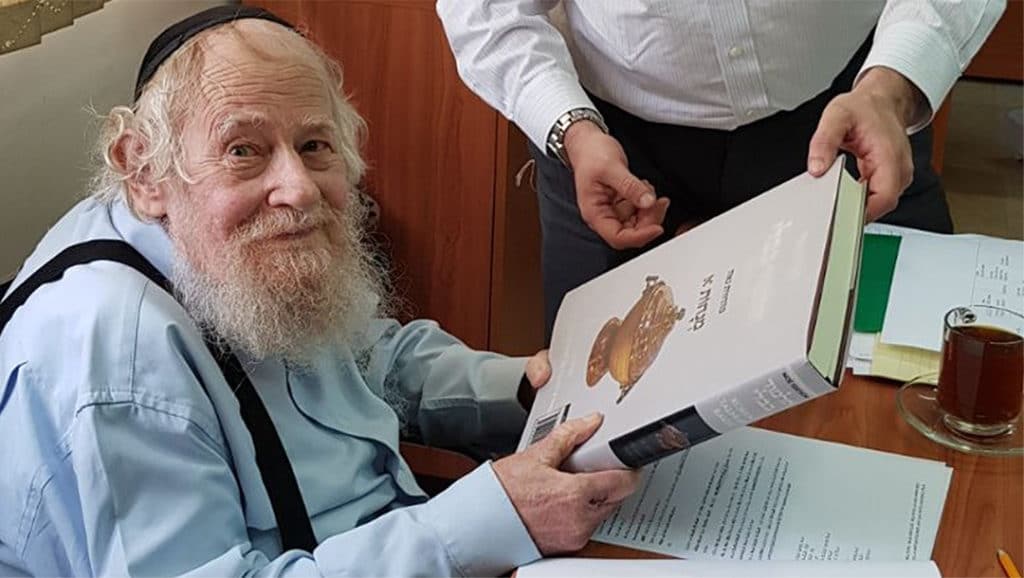
Remembering the Great Rav Adin

I was supposed to go to Dad’s grave in Tzfat, Israel, on Aug. 7 because it was my biological mother’s 43rd yahrzeit. I figured that would be the second-best choice if I couldn’t get to Mom’s grave in New York. I scheduled the day around a fun family trip — but life didn’t turn out as I had planned.

Sadly, a man so dear to the world and known as a scholar and luminary to many, Rav Adin Even-Israel Steinsaltz, died that morning at age 83. He was my friend’s dad, an author of many Torah books written specifically to help all people of  various backgrounds and intellectual abilities better understand the Torah today.

It became obvious that I wasn’t “supposed” to be going to see Dad at all that day. Clearly, Steinsaltz’s was the funeral and grave to which I was to attend. This yahrzeit date of 17 Av now will forever be shared by his family and mine. I wondered if it was wrong to feel comfort by this, validated in some way.

My first encounter with Steinsaltz was when my husband, Yossi, and I were given the honor of carrying Steinsaltz’s grandchild, Moshe, to the mohel for his circumcision. I’m childhood friends with his daughter-in-law, Liza, and she graciously gave us this honor.

A few years later, when I was 25 and heavily pregnant with my first child, we met again at Liza and Meni’s for Shabbat lunch. It was to be the first of many times Steinsaltz would guide me forward in my life in the most loving but strong and meaningful way, making me dig deeper within myself, ask questions, stand up for myself, and know that I make a difference by my very existence — that I am a vessel of God worth investing in.

That day at lunch, Steinsaltz asked me if I knew what my name meant. I had never been asked that before. “Hindel, a hen, in Yiddish?” I guessed. He laughed and asked if I identified as a chicken. “Would you like to be like one? Or would you rather identify with the beautiful gazelle, the Ayala, because that’s what your name means in Hebrew. Hindel is not a hen. Hindel is the gazelle.” Well, I’ll certainly go through life differently as a gazelle than I would a chicken.

Since then, Steinsaltz  and I met many times at family parties and different events. I’ve gotten blessings from him when he was “the godfather” — sandik — at friends’ children’s Brisim, and on Simchat Torah, when he often took the liberty to give blessings. I also had the pleasure to meet with him privately four times.

Steinsaltz was known for his soft-spoken tone and low voice while his eyes twinkled — all this while he straight-talked and gave dramatic, harsh examples to get his point across. He didn’t use kid gloves when he spoke with me, nor did he mince his words. He spoke to me much like my dad: full of love, and always in a judge-free zone, but with intention for growth.

Steinsaltz was known for his soft-spoken tone and low voice while his eyes twinkled — all this while he straight-talked and gave dramatic and harsh examples to get his point across.

One of my dad’s favorite lines was, “It’s not about you.” Steinsaltz would sweetly say the same. Steinsaltz had high expectations for me of how to move forward as my best self. He never criticized me, but he kindly pointed out why my train of thought or my actions was more about me and less about what I wanted to accomplish for others. He let me know when my ego needed to be moved to the side so I could make more space in my life for ideas larger than mine. He asked me questions with kindness to guide my thoughts until I discovered my own answers to paths I would need to take.

It’s shocking to think I so easily felt comfortable asking for his precious time to talk to me. I took him away from writing and teaching — his contributions to our earthly and mundane existence, changing the spiritual cosmic face of this world.

I went to Steinsaltz to cry and beg for clarity after my daughter Shula died. I had questions and I needed answers. He answered with love and wisdom as he sat in his cozy, hands-on museum of an office with one of his many pipes, very much focused on me as if he had all the time in the world. He smiled with sensitivity as he answered as much as a human can answer without speaking for or making excuses for God.

Three years later, I saw him at Meni’s birthday party and he immediately asked how I was really doing and brought up details of our private meeting three years before. I burst into tears and said that three years with Shula gone still felt impossible to survive. We chatted on the couch for 20 minutes (OK, I chatted), and this time, Steinsaltz spoke with me a bit more strongly. He told me I wasn’t doing enough to let Shula go, and although it’s important to never forget her, there is a healthy way to move forward with the grief. And clearly, I wasn’t doing that, and I was making my whole family suffer because of it.

This shocked me as I had been in therapy and I thought my progress in living in my “new normal” was exemplary. And I told him so. He humored me with a nod and made it clear he didn’t agree. He said that Shula was just a small girl of 3 and although she must have been great in her lifetime because she so quickly completed her purpose, she must have had a pretty small “bank account.” (He went into such detailed description here that I laughed loudly at his outrageous comments). So in all of the hard work — events and classes, having a Torah written and opening a children’s library — what I was trying to accomplish in her memory was more for me because her pure soul didn’t actually need it. He told me he was happy if it made me feel better. And then smirked.

Steinsaltz was a tough-love but loving grandpa who objectively advised those who asked.

He continued, saying that the only way I would truly affect her soul was by my happiness and the happiness I perpetuated around me. I needed to make a daily choice to be optimistic and positive because Shula no longer needed me. “Her job title in her new life” was no longer as my daughter. She needed permission from me to be free to live life in another capacity, and I had to stop “dragging her down here.” (The detailed description of what her life may look like away from me was so outlandish that he had me laughing hard again.)

He explained to me what the process of visiting a grave does to the deceased soul, and how I must stop visiting Shula’s grave so often. He went into dramatic detail here of comparisons. “You’re like the shvigger, mother-in-law, that keeps repeating stories of the good life when her son lived with her and how much love they shared before you came ’round and took him away.” He said I needed to “stop behaving like a child who keeps picking his scab off his leg just to glorify in the blood dripping down again and again.” I just needed to let the healing begin.

He explained where God came into the picture and where my lack of faith — although I thought I had plenty — was a testament to my hanging on to grief.

I fought him hard on this. But he smiled and repeated his mantra as many times as I fought him. “We only survive in this world because HaShem’s efforts make it possible daily. It has almost nothing to do with the level of our mourning or our trying to survive. We need to do our part but, ultimately, it is our faith that trusts in Him that life is good and meaningful — and if we indeed believe that, our grief would be lessened and we can move forward. Because if I have faith that He is all good, then what He does is surely good as well. If I’m grief-stricken, I don’t truly believe that God is good.”

He relentlessly continued by telling me we are capable of surviving while holding memories and love for our deceased loved one. He explained that the Lubavitcher Rebbe has guided us through so much of his teachings of how to do this. “Let go, but still live with them as if they are part of your own body. By doing good deeds for their soul — which they don’t need but we do — we connect them to ourselves physically by becoming their hands and feet or mouths that do the mitzvah in their merit.”

This was a revolutionary thought for me. I spent years in therapy and read many books on grief, yet no one had the guts to say to me, let go of the grief. Move on! It’s time! I didn’t realize I could let go while still maintaining a relationship with Shula. Steinsaltz empowered and liberated me by demanding I step up and be productive without all the self-pity.

Steinsaltz obviously saw deep within me that I was ready to hear this — and he went for the jugular. What’s most fascinating is that I found his tough-love talk so beneficial that I sent three other bereaved moms to him. Not one of them had the same experience as me. He specifically catered his answers to each mom who came with questions. And to none of them did he use that method of authority with his psychological Torah guidance. He just listened kindly, and told them they were on the right path for healing, etc. Amazing to think that he really talked soul-to-soul to each individual who came to visit him. He knew what each person can handle and which direction he was able to encourage him or her.

When my father died, I marched right back into his office for a third visit.

He cried with me as I cried and begged for fatherly love. He didn’t look away, embarrassed by my show of emotion, didn’t get impatient with all my psychological drivel.

He smiled at me with such love and devotion as I bragged about myself, my husband, my children and my recent accomplishments — details I could no longer share with my own father. He advised me about which yeshivas to send my boys, which jobs I should take on or drop (“Would I benefit the most, or would the world benefit more?” he asked), which way to encourage my husband in different endeavors, etc.

After he was no longer able to speak because of a stroke, I had the audacity to visit him again and speak for 45 minutes straight. I would write out my questions for him and make little boxes for him to tick: yes, no or other.

Steinsaltz was a tough-love but loving grandpa who objectively advised those who asked. That’s how I personally saw Steinsaltz. Much of the world knows him as one of the most impressive scholars of his generation, but I wonder how many know the humane, flesh-and-blood, kindest soul, nonjudgmental side to this great rabbi who had a great sense of humor and biting wit.

During the week of shivah, as various parts of his soul hovered over his home, his place of study, the place he did his good deeds, I wished his family so much love, comfort and strength to believe that Moshiach is one giant step closer to bringing back the beacon of light that was Rav Adin Even Israel Steinsaltz.

To his wife, children, in-laws, grandchildren and all of his students, I say,

“Hamakom Yenachem Etchem Bitoch Shaar Aveilei Tzion Byerushalayim.”


Hindel Schwartz Swerdlov grew up in Los Angeles as one of 12 children of the Chabad campus rabbi and rebbetzin of UCLA, Rabbi Shlomo Schwartzie and Olivia. She has been liveding in Jerusalem for the past 23 years with her husband, Yossi, and seven children. Schwartz Swerdlov is the founder and director of Shula’s Library, and is a contributing writer for Our Tapestry magazine. She is a teacher of CChassidut on self-growth at Mayanot Women’s Yeshiva.

Remembering the Great Rav Adin Read More »

Swastika Reportedly Found on Pasadena Community Job Center

A swastika reportedly was found on the Pasadena Community Job Center on Aug. 12.

Lisa Derderian, a spokesperson for the city of Pasadena, told the local publication Pasadena Now that the word “monkey” also appeared to be written next to the swastika. The graffiti was found on the Pasadena Community Job Center’s window, the publication reported.

Police are investigating the matter as a hate crime.

Pasadena Mayor Terry Tornek condemned the graffiti in a statement.

“Pasadena has largely been spared from the uptick in hate crimes, but when it does happen, we must condemn it in the strongest possible terms,” he said. “Our City’s strength is sustained by our diversity, so when one group is targeted we all suffer. We will not tolerate this behavior.”

Anti-Defamation League (ADL) Los Angeles similarly stated in an Aug. 18 tweet, “ADL condemns this apparent swastika found on the Pasadena Job Center. We need to ensure that Pasadena and all communities are #NoPlaceforHate and no place for #antisemitism.”

Swastika Reportedly Found on Pasadena Community Job Center Read More »

Sudan Foreign Minister Denies Ministry’s Earlier Statement That Sudan Is Working on Agreement With Israel

Sudanese Acting Foreign Minister Omar Qamar al-Din Ismail walked back a statement from his ministry earlier on Aug. 18 stating that Sudan is working on an agreement to normalize ties with Israel.

The foreign ministry’s spokesperson, Haidar Badawi Sadiq, told Sky News Arabia that the Sudanese government is “looking forward to concluding a peace agreement with Israel,” adding that “there’s no reason for the enmity to continue.”

An official from the Sudanese government also told the Associated Press that Sudan and Israel have been in talks on a peace agreement for months and that “it was only a matter of time” before an agreement is reached.

“The Emirati move encouraged us and helped calm some voices within the government who were afraid of backlash from the Sudanese public,” the official said.

Ismail later denied that the Sudanese and Israeli governments have been in talks on the matter, saying that he was “surprised” to see Sadiq’s statement.

“The matter of relations with Israel has not been discussed in the Foreign Ministry at all,” Ismail said in a statement. “No one tasked Haidar Badawi Sadiq with making statements on this matter.”

Israeli Prime Minister Benjamin Netanyahu’s office said in a statement on Aug. 18, “Israel, Sudan and the region will all benefit from a peace deal and will be able to build a better future together for all nations of the region. We will do everything necessary to make this vision a reality.”

U.N. Watch Executive Director Hillel Neuer noted in a tweet that Sudan is the “same country that once allied with Iran & Hamas, and which in 1967 hosted the Arab League summit that declared the Khartoum 3 No’s: ‘No peace with Israel, no recognition of Israel, no negotiations with it.’”

Israel and the United Arab Emirates (UAE) reached an agreement on Aug. 13 that normalizes relations between the two countries; the two governments are expected to sign an agreement that will establish economic ties between the two countries. Netanyahu has said that the Israeli government is working with Saudi Arabia to use the country’s airspace for flights from Tel Aviv to Abu Dhabi and Dubai.

Sudan Foreign Minister Denies Ministry’s Earlier Statement That Sudan Is Working on Agreement With Israel Read More »

B’nai Brith Canada Calls for Toronto Street Named After Nazi to Be Renamed

B’nai Brith Canada called for a street located in Ajax, Ontario, to be renamed because the street currently is named after a Nazi.

The street, Langsdorff Drive, is named after Hans Langsdorff, a Nazi commander who headed the Admiral Graf Spee warship in a battle with the British Royal Navy in the River Plate in 1939. Langsdorff believed that his crew didn’t stand a chance against the British, so he rebuffed Adolf Hitler’s order to fight to the end. Langsdorff later committed suicide.

Langsdorff Drive received its name in 2007, as the town of Ajax is named after a British ship that took part in the battle.

“There is no place for streets honouring Nazi combatants in Canada,” B’nai Brith Canada CEO Michael Mostyn said in a statement. “While Hans Langsdorff was attacking Allied shipping in the South Atlantic, his comrades were murdering Jews and Poles en masse in occupied Poland. These were inseparable components of the overall Nazi war effort.”

B’nai Brith Canada also noted that the Ajax Town Council voted to rename Graf Spee Lane, which was named after the Admiral Graf Spee warship.

“It is unclear why the name of the ship was deemed inappropriate while the name of its captain was allowed to remain,” the Jewish group said in a press release.

A petition also has been launched to rename Langsdorff Drive.

“The Mayor of Ajax, Shaun Collier has defended the decision to keep the street name for this Nazi,” the petition stated. “Part of the argument was that this was defended by British veterans who respected Nazi Hans Langsdorff as an adversary at sea. Sadly, those who would be most opposed and likely to speak out were reduced to ash by the Nazi machine.”

As of this writing, the petition has received 359 signatures.

B’nai Brith Canada Calls for Toronto Street Named After Nazi to Be Renamed Read More »

ADL Los Angeles Announces New Regional Director

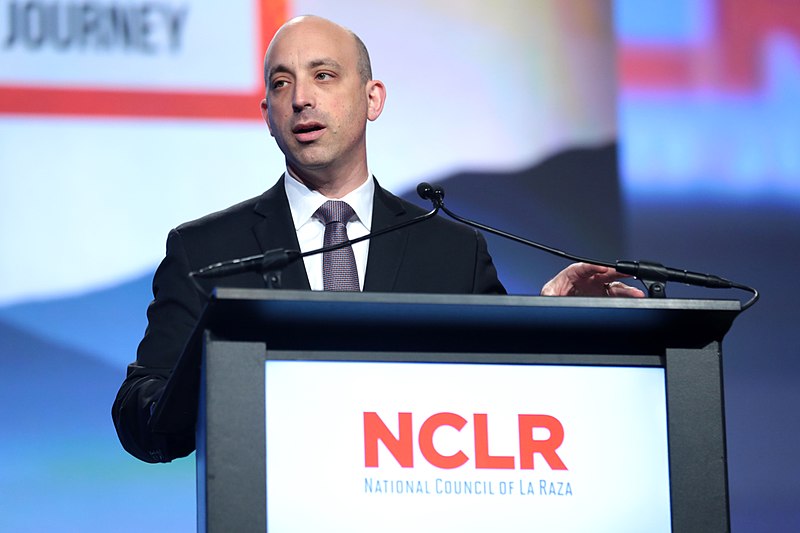
Anti-Defamation League (ADL) Los Angeles announced on Aug. 18 that Jeffrey Abrams is its new regional director.

Abrams, who officially took on the role a day earlier, has been an attorney and mediator for more than 25 years. He served as the director of The Jewish Federation of Greater Los Angeles from 2008-2009. He succeeds Amanda Susskind, who served as the ADL Los Angeles regional director from July 2002 until she stepped down in June.

“ADL’s mission to stop the defamation of the Jewish people and ensure justice and fair treatment to all has never been more important,” Abrams said in a statement. “Working together with our talented staff and dedicated lay leaders, and with the support of the national organization and board, ADL continues to be at the forefront of the battle against hate, here in Los Angeles and throughout the region.”

ADL Los Angeles Regional Board Chair Scott Harris said in a statement that Abrams “embodies the passion, empathy, curiosity and character necessary to tackle the important work of ADL in our local communities. Our region is blessed to have a highly dedicated staff, invested lay leadership and a strong standing in the community, which Jeffrey will be able to build upon in the years to come.”

ADL Los Angeles Announces New Regional Director Read More »

Liberal Jewish Groups Defend ADL After Renewed Attack From Progressive Coalition

(JTA) — Liberal Jewish allies of the Anti-Defamation League are coming to its defense after more than 150 progressive groups signed an open letter calling for the ADL to be excluded from social justice coalitions.

The effort, called Drop The ADL, criticizes the ADL’s work with police forces across the country as well as its support of Israel. Spearheaded by a coalition of pro-Palestinian and left-wing groups that disapprove of the ADL’s ties to law enforcement, the campaign follows earlier left-wing pushes against the Jewish anti-bigotry group.

The campaign comes on the heels of a high-profile ad boycott of Facebook spearheaded by the ADL, NAACP and other civil rights groups. The boycott recruited more than 1,000 companies, including a range of marquee brand names, to pause advertising on the social media giant for at least a month to protest its inaction on hate speech.

The signatories to the anti-ADL campaign say that kind of effort, as well as local anti-bias work that the ADL supports, should not cause progressives to forgive more problematic aspects of the group’s record.

“Even though the ADL is integrated into community work on a range of issues, it has a history and ongoing pattern of attacking social justice movements led by communities of color, queer people, immigrants, Muslims, Arabs, and other marginalized groups, while aligning itself with police, right-wing leaders, and perpetrators of state violence,” the open letter says. “More disturbing, it has often conducted those attacks under the banner of ‘civil rights.’”

The list of 100 signatories includes an array of progressive groups, such as the Democratic Socialists of America, the Council on American-Islamic Relations, the U.S. Campaign for Palestinian Rights, the Movement for Black Lives, Jewish Voice for Peace and Jews for Racial and Economic Justice. Some have previously criticized the ADL, while others are joining in after a summer in which criticism of racial injustice in law enforcement has taken center stage.

Multiple civil rights groups that have worked with the ADL have not commented on the boycott campaign, including the NAACP, which partnered on the Facebook boycott but has not responded to a request for comment. UnidosUS, an American Latino advocacy group that  announced a partnership last year with the ADL on reporting hate crimes, also declined to comment.

But liberal Jewish organizations that have worked with the ADL are publicly defending its record as a Jewish civil rights organization with a long track record of standing up for marginalized communities. A coalition of Reform, Conservative and Reconstructionist Jewish organizations put out a joint statement Tuesday evening pushing back on the criticism.

“We vehemently reject efforts to silence or shun the ADL,” the statement read. “Many of the criticisms that have been made are unjust or distort ADL’s long record of commitment to civil rights and its successful efforts in legislatures, courts, schools, and communities to fight discrimination and hate. We remain committed to working in our vital coalitions in close partnership with the ADL on our shared desire to fight bigotry, wherever it may be found.”

Mark Hetfield, CEO of the Jewish refugee aid group HIAS, told the Jewish Telegraphic Agency, “This smear campaign takes us in the opposite direction of where we need to go.”

“HIAS has been closely working with ADL for over 100 years and we look forward to working with them for the next 100 years fighting hate and welcoming refugees,” Hetfield wrote. “ADL has long been one of HIAS’ closest and most valued partners and allies in the United States as well as Israel. HIAS stands with ADL.”

Jeremy Ben-Ami, president of the liberal Israel lobby J Street, also came out against the boycott campaign.

“One can disagree with @ADL over Israel policy — and I often do — esp. labeling critics of Israeli policy antisemitic, yet appreciate their stand on travel ban and refugees + track record on civil rights,” Ben-Ami tweeted Monday. “I favor engaging not boycotting those with whom we disagree.”

In a statement, the ADL called the campaign an attempt by anti-Israel groups to divide a civil rights coalition.

“These are many of the same groups who have been pushing an anti-Israel agenda for years,” the statement said. “It says more about them than about us that at this moment of great unity around equal justice for all, they would launch this effort against one of the largest and oldest Jewish organizations in America. They will do nothing to stop the important work we do every single day, in close partnership with many prominent civil rights groups, to stop the defamation of the Jewish people, and to secure justice and fair treatment to all.”

The ADL, which historically has aimed to oppose anti-Semitism and bigotry across the political spectrum, has previously been a target of criticism from groups on the left and right. In 2018, several of the groups behind the current anti-ADL effort lobbied Starbucks to drop the ADL from its high-profile anti-bias training.

Groups on the right, meanwhile, say the ADL focuses too much on right-wing extremism while giving a pass to anti-Semitism on the left. The Zionist Organization of America, a right-wing group, has issued a ream of news releases attacking the ADL for what it sees as going soft on opponents of Israel.

The progressives’ campaign draws on the ADL’s support for Israel, as well as its work with police forces, which includes a broad anti-bias training program as well as counterterrorism seminars and delegations to Israel. In many cases, it cites incidents that occurred under the ADL’s previous national director, Abraham Foxman, who stepped down in 2015.

The campaign also renews criticism that the ADL spied on Muslim and other civil society groups in the 1990s. In 1999, the ADL settled a class-action suit over the spying.

Under its current CEO, Jonathan Greenblatt, the organization has been a frequent critic of President Donald Trump and many of his statements and policies regarding Muslims, immigrants and other marginalized groups. Its research on and reporting of anti-Semitic incidents and white supremacist activity have been widely cited by those seeking to sound the alarm over rising extremism in the United States.

Liberal Jewish Groups Defend ADL After Renewed Attack From Progressive Coalition Read More »

Seth Rogen’s ‘ An American Pickle’ Has Valuable Things to Say About Contemporary Jewish Life

Seth Rogen found himself in hot water for comments he made about Israel during an interview promoting his HBO Max film, “An American Pickle.” Despite his subsequent apology, many Jews were left with sour tastes in their mouths. Unfortunately, all the discussion about Rogen’s opinions on Israel and Zionism took attention away from the movie.

This is a shame because “An American Pickle” is one of the most Jewish films I have ever seen. It is culturally familiar in a way Hollywood rarely portrays. Minority groups often speak of “representation in Hollywood” as a source of empowerment. But although movies and television are full of Jewish characters and stories, they often feel disconnected from  the religious Jewish experience.

“An American Pickle” also has valuable things to say about contemporary Jewish life in America. It gives viewers a glimpse (through typically Jewish humor) of some of the anti-Semitism our great-grandparents experienced in their new shtetl. We’re reminded it’s better to be called “dirty Jew” at Ellis Island than for Cossacks to crash your wedding and decimate the entire village.

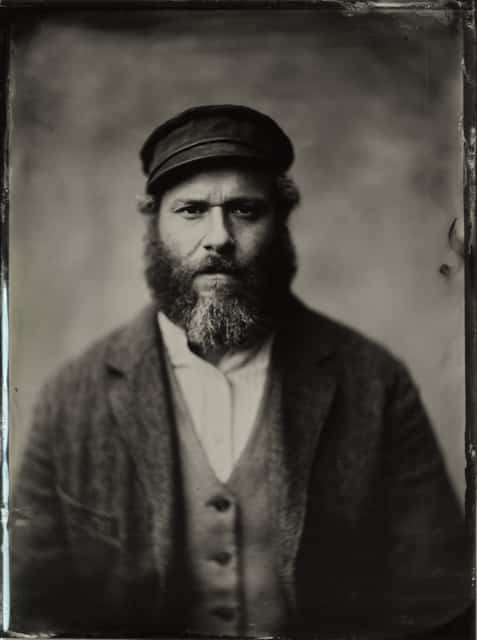
The story unfolds a century ago, when traditional shtetl Jew Herschel Greenbaum (Rogen) somehow is preserved in pickle brine for 100 years. Herschel wakes up in 2020 and finds his only surviving relative is modern secular Jew Ben Greenbaum (also Rogen). What starts as a friendly family reunion slowly devolves into a squabble, then an escalating rivalry, then into an all-out battle.

The culture clash that ensues has a uniquely Jewish flavor. Tension between old ways and new; rebelliousness and respectful disagreement; religious observance and nonobservance are challenges we face every day.

The premise of “An American Pickle” and the conventional wisdom in Jewish culture today is that religious observance and modernity are irreconcilable and, therefore, religious and secular Jews are equally irreconcilable. For most of the film, it is easy to see why.

As Herschel and Ben grow further apart, their different worldviews fuel their feud. Herschel is alive but, tragically, his wife and son are dead. Yet, Herschel’s life is enriched by his sorrow and mourning through religious rites such as visiting and caring for their graves and saying the Mourner’s Kaddish. Ben is an orphan, but brushes aside his sadness — along with his Judaism.

“An American Pickle” has valuable things to say about contemporary Jewish life in America. 

“An American Pickle” will make you laugh. But the movie  got into my “kishkes” during the  final act. (Caution: spoilers ahead.) Ben finds himself alone in Shlupsk, Herschel’s hometown in Poland. He is desperate for help, and is directed to an Orthodox synagogue. Ben is welcomed with love and kindness. Later, when they need a 10th man for a minyan, after some initial reluctance, Ben agrees to join but he does not pray. With a little encouragement from an elderly Jew who has been helping Ben through the service, he recites the Mourner’s Kaddish for his parents, his eyes fill with tears.

The moment becomes even more powerful when we see Herschel in the back of the synagogue. He returned to Shlupsk to apologize to Ben, and they patch up things.

This is the real message of “An American Pickle.” We may never truly reconcile tradition with modernity but all Jewish people have the power and humanity to reconcile.

Too bad that message got lost during the promotion of the film.


Seth Rogen’s ‘ An American Pickle’ Has Valuable Things to Say About Contemporary Jewish Life Read More »

Gov. Newsom Should Meet With Brave USC Student Leader

Sometimes all it takes is a coincidence on the calendar to help us see the bigger picture.

Less than 24 hours after USC student body Vice President Rose Ritch resigned from office after months of harassment for her pro-Israel and Jewish identities, the state moved a step closer to adopting a mandatory ethnic studies program that doesn’t include a serious examination of anti-Semitism. Both stories are outrageous in their own right. However, their confluence provides a stark reminder that the Jewish community’s struggle against anti-Semitism is failing, and we are long overdue for a serious round of self-examination as to how we have allowed this to happen.

How does a courageous young leader like Ritch conclude that the best way to bring necessary and overdue attention to the bigotry directed toward Jewish and other pro-Israel students on her campus is to resign from student government? Because the Jewish community has been content to allow a group of brave teenagers and early 20-somethings to fight to defend their identities on the front lines of college campuses while we remain at a safe distance from the fray. 

We mourn the tragedies of Poway and Pittsburgh and Charlottesville, Va., which occur after hatred mutates from invective and insult into violence and murder. But we are much less attentive when the daughters and sons of Israel are treated contemptuously every time they stand up on their college campuses on behalf of a Jewish homeland. When other types of racism surface, we join the rest of the populace to demonstrate our outrage and defend those who have been targeted. But when our young leaders are similarly vilified, we lack even the feeblest of strategies to enlist support for them from those outside the Jewish community.

Similarly, how could we allow an ethnic studies program to be developed for California high school students that has no meaningful reference to the Jewish experience? Because we have allowed our bonds with other underrepresented communities to atrophy to the point where they no longer see anti-Semitism as a type of bigotry that should be included in a discussion regarding ethnic-based oppression. 

California is deciding that prejudice against Jews is not worth prioritizing in a mandated class on ethnic studies.

Thanks to the admirable work of the Jewish Legislative Caucus, the worst of the examples of anti-Zionist and anti-Semitic sentiment in the original draft curriculum were removed. But the final version won’t include a significant discussion of discrimination against Jews. There is even an appendix that groups the Jewish experience with that of Irish Americans, which refers to how both groups have been “gaining racial privilege.”

At a time when anti-Semitic hate crimes dramatically have increased in the U.S, Great Britain, and Europe, it appears that the California Department of Education is using a markedly different standard for defining “racial privilege” than you or I might. California is deciding that prejudice against Jews is not worth prioritizing in a mandated class on ethnic studies, and doing so at the same time such bigotry has prompted a young woman to resign from her university’s student government. 

Gov. Gavin Newsom moved further in this direction on Aug. 18 when he signed legislation to create a required ethnic studies class for Cal State University students that specifically doesn’t address the Jewish experience, and the legislature is preparing to vote on a similar mandate for the state’s high schools. If Newsom and our legislators were truly interested in an educational experience for California high school students that taught them the dangers of bigotry and intolerance, they should meet with Rose Ritch and other Jewish student leaders to learn what they have endured. The legislators pushing this bill will do no such thing, of course, because they believe that our young people benefit from “racial privilege” and have no need for protection from ethnic-based hatred. But Newsom should take time to listen to Ritch before he worsens this mistake.

Today’s students are tomorrow’s legislators, so the work that Ritch and her colleagues take on to fight anti-Semitism and to build multi-ethnic coalitions on their campuses is critical for not only their safety, but for our future. They deserve our support. We owe them that much.


Dan Schnur teaches political communications at UC Berkeley, USC and Pepperdine.

Gov. Newsom Should Meet With Brave USC Student Leader Read More »

Send a Hug to Someone You Love

One of the sad realities of the COVID-19 pandemic is not being able to see a lot of our friends and relatives, especially those who are in high-risk groups. And even if we do get to see them, we have to practice social distancing. 

The thing I really miss most about seeing people is hugging. There is something so comforting about wrapping your arms around someone you care about. I know when we’re back to some kind of normalcy, I’ll be hugging it out with everyone I see.

In the meantime, here’s a way to send someone a hug in the mail. By cutting out your handprints and connecting them with string, it’s a portable hug that says, “I miss you.” This would be a great project for kids to send hugs to grandparents and other relatives, or even friends down the street they haven’t seen in a while. It may not be the real thing, but the sentiment behind it is certainly from the heart. 

What you’ll need:
Construction paper or card stock
Pencil
Scissors
Marker
String or yarn


1. Trace your hands with a pencil on colored construction paper or card stock, and cut out your handprints. 


2. Write a message on the hands.


3. Connect the two hands with a piece of string or yarn that represents your arm span. I punched a hole at the bottom of the hands and ran the yarn through the hole, securing it with a double knot. 

Send a Hug to Someone You Love Read More »