
fbpx

July 16, 2020

‘New Jewish Canon’ Provides Much Food for Thought

Whether applied to movies, songs, restaurants or presidents, any list of “bests” is a highly subjective exercise that serves mostly as a conversation starter and sometimes as a “cause de guerre” in the culture wars.

If we style the list as a “canon,” however, the discourse is considerably more consequential. Harold Bloom’s “The Western Canon,” for example, sparked an ongoing and often bitter debate about the range of books that deserve to be singled out for their enduring influences in defining a civilization. Just look at the winners of the Nobel Prize for literature since the publication of Bloom’s book in 1994, and you will see what I mean.

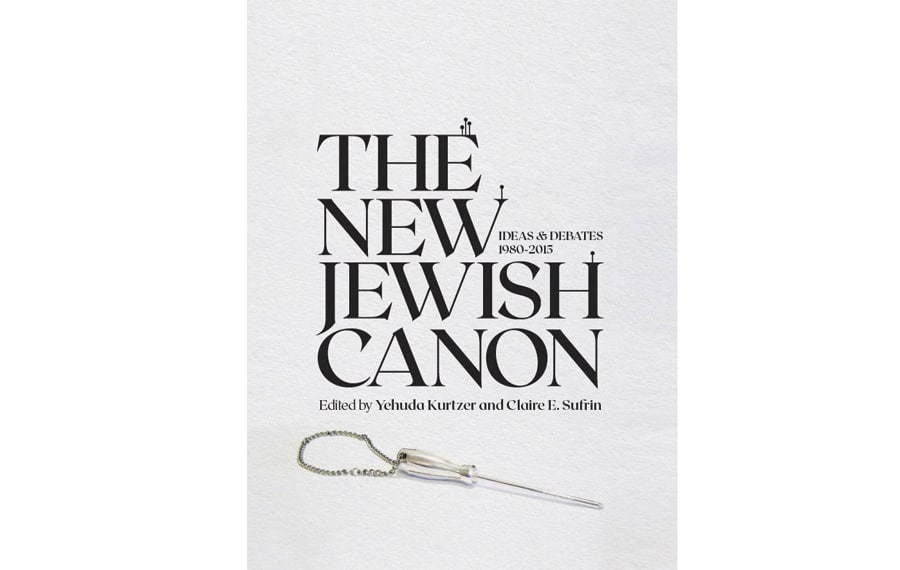
That’s the subtext of “The New Jewish Canon: Ideas & Debates 1980-2015,” edited by Yehuda Kurtzer and Claire E. Sufrin (Academic Studies Press). The editors have proposed a total of 70 works by Jewish authors for inclusion in the canon, and each of the works is the subject of a spirited commentary by one of the scholars who contributed to the book. The result is a colloquium-in-print that is extraordinarily rich, lively and illuminating.

The key word in the title of the book is “new.” The sacred and rabbinical literature of the Jewish people and the great Jewish books of the 19th and early 20th century are not among the titles proposed for inclusion in “The New Canon.” The reason for their omission speaks volumes about the ever-changing nature of Jewish identity, a phenomenon that has always shaped Jewish identity, but never more so than in our own troubled times.

“[W]e are living in a period of the mass production and proliferation of Jewish ideas,” the co-editors write in their introduction. “Even while Jewish life is incredibly diverse, it is also increasingly unstable.” Indeed, they remind us we are living during nothing less than a revolution, and they concede that for some, the velocity of change is frightening. But the hard fact is that “the nature of Jewish authority is being transformed.” For that reason, they offer “The Jewish Canon” as “a conceptual roadmap to make sense of all these changes.”

Kurtzer is president of the Shalom Hartman Institute of North America, and Sufrin is an associate professor at Northwestern University and the assistant director of its Crown Family Center for Jewish and Israel Studies. The book is the latest title in a series from Academic Studies Press titled “Emunot: Jewish Philosophy and Kaballah,” edited by Dov Schwartz.

The whole point of “The New Jewish Canon” is to prompt such musings and provoke conversation among its readers.

The first book in the proposed new canon is “Exodus and Revolution” by Michael Walzer, a book published in 1985, and the last book is “The Genesis of Our Future” by Rabbi Rick Jacobs, a book about Reform Judaism published in 2013. For each of the 70 entries, readers are given a short thematic quotation, then a commentary by a contributor.

Walzer, for example, is a noted public intellectual and political theorist who edited Dissent magazine and held an appointment at the Institute for Advanced Study. The section quoted from Walzer’s book makes the argument that “[t]he Exodus may or may not be what many of its commentators thought it to be, the first revolution,” but he insists that the Book of Exodus “is the first description of revolutionary politics.” His commentator, William Galston, Senior Fellow at the Brookings Institute, argues that “[n]o American scholar has done more than Michael Walzer to bring the classic texts of Judaism into the mainstream of contemporary thought.” While pointing out that Walzer was denounced at the time by critics ranging from Jacob Neusner to Edward Said, Galson argues that “[t]his criticism only elevated Walzer’s stature within the American Jewish community. … most of which identified with his brand of liberal, social democratic Zionism.”

Many of the books singled out for consideration and commentary in “The New Jewish Canon” will be broadly familiar to its readers, and some will be entirely new and even surprising. If I had been offered a vote, I certainly would have agreed with the inclusion of Benny Morris’ “The Birth of the Palestinian Refugee Problem” and the writings it engendered: “Auschwitz or Sinai?” by David Hartman, “In the Land of Israel” by Amos Oz, Deborah Lipstadt’s “Denying the Holocaust,” and David Biale’s “Power and Powerlessness in Jewish History.”

More surprising is the transcript of a debate between Irving “Yitz” Greenberg and Meir Kahane at the Hebrew Institute of Riverdale in 1988, an event Rabbi Avi Weiss moderated. “Democracy is not Judaism,” Kahane taunted Greenberg. “Should I read you the Rambam?” But the commentator, Shaul Magid, Distinguished Fellow in Jewish Studies at Dartmouth, puts the debate into its moral, intellectual and historical context. Magid points outs that Kahane put Greenberg at a tactical disadvantage by forcing him to debate points of religious law rather than the values of Jewish menshlikhayt, and he reminds us that the debate took place shortly before the Supreme Court of Israel issued a ruling that effectively criminalized the hateful message of Kahane’s radical political party. “By the spring of 1988, he would be an outcast.”

I might not have included a few titles if given a vote, if only because a few of them are less compelling than the others. But it hardly matters. The whole point of “The New Jewish Canon” is to prompt such musings and provoke conversation among its readers. “Some of the very best Jewish learning does not happen in seminar rooms, synagogues or online, but at home, around the kitchen table or sitting on the couch,” insist the co-editors in the introduction to their book. “It is intended to start, not close, the conversation.” And they have succeeded magnificently in achieving their goal.


Jonathan Kirsch, author and publishing attorney, the book editor of the Jewish Journal.

‘New Jewish Canon’ Provides Much Food for Thought Read More »

Fox Says Nick Cannon Will Remain ‘Masked Singer’ Host After Apologizing for Anti-Semitic Remarks

Fox issued a statement on July 16 saying that the network will retain Nick Cannon as host of the show “The Masked Singer” after he apologized for his anti-Semitic comments the night before.

The Wrap reported that the Fox statement read that Cannon has been “clear and remorseful that his words were wrong and lacked both understanding and context, and inadvertently promoted hate. This was important for us to observe. Nick has sincerely apologized, and quickly taken steps to educate himself and make amends.”

Fox added: “On that basis and given a belief that this moment calls for dialogue, we will move forward with Nick and help him advance this important conversation, broadly. Fox condemns all forms of hate directed toward any community and we will combat bigotry of any kind.”

Cannon had said in a 2019 video that Zionists and the Rothschilds have “too much power,” praised Nation of Islam leader Louis Farrakhan, and that Blacks “are the true Hebrews.”

On July 15, Cannon tweeted that he had a conversation with Associate Dean and Director of Global Social Action Agenda at the Simon Wiesenthal Center Rabbi Abraham Cooper and that he apologizes “for the hurt I caused the Jewish community.” He wrote in a Twitter thread that his comments “reinforced the worst stereotypes of a proud and magnificent people and I feel ashamed of the uninformed and naïve place that these words came from. The video of this interview has since been removed.”

“While the Jewish experience encompasses more than 5,000 years and there is so much I have yet to learn, I have had at least a minor history lesson over the past few days and to say that it is eye-opening would be a vast understatement,” Cannon added.


Jewish groups praised Cannon’s apology.

“An overdue, but sincere and strong apology,” Anti-Defamation League CEO Jonathan Greenblatt tweeted. “It’s a good start. Thank you @NickCannon for acknowledging your hurtful words and vowing to educate yourself on #antisemitism.”

StandWithUs CEO and co-founder Roz Rothstein tweeted that Cannon’s apology was “fantastic.”

“Nick Cannon thank you for your apology,” she added. “I believe you are headed for a new journey and a more open mind towards the Jewish people.”

Former Democratic New York Assemblyman Dov Hikind, who heads the Americans Against Anti-Semitism watchdog, tweeted that Cannon’s apology was just enough for Fox to keep employing him.

“We’re not looking to bring anyone to ruin, but we do expect real accountability,” Hikind wrote. “Time will tell if Nick truly recognizes the error of his way into anti-Semitism, or if he’s just pacifying us.”

Fox Says Nick Cannon Will Remain ‘Masked Singer’ Host After Apologizing for Anti-Semitic Remarks Read More »

A Far-Right German Activist Will Go to Jail for Insulting a Jewish Leader

BERLIN (JTA) — A far-right activist will go to jail for insulting a German Jewish leader after the country’s highest court denied his appeal.

Sascha Krolzig, who heads the small far-right Die Rechte party, will serve a six-month sentence for calling the head of the Jewish community in Herford-Detmold an “insolent Jewish functionary” and praising the SS.

Krolzig lost his appeal earlier this month and the verdict was made public on July 10.

According to German news reports, Krolzig had called Matitjahu Kellig an “insolent Jewish functionary” and demanded a boycott of Jewish organizations. The comments were made on the Die Rechte website after Kellig said in a television interview that a local municipality should take its official newsletter to a different printing press, since the one they used also disseminated right-wing radical material.

Defending the publisher, Krolzig said that the company merely offers books that criticize the “zeitgeist” and celebrate, among other things, the “exemplary and reliable men of the Waffen-SS.” He also called Kellig a “self-satisfied” and “insolent Jewish functionary” and accused him of having a “disturbed relationship with freedom of expression.” He concluded by saying that his party would “reduce the influence of Jewish lobby organizations on German politics to exactly zero in the shortest possible time.”

In 2018, a court handed down a six-month suspended sentence for incitement to hate and slander. A higher court upheld the sentence, which Krolzig again appealed.

The Constitutional Court upheld the sentence, finding that Krolzig had incited anti-Jewish hatred with statements they considered “concretely threatening” and clearly linked to Nazi propaganda. The court added that Germany’s Nazi past makes necessary “an increased sensitivity in dealing with the pejorative use of the word Jew.”

A Far-Right German Activist Will Go to Jail for Insulting a Jewish Leader Read More »

Two Synagogues Vandalized on Same Day in Sarasota, Florida

(JTA) — Two Reform synagogues in Sarasota, Florida, were vandalized with swastikas and other unspecified hateful messages.

The incidents at Temple Sinai and Temple Emanu-El reportedly took place early on Wednesday morning, the Sarasota Herald-Tribune reported.

The Temple Sinai campus was extensively vandalized, including many walls made of porous Jerusalem stone, making the removal of the messages difficult. It is the second time that Temple Emanu El has been attacked in the last four months. In April, swastikas were spray painted on the doors of the synagogue.

The Sarasota Sheriff’s office told the newspaper that a man was seen on surveillance video on the grounds of Temple Emanu-El at around 2 a.m. Video shows the same man on the grounds of Temple Sinai later on the same morning.

The two temples issued a joint letter on Wednesday to their memberships to inform them of the vandalism.

“We will be ever vigilant in looking after the safety and security of our members and our children. But we will not allow hate to distract us from the holy work that defines our temple missions,” the letter said.

Two Synagogues Vandalized on Same Day in Sarasota, Florida Read More »

Rosner’s Torah Talk: Matot-Masei with Rabbi Jessica Locketz

Rabbi Jessica E. Locketz is the rabbi and director of education of Temple Emanuel, in Pittsburgh, Pa. Rabbi Locketz oversees family and youth programming, serving as the educational leader of the Torah Center religious school. She is also part of the leadership team behind J-Line South Hills, a learning opportunity for Jewish teens in the South Hills. Additionally, she coordinates the Beit Midrash opportunities for Adult Learning, spends time with students, participates regularly in worship, assists with the many pastoral duties of the congregation and engages with temple members of all ages.

This week’s Torah portion — Parashat Matot-Masei (Numbers 30:2-36:13) — begins with Moses presenting the heads of the tribes with rules concerning the annulment of vows. War is waged against Midian and the Torah lists the different spoils Israel took hold of and describes how they are distributed. The tribes of Gad, Reuben and half of Menashe ask Moses for the territory east of the Jordan as their portion of the promised land, and Moses eventually agrees on the condition that they first help conquer the west of the Jordan. The boundaries of the Promised Land are stated, and cities of refuge are designated as havens for people who commit inadvertent murder. The portion ends with the story of the daughters of Tzelafchad marrying men of their own tribe (Menashe) in order to keep the estate they inherited from their father within their own tribe. Our conversation focuses men, women, vows and marriages.
Previous Torah Talks on Matot-Masei

Rosner’s Torah Talk: Matot-Masei with Rabbi Jessica Locketz Read More »