fbpx

July 10, 2020

LA School Board Postpones Vote on Ethnic Studies Curriculum to August

During a July 9 meeting, the Los Angeles Unified School District (LAUSD) Board of Education postponed until August its vote on the Ethnic Studies Model Curriculum (ESMC).

The resolution slated for a vote during the July 9 meeting was revised to state that the California Department of Education (CDE) is “committed to revising the Ethnic Studies Model Curriculum in order to address feedback to its initial draft, honor the intersectionality of our students, and more accurately represent all ethnic and cultural groups, including addressing issues of anti-Semitism.”

StandWithUs executive director of research and strategy Max Samarov praised the board in a statement.

“We are encouraged by the Board’s decision to postpone the vote and amend the resolution,” Samarov said. “The most important question now is whether or not necessary changes will be made to the curriculum at a state level. We will continue engaging with and monitoring this issue closely over the next month and beyond.”

During the public comments period of the meeting, Sarah Levin, executive director of Jews Indigenous to the Middle East and North Africa (JIMENA), said, “My sons come from a Jewish background that includes Iraqi, Turkish and Israeli heritage. We are two of the more than 500,000 Californians of Middle Eastern heritage who were completely omitted from the Arab American Studies Course of the Ethnic Studies Model Curriculum.”

“With a coalition of Mizrahi Jews, Assyrian Christians, Coptic Christians, Kurds and Iranians of various faiths — we are asking you to please focus on supporting the revision process mandated by the State Board of Education, and do not even consider a vote endorsing the first draft of the Ethnic Studies Model Curriculum,” she added.

Several high school students also sent an open letter to the LAUSD board on July 6 urging its members to decline to adopt the current ESMC draft because it doesn’t discuss anti-Semitism.

“A major goal of ethnic studies is for students from various ethnic groups to see their histories and experiences reflected in the classroom,” the letter stated. “Especially given the rise of anti-Semitism in high schools, this should apply to diverse Jewish students like us.”

Various Jewish groups have criticized the initial ESMC, which first was proposed in 2019, for not listing anti-Semitism as an example of bigotry and for glorifying the boycott, divestment and sanctions (BDS) movement. The California State Board of Education announced in August 2019 that the curriculum would undergo serious revisions; later in the month, California Gov. Gavin Newsom, a Democrat, vowed that the curriculum in its current form would “never see the light of day.”

The CDE is expected to provide a newly revised ethnic studies curriculum to the Instructional Quality Commission on Aug. 13.

LA School Board Postpones Vote on Ethnic Studies Curriculum to August Read More »

Saints Safety Malcolm Jenkins Says DeSean Jackson’s Posts Were ‘Wrong’: ‘Jewish People Are Not Our Problem, and We Aren’t Their Problem’

New Orleans Saints safety Malcolm Jenkins said in a July 10 Instagram post and video that Eagles wide receiver DeSean Jackson’s Instagram posts invoking a fake Adolf Hitler quote and glorifying Nation of Islam leader Louis Farrakhan were “wrong” and that “Jewish people are not our problem.”

Jenkins, a former teammate of Jackson’s on the Eagles and a CNN analyst, said in the video, “Comments were made, and they were wrong. Allow those who were impacted by it to voice their grievances. But we gotta stay focused, because Breonna Taylor’s killers are still not arrested. We’re still fighting for justice.”

Below the video is a caption that reads, “We can honor the Jewish heritage and trauma while staying focused on what matters. Jewish people aren’t our problem, and we aren’t their problem. Let’s not lose focus on what the problem truly is, and that’s that black lives don’t matter in this country.”


NFL reporter Dov Kleiman criticized Jenkins’ Instagram post, arguing that it appeared that Jenkins wasn’t showing concern for the Jewish community.

“Jenkins is trying to send a ‘stay focused’ message but we can all do both,” Kleiman wrote. “We can be against racism towards black people and against anti-Semitism against Jewish people at the same time. You can’t chose to ignore one — you are either against hate or you aren’t. Period.”


Eagles reporter and analyst Geoff Mosher, on the other hand, tweeted that Jenkins likely meant that the Black community and Jewish community aren’t enemies.

“He used [the word] ‘problem,’ ” Mosher wrote. “Some have interpreted that as not each other’s ‘concern.’ There’s a big difference. Obviously, I can’t speak for Malcolm. Just my interpretation.”


Jenkins retweeted Mosher’s tweet.

Former offensive lineman and sports radio host Geoff Schwartz tweeted, “The distraction is because almost no one has said ‘Those comments were anti-Semitic and there’s no place for them.’ That’s it. That’s all anyone was asking for. Just denounce bigotry when you see it.”

Schwartz acknowledged in a follow-up tweet that he “can buy that when Jenkins said ‘we aren’t their problem’ as saying we aren’t enemies.”

Greg Price, who works for the conservative website Daily Caller’s social media team, noted that Jenkins had previously “made a tearful video criticizing Drew Brees when he said that kneeling for the anthem is disrespectful.” Drew Brees is the Saints quarterback.


Jackson has issued two apologies on his social media posts. ESPN reporter Adam Schefter tweeted on July 10 that Jackson “met with a group against anti-Semitism yesterday and he’s meeting with a 94-year-old Holocaust survivor today. He’s trying to educate himself.”

Saints Safety Malcolm Jenkins Says DeSean Jackson’s Posts Were ‘Wrong’: ‘Jewish People Are Not Our Problem, and We Aren’t Their Problem’ Read More »

Netanyahu Admits Israel’s Economy Reopened ‘Too Soon’

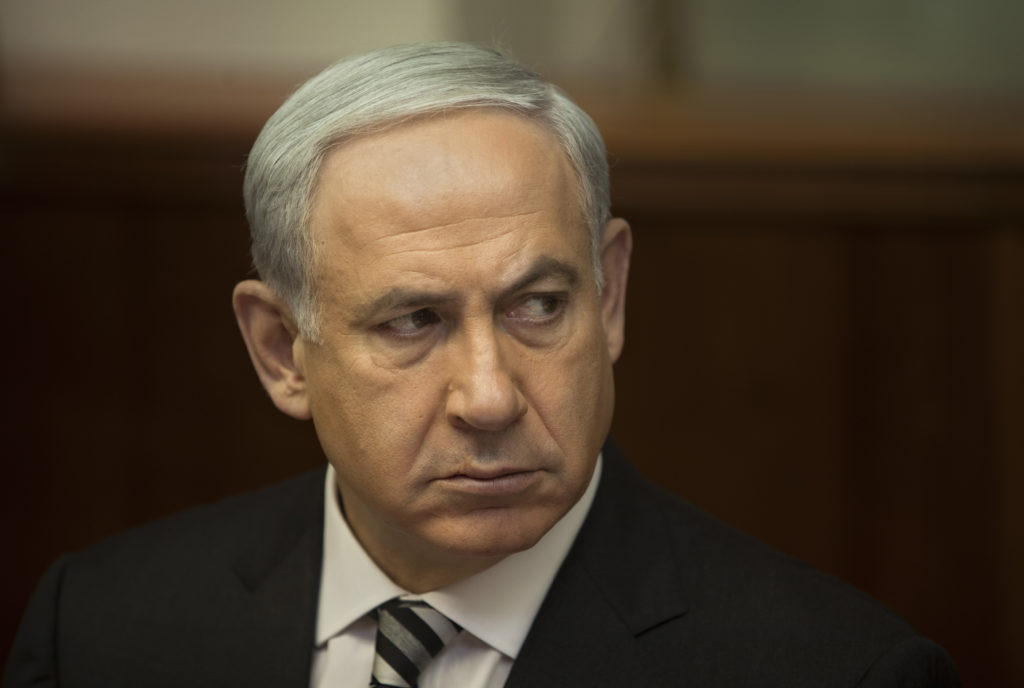
(JTA) — Israeli Prime Minister Benjamin Netanyahu acknowledged that the reopening of the economy amid the coronavirus occurred “too soon”

Facing a surge in COVID-19 cases in recent weeks, Netanyahu took responsibility for the decision to reopen the country a month ago after severe early restrictions were put in place to halt its spread.

“We first went back to work, then we opened stores, malls, schools and restaurants. Lastly, we open event halls, clubs, bars and other places in which there are gatherings and close contact,” Netanyahu said Thursday night, according to a transcript provided by his office. “In retrospect, as part of the trial-and-error, it is possible to say that this last stage was too soon.”

He added: “I take upon myself the responsibility for this step and I also take upon myself the responsibility to fix it. To this end, we have now closed places of social gathering in closed spaces. We will take other steps if necessary.”

Netanyahu’s remarks accompanied the government’s announcement of a new financial aid package to assist workers and businesses impacted by the coronavirus. The measures include an immediate cash infusion of about $2,700 for the self-employed, bimonthly grants of $1,700 to small businesses and up to $144,000 for larger ones, and expanded unemployment benefits.

Anger over the economic fallout from the coronavirus spilled into the streets on Saturday night with a demonstration in Tel Aviv protesting delays in promised public assistance.

Israel had been seen as a success story in battling the virus, with severe lockdown restrictions early in the pandemic keeping confirmed cases and deaths relatively low. But the reopening led to a surge in cases and the reimposition of restrictive measures.

Since the end of June, Israel has seen the number of serious cases double and 18 deaths from the virus. On Monday, the country announced 1,000 new cases in 24 hours. The following day, the nation’s director of public health resigned, charging that the government was privileging economic concerns over the health of its citizens.

Netanyahu Admits Israel’s Economy Reopened ‘Too Soon’ Read More »

Senior Rabbi Rebukes Junior Rabbi’s Viral Tweet Claiming Jews Aren’t Indigenous to Israel

“Let me say this as plainly as possible: Jews are not an indigenous people,” tweeted Assistant Rabbi Andy Kahn of New York City’s Temple Emanu-El on July 7. “It is appropriative to make use of this word when referring to our relationship to the land of Israel, and it undermines the difficult work being done to fix the ongoing oppression of indigenous peoples.”

The tweet quickly went viral, surpassing 10 thousand likes. In the expanded thread, Kahn went on to argue that “Jews, as a people, have not been part” of the indigenous rights struggle because they have not been included in the work by the United Nations for Indigenous Peoples “over the past 20+ years.”

The statement drew criticism from numerous Jewish voices, including Rabbi Joshua M. Davidson, the Senior Rabbi at Kahn’s synagogue.

“I disagree with Rabbi Kahn’s statement in both its facts and its effects, nor does it speak for Temple Emanu-El,” Davidson wrote in a letter to The Forward. “Beyond the Bible, numerous historians argue the Jewish people’s national identity was forged in the land of Israel.”

The senior rabbi also noted that Kahn’s tweets can be harmful and easily exploited.

“Whatever point Rabbi Kahn sought to make, and whether Jews meet the United Nations measure of an indigenous people or not, such claims are too easily manipulated by those who seek to undermine Israel’s legitimacy as a Jewish homeland,” Davidson wrote.

He then went on to argue that Jews are indigenous to the land of Israel.

“Archeology suggests an ancient Jewish presence there 3,000 years ago corresponding to the period of the Davidic monarchy,” Davidson said.

One group who took major issue with Kahn’s comments were Jews of color.

“You do realize that over half of Israeli Jews never left the Middle East — ever. So, how are we appropriating the suffering of others? Sorry if our indigeneity, oppressions, and culture are inconvenient truth to your political agenda,” Jews Indigenous to the North East and North Africa (JIMENA) tweeted in response to Kahn.

Siamak Kordestani, who is on the young professionals board of JIMENA, penned an open letter to Kahn.

“The fact you a) blocked a large number of Jews including Jews indigenous to the Middle East and North Africa and b) failed to note that these communities have been living in the Middle East for well over 2,000 years deeply concerns me,” Kordestani wrote. “Can you see how this is extremely offensive and even prejudiced against non-European Jews?”

JIMENA also weighed in on Kahn’s twitter antics. “Him blocking a number of prominent and outspoken Middle Eastern Jews, before proclaiming Jews aren’t indigenous to Israel, is in fact an attempt to suppress Middle Eastern voices and experiences,” the organization tweeted. “He can only grasp the most facile understanding of the Middle East — one that easily fits into his privileged worldview. Our *PLACE in MENA disrupts his narrative so much that the only thing he felt he could do is erase us – individually and collectively. This reeks of racism.”

Prominent Mizrahi activist Hen Mazzig agrees that Kahn’s behavior was insensitive to Jews from the Middle East and North Africa. “Rabbi Kahn has a blind spot for Mizrahi Jews,” Mazzig told The Journal. “He has displayed it over and over again by silencing Mizrahi Jews and even actively attacking them.”

Davidson addressed these concerns in his letter, noting, “Mizrahi communities today bear living witness to a Jewish link to the land — for some, a sustained presence there; for more, one interrupted by conquest and exile.”

“I’m glad that Rabbi Davidson addressed Rabbi Kahn’s tweets and mentioned Mizrahi heritage,” Mazzig continued. “However, I am concerned that Temple Emanu-El, whose entire clergy is homogenous, has allowed Rabbi Kahn to consistently bully, harass and erase the experiences of Jews of color with little pushback. It speaks to how much they care about people of color in these times.”

In a statement to the Journal, Kordestani said, “I commend Temple Emanu-El Senior Rabbi Joshua Davidson for speaking the truth about Mizrahi Jewish communities: we bear living witness to the deep Jewish connection to the land from ancient times until today.”

Kahn and Davidson did not respond to the Journal’s requests to comment.

Senior Rabbi Rebukes Junior Rabbi’s Viral Tweet Claiming Jews Aren’t Indigenous to Israel Read More »

Julian Edelman Speaks With DeSean Jackson About Educating Each Other in Aftermath of Anti-Semitic Posts

(JTA) — Julian Edelman, the Jewish wide receiver for the New England Patriots, has spoken with fellow NFLer DeSean Jackson following anti-Semitic social media posts by the Philadelphia Eagles player.

“DeSean and I spoke for awhile last night,” Edelman tweeted Friday. “We’re making plans to use our experiences to educate one another and grow together. Stay tuned.”

Meanwhile, according to reports, Jackson met with an anti-Semitism educational group on Thursday and was set to meet with 94-year-old Holocaust survivor on Friday.

Jackson had posted quotes attributed to Adolf Hitler on Instagram, including one accusing “white Jews” of having a “plan for world domination.” He also posted admiringly about the Nation of Islam leader Louis Farrakhan, who has compared Jews to termites and otherwise disparaged Jews. The Eagles wide receiver later removed and apologized for the posts.

On Thursday, Edelman had invited Jackson to tour the U.S. Holocaust Memorial and Museum with him and in turn tour the National Museum of African American History and Culture, both in Washington, D.C.

“I know he said some ugly things, but I do see an opportunity to have a conversation,” Edelman said in an Instagram video. “I am proud of my Jewish heritage. But for me it’s not just about religion. It’s about community and culture as well.”

Julian Edelman Speaks With DeSean Jackson About Educating Each Other in Aftermath of Anti-Semitic Posts Read More »

ADL Condemns CAIR NJ Head for Saying Israel is ‘Choking the Palestinian People’ During ‘Day of Rage’ Protest

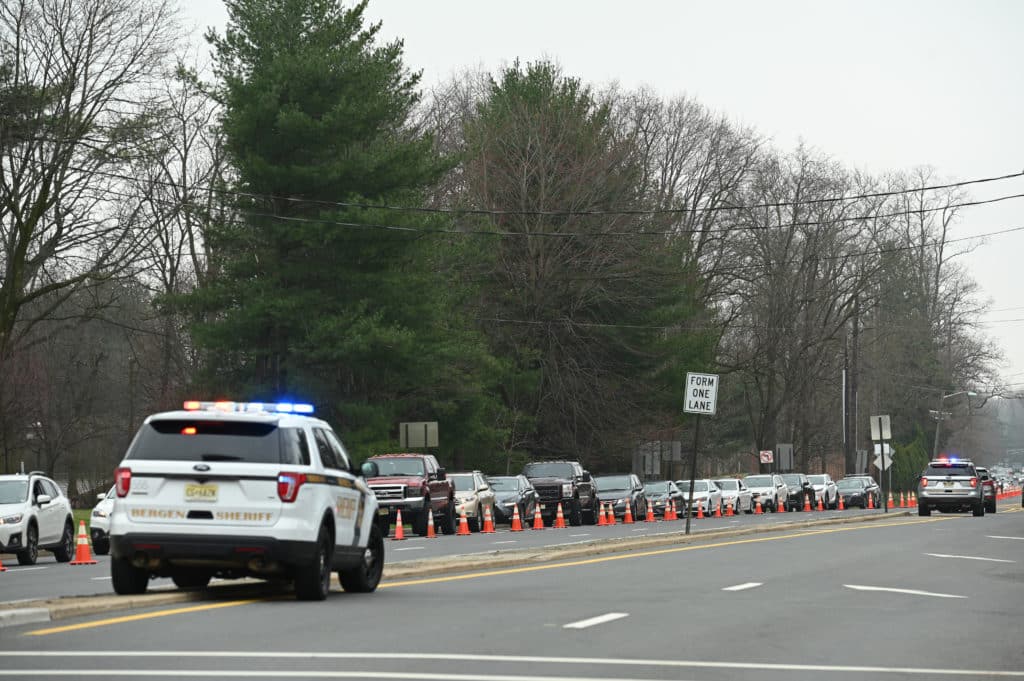
Anti-Defamation League (ADL) New York / New Jersey issued a joint statement with the Jewish Federation of Northern New Jersey (JFNNJ) on July 10 condemning the head of New Jersey’s Council on American-Islamic Relations (CAIR) for accusing Israel of “choking” Palestinians.

The statement says that the two Jewish groups were concerned over some of the rhetoric used during a July 3 protest in Bergen, N.J., against possible Israeli annexation of portions of the West Bank. According to the ADL, CAIR New Jersey Executive Director Selaedin Maksut said during the rally, “In order to defeat this evil that is Zionism, we must realize that the foot on the necks of the Black and Brown people of this nation is the same foot and the same knee that is choking the Palestinian people. Zionism is racism, and the same powers that oppress the ones here in America are the same powers that oppress the Palestinian people.”

ADL New York/New Jersey and the JFNNJ condemned Maksut’s reported statement as “the type of language that only serves to further anti-Semitic and anti-Zionist conspiracies and distract and divide us from the critical work of combating systemic racism here in the U.S. and supporting the work of Israelis and Palestinians who yearn for peace and equality.”


CAIR New Jersey did not respond to the Journal’s request for comment.

The ADL released a report on July 10 detailing how “a large number of these events [“Day of Rage” protests] featured classic anti-Semitic tropes or hostile language demonizing Zionism, the movement for Jewish self-determination and statehood.” Some of the other examples listed in the report included chants of “Death to America, Death to Israel” in Arabic as well as chants of “Genocide in ’48, we don’t want your two states” during a July 1 rally in Brooklyn, N.Y. A Popular Front for the Liberation of Palestine (PFLP) flag, which the State Department designates as a terrorist organization, was held during the same rally.

The report also highlighted how, at the New Jersey rally, an unidentified speaker who claimed to be affiliated with American Muslims for Palestine said, “We know that when you say no to annexation, no to occupation, we’re talking about all of historic Palestine. We’re talking about the entire West Bank, we’re talking about all the land. All the land from which our people were driven out.”

The ADL report did acknowledge that “many of the protestors limited their messaging to expressions of support for Palestinians and criticisms of Israeli policy.”

The “Day of Rage” protests occurred in cities all over the country, including Boston, Los Angeles and San Diego. Canadian high schoolers reportedly joined a July 4 protest in Mississauga, Ontario, that included chants in Arabic stating, “Jews are our dogs!” B’nai Brith Canada filed a hate crime complaint on July 8 over the alleged incident.

ADL Condemns CAIR NJ Head for Saying Israel is ‘Choking the Palestinian People’ During ‘Day of Rage’ Protest Read More »

Public Spaces and Mental Health in Times of COVID-19

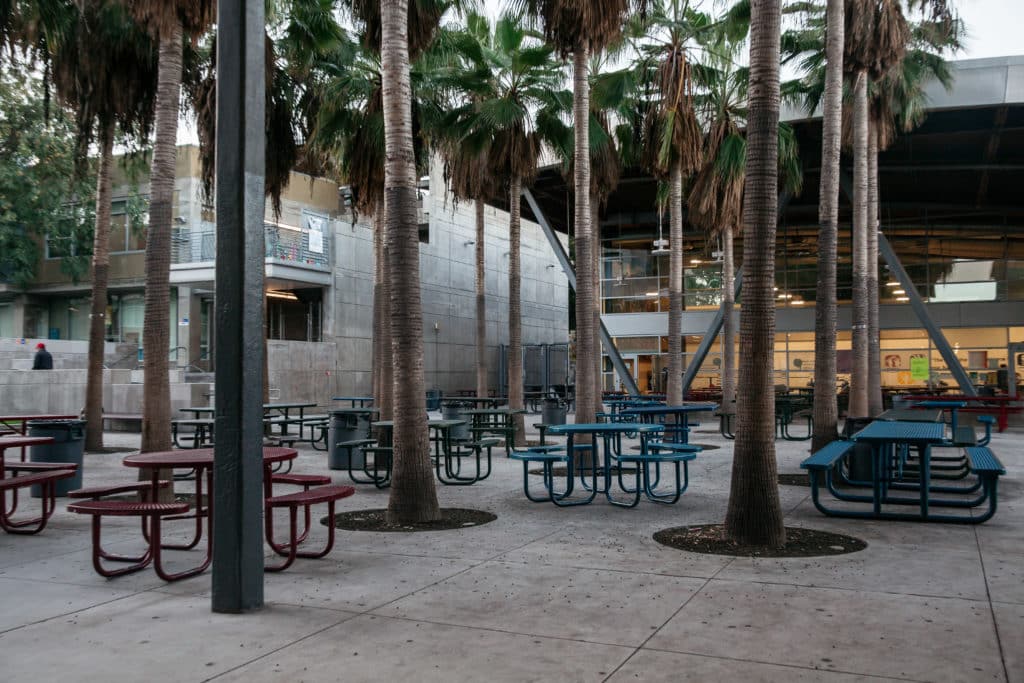
The global quarantine measures in the face of COVID-19 have been unprecedented. And while Israel is still struggling to prevent a second lockdown, city dwellers thirsty for the outdoors flock to the beaches and parks. What did COVID-19 teach us about the importance of public spaces in the city?

A new Israeli study published in May examines how short visits to the outdoor urban environment, compared to staying at home, affect Jewish and Muslim women’s psychological and physiological health.

To determine the effects of different urban environments on the women, Diana Saadi, during her PhD, under the supervision of Prof. Izhak Schnell and Prof. Emanuel Tirosh,  measured different outcomes, including positive and negative emotions, heart rate variability (which assesses the autonomic nervous system balance), and working memory.

In addition, several other factors, or so-called mediators, were measured, such as noise, heat, and carbon monoxide levels.

“This is the first study comparing staying at home to spending time outdoors and the effects of different outside environments on humans. It’s also strong evidence for the importance of short visits to urban parks or green spaces, especially for city dwellers,” says Dr. Keren Agay-Shay, an environmental epidemiologist at the Azrieli Faculty of Medicine at Bar Ilan University and the principal investigator in this study.

“We can say two things for sure by looking at the findings of the study. For Arab women, every trip from their home, improved their mood and positive emotions, whether it was a visit to the urban environment or a city park. For Jewish women, an improvement in mood could only be seen in the parks. In addition, the greatest improvement for all the psychological, physiological, and cognitive outcomes was observed in parks for the Jewish and the Arab women,” Agay Shay says.

Linking the study to COVID-19
The headline of the study asks, “There is no place like home?” which is ironically reminiscent of the still ongoing corona crisis and the accompanied quarantine measures.

Although the experiment was conducted in 2015-2016 and has no connection whatsoever to the coronavirus pandemic, Agay-Shay emphasizes how COVID-19 has given the study results new and previously unforeseen importance. “Based on the study results, we knew that recreational visits to local parks or any public outdoor spaces have positive effects on our overall well-being. COVID-19, has not only substantiated that but shown us how fundamentally important those visits are.”

“During the COVID-19 quarantine, we all had to stay at home, and it’s important to remember how claustrophobic an experience that can be for someone who does not have a garden or a green space close to their home,” she adds.

According to Agay-Shay, the Central Bureau of Statistics and the Myers-JDC-Brookdale Institute, each ran a survey in which they found that during the quarantine, both Israeli Arab and Israeli Jewish people had an increase in stress and anxiety, depression and negative emotions more than usual. “However, the data demonstrates that the Arab population suffered more during the lockdown. The psychological effects like depression and stress were stronger than in the Jewish population, Agay-Shay says.”

“I am not going to speculate on the exact reasons for this disparity, but the fact that most Arab neighborhoods don’t have parks and green spaces, I think clearly had an impact on the mental state of many people in those communities during the lockdown,” Agay-Shay emphasizes.

In addition, Agay-Shay believes that socioeconomic factors and lower environmental justice in Israel also played a role in how different members of society experienced quarantine. Even in Tel Aviv, for instance, social inequalities and environmental injustices do exist throughout the city, especially when comparing the situation in the north to that of neighborhoods in the south of the city. According to Agay-Shay, these inequalities were intensified when people could only move within a 100-meter radius of their home.

“You were lucky if you live in a greener area or close to a park. If not, which is more often the case in the south than it is in the center or the north, quarantine can become very difficult and cause psychological effects and mental health issues like depression symptoms,” Agay-Shay concludes.

More public spaces for the public
According to Alon Zask, Senior Deputy Director General of Natural Resources at the Ministry of Environmental Protection (MoEP), urban nature and city parks, especially in metropolitan areas, are of crucial importance to the public. 

“The MoEP is currently putting a lot of effort and budget into conducting large-scale municipal surveys of all the natural sites in cities throughout the country,” he continues.

The aim of the surveys is to establish the state of the ecological status as well as the flora and fauna of the individual sites and to determine how they can be maintained and persevered.

“Following that,” Alon says, “after we conducted the survey and have more details about the condition of the sites, including the vegetation and animal life, and how we can preserve them, we want to work in order to make them more accessible to the public,” Zask says.

“That means no fences or gates and no construction on the sites themselves,” he adds.

So far, surveys have been carried out by The Ministry of Environmental Protection and the Society for the Protection of Nature in Israel in more than 50 out of the 250 municipalities in Israel. 

In this context, Zask also emphasizes the importance of rehabilitating the many  streams and especially coastal streams that can be found dotted all over the country as they are a natural retreat from the city and are easy to reach from virtually anywhere.

“I wouldn’t go so far as calling the situation in the south of Tel Aviv an environmental injustice per se, rather a geographical issue. But it is definitely an issue that needs to be addressed, and that is one of the reasons we are doing the surveys,” Zask explains.

“Because once you mapped all the sites with urban nature, you can go ahead and implement steps that aim to make these places more accessible to the public, in both, the stronger socioeconomic areas and the poorer neighborhoods,” he continues.

In addition, Zask says that wealthier neighborhoods are often built-up with high-rise buildings, with little to no open space left for the public, whereas less affluent parts of the city have areas that could serve as public spaces.

“The budget of the MoEP is very small, and so there are limits to what we can do. But that being said, once we have completed the surveys, our goal is to get all the municipalities to adopt the recommended changes and implement them into their future city planning to ensure the preservation of green spaces in the urban environment,” Zask concludes.


Dominik Doehler, writes for ZAVIT* Environment and Science News Agency

Public Spaces and Mental Health in Times of COVID-19 Read More »

Do You Like Your Name?

What kind of name do you hope to gain in this world? Are you known as a leader, thinker, doer, source of compassion, gossiper, kvetcher, change-maker, well of goodness or blessing?

The midrash tells us that when God desired to create the first human being, God consulted the angels. God asked, “Shall we make human beings?” They responded, “What will they be like?” God said, “Well, their wisdom will be greater than yours.” How did God prove it? God assembled all of the animals and asked the angels to name them. The angels were perplexed. But the first human, Adam, looked at the animals and began to offer them names. God asked Adam, and what do you want to call yourself? Adam replied, “Adam … because I was fashioned out of the earth.” God continued, “And what do you want to call me?” Adam answered, “You are the Lord … because You are Lord over all of your creations.”

God seemed to understand that human beings hold the wisdom and ability to name ourselves. To pronounce and declare our identity. To shout to the world who we are and how we pray others perceive us. Moreover, God encouraged Adam to offer a name for the Holy One of Being. Perhaps, as a reminder that each human being holds a unique relationship with God, a relationship that holds different shapes, formations and names through the course of our lives.

Over the past few months, I have wondered how our names will survive the course of the pandemic. When people see our posts, pictures, hear our calls, needs, wants and prayers, what is the essence of our name? Do we encapsulate resilience? Does our name signify defeat? Which names resonate with convictions of faith and sentiments of hope?

Whichever name we project to the world and whichever name we hold in our hearts,  may we recognize ourselves when all of “this” is over, retaining who we are and constantly reminding ourselves who we want to be.

Shabbat shalom.

Do You Like Your Name? Read More »

david suissa podcast curious times

Pandemic Times Episode 68: Finding Jobs in the New Economy

New David Suissa Podcast Every Monday, Wednesday and Friday.

A conversation with Ramona Schindelheim of WorkingNation on how to adapt to a radically changing U.S. economy.

How do we manage our lives during the coronavirus crisis? How do we keep our sanity? How do we use this quarantine to bring out the best in ourselves? Tune in every day and share your stories with podcast@jewishjournal.com.

Pandemic Times Episode 68: Finding Jobs in the New Economy Read More »

Award-Winning Composer Jonathan Wolff on His Jewish Roots, the Greatness of Louisville

If you watched a lot of television in the 1980s, 1990s and/or 2000s, you have heard the work of Jonathan Wolff many times. In fact, the compositions of Wolff continue to play on television and streaming platforms day and night.

While primarily known for composing the theme to “Seinfeld,” that is only one of Jonathan Wolff’s high-profile credits. He wrote over 40 theme songs for television shows and was the credited music composer for 75 primetime network shows. Those extensive credits include “Will & Grace,” “Married With Children,” “Saved By The Bell: The College Years,” “Reba,” “Who’s The Boss?” and “The Hughleys,” and that doesn’t include the thousands of productions he had contributed additional music to.

Doing some mental math, it is not hard to figure out why Jonathan Wolff retired young from composing in 2005. He immediately transitioned into life as a stay-at-home dad and never looked back. But in recent years, Wolff has transitioned into doing guest lectures and concert appearances. Among his credits as a lecturer are major gigs at Harvard Law School, Yale University, Princeton University, New York University and MIT.

I had the pleasure of speaking with Jonathan Wolff – a man who is simultaneously pleasant, candid, energetic and patient – via Zoom on July 3, 2020, as embedded below. Among the topics we discussed whether he has ever encountered Primus’ Les Claypool, who many wrongfully attributed the “Seinfeld” theme to; How the local Jewish community of Louisville helped get him started as a professional musician; How the score to “Will & Grace” became so piano-centric and the story behind “Seinfeld” having an alternate theme song with scat-singing vocals; kudos to Joe Hasan for the research on that one.


More on Jonathan Wolff can be found here, here and here.

Award-Winning Composer Jonathan Wolff on His Jewish Roots, the Greatness of Louisville Read More »