The Jewish Journal took home five American Jewish Press Association (AJPA) Awards at the 39th Annual AJPA Simon Rockower Awards on July 2, which were held virtually this year, due to the COVID-19 pandemic. Rather than gathering in Atlanta for the ceremony, the celebration of Jewish journalism took place on Zoom and Facebook Live.
Among the five awards received was Best Weekly Newspaper by David Suissa and Kelly Hartog (read one of the submitted issues here), 1st Place Award for Excellence in Editorial Writing by David Suissa, 2nd Place Award for Excellence in News Reporting by Ryan Torok, 2nd Place for the Louis Rapoport Award for Excellence in Commentary by David Suissa, and 1st Place Excellence in Writing about Sports by Louis Keene.
Founded in 1944, the AJPA is a voluntary not-for-profit professional association for the English-language Jewish Press in North America. Its membership consists of newspapers, magazines, websites, Jewish media organizations, individual journalists and affiliated organizations throughout the United States and Canada.
Now listen, you rebels, can we draw water
for you from this rock?
Moses…not known for his witty banter
not one to give the troops a hard time
whose tongue is never inside his cheek
addresses the people as rebels
and that’s exactly what he means.
Fed up with our oldest tradition – complaining
Turns to the rock, or doesn’t even look at it
Hits it like a parent until the water flows.
Doesn’t even mention the Source.
This water that sates the kvetcher’s thirst
is the free-flowing tears of the Divine.
I’m not one to talk to rock either
but when the Holy One says mention my name
before you turn on the faucet, that’s an
instruction I’d pay attention to.
Or, like Moses who still has years to go
in front of these rebels, you’ll only get to
the very edge of your promised land.
Your feet never on its soil
The very air you breathe still tainted
with the stench of slavery.
Know the rebels before whom you stand.
Know the source of your gifts.
Draw your water accordingly.
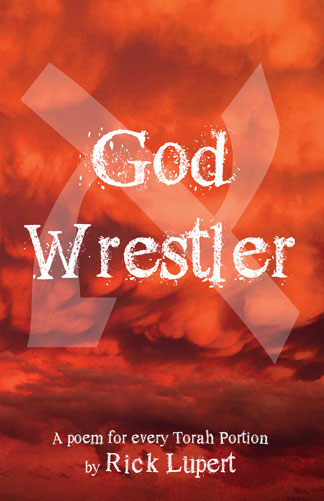
Los Angeles poet Rick Lupert created the Poetry Super Highway (an online publication and resource for poets), and hosted the Cobalt Cafe weekly poetry reading for almost 21 years. He’s authored 23 collections of poetry, including “God Wrestler: A Poem for Every Torah Portion“, “I’m a Jew, Are You” (Jewish themed poems) and “Feeding Holy Cats” (Poetry written while a staff member on the first Birthright Israel trip), and most recently “Hunka Hunka Howdee!” (Poems written in Memphis, Nashville, and Louisville – Ain’t Got No Press, May 2019) and edited the anthologies “Ekphrastia Gone Wild”, “A Poet’s Haggadah”, and “The Night Goes on All Night.” He writes the daily web comic “Cat and Banana” with fellow Los Angeles poet Brendan Constantine. He’s widely published and reads his poetry wherever they let him.
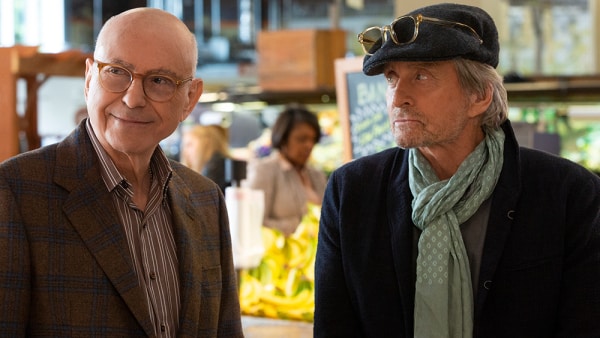
Netflix has renewed the Golden Globe-winning series “The Kominsky Method” for a third and final season. The comedy series, stars Michael Douglas—also a Globe winner–and Alan Arkin as actor/acting coach Sandy Kominsky and his agent and best friend Norman Newlander, plus a supporting cast full of MOTs, including Paul Reiser, Lisa Edelstein and Jane Seymour.
“’The Kominsky Method’ has been a true passion project for me and it’s been an incredible experience to see the warm response from both audiences and critics. I’m excited to wrap up the story with this final chapter,” creator Chuck Lorre said in a statement.
Season 2 involved a health crisis for Sandy and dealing with his daughter’s much-older boyfriend (Reiser), while Norman rekindled his romance with an old flame (Seymour). No information was given on the plot of the third season, or when it would begin shooting, as it’s contingent on COVID-19.
Douglas is willing to be patient. “It’s all going to be OK, whenever it’s going to be,” he told Deadline. “I’m just blessed and fortunate to be working with good material. This is where I like being old enough to appreciate it.”
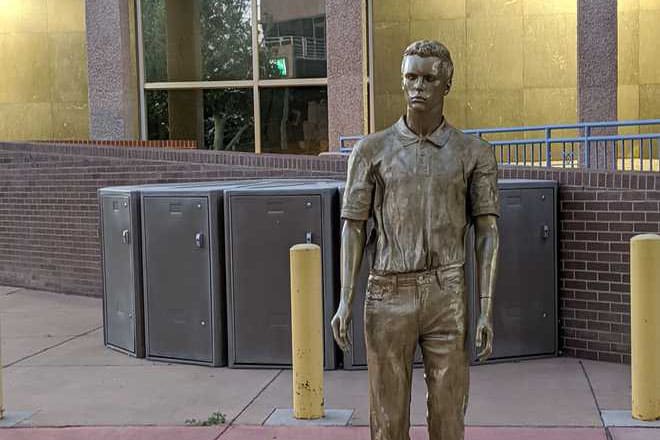
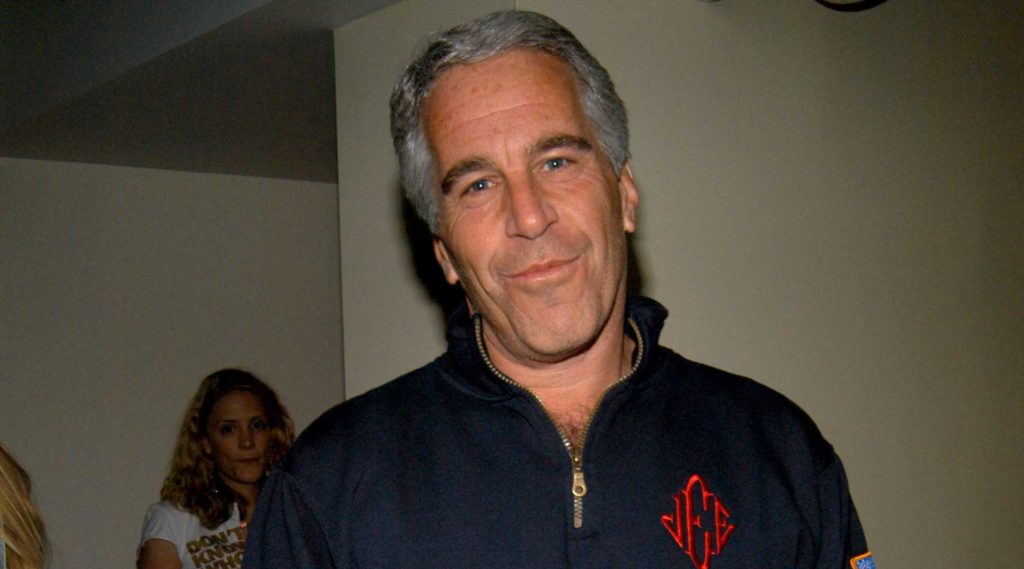
A statue of the late convicted sex offender Jefferey Epstein appeared in downtown Albuquerque, New Mexico.
The group responsible for the prank said it was meant as political satire, referring to Confederate monuments in public spaces.
The statue, created by painting a mannequin gold, was discovered in front of City Hall on Wednesday and removed the same day, according to local reports.
A plaque noted that Epstein had a home in New Mexico and that “He was also a rapist that died in prison.” It also included a list of court cases involving the Jewish millionaire financier, who was found dead in his New York City jail cell in August while facing sex trafficking charges for allegedly abusing dozens of minor girls.
“Generously provided to Bernalillo County by the Antlion Entertainment ‘Art’ Collective,” the plaque said.
“We think we need an Epstein statue in every school because otherwise how are students ever going to learn they even existed?” an unnamed Antlion member told told KRQE. “You know those who don’t remember history are doomed to repeat it, and so if we don’t have statues of Epstein up, how can we prevent predatory behavior.”
On Thursday, the FBI arrested Ghislaine Maxwell, the British socialite and heiress who was a close friend and confidante of Epstein, on charges that she conspired with Epstein to sexually abuse minors, the WNBC-TV in New York reported.
The six-count indictment filed in Manhattan federal court alleges that Maxwell helped Epstein train girls as young as 14 years old beginning in 1994.
Apparently, silly hats are a thing now on Zoom. Because people on video conference calls can be seen only from the shoulders up, the only way they can express themselves sartorially is with hats. But baseball caps, or even fedoras, aren’t enough to get attention on that video screen. Thus, the birth of the silly hat craze.
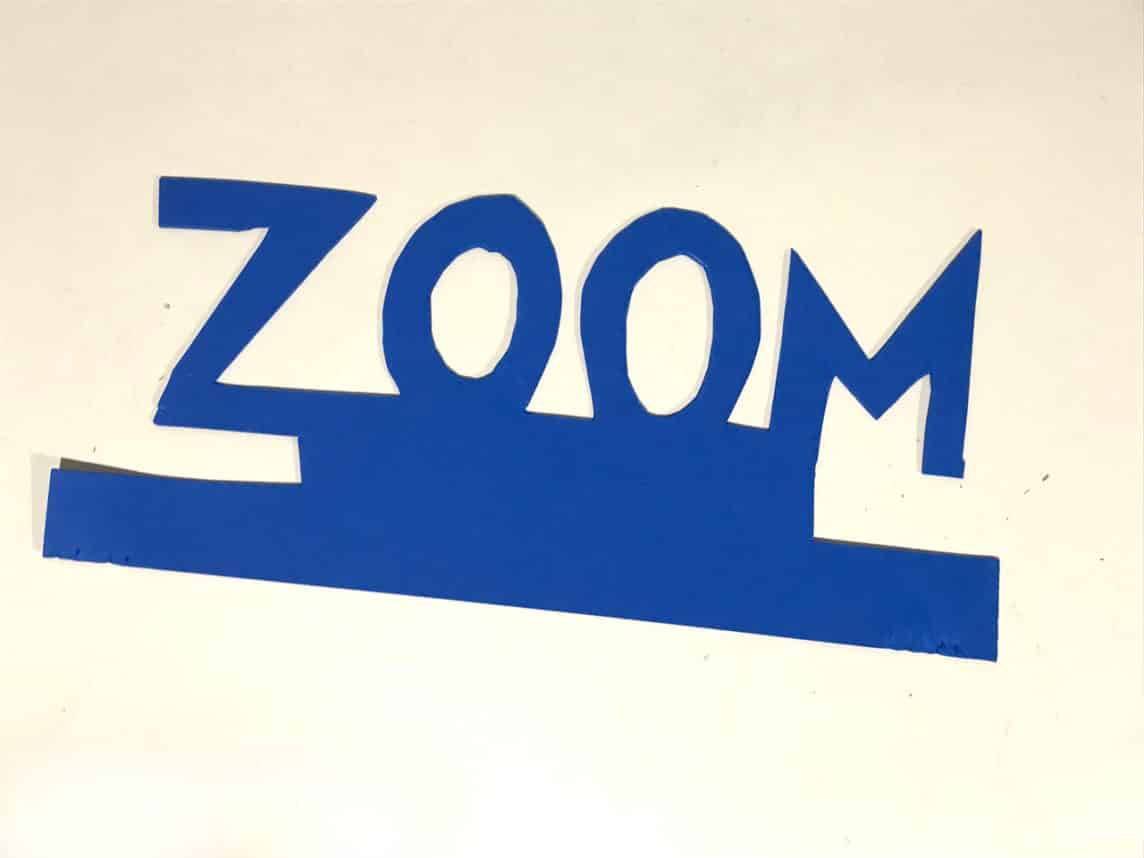
I’ve made a hat for this project with the word “Zoom” on it. I realize it’s kind of redundant, or even “meta” to make a Zoom hat for Zoom. To personalize your own silly hat, make one with fun shapes, animal ears or another word that suits you. You may like the hat so much, you won’t even wait until your next Zoom meeting to wear it.
What you’ll need:
Baseball cap or another type of hat
Cardstock, felt or craft foam sheet
Scissors
Pipe cleaners
Glue
Paper clips
1. Start with a hat you already wear. This way, you can build off of it rather than starting from scratch.
2. From a piece of cardstock, felt or craft foam, cut out a shape that is about 12 inches wide by 5 inches high. Like I said, I created the word “Zoom,” but the next one I make may be a pair of panda ears. Make sure there is a band at the bottom that is about one inch high — this band will be attached to the existing hat.
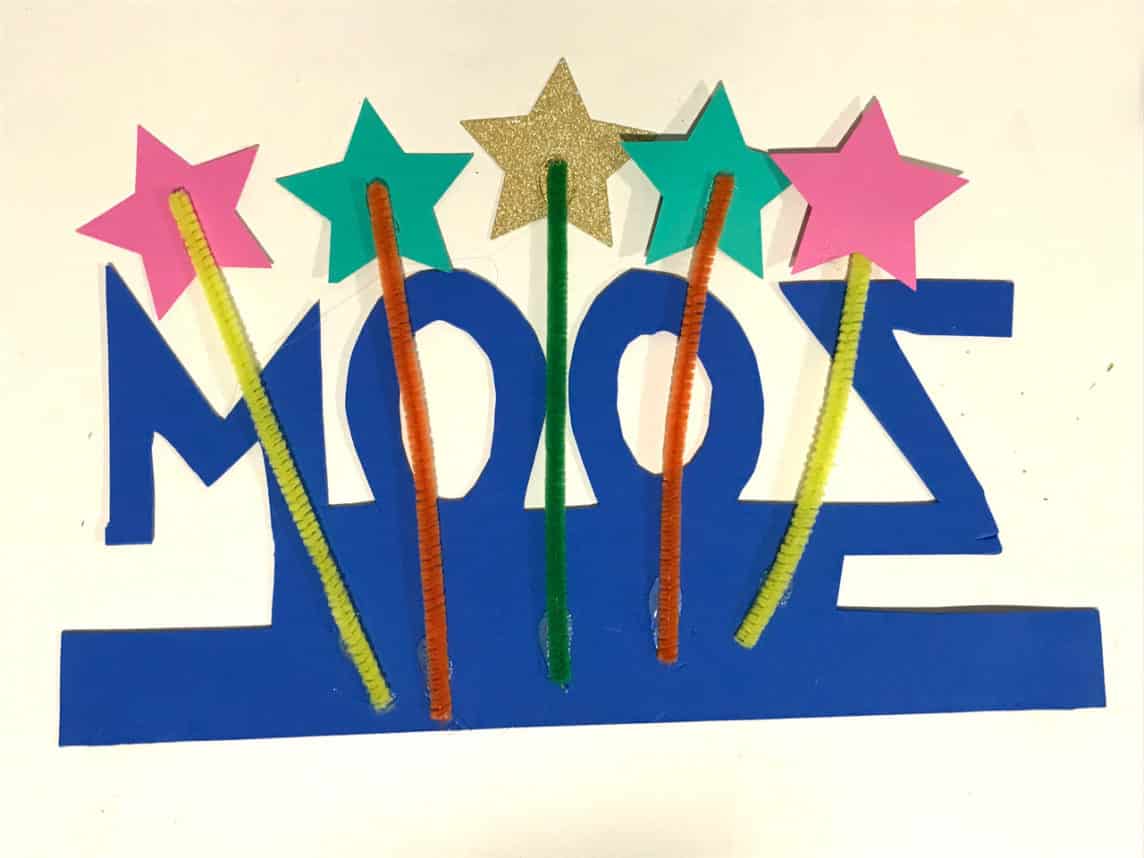
3. On the back side of the shape, glue on pipe cleaners and additional shapes like stars. The pipe cleaners add some jiggly fun to the hat.
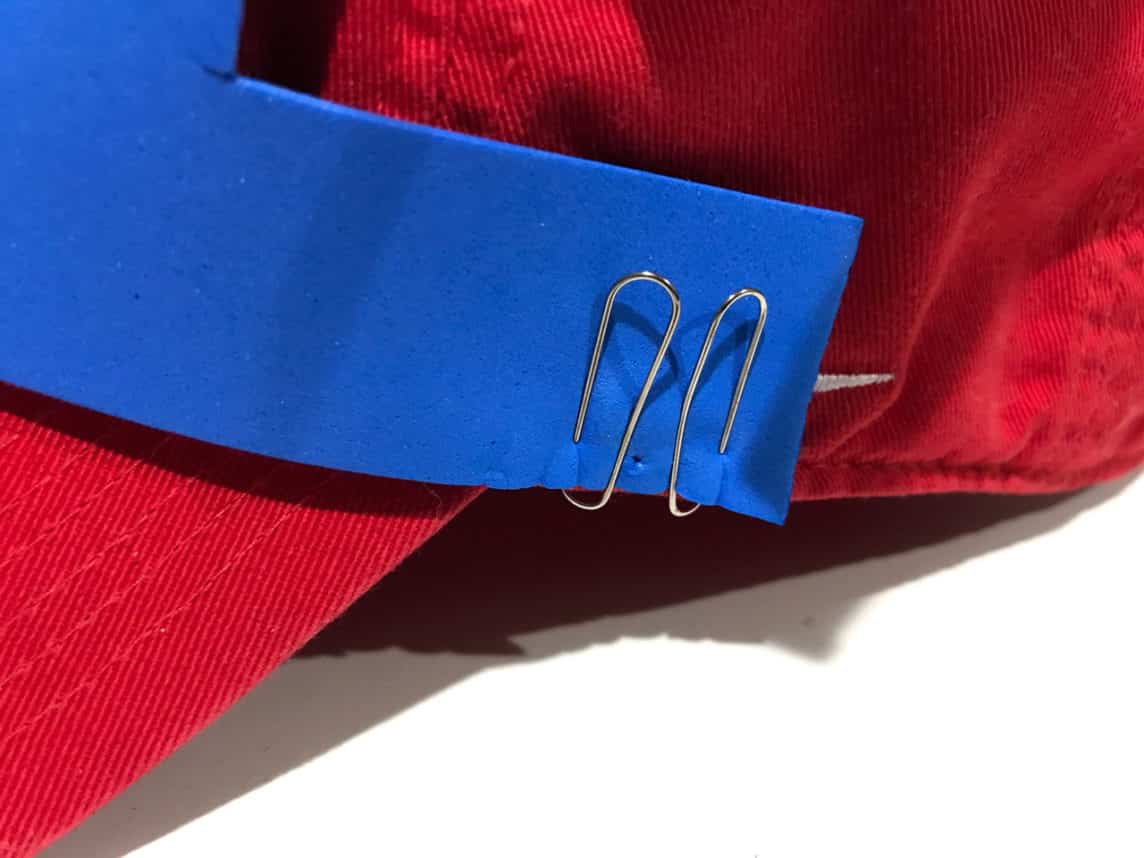
4. Attach the band to both sides of the hat with two paper clips. If you have safety pins, you can use them. Now wear your hat proudly.
I admit I’m a fair weathered God fan, when things are good I sing his praises and when things are bad I reach out to him for a spiritual hand. The rest of the days I’m just thinking about what to make for dinner. I think of my communication with God as coming from a limited reserve that I don’t tap into unless I really need to, and I don’t make a deposit of gratitude unless I have an overabundant supply.
2020 however has been a year of God-talk for me so far and I think many others are seeking solace in faith and spirituality as well. From the weekly arrival of Shabbat each Friday night (no matter what disruption the previous week has brought), to the nighttime shema prayer ritual I sing with my children before bed, I’m finding comfort in the routine traditions that have always marked my days. I’ve also felt the support of my extended Jewish community through virtual experiences and even phone calls from our Rabbis and Jewish preschool family to check in on us. In a world of required isolation Jewish life has given us a touch of contact.
When faced with your world (or in this case THE world) coming crashing down it can create a spiritual turning point – does all the pain ‘prove’ there is no God or is it the perfect atmosphere to grow your relationship with the idea that somewhere somehow someone is watching over you or at least there to listen and share in your worries.
In the Torah during the story of Moses and the burning bush God defines himself as ‘I am who I am’ or in Hebrew אֶהְיֶה אֲשֶׁר אֶהְיֶה which really doesn’t have a perfect English translation and is maybe better defined as ‘I will be what I will be’. Perhaps God is being elusive on purpose, because we’re allowed to define our own relationship with God and allow it to ebb and flow just as we change and grow throughout our lives.
When I launched my YouTube channel about being a Jewish mom I never expected the flood of messages I would receive from people looking to figure out their complicated relationship with God and even from those considering conversion. This summer I started a ‘Jewish Conversion’ series on my channel to help collect resources in one place. You can check out my summer series on conversion here:
Maybe when this time in history is studied we will have data on how it affected our spirituality but I believe now is a turning point for faith, one way or the other.
Marion Haberman is a writer and content creator for her YouTube/MyJewishMommyLife channel and Instagram @MyJewishMommyLife page where she shares her experience living a meaning-FULL Jewish family life. Marion is author of, ‘Expecting Jewish!’ She is also a professional social media consultant and web and television writer for Discovery Channel, NOAA and NatGeo and has an MBA from Georgetown University.
The Jewish Community Foundation of Los Angeles (The Foundation) announced on July 2 that the rest of its 2020 institutional grantmaking will go to a two-phase plan focused on COVID-19 relief totaling $8.5 million.
The program’s first phase, known as COVID-19 Response Grants, offers immediate relief to Los Angeles nonprofits in both the Jewish and general communities impacted by the pandemic. The second phase will support Jewish nonprofits locally, as well as in Israel, facing economic hardship due to the pandemic to ensure their long-term sustainability.
“The devastating effects of COVID-19 and the financial crisis required us to re-imagine our institutional grant making to meet these unprecedented challenges,” Foundation President and Chief Executive Officer Marvin I. Schotland said in a statement to the Journal. “Our funding strategies, devoted entirely to COVID-19 relief, are meant to address both immediate and developing needs resulting from the crisis, as well as provide us the flexibility to adapt as the situation changes.”
Phase One funding totals $2.5 million distributed to 22 nonprofit organizations. This includes $1.5 million for causes and initiatives that focus on providing direct relief for financial, housing and food insecurity, as well as access to adequate healthcare.
Swipe Out Hunger, LA Family Housing, JVS SoCal, Chai Lifeline, Jewish Big Brothers Big Sisters Los Angeles, Martin Luther King Junior Community Hospital and Jewish Free Loan Association are among the organizations that received grants. The Jewish Federation of Greater Los Angeles also received $1 million for its COVID-19 relief efforts as a part of phase one.
Phase two grants, currently estimated at approximately $6 million, is expected to support recipients’ ongoing programming activities and organizational infrastructure to help ensure their future sustainability.
The Foundation’s total $8.5 million includes funding from the Mickey and Irene Ross Endowment at The Foundation, as well as support from the Erwin Rautenberg Foundation, a private family foundation. To develop its plan, The Foundation consulted with more than 100 nonprofits locally and in Israel, as well as fellow funders throughout the community.
Schotland said in addition to the re-direction of this year’s institutional giving to COVID-19 response and recovery, The Foundation relaxed requirements of previously awarded multi-year institutional grants to numerous nonprofits, specifically its Cutting Edge, Next Stage, Israel and General Community Grants. These revised policies include modifying grant-reporting requirements, accelerating distributions, repurposing funds and providing consultative services and support to help ensure continuity of programming and bolster these nonprofits.
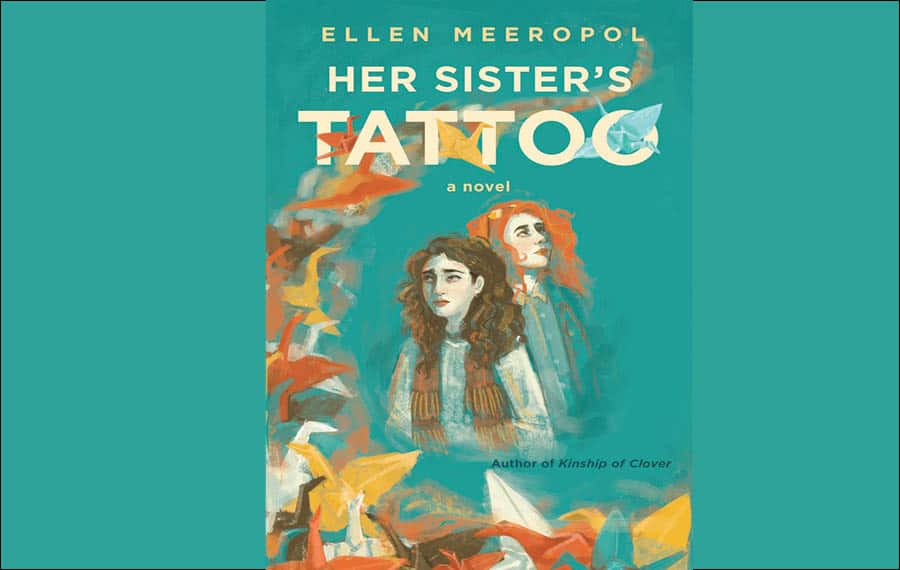
Ellen Meeropol’s last name is famous among those of us who still recall the tragic case of Julius and Ethel Rosenberg, who were put to death in 1953 after being convicted of conspiracy to commit espionage. Their two young sons, Robert and Michael, were adopted by a couple named Meeropol, and the author is married to Robert. “Her Sister’s Tattoo” (Red Hen Press), Meeropol’s engaging and compelling new novel, is not about the Rosenbergs, but the case casts a long shadow over the book.
The story Meeropol tells in “My Sister’s Tattoo” opens in 1968, a time when Americans took to the streets to protest war, racism and poverty. Esther and Rosa Levin, sisters raised by progressive parents, are chanting, “Hey, hey, LBJ! How many kids did you kill today?” Horse-mounted cops are wielding billy clubs, and tear gas is in the air. But Esther is thinking of her 5-month-old daughter, Molly, who is back home with a babysitter, and she is torn by the contradictory roles she feels called upon to play: “If she were stronger or braver, maybe she could do everything: be an activist and a mother and an artist.”
The dilemma, as it turns out, is not merely a matter of personal choice. An incident that takes place at the demonstration — perhaps only an exercise of “guerrilla theater tactics” or perhaps an act of criminal violence — thrusts Esther and Rosa into public notoriety and acute legal peril. Either way, as their mother puts it, “This is big trouble.” Here, for example, the author explicitly acknowledges the heartbreaking childhood of her real-life husband: “Who would take [care] of Molly,” Esther muses, “if she were arrested.”
The whole family is drawn into the drama. Esther’s husband, Jake, is a pediatrician — “a regular Albert Schweitzer of toddlerland,” as Rosa disdainfully puts it because Jake is no activist. Rosa’s boyfriend, Allen, is a lawyer, “smart and savvy and active in the Black Panthers, but he preferred his battles in the courtroom rather than the streets.” For that reason, Rosa wants Allen to bring in “someone really political. And not a white male.”
Ellen Meeropol succeeds in creating and sustaining the kind of tension we expect to find in a mystery novel.
Meeropol directs the reader’s attention to the political repercussions of her tale —Rosa insists they must “contrast this one injured cop with thousands of mangled and murdered Vietnamese people” – but, notably, Meeropol also wants us to see the most intimate moments her characters are forced to endure. For example, Esther is arrested at home after she has given her baby only one breast, and when she finds herself behind bars, Meeropol shows us a scene I’ve never encountered in a book before: “She slipped her hand under her T-shirt and touched the tight ache in her right breast, hard with milk. ‘I feel so damned lopsided. If I try to stand up, I’ll tip over sideways.’ ”
Solidarity is a core value of progressive politics, but Esther and Rosa quickly realize they cannot always count on their friends and comrades. “I guess sisterhood isn’t that powerful,” cracks Jake. Indeed, the two sisters cannot even agree on how to defend themselves against the charges they are facing. Esther wants “to tell the truth about what happened,” and Rosa wants to mount a political defense. Here, too, we find repercussions of the Rosenberg case, which involved the passing American nuclear secrets to the Soviets and turned on the testimony that Ethel Rosenberg’s brother and sister-in-law gave against the Rosenbergs in court.
“I mean, how can that be wrong, telling the truth?” Esther asks in “Her Sister’s Tattoo.” “We did it, you know?”
“Rosa sees it as a betrayal,” responds Maggie, one of their fellow demonstrators. “Besides, is there only one truth here? There are no possible nuances of motivation or necessity?”
Surely it is significant that Esther Levin’s married name in Meeropol’s novel is Green. Ethel Rosenberg’s maiden name was Greenglass, and it was her brother and sister-in-law, David and Ruth Greenglass, whose testimony sent the Rosenbergs to the electric chair.
The title of the book, too, is profoundly ironic. Both young women have matching tattoos — a red star on their left breasts, a symbol of both political and sisterly solidarity. “A tattoo is forever,” Esther muses. “Like a sister.” But the case tears them apart, literally, when Rosa goes underground rather than waiting for the verdict. And their breach strains and breaks the bonds of family and friendship among virtually all of the characters we meet in “Her Sister’s Tattoo.”
“I don’t know where you are right now, Ms. Queen of the Underground,” Jake says. “And if you have any thoughts of reclaiming your sister, forget it. You’re toxic, Rosa. Poison. Stay away from my family.”
Meeropol succeeds in creating and sustaining the kind of tension we expect to find in a mystery novel. Both Rosa and Esther find themselves in ever greater peril, and we want to know what price the sisters will pay for their deeds, both the ones that are alleged and the ones that are self-confessed. But we also want to know, and perhaps with even greater urgency, whether the broken links in the various relationships can and will be restored. And Meeropol answers the questions in a poignant denouement that comes as a complete surprise.
“Her Sister’s Tattoo” is all about a family with a multigenerational passion for political activism, but the narrator’s voice is always clear and calm. Meeropol writes with precision, insight and compassion about the most tumultuous moments in human life, whether they happen in public or in private. Above all, she artfully invents a fictional story that enables readers to penetrate some of the agonies and mysteries of a very real case.
Jonathan Kirsch, author and publishing attorney, is the book editor of the Jewish Journal.
In a culture where two Jews usually means three opinions and four arguments, the one place we can connect is over Shabbat dinner, right? Well, in recent years, dinner tables have become steaming battlegrounds for heated debate. Critics of Israel have claimed that the Jewish state has co-opted Arabic cuisine, while Mizrahi Jews have fired back that the argument is an erasure of their grandmother’s kubbeh and histories. Food and Wine Magazine spurred mass outrage in December when it offered recipes for latkes with shrimp and squid, while others applauded the periodical for acknowledging the treif-gobbling masses. Then there was the firestorm that erupted earlier this year when The New York Times declared the best kind of matzo was not kosher for Passover.
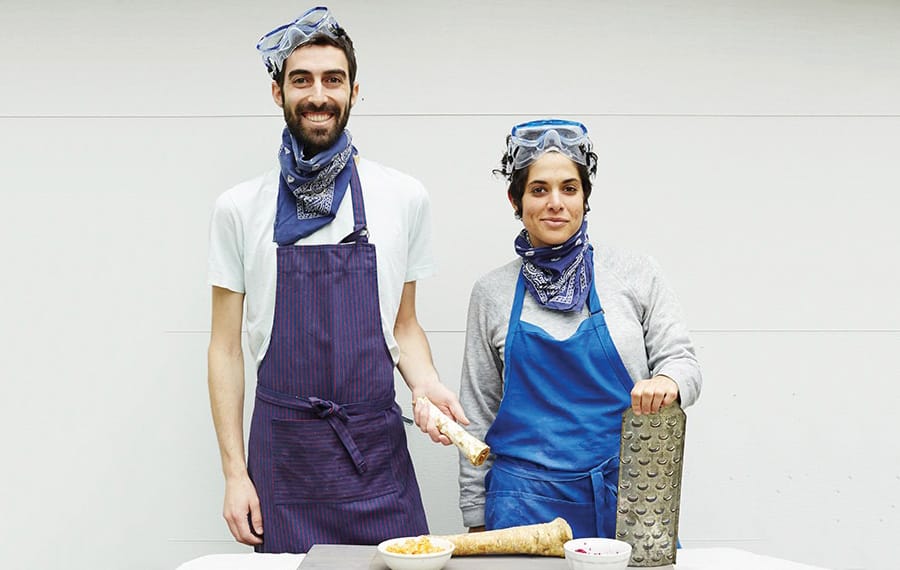
As American-Jewish society becomes harder to define, so does its food culture. So, American Jewish University (AJU) invited Liz Alpern and Jeffrey Yoskowitz, the founders of the Great Jewish Food Fest and authors of “The Gefilte Manifesto: New Recipes for Old World Jewish Foods,” to a June 26 webinar to discuss the subject. They were joined by AJU’s Vice President of Communications Michelle Starkman, and they grappled with the question: “What is American Jewish food culture?”
Alpern and Yoskowitz, whose focus is on Ashkenazi food, began their mission to preserve traditional Jewish cuisine in the face of modernization, Americanization and globalization over a decade ago.
Credit to Lauren Volo.
“We saw that foods from our tradition, like a borscht, old-world pickle, blintzes or kugel — these foods were being forgotten by our colleagues in the food world, maybe dismissed,” Alpern said. “They had lost some of their ethnic identity as Ashkenazi Jewish foods.” She also noted how their mission was centered not only on preserving recipes they grew up with but to “counter the narrative that all Jewish food is the same; that, in fact, there are so many distinctive cuisines within the Jewish canon. Ashkenazi Jewish food is just one of them.”
Alpern and Yoskowitz argued that Jewish-American cuisine is defined by constraints, whether they be ingredients, kashrut laws or prosperity. “Any immigrant group arrives at new shores and they want to find the flavors of home as best as they can,” Alpern said. “Mushrooms are a huge part of flavoring Eastern European dishes and certainly used in Jewish cooking in Eastern Europe.” However, she added, recipes changed when their homeland’s mushroom varieties were unavailable to Jewish immigrants.
“We saw that foods from our tradition, like a borscht, old-world pickle, blintzes or kugel — these foods were being forgotten by our colleagues in the food world, maybe dismissed.”
— Liz Alpern
“The Jews of Eastern Europe couldn’t find what they wanted and started trading them on Houston Street, and eventually, people got more Americanized and they were OK with using those button mushrooms they could buy at the market or in the store,” Alpern said.
“The Jewish deli is not representative of what old-world Jewish food was like,” Yoskowitz said. “It’s a place you go to get heavy, fatty foods. That’s really what makes it so special,” he added, noting how classics such as pastrami or a steaming plate of corned beef were rare in shtetls and reserved for simchas.
Iconic Jewish dishes such as mile-high sandwiches were too luxurious for past generations of Ashkenazi Jews, he added. “That was part of the American story: the abundance. We ended up eating those special-occasion foods, the fatty foods, the heavy foods, all the time. We actually lost sight of what the everyday foods were.”
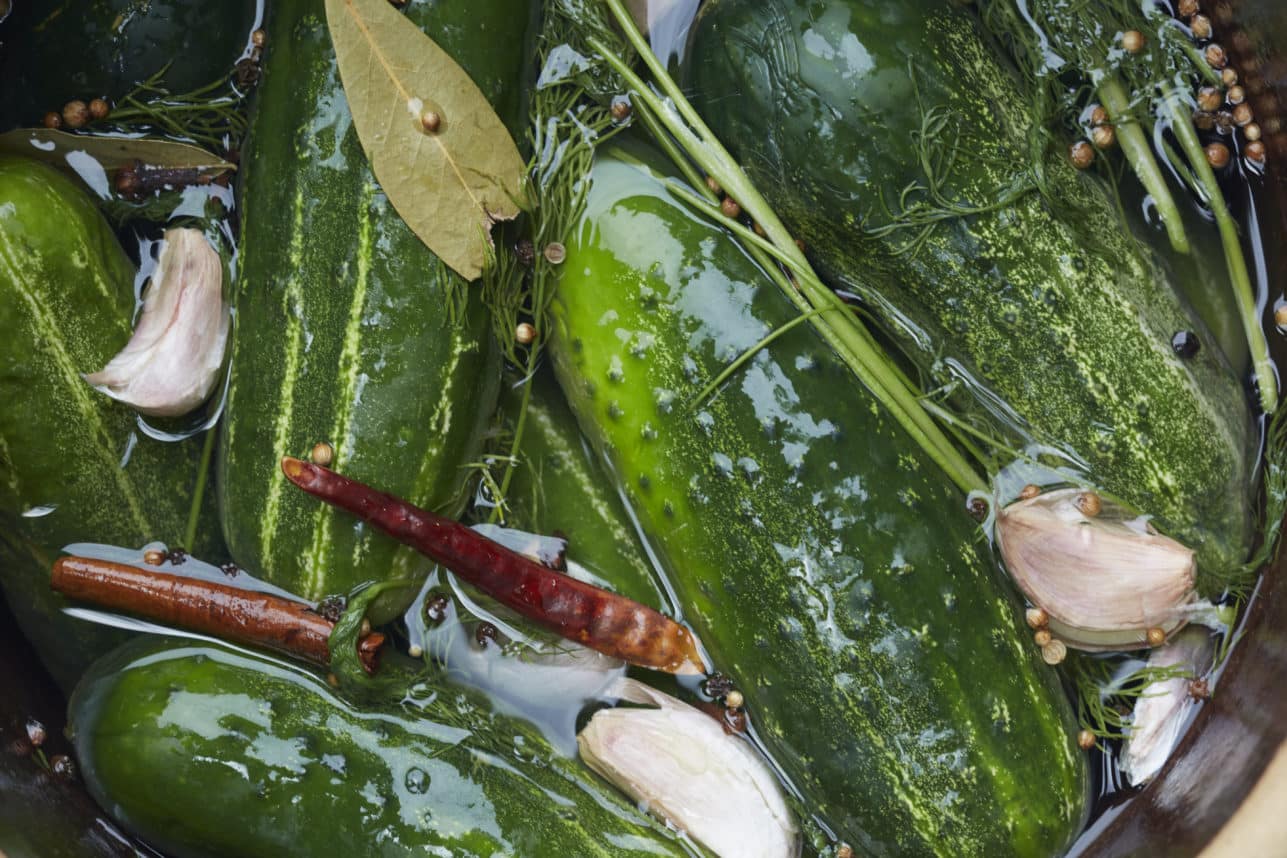
To Alpern and Yoskowitz, no food better epitomizes the American turn in Jewish cuisine quite like the pickle. Holding homemade pickles prepared with just salt brine, Alpern explained that the Eastern European dish has beneficial bacteria. However, its American variation is made with vinegar, which kills these healthy microorganisms. “Pickles are, in some ways, the essential food that symbolizes much of what was lost,” she said.
Credit to Lauren Volo.
The duo also acknowledged that Jewish-American food culture has been influenced by beloved treif dishes such as the Reuben sandwich, but believe that honoring the cuisine’s history means acknowledging kashrut customs. “Ashkenazi cooking was, by its nature, kosher,” Alpern said. “It doesn’t mean that every Ashkenazi Jew kept kosher, but the traditions that grew out of those communities were largely influenced by those kashrut rules. So there is a very close linkage, and I think if you try to untangle them too much, you will be confused.”
Yoskowitz said Jewish-American food is being bastardized not so much by non-kosher dishes, but by homogenization. “Post 1950, everything stayed the same,” he said, noting how even Ashkenazi food is not traditionally standardized but is distinguished by its origins in Poland, Lithuania, Hungary and other cultures. He expressed his distaste for how American gefilte fish frequently is garnished with carrots, or kugel generally is served with the same cornflake crust. “If you celebrate the diversity of a cuisine, you can celebrate all of the ways gefilte fish is made — whether it was baked or fried or poached or stuffed. Part of what we are inspired by in general is how to celebrate that diversity and move past that idea of there being one version of everything,” he said.
But Yoskowitz’s hottest takes concern how dishes from Mizrahi communities are gaining ground in America’s historically Ashkenazi-dominated food scene: a development he calls “falafelization.” Stating that “Falafel replaced the pastrami sandwiches at my Jewish day school in New Jersey,” Yoskowitz said he believes that Jewish-American food is being “watered down and becoming more American and more Israeli. We were watching hummus replace the chopped liver on the Shabbat dinner table.”
After the event, Yoskowitz told the Journal in an email that he believes falafel specifically “represents a nationalist effort by the Zionist movement to create a new culinary identity as part of the project of building Israel,” which erases “many cooks whose dishes were labeled as ‘Israeli’ as part of this process.”
Credit to Lauren Volo.
Yoskowitz and Alpern both told the Journal “We acknowledge that ‘Ashkenormativity’ is a painful issue in the Jewish community” and “while much of the predominant understanding of Jewish food culture in America often gets lumped together unfairly with Ashkenazi food culture, what passes for ‘Ashkenazi cuisine’ in this country has been stripped of so much of its history and its ethnic identity.”
At the end of the day, there may not be an answer to the webinar’s central question of what Jewish American food culture is. “There may, in fact, be no such thing as ‘Jewish cuisine’; rather, many amazing and diverse cuisines that all share the same umbrella,” the duo said.
However, Yoskowitz’s primary quest is ensuring that all Jewish foods, wherever they are developed in the Diaspora, are “not the watered-down, bastardized version of these amazing flavorful foods to meet a more Western palate.”
(JTA) — A statue of the late convicted sex offender Jefferey Epstein appeared in downtown Albuquerque, New Mexico.
The group responsible for the prank said it was meant as political satire, referring to Confederate monuments in public spaces.
The statue, created by painting a mannequin gold, was discovered in front of City Hall on Wednesday and removed the same day, according to local reports.
A plaque noted that Epstein had a home in New Mexico and that “He was also a rapist that died in prison.” It also included a list of court cases involving the Jewish millionaire financier, who was found dead in his New York City jail cell in August while facing sex trafficking charges for allegedly abusing dozens of minor girls.
“Generously provided to Bernalillo County by the Antlion Entertainment ‘Art’ Collective,” the plaque said.
“We think we need an Epstein statue in every school because otherwise how are students ever going to learn they even existed?” an unnamed Antlion member told told KRQE. “You know those who don’t remember history are doomed to repeat it, and so if we don’t have statues of Epstein up, how can we prevent predatory behavior.”
On Thursday, the FBI arrested Ghislaine Maxwell, the British socialite and heiress who was a close friend and confidante of Epstein, on charges that she conspired with Epstein to sexually abuse minors, the WNBC-TV in New York reported.
The six-count indictment filed in Manhattan federal court alleges that Maxwell helped Epstein train girls as young as 14 years old beginning in 1994.