fbpx

June 28, 2020

Annexation Now Will Squander A Real (if Long-Shot) Chance for Peace

The overreach in pushing for annexation now already has multiplied the possible costs to Israel. The risks make this a reckless step, even if the worst does not happen, including collapsing the Palestinian Authority. Also at risk is damage to the peace treaty with Jordan and possibly destabilizing that kingdom; alienating the Democratic Party and most American Jews; and setting back the growing alliance with Sunni Arab states. Other than shoring up Prime Minister Benjamin Netanyahu’s right-wing bloc and/or distracting from his trial, there is little profit in this step for Israel.

Annexation is being pushed for all the wrong reasons. The insistence on immediate action is predicated on the belief that only President Donald Trump will support boundary changes between Israel and the Palestinians. Since he may not be reelected, the proponents of the move seek to seize the moment. Many supporters of annexation want to foreclose a Palestinian state forever. Some of them want to bring the Palestinians totally inside Israel based on the grounds that they are less dangerous as a suppressed minority than as citizens of an unstable state that could be taken over by jihadists and make life unlivable in Israel.

Nevertheless, the majority of Israelis still believe that Israel’s Jewish character is best protected by not bringing in the Palestinian population. They believe that Israel’s Jewish character would be undermined if it absorbs millions of Palestinians and that its democratic character could be undermined if it has to keep down an unreconciled large fraction of the population by force and coercion.

The majority of Israelis still believe that Israel’s Jewish character is best protected by not bringing in the Palestinian population.

The Trump/Jared Kushner plan was correctly based on the recognition that in the three decades since Oslo, the Palestinians have convinced Israel’s majority that they do not intend to accept Israel’s legitimacy or live in peace with it. Only significant deeds — not words — can persuade Israelis to risk the creation of a Palestinian state. The actions prescribed by the plan would signal that the Palestinians have shifted their national effort away from the present destructive course of delegitimizing Israel in order to gain their self-determination.

KEDUMIM, ISRAEL – JUNE 26: An Israeli Jewish woman hangs laundry near her house in the Jewish settlement of Kedumim near Nablus on June 26, 2020 in Kedumim, West Bank. (Photo by Amir Levy/Getty Images)

The Palestinians are asked to accept demilitarization of their state. This will assure that it can never threaten Israel’s existence. They are asked to shift their government to a democracy. If the Palestinian Authority (PA) stays a dictatorship, its leadership will, sooner or later, have to resort to diverting popular resentment to an external enemy. Needless to say, that inevitable scapegoat would be Israel — especially since the PA leadership has wasted the unparalleled level of international aid by corruption and incompetence. The reward for making the shift would be an unprecedented level of international aid and a better life — politically and economically — for the Palestinians.

Finally, the plan has a deadline of four years, presumably to prevent the Palestinians from stalling forever. Whatever the final agreement (or not), the United States would back Israel in absorbing up to 30% of the West Bank. This clause removes the two most disturbing obstacles to Israel compromising with the Palestinians. There would be no evacuation of settlements. Past evacuation of settlements almost tore Israel apart. Allowing the settlements to stand — and stay Israeli inside the Palestinian state — would also be the single most powerful statement possible of commitment on the part of the Palestinians to live in peace with Israel. This would signal the PA’s determination to end demonization of Jews as well as of its desire to create a ‘Judenrein’ Palestinian state. The second major upgrade for Israel is that it can permanently control the Jordan Valley corridor, which is an essential defense line against infiltration from the East. Permanent control of the security corridor is the strongest assurance of Israeli security, no matter what course the second state (Palestine) takes.

The plan tells the Palestinians that if they simply refuse to negotiate, they cannot stop the defining of new borders for Israel and Palestine. Moreover, in breaking with the model of a Palestinian state on the lines of the post-1967 borders, the plan incentivizes the Palestinians to seriously negotiate for peace now. In the last two decades, Palestinian hostility, terrorism and refusal to negotiate a final settlement was rewarded with more and more generous land offers (under Prime Ministers Ehud Barak and Ehud Olmert.) This plan says the Palestinians will get their best deal now. The longer they delay — and continue to delegitimate Israel — the less they will get in the future. At the same time, it incentivizes Israel to enable a two-state solution because the security risks and the continuing hostile incitement would be removed.

The effectiveness of the plan would be greatly enhanced if any takeover of land only is done after serious negotiations and only if the Palestinians refuse to make a final settlement. Israel would be encouraged to accept the two-state solution, but would be assured of having a peaceful, democratic neighbor. In turn, the Palestinians are assured that if they negotiate, they can get the best deal possible and that Israel is ready to accept a genuine peace with Palestine. Palestinian self-determination would be separated, finally, from victimhood, revenge seeking or undermining Israel.

The effectiveness of the plan would be greatly enhanced if any takeover of land only is done after serious negotiations and only if the Palestinians refuse to make a final settlement.

Insisting on annexing now — and without exploring a Palestinian state — turns the U.S. plan into a one-sided political goodie bag for Netanyahu and the annexationist right. This tactic energizes and validates all the opponents of annexation. Taking this step now will condemn any land transfer to permanent de-legitimation by the Palestinians, by the Sunni states that have been coming close to Israel, and by the Democratic Party and American left. With serious negotiations, the Palestinians might come to accept a land exchange in return for sovereignty. Acceptance of the boundary shift by the international community would follow.

The plan erred in allowing for annexation upfront. Maybe this loophole reflected divided counsels in the White House and the desire of some to simply grant Israel all its requests and penalize the Palestinians for past bad behaviors and refusal to negotiate. But if taken, this step will remove a lot of the incentive to the Palestinians to change course and start negotiating. Also, by validating the belief that this approach undercuts the two-state solution, it removes any pressure on the PA to go back to the negotiating table.

TEL AVIV, ISRAEL – JUNE 23: Demonstrators wear masks of Israeli Prime Minister Benjamin Netanyahu, and Defense Minister Benny Gantz as they protest against the Israeli goverment’s plan to annex parts of the West Bank on June 23, 2020 in Tel Aviv, Israel. Defense Minister Benny Gantz, who formed a coalition government with Prime Minister Benjamin Netanyahu to break an electoral stalemate, has signaled he will not oppose the prime minister’s unilateral move. (Photo by Amir Levy/Getty Images)

I firmly believe that annexation now will squander a real (if long-shot) chance for peace. However, if the Trump Administration accepts Netanyahu’s plea that he has gone too far out on a limb and cannot back down completely without suffering domestic political damage, it should green-light him to annex only Gush Etzion and Maaleh Adumim and expanded Jerusalem neighborhoods. These are settlement blocs that in past negotiations, Palestinians informally indicated they know would stay with Israel. The George W. Bush Administration also confirmed its backing of this retention in an exchange of letters with then Prime Minister Ariel Sharon in 2004, before the Gush Katif evacuation. This would reduce the damage somewhat.

Still, a clean shift from annexation to negotiation would be best because it would make clear that the Trump/Kushner plan is being opposed for all the wrong reasons. Far from undercutting a two-state solution, if the plan is applied correctly, this could be the moment when a Palestinian state begins to emerge. A Palestinian change of course and entering negotiations might enable realization of the original and most benign vision of the United Nations in 194: a Palestinian self-determination and dignity that would be safe for Israel and its security.

This polarized moment should be turned into a bipartisan cooperation opportunity. There could be a breakthrough for peace if all the players shift their pressure activity from the side they oppose to their own allies. It is time for the Republicans and the right to push Netanyahu to go for genuine negotiations instead of annexation. For their part, the European Union, the left, the Democratic Party and the Sunni states should press the Palestinians to enter the negotiations in good faith. If both sides pivot to push their allies to do the right thing, the ‘deal of the century’ could turn into a two-state solution with genuine peace at the end.

Rabbi Yitz Greenberg is president of the J.J. Greenberg Institute for the Advancement of Jewish Life, which soon will become a division of the Hadar Institute.

Annexation Now Will Squander A Real (if Long-Shot) Chance for Peace Read More »

Mozhgan Savabieasfahani, Candidate for Michigan City Council, Under Fire for Anti-Semitic Synagogue Protests

A candidate for Ann Arbor City Council in Michigan has come under fire for her anti-Israel activism.

Mozhgan Savabieasfahani, an Iranian native and environmentalist, has called for boycotts of Israel and staged anti-Israel protests outside of Ann Arbor’s Congregation Beth Israel, where every Saturday for the last 16 years, a group of protesters has harassed congregants outside the synagogue. Protesters have placed signs in front of the synagogue that say “Jewish Power Corrupts,” “Zionism is Racism” and “RESIST Jewish Power,” among other statements.

A federal lawsuit has been filed against the protesters and the city of Ann Arbor.

Savabieasfahani has taken part in the protests, “often wearing a sandwich board depicting a swastika, likening Israel to Nazi Germany,” according to a June 26 statement by the Michigan Democratic Jewish Caucus (MDJC), which also accused Savabieasfahani of “railing against the Jewish state in extreme terms before” the Ann Arbor City Council.

“Blaming American Jews for policies (real or perceived) promulgated by the State of Israel, as protesting a synagogue would imply, is patently anti-Semitic,” said MDJC.

“Consistent with Savabieasfahani’s anti-Semitic behavior is her recent promotion of a deeply offensive cartoon on Facebook depicting one of her primary opponents, Jen Eyer, standing in a wallet, holding wads of cash and receiving money from a pig holding a cigar,” continued MDJC. “While the use of pigs in anti-Semitic rhetoric is age-old and clearly identifiable, Savabieasfahani expounded on her dog whistle by deriding prominent Jewish supporters of her opponent.”

Joan Lowenstein, Washtenaw County chairwoman of the Michigan Democratic Jewish Caucus and treasurer for Eyer’s campaign, stated that “Mozhgan Savabieasfahani’s hate-filled candidacy for Ann Arbor City Council is an affront to the universal values so integral to this city, as one of Michigan’s great intellectual centers.”

The Ann Arbor election is scheduled to be on Aug. 4.

Mozhgan Savabieasfahani, Candidate for Michigan City Council, Under Fire for Anti-Semitic Synagogue Protests Read More »

Suspected Cyberattack Disrupts Israel Philharmonic Orchestra Virtual Gala

A suspected cyberattack occurred during the Israel Philharmonic Orchestra’s (IPO) virtual gala on June 28.

According to a press release from the IPO, the suspected attack caused the IPO’s website to shut down, as well as the website for Medici.TV, who the IPO was partnering with for the gala. The suspected attack prevented the more than 13,000 participants from watching the gala, but the IPO was able to upload the entire gala to YouTube for people to watch.

“It seems that hackers were determined to silence our message and stamp out our voice, but they will not succeed,” Danielle Ames Spivak, executive director of American Friends of the Israel Philharmonic Orchestra, said in a statement “More than ever, we are determined to spread the Israel Philharmonic’s message of hope, peace, and beauty around the world.”

The gala included performances from musicians such as Itzhak Perlman, Martin Fröst, and Evgeny Kissin; it was hosted by British actress Dame Helen Mirren.

“We were thrilled that so many had registered to join us for this event, giving us the opportunity to bring the healing power of music to people who need it at this difficult time,” Tali Gottlieb, executive director of the IPO Foundation, said in a statement. “Our organization had high hopes that this event would help us raise emergency funds to support the members of the Israel Philharmonic in the face of an unprecedented financial crisis.”

The IPO is encouraging people to watch the concert on YouTube. Meanwhile, an investigation has started to find out who was behind the cyberattack.

This is a developing story.

Suspected Cyberattack Disrupts Israel Philharmonic Orchestra Virtual Gala Read More »

UN Launches Investigation After Staffers Filmed in Tel Aviv Having Sex in Official Vehicle

The United Nations has launched an internal investigation after a video clip was circulated widely last week on social media appearing to show a couple having sex in a U.N. vehicle in Tel Aviv.

In the video, a woman in a red dress is seen straddling a man in the back seat of the vehicle—with a driver and a passenger in the front—on HaYarkon Street, a block away from Tel Aviv’s beachside promenade.

U.N. spokesperson Stéphane Dujarric confirmed to reporters in New York on Friday afternoon that the clip, which is less than 30 seconds long, shows personnel in the car “likely assigned to the U.N. Truce Supervision Organization [UNTSO].”

UNTSO is the Jerusalem-based peace-keeping mission established in 1948 to “monitor ceasefires, supervise armistice agreements and prevent military escalation,” according to the United Nations.

“We are shocked and deeply disturbed by what is seen on the video,” said Dujarric during a regular briefing to U.N correspondents.

“The behavior seen in it is abhorrent and goes against everything that we stand for and having been working to achieve in terms of fighting misconduct by U.N. staff,” Dujarric said of the footage, which was captured by an anonymous source who leaked it to Inner City Press, a news outlet that lost its U.N. accreditation in 2018.

Separately, UNTSO also issued a statement on Friday, asserting, “The Mission stands committed to the Organization’s zero-tolerance policy against any kind of misconduct, including sexual exploitation and abuse, and reminds its personnel of their obligations to the U.N. Code of Conduct. As part of the Secretary-General’s commitment to transparency, we will keep the media informed upon conclusion of the investigation.”

According to the BBC, there were 175 allegations of sexual abuse and exploitation among or against U.N. staff in 2019, of which 16 were substantiated, 15 unsubstantiated and the rest still under investigation.

UN Launches Investigation After Staffers Filmed in Tel Aviv Having Sex in Official Vehicle Read More »

Sacha Baron Cohen Pranks Far-Right Rally Into Singing About Soros, Obama and Fauci

The hundreds of people who attended a right-wing militia event in Olympia, Washington, on Saturday expected music. But they were surprised when one performer turned out to be comedian Sacha Baron Cohen, who delivered an incognito performance that got some of them singing along with hateful, racist lyrics.

Baron Cohen took the stage at the “March for Our Rights 3″ rally, held at Olympia’s Heritage Park, dressed in overalls and a fake beard. Then he began singing a catchy song whose lyrics included racist language and anti-Semitic conspiracy theories popular among far-right extremists.

“Dr. Fauci, what we gonna do? Inject him with the Wuhan flu,” he sang, according to video posted on social media, which showed some members of the crowd singing along. “Hillary Clinton, what we gonna do? Lock her up like we used to do. WHO, what we gonna do? Chop ’em up like the Saudis do.”

Later, he sang, “CNN, they spread fake news, they controlled by you-know-whos — George Soros and his nasty friends.” (Soros, the billionaire Jewish philanthropist who funds a variety of liberal causes, is a favorite bogeyman of the right and conspiracy theorists in particular.)

Baron Cohen was honored last year by the Anti-Defamation League because of his record of using humor to fight hate, including through his Showtime series “Who is America?” which satirizes American politics.

“Baron Cohen has used humor and satire to expose people’s inherent biases by depicting racists, anti-Semites, neo-Nazis, Islamophobes and others as deeply flawed, ordinary people whose prejudices are, ultimately, laughable,” the organization said at the time. The group has more recently called attention to an explosion in negative tweets about Soros, which reached half a million a day last month.

TMZ reported that at some point the crowd turned on Baron Cohen, who was whisked into a waiting ambulance by his security and driven away.

Matt Marshall, a founder of the Washington Three Percenters, a far-right militia group that has previously organized gun rights rallies, said in a post on Facebook that Baron Cohen presented himself as the leader of a group that wanted to co-sponsor the rally. He said the actor paid for additional security, who then blocked attempts to pull him off the stage or cut power to his music.

Sacha Baron Cohen Pranks Far-Right Rally Into Singing About Soros, Obama and Fauci Read More »

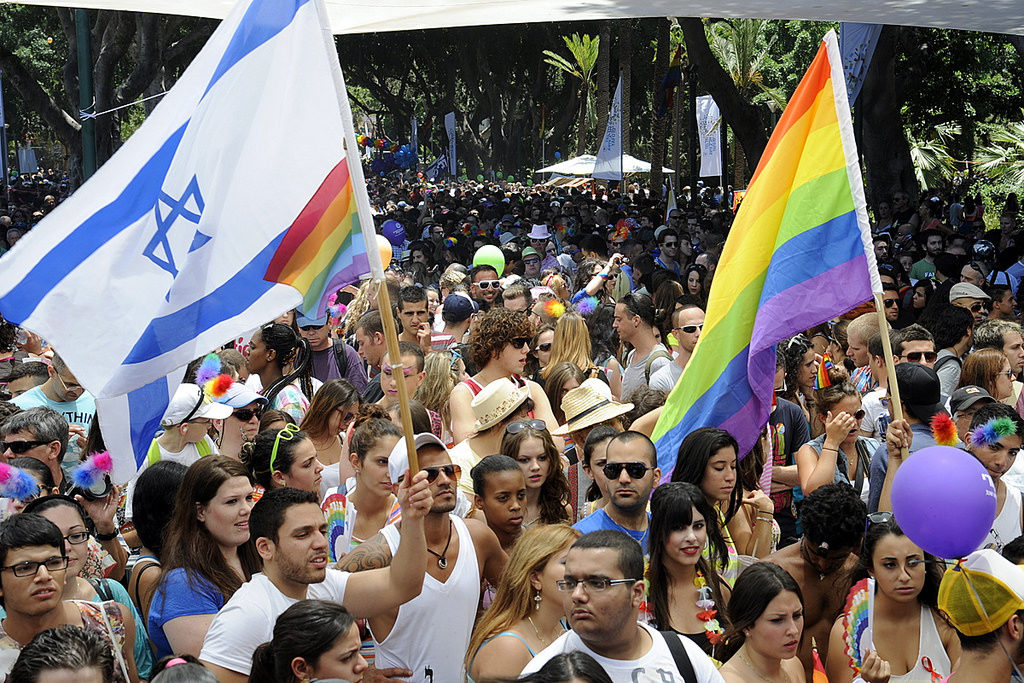
3 Homophobic Orthodox Extremists Arrested Ahead of Jerusalem Pride Rally

Police in Jerusalem arrested three members of a Jewish extremist group over concerns that they would disrupt a Pride rally in the Israeli capital city.

Members of the Lehava organization had been instructed on how to blend in and infiltrate the gathering in support of the LGBTQ community scheduled for Sunday in Jerusalem, according to reports in Israeli media.

Guidance to group members that circulated online Sunday showed that they had been told to wear colorful clothing, talk with their hands and use slang common among Israel’s gay community.

The arrests came five years after a Haredi Orthodox man stabbed to death a marcher, Shira Banki, 16, who was attending the parade in support of her LGBTQ friends. Security at the march was significantly tightened after that attack.

This year’s Pride parades in Jerusalem and across Israel were canceled because of the coronavirus pandemic, but a smaller-scale, socially distanced gathering was planned instead. Some 1,200 police officers were tapped to protect the rally.

Among the Lehava activists arrested early on Sunday morning was Moshe Ben Zikri, who also was detained before last year’s Pride parade and who for the prior two years dressed up as an LGBTQ activist and infiltrated the parade only to start haranguing attendees from the podium.

“Unfortunately, the Jerusalem Police have not grasped the principles of freedom of expression. We will ask the court to release Ben Zikri unconditionally,” Ben Zikri’s attorney, right-wing activist Baruch Ben Gvir, said in a statement. The three men were released Sunday afternoon.

In all, 27 right-wing activists were detained ahead of the Jerusalem rally.

3 Homophobic Orthodox Extremists Arrested Ahead of Jerusalem Pride Rally Read More »

9 Powerful Jewish Designs by Milton Glaser, the Iconic Graphic Artist Who Died This Week at 91

Milton Glaser, the godfather of modern graphic design who passed away on his 91st birthday on Friday, didn’t talk about his Jewish identity very often.

But when he did, he made clear that his New York Jewish upbringing defined his artistic sensibility.

Born to Hungarian immigrant parents, the lifelong New Yorker grew up in the Bronx, surrounded mostly by “Jews from Eastern Europe, [who] were very left-wing — Marxists, Trotskyites,” he told Hadassah Magazine in 2009.

“[P]art of my ideas come more from my Jewish background than my American background,” he said in that interview, adding that a sense of “never quite feeling at home in any culture” shaped his aesthetic.

That turned out to be a positive: Glaser would go on to challenge almost every orthodoxy of modern design, changing the “vocabulary of American visual culture,” as his New York Times obituary put it.

“At a certain point we were accepted, and once that happens, everything becomes less interesting,” he said in a 1989 interview, referring to his group of early design firm collaborators.

Here are some of the Jewish images from Glaser’s legendary career.

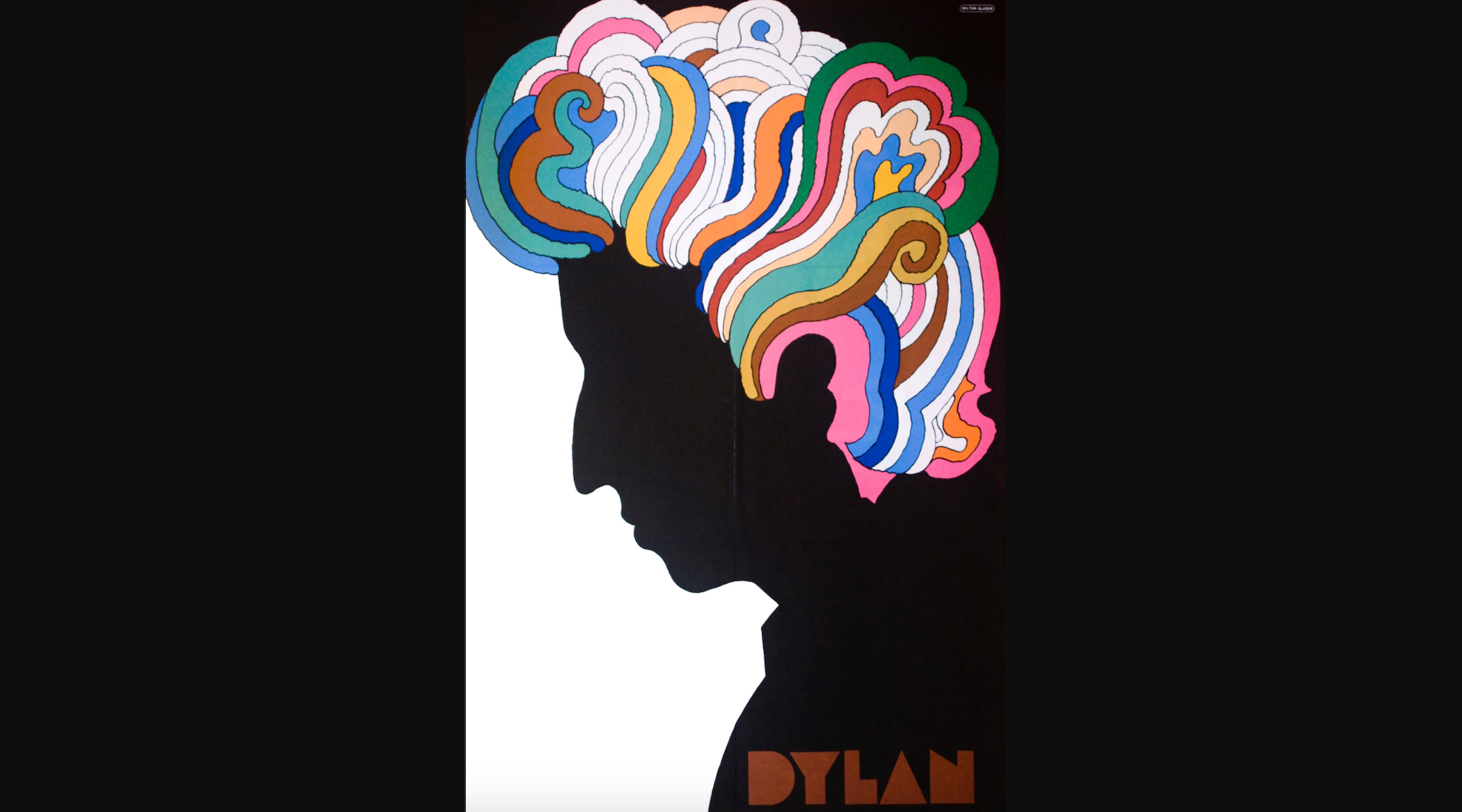
Bob Dylan’s Greatest Hits

(MiltonGlaser.com)

In 1967, Glaser made a poster for an album of greatest hits by Bob Dylan, one of the other most influential Jewish artists of the 20th century. The colorful waves that make up Dylan’s hair against a black silhouette were inspired by Islamic art. The image became an icon of 60s style and imagery.

“The Plot Against America,” and other Philip Roth book covers

(MiltonGlaser.com)

Glaser designed many book covers over the years, including at least the four that are listed on his website for the late Jewish novelist Philip Roth: “Exit Ghost” (2007), “Nemesis” (2010), “The Humbling” (2009) and “The Plot Against America” (2004) — the last of which imagines an alternate history in which Charles Lindbergh becomes president, establishes friendly relations with the Nazis and allows anti-Semitism to fester throughout the country.

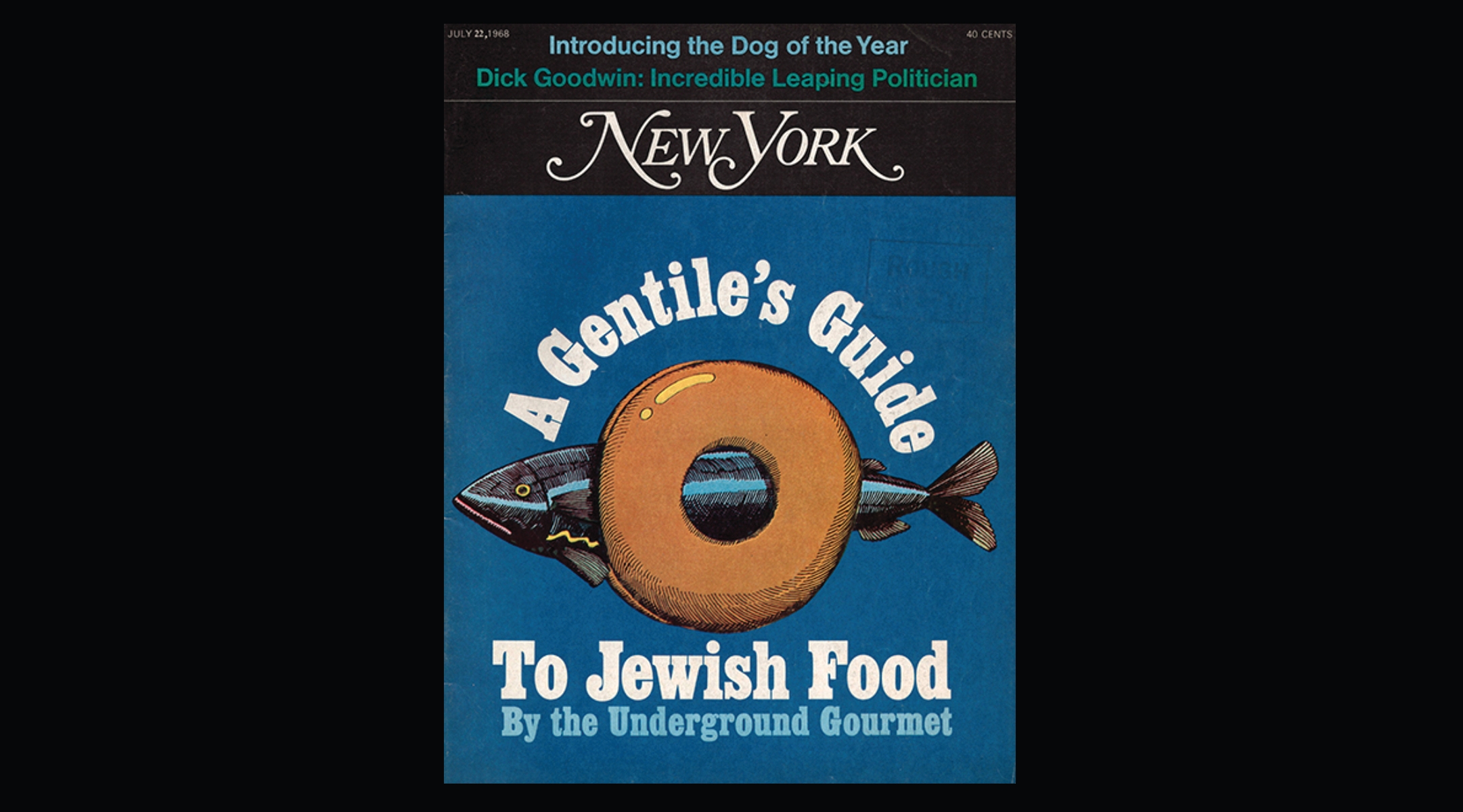
A Gentile’s Guide to Jewish Food

(Pixels.com)

Glaser and Clay Felker founded New York Magazine — that same one that is still alive and well — in 1968. For around seven years, Glaser wrote a column titled “Underground Gourmet,” which profiled restaurant gems that wouldn’t break anyone’s budget. This was one of the many covers he designed for the magazine, and likely the most Jewish. You can read it — and see the spread of images from 1968 Russ and Daughters — here.

Celebrate Israel Parade

(MiltonGlaser.com)

The parade, which packs New York City’s Fifth Avenue every summer, is one of the largest annual showings of Jewish pride in the world. It began in 1965, when thousands of people lined up spontaneously to see the former Israeli Prime Minister David Ben-Gurion, who was visiting the city. The parade’s branding was revamped in 2011, and Glaser contributed the red, white and blue logo.

Old Jews Telling Jokes

(MiltonGlaser.com)

Glaser also lent his logo design talents to this website, a virtual archive of sorts of exactly what it sounds like: videos of old Jews telling Jewish jokes. In the words of creator Sam Hoffman: “Every joke teller had to be at least 60 years old and ‘Jewish.’ The age thing I would be strict about, the Jewish thing would be in spirit. If nothing else, we would make portraits of people who had lived at least six decades and that would be something to see.”

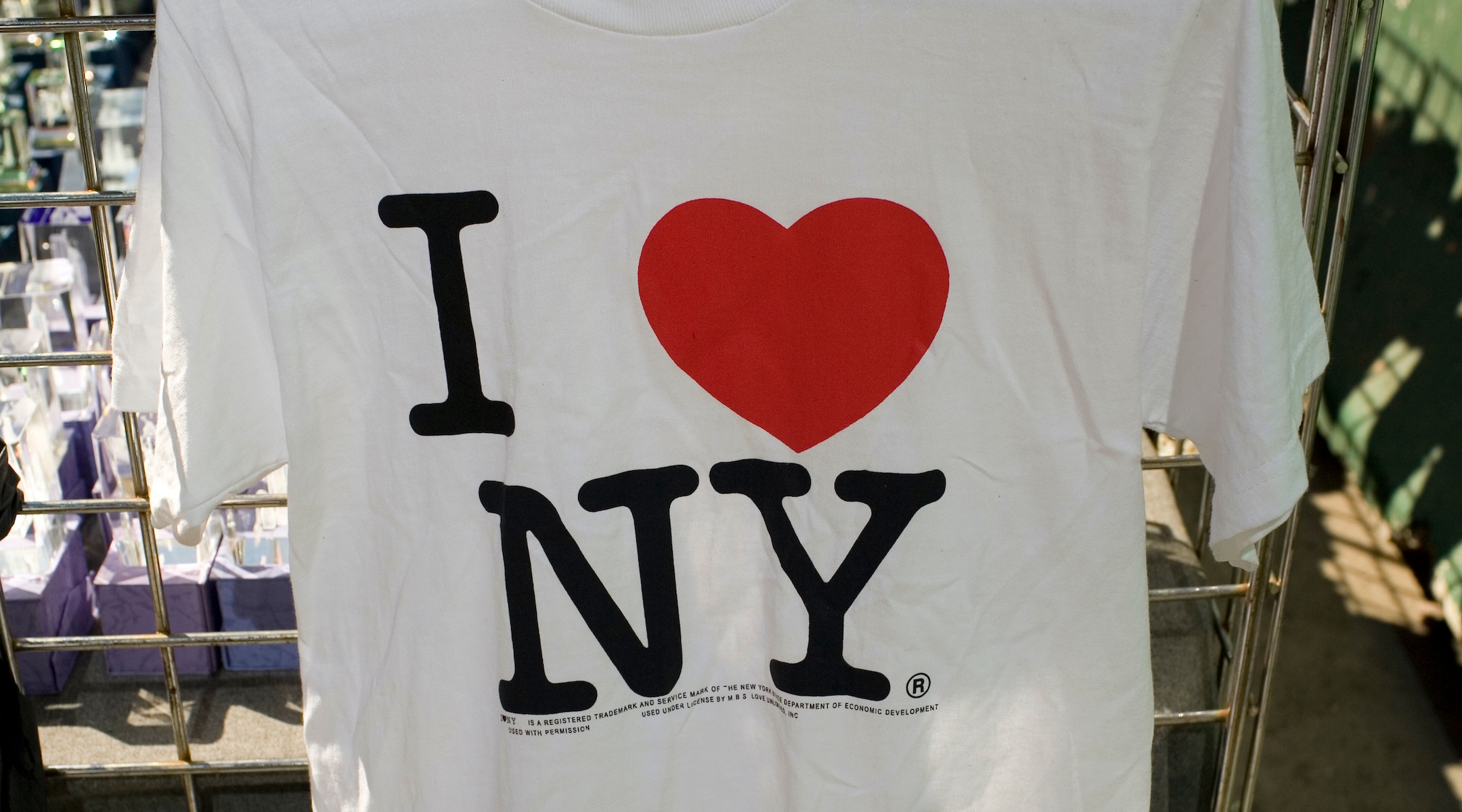
I ♥ NY

(James Leynse/Corbis via Getty Images)

Perhaps his most well-known design is I ♥ NY, the logo has become a defining image for the world’s No. 2 Jewish capital. Originally designed for a 1977 tourism campaign by the city, it has since been an international staple on everything from t-shirts to coffee mugs to bumper stickers. “I’m flabbergasted by what happened to this little, simple nothing of an idea,” Glaser said in 2011.

“Angels in America”

(MiltonGlaser.com)

Glaser’s design of a crouched man with colorful angel wings graced the Playbill for Jewish playwright Tony Kushner’s iconic play “Angels in America,” a complex Pulitzer Prize-winning drama about the AIDS crisis.

Fairway

(MiltonGlaser.com)

Fairway Market, the New York supermarket beloved by local Jews for its many kosher and Jewish-inspired offerings, enlisted Glaser’s help in designing all sorts of food containers. The company was likely keen on duplicating the success of Glaser’s logo for the Grand Union supermarket chain, which became an influential design totem.

Works at the Israel Museum

(The Israel Museum)

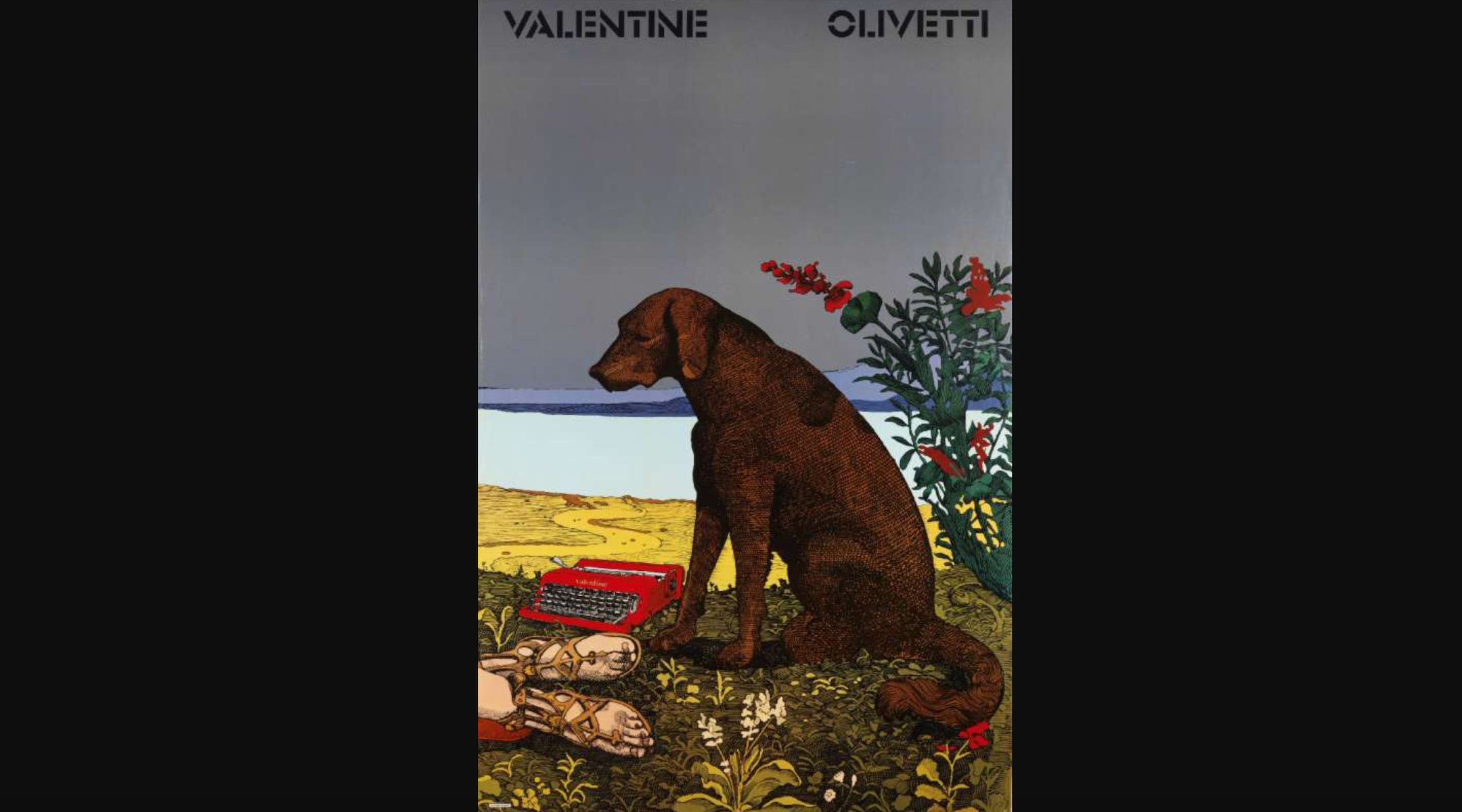
The storied Israel Museum in Jerusalem houses at least three Glaser works, according to its website, in its permanent collection. Among them is a famous ad for Olivetti typewriters, which drops one of the machines into a 15th-century painting by Piero di Cosimo.

9 Powerful Jewish Designs by Milton Glaser, the Iconic Graphic Artist Who Died This Week at 91 Read More »

Annexation Polls Lack Nuance

The scope of all surveys is limited by the list of questions. Consider, for example, the following question from a survey by Israeli pollster Menachem Lazar: “What is your position on the Netanyahu plan to annex / apply Israeli sovereignty in parts of Judea, Samaria and the Jordan Valley in the coming weeks?”

But now consider some of the assumptions that are packed into this seemingly simple question. The question relates to a “Netanyahu plan.” This is significant, because we could call the plan by many other names such as “the Trump Plan,” or the “Government Plan,” or the “Netanyahu-Gantz plan.”

The question also mentions both annexation and applying sovereignty. This, too, is significant because there may be those who support the application of sovereignty but oppose annexation. It also mentions “parts of Judea, Samaria and the Jordan Valley,” but you could write “parts of the West Bank,” or “Israeli settlements in the occupied territories,” or “settlements,” which all mean different things.

And what do we mean by “parts”? Which parts?  Lazar doesn’t know. The survey respondents didn’t know. Neither do I. So, anyone who answers this question commits to a stance on something whose exact nature is unclear. Do “parts” mean two settlement blocs, or three, or a few isolated settlements, or 30 percent of the territory, or only the Jordan Valley, or only near the old Green Line?

Lazar’s survey is not unique. All surveys on the question of annexation have the same problems. The real problem is now with surveys but reality. No one can pose a good question and get a clear answer when the actual situation is so vague. You can ask a question like: “Are you in favor of the annexation of Ma’aleh Adumim” and receive a meaningful answer. But you can’t ask, “Are you in favor of annexation somewhere, under certain conditions, sometime,” and receive a meaningful answer. Maybe that’s why Dalia Scheindlin, also a pollster, tweeted at me: “There is no basis to the claim that most Israelis support the policy.”

I was initially irritated by her tweet. Scheindlin is a pollster at an institute that promotes a leftist worldview. Understandably, she wants to downplay the argument that the public supports annexation. But when I reread all the annexation surveys, I came to the conclusion that Scheindlin was half right. Indeed, there is no basis for “claiming that most Israelis support the policy,” because there is no policy Israelis can support or oppose. Not until we know all the details.

Here’s another example of a somewhat confusing question, this time from a survey of the Israel Democracy Institute: “The coalition agreement, signed by both Likud and Blue and White, states that after a consultation between Netanyahu and Gantz, the government and/or the Knesset will approve the plan coordinated with the U.S. for the implementation of sovereignty over parts of the West Bank/Judea and Samaria. Do you support or oppose such sovereignty in the near future?”

Can you follow the many assumptions required? What if one supports annexation without a leaders’ consultation, or without coordination, or just a partial annexation, or just annexation approved by the Knesset but not one approved by the government? How can someone begin to even answer the survey question?

The proposed answers to each question can also be tricky. Each survey offers several options as possible answers. Each option is another trap. Sometimes the question simply asks if you support or oppose a plan that is not clearly defined. Other, specific options were presented, such as, “I only support annexation approved by the American government.” This is actually a helpful option, as it tells us something about the conditions under which Israelis would approve or disapprove of annexation. Lazar’s survey presented the option of “annexation/applying sovereignty, but only in the Jordan Valley.” From this question we can infer that there are Israelis who limit their support to a particular geographical area.

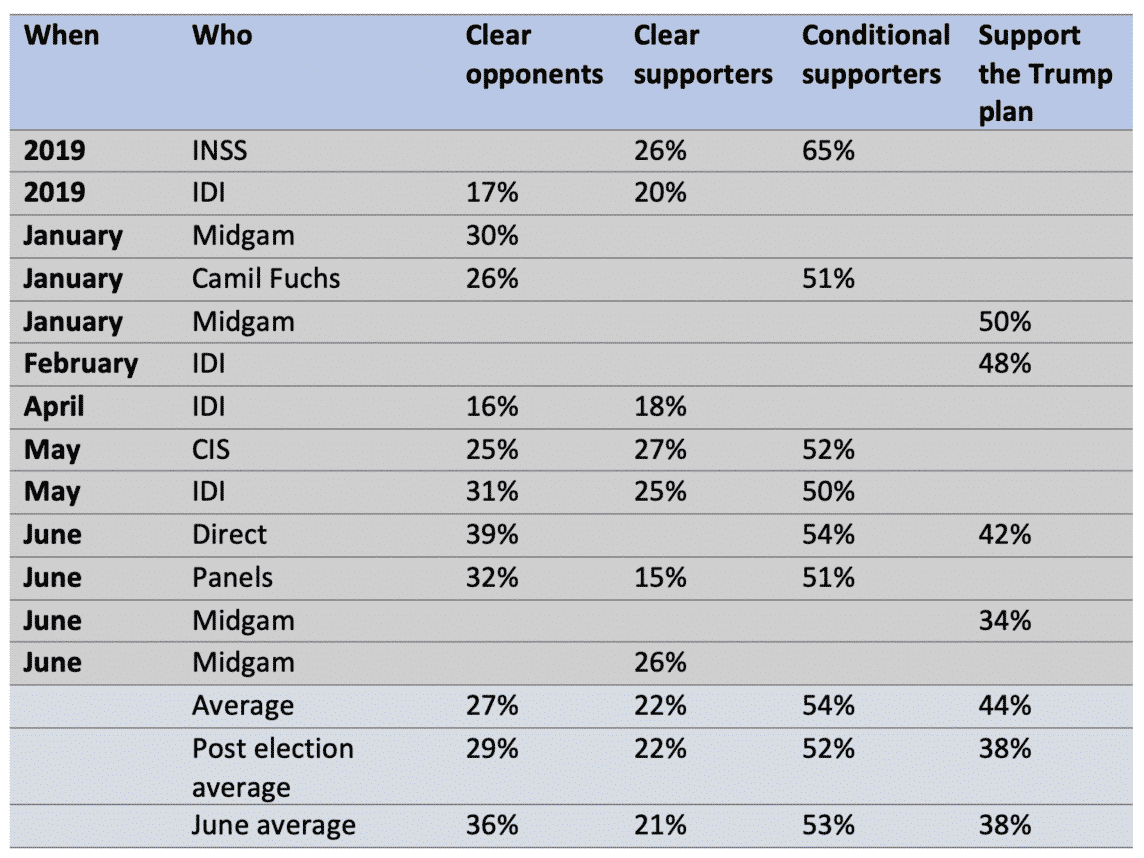
So, we tried to arrange all the surveys and answers in a way that would show more clearly the views of Israelis when it comes to annexation. It wasn’t easy. We took a series of surveys, and tried to figure out who was  a clear supporter of a robust annexation plan or a clear opponent of even minor annexation.

Here’s one example of how we did it:

In one survey, we found a segment of the public that advocated for  full or partial annexation compared with any other option for resolving the Israeli-Palestinian conflict. A similarly-sized segment said that it would support annexation even if it meant harming peace with Jordan. We considered these two segments as clear supporters.

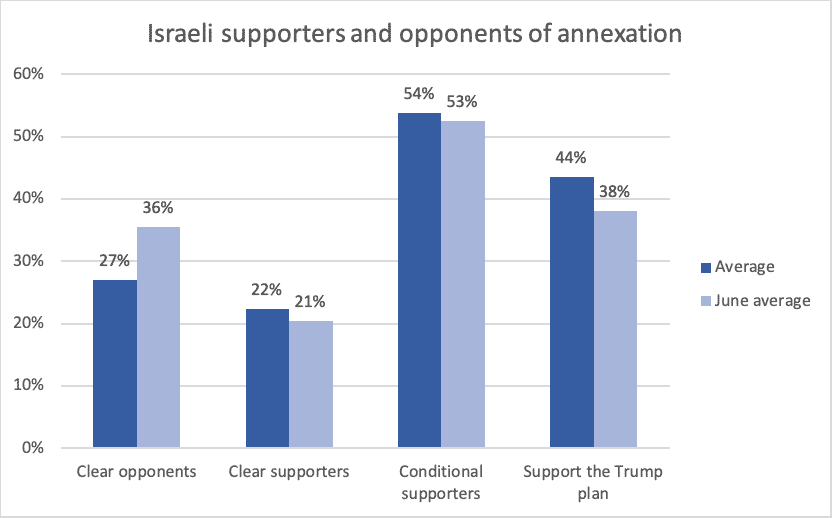
Another example: In a January poll, a group opposed annexation even in the Jordan Valley — the region where annexation is considered the most consensual. We marked these as clear opponents. In some cases our choices could seem debatable. But to get a slightly clearer picture of what the public thinks, there was no escape from making these choices. In the table, we included all the polls used, and the findings we extracted from each survey, as well as the averages of the latest polls (from June).

Some conclusions:

About a third of Israelis (Jews and Arabs) are currently opposed to any annexation, and their number is rising. This is possibly because the decision is becoming more concrete; or maybe it is because of recent right-wing opponents (who understand that support of the plan implies support for the entire Trump program); or because there is not yet a coalition agreement that could provide the annexation move a broad political umbrella. We assume that most of the clear opponents could not be persuaded to change their minds.

Supporters of full, unconditional annexation are not as many as Netanyahu seems to think. They are about a fifth of all Israelis (and about a quarter of Jewish Israelis). However, the number of supporters is much higher when we count supporters of what we call “conditioned annexation.” That is, supporters who only support annexation if it’s coordinated with President Trump, or those who only support a partial annexation, or those who only support annexation in the Jordan Valley, or the settlement blocs, or if the whole coalition, including Blue and White, is on board. If we count these Israelis (excluding those who support annexation under impossible conditions such as the acquiescence of the Palestinian Authority), more than half should be counted as supporters (and closer to two-thirds of Israeli Jews). Of course, the problem with conditional support is that until we know what the plan is and what its terms are, we simply won’t know if this specific plan has a majority.

And it’s worth mentioning that support for the Trump peace plan is diminishing because the Trump plan is actually supported by Israelis who also support the “two-state solution” as the preferred alternative to resolving the conflict. In other words, and this is quite ironic, in Israel, full support of the Trump program is more a feature of the political center-left than one of the right.

A version of this column was published in Israel’s Maariv Daily.

Annexation Polls Lack Nuance Read More »