fbpx

June 25, 2020

Rosner’s Torah Talk: Parshat Korach with Rabbi Dan Ain

Rabbi Dan Ain, from Congregation Beth Sholom in San Francisco, develops meaningful ways to worship in the 21st century – creating experiences that speak to people today, using the language, lessons and music of the past.
After his ordination from The Jewish Theological Seminary, Rabbi Ain served as the Rabbi at the New Shul and was Director of Tradition and Innovation at the New York City 92nd St. Y. Most recent and prior to joining Congregation Beth Sholom, Rabbi Ain (along with his wife Alana Joblin Ain) co-founded and served as spiritual leaders for the Brooklyn based organization Because Jewish, which creates opportunities for our religious perspectives to be in genuine dialogue with our artists, our musicians and our everyday lives.

In our parshat, Korach, a Levite, along with two sons of Eliab, decided to rise up against Moses with the support of 250 community leaders. When Moses heard this, he fell on his face. Then the ground under Korach, the sons of Eliab and their followers split, and the earth opened its mouth and swallowed them and their houses and all of their property.

https://www.youtube.com/watch?v=t3bFuvqdtc4


Previous Torah Talks on Korach

Rabbi Daniel Lapin

Rabbi Daniel Nevins

Rabbi Susan Silverman

Rabbi Rachel Bregman

Rabbi Raysh Weiss

Rabbi Shawn Zevit

Rabbi Joshua Katzan

Rosner’s Torah Talk: Parshat Korach with Rabbi Dan Ain Read More »

Roger Waters Apologizes for Accusing Adelson of Being ‘Puppet Master’ Behind Trump Admin

Former Pink Floyd bassist Roger Waters issued an apology for his June 20 remarks on the Hamas-affiliated Shehab New Agency in which he called Jewish philanthropist and GOP megadonor Sheldon Adelson the “puppet master” of the Trump administration.

Waters had said, “Sheldon Adelson, who is the puppet master pulling the strings of Donald Trump, Mike Pompeo and what’s his name … the ambassador [to Israel], Greenberg [sic] I think his name is. Sheldon Adelson is the puppet master pulling all of the strings.”

He went on to call Zionism “an ugly stain and it needs to be gently removed by us.” Waters also accused Israel of teaching the knee-to-neck technique that was used on African American man George Floyd, who died in Minneapolis police custody on May 25.

In a statement posted to his website on June 25, Waters apologized for his comments.

“During the Interview, in expressing my total solidarity with and support for the Palestinian people, when referring to Sheldon Adelson’s support for the racist policies of both Trump and Netanyahu, I used words that evoked metaphorical imagery which, my friends said, were ‘harmful to Jewish people and to the movement for Palestinian rights’ — and for this, I’m very sorry,” Water said. “At the time, I had no idea that I was evoking an anti-Semitic trope. I regret any harm or hurt my use of words caused Jewish people, and also any ways it may have reinforced damaging lies about Jews. Nothing could have been further from my intentions. I have only respect and compassion for my Jewish brothers and sisters in our collective struggle for a more just and peaceful world.”

He also admitted he was wrong in accusing Israel of teaching the knee-to-neck technique to United States police officers.

“A friend I called for guidance on this, who is an acknowledged expert on the police exchange programs and connections between American and Israeli state violence, agreed that Israel’s militarizing influence on the U.S. and around the world is a grave and concerning fact,” Waters said. “He also confirmed that law enforcement exchange programs with Israel facilitate the sharing of racist practices and repressive technologies that enhance and normalize mass surveillance, criminalization, racial profiling, and the violent repression of communities. But, he told me that Israel does not train US police in tactics, like those used to kill George Floyd. They don’t have to.”

Waters reiterated his support for the boycott, divestment and sanctions (BDS) movement, arguing that it was a way of “peacefully resisting Israel’s racist system of apartheid and military occupation” and that there’s no room for racism or anti-Semitism in the movement.

“I have tried in my way to stand firm in support of, not just the Palestinian cause, but many other struggles for justice around the world,” the musician concluded. “I shall continue to use my voice in our common fight for human rights, and I commit to trying to improve my awareness and sensitivity to strengthen my solidarity in pursuit of freedom from oppression and racism, and for justice and equality for all beings, everywhere.”

Israellycool blogger David Lange, who first reported on Waters’ apology, didn’t buy it.

“This is not the first time he has made anti-Semitic statements or done something construed as anti-Semitic,” Lange wrote, linking to a 2017 Israellycool YouTube video arguing why he thinks Waters is an anti-Semite.

Waters has previously been criticized for his BDS support as well as putting a Star of David on a floating pig during one of his concerts in 2013. Israeli-Arab singer Mira Awad said on a June 6 Creative Community for Peace podcast that Waters should visit Israel and engage in dialogue instead of boycotting the country.

“Don’t sit your ass there [in London] and tell me what to do with my Palestinianism and my Israeli-ism, OK?” Awad said. “Don’t tell me how to act in this complex situation. You do not teach me what to do and how to act.”

Roger Waters Apologizes for Accusing Adelson of Being ‘Puppet Master’ Behind Trump Admin Read More »

Donkeys Lead to More Donkeys – a poem for Torah Portion Korach

I have not taken a donkey from a single one of them

Back in the day
donkeys were like pennies.

And if you’re reading this in the future
(and how can you not be reading this

in the future, as I’m writing this
in the present) you should know

that pennies are regarded as
the smallest possible amount of currency

(if you even have currency in the future.
You’ve probably moved to bitcoin;

or maybe some other digital form of
getting what you want, that your grandparents

didn’t want to bother learning about because they
grew up with bitcoin and why did it have to change?)

[and furthermore, how bold of me to imagine
anyone is reading what I’ve written in the future.])

Anyways, Moses didn’t think donkeys were
worth much, and that even if they were worth

anything, he hadn’t taken a single one of them
from the men regarded as his inveterate foes

and therefore, those two (Dathan and Abiram
if you’re a names person) should get bupkis.

So they got nothing and, attention people
of the future! I’m hear to tell you that a donkey

or a penny, or a single bit of bitcoin, or whatever
you have now in your miraculous future

which I hope still has oxygen and trees,
may no the worth much; but if you invest that

first donkey, or put it in a donkey savings account
soon you’ll have a second donkey, and,

if you know your mammals, that could lead to
many, many more donkeys, and you could

someday be the richest donkey person
in all the land. That’s my wish for you.

In the mean time, I got to use the word
donkey ten times in a poem so I’m

feeling pretty rich myself.


God Wrestler: a poem for every Torah Portion by Rick LupertLos Angeles poet Rick Lupert created the Poetry Super Highway (an online publication and resource for poets), and hosted the Cobalt Cafe weekly poetry reading for almost 21 years. He’s authored 23 collections of poetry, including “God Wrestler: A Poem for Every Torah Portion“, “I’m a Jew, Are You” (Jewish themed poems) and “Feeding Holy Cats” (Poetry written while a staff member on the first Birthright Israel trip), and most recently “Hunka Hunka Howdee!” (Poems written in Memphis, Nashville, and Louisville – Ain’t Got No Press, May 2019) and edited the anthologies “Ekphrastia Gone Wild”, “A Poet’s Haggadah”, and “The Night Goes on All Night.” He writes the daily web comic “Cat and Banana” with fellow Los Angeles poet Brendan Constantine. He’s widely published and reads his poetry wherever they let him.

Donkeys Lead to More Donkeys – a poem for Torah Portion Korach Read More »

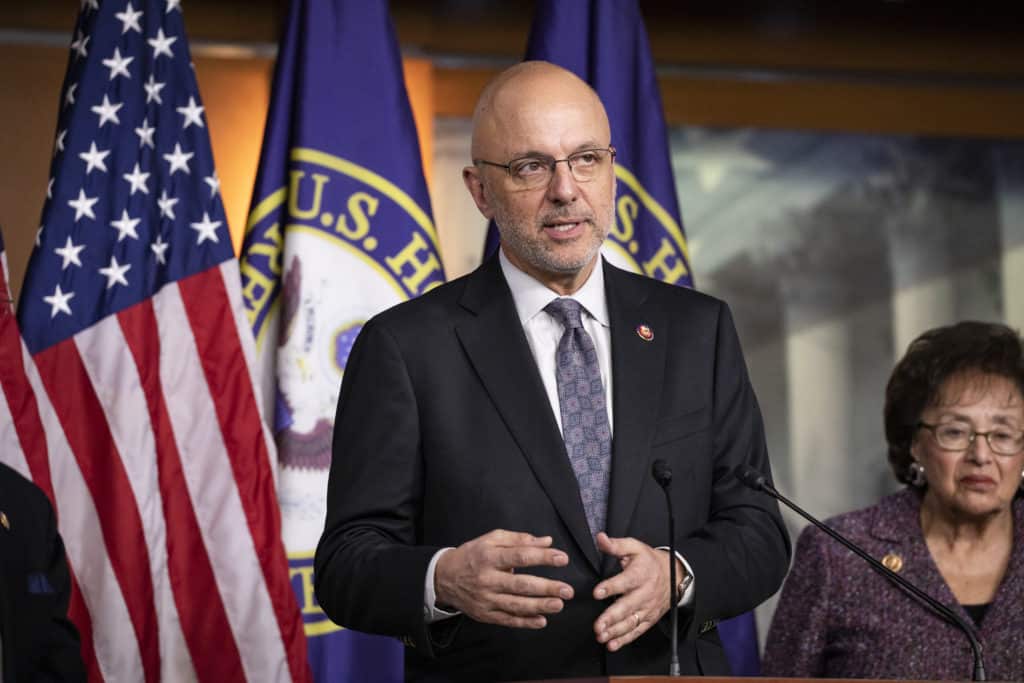
House Democrats Overwhelmingly Sign Letter to Israel Warning About Annexation

WASHINGTON (JTA) — Most House Democrats have made it clear: Israel should desist from annexing parts of the West Bank.

As of Thursday, a letter to Israeli leaders warning of annexation’s perils had garnered 191 of the 233 members of the Democratic caucus in the U.S. House of Representatives. Among Jewish Democrats, 23 of 25 signed on.

“Our fear is that unilateral actions, taken by either side, will push the parties further from negotiations and the possibility of a final, negotiated agreement,” says the letter initiated by Reps. Ted Deutch of Florida, Jan Schakowsky and Brad Schneider of Illinois, and David Price of North Carolina. All are Jewish but Price.

Prime Minister Benjamin Netanyahu is planning to launch the annexation as soon as July 1.

The letter reaffirmed the U.S.-Israel relationship and did not threaten to cut off assistance to Israel.

Among the signers are the party’s leading pro-Israel lights, including Rep. Steny Hoyer, D-Md., the majority leader. The entire leadership of the caucus signed on, excluding Speaker Nancy Pelosi, as speakers rarely sign such letters. All of the Democrats on the Appropriations Committee subcommittee that administers foreign assistance signed.

The lone Jewish holdouts were Elaine Luria of Virginia and Josh Gottheimer of New Jersey.

The American Israel Public Affairs Committee opposed the letter.

At least 30 Democrats in the Senate have signed on to similar letters, and top figures associated with the campaign of Joe Biden, the Democratic presidential nominee, have issued similar warnings.

Netanyahu is citing President Donald Trump’s peace plan in pushing for annexation, although it is not clear if Trump backs the move at this early stage. Some 116 Republicans in the House and seven in the Senate have come out in support of annexation as envisioned in the plan.

House Democrats Overwhelmingly Sign Letter to Israel Warning About Annexation Read More »

Tlaib Retweets Rutgers Prof Alleging Israeli Police Killed Driver in Alleged Palestinian Car-Ramming Attack

Rep. Rashida Tlaib (D-Mich.) retweeted a Rutgers University assistant professor who alleged that Israeli Border Police unjustifiably killed a Palestinian driver in what appeared to be a car-ramming attack.

On June 23, a car rammed into a tower at the Abu Dis checkpoint in the West Bank. Israeli soldiers then shot the driver, identified as Ahmad Erekat, 28, after he exited the car. A female Israeli soldier, identified as Shani Orr Hami Kadosh, was injured in the attack, but her injuries weren’t considered serious.

The incident was caught on video:


Rutgers University assistant professor Noura Erakat tweeted that Erekat was her younger cousin, and that the driver was simply in a rush to pick up his sister for her wedding later that day. She also alleged that after her cousin was shot, Israeli soldiers let him bleed to death rather than give him medical attention.

Tlaib retweeted the aforementioned tweets from Noura Erakat, as well as a tweet from Jewish Voice for Peace stating, “We send our love to the Erakat family for the tragic murder of their son at the hands of the Israeli police. We hope that justice is served for him and all Palestinians.”


The driver was also a cousin of Saeb Erekat, the Palestinian Liberation Organization executive committee secretary-general. Saeb Erekat told the Israeli Kan public broadcasting station, “My cousin, the nephew of my wife, was executed, murdered in cold blood and [Israeli Prime Minister Benjamin] Netanyahu bears responsibility.”

The Israeli Border Police disputed the Erekat family’s depiction of the incident.

“[Erekat] waited for a good moment, turned from the middle of the lane to the side to get a better angle to hurt the officer and then accelerated, turning his car 90 degrees, and lunged wildly at the officers,” the police said in a statement.

A source from the Border Police also told the Times of Israel, “Various elements have chosen to portray the event in a completely distorted way and not as a ramming attack, while besmirching the officers’ conduct and covering up the terrorist’s grave actions.”

Kadosh told Israeli Channel 13 that she had signaled for Erekat to slow down and then “he looked me in the eye, turned the steering wheel and rammed into me.”

Noura Erekat said that the released footage of the alleged ramming incident proves her family’s version of the incident.

“Palestinians are so securitized as a threat that we can’t make human mistakes, like lose momentary control of our car, press the accelerator in a moment of haste, get in a car accident,” she tweeted. In a subsequent tweet, she added, “Why is his image blurred so that we can’t see he is unarmed and confused?”

Pro-Israel voices on Twitter, on the other hand, argued that the footage vindicates the Israeli police’s actions.

“Let’s get a few things straight about your cousin,” international human rights lawyer Arsen Ostrovsky tweeted to Noura Erekat. “1. He stopped, aimed, then sped at the border officers. 2. He ignored their warnings. 3. Then he got out and tried to attack them. Spin it all you wish, your cousin was a would-be terrorist!”

StandWithUs Israel Executive Director Michael Dickson tweeted, “Palestinian terrorists have pioneered deadly car-ramming terror. Cars turned into weapons in order to deliberately maim and murder. The tactic has more recently been copied by ISIS globally.”


A Twitter account under the name American Zionism did a frame-by-frame analysis of the video to argue that Erekat’s actions were intentional, arguing that he slowly maneuvered the car to give it more room before quickly accelerating into the checkpoint tower.

https://twitter.com/americanzionism/status/1275848455349571584?s=20


Hiba Erekat, who is also one of the driver’s cousins, told the Associated Press, “We know Ahmed. He had no reason to commit suicide. He was on good terms with his fiancee, his family and people in his town. We are wondering if he had any personal problems and wanted to escape.”

In April, a member of Hamas is suspected of engaging in a car-ramming attack at the Abu Dis checkpoint, The suspect, Ibrahim Halassa, 25, then stabbed and moderately injured an Israeli officer before being shot and killed.

Tlaib Retweets Rutgers Prof Alleging Israeli Police Killed Driver in Alleged Palestinian Car-Ramming Attack Read More »

Obituaries: June 26, 2020

Marvin Berman died May 9 at 90. Survived by wife Cookie Wapner-Berman; daughter Deidre (Michael) Karp; son Joel; brother Bernard (Toby). Chevra Kadisha

Norman Bernstein died June 10 at 81. Survived by daughter Alaina (Don); son Gregg (Dara); 4 grandchildren. Mount Sinai 

Elsie Cedar died June 13 at 95. Survived by daughter Wendy (Jon); son Larry (Pamela); 4 grandchildren; 2 great-grandchildren. Hillside 

Toby Cohn died May 29 at 81. Survived by daughters Meryl (Mary Beth), Shari  (Steve) Hammel; son Doug; 2 grandchildren; sister Audrey Einhorn; brother Stephen Gralla. Malinow and Silverman

Jack Delevie died on May 20 at the age of 90. Survived by daughter  Bonnie (Craig) Johnson; sons Dean (Judy), Mitchel; 4 grandchildren; 1 great-grandchild. Mount Sinai 

Frederick Philip Epstein died May 30 at 105. Survived by wife  Naomi; daughters Gail (Michael Berns) Adler, Marlene (Ronald) Friedman; 5 grandchildren; 10 great-grandchildren; sisters Arlene Genser, Shirley Kossman. Mount Sinai 

Sonia Lois Goodman died June 1 at 88. Survived by daughters Vanessa James, Renee Klug; 1 grandchild. Mount Sinai

Sandy Greenbaum died May 31 at 81. Survived by husband Norman; sons Gregg (Marina), Brian (Ellynne); 2 grandchildren. Mount Sinai

Ruth Greenstein died June 5 at 90. Survived by daughter Sharon Rudnick; sons Lawrence, Paul (Dydia); 2 grandchildren; 2 great-grandchildren; sister Anita Cohen. Mount Sinai 

Ruth Horowitz died June 5 at 76. Survived by husband Jack; daughter Karen (Benjamin Manibog); son Eric (Karen); 5 grandchildren. Mount Sinai 

Michael Kastner died May 27 at 82. Survived by wife Gayle; son Adam. Mount Sinai

Barry Matthew Klein died June 1 at 75. Survived by daughter Karen (Randy); son Paul; sister Sherry; brothers Steve, Zev, Gary. 

Sonja Koton died May 19 at 94. Survived by son Charles. Mount Sinai 

Alvin Kovalsky died May 31 at 87. Survived by sons Robert (Sharon Weintraub); Bruce (Jo Lynn); Marty (Myriam Van Zee Broeck); 5 grandchildren. Malinow and Silverman 

Marvin Levin died May 30 at 95. Survived by wife Ruth; sons Greg (Helen), Randy (Monique). Hillside 

Carole Lieberman died June 6 at 86. Survived by husband Richard; daughters Lori Kude, Nancy; 5 grandchildren; 2 great-grandchildren. Mount Sinai

Temmie Margolis died May 30 at 95. Survived by daughter Jan (Richard) Esterkin; sons Jeff, Peter (Lucinda); 7 grandchildren; 7 great-grandchildren. Mount Sinai

Jeffrey Metzger died May 21 at 65. Survived by sister Rhoda (Leonard) Bernstein;  brother Raphael. Mount Sinai

Blanche B. Miller died June 9 at 100. Survived by daughter Sarah (John) De Heras; son Lawrence (Thipnongnuch); 4 grandchildren. Mount Sinai

Amelia Rich died June 8 at 97. Survived by daughter Judy (Steve) Lemer; son  Michael (Judy); 3 grandchildren; 4 great-grandchildren. Mount Sinai 

Edward Ritvo died June 10 at 90. Survived by daughters Eva, Victoria (Rayon), Skylre, Anne (Steve); son Matthew (Sandra); sister Marion; 12 grandchildren. Hillside 

Bennett Rubin died June 4 at 84. Survived by sister Barbara. Mount Sinai

Ephraim Sales died May 29 at 90. Survived by wife Joan; daughter Lisa (Mike); son Ron Speilman; 3 grandchildren. Mount Sinai

Frank Harry Schiller died on June 6 at 94. Survived by daughter Vicki; son Gary; 2 grandchildren. Mount Sinai

Daniel Schwarzkopf died June 13 at 76. Survived by wife Flora; sons Todd (Christina), Aaron (Samantha), Zacary (Amanda); 3 grandchildren; sisters Karen (Gerald), Beth (Daniel). Hillside 

Alan Singer died June 2 at 71. Survived by wife Gail; sons Matt, Kevin; brother  Merrill. Mount Sinai

Leslye Sugar died June 8 at 75. Survived by husband Fred; daughter Jillian (Matthew); son Joshua; stepdaughter Terry; stepson Gary (Stefanie); 4 grandchildren. Hillside

Joan Travis died June 1 at 95. Survived by daughter Cynthia; 2 grandchildren; sister Mona. Hillside 

Peter S. Walters died June 10 at 86. Survived by wife Sheila; daughters Aimee (Fernando), Heidi; son David; 3 grandchildren; 4 great-grandchildren. Hillside

Misty Widelitz died June 11 at 92. Survived by sons Kenneth (Heidi), Brian, Randall; 3 grandchildren. Hillside 

Anne Wurwand died June 9 at 93. Survived by daughter Vivian; son Raymond (Jane); 4 grandchildren; 3 great-grandchildren. Hillside 

Donald Yaeger died June 3 at 74. Survived by wife Denise; sons Devin, Matthew, Nicholas (Erica). Hillside 

Loretta Zavat died June 9 at 89. Survived by daughter Denise. Mount Sinai n

Obituaries: June 26, 2020 Read More »

I Used to Be Against Annexation. Now I’m Not. Here’s Why.

On July 1, Israeli Prime Minister Benjamin Netanyahu intends to move forward with a plan to annex parts of the West Bank. He calls this move “a historical opportunity to change a historical trend.” Since the 1967 war, when Israel captured the territory from Jordan, Israel was expected to concede the territory in exchange for peace. 

I used to be against annexation. Now I’m not. Here’s why. 

The West Bank is the focal point of Israel’s conflict with the Palestinians, who claim this territory as their own. (Jordan no longer wants it.) The Palestinians’ ostensible goal is to establish a state there. But multiple attempts to reach an agreement and many rounds of violence have not led to this happening. Over the past 53 years, the territory changed: Palestinians multiplied and Israel built settlements in various locations. 

The United States acknowledged these changes a decade and a half ago. In a letter to then-Prime Minister Ariel Sharon, President George W. Bush mentioned “new realities on the ground” and negated the option of “full and complete” withdrawal of Israel from the West Bank. In January, President Donald Trump’s administration went further when it introduced its peace plan, which allows Israel to annex all the area that is settled by Israelis, and the Jordan Valley, which some experts argue is critical to Israel’s security. 

There’s still strong opposition to annexation but that’s because when realities change, opinions often lag behind. For non-Israelis, the case regularly involves legal arguments, like the “inadmissibility of acquisition of territory by war” (United Nations Security Council Resolution 242, 1967). But for each of these arguments, Israel has a legitimate counterargument, and Israelis correctly believe that it would be more honest and more useful to admit that the Israeli-Palestinian conflict is a political not a legal dispute. 

For Israelis, the case against annexation — a case that a little less than half of Israeli Jews still make — rests on two pragmatic arguments. First, that other countries oppose it and so there could be retribution in the form of Palestinian violence or diplomatic blowback. Critics also fear that when Israel takes over the area, it will face a growing demand by the Palestinians and their allies to forgo the prospect of a two-state solution and give citizenship to Palestinians in the West Bank, thereby making the Jewish state a binational state. 

The Israeli government argues that there is now an opportunity that should not be missed. 

Nonetheless, a small majority of Israelis — myself included — support annexation. The reasons are many but laying them out begins with the fact that for more than 50 years, Israel has never declared what would be the final borders in a two-state solution, or in any other arrangement for that matter. Annexing portions of the disputed area, on which hundreds of thousands of Israelis — and 2 to 3 million Palestinians — live, will begin a long and necessary process of clarifying what Israel intends to keep under its jurisdiction. 

Arguments in favor of annexation also include: This territory is an important part of the historic Jewish homeland; there is a sharp decline in the belief that a viable two-state solution is feasible in the near future; global interest in resolving the Israeli-Palestinian conflict is diminishing; a chaotic Middle East moves Israel toward a position suspicious of any idea that involves the evacuation of territory. 

When I wrote a story against annexation in 2014, I knew that it was a close call. It is still a close call. So, what has changed my mind? First, former President Barack Obama’s administration’s failure to advance the peace process made it clear that traditional ideas on how to make peace are outdated. Second, the Middle East shows no sign of moving toward stabilization, thereby making it essential for Israel to keep its guard up and territorial interests intact. Third, the Trump administration’s peace plan indicates that, with time and persistence, Israel might be able to overcome international objection to annexation. 

Having been convinced of the feasibility and desirability of annexation, two questions remain: Where and when? Let’s begin with geography. Israel can annex just a small area of the West Bank or a large one; it can annex near the Jordanian border or far from it; it can annex all settlements or just the largest. Restraint is key to ensure annexation does not risk the character of the Jewish state. Israel must not annex the areas where millions of Palestinians live. 

Timing is also important. The Israeli government argues that there is now an opportunity that should not be missed. The Trump administration is the first to accept the idea of immediate, unilateral annexation, but this administration could be gone in just a few months. So — the government’s argument goes — Israel has to seize the moment. But I see no need for such haste. The West Bank is not going away and neither is Israel or its control of the territory. The settlements keep growing. Israel can annex territory now, or in six months, or in five years, or in three decades. 

It should wait, at a minimum, until November. Annexation is a highly controversial move. Israel would be better off if it had the backing of a supportive administration for more than just a few months, if it wants to avoid international retribution. That means if Joe Biden, who opposes annexation, wins the presidential election, Israel will probably have to wait a little longer. 

The Trump administration liberated Israel by crushing some of the outdated orthodoxies of the Middle East peace process, including the “land for peace” formula, and by accepting the possibility of annexation as legitimate. It could now help Israel further by proposing to delay annexation plans until after the U.S. presidential election, and also by ensuring that Israel does not bite off more than it can chew. 

In the meantime, stating clearly that annexation is the goal is a move forward. It is less than real annexation, and more than procrastination. I used to be against annexation. Now I’m not. But I’d appreciate a pause for more deliberation before the real action begins.


Shmuel Rosner is senior political editor.

I Used to Be Against Annexation. Now I’m Not. Here’s Why. Read More »

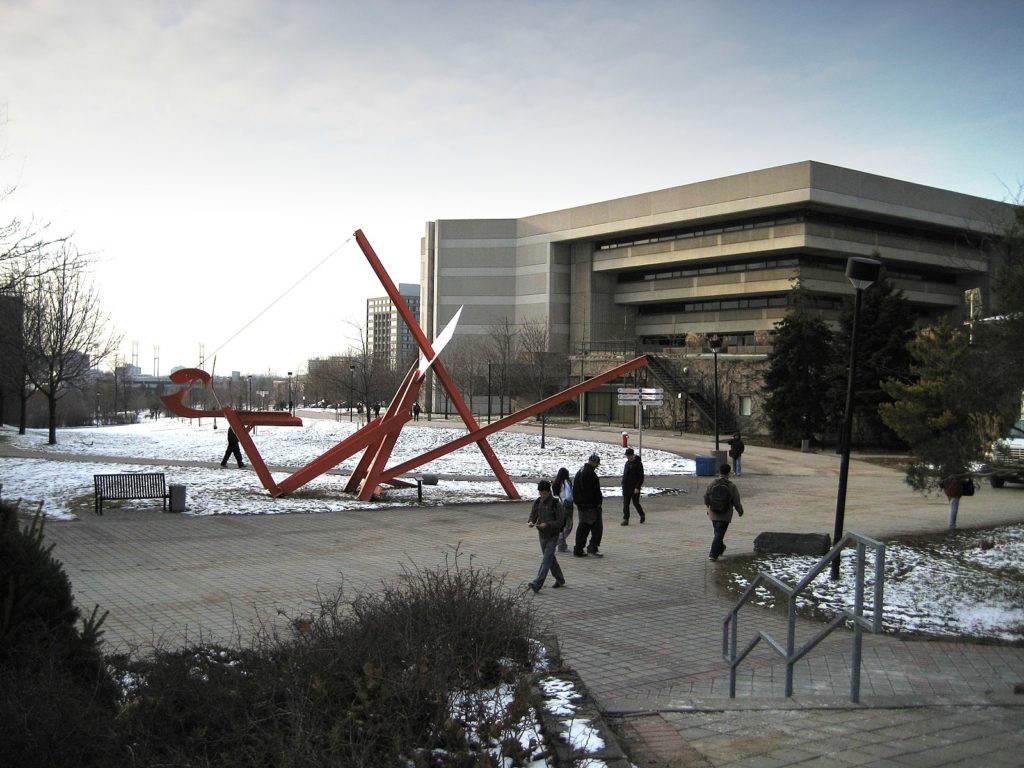
B’nai Brith Canada Calls on York University to Discipline Professor for Comparing Zionism to White Supremacy

B’nai Brith Canada launched a petition on June 24 calling on York University in Toronto to take action against a professor for equating Zionism with white supremacy.

According to a press release from B’nai Brith Canada, York University Osgoode Hall Law Professor Faisal Bhabha said during a June 10 panel that Zionism is just “Jewish supremacy.” He later doubled down, saying, “I am equating Zionism with white supremacy.” Bhabha also said it was possible that Israel is “exaggerating the Holocaust.”

“The notion that Zionism, which merely calls for Jewish statehood in the Jewish homeland — no different than most other national movements — is a uniquely evil form of ‘supremacy,’ is a false and dangerous allegation,” the petition stated. “Mr. Bhabha’s twisting of Zionism rhetorically transforms hundreds of thousands of Canadian Jews into ‘Jewish supremacists.’ ”

Additionally, Bhabha’s Holocaust comment “is likely to sow hatred and division when no basis for it exists.”

The petition concluded with a call for York University to remove Bhabha from teaching any human rights courses.

“Any version of human rights that does not include a firm rejection of anti-Semitism is ethically and morally bankrupt,” the petition stated. “Students at York University and Osgoode Hall Law School deserve better.”

B’nai Brith Canada CEO Michael Mostyn said in a statement, “Now is the time for York to show that its commitment to fighting anti-Semitism includes concrete actions, not just words. In our opinion, someone who believes that the vast majority of Canadian Jews subscribe to ‘Jewish supremacy’ and that the Jewish State might ‘plausibly’ have exaggerated the Holocaust is clearly unfit to teach anyone about human rights.”

The university did not respond to the Journal’s request for comment.

On June 2, York University President and Vice Chancellor Rhonda Lenton announced that the university would be taking measures to address anti-Semitism on campus after violence broke out during protests against a pro-Israel speaking event in November. The measures included adopting the International Holocaust Remembrance Alliance (IHRA) definition of anti-Semitism and making it clear when protests stop being peaceful.

“York is not immune from anti-Semitism, nor are we unique in grappling with its manifestations within our community,” Lenton said. “The University has been clear: we condemn anti-Semitism in all its forms, just as we condemn Islamophobia, anti-Black racism, anti-Asian racism, anti-Indigenous racism, and any discrimination and hate based on national origin, race, religion, creed, ability, gender, or sexual orientation.”

She added: “We cannot police the beliefs of our community members, but we can strengthen our policies and procedures to protect our community from abhorrent views and actions. We also have an important role to play in addressing discrimination through research and education.”

UPDATE: York University chief spokesperson Barbara Joy said in a statement to the Journal on June 26, “We deeply value and encourage a diversity of opinion and thought in our university community while recognizing that free speech has limits. The right to free expression does not extend to words and deeds that incite hatred or violence and we have zero tolerance for hate or racism.”

 She added: “At the same time, York considers the privilege afforded by academic freedom as vitally important to robust and respectful dialogue – perhaps especially on topics where there is strong disagreement. Universities play a central role in creating a place where difficult world issues can be discussed and where people hopefully learn from each other and work towards solutions. The University expects all community members to actively engage in our shared responsibility to uphold and promote the values of respect, equity, diversity and inclusion across our campuses. “

B’nai Brith Canada Calls on York University to Discipline Professor for Comparing Zionism to White Supremacy Read More »

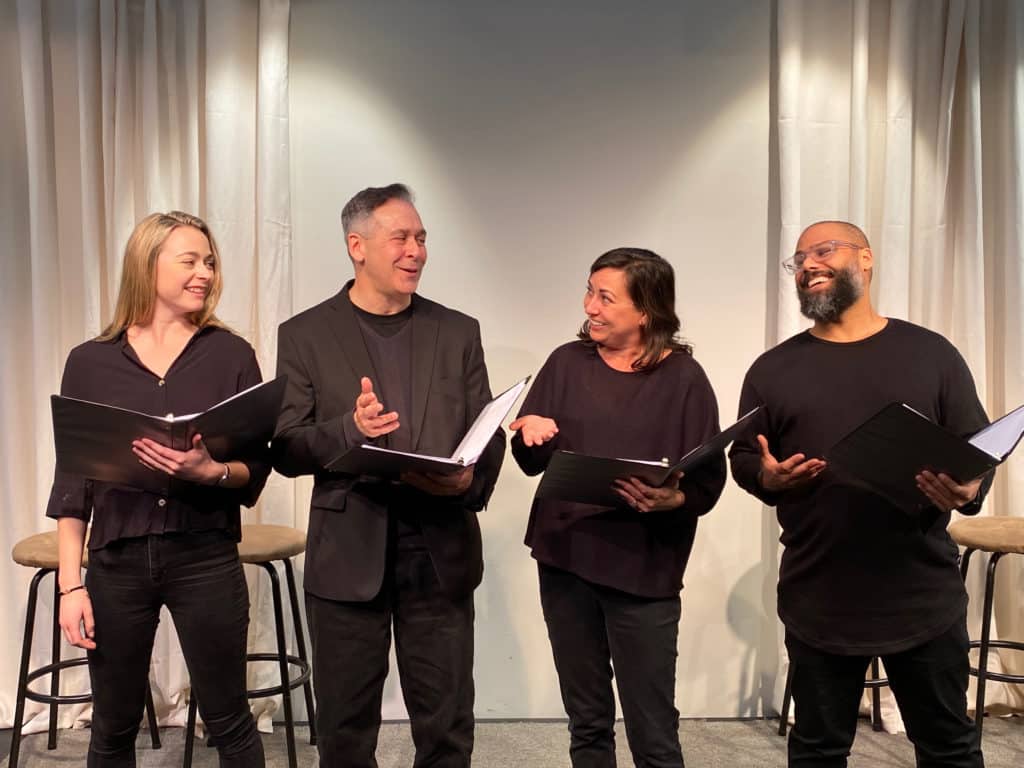
Canceled by COVID-19, Jewish Women’s Theatre Play to Premiere Via Zoom

Back in March, the Journal ran a story on the Jewish Women’s Theatre’s salon show “Sex, Addiction & Love” in the 21st Century” after attending a rehearsal in advance of its opening at The Braid. Alas, due to the Coronavirus pandemic, the show did not go on, but nearly four months later, it will make its debut virtually this weekend. 

“When Governor [Gavin] Newsom announced new policies to protect the public health from COVID-19, our live performances of the last two shows of our 2020 season had to be postponed,” Ronda Spinak, JWT’s Artistic Director said. “As soon as we could do it safely, we rehearsed and prepared the show for Zoom in a proper, socially distanced way, and now it’s ready for virtual curtain up. Not only that, but during the quarantine, our wonderful JWT volunteers called each of our subscribers to let them know that we would be back as soon as possible. We’re enormously touched that not a single one asked for a refund. And we’re confident that our Zoom version of this great show will not disappoint.”

“When we began rehearsing this new show in February, we had no idea that our world would soon turn upside down and there would be no live performances,” added director Susan Morgenstern. “As we strove to ensure that none of the magic would be lost in our Zoom performances, there were many challenges. How could we create a socially distanced love scene? Based on our Zoom rehearsals, I’m delighted to report that the actors’ performances feel even more personal, filled with emotion and plenty of passion.”

Performances will take place June 27 at 8 p.m., June 28 at 4 p.m. and June 29 at 7 p.m. Cost: Free for subscribers and those who bought tickets in March, $20 for all others. Visit the website to register.

Canceled by COVID-19, Jewish Women’s Theatre Play to Premiere Via Zoom Read More »

Forcibly Displaced: Story of Perseverance and Hope

The last time I saw my hometown Khojaly in Azerbaijan’s Karabakh region was the night of February 25/26, 1992. As we were fleeing the invasion and massacre, I looked back one last time at my burning town, where my ancestors had lived for many generations. 

Almost 30 years later I am still an IDP (internally displaced person), as the UN calls us, yearning to return home one day and visit the graves of my loved ones. 

Along with many women IDPs from Karabakh we have addressed the following letter to the UNHCR Special Envoy for Refugees Angelina Jolie, hoping that the voices of hundreds of thousands of Azerbaijani IDPs will be heard:

“Dear Madam Envoy,

We have been watching and witnessing your dedicated service to the cause of refugees as a humanitarian, philanthropist and a Goodwill Ambassador for many years now. The way you care and support these people affected by displacement as you visit different conflict regions, areas of famine, ecological catastrophes, and offer helping hand in easing their plight, advocate for their rights is highly commendable and noble. It was those efforts and your engagement that inspired us to write this letter to you.

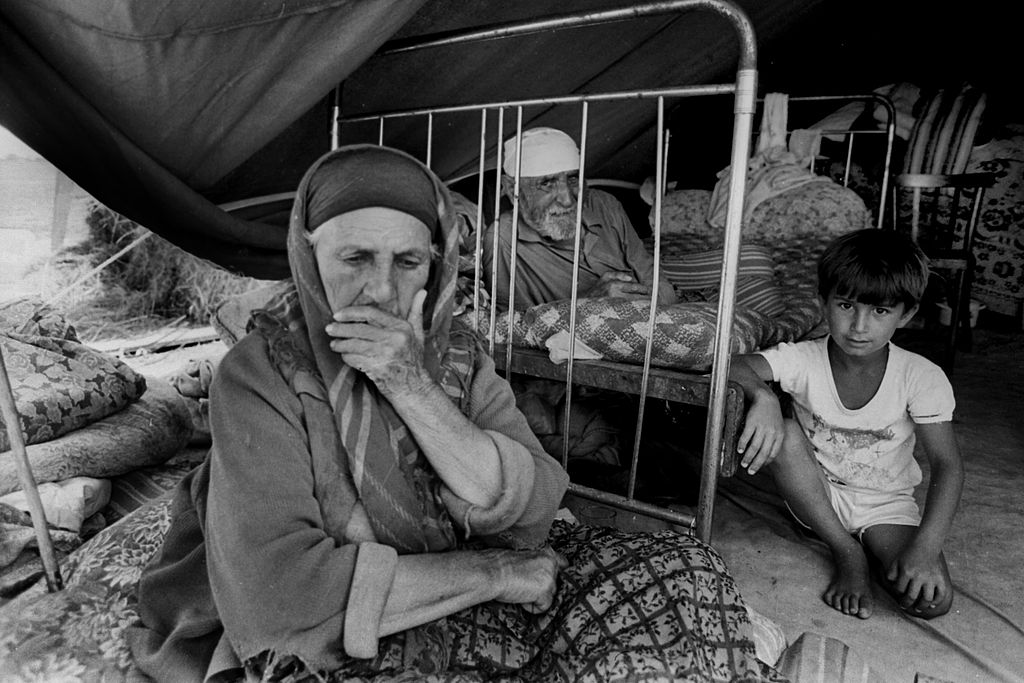
Our story is about Sarabayim Mustafayeva, a 96-year-old lady who currently lives in Baku, the capital city of Azerbaijan. Since March of this year, Baku has grown quiet – mostly the wind walks the streets of this “City of Winds”, eagerly searching for people among buildings, who shelter themselves at their homes to protect themselves in these trying times of the pandemic. 

Sarabayim watches the streets from her window with a calm look – her relationship with confinement has a three-decade long history by now. She spent almost 70 years of her life admiring a different scenery: lush forests of mountains and grazing cattle. Life in her native village of Baharli, in the Zangilan region of Azerbaijan, had a unique pace, feel, touch and smell, and not a day goes by without her mentioning it. Although the memories fade away in her aging mind with every passing year, the determination to return home only gets stronger. Her days end with watching the evening news on the TV, putting her hand to her ear, not to miss the long-awaited headline about the end of the illegal occupation of Zangilan. In her other hand Sarabayim squeezes the key to the house she left there.

The disruption brought by the current pandemic is not the first in Sarabayim’s life. A mother of seven children – five of her own and two from the previous marriage of her husband, Sarabayim’s life got turned upside down at the age of 38, when she became a widow. It meant raising the kids and educating them all by herself. 

By the time that mission was accomplished, and she was ready for her well-deserved peaceful retirement, another disruption came in the form of a forced exile. In 1993 she joined hundreds of thousands of other Azerbaijanis, who were expelled from their homelands, the Karabakh region of Azerbaijan. 

Sarabayim moved in with her son’s family who already lived in Baku at the time. But, as much as she tried, she couldn’t find a place for herself pacing all day between the concrete walls of her new residence. She never unpacked her bags, never let herself get comfortable, and never made peace with her “sophisticated cage” without the orchard, trees, and the mountains of Zangilan. 

For us here, Sarabayim Mustafayeva is a symbol of longing, expectation, and hope. The symbol of the tens of thousands of displaced grandparents, who spend their days, months, and years in confinement waiting for the day of return to their homeland, and houses which they locked “for a bit” till the speedy return. For them, what they left behind wasn’t just the houses. Because for them, a “house” is more than just four walls, stone and wood – it has a metaphysical meaning, what we, here in Azerbaijan, call an “ocaq”- a “hearth”, the basis that spreads warmth, light and life to us and our descendants, the place where the guardian spirits of ancestors come to check on us, the fire that we keep going with our values, beliefs and prayers. 

Sarabayim is waiting to return to that “hearth”, refusing to adapt to city life. Many of her contemporaries passed away in exile, laying the foundation for “the IDP cemeteries” wherever they were scattered. But she sees herself as their Ambassador, resilient and determined to lay foot again on the soil of her Zangilan. Only then the spirits, just like the people, will find peace, and Sarabayim will finish her fight. 

Until then, she calmly watches the streets of Baku overtaken by pandemic, not worrying about the virus and determined to “save up her death” till the day she returns to her occupied village. 

Nearly a million people in Azerbaijan share Sarabayim’s fate in one way or the other. These people are united by their plight of becoming IDPs and refugees as a result of the Armenian aggression and illegal occupation for nearly 30 years. Although a ceasefire was signed 26 years ago, this conflict keeps taking lives in occasional clashes on the contact line. These shootings also kill civilians residing along the contact line. 

During the first five years of the war, about one million people were displaced. They ended up scattered across the country living in tents, box cars and dugouts. In those inhumane conditions’ babies were born, seniors died, kids matured fast and two entire generations struggled with hunger and poor living conditions. Hundreds of thousands of children were deprived of normal nutrition, education and childhood. The tent camps lacked basic medical care, people contracted various diseases, died of sunstroke, cold, starvation or even snake bites in the open fields.    

Their sufferings have faded in the background of the international media agenda. They live patiently, still having faith in the justice of the international community. Meanwhile, they are turning simply into unfortunate statistics of the refugees around the world. This life of displacement, which has been lasting for three decades now, shaped the destiny of several generations. But enough is enough! 

Our plea to you is to help us make our voices heard in this politics-driven world, where humanity deserves a fighting chance. We would very much like you to hear our stories and convey to the world community where we left our childhoods, youths, homes and memories, the graves of our loved ones, and our peace.

More than 10 years ago, you made a short remark to an Azerbaijani TV correspondent promising to come to Azerbaijan. We were thrilled to hear that a celebrity of your caliber will travel all the way here to see our truth. We are hoping once the pandemic is over, you can make that trip, and see the beautiful region of Caucasus and Azerbaijan return its peace and prosperity it has been known for over the centuries.”

Forcibly Displaced: Story of Perseverance and Hope Read More »