fbpx

June 5, 2020

CA to Allow Bars, Gyms, Schools, Sporting Events to Reopen June 12

California will start allowing bars, gyms, schools, summer camps and professional sporting events to start reopening on June 12.

The Associated Press reported the state would release guidelines for the reopening process later on June 5. Schools and summer camps will be reopening statewide regardless of county; bars, gyms and sporting events will be determined on a county-by-county basis.

Nail salons are not included in this round of reopenings.

There were 2,928 new cases of COVID-19 in California on June 4 and 68 new deaths from the coronavirus, bringing the state totals to 122,601 and 4,453, respectively. On June 5, there were 1,445 newly confirmed cases in Los Angeles county and 36 deaths, bringing the county’s respective totals to 61,045 and 2,565.

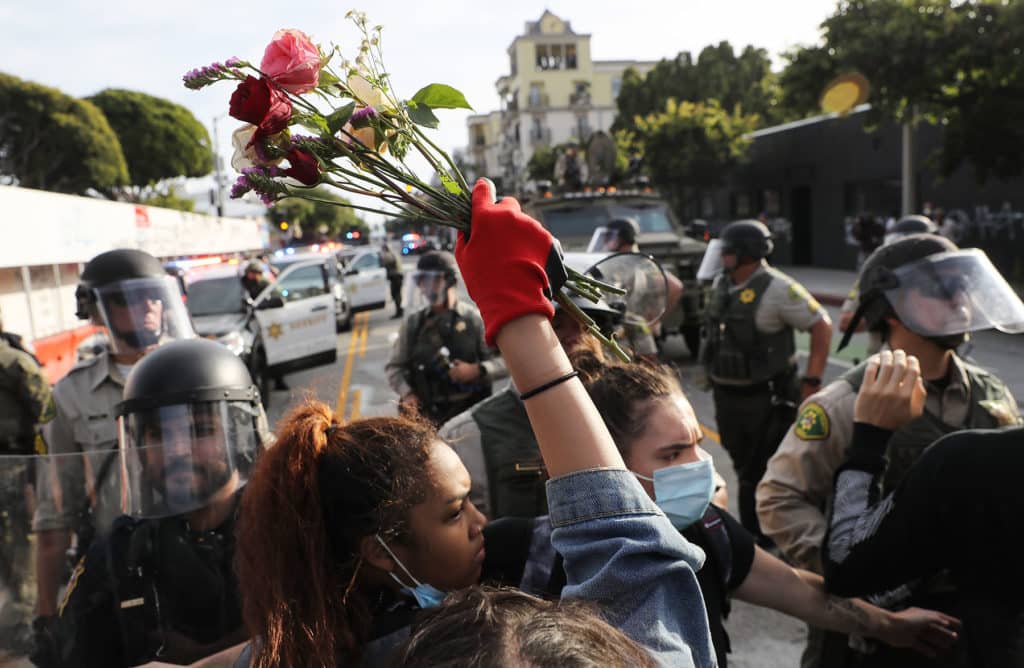
The County Public Health Department issued a statement on June 5 encouraging those protesting the death of George Floyd to wear masks and stay at least six feet apart from those who are not a part of their household unit.

“Protestors who have had close contact with non-household members not wearing face coverings should, when possible, self-quarantine at their residence for 14 days and monitor themselves for COVID-19 symptoms,” the statement read. “If they develop symptoms, they should call their healthcare provider and consider testing.”

CA to Allow Bars, Gyms, Schools, Sporting Events to Reopen June 12 Read More »

Meet the Boogaloo Bois, the Violent Right-Wing Extremists Who (Mostly) Don’t Hate the Jews

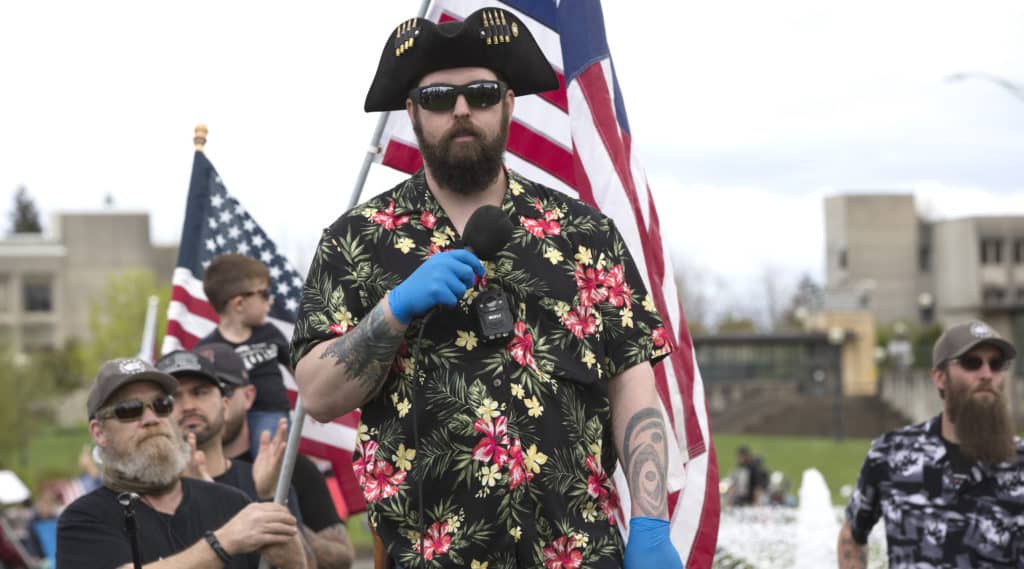
There are men showing up to the George Floyd protests in body armor and Hawaiian shirts and they want to start a civil war. They call themselves the Boogaloo Bois.

This isn’t a joke, but a very real network of anti-government extremists who want to leverage the protests to incite a wider uprising against police, the army and the state. Last week, three of them were arrested by the FBI for conspiracy to destroy federal and private property.

The arrests are the most visible example so far of the Boogaloo network, whose armed adherents yearn for a second civil war between ordinary Americans and a federal government they consider oppressive.

But there’s a twist: While the figure of a government-hating, gun-loving, war-provoking white male extremist is often associated with white supremacy (and anti-Semitism), the Boogaloo Bois are mostly not that. Researchers say white supremacists are a relatively small part of the Boogaloo network, and an article from the Middlebury Institute says “many [Boogaloo] Facebook groups make a point of disavowing racism and National Socialists.”

But while many Boogaloo Bois may dislike white supremacists, some white supremacist activists definitely like them. In particular, so-called “accelerationists,” who want to create the conditions for a race war in the United States, have employed language and iconography associated with the Boogaloo Bois. The Anti-Defamation League found that one Boogaloo t-shirt being sold online features the picture of the gunman who committed the synagogue shooting in Poway, California last year.

“Pieces of the movement cross over with other things, including white supremacists, and they cross over with some white supremacist accelerationists who want, really, chaos now, national socialism later,” said Spencer Sunshine, who researches far-right movements.

According to this line of thought, white supremacists are “unlikely to get national socialism by trying to convince people to join a movement. They’re more likely to get it by creating huge chaos and then sort of swooping in from behind,” Sunshine said.

The idea of the Boogaloo was born on 4chan, an internet message board popular with extremists. The network takes its name from a 1980s movie called “Breakin’ 2: Electric Boogaloo.” Extremists who joke about a second civil war sometimes call it “Civil War 2: Electric Boogaloo,” since shortened to “Boogaloo.”

Sympathizers sometimes use like-sounding terms like “Big Igloo” or “Big Luau.” That’s why they’ve adopted Hawaiian shirts as their uniform, and why flags and other paraphernalia disseminated by Boogaloo Bois feature pictures of an igloo.

Boogaloo Bois started getting attention earlier this year during gun rights protests, and then again during protests over the lockdown orders aimed at containing the spread of the coronavirus. The demonstrations over the recent killing of George Floyd at the hands of Minneapolis police gave the group another public platform.

In raw numbers, the network does not seem to be large and according to Alex Friedfeld, an investigator with the ADL, not well organized. But they appear to be growing fast. According to the investigative site Bellingcat, the Facebook group Big Igloo Bois had 30,637 followers on May 27. Eight days later, it was up to 34,163. A channel on the messaging app Telegram called “Boogaloo: How to Survive” had 1,700 members as of November 2019, according to the ADL.

“It’s a very loose, decentralized network,” said Friedfeld. “This is such a new thing that it’s getting called the ‘Boogaloo movement,’ and it’s not quite there as being a coalesced thing. It’s still in the early phases of it, but we’re starting to see it coalesce.”

Wednesday’s arrest was a reminder that the group isn’t just a bunch of people ranting online. The three suspects all had military experience and were on their way to a protest and armed with molotov cocktails when they were put in handcuffs. The men had also discussed bombing a power substation as well as a structure on federal land, according to the complaint filed by Nevada’s U.S. attorney.

In response to the indictment, a post on the Big Igloo Bois Facebook group read, “Don’t be that jackass making explosives in plain sight while also discussing the intricacies of your felony with your newest fedbuddy. Those morons just set back the hard work of a lot of people trying to fix our PR issues.”

Boogaloo Bois who have shown up at protests against police brutality are often sympathetic with the Black Lives Matter movement because the Boogaloo extremists hate the police.

“Within the Boogaloo movement, gun ownership and individual liberty generally precede white supremacist and neo-Nazi sentiments,” read the Middlebury research paper.

But white supremacist activity has been uncovered during some of the protests during the past two weeks. Members of the white nationalist group VDARE posed as reporters for the publication Vice and tried to get antiracist demonstrators to publicly identify themselves, according to the Southern Poverty Law Center. NBC reported that a Twitter account posing as part of the anti-fascist Antifa network was actually run by a white nationalist group called the American Identity Movement. On Tuesday, Facebook suspended white nationalist accounts connected to two hate groups, according to The New York Times.

Most of the Boogaloo Bois may not share those groups’ ideologies. But Friedfeld said they are becoming more active in pursuit of an anti-government uprising — and more willing to show up in person to already tense situations.

“It’s just providing the ingredients for a catastrophe,” he said. “This is an online movement, but we’re seeing it increasingly manifest in the real world. Six months ago you didn’t see Boogaloo people operating in public and now all of a sudden it’s pretty common at a protest to see somebody with a Hawaiian shirt walking around.”

Meet the Boogaloo Bois, the Violent Right-Wing Extremists Who (Mostly) Don’t Hate the Jews Read More »

Israeli BDS Activist Seeking Asylum in Canada Will Be Deported Back to Israel

An Israeli activist who had tried to claim asylum in Canada as a refugee is getting deported back to Israel, Rabble.ca reports, after he exhausted his last court appeal in December.

Gilad Paz, 38, who identifies as part of the Boycott, Divestment and Sanctions movement against Israel, has been living in Montreal since 2016. A self-employed lawyer before leaving Israel who was also active in Amnesty International Israel and the left-wing Meretz Party, Paz claimed he was seeking asylum in Canada because he feared being “politically persecuted” in Israel.

In 2017, Israel passed a law that denies entry into the country for activists who support the BDS movement.

After settling in Montreal, Israel’s then Consul General, Ziv Nevo Kulman, dismissed Paz’s refugee claim as “preposterous.”

Canada’s Border Services Agency is not moving to make him leave immediately, due to travel restrictions during the coronavirus pandemic.

Israeli BDS Activist Seeking Asylum in Canada Will Be Deported Back to Israel Read More »

Jewish Federation of L.A. Calls for ‘Immediate Action’ From Government Officials to Hold Police Accountable

The Jewish Federation of Greater Los Angeles (JFLA) will not tolerate systemic racism or police brutality within the Jewish community or any community.

In its latest statement sent to members of the L.A. Jewish community, JFLA Board Chair Albert Praw and President and CEO Jay Sanderson declared their solidarity with the African American community and expressed their grief over the senseless “murders of George Floyd, Breonna Taylor, Ahmaud Arbery and countless other victims of police brutality and systemic racism.”

“We call upon our government and law enforcement at the national, state, and local levels to fully and promptly investigate and hold accountable all of the involved officers and to prosecute all those responsible to the fullest extent of the law,” they said in the joint statement June 5. “We encourage immediate actions by government and law enforcement agencies at every level to institute appropriate reforms in the criminal justice system in order to guarantee the equal and fair application of justice to all members of our community.”

They also wrote that they will commit to “intensifying” their efforts to “improve relations and enhance understanding between our communities. Just as our parents and grandparents came together to march at Selma and work together to overcome the pernicious scourge of racism in their day, so too shall we build a bridge and move forward, arm-in-arm and in solidarity with one another to build a more just society.”

The statement concluded with the customary Jewish traditional saying when someone dies. “May George Floyd’s name be a blessing,” Sanderson and Paw wrote. “May these senseless acts of violence, his murder, and the murders of countless others not be in vain.”

Jewish Federation of L.A. Calls for ‘Immediate Action’ From Government Officials to Hold Police Accountable Read More »

How Jews Can Be Better Allies to Black Americans

Jewish black activist and filmmaker Rebecca Pierce marched in a protest last weekend in Boston and told the Journal that more than anything, she feared what the police would do. She said she has tried to educate others, including her white friends and colleagues about police brutality and the hardships the black community faces every day, but she can only do so much.

“It’s also exhausting,” she said. “For example, I’ve been out protesting all day and get a message from people trying to be supportive but ask[ing] me to explain something to them… It does get very tiring as a Jew of color to have to explain all of this while I’m also in pain and mourning for the way that black people are targeted and killed in this country. As of right now, I don’t see a way out of this because no one can have this conversation for us.”

While protests take place around the world in response to the death of George Floyd, Breonna Taylor, Ahmad Aubrey and the hundreds of other black people that have died as a result of police brutality, many white and white-passing community members are trying to stand with the black community. But how does one be an ally?

Pierce said one way is to recognize how police officers have been inciting violence rather than keeping the peace during the recent protests. “People were tear gassed. We know rubber bullets are used,” she said. “[If] we want to talk about looting and violence in the protests, we have to talk about the fact that police are instigating violence and they’re the ones with the power. They’re the ones with the guns.”

Actress and writer Rachel McKay Steele told the Journal that rather than relying on members of the black community for resources on how to be an ally, white and white-passing people like herself should acknowledge their privilege and put in the work and research to educate others.

“It shouldn’t be on black people to teach white people about Black Lives Matter,” Steele, 35, who lives in Angelino Heights, said. “Recommend a book you read if it taught you something about privilege; recommend an article that helped you understand systemic racism. We are a country economically built on the backs of slaves. We have to have these difficult conversations.”

Jasmine Elist, a 33-year-old Iranian-American actress who lives in West Hollywood said Jews like herself can show up as an ally by donating to the Minnesota Freedom Fund, Color of Change or Black Lives Matter Los Angeles, to name a few, having uncomfortable conversations with family and friends and by simply listening to stories by people of color.

“To me, positive allyship looks like listening and learning — knowing when to be quiet and listening to how you can be helpful or useful,” Elist said. “Recognizing your privilege and acknowledging that unless you are a Black American in America you can never truly understand what it feels like to be a Black American in America. Harmful allyship looks like making assumptive statements about how anyone ‘should be’ protesting or ‘should be’ processing an experience.” For more information, Elist suggests this link of resources.

“It may feel risky for you to create a strategy around diversity, equity and inclusion, or a strategy for engaging Jews of color. It may feel or seem avant-garde but really, what if we  actually treat it like everything else? This is the Jewish community. This is what Jews do. We build our community; we bring people in.”  —  Gamal Palmer

Aaron White, a 30-year-old research and data analyst who lives in Little Ethiopia in L.A., thinks allyship is part of tikkun olam and said, “I think it’s important that folks support communities of color and businesses of colors. Even if it’s just a minimal presentation, putting up a poster or a sticker letting them know they are seen and can feel safe is important. If people want to take it a step further, [ask] what it is the community needs. A lot of the time we over-gesture on social media but it doesn’t always translate the same way in real life. Letting somebody actually know you’re there to help them rather than to judge is really important and powerful.”

Raised by social justice activists, Jewish Federation of Los Angeles (JFLA) Senior Vice President Gamal J. Palmer said he’s finding himself playing an educational role in fighting racism behind the scenes. He oversees leadership programs and development at JFLA but as a black Jew he also works to grow Jewish spaces so Jews of color feel safe and welcome in their community.

“I’m more useful supporting people, engaging with my networks — that’s where my activism is expressed,” Palmer said. “There is an unknowing. I think that when we don’t know something or we are not familiar with it in the way we are familiar with other things, it creates an anxiety…It may feel risky for you to create a strategy around diversity, equity and inclusion, or a strategy for engaging Jews of color. It may feel or seem avant-garde but really, what if we actually treat it like everything else? This is the Jewish community. This is what Jews do. We build our community; we bring people in.”

Citing 76-year-old black, political activist Angela Davis, Pierce added, “We need to remember, like Angela Davis says, ‘Freedom is a constant struggle.’ There’s no end point to making the world a better place. We can move beyond this point but it takes commitment, it really takes solidarity, it takes a willingness to sacrifice our own comfort for a future in which we can all be freer together.”

How Jews Can Be Better Allies to Black Americans Read More »

Ohio Gov Removes National Guard Member From D.C. for Allegedly Espousing White Supremacy

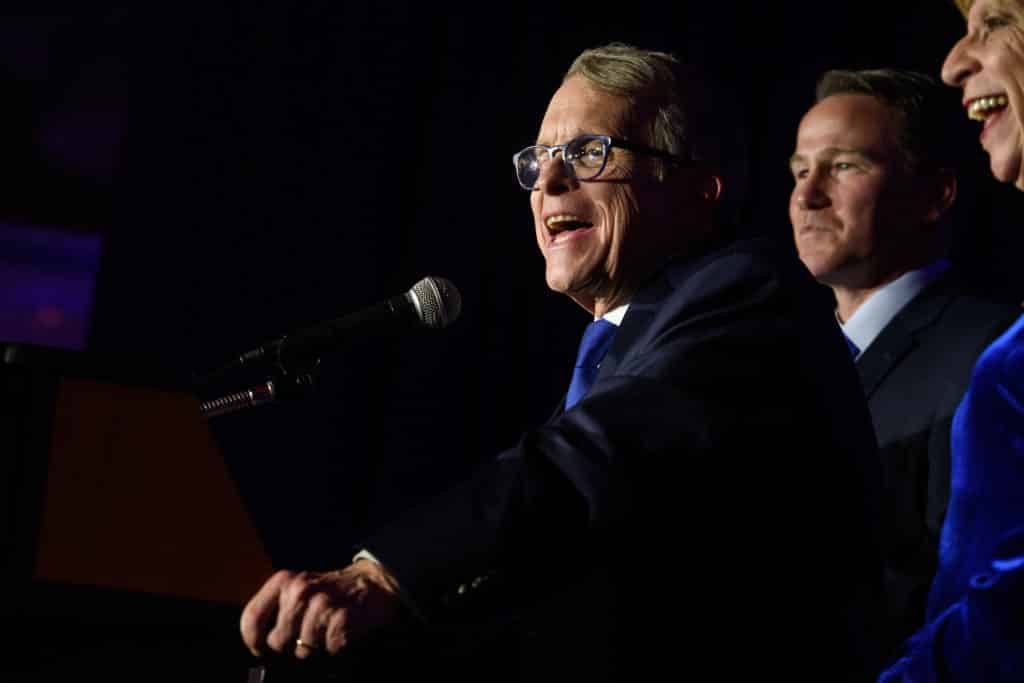
Ohio Gov. Mike DeWine (R) announced on June 5 that he was removing a member of the Ohio National Guard from Washington, D.C., due to the member allegedly expressing white supremacist views online.

DeWine tweeted that the FBI had discovered the guardsman “expressed white supremacist ideology on the internet prior to the assignment.” The Ohio governor noted that while he acknowledges the right to freedom of speech, a member of the National Guard is supposed to protect everyone “regardless of race, ethnic background, or religion. Our Ohio National Guard members are in a position of trust and authority during times of crisis, and anyone who displays malice toward specific groups of Americans has no place in the @OHNationalGuard.”

He added that the guardsman at hand most likely “will be permanently removed from the Ohio National Guard. I have directed General [John] Harris to work with Public Safety Director Thomas Stickrath to set up a procedure so occurrences like this do not happen in the future.”


Hundreds of members from the National Guard in various states had been sent to Washington, D.C., to deal with civil unrest at some of the demonstrations protesting the May 25 death of African-American George Floyd, 46, while in police custody. According to The Washington Post, Department of Defense Secretary Mark Esper told governors in a June 1 conference call, “I think the sooner that you mass and dominate the battlespace, the quicker this dissipates and we can get back to the right normal. We need to dominate the battlespace.”

The governors of Delaware, New York, Pennsylvania and Virginia declined the White House’s request to send in the states’ guardsmen. D.C. Mayor Muriel Bowser told the Post that while it’s necessary to protect national monuments, “we don’t want the armed National Guard, armed military, and we don’t want any of those things on D.C. streets.”

Ohio Gov Removes National Guard Member From D.C. for Allegedly Espousing White Supremacy Read More »

York University Announces Measures to Address Anti-Semitism on Campus

York University in Toronto announced on June 2 that the university is going to be undertaking a series of measures to address anti-Semitism on campus.

University President and Vice Chancellor Rhonda Lenton said that the university would be following recommendations from former Canadian Supreme Court Justice Thomas Cromwell’s independent investigation into the events that occurred on Nov. 20. That evening, protests against the pro-Israel group Herut Canada’s speaking event turned violent. Cromwell found that members of Students Against Israeli Apartheid (SAIA) attempted to prevent people from attending the event, as well as members of the Jewish Defense League (JDL) pushing and shoving protesters. Herut Canada and SAIA temporarily were suspended from campus.

“The footage shows protestors banging on the walls of the lecture hall and other protesters outside the lecture hall but inside the building using sound amplification equipment,” Cromwell’s report stated, adding that one member of SAIA was punched and another person “was knocked unconscious.”

Cromwell suggested that the university clarify its role in promoting free speech on campus, noting that the university should clearly state that protests stop being peaceful when violence occurs or when protesters start blocking access to an event. The former justice also recommended the university to “reinvigorate the University’s policies and procedures on racism, discrimination and harassment, particularly in relation to conduct by student groups,” urging the university to consider the International Holocaust Remembrance Alliance (IHRA) definition of anti-Semitism.

“The University accepts all of the recommendations put forward, and will immediately begin implementing them,” Lenton said. “We remain committed to our principles of protecting the safety of our community while respecting the free exchange of ideas.”

She proceeded to acknowledge that anti-Semitism is a global problem.

“York is not immune from anti-Semitism, nor are we unique in grappling with its manifestations within our community,” Lenton said. “The University has been clear: we condemn anti-Semitism in all its forms, just as we condemn Islamophobia, anti-Black racism, anti-Asian racism, anti-Indigenous racism, and any discrimination and hate based on national origin, race, religion, creed, ability, gender, or sexual orientation.”

The university president added: “We cannot police the beliefs of our community members, but we can strengthen our policies and procedures to protect our community from abhorrent views and actions. We also have an important role to play in addressing discrimination through research and education.”

Jewish groups praised Lenton’s announcement.

“We applaud York for taking on such a serious and probative investigation into the violent clash of November 20 and for its willingness to make changes to its policies and procedures to ensure nothing of the sort ever happens again,” Friends of the Simon Wiesenthal Center Chairman Fred Waks said in a statement. “We see these commitments as important and necessary first steps in addressing anti-Semitism on York’s campus and we look forward to dialoguing with the University administration as the recommendations are implemented and further changes are made to safeguard the security and rights of Jewish students. It is of fundamental importance that all students at York feel safe and secure.”

The Toronto-based Centre for Israel and Jewish Affairs (CIJA) similarly said in a statement, “We will be working with York University alongside our campus partner, Hillel Ontario, to support the implementation of these recommendations. We thank President Rhonda Lenton for recognizing that York University is not immune from anti-Semitism, and her commitment to strengthen university policies and procedures to protect the campus community from abhorrent views and actions.”

York University Announces Measures to Address Anti-Semitism on Campus Read More »

This Week Taught Me How Out of Touch I Am About Race

This has been a week that’s felt overwhelming. Here, in Santa Monica, my wife and I and our 22 year old daughter Natasha, all stayed at home. Although there was no looting or vandalism in our immediate vicinity, the street where my office is in downtown Santa Monica was completely rampaged – with my local candy/soda shop, Japanese restaurant, and retail stores on the block, including REI and Patagonia and a family owned jewelry store, completely burned out and looted.

It’s good that Natasha was at home because she was reporting to us every few minutes on what she was seeing from her friends who were posting video on their social feeds. Her outrage, her questions, her challenges, and our arguments taught me so much this week.

Basically they made me realize that I’m now an old fart. Whereas some 40 years ago, I was marching in the streets protesting the Vietnam War and President Nixon and, later, marching for No Nukes, now I’m the one who was saying “property must be protected.” These last few days, I have learned a lot about this moment, these protests, and what needs to change – beginning with me.

I’ve seen how my own thinking needed to expand, grow and embrace what this last week has revealed not only about the plight of African-Americans in the United States, but also about structural racism in policing and criminal justice. What I discovered is that my opinions on these subjects, although well-meaning and no doubt PC, were nonetheless shallow and didn’t reflect the extent of the problem societally and historically. Beyond that, I thought that it was not my place to speak out on this subject, but now I understand that I must. This is all of our fight.

This is a moment that requires all of us to exercise great empathy and consciously apply it when considering George Floyd, Ahmaud Arbery, Breanna Taylor, Philando Castile, Eric Garner – and how these tragedies reveal a failed system – not just of policing and criminal justice but of health, education, opportunity, access – a failure reaching back 400 years to America’s original sin of slavery. It is not our citizens of color who have failed, it is we who have failed them.

This week’s protests have taught me that we need to open our eyes, we need to be listening to what is being said. We need to pay attention.

I’ve seen how my own thinking needed to expand, grow and embrace what this last week has revealed not only about the plight of African-Americans in the United States, but also about structural racism in policing and criminal justice.

Even in those moments we condemn, of opportunistic looting and vandalism, there is a message: If these actions upset you, that is because you are meant to be upset. Not about lawlessness, but about the lack of Justice and equity for African-Americans. The fight is being brought to you – in the wealthiest commercial enclaves of our cities throughout this country because that is exactly where change needs to begin.

I confess that I have always believed that empathy is our birthright and one of Judaism’s great contributions to humankind. Where else were humans first told to treat others as we would like ourselves to be treated, or to have to imagine, as we are commanded to do yearly at our seder, that we were once slaves living in Egypt? But that is a command, not an exemption. Being Jewish, and in my case being a journalist, does not grant any exemption from insular thinking, from living in a bubble of our own assumptions and, yes, of whatever privileges limit our ability to listen to what this moment is saying and has to teach all of us.

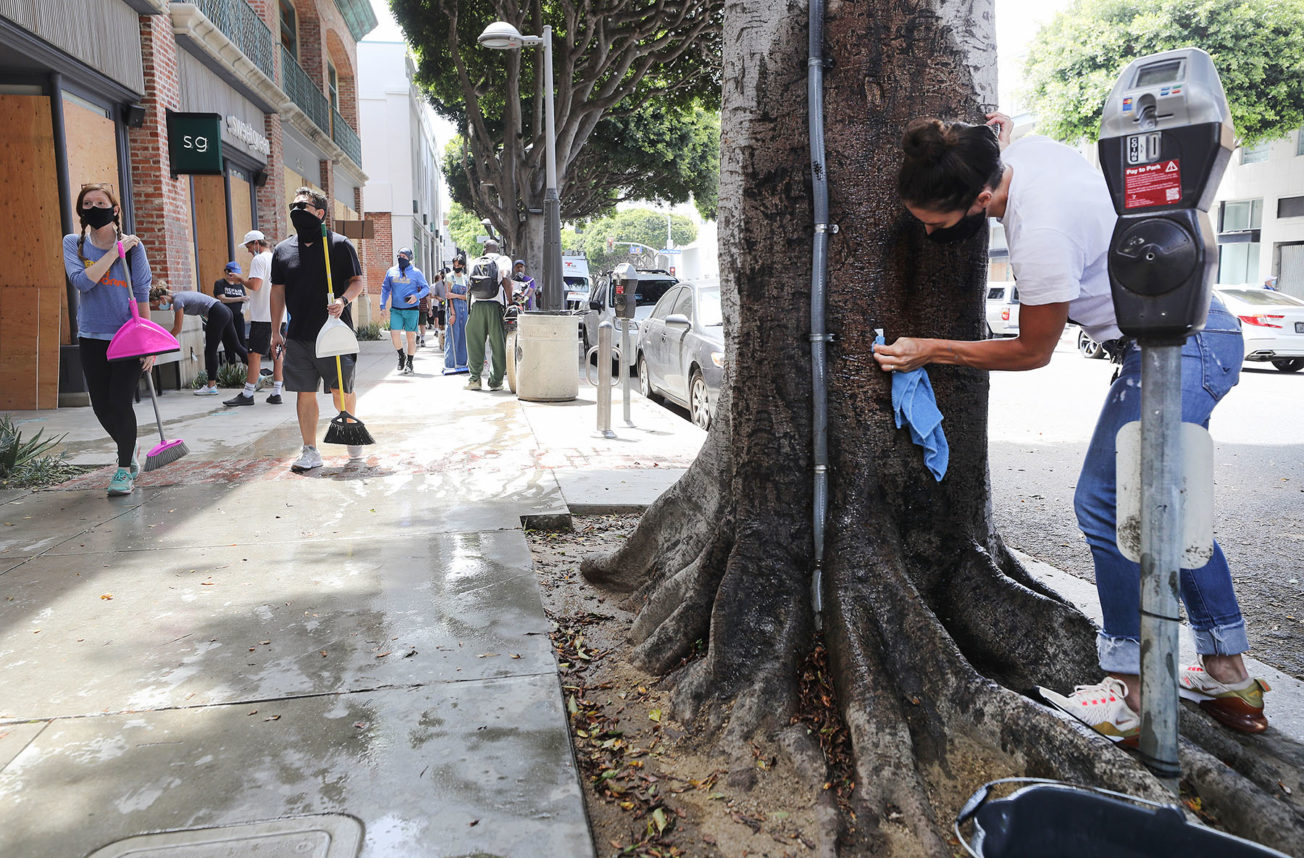
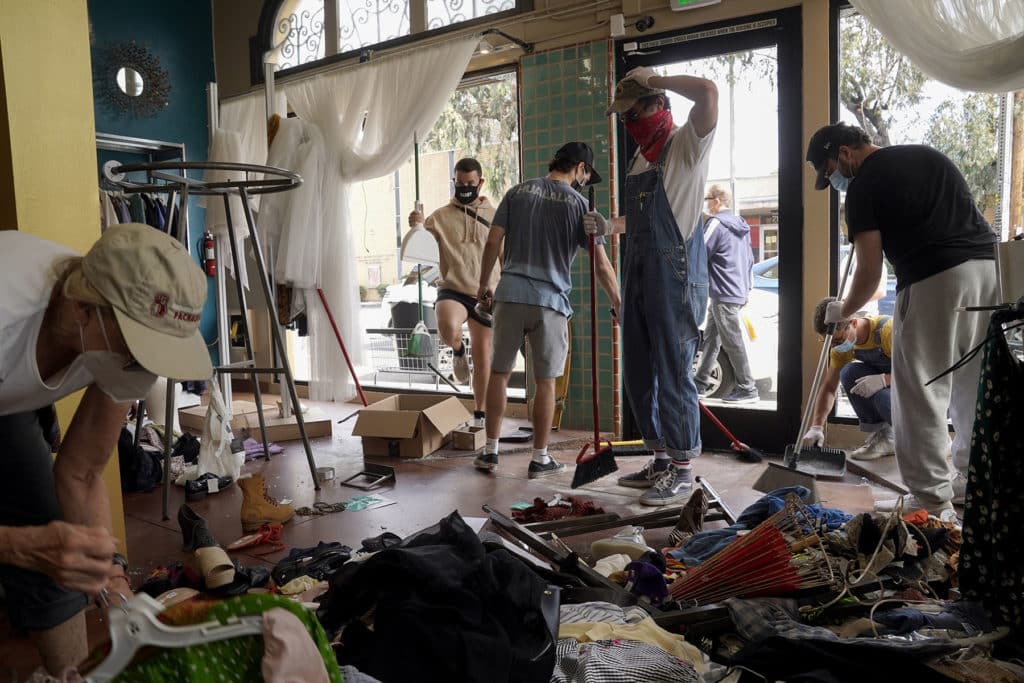
SANTA MONICA, CALIFORNIA – JUNE 01: A volunteer cleans graffiti off a tree as other volunteers walk nearby a day after looting occurred amid protests on June 01, 2020 in Santa Monica, California. (Photo by Mario Tama/Getty Images)

This week has taught me how little I knew and how shallow my thinking has been. My teachers have been Kamasi Washington, LL Cool J, Reggie Watts, Michael Che, Amber Ruffin, who spoke on social media and on television so honestly and openly about what they are feeling in this moment; as well as President Obama in his town hall who, along with Brittany Packett Cunningham of Campaign Zero challenged Mayors and City Councils to pledge to address police use of force policies in their cities, as well as providing their own concrete achievable policies to provide a check on police intervention, improve community interactions and ensure greater accountability. This was all the more powerful because it showed that not only was progress possible, it was obtainable– right now.

By this morning, the Mayors of Atlanta, Nashville, Dallas, Columbia (South Carolina), San Francisco, Sacramento, West Hollywood and Washington, D.C. had all accepted the Obama challenge. In Los Angeles last night Mayor Eric Garcetti announced major changes to the city government, policing and justice departments.

This is a hinge moment, where things will have to change, and will. Take a look at the protesters marching. Read the signs they are carrying. They are the future. If you are not among them, then ask your children about them. Or just ask yourself what “Black Lives Matter” means to you. Because what I learned this week is that, as we used to say when marching in the Seventies, “If you’re not part of the solution, you’re part of the problem.”

Tom Teicholz, an award-winning journalist and best-selling author, is an old white guy who lives in Santa Monica but is listening to his daughter.

This Week Taught Me How Out of Touch I Am About Race Read More »

Should My Business Be Sacrificed to Fight Police Brutality?

George Floyd’s death was horrific and shocking, and sparked a national outcry of protest against racial inequality and abuse of authority. However, some of these protests have turned into riots, and some individuals have destroyed and looted both chain and local businesses alike. This begs the question: Is looting and destruction in the name of this outcry necessary collateral damage in order to have angry voices heard?

Before dismissing the shattered businesses in our communities as a necessary means for the voices screaming, “Can you hear me now,” take a hard look at the reality.

I own a store at the epicenter of where the looting and destruction began on Beverly Blvd. I. Martin Bicycles is my next-door neighbor, and manager Jaime and owner Jay are good friends. After almost three months of required COVID-19 closure, they had invested in some upgrades and were excited to open Monday morning. On Saturday night, the store windows were smashed and looters broke into the store and began methodically emptying out the expensive bikes. A neighbor in the alley called Jay to tell him they had an assembly line of pick-up trucks and cars to haul bikes out the back door. Jay raced over with another employee at night and managed to chase down and stop some of the looters, then stood guard at his store. The police could not respond as they were too busy dealing with the protestors on Fairfax and at other hotspots.

Sunday morning, I went over to the area with Martin and my kids to help clean up the mess. More than 30 bikes were stolen, as were store computers and registers, clothing and accessories. Easily more than $200,000 in damage and loss. I asked Jay when he thought he would reopen? With tears in his eyes, he had no words. He just shook his head and walked away, broom in hand.

The bridal shop next door to me was completely destroyed and emptied out. The owner from San Francisco is not sure if he will reopen. Because of the pandemic, who is getting married now, and how is he going to replace his inventory of wedding dresses in time for whatever there might be left of a wedding season? I didn’t ask, but I imagine he will not reopen.

The business closed and boarded up. It will be months before he will be able to reopen − if ever. Trashy Lingerie and BevMo also were destroyed and raided. Farifax was on fire, and all of the hip and cool stores up and down were ruined and looted.

West Elm is across the street from me and was destroyed and emptied out. The precision and logistical aptitude carried on by the looters would have impressed FedEx. What is left is a completely boarded, immense eyesore. Graffiti is all over the building: “Eat the rich”; “Kill All Cops.”

Further down the street, For Eyes was destroyed and ransacked as well. Mandarette Chinese had broken windows and vandalism over the building. On Sunday morning, the owner was trying to clean up as best he could. Eddie’s Pharmacy farther down on Beverly was destroyed and emptied. CVS at the Beverly Connection is completely boarded up and closed after having been ransacked and looted.

What really broke my heart was seeing Mel & Rose Liquor being methodically ruined and emptied out. My good friend has been there for years. The business closed and boarded up. It will be months before he will be able to reopen − if ever. Trashy Lingerie and BevMo also were destroyed and raided. Farifax was on fire, and all of the hip and cool stores up and down were ruined and looted.

SANTA MONICA, CALIFORNIA – JUNE 01: A volunteer cleans graffiti off a tree as other volunteers walk nearby a day after looting occurred amid protests on June 01, 2020 in Santa Monica, California. (Photo by Mario Tama/Getty Images)

What does this mean? How does a business owner deal with this reality? You have to understand that in general, the retail economy wasn’t the best in the last few years. Competing with Amazon and the online world is an enormous challenge for any small business. Paying the rent, employees, utilities and insurance oftentimes leaves most business owners wondering if they will make it next month. Add the COVID closure and you have three months of lost revenue. These are sales you can never get back. There is no way to make up for those months, the struggle of trying to stay afloat during the closure and finding ways to keep your employees.

All the government assistance for small businesses you might have heard about is a lot of hot air. Few of the businesses I know received any significant help, and the little they received is a loan, which is a drop in the bucket and will never help repay back rents and lost sales. You would think insurance would cover looting and vandalism. However, civil unrest is not covered in most business insurance policies. Neither is business interruption because of a pandemic.

Now we come to the week where most of us were hoping to open and instead, we are reduced to rubble. When will anyone reopen? How many of my neighbors will simply die and never reopen? Will I ever reopen? We don’t have the answers and the future does not look good. For me, it’s 20 years of blood, sweat and tears, working tirelessly to build our business and be a proud member of our community. All up in smoke.

Many businesses will never reopen. The rest will struggle for years to overcome the enormous loss. Many will die slow deaths. But maybe our sacrifice was necessary so the world can “hear” the calls for social justice.


Joel Bertet owns Maison Bertet on Beverly Blvd.

Should My Business Be Sacrificed to Fight Police Brutality? Read More »

Watching ‘Uncut Gems’ Will Inspire You to Reexamine Black-Jewish Relations

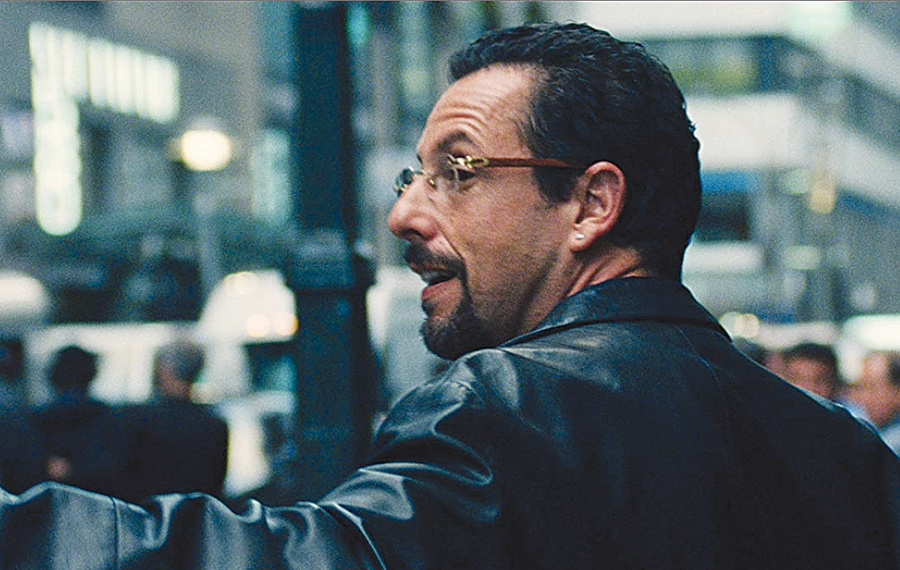
Describing “Uncut Gems” as that movie that brought Adam Sandler rave reviews for playing a New York Jewish diamond dealer doesn’t do it justice.

If you haven’t seen it yet, expect to be on the edge of your seat with your heart racing for the entirety of the film’s two hours and 15 minutes.

Without spoiling too much of “Gems,” which was recently made available on Netflix, the basics are that Sandler plays the edgy jeweler Howard Ratner, whose gambling habit is as dangerous and volatile as his personal life. At every moment in the movie, it feels like he’s about to get into disastrous trouble or has barely escaped it — for the time being.

The Safdie brothers, who wrote and directed the movie, create an in-your-face image of New York City that feels like it’s out of a gritty 60s or 70s film like “Taxi Driver” or “Midnight Cowboy.” They totally nail the gaudy upper-middle class Jewish Long Island aesthetic — huge houses, nice cars, designer clothes, gelled hair, a semi-traditional Passover seder where you watch the NBA playoffs afterward. It feels authentic.

On that note: Sandler’s acting has gotten most of the attention, which is deserved. But Idina Menzel, playing his wife who has absolutely no patience for his BS, is the unsung hero of “Uncut Gems,” as our colleague Molly Tolsky wrote. The scene where she faces Sandler down while wearing her old bat mitzvah dress is reason enough to watch the movie.

Still “From Uncut Gems”

An even less talked about aspect of the film, however, is its nuanced peek into the complicated relationship between Jews and blacks in the U.S.

Sandler’s character, Howard Ratner, seems to sell to several black clients in the worlds of hip-hop and even sports — former NBA star Kevin Garnett plays a fictionalized version of himself — looking for flashy jewelry. His way into those worlds is his friend and assistant-of-sorts Demany (played by the talented Lakeith Stanfield), who brings clients in for a piece of the pie.

Howard and Demany have a working friendship that sometimes feels like a real friendship, until something goes terribly wrong (involving one very mysterious gem). Before that, the black and Jewish worlds of the movie coexisted and even bonded over a consumerist obsession with the jewelry that Howard peddles. As the story moves forward, grievances start to replace the partnership between Howard and some of his black associates.

But one thing that remains true is that both the diamond dealer Jews and the blacks portrayed in the movie all remain outsiders: Howard’s entire enterprise operates outside of the norms of normal society, and at times it even feels outside the boundaries of typical black market reality.

For example, a large part of the movie revolves around a gem mined by black Jews in Ethiopia that Howard takes great pains to obtain and hold onto — not your typical jewelry or drug deal. Then there’s the scheming surrounding an auction. And the sale of a piece that Howard promised to return to its owner. It goes on.

No matter their differences, the black and Jewish characters here are bound together by their lives in an underground reality, where they can exist as almost exaggerated versions of themselves.

It’s a symbolic take on the real history. Let Josh Safdie explain, as he did to InsideHook in December:

“If you look up the general connection between the Jews and the black community, it’s something of an ineffable bond… In the history of America, during the Civil Rights movement, a lot of Jewish activists took part because they felt a need to stand up in solidarity. One of the founders of the NAACP was a Jew! The connection is there, but it’s a complicated one, built around the sensation of being an other shut out from some sectors of society.”

You should not watch this movie if you’re looking for a break from the ever increasing anxiety surrounding us in this fraught national moment. The movie in no way solves questions of racial injustice either.

But if you are anxious, as many of us are, this is a good way to channel that emotion into a story that feels real but (thankfully) exists only on the screen. And while any time is a good time to examine and think about the ways blacks and Jews could work to build closer bonds, that theme is especially relevant now.

By Ben Sales, Gabe Friedman, JTA

Watching ‘Uncut Gems’ Will Inspire You to Reexamine Black-Jewish Relations Read More »