fbpx

June 2, 2020

Synagogue Reopenings Now on Hold After Protests

After being closed for almost three months because of the coronavirus, Baba Sale Congregation on Fairfax Avenue was looking forward to welcoming worshippers this past Shabbat, after houses of worship received permission to reopen.

However, the French-Moroccan congregation’s plans were derailed on May 30, when protests decrying the death of George Floyd in police custody turned violent. Along with many other synagogues and Jewish shops, Baba Sale was spray-painted with graffiti that included “f— pigs,” “help minorities” and “BLM,” an abbreviation for Black Lives Matter.

Baba Sale had reopened on the evening of May 28 for Shavuot but now it has closed again. President Igal Azran released a statement noting the “tragic death of George Floyd in Minnesota” and telling congregants Baba Sale would be closed “until further notice.”

On May 31, Rabbi Moshe Pinto arrived at the shul to find hundreds of people, including those unaffiliated with the community, removing the spray paint and cleaning the exterior’s stained-glass windows.
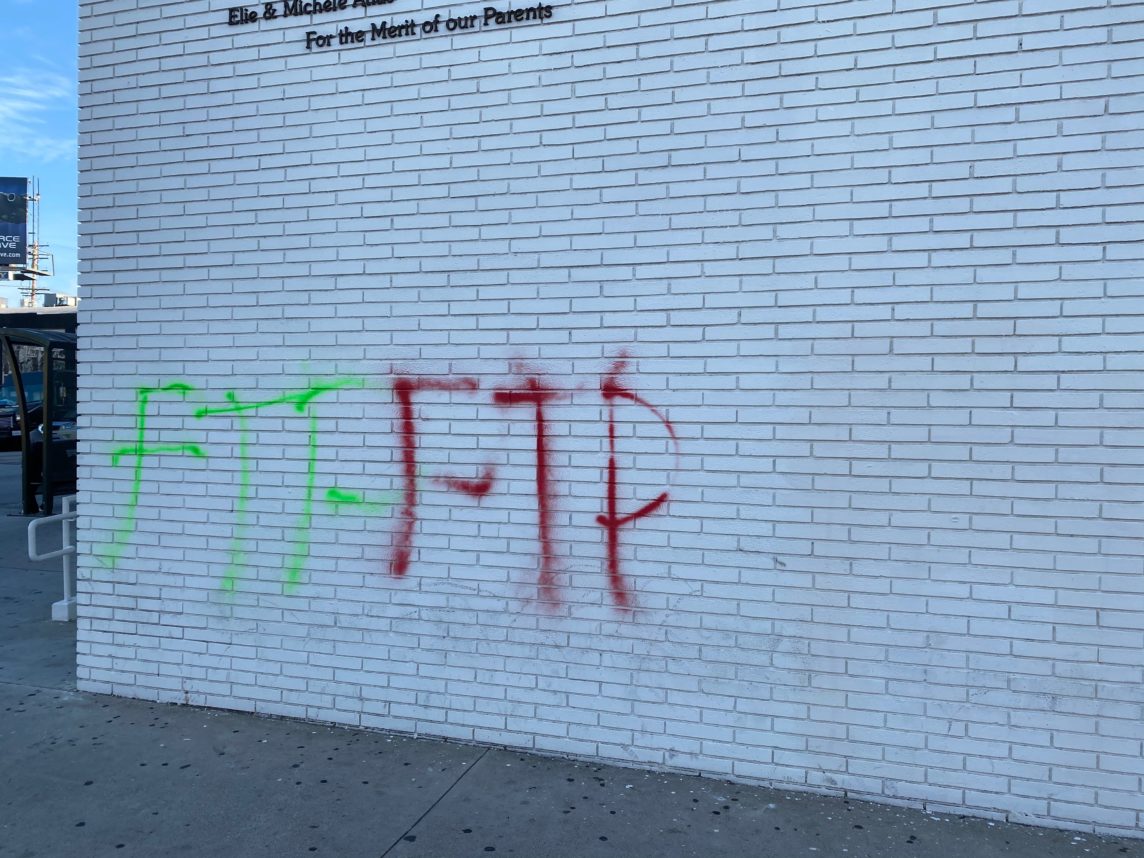
Baba Sale Congregation, located on Fairfax avenue, was spray-painted with graffiti during last weekend’s protest in the Fairfax district. Courtesy of Baba Sale Congregation

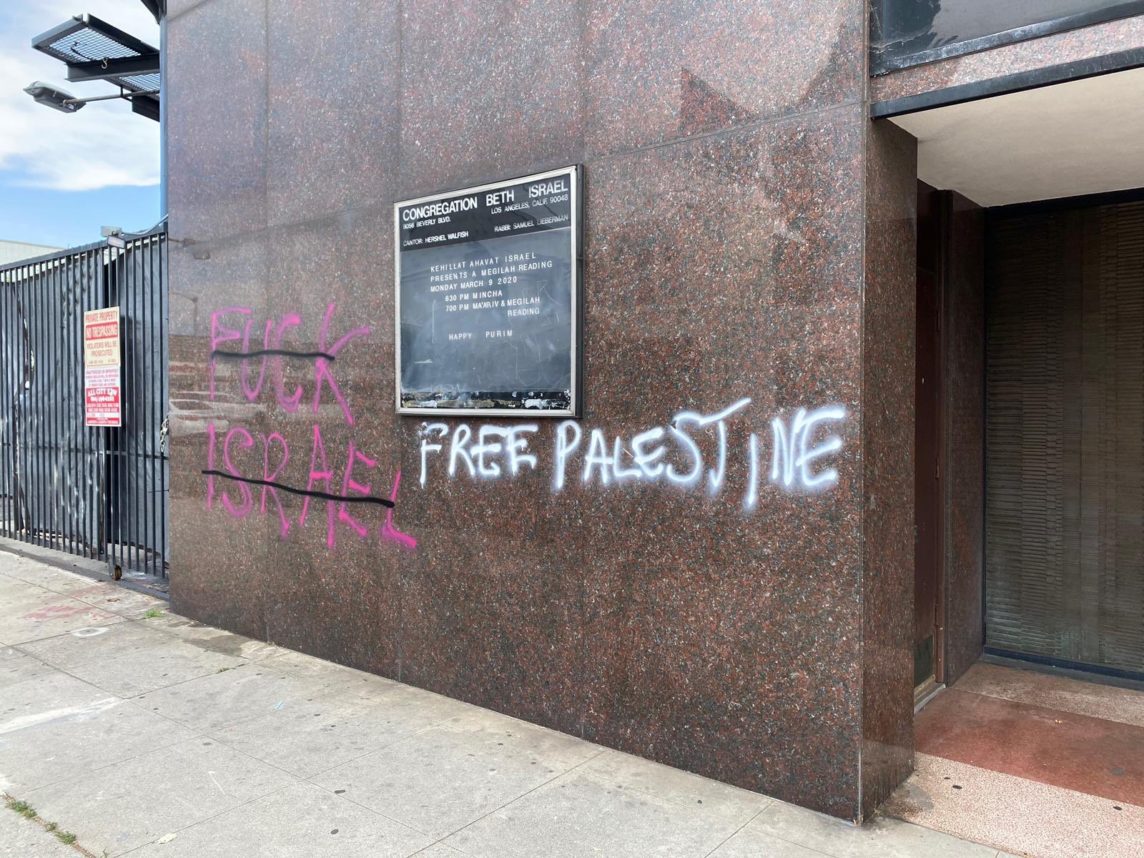
Also vandalized in the Fairfax District was Congregation Beth Israel, with graffiti stating “free Palestine” and “f— Israel.” Lisa Daftari, founder and editor of the foreign policy news outlet The Foreign Desk, first reported on the graffiti on social media.

“Synagogue Congregation Beth El (sic) on Beverly Blvd in Los Angeles vandalized… Tell me this ugly hatred is still about #BLM or #GeorgeFloyd?!” she tweeted.

American Jewish Committee Los Angeles Regional Director Richard S. Hirschhaut said in a statement to the Journal, “It is deplorable that certain protestors in Los Angeles today resorted to violence and vandalism. Sadly, their destructive opportunism included the defacing of Congregation Beth Israel, one of the oldest synagogues in Los Angeles and the spiritual home to many Holocaust survivors over the years. The epithets scrawled on the synagogue wall do nothing to advance the cause of peace or justice, here or abroad.”

“It seems pretty obvious a group of instigators are causing a lot of this unrest.” — Irving Lebovics

Dr. Irving Lebovics, a dentist and member of Congregation Kehilas Yaakov, an Orthodox congregation on Beverly Boulevard, said all the synagogues and Jewish schools in the Fairfax area were defaced during the May 30 protests.

As chairman of Agudath Israel of California, an umbrella organization that advocates for the Orthodox Jewish community, Lebovics has been involved in the effort to reopen synagogues. He said he was disappointed that the demonstrations have delayed the synagogues’ long-awaited reopenings. “It seems pretty obvious,” he said, “a group of instigators are causing a lot of this unrest.”

Additional reporting by Aaron Bandler 

Synagogue Reopenings Now on Hold After Protests Read More »

‘Law & Order’ Creator Dick Wolf Fires Writer for Racist Rants

Dick Wolf will not tolerate racial intolerance on his watch. The “Law & Order” creator fired writer Craig Gore from the TV franchise’s upcoming spinoff for posting racist rants about looters.

In response to the protests and unrest surrounding the killing of George Floyd, Los Angeles resident Gore, seen in photos holding a gun with the caption “Curfew…” wrote, “Sunset is being looted two blocks from me. You think I won’t light mother——s up who are trying to f— [with] my property I worked all my life for? Think again…”  The post has been deleted.

“I will not tolerate this conduct, especially during our hour of national grief. I am terminating Craig Gore immediately,” Wolf said in a statement.

Gore falsely claimed to be a co-executive producer on the spinoff, which will star Christopher Meloni, reprising his role as Elliot Stabler, now heading an organized crime unit in the NYPD.

‘Law & Order’ Creator Dick Wolf Fires Writer for Racist Rants Read More »

These Riots Mean Something Different for Refugees

As an observant Jew, I turned off all electronics from the evening of May 28 to the evening of May 30 for Shavuot and Shabbat. When my husband and I took our 4- and 2-year-old boys out for a walk at dusk, police helicopters chopped through the skies and two Hatzolah vehicles drove by with an ominous warning via megaphones: “Go home. Lock your doors.”

It wasn’t long before I understood what was happening. In fact, it was transpiring less than half a mile away on La Cienega Boulevard during an alleged armed attack by looters at a Panda Express and a pawn shop. Siren blares interplayed with the unsettling sound of helicopters, followed by what sounded like small explosions. Even though I’m a mother in my 30s, in that moment, I just wanted my parents.

I wanted to be near them because the last time there were looters and structure fires near my home during the 1992 L.A. riots, I was 9, and my family had recently arrived as refugees. My parents couldn’t help me process the violence, sirens and flames. There was only fear. But the one thing they could offer was physical protection and that was enough. I still remember how, in true Persian style, my father held vigil behind our front door, armed only with long, steel kabob skewers (in his defense, they were very pointy).

Twenty-eight years later, as I hugged our oldest son in his bed, I realized I had become my parents. I had to keep this child safe, physically and emotionally. I also realized everything I process about civil unrest, whether it’s related to my experiences in Iran, or in 1992, or today, is filtered through a prism of my experiences as a refugee — and a lot of fear. And something tells me in this city of immigrants, I’m not alone.

In 1992, hundreds of Iranian refugees had set up shop in downtown L.A., selling products ranging from trimming to leather car seat covers. They were joined by Korean shop owners who, too, were forced to start again in the United States, but it was a small price to pay to be in America.

 As I hugged our oldest son in his bed, I realized I had become my parents.

I’ll never forget the television images of some of those Korean business owners who’d formed armed militias, standing on the roofs of their stores, armed with AK-47s to thwart the looters. The sight was surreal. I can’t, however, confirm whether the Persian shopkeepers stood with kabob skewers.

Many of these immigrants saw in the police officers, security and protection, contrary to what many members of the black community associated with law enforcement, while others expressed feeling abandoned by police and left alone to protect their stores.

Whether in 1992 or the past two weeks, a lot of immigrant shopkeepers, including Persians, devastated by the loss of their livelihood and the physical trauma of walking past shattered windows and empty shelves, may well have wondered: Why me? What did I have to do with any of this?

In 1992, looters burned a Korean-owned pharmacy in a small shopping center on the corner of Pico and La Cienega boulevards, and I wasn’t able to find answers as to why a place that helped people had been targeted, and what the owner had done to deserve it. On May 31, my phone alerted me to an attempted break-in at the T-Mobile store in the same shopping complex.

A lot has changed in the past few decades. I now know what the 1992 riots would have been like had smartphones and social media existed. And yet, some things remain unchanged. Black Americans still face injustice. As I mourn for members of the black community in the face of such unforgivable injustice against people like George Floyd, Breonna Taylor and Ahmaud Arbery, I also mourn for the shopkeepers across the nation whose businesses were destroyed — in the middle of a pandemic, no less — by looters.

I’m still a little child who can’t shake her fear.


Tabby Refael is a Los Angeles-based writer, speaker and activist. 

These Riots Mean Something Different for Refugees Read More »

Make a Drive-in Theater for the Kids at Home

Drive-in theaters are experiencing a resurgence in popularity because people are able to enjoy a movie from the safety of their cars. Well, how about letting the family enjoy a drive-in movie without even leaving your home? Just make little cars for the kids to sit in as they watch their favorite flicks. All you need are some cardboard boxes and a few materials you probably already have around the house. What a way to make movie night a special experience.

What you’ll need:
Large cardboard box
Paint
Paper plates
Glue
Scissors
Paper or plastic cups
Yellow tissue paper


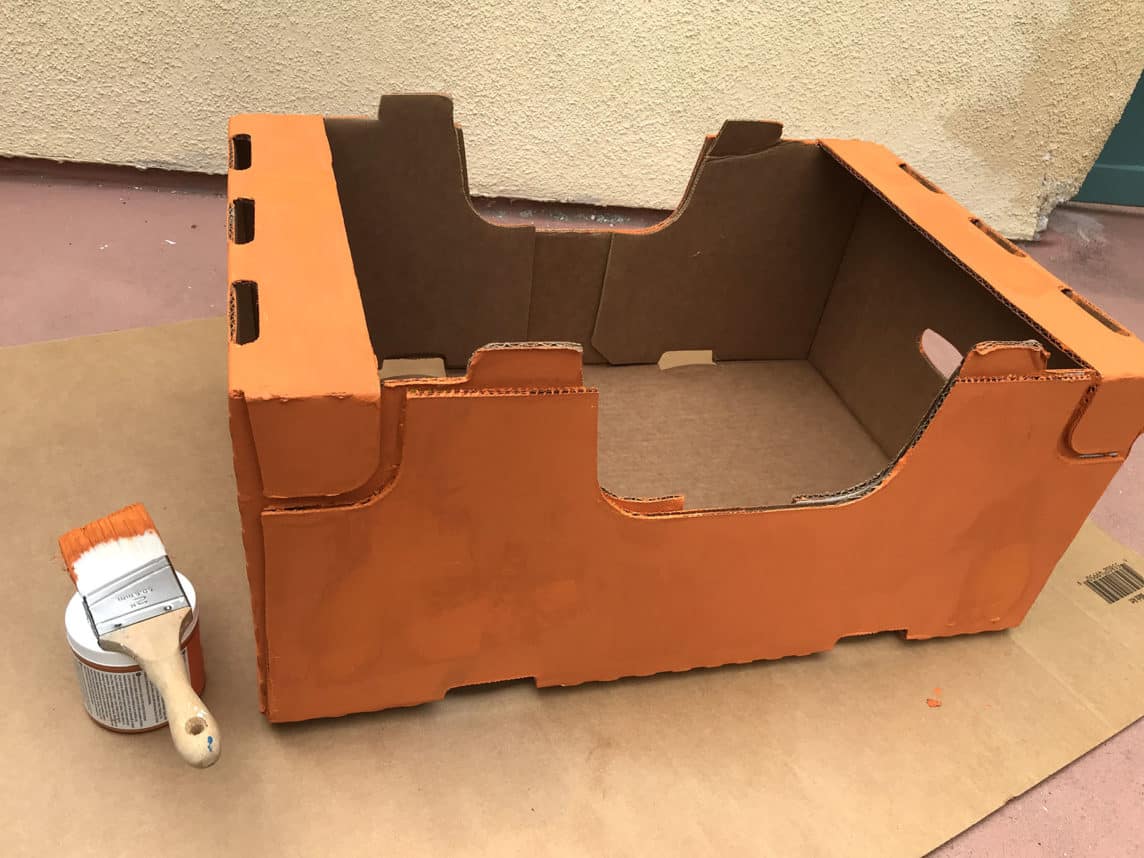
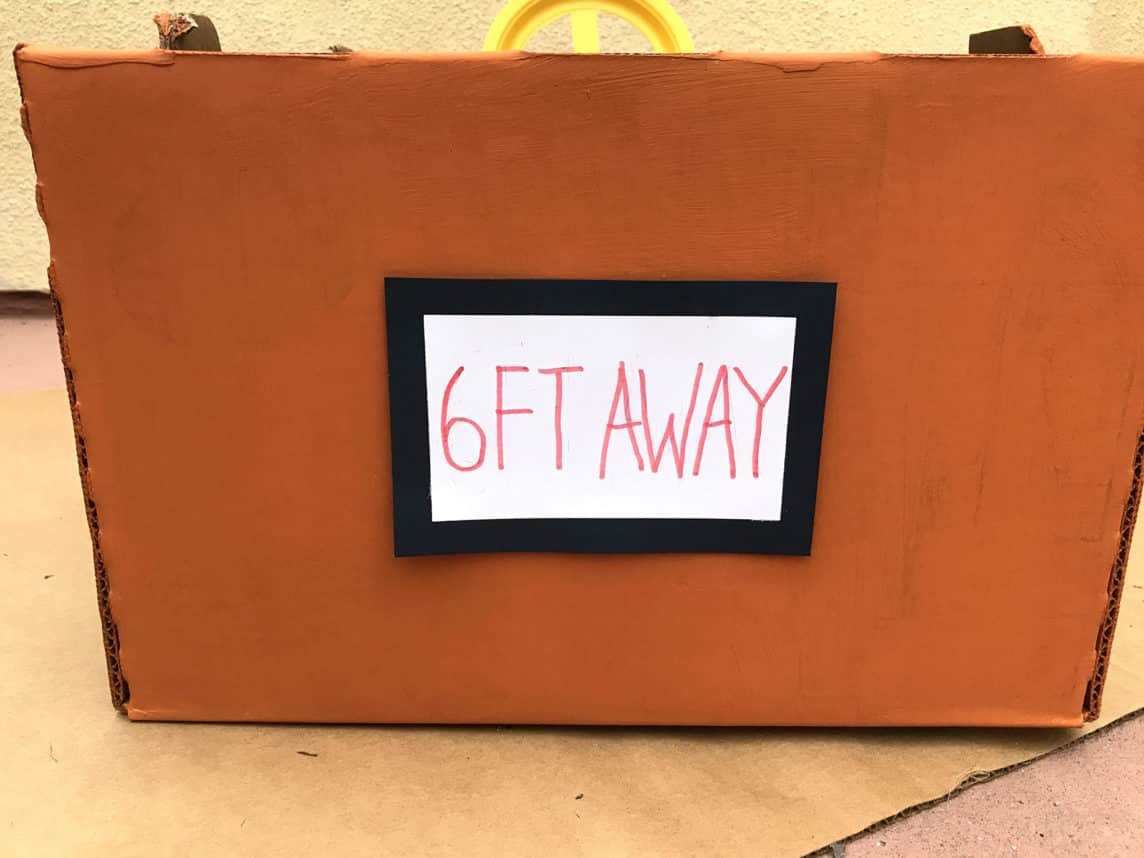
1. Find a cardboard box that is large enough for your child to sit in. With all the deliveries I’ve been getting, I had many to choose from. This is a box that I saved from a Costco Instacart order. Let the box sit outdoors for at least 24 hours to neutralize any germs and viruses, and then spray the box with a disinfectant as an extra precaution.


2. If you wish, paint the box to give your miniature car a custom color. I used acrylic chalk finish paint, which provides great coverage and needs only one or two coats. You also can decorate the box with wrapping paper. Leaving it plain is also perfectly fine.


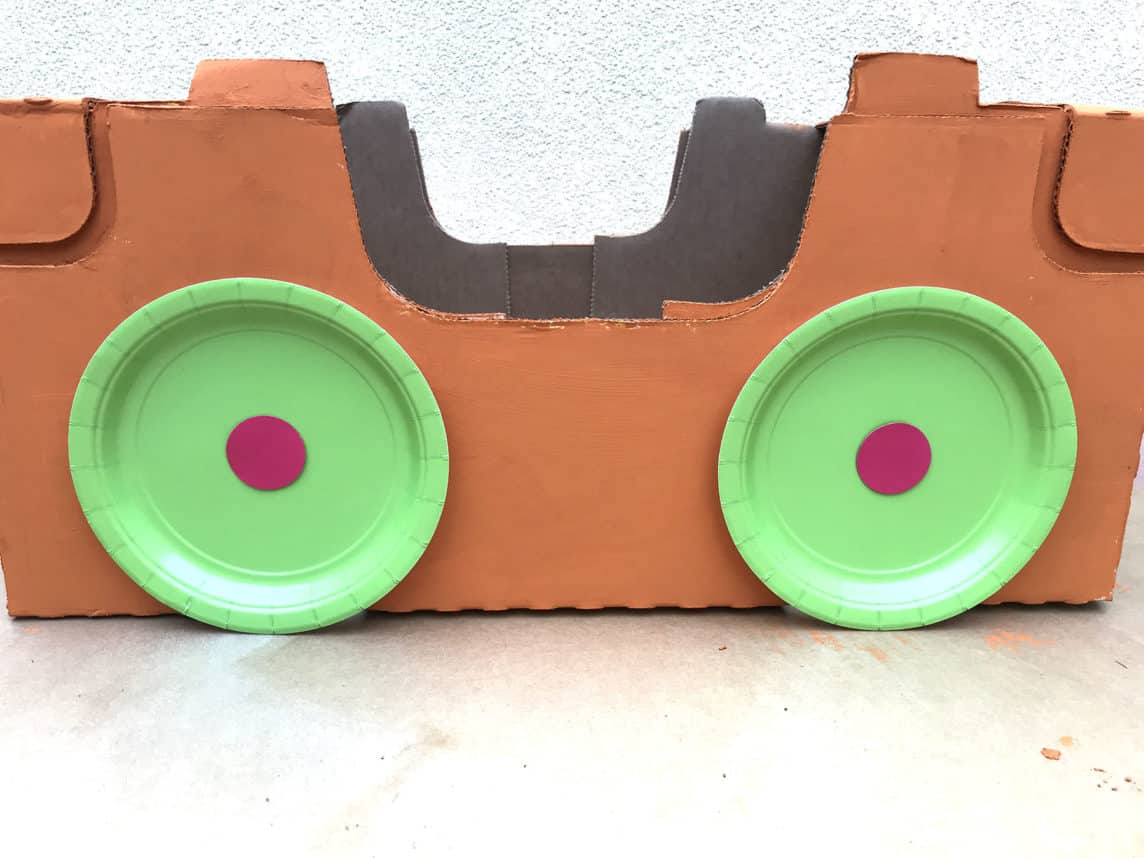
3. To give your car wheels, glue small paper plates to the left and right sides of the box, letting them just touch the floor. I added a circle to the middle of each plate that acted as the hub cap.


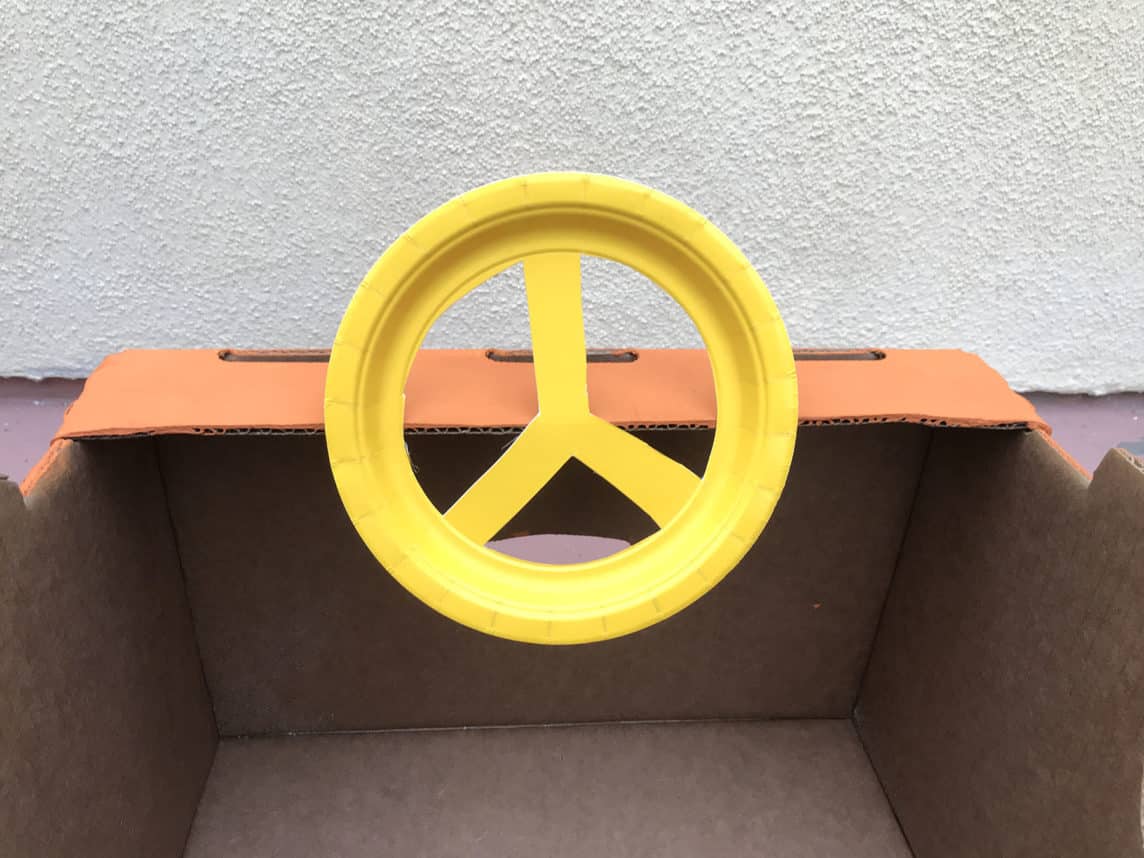
4. For the steering wheel, cut sections out of another paper plate so it looks like a peace sign. Glue the steering wheel to the front of the inside of the car.


5. Give your car headlights by gluing two paper or plastic cups to the front. Crumple up some yellow tissue paper and stuff it in the cups to represent the shining light.


6. Glue a license plate on the back of the car to personalize it even more. Just cut out a piece of paper and think of a fun license plate number for it. And for a little extra comfort, place a pillow and a blanket in the car.

Make a Drive-in Theater for the Kids at Home Read More »

I’m a Jew Who Attended the Protests Where a Synagogue Was Vandalized, This Is What I Saw

I was at the riots in downtown Los Angeles on Saturday. So much important work was done that day. So much went right—and then there were the things that went terribly wrong. For many Jews, the worst news of the day was vandalism against a number of synagogues and other identifiably-Jewish targets. These scenes are so historically familiar and so clearly dangerous.

If there is one thing that I want to broader Jewish community to know about these riots it is this: There is a remarkably complex set of actors and stakeholders on the ground, and most of them are our natural partners and allies in liberation, not people to be feared.

Let me tell you what I saw.

There is a remarkably complex set of actors and stakeholders on the ground, and most of them are our natural partners and allies in liberation, not people to be feared.

I passed by Congregation Beth Israel around 5 p.m. on Saturday May 30. By then, the riots had already begun. As I approached the synagogue, I prayed that it would be unharmed. It was. All around it, buildings had been tagged with graffiti and windows had been broken. But people had known to leave the synagogue untouched. Sometime later that day or night, that changed.

I saw white protesters escalating in ways that were unwise and unhelpful. Black protesters bemoaned: “It’s always the white people who start sh*t, but you won’t be the ones who get shot over it.” I have heard second hand that this was also the way in which at least one synagogue came to be tagged.

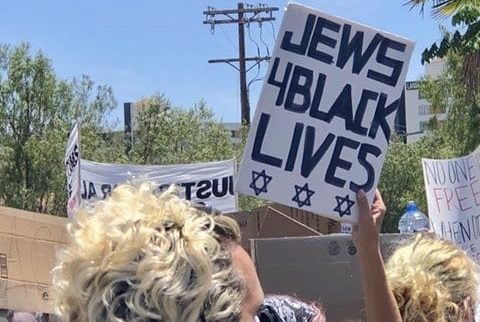
Most of that day I wore a kippah and my friend carried a “Jews for Black Lives” sign. Everyone was supportive. Not once was I made to feel unsafe as I walked among people who burned police cars and shattered storefronts.

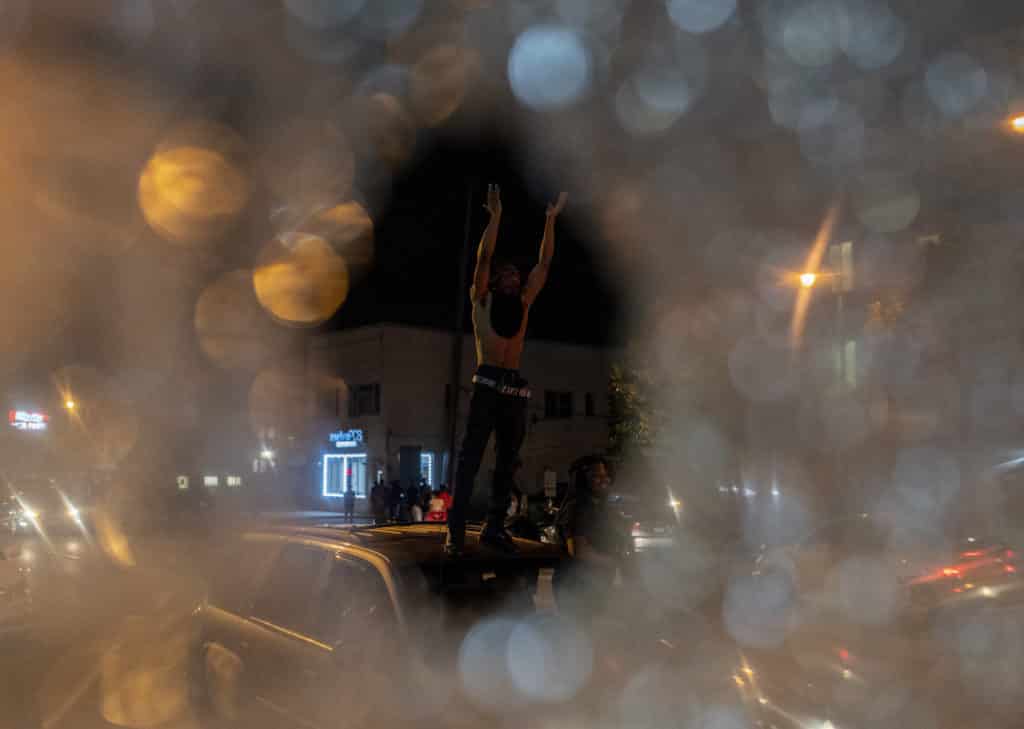
Protesters in Los Angeles. (Source: Adva Reichman.)

No, I didn’t riot or loot. I have no temptation to do so. I have enough money and I have never been the personal target of police brutality. That’s a privilege that I have. For those who don’t have that privilege, I respect what these acts mean to them.

In 1967, Dr. King spoke of what motivates a person to loot: “Alienated from society and knowing that this society cherishes property above people, he is shocking it by abusing property rights.”

As frightful as that reality may be to those of us who benefit from the American concept of property rights, we cannot deny that this is a natural response to a system that has made it impossible for communities of color to liberate themselves by peaceful means. After five centuries of unfathomable subjugation — most especially of the native and black communities — one would think that our society would recognize their undisputed moral authority to call attention to their own oppression. And yet, four white police officers in Minneapolis couldn’t even summon the decency to listen to the words, “I can’t breathe.”

George Floyd was lynched at the hands of police. For days, the American media and the white community equivocated. It was only when riots gripped the nation that consensus began to form around his death. Make no mistake: This consensus was a response to the riots. It took the form of, “I agree with the protests, but the riots have to stop.”

The irony of it is, this proves just how effective the riots have been at shifting the center of gravity of the national consciousness.

The irony of it is, this proves just how effective the riots have been at shifting the center of gravity of the national consciousness. Dr. King was right: Our society is prepared to pay lip service to human lives in order to protect property.

Now the Jewish community is perplexed, as we try to find our own place in this much larger struggle.

Synagogue Congregation Beth El on Beverly Blvd in Los Angeles. (Credit: Lisa Daftari, Twitter)

The safety of our houses of worship is entirely connected with the alignment of our community on the right side of this issue and of history. We cannot expect others to honor our intergenerational traumas if we do not appreciate their contemporary ones. At this moment, it is crucial for white Jews to humbly listen to the voices of black Jews and other Jews of color.

It is also important to recognize our own role as a historically persecuted and vulnerable people, wherein we find common cause with the black community. Let us not forget that our ancestors, for thousands of years, were arbitrarily persecuted by the powers that be — including law enforcement.

It has been tragically common to see the Jewish and black communities divided against one another. On Sunday May 31, I saw a picture that pained me. I do not know the full story, but the optics were that a predominantly white and highly militarized police force used heavy handed tactics to protect a synagogue from a predominantly black crowd. Such images do our community no favors.

This is the time for action and unity. Already, young Angeleno Jews are mobilizing to form Jews for Black Lives, an organization that will work for racial justice in a way that honors Jewish history, tradition, and contemporary practice.

Will you heed the call?


Yonathan Reches lives in El Segundo and is a member of the IKAR community in Los Angeles. This article does not necessarily represent the views of IKAR.

I’m a Jew Who Attended the Protests Where a Synagogue Was Vandalized, This Is What I Saw Read More »

ADL Says Anarchists, Nonideological People Are Behind the Violence at the George Floyd Demonstrations

Anti-Defamation League (ADL) Center on Extremism Associate Director Joanna Mendelson said extremist groups are participating in the protests over the death of George Floyd.

Mendelson told the Journal that although most of the protests around the country have been peaceful, there are some extremists attempting to take advantage of the situation to further their agenda. “We are seeing a host of extremists rhetorically try to insert their violent agenda into this national crisis,” she said.

Mendelson cited the neo-Nazi group Nationalist Social Club, whose members were handing out stickers during demonstrations in Boston over the weekend. An individual also allegedly shouted “Heil Hitler!” during a peaceful protest on May 29 in Denver.

According to a June 1 ADL report, right-wing anti-government groups, militias and antifa (anti-fascist) groups also have participated in protests. However, Mendelson said the ADL hasn’t seen antifa behind any of the recent violence.

She noted the ADL has documented some instances of anarchists perpetuating the violence. “[Anarchists] view it as a chance to destroy what they perceive as this corrupt system,” Mendelson said. “So, they’re not motivated by the cause [of police brutality] … and much more interested in wanton destruction of society.”

“We are seeing a host of extremists rhetorically try to insert their violent agenda into this national crisis.” — Joanna Mendelson

Other instances of violence during the protests have not been ideological, Mendelson said. “There are some who are interested in the thrills of the confrontation. They’re not necessarily ideologically oriented.”

She added, “We’re closely monitoring the rhetoric and are concerned for extremist groups to also fully embrace and engage [in the protests].

These protests emerged out of an expression of despair and anger about the perceived systemic racism and inequality, and unfortunately the violence that is devolving in protests around the nation are distracting from the clarion call for change.”

ADL Says Anarchists, Nonideological People Are Behind the Violence at the George Floyd Demonstrations Read More »

White People Must Learn Nonviolence Before We Demand It Of Others

“Shun evil and do good” the Psalmist charges (Psalms 34:14). OK, we say, but why is that a two-step process? Why not just “do good?” As the kids used to say on Facebook — when the kids used to use Facebook — “it’s complicated.”

The Izbica Rebbe, a 19th-century Chassidic master, puzzled over the first verse in Chapter 19 of Exodus. “On the third new moon after the Israelites had gone forth from the land of Egypt, on that very day, they entered the wilderness of Sinai.” Israelites had arrived at the moment which would define their “being in the world,” their reason for existence, the height of their sojourn: the revelation at Sinai. Yet the moment was introduced by recalling the lowest moment in their spiritual, but especially their physical existence: Egypt, the house of bondage. Why mention Egypt in this context? The Izbica Rebbe replied to his own question: While it only took a short while to physically exit from Egypt, it took three months to get Egypt out of them. Before being able to hear the revelation of God, they had to get Egypt out of their souls. This is the “shun evil” that precedes the “do good” of the revelation.

What is Egypt in the Torah? Egypt is systemic oppression and racism. Egypt is the argument that one people has the right to enslave another people. Egypt is the argument that some humans are worth more than others. More than the physical oppression, the Israelites had to leave their intellectual and spiritual oppression —  the belief that the Egyptians had a right to oppress them. Only then could they hear “I am God, your God, who has taken you out of the land of Egypt, the house of bondage.” For the first thing that God says, as the early 20th-century Rabbi Aharon Shmuel Tameres teaches us, is “I am God who despises cruel oppression.”

Once Israel has acted on sur me-ra, shun evil, then it can embrace the aseh tov, the “do good” of the rest of the Ten Commandments and all the other commandments.

After we have learned to be nonviolent, we might have the right to demand that others behave nonviolently.

We, in the United States, especially the white community (and white Jews among them), are still in the sura me-ra/shun evil stage. We still are implicated in the workings of systemic racism and white supremacy. One way we do this is that we demand black and brown protestors behave nonviolently. Many of us do this out of solid motivations, believing this is the way we would behave in the same situation. However, we have to ask the question: Do we embrace nonviolence now? Not in some hypothetical situation, but in our lives. The answer, I’m afraid, is no. Let me explain.

In those situations where we demand protestors behave nonviolently, what exactly are we doing? Well, law enforcement personnel, who are operating in our name, are carrying weapons (lethal and nonlethal) and are using them. “We” are responding to the protestors by rolling up in armored vehicles and deploying officers clad in full combat gear. “We” are asking the National Guard to patrol our streets. “We” reportedly are shooting rubber bullets, tear gas, tasers and live ammunition at the protestors.

In those situations where we demand protestors behave nonviolently, what exactly are we doing?

“We” are far from having learned to shun evil. We must train ourselves in nonviolence. The nonviolence of voting against expanded police budgets and expanded jail budgets at the expense of expanded education and health care budgets.

After we have learned to be nonviolent, we might have the right to demand that others, especially the others whom we have been oppressing for centuries, behave nonviolently.

Our ancestors, on the road out of slavery and toward Sinai were able to free themselves of Egypt — for a while, at least. We, who have benefited from the toil of enslaved people directly or indirectly, must commit ourselves to do the same, lest our country go the way of biblical Egypt.

First, we shun evil.


Aryeh Cohen is professor of rabbinic studies at American Jewish University. 

White People Must Learn Nonviolence Before We Demand It Of Others Read More »

Hundreds of Israelis Protest in Solidarity at U.S. Embassy in Tel Aviv

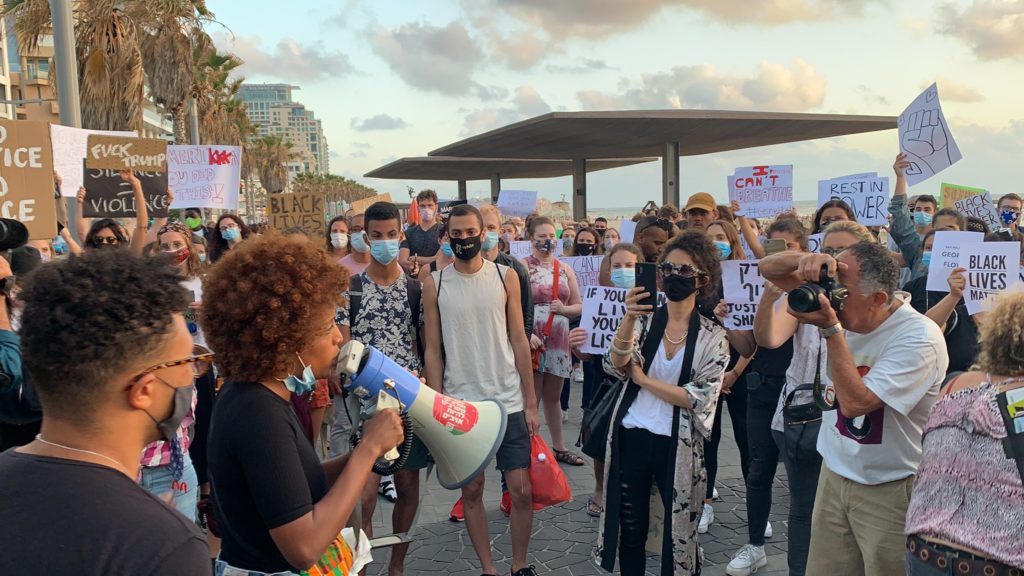
Israelis headed to United States Embassy in Tel Aviv on the evening June 2 (9 a.m. Pacific Time) to show their solidarity over the death in police custody of George Floyd. Around 350 demonstrators attended, organizers told The Journal.


“It took me all day to watch an eight-minute video,” Ashager Araro, the Founder of Bettae Ethiopian Israeli Heritage Center, said in a speech at the rally.

“The color of your skin doesn’t matter, once you saw this video, it got you. It just got you and you couldn’t shake it off,” Araro told The Journal. She says Ethiopian Jews in particular “understand the hurt.”

“As an American, I am so f-cking ashamed,” Hallel Silverman, who attended the protest, told The Journal. “As an Israeli, I’m proud of the turnout this evening in Tel Aviv.”

“It’s an important act of solidarity with the American people. Showing them that we understand their struggle and support it,” Tel Aviv-based activist Hen Mazzig told the Journal. “Israel has a long way to go until we reach full racial equality, so this is a statement of Israeli people saying we are with you and we stand by you.”

Hallel Silverman at the protest in solidarity with George Floyd in Tel Aviv. (Photo by Hallel Silverman.)

When asked if the death of George Floyd and had shifted her image of America, Araro said it was too early to tell. “What would change my perspective of America is after all of this, and the outcry, people screaming their lungs out asking for equality, and for police to be held accountable nothing were to happen,” she said. “That would be very hard for me to accept.”

On May 30, hundreds of Israelis and Palestinians marched against police brutality, drawing parallels between the killing of George Floyd in Minneapolis and Iyad Hallak, an autistic Palestinian man who was shot and killed by police officers in Jerusalem. Israeli border police, who saw Hallak, 32, on the way to a special education school, believed he was holding a weapon. None was found.

Around 200 activists protested at the Tel Aviv police headquarters, while 150 held a march on King George Street in Jerusalem. They held signs declaring “Justice for Iyad, Justice for George.”

Some protesters on the June 2 event also held signs in solidarity with Hallak.

A protester at a demonstration in solidarity of George Floyd in Tel Aviv. (Photo by Halle Silverman.)

“Police violence in East Jerusalem is policy, just like the policy against black people in the U.S.,” Shahaf Weisbein, one of the organizers of the protest in Jerusalem, told +972 Magazine.

Araro said she felt the comparison was unfair.

“I think there are similar points that can be argued,” she said. “But at the same time…dealing with soldiers in an area that is a little more hostile than your city, your country, or in your area, the threat is different. I don’t know what happened in the situation with the Arab Israeli because we don’t have a video [like George Floyd.]

“I do think there has to be an investigation, and in general in Israel, we need to police better,” she added. “This is something both American and Israeli police need.”

Hundreds of Israelis Protest in Solidarity at U.S. Embassy in Tel Aviv Read More »

Prime Minister’s Office Employee Who Has the Coronavirus May Have Had Contact With Netanyahu

JERUSALEM (JTA) — An employee in the Prime Minister’s Office has tested positive for COVID-19, which could send Benjamin Netanyahu into self-quarantine for the third time since the start of the global pandemic.

The employee on the prime minister’s technical staff was in the same room as Netanyahu on Saturday, Israel’s Channel 13 reported Monday. He also may have come into contact with Finance Minister Israel Katz and Education Minister Yoav Gallant. All three men participated in a nationally televised address and news conference Saturday evening on dealing with the coronavirus crisis that the employee helped set up.

Quarantine orders could be recommended following an epidemiological investigation now underway, according to the Prime Minister’s Office.

The Health Ministry on Tuesday announced that there had been more than 100 newly diagnosed cases of the coronavirus in the past 24 hours, and that some additional 3,723 students and teachers were sent into self-quarantine on Tuesday, bringing the total of students and teachers currently in quarantine to 9,935.

Galant announced Monday that he would call on any school with a staff member or student with a confirmed case of COVID-19 to immediately close and send all staff and students to self-quarantine.

Schools in Israel began opening more than two weeks ago after isolating for nearly two months due to the coronavirus.

Israel in recent days has seen a steep increase in the number of confirmed cases of the coronavirus, most related to schools. The increases come as Israel continues to relax restrictions that were put in place to prevent the spread of the coronavirus, including opening up workplaces, schools and malls.

The Health Ministry on Tuesday also reported two new coronavirus deaths, bringing the total dead in Israel to 287.

Prime Minister’s Office Employee Who Has the Coronavirus May Have Had Contact With Netanyahu Read More »