fbpx

June 2, 2020

Shavout Under Quarantine and Civil Unrest

The Jews have been enslaved.  They escape, leave their homes in Egypt, cross the Red Sea, and travel through the desert to Sinai for the giving of the Torah.  But almost immediately a catastrophe occurs; a horrible act – the building of an idol – results in widespread death and destruction.

This Shavuot – a holiday to be celebrated in joy – seems to have mirrored those formative moments in the creation of the Jewish people.  Enslaved this time by a virus, we had lost the many freedoms we had previously taken for granted.  Finally, and with some trepidation, we were to be able to leave our homes with the hope of again leading free and normal lives, when a horrible act – this time a senseless killing – resulted once again in wholesale destruction.

At my synagogue – Westwood Kehilla – Shavuot was to mark the first cautious steps toward freedom.  We followed all of the rules – an outdoor service, social distancing, reservations and masks required, no sermon and no singing so as to avoid unnecessary projecting of breath. In the outdoor area where we normally have Shabbat Kiddush, we put down masking tape to delineate where seats were permitted, with six feet of distance, front, back and sideways, for every chair.  We used a portable mechitza to divide the space so that men and women could attend.  Unlike that first Shavuot, we barred children from being present.

We followed all of the rules – an outdoor service, social distancing, reservations and masks required, no sermon and no singing so as to avoid unnecessary projecting of breath.

Fifteen or so people showed up for the Thursday evening Shavuot service.  Westwood Kehilla is typically an engaging and friendly community that prides itself on its outreach and welcoming atmosphere, and being together was obviously a source of pleasure.   Nevertheless, socializing was abbreviated.  No shaking hands.  No hugging.  No extended conversations.  Keep your mask on.

All Shavuot services on Friday morning and afternoon followed the same routine, as did the Friday evening and Saturday morning services.  But there was one significant change to the normal Torah reading. Typically, that reading is divided into segments, with a different congregant being called to the Torah to say a blessing before and after each segment is read by the individual who is actually reading from the Torah.  To avoid close contact, this was altered, and the person doing the reading from the Torah also did each of the blessings before and after he read each segment.

As Shabbat and Shavuot drew to a close on Saturday, and nightfall approached, our experiment in virus-accommodated davening seemed to be successful, when suddenly a new challenge appeared.  Our rabbi, Avi Stewart, while walking back to the synagogue for the mincha and maariv services at around 7:00 pm, was told by a guard at a local store that a curfew was to start at 8:00 pm that very evening.  The city was in turmoil; there was widespread destruction.

To comply with the curfew, the Saturday afternoon mincha service suddenly had to be rushed and shortened.   The usual reading from the Torah was omitted, and the usual repetition of the Amidah, the central prayer of the service, was abbreviated.  The evening Maariv service, which marks the end of Shabbat and the beginning of the week, was skipped altogether so people could get home before the 8:00 pm curfew and daven that service at home.

In retrospect, Rabbi Stewart noted that, notwithstanding the turmoil and improvisation, there was “excitement and happiness” at being able to be together but, he added, that it was markedly diminished not only by the continuing caution concerning the virus, but by additional awareness that social disturbance had been added to social distancing.

So much pain for a holiday of joy.


Gregory Smith is president of Westwood Kehilla and an appellate attorney practicing in Los Angeles.

Shavout Under Quarantine and Civil Unrest Read More »

Interfaith Leaders to Gather in Santa Monica in Response to Trump’s ‘Religious Stunt’

Los Angeles clergy and spiritual leaders plan to gather at Mt. Olive Lutheran Church in Santa Monica Wednesday, June 3 in response to what they argue is President Donald Trump using St. John’s Episcopal Church as a politicized photo opportunity rather than providing a unified message to the United States citizens.

On May 1, the U.S. Park Police and National Guard troops, with the use of tear gas, removed nonviolent protesters assembling by the D.C. church so that Trump could walk over to pose with a Bible.

“The President’s attempt to hijack the spiritual richness of America cannot go unanswered,”  Rabbi Neil Comess Daniels of Beth Shir Shalom said in a statement to the Journal. “We, clergy and lay leaders of many faiths in the Los Angeles region gather together to demonstrate what a true spiritual religious response to racial injustice looks like, provide some spiritual solace and highlight the values that call us to do all we can to fight racism.”

Comess Daniels organized the event in collaboration with The Santa Monica Area Interfaith Council, Clergy and Laity United for Economic Justice – Los Angeles (CLUE-LA) and The Guibord Center – Turning Religion Inside Out.

Rabbi Sharon Brous of IKAR; Pastor Eric Shafer of Mount Olive Lutheran Church; Jihad Turk of Bayan Claremont University; Pastor Art Cribbs; Rabbi Cantor Diane Rose and Dr. Lo Sprague of the Guibord Center are also planning to attend the small gathering.
Comess Daniels said the gathering will be filled with prayer and music while the clergy commits itself to fighting racism, police brutality and discussing what religious values and ideals can be used to relieve the situation. He added that for the safety of all, the event will be limited to clergy and leaders from spiritual communities without clergy.

Interfaith Leaders to Gather in Santa Monica in Response to Trump’s ‘Religious Stunt’ Read More »

Global Startup Turns Elders Into SAGES Who Teach Online Classes

Esther Hershcovich, holds down a full-time job at a Tel Aviv architectural firm while simultaneously focusing on her global startup — SAGE.

Originally, Hershcovich envisioned SAGE as a community-based gig economy where older people could share their skills with individuals in their vicinity. The idea came about when she sought to create a meaningful way for her parents — a retired contractor and midwife in their 70s and 80s — to spend their retirement and maybe make a buck or two. “My parents have so much wisdom and I just thought, what if there’s a way to keep them engaged by allowing them to impart that wisdom to others?”

But then the coronavirus hit. Physical meetings were not allowed. After returning from a ski trip, Hershcovich found herself quarantined and directionless. “I was pretty down about it,” she said. She had toyed with the idea of taking SAGE online at some point in the future but it wasn’t in the spirit of what she had in mind. “We stick older people in front of screens as much as we stick kids in front of screens and I really wanted SAGE to be about in-person connections,” she said.

The about-face came after reading an article about how older people were suffering the most in isolation. During her second week of quarantine, Hershcovich harnessed the network she already had built and recast SAGE as an online platform. Speaking English and being older than 60 are the only prerequisites for becoming a teacher — or as Hershcovich calls them, sages. Since its launch at the end of March, some 30 sages from all over the world including Canada, the U.S., Australia, New Zealand, Ireland, Italy and Israel have signed up to teach subjects ranging from challah making to the psychology behind doodling.

Some 30 sages from all over the world including Canada, the U.S., Australia, New Zealand, Ireland, Italy and Israel have signed up to teach subjects ranging from challah making to the psychology behind doodling.

During the BETA stage, sages are volunteering their time to teach free 20-minute “coffee break” classes to enable the platform to collect reviews and bring a more robust product to market in a month or two. At that stage, sages will apply fixed rates to their classes. For now, Hershcovich is funding the project herself but eventually SAGE will skim commission from the user fees. Unlike other platforms, which often take a cut from all involved parties, Hershcovich isn’t interested in earning from the sages. “The social impact is much more important to me,” she said, adding reaction to the initiative has been overwhelmingly positive. “The feedback is so motivating; it’s what makes me get up at 6 a.m. every day for more work.”

One email came from Sandi Einstein, a woman in Australia who expressed her enthusiasm about joining SAGE but lamented that she had no expertise. “I told her, ‘Everyone has something to teach. Let’s chat.” Einstein ended up on SAGE offering peer support for people recently diagnosed with bipolar disorder or depression. She also became SAGE’s unofficial representative in Australia, recruiting more sages.

“People have reached out to help and it feels like we’re all sort of building this together,” Hershcovich said. “This isn’t where I intended to go but I’m riding the wave right now.”

For more information, or to become a sage, visit the website.

Global Startup Turns Elders Into SAGES Who Teach Online Classes Read More »

Thousands of Israeli Students Sent Home Over COVID-19 Outbreaks

Thousands of students in Jerusalem and other cities across the country were sent home Monday to isolation after staff and students were found to have COVID-19.

Schools in Israel began opening more than two weeks ago after isolating for nearly two months due to the coronavirus.

Students from some 35 schools and kindergartens in Jerusalem, Hadera, Ashdod and Beersheba were officially diagnosed with the coronavirus. Some schools completely shut down, others announced that they will reopen in several days.

As of Monday morning, more than 4,500 students and 734 staff members across the country were sent to quarantine, according to the Education Ministry.

One school in the northern Israeli city of Hadera, for example, sent 2,180 students and teachers into isolation after one student was diagnosed with the deadly virus. The school was temporarily shut down. The Gymnasia Rehavia high school in Jerusalem has had over 130 students and staff members diagnosed with the coronavirus.

Israel in recent days has seen a steep increase in the number of confirmed cases of the coronavirus. The increases come as Israel continues to relax restrictions that were put in place to prevent the spread of the coronavirus, including opening up workplaces, schools and malls.

On Sunday, Health Minister Yuli Edelstein told the Cabinet at its weekly meeting that there was a fivefold increase of Israelis who tested positive for COVID-19 the previous day alone.

Prime Minister Benjamin Netanyahu said Saturday night that the coming days would be “a test to see if there is a change in trend that would require a change of policy,” such as closing education institutions.

Thousands of Israeli Students Sent Home Over COVID-19 Outbreaks Read More »

Author Says Hitler Is Not the Only One to Blame for Atrocities

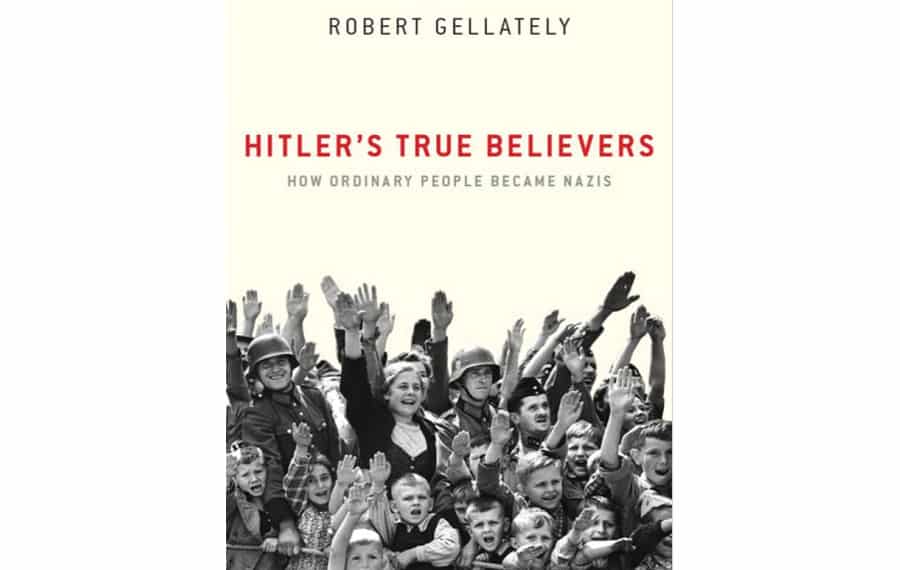
Every radical movement begins with a core of activists, but only rarely does it succeed in taking and holding power in a great nation. Adolf Hitler, for example, “squeaked into power,” as historian Robert Gellately writes in “Hitler’s True Believers: How Ordinary People Became Nazis” (Oxford University Press); only later did the Nazi Party turn into a mass movement.

“Needless to say, there remained millions of people for whom everything about Nazism was unattractive, and as though he were admitting precisely that, Hitler said that it would take generations to create the kind of social world he desired,” Gellately explains, and Hitler himself may have been surprised by how fast it actually happened. “With remarkable suddenness, National Socialism came to influence social, cultural and political life in Germany from top to bottom.”

Gellately is the Earl Ray Beck Professor of History at Florida State University. He often has written on both Nazi Germany and Stalinist Russia, and his previous books include “Lenin, Stalin and Hitler: The Age of Social Catastrophe.” What he seeks to explain in his new book is how an “educated and cultured” country of more than 65 million people, many of whom were committed to liberal, socialist and communist parties, was transformed in an “entire nation of true believers.” Above all, he denies the answer is to be found in Hitler’s charismatic hold on the hearts and minds of the German people.

Indeed, Gellately argues Hitler has been wrongly credited as a political Svengali. The truth, he insists, is that Hitler may have commanded the absolute loyalty of ardent Nazis, but he was nothing more than “the necessary leader” who came to be seen as the man who was capable of fulfilling the ambitions of Germans who were not early or earnest Nazis, but were “on the same wavelength” and joined the Nazis only to “get on the bandwagon.”

To do so, however, the late-comers to Nazism were forced to embrace — or at least to overlook — the extremism displayed in Hitler’s speeches and writings. “We don’t want to be emotional anti-Semites, who want to create a mood for pogroms,” Hitler declared in a speech at Munich beerhall in 1920. “What animates us is the unrelenting determination to attack the evil at its source, and to eradicate it, root and branch.” Many of his fellow Jew-haters in Germany were less bloodthirsty, yet willing to put themselves in service to Hitler’s genocidal program because they, too, sought to solve “the Jewish question” one way or another.

“No single factor can account for why ordinary people began opting for the Nationalist Socialist Party,” Gellately proposes. High unemployment in Weimar Germany turned the workers to the Communist party, whose growth prompted middle-class voters to turn to the Nazi party. Farm owners and farm laborers saw the Nazis as a party that “would stand up for the rural folk and in favor of self-sufficiency in food.” The Protestant churches, which represented two-thirds of the German population, “greeted the new regime with euphoria, with many looking forward to a re-Christianization of the country.” Nazi emphasis on racial purity “might have played a psychological role” in winning over Germans who have wanted to exclude Jews from Germany without wanting to exterminate Jewish men, women and children all over the world.

“With the invasion of Poland in 1939, Hitler put his popularity with the German people to the litmus test — and he passed.”

Once Hitler was duly appointed chancellor of Germany under the laws of the Weimar Republic, the Nazi-controlled Reichstag voted to put an end to parliamentary democracy to put all the powers of government in service to the Nazi party. Hitler wanted a “legal dictatorship,” and now he had one. Concentration camps were established to confine and punish his political adversaries. Germans who may have been mildly attracted to Nazism and Germans who had actively opposed it realized no other choice was available. Ultimately, even the Germans who were not Nazis “willingly sublimated themselves in the name of a greater cause,” as Gellately describes a Nazified May Day celebration in 1933.

Hitler did not rely on terror and propaganda alone to transform Germany from a great power into a Nazi Party project. He appealed to material cravings of the German people when he conceived the Volkswagen – the “people’s car” – and the autobahns on which they were to be operated. Even Germans who were not under Hitler’s thrall were won over. “A marvelous vision of the future” wrote one such diarist, and a member of the leftist underground found himself compelled to concede that “the politician who promises every person an auto, if the masses believe the promise, is a man of the masses.”

With the invasion of Poland in 1939, Hitler put his popularity with the German people to the litmus test — and he passed. Even when bombs were falling on Berlin and defeat by the Allies seemed inevitable, the German people continued to manufacture armaments, fight their enemies on the field of battle and murder the Jews in the death camps — all of which required a massive war effort. The German people were rewarded for their sacrifice with a country that had been “reduced, divided, and humiliated.” Yet a poll taken in West Germany in 1948 showed that 57 percent of the respondents still regarded Nazism as “a good idea that was poorly implemented.”

“Hitler’s True Believers” joins a growing body of scholarship that focuses not only on Hitler and the Nazi elite but also on the “willing executioners” and “willing collaborators” who served them in the armed forces and the police, bureaucracy, the legal and medical professions, the media and the arts, and the countless other elements of German society  All these books, and Gellately’s prominently among them, seek to broaden the definition of “perpetrator” and by doing so, put the ample blame for the crimes of the Second World War and the Holocaust where it belongs.


Jonathan Kirsch, author and publishing attorney, is the book editor of the Jewish Journal and a contributor to The Washington Post.

Author Says Hitler Is Not the Only One to Blame for Atrocities Read More »

BDS Co-Founder: Right of Return Will End ‘Zionist State’

Omar Barghouti, co-founder of the boycott, divestment and sanctions (BDS) movement, said in a May 21 interview that the Palestinian right of return would end Israel as a Jewish state.

Jewish News Syndicate (JNS) reported Barghouti asked in Arabic on the Gazan Voice Podcast what would be left of Israel if the BDS movement succeeds in its mission of having the world’s Palestinian refugees move to Israel and ending Israeli occupation of the West Bank.

“International law and the right of return?” Barghouti said. “There won’t be any Zionist state like the one we speak about [in present-day Israel]. There will be two states: one democratic for all its citizens here [Palestine] and one democratic for all its citizens there [Israel]. The Palestinian minority will become a Palestinian majority of what is today called Israel.”

Critics of the BDS movement argued that Barghouti’s remarks showed the movement seeks the destruction of Israel as a Jewish state.

“We’ve said it before and we’ll say it again: the campaign to boycott Israel, known as the #BDS Movement, openly seeks Israel’s destruction,” the American Jewish Committee (AJC) tweeted. “Don’t believe us? Ask the guy who started it.”

Mike Harris, one of the founders of the StandWithUs San Francisco chapter, similarly tweeted, “Omar said the quiet part out loud, again. Not as if he’s ever denied it, of course.”

https://twitter.com/DrMikeH49/status/1267582912154632193?s=20

Israellycool blogger David Lange sarcastically tweeted, “If Omar Barghouti achieves his goal of the destruction of #Israel, will his Master’s degree in Philosophy from Tel Aviv University still be valid?”


The BDS co-founder previously stated in 2013, “We oppose a Jewish state in any part of Palestine. No Palestinian, rational Palestinian, not a sell-out Palestinian, will ever accept a Jewish state in Palestine.”

However, Barghouti has said it’s acceptable for those who support BDS to take an Israeli vaccine for COVID-19.

“If Israel finds a cure for cancer, for example, or any other virus, then there is no problem in cooperating with Israel to save millions of lives,” Barghouti said in an April 5 Facebook live stream.

BDS Co-Founder: Right of Return Will End ‘Zionist State’ Read More »

‘I’m Not Angry at All’: Owner of Looted Chicago Photo Shop Vows to Rebuild

(JTA) — Don Flesch managed to grab just one item from his downtown Chicago camera shop as it went up in flames Saturday night: the antique Kodak that was the first camera his grandfather sold after he opened the store in 1899.

But Flesch said he harbored no ill will toward the people who looted and burned Central Camera amid sweeping demonstrations sparked by the killing of a black man by a Minneapolis police officer on Memorial Day.

“I’m not angry at all,” Flesch told the Jewish Telegraphic Agency. “I’m upset that people didn’t stay with Black Lives Matter. That’s why this whole thing started to come about.”

Central Camera, located in the shadow of an elevated train on South Wabash Avenue, just blocks from Chicago’s storied Art Institute, is one of several notable Jewish-owned businesses to sustain damage in weekend demonstrations. In Los Angeles, the historically Jewish Fairfax district was an epicenter of protest, while a kosher Israeli restaurant was damaged in Washington, D.C.

Like many of the other owners, Flesch has expressed solidarity with the protesters and has vowed to rebuild his store. He’s getting assistance from the legions of camera aficionados who have donated to a crowdfunding campaign, which had netted nearly $140,000 by Monday night.

But some of what was lost Sunday night will be impossible to restore, including rare cameras and relics from Central Camera’s 121-year history. The store has been a fixture of downtown Chicago for that time, its distinctive neon sign flashing above the storefront the shop has occupied since the 1920s. It’s just a block away from where Flesch’s grandfather, Albert, opened his camera store on East Adams Street in 1899.

Albert Flesch had fled his native Hungary as a teenager rather than consent to forced conscription in the army. Instead he walked to Italy, boarded a boat for Ellis Island and then hopped a train for Chicago. He landed his first job in 1895 in the camera department at the Siegel-Cooper department store on State Street. Four years later he opened Central Camera.

He would run the store for more than five decades, until his death from a heart attack in 1953. Three years after the shop opened, Albert Flesch was one of the first white shopkeepers in downtown Chicago to hire a black man for a retail position when he put a tall African-American named George to work behind the counter.

After Albert Flesch died, the store passed to his sons — Flesch’s father, Harold, and brother Stanley. Flesch would help out on Saturdays while he was in elementary school, and his role expanded as he got older. He started full-time work at the store in 1968.

At one point, there were so many Flesch men working there that they began referring to each other by their first initials.

Flesch’s mother’s family, the Leibermans, came from Poland, and the family lived in Hyde Park on Chicago’s South Side, where they attended Sinai Congregation, the oldest Reform synagogue in the city. Flesch married an Israeli woman who shared his interest in photography and the couple had two children before divorcing.

On Saturday night, Flesch was at home in suburban Skokie when he learned that alarms were going off at Central Camera. He arrived downtown nearly an hour later, watching helplessly from across the street as looters ransacked the place.

“People were just coming in and out, going in with nothing and coming out with something,” he said. “I didn’t like it, but I couldn’t stop it. And I wasn’t going to try to stop it.”

Neither Flesch’s twin brother Ronald, an architect, nor his two kids have shown any interest in taking over the family business, and Flesch isn’t sure what will happen to the three-generation company when it’s time for him to retire.

In the meantime, he’s vowing to rebuild.

“This is my job,” Flesch said. “This is the only job I’ve ever had. I want to keep it alive. We’re going to rebuild. We’re going to come back as good or better as we were before.”

‘I’m Not Angry at All’: Owner of Looted Chicago Photo Shop Vows to Rebuild Read More »

Unrest, and Rabbi Hanina’s Advice

There’s no better week to be reminded of a short lesson from the Mishnah in Pirkei Avot (“Ethics of the Fathers”): “Rabbi Hanina, the vice-high priest said, “Pray for the welfare of the government, for were it not for the fear it inspires, every man would swallow his neighbor alive.” Hanina lived when the House of the Hasmoneans was nearing its bitter end. For him, praying for the welfare of the government was praying for one of the last Hasmonean kings or possibly for Rome. Hanina knew that lawlessness was worse than any king. Based on this tradition, almost all Jewish prayer books include a prayer for the welfare of the government.

Rabbi Joseph Soloveitchik, quoting this Mishnah, explained that “the Torah has profound respect for the dignity and individuality of man … social reality, however, forces upon us the necessity of entrusting leadership, for otherwise anarchy would ensue.” The dignity of man, and the necessity of entrusting leadership. If there is a time to ponder these two contrasting values, using our Jewish sources, our sentiments and our experiences, our good judgment and calm evaluation — it is now, when the horror in Minnesota is still fresh in our memory. When the smell of smoke is still in the air. When our leaders rush to capitalize on tragedy.

The time is now — when we must adjust to a government bigger than ever before amid an economic crisis, when we look into the shooting of an unarmed man in Jerusalem, when we question witnesses whom we suspect lied under oath to defend the wife of the prime minister. Americans, Israelis and members of all other nations and tribes feel that the world is descending into chaos: less humanity and less trust in leadership.

And what’s Rabbi Hanina’s advice? Pray.

 Praying for the welfare of the government isn’t for the government. It’s for us.

Pray for whom? If you’re in the United States, it means praying for the welfare of President Donald Trump, for Minnesotan Gov. Tim Walz and California Gov. Gavin Newsom. For the chiefs of police. For the commanders in the National Guard. If you’re in Israel, it means praying for Prime Minister Benjamin Netanyahu, for the 34 new ministers (that’s a lot of praying), for the border policeman who shot and killed an unarmed — and reportedly, autistic — Palestinian man. Pray for these officials not because you approve of what they do but because they are the ones who stand between our societies and the horrific prospect of a world in which “every man would swallow his neighbor alive.”

Most Americans disprove of the way Trump is handling his job. Almost two thirds of those polled believe that their country is moving in the wrong direction. A new Israeli survey revealed that two thirds of Israelis have little faith in Netanyahu. The numbers for his political partner, Benny Gantz of the Blue and White Party, are worse. Trust in leaders is in short supply when it’s needed most.

Praying is habitually advocated. But it is not always effective. At least, not in the short term. Praying won’t turn our leaders into something else. Praying won’t quiet the streets, or mitigate the anger, or resuscitate the dead, or resolve long-standing social problems. Praying for the welfare of the government isn’t for the government. It’s for us. It’s to make us mindful of the government’s role in our world. It’s to make us aware that a government — even in wicked ancient Rome, and its contemporary incarnations — is better than no government. It’s to make us understand that, sadly, government must come first, and the dignity of man — in the best of circumstances — comes second.

Now, let us pray.


Shmuel Rosner is the Journal’s senior political editor. 

Unrest, and Rabbi Hanina’s Advice Read More »

What the Movement for Black Lives Means to Jews

The Torah and Talmud teach the importance of justice, repairing the world, to not stand idly by and the value of a human life.

It’s why Jews across the country said they gathered, marched, donated and spoke out against police brutality in honor of all black people who died at the hands of police, including George Floyd, who died after a police officer knelt on the back of his neck for nearly nine minutes.

Despite the coronavirus pandemic, people in almost every major city left the comfort of their homes to stand up for what they felt was right. L.A. resident Marnina Schon Wirtschafter, 26, felt it was her duty to show up for others because it’s the Jewish thing to do.

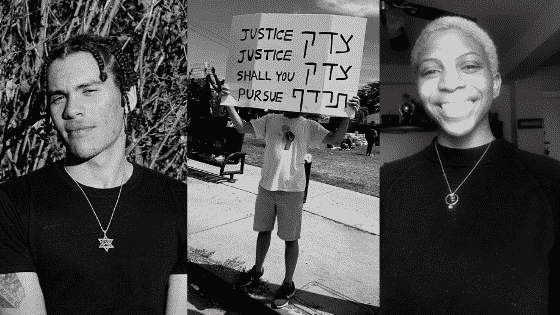
“Pikuach nefesh (saving a life). Tikkun olam (repairing the world). Tzedek, tezdek tirdof (justice, justice, shall you pursue). If these are the things I’m teaching to my b’nai mitzvah students, how could I not show up in some capacity this weekend?” Schon Wirtschafter, who attended a march near Griffith Park, said. “We need to continue to read and uplift black voices and black Jews. We need to let them know and let your own community know that you are no longer willing to be complacent in racism.”

Kelsey Goldberg, 31, participated in the May 30 march at Pan Pacific Park in Los Angeles. Goldberg has been involved with social justice activism for several years, attending many marches including the Black Lives Matter march for Michael Brown in 2014. This time around, she was surprised to see the diverse turnout including the number of white allies.

“The sheer size of the crowd and how interracial it was, I had never seen that before in those numbers,” she said. “This one seemed to have a lot more white allies out .… I know a lot of my friends showed up to this one. I’m not sure why this one struck a chord but I’m glad we’re finally here.”

She added volunteers were handing out face masks, visors, hand sanitizer, food and water. Local stores and restaurants including Canter’s Deli also were offering water from the sidelines at a march in West Hollywood. For the most part, protesters said it was organized, peaceful and powerful.

LOS ANGELES, CALIFORNIA – MAY 30: Protestors march during a demonstration organized by Black Lives Matter following the death of George Floyd on May 30, 2020 in Los Angeles, California. (Photo by Mario Tama/Getty Images)

Unfortunately, those peaceful protests later turned violent. Police and military enforcement were called in to quell looting. Protestors reportedly were attacked, tear gassed and arrested.

“It was also horrifying to see firsthand how violent and insecure the cops are, and how that insecurity fuels their violence,” said 33-year-old Benjamin-Shalom Rodriguez, who attended the protest at Pan Pacific Park. “As a white-passing queer Latinx Jew, anyone who passes as white — Jewish or Gentile — has inherent privilege in the U.S.A. And we must first accept that privilege, not shame it, and definitely not excuse it away before we can be a true, committed ally for Jews of color and all people of color.”

“We need and deserve to be heard,” 18-year-old Erykah Gaston, who is black and Jewish, said. “We deserve to fight for a change. There’s no reason that after 400 years, we are still fighting for the same life that we were fighting for when we were taken from our native lands .… Our own protest is being taken from us and is being used to silence us, as it always has been.”

Of the many local business damaged by the looting, a few Los Angeles synagogues were vandalized with anti-Semitic graffiti. California Rapper Westside Gravy said this news hurt him as a black Jew because hate groups tied to the graffiti and other looting during the protests were moving the conversation away from the main point of the movement and attacking his identity in multiple ways.

“I think a lot of people felt like ‘I don’t have a place in standing up for this movement because there is this active vandalism taking place against a place of worship.’ There are so many different white supremacist and far-left anarchists who are trying to co-opt the black struggle right now that we can’t point fingers and say this entire movement to fight for justice for black Americans is tainted by anti-Semitism,” the rapper said. “I think it’s important to recognize that and not flush a whole movement down the toilet because of the actions of people who are harming not only the Jewish community but the black community.”

“There is a painful, difficult process by which we are making ourselves something new and that to me is the American promise that we have been working toward for hundreds of years.” — Ginna Green

Naomi Ackerman, executive director of the Advot Project, took her daughters to Fairfax Avenue on the morning of May 31 to clean up before attending a protest in Santa Monica, which also turned violent.

“Cleaning up Fairfax was a very bipolar experience. I think we need to take responsibility for a lot of things and what we can do is help cleanup,” Ackerman, 56, said. “People are mad and they are hurt and there are reasons these things are happening. I work with people every day where this is their reality. Police brutality has to stop.”

In response to the violence, L.A. Jews for Black Lives released a petition demanding a “People’s Budget,” opposing the proposed city budget allocating half of its general funds for a police force that “terrorizes Black communities as well as the unhoused, undocumented, and other marginalized communities,” the letter stated. “We call on our Jewish community and allies to honor our common humanity — B’Tzelem Elohim (in the image of God), and affirm that Black Lives Matter,” the letter written to Mayor Eric Garcetti said.

Political strategist and co-author of JOCsCount Campaign Ginna Green noted that the country is going through a painful time right now but it’s necessary to make change.

“I think about how lobsters molt, like they basically lose their exoskeleton and it’s a really painful process of basically getting a new body,” Green said. “That’s what it feels like America is going through right now. There is a painful, difficult process by which we are making ourselves something new and that to me is the American promise that we have been working toward for hundreds of years.”

Additional reporting by Ariel Sobel.

What the Movement for Black Lives Means to Jews Read More »

david suissa podcast curious times

Pandemic Times Episode 50: Dealing with a Crisis of Emotions

New David Suissa Podcast Every Morning.

An expert on the psychology of emotions, Dr Reena Patel, discusses the chaotic times we are living through.

How do we manage our lives during the coronavirus crisis? How do we keep our sanity? How do we use this quarantine to bring out the best in ourselves? Tune in every day and share your stories with podcast@jewishjournal.com.

Pandemic Times Episode 50: Dealing with a Crisis of Emotions Read More »