fbpx

May 29, 2020

Jews Cannot Be Silent in the Face of Anti-Black Racism

“The most urgent, the most disgraceful, the most shameful and the most tragic problem is silence.” stated Dr Rabbi Joachim Prinz.

The Jewish community cannot be silent in the face of anti-Black racism in America. 

The Jewish and Black American relationship during the Civil Rights Movement was historic. Rabbis linked arms with Black Americans and marched on Selma. Jewish Americans overwhelmingly supported the civil rights movement compared to White Americans. Jewish Americans made up half the young people who participated in the Mississippi Freedom Summer of 1964. Jewish lawyers were estimated to be 90% of the lawyers analysing welfare standards, the bail system, arrest procedures, justice-of-peace rulings, obtaining parade permits, and complaining of jail beatings and intimidation.

But we cannot glorify Jewish America’s support of the civil rights movement whilst being a silent onlooker today when getting shot by the police is the leading cause of death for Black men in America. 

We cannot glorify Jewish America’s support of the civil rights movement whilst being a silent onlooker today when getting shot by the police is the leading cause of death for Black men in America.

Holocaust survivor Rabbi Prinz spoke at the March on Washington in 1963 stating that America must not become a nation of silent onlookers. 

America did. 

Jewish America must not. 

Rabbi Abraham Joshua Heschel marched the Selma-to-Montgomery March in 1965 and stated “For many of us the march from Selma to Montgomery was about protest and prayer. Legs are not lips and walking is not kneeling. And yet our legs uttered songs. Even without words, our march was worship. I felt my legs praying.”

Rabbi William Frankel marched the Selma-to-Montgomery March with the blessing of his Board of Directors. He was not protesting as an individual but as a representative of his congregation.  

The Jewish community must march again. 

It does not need to be stated how much the Jewish community has suffered. From a thousand years of ghettoization in Europe, to living as Dhimmi in the Middle East and North Africa, to genocide, to synagogue shootings across America. Indifference has enabled our suffering for millennia. The world of silent onlookers has condemned us to our deaths for millennia. We must not be complicit in its condemnation of Black Americans. 

As the Black community mourns another victim of murder by American police forces, the Jewish community must not only mourn with them. We must burn with rage with them too. The Jewish community must protest and aid the Black protestors of today – who protest their unjust murder at the hands of the police departments of America. If we do not, we are complicit in its happening.  
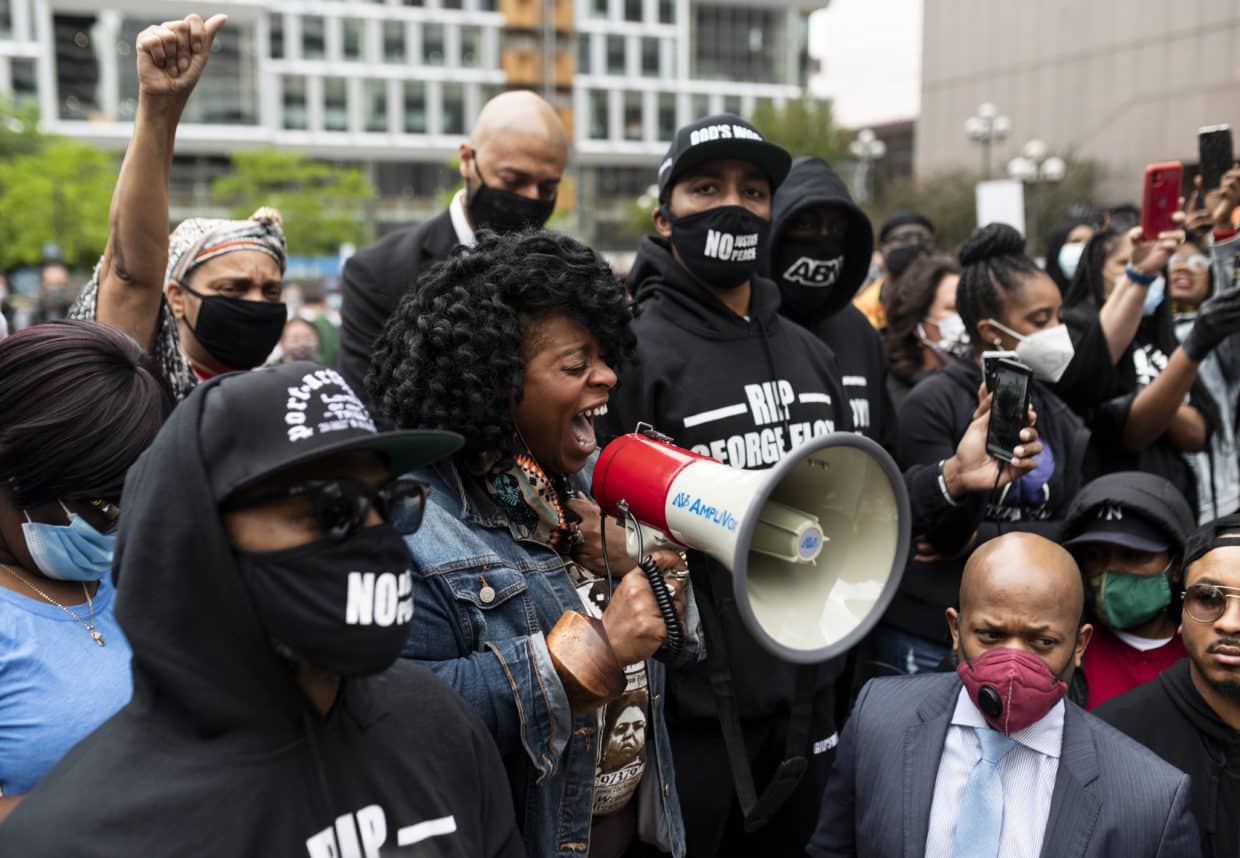
MINNEAPOLIS, MN – MAY 29: Jamela J. Pettiford sings during a protest with Former NBA player Stephen Jackson in response to the police killing of George Floyd outside the Hennepin County Government Center on May 29, 2020 in Minneapolis, Minnesota. Jackson, who was friends with George Floyd, spoke at a press conference before joining the protest. (Photo by Stephen Maturen/Getty Images)

The Jewish community must protect and join those protesting today. Our lawyers must defend protesters unlawfully arrested, our medics must treat victims of police brutality, our everyday Jewish Americans from the orthodox to the secular must march with the Black community, and our Rabbis must speak just as they did in the civil rights movement. 

The Jewish community prides itself on its commitment to social justice, we must show up to meetings, grassroots organizations, press conferences, and protests. Being silent onlookers cannot be an option when believing in Tikkun Olam; in repairing the world. 

Rabbi Jeffery Salkin of Temple Solel stated that “We [Jewish and Black Americans] are partners in creating a better America.” 

We must build a better America together.

Eliyahu Lann is a Jewish activist.

Jews Cannot Be Silent in the Face of Anti-Black Racism Read More »

The Bagel Report

Never Have We Ever Applauded Mandy Patinkin’s Twitter and Criticized Seinfeld

Erin and Esther are still wading through the content rapids, wearing their masks and pickling in their preferences. From adoring Mandy Patinkin’s Twitter videos to wondering if Jerry Seinfeld’s didya-ever-notice humor needs a more modern approach. From Ben Platt on Netflix to Batwoman on the CW, we’ve got all the comments. Plus being charmed by Mindy Kaling’s latest teen series, “Never Have I Ever.”

Follow ErinEsther and The Bagel Report on Twitter! 

Never Have We Ever Applauded Mandy Patinkin’s Twitter and Criticized Seinfeld Read More »

FCC Chair Asks Why Ayatollah Khamenei’s Tweets Don’t Violate Twitter Guidelines

Federal Communications Commission Chairman Ajit Pai asked Twitter in a tweet why Ayatollah Ali Khamenei’s tweets against Israel don’t violate Twitter’s guidelines.

Pai highlighted an assortment of Khamenei’s tweets stating that “the Zionist regime is a deadly, cancerous growth” and calling for “firm, armed resistance [against Israel].”

“Serious question for @Twitter: Do these tweets from Supreme Leader of Iran @khamenei_ir violate ‘Twitter Rules about glorifying violence?’” Pai asked.

Richard Grenell, former acting director of National Intelligence, similarly tweeted, “For months I’ve called on @Jack & @Twitter to remove this Islamic radical from this platform. And nothing has been done. He denies his people the right to be on twitter while Jack allows him to spew homophobia, anti-Semitism, sexism and violence.”

https://twitter.com/RichardGrenell/status/1266349967024816128


Pro-Israel activist Arsen Ostrovsky similarly tweeted, “Why is it that @Twitter
deemed @realDonaldTrump in violation of their rules, but not Iranian leader @khamenei_ir LITERALLY calling for genocide and destruction of Israel?”

On May 28, Twitter deemed President Donald Trump’s tweet stating “when the looting starts, the shooting starts” to be in violation of its guidelines for “glorifying violence.” Trump later said that he meant that “looting leads to shooting.”

Sen. Ted Cruz (R-Texas) sent a letter to Attorney General Bill Barr and Treasury Secretary Steve Mnuchin on May 29 arguing that Twitter was in violation of the Trump administration’s sanctions against Iran since it’s providing Khamenei and Iranian Foreign Ministry Javad Zarif with a service to share their views. The Texas senator argued that Twitter has said that it won’t de-platform Khamenei and Zarif because the social media company’s “goal is to elevate and amplify authoritative health information as far as possible.”

“In early April, Khamenei and Zarif used their Twitter accounts to post anti-American disinformation and conspiracy theories, not authoritative health information,” Cruz wrote. “They use their accounts provided by Twitter to threaten and taunt their enemies real and imagined. In any event, Twitter’s corporate values and grave misapprehension of the threat that Khamenei and Zarif pose are irrelevant.”

The Iranian people are banned from using Twitter.

He added that he had previously sent Twitter a letter of warning in February arguing that the social media platform was violating the law, and that because it ignored that warning, it was time for the federal government to take action.

According to Twitter, “direct interactions with fellow public figures, comments on political issues of the day, or foreign policy saber-rattling on economic or military issues are generally not in violation of the Twitter Rules.”

FCC Chair Asks Why Ayatollah Khamenei’s Tweets Don’t Violate Twitter Guidelines Read More »

US Ambassador to Israel Says Jewish Illiteracy Is Greatest Threat to Diaspora Jewry

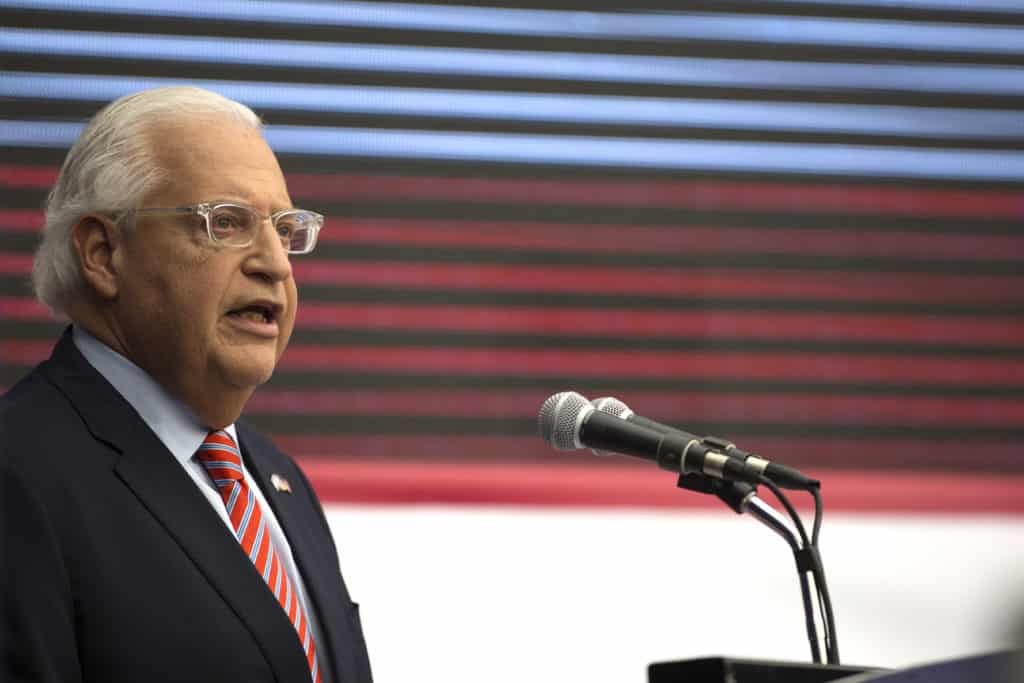
U.S. Ambassador to Israel David Friedman told a virtual conference that Jewish illiteracy is the greatest threat to Diaspora Jewry.

“The Jewish state, while not without issues, is growing: both religious and secular institutions are thriving, basic Jewish education is available to all and there is little risk of assimilation. The same cannot be said for the Diaspora,” Friedman told Haaretz’s “Judaism, Israel and Diaspora conference,” which took place on Wednesday.

Being “fluent in Judaism” is “an imperative for the future of the Jewish people, especially outside the State of Israel,” said Friedman, who is an Orthodox Jew.

“Regardless of how we believe or worship or observe our Judaism, what makes that practice uniquely Jewish and likely to continue and grow is our ability to place ourselves on an unbroken chain beginning in ancient times, that remains not just relevant – but even more critical today than ever before, as we struggle to find meaning in a complicated world,” the ambassador added.

Friedman said that doing things that are “morally just or helpful to others” is not enough because “Let’s face it: Jews do not have a monopoly on acts of kindness, charity or social justice.”

Friedman has criticized liberal Jews in the past. In a June 2016 op-ed on the website of Israel National News, also known as Arutz-7, a right-wing media outlet, Friedman wrote of J Street supporters: “They are far worse than kapos – Jews who turned in their fellow Jews in the Nazi death camps. The kapos faced extraordinary cruelty and who knows what any of us would have done under those circumstances to save a loved one? But J Street? They are just smug advocates of Israel’s destruction delivered from the comfort of their secure American sofas – it’s hard to imagine anyone worse.”

US Ambassador to Israel Says Jewish Illiteracy Is Greatest Threat to Diaspora Jewry Read More »

L.A. County to Reopen Restaurants, Hair Salons

The California state government gave Los Angeles County approval to start reopening restaurants, hair salons and barbershops on May 29.

Los Angeles County Board of Supervisors Chair Kathryn Barger announced the news on Twitter, stating: “This further brings our communities together and resumes a sense of normalcy, representing monumental progress for Los Angeles County as we join the vast majority of other regions in California on the path toward reopening and recovery.”


County Public Health Director Barbara Ferrer said during a May 29 press briefing that restaurants and hair salons can reopen as soon as they can comply with the county’s directives for reopening; the reopened businesses will be operating on an honor-system basis to follow the county directives.

According to KTLA, the county was able to get approval to start reopening restaurants and hair salons because the COVID-19 positive rate has been at 6.7% this past week; the state requires counties to have a positivity rate of below 8% in order to accelerate reopening.

On May 26, the county allowed houses of worship to reopen and in-store retail shopping to resume with social distancing guidelines in place.

There were 1,824 newly confirmed COVID-19 cases on May 29 and 50 new deaths from the virus in the county, bringing the respective totals to 51,562 and 2,290. County Public Health Services Director Christina Ghaly said that the number of new cases and hospitalizations have remained flat in the county.

L.A. County to Reopen Restaurants, Hair Salons Read More »

Pro-Palestinian Group: Israel Trains U.S. Police to Be Racist

The U.S. Campaign for Palestinian Rights (USCPR) tweeted on May 28 that the Israel Defense Forces (IDF) train police officers in the United States to be racist.

The tweet read, “The Israeli military trains US police in racist and repressive policing tactics, which systematically targets Black and Brown bodies. The recent murders of George Floyd, Breonna Taylor, and Ahmaud Arbery are examples of racialized, systematized violence.”

Author Einat Wilf, who formerly served in the Knesset as a Labor Party member, tweeted sarcastically in response, “Ah yes, of-course. Because there is absolutely nothing in American history to explain police brutality against black men. It has to somehow involve Israel. I thought only Palestinians lacked agency, now American cops lack it too — their actions determined by Zionist puppeteers.”

Pro-Israel activist Aboud Dandachi, who is also a Syrian refugee in Canada, tweeted, “Then you should be able to point to numerous instances where the Israeli police utilized the very same methods on Arab-Israelis. Hello? Hellooooo? What, no examples at all? Crickets?”

https://twitter.com/abouddandachi/status/1266206911252357120?s=20

Bryan Leib, former national director of the Americans Against Anti-Semitism watchdog, said in a statement to the Journal, “These false accusations by the Campaign for Palestinian Rights and Amnesty International are disgusting and completely false. It’s true that special operations teams in local and state law enforcement like SWAT do train with Israel but the average police officer has never received training from Israel! Will Twitter and Jack Dorsey be ‘fact checking’ these modern day blood libels being spread about Jews?”

According to Jewish Virtual Library, senior U.S. law enforcement officials have received training from the Israeli military on counterterrorism efforts since the 9/11 terror attacks.

The USCPR tweet comes after Minneapolis police officer Derek Chauvin appeared on a video pinning George Floyd, 46, face down on a street by putting his knee on the back of Floyd’s neck on May 25 during an arrest; on video, Floyd can be heard saying several times that he couldn’t breathe. When paramedics arrived, Floyd was unresponsive and later was pronounced dead at a hospital. Chauvin was fired, then arrested on charges of third-degree murder and manslaughter on May 29.

Pro-Palestinian Group: Israel Trains U.S. Police to Be Racist Read More »

Sixth Graders Find Ways to Connect With Senior Residents Despite Quarantine

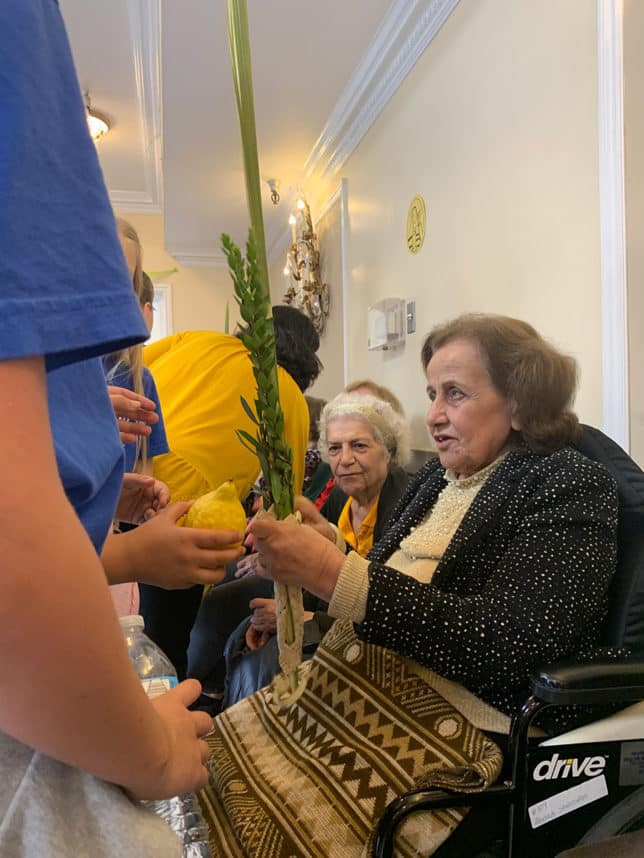
In March, to protect its residents from the coronavirus, the Iranian Senior Jewish Center in Pico-Robertson, like many other homes for seniors, was forced to end all extracurricular programming with visitors. This included the monthly visits that started at the beginning of the 2019-20 school year with all 43 sixth graders from nearby Pressman Academy of Temple Beth Am.

The program was a collaboration supported by the Better Together Program, which has made possible approximately 150 similar unions around the country since it began six years ago. Fortunately, the end of the physical visits has not meant an end to the connection.

The first time one of those sixth graders, 11-year-old Emma Steuer, visited the center last fall, she said she was nervous. “I’m not used to being with too many seniors, besides my grandparents,” the Beverlywood resident said. “I didn’t know what to expect or how to act.”

Pressman school Rabbi Chaim Tureff, anticipated students might be uncomfortable. After all, not only was there an age difference, and everything that comes with that, there was a language barrier because some of the center’s residents speak only Farsi. So, each month, before they walked to the center, the Pressman students had a grounding lesson. Sometimes the lesson was related to a holiday they might celebrate together.

“One of the lessons was about honoring people who are more senior than we are,” Tureff told the Journal. “How do we show them respect and do they deserve respect and where in Jewish text does it discuss honoring elders?”

With each visit, Emma grew more at ease, as did many of her classmates. They celebrated Sukkot and Hanukkah with the seniors. They played volleyball together —  modified, of course. And the students listened to their stories and memories about life in Iran, something Emma said she especially appreciated.

“A few students were so plugged in, it was incredible,” Tureff said. “You can see in their expression, in their voice.… They were really present.”

During three of their six visits, the Pressman students were joined by members of the Los Angeles-based band Distant Cousins. Singer and guitarist Duvid Swirsky is married to Pressman middle school counselor Shira Landau, and the band had worked with Pressman students in the past, including performing a song with them and students from Islah Academy, a Muslim American community in South Los Angeles, at an L.A. Clippers game in January. That went so well, Tureff said, it seemed like a “great opportunity” to work with them again. “Music is a great way to cross cultures” and “bridge the two communities,” he added.

Distant Cousins was supposed to join the students on two additional visits that had to be canceled after the outbreak of the coronavirus. Fortunately, they had made enough headway to complete the project. The uplifting, toe-tapping pop song the tweens wrote, performed and recorded with the center’s residents and the band is called “It’s a Miracle.” The lyrics are in English and Farsi.

Before COVD-19, the plan was for the students and seniors to gather in June to watch the premiere of the “It’s a Miracle” music video, which a Pressman staff member is in the process of editing. Unfortunately, that won’t be happening. But Tureff is hopeful they can find some way to share the video with the center’s residents this summer and maybe do Zoom meetings as well, at least until they can resume in-person visits.

“We tried to have FaceTime but unfortunately we have limitations,” said Ilana Tazdi, the center’s executive manager.

Since their last in-person visit in February, each Pressman sixth grader has penned three letters to the center’s residents. The most recent batch was delivered earlier this month, along with 80-plus plants — one for each resident. The plants were the request of the center’s staff, who suggested that watering and caring for living plants would give the seniors hope.

According to Tazdi, the letters from the students have been very well received. But she admits the residents “would prefer to talk to the kids. Having them here with the seniors was such a blessing,” she said. “It’s a fresh exchange. They got this energy from them.”

Correction: A previous version of this article incorrectly stated that Rabbi Tureff is Pressman’s head of school. 

Sixth Graders Find Ways to Connect With Senior Residents Despite Quarantine Read More »

How We Quickly Become Accustomed

At first I thought, this can’t be happening.

Now I make cookies and more cookies
And teach myself to quilt from YouTube videos.

I’m terrible at it and don’t care.
The things that can’t happen are always happening.
My children haven’t been to school in ten weeks.
They haven’t seen their friends or gone to the library
Or played in the park or hugged anyone but us,
And we are the lucky ones, the ones who have it easy.
At first, when your life swerves
Onto a highway you never knew existed,
You squeeze the steering wheel
And keep your eyes straight ahead.

But soon enough you begin to notice
The new vegetation growing by the side of the road.
Pale blue-and-white flowers, strange yellow shoots,
Giant insects, arching palm fronds,
Like the understory of another planet.
Were they here all along?

We let the children stay up late now,
We all sleep as long as we want.
In the morning we snuggle on the couch
And eat Cheerios, we learn the parts of an ant’s
Body, we make models of our solar system,
We sprout avocado seeds and plant them.
Was this here all along, this surfeit of time?
This open field of late morning,
These deep wells of dream?

How We Quickly Become Accustomed Read More »

Bridging the Generation Gap: A 6th Grader’s Insight into Collaborating with Seniors

Gloomy. Gloomy and unhappy. These words describe the Iranian Jewish Senior Center. The lights were dim and the walls were a little dirty. You could tell that not a lot of the residents liked it there. The nurses yelled, and the seniors went to bed around 7 p.m. They needed a light. Joy. Something to make the center feel more alive.

Fun. Fun and energetic. The sixth graders at Pressman Academy are always in a good mood. They hang out and tell jokes to one another. Everything was calm, and nothing big really happened. None of the teachers was too bad, and not a lot of the students felt unhappy. They were fine, just as they were. Just perfect.

Excited. Excited and hopeful. That’s how the seniors felt after they heard the news: Sixth graders from Pressman Academy were going to visit the Iranian Jewish Senior Center once a month. Most of the residents were filled with joy because they hadn’t experienced pure happiness in a while. They were excited, for a change, for something different, because right now, everything was the same. Everyday things were the same.

Nervous. Nervous and squirmy. The sixth graders were walking to the Iranian Jewish Senior Center. They weren’t very excited. When they walked in, all of the seniors were sitting in chairs against the walls. The students had to sit in the middle of the floor. People started to sing but it sounded kind of unnatural. You could hear a few nurses yelling at seniors in the background of the singing. One of the women  started to tell instructions to everyone. Then she said them in Farsi. All of the children felt uncomfortable. After all of the instructions, the children were given clipboards and were supposed to interview the seniors. The seniors were difficult to understand. A few of the seniors acted a little awkward, and even kissed students. It was all a little strange.

Delighted. Delighted and happy. The seniors had fun. Even though they couldn’t do much, they enjoyed having children in the senior center. The children brought in energy as they walked through the door. The seniors wanted the kids to come back. It was better than every other day that they had, with the same schedule. They didn’t seem to notice that they made the kids a little uncomfortable. They kind of treated the kids as if they were their own grandchildren. It was strange, but also nice. The seniors were happy when the children came, which made a big difference from before.

Annoyed. Annoyed and unwilling. The children were back at school. None of them really wanted to return to the center because they all generally felt a little uncomfortable. The senior center was not what they expected. Most of them were probably expecting the place to be like a nice apartment building, and the seniors to act like their grandparents. But the seniors were older. Some of them were blind. Some of them couldn’t hear very well. Some of them couldn’t speak very well. And some of them had only short-term memory. The children complained to teachers, saying they didn’t want to go back. They made up reasons to not go that had to do with the seniors, and how they were strange and awkward, when they knew that deep in their hearts, that they had already labeled the seniors since the beginning.

Optimistic. Optimistic and hopeful. Even though they didn’t always show it, a lot of the seniors at the Iranian Jewish Senior Center were pretty excited about the kids from Pressman Academy coming. So of course, they were excited when the kids visited again. This time, a band called Distant Cousins was coming. The bad was going to write a song with the kids and seniors. The song was supposed to be about miracles. The seniors had lots of miracle stories.

Calm. Calm but still upset. The children now knew what to expect, but still weren’t very happy to be there at the senior center. They walked in and, as usual, sat on the floor. The children were asked to go around and ask the seniors about miracle stories they’ve had in their lives, as ideas for the song. The seniors had lots and lots of very different stories. They all had the same big idea: being OK and happy. In the end, we came up with lyrics: “I can see; I survive; I’m healthy; I’m alive.” After that was the chorus, that just kept repeating “it’s a miracle.” And then we repeated the entire song in Farsi. It was different, but a nice kind of different.

Changed. Changed and suddenly thinking differently. At least that’s how some students felt. At the Iranian Jewish Senior Center, the kids were all still uncomfortable. They were still nervous. They were still squirmy. They were still annoyed, unwilling and upset. But they all knew, in the back of their minds, that life really was a miracle. Both for the kids and the seniors. It was a twisted, crazy, amazing miracle.


Emma Steuer is a student at Pressman Academy. Her essay on her experience at the Jewish Iranian Senior Center won second place in a national competition sponsored by the Better Together Program.

Bridging the Generation Gap: A 6th Grader’s Insight into Collaborating with Seniors Read More »

How Some Jewish Summer Camps Are Going Virtual This Year

Ask Jewish summer camp directors about the hardest part of designing a virtual camp experience for the COVID-19 era and they’ll laugh.

Then they’ll say that all of it is hard. That they’ve never done anything like this before. That camp on a screen isn’t really camp.

But with kids unable to run around freely without risking infection, Jewish camps by the dozen have responded by canceling their summer seasons. And now some of them are going virtual.

“It’s not camp,” said Elyssa Gaffin, director of Young Judaea Sprout Brooklyn, a day camp that’s offering two different virtual “summer experiences” beginning next month. “It’s challenging, if not impossible, to really create what makes camp camp in a virtual environment. But we still think there’s a lot you can do.”

As camps across the country decide not to open their grounds for the summer, many instead are asking parents to open their laptops. What they’ll find on their screens is a daily schedule of arts and crafts, games and even sports, all run by counselors and delivered by videoconference. Even campwide ceremonies, singalongs and talent shows will be reimagined as virtual experiences enjoyed from the comfort of home.

“This is the real world we live in now,” said Julie Finkelstein, the director of leadership development at the Foundation for Jewish Camp, which is helping to support camps going virtual this summer. “Virtual is our real world. This is our reality and we need to now create really magical, deep, meaningful experiences in our new reality.”

“Virtual is our real world. This is our reality and we need to now create really magical, deep, meaningful experiences in our new reality.”

Some 21 American Jewish camps have already signed up for Clickto.camp, an Israeli startup that built a platform for summer camps to operate online. Founder Dotan Tamir, who also runs a technology summer camp in Israel called Big Idea, began running online sessions in March to see whether kids would be into attending camp from home. He said the response from parents was overwhelmingly positive.

Tamir acknowledges that technology camps, where kids learn coding and other technical skills, lend themselves more naturally to virtual sessions. But kids seem to take the idea of virtual camp seriously. Tamir remembers one participant in an online session asking his counselor if he could leave to go to the bathroom.

“I did not expect kids to feel that way,” Tamir said. “It’s his bedroom, and he can go to the bathroom. But he asked his counselor because he felt like someone’s supervising, and he’s part of a group, and this is real.”

Clickto.camp, which launched its platform last week, runs on a videoconferencing service called Unicko. Participating camps have two options: They can have their own staff run programs virtually or they can pay for ready-made programs — dance, martial arts, cooking and so on — taught by outside instructors.

Campers set their schedules in advance and then click on a link that takes them through all the day’s sessions. The company charges camps $1.99 per camper per day to use its platform.

“We have electives where you’re moving in front of your screen — fitness, sports activities that have you move,” said Aaron Hadley, executive director of Camp Ben Frankel, a Jewish overnight camp in southern Illinois that will use Clickto.camp this summer. “Theater arts can still have a kid moving around and acting a piece out rather than just staying sedentary.”

Ben Frankel is even trying to replicate the unstructured time that sets camp apart from the rest of the year. Campers will still be organized into cabins and have their own videoconferencing rooms where they can schmooze, play games and decorate a virtual wall.

Campers will still be organized into cabins and have their own videoconferencing rooms where they can schmooze, play games and decorate a virtual wall.

Organizers aimed for a similar feel this month at an annual conference for Jewish camp staff run by the Foundation for Jewish Camp. The virtual conference was a kind of trial run for the online camps many participants will be running this summer. Participants organized into virtual cabins, had informal Zoom rooms where they hung out and performed many Jewish camp standbys, from song sessions to Israeli dancing to daily prayers (morning or evening, depending on the time zone).

“It’s just showing them that not all is lost,” Finkelstein said. “Actually, we can have a really silly time over the screen.”

The virtual programs fall far short of actual camp experiences. Singalongs are impossible, as video technology lets only one person speak at a time. Song sessions will generally involve a song leader singing alone with everyone else on mute.

Sprout Brooklyn plans on running baseball activities for its campers, but those will involve practicing drills at home rather than actual games. And while videoconferencing rooms will be open for lunch breaks, kids won’t always be able to break off and have more intimate conversations.

“We acknowledged many, many times that this was not our ideal and this was not what we had hoped for,” Finkelstein said, adding that “If Zoom could develop one thing for the Jewish musical world, it would enable people to sing together.”

Ben Frankel and Sprout Brooklyn are confident from their conversations with parents that some kids will enroll. Ben Frankel usually has around 100 kids in third to 11th grade, while Sprout usually has 300, from pre-K to fifth.

Ben Frankel will be charging $199 per week for the camp, as opposed to $1,000 for a normal summer. Sprout has not determined its pricing yet, but Gaffin said the goal is just to break even.

“I don’t know any camps that are looking at virtual camp as a cash cow,” she said.

So what’s the hardest part of this whole undertaking?

Gaffin said she doesn’t know. Maybe the whole thing. But in spite of that, she feels ready.

“Something at this scale has never been done before,” she said. “But one of the things that makes camp camp is the ability to do a lot of problem solving and crisis management and pivoting. So if anybody has the skill set to make it work, it’s definitely camp people.”

How Some Jewish Summer Camps Are Going Virtual This Year Read More »