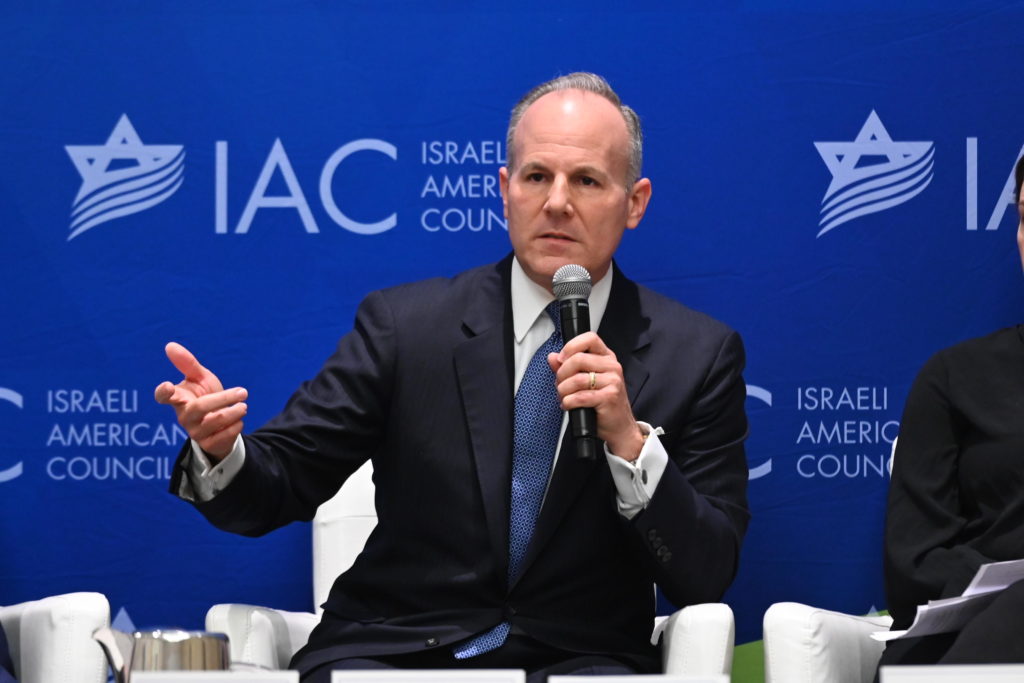
Shmuel Rosner and Tal Schneider discuss Israel’s new government.
Tal Schneider is a diplomatic and political correspondent for Globes in Israel and is a former DC correspondent for Maariv newspaper. Her stories have also appeared in Haaretz, Saloona, Mako and Al-Masdar.
We’ve become so inundated with positive, uplifting messages to help us get through these pandemic times, it’s easy to overlook some of the darker stuff.
I saw some of it on Sunday.
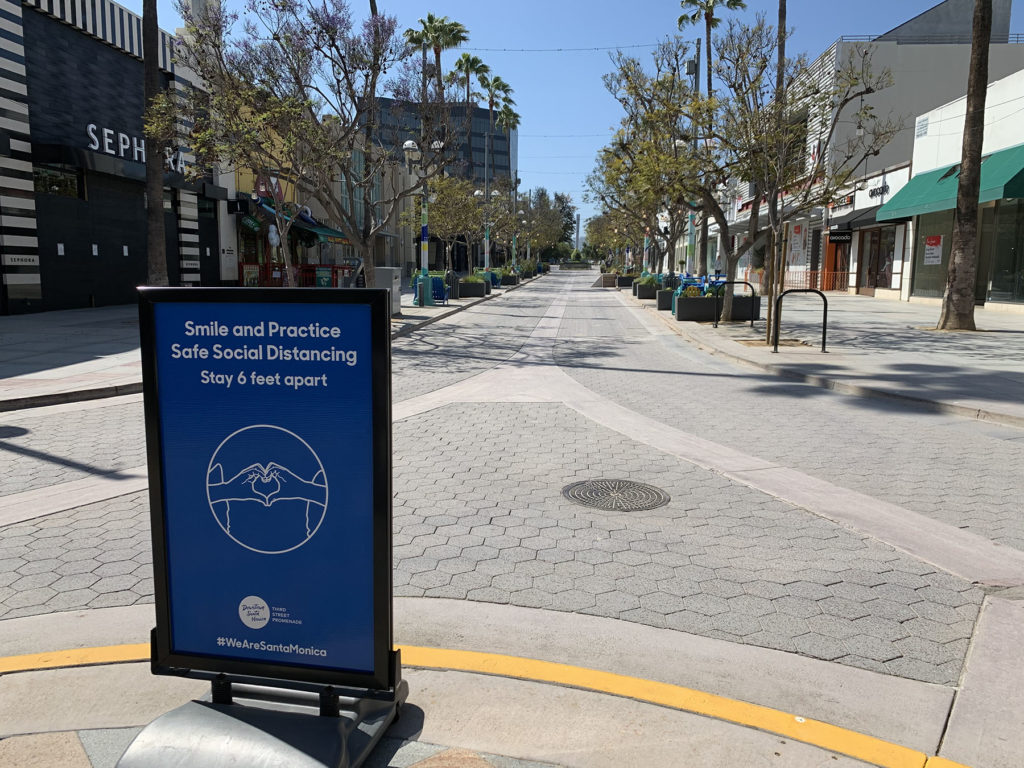
After a beautiful drive up the coast, on a whim I decided to stop by one of my favorite L.A. haunts: The Third Street Promenade in Santa Monica.
On Sunday afternoons, the promenade is usually packed with people strolling and shopping, including tourists from around the world.
Last Sunday, aside from a few peaceful homeless people who were lounging around, it was a ghost town.
I pulled out my iPhone and started filming. All I saw, whether it was for a big retailer, a small boutique or a fancy restaurant, were “Sorry we’re closed” notices at entrances.
Of course, none of it surprised me. After all, that’s what a “lockdown” means: people stay home, businesses close, ghost towns happen.
As much as we all prefer focusing on positive stories, we ought not ignore the economic devastation that millions of small business owners and their employees are experiencing because of the crisis.
These days, “Sorry we’re closed” notices are the first thing people are seeing at retail businesses across the nation. It may become the poignant slogan for these pandemic times: “Sorry we’re closed.”
As much as we all prefer focusing on positive stories, we ought not ignore the economic devastation that millions of small business owners and their employees are experiencing because of the crisis.
In fact, I wouldn’t mind seeing some of our local leaders give their next press conference at the Promenade. While they share their plans to address the crisis, the backdrop of an empty promenade would be a sharp reminder that some people are paying an enormous price.
That price may get even higher.
In a chilling piece in the Atlantic titled, “The Bridge to the Post-Pandemic World is Collapsing,” Annie Lowrey, who covers economic policy for the magazine, asserts that “Many small businesses won’t survive, and that will change the landscape of American commerce for years to come.”
As much as the COVID-19 virus is novel, so is the policy conundrum triggered by the pandemic.
“This deep freeze has posed a singular policy challenge,” Lowrey writes. “The government has never before been tasked with figuring out how to put a majority of the country’s businesses on life support.”
SBA programs such as the Payroll Protection Program (PPP), she says, are “too little, too late.” In any case, they are more geared for short-term crises, which is hardly the case with COVID-19.
She quotes John Lettieri of the Economic Innovation Group: “If you have a short-duration crisis that causes a lack of liquidity across small businesses, followed by a quick return to normal, PPP is going to help a lot of businesses. But does that sound like what we’re facing? Not to me.”
The Third Street Promenade in Santa Monica on Sunday, May 3, 2020.
It’s the same theme I hear over and over again—we’ve never seen anything quite like this crisis, which means emotions such as fear and anxiety will dominate.
“When responding to something like this, you’re not just dealing with dollars and cents. You’re dealing with toxic and pervasive fear and uncertainty,” Lettieri told Lowrey. “I can’t take for granted that Congress will extend this program, and that I’ll have a business worth running in three months. I’m going to burn through the cash I have in pocket, so why not cut losses now?”
As a result, Lowrey writes, “Facing mounting bills and absent revenue, many businesses are closing permanently, rather than drifting further and further into insolvency.”
All the talk these days about “re-opening” our states and cities sounds hopeful and wonderful, but let’s not kid ourselves: The reality is that many businesses will not be able to re-open.
I know. None of this is very pleasant. The toughest part of covering this crisis for journalists is confronting realities we’d rather not confront. Personally, I much prefer driving up the coast listening to the Beatles than walking through an empty and desolate promenade.
The government alone, regardless of how many trillions of dollars it prints, will not get us out of this jam.
Eventually, though, we all will be forced to reckon with the darker side of our pandemic times.
The government alone, regardless of how many trillions of dollars it prints, will not get us out of this jam. We’re in uncharted territory, where communities and philanthropies may have to step up to mitigate the economic and social fallout. But that’s for another column.
For now, I can only dream that one Sunday afternoon in the not too distant future, I will see a large crowd of happy shoppers and strollers on my beloved Third Street Promenade.
— Rabbi E. Poupko- Stands With #IranProtests 💪 (@RabbiPoupko) May 3, 2020
Oren’s account was reinstated shortly after The Jerusalem Post reached out to Twitter asking why his account was suspended. Twitter told the Post the suspension was a mistake. “This account was mistakenly caught in a spam filter,” a Twitter spokesperson told the Post. “The suspension was reversed and we notified the account holder.”
The spokesperson added it could take a while before a reinstated account gains all its followers back.
Oren’s last tweet before May 4 was in February; the Post reported, “Oren’s account [that] had been restricted as early as April 21 may not have been functional since before that. Twitter declined to disclose the date.”
Michael Doran, a foreign policy expert at the conservative think tank Hudson Institute, asked in a tweet why Oren had been suspended from Twitter while “[Iranian Foreign Minister] Javad Zarif, Louis Farrakhan and a gazillion other dirt bags are still tweeting away.
Twitter had mistakenly suspended Farrakhan’s account for a brief period in July before reinstating him; Farrakhan hasn’t tweeted since then.
Philanthropist Adam Milstein similarly tweeted, “Twitter continues its bizarre banning & suspension of accounts, while simultaneously allowing antisemites to operate freely on their platform. The latest victim? @DrMichaelOren, whose account was suspended, then reinstated.”
Tablet senior writer Yair Rosenberg tweeted that Oren’s “account had previously been locked for suspicious activity, and my presumption is that it got hacked and then suspended. He didn’t seem to be using it.”
Oren told the Post he wondered if his suspension was due to users reporting his December tweets criticizing The New York Times of its coverage of the boycott, divestment and sanctions (BDS) movement, arguing that the Times had been “whitewashing an anti-Semitic organization.”
Oren tweeted after he was reinstated, “Deepest thanks to all who expressed concern over the suspension of my Twitter account. I was moved by the outpouring of support for Israel and the Jewish people and for the right to defend us from hate. Our fight can now continue.”
Deepest thanks to all who expressed concern over the suspension of my Twitter account. I was moved by the outpouring of support for Israel and the Jewish people and for the right to defend us from hate. Our fight can now continue.
In 2018, Canary Mission, a watchdog against anti-Semitism, had its Twitter account suspendedtwice that year; both times, they were reinstated after Twitter confirmed the account hadn’t violated the platform’s rules.
Elan Carr, the State Department’s anti-Semitism monitor, wants to get people in other countries to love their Jews more as a means of countering anti-Semitism.
In a press call Monday to mark Jewish American Heritage Month, Carr outlined steps the United States was taking worldwide to advocate for defending Jews as violent anti-Semitism spikes, including security measures, prosecuting hate crimes and condemning anti-Semitic speech.
“In addition to all of those important defense measures, we are determined also to work with our allies in developing and driving Philo-Semitic narratives for their country, in the hope that we can reach the day when every society dedicates itself, as the United States has, to embrace and to treasure its Jewish community,” he said.
He did not outline what shape the philo-Semitic narratives would take, or how the State Department would drive them.
“The opposite of anti-Semitism is not tolerance,” Carr said. “The opposite of anti-Semitism is Philo-Semitism, the appreciation, respect, and affection for Jewish values and the Jewish community. Jewish American Heritage Month is an important vehicle for driving that critical Philo-Semitic narrative.”
Carr listed Jewish American luminaries worth promoting, including composers Irving Berlin and Leonard Bernstein, scientists Jonas Salk and Albert Einstein, and Supreme Court Justices Louis Brandeis and Benjamin Cardozo.
Carr also addressed the spike in anti-Semitic narratives that blame Jews for the coronavirus pandemic.
“We’ve actually brought together various authorities that work in this area, in governments, ours and others, and in the private sector or for-profit, but also NGOs that specifically address internet hate speech,” he said. “And we’re bringing together these authorities specifically for the purpose of producing a framework to address this.”
On May 4, Israeli Defense Minister Naftali Bennett announced that Israel’s Institute for Biological Research (IIBR) has reached a significant development in treating COVID-19. The Jerusalem Post and Times of Israel reported the IIBR has completed an antibody that attacks and neutralizes the coronavirus.
“The antibody development phase is over,” the IIBR said in a statement, adding it now is aiming “for international companies to produce the antibody in commercial quantities.”
Bennett said in a statement, “I am proud of the staff at the Israel Institute for Biological Research who have made a huge breakthrough. The creativity and Jewish mind have brought this amazing achievement. The entire defense establishment will continue to operate at the forefront of the fight against coronavirus.”
UN Watch executive director Hillel Neuer tweeted, “A shame that all those countries that support [the boycott, divestment and sanctions movement] at the U.N. will on principle be unable to benefit from this new antidote.”
A shame that all those countries that support BDS at the U.N. will on principle be unable to benefit from this new antidote https://t.co/Yo4A9VQyYe
British researcher David Collier tweeted, “Most people on hearing the news that Israel has made a breakthrough in the development of an antibody that neutralizes the coronavirus: ‘Wow, I so hope that’s true.’ But to anti-Semites: ‘Well that just proves they did create the virus in the first place.’”
Most people on hearing the news that Israel has made a breakthrough in the development of an antibody that neutralises the coronavirus:
'Wow, I so hope that s true.'
But to Antisemites:
'Well that just proves they did create the virus in the first place.'
Israel’s Galilee Research Institute (MIGAL) is in the final stages of development for its vaccine, and Tel Aviv University professor Jonathan Gershoni obtained a United States patent for a COVID-19 vaccine on April 19. There are at least 100 vaccines being developed worldwide for the coronavirus.
Earlier on May 4, Israeli Prime Minister Benjamin Netanyahu announced a $60 million pledge from the Israeli government to organizations worldwide that are working on a COVID-19 vaccine.
“We must all work together on improving diagnostics, accelerating therapies and ultimately developing a vaccine,” Netanyahu said. “I am confident that Israel’s leading research institutions, its world-renowned scientists and our unique culture of innovation can enable us to play an important role in advancing solutions on all three fronts.”
JERUSALEM (JTA) — Sabas and savtas can visit the grandkids and Aroma can start brewing anew.
In a nationally televised address Monday, Prime Minister Benjamin Netanyahu announced a further relaxation of coronavirus restrictions in Israel. The new rules permit visits by first-degree relatives – without hugs — and cancel the restriction on movement beyond the immediate vicinity of one’s home. This means that grandchildren and their grandparents to get together for the first time in weeks.
Malls, markets and gyms can open beginning Thursday, and gatherings of up to 20 people may be held in open spaces, though with masks and the appropriate social distancing. By May 17, outdoor weddings can have 50 guests.
Kindergartens, preschools and day care centers will open on May 10. Schoolchildren in grades 1-3 and 11-12 began returning to their classrooms on Sunday.
The government plans to lift all restrictions on gatherings by the middle of June, which will allow the opening of sports arenas, theaters, hotels and restaurants.
Netanyahu said the relaxation of the restrictions will be reassessed if there are 100 new coronavirus cases a day, a doubling of cases within 10 days or at least 250 serious cases in hospitals.
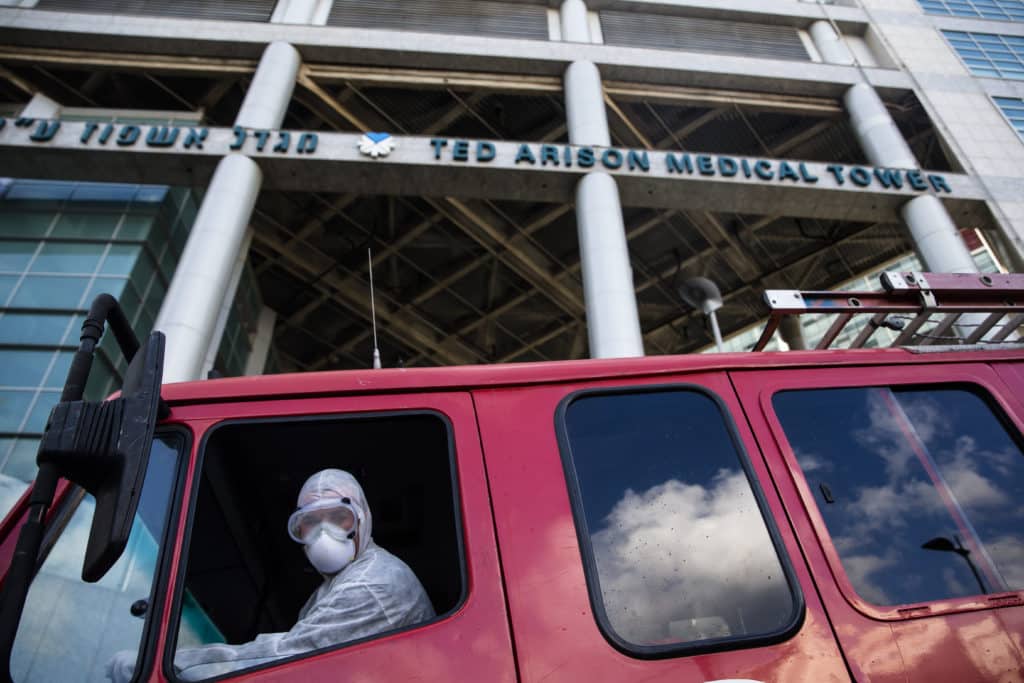
Israel has seen 16,246 coronavirus cases and 235 deaths. Some 10,064 COVID-19 patients have recovered. Several hospitals have been able to close their coronavirus units in recent days.
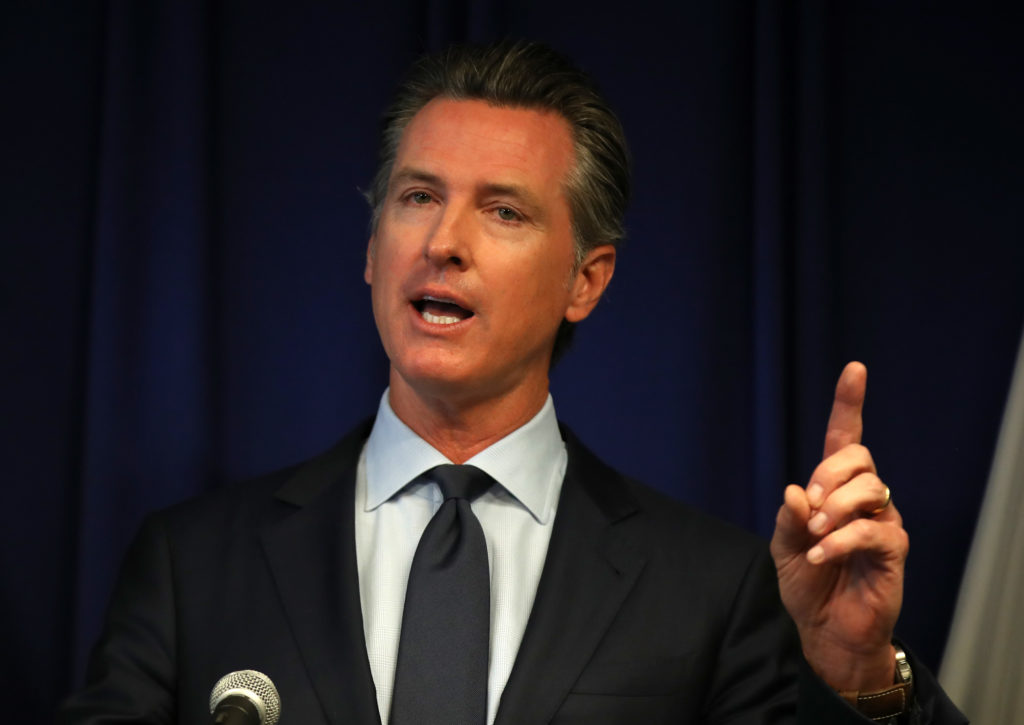
California Gov. Gavin Newsom, a Democrat, said that the state could start to reopen on May 8.
“CA is led by data and SCIENCE,” Newsom tweeted on May 4. “Based off our progress, we’ll begin to gradually move into Stage 2 this FRIDAY. Some sectors where there’s a lower risk of transmission will be able to adapt & re-open with modifications.”
CA is led by data and SCIENCE.
Based off our progress, we’ll begin to gradually move into Stage 2 this FRIDAY.
Some sectors where there’s a lower risk of transmission will be able to adapt & re-open with modifications.
This will include some retail and manufacturing/logistics.
The businesses that could reopen include clothing stores, florists, bookstores and sporting goods stores, although they would have to allow for curbside pickup. Shopping malls and dine-in restaurants are still not allowed to reopen.
What DOES this include? Places like: – clothing stores – florists – bookstores – sporting goods stores
All with curbside pick-up.
What does this NOT include at this time? Places like: – Offices (can continue telework) – Restaurants (seated dining) – Shopping Malls
Newsom added that he would provide further guidance on the matter on May 7. Local counties can move further into reopening if the county supervisors and health officials sign off on it.
Under Newsom’s plan to reopen California, the state is currently under Stage 1 and would appear to be entering Stage 2 — the reopening of lower-risk businesses — on May 8. Stage 3 is the reopening of higher risk businesses such as movie theaters, nail salons and gyms, and Stage 4 is a full return to normalcy.
FOX 11 Los Angeles reporter Elex Michaelson tweeted, “Will Los Angeles County amend its May 15th [shelter-in-place] order to be in line with the state? There will be A LOT of pressure to do so.”
Will Los Angeles county amend its May 15th order to be in line with the state? There will be A LOT of pressure to do so. https://t.co/Tk1hosEzyO
As of this writing, there are 52,197 confirmed COVID-19 cases and 2,172 deaths in the state. Over the past 24 hours, hospitalization declined 1.9%, but intensive care unit (ICU) patients increased 0.9% in California.
Jewish Contributions to Humanity #1: Original research by Walter L. Field.
Sponsored by Irwin S. Field.
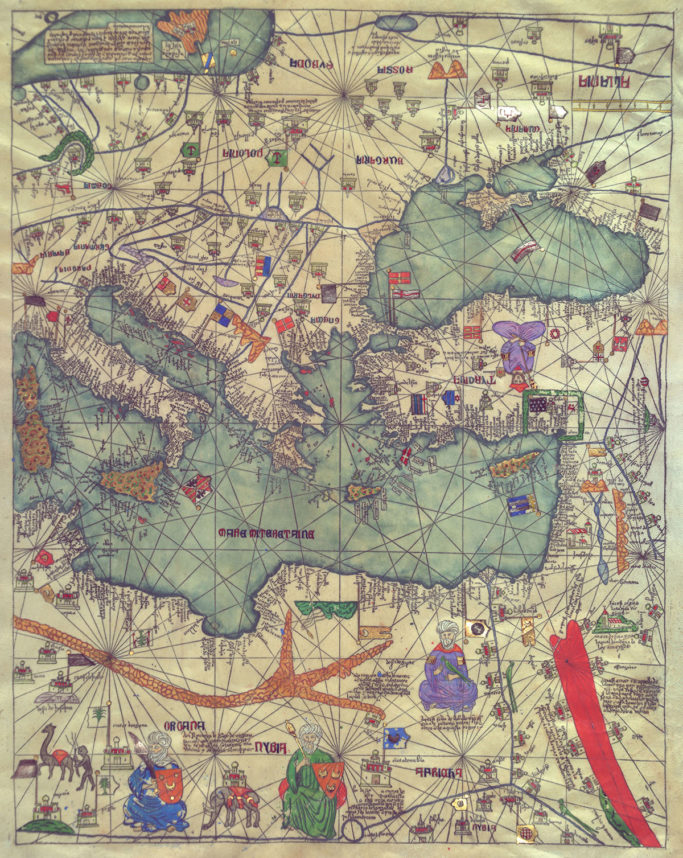
ABRAHAM CRESQUES (1325-1387) b. Majorca, Spain.
The Mapmaker. A distinguished Spanish mapmaker and compass expert from the island of Majorca, Cresques was a leading member of the Majorcan cartographic school, a term attributed to the mostly Jewish cartographers and navigational engineers who had a huge impact on exploration until the Spanish Inquisition in the 15th Century. Prince John of Aragon tasked Cresques and his son, Judah Cresques, with designing that day’s most accurate maps to describe and illustrate the world as it existed west of the Strait of Gibralter. Their work became known as the Catalan Atlas, the most important Catalan map of the Middle Ages.
ABRAHAM ZACUTO (1452-1515) b. Salamanca, Spain.
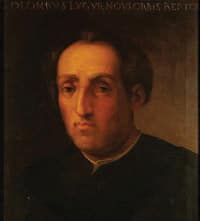
A guide for Columbus. The impact of Jews on navigation was so profound that had it not been for Zacuto, the discoveries of Christopher Columbus and Vasco de Gama (the first European to reach India by sea) may not have happened. Zacuto, a Spanish rabbi, astronomer, mathematician, and historian, created the first truly useful astrolabe for marine navigation. His astrolabe helped determine a ship’s latitudinal position by using the position of the sun. And his astronomical tables were used by Columbus and de Gama, who was thoroughly consulted by Zacuto before his 1496 voyage to India.
Legend has it that Zacuto’s astronomical tables may have actually saved the lives of Columbus and his crew when natives in America attacked them. Columbus told the natives that if he was harmed, he would extinguish the sun and the moon, depriving them of light. Why did the natives believe him? Because Columbus—using Zacuto’s astronomical table—accurately predicted an eclipse that appeared.
Another Jew who played an integral role in Columbus’s discovery of the New World was Luis de Torres, the interpreter on Columbus’s first voyage and the first Jew to settle in America. He converted to Catholicism just before the voyage in order to avoid an expulsion edict against Spain’s Jews. Sent by Columbus to Cuba, de Torres was warmly greeted in an Indian village and it was there that he became the first European to ever encounter tobacco.
LEVI BEN GERSHOM (1288-1344) b. Bagnols-sur-Cèze, France.
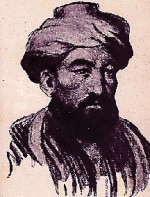
The rabbi astronomer. One of the most brilliant and least known Jewish philosophers, Rabbi Levi was a pioneering 14th century French mathematician whose invention, the Jacob’s staff, could determine the angles between landmarks and celestial objects, such as the horizon and the moon, an exceedingly useful tool for explorers for about 200 years. Rabbi Levi, also known as Gersonides, may have also been the first astronomer to accurately determine stellar distances—the distance between stars, by discovering that the stars did not rotate around the earth. His refutation of the Ptolemaic or geocentric model helped lead to Copernicus’ heliocentric model.
Reflections on the fate of small businesses in a post-Corona world.
How do we manage our lives during the Coronavirus crisis? How do we keep our sanity? How do we use this quarantine to bring out the best in ourselves? Tune in every day and share your stories with podcast@jewishjournal.com.
Israeli Prime Minister Benjamin Netanyahu announced on May 4 that the Israeli government will provide $60 million toward efforts to develop a COVID-19 vaccine.
Netanyahu announced the pledge in a pre-recorded video in a European Commission-hosted virtual marathon to raise money for the World Health Organization, Bill and Melinda Gates Foundation and other organizations worldwide working on the vaccine.
“Global plague eradication requires global partnership,” Netanyahu said. “Israel, like all countries, was significantly affected by the plague. Fortunately, the number of victims we have so far is relatively low. This is the result of early action to stop the virus, advanced technology used to track those infected, first-rate medical experts and a disciplined population that largely obeyed the government’s containment policy.”
He acknowledged that while Israel and other countries are starting to reopen their economies, the COVID-19 pandemic is not close to ending and the pandemic can only end when a vaccine is developed.
“We must all work together on improving diagnostics, accelerating therapies and ultimately developing a vaccine,” the Israeli prime minister said. “I am confident that Israel’s leading research institutions, its world-renowned scientists and our unique culture of innovation can enable us to play an important role in advancing solutions on all three fronts.”
Other participants in the event included British Prime Minister Boris Johnson, French President Emmanuel Macron, Jordan King Abdullah II and Turkish President Recep Tayyip Erdogan. The United States did not participate in the event.
Various Israeli institutions have been making progress on developing a vaccine. The Galilee Research Institute (MIGAL) is reportedly in the final stages of developing its vaccine and the Israeli Institute for Biological Research has been testing its on rodents. On April 19, Tel Aviv University professor Jonathan Gershoni obtained a patent from the U.S. Patent and Trademark Office for a COVID-19 vaccine; he estimated at the time that he was two-thirds of the way toward completing his vaccine.
There are dozens of companies around the world working toward developing a vaccine and reportedly at least 100 vaccines in the pipeline. Eight reportedly are in human trials, including two in the United States.
As of this writing, there are 16,237 confirmed COVID-19 cases and 235 deaths from the virus in Israel.