fbpx

April 30, 2020

Finding Meaning in the 75th Anniversary of Hitler’s Suicide

Today is the 75th anniversary of the suicide in a German bunker of Adolf Hitler, the evilest man that ever lived.

In the summer of 2017, I took my family on a three-week trip to visit the killing fields of Europe where 6 million Jews were murdered in the Holocaust. We arrived in Braunau am Inn, Hitler’s birthplace in Austria on July 16. The town is adjacent to the Inn River, which serves as the border with the German state of Bavaria. When we speak of Hitler as an Austrian we also have to acknowledge that he was born just a few miles – literally – from the German border. Branau is located halfway between Linz and Munich, less than 40 miles north of Salzburg.

I wanted to go to the place where a normal baby was born. A childlike any other who through his rancid, evil choices brought the world into darkness. Who would have thought that this one person, this baby, when they changed his diaper and fed him, would go on to create the single most catastrophic event in world history? Without him, it probably would not have happened. How is that possible?

Who would have thought that this one person, this baby, when they changed his diaper and fed him, would go on to create the single most catastrophic event in world history?

I had to see the place, but when I got there I was disgusted. I had an all-consuming feeling that I cannot fully put into words. There was a palpable sense of evil. When you grow up learning about Hitler and the Holocaust, places seem so far away and the time seems so distant. I’ve studied the Holocaust since I was a boy. In my mind it was black and white, it was a thousand years ago. Something like this coul only happen in the Dark Ages. My attitude started to change when I was sitting in Amsterdam with Anne Frank’s best friend, Jacqueline van Maarsen, and she showed us the box full of hand-written items from Anne. I realized then the Holocaust just happened; it is still so recent. There are so many people alive, thank God, who saw, who experienced, who were part of it. A lot of the evil perpetrators are still alive as well.

Now, walking down the street of this provincial town on a beautiful summer day, I could not wrap my head around the fact that the man responsible for the Holocaust was born right here. There was an excruciating sense of evil.

Although I knew there was no answer, I hoped to somehow find a clue in his hometown to explain Hitler’s motivations. How could he have caused so much suffering to so many people? It wasn’t just one person — it was the German people, it was the Austrian people and all the people who participated. But Hitler was the leader who galvanized them all.

You expect Hitler to be hatched in hell, with claws and horns. But he was a baby born in this quiet town nestled on a picturesque river.

I kept asking myself, how did this happen in a normal setting? You expect Hitler to be hatched in hell, with claws and horns. But he was a baby born in this quiet town nestled on a picturesque river. It was all too normal. I wanted to find some toxic waste or radiation that might have altered his DNA in a way that would explain how this man became a monster, the way Godzilla emerged in the movies by some sort of powerplant.
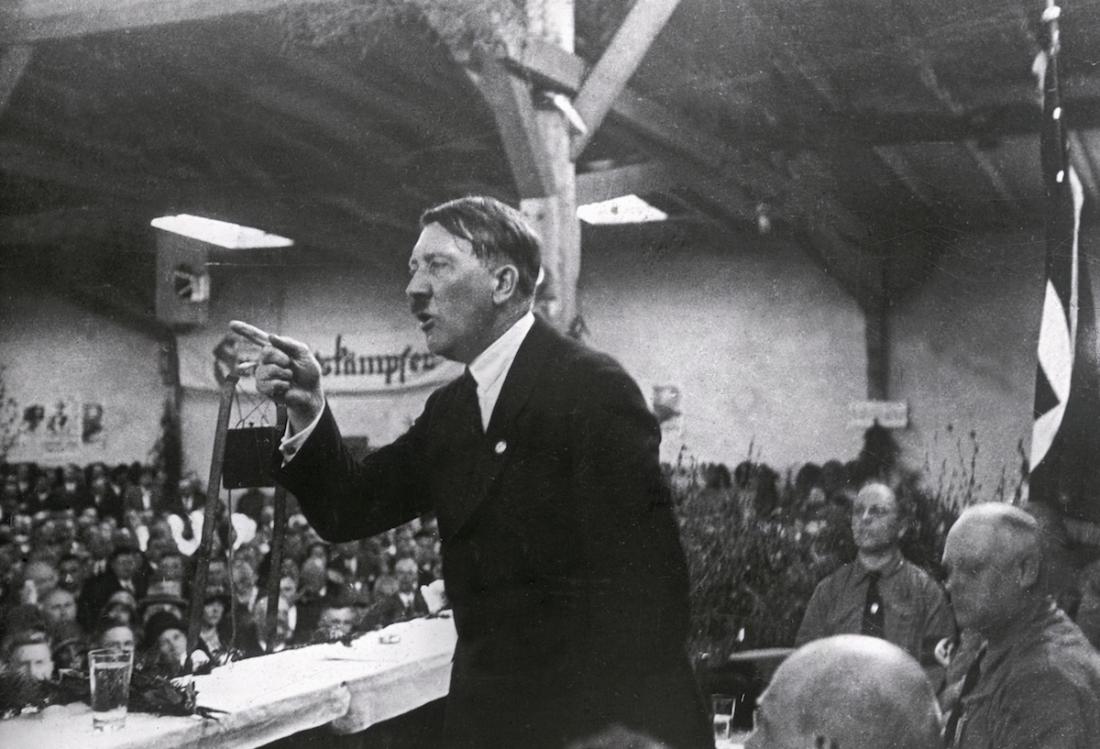
Adolph Hitler giving a speech around 1925

Of course, we found nothing in the air or the water.

Still, there’s a part of you that wants to blame the city. But the city is not evil. The people are not evil – except the ones who participated in the Holocaust.

The residents are aware of their town’s horrific claim to fame, but can do little about it. One indication of their discomfort was the decision by the town council in 2011 to revoke any honorary citizenship that may have been conferred on Hitler in 1933. The vote was held despite the lack of evidence that Hitler received such an honor.

We walked down the street to where Hitler’s family lived. It is a residential area, It has a restaurant, which we found filled with diners, adjacent to Hitler’s birthplace. Everyone was outside, eating and laughing in the nice weather and I’m sure they gave no thought to the town’s most infamous resident. I felt it was an inappropriate place for a restaurant. They should have blocked off the whole street.

When we reached the address, it was unremarkable. The building had been a guest house where Hitler’s parents had rented rooms to be close where his father Alois worked as a customs official. Adolf was born to Klara, Alois’s third wife, on April 20, 1889, joining half-siblings Alois Jr. and Angela. Three years later, they moved when Alois was transferred to Passau.

I felt weird taking pictures there. I felt nauseated.
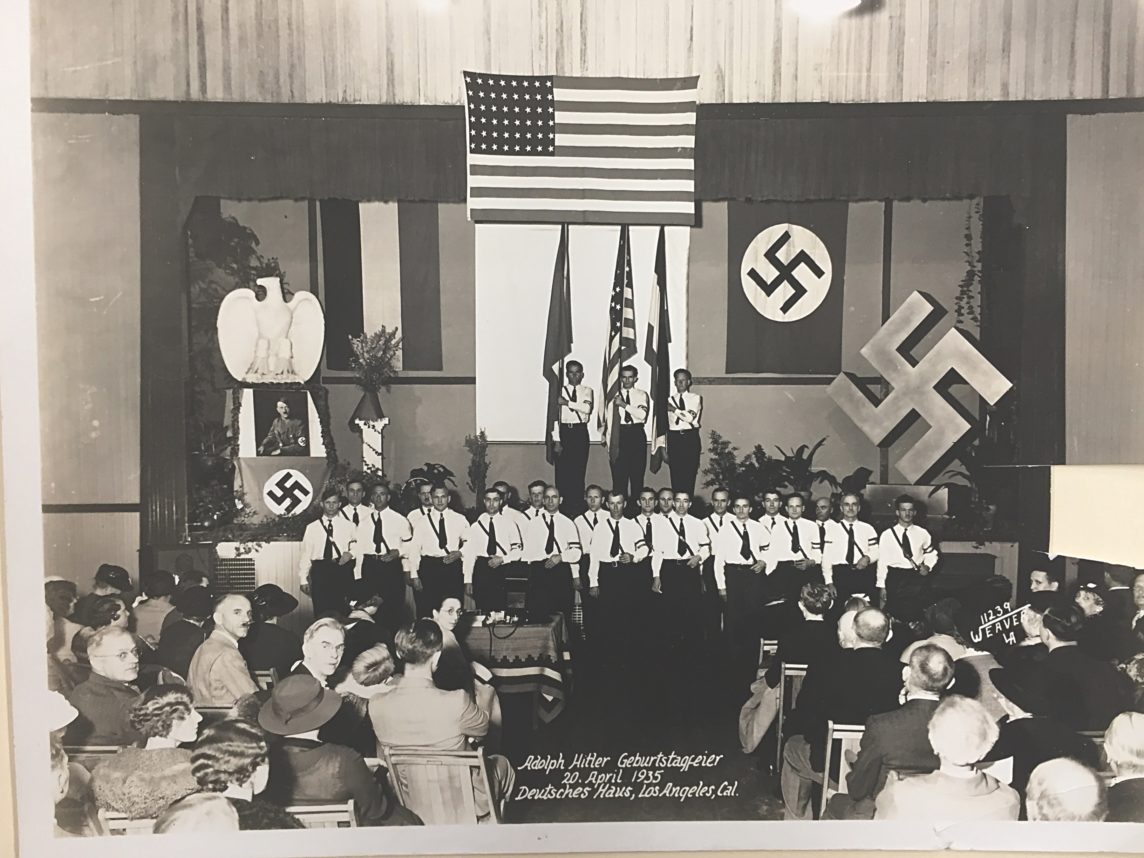
Adolf Hitler’s Geburtstagfeier (birthday celebration) at Deutsches Haus in Los Angeles on April 20, 1935.
Jewish Federation Council of Greater Los Angeles, Community Relations Committee Collection, Part 2, Special Collections and Archives, Oviatt Library, Cal State Northridge

In April 1938, after the Anschluss, Braunau renamed the street Adolf-Hitler-Straße and its town plaza Adolf-Hitler-Platz. Hitler’s personal secretary, Martin Bormann, purchased the house for the Nazi Party and it was used as a cultural center. The letters MB, presumably for Bormann, appear above the door.

The building was briefly occupied by U.S. troops at the end of World War II and temporarily housed an exhibition on Nazi concentration camps. It was kept intact because it was part of the historic city center and was returned to its original owners. In later years, the building housed a library, a bank and high school classrooms. Its last tenant was a charity for people with learning disabilities. Since 2011 it has been empty.

You would not recognize the house if you did not know the address – Salzburger Vorstadt 15. There is no plaque or marker that says This is the building where Hitler was born. In fact, there was nothing at the house until 1989 – two weeks before the centenary of Hitler’s birth – when the mayor, Gerhard Skiba, directed that a granite memorial stone be placed directly in front of the house on public ground. His predecessor had wanted to put a tablet on the house, but the owner of the building, Gerlinde Pommer, objected because she said it violated her property rights and feared it would make it a pilgrimage site for neo-Nazis or a target of anti-fascists.

The only hint that Hitler was born in the building is that memorial stone. On one side, facing the building is the German inscription: Stone from Concentration camp Mauthausen. On other side, it says:

For Peace, Freedom and Democracy.

Never Again Fascism.

Millions of Dead Remind [us].

I found this message strange. What did it mean? Why was the emphasis on unnamed fascists who carried out the Final Solution? As is the case of too many memorials created by the Polish, Austrian and German governments, there is no reference to Jews. Yes, Hitler was responsible for the death of millions of people, but it was only the Jews and the Roma whom he sought to exterminate. This was a pretty pathetic way to distinguish the house of the world’s greatest mass murderer.

Walking through the city is eerie. There is a silence between onlookers and visitors. As in other towns we visited, the residents all know why you are there but don’t want to say anything. We are a Jewish family. We look Jewish. We are traveling around Austria and Germany and not a lot of people know much about the Jewish people other than they were slaughtered in these places – and many young people do not even know that. They don’t mean to look at us in a weird way, but they do because they don’t see a lot of Orthodox Jews.

Neo-Nazis and other admirers of Hitler are aware of his birthplace and are drawn to it. Every year, on Hitler’s birthday, anti-fascist protesters rally outside the building. Partly as a response, the Austrian government adopted a special law to expropriate the property from Pommer in 2016 and is now considering demolishing it. That recommendation has been controversial and I agree with the opponents. I am completely opposed to the building’s demolition. Instead, it should be turned into a Holocaust museum. Each of these historic places presents an opportunity to educate against genocide, fascism, bigotry, hatred, against racism and anti-Semitism. It is especially important now with the global growth of anti-Semitism.


Rabbi Shmuley Boteach’s memoir, “Holocaust Holiday: One Family’s Descent into Genocide Memory Hell,” will be published later this year. Follow him on Twitter and Instagram @RabbiShmuley.

Finding Meaning in the 75th Anniversary of Hitler’s Suicide Read More »
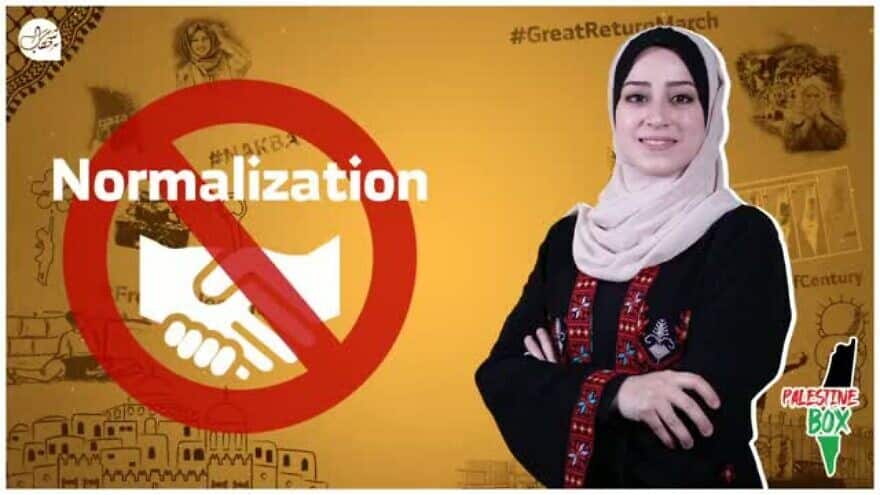
Any Dialogue With Israelis Is Collaborating With Enemy, Says Gazan Journalist

 Palestinian activist Rami Aman, who participated in a two-hour video conference with Israelis earlier this month, has been arrested by Gaza police for attempting “normalizing relations with Israel” and for interrogation with regard to possible Israeli funding, according to Gaza-based journalist Alaa al-Asi.

In a video uploaded to Facebook by Hamas’s Shehab News Agencon April 18, al-Asi said that all joint activities, cooperation or dialogue with any Israelis, including peace activists, must be viewed as collaboration with the enemy.

Aman’s two-hour online meeting with Israelis, said al-Asi, “angered the Palestinians, especially in Gaza.”

The next day, she added, “police in Gaza arrested Rami Aman for interrogation on cases of receiving external funding from Israel and other issues, including normalization with Israel.”

Any dialogue with Israelis outside of the framework of the Palestinian “resistance,” even with Israeli peace activists, is unacceptable to “anti-normalizers,” she said.

“Dialogue—if it occurs outside the resistance framework—becomes dialogue for the sake of dialogue, which is a form of normalization, that hinders the struggle to end injustice. In the view of anti-normalizers, no form of joint activity, cooperation, or dialogue with Israelis is acceptable—even engaging with Israeli peace activists who have the best of intentions.”

All such undertakings, she said, “must be viewed as collaboration with the enemy.”

Any Dialogue With Israelis Is Collaborating With Enemy, Says Gazan Journalist Read More »

Texas Jewish Family Converts Kippahs to Face Masks for Homeless

A Jewish family in Houston is turning kippahs into face masks for their town’s homeless population to wear during the coronavirus pandemic.

The Jason family has already collected nearly 700 from donations and has dubbed their campaign “Kippahs to the Rescue.”

The family has collected many yarmulkes, as they are also called, from various events over the years.

“We decided to put them to good use,” said teenager Matthew Jason, the youngest of three brothers. He and his brother Jeremy were already volunteering every Friday in downtown Houston with the organization Food Not Bombs, a nonprofit that feeds the hungry, before they started their new effort.

The family’s synagogue, Congregation Brith Shalom, is helping to collect kippahs and set up a drive-through collection box at the temple so congregants could drop off unwanted ones.

To make the face masks, the family has been sewing six-inch elastic strips to both sides of a kippah to anchor it around the ears. They later switched to clipping the bands since it is faster and just as sturdy. Food Not Bombs is helping hand out the masks to those in need.

“My parents, brothers and I worked very hard to sew elastic bands on them. It was so great to see how I was able to help out, and people were so appreciative,” said Matthew. “There’s a lot of people out there that really need help and anything can help even in the smallest way.”

Texas Jewish Family Converts Kippahs to Face Masks for Homeless Read More »

Taylor Swift Is Not An Anti-Semite

In today’s woke and hyperpartisan world, nobody escapes the watchful eye of the thought police. Not even a pop superstar like Taylor Swift.

The 30-year-old singer has sold tens of millions of recordings in her career that span the genres of country and pop music. That’s made her one of the highest-paid female musicians in the world with legions of fans who admire her for her talents and philanthropic endeavors while also buying the various products she endorses—from Diet Coke to Elizabeth Arden perfumes. But that hasn’t exempted her from being hammered by the forces of political correctness for criticizing the Soros family of billionaires.

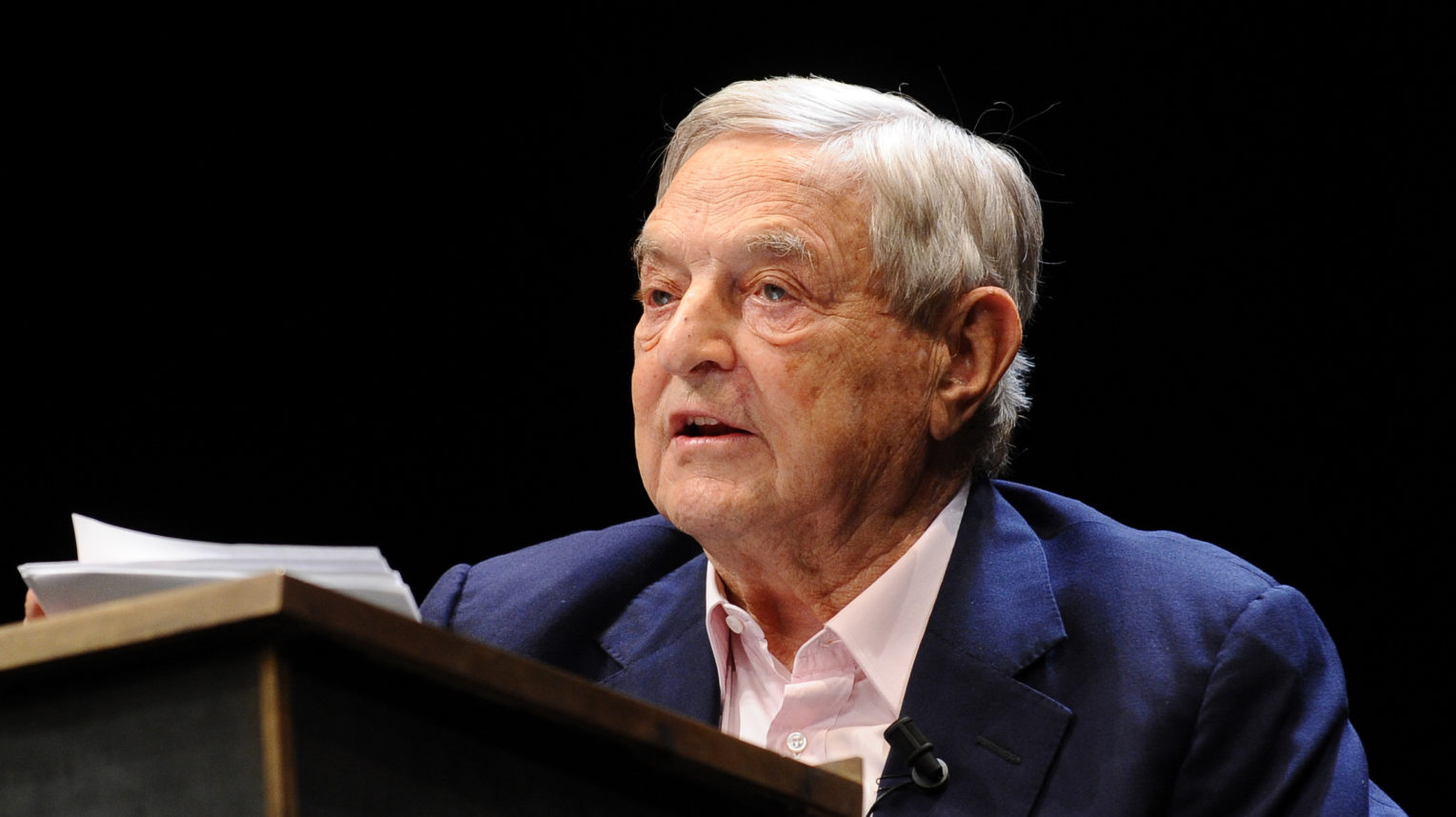
Some on the left sought to “cancel” Swift last week after she voiced her dismay about the role that Alexander Soros—the son of hedge-fund billionaire, philanthropist and mega-political donor George Soros—played in depriving her of the rights to the master recordings to her first six albums.

Some on the left sought to “cancel” Swift last week after she voiced her dismay about the role that Alexander Soros—the son of hedge-fund billionaire, philanthropist and mega-political donor George Soros—played in depriving her of the rights to the master recordings to her first six albums. Furious over the intervention of the younger Soros in the transaction, Swift vented to her 131 million Instagram followers (in a post that has since been deleted) that Alex Soros and his family were guilty of “shameless greed.”

PARK CITY, UTAH – JANUARY 23: Taylor Swift attends the 2020 Sundance Film Festival – “Miss Americana” Premiere at Eccles Center Theatre on January 23, 2020 in Park City, Utah. (Photo by Neilson Barnard/Getty Images)

What’s wrong with calling billionaires who outmaneuver a millionaire greedy? Nothing, as long as you don’t say it about a Soros. That’s because protecting that wealthy family from critics has become a political imperative for left-wingers who approve of the massive donations that the elder Soros and his Open Society Foundations have made to a plethora of liberal causes and Democratic Party candidates. But it’s also a way to silence any criticism of their political activism on the part of conservatives as evidence of anti-Semitism.

Soros has been the focus of anti-Semitic invective, especially in his native Hungary, where he has been an opponent of the Viktor Orbán government. In the United States, resentment of Soros has to do with his massive funding of leftist protest movements and the Democratic Party, not his Jewish origins. Much like the way those on the left have demonized the libertarian Koch family and other right-wing political donors, conservatives have launched polemics against Soros and his Open Society Foundations over what he and his admirers call “democracy-building,” but which they see as a radical agenda that undermines the freedoms of the liberal order.

Soros has been the focus of anti-Semitic invective, especially in his native Hungary, where he has been an opponent of the Viktor Orbán government.

Accusing Jews of greed and of buying influence is a staple of classic anti-Semitism. But that can’t mean that anyone with Jewish ties must be treated as exempt from criticism for engaging in political conduct or in business practices that offend some people.

An effort by both ends of the political spectrum to focus on the personal agendas of wealthy donors is a way of silencing arguments rather than engaging the ideas that the Soros and Koch families support. With respect to Soros, some on the left have also taken to treating any attack on him or his son’s political machinations or their business dealings as proof of anti-Semitism.

Accusing Jews of greed and of buying influence is a staple of classic anti-Semitism. But that can’t mean that anyone with Jewish ties must be treated as exempt from criticism for engaging in political conduct or in business practices that offend some people.

So it was to be expected that Swift’s Instagram post would bring down on her the wrath of the woke. Tara Mulholland, a CNN producer tweeted that Swift was dog-whistling to what she thinks is the singers’ neo-Nazi fan base. The far-left Jewish group Bend the Arc, which receives funding from Soros’s foundations, chimed in by accusing Swift of “sharing anti-Semitic conspiracy theories about the Soros family” because, they claimed, “shameless greed is a dog whistle aimed at Jews.”

This isn’t the first time Swift has clashed with the guardians of left-wing political correctness. In 2017, she was denounced by the American Civil Liberties Union for threatening to sue a blogger that accused her of supporting the white-supremacy movement and compared her to Adolf Hitler. While the ACLU was right that the writer smearing Swift was protected by the First Amendment, the group went further and seemed to justify the blogger’s crackpot theories.

What makes all this even crazier is that Swift is a liberal who opposes President Donald Trump, supports abortion rights, Democrats and the same fashionable political causes embraced by just about everybody else in the entertainment industry.

She holds a grudge against the Soros clan because they helped finance the sale of the rights to her first albums to one of their associates. Swift wanted the record company to sell the masters of the recordings to her so she could further profit from her early work. Regardless of whether or not you like Swift and/or dislike Alex Soros’s politics, the sale wasn’t an injustice. The people Soros funded had the right to buy them.

Photo from Wikimedia Commons.

But having striven to make the Soros family bulletproof against any criticism of their political investments or high-handed business tactics (George Soros is still hated in Malaysia and other countries whose currencies crashed as a result of his piratical high finance adventures), their activist retainers must denounce anyone who dares to mention the fact that they are ruthless profiteers or seeking to impose left-wing ideological goals on America and Israel (where they support pro-BDS groups).

The problem here isn’t Swift’s language, or the rights and wrongs of a business deal that shouldn’t interest anyone who’s not one of her fans. Rather, it is a dishonest approach to political discourse that has unfairly sought to label anyone with a critical opinion about the Soros family as somehow linked to neo-Nazis. Some denizens of the fever swamps of the far-right are guilty of anti-Semitic attacks on Soros. But anyone who spends hundreds of millions on ideologically tinged political advocacy must be considered fair game for legitimate criticism in a democracy.

It’s time to stop pretending that the name Soros is akin to a martyr of anti-Semitism and for their hired guns to stop smearing anyone—be it Taylor Swift or Republicans—who takes a swipe at the billionaires as hatemongers.

Jonathan S. Tobin is editor in chief of JNS—Jewish News Syndicate. Follow him on Twitter at: @jonathans_tobin.

Taylor Swift Is Not An Anti-Semite Read More »

Satyrs are Real and other Haiku

And he shall effect atonement upon the Holy of Holies

No-one wants to think
about Yom Kippur in the
middle of a plague.

Azazel – fallen
angel – We’re bringing goats to
wherever he fell.

Your clothes are not off
the hook if you sin. Cleanse them
along with your flesh.

Why wait until the
seventh month to afflict your-
self – If not now, when?

The word slaughter is
used more times than I prefer
in aliyah two.

For God’s sake, if you
slaughter an ox anywhere
bring it to the priests.

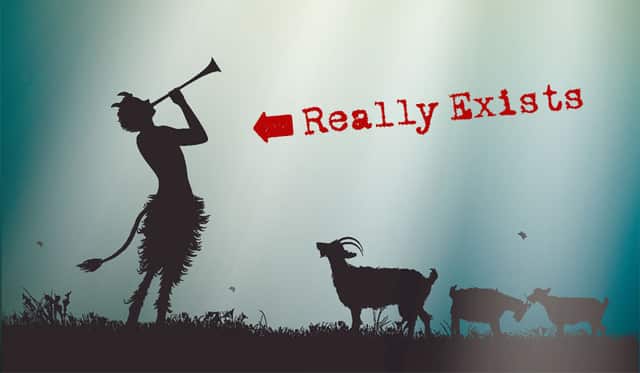
No more sacrifice
to the satyrs. But now
we know they are real.


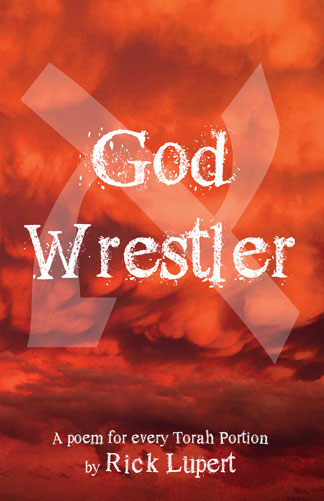
God Wrestler: a poem for every Torah Portion by Rick LupertLos Angeles poet Rick Lupert created the Poetry Super Highway (an online publication and resource for poets), and hosted the Cobalt Cafe weekly poetry reading for almost 21 years. He’s authored 23 collections of poetry, including “God Wrestler: A Poem for Every Torah Portion“, “I’m a Jew, Are You” (Jewish themed poems) and “Feeding Holy Cats” (Poetry written while a staff member on the first Birthright Israel trip), and most recently “Hunka Hunka Howdee!” (Poems written in Memphis, Nashville, and Louisville – Ain’t Got No Press, May 2019) and edited the anthologies “Ekphrastia Gone Wild”, “A Poet’s Haggadah”, and “The Night Goes on All Night.” He writes the daily web comic “Cat and Banana” with fellow Los Angeles poet Brendan Constantine. He’s widely published and reads his poetry wherever they let him.

Satyrs are Real and other Haiku Read More »

A Crisis Took ‘Showing Up’ Away From Us

It still blows me away that every synagogue in the world is closed for business. As well as virtually every restaurant, movie theater, shopping mall, music and sports venue, museum, library, and so on.

I’m not even mentioning lifecycle events like weddings, b’nai mitzvahs, brits, funerals, shivas and other occasions where communities usually gather.

This freedom to “show up” anywhere we choose — perhaps the most fundamental freedom of all — has been wrenched away from us.

What effect will this have on our lives once the crisis is over? Will we be more cautious, more withdrawn, less willing to engage with crowds?

Or will we re-embrace our precious freedom with a vengeance?

I’m no prophet. I have no idea which way things will go. I do know, however, that what is happening to us right now is unprecedented and these questions are pressing on my mind.

Because human beings are so used to adjusting to any situation as a survival mechanism, it’s easy to overlook the radical social disruption caused by these pandemic times. Also, the focus has been, appropriately, on the medical and economic devastation caused by COVID-19.

When more than 60,000 people lose their lives and more than 25 million people lose their livelihoods, it’s hard to focus on anything else. But the longer we are isolated from one another, the harder it becomes for me to ignore the communal and social repercussions.

I know homebody types who actually enjoy the isolation — no social pressures, no tense meetings, no forced smiles. There is a certain freedom to be found in a blank social calendar.

But even for homebodies, that can get old really fast. Eventually, humans need human contact — real human contact, not the digital Zoom substitute.

A perfect example is the community synagogue.

Once a week, on Shabbat, communities gather to reconnect after a long week, to catch up with friends, to feel the warmth of a like-minded crowd.

That is all gone.

The valiant efforts to transfer this synagogue life online is a no-win proposition. Sure, you can have online classes and prayers and Zoom sessions, but that can never compete with real-life gatherings — and everyone knows that.

In fact, it’s fair to say that real-life gatherings might be the most essential service provided by synagogues. Praying alone at home or listening to a brilliant sermon online can only go so far. It’s the collective energy of a crowd, the collective chanting, the feeling of togetherness that really moves us.

That’s true as well for places like malls and restaurants. Our very economy lives or dies on people “showing up,” presumably to consume.

But we also need the crowds. Crowds are a visual reaffirmation of our humanity, a reminder that we are not alone. I love going to movie theaters for precisely that reason. I enjoy being part of a crowd of strangers. Their anonymity is part of the experience.

In pre-COVID-19 days, walking through the streets of Manhattan was one of my favorite highs. A sea of humanity walking on sidewalks, as if in unison. It didn’t matter if I knew no one. I didn’t need to. The human energy was enough.

All that is gone. We can’t “show up” anymore.

When we do show up somewhere—to go for walks, bicycle rides, food shopping, etc.— we have to be extra careful to keep our distance. In other words, even when we leave our places of isolation, we are reminded of our isolation.

Which direction will I follow after this crisis is over and the world starts to open up? I’m guessing I will run to the first party I’m invited to, or the first synagogue service, or my favorite restaurant or movie theater.

But I’ll probably show up wearing a mask and gloves.

A Crisis Took ‘Showing Up’ Away From Us Read More »

Garcetti Announces Free COVID-19 Testing for L.A. County Residents, but County Officials Say Testing Should Remain Limited

Los Angeles Mayor Eric Garcetti announced on April 29 that free COVID-19 testing now will be available for all Los Angeles County residents, but county officials disputed that a day later.

Garcetti said that people can register for testing at 34 sites throughout the county, although priority will be given to those who are experiencing symptoms.

“So long as COVID-19 spreads, we have to scale up our response — and because this disease can be a silent killer, we have carefully built the capacity to get more people tested,” he said. “No one should have to wait, wonder or risk infecting others. Don’t leave it to chance. Schedule a test.”

Garcetti added that the city can test up to 18,000 people per day.

“This is a really important step to prepare for other steps forward in the weeks to come,” he said.

However, county officials said in an April 30 press briefing that those who are asymptomatic, low-risk and don’t work in essential jobs shouldn’t be tested. Asymptomatic people can register for testing only in the city of Los Angeles.

“There is no scientific evidence that would clinically indicate a need to test low-risk, asymptomatic individuals, outside of certain scenarios, such as people who reside in institutions, in congregate living settings — including people experiencing homelessness — [and] those who can’t obey the stay-at-home orders,” County Department of Health Services Dr. Christina Ghaly said.

County officials also announced that there were 1,541 new COVID-19 county cases on April 30 and 56 new deaths, putting the county’s respective totals at 22,485 and 1,056.

Garcetti Announces Free COVID-19 Testing for L.A. County Residents, but County Officials Say Testing Should Remain Limited Read More »

Acharei Mot

It’s amazing we invented the concept
of the scapegoat, only to have it used against us
during the second war to end all wars.

And one can’t help but feel bad for the goat
both of them really. One to be sacrificed
the other to be sent off into the desert.

Who decides?

What did either of these goats do?

What did any of us do?

And then there’s the story of the holiest
spot there is, and most of us can never go there.

Just the one person, on the one day,
dressed in white
(don’t worry, it’s ages before Labor Day)
enters through a cloud of smoke.

Apologizes for everything everyone has done.

It’s the ultimate backstage pass.

I guess if someone is willing to
take responsibility for all my sins
I’ll find other places to be holy.

I think it was Han Solo who
famously said, “It’s not my fault.”

Honestly, I have nothing else to say about that
I just think it’s important to mention
Han Solo periodically.

And speaking of famous people.

This is the parsha that proves definitively
that Dracula could not be Jewish.

Don’t drink blood. Cover it with dust.

I’m sorry, Vlad, you are not one of us.

And if you ever needed a list of
who not to sleep with, or more specifically
whose nakedness not to uncover
may I suggest Leviticus chapter 18?

This is the one that fuels the fire of the
homophobes. But the text isn’t as specific
as they would have you believe.

Let’s eliminate the prefixes from the word
leaving only sexuality.

I took French in high school
where the word mot means “word.”

Here it means “death.”

Sometimes I
just want to be
in Paris.


Rick Lupert, a poet, songleader and graphic designer, is the author of 23 books including “God Wrestler: A Poem for Every Torah Portion.”

Acharei Mot Read More »

david suissa podcast curious times

Pandemic Times Episode 30: The Anxiety of College Students During the Crisis

New David Suissa Podcast Every Morning at 11am.

A conversation with Leah Siskin Moz, Director of Wellness at Hillel International, on the effects of COVID-19 on students’ well-being.

How do we manage our lives during the Coronavirus crisis? How do we keep our sanity? How do we use this quarantine to bring out the best in ourselves? Tune in every day and share your stories with podcast@jewishjournal.com.

Pandemic Times Episode 30: The Anxiety of College Students During the Crisis Read More »

Newsom Announces Temporary Closure of OC Beaches

California Gov. Gavin Newsom announced in an April 30 press briefing that the state would be forcing Orange County beaches to temporarily shut down, after approximately 40,000 people attended those beaches over the weekend.

The closure will start May 1 and doesn’t have a set end date. Newsom said he felt the closures were necessary because the “the images we saw on a few of our beaches were disturbing.”

“My job as governor is to keep you safe,” he added.

Newsom said he hoped the closures are “a very short-term adjustment.”

On April 29, FOX 11 Los Angeles reporter Bill Melugin unearthed a memo sent to police chiefs across the state stating all state and local beaches would be closed.

Newsom distanced himself from the memo during the April 30 press briefing. “That memo never got to me,” he said. “Those doing good work, we want to reward that good work and behavior … that’s where I’ve been the entire time.”

However, Los Angeles Times reporter John Myers tweeted that sources told him “statewide action was imminent — contrary to the way [Newsom] now portrays it.”

Also on April 30, the Newport Beach Police Department released photos from the weekend and said in a statement that “the vast majority of beach goers [were] practicing social distancing. There were, in places, some clusters of people that were not social distancing.”

Orange County Supervisor Don Wagner said in an April 29 statement that he disagreed with Newsom’s decision.

“Medical professionals tell us the importance of fresh air and sunlight in fighting infectious diseases, including mental health benefits,” the statement read. “Moreover, Orange County citizens have been cooperative with California state and county restrictions thus far. I fear that this overreaction from the state will undermine that cooperative attitude and our collective efforts to fight this disease, based on the best medical information.”

The Los Angeles Police Department tweeted on April 30 that city beaches remain closed.


As of this writing, there are 46,500 confirmed COVID-19 cases in California and 1,887 deaths from the virus in the state.

Newsom Announces Temporary Closure of OC Beaches Read More »