On April 5 at 9:30 p.m. ET, an Israeli cycling team will host a virtual indoor ride as a way to donate N95 masks to medical personnel worldwide.
According to a press release, the Israel Startup Nation (ISN) team will host the ride on Zwift, a video-game platform for cycling, running and other physical exercising activities. ISN minority owner Dr. Kevin Ham will be donating a mask for each participant in the virtual ride; ISN is aiming for at least 1,000 masks.
“There are shortages everywhere,” Ham said. “We will certainly try to deliver one of the next shipments to places like New York.”
ISN held a prior virtual ride on March 29, resulting in the donation of 1,500 masks in the Vancouver area.
“We started the first ride to send a ‘stay at home’ message to all, but now, we want to move further and highlight the need to help the medical ‘troops’ on the Corona-war frontline,” Ham said.
There have been various efforts worldwide to donate masks to medical personnel. The Journal reported that in March, de Toledo High School’s business manager, David Marcus, remembered the school had nearly 2,000 masks in emergency storage for the 2019 fires. He talked to Head of School Mark Shpall, who donated 1,300 of them to Kaiser Permanente Woodland Hills Medical Center and 700 to the Los Angeles Police Department West Hills Police Station in Topanga. Jewish philanthropist and GOP megadonor Sheldon Adelson also reportedly donated 2 million masks to hospitals in New York and Nevada earlier in the week.
“Our People: Discovering Lithuania’s Hidden Holocaust” is a powerful, poignant and painful exploration of the murder by bullets of Lithuanian Jews by Lithuanian nationalists — not Germans. The unusual team of writers consists of the granddaughter and grandniece of perpetrators, and the great nephew of a murdered Jew.
Prominent Lithuanian writer Ruta Vanagaite and preeminent Nazi hunter Efraim Zuroff visited 35 killing fields throughout Lithuania — 234 mass Holocaust graves in that country — and five in Belarus, where Lithuanian police murdered 15,000 to 20,000 Jews in 1941-42 in that country alone. The authors personally were linked to many of these sites through family history. At each site they visited, they encountered the old men and women who, as young children, witnessed mass murders; the authors are forced to confront history and memory, and shatter conventional understandings of both.
“Our People” (Rowman & Littlefield) is a rare combination of meticulous scholarship and skilled interviewing presented as a sensitive, nuanced, well-rounded and historically grounded portrait not only of the perpetrators, but of the ongoing efforts to rehabilitate them and honor the Lithuanian nationals who killed Jews.
The book has come at just the right time. A bestselling and controversial book when first published in Lithuania, “Our People” has undermined many convenient truths that Lithuanians have told themselves about their nationalistic heroes. It offers a clear and unapologetic portrait of the diverse motivations of the killers. Some were rabid anti-Semites; more merely did as they were told without protest; and a few, a very few, refused to go along with the orders to kill.
Again and again, the reader wonders how such ordinary men could commit such horrific deeds day after day, town after town. Zuroff reminds himself and his partner in this journey that these men were not killers before. They were ordinary men wo went about their daily lives; after the killing was over and the war ended, they went back to their routine and became law-abiding citizens, family men, neighbors next door.
A visit to each of the killing sites is preceded by a stark statistic, the number of Jews in that community at the turn of the century and on the eve of the war. In the text that follows, we often read that the number today is zero. The Jews are gone; often, too, is their memory. From time to time, the authors encounter a remaining Jew or two living in a once-thriving community.
Where are Jews found? In the killing fields and cemeteries that have been plowed over. What follows the statistics is a description of the town in 1941 or 1942 and of the killing of these Jews. Townspeople, now in their 80s or 90s, often describe the scenes they remember. Where these people no longer are alive, their children speak of the stories they were told.
Archives were exhaustively researched in advance to see what they contained — and they contain a lot. Finally, the authors reflect not only on what they have seen but on how the site and its Jews are remembered — or more often, forgotten — by the townspeople. Telz, also the site of a great yeshiva, has a sign stating it was relocated to Cleveland; the Ponevezh Yeshiva kept its name when it was relocated to Palestine (pre-state Israel) after the Soviets closed it when they attacked religious institutions during its occupation and annexation of Lithuania in 1940-41.
Zuroff is a trained historian. Vanagaite is a diligent journalist. Her grandfather had compiled lists of Jews, and another male relative was directly involved in the shooting of Jews. The latter died of natural causes in Florida, where he had been living with a beautiful ocean view before the Justice department’s Office of Special Investigation was formed in the late 1970s. Had this male relative lived longer, Zuroff, who worked for that office as its researcher in Israel, might have been involved in bringing him to trial for misrepresenting his background on his immigration papers.
Both authors are fierce in their determination to find out the truth. At the beginning, they are unforgiving and unwilling to accept easy answers or simple judgments. Zuroff, known and hated in Lithuania for his efforts in the 1990s just after independence to pressure Lithuania to prosecute war criminals, is forced to concede he came too early. He crashed the party celebrating the nation’s liberation from the yoke of Soviet communism.
For historians, this work is important because it depicts the history of the Holocaust in Lithuania, town by town, and brings to non-Lithuanian readers the latest scholarship and archival research. It reinforces Christopher Browning’s thesis that the killers were “ordinary men.” Because the killing of Jews overwhelmingly was committed by Lithuanians, not Germans, it challenges Daniel Jonah Goldhagen’s central notion that “Hitler’s willing executioners” were Germans raised on “eliminationist anti-Semitism” — get Jews out of German society and off German lands — who easily made the transition to “exterminationist anti-Semitism,” ready and willing to kill Jewish women and children, not just men.
It demonstrates that Jan Gross’ influential book, “Neighbors,” which depicted the killing of Jews in Jedwabne, Poland, by the townspeople — their neighbors — was not an anomaly in Eastern Europe but far more prevalent than local historical memory chooses to recall. The Lithuanians profited by killing their Jews because they could not only take possession of the dead’s immobile assets such as homes and businesses, but of their mobile assets that otherwise would have been shipped back to Germany: diamonds, dishes, gold, cash, clothes, furniture, etc.
The authors never lose sight of the horrific deeds the killers committed, yet understand the banality of the evildoer — not the evil. Zuroff, whose work as a Nazi hunter psychologically forced him to consider the Nazis as the abstract incarnation of evil, is compelled to see them as human beings and see the humanity — certainly not the humaneness or compassion — of the killers.
Vanagaite and Zuroff began their journey deeply skeptical of each other. They end their journey having shared the deepest of dialogues, transformed, shattered yet strengthened. The reader will be privileged to share that pilgrimage and their rare openness with each other.
Vanagaite paid a very high price for her writing. Admired by some and reviled by many more who prefer to distort the past to build their futures on amnesia and falsehoods, she become persona non grata in her homeland, subject to threats and violence. Zuroff could flee the scene and return home to Israel yet Vanagaite may find her home is no longer home. Vanagaite now is in exile in Jerusalem.
Michael Berenbaum is a professor of Jewish studies and director of the Sigi Ziering Institute at American Jewish University in Los Angeles.
During the self-quarantine, Zuroff and Vanagaite held a program about “Our People” at the Museum of Tolerance. It can be viewed online here.
(JTA) — Rabbi Osher Yaakov Westheim was considered “a towering figure” in the United Kingdom city of Manchester and a world-respected authority on kosher food laws.
On upholding kashrut regulations he was demanding: Westheim believed that non-Jews should not be involved in the manufacture of kosher products and demanded that Jewish producers be present at all times during production, according to the Jewish Chronicle of London.
Westheim, among the most senior rabbis in Manchester, died Thursday of the coronavirus, the newspaper reported. He was 71.
Westheim headed the Kashrut Department of the Manchester Beth Din, or rabbinical court, until 2004 and would conduct surprise inspections at sites under his supervision around Europe.
He left the court that year to form the Badatz Igud Harabbonim, whose label was seen as demanding even stricter compliance than the standard upheld by the other rabbis of Manchester, which is home to the United Kingdom’s second-largest Jewish community.
Rabbi Jonathan Guttentag, a Jewish community leader from Manchester, eulogized Westheim as “a towering figure” because of “the high standards that he represented and upheld.”
Westheim granted kosher certifications to a number of Kellogg’s products, among other leading brands.
In 1995, he established his own yeshiva, Yeshivas Ezras Torah.
He was ordained in 1971 and along with English spoke Yiddish, Hebrew, German and French.
Westheim was born in Gateshead, in northern England, and studied at the Gateshead Yeshiva and Yeshivat Beer Yaakov in Israel.
A Peek Inside Charedi Life Thank you, Gerri Miller, for bringing to our attention this brilliant, insightful and relevant series (“‘Shtisel’s’ Shira Haas Leaves the Charedi Life in ‘Unorthodox,’ ” March 27). In a scene in one of the episodes, Haas, the actress who so powerfully plays the young woman who breaks away from her Chasidic roots, is taunted by a secular Israeli woman who says, “Didn’t you escape from a prison?” “No!” the young woman says, as she finds herself unwittingly yet fiercely defending the way of life she has just left.
Therein lies the paradox of many of those who leave: There is a beauty, an authenticity, a sense of belonging and caring in the Chasidic and Misnagdic communities (ultra-Orthodox as a reference is a pejorative term because members would consider themselves just following Jewish law) that is virtually impossible to replicate in the secular as well as the more modern Jewish world. Those who leave this way of life often find themselves torn between a need to find their own path and the longing to return. But, as writer Thomas Wolfe said, “You can’t go home again.” Yet, one can, as Haas does, internalize the beauty and truth. Mina Friedler, Venice
Ignoring the Danger of the Coronavirus I read Heather Mac Donald’s glib little screed in the March 20 issue of the Journal (“Compared to What?”). By March 26, statistics had caught up with her, dulling the edge of what must have seemed a promising attack on her perceived unnecessary fear and panic over the COVID-19 pandemic. The 41 deaths, mostly people older than 70 who “were nearing the end of their lifespans,” had zoomed past 1,300, including several health workers, and showed little sign of slowing. (Note to self: Introduce Mac Donald to Texas Lt. Gov. Dan Patrick. Could be a shidduch there. Then ask Mac Donald if, at 63, she’s putting her affairs in order. Then introduce her to my 100-year-old father.)
Her coarse, right-wing disdain for the science of fighting the pandemic in favor of a natural “thinning” of the population to keep the economy humming, severely undercut what might have been an important argument — namely, bringing our sense of sacrifice and common humanity that COVID-19 has uncovered to many arenas of health and safety that cause ridiculous numbers of annual fatalities like seasonal flu, highway deaths (breathalyzers to start your car), vaccinations (mandatory) and diabetes (a war on obesity), etc. Unfortunately, Mac Donald is of the ilk that accepts these hundreds of thousands of deaths every year as the cost of doing business, and that’s not conservative, just truly sad. Mitch Paradise, Los Angeles
Trump’s Tardy Coronavirus Response Chinese farmers brought virus-contaminated animals to a marketplace in Wuhan, China. Humans contracted the virus at the market, medical personnel reported it to the authorities but Chinese leaders decided to cover it up. This most likely enabled the virus to spread around the world.
The Donald Trump administration downplayed the potential severity of the virus outbreak. This delayed the response and preparations by medical agencies and state and local governments to combat the virus. In January, U.S. intelligence agencies warned Trump of the impending coronavirus outbreak, but he ignored them.
Trump said the coronavirus was a “new hoax” by the Democrats. He blamed the media for “fake” reporting about it. He said it was no big deal and it would quickly disappear.
Trump is more concerned with a depressed economy adversely impacting his reelection campaign, and he is disregarding advice from medical professionals and trying to muzzle leading infectious disease authorities within the country. Governors and mayors should ignore Trump and implement their own measures, including their timelines, and not go with an arbitrary Trump timeline.
We have an inept and blundering president during a serious crisis who is endangering the lives of millions of Americans. Donald Moskowitz, Londonderry, N.H.
The Downside of Globalism Why are many drugs, active ingredients and medical devices made in China (“A Nation on Pause: Shabbat Shalom,” March 20)?
Several weeks ago (it has now died down), China was thinking of using this leverage against us — and the world. Reminds me of: I’ll give you the disease, then I’ll sell you the cure. Or I’ll give you the problem, then I’ll sell you the solution.
Globalism turns out not to be as beneficial as it seemed. Ironic, that hydroxychloroquine sulfate used to be “Made in the U.S.!” in Corona, Calif., by Watson Laboratories, Inc. Where is it made now? Verna/Goa, India, by the same Watson Labs. Why? Hmmm, why was President Donald Trump in India earlier this year?
Trials in Australia, South Korea and France have found success in treating COVID-19 patients with hydroxychloroquine (and azithromycin and remdesivir). These drugs have been around for years. KTTV-TV in Los Angeles reported a 52-year-old man recovered when given treatment.
The search for a specific vaccine, however, although jump-started, still has to undergo trials before being OK’d for use. If a drug is readily available and it works, why not us it? Enriqué Gascon, Westside Village
Coronavirus: A Poem Quarantine
Sequestered
Hiding from interactions
Living in fear
Dealing with uncertainty,
Staying home
Choosing safety over exposure.
Postponing or canceling,
Pesach, our ingathering,
Potentially being alone.
Living in uncertainty
Reinventing our days
Sheltering in place.
“Go to your own corners”
Removing pictures from their frames
Hope for the best,
Plan for the worst,
Everyday do something;
Physical, intellectual,
Creative, reorganizing,
Finding new ways to live at home.
Reaching out in new ways
To bring companionship
Into the loneliness,
To bring social encounters
Without face to face,
Wait, that has a new meaning,
All this, incredibly unsettling,
but necessary.
Knowing that all life is a lesson,
What lesson will we learn,
What lessons are there to be learned?
My hope, prayer is that we learn.
When life gets back to normal,
What will that look like?
We’re all in this together, but separate.
If we can learn to
Respond with kindness,
Offer support of all kinds
To combat the ministries of loneliness.
Everyone is impacted, everyone
is fearful.
We are all alone together.
I wish us all good health. Suzanne Gallant, via email
The Anti-Defamation League (ADL) released a report on April 3 chronicling the Iranian government’s various anti-Semitic conspiracy theories surrounding the coronavirus (COVID-19).
ADL Associate Director, Middle East Affairs Shaya Lerner and Washington Director for International Affairs Andrew Weinberg wrote that these conspiracy theories are based on the idea that Israel and Jews are using the coronavirus for world domination. For instance, Iranian Member of Parliament Gholamali Jafarzadeh and Iranian state television have called COVID-19 a “biological attack by the U.S. and the Zionist regime.” The Islamic Revolutionary Guard Corps (IRGC) has similarly called the coronavirus a “Zionist biological terror attack.”
Additionally, Iran’s Tasnim News Agency has alleged that the coronavirus is part of an effort from “the unique Jewish scholar and American strategist Henry Alfred Kissinger” to use population control to achieve world domination. The Iranian Houthi rebels in Yemen are also claiming “that COVID-19 is a Jewish conspiracy to profit off of Muslim deaths and to stop Muslims from making pilgrimage, antisemitic slanders that semi-official Iranian news outlets are all too happy to rebroadcast as news,” per Lerner and Weinberg.
“The Iranian people have unfortunately been hit hard by COVID-19, and we can expect the regime to continue blaming Jews, Israel, and America as the current public health crisis transpires,” they wrote.
Anti-Defamation League CEO Jonathan Greenblatt tweeted, “While battling the #COVID19 outbreak, the Iranian regime has once again become the number one state sponsor of scapegoating Jews, baselessly blaming world Jewry for the disease’s spread.”
While battling the #COVID19 outbreak, the Iranian regime has once again become the number one state sponsor of scapegoating Jews, baselessly blaming world Jewry for the disease’s spread. @ADL experts break down the #antisemitism they continue to spread: https://t.co/OHfo8jrcdX
— Jonathan Greenblatt (@JGreenblattADL) April 3, 2020
Simon Wiesenthal Center senior consultant Harold Brackman wrote in an April 2 report that Iran’s PressTV has told Iranians to “not use any vaccine or medicine developed by ‘Zionists,’ ” arguing that the U.S. is “entirely capable of launching World War III by way of a biological warfare attack on China and Iran, with the Iran component presumably led by Israel.” Brackman noted in the report that Jews have been scapegoated for prior pandemics, such as the bubonic plague during the Middle Ages.
“Dynamically linked to delusional anti-Semitism since the Middle Ages, viral pandemics still menace Jews today existentially as well as physically,” Brackman wrote. “In response, we should remain vigilant, monitoring online screeds that can translate into ‘lone wolf’ actions.”
More than 3,000 people have died in Iran from the coronavirus, although the death toll is believed to be much higher than that. A hundred Iranian academics have signed a March 29 letter blaming Ayatollah Ali Khamenei for the spread of COVID-19 in the country, according to the Middle East Media Research Institute (MEMRI).
“Everyone now knows that the initial obfuscation by the regime and its security forces robbed the Iranian people of their chance to curtail this dangerous virus,” the letter states. “Everyone knows the facts of how the lives of Iranian citizens were sacrificed, irresponsibly and inhumanely, in service of the regime’s political interests.”
The letter argued that the Iranian government’s failure to ban flights from China, unwillingness to lockdown the city of Qom — the initial epicenter of the virus breakout — and refusal to accept international aid caused the situation to become dire in Iran.
“The life of every single Iranian citizen is in the hands of the leader, his advisors, and the police and security forces,” the letter stated. “[Iranian President Hassan Rouhani’s] obedient government is also abiding by these policies, and failing to take the necessary actions, despite all the warnings of officials in the health and hygiene systems. Thus, Iran’s citizens, including its medical personnel who are risking their lives, are paying the price of this stupidity and ineffectualness.”
The coronavirus has forced the closure and postponement of live entertainment productions, but the show goes on, online and in other digital formats. The theater-starved public can now access and stream free performances showcasing new and classic works from noted creators and stars.
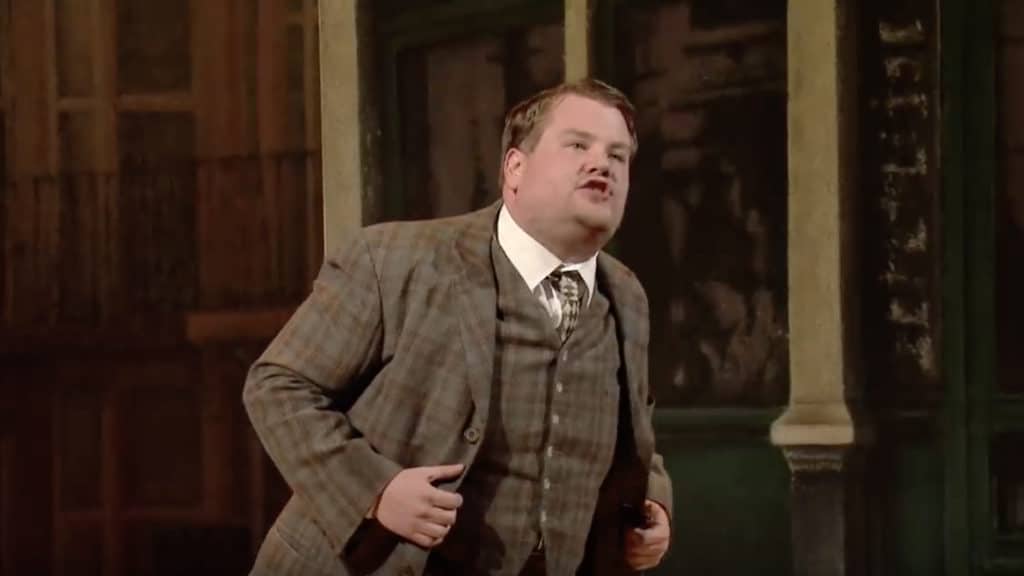
Great Britain’s National Theatre Live adds a new full-length play every Thursday night to its YouTube channel, and the current offering is “One Man, Two Guvnors,” starring James Corden. Each production is available for seven days.
Andrew Lloyd Webber will stream a production of one of his musicals for free each weekend on YouTube, beginning with “Joseph and the Amazing Technicolor Dreamcoat.” Starring Donny Osmond, Joan Collins and Richard Attenborough, it’s available through 11 a.m. PT Sunday, April 5.
L.A. Theatre Works, which offers radio broadcasts of classic plays every week beginning on Friday, is currently streaming Israel Horovitz’s “Park Your Car in Harvard Yard,” to be followed by Neil Simon’s “Lost in Yonkers” on Apr. 11, Oscar Wilde’s “The Importance of Being Earnest” on April 18, and “The Graduate” on April 25. Science-themed plays from the company’s Relativity Series including “Proof” and “Copenhagen” are also free to stream, and additional titles are available via free subscription to L.A. Theatre Works podcasts.
At the Broad Stage at Home [www.facebook.com/thebroadstage] visitors can find archived classical music, dance, and poetry performances and weekly livestreams including the Red Hen Press Poetry Hour (April 4 at 8 p.m.) and Broad Stage Music Mornings, which showcases cellist Lynn Harrell and violinist/vocalist Lucia Micarelli this week (April 5 at 11 a.m.).
Everyone has a story. It is not only those who have experienced terrible suffering or accomplished something extraordinary. Wouldn’t we all love to have an ancestor’s memoir to give us insights into his or her life and times, the challenges faced, family traditions and his or her values?
Staying home because of COVID-19 has created chaos for most of us − and fear for many. This especially may be true for older adults, who might feel greater senses of isolation and vulnerability.
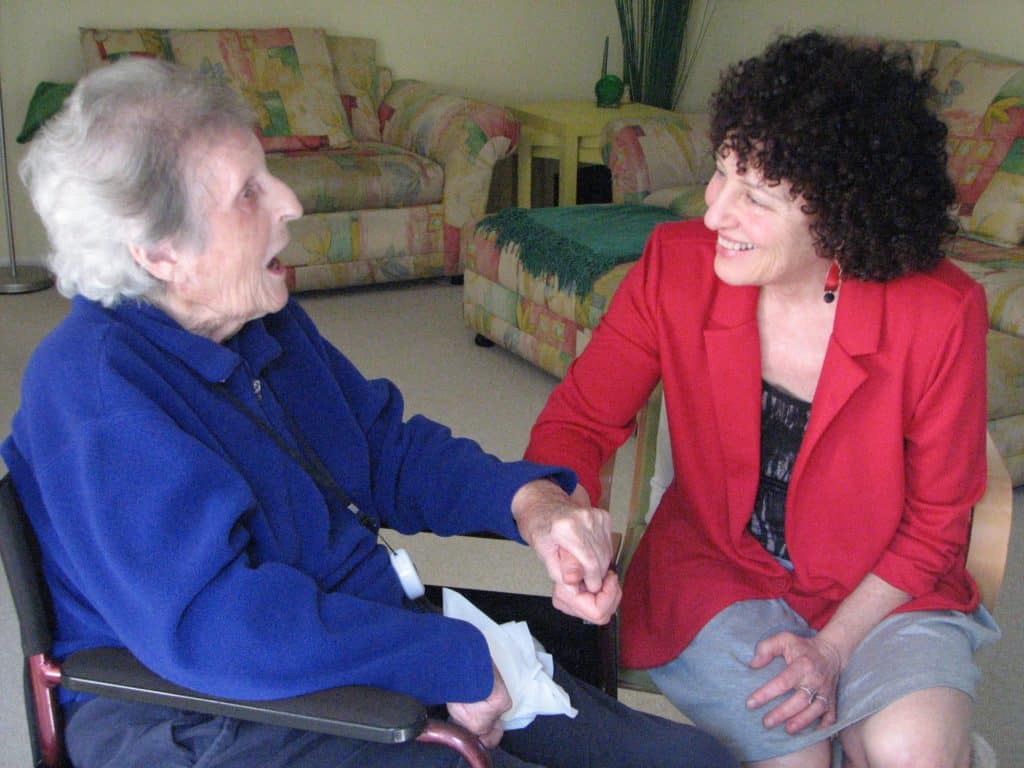
However, this could be the perfect chance to record the life stories of your older relatives.
Many people recognize the importance of such stories. They give their parents books to fill out or ask them to write memoirs. However, most recipients never get around to doing this. Children and grandchildren plan to sit down to record these stories − but they don’t actual do it. “We kept meaning to interview my parents, but we just didn’t get around to it. Now, it’s too late.”
This is a tremendous loss for future generations, who won’t have the details — beyond names and dates — about their heritage and those who came before them. It’s also a loss for the older relatives who didn’t have the chances to reflect on their lives and experiences, or to know their families valued their memories and stories and wanted to save these for future generations.
My father was a wonderful storyteller. At every family gathering − whether a holiday, Sunday brunch, or a walk in the park − he entertained my sister and me with his recollections. One of my favorite stories involved his maternal grandparents, Leba and David Klein, who lived with Dad and his family during the Depression.
“Occasionally, I would come home from school and find a strange, unshaven man dressed in rags, sitting at our kitchen table,” Dad recalled. “Your Great-grandmother Leba would be serving this man an entire meal − from soup to dessert. One day, my mother came home from work to this scene. Though Mom was generous and cared about everyone, it horrified her that Grandma Leba, a tiny, frail woman, let strangers into the house when she was alone. When my mother asked Grandma how she could this, Leba simply said, ‘How could I not do this? He was hungry.’ ”
Everyone has a story.
I never knew Leba Klein, but when my parents or grandparents shared such memories, I learned something real and precious about them, and about my ancestors — so much more than just names and dates. I wish I’d thought to record my grandparents’ memories, but it never occurred to me to do so. Fortunately, when I started my work as an oral historian 30 years ago, my parents’ memories were still intact, and I practiced by interviewing each of them. I have many hours of their stories, something that is precious to me and my son, now that they both are gone.
If you are fortunate enough to have older living relatives, and their life stories have not been recorded, I encourage you to do that soon. With physical-distancing requirements these days, my interviews are being done remotely by phone (recording from the speaker) or online applications such as Zoom, Skype or FaceTime. What’s wonderful about remote “meetings” is that many people can be in the conversation together, so various relatives can take part in the interviews, and you can record the conversation.
If someone lives in the same home as the person being interviewed, use a voice recorder or video camera. Regardless of how you record the interviews, first test your equipment or the online application.
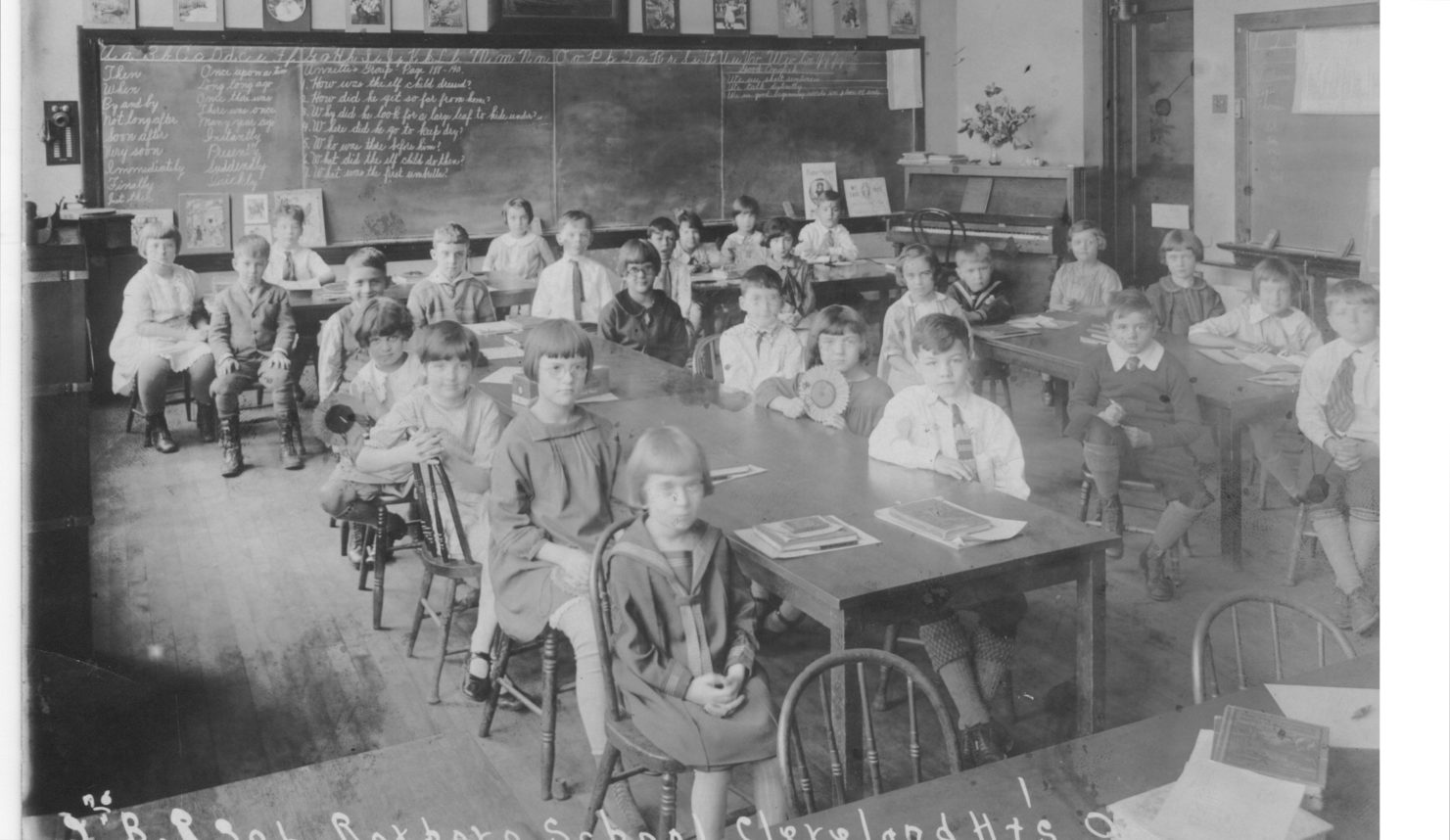
Author’s mother’s elementary school class in 1927. Photo courtesy of Ellie Kahn.
What follows are some suggestions for getting started. Some of these points may seem obvious, but they are included for those who might feel a bit unsure of how to conduct an interview.
Choosing the Interview Subject(s)
Typically, these are the oldest relatives: parents, aunts/uncles, grandparents, an older sibling or cousin. It might be the uncle with fabulous stories, but don’t rule out someone who often is quiet at family gatherings but still has a lot to say if given the chance. You may interview as a group siblings and/or cousins who grew up together about shared experiences.
Whichever relatives you pick, keep in mind some might be thrilled, but some might be hesitant. Many people don’t see their lives and experiences as “interesting” or worthy of recording. Let them know how precious their memories are for grandchildren and future generations. If they’re nervous, reassure them that this isn’t a performance; it’s just a conversation − one you’ll make even easier by asking them questions. Assure them that anything they don’t want to talk about, they don’t have to. You also might assure them this is only for the family, not for public view.
Some older adults are early risers, while others get going in the afternoon. Plan interviews at times when they’ll be most comfortable. Also, I recommend a time when there is no gardener blowing leaves outside!
In general, I have found most people love the chance to reminisce with someone who is there to listen. They feel honored their family wants to hear, and save, their stories.
Suggested Interview Questions
The goal for oral-history interviews is to elicit as much detail and as many memories and stories as possible. The more, the better. Invite members of the extended family to participate by brainstorming and listing numerous questions. What are they curious about? What would they like to know about the lives of their parents, grandparents or ancestors? Are there favorite stories these relatives already told that could be recorded?
Some questions might be: “What did you hear about your grandparents’ lives?”; “How did your parents meet?”; “What are your earliest memories?”; “What were the most impactful world events during your lifetime?”
Involve children. Ask them to come up with some questions, too. For example: “What were your favorite toys?”; “What did you like best in school?”; “Did you ever get into trouble?” Having grandchildren ask their own questions creates a meaningful connection between them and family elders − something that doesn’t often happen these days. In addition, they will learn about their roots from a living person.
Many people don’t see their lives and experiences as ‘interesting’ or worthy of recording. Let them know how precious their memories are for grandchildren and future generations.
Ask the people being interviewed to make a list of topics they would like to talk about. What do they want their grandchildren and future descendants to know about their life, the family’s background, the values that are important to them?
I typically start my interviews with either the maternal or paternal side of the family and organize my questions, going generation by generation, starting with ancestors. You might ask, “What do you know about your father’s side of the family, as far back as you can go?”; “Did you know your great-grandparents? If so, how would you describe them?”
If they know nothing about that generation, then move to the next generation, with similar questions such as “What do you know about your grandparents’ lives?”; “If you knew them, how would you describe them?”; “What is the sense you have of the family’s life while your father was growing up?”
Move to the interview subject’s own life, from childhood to the present, with questions such as “What are your earliest childhood memories?”; “What did you want to be when you grew up?”; “Who were adults who influenced you the most?”; “What was the importance of being Jewish in your family?”; “What were parents concerned about when you were a teenager?”; “What have been your biggest challenges and how did you manage them?”
It helps to ask follow-up questions to get more detail and stories. If you ask, “What do you know about your father’s family in Poland?” and the person says, “Nothing,” try asking the question a different way: “Did you hear any stories about them?” This isn’t to pressure the person, just to invite him or her to think a bit beyond an immediate response.
No matter how many years older relatives have lived, they have seen many changes. You might ask about those and how they were impacted. I usually end my interviews by asking interviewees what their hopes are for their grandchildren or great-grandchildren, and words of wisdom they might pass along.
As much as possible, ask open-ended questions versus ones that can be answered with just a “yes” or “no.” Instead of “Did you like school?” you might ask, “What did you like best or least about school?”
There are many resources on the internet for questions to ask during oral-history interviews. One of these is offered on the Dallas Jewish Historical Society’s site.
Some years ago, I taught 7th graders in Los Angeles to interview their grandparents. I realized most children had very little quality time with older relatives. At the end of the six sessions, the students came up with a list of questions to use in their interviews with their family elders. Most of the students said they learned a great deal about their families, and their grandparents loved the rare connections the process afforded.
I’m often asked how long an oral-history interview should last. In my experience, with two- to three-hour sessions, the entire interviews can last four to 22 hours. This range primarily depends on how detailed a person is in responding to my questions, and on their life experiences.
Once you’ve completed the interviews, depending on how they were recorded, you’ll have audio or video files you can send to the entire family. Some people prefer DVDs.
Whether the recordings are voice or video, you can transcribe them to make a book for the entire family. An older grandchild might take on the project of organizing and editing the written document, then incorporating photos and documents into the manuscript.
Comments and Observations
Some families’ gatherings can be loud and overwhelming, especially for quieter relatives. Conference calls and other remote meetings with more than two people talking can be like that. You might agree to have a little socializing time for 10 minutes, then take turns asking questions, or have someone in charge of managing the meeting — like leading a seder. The goal is that everyone, especially the person being interviewed, can be heard. If you plan to transcribe the interviews, a transcriber will need to hear each voice clearly.
If your older relatives are starting to have gaps in their memories, please be patient with them. If they seem frustrated that they can’t answer a question you’ve asked, reassure them that it’s fine, and move on. During this kind of interview, dementia can show up more than in the brief conversations many have with their parents or grandparents. It can be a shock for the family. If you know that one of the person’s answers is not accurate, you might gently add to it, but it’s important not to sound critical or impatient.
Within reason, don’t interrupt your storytellers. Even if the person goes on tangents from the original question, I’ve found some wonderful stories might emerge. This might take more time, of course, but it’s usually worth it. On the other hand, if the tangent is entirely unrelated, you gently could say something such as “Mom, can we go back now to your mother’s cooking?”
Be mindful of possible fatigue in older relatives — although some people in their 90s have more energy than their younger relatives.
If the person being interviewed experienced painful or challenging events in the past, you might consider asking him or her ahead of time if he or she is willing to share these memories. Often, parents and grandparents protect their family from hearing about their difficult times, but if they know you want to hear and understand their experiences, they probably will be relieved to talk. I find this to be especially true with Holocaust survivors.
Whether your relatives’ stories are entertaining or not, please let them know how grateful you are for the chance to hear and save their recollections. It’s one of their most important legacies.
Ellie Kahn is an oral historian and documentary filmmaker. She welcomes questions about how you can save your own family stories, and can be reached hereor ekzmail@gmail.com.
MONTREAL (JTA) — Canada’s flagship national Jewish newspaper of record, the Canadian Jewish News, became a coronavirus casualty after it announced that its April 9 issue would be its last after 60 years.
“Unfortunately, we too have become a victim of Covid-19,” president Elizabeth Wolfe said in an official statement Thursday on the CJN website. “Already struggling, we are not able to sustain the enterprise in an environment of almost complete economic shutdown.”
“There is no other paper. This was it,” Bernie Farber, the former CEO of the Canandian Jewish Congress, told the National Post. “So, along with everything else that’s going on tight now, this just adds another layer of sadness.”
There will be no print or internet edition.
The weekly, launched Jan. 1, 1960 under the editorship of Myer Nurenberger, fell victim to the economic devastation of Covid-19 after struggling to stay afloat since coming to the brink of closure once before, in 2013. It revived after a groundswell of community support.
At the time, the newspaper let go of about 50 staffers in Montreal and Toronto and relaunched with new editorial leadership, a fresh look and layout, and a trendier variety of content. But losses continued to mount and the paper succumbed to the economic woes brought on by the pandemic, said Wolfe. (Wolfe is a member of the board of directors of 70 Faces Media, JTA’s parent company.)
The staff was informed of the newspaper’s demise via video-conference call. Its circulation at its demise was about 32,000.
In times of adversity and the unknown we look for inspiration all around us in hope of harnessing our own resilience and strength to get through. We look to our friends and family, to our communities, to our faith, to nature, to books, to social media!
Our friends at Tripping Kosher filmed a short documentary about ShemeshFarms/Shalom Institute post the Woolsey Fire. The film is a reminder that we are a community, and together we continue to support each other while innovating during difficult circumstances. Thank you to Tripping Kosher for telling our uplifting story in such a beautiful way.
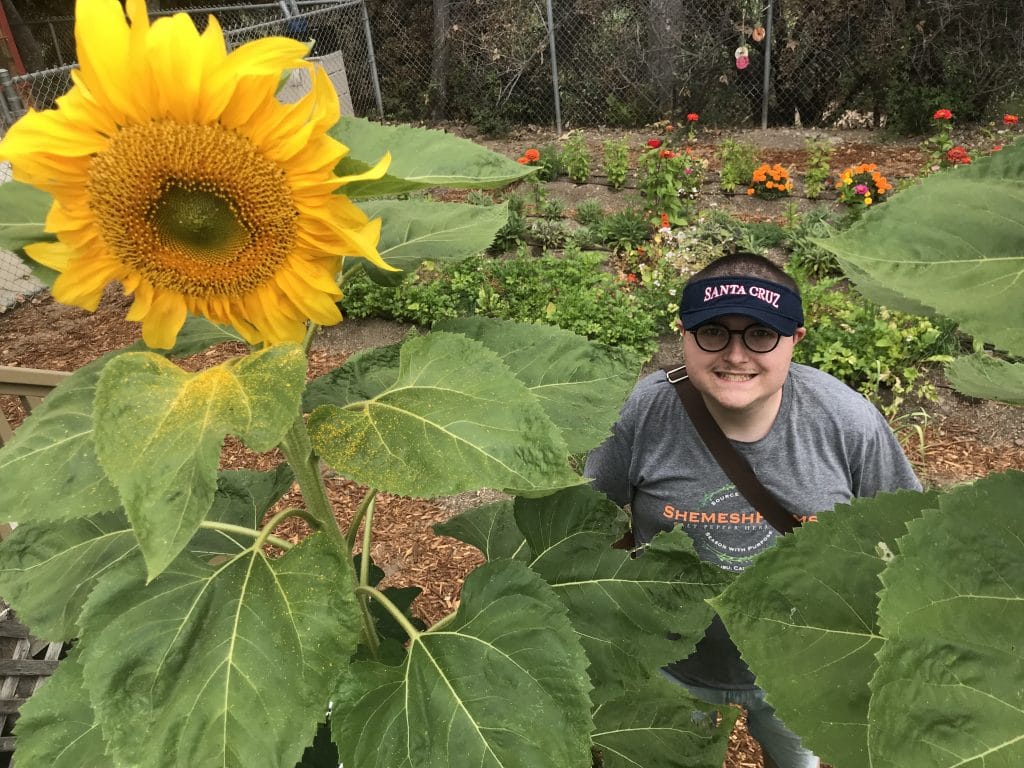
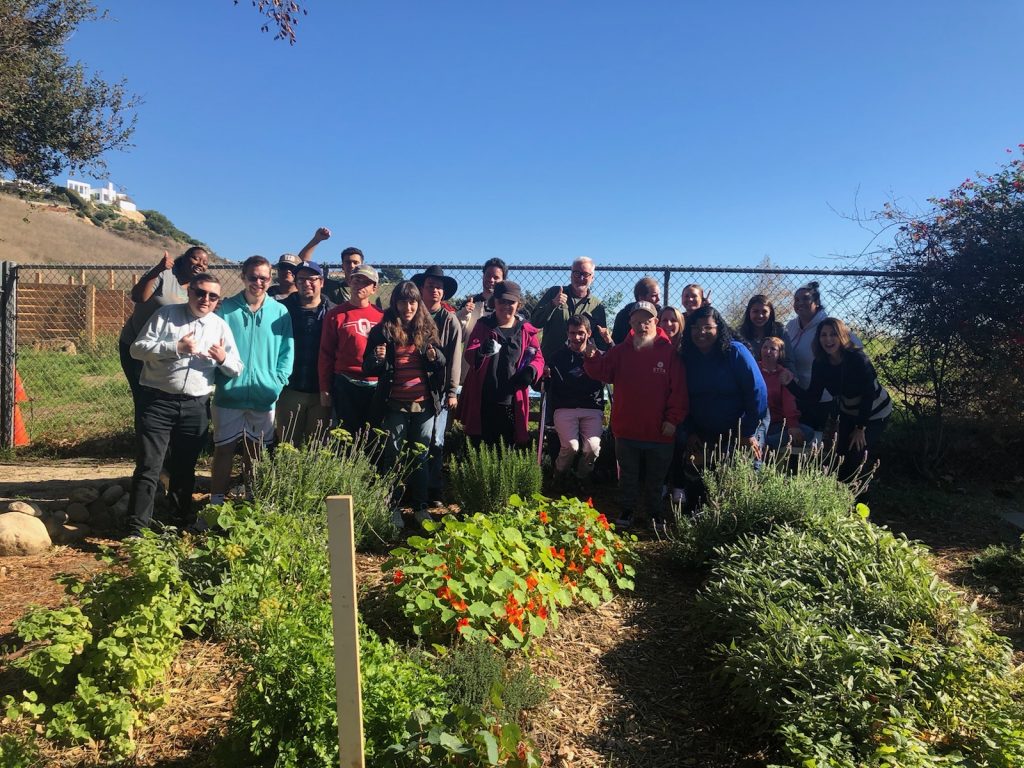
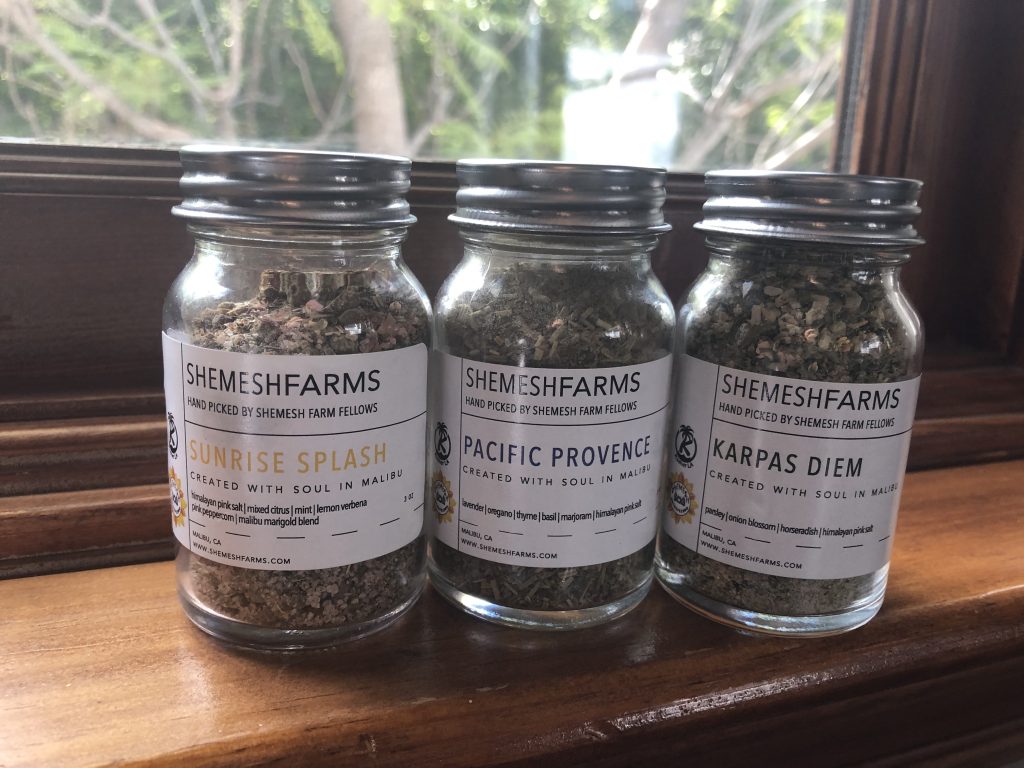
ShemeshFarms, an initiative of Shalom Institute, employs young adults with diverse abilities and special needs. The Farm Fellows are part of our vibrant Shemesh Team and develop an array of products from our local farm & garden in Malibu, Ca. The Farm Fellows farm, plant, harvest, and curate the ShemeshFarms Salt, Pepper, Spice & Blend line as well as Wildflower Malibu Raw Honey. Everything is crafted on site, and can be shipped to your home.
It is a privilege to lead this incredible group of young and diverse individuals to build a social enterprise from the ground up. Executive Director Rabbi Bill Kaplan at Shalom Institute had a vision inspired by a trip to Israel to create an inclusive social enterprise for young adults with special needs ,who have aged out of the school system and services, to be hired as Farm Fellows to help run the enterprise. With my background as an Art Therapist and a few entreprenurial projects under my belt, Rabbi Bill hired me to develop and see his vision through.
We started with 6 Farm Fellows and a strong partnership with the day program Creative Steps/Aurelia Foundation. With the generous support of The Jewish Community Foundation of Los Angeles and The Jewish Federation of Los Angeles we were able to hire our Farm Director Davis Watson. We rapidly began to grow and expand, hiring 60 Farm Fellows to work at ShemeshFarms as employees. Soon, more people wanted to be part of our social enterprise and our volunteer base grew as well. Farmer Davis taught us how to work with the earth and grow a variety of herbs on our farm. Together, a strong inclusive work culture was developed. A culture that honors integrity, inclusion, and the idea that everyone counts.
This time of COVID-19 and the challenge and hardship it brings is very reminiscent of the recent Woolsey Fire that severely impacted the Shalom Institute last year. Our entire camp and property burned to the ground including our ShemeshFarms citrus farm, herb and vegetable garden, office yurt, products, and inventory. It was a devastating time for all of us, many Shalom Institute staff who lived on the property lost their homes, our beautiful camp was taken over by a ferocious blaze. As staff and members of our community banded together and began to take hold of the dire situation, we realized we had a choice, we could either be defeated or we could adapt. Adapting, was the key to lifting our spirits and motivating our hope to allow for innovation and imagination to set in. As all of the various pillars of Shalom had to scramble and makeshift quickly with little time for reflection, for ShemeshFarms due to the responsibility of keeping our social enterprise intact, we quickly reached out to Malibu Jewish Center & Synagogue to see if we could bring our ShemeshFarms working community to their site, and begin to grow our variety of herbs in a different way; hydroponic garden towers. Malibu Jewish Center & Synagogue warmly agreed to host Shalom Institute’s ShemeshFarms. The rebuild began with 6 hydroponic garden towers from LAurbanfarms followed by the ShemeshFarms team tilling and planting on an 1/8 acre at our new site to create in addition, a soil herb garden. With our strong and resilient team of Farm Fellows, coaches, and partners, we adapted. Today we continue to grow and expand our social enterprise creating positive impact in our community.
With the Passover Seder’s upon us we are reminded of the various spices that make up the story of our lives. Each spice with a different symbolic value coupled with faith and resilience that lead us to the beauty of Spring and the freedom that it ultimately brings.
Please visit our online store to purchase our spices including our unique Passover spice Karpas Diem ( dried parsley, onion blossoms, horseradish, & himalyan pink salt). All of our products are certified kosher, premium quality, fresh and delicious! Your purchase helps ShemeshFarms continued effort to hire more young adults with special needs and benefits our ability to be sustainable.
ShemeshFarms is supported by a generous grant from the Jewish Community Foundation of Los Angeles, as well as the generosity from Jewish Federation of Greater Los Angeles, Erwin Tautenberg Foundation, The Diane and Guilford Glazer Philanthropies, Hillside Memorial Park and Mortuary, and from individual donors and sales.
Bio:
Michelle Cait is the Director of ShemeshFarms at the Shalom Institute. She is a native of Los Angeles where she presently resides with her family. Her background is in Art Therapy.
While doctors scramble for protective equipment, laid-off workers pray for their next paycheck, and over 6,000 Americans have died from COVID-19, people are cracking jokes. That’s OK. Responding to tragedy with humor is human. We need to ensure our spirits survive even as the body count rises. However, many of these virus jokes are about someone who didn’t survive: Anne Frank.
These jokes might seem dark and edgy, but they’re deeply inappropriate. This crisis is not the time to exploit someone who was victimized. Anne Frank was not tweeting from her parent’s house during a quarantine. She was a teenage Jewish girl who lived in Amsterdam during the Nazi occupation. Instead of telecommuting from home to “flatten the curve,” she lived in a terrorist state that was determined to flatten the population.
This crisis is not the time to exploit someone who was victimized.
To avoid being gassed, Anne hid in a room concealed behind a bookcase for two years. Leaving home was not a risk to her health; it was a death sentence. When her family was discovered, Anne was sent to a concentration camp. Under conditions designed to exterminate its prisoners, she died of typhus at 15.
Since Anne’s diary has been published, her story has become symbolic of many things, most of all maintaining humanity throughout horror. Her legacy teaches us that these hard times are not a free pass to turn a teenager of the Holocaust into a talking point. However, activist groups that you’d expect to take the high road are also exploiting Anne Frank.
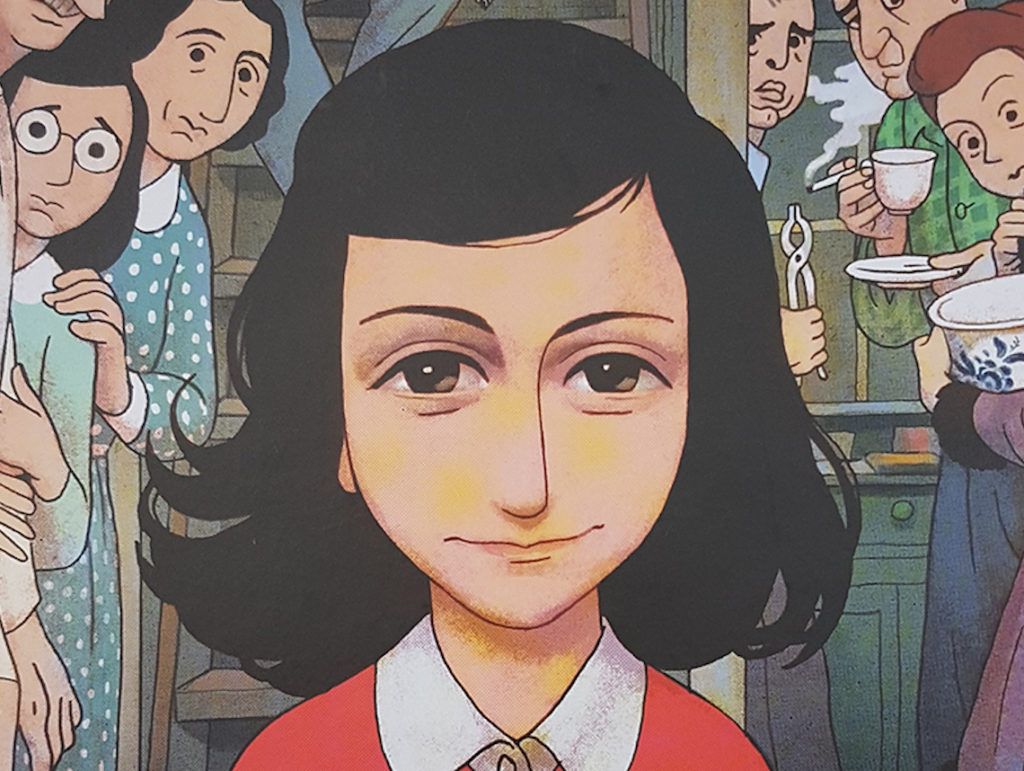
Never Again Action, an organization that advocates for undocumented immigrants, has been plastering Anne Frank’s face on public buildings as if she’s their hired spokesperson. Projecting an image of Anne’s face on an Immigration and Customs Enforcement (ICE) office, they declared, “Anne Frank was killed by Typhus. Demand the release of ICE detainees.” On New York’s immigration courthouse, they broadcast her picture with the slogan: “Anne Frank died of typhus. Not a gas chamber. ICE detainees can’t social distance. Governor Cuomo, free them all.”
I support Never Again Action’s mission. I’ve protested with the group multiple times. We need to defend undocumented immigrants, as well as incarcerated folks, whose close quarters put them at high risk for infection. However, it is hypocritical to advocate for people stripped of their agency by denying Anne Frank of hers.
We cannot forget that Anne Frank was a teenager who was murdered for being Jewish. She didn’t give us license to make her the poster child for a political cause or the butt of our coronavirus jokes. She didn’t even give us permission to read her diary.
Anne Frank didn’t give us license to make her the poster child for a political cause or the butt of our coronavirus jokes. She didn’t even give us permission to read her diary.
Anne Frank did not choose to be a public figure. We need to be tender with her image. Reducing her death to talking points gives fodder for bigots. Holocaust deniers claim that Jews were not murdered in concentration camps, but rather died of diseases like typhus. Name-checking Anne Frank in a quick slogan, sans the context of planned ethnic cleansing, empowers anti-Semitic propaganda. In addition, co-opting Anne Frank as a voice against the mistreatment of immigrants can turn off potential allies, particularly those whose family were tormented by Nazis.
We must stand against the mistreatment of everyone, everywhere. But we are capable of doing so without exploiting dead Jews. Rather than name-check a murdered child, we can seek out living Holocaust survivors to become the faces against human rights abuses. Ruth Bloch, 91, survived Auschwitz and is vocal about immigrant rights. Why not enlist her as a passionate – and consenting – advocate?
COVID-19 has ignited a fight for humanity. This pandemic is not the time to dehumanize the girl who taught us to never abandon ours.