A Polish member of parliament (MP) lauded pogroms against Jews in a Feb. 27 interview on a Polish television network, asserting that the pogroms made Jews powerful through natural selection.
Jewish Telegraphic Agency reported that Janusz Korwin-Mikke, the leader of the right-wing Liberty Party, said that the benefit of the coronavirus epidemic is that natural selection will benefit mankind. He cited Jews as an example.
“The most gifted survived,” he said. “This is a warning to anti-Semites: That is why Jews are powerful, because they had pogroms. There are even theories that rabbis deliberately provoke pogroms precisely so that Jews survive and then there is natural selection.”
Anti-Defamation League CEO Jonathan Greenblatt condemned Korwin-Mikke’s remarks as anti-Semitic.
“Pogroms devastated Jewish communities in Europe & to say that they were good for Jews is beyond offensive,” he tweeted.
Polish far-right leader @JkmMikke once again spews vile antisemitism, this time claiming that pogroms were good for Jews for “natural selection.”
Pogroms devastated Jewish communities in Europe & to say that they were good for Jews is beyond offensive. https://t.co/kjDYHA1uyV
— Jonathan Greenblatt (@JGreenblattADL) March 4, 2020
The Stop Antisemitism.org watchdog tweeted, “Yes this is 2020.”
Far right wing Polish Minister makes the outrageous claim the #Jewish pogroms are good for public health reasons.
According to The Jerusalem Post, Korwin-Mikke alleged in 2013 that Adolf Hitler was unaware of the Holocaust and alleged in 2019 that Jews are a part of the Freemasons. Additionally, in 2015, Korwin-Mikke was suspended from the European Parliament for 10 days after giving a Nazi salute while stating Nazi Germany’s motto. He gave the Nazi salute in response to European Union (EU) efforts to implement a standardized ticketing process when traveling across the borders of EU countries.
Like millions of people across the nation, I was glued to my computer screen the night of Super Tuesday. Around 11:30 p.m., I was certain I was witnessing a major and unprecedented event in the history of American politics and did what any sensible political science student would do — I called out sick from my Wednesday classes and logged onto Twitter, where I remained until 4 a.m.
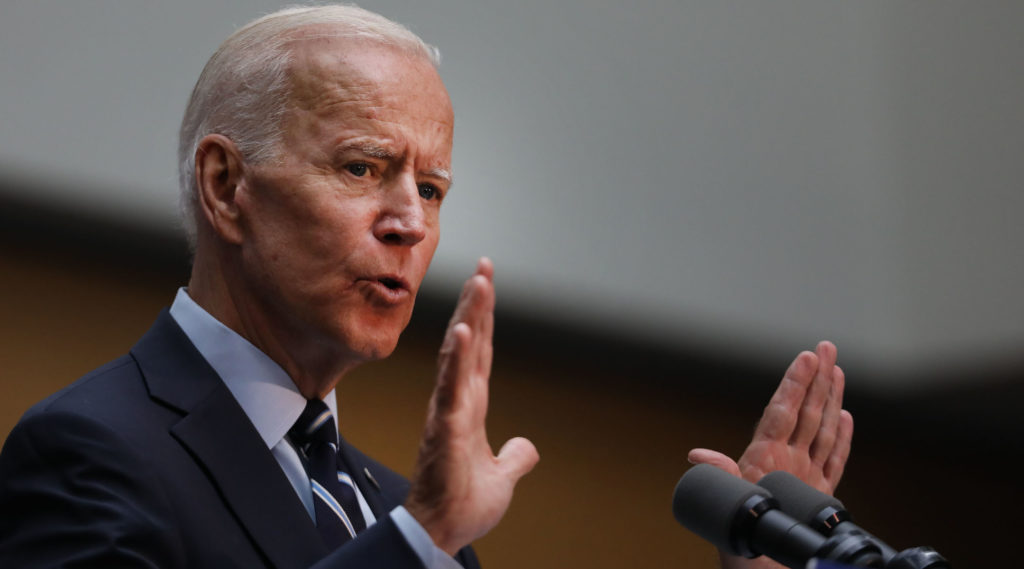
The night of March 3 truly was extraordinary. A month ago, Joe Biden’s campaign momentum was quickly fleeting. His supporters posted an abysmal turnout in Iowa and New Hampshire. The Biden energy of early 2019 was lampooned daily on news media channels by liberals, moderates and conservatives.
But Super Tuesday changed this trajectory. After Pete Buttigieg and Amy Klobuchar (D-Minn.) suspended their campaigns on March 1 and March 2, respectively, Democrats from Texas’ Beto O’Rourke to U.S. Senate candidate Mark Kelly of Arizona rushed to endorse the former vice president with such a rapid fervor that I was sincerely worried that NBC correspondent Steve Kornacki might pass out from the onslaught of breaking news.
The Democrats coalesced around the Biden campaign with little hesitation, the “icing on the cake” being Mike Bloomberg’s withdrawal on March 4 after the national failure and embarrassment his campaign proved to be on March 3.
It’s clear, heading into the rest of 2020, that American Jews have a choice. We either can settle for leftist anti-Semitism, which attacks and smears Zionism and the State of Israel and those who feel a connection to it, or vote for Donald Trump’s anti-Semitism, which emboldens violent white supremacists and endangers every American religious and ethnic minority, including Jews.
It’s clear, heading into the rest of 2020, that American Jews have a choice.
Or, we can reject both.
I am not arguing that the anti-Semitism festering in Bernie Sanders’ campaign and the anti-Semitism on full display in the Trump administration are equal to each other in regard to how dangerous they are to the American Jew. I am arguing, however, that American Jews shouldn’t have to decide between two uncomfortable choices on the basis of their Judaism.
Biden’s performance on Super Tuesday promised “a third way” for the American Jew.
This alternative was made clear by Biden’s prerecorded speech on March 1 at the AmericanIsrael Public Affairs Committee’s annual policy conference in Washington, D.C. , in which he called for a bold resurrection of traditional American Jewish values.
The former vice president nods reassuringly to the vast majority of American Jews, and validates that we can keep our liberal values, our goals of expanding health care, and our antipathy to bigotry and Trumpism, while also opposing the boycott, divestment and sanctions movement and supporting a Jewish state in the Middle East. Biden promises Jewish Americans that we can act on our commitment to the environment, that we can address criminal injustice, that we can ensure a woman’s right to choose is never infringed upon, yet remain confident and clear in our support of Israel.
Biden does not encourage dual loyalty tropes, does not use support of Israel as an excuse to be Islamophobic, does not insult Jewish donors by claiming “they want to control their own politicians,” and does not allow his fundamental belief in Jewish self-determination to excuse allyship with far-right fanatics.
Simultaneously, Biden believes that Israelis and Palestinians must be treated fairly in regard to American foreign policy; he is proudly critical of Israeli Prime Minister Benjamin Netanyahu; expresses contempt for expanding settlements and annexation; and shares the American Jewish yearning for a Palestinian state. He does all of this while refusing to delegitimize or demonize Israel. He refuses to apply double standards to Israel, refuses to align himself with those in the Democratic Party who engage in anti-Semitic tropes, and sternly condemns human rights violations in the Levant region, regardless of who commits them.
At a time when anti-Semitic incidents are on the rise, when anti-Semites on the right and left feel more empowered and emboldened than ever, it is in every American Jew’s best interest, Democrat or Republican, to rally behind this candidate and ensure he sits in the Oval Office come January.
Blake Flayton is a student at George Washington University.
WASHINGTON (JTA) — The American Israel Public Affairs Committee alerted the thousands of activists who attended its conference this week that a New York group in attendance had been in contact with someone who has the virus.
“To our knowledge, no one who attended the conference has tested positive for coronavirus at this time,” said the email sent Wednesday, which AIPAC also posted on Twitter.
It’s not clear from where in New York the group came from. Two Orthodox Jews from New Rochelle have contracted the virus.
The email said the District of Columbia Health Department considers the conference to have been a “low risk” exposure and advised recipients to consult with Centers for Disease Control guidelines on preventing contracting the virus.
The conference, which ran from Friday through Tuesday, attracted 18,000 activists. AIPAC took precautions during the conference in consultation with District of Columbia health authorities including adding hand sanitation dispensers and adding cleaners to disinfect highly trafficked areas.
What if we looked at white supremacists as not gangs but as cults?
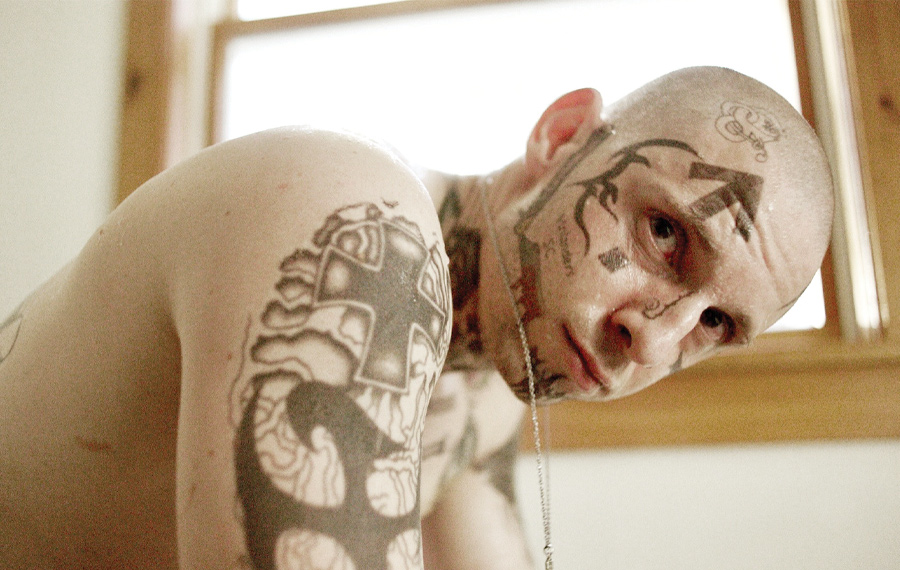
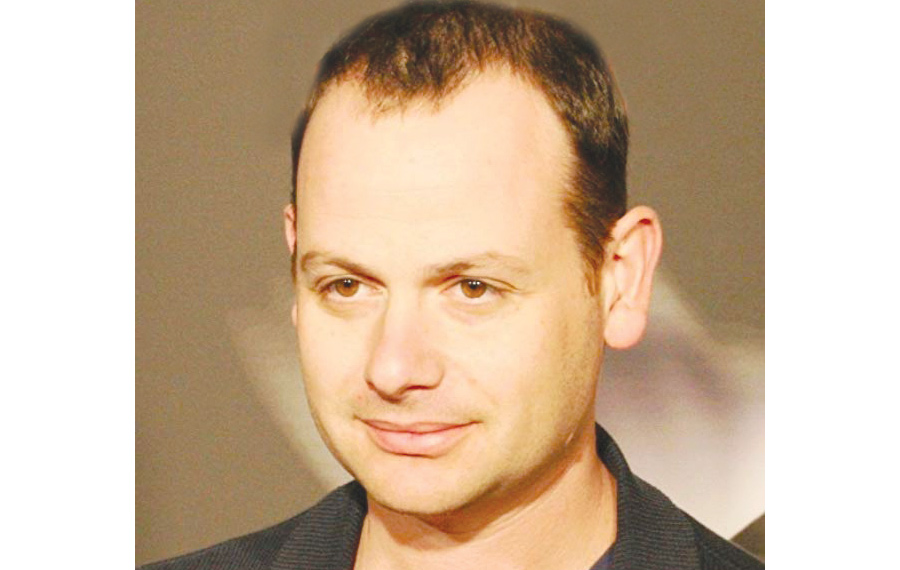
That was the question posed by Guy Nattiv, the Israeli writer-director of the film “Skin,” which peers through the eyes of real-life skinhead Bryon Widner as he attempts to find his way out of the white power group in Indiana he joined at 14.
Nattiv spoke about his daring 2018 feature-length biopic at a special screening at the Museum of Tolerance on Feb. 21, sponsored by the Israeli Consulate in Los Angeles and the African American Film Critics Association.
“This guy was in a cult. He was picked up by those guys when he was 14 and told, ‘This is who you need to hate — and don’t ask questions,’ ” Nattiv said during the post-movie panel. “When he met me, he didn’t even know what Jews or Israelis [were].”
This meeting was pivotal for both the director and his subject. After making his mark in Israel, Nattiv sought to move to Los Angeles, where his fiancée at the time and now wife, Jaime Ray Newman, was based. He saw a Haaretz article about how Widner, whose face was overwhelmingly tattooed with hate symbols, had been reformed and was undergoing the extremely painful process of having the ink lasered off. The procedure is representative of the agonizing process Widner (who is currently in witness protection) underwent to escape the clutches of the white supremacist cult he grew up in.
Newman, who produced the film, was also in attendance at the event and recalled, “[Nattiv] called me and said, ‘I found my first feature, but they’re in witness protection. So how do we find them?’”
After months of trying to track him down, they finally received a message from the group Widner previously belonged to: the Vinlanders Social Club — once the fastest-growing skinhead group in the United States.
“They said if you’re serious about this, meet us at this pit stop at the side of the freeway,” Newman said. “They said they circled the coffee shop six times looking at us — they had never met Jews before. We had never met skinheads before. And that weekend changed all of our lives.”
Widner currently flips burgers in Alburquerque, N.M. He’s still on the FBI watch list and is forbidden to leave the United States. His prospects for improving his life, even after the removal of his full face of racist tattoos, are slim.
“They said if you’re serious about this, meet us at this pit stop at the side of the freeway. They had never met Jews before. We had never met skinheads before. And that weekend changed all of our lives.” — Jamie Ray Newman
“Their life story is the only thing these people have,” Newman said. “We spent four days with them. In the end, they signed their life rights to us on a napkin.”
“Skin,” despite its miraculous true story, was challenging to get greenlit. Nattiv moved to Los Angeles, where he wrote the screenplay. His agents sent it to over 60 producers, all of whom rejected it.
“This was the feedback from every single [producer],” Newman said. “The script is very good; we love Guy’s work in Israel, but Hillary Clinton is about to become president and racism kind of isn’t a thing after eight years with a black president.”
Then, in a last-ditch effort, the couple used their retirement savings to fund a short film that would serve as a proof of concept for “Skin.” After wrapping post-production, Donald Trump entered the Oval Office, and the neo-Nazis Widner once called kin made their way onto the streets of Charlottesville, Va. At the same time, Nattiv not only secured funding for his feature, but the 21-minute short also won the Oscar for Live Action Short Film in 2019.
In making both films, Nattiv was careful not to glamorize white nationalist cults or, as he puts it, “not to make the violence look like we are talking about the Hells Angels. There’s nothing beautiful, perfect or cool about that.”
Widner was heavily involved in the development of the screenplay, as was Daryle Lamont Jenkins, an anti-fascist activist who runs One People’s Project, an organization that helps people trying to escape white power circles. Widner is one of the many whom he’s offered a chance at redemption.
“When we shot the movie, they both came to the hotel room and stayed on set,” Nattiv said. “You had this African American activist with an ex-neo Nazi, sharing a hotel room watching National Geographic. And they’re really best friends. It was surreal but amazing to see that.”
Nattiv also announced at the screening event that his next film will center around Jenkins’ work as a black man who reforms racists. Chadwick Boseman, of “Black Panther” fame, has signed on to produce.
“I didn’t grow up on Spider-Man and Superman. My grandparents are my superheroes,” Nattiv said, explaining that he is descended from four Holocaust survivors.
Asked about critics of Israel who refer to it as a white supremacist state, dubbing its supporters as “Zionazis,” Nattiv said,“It’s hurtful. I’m against that. Obviously, it’s ridiculous. Online, the right-wing are bashing me and calling me the white-hater Israeli director.”
However, he does have concerns about Israeli policy. “I’m very proud of my country and my family, but I have criticism about a lot of things going on in Israel,” he said. “For example, the treatment of Ethiopians, which is pure racism.”
Fostering conversations about racism is at the core of Nattiv’s values.
“My question to the audience,” he said, “is, ‘Do you have a place in your heart to accept a monster who wants to become a better person?’ For many, the answer is no. Some people say yeah. It’s a very important question to ask because if we can’t talk, can’t have dialogue with our enemies, nothing will change.”
Ariel Sobel is a TEDx talker, award-winning filmmaker, and the winner of the 2019 Bluecat Screenplay Competition.
Lev Eisha Shabbat Lev Eisha’s community of joyous Jewish women prays and sings together during a soul-inspiring Shabbat. A kiddush luncheon follows services. Led by Rabbi Toba August, Cindy Paley and Joy Krauthammer. 9:30 a.m.-noon. Free. Beth Shir Shalom, 1827 California Ave., Santa Monica.
“Five Pieces of Paper” Israeli performer Moti Buchboot brings to life stories and lessons he learned from his Hungarian grandmother, a Holocaust survivor from a Hungarian village who settled after the war in a small town in Israel. Created in response to the 2017 Charlottesville riots, his show, “Five Pieces of Paper,” is a personal love story featuring Yiddish song, acting, puppetry, storytelling and onstage baking.8-9:30 p.m. $20. Matrix Theatre, 7657 Melrose Ave., Los Angeles.
SUN MARCH 8
“Dear Fredy”
“Dear Fredy”
Los Angeles Museum of the Holocaust and JQ International screen “Dear Fredy,” spotlighting the little-known story of proud German Jew and openly gay man Fredy Hirsch. Combining interviews, archival materials and animation — and told in Hebrew with English subtitles – the film recounts how Hirsch fled from Germany to Czechoslovakia after the Nuremberg Laws were enacted and became a popular counselor in the sports movement. He was deported to Theresienstadt and eventually to Auschwitz, where he was able to make life more comfortable for children there. A Q-and-A follows with Jordanna Gessler, vice president of education and exhibits at LAMOTH, and Tom Lifka. 4 p.m. $10 suggested donation. Los Angeles Museum of the Holocaust, 100 The Grove Drive.
WED MARCH 11
“The Road to War” Jordan Reimer, a policy analyst at RAND in the defense and political sciences department, discusses, “The Road to War: U.S., Iran and Israel Amid a Chaotic Middle East.” Reimer highlights how even as Israel is building ties with the Arab world, the U.S. and Iran seem to be heading for confrontation, plunging the Middle East into further disarray. He explores the boundaries of Iran’s positions in the Middle East and whether America’s policy toward Iran is sound. 7:30 p.m. $20. American Jewish University, Burton Sperber Jewish Community Library, 15600 Mulholland Drive.
THU MARCH 12
Gideon Raff Acclaimed Israeli film and television writer and director Gideon Raff (“The Spy,” “Prisoners of War”) sits down for a wide-ranging conversation with Sinai Temple Senior Rabbi David Wolpe about Raff’s life, career and his Jewish identity. 7:30-9 p.m. Free, Sinai members. $25 general. Advance registration required for parking access. Sinai Temple, 10400 Wilshire Blvd.
Update March 9: The event with GIdeon Raff has been cancelled. For more information, please contact Sinai Temple.
Purim Events
SUN MARCH 8
Wise Purim Carnival Stephen Wise Temple, one of the community’s largest congregations, holds a day of fun for all ages at its annual Purim carnival, featuring rides, games, attractions and a Ferris wheel overlooking the city. Open to Wise members and guests. 10:30 a.m.-3:30 p.m. Wristbands include entry, rides, games. Food not included. $30 for ages 2-4, $50 for ages 5-18. Adults and children under 2 are free. Stephen Wise Temple, 15500 Stephen S. Wise Drive.
“A Super Marvelous Purim” Inspired by Marvel Comics, Temple Beth Am’s “A Super Marvelous Purim,” is fun for kids of all ages, featuring giant inflatable games, crafts, an early childhood play area, face paintings, glitter tattoos, a social action project and more. 10 a.m.-1 p.m. $15 per child. Food sold separately. Temple Beth Am, 1039 S. La Cienega Blvd.
“Back To The Eighties”? Temple Emanuel of Beverly Hills’ “Back-to-the-‘80s”/5780 Purim carnival and party features Megillah, music, face-painting, carnival games, bounce houses, hamantachen, lunch and more. 10:30 a.m. doors open and shpiel begins. 11:30 a.m. party and lunch starts. $35 individual, $90 for family pass up to four people. Temple Emanuel of Beverly Hills, 300 N. Clark Drive, Beverly Hills.
MON MARCH 9
IKAR Purim Justice Carnival IKAR’s Purim Justice Carnival is the snappiest Purim party in town. Come in costume and be prepared for a night of dancing, drinking, justice and noisemaking. Don’t forget to bring your own grogger — a box of pasta, rice, cereal or any non-perishable food you can make noise with. All items will be donated to SOVA after the party. 7 p.m. Magillah reading and shpiel, free. 8:15 p.m. $15, $22 with meal. Candela La Brea, 831 S. La Brea Ave.
Star Wars’ Purim Shpiel Temple Beth Israel of Highland Park and Eagle Rock holds a dinner, followed by a “Star Wars”-themed Purim shpiel. The evening includes a Megillah reading, drinks and a piñata. There will be a Persian-style feast and the reading of the story of Esther in a variety of languages, plus, of course, hamantashen. Thematic costumes are highly encouraged for children and adults. Dinner 6 p.m., Purim shpiel 6:45 p.m. Temple Israel of Highland Park and Eagle Rock, 5711 Monte Vista St., Los Angeles. RSVP by clicking on the link.
Roaring Twenties Purim Young Jewish Professionals Roaring 1920s-themed Purim party encourages attendees to come dressed in attire of the era or clothing of their choice. The event describes itself as a Purim experience that is about finding rhythm and divine inspiration. 8 p.m.-1 a.m. $30-$60. Exchange L.A., 618 S. Spring St.
Stand Up for Purim Sinai Temple’s Atid group for young professionals, ages 21-39, celebrates Purim with stand-up comedy with comedians Tehran, Rachel Mac, Micah Bleich and Menachem Silverstein, along with host Mateen Stewart. Hamantachen and wine are included in the price of admission. 8-9:30 p.m. $10, $15 at the door. Sinai Temple, 10400 Wilshire Blvd.
Purim Fest 2020 Pico Shul and the Happy Minyan team up for a Purim Fest featuring Moshav Band. The event includes a Megillah Lounge, cocktail bar, dessert, a food truck and charity raffle.Proceeds benefit families in need.9-11:30 p.m. $25 online, $30 at the door. The Mark, 9320 Pico Blvd.
“Megillah on the Roof” Temple Judea’s “Megillah on the Roof, A Purim Shpiel,” promises to be as entertaining as the movie that inspired it— “Fiddler on the Roof.”Dress in costume and sing along with the songs from “Fiddler,” as a cast of Judea congregants dance and sing the story of Purim. 6:30 p.m. Free. Temple Judea, 5429 Lindley Ave., Tarzana. The event is held in advance of Judea’s Purim Carnival, which takes place March 15.
VBS Purim Shpiel and Party Dress up in your favorite costume and drop by Valley Beth Shalom to enjoy a Purim shpiel. Bring a box of noisy food — rice or pasta for example — and at the end of festivities, donate the item to the VBS Food Bank. 7-9 p.m. Free. Valley Beth Shalom, 15739 Ventura Blvd., Encino.
Borscht and Good Humor Hollywood Temple Beth El seeks to recreate the Borscht Belt ers during its Megillah reading. Merrymakers are asked to come in costume and bring a dessert or light liquor to share with others. 7-10 p.m. $10 or what you can afford. Hollywood Temple Beth El, 1317 N. Crescent Heights Blvd.
TUE MARCH 10
Purim for Children Celebrate Purim at the Sephardic Temple’s Purim Carnival. Unlimited rides, games and prizes. Food available for purchase. 3-6:30 p.m. $35 members ages 2-15. $40 non-members ages 2-15, door. Sephardic Temple, 10500 Wilshire Blvd.
Have an event coming up? Send your information two weeks prior to the event to ryant@jewishjournal.com for consideration. For groups staging an event that requires an RSVP, please submit details about the event the week before the RSVP deadline.
Some 500 supporters of the United States Holocaust Memorial Museum (USHMM) in Washington, D.C., gathered Feb. 26 at the Beverly Hilton hotel to honor three Angelenos, hear reports on the museum’s recent work and to pledge to “never forget” the 6 million Shoah victims.
Honored with the institution’s National Leadership Award were Deborah Oppenheimer, Dana Perlman and Renee Firestone.
Film producer and TV executive Oppenheimer, introduced by actress Jamie Lee Curtis, was feted for her Oscar-winning film, “Into the Arms of Strangers: Stories of the Kindertransport.”
She gave proper weight to the award by recalling that “my father used to say he didn’t have any buttons left on his shirt because they’d burst out of pride in me. … His buttons would be popping all over the place if he could be here tonight.”
Museum director Sara Bloomfield presented the award to attorney Perlman, an L.A. City Planning Commissioner, who chairs the museum’s national planned giving and endowment recognition societies.
In his remarks, Perlman recalled, “As the son of
survivors, when I first visited the museum, I was reluctant. I didn’t think there was anything else I could or needed to learn from the memorial. But I was very wrong. I learned that as important as the museum’s memorial function is, remembrance without action, without education, falls terribly short of truly commemorating the victims and survivors.”
Educator Erin Gruwell presented the award to Firestone, who asked, “Why did I survive and others didn’t?”
The evening’s participants raised $700,000 for the museum, which describes its mission to “inspire citizens and leaders worldwide to confront hatred, prevent genocide and promote human dignity. “ — Tom Tugend, Contributing Editor
From left: Consul General of Israel in Los Angeles Hillel Newman, philanthropist Dina Leeds and L.A. City Councilman Herb Wesson, who is running for a seat on the L.A. County Board of Supervisors.
L.A. City Councilmember Herb Wesson appeared at a luncheon at the home of local philanthropists Dina and Fred Leeds on Feb 25.
During the gathering, Wesson, who has served on the Council since 2005, met with Jewish leadership and discussed issues related to security and anti-Semitism.
Representatives of schools, synagogues and nonprofits across the city turned out, including Rabbi Abraham Cooper of the Simon Wiesenthal Center; Consul General of Israel in Los Angeles Hillel Newman; Roz Rothstein of StandWithUs and Rabbi Kalman Topp of Beth Jacob Congregation.
A unit of Israeli Defense Forces veterans spent a therapeutic week in Los Angeles discussing the challenges they faced as soldiers. Photo courtesy of Tanya Surpin
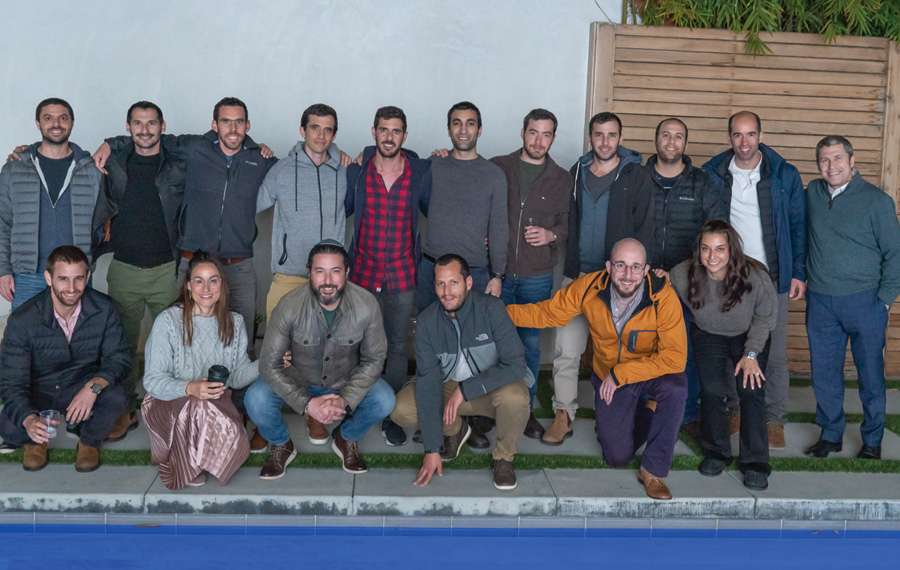
A unit of Israeli Defense Forces veterans visited Los Angeles from Feb. 16-23 and spent time with Beth Jacob Congregation as part of the Peace of Mind program (POM), which enables the veterans to process their combat experiences.
Developed after the Second Lebanon War, POM was created to help veterans discuss the challenges and difficulties they faced as soldiers.
Having previously served together in the elite Egoz commando unit, the soldiers reunited and processed service-related trauma.
Two therapists, Alon Weltman and Yuval Kessler, accompanied the group from Israel and equipped the veterans with the language needed to discuss their fears and feelings about their time in battle. This was a new and important skill that had not yet been developed by these soldiers, according to a Peace of Mind representative.
One of the veterans, David Hoffman, spoke in shul on Shabbat.
“As soldiers we are taught survival skills — how to fight, and how not to think about our feelings. Yet in the military we went through many difficult and terrifying situations. We were well trained for military operations, but we were not taught skills for how to return to civilian life afterward. After participating in this program, we now possess the language to talk about what we went through, and we will be able to share our feelings more easily with our partners, our children, our parents,” Hoffman said. “After this intensive week, we are going home more aware and more whole.”
Created by Metiv: The Israel Psychotrauma Center, the nine-month program includes a week in a Diaspora community. The distance from home enables veterans to work on the issues that are most pressing without any outside interference.
The Beth Jacob community united around the program, with volunteers hosting the soldiers in their homes, Beth Jacob Rabbi Kalman Topp said.
“The Peace of Mind program brought the community together, and brought out the best in each one of us,” he said.
From left: Jay Leno, Miriam and Sheldon Adelson and Eli Beer attend the Friends of United Hatzalah gala in Beverly Hills. Photo by Joseph Pal Photography
Friends of United Hatzalah of Israel raised $15 million at its second annual Los Angeles gala at the Beverly Hilton on Feb. 27.
Proceeds from the event support the lifesaving work of the organization’s volunteers in Israel. Hatzalah (Hebrew for rescue) is a volunteer emergency medical service organization based in Jerusalem. It provides immediate medical intervention between the onset of an emergency and the arrival of traditional ambulance assistance. There are currently 6,000 volunteers registered with Hatzalah who respond to calls 24 hours a day, seven days a week.
Eli Beer, founder of United Hatzalah and president of the U.S.-based organization, introduced keynote speaker Miriam Adelson.
“I had the honor of meeting Miriam and Sheldon before they were married.What I didn’t realize back then is that when these two got together, what a force their love created to change the world,” Beer said.
Adelson told the 1,100 guests about the time she served as a chief physician in the emergency room at Hadassah Hospital.
Adelson and her husband, Sheldon, were honored during the evening, along with Dina Aspen, who was awarded with the Pioneer Award, and Nicolai Marciano, who was awarded with the Young Leadership Award.
Comedian Jay Leno performed and had the audience roaring with laughter. The former late-night host was the recipient of last year’s award for his support and work with United Hatzalah.
The evening concluded with a performance by Israeli recording artist Dudu Aharon. — Ayala Or-El, Contributing Writer
Want to be in Movers & Shakers? Send us your highlights, events, honors and simchas.
Email ryant@jewishjournal.com.
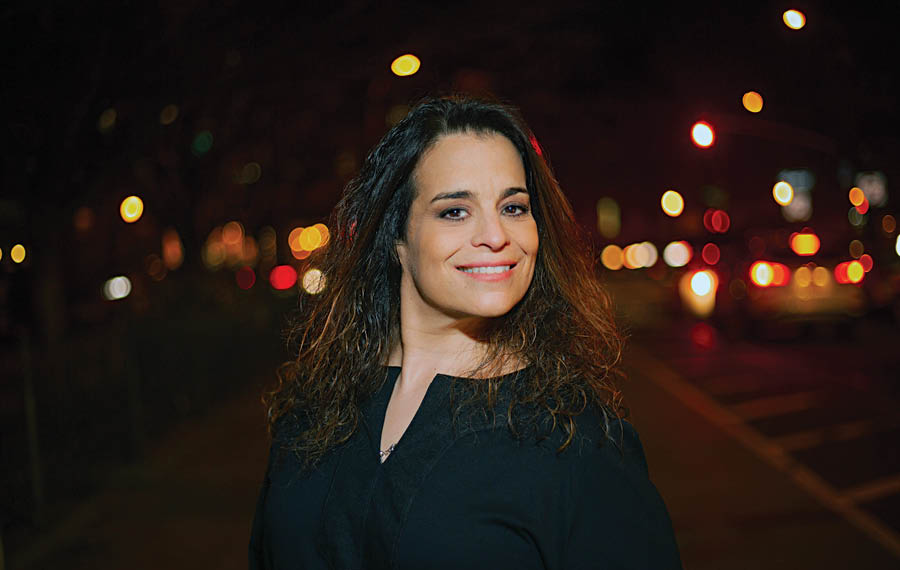
Jessica Kirson is having a moment. The comedian, who has been doing stand-up since 1999, released her first special on Comedy Central, “Talking to Myself,” in December, produced by comedian Bill Burr. She worked alongside Robert De Niro in the 2016 movie “The Comedian,” and now she’s producing a documentary on female comedians for FX.
The Journal caught up with Kirson to talk about her upbringing, her career milestones and why she loves performing for Jewish audiences.
Jewish Journal: You’ve been quoted as saying it was your grandmother who got you into stand-up. Is that correct?
Jessica Kirson: Yes. My grandmother was a very big fan of Borscht Belt comedy. She went to a lot of comedy shows and loved Jewish comedy. One day she pulled me aside and told me I should be a comedian.
JJ: So what did you do from there?
JK: I was looking in the Village Voice and in the back of it was a class for stand-up. I ended up calling and taking the class. I was very panicked. The class was a six-week thing where you went every week and tried out material in front of eight people. It made me feel more comfortable doing it.
JJ: What was it like making your television special?
JK: It was amazing. It’s a lot of pressure put on these two shows I did for the special. Of course, a ton of my friends, comics and Comedy Central people were there so it was nerve-wracking.
JJ: How did you connect with Bill Burr?
JK: He hadn’t seen me in a really long time and then he saw me at the Patrice O’Neal [Comedy] Benefit [in New York] and he flipped out and said, “When did you get so funny?” I said, “You haven’t seen me in 15 years.” I’ve always worked really hard, and I had one of the best sets of my life that night. He called me six months later and asked if he could produce my special.
JJ: Are you happy with how it turned out?
JK: I’m very happy. I’m not so happy that it’s on once and then you have to go onto the Comedy Central app to watch it again, so that’s a little tough. I just found out we have the rights to my album, which is amazing. Bill’s company is going to produce it and that way my stuff can be out on SiriusXM and Spotify.
It’s so interesting because it really shows you what goes on in this business. I just asked my manager to look into it and they said I have the rights. People don’t even ask those questions a lot of times. That’s why I always say it’s not just about being funny; it’s about being a businessperson too. I happen to be a pretty good businessperson because of my family.
JJ: What did your parents do?
JK: My father owned a company that made nail polish, and my mom was a therapist. She always did seminars and ran a big business. She still sees a lot of clients. [My parents are] hard workers.
“I do a lot of shows for Jewish people. They’re by far my favorite audiences. I’d rather perform every night for Jewish people. It’s such a different vibe. I feel like it’s so much easier to laugh at yourself than other people.”
JJ: I heard that your mother always had clients coming over to your house. What are some stories that stand out?
JK: I was my mom’s secretary and she would always give me instructions on what to say to the clients, and it would drive me crazy. One time she told me an organizer was coming and kept telling me all the stuff for the organizer to do. The woman came to the house and I told her what to do in the closet. So there were all these “Curb Your Enthusiasm” moments where no one knew what was going on.
JJ: Have you ever worked with your stepbrother Zach Braff?
JK: I think we’ll definitely work on shows and movies together. That’s always been the goal. He came on stage with me at the Comedy Cellar. If we both lived in the same city it’d be easier.
JJ: How was it working with Robert De Niro in “The Comedian?”
JK: I was at the Cellar and De Niro and the director of the movie, Taylor Hackford, saw me. Then, I was in Florida at my dad’s apartment. I was doing a Jewish development gig that night for 55 and older, mostly Jewish people, and I got a call saying, “Bob wants to meet you on Wednesday.” I said, “Bob who?” He said “Bob De Niro.” I was in shock.
I ended up meeting with him about the movie and it was incredible. We connected a lot. We really got along. I wasn’t star-struck at all, until I saw him on Fallon and Kimmel saying my name. I was his side person throughout the whole movie and I got an associate producer credit. It was great and I realized I love producing.
JJ: Did you grow up practicing Judaism?
JK: Yes, I was bat mitzvah. It’s always been very important to me. I haven’t been religious but I’m very spiritual and pray a lot. I pray before every show. I just went to Israel two years ago with Comedy for Koby (an annual stand-up tour in Israel to raise money for the Koby Mandell Foundation), and it was incredible. I do a lot of shows for Jewish people. They’re by far my favorite audiences. I’d rather perform every night for Jewish people. It’s such a different vibe. I feel like it’s so much easier to laugh at yourself than other people. I love performing for the young Jewish crowd. It’s such a treat. I was just in Cincinnati and there were a lot of Jewish people who came out. I felt like I wasn’t alone.
JJ: What are your goals?
JK: I want to produce and create and get my following to a point where I can fill theaters doing stand-up. I want to grow my podcast “Relatively Sane” and possibly have a talk show at some point.
Jerome Adelman died Feb. 4 at 85. Survived by daughter Susan Frydrych; 1 grandchild; 1 great-grandchild. Mount Sinai
Milton Birnbaum died Feb. 4 at 99. Survived by daughter Robin (Steve) Zimmer; son David (Kathryn); 2 grandchildren; brother George. Mount Sinai
Gertrude Blank died Jan. 28 at 94. Survived by sister-in-law. Chevra Kadisha
Aileen Braun died Feb. 5 at 94. Survived by daughter Amy Marquez; 2 grandchildren; sister Barbara Fine; brother Howard Pottruck. Mount Sinai
Arthur Brooks died Feb. 11 at 81. Survived by daughter Michelle (Robert) Brooks-Silver; son Baron; stepson Derek Underhill; 1 grandchild. Mount Sinai
Ian Cholfin died Feb. 2 at 68. Survived by sons Evan (Ariana Farina), Jeremy (Tania Esakoff); 2 grandchildren; sister Laurie Artz. Mount Sinai
Doris Damon died Feb. 3 at 92. Survived by daughter Carol (Larry) Dearborn; sons Jeffery, Rob (Kris); 4 grandchildren; sister Marylyn Gammer; brother Ernie Gammer. Malinow and Silverman
Geri Edelman died Feb. 7 at 90. Survived by daughters Susan, Linda (Harry); 2 grandchildren; sister Janette Dickman. Mount Sinai
Jerome Irving Eglin died Feb. 5 at 97. Survived by wife Carol; daughters Carol (Mark) Sender, Marilyn (Marty) Dare; sons Steve (Joan) Sussman, Paul (Michael Scott) Sussman; 5 grandchildren; 2 great-grandchildren. Mount Sinai
Albert Germansky died Feb. 2 at 84. Survived by wife Irma; daughter Deborah (Kenneth) Urman; son Gregory; 4 grandchildren; sister Gail (Myron) Scheinbaum. Mount Sinai
Terry Glickstein died Feb. 5 at 85. Survived by daughters, Denise (Sam) Yaghoobzedeh, Cindy, Donna; 3 grandchildren; 3 great-grandchildren. Mount Sinai
Harold Goldman died Feb. 6 at 90. Survived by wife Estelle King; daughter Jodi (Phil) Werbin; son Lee (Jacie); 7 grandchildren; 3 great-grandchildren; sister Evie Banks. Mount Sinai
Arlene Goldsmith died Jan. 31 at 75. Survived by son Steve (Felice) McClenon; stepsons Howard, Kenny Goldsmith; 2 grandchildren; sister Sandra Erichman. Mount Sinai
Marilyn Hollinger died Feb. 6 at 90. Survived by daughter Dana; sons Kurt (Dale), Mark (Nora). Mount Sinai
Florence Lampert died Feb. 2 at 95. Survived by daughter Laura (Jay) Lampert Sanderson; sons Allen (Shannon), Steven (Ayelet); 10 grandchildren. Mount Sinai
Boris Lukovskiy died Feb. 4 at 56. Survived by wife Marina Lukovskaya; daughter Ilona (Dimitar) Dimitrov. Mount Sinai
Cila Mansdorf died Jan. 24 at 87. Survived by husband Zeev; daughter Esther (Oden) Carbonell; son Scott (Yam) Webley; 3 grandchildren; 5 great-grandchildren; sister Rivka Kugel. Mount Sinai
Dorothy Millner died Feb. 2 at 99. Survived by daughter Lesley (Kenneth Geiger) Millner-Geiger; 4 grandchildren; 3 great-grandchildren. Mount Sinai
Norman Nathan Richman died Feb. 12 at 96. Survived by daughter Sarah; son Mitchel; 2 grandchildren; brother Marvin (Amy). Mount Sinai
Irene Rosenberg died Jan. 22 at 97. Survived by son David (Marie) Israeli; stepdaughter Eva (Rick); stepsons Gabor (Eva), Robert (Madeline); 2 grandchildren; 7 step-grandchildren; 15 great-grandchildren. Chevra Kadisha
Ruth Ruderman died Feb. 11 at 90. Survived by daughters Jeanne (Philippe) Ruderman-Milgrom, Diane (Scott) Weingarten; 4 grandchildren; 1 great-grandchild. Mount Sinai
Shelli Segal-Elimelech died Feb. 3 at 65. Survived by husband Moshe Elimelech; daughter Dena Elimelech; son Sam Elimelech; mother Ann Benson-Segal; father Gerald Segal; brother Robby Benson-Segal. Mount Sinai
Max Sher died Feb. 2 at 90. Survived by wife Ruth; daughter Melanie (Bernard) Gero; sons Howard (Sheryl), Gary (Nancy Lashine); 9 grandchildren. Mount Sinai
Norma Shreiber died Feb. 12 at 93. Survived by daughter Marietta; 2 grandchildren; 4 great-grandchildren. Mount Sinai
Beatrice G. Shulman died Feb. 7 at 97. Survived by son David. Mount Sinai
Selma Eve Stokols died Feb. 7 at 98. Survived by daughter Marcy (Pearl BarLev) Vaj; sons Mark (Nika); David (Barby); 6 grandchildren; sisters Dorothy Watenmaker, Ida Sondheiner. Mount Sinai
Teri Szucs died Feb. 10 at 62. Survived by son Michael Vincent; father Louis. Mount Sinai
Melvin Wallace died Jan. 27 at 91. Survived by sons Alan (Nomi), Orli; 4 grandchildren; sister Judy Meisels.
Patricia “Patti” Weisberg died Feb. 2 at 82. Survived by husband Frederick; sons Marcelo (Mary) Rossetto, Gustavo Rossetto; 4 grandchildren; 3 great-grandchildren; sister Gracelia Jaralambides; brother Fred Martin. Mount Sinai
Regina Zlotnik died Feb. 4 at 103. Survived by sons Henry (Aileen) Zlotnik-Gold, Elias (Pat) Zlotnik, Morris (Linda) Zlotnik; 8 grandchildren; 6 great-grandchildren. Mount Sinai n
What came first? The hat or the hamantashen? The hamantashen cookie is said to be inspired by the three-cornered hat of that dastardly Haman. So now here’s a hat that’s inspired by the cookie. This hat would go really well with the hamantashen costume I created for Purim a couple of years ago for the Journal. Check out the tutorial for it online.
When figuring out how to construct the hat, the biggest challenge I encountered was how to give the felt fabric somestructure so it wouldn’t flop down. The solution, which I found in my pantry, was a disposable paper bowl. Turned upside down, the bowl fits on top of your head as it supports the felt. While the bowl is on your head, you can also give yourself a haircut.
What you’ll need: Light brown felt
Paper bowl
Raspberry-colored felt (or other color of your choice)
Hot glue
Scissors
1. Cut an 18-inch diameter circle out of the light brown felt. To draw the circle, I made a makeshift compass out of a string and pen.
2. Turn the paper bowl upside down. Center the brown felt circle over the bowl and adhere the two with hot glue.
3. For the cookie “filling,” cut a 14-inch diameter circle out of the second color felt. Scrunch it into a mound and hot glue it to the middle of the brown felt circle.
4. Fold in three sides of the brown circle to create a triangle. Hot glue the folds in place.
Jonathan Fong is the author of “Flowers That Wow” and “Parties That Wow,” and host of “Style With a Smile” on YouTube. You can see more of his do-it-yourself projects at his website.
Harold M. Schulweis was one of America’s most revered rabbis. He was succeeded in the pulpit of Valley Beth Shalom by Rabbi Edward M. Feinstein, who has been described as Schulweis’ “devoted disciple.” So we should not be surprised to find that Feinstein has taken it upon himself to celebrate his mentor. At the same time, since Schulweis was a relentless truth-seeker, neither should we be surprised that Feinstein does not overlook Schulweis’ “critics and flaws.”
“In Pursuit of Godliness and a Living Judaism: The Life and Thought of Rabbi Harold M. Schulweis” (Turner Publishing Company) is only incidentally a biography. To be sure, Feinstein wants us to know what experiences and relationships shaped Schulweis’ heart and mind, but Feinstein devotes two-thirds of his book to exploring in depth what Schulweis believed, said, wrote and did as “the most successful and influential pulpit rabbi of his generation.”
We learn, for example, that Schulweis’ father had been an actor in Warsaw before immigrating to New York, where he contributed to the pages of the Forward. “The Schulweis home was a refuge for Yiddish writers, poets, musicians, artists, thinkers and cultural vagabonds who shared visions of the coming Jewish renaissance,” Feinstein explains. “Young Harold grew up surrounded by iconic images of Jewish dreamers and revolutionaries.”
Feinstein puts Schulweis in the generation that followed a certain “golden age,” which he describes in illuminating detail as an era that “indelibly changed the American rabbinate, the American synagogue, and the Judaism embraced by American Jews.” Born in 1925 and ordained in 1950, Schulweis followed such now-legendary rabbis as Stephen S. Wise and Abba Hillel Silver to the pulpit, but he “fully embraced the freedom to author his own rabbinate” and “to shape the roles and tasks he would fulfill as rabbi in answer to the demands of his historical moment,” as Feinstein puts it.
Surely, the single most decisive moment in the moral education of Harold Schulweis came in 1945, when the Union of Orthodox Rabbis formally excommunicated Rabbi Mordecai Kaplan for “atheism, heresy, and disbelief in the basic tenets of Judaism.” Kaplan’s crime was based on precisely those innovations in Judaism that most appealed to young Schulweis: “Kaplan’s relentless pursuit of truth, his ferocious rejection of religious mediocrity, and his dauntless openness to new thinking.” Kaplan became “Schulweis’ intellectual godfather.”
Feinstein punctuates his discourse with provocative phrases that catch the reader’s eye and compel us to pause and consider what Schulweis believed and taught: “Torah is entirely the product of culture.” “Prayer is not magic.” “The Holocaust mocks my faith.”
Schulweis’ first pulpit was a synagogue in Oakland, where his two decades of service spanned the most tumultuous events of the 1960s. He discovered, for example, that Jewish values were entirely consistent with the aspirations of a generation that did not trust anyone over 30 — a seder that Schulweis conducted for the young people in Haight-Ashbury represented an escape “from mindless materialism to Jewish moral idealism.” And when Schulweis arrived in Encino in 1970 to become the spiritual leader of Valley Beth Shalom, his intention, Feinstein insists, was “to marshal the community’s intellectual and spiritual resources toward the project of reinventing modern Judaism and reimagining Jewish life.”
Schulweis, according to Feinstein, deserves to be called a rebel who rejected the staid traditions of “quotational Judaism.” But he was also “an extension of the history and culture of American Jewish life” who sought to avoid “the dangers of fractured Judaism.” He warned against “a Judaism of superficial ethnic pride with no moral foundation.” At the heart of his theological message was a call to faith: “Belonging, Schulweis argued, rests upon a foundation of believing,” writes Feinstein. “Otherwise Judaism is likely to collapse into a hollow ethnic ‘Jewishness’ of kitschy Yiddish phrases, bagels and lox, songs from Fiddler on the Roof, but little else.”
Indeed, Feinstein puts Schulweis into an intellectual and philosophical context that draws deeply on Jewish values and wisdom and, at the same time, challenges the reader to consider new ways of understanding what has gone before. “Schulweis liberates religion from the epistemological puzzles of supernatural revelation,” writes Feinstein. “Revelation is an empirical process of learning and teaching carried on by human beings over the course of history.” And Feinstein punctuates his discourse with provocative phrases that catch the reader’s eye and compel us to pause and consider what Schulweis believed and taught: “Torah is entirely the product of culture.” “Prayer is not magic.” “The Holocaust mocks my faith.”
At one point in his book, Feinstein recalls an interview that Schulweis gave to the Jewish Journal shortly before his death in 2014. Asked to name the most significant of his accomplishments, Schulweis responded: Jewish World Watch, which started as a small circle of congregants at Valley Beth Shalom and grew into “a coalition of some sixty-two synagogues, churches, and schools dedicated to fighting genocide through education, political advocacy and humanitarian intervention.” And Feinstein quotes what Schulweis said at Jewish World Watch’s annual Walk to End Genocide.
“Today, we remember ten communities who share a tragic kinship of suffering,” Schulweis said, sounding, according to Feinstein, “every bit the prophet.” Schulweis also said, “We have found each other. We must not let go of each other.”
When Rabbi Schulweis uttered those poignant words, he was referring specifically to the places where genocide was (and is) happening in our own times. After reading Rabbi Feinstein’s book, so intellectually commanding and yet so deeply heartfelt, a somewhat different meaning emerges. Schulweis spent his life in search of a meaningful connection with Judaism and the Jewish people, and Feinstein shows us that he found what he was searching for. Thanks to Feinstein’s book, we have found each other, and we must not let go.
Jonathan Kirsch, author and publishing attorney, is the book editor of the Jewish Journal.