fbpx

January 29, 2020

The Cyrus Parameters: Trump and Netanyahu

Prime Minister Benjamin Netanyahu announced the morning of Jan. 28, Israel time, that he was no longer seeking immunity from indictment and trial. However, he had little choice. His main political rival, Blue and White leader Benny Gantz, was making his way back from Washington, D.C., and the parliament was getting ready to appoint the panel that would reject Netanyahu’s request for immunity. So, the prime minister decided to eliminate the issue and focus on what he called a “historic process.”

Netanyahu is the son of a distinguished historian, and the twists and turns of history-making likely always are on his mind. When he departed Israel on Jan. 26, he said he was going to “make history” — a common expression for him in the week since the decision to finally publicize the “Deal of the Century,” President Donald Trump’s peace plan for the Middle East.

From Netanyahu: “Tomorrow we will make history”; “On Tuesday, we will make history”; “Together with Trump, we will make history”; “I’m looking forward to making history.” And, of course, at the event itself: “This is a historic day.”

Then, on Jan. 28, Netanyahu made history by becoming the first sitting prime minister to be indicted for corruption. Attorney General Avichai Mandelblit decided to file the indictment shortly after Netanyahu’s immunity surrender. But Netanyahu stood alongside Trump for another shot at making history. He compared Trump with President Harry Truman, who recognized Israel. Following mathematical rules of logic, since Truman compared himself to King Cyrus, the conclusion is that Trump — whom Netanyahu called “the greatest friend Israel ever had in the White House” — is another Cyrus. What does Trump get in return for his friendship?
Netanyahu said Jan. 28, 2020, would be a day for the Jews to remember. Our memory is uniquely robust. 

Was it a historic event? Are we at the beginning of a “new dawn in the Middle East,” as Trump said?

What is in the plan? Three important items: 

1. Israel must agree to the principle of a Palestinian state. Small and demilitarized, but a state. 

2. This Palestinian state no longer means an evacuation of settlements and an Israeli withdrawal from territory it deems crucial for its security or for symbolic reasons. In fact, the opposite is true: Israel can annex the rest of the territory, and can do it now. 

3. No more waiting for the other side to accept the unacceptable plans offered.

The rest is commentary.

Was it a historic event? Are we at the beginning of a “new dawn in the Middle East,” as Trump said? You can agree or not, depending on your expectations and assessment of what comes next. But one thing is clear: The old “Clinton parameters” — those outdated truisms that made so many believe “we all know what a final status agreement looks like” — no longer are relevant. There are new “Trump parameters.”

You may debate whether it’s history in a good way (because Israel is supposed to get more land) or a bad way (because it is unacceptable to the Palestinians, which will not bring about peace). You also could say it’s not historic, that the plan is nothing but a show, a diversion from Netanyahu’s indictment troubles at home and Trump’s impeachment troubles on Capitol Hill. In fact, former U.S. Ambassador to Israel and Assistant Secretary of State Martin Indyk called the plan’s unveiling a “farce.”

But the more the plan — whose primary architect is Senior Presidential Adviser Jared Kushner — followed by action — possibly annexation of areas in Judea and Samaria — the more difficult it will become to deny the significance of the moment.

Israel will remain a Jewish state and the Palestinians must acknowledge that fact if they want to move forward and receive benefits. (U.S. diplomats have blasted the Trump administration for not soliciting input from  Palestinians for the plan, which heavily favors Israel.) Israel will have control over a lot of territory in the West Bank — including the Jordan Valley and the settlement blocs. (The international community and the Palestinians consider Israeli settlements in the West Bank and East Jerusalem to be illegal.) The 1967 borders no longer are the key to resolving the conflict. Israel will have control over the most important quarters of Jerusalem. It will control all borders. It will not have to evacuate settlements but must evacuate outposts — an operational headache for the government. (The Palestinians seek part of Jerusalem as the capital for an eventual independent state and hoped that would be stipulated in an overall peace agreement.)

Ultimately, this plan that aims to begin a four-year process of implementation poses the same dilemma presented by all previous plans to Israel and its neighbors: Is this the best deal the sides can hope for, or should they wait for a better option in the future?

The Palestinians have no doubt: The future will be more promising than the present, whether a near future when another candidate is elected to the White House or a more distant future. The Palestinians have rejected all plans for settling the conflict since 1947; they have the necessary patience and are used to waiting. 

Israel faces a more profound moment of choice this time. In return for the many advantages this plan offers compared with all previous plans, Israel must accept, on principle, that the Palestinians deserve to get something they can call a “state.” They must accept, on principle, that most of Judea and Samaria will be under Palestinian jurisdiction. For some Israelis, this isn’t easy.

This plan that aims to begin a four-year process of implementation poses the same dilemma presented by all previous plans to Israel and its neighbors.

As of the Journal’s press time, the Palestinians reportedly had rejected the peace plan. Leader Mahmoud Abbas said, “After the nonsense that we heard today, we say a thousand no’s to the ‘deal of the century.’ ”

Demonstrators burned images of Trump and Netanyahu as protests erupted across the Hamas-ruled Gaza strip.

The Western Wall and the Dome of the Rock in Jerusalem. Photo by Joe Daniel Price/Getty Images

In his 2018 book, “Skin in the Game: Hidden Asymmetries in Daily Life,” author Nassim Nicholas Taleb observes there are “way too many cooks” in the “tiny kitchen” of Israeli-Palestinian peacemaking. The crux of the argument is that things go awry when the people involved do not have a significant stake in something.

The obvious rest of the analogy is that the cooks never have to taste the food. These teams of do-gooders have no skin in our game. U.S. peacemakers come, discuss, prod, pressure, charm, speak and threaten — yet, they ultimately retire to their hotels, golf courses or other pursuits. In this, the Trump team is no better nor worse than all previous U.S. teams that attempted — without much success — to resolve the “conflict,” be it by one dramatic stroke or by incremental steps.

They are different only in one important sense: their disregard of the notion that an advancement necessitates a compromise to which both sides must agree. “Had the Palestinians settled in 1947,” Taleb writes, “they would have been better off.” This is no doubt right, but requires an addition: Had Israel waited for the Palestinians to settle in 1947, it would have been worse off.

Many Israelis on the right (but not the far right) inadvertently alluded to this notion when the first details of the Trump plan began to leak. They also called this “a historic moment” and urged Netanyahu to “seize the moment.” They warned against hesitation and inaction. They complained that Israel has waited “long enough.” In essence, they were calling on the government to act; to annex the Jordan Valley, change the legal status of Judaea and Samaria settlements, and make all the moves Palestinians wouldn’t be willing to discuss and which the Trump administration supports.

Last spring, Netanyahu surpassed David Ben-Gurion as the longest-serving prime minister of Israel. Now his supporters want him to exhibit Ben-Gurion’s decisiveness. 

Of course, there is a bit of a problem with this comparison. In 1948, Ben-Gurion was at the peak of his political career and authority. In 2020, Netanyahu is a leader who just failed to win two consecutive elections, has no majority in parliament and is facing criminal charges. Netanyahu might remind us of Ehud Barak at the Camp David summit in 2000, when there was a lot of fanfare but the prime minister had no public support. He might remind us of Ehud Olmert’s negotiations with Abbas, when the prime minister had good intentions and also a corruption case hanging over his head. He might remind us of Shimon Peres at the Sharm el-Sheikh summit in 1996, when a popular U.S. president, Bill Clinton, attempted to save him from becoming a losing political candidate, without success.  

Ben-Gurion? We will talk about him, too.

The Palestinians have no doubt: The future will be more promising than the present, whether a near future when another candidate is elected to the White House or a more distant future.

Tom Segev’s biography of Israel’s founder, “A State at Any Cost: The Life of David Ben-Gurion,” is controversial and fascinating. Among many other things, it details the story of a somewhat mysterious series of meetings between Ben-Gurion and his archrival, Zeev Jabotinsky, in 1943 in London. These great Zionist leaders tended to denigrate each other using the harshest terms before and after this episode of engagement that lasted just a few short weeks. Ben-Gurion compared Jabotinsky to Hitler. Jabotinsky retorted by comparing Ben-Gurion to Hitler and Stalin. Their secret encounters, when discovered, stunned and disgusted some of their peers. A meeting of minds of the leader of the Labor-left and the leader of the revisionist-right seemed like the mixing of oil and water. Yet, as Segev comments, the differences between them hardly were as stark their rhetoric suggested.

They had similar aims, Segev writes, somewhat disapprovingly. They both wanted a Jewish state in all the land of Israel. They both believed the Arabs would never agree to such a state and would accept it as reality only after Israel became strong enough to be indestructible. Both wanted to respect the civil rights of Arab citizens of Israel. Jabotinsky was not really a “fascist” and Ben-Gurion was not really a “Marxist,” the historian writes. He explains that the divide between left and right in the Zionist movement was more about style and tactics than it was about the main principles.

Fast forward 77 years later, the supposed heirs to Ben-Gurion (Gantz, whose background and constituency put him in this position) and Jabotinsky (Netanyahu, whose Likud Party is the direct descendant of the revisionist movement) find themselves in a similar position. Gantz and Netanyahu’s great rivalry is more style than substance; the great obstacle to them having a conversation is the expected disapproval of their peers and voters; the names they call each other are no more than political rhetoric. Much like the founding generation, Netanyahu and Gantz agree on the main principles; these principles changed somewhat, but not in a fundamental way compared with the principles that guided Ben-Gurion and Jabotinsky. They want Israel as a Jewish state. They want an Israel that extends beyond its current official boundaries. They believe the Arabs will let Israel exist only if it is strong enough to defeat any foe. 

Israel will remain a Jewish state and the Palestinians must acknowledge that fact if they want to move forward and receive benefits. 

That they both accepted the Trump peace plan and commended the president for devising it should not come as a surprise. True, Netanyahu wanted to utilize the plan as a political ploy to win an election. Yes, Gantz traveled to Washington without cheer, highly suspecting this whole affair was a political trap. He also has a few reservations about the details of the plan and insists on implementation of the plan “in tandem with the other countries in our region” (which could mean never).

Yet, the plan itself is not the problem. If the circumstances allow Israel to implement this plan, Gantz and Netanyahu gladly will embrace it. To borrow one last line from Segev: Netanyahu is not really a “corrupted leader” (surely not as corrupt as the book portrays Ben-Gurion), and Gantz is not really a “leftist” (nor more so than the legendary combative leader of the Labor movement).

On the morning of Jan. 26, when Gantz was en route to Washington, one of his peers of the Blue and White Party “cockpit” of leaders — a military label fitting a party of three former Israel Defense Forces chiefs of staff — made a worthy observation. Gen. Moshe Ya’alon was chief of intelligence when the Oslo Accord began to collapse in the mid-’90s, and enraged the right when he argued that Iran initiated terror attacks to topple Peres’ government. He was chief of staff during the Second Intifada, and enraged the left by opposing the disengagement from Gaza. He was Netanyahu’s minister of defense — then he was not. He entertained the idea of becoming Netanyahu’s main rival but then realized the only way for him to stay in the game was by joining Gantz’s “cockpit.”

When speaking about Netanyahu, Ya’alon is the most resentful of the four members of the cockpit. All of them worked with him — Yair Lapid as minister of finance, and the other three as senior defense professionals. All of them had to deal with Netanyahu’s manipulation and cunning. Gantz and Gabi Ashkenazi seem to have escaped unharmed; Lapid seems slightly bitter; Ya’alon is the one with real scars.  

So, on the morning of Jan. 26, it was not a surprise to hear Ya’alon say that the prime minister is using the Trump plan as a scheme to “escape the defendant’s bench.” That was, generally speaking, the unified message of Blue and White: Treat the Trump plan as if there’s no legal battle — and the legal battle as if there’s no Trump plan.

If the circumstances allow Israel to implement this plan, Gantz and Netanyahu gladly will embrace it.

But what Ya’alon had to say about the plan was quite interesting. He said the plan fits with the “national consensus” and “restores the Israeli position that eroded along the years.” When Ya’alon talks about an Israeli position that eroded with time, he means the past 30 years or so. He talks about Yitzhak Rabin’s Oslo and its aftermath. He talks about Ariel Sharon’s disengagement; Ehud Barak’s Camp David; the Clinton parameters; the ideas of a “messianic” (Ya’alon’s term) John Kerry. He talks about the naïve notion that Israel has a Palestinian partner for peace, and the only way to get to such peace is for Israel to be squeezed until it gives the Palestinians the minimum they require.

Ya’alon dislikes and distrusts Netanyahu, and is eager to see Netanyahu’s departure. He surely will fight him as if there is no Trump plan, but later might support the implementation of a Trump plan as if Netanyahu were out of the picture.

Ivanka Trump and her husband, White House senior adviser Jared Kushner (center), listen during a press conference on Jan. 28. Photo by Alex Wong/Getty Images

After Washington, Netanyahu’s next planned stop was Moscow. He wanted to bring home an Israeli detained by the Russians and perhaps get another photo op for his campaign. Say what you want about him as prime minister, his focus and determination in fighting for his political life is admirable. No stunt is off limits. No maneuver is off the table. The court might rule that he’s corrupt. The public might decide he ought to go. But no one can say with a straight face that Netanyahu isn’t a fighter. He fights for Israel the way he fights for his career, which would explain why Israel has wanted him as its leader for such a long time.

Ultimately, there is a very good chance the Trump plan will not have a significant impact on Israel’s elections.

His next move is tied to the Trump plan and limited by the leash Trump holds around his waist. Netanyahu wants to convey to his voters the following story: If I am prime minister, Israel will have borders recognized by the U.S. that include settlement blocs and the Jordan Valley; if my rivals get the helm, their hesitation and political constraints (possibly having to rely on the Arab party) will deny Israel a great prize.

This could work but don’t bet on it. Ultimately, there is a very good chance the Trump plan will not have a significant impact on Israel’s elections. For about a year now, the polls show an unchanged picture of voters who have already made up their minds. No crisis or tactic has significantly altered their principled preference, for or against Netanyahu. There is reason to suspect the Trump deal will have the same effect, which is no effect. 

If that’s the case, Netanyahu will get a shot at making history once more: a fourth election.


Shmuel Rosner is senior political editor. For more analysis of Israeli and international politics, visit Rosner’s Domain.

The Cyrus Parameters: Trump and Netanyahu Read More »

Your Vote Counts but Don’t Go Overboard

“There’s a lot of money at stake,” was Israeli journalist Zvika Klein’s instinctive response when I asked him a few weeks ago why we should care about the World Zionist Congress elections. I could almost picture the bigots having a field day: The Jews are having an election over who gets to control a large sum of money. Parties form, activists tire, articles are penned, campaigns are waged — and all for what? For the “billions.” The billions with which — some activists believe — American Jews can truly influence Israeli politics. 

The World Zionist Congress was founded in 1897 by Theodor Herzl. It meets every five years. An adult Jew in the United States can pay a $7.50 ballot fee, sign a statement (“a Jewish, Zionist, democratic and secure State of Israel [is] the expression of the common responsibility of the Jewish people”), and vote. A third of all delegates are American. They have a stake in deciding how to allocate $1 billion annually on programs and organizations, and elect members of organizations such as the Jewish Agency and the Jewish National Fund. 

Most Jews don’t vote in these elections, but some do. And it seems that this year, the hype is more intense than in previous years. More candidates are running and more attention is being paid to the process. “More than double the number of people have voted in half a day than voted in the whole first day in 2015,” American Zionist Movement Executive Director Herbert Block told The Forward. All of it is based on the premise (as American journalist Jonathan Tobin defined it) “that Americans voting in the Zionist Congress election have a chance to influence the decisions … that are vital to Israel and the Jewish future.” Or as Rabbi Jill Jacobs of T’ruah: The Rabbinic Call for Human Rights put it: “This is a way for progressive American Jews to help shape the Israel we want.”

Positive trend. False premise. 

Why the trend is positive is obvious: The more Jews get involved with Jewish institutions, feel that they have a stake in Israel, identify with Zionist causes, the better. Why the premise is false is also quite obvious: Israel’s budget is close to $120 billion. Israel’s GDP is more than $350 billion. You can’t influence decisions that are “vital to Israel” with a few allocations from a total of $1 billion. You can’t “shape the Israel we want” from afar by moving some funds from this to that cause.

It’s nice to see that so many people care about Israel’s policies and behavior, but slightly dangerous. 

Still, it’s nice to see so many organizations try hard to convince their constituency that it is within their power to alter Israel’s policies and behaviors. It’s nice to see that so many people care about Israel’s policies and behavior, but slightly dangerous. Because one day, not far in the future, all these activists and voters suddenly will realize that they were duped into thinking that their vote matters much more than it truly does. And this will make them angry — at Israel — when in fact Israel has no intention of letting the World Jewish Congress define its mission and policy. 

So, if you want to find another reason to get angry at Israel (and I suspect some activists have that goal), by all means, vote in the false hope that this could impact Israel’s security policy or foreign affairs. And as you do, consider the fact that 60% of Israelis surveyed say that when making important decisions, the government of Israel shouldn’t take the opinions of Diaspora Jewry into account. And just to make it clear, this position is shared by majorities among the right and left, and religious and secular Jews. 

However, if you’re looking for other reasons to vote, there is no shortage of those. Vote to show your solidarity with Israel and the Jewish people. Vote to show your solidarity with the Zionist dream. Vote to have your vision of Zionism on the shared table. Vote to demonstrate that Jewishness has many varieties. Vote to have your representatives engage with representatives who have other views. Convince them or get convinced by them. Vote not because you want Israel to change but rather because you want Israel to remain what it is: The expression of Jewish nationality, the fulfilment of many generations’ dreams, the success story of the century.


Shmuel Rosner is senior political editor. For more analysis of Israeli and international politics, visit Rosner’s Domain online.

Your Vote Counts but Don’t Go Overboard Read More »

The French-Israeli App Maker Tackling Food Waste

I meet Elie Fischer at Ca Phe Hanoi, a kosher Vietnamese restaurant in Tel Aviv, the brainchild of French restaurateurs Claude Louzon and Emmanuel Dayan. 

Fischer, who moved from his native Paris to Israel, is the director of Israel operations for Louzon and Dayan as well as the co-founder of the new app SpareEat that enables people to buy unsold food from restaurants.  

After graduating from college, Fischer spent a year and a half in finance and then did what he always wanted to do: quit his job and enrolled in the prestigious Swiss hospitality management institute, Gilon. 

After graduation, Fischer moved to India and worked in two of that country’s most luxurious hotels. He said he chose India “first to get as much cultural knowledge as possible; to be able to understand people. Second, for fun. This is an industry where I can travel and learn so much.”

While working in Bangalore — dubbed the Silicon Valley of India — he met one of the owners of the Israeli Dan Hotel Group. 

“As luck would have it, I saw a white guy in the middle of India,” Fischer said. “We were talking and quickly understood we were both Jewish.” 

Not long after, at the age of 27, Fischer moved to Israel to become the food and beverage director for Jerusalem’s renowned King David Hotel, favored by many visiting dignitaries. “I was very proud to be there,” Fischer said. “It’s this historic, prestigious, amazing place.” 

He added he was particularly proud of the coexistence, collegiality and respect among the hotel’s diverse staff. “It was very interesting, the mix between the Israeli, the Arab Muslim and Christian,” he said.  

“All of the food chain is connected. The less food waste you have, the less production you have, the more impact on prices.” 

It was his intimate knowledge of food and beverage operations that inspired him to make his next career move: co-founding SpareEat. Calling itself “quality food in a yummy eco spirit,” the app offers consumers up to 50% off grocery-, bakery- and restaurant-boxed items and meals at the end of the day that would otherwise be discarded. In the hotel and restaurant business, Fischer said, he “always saw the amount of food we throw away. The breakfast buffet for me was always painful, every morning. Something had to be done.”

So he teamed up with his cousin’s wife, Laetitia, who always has had what Fischer called a “strong ecological sensitivity.” Fischer and his partners invested heavily in the technology behind the app, with the goal of bringing it to international markets. They just licensed it in their first country: Turkey. 

“Israel wastes over a third of all food produced,” Fischer said but noted that it’s also a worldwide problem.  Scalability, he said, is key in addressing the massive failures of the global food system, which has brought on so much of our environmental crisis.  

“All of the food chain is connected,” Fischer said. “The less food waste you have, the less production you have, the more impact on prices.”

The French-Israeli App Maker Tackling Food Waste Read More »

A Stronger Response

Culturally, we Jews are disposed to seek out and help those who are demonized and treated unjustly. We lend our support to people and causes at home and abroad. At the same time, we are terrified of being identified as the “other.” We learn how to hide in plain sight. More than 2,000 years of statelessness and demonization and death at the whims of host countries will do that to a group. We are like a co-dependent family with a secret.

In the mid-19th century, some Jews were admitted to Germany. Many of those who thrived there distanced themselves from their poor, regrettable relations to the East.

The pattern continued as the German Jews moved to the New World, established themselves and renounced the Ostjuden (Eastern European Jews), whose existence, to the mind of the Yekkes (Germanic Jews), impeded “good Jews’ ” attempts at invisibility, which they called “assimilation.”

In the late 1800s, Adolph Simon Ochs, son of Jewish immigrants, took over The New York Times. It was a German Jewish success story. However, the Times downplayed the Holocaust as if it were “not quite the thing.” Assimilationist Jews today avert their eyes from the anti-Semitism of the euphemistically self-proclaimed “even-handedness” of the “mainstream press” in its stance on Israel, and the Jew-hating members of Congress whom the Democratic Party, the sole remaining minyan of American Reform, refuses to unambiguously denounce. What are they doing in Congress, these anti-Semites and the cowards who will not repudiate them?

I live in Santa Monica. I will not call my neighborhood a “moral leper colony,” but I will note that it is a beautiful island full of helpless unfortunates; a predominately Jewish enclave populated almost exclusively by the political liberal.

Liberal Jews are Democrats. What’s the harm?

Just after the horrific Oct. 27, 2018, synagogue shooting in Pittsburgh, a group of the shul’s congregants were gathered outside. Stunned, shocked and grieving, a woman of about my age was asked by a newsman, “What should we do to avert such catastrophes?” Her demeanor changed from grief to abject loathing. She said, “Vote.”

She likely meant that anti-Semitism was a result of President Donald Trump. This is a delusional meme of the left, an indictment of a president who has acted in support of the Jewish state; who has, in effect, treated Jews as human beings, rather than as the Conditional Honorary Aryans some assimilationists aspire to be.

The synagogue massacre victims did not die because of anything Mr. Trump said. They died, as Jews have died for 2,000 years, because they were unprotected.

What of the Jewish left’s loathing of firearms? In response to new outbreaks of anti-Jewish violence, a congregant asked the board of a Los Angeles neighborhood shul for armed guards. She was told in confidence that such a request would “alienate” members of the congregation because they were anti-gun.

To Western Jews who fear being despised: Whom do you know who does not despise weakness? And whom do you know who does not respect strength?

Take note that these same congregants shop in Beverly Hills at jewelry stores and shoe shops that have armed guards. How can we understand their reluctance to protect their synagogues, its members and their offspring as a hatred of guns, then, and not a hatred of Jews, whose lives are, to them, worth less than the protected rubbish of Rodeo Drive? Terrified of being identified as a member of a despised clan, the liberal Jew will not even assert his right to live should a declaration of that right challenge his delusion of anonymity.

Jewish institutions in Europe are protected, by necessity, by armed guards. The Jewish state is protected by Israelis who will fight for their country, and their families. Meanwhile, the Diaspora Jews of the West, less threatened and more “settled,” turn our backs on our brothers and sisters in the East and their déclassé determination to exist. Jewish Democrats elect and abide political leaders who hope for the destruction of Israel and scoff at the notion that anti-Zionism is anti-Semitism.

My neighborhood, known as “the Shtetl,” is covered with signs proclaiming moral superiority. “In this house, we believe: Love is love” (who doubted it?), “Black Lives Matter” (all right), “No Human Being is Illegal” (we note that no American has suggested human beings are illegal, but that our country has laws criminalizing behavior), and “All Immigrants Welcome.” Where once domestic morality was suggested by the display of a religious symbol, here it is announced by the publication of platitudes.

Yesterday, on my walk, I saw one of these signs, and to its side, another that read: “Protected by A.D.T.: Armed Response.”

So, then, nothing is “illegal” to this “New Believer,” but should anyone not authorized to step on his property dare to trespass, he’ll call the folks he hired to come shoot them. And, as gun control increases, those who cannot afford a guard service are welcome, when assaulted, to lie down and die.

The sign owner will purchase armed protection for his house, aghast at laws that allow one to fulfill the task oneself; and with a moral laziness, he will vote for a Democratic Party that tolerates anti-Semites, thinking “they don’t mean me.”

But the anti-Semites do mean you. And you, my neighbors, should write this down: Say the magic word about any other identity group, and your career is over. But who objected to “It’s all about the Benjamins”?

It can’t be “all about the Benjamins.” We are a cultural group that consistently votes against itself, its interests and its right to exist.

To Western Jews who fear being despised: Whom do you know who does not despise weakness? And whom do you know who does not respect strength?

The co-dependent family coalesces around protecting their secret. The secret of American Assimilationist Jews is that we behave like fools when we put up signs crying about humanity and then elect representatives — even Jewish representatives — who will not decry anti-Semitism.


David Mamet is an award-winning author and playwright.

A Stronger Response Read More »

Jewish Progress Taking Place at UC Berkeley

When I tell Americans about my youth in Israel, many ask what it was like riding a camel to school. When I tell members of the L.A. Jewish community about teaching classes on Israel on the UC Berkeley campus, they often ask what it’s like “dealing with all the Israel haters.”

Both these views are out of touch with reality. SUVs have long since scared off the camels that once roamed the streets of Tel Aviv (there weren’t many of them in the first place). Jewish students who have taken back their campus have long since drowned out the anti-Israel voices in Berkeley. Berkeley now is a place where they and their peers who are passionate about Israel studies and Jewish studies can hold their heads high.

If you are a Jewish student on the Berkeley campus, you might start your day with a morning class on Jewish mysticism, the Holocaust or translating the Bible at the Center for Jewish Studies. Your next class might be on the causes and future of the Arab-Israeli conflict, taught by Berkeley’s Professor of Israel Studies (me), a class on social protests in Israel or a seminar on the history of Tel-Aviv. Next, you could lunch in the only kosher dining hall at any West Coast university. Then, it’s off to Berkeley’s Jewish museum, the Magnes Collection of Jewish Art and Life, to conduct archival research on 18th-century ketubahs or the marvelous Vishniac collection of photographs from the shtetl.

In the late afternoon, attend a meeting with your student group at Berkeley’s Hillel to plan an event, volunteer or organize the next trip to Israel. In the evening, go to a public event at the Berkeley Institute for Jewish Law and Israel Studies, where an Israeli journalist might argue with an Israeli political scientist about the upcoming elections.

This is what Israel scholarship and Jewish life is like on the Berkeley campus in January 2020.

Since many of our Berkeley students originally are from L.A., it is time for Southern California to discard its misconceptions about camels and myths about Berkeley. It’s time to celebrate good news for a change: There is an Israel studies miracle taking place at one of the greatest public universities — and it’s happening now.

For nine years, Berkeley has been home to the most ambitious Israel Studies program in the United States: the Berkeley Institute for Jewish Law and Israel Studies. Every year, the Institute invites half a dozen top-tier professors from Israel to teach classes about Israel across the campus. They reach hundreds of students every semester, teaching topics as diverse as Israeli high-tech, poetry, constitutional law and party politics.

This Israel Studies program is accompanied by a second institution, a center for Jewish studies, located halfway across campus. There, top scholars work with graduate students to study Jewish history, scripture and literature. At another end of campus sits the Magnes. No other university in the country has a Jewish museum. Berkeley boasts the third-largest collection of Jewish artifacts in any museum in the United States. As of last April, UC Berkeley is one of a dozen universities in the country with a permanent faculty position dedicated to studying Israel: the Helen Diller Family Chair in Israel Studies.

Life has not always been easy on our campus for students who wanted to study Israel, or who wanted to learn about their Jewish connections to Israel. 

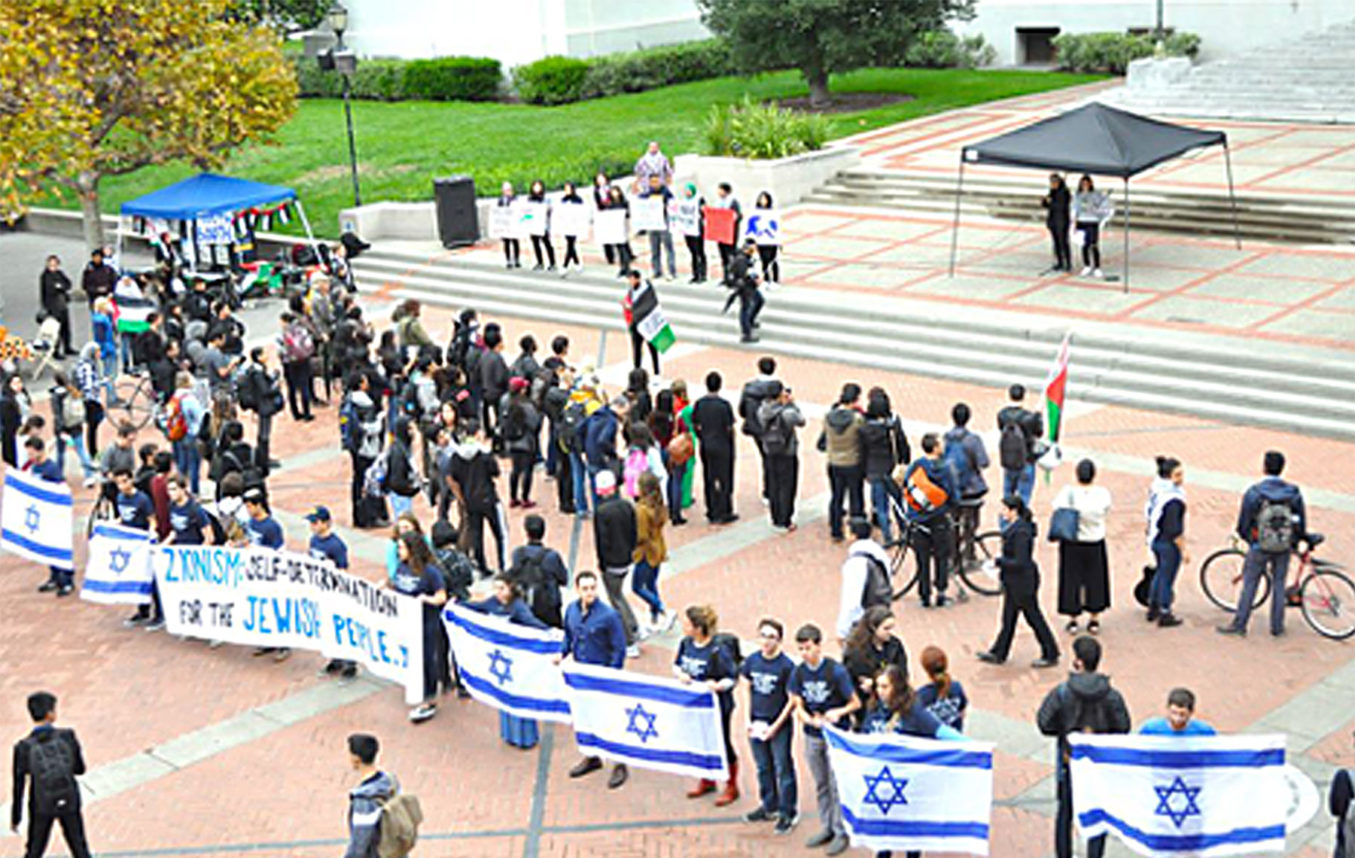
There is no boycott, divestment and sanctions (BDS) movement on the Berkeley campus; there has not been one there for seven years, at which time it failed. There is no “Apartheid Week” and no “Apartheid Wall.” Anti-Israel protests can be healthy and should be welcome on any campus. However, the Berkeley campus has not seen a public protest since October 2016. An image from that day, more than three years ago, speaks louder than words: 10 anti-Israel protesters face an arc of 30 Jewish students, representing three Jewish groups that are not on easy speaking terms with one another. In their hands are large Israeli flags and a poster inscribed “Zionism: Self-Determination for the Jewish People.” 

Berkeley is home to the country’s only program in Jewish law, thought and identity. The Berkeley Hillel, which recently underwent a $10 million renovation, welcomes 750 students during the High Holidays. More than 100 students celebrate Shabbat at Hillel every Friday night. The nearby Chabad House hosts another 100. Jewish student groups are flourishing: A Jewish law student group; a Jewish business student group; a Jewish a cappella group; a Jewish fraternity; and Jewish political groups representing right, center and left. Of the 20 student senators currently seated in the student council, two are Jewish students.

Every year, Berkeley’s Hillel organizes three student trips to Israel. Law students and business students organize annual trips of their own. The Berkeley Institute for Jewish Law and Israel Studies offers summer classes in Israel that Berkeley students can take for course credit, as well as summer internships in Israel. Students who excel in my classes on the Middle East conflict will join me on annual study trips to Israel, starting in winter 2021.

The positive reality of Israel studies on the Berkeley campus raises two questions: How did this miracle come about? How have you not heard about it before?

Taking back the campus

Life has not always been easy on our campus for students who wanted to study Israel, or who wanted to learn about their Jewish connections to Israel. When I first arrived in Berkeley in 2004, two BDS attempts occurred in quick succession. The campus promptly rejected both. A bold public statement, signed by all 10 University of California chancellors in 2010, condemned BDS as “a direct and serious threat to the academic freedom of our students.”

But accompanied (as they usually are) with vitriol and bigotry, these failed BDS efforts angered Jewish and Israeli students. That frustration was not directed just at the activists who had tried to bring hatred onto the campus: It was directed at us, the faculty, which had chosen to remain aloof. Our students shamed us. “Where were you,” they asked, “when we confronted lies and misinformation?” The students didn’t ask that we take sides in political debates on campus. What they demanded was knowledge and engagement. Where were the classes about Israel? Where were the challenging but nuanced opportunities to learn about the conflict in the Middle East? Where could they engage with their own Jewish identities, history, religion and culture?

UC Berkeley faculty rose to the challenge. As so often has been the case in Jewish history, threat and harassment provoked Jews to awaken and take action. Led by Kenneth Bamberger, a professor of law, we united to reform and establish Jewish and Israeli learning on our campus. We began with the founding of the Berkeley Institute for Jewish Law and Israel Studies in 2011, headed by Bamberger and me. Twenty-five Berkeley faculty members sit on its academic board, and 20 undergraduates work closely with visitors from Israel and professors from Hebrew University, Tel Aviv University, Bar-Ilan University, Haifa, IDC Herzliya and Ben-Gurion University, among others. They have taught journalism, sociology, art history, gender studies, Middle East studies, law, history, etc.

There is not a corner of the campus in which Berkeley students have not engaged with Israeli society, technology or politics.

“As so often has been the case in Jewish history, threat and harassment provoked Jews to awaken and take action.”

The institute offers dozens of classes, faculty seminars, graduate-student seminars  as well as public events. Guest speakers have included Israeli Supreme Court justices, former British Chief Rabbi Jonathan Sacks and a one-time Nazi war-crimes prosecutor from the Nuremberg Trials. Not once have these talks suffered protests or interruptions. The rooms are crowded with community members and students eager to learn more. Two years ago, our institute hosted the largest annual conference of Israel scholars anywhere in the world: the Association for Israel Studies. Three hundred and fifty Israel scholars converged on the Berkeley campus for a week of panels, lectures and workshops. If there were any BDS activists left on the campus, they surely seethed in silence.

Next, Berkeley acquired the Magnes collection, and the faculty reestablished the Center for Jewish Studies, now headed by professor Benjamin Brinner. It moved into a new space, appointed an executive director and began hiring new faculty, offering more classes than before. None of these efforts would have borne fruit were it not for an administration that recognized the significance of Jewish and Israel studies and encouraged their flourishing.

The Berkeley chancellor established a working group, the Chancellor’s Advisory Committee on Jewish Life, headed by the former president of the University of California system, Mark Yudof. Its members include students and faculty, but also community members, and the Berkeley leadership. It is regularly attended by the chancellor, Carol Christ, the greatest supporter of Jewish Studies that our campus has ever known.

No camels here.

I visit L.A. often to tell audiences about Berkeley’s Israel Studies miracle. Many of our Israel Institute’s greatest supporters reside in L.A., as do the parents of many of our students. When I share our accomplishments with Jewish audience members, I encounter a significant amount of incredulity. I suspect that in part, this skepticism stems from an inherent Jewish fear of letting down one’s guard in the face of news that is “too good to be true.” The Jewish media carries its own share of blame: It is quick to “advertise” and dramatize the most feeble anti-Israel and anti-Jewish outbreaks on campuses. Jewish papers are far more subdued when it comes to spreading good news about success and community building. I’m reminded of the old joke about the Jewish telegram: “Bad News, Details to Follow.”

“It’s as easy for a miscreant to spray paint a swastika on the side of a university building as it is for a misguided student to initiate another failed BDS effort.”

This is a shame because it means anti-Israel efforts that fail on U.S. campuses — as most do — are hidden from the public eye, whereas rare cases of “success” (whatever that even means) are sensationalized. In turn, this encourages bigoted activists who contemplate riling up students. If success is cheap and rewarding and failure is invisible, why not attempt BDS for the third or fourth time? BDS spasms continue on campuses around the country despite nearly two decades of abject failure, in part because the Jewish community imagines it might succeed tomorrow.

Anti-Israel activism may well rear its ugly head from time to time. It’s as easy for a miscreant to spray paint a swastika on the side of a university building as it is for a misguided student to initiate another failed BDS effort. We ought to respond to these isolated incidents forcefully, but not provide perpetrators with free PR. We should welcome informed and constructive critiques of Israel. But when anti-Israel bigotry crops up, our instinct as empowered and emancipated Jews should be to throw our full weight into supporting the cause we value most: the education of future generations.

“The Berkeley community has spoken loudly and confidently.”

The Berkeley community has spoken loudly and confidently. Students and faculty have invested their efforts and passions into creating institutions at which Israel and Judaism are studied rigorously, carefully and enthusiastically. That effort would have been inconceivable had it not been for the support of the Berkeley administration and the generosity of the Jewish community of California and beyond. They have given of their time, their ideas and their resources to help us construct this miracle from scratch.

Our efforts have only just begun. In the next five years, we hope to hire five more faculty members to teach Israel and Jewish studies — one new hire every year. We intend to triple the number of graduate students who earn doctorates in Jewish Studies on our campus, and we plan on quadrupling the number of undergraduates who take our classes on Israel. Scholars from Israel will continue to flow to the Berkeley campus. Soon, we hope to offer our undergraduates the possibility of minoring in Israel Studies and in the years that follow, as we grow our faculty, an Israel Studies major. Imagine graduating with a degree in Israel from UC  Berkeley!

The more faculty and classes we offer, the greater the number of students we will attract to Berkeley — not despite Berkeley’s reputation regarding Israel, but because of Berkeley’s reputation as a center of excellence for the study of Israel. Last year, The Forward ranked UC Berkeley as the second-best place in the country for students who wish to engage with Israel.

That’s not good enough for the best public university in the world. We will not rest until we are ranked first. 

UC Berkeley has become a national model for Jewish studies and Israel studies. If that doesn’t match the image of Berkeley in your head, maybe it’s time you came for a visit. Better yet, send your kids.


Ron E. Hassner is the Helen Diller Family Chair of Israel Studies at UC Berkeley.

Jewish Progress Taking Place at UC Berkeley Read More »

Much More Than a Number

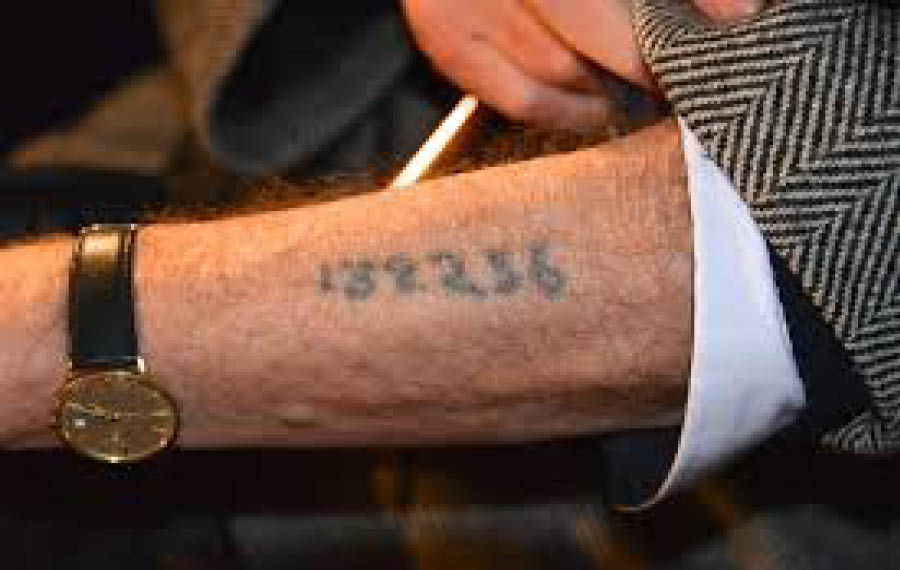
I am not good with numbers. I barely made it through high school algebra. Yet there is one number I will never forget — a number with the letter “A” in front of it. A-6674. I will always remember it because I saw it every day until my mother died. It was tattooed on her left forearm.

The blue ink was etched into her flesh upon her arrival at Auschwitz. As is commonly known, the Nazis, being meticulous record keepers, kept track of inmates by branding their arms like cattle. It also was a method the Nazis used to dehumanize people. They wanted their prisoners to feel they no longer were individuals with names, homes, families and histories. They were just a number. 

My mother was not a number. She was born Leah Katz and lived in Voloz, Czechoslovakia. She had parents, grandparents, uncles, aunts and three sisters, all Orthodox Jews. Her father was a baker and owned two bakeries. He supplied the town’s Jewish population with their bread, challah and cake. He worked hard and earned an honest living.

But it all came to an end when the Nazis marched into her town on the fifth day of Passover, 1944. She was a teenager. The Jews were shipped out in cattle cars. She never again saw any of her family members.

After spending months in two concentration camps, she was sent to Auschwitz. As she stared into the eyes of evil Joseph Mengele, he pointed right, sparing her life for the time being. Over the next number of months, she was assigned the gruesome task of searching through mounds of shoes to find matching pairs. They were the shoes left by fellow Jews who had gone to their deaths. 

My mother was in Auschwitz for six months and became part of an exchange deal with Sweden. She and hundreds of other women were released before Auschwitz was liberated. Many didn’t make it, dying from disease or pure exhaustion. My mother spent two years in a Swedish hospital recovering from typhoid she had contracted while in Auschwitz.

After spending months in two concentration camps, she was sent to Auschwitz. As she stared into the eyes of evil Joseph Mengele, he pointed right, sparing her life for the time being. 

With the help of the International Red Cross, she was able to locate an uncle who made it out before the war. He helped bring her to the United States to start a new life. She met and married my father and had two children. The happy family didn’t last long. My father died suddenly at a young age leaving my mother a 41-year-old widow with two teenage children to raise and support. 

We moved to Los Angeles and she looked for work. The recently built Hillel Hebrew Academy needed someone to run its lunch room. My mother, being a master of the kitchen, created the lunch program in which she fed 170 students and faculty every day.  

She was the hardest working person I have ever known. She rose at 5 a.m. every day and, after closing the lunchroom, went shopping for the next day’s meals. She did this for more than a decade and instead of complaining, was grateful for the job and having found a way to support us.

Those who endured the Holocaust aren’t called survivors for nothing. Yes, they miraculously survived the Nazi death machine. But then there was life after the war. Perhaps they emigrated to another country and had to learn a new language, find a job or create a business and build a family. 

The world recently commemorated the 75th anniversary of the liberation of Auschwitz. World dignitaries gathered to make speeches and vow “Never again.” But we know all too well that history has a short memory. 

For those who would deny the Holocaust happened, all they need do is look at the numbers on the arms of survivors. But time is running out. Every day that passes, eye- witnesses to the darkest period in world history are lost. Before too long, testimonies will be relegated exclusively to movies, films, books and online images. 

The world needs to know and remember that those who survived the Holocaust were — and are — much more than a number.


Harvey Farr is a Los Angeles-based marketing consultant, writer and photographer.

Much More Than a Number Read More »

Non-Jews in Kippahs: Solidarity or Cultural Appropriation?

In reaction to surging anti-Semitism, some advocates are calling for non-Jews to put on kippahs and take to the streets. In May, an official in Germany who monitors anti-Semitism urged Jews not to wear kippot because of public safety concerns. In response, Bild, a German national newspaper, published a paper yarmulke on its front cover, urging its readers to cut it out and wear it in public. 

“If even one person in our country cannot wear the kippah without putting themselves in danger, then the only answer must be that we all wear the kippah,” proclaimed Bild editor-in-chief Julian Reichelt.

Other activists have taken the same approach to advocating against anti-Semitic carnage in the United States. After one of many violent assaults on Orthodox Jews in New York City, editor Bari Weiss recommended fellow New Yorkers take to the streets in Jewish garb.

“If [New York City Mayor Bill de Blasio] was serious about this epidemic, he would be organizing a kippah walk through Brooklyn,” the “How to Fight Anti-Semitism” author tweeted in September.

In January, Weiss’ call was answered by Ryan Ang, a UCLA student who has been wearing a kippah for two months to understand anti-Semitism and show support for Jews. Ang is not alone; kippah walks such as those Weiss suggested have popped up in Sweden, Poland and Denmark.

But is non-Jews wearing kippahs solidarity or is it just cultural appropriation?

Often, when a person who is not part of a marginalized community takes on a minority’s cultural dress, it is viewed as offensive. In the past few years, pop stars and politicians have faced serious scrutiny when wearing Asian patterns, headdresses — even painting a portrait of Emmett Till — for committing cultural appropriation.

The outrage of cultural appropriation lies in how people from a dominant culture who adopt elements of a minority culture are lauded as stylish or edgy.

The outrage of cultural appropriation lies in how people from a dominant culture who adopt elements of a minority culture are lauded as stylish or edgy. Meanwhile, individuals who actually have historic and social ties to the tradition are discriminated against for celebrating their roots.

“Appropriation occurs when a style leads to racist generalizations or stereotypes where it originated but is deemed as high fashion, cool or funny when the privileged take it for themselves,” explained actress Amandla Stenberg in her 2015 manifesto “Don’t Cash Crop on My Cornrows,” which amplified the subject in the public ken. “Appropriation occurs when the appropriator is not aware of the deep significance of the culture they are partaking in.”

But for Ang, wearing a Jewish symbol has made him appreciate the anti-Semitism Jews face. “There have been many occasions in which I felt incredibly unsafe walking around with the kippah, but I remember that when we said, ‘never again,’ we don’t mean it as a noun, but a verb. So I keep it on,” Ang wrote in response to Weiss. 

Unlike co-opting cornrows for a fashion shoot, Ang — who is Christian — wears a kippah to build empathy and visibly support a faith outside his own. But do Ang or other “kippah marchers” know any more about a yarmulke’s religious significance than an Instagram model who pins on a Native American warbonnet for Coachella? 

It’s unlikely.

However, when wearing kippahs, these activists encounter the social stigma and increasing danger of being visibly Jewish — something from which many Jews are shying away.

Actively wanting to protect Jews in an age when our flesh is cheap and politicized is an act of solidarity — dress code or not.


Ariel Sobel is a screenwriter, filmmaker and activist.

Non-Jews in Kippahs: Solidarity or Cultural Appropriation? Read More »

Sacred Space, Stigma and Self-Determination

There are times when it is easy to feel the grandeur and majesty of a supreme force, such as when witnessing a vivid, rouge sunset on the southern rim of the Grand Canyon or hearing the cry of a newborn. Feeling the presence of God in a windowless meeting room at a hotel is much harder, yet that was exactly what happened on a recent Saturday morning at the DoubleTree by Hilton in west Los Angeles.

It was the second day of a statewide conference on self-determination for regional center consumers who have intellectual and developmental disabilities. Judy Mark, the prime mover and parent activist behind California’s new self-determination program and a long-time friend from our BBYO teenage days, organized the conference. She asked me to moderate a breakout discussion on “Making the World a Better Place: Volunteerism, Worship, Voting and Community Participation.” The panelists included an adult with autism, a parent of a teenager with autism, adult siblings and other relatives.

Mulugeta Tadele, father of a teenager named Emmanuel, spoke about how his family had been active with the Ethiopian Orthodox Tewahedo church in downtown Los Angeles for many years, but after his son’s diagnosis with autism, the family withdrew from the church. When his young son disobeyed some of the rules by touching certain ritual items and making noise, the clergy at the time asked that he be removed from the sanctuary.

A few years later, Tadele and a few other parents spoke to their new head clergy, known as a high priest. Drawing on texts from the New Testament, the high priest agreed that the children with special needs should be welcomed and a classroom for the “angels,” as they were called, was set up on Sunday mornings. At first, this classroom was located far from the main sanctuary and few congregants knew it existed. Over time, the children learned the prayers, songs and drumming that are part of the church’s weekly liturgy, and eventually were invited to join in the main service. Now the “angels” are included in every service in the main sanctuary.

Kishan Sreedhar talked about a nonprofit called Pragnya (a Sanskrit term that means “awareness, awakening”) he and his sister, Kavita Sreedhar, who has a child with autism, created. They host a local radio show, and have trained a large group of neuro-typical high school and college-age allies who participate in social and recreational activities, and also act as advocates for awareness and inclusion.

The panelists included an adult with autism, a parent of a teenager with autism, adult siblings and other relatives.

When it came time for the Q & A session, a woman in the back said, “It’s not even 10 a.m. and I have already laughed and cried. I am inspired by the people presenting, but in my Vietnamese culture, there is a huge sense of shame around having a child who is different.” 

Another woman said, “In our Chinese culture, the mother is blamed for having a child with special needs. These families end up feeling alone and cut off from the larger family.” 

At that point, I said half-jokingly, “In the Jewish community, everyone expects their kid to get into Harvard, so if your kid isn’t able to excel academically, it’s hard to find a place to fit in.”

The overarching goal of self-determination for children and adults with intellectual/developmental disabilities is to enable them to have a full and meaningful life in the community. The group that Saturday morning tried to square this laudable goal with the reality of ignorance, shame and stigma that still exists in many families, ethnic and religious communities and society at large.

When the workshop ended, a few people lingered, chatted and hugged. We left, resolved to keep working hard to create a more inclusive community, one person at a time. Amen.


Michelle K. Wolf is a special needs parent activist and nonprofit professional. She is the founding executive director of the Jewish Los Angeles Special Needs Trust. 

Sacred Space, Stigma and Self-Determination Read More »

The Uplifting Wave of Kobe Bryant

The Los Angeles Lakers belong to everyone in L.A., but their greatest players belong especially to the immigrants and refugees of this city. 

When they resettle here, as we did in 1989 from Iran, they’re often downtrodden and traumatized. If the city were an underwater urban jungle, they would be the smallest fish in the unforgiving big city pond. 

For all their hard work, talent and sacrifices, immigrants might not feel a semblance of empowerment and self-worth for years. I felt hopelessly behind my American-born peers, with one exception: Like them, I was now an Angeleno, which meant that everything from the Hollywood sign to local sports teams belonged to me, too. 

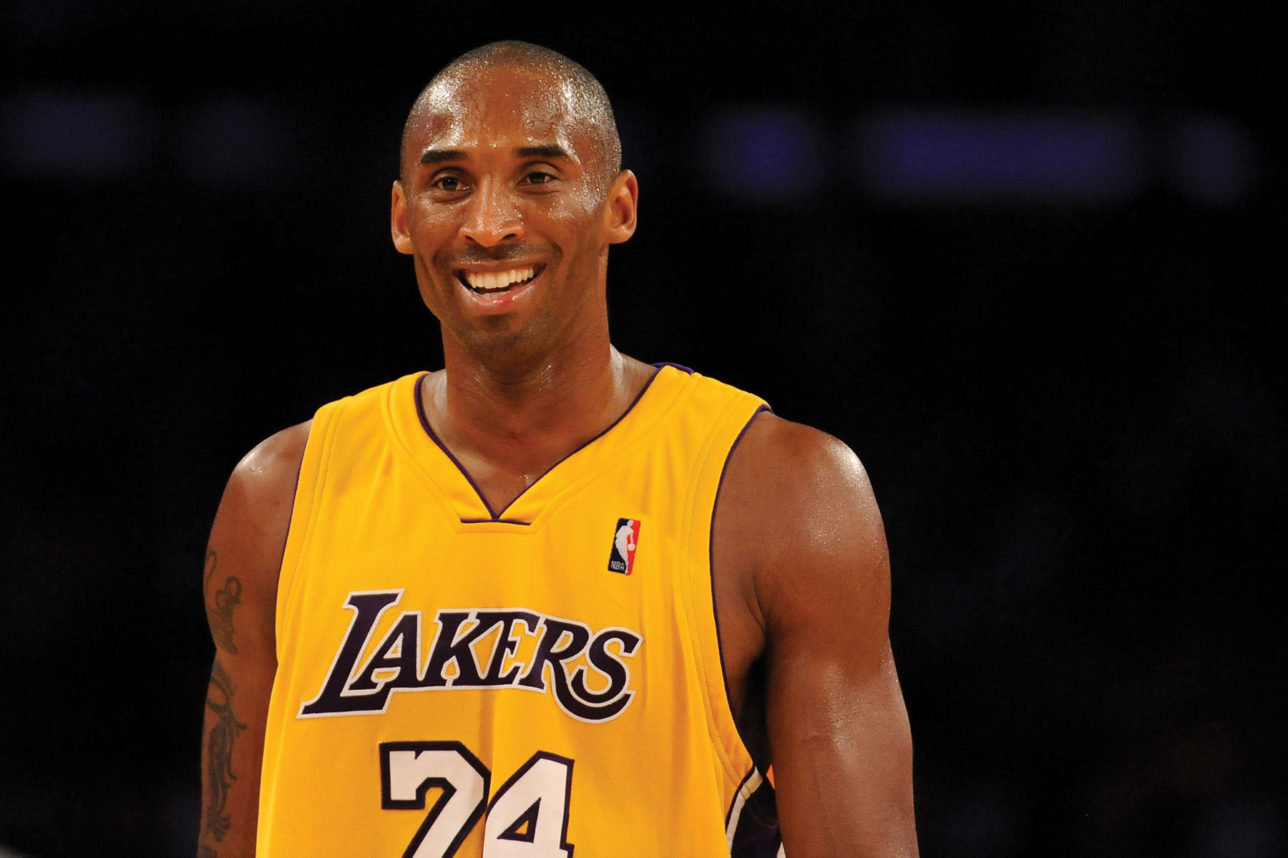
For tens of thousands of Iranian Americans in Southern California, many of whom came to the United States with nothing, there was a feeling that even if we were smaller fish, we were uplifted in the same powerful wave as the biggest sharks: Kareem Abdul-Jabbar, Magic Johnson, Shaquille O’Neal and, for many of us, the greatest of all time, Kobe Bryant.

In the late 1990s and early 2000s, I was a miserable youth. But during those years, the Lakers, led by Kobe and Shaq, won three consecutive NBA titles and, as I watched those spellbinding games on TV, I felt like I had a personal stake in Bryant and the team’s success. If they won, I won. 

There was also something else. For thousands of traditional but non-Orthodox Iranian Jewish families in L.A., there were two constants about the weekly Friday night Shabbat dinner: family and the Lakers. 

Imagine: amazing food, your favorite cousins and an NBA championship on the same night. Watching the Lakers on Friday nights brought Shabbat to life for us, especially for my aunt Shahnaz.

My cousin Arash introduced his mother (my aunt) to the Lakers. She was immediately hooked. And unlike many Middle Eastern mothers, she had found a shared experience with her young son. “The day Arash took me to my first Lakers game — with my son next to me and Kobe on the court — was one of the greatest days of my life,” she said. How many Persian mothers get to say that?

In the City of Angels, only a few are chosen to fly the way Bryant soared on that basketball court. 

I’ve never seen anyone panic as much as Shahnaz when she would walk into the living room to catch a glimpse of the TV while holding a giant platter of her famous Persian rice for Shabbat dinner, and asking for minute-by-minute updates about the game. 

But when she caught a glimpse of Bryant’s face, she’d take a big, dreamy breath and cry, “I adore him!”

While I was growing up, NBA championship games that coincided with Shabbat dinners were truly a hoot. We cursed opposing players with delightful Persian-language insults (“Jason Kidd is a dead cow.”) because we had conflated our identity with a sports team. Can you blame us? Kidd, by the way, played for the New Jersey Nets and faced off against the Lakers during the 2002 NBA finals. 

What could possibly inspire a middle-aged Persian mother who still was acclimating to American culture to cheer or cry over a basketball team?

Kobe. 

Like a thunderous wave, Kobe Bryant lifted us and made us feel strong. Invincible. Immortal. 

Until he died in an unimaginable way. It’s not right to say this: All life is sacred, but Kobe Bryant was too good to die. And because he was good, so were we.

My aunt cried all day on Jan. 26, when Bryant, his daughter and seven others perished in a helicopter crash in Calabasas. I cried, too. 

In the City of Angels, only a few are chosen to fly the way Bryant soared on that basketball court. 

He wasn’t supposed to crash and fall. 

Los Angeles Times sports columnist Bill Plaschke wrote that in his last phone conversation with him, Bryant said of L.A., “I feel such an appreciation. I can never pay the city back for what it’s given me.”

But Kobe Bryant paid us back immeasurably. For at least one refugee family, he brought pride, prowess and a promise that Los Angeles would, indeed, be very good to us.


Tabby Refael is a Los Angeles-based writer and speaker. 

The Uplifting Wave of Kobe Bryant Read More »

Jan 31, 2020

For full screen click here.

Jan 31, 2020 Read More »