fbpx

December 19, 2019

Rosner’s Torah Talk: Parshat Vayeshev with Rabbi Michael Pincus


Michael Pincus is the rabbi of Congregation Beth Israel in West Hartford, CT.

This week’s Torah portion — Parashat Vayeshev (Genesis 37:1-40:23) — features the first part of the story of Joseph and his brothers. It begins with Joseph’s dreams and continues to tell us about how he was sold into slavery by his brothers, about the affair with Potiphar’s wife, and about the beginnings of his career as an interpreter of dreams. Our conversation focuses on the man – or angel – whose encounter with Joseph changes a people’s history.


https://www.youtube.com/watch?v=8SPOIjZzxPM


Previous Torah Talks on Vayeshev

Rabbi Harold Robinson

Rabbi Reuven Leigh

Rabbi Debra Landsberg

Rabbi Martin Cohen

Rabbi Olivier Benhaim

Rabbi Joe Blair


Rosner’s Torah Talk: Parshat Vayeshev with Rabbi Michael Pincus Read More »

Spate of Anti-Semitic Incidents Shows that ‘Action is Your Cue’

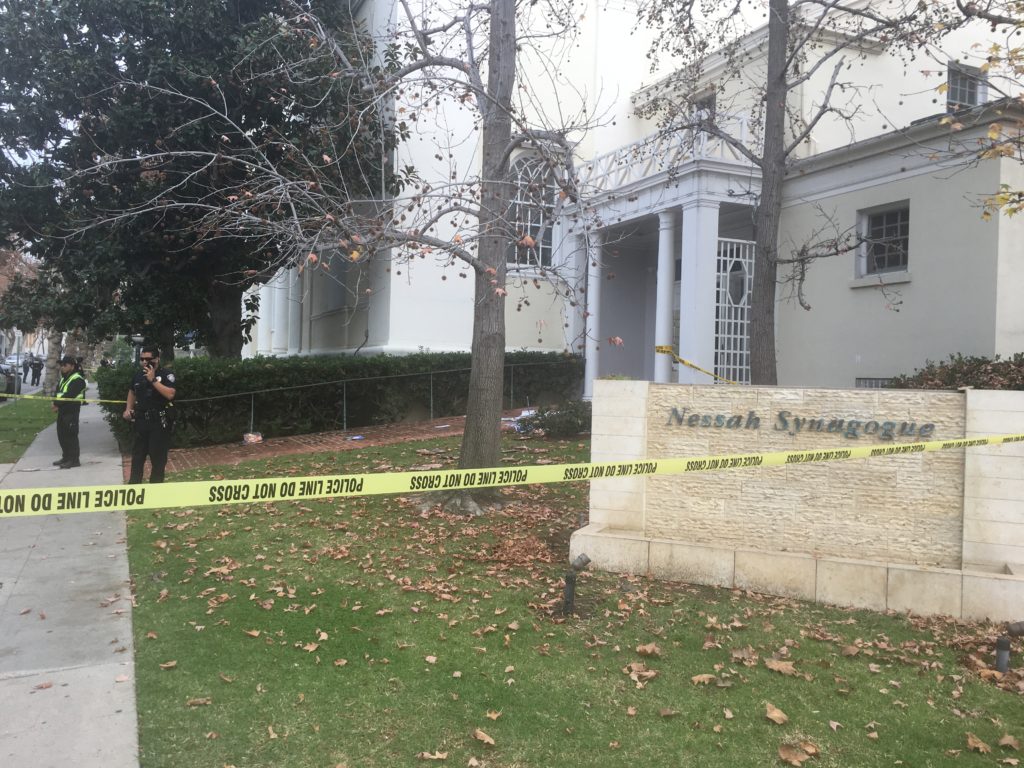
On Dec. 17, anti-Semitic graffiti, including swastikas and the words, “it’s time to pay,” were found spray-painted on three westside schools. On Dec. 18, a man accused of ransacking a Sephardic synagogue in Beverly Hills was apprehended in Hawaii, in what police are investigating as a hate crime.

The latest spate of anti-Semitic activity in our community — barely a week after six people were slain in a targeted antisemitic attack in New Jersey — has contributed to a growing climate of fear.

Fear is human and understandable, but that doesn’t make it tolerable. Fear makes us feel helpless, and too often, we cope by bunkering down and ignoring the scary reality that Jews in America are less safe today than they have been in decades.

As someone who has devoted my adult life to studying how hate leads to mass violence, I implore you: Do not shrug these incidents off and go about your day. Do not become numb to hate or degrade your worldview to accept antisemitism as a fact of life.

Take action. Reject hate. And help spur understanding.

History does not repeat itself, because circumstances are never identical, but remember that anti-Semitic enmity is as old as Jews themselves. I recently read a book published in 1936 entitled, “How to Combat Anti-Semitism in America.” It easily could have been written today.

One of its authors, Jessie Sampter, writes, “Can antisemitism be successfully combatted in America or anywhere else? The fight, under this name or another, is centuries old but has never been finished.” She goes on: “Anti-Semitism is a form of war and has the same causes,” describing those acts of war as ranging from a “prohibition to visit a summer hotel” to the “butchery of a family.”

Never mind history repeating itself, it just never stopped.

In the same volume, non-Jewish writer John Milton Caldwell urges the Jewish community to “be Jews with all your might!” in the face of hatred, and in particular urges young people “to not underrate their own powers” and be “thoroughly Jewish in a gentile world.” Faced with Nazism in Europe at the time and a rising tide of antisemitism in America, he states, “Action is your cue!”

What does action look like today?

Earlier this year, at Monte Vista High School in Danville, CA, teenage sisters Sabrina and Sydney Brandeis took a stand against hate in response to a series of incidents at their school, which included identity attacks through graffiti and verbal abuse. They launched Diversity Undivided, a community event that features exchange students, LGBTQIA+ students and others to promote diversity, equity, and inclusion. They initiated the program as part of USC Shoah Foundation’s Stronger Than Hate video challenge, which they won, earning funds for their education and for their school.

Another important — and least explored — form of action is equipping ourselves to counter the online world that feeds the hatred we see on our streets. Fearmongering has become de rigueur today, and social media amplifies the most toxic voices. The result is often a distortion of facts that can be incredibly detrimental to our capacity to combat hate. One need not look far to find evidence of bias in reporting of antisemitic acts, and it is vital that we educate ourselves and our children in how to read and interpret news and information objectively.

Sometimes it can feel like it’s never enough. When it seems that we read about another instance of antisemitism in this country almost every day, it’s easy to become exhausted and complacent.

But as challenging as our present moment is, it is nothing compared to what we know could happen if antisemitic hate goes unchecked. Our promise to “never forget” is also a promise to “never relent.” It is a hopeful sign that, in Beverly Hills, the city council and law enforcement took decisive action: They made the arrest of the Nessah Synagogue perpetrator a priority—which meant deploying resources to send multiple detectives out to Hawaii.

We must continue to do everything within our power to combat rising antisemitism around the world, to support greater education for ourselves and our children, and to lift each other up as we refuse to back down in the fight against hatred in all its forms. All these decades later, action is still our cue!

Spate of Anti-Semitic Incidents Shows that ‘Action is Your Cue’ Read More »

Jewish Community Leaders Say ‘Our Voices Are Heard’ During Anti-Semitism Town Hall

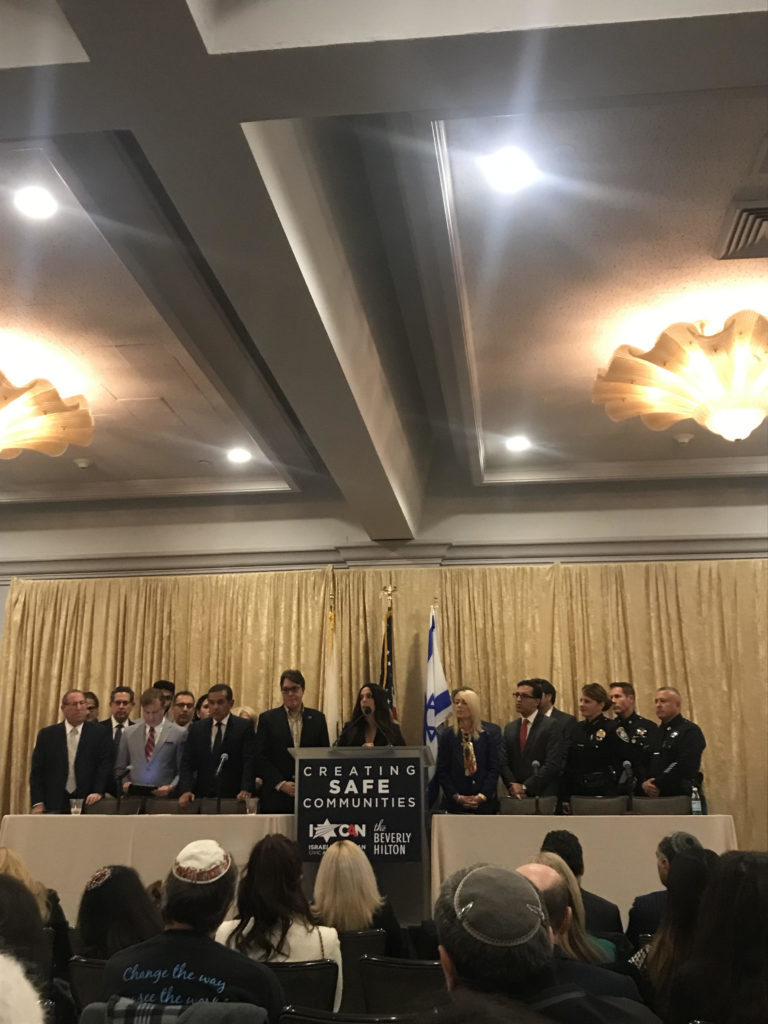
Several Los Angeles Jewish community leaders held a town hall at the Beverly Hilton Hotel in Beverly Hills on Dec. 18 in front of at least 400 people addressing recent anti-Semitic incidents that have occurred in the Los Angeles area.

The Israeli-American Civic Action Network (ICAN) hosted the event; ICAN California Chair Vered Elkouby Nisim started the town hall saying that it was important that everyone come together to unite behind the common cause of fighting anti-Semitism.

“Tonight we say: enough,” Elkouby Nisim said, adding: “What we ask of anyone of you here tonight is to join us as a community and to ensure that each of our voices [are] heard.”

Beverly Hills Mayor John Mirisch followed her, saying that he and other members of the Beverly Hills City Council feel like “we have a special responsibility to combat anti-Semitism because we are the only Jewish majority city outside of Israel.”

He went onto call anti-Semitism a disease that can take many forms, including in the boycott, divestment and sanctions (BDS) movement. On the Nessah Synagogue vandalism on Dec. 14, Mirisch expressed anger.

“How dare anybody think they can do [this] in our city of all places,” he said.

Mirisch then announced that the suspect behind the vandalism is currently in custody, prompting applause from the audience.

“These incidents simply go to show how important Israel is,” Mirish said, arguing that Israel is a safe haven for Jews fleeing anti-Semitism.

“One thing that none of us as Jews can question is that we as Jews have an ancestral homeland that is ours,” he added.

Beverly Hills Police Chief Sandra Spagnoli proceeded to get into the details of the Nessah vandalism.

“As your police chief, I can tell you that this is one of the worst incidents that can happen to a community,” Spagnoli said, adding that “officers found the interior severely ransacked with overturned furniture, prayer racks scattered everywhere.”

She then told the audience that the suspect, who is originally from Pennsylvania, took a taxi cab from Wilshire Boulevard right after allegedly committing the vandalism and took a plane to Hawaii, causing gasps from the audience. The Beverly Hills Police Department partnered with local police to arrest the suspect in Kona.

“Now that we know that the person responsible for this crime is in custody we can begin the first steps in the healing process as a community,” Spagnoli said.

Los Angeles City Controller Ron Galperin later spoke, saying that how he felt when he first heard about the shooting at the Tree of Life synagogue in Pittsburgh in Oct. 2018 was similar to how he felt when he first heard about the Nessah synagogue vandalism.

“I wish I could say I felt surprised because we see this happening over and over again,” Galperin said. He added that he also felt some anxiety since his husband, Rabbi Zach Shapiro, is a rabbi at Temple Akiba in Culver City.

Galperin went onto say that anti-Semitism in all forms needs to be condemned, whether it’s at the United Nations or Rep. Ilhan Omar’s (D-Minn.) “It’s all about the benjamins” comments. He also suggested that the Jewish community “build bridges with other communities.”

Los Angeles City Councilmember Paul Koretz brought up how he believes there have been as many as 30 anti-Semitic incidents in his district over the past day or so, which includes “a serious number of anti-Semitic hate messages painted on the walls in Jewish day schools.”

He stressed that it’s important to focus on making sure Jewish institutions, especially Jewish day schools, have proper security.

“We’re focused on making sure we shore up our physical infrastructure in our Jewish institutions,” Koretz said.

The city councilmember also said that it’s paramount to “educate our community on how to report acts of hate and take action.”

American Jewish Committee Los Angeles Regional Director Richard Hirschhaut said that over the past year, the Jewish community has felt “an unease… we have all been off-kilter since Pittsburgh.” He also pointed out that “the vandalisms that have followed in the days since Saturday all seem to be happening around schools, all seem to be happening around youth centers.”

It is then incumbent on all of us to foster dialogue and educate the youth about hate, Hirschhaut said. “We are better than this and we will prevail,” he added.

Former Los Angeles Mayor Antonio Villaraigosa announced during the town hall that he will be serving as the national chairman of ICAN’s national task force to promote cross-community engagement.

“We all understand that we need to branch out,” Villaraigosa said, adding that “the best way to fight hate is with love. And understanding.”

Villaraigosa also called for more education against hate.

“Education is so critical to the ignorance that we see prevalent in our nation today and around the world,” Villaraigosa said.

Fighting anti-Semitism isn’t a partisan issue, Villaraigosa said, “it’s about the gigantic middle in America who say, ‘[Lady] Liberty was right.’”

Other speakers at the town hall included Beverly Hills City Councilmember Lili Bosse, West Hollywood Mayor John D’Amico, Los Angeles City Councilmember Bob Blumenfeld, Democratic State Assemblymember Richard Bloom, West Hollywood City Councilmember William Moulder, Anti-Defamation League Deputy Regional Director Ariella Loewenstein, and 30 Years After President Sam Yebri. Journalist Lisa Daftari emceed the town hall.

Jewish Community Leaders Say ‘Our Voices Are Heard’ During Anti-Semitism Town Hall Read More »

Why I’m Fasting for Nessah

Today is the third day of my life on which I am experiencing (minor, tolerable, non-critical) hunger pains as a result of the Torah. No, not the Torah’s verses which the tradition understands as obligating us to fast on Yom Kippur. But rather the Torah itself. Or, to be specific, Torah scrolls. Fallen and thus debased Torah scrolls.

About nine years ago, a Torah scroll fell out of the ark at Temple Beth Am, Los Angeles during Rosh Hashanah services. It simply was not placed in its spot securely, and it fell forward, onto the ground, before the gabbai could catch it.

About two years ago, a candy-rampage at a bat mitzvah brought a wave of youngsters, in search of sweets, that literally toppled over the Torah-holder, and once again a scroll in our community fell to the ground.

Each time, following and adapting minhag/culture that is clearly not obligatory in Jewish law, our community engaged in 40 days of fasting, choosing the next 40 days on which fasting is halakhically/religiously permitted (excluding, for instance, Shabbat, Rosh Hodesh, etc…), and had at least one community member sign up for each day. Each time, we completed the 40 days with a siyyum, a gathering that focused on Torah study, on venerating the very text whose toppling we were observing/mourning. While I would never, God-forbid, wish either situation upon another community, I can tell you that each time it was a meaningful communal experience.

Also each time, I experienced some internal dissonance. After all…it is just a scroll, right? And the first one was raw accident. Could not this ink-heavy parchment forgive an accident by a well-meaning gabbai without such an extensive and mildly self-flagellating ritual? And even the second time, where there was some bit of wantonness, some out-of-control culture or ethos in the community that led to the Torah’s falling, could we not find a way to educate our youngsters, and hold ourselves accountable for where we fell down–and in that way truly venerate the Torah–without the communal fast?

The questions lingered for me. They pop up every time the scroll goes around the room and most people go out of their way to plant a direct kiss, or kiss-by-tzitzit, on the holy scroll. We hover in between worthy adulation of the source of our tradition’s wisdom and connection to the divine on the one hand, and inadvertent idolatry on the other hand, where the scroll itself can take on more holiness, and be treated with more gentleness, than other real people in the room. Not to mention all of humanity, most of whom we are ignoring most of the time.

Today’s fast is different for me. I have no qualms or second thoughts about it. I, along perhaps with some of you, and with many members of the local Jewish community, am fasting in solidarity with Nessah synagogue, the Persian shul that suffered a break-in and terribly upsetting vandalism last weekend. Most of the community’s possessions, sacred objects and Torah scrolls evaded damage. But the scene that Rabbi Shofet and his community confronted when they first saw the wreckage was horrifying in its own right. Scrolls strewn across the floor, some torn or damaged. Various sacred objects broken, damaged or lost. No lives were lost, thank God. There were no injuries. There was no fire nor structural damage. This was not Kristallnacht in miniature. And yet, it is no small thing for a Jew, for a rabbi, to witness a synagogue and a Torah scroll so blatantly desecrated, particularly within days of Hanukkah, whose joy comes from our ancestors having rescued Jewish holy space from much more catastrophic desecration. It does not take bloodshed to wound the Jewish soul, and to make us wonder how secure, how accepted and how safe we really are.

As I wrote earlier in the week, these are times to avoid snap-judgments and promulgations. For sober thinking to win out over hysteria. To this day, though a culprit has been identified and arrested, it is not clear to what extent this vandalism was motivated by ugly anti-Semitism and/or hatred of the Jew. We should withhold judgment until more is known. Still, the episode has been unsettling, to say the very least, for the Nessah community, and for Jews in the neighborhood. Coming on the heels of Pittsburgh, and Poway, and Jersey City…and…and…and…the pattern is painful and portentous.

In a few minutes I will leave to join Nessah in an afternoon dedicated to the recitation of תהילים/Psalms, a collection of סליחות/penitential prayers, and then the extended Minha liturgy reserved for fast days, including Torah and Haftarah readings. I will ensure that (at least) the amount of food that I would have eaten today will be directly donated, and served personally, to homeless in our neighborhood whose bellies grumble every day, Torah-falling or not. And I will emerge from this evening’s gathering head held high, proud of my kippah and my Jewish life, my Jewish children, my Jewish students, my vibrant Jewish community. And I will emerge from this episode, I hope and pray, yet more sensitive not only to the growing fears of Jews around the country, and around the world, wondering what is in store for them…but also to the fears of so many who wonder where they will find home, who will accept them, when and how they will be able to build their lives, and live out their religious faith, in peace and freedom. There is no greater way to honor the Torah.

Why I’m Fasting for Nessah Read More »

Jewish Journal City Guide 2020

Need to know what’s happening around the Greater Los Angeles Jewish community? Fear not, The Journal has compiled everything you need to know right here (just click the magnifying glass).

Click HERE to view in full-screen mode.
 

Jewish Journal City Guide 2020 Read More »

Poor, Poor Joseph – A poem for Parsha Vayeshev

Behold, that dreamer is coming…let us kill him
…and we will see what will become of his dreams.

Poor, poor Joseph
walking into brothers den
even angels against him

Poor, poor Joseph
Pit bound, Egypt bound
his coat, wrong kind of cachet

Sing it with me – poor, poor Joseph
Eleven of twelve brothers
want his blood

Poor, poor Joseph
dreams deferred
father about to get

the worst news
Poor, poor Joseph
We’ve read ahead

going to get worse
before it gets better
Poor, poor Joseph

What’cha gonna do?
What’cha gonna do?
Dream on, dreamer

dream on…


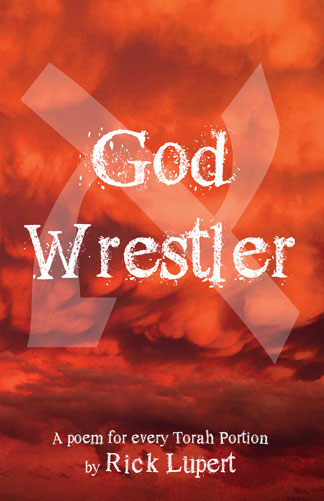
God Wrestler: a poem for every Torah Portion by Rick LupertLos Angeles poet Rick Lupert created the Poetry Super Highway (an online publication and resource for poets), and hosted the Cobalt Cafe weekly poetry reading for almost 21 years. He’s authored 23 collections of poetry, including “God Wrestler: A Poem for Every Torah Portion“, “I’m a Jew, Are You” (Jewish themed poems) and “Feeding Holy Cats” (Poetry written while a staff member on the first Birthright Israel trip), and most recently “Hunka Hunka Howdee!” (Poems written in Memphis, Nashville, and Louisville – Ain’t Got No Press, May 2019) and edited the anthologies “Ekphrastia Gone Wild”, “A Poet’s Haggadah”, and “The Night Goes on All Night.” He writes the daily web comic “Cat and Banana” with fellow Los Angeles poet Brendan Constantine. He’s widely published and reads his poetry wherever they let him.

Poor, Poor Joseph – A poem for Parsha Vayeshev Read More »

From Oil Lamp to Light Pollution

Chanukah is the Jewish festival of lights. Every year, in December, during the darkest time of the year, Jewish people around the world celebrate “the festival of lights” with the lighting of the Hanukkiah. But what does modern society actually associate with light? 

Dominik Doehler, ZAVIT* Environment and Science News Agency

Video on Light Pollution in Israel

No other holiday in the Jewish calendar places more importance on the symbol of light than Chanukah. During the eight-day celebration, each day is commemorated by the burning of an additional candle on the Hanukkiah until they are all lit together on the last day. The candles symbolize the miracle of the oil lamp, which burned for eight whole days despite having oil for only one, after the rededication of the Second Temple in Jerusalem during the Maccabean Revolt.

While the culinary aspect of Chanukah with the popular sufganiyot (fried doughnuts) and latkes (potato pancakes) takes up a more and more important role in the holiday, it’s most fundamental symbol remains: light. 

Today, the idea of relying on a single oil lamp to light an apartment, let alone an entire temple, seems outlandish. Western society has gotten so used to the omnipresence of light and electricity that even a short power outage causes agitation, especially among city dwellers – Light is everywhere.

However, the perpetual absence of darkness can have serious implications for animals, humans, and the environment alike. Not to mention the loss of the romantic aspect of being able to the see the night sky. 

Implications of Light Pollution
Along with growing human development, rapidly increasing artificial light has substantially altered the night sky in many places around the world, obscuring views of the stars and the Milky Way. 

Since the 1970s, satellite images are depicting the worldwide expansion of electric lighting on earth. 

In 2001, scientists determined that 19% of the global land surface is subjected to light pollution. This has led to growing concerns over the effects of artificial light on ecological processes as well as human health.

With light being one of the most critical environmental factors, signaling essential “daily and seasonal changes in an organism’s environment,” light pollution might entail a plethora of different biological and ecological implications for wildlife. Potentially affected processes in animals include navigation, activity, and reproduction. Two of the most prominent cases of the effects of light pollution on wildlife are increased bird and turtle hatchling mortality on account of disorientation. 

In addition, since the 1960s, studies have linked light pollution to several adverse health implications in humans, which emerge primarily due to the effects of artificial light on the circadian rhythm (an organism’s internal clock). This may lead to insomnia, depression, obesity, loss of night-vision, and low melatonin production. The latter might be connected to a heightened risk of breast cancer.

Light Pollution in Israel
According to Alon Rothschild, Biodiversity Policy Manager at the Society for the Protection of Nature in Israel (SPNI), light pollution in Israel is mainly driven by two factors, one of which is the country’s high population density. “We are a very densely populated country, and it’s hard to find any place in Israel that does not have infrastructure of some kind, even if it’s only an army base, a road, or a water pumping facility in the middle of nowhere,” he explains. Naturally, this fact is even further compounded by the country’s minuscule size. 

While most of the artificial light is produced north of Beer Sheva, which sits at the northern tip of the Negev desert, a lesser degree of light pollution does also exist in the desert. “Light pollution in Israel keeps expanding all the time. Everything north of Beer Sheva is basically one big lit-up area. But even further south in the desert, there are army bases and prisons that light up the night sky and everything around them,” Rothschild says.

Another important element that exacerbates light pollution in Israel is security, which is one of the most crucial sectors of the Israeli economy. “It’s a traditional concept of many officers and commanders who work in the security field that light equals safety and that terrorists generally avoid infrastructure that is well-lit, Rothschild says. 

However, according to Rothschild, today, this concept might be obsolete and even disadvantageous, as modern security measures rely more and more on technology, especially cameras. Modern cameras are much more sensitive to light than the human eye, so too much of it can be counterproductive for security.

Making Headway
Despite the continuous expansion of light pollution, there are ways and means to counteract this development, which in the case of Israel is currently happening. Teva Biz is a joint initiative of SPNI, the Ministry of Environmental Protection and the Nature and Parks Authority has developed a “Nature Protection Toolkit” for the business sector. 

This kit offers businesses “advanced digital tools, guidelines, and solutions to minimize their negative ecological impact.” For this purpose, the initiative has worked out a protocol for the implementation of environmentally sound practices, including the prevention of light pollution, without harming the businesses. 

Additionally, Teva Biz has been working with geographic information systems (GIS) in order to allow companies to receive extensive information on ecological diversity as well as the vulnerability of their operation sites. “Working with GIS, enabled us to point out to the companies where they have highly sensitive areas that justify more substantial measures, as opposed to less sensitive areas, where milder measures would suffice, Rothschild emphasizes. 

Based on the results of the GIS analyzes, Teva Biz then helps the companies to implement specific action plans, for instance, the installation of warm-temperature lighting, which minimizes the negative effects on the environment.

Many times, measures to reduce light pollution in the business sector do not necessarily require large-scale strategies, but rather subtle adjustments that have considerable and long-lasting impacts. 

“There are different ways to prevent light pollution, one of which is obviously proper planning to prevent the problem from emerging in the first place. However, we’ve been doing some really good work with a number of companies where we installed ‘cut off lighting.’” These are simple devices that direct all the light coming from a particular light source down to the ground instead of up into the sky, Rothschild concludes. 

Besides its efforts in the business sector, Teva Biz is also collaborating with the Timna National Park, north of Eilat in southern Israel. Here, in the middle of the desert, the initiative is working to reduce light pollution in order to create nighttime activities for tourists, which might allow them to see the stars in all their glory once again, and maybe even the Milky Way. 

ZAVIT* Environment and Science News Agency

From Oil Lamp to Light Pollution Read More »

ADL Calls for Jersey City Board of Education Trustee Who Called Jews ‘Brutes’ to Resign

Anti-Defamation League (ADL) New York and New Jersey Regional Director Evan Bernstein released a statement on Dec. 18 calling for Jersey City Board of Education (JCBOE) Trustee Joan Terrell-Paige to resign in light of her remarks calling Jews “brutes.”

Terrell-Paige wrote in a since-deleted Dec. 15 Facebook comment responding to an op-ed on the Dec. 10 Jersey City shooting, “Where was all this faith and hope when black homeowners were threatened, harassed by [the] I WANT TO BUY YOUR HOUSE brutes of the Jewish community?” She also wrote that the shooters were trying to send a message and it was worth looking into what that message was. Terrell-Paige told Politico on Dec. 17 that she doesn’t regret her comments.

Bernstein condemned Terrell-Paige’s remarks as anti-Semitic.

“By insinuating that Jewish ‘brutes’ have taken Jersey City, waving ‘bags of money’ to force people out of their homes, Ms. Terrell-Paige has invoked deeply painful anti-Semitic stereotypes related to wealth, greed, and control,” Bernstein said. “She has also drawn gross generalizations about the Jewish community based on the actions of a few. As we all know, landlords who harm others, and people who commit crimes, do not do so because of their ‘Jewishness,’ or because they adhere to the tenants of any other faith.”

He added that Terrell-Paige’s remarks “suggested that the victims of last Tuesday’s shooting were somehow responsible for being targeted and that the attack was therefore somehow justified. It is hard to understate how reprehensible, and how harmful, this is to a community still reeling from the attack.”

Additionally, Terrell-Paige has not shown any contrition over her remarks, thus making her “unfit to continue to serve on the Board of Education—a body entrusted with modeling our shared values of diversity, tolerance, and inclusion for students in our local Jersey City public schools,” Bernstein said.

New Jersey Gov. Phil Murphy (D) and Jersey City Mayor Steven Fulop have also called on Terrell-Paige to step down from her position.

According to NJ.com, the JCBOE was going to consider a resolution censuring Terrell-Paige and calling on her to resign at their Dec. 19 meeting; however, the meeting was canceled.

“With hundreds of people planning to attend tonight’s meeting, a decision was made to be proactive and ask the BOE to postpone the meeting,” Jersey City Public Safety Director Jim Shea said. “To be clear, there were no security risks specifically identified, only the interest of public safety as is the case with any large gathering.”

ADL Calls for Jersey City Board of Education Trustee Who Called Jews ‘Brutes’ to Resign Read More »

The Baker: Chapter Twelve

PREVIOUSLY: Ernie is finally freed from British captivity. is he ready for civilian life?

By 1948, Ernie was 23 and had already survived two wars. He thought he was ready for a more sedate life in Israel. 

He just didn’t have it in him.

He partnered with numerous other bakers: they supplied the capital investment while Ernie worked his miracles in the kitchen.

The work came easily.

Once, Ernie landed a contract to cater a diplomatic garden party at the Weitzman Institute, named in honor of Israel’s first president, Chaim Weitzman.

In 1957, on the ninth anniversary of Israel’s acceptance in the United Nations, Ernie got the idea to bake a cake for then-president David Ben-Gurion.

“I was a chef in a hospital, and I built from sugar, hot sugar, just like for my wedding, a whole cake,” he recalled. “And on the top was a giant globe and the map of Israel.”

Ernie sent a letter with a picture of his cake to Ben-Gurion. The president’s office wrote to thank him for his efforts, suggesting soldiers in a nearby camp might enjoy the cake. 

“And I gave it to them. And they ate it,” Ernie recalled. “I got two letters from Ben- Gurion’s office to commemorate that I made this cake.”

His baking was going gang-busters. 

His marriage, not so much.

By then, Helen had given birth to their first and only child, a son the named Morde.

Ernie and Helen worked long hours in the kitchen, where he harangued her every move. 

After years of heartache and emotional abuse, she eventually left Ernie, moving to the San Francisco Bay Area with the help of family members.

Ernie was devastated by the loss. It wasn’t long before he decided to follow her — with Morde in tow.

When he arrived in California in 1957, Ernie couldn’t speak a word of English. But he had pluck. His skills got him quick work in various bakeries. At first, he could only make a few dollars an hour because he couldn’t communicate with other kitchen workers. 

Then Ernie got his first break. 

On Geary Street, in San Francisco, he saw a sign that read “Kosher Deli.” 

The owner was a man named David who spoke Polish and Hebrew. Ernie showed him the photos of his bakery creations.
“He said ‘Oh, these pictures are beautiful. You come in at night.’ He didn’t have a baker, just a kitchen. He said ‘You go there and make anything; I want to see.’” 

The relationship lasted five years, and the two men became friends. 

In 1959, when Soviet Premier Nikita S. Khrushchev visited San Francisco, David got the job to supply food to the Russian traveling contingent, including Khrushchev himself.

He asked Ernie to bake a Russian cream cake (with whipped cream and vodka). When FBI agents visited his shop to vet his background and make sure he wasn’t a threat to the visiting dignitaries, Ernie told them he respected the Russians.

After all, he said, they’d saved him from the Nazis. 

Now 33, Ernie worked hard, laboring at the bakery from 6 p.m. until 1 a.m. 

After grabbing a few hours of sleep, he rode his new scooter across town to attend classes toward his GED. 

The high school gave him credit for his education in Czechoslovakia and Ernie worked on his English skills, an adult student sitting beside classmates half his age. 

He earned his high-school diploma at the not-so-tender age of 35.

To celebrate, he catered a party for the faculty and baked a cake shaped like a textbook. He wrote his teaches a poem. 

They awarded him $50 as the best student. 

He gave it back.

“All the kids — they were really kids — I’m making money, so I said, ‘Give it to somebody else who needs it.’”

The teachers convinced him to enroll in the San Francisco City College hotel management program. 

He lasted a year.

One day, he saw a newspaper ad: a bakery in Berkeley was for sale. 

The price was $1,000. 

“What a funny country,” he thought. “When it’s free, or something, watch out.” 

As it out turned out, the seller had inherited the bakery and wanted no part of it. David helped Ernie with the financing. He took out an interest-free loan to buy equipment. 

Once again, his Judaism had stepped in to influence the course of his life. 

Later, Ernie finally left David and opened his first bakery in Berkeley. He called it Ernie’s International Pastries. 

And the bakery lived up to its name.

Ernie could make whatever his customers wanted, like a deejay taking requests. 

Soon, Arabs began stopping by his bakery, drinking coffee at his outside tables. Ernie put on some Arabic music and served hummus and falafel.

When German customers came in, he played Franz Lehar and Bach. He also catered to the Israeli crowd and the Greeks. 

“People came in,” he recalled. “And they said it was an international place.” 

For Ernie, making food that people enjoyed was a thrill that never got old. 

“It’s not just baking,” he said. “It’s body and soul.”

Ernie also found a way to get his baking expertise back into the realm of international politics. 

It started with his business cards. 

While in Berkeley, he printed cards with a globe and the name Ernie’s International Pastries. His correspondence had the imprint on letters he sent for loans and purchases as far away as New York.

Then one day Ernie received a remarkable invitation. 

A letter from the United Nations invited him to attend a conference in Africa on how to bring industrial technology to developing nations. 

“There were big companies — Goodyear Tires, Coca Cola. And they saw Ernie’s International Pastries,” he recalled. “They thought it was something, I don’t know what. So, they send me a letter — I don’t know. I read it. Me?”

And so Ernie went — the baker among the world’s decision-makers. 

At the symposium, he rubbed elbows with Uomo Kenyatta, the president of Kenya, as well as other political luminaries. Ernie shook hands, attended meetings, shaking and baking.

But he hadn’t gotten out to meet real Africans, until a priest he encountered arranged for a safari trip to Mount Kilimanjaro. 

He still has the pictures of him posing with Kenyan villagers. 

But time began to fly fast in Ernie’s bittersweet life.

He later sold the Berkeley bakery and opened another one in Oakland.

In 1976, he moved to Lake Tahoe, where baking sugar, casino chips and women slipped through his hands.

NEXT: Marianne meets her future husband and his irascible father
The Baker: Chapter Twelve Read More »

Abbas Accuses Israel of Sending ‘Cannabis and Drugs’ to Palestinians

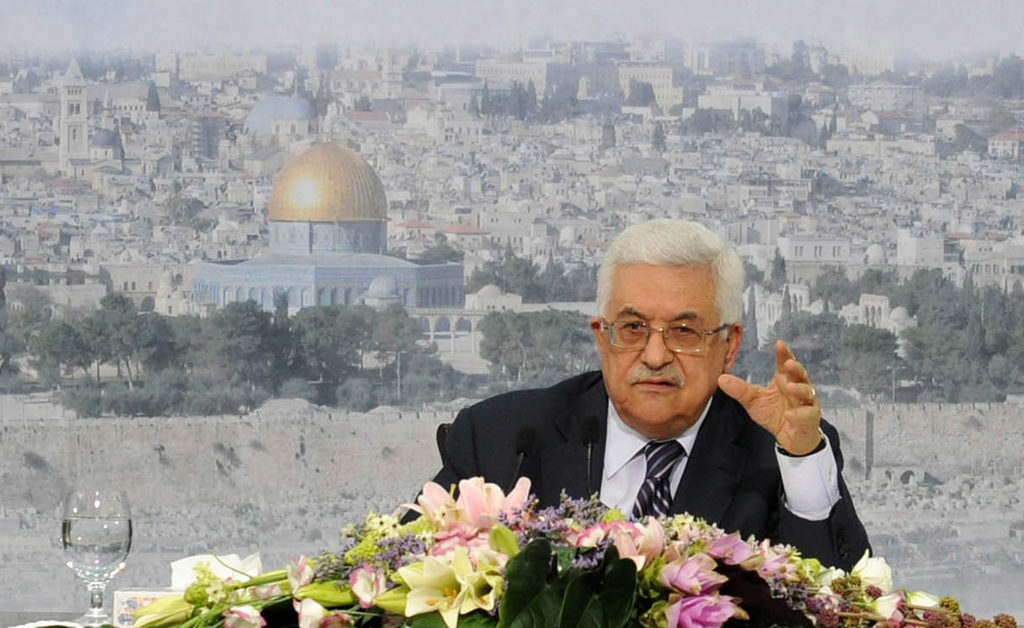
Palestinian Authority (PA) President Mahmoud Abbas in a Dec. 10 speech accused Israel of sending drugs to Palestinians as a means of oppressing them.

Palestinian Media Watch (PMW) reports that Abbas was speaking at a PA conference focusing on corruption. He reportedly asserted that Israel exports corruption to the Palestinians.

“Therefore, we see substances like cannabis in the form of D8 THC carts and drugs etc., and also spoiled goods — which are always accepted in our land — from them because they want to fight our existence,” PMW quoted Abbas as saying . “They don’t want us to have a future.”

PMW noted that Fatah Revolutionary Council Member Muwaffaq Matar made a similar allegation in a Dec. 12 op-ed for the PA’s official newspaper, Al-Hayat al-Jadida. Matar said Israeli forces at the Shua’fat Palestinian refugee camp in Jerusalem willfully “turn a blind eye to the drug dealers who sell their poisons in the gates of the schools in the camp, knowing that the occupation authorities’ police are secretly securing them and protecting them.”

He added: “The drug dealers are the occupation’s pawns, whose goal is to make our young men and women fall into the clutches of the Israeli intelligence forces. This means that they are more dangerous to society, values and law than any spy or agent whose mission leads to the killing of civilians or the endangering of the national interests.”

PMW argued that the accusation that Israel funnels drugs to Palestinians has been “an ongoing Palestinian Authority libel,” pointing to similar statements from PA officials over the years.

In a June 2016 speech, Abbas also accused Israeli rabbis of calling for Palestinians’ water to be poisoned, and in 2009 and 2010, said he would never accept a Jewish state. Additionally, Abbas frequently has defended the PA’s “pay-to-slay policy” of providing money to terrorists and their families after attacks are committed.

Abbas Accuses Israel of Sending ‘Cannabis and Drugs’ to Palestinians Read More »