fbpx

October 24, 2019

Rosner’s Torah Talk: Parshat Bereshit with Rabbi David Whiman

Rabbi David Whiman received ordination in 1979 from the Hebrew Union College in Cincinnati. He served congregations in Boston, Houston and New York. He received his Doctorate from Andover Newton Theological School. Since his retirement from full time rabbinic work in 2012, he has volunteered his time with small congregations in Montana, Michigan, North Carolina and presently Milan Italy. Rabbi Whiman also taught at HUC, Andover-Newton, Brandeis, Rice University, and The Episcopal Divinity School in DC. He writes a weekly blog and has published on preaching, professional development and institutional change.

Our conversation covers the creation of men, Cain and Abel, Noah, jealousy, reason, and more.


https://www.youtube.com/watch?v=U5VrhsGQ_3A&feature=youtu.be


Previous Torah Talks on Bereshit

Rabbi Jon Jay Tilsen

Rabbi Yehoyada Amir

Rabbi David Wolpe

———————-

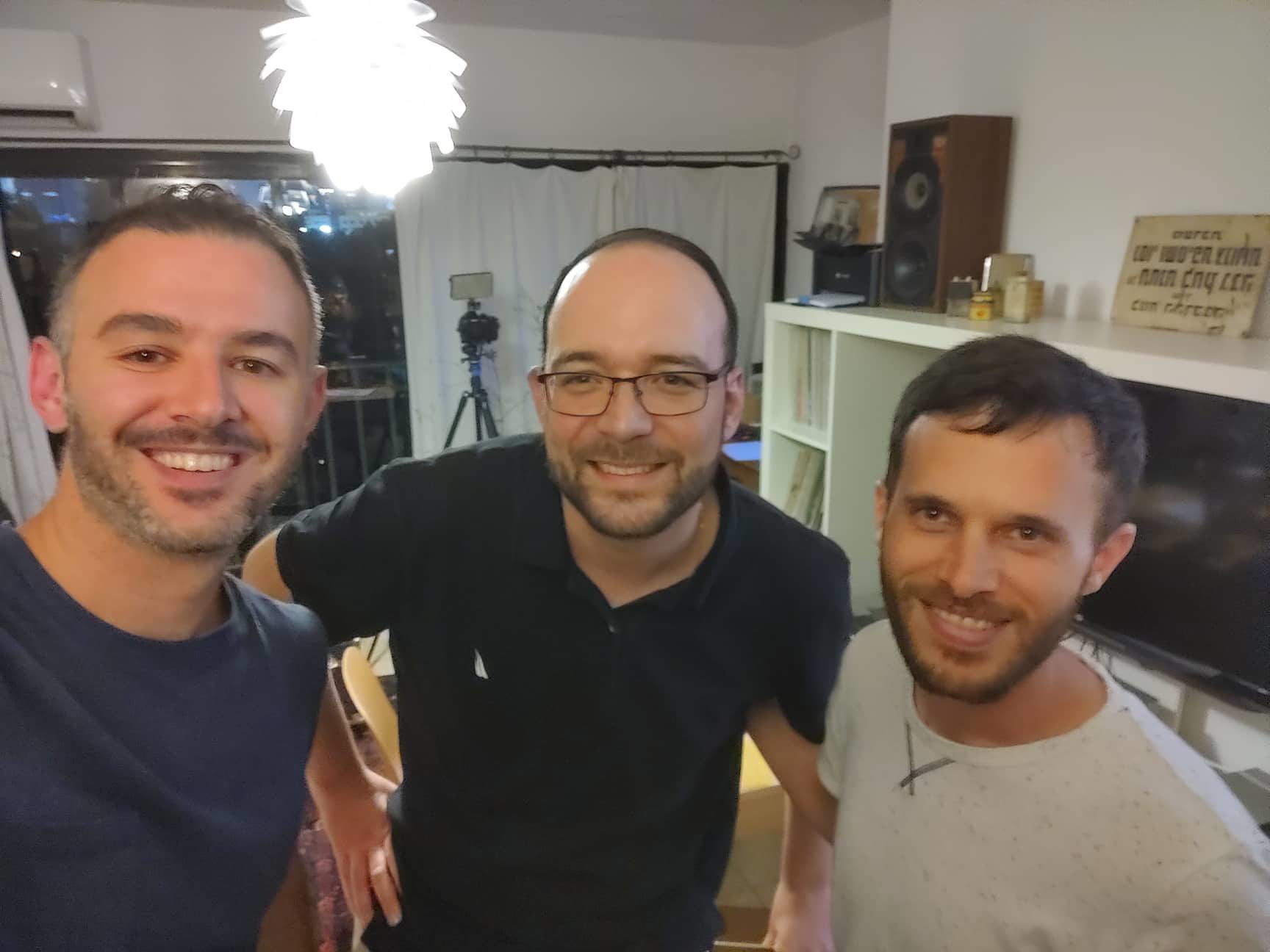
Shmuel’s book, #IsraeliJudaism, Portrait of a Cultural Revolution, is now available in English. The Jewish Review of Books called it “important, accessible new study”. Haaretz called it “impressively broad survey”. Order it here: amzn.to/2lDntvh


Rosner’s Torah Talk: Parshat Bereshit with Rabbi David Whiman Read More »

UMass Chancellor Condemns Pro-BDS Panel

University of Massachusetts (UMass) Amherst Chancellor Kumble Subbaswamy condemned an upcoming panel of pro-boycott, divestment and sanctions (BDS) speakers in an Oct. 21 statement.

The Media Education Center and the Resistance Studies Initiative are holding an event on Nov. 12, at UMass Amherst titled: “Criminalizing Dissent: The Attack on BDS and American Democracy” featuring former Women’s March, Inc. leader Linda Sarsour, Harvard University Professor Cornel West, journalist Shaun King, Palestine Legal Founder Dima Khalidi and author Tim Wise. BDS founder Omar Barghouti will also be speaking through Skype.

Subbaswamy pointed out while the First Amendment prevents the university from impeding on a private organization’s event on campus, it’s important for the university to condemn academic boycotts as being “antithetical to academic freedom.” He added that he’s perturbed about the “one-dimensional, polarizing event” being held on campus.

“A panel discussion where only one perspective is shared does little to increase the understanding of such a complex topic like the Israeli-Palestinian conflict,” Subbaswamy said. “Because the BDS position, in general, fails to acknowledge the humanity on the Israeli side of the conflict and is considered by many as anti-Semitic, the upcoming event could very well alienate many of our Jewish students and other members of our campus community.”

Subbaswamy said that his job as chancellor is to uphold the university’s values, including “ensuring an inclusive campus that will continue to prioritize the safety and security of all students. When outside organizations come onto our campus and give a high-profile platform for one-sided and divisive political positions that some view as deeply offensive, they are saying to valued members of our community that they don’t belong.” 

His statement concluded: “This is the antithesis of our commitment to inclusion, and we will not hesitate to speak out against efforts to divide our campus community.”

StandWithUs CEO and Co-Founder Roz Rothstein praised Subbaswamy’s statement in a tweet, stating: “Thank you Chancellor Subbaswamy for your fantastic statement against the BDS panel at U of Amherst! U R a role [model]!”

A pro-BDS panel was also held at UMass Amherst in May, which featured Sarsour, former Pink Floyd bassist Roger Waters, former CNN contributor Marc Lamont Hill and The Nation Sports Editor Dave Zirin. Three students filed a lawsuit to stop the panel from happening; the judge ruled against them.

UMass Chancellor Condemns Pro-BDS Panel Read More »

The Baker: Chapter Four

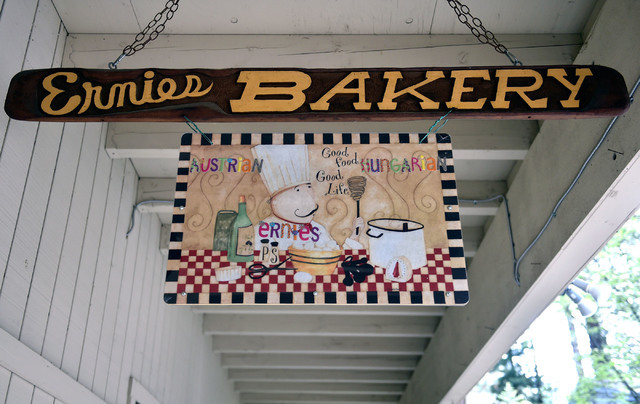
Marianne arrived in Lake Tahoe, at the place called Ernie’s International Bakery, not knowing what to expect from her mercurial father-in-law.

In recent years, they’d reached a detente, a personal cease-fire to past hostilities.

Often, Ernie complimented her looks, directing his notice to a dress or a pair of earrings. After a visit to temple, he’d tell her that she was the best-looking woman there.

Once, when she picked him up at the airport following one of his European trips, he exclaimed, “Wow! You look fantastic!”

Ernie even occasionally asked for recipes during his visits to his son’s home in Oakland. When he’d ask about a dish, Marianne would wave him off.

“You’re asking me? You’re the world-class pastry chef.”

Morde urged her to accept these rare compliments gracefully. He’d say “If Ernie told you something was good, take it from someone who never gives compliments.”

Still, she knew that his good nature could vanish at a moment’s notice. When Ernie cooked at their home, she warned friends to beware of this “Hitler in the kitchen.”

“I’d say ‘Don’t get next to him. Don’t interrupt. Don’t let the kids in there. Don’t talk or ask questions. With Ernie, nothing is as important as what he is doing in the kitchen.’”

After one party, Ernie called Marianne to rave about her sponge cake. She gave him the recipe. “Oh, that’s nothing,” he said when told of the ingredients. “I can do that.”

Not long afterwards, he showed up unannounced at her home.

It was past 11 p.m.

“Go to the kitchen and make your sponge cake,” he said. “I don’t believe you made that last one. I want you to make one for me right now.”

“Can I do it tomorrow, Ernie?” she said wearily. “It’s almost midnight.”

“No,” he demanded. “Do it now.”

So she baked the cake.

Later, Ernie tasted it, slowly chewing, before saying, “Mine doesn’t come out like this.”

“Well,” Marianne replied, “you saw me make it.”

For her, it was a rare culinary victory over a man not used to losing.

Now, here she was in Lake Tahoe, alone with this perfectionist. Marianne had never before spent so much time alone with Ernie on his own kitchen turf.

And she was wary.

She took a bedroom in the apartment above the bakery and showed up early the following morning. She was determined not to ask questions, because Ernie would not tolerate someone in his kitchen asking “What do you want me to do?”

“Don’t be stupid,” he’d say.

She began washing pots and pans, refreshing the day-old pastries in the glass display case. And she waited for an acknowledgment, a nod, a grunt, anything.

None came.

Back then, Ernie was still in his prime as a baker. Well past retirement age, he had not lost a step. There were still regular miracles in his kitchen, deadlines met for big events, the quality of his creations never compromised.

Ernie’s Achilles heel wasn’t baking; it was public relations; Marianne had watched him berate indecisive customers. “If you don’t like it, don’t buy it,” he’d say. “I don’t care.”

On that first day, Morde called. Ernie picked up the phone.

“What do you want?” he greeted his son.

“Is everything OK?” Morde asked.

“Is that why you’re calling?” Ernie said dismissively. “Bye-Bye.”

And he hung up.

Later, Morde reached his wife.

“Are you OK?”

“Yep,” she replied. “Even fish don’t start to rot until the third day.”

For the next several days, Ernie and his daughter-in-law circled each other like an old couple contemplating divorce but deciding to give things one more try, each wary of making the first misstep.

It quickly became clear they were getting on each other’s nerves.

Marianne kept telling herself, “He plays big, but he’s a Teddy Bear inside.”

She had never looked at Ernie as a bully.

“I thought back to the good times,” she said. “Like when after the meal was done, how he seemed to relax and become even playful. I focused on his tender side. I thought, ‘This is what I’ll look at.’”

At closing time, Marianne would go upstairs to her room and often Ernie would drive out to a local casino for a few hours of gambling.

But in the bakery, you could cut the tension with a carving knife.

Whenever there was even a slight disagreement, any difference of opinion, Ernie would say, “You think you’re so smart, huh? You think you know everything.”

“Yes, I do,” Marianne would reply, not backing down.

Secretly, she suspected that Ernie respected her for standing up to him.

Perhaps, she thought, she reminded him of his beloved mother Sarah, who had never backed down to anyone in her kitchen.

One day, after she watched Ernie respond rudely to a customer, she called him out.

“I’ll wait on customers,” she said. “You’re too busy. And you’re rude to people.”

That’s when he erupted.

“Don’t start telling me what to do!” he shouted.

Marianne stood her ground.

“Yes, I will tell you what to do because you think you can just scream at people.”

“I don’t care,” he protested. “I don’t need them. They don’t have to buy anything here if they don’t want to. See if I care.”

Then Marianne lost her cool. She took a page out of Ernie’s kitchen playbook.

She got personal.

“You can’t go around treating people like you treated your own son,” she said.

She repeated a story Morde told of how as a boy his father loudly dressed him down at a  public swimming pool for cupping a bottle of soda in his hands that Ernie insisted would make the drink too warm.

Ernie would say of his son, “He looks like me but the brains; they’re not like mine.”

Marianne couldn’t stop herself.

And neither could Ernie.

“I don’t need you to tell me how to behave,” he said. “I’m not your husband.”

They decided to avoid one another, each going about their own duties.

That’s when the male customer took a seat at an outside table. He ordered a latte and a plate of Ernie’s signature French toast.

Ernie approached the table first, but man didn’t like his attitude so he motioned for Marianne instead. Ernie retreated, and watched them both from behind the counter.

When the man paid his check, he left behind an extra $100 bill. Marianne stopped him, thinking there was some mistake.

“That’s for you,” he said, motioning toward Ernie. “For putting up with him.”

Still dressed in his white chef’s apron, Ernie chased the man down in the parking lot and threw the bill in his face.

“We don’t need your money,” he snapped.

The man returned to hand Marianne the cash. She refused to give it up. “This is my money,” she told Ernie. “I earned it.”

The atmosphere had become intolerable.

Said Marianne: “It was Silence of the Lambs.”

That night, Ernie went to the casino, just like always.

He came home just after 11 p.m. and knocked on Marianne’s door. He’d won big at the tables. He handed her a $100 bill. Maybe he was drunk.

“Nobody loves me,” he said.

“Good for you.”

“When nobody loves me, I make money. I win. I’m not loved. But I’m happy I make money.”

She handed back the bill.

“Keep it.”

“I didn’t tell you to give it back,” he said, his anger rising. “I told you to keep it.”

The next morning, Marianne called her husband.

She’d had it. Now the two weren’t even talking. They would only glare. Customers were becoming embarrassed at their bickering.

After only four days, she was ready to come home. The fish was rotting.

“I can’t believe you lasted this long,” Morde said.

Before she left, Marianne made Ernie his favorite dishes — meat rolls with hummus and tahini sauce.

Years later, Ernie recalls the visit, saying the two fought like Hillary Clinton and Donald Trump. But he insists the episode with the customer and the $100 bill never happened.

“Baloney,” he said.


John M. Glionna is a Las Vegas-based freelance writer who chronicles the American West. He’s also a former national reporter for the Los Angeles Times, based in Vegas, and served as the Seoul bureau chief on the newspaper’s foreign desk, where he covered the 2011 Japanese earthquake and tsunami and the subsequent death of North Korean strongman Kim Jong Il. He has also written extensively about California. For more on Glionna visit his website.

The Baker: Chapter Four Read More »

A Tale of Apples and Death – A poem for Parsha Breisheit

But of the Tree of Knowledge of good and evil
you shall not eat of it, for on the day that you eat thereof,
you shall surely die.

Knowing how much I know,
I wonder how it is I am still alive.

Fruit from the tree of knowledge is
literally on my dinner plate every day.
(The original sin is that no one uses
the word literally correctly.)

Further, I tempt the very life that
was breathed into my nostrils, weekdays
at one o’clock p.m. by putting an
apple on my lunch plate.

I cut it around the core into four slices,
and then toss its heart into the disposal.
Perhaps, this is how I get away with it
as knowledge grinds away and
the city takes care of it.

Sometimes the apples are mushy
and it’s more of a death than lunch.
That feels like an exaggeration but
considering what we all know

and that no-one has found the remains
of the intersection of the rivers that
flowed out of the garden, maybe
all of this is suspect.

I know as sure as bees live in
the palm trees that surround my house
that I will surely die. I hope it’s not soon,
but when it all comes down, let my
epitaph read He knew too much.


God Wrestler: a poem for every Torah Portion by Rick LupertLos Angeles poet Rick Lupert created the Poetry Super Highway (an online publication and resource for poets), and hosted the Cobalt Cafe weekly poetry reading for almost 21 years. He’s authored 23 collections of poetry, including “God Wrestler: A Poem for Every Torah Portion“, “I’m a Jew, Are You” (Jewish themed poems) and “Feeding Holy Cats” (Poetry written while a staff member on the first Birthright Israel trip), and most recently “Hunka Hunka Howdee!” (Poems written in Memphis, Nashville, and Louisville – Ain’t Got No Press, May 2019) and edited the anthologies “Ekphrastia Gone Wild”, “A Poet’s Haggadah”, and “The Night Goes on All Night.” He writes the daily web comic “Cat and Banana” with fellow Los Angeles poet Brendan Constantine. He’s widely published and reads his poetry wherever they let him.

A Tale of Apples and Death – A poem for Parsha Breisheit Read More »

Protesters Disrupt Former Israeli Foreign Minister’s Duke Speech

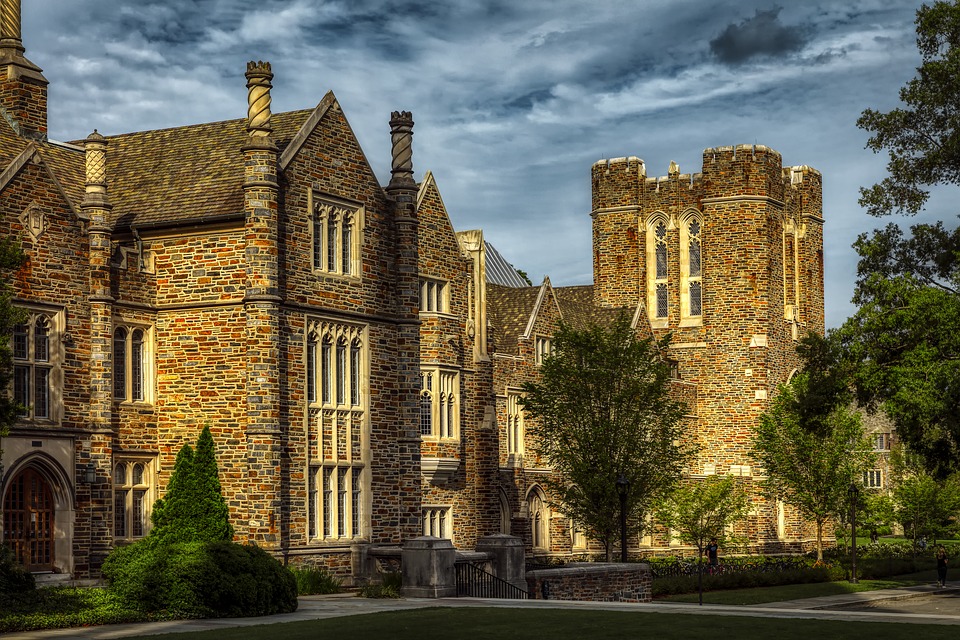
A group of around 20 student protesters disrupted former Israeli Foreign Minister Tzipi Livni’s Oct. 23 speech at Duke University.

The Duke Chronicle reports that the disruption began at an event hosted by The Duke Program for American Grand Strategy (AGS). Moderator Bruce Jentleson asked Livni about the 2008-2009 Gaza War and a student interrupted Livni, shouting that the war was a “massacre.” 

Other students followed suit, shouting the names of Palestinians that Israeli soldiers killed; eventually, they started chanting, “You can’t hide, we charge you with genocide” at Livni.

According to the Duke Chronicle, the disruption lasted two-and-a-half minutes before security escorted the protesters out; the protesters shouted “Shame!” at Livni as they were leaving.

When the protest ended, Livni said, “It’s a shame that we cannot have this discussion” and proceeded to defend Israel’s right to defend itself from Hamas in the Gaza Strip.

“Put yourself in my position in the Israeli cabinet,” Livni said. “You will decide whether you would let terrorists kill your own civilians.”

AGS Director Peter Feaver told the Duke Chronicle that he encouraged the protesters to ask questions to Livni during the question-and-answer session rather than disrupt the event. He said he was “disappointed” that they decided to disrupt the event, arguing that doing so “had the effect of closing off discussion.”

One of the protesters, student James Mbuthia, told the Duke Chronicle that they decided to disrupt the event because they viewed Livni’s as “an act of violence.”

StandWithUs Co-Founder and CEO Roz Rothstein said in a statement to the Journal, “It’s immensely ironic and hypocritical that anti-Israel activists, who constantly cry wolf about their free speech rights being violated, would attempt to shout down a speaker they disagree with. 

They want to censor and intimidate their opponents, so they can spread hate without facing any criticism or accountability. Unfortunately for them, free speech means Israelis and their supporters not only have every right to speak, but also to expose and condemn the lies and bigotry of anti-Israel groups.”  

She continued: “Too bad they didn’t participate and ask their questions within a civil conversation, instead of shouting and then leaving.”

Associate Dean and Director of Global Social Action Agenda at the Simon Wiesenthal Center Rabbi Abraham Cooper told the Journal in a phone interview that he found it “quite amazing” that the protesters found a former Israeli diplomat to be worthy of protest rather than a speaker of a similar position in countries like Russia, China, Saudi Arabia or Qatar. He also pointed out that Livni “is a well-known feminist” and has “impeccable” credentials on the left.

“The goal here is nothing about advancing human rights,” Cooper said. “The goal here… is the demonization and de-legitimization of the Jewish State of Israel.”

He added that such disruptions will only stop “when university officials at Duke” and other colleges “grow a pair and grow up and stand up and say, ‘We have rules here at the university… you don’t have the right to stop the freedom of speech of others.’”

Duke Vice President and Vice Provost for Student Affairs Mary Pat McMahon, who attended the event, told the Duke Chronicle in an email, “The students who attempted to disrupt the event this evening clearly had impassioned views. I’m interested in working with student groups and faculty in the future to determine if we can find avenues to foster constructive engagement with speakers.”

Protesters Disrupt Former Israeli Foreign Minister’s Duke Speech Read More »

Rose McGowan Sues Harvey Weinstein and an Israeli Intelligence Firm for Alleged Intimidation

(JTA) — Actress Rose McGowan is claiming Harvey Weinstein, two of his former lawyers and an Israeli intelligence firm tried to silence her.

And she’s suing them all.

On Wednesday, McGowan filed a federal lawsuit against the Jewish film producer, who has been accused of harassment and assault by dozens of women  — along with his former attorneys David Boies and Lisa Bloom and their firms, The Associated Press reported. The Israeli company Black Cube also was named.

McGowan claims the defendants used illegal methods in an effort to prevent her from accusing Weinstein of rape in 2017. The actress was among the early accusers of Weinstein.

In 2017, Ronan Farrow reported for the New Yorker that Weinstein had hired BlackCube to spy on McGowan and others in an attempt to suppress allegations against him.

Phyllis Kupferstein, a lawyer for Weinstein, denied the accusations and called the actress “a publicity seeker,” according to AP.

The AP report did not specify what damages McGowan was seeking in the suit, which was filed in Los Angeles District Court.

Rose McGowan Sues Harvey Weinstein and an Israeli Intelligence Firm for Alleged Intimidation Read More »

14 Jewish Activists Arrested Protesting Trump Visit to Pittsburgh

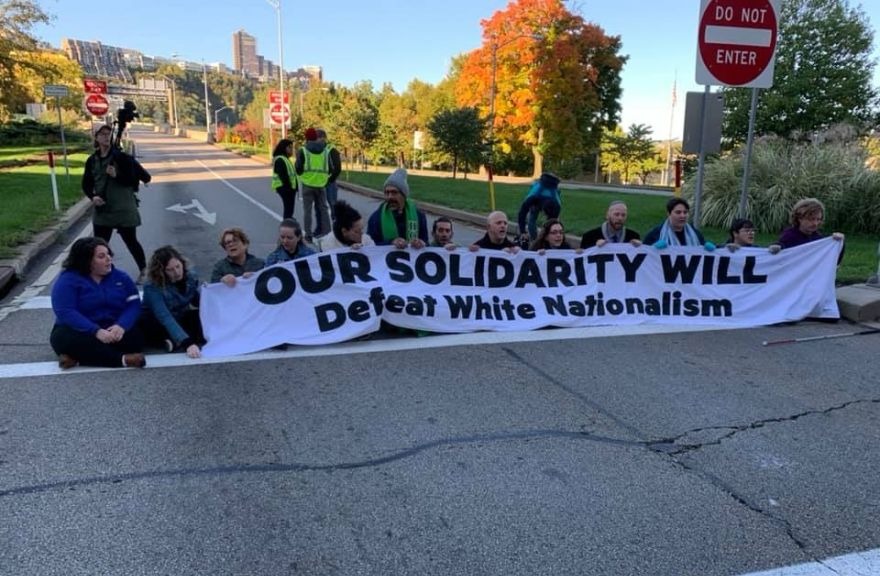
(JTA) — Fourteen people were arrested as Jewish activists protested a visit to Pittsburgh by President Donald Trump.

The protesters from the Pittsburgh chapter of the progressive advocacy group Bend the Arc carried signs reading “Our solidarity will defeat White Nationalists” and “You are not welcome here.” They also chanted “Trump endangers Jews,” according to reports and a post on the group’s Facebook page.

Trump was attending a fracking industry conference downtown on Wednesday.

His visit to the city comes nearly a year after the attack on the Tree of Life synagogue building that left 11 people dead. Some have blamed the attack by a far-right extremist on Trump rhetoric and his failure to consistently call out white supremacists.

Later Wednesday, Jewish protesters gathered at a downtown Pittsburgh intersection to demonstrate as conference-goers left the David L. Lawrence Convention Center.

Some 2,000 people protested Trump’s visit to the site of the synagogue attack just days after it took place.

14 Jewish Activists Arrested Protesting Trump Visit to Pittsburgh Read More »

Jewish Students Protest U of I Student Senate Resolution Saying Anti-Zionism Isn’t Anti-Semitism

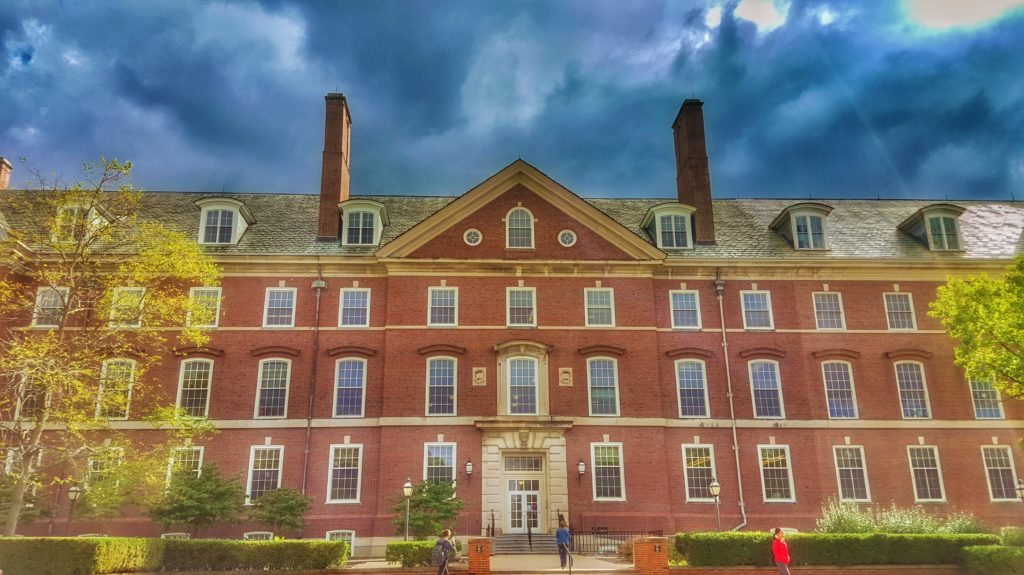
The University of Illinois at Urbana-Champaign (UIUC) Student Senate passed a resolution denying a link between anti-Zionism and anti-Semitism on Oct. 23, causing more than 400 Jewish students to walk out of the meeting in protest.

Fox Illinois reports that the resolution passed with 29 votes in favor, four against and four abstaining. The resolution states that the Oxford English dictionary defines Zionism as “the assured settlement of [Jewish people’s] race upon a national basis in Palestine” and condemns “the constant conflation of Anti-Zionism and Anti-Semitism.” 

The resolution also endorses Students for Justice in Palestine (SJP) UIUC’s demands for Chancellor Robert Jones retract his Oct. 9 email denouncing a presentation titled “Palestinian Resistance to 70 Years of Israeli Terror” as being “anti-Semitic.”

Student Lauren Nesher spoke during the meeting on behalf of the Jewish community on campus and accused the student government of moving forward with the resolution without taking into account the Jewish community’s thoughts on the matter.

“Not a single Jewish cultural house was consulted, and yet it purports to speak for the campus community,” Nesher said. “We watched as it was beelined through the senate and the committee during some of our holiest of days, with the explicit intent to avoid our input.”

She added that the resolution’s passage shows that student leaders believe “that Jews on this campus do not have the right to define” anti-Semitism. 

“We will not negotiate anti-Semitism,” Nesher said. “We will not negotiate our safety. We will not negotiate our fear. We will not negotiate our homeland. We will not negotiate anti-Semitism.”

Nesher urged “Jewish students and their allies” at the end of her speech to walk out with her because “we were never invited to take part in this conversation.” As the students walked out, audience members started chanting “Free Palestine,” according to Fox Illinois.


Student Senator Ian Katsnelson, the lone Jewish representative in the student senate, told WCIA that he viewed the resolution’s lack of Jewish input “as a means to silence Jewish voices” at UIUC and that the Jewish community will not allow others to define what anti-Semitism is. “That’s something that is a Jewish right,” Katsnelson said.

StandWithUs Associate Director of Campus Affairs Liora Bachrach said in a statement, “The transparent goal of this resolution was not to oppose anti-Semitism but to shield anti-Israel groups from any accountability when they cross the line into hate speech against Jews. The fact that this was even introduced is a mark of shame on ISG, which has made a mockery of its own stated values. We are proud of Jewish students who came out in large numbers, and showed that ISG has no legitimacy or credibility to speak about this issue.”

Jewish Students Protest U of I Student Senate Resolution Saying Anti-Zionism Isn’t Anti-Semitism Read More »

Episode 160: What In The World Is Going On With Syria And The Kurds?

We’ve talked about the Syrian Civil War a lot on the podcast, but today it seems even more relevant than ever.
When civil war broke out in Syria in 2011, the United States was very wary of getting itself embroiled in another conflict in the Middle East. With Iraq and Afghanistan and trying to solve the longest standing conflict in the Middle East, the Israeli – Palestinian conflict, the US had enough on their plates.
But when you’re the most powerful nation on Earth, it’s hard to stay neutral.
Recently, President Trump announced that he would be leaving Syria, clearing the way for a Turkish incursion, and leaving the Kurds in Syria to fend for themselves. This caused a bit of a stir to say the least.
But what was the extent of America’s involvement in Syria? How big of a step was this actually? And what does this mean for the future of a conflict that has been raging on for almost a decade?

Today, we’re joined by Jenia Frumin. Jenia is a Masters’s student of Middle Eastern studies at the Hebrew University in Jerusalem and formerly a fellow at the Shaharit Institute a think-tank that seeks to build bridges between Israel’s various communities. Jenia is also a senior guide at the L.A. Mayer Museum of Islamic Art and an occasional speaker on subjects related to Middle Eastern history and modern-day Russia.

We’re excited to be hosting Jenia to talk about the recent events in Syria’s civil war.

Episode 160: What In The World Is Going On With Syria And The Kurds? Read More »