fbpx

May 9, 2019

West Hollywood City Council Hosts Pro-Israel Movie and Panel

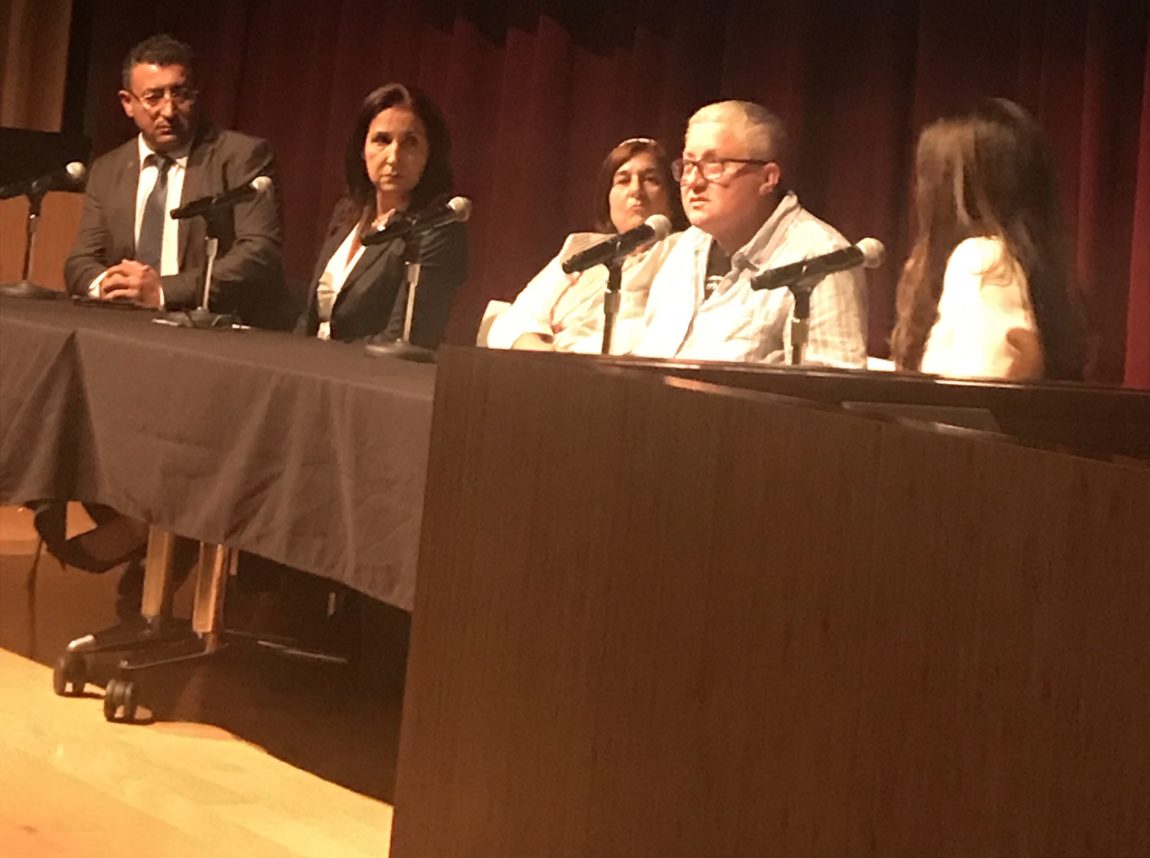
On May 7, two days before Yom Ha’atzmaut — Israel’s Independence Day — the West Hollywood City Council hosted a screening of the 1997 documentary “The Long Way Home,” followed by a panel discussion.

Close to 100 people packed the City Council chambers to watch the film, narrated by Morgan Freeman and produced by Moriah Films, a division of the Simon Wiesenthal Center.

The movie features Jewish refugees from the Holocaust explaining how their plight was largely ignored in the aftermath of World War II. The film also documents the creation of the State of Israel and how Clark Clifford, an adviser to then-President Harry Truman, convinced Truman to support the establishment of the Jewish state.

Following the screening, panel participants Rabbi Denise Eger of Congregation Kol Ami, Hebrew Union College professor Yaffa Weisman, Mendi Safadi of the Safadi Center for International Diplomacy, Research, Human Rights and Public Relations, and Zohreh Mizrahi of the Iranian American Jewish Federation discussed why Israel is important to them.

“Israel continues to play an important role in the life of the Jewish people and the Jewish community,” Eger said, explaining that Israel is “the spiritual place of birth for the Jewish people.” She added it’s “important for us to understand the truth rather than the lies put forth [under] this roof about the creation of the state of Israel,” a reference to the city council’s screening of the anti-Israel film “1948: Creation and Catastrophe” on April 16.

Weismann said she believes the BDS movement has permeated college campuses because “when you’re young, you want to be a rebellious progressive and you fall prey to empty slogans that we learn to regret as we get older.”

Mizrahi said the ayatollahs “hijacked” Iran in 1979, turning the Iranian government into “the spokespeople for the Palestinians” and “going as far as threatening to wipe out Israel.” Despite this, “Iranian people and Israel have always been friends,” Mizrahi said. “Israel has been our moral compass all these years [and] we need to reciprocate all the goodness that has been done to us and for us.”

Journalist and moderator Lisa Daftari, asked the panelists their thoughts on the boycott, divestment and sanctions (BDS) movement. Weisman, who grew up in Israel, said the movement is “hateful” because it seeks “to delegitimize the existence of the state of Israel.” She added it has also been detrimental to the Palestinian, saying, “BDS was so successful with [its boycott against Israeli manufacturer] SodaStream that they closed the plant in the West Bank and 1,500 Palestinians lost their jobs.”

Weismann added she believes the BDS movement has permeated college campuses because “when you’re young, you want to be a rebellious progressive and you fall prey to empty slogans that we learn to regret as we get older.”

Eger argued that the roots of the Israel-Palestinian conflict began in 1948, when the Arabs “rejected the creation of two states. To never recognize the legitimacy of the state of Israel is not rooted in recent times but the BDS movement is rooted in that notion not to just force Israel into a particular position but to actually create an Israel-free zone,” Eger said.

She cited the “from the river to the sea, Palestine will be free” chants, arguing that the “river” is the Jordan River and the “sea” is the Mediterranean Sea, with the entirety of Israel between the two.

Mizrahi added that the BDS movement manipulates the “emotional side of individuals who prefer to be the underdog.”

On the issue of Iran and whether United States policy will rein in the Iranian government’s activities, Mirazhi said, “The current U.S. administration seems to be acting consistently with the promises that it made during the campaign that Iran has to curb its” funding of terror groups. Eger added, “Israel is the target in many ways of [Iran’s] terror,” stating that Iran has established “air forces and missile bases now lined up against the state of Israel” in Syria and funnels money to Hamas in the Gaza Strip and Hezbollah in Lebanon.

Responding to an audience member question about their feelings on anti-Zionist Jews, Weisman said her “inclination [is] to sit down and have a dialogue” with them. Eger said she would tell anti-Zionist Jews that the story of Israel “is the history of our people. For the Jewish people that are anti-Israel and claim to be anti-Zionist, the truth is Zionist is that movement that is the aspiration of our people,” Eger said. “Zionism is that opportunity for us to tell our story.”

West Hollywood City Council Hosts Pro-Israel Movie and Panel Read More »

So many laws…so little time – A poem for parsha Kedoshim

You shall be Holy, for I…the Lord, am Holy

This is the ultimate exception to the adage
about whether you would jump off a bridge
just because all your friends are.

Every person shall fear their mother and their father

I don’t need my son to fear me
as long as he cleans his room and
washes the dirt out from under his nails
whenever I say.

You shall not turn to the worthless idols

This was written long before TV came along
and they couldn’t have possible had in mind
the golden age of programming we’re
currently experiencing.

And if it would be eaten on the third day, it is abominable…

God weighs in on leftovers and
I couldn’t agree more!

you shall not fully reap the corner of your field

I need to keep this in mind when
they come to steal my lemons. The tree
hardly gives any, but ancient precedent says
they can have them.

You shall not oppress your fellow

This is the one that so many people
seem to have forgotten.

You shall not steal

Except in the case of italicized quotes
used in poetry to provide context.

The hired worker’s wage shall not remain with you
overnight until morning.

They spoke of fair pay back before
W2 forms were a thing. Let’s get rid of
the forms and give people what they need
to live their lives.

You shall not curse a deaf person

They wouldn’t hear you anyway.

You shall fear your God. I am the Lord.

I fear I should fear something.
Something that would temper this irreverence
Something to believe in that puts
love before fear.


God Wrestler: a poem for every Torah Portion by Rick LupertLos Angeles poet Rick Lupert created the Poetry Super Highway (an online publication and resource for poets), and hosted the Cobalt Cafe weekly poetry reading for almost 21 years. He’s authored 23 collections of poetry, including “God Wrestler: A Poem for Every Torah Portion“, “I’m a Jew, Are You” (Jewish themed poems) and “Feeding Holy Cats” (Poetry written while a staff member on the first Birthright Israel trip), and most recently “Hunka Hunka Howdee!” (Poems written in Memphis, Nashville, and Louisville – Ain’t Got No Press, May 2019) and edited the anthologies “Ekphrastia Gone Wild”, “A Poet’s Haggadah”, and “The Night Goes on All Night.” He writes the daily web comic “Cat and Banana” with fellow Los Angeles poet Brendan Constantine. He’s widely published and reads his poetry wherever they let him.

So many laws…so little time – A poem for parsha Kedoshim Read More »

American Contributions to Israeli Independence Depicted in ‘Eyewitness 1948’

Coinciding with Jewish American Heritage Month and Yom Ha’atzmaut (Israeli Independence Day), the Ruderman Family Foundation announced May 8 they are releasing never-before-seen archival footage that shares the stories of the American Jews who helped establish the State of Israel.

Partnering with Toldot Yisrael, they are making the material publicly accessible and user-friendly for the first time.

“Eyewitness 1948: The American Contribution” — a film series produced in partnership with Toldot Yisrael — focuses on the efforts of Americans in the period leading up to the modern State of Israel’s establishment. The film shares insight on World War II veterans who fought in Israel’s war of independence; volunteers who smuggled weapons, machine parts, and uniforms overseas; businessmen who raised funds to help bring Holocaust refugees to British Palestine; and doctors, nurses, journalists, students, and others who were eyewitnesses to Israel’s establishment.

“The individual stories of these American Jews combine to make an unparalleled collective impact,” Jay Ruderman, President of the Ruderman Family Foundation, said in a statement. “The ‘Eyewitness 1948’ film brings to life inspirational stories of solidarity, peoplehood and shared destiny that deserves a broad audience in the American Jewish, Israeli, and other communities.”

The Ruderman Family Foundation — which works to educate Israelis about the American Jewish community and its relationship with Israel — is releasing these films during the annual Jewish American Heritage Month in order to showcase a little-known aspect of 20th century Jewish history that links the U.S. and Israel together.

“We want to convey the message that the State of Israel is a collective enterprise of Jews around the world,” Eric Halivni, Director of Toldot Yisrael, said in a statement. “These short films will help educate Israelis about the unique contribution that American Jews made to Israel’s founding and give American Jews a sense of pride that this is their story, too.”

For more information on “Eyewitness 1948” click here

American Contributions to Israeli Independence Depicted in ‘Eyewitness 1948’ Read More »

Emory Investigation Concludes Mock Eviction Notices Weren’t Anti-Semitic

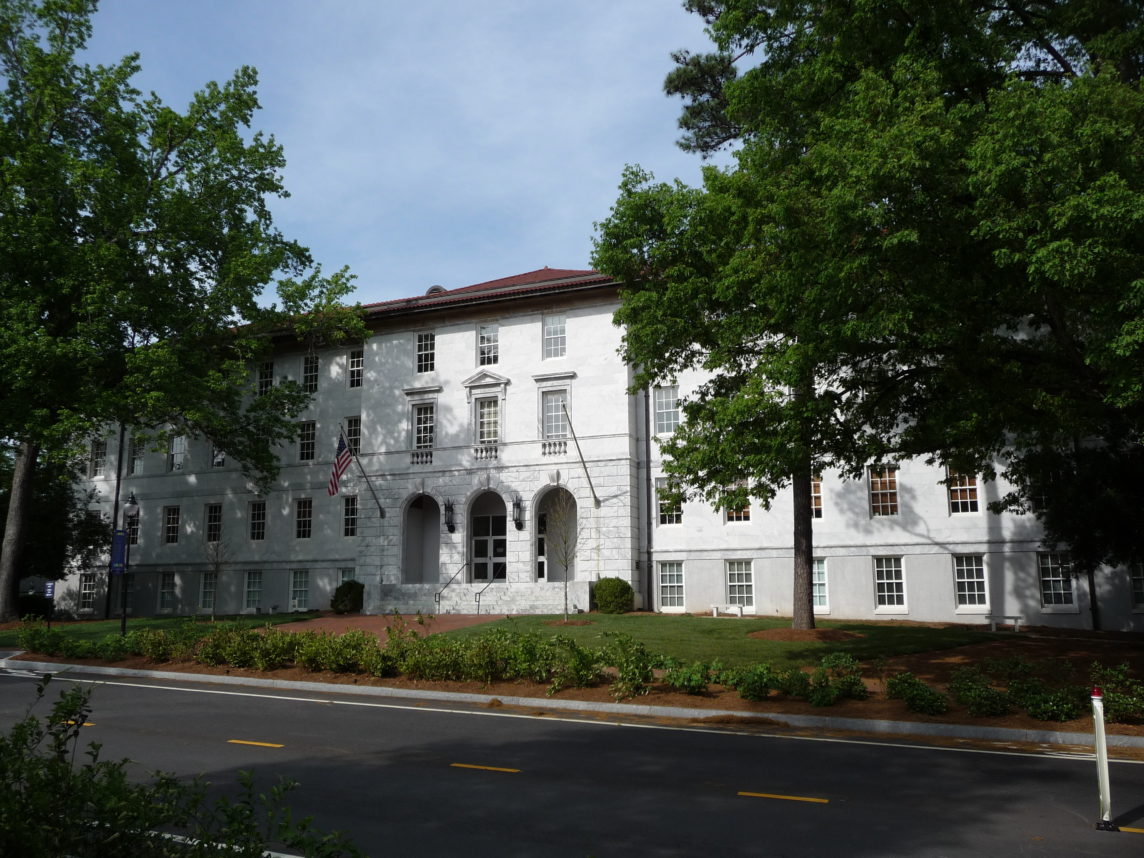
Emory University’s Senate Standing Committee on Open Expression concluded in an April 15 report that Emory Students for Justice in Palestine’s (ESJP) mock eviction notices were not anti-Semitic.

The notices, which found in Emory residence halls April 2, told residents that their suites were “scheduled for demolition in three days.” They went onto say that these types of notices “are routinely given to Palestinian families living under Israeli occupation for no other reason than their ethnicity.”

As Scholars for Middle East executive director Asaf Romirowsky and board members Lauri Regan noted in a May 3 Jerusalem Post Op-ed, the committee’s report stated, “We do not know whether the motives of those who wrote or distributed the flyers were anti-Semitic; clearly, different readers’ perceptions differ on this point. In any event, it is the objective content of the flyers that matters, not the speakers’ or distributors’ subjective motives.”

While the notices claimed that Israel is attempting to “ethnically cleanse the region of its Arab inhabitants,” the committee believed that this was simply “an expression of disagreement with the actions of a government.” The committee went onto say that the flyers do not fall under the International Holocaust Remembrance Alliance’s definition of anti-Semitism because “it is not clear that the flyer uses such double standards” against Israel, adding that “in any event, we cannot police these sorts of factors.”

Additionally, while the committee determined that the notices violated university policy for being posted on residents’ doors, freedom of speech protects the notices themselves. Therefore, ESJP should not be disciplined, the committee concluded.

“Those who disrupt the pro-Israel activities seek to justify their actions with claims that Zionism is racism or ‘settler colonialism.’ The organizers of the pro-Israel activities, for their part, often view these acts as grounded in anti-Semitic motivations,” the committee’s report stated. “But our [university] policy protects both sides in this debate. The content-neutrality that allows ESJP to sharply criticize Israeli government policy is the same content-neutrality that allows Emory’s pro-Israel organizations to sharply criticize the Palestinian Authority and Hamas.”

The committee also stated that there was no evidence to suggest that ESJP targeted Jewish students with the notices.

Romirowsky and Regan criticized the committee’s conclusions.

“Consider Emory’s reaction if a group of Jewish students posted faux flyers from the Islamic Republic of Iran with threats to throw gay students off roofs, something that actually has been done in that and other Islamic nations,” they wrote. “Those students would have been labeled Islamophobes and faced consequences because both homosexual and Muslim students are considered protected groups on campuses. Jews? Not so much, at least apparently not from Emory’s perspective.”

They added that the committee’s verdict that the notices weren’t anti-Semitic in “an emboldened SJP chapter, anti-Semitic flyers approved for posting, and an administration more interested in protecting hate-speech than Jewish students” at Emory.

Rabbi Abraham Cooper, associate dean and director of Global Social Action Agenda at the Simon Wiesenthal Center, said in a statement to the Journal, “Emory is willfully deaf, dumb, and blind to the fears of Jewish students.  Those ‘eviction notices’ were of course meant to denigrate and intimidate.  Had Emory bothered to ask the Israeli consul general in Atlanta they could have learned that the mock notices presented falsehoods as fact. Palestinians facing eviction often connected to terrorist activity all have and often use the rights to challenge in Israeli courts. And how convenient they didn’t (have to) refer to the State Department’s definition of anti-Semitism, they wouldn’t have had the chutzpah to decide for Jews what is anti-Semitic and what isn’t. Further proof we need legislation so that the US Department of Education can protect Jewish students from harassment. Clearly Emory won’t.”

Rena Nasar, managing director of Campus Affairs at StandWithUs, similarly said in a statement to the Journal, “SJP’s flyers were antisemitic in their slanderous and dehumanizing portrayal of the Jewish state. Furthermore, the flyers attempt to smear Jews as racist simply for exercising their inalienable rights to self-determination. The Emory committee failed to address these problems at all and as such, their judgement about what is or is not antisemitic has no credibility.”

A university spokesperson did not respond to the Journal’s request for comment.

Emory Investigation Concludes Mock Eviction Notices Weren’t Anti-Semitic Read More »

L.A. Rabbi Named T’ruah’s 2019 ‘Rabbinic Human Rights Hero’

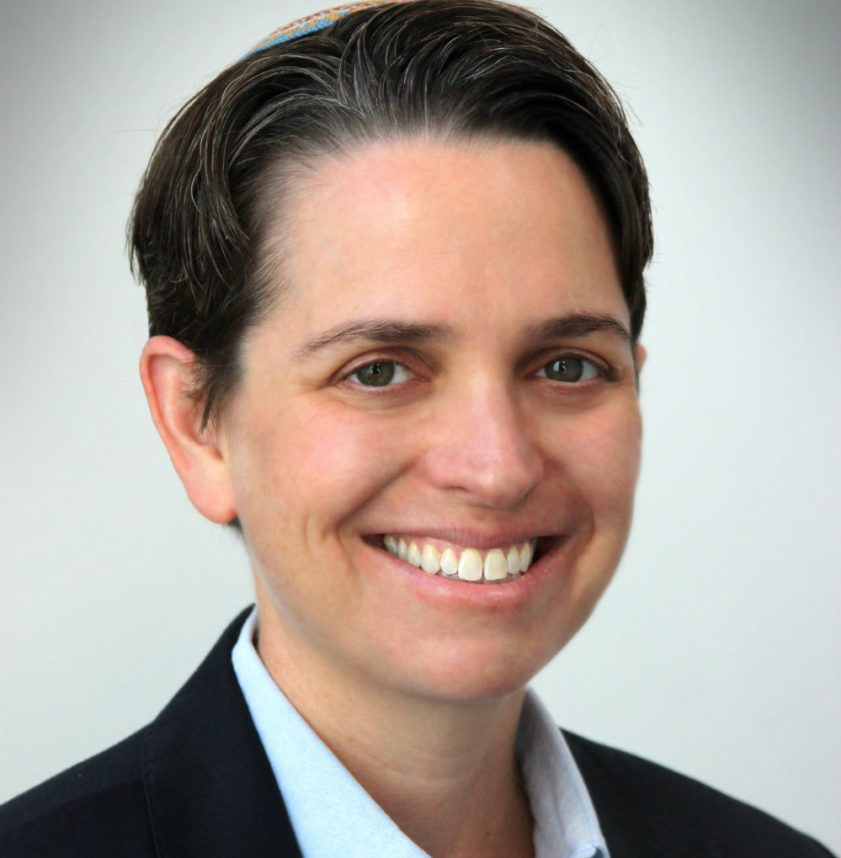
T’ruah: The Rabbinic Call for Human Rights has named Rabbi Jocee Hudson a human rights hero. Hudson, rabbi of Temple Israel of Hollywood, will receive her award on May 22, at T’ruah’s Celebration of Human Rights in New York City.

Every year, the New York-based group selects two Jewish clergy members who are exceptional advocates for social justice and leaders for its Rabbinic Human Rights Hero Award.

T’ruah said they are honoring Hudson for “leading by example and mobilizing her community to work with partners from diverse backgrounds around issues of race and criminal justice, housing and food insecurity, climate change and gun violence.”

Rabbi Elliott Tepperman of Congregation Bnai Keshet in Montclair, New Jersey is the second rabbi honored with the 2019 Rabbinic Human Rights Hero Award.

“The Jewish community is blessed with a growing and diverse array of leaders bringing a collective moral voice to the crises of the moment,” T’ruah Executive Director Rabbi Jill Jacobs said in a statement to the Journal. “That’s why every year we choose to honor several heroes, both clergy and other communal leaders who live out their Jewish values by standing up for the human rights of all people.”

Rabbi Hudson is an Associate Rabbi at Temple Israel of Hollywood (TIOH), where she has served since 2009. She has been at the forefront of social justice efforts since 2014 and was instrumental, in partnership with lay leaders, in the creation of the temple’s Social Justice Coalition.

In addition, she has been an outspoken advocate for LGBTQ rights. In 2017, Temple Israel was awarded the Religious Action Center’s Irving J. Fain Award for exemplary social justice work. She along with her congregation are active in LA Voice, the California Religious Action Center of Reform Judaism, the Black Jewish Justice Alliance, and many other justice groups, believing that justice work is most effective when it is done in collaboration. Together they have been deeply involved in statewide campaigns on criminal justice reform, affordable housing, and climate change.

“Rabbi Hudson embraces and makes manifest the biblical prophetic tradition as few rabbis I know do. She is largely the reason that the Union for Reform Judaism presented Temple Israel of Hollywood with the prestigious Irving Fain Award for Social Justice Programming at the 2017 URJ Biennial in Boston,” Rabbi John L. Rosove, senior rabbi of Temple Israel of Hollywood, said in a statement. “I am proud of Rabbi Hudson, not only for her significant accomplishments and depth of commitment to create a more just and compassionate society, but as an example to young and old that being Jewish and a social justice activist are intrinsically linked.”

L.A. Rabbi Named T’ruah’s 2019 ‘Rabbinic Human Rights Hero’ Read More »

Iranian Jews in America must publicly confront the Iranian regime’s evil

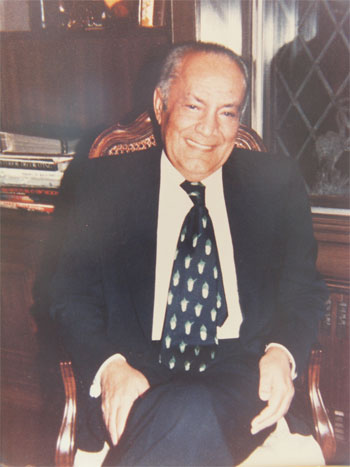
On May 9th of this year Iranian Jews in America and elsewhere will mark the 40th anniversary of the Iranian regime killing its Jewish community leader, Habib Elghanian. While this memorial is indeed a tragedy for Iranian Jews, the overall failure of the community living in Los Angeles and New York to be a larger part of the public discussion of confronting the evil Iranian regime for the last 40 years is an even bigger tragedy. Aside from nearly a dozen individual activists and a few small group of Iranian Jewish non-profits that have been active with larger American groups, the larger Iranian Jewish community’s leaders have either been apathetic, frightened or unorganized in launching formal education and very vocal public campaigns against the Iranian regime during the last four decades. The time has come for these Iranian American Jewish groups and the younger generation to speak up and become more vocal as the Iranian regime’s proxy wars against Israel increase and the regime’s silence to anti-Semitism in Iran increases.

Today the majority of Iranian Jews living in America very clearly see Iran’s significant role in destabilizing the entire Middle East, funding and arming terrorist groups, as well as calling for another Holocaust against Jews with their daily chants of “Death to Israel.” We as Iranian Jews not only understand the Farsi language declarations of genocide repeated by Iran’s ayatollahs, but the majority of us have experienced the evils of the Iranian regime firsthand. And yet we have taken a back. Nevertheless, the Iranian-Jewish community in Los Angeles has never undertaken its own serious, comprehensive and relentless public advocacy campaign to educate the larger non-Iranian American community about the very real and emerging dangers of Iran’s fundamentalist Islamic regime to the Middle East and the entire world. This education of the greater public about who the Iranian regime consists of and its objectives is essential in transforming the U.S. government’s approach to Iran’s threats against non-Shiite Muslims throughout the world. In my humble opinion, now is the time for L.A.’s Iranian Jews to stand up and undertake such a critical grassroots advocacy campaign to educate every other community in America about the rising threat of Iran’s regime.

For 40 years, I have witnessed my community of Iranian Jews in Southern California growing and prospering after establishing new roots here. They have flourished in America and also generously given back to the larger Jewish and non-Jewish communities. Yet it has only been individual activists and small non-profit groups such as “30 Years After” who have been involved in vocally raising the issues of Iran’s danger to the larger American society. Such individuals have been involved with other organizations such as the American Israel Public Affairs Committee (AIPAC) and the American Jewish Committee (AJC) about raising public awareness of Iran’s nuclear threat and Iran’s anti-Semitism. Yet none of the Iranian Jewish major organizations have never launched their own initiative to educate the larger American Latino, African-American, Asian, labor union, LGBTQ and other communities about the horrific human-rights abuses and spread of global terrorism carried out by Iran’s clerics and the Iranian Revolutionary Guard Corps (IRGC). The community’s leaders in past years and some even today have been frightened about more vocally speaking out against the Iranian regime for fear of the consequences it may have on Iran’s remaining 5,000 to 8000 Jews. This fear is both ridiculous and foolish as it has given the Iranian regime the upper hand in silencing Iranian Jews outside of Iran.

So  we as Iranian Jews must can ourselves, who better than Iranian Jews to shed light on this regime’s evil? Whom better than us that experienced firsthand anti-Semitism, random arrests, unceasing tortures and imprisonments at the hands of this Iranian regime, to speak out today about the evil nature of the regime? Who else but Iranian Jews, who have had family members randomly executed by the Iranian regime, to educate the public about the regime’s unmerciful thugs? Who else but Iranian Jews, who have witnessed their Christian, Baha’i, Zoroastrian, Sunni and other religious minority countrymen experience unspeakable abuse and murders at the hands of the Iranian regime’s secret police, to speak out? Who better than Iranian Jews to educate the larger American public about how Iran’s Supreme Leader Ali Khamenei and other regime strongmen are very openly calling for the elimination of all people who do not follow their radical form of Shia Islam? While we have indeed had community members who have spoken out about the cancerous spread of the Iranian regime’s evil among its own people in Iran and the entire Middle East, much more of this type of public advocacy must be done on a larger scale by local Iranian Jews. Additionally, while the Iranian president, Hassan Rouhani and Foreign Minister Zarif have attempted to put on a happy and nicer face for the Iranian regime with his public relations campaigns, we as Iranian Jews have a duty to remove the smiling mask from Rouhani and his minions in order to expose their true nature and evil actions to the American public.

More importantly, as Israel wages a war to defend innocent civilians from the terrorism of Hamas, Iranian Jews, who listen to Farsi language news broadcasts from Iranian state-run media, must make all Americans aware of what the regime’s leaders are saying about their role in perpetuating the Israeli-Palestinian conflict. For example, the Iranian regime’s leadership continuously in Farsi language media outlets voice their support and brag about their financial assistance to the many radical Islamic terrorists waging wars against Israel. This information is very rarely reported by Western news media for whatever reason, but we as Iranian Jews have a duty to name and shame every single member of the Iranian regime who is calling for a perpetuation of the Israeli-Palestinian conflict and glorifying the genocide of Jews in Israel.

So as Iranian Jews, we must venture out of our enclaves in Beverly Hills, Los Angeles, Long Island and elsewhere in order to reach out to every American community who will listen to our story. Whether it is speaking to American Christians evangelicals about the Iranian regime’s abuse of Christian converts in Iran, or reaching out to the LGBTQ community about how gays are forced to have gender reassignment surgeries and face executions in Iran, a new public advocacy program about the evils of the Iranian regime is imperative today. Without the larger public knowing what crimes against humanity the Iranian regime is committing, no one will raise a voice to our elected officials to ratchet up the pressure on the Iranian regime. No one will demand that the U.S. Congress and European Union take a tougher stance on Iran’s heinous human-rights records if we as Iranian-American Jews do not educate others about this regime. In the end, as the first victims of the Iranian regime’s reign of terror and murder, it is incumbent on us to educate the American public and the larger world about the tsunami of evil Iran’s regime is seeking to unleash on the Middle East as well as the free world. If we continue to remain silent about the human-rights crimes carried out by the Iranian regime against all Iranians and the terrorism it sponsors against non-Iranians, we have committed an even greater crime.

Iranian Jews in America must publicly confront the Iranian regime’s evil Read More »

Sens. Harris, Feinstein Introduce Resolution Condemning San Diego Shooting

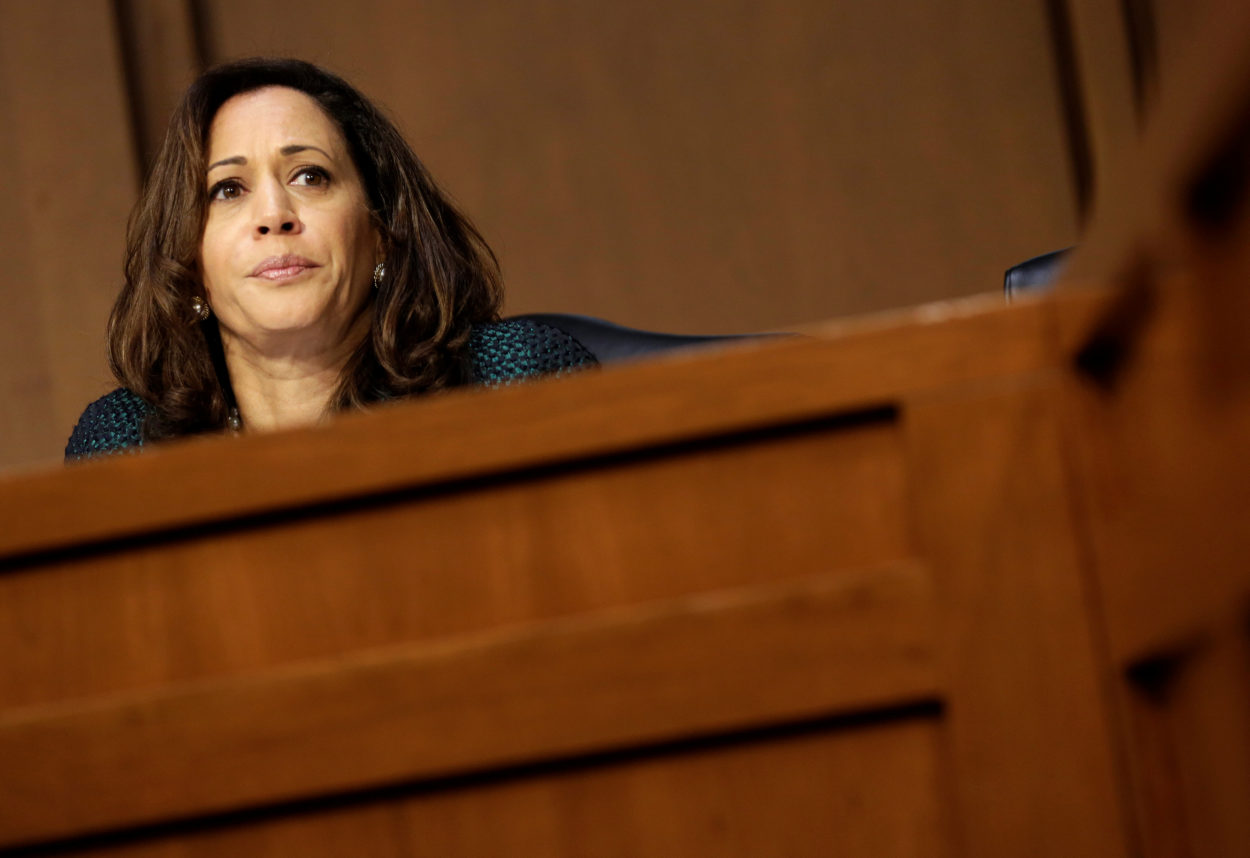
Sens. Kamala Harris (D-Calif.) and Dianne Feinstein (D-Calif.) brought forth a resolution May 8 denouncing the April 27 shooting at the Chabad of Poway.

The resolution honored Lori Gilbert-Kaye, 60, who was killed during the shooting as someone who was “bravely saving the life of Rabbi [Yisroel] Goldstein and praised Border Patrol agent Jonathan Morales and Army veteran Oscar Stewart for “running toward the perpetrator of the attack.” The resolution went on to condemn the 19-year-old alleged shooter for expressing “white supremacist and white nationalist sentiments” and called white nationalism and white supremacy “a threat to the security of the United States.” It also denounces anti-Semitism as “an age-old form of prejudice, discrimination, persecution, and marginalization of Jewish people that runs counter to the values of the United States.”

“The Senate condemns the horrific anti-Semitic attack on the Chabad of Poway Synagogue near San Diego, California, on April 27, 2019, which killed one individual and injured three others, honors the memory of Lori Gilbert-Kaye, who was killed in the attack, [and] offers heartfelt condolences to the Chabad of Poway congregation, the San Diego area Jewish community, and the friends and family of those individuals affected by the tragedy,” the resolution states.

Feinstein said in a statement, “Hate has no place in our country. Our resolution condemns the anti-Semitic attack on Congregation Chabad and reaffirms our nation’s values of openness and tolerance so all Americans can worship freely without fear of violence.”

Harris similarly said in a statement that the Senate “must continue to speak out against” anti-Semitism “wherever it occurs. The rising threat of white nationalism and white supremacy is in direct contradiction with the highest ideals of our country, and I urge my colleagues to join me in supporting this resolution to condemn this despicable hate.”

Sens. Harris, Feinstein Introduce Resolution Condemning San Diego Shooting Read More »

A Moment in Time: It Takes All Colors

Dear all,
I have to begin by sharing…. People often ask, “How do you come up with a new moment in time each week?”
I’ll be honest: those moments are all over the place. They call out to us. But are we paying attention?
This week, I share a moment that inspired me in (of all places) the Ice Cream Museum in San Francisco. Ron and I were there recently, and I had the chance to dive into a huge container of colorful thingamajigs.
It was awesome!
And when I looked at this photo that Ron took, it reminded me that in our world that is so often divided, it truly takes all colors to create possibilities, expand imagination, and inspire multi-facetted connections.
We have the opportunity/ responsibility to open our eyes to the colors beyond our usual zone. You never know when it will hit you. But it will. And when it does, you will capture a moment in time!
With love and shalom,
Rabbi Zach Shapiro

A Moment in Time: It Takes All Colors Read More »

Swedish-Israeli NASA Astronaut Jessica Meir Gets Ready for Her First Trip Into Space

(JTA) — Jessica Meir has been preparing to go into space since the age of 5. She attended her first space camp after finishing middle school and a training program at the Kennedy Space Center following her sophomore year at Brown University.

It took Meir three tries to be chosen for NASA’s highly selective astronaut training program, which she started in 2013 and from which she graduated two years later. Last month, NASA announced that Meir will be participating in her first mission.

It still feels surreal, she told the Jewish Telegraphic Agency in a phone interview from the Johnson Space Center in Houston.

“[When] I’m sitting on that rocket about to launch, it’s really going to be then that it finally sets in,” the 41-year-old astronaut said.

On Sept. 25, Meir will co-pilot a Russian Soyuz spacecraft launching from Kazakhstan with Russian cosmonaut Oleg Skripochka. They will be joined by Hazzaa Ali Almansoori, the first astronaut from the United Arab Emirates.

Meir, the daughter of a mother from Sweden and an Iraqi-Israeli father, holds Swedish and American citizenship. She will be the first Swedish woman, the fourth Jewish woman and the 15th Jew overall to be part of a space mission.

The mission will go to the International Space Station, where Meir will perform a range of physiological, medical and chemistry experiments to better understand the ways in which being in space affects humans. Meir also hopes to do some exploring outside the space station.

“I’m very excited to participate in the science. And also the other big thing personally, my dream has always been to go for a spacewalk,” she said. “There’s never a guarantee — things can always change with the mission when we get up there — but right now per the current plan I will be doing spacewalks as well.”

Meir has spent the last year preparing for the mission. That includes learning Russian and training trips to Russia. She has run on an anti-gravity treadmill used to prevent muscle loss in space. She’s had to analyze her food intake and there’s been a range of medical tests.

She documents it all on her Instagram page.

The youngest of five children, Meir spent her childhood in Caribou, Maine, though her parents grew up far from there. Her late father was born in Iraq but immigrated with his family to prestate Israel as a young child, later fighting in the country’s War of Independence in 1948. He went on to become a doctor and take a job in Sweden, where he met Meir’s mother, a nurse who was raised in a Christian Swedish family. The couple moved to Maine when Meir’s father was offered a job there.

Though Meir’s mother did not convert, the family identified as Jewish and attended synagogue in the nearby town of Presque Isle. Living in a mostly Christian town, Meir felt different at times but did not experience anti-Semitism.

She says being Jewish is an important part of her identity.

“Personally I’m not really a religious person,” she said, “but I think that my Jewish cultural background is obviously a big part of my culture and especially traditions.”

Astronauts are allowed to bring a number of personal items to the International Space Station. Two among my Meir’s choices: an Israeli flag and a pair of socks with menorahs. (She is a big fan of novelty socks and will include several pair among her possessions headed for the station.)

Her piccolo, too. Meir, a music lover who also plays the piano, flute and saxophone, settled on bringing the instrument because of its small size.

Meir isn’t sure what triggered her interest in space travel. As a child, she didn’t know anyone who worked for NASA.

“Growing up, if you asked any of my childhood friends, or any of my college friends, or anywhere all the way through, people always talked about that with me, they always knew that was my thing, that’s what I wanted to do,” she said.

As part of her postdoctoral work at the University of British Columbia, Meir spent some time in the Antarctic studying a different type of flight — that of the bar-headed goose. She had previously researched oxygen depletion in diving emperor penguins in the Antarctic, so the topic wasn’t entirely off course.

One thing that stands out to Meir about her mission is the international cooperation that made it possible, including at the International Space Station, a joint project of the space agencies of the United States, Russia, Japan, Europe and Canada.

“To have that opportunity to be living and working in Russia, and training alongside the cosmonauts and launching with the Russians,” she said, “that to me, it’s really pretty amazing, especially given the climate today.”

Swedish-Israeli NASA Astronaut Jessica Meir Gets Ready for Her First Trip Into Space Read More »

Swastika Daubed on London Fish Factory Owned by Pro-Brexit Jewish Politician

(JTA) — A large swastika was painted Wednesday on a London fish factory owned by a pro-Brexit Jewish politician.

Lance Forman reported the vandalism at H. Forman & Son, a century-old salmon smoking company and restaurant in the eastern part of the city, to police, The Guardian reported. There are no suspects.

Forman’s business, near the Olympic Park, is the United Kingdom’s oldest salmon curer and was set up by his great-grandfather in 1905.

Earlier this year, Forman became a founder of the Brexit Party, which is running for elections in the European Parliament this month.

The Board of Deputies of British Jews condemned the incident.

“Awful to see that a Jewish political candidate has had a swastika painted at his workplace,” a board spokesperson wrote on Twitter.

“This kind of hatred and extremism have no place in politics or our society. We hope that the culprit is brought to justice.”

Swastika Daubed on London Fish Factory Owned by Pro-Brexit Jewish Politician Read More »