fbpx

May 2, 2019

YOM HASHOAH: They Were Our Neighbors

The survivors were our neighbors.

They were ancient and wrinkled and they spoke Yiddish and had numbers on their forearms and were all women.

I never understood why there were no men.

Outside our building the 1980’s were in full swing and the air was full of reggae and pot smoke and skateboarding and Baywatch was being filmed just exactly right in the parking lot across the street. Yes, that one: the one that is a homeless encampment now.

But inside the building it was not the 1980’s. It was a strange in between world with wall-to-wall carpeting, a vague air from the 1940’s, but maybe also the 1970’s, plus poppy seed cakes and oranges (bought by my mother) black tea, some decent beach views.

Inside was a world of failing eye sight, hip problems—all the indignities of aging and the outrages of successful lawyer sons who never visited and divorcee daughters who were ungrateful. Inside the memory of the unspeakable was thick in the air, like a shadow that would not leave, a smell you cannot ever quite get out. The smell that is grief.

Their children did not visit, so we were their children. Or at least, my parents were. My mother did grocery shopping for them, listened to them complain, picked up their meds at the pharmacy. I was the resident baby, skipping around the building, practicing hand-stands in the lobby. We—our family— were the only young ones in the building.

I remember them sitting in the sun porch, gossiping, in Yiddish so I could not understand. Minnie, Esther, Rosie, Elvira. Minnie was the one with bad paranoia, one time when my Mom brought her fruit, she thought she was stealing from her and beat her arm with a metal pipe. I remember the purple-green bruise on my mother’s arm. Rosie was the nice one, who called me mammaleh and always had the poppy seed cake or else that really good cinnamon ruggelach. At least one of them was a communist—I think that was also Minnie– and tried to organize the other ladies into a revolution, but they just blinked at her and drank their tea.

And those housecoats! They all wore these flowery houses coats, like mumus with zippers showing generous, freckly liver-spotted chests and their deep, rich ravaged eyes and their apartments were sad and heavy and still except the sound of a ticking clock, or else maybe the television.

And everywhere in the apartments were doilies, those little orange and yellow knitted yarn doilies that covered the toilet paper in the bathroom, and also white lace crochet doilies on the table next to framed black and white photos of slightly blurry, mustachioed men.

Upstairs, inside our apartment, my mother made homemade wholewheat pizza for dinner while I played with My Little Pony’s in my bedroom and my sister practiced Chopin on the piano.

I was too little to know details of the Holocaust but I knew it existed because my father and older sisters talked about it sometimes at the dinner table. And because I was just learning to read and I could see the books in my parents bookshelves. And because my sister was reading the Diary of Anne Frank which she would later pass on to me.

By the time I was old enough to read it, the last of the old ladies would have died and soon thereafter all the old carpets were pulled out and then the building suddenly had wood floors, which I guess had been there underneath the carpets all along.

Later– much later, in high school– I would learn that my own maternal grandfathers parents did not survive, that they were lined up in their village in Pontavez, Lithuania and those who could work were sent to camps, and those that were too old or sick were shot.

My mother still has the letter, from the village, sharing this information. It is yellow and on the thinnest paper you ever touched.

I never heard Esther and Minnie and Rosie and Elvira’s stories because I was too young but I understood then on some vague level as I do now, that it was by a fluke of luck that I was born here and they were born over there and that they had been young once like me and had maybe practiced hand-stands and made up songs and dances and made daisy chains with their girlfriends on long afternoons at the lake or in the woods, maybe with a picnic.

Or maybe with a piece of delicious poppy seed cake wrapped up by their own grandmother.

Baruch Dayan Ha’emet. May we never forget

YOM HASHOAH: They Were Our Neighbors Read More »

Attention White Supremacists

Your fears are correct:

We will replace you. We will absolutely, without a doubt, replace you.

We will replace every act of hate you commit with ten thousand acts of love.

We will flood every dark corner of bigotry and lies where you lurk with truth and reason that burns like the light of ten thousand suns.

We will drown your hatred with love.

A mixed, rainbow multitude of good, kind, decent people, Black and White, Jewish and Christian, Muslim and Hindu, Buddhist and Atheist, Gay and Straight, Left and Right, will stand up to you, again and again, and again and again, and we shall overcome you.

Love,

All of Us


Rabbi Ari Hart is the spiritual leader of Skokie Valley Agudath Jacob in Illinois.

Attention White Supremacists Read More »

US Senators Cite Rising Threats to Religious Institutions in Seeking More Money for Nonprofits’ Security

WASHINGTON (JTA) — A bipartisan slate of U.S. senators wants more funding for nonprofits’ security, citing intelligence reports of a heightened threat against religious institutions.

The letter sent Wednesday to the top Republican and Democratic senators on the Appropriations Committee seeks a raise to $75 million from $60 million.

It cites a February intelligence bulletin issued jointly by a number of federal agencies that “found that domestic extremists; perpetrators of hate crimes; homegrown violent extremists; and foreign terrorist organizations will continue to pose a lethal threat to faith-based communities in the Homeland, particularly against perceived soft targets such as religious and cultural facilities.”

Sen. Rob Portman, R-Ohio, who initiated the letter, in a release alluded to the attack over the weekend on a San Diego-area synagogue that killed one worshipper and wounded three.

“As we’ve seen recently, the threats to many houses of worship and other religious community sites are increasing and we must do everything we can to protect religious and cultural based institutions in Ohio and across our country,” he said.

Of the 33 senators signing the letter, 31 are Democrats. Portman was one of two Republicans.

Separately, Rep. Josh Gottheimer, D-N.J., hosted a conference call Wednesday for vulnerable nonprofits in his northern New Jersey district, with experts advising callers on how best to apply for federal funds to enhance security.

Since its inception in 2005, the vast majority of institutions applying for the funds from the federal nonprofit security grants program have been Jewish. What was notable on Gottheimer’s call were the queries from non-Jewish institutions, including churches and mosques, in addition to Jewish institutions.

US Senators Cite Rising Threats to Religious Institutions in Seeking More Money for Nonprofits’ Security Read More »

Federal Judge Rules Against California Family in Nazi-Looted Painting Suit

A federal judge in Los Angeles ruled this week that a Spanish museum that acquired a valuable Nazi-looted artwork in 1992 is the work’s rightful owner.

According to court documents in the case David Cassirer, et al. v. Thyssen-Bornemisza Collection Foundation, U.S. District Judge John Walter ruled that, “under Spanish law, TBC (Thyssen-Bornemisza Collection) is the lawful owner of the Painting.”

In his April 30 ruling, Walter said  the decision by the Kingdom of Spain, which owns the  museum, to keep the painting was inconsistent with international agreements that art confiscated by the Nazis should be returned to their rightful owner. Walter ruled that under Spanish law, however, the court could not compel Spain to “comply with its moral commitments.”

Walter ruled there that there was not enough evidence to show the museum acquired the painting knowing of its theft.

In an April 1 phone interview, the main plaintiff, David Cassirer, who lives in San Diego, told the Journal his lawyers plan to appeal.

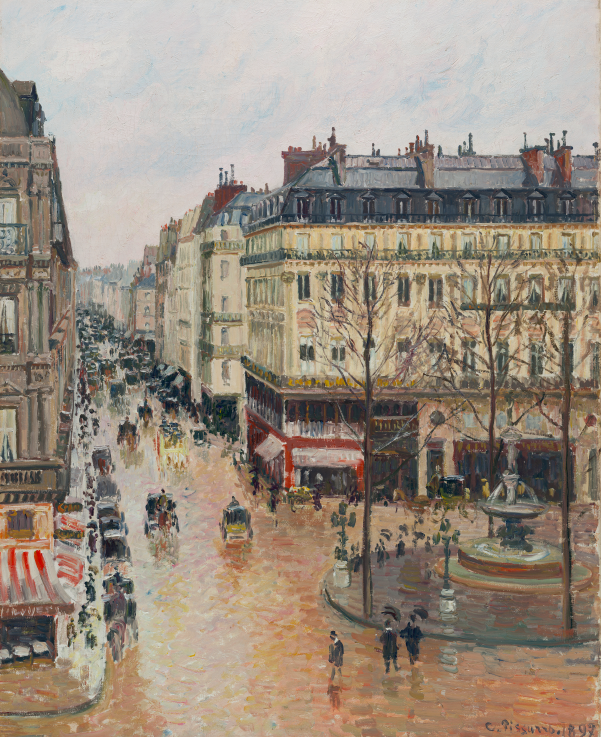
The painting in the case is the impressionist Camille Pissarro’s masterwork, “Rue Saint-Honore in the Afternoon, Effect of Rain.” Last valued at $30 million, according to the L.A. Times, the painting depicts a Paris streetscape on a rainy day.

The painting once belonged to Cassirer’s great-grandmother, Lily Cassirer, a German-Jew whose father-in-law purchased the work directly from Pissarro’s art dealer in 1900. Lily inherited it in 1926. In 1939, she surrendered the painting to the Nazis in exchange for exit visas out of Germany for herself and her husband.

The Pissarro hanging in Lilly’s parlor in Germany in the 1920s, where Claude Cassirer played as a child. Inset: Pissaro’s 1897 painting, “Rue Saint-Honore in the Afternoon, Effect of Rain.” Courtesy of Cassirer family

The painting was smuggled out of Germany to the United States in 1951. In 1976, Baron Has-Heinrich Thyssen-Bornemisza, a German industrialist whose family allegedly had close ties to Hitler, purchased the painting from a New York gallery. In 1988, Thyssen-Bornemisza donated the painting to the Spanish government, which formed the Thyssen-Bornemisza Collection Foundation to display the works.

Lilly’s descendants thought the painting had been destroyed until a friend of Claude Cassirer, David Cassirer’s late father and Lily’s grandson, saw it in the museum’s catalog in 1999.

Claude was the original plaintiff on the case, which has pitted the California-based Cassirer family against the Spanish museum for the past 20 years. When Claude died in 2010, his son, David, became the main plaintiff.

Before the war, the painting hung on the wall of Lily’s parlor in her Berlin home.

Federal Judge Rules Against California Family in Nazi-Looted Painting Suit Read More »

Gaza Launches 2 Rockets at Southern Israel Following Israeli Retaliatory Airstrikes

JERUSALEM (JTA) — Palestinian terror groups in Gaza fired two rockets into southern Israel following retaliatory airstrikes by Israel that hit several Hamas military targets in the strip.

The rockets fired early Thursday morning by the terror groups landed in open areas and caused no injuries or damage.

Israel was retaliating for the launching of incendiary balloons into southern Israel and the firing of a rocket that landed in the Mediterranean Sea. Both came from Gaza. One of the balloons carrying a firebomb sparked a fire in a field near the Gaza border.

No one was injured in the Israeli strikes, the Palestinian Maan news agency reported.

The Israel Defense Forces spokesman said in a statement that Hamas, the terrorist group that runs the Gaza Strip, “bears responsibility for everything that is going on” there.

Following the firing of the rocket on Monday night that landed in the sea, Israel scaled back the permitted Gaza fishing zone from 15 nautical miles to 6 nautical miles, backtracking on a concession given under the unofficial cease-fire brokered by Egypt, Qatar and the United Nations.

Gaza Launches 2 Rockets at Southern Israel Following Israeli Retaliatory Airstrikes Read More »

Jewish Americans Are least Islamophobic Faith Group, Survey Finds

NEW YORK (JTA) — A majority of Jewish Americans have positive feelings about Muslims – and the feelings are mutual — according to a survey released Wednesday.

The 2019 American Muslim Poll, conducted in January, found that 53 percent of Jewish Americans reported having positive views of Muslims — the highest of any non-Muslim faith group surveyed — compared to 13 percent with negative views. The same percentage of Jews reported that a candidate’s endorsement of a Muslim ban would decrease their support for that individual.

Likewise, 45 percent of the Muslim-American respondents had favorable views of Jews, while just 10 percent reported having negative views. The remaining respondents were neutral.

Personally knowing a Muslim may contribute to the positive sentiments: 76 percent of Jewish-American respondents said they knew a Muslim, compared to 54 percent of the general public, and 45 percent of the Jews said they are close enough with a Muslim that they would call them if they needed help.

Among white evangelicals, as many as 44 percent held unfavorable opinions about Muslims, more than double those with favorable views, 20 percent.

The poll was commissioned by the Institute for Social Policy and Understanding, a research and advocacy organization for Muslim Americans. Among the 2,376 respondents were 804 who identified as Muslim and 360 as Jewish.

The margin of error was 3.6 percent, but higher for Jews and Muslims: 7.6 percent for the former and 4.9 percent for the latter.

Jewish Americans Are least Islamophobic Faith Group, Survey Finds Read More »

Elan Carr Marches With US Delegation During March of the Living

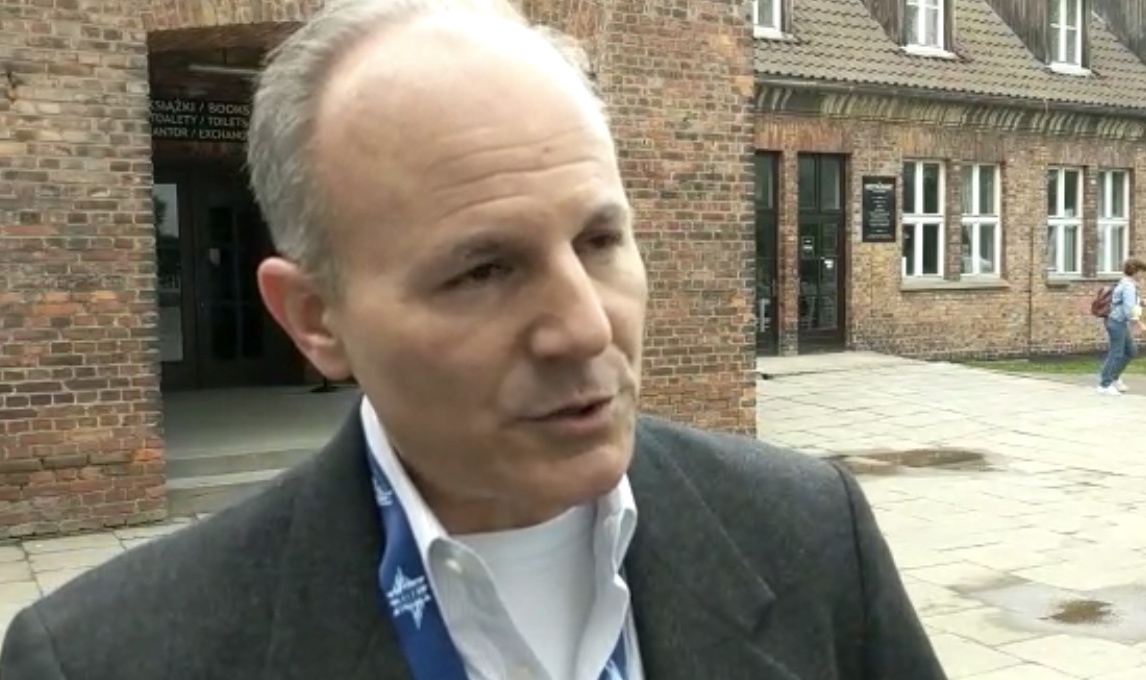
(KRAKOW, POLAND) — Elan Carr, newly appointed special envoy for monitoring and combating anti-Semitism arrived in Poland May 2 to march alongside the U.S. delegation for the 31st annual International March of the Living at Auschwitz.

Also in attendance were US Ambassador to Israel David Friedman, Ambassador to Germany Richard Grenell and Ambassador to Poland, Georgette Mosbacher.

It was Carr’s first visit to Auschwitz and Birkenau and he told the Journal, “It is a special honor to be tasked on the behalf of the United States [with fighting anti-Semitism]. It’s a vow all of us can make at this solemn and holy place.”

Carr said the first priority “is to remember and to warn and never to let go of what happened here about the murder of 6 million Jews because of who they were…making sure that we never allow this to happen again…It means to fight anti-Semitism with every fiber of our being.”

Earlier this week, Carr attended the funeral of Lori Gilbert-Kaye who was killed April 27 following an anti-Semitic attack on Chabad of Poway in San Diego County. The former L.A. county district attorney said the attack there made it even more clear that anti-Semitism needs to be fought and Jews need to be protected all over the world.

“Jewish people now have the state of Israel protecting them and the United States devoted in word and in deed and in law to fighting for the safety of the Jewish people,” Carr said. “It’s a very powerful oath to take here that we will commit ourselves and renew our commitment to fighting anti-Semitism. We have to fight anti-Semitism everywhere.”


Elan Carr Marches With US Delegation During March of the Living Read More »

Anti-Semitism Is Also the Internal War of the Jews

The struggle against anti-Semitism—everywhere, at any time— is an external struggle: to enlist support circles, to identify trends, to neutralize dangers.

The struggle against anti-Semitism—everywhere, at any time— is also an internal struggle: to crystallize consciousness, to formulate a correct response.

The external struggle is easy to form, even if it is not easy to win. Once anti-Semitism raises its head, the Jews react. They cry out, they protest, they do what they can. And, of course, anti-Semites have their own tools. They also know how to organize and enlist support. But the contours of the battlefield are relatively clear. Anti-Semites and their supporters on the one hand, Jews and their allies on the other.

The internal struggle is more complicated. This is the struggle for the souls and minds of the Jewish people, or, to be more dramatic, for their sanity. anti-Semitism harms Jews from the outside. It makes it difficult for them to operate in general society, sometimes damaging their property, sometimes inflicting wounds on their bodies. But it must be noted that it also harms them from the inside. It undermines their confidence, turns them – turns us—into anxiety-ridden, restless survivors. It is hard to think about the Holocaust without becoming all of these things.

This is the internal war of the Jews. The war to remain happy and calm even in an anti-Semitic environment. The war to be human when humanity is eroded. The war to respond proportionally to danger, using the right means and the correct rhetoric. It is a war that prompts a constant tension between the need to be alert to a sly and determined enemy without overreacting or becoming excessively fearful.

In recent months, as it becomes clear that anti-Semitism is raising its head in different places, in different communities, Jews are being forced to fight back. They must think about the proper ways to do it. They must ensure the safety of synagogues and butcher shops and schools in France, in America, in Argentina, in Britain. They must attempt to neutralize the power of anti-Semitic groups to harm the vital interests of the Jewish people.

At the same time, one must not forget or neglect the inner preparation for a new era. The Jews of this generation, especially Israeli Jews, are not accustomed to life in the shadow of anti-Semitism. Some of us thought that the problem of anti-Semitism would be solved when Israel was established. Some of us believed that the world had become enlightened enough not to allow more anti-Semitism. Some of us aptly suspected that anti-Semitism was still alive, but they did not really feel it. For most Jews in Israel, anti-Semitism is a distant rumor, rather than a daily reality. It was something to learn about and remember, not to forget. It was not something whose constant presence made it impossible to forget.

If anti-Semitism comes back to play a significant role in Jewish life, after a fairly short respite, Jews will have to get used to it again.

What!? This is out of the question!

In fact, learning to live with anti-Semitism is the only option. Not in the sense of consenting to it, or in the sense of accepting and surrendering to it. Rather by way of being realistic, and understanding that we can’t control everything. There are things – and anti-Semitism is one of them – that you just have to learn to live with. There are sickness and sorrow, there are floods and earthquakes, there are hurricanes and fatal accidents, and there is also anti-Semitism. We fight back, we adapt.

Holocaust Remembrance Day, which Israel marks today, is a time to stop and think about the grave consequences of hatred for Jews. It is an important day when it starts, and it is an important day when it is over. It is important when it allows us to stop and remember. It is important when it passes and allows us to go back to normal.

But what is normal? It is quite possible that anti-Semitism is back to being part of Jewish normalcy.


Anti-Semitism Is Also the Internal War of the Jews Read More »

Poll: More Than Half of Austrians Don’t Know Extent of Holocaust

The Conference on Jewish Material Claims Against Germany, an organization that advocates for the German government to provide reparations to Holocaust survivors, released a poll Thursday concluding that more than half of Austrians don’t know that six million Jews died during the Holocaust.

The poll, which surveyed 1,000 Austrians from Feb. 22-Mar. 1, found that 56 percent of Austrians were not aware of the full extent of Jewish deaths during the Holocaust. This included 36 percent of Austrians believing that two million Jews or less died during the Holocaust; 42 percent of Austrian millennials and Generation Z believed this as well.

Additionally, 58 percent of respondents believed another Holocaust could happen in various European countries and 47 percent said a Holocaust could occur in the United States today. Another 36 percent believed that there are “a great deal” of neo-Nazis in Austria and 50 percent said there are “many” neo-Nazis in the United States.

On Holocaust education, 82 percent of respondents said that every student should learn about the Holocaust in school.

Julius Berman, president of the Conference on Jewish Material Claims Against Germany, said in a statement that the poll showed “disturbing trends” on Holocaust education.

“Without education, we risk the history of the Holocaust being distorted and otherwise denied and those who were murdered being forgotten,” Berman said. “Effective education is paramount towards ensuring that what happened in the past does not repeat itself.”

Poll: More Than Half of Austrians Don’t Know Extent of Holocaust Read More »