António Moreira Antunes, the artist who drew the anti-Semitic cartoon in the New York Times, told CNN Wednesday that the outrage over his image came from the “Jewish propaganda machine.”
The cartoon depicted Israeli Prime Minister Benjamin Netanyahu as a dog guiding a blind, yarmulke-wearing President Donald Trump. Myriad Jewish organizations and individuals, including Anti-Defamation League CEO Jonathan Greenblatt and American Jewish Committee CEO David Harris, condemned the cartoon as being anti-Semitic.
Antunes told CNN that his cartoon was a commentary on the relationship between Trump and Netanyahu and not intentionally anti-Semitic. He added, “the Jewish propaganda machine” spins any sort of criticism against Israel as stemming from “someone anti-Semitic on the other side, and that’s not the case.
“The Jewish right doesn’t want to be criticized, and therefore, when criticized they say, ‘We are a persecuted people, we suffered a lot… this is anti-Semitism,'” Antunes said.
The Times issued an apology on April 28 and on April 30 published an editorial highlighting the rise of anti-Semitism worldwide. In it, the editorial acknowledged that “anti-Zionism can clearly serve as a cover for anti-Semitism — and some criticism of Israel, as the cartoon demonstrated, is couched openly in anti-Semitic terms.”
Times Publisher A.G. Sulzberger, sent a memo to staff members Wednesday stating disciplinary action would be taken against the production editor who greenlit the cartoon. The editor has not been publicly identified. Sulzberger added in the memo that the Times’ bias training will have a “direct focus on anti-Semitism” going forward.
Israeli TV continues to be a prime source for International and American remakes. Paramount Network has ordered 10 episodes of the dark comedy-drama “68 Whiskey,” based on the Israeli series “Charlie Golf One.” Following men and women medics on a U.S. Army base in Afghanistan, the series is from Ron Howard and Brian Grazer’s Imagine Entertainment. Producers behind the original series—creator Zion Rubin, Efrat Shmaya Dror and Danna Stern–will remain involved as executive producers.
Roberto Benabib (“Weeds,” “Kidding”) is writing the series. “I’m excited to have the opportunity to produce a series that echoes the dark irreverent films of the ‘70s and speaks to the dark irreverent insanity of the world today,” he said.
Set on Israeli Defense Forces base in the desert, “Charlie Golf One (a.k.a. “Combat Medics”) starred Tomer Capon (“Where Heroes Fly”) and was Yes TV’s most successful original program of 2016. A second season is currently in production.
“On the Spectrum,” an Israeli series about three twenty-something roommates who have autism, is being remade in English for Amazon Prime Video. Jason Katims (“Parenthood,” “Friday Night Lights”), who is writing the adaptation and will serve as showrunner, has a son with Aspberger’s Syndrome, a form of autism.
The Israeli original won nine awards at the Israeli Television Academy Awards In March.
Hagai Levi, who co-created the original Israeli versions of “In Treatment” and “The Affair,” has “The Summer of 2014” coming to HBO. The 10-part drama isn’t based on an Israeli property but comes from Keshet International and is about the events that let to the war in Gaza.
One died. Three were wounded. They are more than just names in newspaper headlines.
LORI GILBERT-KAYE, 60
Lori Gilbert-Kaye was killed on April 27 when a 19-year-old gunman allegedly walked into the Chabad of Poway in San Diego County armed with an assault rifle and fired on worshippers.
Gilbert-Kaye reportedly took a bullet for Chabad Rabbi Yisroel Goldstein. Her husband, Dr. Howard Kaye, tried to resuscitate her to no avail.
“Lori Gilbert-Kaye sacrificed her own life, throwing herself in the path of the shooter’s bullets to save the life of the rabbi,” Jewish-Israeli progressive activist Hen Mazzig wrote on Twitter. “Other heroes wear dresses.”
Gilbert-Kaye was a native of San Diego and a graduate of UCLA. She lived in Brentwood for a short time but spent most of her life in the San Diego area. In the early 1990s, she joined the Chabad community and helped Rabbi Goldstein at Chabad of Poway secure a construction loan after Goldstein purchased an empty lot he hoped to turn into the Chabad center. Gilbert-Kaye was working for Wells Fargo at that time.
“She was part of the building process when they started the synagogue and I know this was always one of her biggest honors,” Gilbert-Kaye’s 22-year-old daughter, Hannah, a student at UCLA said during her mother’s funeral on April 29.
In addition to her involvement with the Chabad of Poway, Gilbert-Kaye was active with the Hadassah Foundation, Chai Lifeline and other organizations.
At the time of her death, Gilbert-Kaye was working for the San Diego-based Pro Specialties Group, which is a supplier of licensed products for NFL, MLB, NBA and college teams. According to a statement from the company, Gilbert-Kaye was a member of its sales team for the past 12 years.
“Lori was known for her commitment to our clients, generosity of spirit, willingness to share her experiences and passion to persuade others to do the same,” the company said in a statement.
Gilbert-Kaye is survived by her husband and daughter.
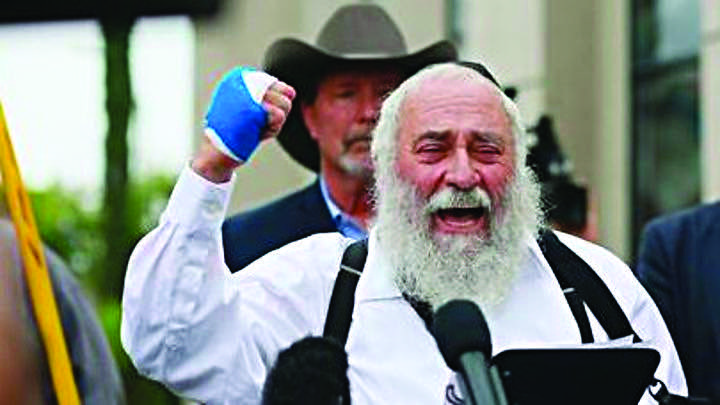
RABBI YISROEL GOLDSTEIN, 57
Goldstein lost his right index finger in the attack and almost lost his left index finger. Goldstein sustained his injuries as he stood in front of the shooter with his hands held up.
Originally from the Crown Heights neighborhood of Brooklyn, Goldstein studied at the Rabbinical College of America in Morristown, N.J., in the late 1970s. He and his wife, Devorie, were sent to the community in Poway in the mid-1980s as emissaries of the late Lubavitcher Rebbe, Rabbi Menachem Mendel Schneerson. Goldstein runs the Chabad of Poway with the help of his son, Rabbi Mendel Goldstein.
“He answered the Lubavitch Rebbe’s call and went out to Rancho Bernado, to Poway,” said Mendy Herson, associate dean of the Rabbinical College of America.
Rabbi Yisroel Goldstein
Two days after the attack, Yisroel Goldstein wrote in an op-ed for The New York Times, “I am a religious man. I believe everything happens for a reason,” he wrote. “I do not know why God spared my life. I do not know why I had to witness scenes of a pogrom in San Diego County like the ones my grandparents experienced in Poland.”
“Any time there is an attack on a Jewish center, it’s horrible, no matter where it happens,” Herson said. “When it is a Chabad center, that’s me. That guy pointed a gun at me, and to hear about the horror that went on there, and when it’s someone you know and someone you’ve spoken with and someone you’ve had interactions with, of course you take it that much more personally. So this is very personal for me.
“He’s a sweetheart,” Herson said of Goldstein. “He really is.”
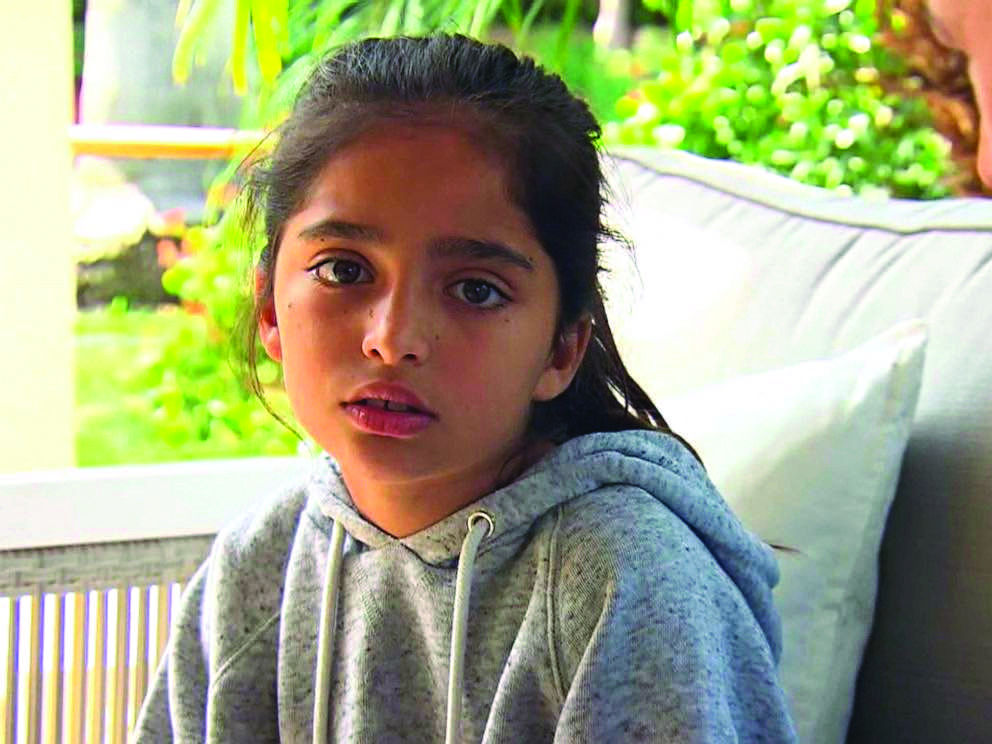
NOYA DAHAN, 8
Noya was hit during the attack by shrapnel, which lodged in her eye and leg.
The Dahan family moved to San Diego County from Israel in 2011. The April 27 attack was the third time her family had been forced to flee from a scene of violence. The Dahans used to live in the southern Israel town of Sderot, which has been a constant target of rocket attacks from Hamas in the Gaza Strip.
Noya’s father, Israel Dahan, said the family moved to California for a safer life.
After being released from the hospital, Noya said in an interview with CNN, “I don’t even have any words for [the attack]. It was terrifying. Scary. We go to pray and then we’re supposed to, like, supposed to feel safe.”
Noya Dahan
Her father said of the alleged shooter, “He was covered in magazines. They were all over his body. … He came to kill us. He came to grind us. The amount of bullets he had on him, he came to destroy this place.”
Dahan told CNN that he might consider moving again with his wife and five children. “I might need to run again,” he said, “and I need to prepare myself for the next run.”
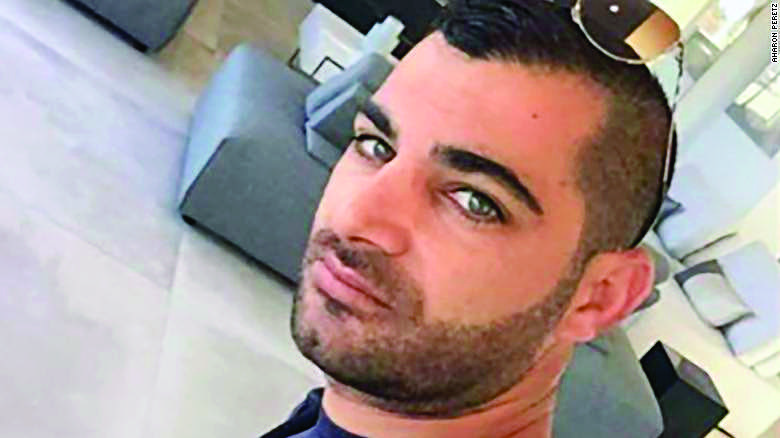
ALMOG PERETZ, 34
Peretz is Noya’s uncle and works in construction in Israel. He was visiting his relatives in Poway from his home in Sderot and staying with them for a couple of months. He was hit in the leg during the attack. Shrapnel lodged in a bone and cannot be removed.
Almog Peretz
Upon hearing the first shots, Peretz, who served in the Israel Defense Forces, gathered the children and led them to safety. He has been called a hero.
Peretz told Israel’s Channel 12 news, “There were many small kids next to me. I took a little girl who was our neighbor and three nieces of mine and ran. I opened the back door and we ran with all the children to a building in the back. I hid them in that building. As I picked up the girl, the terrorist aimed his weapon at me. I was injured in the leg.”
NEW YORK (JTA) — Michael David Lukas is the winner of the 2019 Sami Rohr Prize for Jewish Literature for his book “The Last Watchmen of Old Cairo.”
The $100,000 prize, a program of the Jewish Book Council, was announced Tuesday. It recognizes emerging writers who articulate the Jewish experience, as well as the author’s potential to make significant ongoing contributions to Jewish literature.
Lukas was among five finalists for the prize. Dalia Rosenfeld, author of “The Worlds We Think We Know” was picked as the Choice Award winner, which carries an $18,000 prize. The remaining finalists — Rachel Kadish, Mark Sarvas and Margot Singer — each receive $5,000.
Lukas’ historical fiction book tells stories related to the Cairo Geniza, a disposal receptacle which contained some 300,000 Jewish documents from different communities, shedding light on a thousand years of Jewish life in the Middle East and North Africa.
The book imagines various people involved in bringing the documents to Cambridge University and studying them, including scholar and rabbi Solomon Schechter. It takes place in Cairo during various time periods, including the 11th and 19th centuries and present day. The prize announcement called the book “[i]mpressive and beautifully written.”
“What an honor to be chosen for this prize, and to have my name listed alongside such an amazing group of writers,” Lukas said in the Tuesday statement.
The Rohr Prize, which has been awarded annually since 2007, considers works of fiction and nonfiction in alternating years. It was created by the late businessman and philanthropist Sami Rohr.
KRAKOW, Poland (JTA) — An activist who says he is working to “liberate Poland from American Jews’ occupation” unveiled an effigy in Lodz of a Jewish politician hung on a gallows.
Sławomir Dul presented the display featuring the late communist politician Jakub Berman, captioned “Jew,” outside the headquarters of the city’s police station Tuesday, Gazeta Wyborcza reported. The building stands in what used to be the Lodz Ghetto.
Dul shouted “I did it, I hung a Jew,” the report said.
Police officers documented the display without intervening immediately, according to Gazeta Wyborcza. Outraged passers-by did dismantle it, the report said.
Police told Dul to leave when the display became a cause for disturbing public order, a police spokesman said. Dul left without resisting.
On April 26, locals from a town in southern Poland re-enacted the custom of casting judgment on Judas Iscariot, the betrayer of Jesus, using a life-size effigy of a stereotypical Jew with a hooked nose and sidelocks.
The incident provoked international condemnations, including from the State of Israel.
Life goes in only one direction, of course, and authors of all ages cannot help but notice that death is the ultimate destination. So we find both that Judith Viorst, a grand dame of American letters, and Kim Dower, a high-spirited poet who lives and works here in Los Angeles, are pondering the same themes in their latest books.
Viorst may be best known for her now-classic children’s book, “Alexander and the Terrible, Horrible, No Good, Very Bad Day,” but her oeuvre spans more than a half-century and includes poetry, musicals, both fiction and non-fiction for adults, and intimate memoirs that share her own perspectives on a life well lived, the so-called “decade” series that started with “It’s Hard to Be Hip Over 30,” all of which prompts Letty Cottin Pogrebin, a founding editor of Ms. magazine, to call Viorst “the Magellan of Advancing Age, the Dr. Spock for Seniors.”
“Nearing 90: and Other Comedies of Late Life” (Simon & Schuster) is Viorst’s latest book and the crowning title in her decade series. Charmingly illustrated by Laura Gibson, “Nearing 90” is summarized by the author as a book about “[w]hat happened [when] we got oldish, then older, then even older than that.” Each short entry, some of which are poems and some of which are lists that read like poetry, is a polished jewel of long experience composed of lapidary words and phrases, glowing with hard-earned wisdom and yet sparkling with sly humor:
“It’s time that I gave up showing a little cleavage.
It’s time that he wore his shirts out instead of tucked in.
It’s time, when we tell a joke, that before we even begin,
We should first make sure we still remember the punch line.”
“He” refers to Milton Viorst, her spouse of six decades and a public intellectual in his own right, who appears in many of the entries. “All I can tell you about what marital bliss is/ Is that I’m still a fool for my husband’s kisses,” she writes in a poem titled “Still Kissing After All These Years.” “So whatever it is he’s doing, he’s done it just fine/ Since that very first kiss back in 1949.”
Of course, Viorst is brutally honest about the challenges of growing older. In the poem titled “A Warning (or Maybe a Love Song) for My Husband,” she issues a dire threat to the man who sleeps beside her: “The sentiment here may not thrill you,/ But listen, my love, carefully,” she writes. “Keep staying alive, or I’ll kill you. /Don’t you dare die before me.”
Still, the biggest surprise in Viorst’s beautiful, funny and deeply endearing book — and the greatest reward for the reader — is her relentless and contagious optimism. “I’m past my sell-by date,” she announces in the poem titled “On Nearly Ninety,” but any reviewer who is tempted to call it a farewell address is surely underestimating the author’s longevity. Viorst goes on to declare:
“But life’s crown is old age,
So I won’t slink off the stage.
Although not always with-it, I’m still here.
And since I plan to stay,
The role I hope to play
Is Queen Elizabeth — it’s not King Lear.”
Kim Dower is a cherished figure in the book industry and the former poet laureate of West Hollywood. Her fourth book, “Sunbathing on Tyrone Power’s Grave” (Red Hen Press), is the work of a woman who could be Viorst’s granddaughter but who shares the same power to capture tender and dire experiences in the amber of poetry. The topics of her provocative and richly rewarding poetry range from love and sex to loss and longing, as the book title suggests, but the very first poem in the collection is titled, significantly enough, “He Said I Wrote About Death.”
“I did not mean to write about death,
But rather how when something dies
We remember who we love, and we
Die a little too, we who are still breathing,
We who still have the energy to survive.”
Sometimes the shadow of loss falls across a scene of utter playfulness. “If You Give a Mouse a Mantra” opens with a scene of charm and whimsy (“If you give a mouse a mantra/ it will want a tiny cushion”) but introduces a series of escalating aspirations that eventually collapse under their own weight. “[T]he cat is ready to attack, jealous you haven’t given her/ a mantra or tiny cushion.”
Kim Dower could be Judith Viorst’s granddaughter but [she] shares the same power to capture tender and dire experiences in the amber of poetry.
“Listen for the sound of her brain
Changing: watch her pounce. See your mouse
Swallow its mantra. See the cushion transform
into a confetti of Emptiness.”
But even when the poetry shines, it throws a shadow, as in “The Secret
Afterlife of Bees.” When Dower ponders “a seventy pound beehive/ deep inside a wall of my house,” she recalls that “My mother used to cover her ears/ with her hands when a bee buzzed by./ It could die inside your brain and die,/ she told me when I was five.”
Both Viorst and Dower are “still breathing,” and both of these gifted writers display “the energy to survive,” to borrow Dower’s words. That’s the real gift they offer to their readers in these two exceptional books.
Jonathan Kirsch, author and publishing attorney, is the book editor of the Jewish Journal.
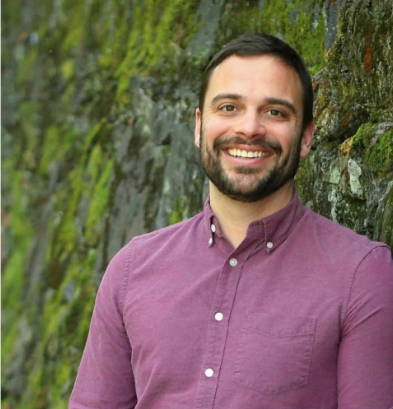
After the April 27 shooting at Chabad of Poway, Beverly Hills Temple of the Arts rabbinic intern Jonah Sanderson launched a community-wide appeal. Heartbroken over the attack, he quickly contacted local leaders via email. The subject line was: “The Time Is Now.” He invited the Jewish community to heighten public awareness with a multifaceted approach, including increasing synagogue security and educating about early warning flags of potential violence.
Sanderson’s campaign — which predates the Poway shooting — has its roots in another incident. Last year, Sanderson lost a friend to suicide, which prompted the longtime Encino resident to become a “community advocate” for suicide prevention and depression. The loss gave Sanderson what he describes as a “greater purpose and further motivation to become a rabbi.”
The Journal spoke with Sanderson after the attack at Chabad of Poway about his vision for next-level response.
Jewish Journal: What steps are you hoping to facilitate as a communal response to the recent attack?
Jonah Sanderson: First, I’d like to create public forums and panel discussions dedicated to addressing mental health and gun violence. A “subcategory” of concern is white nationalism. Second, I’d like to put together a group to help parents spot signs of depression leading to radicalization in children and teens. And third, I’d like to form a panel on synagogue security. I’ve contacted community leaders, asking them to host these events in their homes and synagogues. Together, with their help, we’ll create panels of speakers and a curriculum.
JJ: What led you to this plan?
JS: I run a mental health project. It’s something I’m building my career around and am passionate about.
“My message to the shooter is simple: Your hatred has no place in our world. Our Jewish community is strong and our faith is strong.” — Jonah Sanderson
JJ: How did you create the initiative?
JS: With guidance from many rabbis, social workers and experienced psychologists, I helped create a home-based education program called “Torah and Mental Health.” This initiative brings suicide prevention and mental health advocates to educate groups of people in comfortable and intimate home settings. We have been successful in bringing this work throughout our community. This also led me to become an active contributor to an important new web project: “The Dreidel.”
JJ: What is “The Dreidel”?
JS: [It’s a] website run by Temple of the Arts, which aims to help combat anti-Semitism from a communal standpoint. A man named Richard Stellar started “The Dreidel” to give teens a platform to connect to Judaism and combat anti-Semitism and anti-Semitic rhetoric on campuses.
JJ: What kinds of material has “The Dreidel” published since the attack? And how do others get involved?
JS: “The Dreidel” published a piece for teens on what to do if there is an active shooter in their midst. It includes practical advice on familiarizing yourself with your surroundings and links to recommendations from Homeland Security.
JJ: Can you tell us more about your friend and how his suicide impacted you?
JS: My friend who took his life was Ben Beezy of the Valley Beth Shalom community. He suffered from chronic depression. My program was built with the help of Rabbi Richard Camras at Shomrei Torah Synagogue in West Hills. We bring in doctors and mental health workers as well as respected psychologists to speak to people on their terms in their homes. This educational program brings depression alleviation and suicide prevention to the fore by talking about it.
JJ: What prompted you to take further action after the Poway shooting and call your initiative “The Time Is Now”?
JS: We are facing an increase of hatred and anti-Semitism in our community and throughout the world. People of all faiths have been targeted in churches, mosques and synagogues. In the case of individuals who perpetuated many of these horrific attacks, mental illness clearly played a role. Before the attack on innocent Jews praying at the Chabad of Poway, it appears the shooter published a deeply troubling manifesto and was active on social media and fringe message boards. His words are deeply troubling, unabashedly anti-Semitic and draw parallels to other diatribes from known white supremacists and other perpetrators.
JJ: What is your message to the shooter?
JS: My message to the shooter is simple: Your hatred has no place in our world. Our Jewish community is strong and our faith is strong. After the Tree of Life massacre in Pittsburgh, Pa., last October, I was one of hundreds of thousands across the world who attended a Unity Shabbat service. We did not abandon our beliefs or our synagogues. We flocked to them just as we will again this Shabbat.
JJ: And what is your message to your Jewish brethren?
JS: My message to the community is the same today as it has been throughout my own personal Jewish journey. We need to live our lives based on the teachings in our Torah. We have and we need to continue to stand up to those who wish us harm, and we need to embrace our brothers and sisters of all faiths to fight hatred. I pray for those impacted physically and emotionally by the tragedy in Poway, and mourn the loss of Lori Gilbert-Kaye, who heroically gave her life to save her rabbi’s. May her memory be a blessing.
Lisa Klug is a freelance journalist and the author of “Cool Jew” and “Hot Mamalah: The Ultimate Guide for Every Woman of the Tribe.”
The International March of the Living is an annual education program that brings students from around the world to Poland, where they explore the remnants of the Holocaust. On Yom HaShoah, thousands march silently from Auschwitz to Birkenau, the largest Nazi concentration camp complex built during World War II.
Erika Jacoby met Ursula Martens in 2017 at Jacoby’s Valley Village home for a dialogue sponsored by the Journal. Martens, a childhood member of Hitler Youth then 88 years old, had agreed to meet a survivor, and Jacoby, an 89-year-old former Auschwitz inmate, had agreed to be that person.
The conversation had gone well; Jacoby had rolled up her sleeve to show Martens her concentration camp tattoo. Now, nearly two years later, the Righteous Conversations Project had invited the women for a second meeting at Harvard-Westlake Upper School in Studio City. When Jacoby invited me to the event, I immediately agreed to attend. I was helping her write the sequel to her memoir, “I Held the Sun in My Hands,” and I was intrigued.
“It seems to me that Ursula didn’t open up to her feelings then, and I doubt she’ll do it now,” Jacoby told me, explaining that her German counterpart’s emotions were repressed. “I feel that she’s had trouble healing from the experience.”
For Erika Jacoby, it’s all about healing. Living in the San Fernando Valley for the past 60-plus years, she has dedicated her life to healing herself and others as a clinical social worker. This has sometimes included survivors and their children.
For many, healing from the Shoah has been a very slow process. It was certainly slow for her, Jacoby told me, explaining that she rarely spoke of her past when she first arrived in the United States. Like many other survivors, she felt that no one could relate to her story, and perhaps that no one wanted to hear it. Many have gone to their graves revealing almost nothing of their pasts, she said.
Like many other survivors, Erika Jacoby felt that no one could relate to her story, and perhaps that no one wanted to hear it.
This resonated for me. It meant my mother, Phyllis, wasn’t the only one who had buried memories of her experience in the Holocaust. Perhaps it meant that I wasn’t the only oldest son bent on digging them up, and maybe not the only one who didn’t know how.
Coincidentally, while Jacoby and her husband, Uzi, also a survivor, were raising three children on Albers Street, my parents were raising three children five blocks away on Addison Street, in a similar ranch house with nearly identical backyards with a black-bottom pools. Yet, unlike the Jacoby family, where the past began to come into the light, the Fields family was avoiding a healing process. Instead, we were playing a game with one another.
I told Jacoby about the college paper I wrote titled “Changing the Subject,” which is what my family did whenever the Holocaust came up in conversation. Let’s move on. Let’s not deal with it. Mom’s going to break down if we talk about that.
When I brought home the paper over winter break to show my sister, my mother found it on my desk. She could be a nudnik that way. I was angry that she had read my work, but I forgave her when she finally sat me down and opened up about her past.
It was very difficult for her, of course. She stumbled often. It was also difficult for me to finally hear her story in its entirety, grim and tragic as I had suspected it was. But her words came as a relief, too. On many levels, it healed us both.
With this as my personal backstory, I arrived at Harvard-Westake in the pouring rain to see the reprise of the Jacoby-Martens conversation. Nine hundred students filed into the vast auditorium. A gifted student moderator introduced the program. Not more than a few moments in,Jacoby was pleased to see her prediction about Martens proved wrong.
In fact, it was Martens’ day to heal. She didn’t stick to the facts this time. Instead, she cried. “It took me a long time to make peace with myself,” she told the audience. “I blame myself, too, because I believed what Hitler told us …”
The Martens family did Hitler’s bidding willingly, “with all of our hearts,” Martens continued. Hitler was a father figure, and when he died, the whole world came crashing down. “It’s taken me this long to process what I felt I had done, just like anybody else who had actually killed a person, ” she said of the guilt she now feels.
“I’m very moved,” Jacoby said. “This is the first time I’ve seen Ursula crying — allowing herself her feelings. Now I see that she is an ordinary human being like the rest of us.” And then, turning to Martens, she continued, “I’m glad that you cried.”
Jacoby talked about her own healing. It started the day after she was liberated from Langenbielau, the Nazi labor camp, by the Soviet army. Brandishing sticks, she and other inmates broke into the homes from which the Germans had fled.
“We destroyed things,” Jacoby explained, describing how she entered the home of the owner of the factory where she had worked. “I was ripping paintings on the walls, and I broke all the porcelain that I could see.
“When you’re angry, one doesn’t ask permission for anything. You do what you have to do to release. So the day after I was liberated, that’s what I did. I destroyed. And after the day was over, I sat down and cried.”
Holocaust survivor Edward Mosberg holds a Torah as he arrives to take part in the annual “March of the Living” to commemorate the Holocaust at the former Nazi death camp Auschwitz, in Oswiecim, Poland, May 2, 2019. REUTERS/Kacper Pempel
Jacoby, who believes that healing is a process that never ends, and has worked hard on healing herself for decades. But one challenge kept evading her; She had not been able to feel anger about her experience in Auschwitz. So she returned to the camp in Poland three times, making the trek all the way from Los Angeles. But no anger — or tears — ever came.
Ultimately, she transformed the sadness and anger she knew was there into creativity and helping others. “I became a therapist because how else can I live today if I don’t try to repair the world?” she asked, adding that a second motivating factor in her work as a therapist wasn’t discovered until later. “I was trying to repair the lives of my clients without realizing I was repairing my own,” she said.
There are many ways to heal, and everyone heals at their own pace. But, eventually, healing happens. If Erika Jacoby and Phyllis Fields and Ursula Martens could heal, perhaps that means that we all can heal — survivors, the children of survivors … everyone. On this Yom HaShoah, let’s all be open to healing.
Los Angeles-based storyteller Scott Fields, a veteran screenwriter, adcopywriter and nonfiction author, has worked on marketing initiatives for Jewish organizations across Southern California.
When Jewish Life Television (JLTV) brainstormed a new matchmaking show where the matchmakers are Jewish grandmother-types, it didn’t take long to find the right personalities to transform into stars. After an initial call for submissions, and a subsequent request to send videos, the network called in three women — Bunny Gibson, 73, Linda Rich, 73, and S.J. Mendelson, 72 — for a joint audition.
“There was just something magical about their interaction after a mere 15 minutes,” executive producer Brad Pomerance told the Journal. “We made them their offers on the spot. And truly, it was the best decision we ever made.”
The show, “Bubbies Know Best,” debuted in February and begins with the bubbies meeting a suitor eager to find love. The ladies then grill three potential matches. Next, they deliberate and decide who lands the date with the suitor and ultimately reveal the winner to the contestants. When JLTV films the couple on a date, the bubbies observe snippets of the dates and weigh in with commentary on how they think the date is progressing. Lastly, the couple reflects on the experience.
While the three bubbies have different matchmaking styles, they work well together. “Bubbie Bunny has become known as the sweet one,” Pomerance said. “Bubbie Linda [is] the smart one. Bubbie S.J. is known as the sassy one. Sure, they pepper the program with their brilliant bubbie humor, throwing in a few playful digs here and there. But in the end, our bubbies are incredibly kind, loving and supportive of each other, as well as the dates and suitors who open their hearts to participate on the program.”
“I believe that with age comes wisdom, hopefully,” said Rich, who was the first female cantor in the Conservative movement. Married for 30 years and with seven grandchildren, she said, “I have always had an innate sense of matchmaking. I think it’s in my veins. Being the yenta that I am, I’m always keeping my eyes open once I hear someone is single.”
“Meeting the other bubbies has been a wild ride,” Mendelson said. “They are like the sisters I never had.” Mendelson’s resume includes her shot on “America’s Got Talent,” where she appeared as her alter ego ‘Maw Kitty,’ a sexy, sassy, senior.
Married for 16 years and with three grandsons, Mendelson said she was given the Hebrew name Sima Yenta after her great grandmother. “I love matching people up and have been doing this on and off for many years, just like my grandmother,” she said. “She was a world-class matchmaker.”
Adopted and raised Catholic, Gibson recently found out she was 50 percent Ashkenazi Jewish when she took a DNA test. “Looking back, I was the only kid in Blessed Virgin Mary school who loved bagels and matzo ball soup,” she quipped. “That was life’s clue but I didn’t recognize that at the time.”
Previously, she worked as a professional matchmaker for the companies Great Expectations and Together.
“Hopefuls paid $5,000 for me to match them and, happy to say, I came through with wedding bells,” said Gibson, who married at 16. Her ex-husband Don Travarelli spotted her on the TV show “American Bandstand,” where she was one of the original dancers.
The bubbies shared some of their go-to suggestions for those looking for matches. Bubbie Linda recommends suitors take intimacy slowly, get to know a person’s neshamah (soul) and meet the friends early on. “Who a person hangs around with says a lot about who he or she is and his or her values,” she said.
For a lasting, enjoyable partnership, Bubbie S.J. suggests never going to bed angry. “Respect is the most important thing, and the man should love you more,” she said.
And Bubbie Bunny advises, “When you are fighting, take your partner’s hand and remember why you fell in love with them.” She also recommends putting a “deposit into the Bank of Love” each day for your partner.
Contestant Catherine Goldberg appeared on the show after a friend tagged her in a Facebook post about a Jewish reality show looking for lesbian applicants. “My bubbies passed away when I was a kid and it was so nice to just be around older Jewish women who felt like family,” Goldberg told the Journal. “I thought they all asked insightful questions and were genuinely excited to help me find love.”
Twenty-something Eli Wanounou, who also appeared on the show, told the Journal the bubbies taught him to consider the interests of his dates in order to have better conversations. “I realized not to just talk about motorcycles,” said Wanounou, who still is “casually dating till I find my Jewish girl to introduce to my parents.”
“I have always had an innate sense of matchmaking. I think it’s in my veins. Being the yenta that I am, I’m always keeping my eyes open once I hear someone is single.”-Linda Rich
The show welcomes contestants ages 18 to 88. “While most of our players are Jewish, we have dedicated episodes to non-Jews,” Pomerance said. “We welcome both members of the straight and gay communities. Given the very positive feedback that we have received, we believe the program will be on the air for a very long time.”
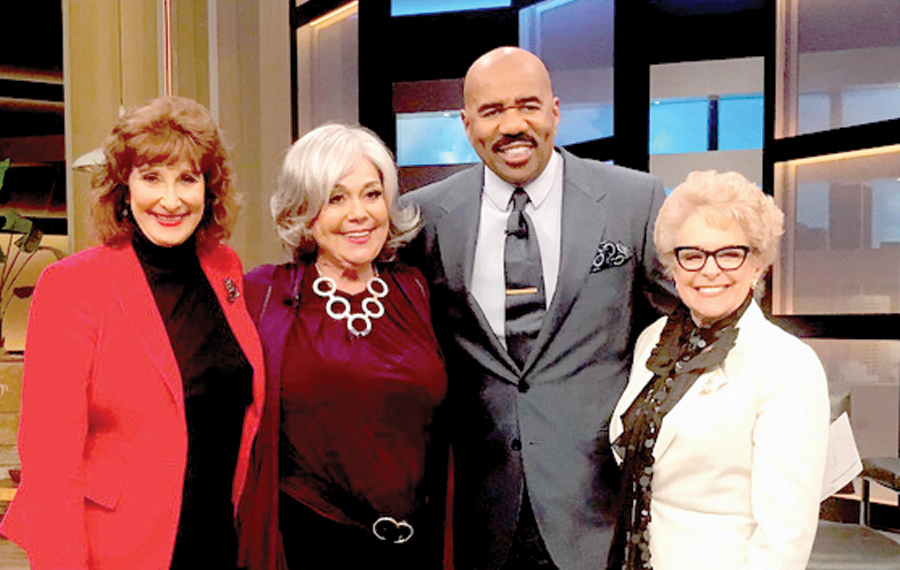
Indeed, despite the fact the show has been on the air less than three months, the bubbies have already appeared on many other programs, including “Access Hollywood Live” “Daily Blast Live” “The Steve Harvey Show” “The List” and “TMZ Live.”
“People oftentimes ask me where I get my wisdom from,” Rich said. “Along with the wisdom that comes with age, I have a mentor whom I have listened to for many, many years. I only recently found out that his wisdom came from the Torah.”
“Bubbies Know Best” airs on JLTV on Mondays at 8 p.m. In Los Angeles, JLTV is available on DirecTV Channel 366 and on Spectrum Channel 469.
Lisa Klug is a freelance journalist and the author of “Cool Jew” and “Hot Mamalah: The Ultimate Guide for Every Woman of the Tribe.”