fbpx

August 24, 2018

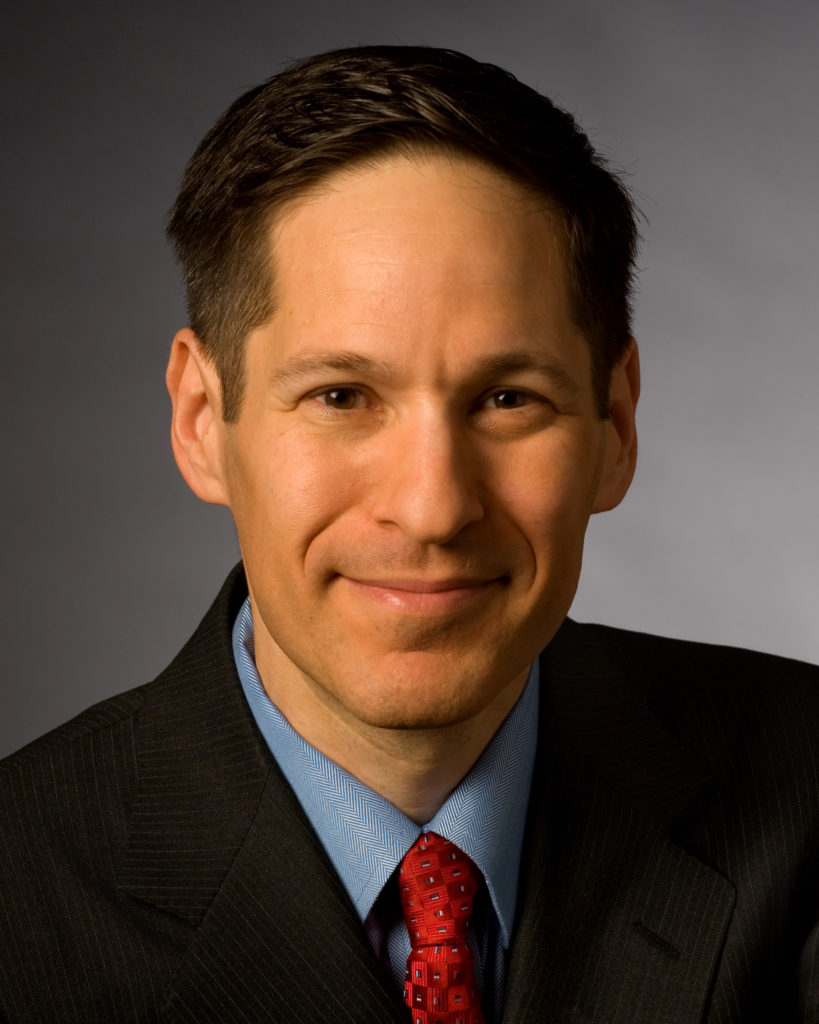
Former Obama CDC Director Arrested for Allegedly Groping Woman

Thomas Frieden, who ran the Centers for Disease Control (CDC) all eight years under President Obama, was arrested on August 24 for allegedly groping a woman’s buttocks in October 2017.

The woman, who has not been identified publicly, reported the alleged groping to police in July, claiming that Frieden squeezed her buttocks without her consent at his home. She added that Frieden apologized to her for it later and claimed that he was going through some personal issues.

Frieden turned himself in on August 24, facing charges of sexual abuse, harassment and forcible touching.

Frieden’s spokesperson told The Washington Post, “This allegation does not reflect Dr. Frieden’s public or private behavior or his values over a lifetime of service to improve health around the world.”

As CDC director, Frieden had to deal with outbreaks of H1N1 swine flu, Ebola and the Zika virus. Prior to becoming CDC director, Frieden was New York’s public health commissioner from 2002-2009, where he implemented bans on trans fats, smoking in workplaces and a program to clamp down on tuberculosis.

Frieden currently runs an organization called Resolve to Save Lives, which does work to help citizens in poorer countries from suffering a heart attack or stroke.

Former Obama CDC Director Arrested for Allegedly Groping Woman Read More »

Azerbaijan’s model of interreligious harmony and multiculturalism showcased in a historic visit to California

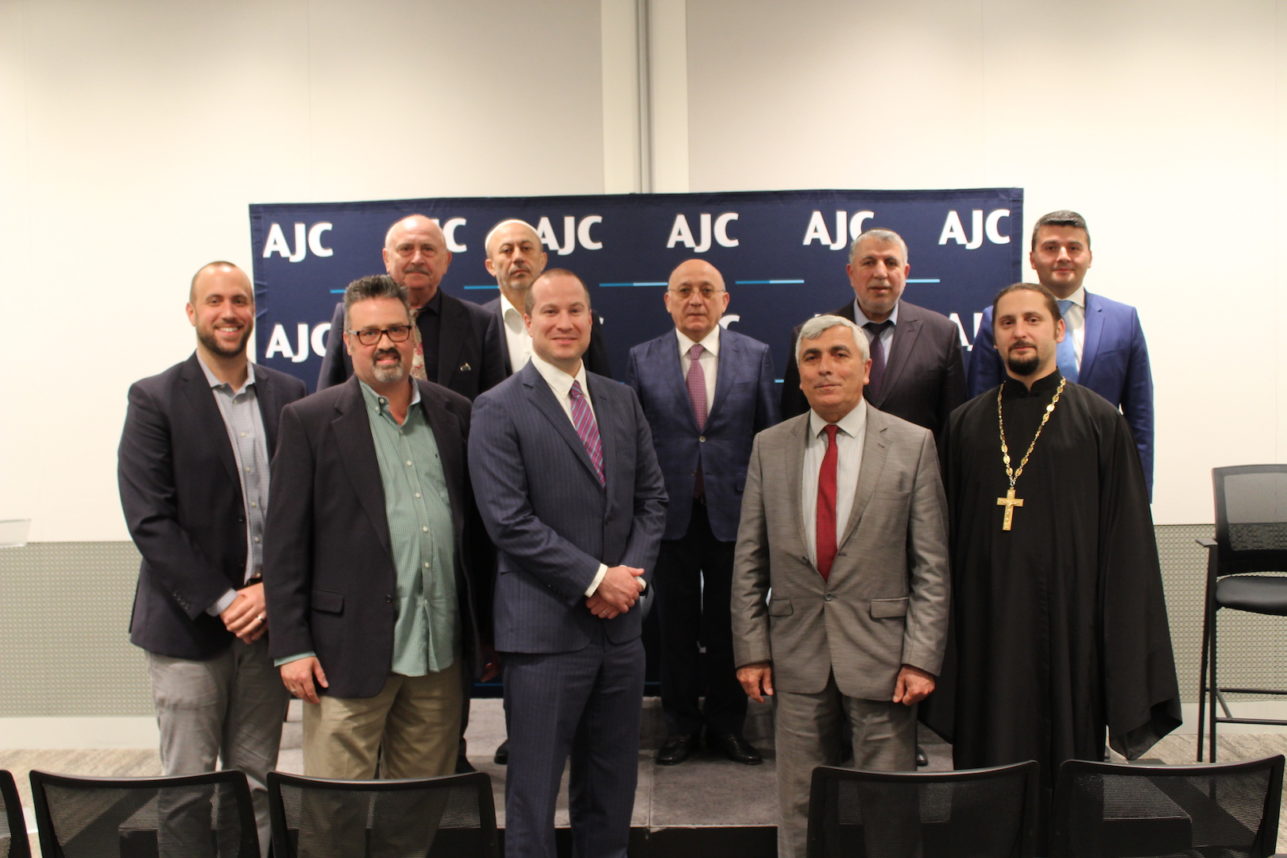
Multifaith delegation from Azerbaijan together with Azerbaijan's Consul General Nasimi Aghayev, AJC-San Francisco regional director Matt Kahn and Rev. Will McGarvey at the Commonwealth Club in San Francisco
Multifaith delegation from Azerbaijan together with Azerbaijan’s Consul General Nasimi Aghayev, AJC-San Francisco regional director Matt Kahn and Rev. Will McGarvey at the Commonwealth Club in San Francisco


I have visited California several times. I always remember my visits with great joy, especially the one in 2015, when we received and celebrated the gift of a beautiful new Sefer Torah from the Sinai Temple of Los Angeles for our Mountain Jewish Synagogue in Baku. In my recent visit to Los Angeles and San Francisco, in May 2018, I was part of a multifaith delegation from Azerbaijan. The delegation was led by Mr. Mubariz Gurbanli, the Chairman of the State Committee for Work with Religious Organizations (SCWRO) of the Republic of Azerbaijan, and included also the leaders of Muslim, European Jewish, Christian Orthodox, and Albanian-Udi Christian communities of Azerbaijan. Our purpose was to share Azerbaijan’s unique model of multiculturalism and interreligious harmony and tolerance, and talk about the possibility of lasting peace and understanding among religions.

Our visit was organized jointly by the American Jewish Committee’s (AJC) Los Angeles and San Francisco regional offices in strong cooperation with Azerbaijan’s Los Angeles Consul General Nasimi Aghayev. AJC and Azerbaijan have been enjoying a very special relationship since almost two decades. AJC national delegations, led by its CEO David Harris, have been visiting Azerbaijan annually for the past eleven years, and actually Azerbaijan is one of the few countries on AJC’s annual visit calendar. During this year’s visit Mr. Harris said the following: “Azerbaijan continues to be a very significant partner for both the U.S. and Israel. Baku’s contributions in many spheres are increasingly vital in today’s turbulent world, although, frankly speaking, not as well-known and recognized as they should be. In a key region of the world, where the United States has few reliable friends, Azerbaijan, a secular, Shiite-majority country, stands out. And for Israel, believe me, the bilateral relationship is no less important. Moreover, it is inspiring to see the record of respect for the Jewish community – and the striking absence of anti-Semitism – in a land Jews have called home for over 2,000 years.” As an Azerbaijani Jew, I couldn’t agree more. We are much appreciative of AJC’s friendship, and of the efforts by its California regional offices in organizing this historic visit. I would like to specially thank Roslyn Warren, Saba Soomekh and Siamak Kordestani of AJC-Los Angeles, and Matt Kahn, Serena Eisenberg and Eran Hazary of AJC-San Francisco.

During the visit we were honored to meet the Archbishop of Los Angeles and Vice President of the U.S. Conference of Catholic Bishops José H. Gomez, Chair of the Los Angeles County Board of Supervisors Sheila Kuehl, Jewish Journal Publisher and Editor-in-Chief David Suissa, Los Angeles leaders of the American Israel Public Affairs Committee (AIPAC), Dean of the world-famous Simon Wiesenthal Center Rabbi Marvin Hier, Member of the San Francisco Board of Supervisors Norman Yee and California State Senator Jerry Hill. We also visited several synagogues and churches, including Sinai Temple in Los Angeles and Presidio Chapel, Grace Cathedral and Sherith Israel Synagogue in San Francisco, as well as the Museum of Tolerance in Los Angeles. Moreover, two well-attended public events dedicated to Azerbaijan’s multifaith harmony were held – one at the Sinai Temple of Los Angeles (ably moderated by Rabbi Erez Sherman) and the other at the Commonwealth Club in San Francisco.

At these meetings and events we highlighted the ancient traditions of tolerance and multiculturalism in Azerbaijan. We informed the audiences about how people of different ethnic and religious backgrounds, including Muslims, Orthodox Christians, Catholics, Protestants, Jews and representatives of other faiths, such as Zoroastrians, Baha’is, Hare Krishnas and others, have been living together in peace, brotherhood and mutual respect for many centuries in Azerbaijan, a predominantly Shiite Muslim country. There has always been a strong relationship between ethnic and religious communities in the country and ethnic, religious or racial discrimination has never existed in Azerbaijan. I often was asked: “What is the essence, the core of Azerbaijan’s model of tolerance and how Azerbaijan has achieved it?” There is only one answer to it: Tolerance and multiculturalism has been the lifestyle of the people of Azerbaijan for many centuries. It has very solid foundations, rich traditions and deep historical and cultural roots.

Today there are 31 non-Muslim religious communities officially registered in Azerbaijan. Moreover, seven synagogues, one museum-synagogue that is under construction, two Jewish elementary schools, three kindergartens, one Yeshiva and fourteen churches are operating in my country. Azerbaijan may be a small country but it has made enormous effort towards maintaining and strengthening the harmony, mutual understanding and peace among religions, making the world a better place. I hope many other countries in the wider region will follow Azerbaijan’s suit.

I live in a country where the government of a majority-Muslim nation builds and rebuilds synagogues, renovates churches, and annually allocates financial support to different religious communities. I live in a country where a Muslim philanthropist funds the construction and renovation of churches. This country is the majority-Muslim Azerbaijan, and I am proud to be its citizen.

Thank you, California, for warmly welcoming and embracing us. See you next time!

Azerbaijan’s model of interreligious harmony and multiculturalism showcased in a historic visit to California Read More »

Addressing the Emotional Pain of Infertility

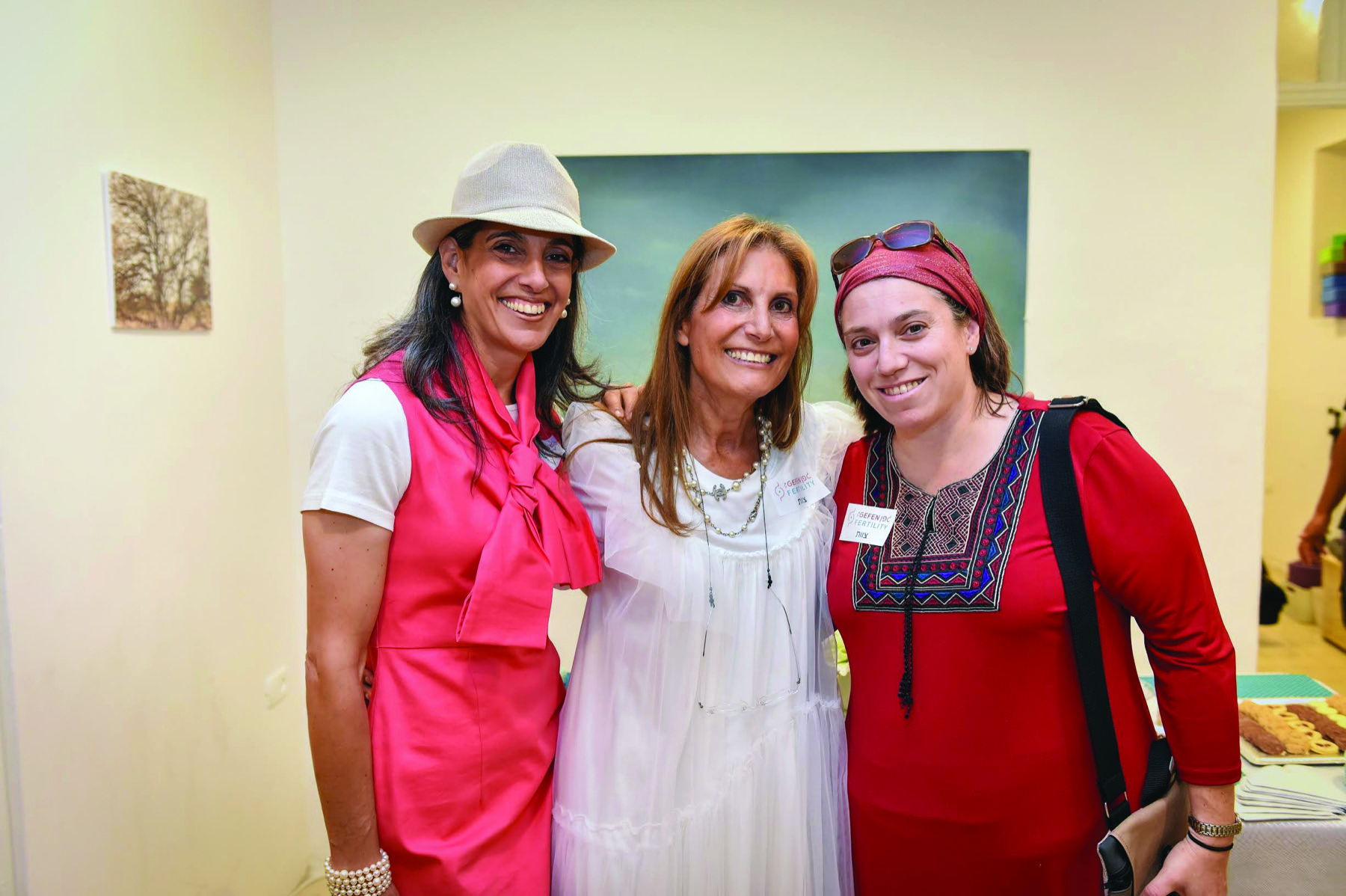
Kady Harari (far left), Dr. Karen Friedman and Dr. Jordana Heyman, Gefen Medical adviser

“When a woman wants a child, she wants it with every fiber of her being. It’s a very primal desire.”

Those were just a sampling of the emotionally laden words used by Karen Friedman, the founding director of Gefen Fertility in Jerusalem, during a recent fundraiser for the organization in Beverly Hills.

Gefen Fertility offers a slate of mindfulness-based psychological and emotional support services for women trying to conceive. The much-needed services are a response to women who struggle and fail to get pregnant, month after month, and who may be left feeling gut-punched and depressed, immobilized by the fear that they may never conceive.

In family-centric Israel, fertility challenges can also be a major source of social isolation. Israel’s fertility rate is 3.11 children per mother, the highest of any country in the Organization for Economic Co-operation and Development, a nonprofit whose 36 member countries include the United States, France, Germany and Australia. The average fertility rate across OECD countries is 1.7 children per mother.

Unlike in the U.S., where a single round of in vitro fertilization (IVF) to help a woman conceive can cost tens of thousands of dollars, the procedure is practically free in Israel until a woman is 44. Free treatment might sound great, but it also means a woman might try IVF numerous times, all without any psychological support to emotionally sustain her through the process. “That causes a huge amount of stress for a woman, and stress itself can negatively impact fertility,” Friedman said.

Friedman, 59, who was raised in Beverly Hills and attended Beverly Hills High, moved to Israel in 1988 after receiving her doctorate from Harvard in counseling psychology. 

A mother of eight, Friedman recalls how, after she had her sixth child, her mother called from Los Angeles and demanded, “What are you doing for your community?”

“I’m raising a community!” she responded.

While that might seem like a strange demand from most mothers, Friedman’s mother is Jean Friedman, founder of the Los Angeles Zimmer Children’s Museum. Her father, Jerry, started Shalhevet High School. 

“My parents showed me that finding yourself means finding a way to make change in your community,” Friedman said. “My whole life I was programmed to start something, raised with the idea that self-actualization comes when you find what you can give to your community, [how you can perform] tikkun olam. Where can you make a change?”

That change for Friedman began when she tried to have her seventh child and had trouble conceiving. She met many other women who were also struggling. “One in eight couples suffer from infertility. They are all around us,” she said. 

Friedman said that was when she “made a deal with the one above,” that if she had another child, she’d devote herself to helping others do the same. In 2010, she had not just one child, but twins — who, incidentally, joined her in Los Angeles for the fundraising event. 

She kept her promise and, in 2013, launched the Rimon Center at Hadassah Hospital-Mount Scopus in Jerusalem to support couples undergoing IVF there. Then, in 2014, she opened the Gefen Center in Jerusalem’s German Colony. Friedman continues to run both centers, together with Kady Harari, a yoga therapist, who oversees the yoga fertility program.

The program helps with stress reduction, which has been shown in studies to improve fertility rates by as much as 30 percent. “The supposition, ‘I’m never going to get pregnant!’ raises stress,” Friedman said. “When you teach people to challenge their negative thoughts, that can lower stress and depression.”

Both locations offer a range of services, including mindfulness-based cognitive behavioral therapy, yoga, workshops on modern methods of fertility preservation, text study of women in Jewish history who coped with the desire for motherhood, and the process and psychology of using an egg donor. Some programs include an expressive writing component. Some are geared toward specific populations, such as Charedi women.

The programs are organized into 10-week sessions, giving women continuity when facing the marathon of fertility interventions. People also drop by for acupuncture, reflexology or to sit in the courtyard and have a coffee. 

“What’s great about Gefen is the synergy,” Friedman said. “Someone might go to a yoga session, and then [after feeling the benefits] say, ‘Oh, I’m going to try mind-body therapy.’”

All of the programming aims to help women stay connected to themselves as whole people, remembering the many positive, successful aspects of their lives beyond fertility challenges. It also helps with stress reduction, which has been shown in studies to improve fertility rates by as much as 30 percent. “The supposition, ‘I’m never going to get pregnant!’ raises stress,” Friedman said. “When you teach people to challenge their negative thoughts, that can lower stress and depression.”

Gefen Fertility recently began a partnership with Nishmat, a center for advanced Torah study for women in Jerusalem, to train a cadre of experienced female advisers in Jewish law to become fertility counselors. The training includes meeting with IVF doctors, rabbis and psychologists who specialize in fertility.

Friedman volunteers her time at Gefen Fertility and has a paid staff of about 15. Services for women are free or “close to free,” she said, and no one is turned away due to economic hardship. 

Many local Jewish community philanthropists helped Friedman to establish the center, including Stanley Black, Judah Hertz, Marilyn Ziering and the Gindi family. Friedman is currently seeking donations to expand Gefen’s offerings to more women. “Every time we start something new,” she said, “we have more demand.”


Wendy Paris is a writer in Los Angeles. 

Addressing the Emotional Pain of Infertility Read More »

Prepko: The Kosher Version of Blue Apron

The at-home meal kit industry is experiencing a booming market. Companies including HelloFresh, Blue Apron, Sun Basket, Plated and Green Chef are just a few of the organizations that send customers ingredients and recipes to make high-quality meals at home. Now, Simon Meron, a Moroccan Jew based in Los Angeles, is delivering kosher at-home meal kits to Western U.S. customers, based on the same model.

Meron launched his company Prepko, which is short for PrepKosher, in December. Eight months later, he has hundreds of weekly subscribers in California, Arizona and Nevada. The company offers a mix of traditional Jewish foods and modern recipes, including Shabbat meals. All the meals follow kashrut laws and are certified by the Rabbinical Council of California (RCC).  

“We’re reaching areas where they have zero kosher products available and they usually have to stock up or do a weekly large order of food and freeze everything,” Meron said in a phone interview. “You can have it on a weekly basis or just try it out. It’s really flexible.” 

Prepko customers can choose from a variety of plans, ranging from $72 per week for two meals for two people, up to $204 for four meals. The Shabbat box meal plans also contain a sheet printed with the Shabbat meal blessings, as well as a kippah, grape juice and challot. They range from $80 for four people to $200 for 10 people. 

Most customers are millennials and families, Meron said. In fact, Meron recently teamed up with OneTable, an organization that promotes Friday night dinners for millennials, to supply it with his Shabbat boxes.

Prepko offers gluten-free options as well as kid-friendly and healthier recipes. The meal kits are delivered Tuesdays, Wednesdays and Thursdays, and each box includes step-by-step recipes with photos. Everything is packaged and sent from the company’s headquarters in Glendale.

Alexis Arbeit, a Prepko customer who lives in Santa Clara, said, “It’s harder to find kosher options for meats at the grocery stores where I live. Using Prepko saves me time and energy by avoiding the drive across town to buy kosher.”

 “I hope to reach anyone who wants to cook a kosher meal and have a cool experience doing it.” —Simon Meron

Meron said he believes he stands apart from other kosher food suppliers because he places an emphasis on nontraditional foods, such as Korean, Japanese, Indian, Polish, Romanian and Italian dishes. “You can really develop your food palate and experience kosher food in a different way,” he said.

Prepko subscriber Jason Eisner said his favorite meal is the shakshuka (a Middle Eastern dish of eggs and tomatoes) because it’s tasty and easy to make. “I wanted to start eating healthier and more economically, but [didn’t want to] have to spend too much time thinking about what to cook or what ingredients I would need to buy, and then having most of them go to waste,” he said. “I wanted something like Blue Apron, and Prepko is the kosher Blue Apron.”

Looking forward, Meron said he wants to expand Prepko to Colorado, Washington and Oregon, as well provide meal kits for the High Holy Days and Passover. Eventually, he hopes to be everywhere. “I hope to reach anyone who wants to cook a kosher meal,” he said, “and have a cool experience doing it.”

Prepko: The Kosher Version of Blue Apron Read More »

ADL Briefing Addresses Rise in Security Threats

For the past 18 years, Mark Canole, director of security and safety at the Skirball Cultural Center, has been busy. And this past year has been one of his busiest.

In August 2017, the Center received a robocall bomb threat. A few months later, Patriot Front, a far-right hate group, hung banners from the 405 freeway overpass at the Skirball exit, displaying white supremacist messages including, “Resurrection through Insurrection” and links to the group’s website, bloodandsoil.org. “Blood and soil” is a Nazi Germany reference to those with pure Aryan blood. 

More banner incidents followed earlier this year.

The uptick in threatening activity has put Canole, a retired military police officer who trains local law enforcement in homeland security tactics, on edge. 

“[Patriot Front] has been active on the UCLA campus nearby too, and it’s a big problem with them focusing up here on the hill with so many Jewish institutions in the area,” Canole told the Journal at the Anti-Defamation League (ADL) offices in Century City. 

Canole, along with representatives from over 20 Los Angeles Jewish institutions, convened at the local ADL offices on Aug. 15 for the organization’s annual security briefing. ADL officials hold the meeting ahead of the High Holy Days to share best practices and provide regional security updates. The session was also open to non-Jewish community members and ADL supporters.

Each attendee was given a mound of paperwork, including sheets on: “Security Recommendations For the High Holidays,” “What Every Congregant Should Know About Security” and “18 Best Practices for Jewish Institutional Security.” The pile also included “Charlottesville: One Year Later,” the ADL’s six-page report on the state of far-right extremism in America since the “Unite the Right” rally in Charlottesville, Va, led by torch-wielding neo-Nazis in August 2017.  

Joanna Mendelson, senior investigative researcher and director of special projects for the ADL’s Center on Extremism, delivered a presentation outlining details of the report.

With her “Jeopardy Board of Hate” — a chart of extremist groups — Mendelson walked through the groups’ distinctive ideologies and just how close to home certain threats are. California has the second-largest racist skinhead population in the country, trailing only Texas, she said.

“I’ve been doing this work for almost 20 years and there has never been more to do. Groups that have long been in the shadows, ones I would monitor online, are front and center stage, proud to bare their faces and ideology. — ADL’s Joanna Mendelson

Mendelson told of her recent experience taking her 6-year-old daughter to a Sherman Oaks park, where they encountered a skinhead with “88” tattooed on his head — a reference to “Heil Hitler.”

The scariest part, Mendelson said, is these groups appear to be picking up steam, even fielding openly anti-Semitic, virulently racist political candidates whose campaigns the ADL closely monitors. 

The ADL’s audit of anti-Semitic incidents, which includes everything from leafleting to vandalism to assault, determined there was a 57 percent increase from 2016 to 2017 — the largest year-to-year increase in a decade, and one of the biggest leaps since the ADL began the annual audits in 1979. 

“I’ve been doing this work for almost 20 years and there has never been more to do,” Mendelson said. “Groups that have long been in the shadows, ones I would monitor online, are front and center stage, proud to bare their faces and ideology.” 

The culmination of these tactics, Mendelson said, took place in Charlottesville last year. She noted that the more than 500 alt-right agitators comprising various groups put aside differences that have traditionally kept many of them from unifying in action. She singled out President Donald Trump and his public response to the tragic events. 

“The act of vocation after Charlottesville, that there’s ‘both sides,’ well, that rubber-stamps this behavior,” she said. 

A highlight of the morning was the visit via Skype from Rabbi Tom Gutherz and President Alan Zimmerman of Congregation Beth Israel, Charlottesville’s lone synagogue.  

Gutherz and Zimmerman recalled the frightening details of Aug. 11, 2017, with vivid detail. Situated a block away from Market Street Park, the violent rally’s epicenter, Beth Israel members found themselves after Shabbat services confronted with camouflage-clad, gun-toting men loitering out front and neo-Nazis marching by with “Heil Hitler” signs, chanting “Jews will not replace us.” 

“It’s a miracle nothing happened to anyone in our congregation,” Gutherz said.

After sharing lessons learned in the wake of the events in Charlottesville, Zimmerman closed by encouraging the attendees in the ADL office to lean on the strength of national Jewish networks for vital support. 

“The ADL has been very helpful to us. I also think, prior to last August, we weren’t part of any Jewish federation,” Zimmerman said. “Since then, the Richmond, Va., Jewish Federation has taken us under its wing, and with that has come a lot of support, which has helped in communicating to us potential threats and helping communicate with law enforcement. That’s not something that comes naturally to myself or the rabbi.”

After Gutherz and Zimmerman signed off, Mendelson fielded questions from attendees, including several inquiries into how the ADL deals with anti-Semitism permeating much of the boycott, divestment and sanctions (BDS) movement, particularly on college campuses.

“We work behind the scenes in many incidents because we want to empower the students to create solutions on their campuses,” she said. “It’s still a grave concern. BDS is nefarious in how they’re strategically trying to target and attack.”

Canole has witnessed the ADL’s work firsthand, thanks to a 15-year formal relationship with its Los Angeles staff, including Mendelson. 

“The ADL is great at making sure resources from the federal level are accessible to the local community,” Canole said. “To have that kind of horsepower in our backyard is a big deal. I go out of my way to email and meet with them regularly.”

ADL Briefing Addresses Rise in Security Threats Read More »

State Department Announces More Than $200 Million in Cuts to Palestinians

The State Department announced on August 24 that there are going to be more than $200 million in cuts from Palestinians in the West Bank and Gaza Strip.

The announcement states that the department reviewed the aid they are giving to Palestinians at the behest of President Trump and concluded that the millions of dollars will instead go to “high-priority projects elsewhere.”

“This decision takes into account the challenges the international community faces in providing assistance in Gaza, where Hamas control endangers the lives of Gaza’s citizens and degrades an already dire humanitarian and economic situation,” the statement reads.

https://twitter.com/NoahPollak/status/1033063778886328323

The Trump administration had initially planned to provide $251 million in funding to the Palestinians in 2018. According to the Washington Free Beacon, the decision to make the cuts came from the administration’s desire to “no longer enable the Palestinian Authority and those in the Hamas terrorist government to use aid dollars in their war against Israel.”

Hanan Ashrawi, a member of the Palestine Liberation Organization (PLO)’s executive committee, called the cuts “cheap political blackmail.”

“There is no glory in constantly bullying and punishing a people under occupation,” Ashrawi said. “The U.S. administration has already demonstrated meanness of spirit in its collusion with the Israeli occupation and its theft of land and resources; now it is exercising economic meanness by punishing the Palestinian victims of this occupation.”

According to the Anti-Defamation League (ADL), “The PLO was responsible for scores of acts of terrorism from its creation, resulting in the deaths of thousands of civilians.”

State Department Announces More Than $200 Million in Cuts to Palestinians Read More »

Life on the Gaza Border: Children Fear Balloons

Last Sunday, an Israeli mother visiting Los Angeles walked up to the bimah at Stephen Wise Temple carrying black balloons.

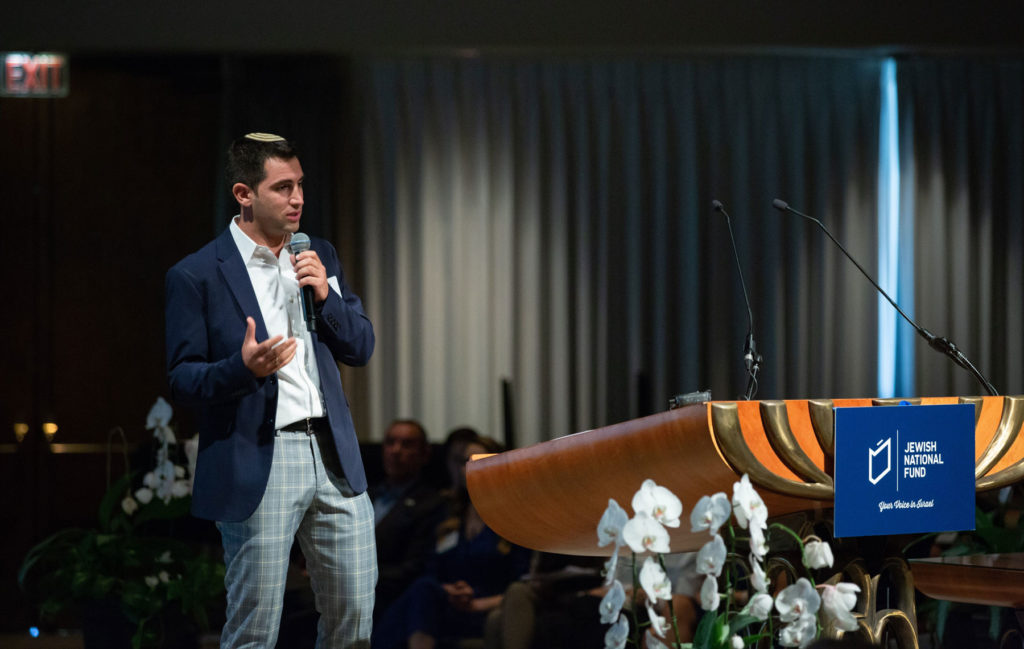
“In the last five months, these balloons, that are the symbol of hope and childhood and celebration and happiness, became the symbol of hell, the symbol of fear,” Michal Uziyahu told the approximately 200 attendees. “When our children see balloons today, they behave like it is a suspicious object.”

Uziyahu, the director of community centers for the Eshkol region, which shares some 65 kilometers of border with the Gaza Strip, was one of three Israelis who shared personal stories at the Aug. 19 event, “Gaza Border Crisis: The Trauma, The Damage, The Need,” organized by Jewish National Fund (JNF). The event was part of an 11-city speaking tour that runs through Aug. 30.

The speakers shared their stories about life along the Gaza border, where Palestinians living under Hamas rule in Gaza have launched incendiary kites and explosives balloons into Israel over the last few months, creating fires and destroying thousands of acres of Israeli land.

Yedidya Harush, a representative from the Halutza communities and the Gaza envelope region, also spoke of his daughter’s fear of balloons. 

A couple of weeks ago, Harush and his daughter were shopping in Jerusalem and saw a man selling balloons. Harush offered to buy her one but she declined. “She said, ‘Balloon is bad, balloon explodes, balloon can kill us.’ 

“And I want to tell you something,” Harush continued, “it is not easy for us. We have been going through a rough time, but we are strong. Our spirit is so strong that even when we cry, even we go through tough times, we know we are going to stay and grow.”

The third speaker was  21-year-old Sarit Khanoukaev, who was born and raised in Sderot, less than a mile from the Gaza border, in a community where children often play in indoor playgrounds that also house bomb shelters. “I live every day of my life in fear,” Khanoukaev said. She is afraid to take a shower with the door locked because after an air-raid siren goes off, she has only 15 seconds to get out of the shower, cover herself and reach the nearest bomb shelter. 

“Balloons, that are the symbol of hope and childhood and celebration and happiness, became the symbol of hell.”  — Michal Uziyahu

The incendiary kites and balloons are the latest weapons being used by Palestinians in the Gaza Strip, following a six-week sustained border protest that drew a forceful Israeli military response. Over 100 Palestinians, including Hamas terrorists, were killed. 

Speaking with the Journal prior to the Stephen Wise event, Uziyahu said while Israel’s military response drew criticism from the international community, most people outside the region don’t truly understand what is going on.

“We really feel that no one knows the stories of the Jewish communities that live along the border with Gaza,” she said. “The world is dealing with the suffering of the Palestinians and they don’t understand the complexities of this situation. We belong to communities that already for 20 years have lived under a constant emergency routine.”

Harush said the solution to educating people about what is happening along the Israel-Gaza border is for people to see it for themselves. “The best answer,” he said, “is come visit Israel, and it will change your life.” 

Speaking to attendees at the JNF event, Uziyahu struck an optimistic tone. “We have a wonderful life,” she said. “When my children wake up in the morning, they wake up with a smile. We focus on the 99 percent of our life, and our life is 99 percent heaven and 1 percent hell.”

Life on the Gaza Border: Children Fear Balloons Read More »

Mother Tongue

Return to me, my mother tongue —
the language of the seasons.
Fresh air fill my lungs
so I may speak the word of one.

A forgotten art — where do I start?
There’s no dictionary to my heart;
no google translate for the thunder;
no way to define such cosmic wonder.

Wrapped up in a mechanical muse
we’ve turned our hearts to the daily news.
Oh, mother help us listen for you;
to consider your point of view.

She said that there’s a holy book in the clouds.
That the sequel’s written in the ground.
A lost language waiting to be found;
call of the wild, just look around.

And one day we’ll all speak that language:
written by the wind and olive branches.
The world will be, oh, so wordless;
we’ll keep the peace with our silence.


Hannah Arin is a junior at Pitzer College pursuing a double major in religious studies and philosophy.

Mother Tongue Read More »

On Getting up From Shloshim

There is a folk saying in the Talmud: “Tzedakah saves one from death.” I always thought of it as wishful thinking or superstition. But now I know it is true. My husband, Richard Siegel, died at the beginning of the month of Av, a month associated with tragedy. I went to the weekday morning minyan at Temple Beth Am to say Kaddish. The formal period of mourning for a spouse is 30 days. It ended at the beginning of Elul. 

There is a custom in a morning minyan that one puts tzedakah, a few dollars, in a pushke that is passed around. One morning, as I searched in my purse for the dollar, I suddenly realized that tzedakah really does save from death. It doesn’t save the people we love from dying; everyone dies. But tzedakah, and the community that comes together around it, saves the one who is mourning from a living death, a heaviness that makes life seem unbearable. 

Richard’s contributions to transforming Jewish life through the Jewish Catalog, Havurat Shalom, the National Foundation for Jewish Culture, Hebrew Union College’s Zelikow School of Jewish Nonprofit Management, and his latest project, ChaiVIllageLA, were all celebrated in many different articles in the Jewish press. My wonderful community at Temple Emanuel of Beverly Hills surrounded me and my family with love and attention, taking care of every detail of the funeral and the shivah. It was overwhelming and very public. I am so very grateful for the outpouring of love.

I am also grateful to that minyan at Beth Am for giving me a more intimate place to mourn. We comfort mourners with the words “Ha Makom yinachem etchem b’toch shaar avlei Zion v’Yeshalyaim” (May God comfort you along with all the other mourners of Zion and Israel). The name of God that is used is Ha Makom (The Place). The minyan was a place made holy through the other people who were part of it, many of whom came to the minyan years earlier when they themselves were mourners. I didn’t know most of the others; most didn’t know my husband. I was anonymous and yet seen. I was counted and yet it was private. No one seemed frightened by my tears. I was given the room to feel what I was feeling, to move through the liturgy (or not) at my own pace. 

In all honesty, the liturgy of the morning service didn’t move me. But some of the images that jumped out at me did: that while there might be tears in the evening, the morning could bring joy; that even from a narrow place I could call out for a vision of expansiveness; that each day has its own psalm just as each day brought a different experience of mourning, “today and every day.” That the Shema is surrounded by images of love — how God loves us and how we show God our love , an insight that invited me to think about the ways Rich showed me his love and some of the ways I had shown him mine. Those memories brought me comfort, as did the 20 minutes it took to drive to the minyan, the half-hour service and the 20 minutes getting home, which seemed to be times I was spending with him.

It is hard to believe that a month has passed, from Av, a month of sadness, to Elul, a month that begins the journey to a new year. That journey for me was eased because of that morning minyan, that sacred Makom. For that I am very grateful.

Tzedakah saves one from death. Perhaps that is also why we often welcome contributions in the memory of someone who has died. Our family is grateful for the many contributions to three of the organizations that meant so much to him: chaivillagela.org, Bend the Arc and IRAC, the Israel Religious Action Center. 

His memory is a blessing.


Rabbi Laura Geller is Rabbi Emerita of Temple Emanuel in Beverly Hills.

On Getting up From Shloshim Read More »