

fbpx

August 10, 2018

A Woman of a Certain Age: My Own #MeToo

Women of a certain age. We know what the term implies, but it doesn’t really begin to convey what it has meant about how we have traveled through life, both personally and professionally.  

I am a woman of a certain age. I went to a co-ed public high school and a women’s college where we socialized with our counterparts from male single-gender schools. I worked on Wall Street in the late ’70s and through the ’80s. My husband and I raised two daughters. I went to law school in my mid-40s and began to practice federal criminal defense at 50. 

What’s the significance of my CV? The recent reawakening of the women’s movement has caused me to reflect on what I have benefited from, normalized and, yes, endured. All of the #MeToo revelations have prompted me to recall what I have clearly remembered over the years, and also what I’ve repressed.

I do not exaggerate when I say I was sexually assaulted in high school and college. But in the 1970s, there was no support system to report and bring perpetrators to justice. There was only victimhood for girls and women. When I worked on Wall Street, I endured daily sexual taunts, innuendos, harassment and constant verbal abuse. A few clients I thought I could trust actually tried to physically force themselves on me. In today’s climate, it is fair to ask if I reported any of these incidents. The answer: rarely. The one time I went to my boss to tell him that a client had physically attacked me, I was removed from that lucrative account and my income suffered as a consequence.

Yet, despite all of this, I loved working on Wall Street: the daily adrenaline rush, the action, building relationships with decent and smart clients. There were so many brilliant and exciting people to learn from. I knew that if I reported any more of these comments, events or assaults, I would be viewed as trouble. Or fired. There were very few women on the trading floor of major Wall Street firms, and being able to play with “the boys” was the test for survival. 

During my years on Wall Street, there were times when I was exhilarated at the end of the day, and there were evenings I would come home and cry. I rationalized that if I wanted to work in the heretofore male arena of a trading floor, I had to put up with all of the harassment. After almost 10 years, for a variety of personal reasons, I left Wall Street. Enduring the daily indignities of the trading room did finally burn me out. 

When I started to practice law, I was more mature and generally tougher. Or so I thought. My very first day in court, in front of a federal judge, I nervously asked him my first question. Before he got to the substance of the question, the judge said to me, dressed for court in blue pants and a pea green blazer, “And, Ms. Smith, what do you think you’re dressed for, a Park Avenue bridge club?” In front of the jury. 

I do not exaggerate when I say I was sexually assaulted in high school and college. But in the 1970s, there was no support system to report and bring perpetrators to justice. There was only victimhood for girls and women. 

Now, as I reflect on the moment that we are experiencing, I’m grateful for the changes we have seen and filled with optimism for the changes yet to come. My mother’s generation (with notable exceptions, such as Supreme Court Justice Ruth Bader Ginsburg) did not generally dream about equality. My generation was the beneficiary of the activists of the women’s movement: women’s liberation, bra burning, political access and equal employment. We dreamed and we made progress, but not enough. We still suffered from harassment, received lower pay than our male counterparts, suffered discrimination when we opted to have children and rarely made it to the C-Suite. I’d like to think that in the moment of #MeToo, my daughters’ generation will fully benefit from needed changes so that women will at last be respected as equals, paid fairly, not treated as sexual objects and not suffer discrimination. 

The Jewish community is no different than the rest of the world. Sadly, as has been recounted with alarming detail lately, we have abusers among us and we have far too few women in positions of leadership and power. This year, the Genesis Prize Foundation is proud to be an agent of change by focusing our philanthropy on women’s issues in Israel and in the North American Jewish community. Our Genesis Prize Women’s Empowerment Challenge, managed by Jewish Funders Network, is offering matching grants to organizations committed to making systemic change in four targeted areas in Jewish workspaces and communal spaces in North America. We invite organizations and donors to join us in making a difference. 

It’s time to work together, take action and make changes so that no woman in the Jewish community will have to endure what our mothers — or those of us of a certain age — did. My daughters and my granddaughter deserve better.


Jill Weber Smith is Senior Advisor to the Chairman of the Genesis Prize Foundation. 

A Woman of a Certain Age: My Own #MeToo Read More »

Two Palestinians Dead in Gaza Riots

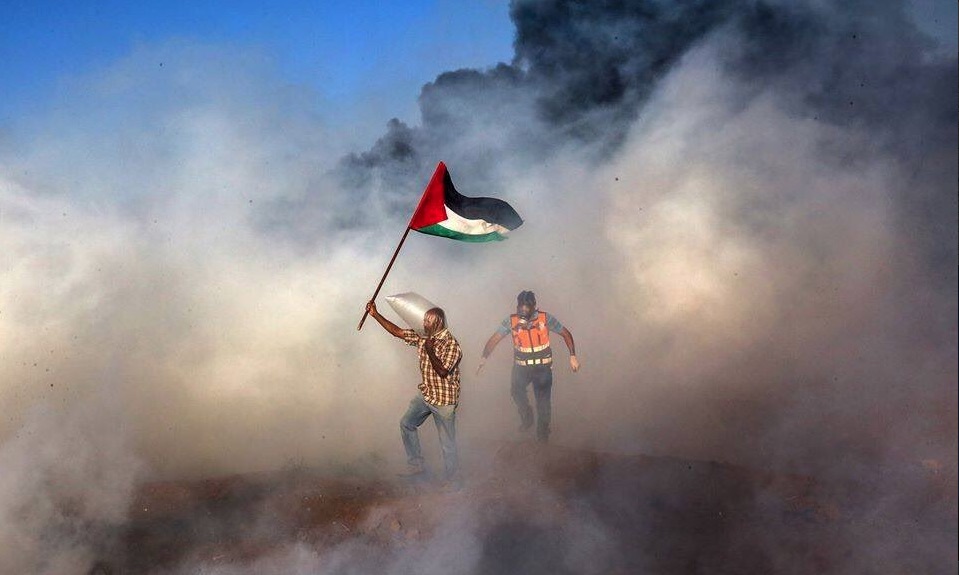
August 10 marks the 20th week of the weekly Hamas-led riots at the Israel-Gaza border, prompting a riot that has so far resulted in two Palestinians dead and more than 300 are injured, according to Palestinian media.

According to the Israel Defense Force (IDF), there were 9,000 Palestinians rioting and hurling projectiles at IDF soldiers, as well as attempting to breach the Israel-Gaza fence:

Per usual, the riots featured Palestinians launching fiery kites into Israel, according to the Times of Israel (TOI).

The Jerusalem Post reports that the rioter who attempted to breach the fence “immediately backtracked into the Gaza Strip. According to TOI, Hamas’ Gaza Health Ministry is claiming that one of the dead Palestinians was a 25-year-old journalist.

The riots began in March and was dubbed by Hamas as a “March of Return” to protest Israel and to bring attention to the Palestinian cause. But Hamas’ intentions seem to be more sinister than that.

“The march has two distinct strategies,” the Anti-Defamation League’s (ADL) website states. “The first, through the outwardly peaceful, civilian elements of the demonstration, is to raise international awareness of the plight of Gazans and Palestinians. The second, through the militants who are attempting to approach and attack the border line, is to use the demonstrators as human shields for the group’s terrorist ambitions, as well as to provoke a strong Israeli response that will garner headlines and support for their efforts.”

Iran, a Hamas ally, is also reportedly funding the riots.

Hamas has vowed to continue to incite such riots, even as they are claiming there is a ceasefire between them and Israel.

Two Palestinians Dead in Gaza Riots Read More »

Table for Five: Parshat Re’eh

Weekly Parsha: One Verse, Five Voices
Edited by Salvador Litvak, The Accidental Talmudist

But you must not partake of the blood; you shall pour it out on the ground like water.  – Deut. 12:16

Rabbi Elliot Dorff
American Jewish University
To obey this law, Jewish law requires us to salt and soak meat, or broil it, to remove the blood from it, and liver must be broiled because it has too much blood to be removed by the salt-and-soak method.   

Why the ban on eating blood? Animal life is distinct from plant life in that animals move on their own accord, and blood is the part of our bodies that moves the most. It is not surprising, then, that when this prohibition is repeated later in this chapter, the reason given is that blood is the sign of life (Deuteronomy 12:23).  We remove the blood from meat, then, to distance ourselves from taking a life as much as possible in the process of eating meat — and some of us become vegetarians altogether in respect for animal life. In fact, the Talmud (Hullin 84a) says that it is ethical to eat meat only if you have a great desire for it and slaughter the animal yourself so that you see its blood and, with it, its life oozing out of it.

Saving a life takes precedence in Jewish law over the dietary laws, and so blood transfusions are permitted. Moreover, this verse specifically bans eating blood, not inserting blood in other ways. Although some disagree, my own rabbinic ruling uses the same distinction to assert that artificial nutrition and hydration may be withheld or withdrawn when that is in the best interest of the patient, for that is not eating in the usual way.  

Rabbi Tzvi Freeman
Senior Editor, Chabad.org
We all have our addictions. It could be alcohol or anger, power or pornography, self-absorption or self-incrimination — any repetitive, self-destructive behavior. The nastiest addictions are those passed epigenetically over the generations. 

It’s in your blood. 

You can’t imagine yourself free of its clasp. Like the next generation after the Exodus. With them, it literally was a blood addiction. As Nachmanides explains, 40 years had passed and they were still drinking raw, animal blood as their parents had done in the magical rites of Egypt. Ben Zoma points out that we are naturally disgusted by blood. That’s the thing about addictions — the addict loathes it, and he loathes himself for doing it. But he can’t stop. 

Seven times the Torah has to heed them to quit. The seventh time, Moses says, “Be strong. Be a master over yourself. Take that blood and spill it on the ground like water.” That is the way to become master over that boiling fury, that blood that curdles inside — by pouring that bloody beast inside you like water upon the lowly earth. 

It takes strength to face up to your addictions. It takes courage to humble yourself and admit you need help, to surrender to a higher power. But with that strength of humility, you have changed not only your own life, but the course of a river that has flowed for generations. And you have opened up a new future, for yourself and for your children, and their children.

Professor Tova Hartman
Ono Academic College, Israel
This very graphic prohibition introduces us to what will later be called laws of kashrut. Two chapters later, Deuteronomy (14:21) enumerates which animals may and may not be eaten, and famously notes, for the third time in the Torah, “You shall not boil a kid in its mother’s milk.” For some, kashrut is a wonderful way of saying that we must always be conscious of God as creator. Kashrut can represent ethical values, not cruelly cooking a kid in its mother’s milk, not eating the blood that contained the life force of the animal, not tearing a limb from a live animal. As a whole, these laws force a certain respect for the living beings around us.

But kashrut has become a point of contention. People do not eat at one another’s houses and don’t trust others enough to allow food cooked at home to be brought into our synagogues. We have obsessive-compulsive disorder concerning kashrut, with new stringencies appearing each year. We have forgotten the value of trust that my late father taught by example: If anyone invited him for a meal, he assumed that the house was kosher. This is how he helped create community.

Kashrut should join us together rather than separate us. It should foster community. This is emphasized two verses after the blood prohibition, which notes that celebrations must take place “together with your son and your daughter, your male and female slaves, and the Levites resident in your towns,” and that only such inclusive celebrations foster, as that verse notes, “rejoicing before the Lord.”


Rabbi Nicole Guzik
Sinai Temple
There is clearly a right and wrong way of expressing an apology.

So many of us experience the latter. A mistake is made and the following dialogue is used: I am so sorry that you feel this way. As if the anguished party is at fault for feeling anguished. While we seem to understand that expressing our wrongdoing is the “right” thing to do, there is disconnect between knowing and admitting that we just fell short. 

Our Torah portion delineates the proper way one offers a sacrifice to God. Where the sacrifice should be offered and which parts of the animal may be gifted. Perhaps the idea is not every offering we make to God or another individual should be accepted. While it runs contrary to the notion, “Don’t look a gift horse in its mouth”, a half-hearted expression of gratitude or remorse is often worse than not offering anything at all. 

Our faith emphasizes the alignment of apology with genuine heart. The Talmud speaks about the person who makes a mistake and attempts to repent but doesn’t repent with proper intention. That person is compared to someone immersing within a mikvah, the purifying water rushing around him, as he holds something impure within his hands. In other words, no amount of apologizing or ritual immersion will purify someone’s soul if the intent doesn’t match the deed. 

When we fall short, as we all do, let our hearts align with our words, making our offerings acceptable, welcomed and praised. 

Salvador Litvak
AccidentalTalmudist.org
Pour it out on the ground like water? This commandment about eating meat was given to a people who spent 40 years wandering in the desert. More than once they suffered profound water insecurity. They did not plant crops, or even gardens. If they had to pour water out on the ground, they did so reluctantly, like Southern Californians.

Eating meat was also a rare event in the desert, permitted only in connection with a sacrificial peace offering. Some of the animal went up on the altar, the rest to the owner’s table. The people who ate of that animal saw its slaughter. They watched its blood and life depart from its body. They smelled its roasting, knowing it was a “pleasing aroma to God.” 

When they finally took a bite, they were grateful and moved by the experience. Can we say the same? Meat has become a Styrofoam-packaged substance with no meaningful connection to the life that once imbued it.

For years, I have been trying to organize a communal experience in which we encounter a living sheep or a goat that we plan to eat. We feel its pulse and look into its eyes. We recognize that it’s a gift from God. We watch the shochet perform kosher slaughter. We cut up the permitted parts. We donate the rest. We cook, we bless and we eat. Only then will we grasp the significance of eating meat, and the depth of this commandment.

Table for Five: Parshat Re’eh Read More »

Gal Gadot Gets Animated in ‘Wreck-It Ralph’ Sequel

In her latest role, Gal Gadot will be heard but not seen. The Israeli actress will voice the role of a street racer named Shank in “Ralph Breaks the Internet,” a sequel to the 2012 animated Disney feature “Wreck-It Ralph.”

“Shank is amazing at driving cars and has this bad-girl vibe to her. But as the movie goes on you realize how fun, wise and warm she really is on the inside, which is what I like most about her,” Gadot said in a statement released by Disney. The movie, starring the voices of Sarah Silverman, John C. Reilly, and Jane Lynch, will be released Nov. 21.

Gadot tweeted, “I’m so excited to finally announce that I am playing a character named Shank in Disney’s #RalphBreaksTheInternet hitting theaters this November! Such an amazing experience to be apart of this project with such great creators and cast! Welcome to Slaughter Race!”

She’s currently filming “Wonder Woman 1984” and will star alongside Dwayne Johnson in the action flick “Red Notice.” Her future film slate includes “Justice League Part 2” and a Hedy Lamarr biopic.

Gal Gadot Gets Animated in ‘Wreck-It Ralph’ Sequel Read More »

Paul Rudd Does Double Duty in Netflix Series

Returning to television and Netflix for the first time since “Wet Hot American Summer: First Day of Camp” in 2015, Paul Rudd will star in “Living With Yourself,” a comedy series for the streaming service from creator Timothy Greenberg (“The Daily Show”) and “Little Miss Sunshine” directors Jonathan Dayton and Valerie Faris.

The eight-episode series casts the “Ant-Man and the Wasp” star in a dual role: he plays a man who undergoes a new treatment to become a better person and discovers he’s been replaced by a new and improved version of himself.

Rudd will reprise his role as Ant-Man in an untitled “Avengers” movie, which hits theaters in May 2019.

Paul Rudd Does Double Duty in Netflix Series Read More »

Continuity, Persian Style

I am intermarried. 

That is to say, I am a Jew from Tehran who married a Jew from Shiraz, Iran. 

In the United States, that’s usually about as far as intermarriage goes for Persian Jews. For now, anyway. 

Some are beginning to marry non-Persian Jews, and their Ashkenazi spouses appear ecstatic to finally be able to eat rice during Passover — and only slightly less important, finally to have found love.

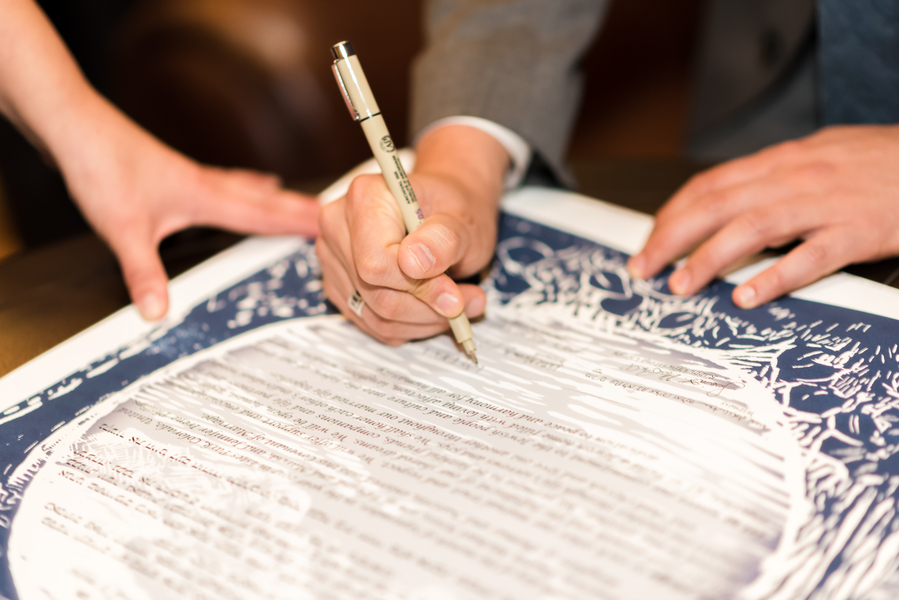
At a recent ketubah-signing for my sister-in-law (a Shirazi) and her fiance (a Tehrani), the sound of the non-Persian rabbi’s voice as he spoke about the obligations of marriage was drowned out by the melodic unity of Shirazi mothers pouring their hearts out singing “Vasoonak Shirazi,” the wedding song whose melody all Iranians in Iran know, regardless of faith. I knew that song before I could walk, talk or grill my own meat by the age of 3.

Beyond its soulful poets, famous gardens and, before the revolution, its winemaking legacy, the southern city of Shiraz also has produced one of the greatest Persian songs of all time, whose words, sadly, few in my generation of 30-somethings know (much less 20-somethings and younger folks). At least the original song has been commercialized — some will recognize it as “Mobarak Baad,” which has a few of the original couplets. 

I like to poke fun at anyone not from Tehran, but I was so mesmerized and moved that I began to cry between my bites of cucumber and walnuts.

As I watched those wonderful women — their hearts full of pride and their ankles swollen from 45 years of housework — sing in a cappella unison about a joyful bride and groom, I began to tear up from the heartwarming duality of watching a young Persian-Jewish couple who have their entire (American) lives before them, and much older Persian Jews who, when they pass on, may no doubt take with them everything that still makes us Persian, especially our songs. 

My mother-in-law also sang “Vasoonak Shirazi” for my husband and me at our ketubah-signing in 2014. The song originated in Shiraz and is sung at most Shirazi weddings, which explains why the non-Shirazi women at the ketubah-signing didn’t quite know what to do with themselves once the impromptu singing began. I like to poke fun at anyone not from Tehran, but I was so mesmerized and moved that I began to cry between my bites of cucumber and walnuts.

And the Shirazi women? In that moment of cultural sharing, it seemed like the only thing we cosmopolitan Tehranis could teach them was the priceless beauty of holding on to their own traditions.

I felt transported to a time and place when a wedding was celebrated by an entire community; when mothers, aunts and grandmothers came together to prepare a luscious wedding meal using recipes passed down several generations and with aromatic ingredients that don’t come close to what we have outside of Iran; a time when the concept of a Jewish wedding in my community was less about drones flying over guests’ heads to film $250,000 worth of extravagance, and more about the celebration of Jewish continuity. And lots of homemade Persian food.

After she led the song, my mother-in-law lamented to me that she was slightly more out of breath this time than she had been four years earlier when she had recited it for my husband and me. It was then that I wanted a copy of her handwritten lyrics to “Vasoonak Shirazi” so that, in a few decades, I may sing the song to my own children. They were born in Los Angeles; they don’t understand the language of their ancestors dating back 2,700 years (not yet, anyway), but they can run for president of the United States. You lose some, you win some.

The older Shirazi women that night were magnificent. I had no doubt that the matriarchs in their families also sang the same song for them when they were young brides, in a country that once was. 

Those women were the only threads — the last threads, I fear — between us and a homeland to which return is utterly impossible, as well as a certain Jewish tradition I adore. As they belted out Persian-language harmonies, competing with the Hebrew-chanting rabbi over singing rights, the full breadth and delicious tapestry of being Iranian and Jewish was on display for all to see. 

Well, for almost all to see. A lot of the younger folks were scrolling on their phones.


Tabby Refael is a Los Angeles-based writer.

Continuity, Persian Style Read More »

Everything’s Alright, Yes, Everything’s Fine - A Poem for Haftarah Re'eh by Rick Lupert

Everything’s Alright, Yes, Everything’s Fine – A Poem for Haftarah Re’eh by Rick Lupert
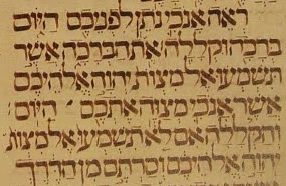
the earth is My footstool

This explains the smell in my neighborhood.
I don’t mind doing double duty as comfort
for the Almighty, but, please, Isaiah,
what’s the holy sock situation?

he who slaughters a lamb is
as though he beheads a dog

I couldn’t agree more. Enough slaughtering
of anyone with any amount of legs. That’s
personification, if you know what I mean.

Will I bring to the birth stool and
not cause to give birth?

I don’t want to put actions into Your mouth.
The truth is, You might do anything other
than what I’d like You to do. This is Your show.
We’re merely the ones You, sometimes,
see fit to console.

and your bones shall bloom like grass

This feels like something I’ll need to involve
my doctor and landscape maintainer in.
Those two have never collaborated,
to my knowledge, but I expect they’ll
blend it together like music and poetry.
I sense an elevation coming on.

For behold, the Lord shall come with fire

This explains what’s happening in California.
I’m not sure this is the kind of consoling we’ve
been looking for. When you look at our map,
it’s all orange and then the ocean. You’re
going to have to do more to convince me
this is a sign of the impending okay-ness
of everything.

…for their worm shall not die…

Finally! Something
for the worms!


God Wrestler: a poem for every Torah Portion by Rick LupertLos Angeles poet Rick Lupert created the Poetry Super Highway (an online publication and resource for poets), and hosted the Cobalt Cafe weekly poetry reading for almost 21 years. He’s authored 22 collections of poetry, including “God Wrestler: A Poem for Every Torah Portion“, “I’m a Jew, Are You” (Jewish themed poems) and “Feeding Holy Cats” (Poetry written while a staff member on the first Birthright Israel trip), and most recently “Beautiful Mistakes” (Rothco Press, May 2018) and edited the anthologies “A Poet’s Siddur: Shabbat Evening“,  “Ekphrastia Gone Wild”, “A Poet’s Haggadah”, and “The Night Goes on All Night.” He writes the daily web comic “Cat and Banana” with fellow Los Angeles poet Brendan Constantine. He’s widely published and reads his poetry wherever they let him.

Everything’s Alright, Yes, Everything’s Fine – A Poem for Haftarah Re’eh by Rick Lupert Read More »

Rosner’s Torah Talk Collection: Parshat Re’eh

Today we present a collection of past Torah Talks on Re’eh. Five rabbis – five viewpoints.

In this Week’s Torah Portion – Parashat Re’eh (Deuteronomy 11:26-16:17) – Moses continues speaking to the people of Israel right before he passes away and before they cross the Jordan River and enter the Promised Land. Moses asks them to recite certain blessings and curses on Mount Grizzim and Mount Ebal after they enter Israel. He demands that they destroy all remnants of idolatry from the Promised Land and asks them to choose a city which will host the Holy Temple. The Parasha also discusses false prophets, kashrut, the sabbatical year and charity. Our discussion focuses on the imperative to “open your hand,” “not harden your heart” and “lend whatever is sufficient to meet the need.”

Parashat Re’eh with Rabbi Bradley Artson

Parashat Re’eh with Rabbi Efrem Goldberg

https://www.youtube.com/watch?v=ciwbwsIQ2Lg

Parashat Re’eh with Rabbi Ben Elton

Parshat Re’eh with Rabbi Deborah Silver

Parashat Re’eh with Rabbi Baht Yameem Weiss

https://www.youtube.com/watch?v=-V2JABIajvw


Rosner’s Torah Talk Collection: Parshat Re’eh Read More »