fbpx

July 5, 2018

The Activist Fighting for Refugees

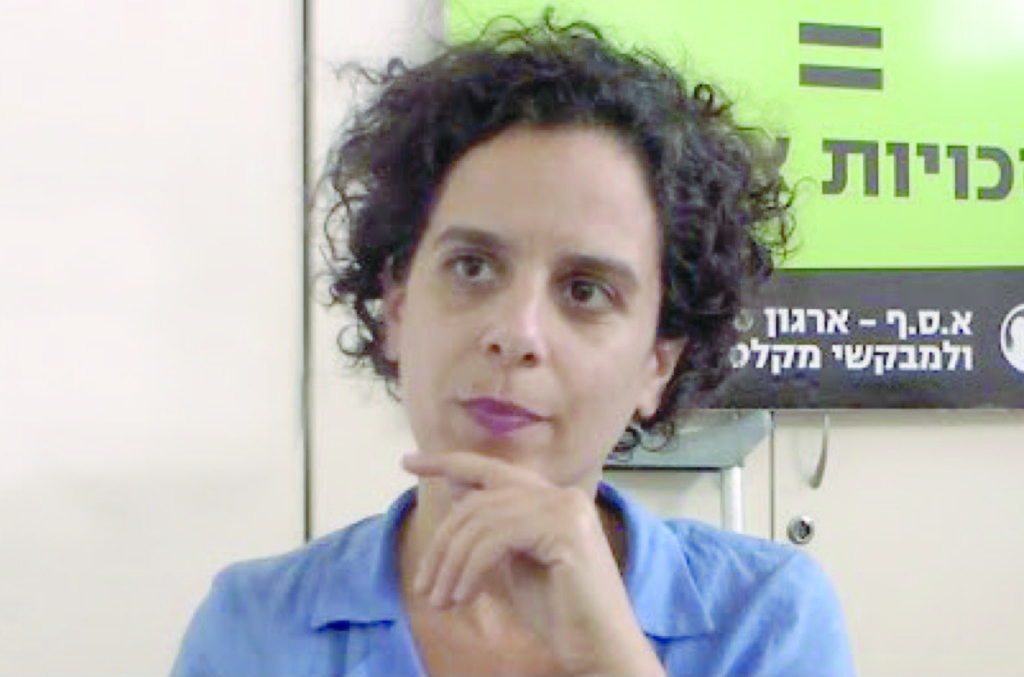
As far back as she CAN REMEMBER, Orit Marom has been an activist. 

In 1990, when she was 14, she and a friend pitched a tent in front of then-Prime Minister Yitzhak Shamir’s official residence in Jerusalem to protest budget cuts for pensioners. 

The 42-year-old activist has been working for over a decade at the aid organization ASSAF, fighting for the rights of Israel’s refugee community. “The people calling for the deportation of refugees do so out of racism,” Marom said. 

Close to 40,000 Africans from Eritrea and Sudan reside within Israel’s borders. Following intense pressure, a plan to permanently settle 16,000 of them, while sending the rest to other Western nations, was scrapped in April. The resistance —  mostly from the right — was that Israel doesn’t have the resources to handle so many asylum seekers.

Marom pooh-poohs that argument, along with another championed by the right — that absorbing tens of thousands of Africans will put the Jewish nature of the state at risk. 

 “In my eyes, it’s the exact opposite,” she said. “Not protecting the refugees means harming the Jewish character” of this country.

Marom said she has no “special desire” to work with refugees per se. “I believe in human rights and I’m concerned about our society.”

Yet for members of the Reath family, from the region that would eventually be South Sudan, meeting Marom literally saved their lives. In 2007, Marom volunteered with a family at a church in south Tel Aviv that was doubling as a shelter for hundreds of asylum seekers. She was horrified to find an extremely sick, heavily pregnant woman lying — or in her words, dying — on the floor next to five of her children. Marom rushed her to a hospital, where she remained for two months. 

Marom took the other children to her home and scrubbed them in the bath for what seemed like hours in an attempt to remove the impenetrable layers of dirt. The meal she made for them was devoured in seconds. “It was scary to watch,” she said.

The Reath family ultimately received meager accommodations and the children went to school. But when South Sudan gained independence in 2011, Israel no longer deemed the family members asylum seekers and they were deported. However, the new African state was plagued by war, famine and unspeakable atrocities, with the United Nations describing it as “one of the most horrendous human rights situations in the world.” Marom and her partner, Ziv, maintained regular contact with the Reaths. She gave them money to escape across the border to Gambela, Ethiopia, where the conditions were only marginally better than in South Sudan. 

In 2013, she and Ziv visited them in Gambela. Marom said the couple took the Reaths to a local restaurant and saw a gut-wrenching display of human wretchedness as the children crammed as much food as possible down their throats. 

Marom said that for everything she’s done for the family — from fighting the deportation decree to sending monthly payments to arranging surgeries — visiting them was perhaps the biggest kindness. 

“It showed them that we haven’t forgotten them,” she said. “Yes, we failed in our struggle to prevent them from getting deported, but they’re still with us in our heart. It was very powerful and very sad.”

Marom has since given birth to a son, Suf. Motherhood, she said, has only heightened her sensitivity to the plight of refugees. “It sounds schmaltzy, I think they call it politics of the womb, but it’s true. We bring this miracle to life but in one second, war can take it away. Every time I kiss the mezuzah, I thank God I have a roof over my head.”

Marom admits that professing belief in God to a human rights organization triggers some raised eyebrows. “I don’t want to fall into those definitions, those dichotomies of what a human rights worker should be like,” she said, adding that she has been known to pray at the graves of rabbis. 

“My grandmother’s genes are not what makes me Jewish,” she said. “The thing that makes me Jewish is [adhering] to core values like compassion, seeing the other and helping the weak.”

The Activist Fighting for Refugees Read More »

Kids Dentist Has a Magic Touch

Most kids (and adults) hate going to the dentist, But in Elmwood Park, N.J., pediatric dentist Eyal Simchi has a few tricks up his sleeve to quell his young patients’ fears.

Dressed in gray scrubs, with a black kippah pinned to his close-cropped hair, Simchi, 39, distracts his young patients with a little sleight of hand so they forget to be afraid. 

His use of magic tricks has won him fans both in his practice and online. His YouTube videos of him entertaining kids in his office have gone viral. His Facebook videos have garnered 30 million views. He’s even been featured on NBC News. 

It probably helps that Simchi has plenty of experience with young children. He and his wife, Rachel, have six kids, ranging in age from 15 months to 15 years. 

Jewish Journal: What made you decide to become a pediatric dentist?
Eyal Simchi: I didn’t plan on being a dentist. And, growing up, I never liked going to the dentist. I planned on going to medical school until a friend decided he wanted to go to dental school and said we should go together. [So,] I applied. He didn’t wind up going, but I did. When I was in dental school, I was on the fence about pediatrics and cosmetic dentistry. I decided to apply to a pediatric residency program and got in. I’m also board certified.

JJ: Where did you learn to do magic?
ES: I wasn’t really interested in magic. But one day my wife and I were walking through the mall and there was a guy at a kiosk doing tricks. Even though we were adults, we couldn’t figure out how he did it. My wife said that since I was going to be a pediatric dentist, it would be perfect for me to use in my practice. So I bought my first magic trick and went from there. First, I try the tricks on my own kids, and if they approve, I try them with my patients. 

My faith helps guide my decisions and allows me to live every day knowing that I am following the beliefs of my parents and grandparents for generations.

JJ: How did the YouTube videos come about?
ES: We posted them mainly for our own patients, and then other people saw them. People who had nervous kids showed them the videos before they even came in to see me.

JJ: The kids look happy and relaxed in the videos, but what happens when the magic stops and you start working on them?
ES: If we can build trust and relationships beforehand, it becomes much less about the dental work and more about the environment. I generally don’t do work on the first appointment. Sometimes I have them come in a few times so they can get used to me and the environment. So by the time I do dental work, they are more comfortable. A lot of times when one kid has an appointment, their siblings want to come.

JJ: What’s been your reaction to your videos going viral?
ES: It’s been an interesting experience. I have gotten messages from hundreds of people all over the world. I am now able to share my techniques and tips with other practitioners in many fields to help make their patients’ experiences easier. I am also happy that it has brought a more positive spin to how dentistry is often portrayed in the media.


more magic!!!! Riverfront Pediatric Dentistry- Eyal Simchi, DMD
(for licensing and usage, contact: licensing@viralhog.com)
Heres a link to our youtube channel for those who would like to see more cute videos. Stay tuned or subscribe for our newest videos- https://www.youtube.com/watch?v=pB9KpTLnDXM

Posted by Riverfront Pediatric Dentistry- Eyal Simchi, DMD on Thursday, May 17, 2018

JJ: Do you work primarily in the Jewish community?
ES: My practice is a mix. I see patients from all over. Some people come from several hours away. My practice is different, aside from the magic. I’m a dental nerd, so I use the latest techniques and less-invasive treatment whenever possible.

JJ: How does your Judaism inform your work?
ES: It’s just who I am. I grew up Orthodox and that’s pretty much what my life is. I don’t really see it as a separate outside description of me, but rather an intrinsic part of every part of who I am and what I do. I feel like whatever actions I take should be a reflection of the positivity of Judaism.

JJ: Why is your faith so important to you?
ES: My faith helps guide my decisions and allows me to live every day knowing that I am following the beliefs of my parents and grandparents for generations.

JJ: How many tricks do you have in your repertoire?
ES: I’m not a very skilled magician but I know about 20 tricks. Every so often I add a new one. 

JJ: How has the magic helped alleviate kids’ fears of the dentist?
ES: We’re pretty successful with it. Some of the kids have had previous bad dental experiences and need some time to get past their initial fear. 

JJ: Does having six kids help you with patience and compassion in your practice?
ES: Yes, I think so. I also grew up as one of 10 kids, so I’ve always been around kids. I have a good sense of what might be bothering them and can address it. Sometimes it’s something simple, rather than the whole experience.


Allison Futterman is a freelance writer living in Charlotte, N.C. 

Kids Dentist Has a Magic Touch Read More »

Writer Harlan Ellison, 84

Prolific and award-winning speculative fiction author Harlan Ellison, who wrote short stories, novels and criticism, and who contributed to notable TV series including “Star Trek,” “The Outer Limits” and “Babylon 5,” died June 27 at his Sherman Oaks home. He was 84.

His wife, Susan Ellison, told The New York Times she did not know the cause of his death. He had a stroke in 2014 and coronary bypass surgery after a heart attack in the 1990s.

In a career that spanned more than 60 years, Ellison wrote 1,700 short stories, at least 100 books and dozens of TV scripts and screenplays, including “A Boy and His Dog,” set in a post-apocalyptic American wasteland, and “The City on the Edge of Forever,” considered one of the best episodes of the original “Star Trek” TV series, in which the characters Captain Kirk and Mr. Spock go back in time to correct Earth’s history.

The episode won the Hugo Award for best dramatic presentation and the Writers Guild of America Award for best episodic drama on television. But Ellison, who had a reputation for being cantankerous and litigious, complained bitterly about how the teleplay had been rewritten. In 2009, he filed a lawsuit against CBS Paramount TV for merchandising royalties he claimed he was owed from the episode; he and the studio later settled.

The movie “A Boy and His Dog” (1975), based on Ellison’s novella, follows a teenager named Vic (played by Don Johnson) and his telepathic dog, and features a shocking ending.

Ellison was part of the new wave of science fiction that emerged in the 1960s and ’70s. Called a “professional curmudgeon” by one reporter, Ellison once began a Sci-Fi Channel (now SyFy) interview by insisting he be called “a writer.” “Call me a science fiction writer and … I’ll hit you so hard your grandmother will bleed.” 

He is said to have sent a dead gopher to a publisher and attacked an ABC executive, breaking his pelvis, the Times reported.

The fast-talking Ellison was a recurring guest on talk shows hosted by Merv Griffin and Tom Snyder, spewing unbridled opinions on elitism, violence and Scientology.

Ellison was born on May 27, 1934, in Cleveland to Louis Ellison, a dentist and jeweler, and Serita (Rosenthal) Ellison, who worked in a thrift store. Growing up —  partly in Painesville, Ohio, about 30 miles outside Cleveland — he was bullied in school, largely for being Jewish, the Times said.

Ellison attended Ohio State University but left after two years. At one point, he punched an English professor who had told him that he didn’t see any writing talent in him. Thereafter, Ellison sent copies of his published stories to the professor, according to the Times.

He moved to Southern California in 1962, where he got a job at Walt Disney Studios — for one day. Ellison was promptly fired after Roy Disney overheard him joking about making a pornographic movie featuring Disney characters, according to the Hollywood Reporter.

He wrote an episode of the TV series “The Outer Limits” titled “The Soldier” that aired in 1964 and was adapted from one of his short stories, about a soldier hurdled back in time 1,800 years. Ellison later sued the production company of James Cameron’s “The Terminator,” a 1984 film starring Arnold Schwarzenegger about an android sent back in time to kill the mother of the future leader of the human resistance movement. The suit was settled for an undisclosed amount, and the end of the home video version of the film includes an acknowledgement of Ellison’s works.

Ellison, who also wrote under the pseudonym Cordwainer Bird, wrote for the TV shows “Tales From the Darkside,” “The Man From U.N.C.L.E.” and “Voyage to the Bottom of the Sea.” He wrote for and was the creative consultant for the science fiction series “Babylon 5” (1994–98). 

He was among the most influential post-World War II science fiction writers, Rob Latham, a former professor of English at UC Riverside, told the Los Angeles Times. 

Ellison won four Writers Guild of America Awards, eight Hugo Awards, four Nebula Awards, five Bram Stoker Awards, two Edgar Awards, and, in 2006, the Grand Master Award for lifetime achievement from the Science Fiction and Fantasy Writers of America.

Ellison was married five times and had no children.

Writer Harlan Ellison, 84 Read More »

Exhibition Sashays Through Israel’s Changing Fashion Landscape

The Israel Museum in Jerusalem boasts a collection of more than half a million artifacts, but until recently, few items related to Israeli fashion were among them. 

Two years ago, when the museum decided to devote an exhibition to the history of Israeli fashion in honor of Israel’s 70th anniversary, its curators needed to search outside the museum’s walls. 

“Fashion Statements: Decoding Israeli Dress,” which opened last month, is the largest-scale exhibition of Israeli fashion ever mounted in an Israeli museum. It begins with the desert-inspired clothing and khaki shorts of the early pioneers and ends with runway-ready haute couture created by contemporary Israeli designers. 

In between, it examines the ideological tug-of-war between those who favored utilitarian clothing and those who wanted to dress like well-heeled Europeans and Americans.  

Starting a collection nearly from scratch “felt like we were inventing the wheel,” said Daisy Raccah-Djivre, the head curator. “We asked ourselves, ‘Is there such a thing as Israeli fashion?’ ‘What is Israeli fashion?’ ”  

After sifting through a range of archives and consulting with fashion experts, the curators discovered that Israeli fashion does have a unique history rooted in both its immigrant culture and Middle Eastern landscape. 

It “mirrors the tapestry of Israeli society,” Raccah-Djivre said. “We see a special genealogy from one designer to another.” 

Curator Efrat Assaf-Shapira said Israel’s status as the Holy Land played a significant role in the early years of Israeli fashion, even before the establishment of the Jewish state. “You see it in the materials, the colors, the typography,” Assaf-Shapira said.

All three are reflected in the earth-tone wool “desert coats” designed by Hungarian-born Fini Leitersdorf. In the 1950s, she joined the famous Maskit fashion house launched by Ruth Dayan, wife of Moshe Dayan. Created to employ new immigrant artisans from around the world, Maskit designed high-end clothing, rugs and other items.

Alongside the desert coats in the exhibition stands a sleeveless white gown adorned with dozens of light-colored seashells found on Israel’s long Mediterranean coast.

In the years before Israeli homes had air conditioning, Israeli clothes were often “less tailored” due to the country’s high temperatures for much of the year, Assaf-Shapira said. “We see a lot of sun,” even in designs by Israelis living countries where the weather is often dreary. 

Israel’s multiculturalism is reflected in several segments of the exhibition. One group of designs incorporates elements of a tallit, either via stripes reminiscent of a prayer shawl or with clusters of ornate silver or gold on the upper bodice. 

Another grouping incorporates the intricate embroideries of Yemenite artisans who arrived in the 1940s and early ’50s, and the Bucharans and Uzbeks who made aliyah in the 1980s. 

Still another grouping reveals the influence of Palestinian and Arab culture on Israeli fashion, with Jewish designers incorporating either Palestinian-made embroidery or cloth patterns of traditional Arab keffiyehs — the head coverings worn by many Arab men in parts of the Middle East — into their clothes. 

These brightly colored, richly textured clothes stand in sharp contrast to the famously unadorned clothes worn by kibbutzniks and many other Israelis from the early 1900s through the 1950s. 

Displayed in the second gallery alongside period footage of farmers and factory workers, and young people dancing the hora, the simple dresses, short-sleeved shirts, pants and shorts are remarkably bland, perfectly capturing the priorities and ethos of that time in history. 

“What we found striking was the ideology that set the aesthetic,” curator Noga Eliash-Zalmanovich said, pointing to more than a dozen tan, khaki and light blue outfits made of cotton, many of them manufactured by ATA, the first Israeli company to design and manufacture textiles and clothing locally. “Material asceticism was considered a virtue. It resonated with the pioneering spirit.” 

Not all Israelis dressed this way, of course. Directly opposite these socialist-inspired clothes, a revolving platform showcases richly designed dresses from the 1940s and ’50s. 

In Jerusalem and Tel Aviv, European Jews who immigrated to Israel established couture businesses, continuing the professions they had in their home countries. Fashion magazines, which were launched in the 1930s, were full of Israeli-designed clothes made from expensive fabrics. 

Suddenly, magazines like Vogue were devoting entire issues to the fashion — from Gottex swimsuits to Beged Or leather goods — emerging from Israeli factories and showrooms.

The fashion industry underwent great changes in the 1960s and ’70s, when, thanks to generous support from the Israeli government, Israel began to manufacture a sizable amount of clothing. For a time, clothing became the country’s second-largest export industry. Suddenly, magazines like Vogue were devoting entire issues to the fashion — from Gottex swimsuits to Beged Or leather goods — emerging from Israeli factories and showrooms. 

This “golden age” of Israeli manufacturing came to an end due to domestic economic woes and the relatively high costs of manufacturing in Israel compared with the Far East. 

The exhibition ends on a high note, with 14 cutting-edge pieces created by some of Israel’s most famous designers with an international reputation and clientele. 

One dazzling three-dimensional design was created by Noa Raviv, whose 3-D clothes “blur the line between art and wearable fashion,” Eliash-Zalmanovich said. “There’s a lot of research into new materials, new markets, new ideas.” 

Alon Livne, whose bridal gowns are coveted the world over, also has designed custom-made gowns for celebrities including Beyoncé and Kim Kardashian. 

Eliash-Zalmanovich said that for every household-name designer there are many others working out of their living rooms, dreaming of opening a studio. “It’s not easy making it as a designer today,” she admitted. 

The curator expressed hope that “Fashion Statements” will inspire fledgling designers and the public. “We hope the exhibition will start a conversation about fashion in Israel. About creativity. About possibilities. About the future.”

 “Fashion Statements: Decoding Israeli Dress” will run through April 29, 2019.


Michele Chabin is an award-winning journalist who reports from Jerusalem. 

Exhibition Sashays Through Israel’s Changing Fashion Landscape Read More »

At Home With Leonard Bernstein

American musical legend Leonard Bernstein was a well-known insomniac who did some of his best composing — and most energetic socializing — long after bedtime. He’d invite friends to his home, with its two grand pianos in the living room, and talk and play music late into the night.

The charming, insightful cabaret show “Late Night With Leonard Bernstein,” which drew a capacity crowd to the Skirball Cultural Center’s auditorium on June 24, takes as its conceit the idea that we’re all guests at this late-night salon.

The show is narrated by Jamie Bernstein, Leonard Bernstein’s oldest daughter and author of the humorous, intimate book “Famous Father Girl: A Memoir of Growing Up Bernstein.” She shares the stage with pianists Michael Boriskin and John Musto, and soprano Amy Burton, all members of New York City’s Copland House ensemble.

The set design referenced Leonard Bernstein’s  elegant living room, with two Steinway grand pianos facing off with each other. A leather club couch sat at an angle to one side of the pianos; and two gray, upholstered armchairs sat on the other side, each accented with a scarlet pillow. Oriental rugs in that same deep red covered the floor, and a few large potted plants added to the intimate, homey vibe.

As she introduced the musical pieces, Jamie Bernstein shared glimpses of her father’s process and personality. She then sat in one of the gray armchairs to listen as the musicians performed Bernstein’s compositions as well as selections from some of his favorite works by Aaron Copland, Franz Schubert, Edvard Grieg, Zez Confrey, Noël Coward and Ernesto Lecuona, among others. The evening also included an old, scratchy recording of her father playing a composition-in-progress, and a short video clip of him singing.

The composer, who would have been 100 years old this August, is known for writing the music for “West Side Story,” “On the Town,” “Peter Pan” and “On the Waterfront,” among others. He wrote in many styles and collaborated with some of the best musicians of his day. He was also the musical director of the New York Philharmonic, and lectured about classical music on television from the mid-1950s until his death in 1990.

In the Skirball show, Jamie Bernstein shared details about her father that might be new to his casual admirers, such as the fact that Bernstein composed little ditties for friends, and often later built entire shows around these musical riffs.

A version of this show has toured the country for a few years, but because Jamie Bernstein now has a book out, it felt partly like a musical tribute and partly like a super-augmented book reading.

Uri Herscher, the Skirball’s founding president and current CEO, introduced the show as a look at the legacy that Jamie Bernstein inherited from her father. While inheritances are often valued in terms of dollars, Herscher said, we inherit much more from our parents than money. We also inherit a cultural heritage, and telling stories is a way to narrate what we’ve inherited and ensure that it lives on, he added.

Jamie Bernstein shared a deep love and appreciation for her father’s work and spirit. She spoke in a glowing, tender, slightly ribbing way about his home life, his dedication to music and his very public creations. As she sat listening to the musicians, she nodded her head and smiled,  and then applauded with gusto when they finished. You could imagine her as a young girl staying up late, engrossed in the joyful sounds, experimentation and playfulness on display in her home. 

Her book-reading-cum-cabaret is a lovely way to honor her family and her legendary father’s cultural legacy.

The exhibition Leonard Bernstein at 100, organized by the Grammy Museum, is on view at the Skirball Cultural Center through Sept. 2.


Wendy Paris is a writer living in Los Angeles.

At Home With Leonard Bernstein Read More »

‘How Jack Became Black’ Tackles Racial Identity

When filmmaker Eli Steele went to register his son, Jack, for an L.A. Unified School District school four years ago, officials told him he had to check a primary race on the application. If he didn’t, they would not enroll his son. This was a problem for Steele, because Jack is Black, Jewish, Hispanic, Native American and White. 

“I knew the race question would come up,” Steele said. “What I was not expecting was the terminology on the form. There was no multiracial or ‘check all that apply’ option.” 

Steele recorded school officials telling him to pick a primary race and giving him differing advice. Some said to mark “White” while others said “Black.” He eventually checked “Black,” because he didn’t want to deny his son an education. 

“My objective was to show the world what I have experienced my entire life,” he said, “that no one really knows what they are talking about when it comes to race.” 

Steele took his footage and expanded what happened into a full-length documentary called “How Jack Became Black.” The movie, currently available through video on demand, iTunes and Amazon, features interviews with professors and multiracial individuals, and it highlights the history of race in America, the racial divides happening today and Steele’s upbringing.

Steele was born in the 1970s to a Black father and a Jewish mother, whose parents were Holocaust survivors. “My grandfather did not approve of my mother’s marriage to my father because he believed that Jews had a responsibility to carry on Judaism after the Holocaust and because my father was Black,” he said.

Steele grew up with both cultures. In the film, he talks about how his childhood and early adulthood were difficult not only because he was mixed race but because he is deaf and was bullied by his peers. When a teacher asked his classmates who they wanted to win the presidential election in 1984, everyone except for Steele said Ronald Reagan. Steele wanted Jesse Jackson but was torn when Jackson made a racial slur against Jewish people. 

“My objective was to show the world what I have experienced my entire life, that no one really knows what they are talking about when it comes to race.” — Eli Steele

Later, when Steele was applying to UCLA, he knew he could check the “African-American” box and have a better chance of getting in, but he chose to leave his race blank and was not admitted. 

“We should ask why LAUSD was willing to violate the California Constitution to deny enrollment to a kid for an unchecked race box,” he said. “We should also ask if these boxes are truly making us better as a society or are they actually blinding us to deeper, more human-related problems.”

When audiences watch “How Jack Became Black,” Steele hopes he can help them understand where society stands with race today. 

“I know I have a unique view of things due to my multiracial identity and ability to move through different parts of American society,” he said. “It is my hope that by conveying my unvarnished and somewhat uncomfortable views in good faith that we can begin to ask if we truly are on the right path to a better America.” 

‘How Jack Became Black’ Tackles Racial Identity Read More »

Jewish Artists’ Work Returns to L.A. From Jerusalem Biennale

Jewish Artists Initiative (JAI) curators Georgia Freedman-Harvey and Anne Hromadka Greenwald spent the fall of 2016 readying a proposal to participate in the 2017 Jerusalem Biennale, one of the world’s premier showings of Jewish contemporary art. Not lost on them was the significance of its submission deadline — two days after the contentious presidential election. 

“We knew that no matter what happened, that as a group of artists from the United States, if our exhibition idea was selected, we’d be a voice at a drastically changing time,” Hromadka Greenwald told guests gathered at MuzeuMM, a mid-City gallery. 

Attendees gathered for the June 24 opening of “Flashpoints: A Collective Response,” organized by JAI, a local, artist-run organization founded in 2004 that fosters the work of Jewish artists. 

Guests had the opportunity to socialize with the artists while viewing the five murals that make up “Flashpoints,” one of three North American exhibitions to debut at Biennale venues in Israel’s capital last fall along with nearly 30 other exhibitions from around the world. Each offered an artistic response to the broad theme of “Watershed.” 

“We wanted to offer perhaps our response to what we saw as a growing divide,” Hromadka Greenwald said, “and that maybe the way forward is through our traditions as Jews that often teach us we’re better together than we are apart.”

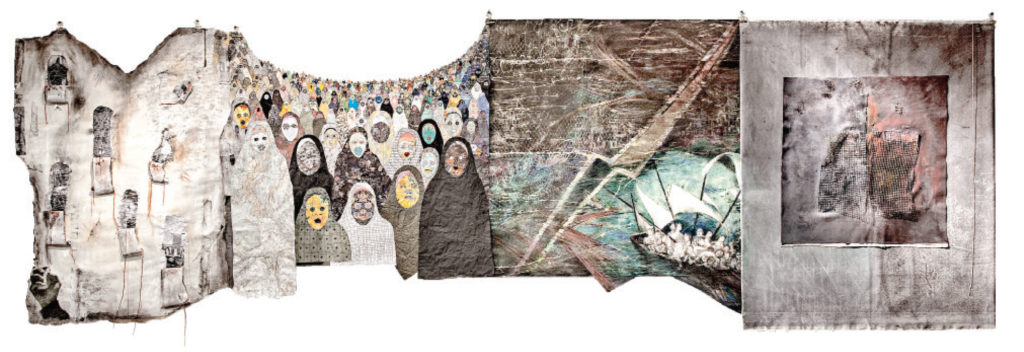
The exhibition’s large, striking murals were labeled “Water,” “Nationalism,” “Civil Rights,” “Human Rights” and “Political Polarization” — employing imagery that reflects hot-button issues like immigration and criminal justice reform. 

“No one could’ve guessed that the various topics we picked are only more magnified and more unresolved today,” Freedman-Harvey said.  

The curators envisioned an atypical exhibition. They tasked selected JAI artists with adopting a surrealist concept known as “exquisite corpse,” an old parlor game involving artists adding to an assembled composition. Pioneered by early 20th century French surrealists, the method served as an absurdist response to a Europe post-World War I and in the throes of  World War II. 

“It was their way of doing political protest,” Hromadka Greenwald said. “Inspired by that, we then wanted to put together an exhibition that tapped into the shifting winds that we couldn’t exactly predict.” 

Teams of three or four JAI artists worked together for nearly two years to assemble paneled, stitched-together murals that combined mediums including mixed media, collage, watercolor and oil painting. One section of the gallery displayed artists’ working sketches that outlined the painstaking process of developing individual pieces that ultimately contributed to the whole. 

Melinda Smith Altshuler, 64, who helped create the four-paneled “Civil Rights” mural, said, “Seeing everything come to fruition, the two-year process and all of the teamwork behind it, is a wonderful, enriching experience.” Her section, “Justice Bleeding,” is a mixed-media collage of weighted scales. “In the piece, I’m dialoguing about how much of the balance of righteousness is available to all of us as citizens,” she explained. 

Nearby, Randi Matushevitz, 53, ruminated on her work, “Water as Industry,” a section of the four-piece “Water” tapestry. In it, a desperate, naked figure crawls on a cracked desert floor and cups water leaking from an ominous, looming water tower. 

The exhibition’s large, striking murals were labeled “Water,” “Nationalism,” “Civil Rights,” “Human Rights” and “Political Polarization” — employing imagery that reflects hot-button issues like immigration and criminal justice reform. 

“Water is so precious and clean water, that’s the diamonds of today,” she said. “The situation in Flint, Mich., still isn’t fixed. Here there’s this thirst, crawling through the desert. That’s the crux of it. What is water? Water is precious. It’s life. We need this. It’s vital.”

The MuzeuMM showing also featured the varied works of 16 JAI artists that didn’t appear alongside the Biennale murals in Jerusalem last year. 

Despite the fact an estimated 30,000 visitors saw “Flashpoints” during the Biennale, JAI President Ruth Weisberg believes it was important to bring the exhibition home — something her organization didn’t do after it showed works at the 2015 iteration in Jerusalem. 

“It’s very exciting to share this with the Los Angeles community,” Weisberg said. “I think it gives a sense of the amplitude of the Jewish art experience. We’ve had our showings in Jerusalem, but this time, this opportunity to bring it back here will hopefully create a lot more awareness about what we’ve done with such an ambitious show that’s also so timely.”


“Flashpoints” is on view through July 8 at MuzeuMM, 4817 W. Adams Blvd., Los Angeles. (323) 533-0085.

Jewish Artists’ Work Returns to L.A. From Jerusalem Biennale Read More »

Pearl’s ‘Book of Why’ Is a Crowning Achievement

Judea Pearl may be best known to Jewish Journal readers as an enemy of terrorism and an advocate for reconciliation, a role thrust upon him when his son, Wall Street Journal correspondent Daniel Pearl, was murdered in Pakistan in 2002. They younger Pearl’s courageous last words, “I am Jewish,” served as the title of Judea Pearl’s collection of writings about Jewish identity.

Yet, Judea Pearl has also written himself into history for an entirely different reason. The long-serving UCLA professor of computer science “has been the heart and soul of a revolution in artificial intelligence,” said Eric Horvitz, a researcher for Microsoft. Pearl won the 2011 Turing Award, the equivalent of a Nobel Prize in the field of computing, and he is the author of three classic treatises on the surprisingly controversial debate among scientists that has come to be called the “causal revolution.”

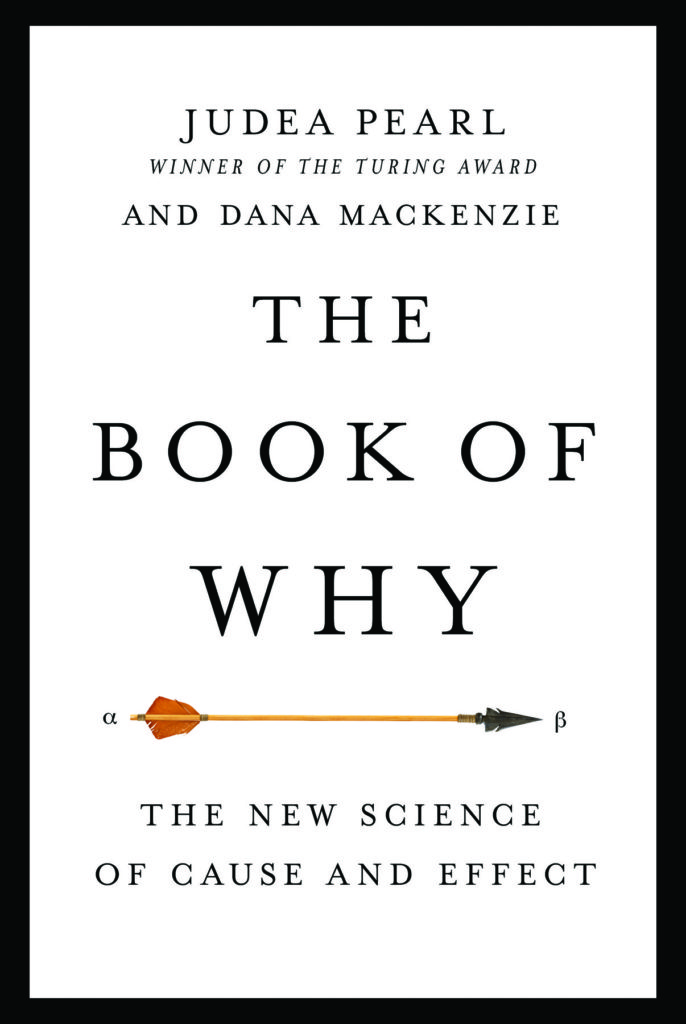
Pearl’s latest book, co-authored with award-winning science writer Dana Mackenzie, is “The Book of Why: The New Science of Cause and Effect” (Basic Books). For the lay reader, “The Book of Why” may seem like science fiction in some passages and a moral treatise in others, but Pearl’s self-described mission is to extract the science of artificial intelligence from its mathematical roots and show what science has revealed about the way the human brain works.

In the book’s preface, Pearl writes: “I aim to describe to you how robots can be constructed that learn to communicate in our mother-tongue — the language of cause and effect. This new generation of robots should explain to us why things happened, why they responded the way they did, and why nature operates one way and not another. More ambitiously, they should also teach us about ourselves: why our mind clicks the way it does and what it means to think rationally about cause and effect, credit and regret, intent and responsibility.”

Pearl and Mackenzie begin with the fundamental proposition that what distinguishes us Homo sapiens from other species is our unique ability to grasp the simple but powerful notion that “certain things cause other things.” Indeed, they see causality as the taproot of history: “From this discovery came organized societies, then towns and cities, and eventually the science- and technology-based civilization we enjoy today. All because we asked a simple question: Why?”

By the end of Pearl’s lively and accessible book, we come to appreciate what the scientific study of causality has accomplished in the real world.

Curiously, science was slow to embrace the notion of causality. “In vain will you search the index of a statistics textbook for an entry on ‘cause,’ ” Pearl and Mackenzie point out. “Students are not allowed to say that X is the cause of Y — only that X and Y are ‘related’ or ‘associated.’ ” The refusal to confront cause and effect was a check on scientific progress. “For example, only a hundred years ago, the question of whether cigarette smoking causes a health hazard would have been considered unscientific. The mere mention of the words ‘cause’ or ‘effect’ would create a storm of objections in any reputable statistical journal.”

Pearl is careful to avoid scientific jargon and to minimize the number of charts, graphs and mathematical formulas through which scientists usually communicate with one another. After all, his mission in the “Book of Why” is to translate hard science into plain language. Ironically, however, he also points out that “dumb robots” can learn about cause and effect only through numbers. And he insists that raw data are also “dumb,” especially if we fail to tease out the correct answers from “big data.”

The danger is that we can mistake “correlation” for causality. “For instance,” he explains, “… there is a strong correlation between a nation’s per capita chocolate consumption and its number of Nobel Prize winners. This correlation seems silly because we cannot envision a way in which eating chocolate could cause Nobel Prizes. A more likely explanation is that more people in wealthy, Western countries eat chocolate, and the Nobel Prize winners have also been chosen preferentially from those countries.”

To ease the lay reader into the more obscure workings of science, Pearl draws on pop culture. When he invites us to consider “a surprisingly large class of paradoxes that reflect the tensions between causation and association,” he uses the TV game show “Let’s Make a Deal” as a case study. Monty Hall would show a contestant what was behind Door No. 3, and the contestant was manipulated into thinking that they had some useful information about what might be behind the other two doors. “Thus, the Monty Hall paradox is just like an optical illusion or a magic trick,” Pearl writes. “[I]t uses our cognitive machinery to deceive us.”

By the end of Pearl’s lively and accessible book, we come to appreciate what the scientific study of causality has accomplished in the real world. “[W]e lit the spark of a Causal Revolution, which has spread like a chain of firecrackers from one discipline to the next: epidemiology, psychology, genetics, ecology, climate science, and so on,” he concludes. “With every passing year I see a greater and greater willingness among scientists to speak and write about causes and effects, not with apologies and downcast eyes but with confidence and assertiveness.”

Pearl was one of the visionary leaders of the causal revolution he describes, and “The Book of Why” is his crowning achievement. Indeed, although the book is co-written with Dana Mackenzie, the first-person singular is used throughout: “I expect that its full potential will be developed one day beyond what I can imagine,” Pearl muses, “perhaps even by a reader of this book.”


Jonathan Kirsch, author and publishing attorney, is the book editor of the Jewish Journal.

Pearl’s ‘Book of Why’ Is a Crowning Achievement Read More »

UK Labour Party Under Fire for Lackluster Anti-Semitism Guidelines

Britain’s Labour Party has been plagued by issues of anti-Semitism under the leadership of Jeremy Corbyn. The party has since issued some new guidelines on anti-Semitism, and they have not been well-received by Jewish organizations.

The guidelines claim to embrace the International Holocaust Remembrance Alliance (IHRA)’s definition of anti-Semitism, stating that anti-Semitism is racism and that it’s wrong to blame Jews for the actions of the Israeli government, as well as accuse Jews of double-loyalty to Israel.

However, as the Jewish Chronicle’s Lee Harpin points out, the guidelines state that while it is anti-Semitic to use slurs like “zio,” “It is not anti-Semitism to refer to ‘Zionism’ and ‘Zionists’ as part of a considered discussion about the Israeli state.” The guidelines also discourage against comparing the actions of Israel to the Nazis, however, “Discourse about international politics often employs metaphors from examples of historic misconduct. It is not anti-Semitism to criticise the conduct or policies of the Israeli state by reference to such examples unless there is evidence of anti-Semitic intent.”

This prompted the Anti-Defamation League (ADL)’s Jonathan Greenblatt to tweet:

Additionally, Harpin noted that the guidelines state that it’s “problematic” for Israel to call itself the Jewish state.

British Jewish organizations have criticized the guidelines for not fully embracing the IHRA definition of anti-Semitism, namely the parts that state it’s anti-Semitic to delegitimize the state of Israel in order to prevent the Jews from exercising “their right to self-determination.”

“It is impossible to understand why Labour refuses to align itself with this universal definition,” The Board of Deputies of British Jews and the Jewish Leadership Council said. “Its actions only dilute the definition and further erode the lack of confidence that British Jews have in their sincerity to tackle anti-Semitism within the Labour movement.”

Corbyn has been accused of anti-Semitism, with examples of him being involved in a secret Facebook group where people posted material from David Duke and used anti-Semitic slurs like “JewNazi,” as well as him praising the terror groups Hamas and Hezbollah as “friends.” Given how close Corbyn was to becoming prime minister of Britain, the Labour Party’s anti-Semitism is particularly important to monitor going forward.

UK Labour Party Under Fire for Lackluster Anti-Semitism Guidelines Read More »

David Myers Steps Down From CJH Top Post

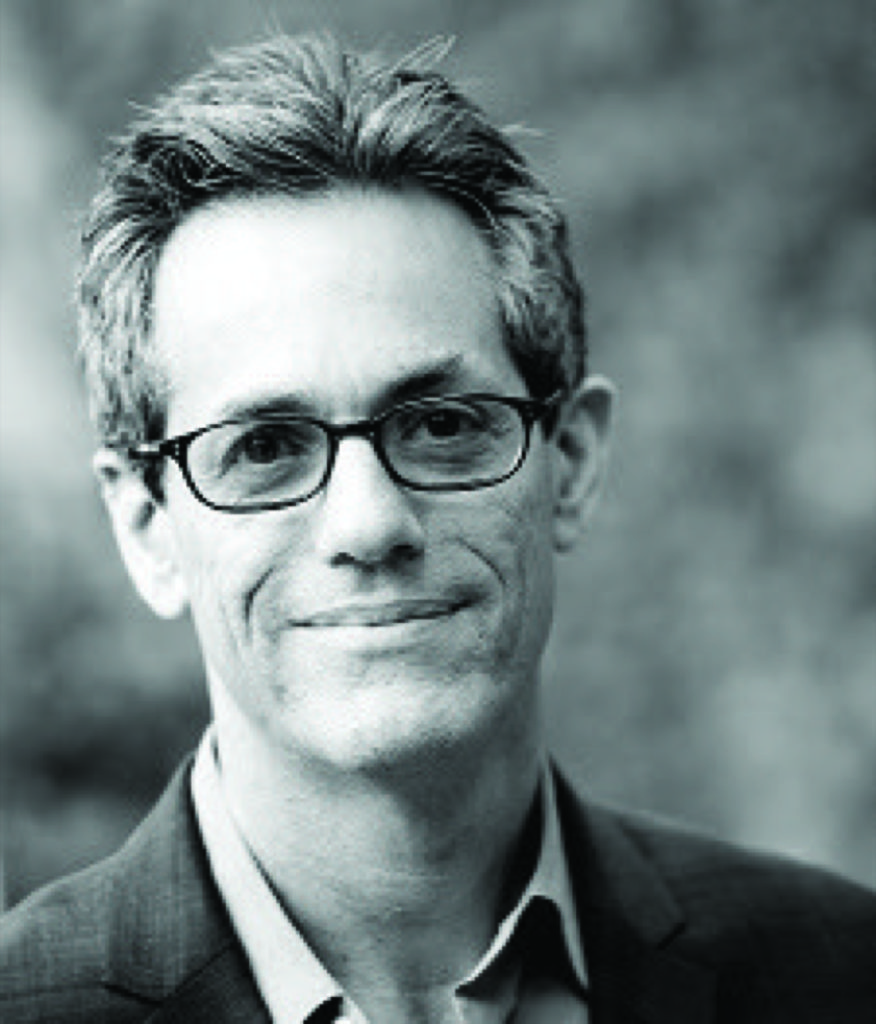
UCLA Jewish Studies professor David Myers has announced that he is stepping down from his position as president and CEO of the Center for Jewish History (CJH) in New York.

Myers told his staff and colleagues in a June 28 email that he could no longer handle the constant travel between Los Angeles and New York.

“Los Angeles is my home,” Myers wrote. “It is where my family, professional, and community roots are deepest. Second, the work I most need to focus on in this chapter of my life is teaching and researching Jewish history at UCLA and directing the [UCLA] Luskin Center for History and Policy.”

In an email to the Journal, Myers called his decision “excruciating.”

“I love the Center dearly,” Myers wrote. “But I also love my life in L.A., with my wife, my home, my communities, and UCLA.  Hard to believe, but I think that what I’m saying is that my place is in Los Angeles, not New York.”

Myers told The Forward that his departure from the CJH had nothing to do with the criticism he faced from pro-Israel activists.

“They’re nuisances, they’re gnats, they’re bothersome gnats like you find in the summer and swat away,” Myers said. “They’re not people who compel life decisions.”

CJH Board Chair Bernard Michael praised Myers as an “exceptional leader” and said he understood Myers’ decision.

“We will conduct a thorough search to find the right leader to continue driving our vision of a Center that does even more to educate and inspire the Jewish community and provide a world-class center for scholarly research,” Michael said.

In September, a few months after Myers assumed his CJH post, he came under fire in a widely shared opinion piece by Democratic political consultant Hank Sheinkopf, public relations executive Ronn Torossian, and a former chief of staff to Israeli Prime Minister Benjamin Netanyahu, George Birnbaum, for his associations with organizations they considered anti-Israel — The New Israel Fund, IfNotNow and J-Street. Also in the piece, posted on The Algemeiner website, the trio criticized Myers for claiming that the boycott, divestment and sanctions (BDS) movement should not be “demonized” and that boycotts of Israel might be necessary if the Jewish state refused to leave the West Bank and take responsibility for its role in the Palestinian refugee issue.

“The work I most need to focus on in this chapter of my life is teaching and researching Jewish history at UCLA.” — David Myers

“Individuals who hold views such as Myers’ should not hold positions of leadership in the Jewish community,” Sheinkopf, Torossian and Birnbaum wrote. “David Myers must be terminated as CEO of the Center for Jewish History.”

In response to the opinion article, several Jewish leaders wrote letters in support of Myers. CJH board members also published a statement expressing “full and unwavering support“ of him. 

In response to Myers’ resignation, Sheinkopf, Tossorian and Birnbaum wrote another article, posted July 2 on the Jewish Press website, that implied their opposition prompted Myers’ departure from the CJH. The article begins with “It worked” but provides no supporting link between their efforts and Myers’ departure.

“We are proud,” the trio wrote, “that Myers is the second executive to leave the Center for Jewish History in the past six months.”

(Rachel Lithgow, the executive director of the American Jewish Historical Society, which is housed in the CJH, resigned in December after the CJH board cancelled a play and panel discussion she organized, which were funded by the left-wing group Jewish Voices for Peace.)

The CJH houses one of the largest archives of modern Jewish history outside of Israel.

David Myers Steps Down From CJH Top Post Read More »