fbpx

June 28, 2018

Moving from Conflict to Consensus

Over the next several weeks, we will transition from the Book of Bamidbar to the Book of Devarim. Bamidbar means “in the wilderness” and Devarim means “words.” In Bamidbar, the Torah takes us from Egypt to Canaan and describes life in the wilderness, which was full of trials, tribulations, conflict and complaining. Devarim, by contrast, is a book of calm where Moses speaks the words of what HaShem expects of the Israelites, and the Israelites actually listen.

What is the model that we want for our communities today? Bamidbar or Devarim, fighting and rebelling in the wilderness, or listening to what is expected of us, finding common ground and truly coming to understand the value system that the Torah provides us? The former is destroying us; the latter will guide us to being a community according to the values of the Torah.

Like many others, I am involved in our community through our Federation system because of my strong belief in Jewish values. To me, Jewish values are not one particular teaching or one particular passage, but the entire value system given to us through the Torah — the system that requires us to care for one another, not to engage in lashon harah (gossip) and to find common ground so we can truly repair the world and finish HaShem’s work. Only then can we truly be a community. A couple of weeks ago in Parashat Beha’alotcha, Moses’ sister, Miriam, engages Aaron in lashon harah about Moses and his wife, Zipporah. HaShem punishes Miriam by inflicting her with leprosy, demonstrating the seriousness of the sin of lashon harah.

I am very concerned that today, more than at any time I can remember, we are in deep trouble. We are being ripped apart — the young from the old, the right from the left and the secular from the more observant. We are attacking one another publicly as well as privately, joining the rest of society by engaging in lashon harah about anyone we disagree with.

Federations must stand for a belief in the unity of the Jewish people — our communities are calling out to us to teach one another how to listen and how to practice a standard of decency, or as Hillel describes the Torah: “What is hateful to you do not do to your neighbor; that is the whole lesson of the Torah; the rest is all commentary; go study it.”

The community is more important than being right. Building community is sacred work. We must elevate the conversation.

Hillel did not just talk about Torah, he lived it. He did not just talk the talk, but he also walked the walk. We keep talking the talk of civil discourse and common tradition and Jewish values. It is time for the leadership of our community to lead the way of walking the walk of respect, learning and listening. 

When we hear a position we disagree with, can’t we find common ground? We can do that only if we stop waving our personal flags of self-righteousness. It has become more important in our communities to prove that we are right and that those who disagree with us are wrong than it is to work together to find solutions or at least a better understanding of complex problems. None of us possesses perfect knowledge nor all the answers. As writer Lincoln Steffens once said, “It is our knowledge — the things that we are sure of — that makes the world go wrong and keeps us from seeing and learning.”

We are in this together. The community is more important than being right. Building community is sacred work. We must elevate the conversation.

In doing so, we must welcome different points of view, and do more listening than talking.

It is our responsibility to move our communities from the wilderness to the Promised Land, and when I say communities, I mean our whole community, not just those we agree with, just as the greatest leader and teacher of our people, Moshe Rabbenu, took our ancestors from Bamidbar to Devarim, from the wilderness to the most important word in Devarim: Shema, which means listen.

Let’s work together to move our communities from conflict to consensus, from division to common purpose, from lashon horah to Shema. Without an ethic of listening, we are no longer a community. If we are going to repair the world, let’s start with ourselves and our communities — and let’s start now.


Richard Sandler is the chair of the board of trustees of the Jewish Federations of North America and past chair of the board of The Jewish Federation of Greater Los Angeles.

Moving from Conflict to Consensus Read More »

Rejecting Peace, Free of Charge

No one expects a new Israeli-Palestinian peace plan to succeed. Not Israel, which plays along with the plan to have a plan, for there is no other choice, but is quite confident that the other side will torpedo the plan and hence save Israel the headache. Surely not the Palestinians, whose representatives said earlier this week that they have no intention to even speak to the planners of President Donald Trump’s administration, Jared Kushner and Jason Greenblatt. 

One wonders if within the Trump administration anyone still hopes to achieve a breakthrough by putting in some more time or by tweaking the details of the plan in some fashion. It would not be completely unkind to suggest that even they — Trump, Kushner, Greenblatt — know by now that their plan is doomed to fail. Peace will not come. A solution will not materialize. 

Plans are not the problem. They were never the problem. From the little we know about the Trump plan, to be released someday (although we still don’t know when), it is going to be in many ways similar to previous plans. What else is there? One either divides the land under some arrangement or keeps it together under Israel’s control, with the Palestinians becoming citizens of some country. For the third, and currently best available, option — keeping things as they are for the time being — no plan is needed. 

Plans are needed when the sides agree on the basic parameters but have difficulty with the details. Israelis and Palestinians disagree on fundamental issues, the first of which is time. Israelis believe time is on their side and that they can postpone a solution for the challenge until the Palestinians accept their terms. Palestinians believe time is on their side and that Israel will ultimately be the one to have to cave, either under international pressure or because of demographic realities or because of who knows what. 

Time is also the enemy of the Trump administration as it devises its plan. The Palestinians look at Trump and tell themselves: We will do to him what Benjamin Netanyahu did to Barack Obama. We will play for time, reject, boycott, play hard to get, postpone, delegitimize. Their hopes are two: 1) That Trump will only serve one term and be replaced by a much more accommodating U.S. president. The Palestinians read the newspapers and the polls and know that Israel is becoming a partisan issue, and that a progressive Democratic president might be able to say and do now what his predecessors could not do. 2) That Trump’s manner, temper and aggression will give them a good enough excuse to reject his plan without paying any price for it in the court of international opinion. 

This is why the Trump plan is going to be a failure. Because it will not add a layer of credibility to the argument that the Palestinians do not miss an opportunity to miss an opportunity. 

Peace plans have two possible functions. The first one is the obvious — to bring about peace. All plans thus far have failed to achieve this goal. The second one is to add a layer to a stack of principles that gradually clarify both the parameters of a possible peace and the terms both sides need to accept to make peace possible. To achieve the second goal, the plan and its author ought to be credible — Bill Clinton-credible, not Trump-credible. 

When Clinton put forward his plan and it was rejected by Yasser Arafat, it was the beginning of the end of Arafat. That is because Clinton had credibility in the international community, and when the president blamed Arafat for the failure to achieve peace, the Palestinians looked bad. But this will not happen when Trump presents his plan. Trump has little international credibility as a peacemaker, and should the Palestinians reject his plan (and there is no doubt that they would), the price for them in the international court of public opinion will be small. 

So, for them, rejecting the plan is a no-brainer. They can wait for a more sympathetic president, possibly in 2021; they can wait without them being perceived, except by Israel, as delayers of peace. And there is one caveat that ought to be added to this analysis of forthcoming events: If the Trump administration could convince the leaders of Egypt, Jordan and Saudi Arabia to endorse the plan, the calculation changes. Credibility is gained. That’s why we see the administration investing so much effort in getting these countries on board.


Shmuel Rosner is senior political editor. For more analysis of Israeli and international politics, visit Rosner’s Domain at jewishjournal.com/rosnersdomain.

Rejecting Peace, Free of Charge Read More »

Fear and Politics in the Age of Trump

“The philosophers have only interpreted the world,” Karl Marx famously observed. “The point, however, is to change it.”

Martha C. Nussbaum is one philosopher who is fully engaged in contemporary politics, as we discover in her intriguing and invigorating new book, “The Monarchy of Fear: A Philosopher Looks at Our Political Crisis” (Simon & Schuster.)  Indeed, she opens her treatise with reminiscence about election night in 2016: “[T]he election news kept coming in, producing, first, increasing alarm and then, finally both grief and a deeper fear, for the country and its people and institutions.”  

Nussbaum is the Ernst Freund Distinguished Service Professor of Law and Ethics and holds joint appointments in both the law school and the philosophy department at the University of Chicago.  She is the author of 22 books, and the recipient of the 2016 Kyoto Prize in Arts and Philosophy, which honors achievement in two fields that are entirely overlooked by the Nobel Prize.

Nussbaum’s new book boiled up out of the turmoil of election night in 2016, and she challenged herself to drill deeply into the visceral emotions, both ours and her own, that were stirred up by Donald Trump’s unlikely victory in the Electoral College. “[F]ear was the issue, a nebulous and multiform fear suffusing US society,” she writes. “[F]ear is connected to, and renders toxic, other problematic emotions such as anger, disgust, and envy.”

In fact, Nussbaum is far more self-disclosing than most philosophers. When she recalls her own privileged childhood in an affluent WASP family in Philadelphia, she shares what her mother told her: “Don’t talk so much, or the boys won’t like you.” Her father, on the other hand, offered her a choice between the customary debutante party or a year abroad when she turned 16 — and she chose Swansea, where she lived with a family of Welsh factory workers. And when she married a Jewish man and converted to Judaism, she was motivated by “the primacy of social justice in Judaism.” Today, “[t]hough no longer married, I’ve kept my Jewish name and my Jewish religion, and am more involved in the life of my congregation than I was back then.”

What Nussbaum fears the most, to paraphrase Roosevelt, is fear itself. “Fear all too often blocks rational deliberation, poisons hope, and impedes constructive cooperation for a better future,” she writes. “Many Americans feel themselves powerless, out of control of their own lives. They fear for their own future and that of their loved ones. They fear that the American Dream — the hope that your children will flourish and do even better than you have done — has died, and everything has slipped away from them.”

She does not deny that these fears are rooted in facts of life, including globalization and automation, that are “real, deep, and seemingly intractable.” But she also points out that Americans have been prone to “grasp after villains” rather than engage in practical problem-solving. “[A] fantasy takes shape: if ‘we’ can somehow keep ‘them’ out (building a wall) or keep them in ‘their place’ (in subservient positions), ‘we’ can regain our pride and, for men, their masculinity. Fear leads, then, to aggressive ‘othering’ strategies rather than to useful analysis.”

Nussbaum insists that a little philosophy is exactly what we need right now when we are talking about politics.

Nussbaum turns to psychiatry and neuroscience to understand how fear operates in the human mind and, more broadly, in the realm of politics. “In experiencing fear, we draw on a common animal heritage, and not just a primate or even vertebrate heritage,” she explains. “Fear goes straight back to the reptilian brain.” Starting in antiquity, and now more so than ever before, fear has been used by ambitious and cunning power-seekers to manipulate their fellow human beings. “Fear … always threatens the spirit of dissent,” she writes. “Fear makes people run for cover, seeking comfort in the embrace of a leader or a homogenous.”

Nussbaum warns that fear in America has “gone awry” in the age of Trump. “Fear always simmers beneath the surface of moral concern, and it threatens to destabilize democracy, since democracy requires all of us to limit our narcissism and embrace reciprocity,” she writes. “Right now, fear is running rampant in our country: fear of declining living standards, fear of unemployment, of the absence of health care in time of need; fear of an end to the American Dream.” And fear, she insists, leads to anger, disgust and envy — “a poison to democratic politics.”

As an example, she cites Lin-Manuel Miranda’s “Hamilton,” which she describes as “a meditation about the role of envy in the American founding and the importance of containing envy if we are to have a successful nation.” The duel between Aaron Burr and Alexander Hamilton, she explains, “shows the dangers of fear-driven envy for democratic politics.” She sees an optimistic message in the hit musical: “[W]e know where true good is located: in the love of our flawed nation, in the dedicated service of so many people, known and unknown, who are willing even to lay down their lives for democracy, in the determination to show that brotherhood, constructive work, and the inclusion of minorities and immigrants, shine brighter than hate.” And yet Nussbaum herself wonders aloud: “As advice to young people in today’s United States, isn’t this too naïve?”

As if to confront the question that may occur to her readers — why should we listen to a philosopher when we are talking about politics — Nussbaum insists that a little philosophy is exactly what we need right now. “[F]or me philosophy is not about authoritative pronouncements,” she explains. “It is about leading the ‘examined life,’ with humility about how little we really understand, with a commitment to arguments that are rigorous, reciprocal, and sincere, and with a willingness to listen to others as equal participants and to respond to what they offer.”

Nussbaum’s timely and important book inspired in this reader an earnest wish that the man in the White House would put down his smartphone and pick up a copy of “The Monarchy of Fear.”


Jonathan Kirsch, author and publishing attorney, is the book editor of the Jewish Journal.

Fear and Politics in the Age of Trump Read More »

Report: White Supremacist Activity Up 77% On College Campuses

The Anti-Defamation League (ADL) has issued a new report stating that white supremacist activity has increased on college campuses by 77% over the past year.

According to the report, the ADL determined that there were 292 instances of white supremacist activity on universities in the 2017-18 academic year; there were 165 such instances in the prior academic year.

The white supremacist activity largely involved fliers on campus from various alt-right, neo-Nazi groups like Identity Evropa and National Socialist Legion (NSL) spreading white supremacist propaganda that includes “veiled white supremacist language to explicitly racist images and words, often includes a recruitment element, and frequently attacks minority groups including Jews, Blacks, Muslims, non-white immigrants and the LGBT community.”

Some recent examples of white supremacist activity on campus highlighted in the report included three attendees from a 2017 University of Florida speaking event for neo-Nazi Richard Spencer yelling “Heil Hitler!” as they drove by a bus stop; one of them proceeded to fire a gun in an ensuing altercation. Two of the attendees are now facing charges over the incident.

Another example included eight people posting white supremacist fliers on Texas State University’s campus; the people involved were not students and are facing trespassing charges.

“College campuses and their communities should be places for learning, growing and the future, not close-minded racism and hate-filled rhetoric from the past,” ADL CEO Jonathan Greenblatt said in a statement. “We’re concerned to see that white supremacists are accelerating their efforts to target schools with propaganda in hopes of recruiting young people to support their bigoted worldview.”

Greenblatt added, “It’s always important for university administrators to respect and protect free speech, but it’s equally vital that they take the necessary steps to counter the hateful messages of these group. These steps can include educating faculty and students on the parameters of their First Amendment rights, and also improving training for campus officials charged with responding to bias incidents and hate crimes.”

Read the full report here.

Report: White Supremacist Activity Up 77% On College Campuses Read More »

At Least 5 Dead in Maryland Newspaper Shooting

At least five people are reportedly dead and at least 20 others were injured in a shooting at a Maryland newspaper on June 28.

Phil Davis, a crime reporter for the Capital Gazette, tweeted, “Gunman shot through the glass door to the office and opened fire on multiple employees. Can’t say much more and don’t want to declare anyone dead, but it’s bad.”

Capital Gazette intern Anthony Messenger tweeted that sportswriter John McNamara is among the victims, although the extent of his injuries is not yet known.

The shooter, who has yet to be identified, has been apprehended. He is a white male and is in his 20s.

More to come.

At Least 5 Dead in Maryland Newspaper Shooting Read More »

Satirical Semite: A British Jew on July 4th

July 4 is awkward. I am an Englishman in Los Angeles. Everyone here — everyone — celebrates defeating, rejecting and ejecting the English. My friend Barak flew me over L.A. in his Cessna, from where we could see 500 Independence Day fireworks displays, each one of them representing the firepower used to successfully decimate the English Redcoats. Thanks a lot.

Maybe we had it coming. I get it. Your colonists were being ruled by our insane septuagenarian monarch George III, who was a certified lunatic. Why would the intelligent, democracy-loving people of North America tolerate being led by a crazy man in his 70s?

One thing I don’t understand is the simultaneous love and revulsion of the British. Four of the past eight lead actor Oscars went to Englishmen. The TV shows “Downton Abbey” and “The Crown” are massive hits over here, America’s chefs gladly accept verbal abuse from Gordon Ramsay, and James Corden has successfully stormed the entertainment barricades with “Carpool Karaoke.”

This American ambivalence is confusing. During eight years of living in L.A., I regularly have heard dodgy English accents upon meeting people, have been told how they love hearing my British accent, even though I helpfully explain that I am the one without the accent because the language is called “English,” and that there is no such thing as a “British accent” because the United Kingdom consists of four countries. One native Angeleno excitedly identified the U.K.’s four nations as “England, Ireland, London and Great Britain.” Well done, mate. I congratulated him on his geographical mastery, after which he resumed the complex task of consuming his frozen yogurt.

The frozen yogurt lover omitted Wales and the land of the treacherous Scots, who were worth leaving out because they recently tried to devolve from the union. Clearly, the Scots have not learned from Rabbi Mel Gibson’s “Reliable History of the World,” whose Braveheart was hung, drawn and quartered after proclaiming, “They can take our lives but they can never take our freedom!” In the spirit of Yom Kippur forgiveness, we can wholeheartedly forgive Gibson for his anti-Semitic tirades while under the influence of Scottish whisky.

Why not just abandon the whole “democracy” malarkey and submit to the rule of Queen Elizabeth II?

Everything is forgiven in light of the recent royal wedding. My friend Rebecca, a social worker in Silver Lake, casually mentioned a few months ago during Shabbat lunch that her “co-worker’s kid is marrying Prince Harry.” She was working with Doria Ragland, the mother who healed 250 years of American-British enmity as her formerly besuited daughter, Meghan Markle, joined the royal family.

There is a great history of international alliances consummated by marriage, like when Prince Harry’s namesake King Henry V married Princess Catherine of France after we defeated those Euro-rascals (at least that’s the story according to Shakespeare, and who cares if it is creative license, this is Los Angeles).

Once again, our two star-crossed nations are officially united, once more unto the breach dear friends, “Cry God for Harry, England and St. George.”

Surely, it is time to shift the Independence Day fireworks to Nov. 5, the British “bonfire night,” when subjects of the crown light sparklers and set off fireworks to celebrate Guy Fawkes’ failed attempt to blow up the houses of Parliament.

I have no particular dislike of President Donald Trump, especially since he installed a Sabbath-observant shomer Shabbat family into the White House environs, but the level of civil division in the United States is particularly unsettling. Why not just abandon the whole “democracy” malarkey and submit to the rule of Queen Elizabeth II? Netflix already has devoted financial support to “The Crown,” and all it would take to complete the transition is a little presidential executive order.

My primary summer activity is sunbathing on the rooftop of my apartment complex and enjoying its 360-degree view of Los Angeles, which is the perfect viewing platform for the Independence Day fireworks. I look forward to the big night. Oh, how I love thee, America.


Marcus J Freed is a devastatingly handsome, incredibly humble and highly eligible Englishman. His website is marcusjfreed.com.

Satirical Semite: A British Jew on July 4th Read More »

Why Is There a Record 6.7 Million Open Jobs?

A notable thing happened in the U.S. workforce in April. For the first time since the Labor Department started to keep track in 2000, there were more job openings than unemployed people. The number of openings hit a record 6.7 million for the month, exceeding the number of jobless by 352,000. On paper, there’s a job for everyone who wants one, and more.

This comes as the marquee jobs number — the unemployment rate — sits at 3.8 percent nationwide, a rate last seen in 2000 and seen only twice in 50 years. The jobless rates for California and Los Angeles are slightly higher, but still near historic lows at 4.2 percent and 4.1 percent, respectively. The unemployment rate measures the percentage of out-of-work people who are actively looking for a job against the entire labor force. 

So, we have this unique situation: a low jobless rate, record job openings and more than enough people to fill them. Why aren’t employers hiring the 6.4 million people actively looking for work? I turned to Beth Ann Bovino, the chief U.S. economist for S&P Global in New York, for an answer. “I think a big factor is a skills mismatch.” You’ve probably heard this phrase before. Simply put, it’s the difference between the skills employers are looking for in their workers and the skills the job seekers have. 

Usually, when employment is high, job openings are down. Bovino is seeing something different right now. “What we’ve seen is it’s shifted out, and that to us says labor mismatch. Businesses cutting costs and not wanting to pay benefits, that could be part of it. But we think a big factor is skills. That’s really at play here.”

Clearly, we’re in the midst of a new phase of structural unemployment, or unemployment resulting from changing technology. “History has shown that we usually have a structural lag with new technological change,” Bovino said. “People need to catch up with the skills to compete. We’ve seen it before, but the question is, do these people need a little bit of a step-up to be able to work in this environment, or are they going to be left behind?” 

Seventy-seven percent of businesses worldwide have indicated they will retrain workers to fit their company needs.

Bovino suggested that “given that many businesses complain that they can’t find the workers they need with the skills that they need, it seems like they’d be very interested in helping with reskilling this workforce that’s fallen behind.” Seventy-seven percent of businesses worldwide have indicated they will retrain workers to fit their company needs, according to one Deloitte survey. 

“One of the worries that I think businesses have is that, ‘What if I invest in reskilling these workers, and then they go somewhere else?’ And that’s a tough question,” Bovino said. “An alternative way to look at it is that if a business does invest in that worker, and really give them the skills they need, that worker might be more loyal to the business in the end.

“I’m not an IT specialist, so I’m only speaking as an economist, but I would say that one thing that looks different is that the technological change happens so much faster today than it did 10, 15, 40 years ago.

“It seems like it is happening in seconds, in minutes, versus hours or days or months. And so that might also leave kind of a question for the business of reskilling that worker with the technology he or she needs right now, which might become obsolete in just a few months. That is one little worry that I would have.”

Here’s another thing that worries economists. The unemployment rate measures only the percentage of out-of-work people who actively are looking for work. It doesn’t count people who are employed part time, or those who’ve given up looking for work completely. That’s millions more people who need new training before employers will consider hiring them to fill one of those record 6.7 million openings. We have a very long way to go before our workforce is ready for all the current and future jobs new technology is creating.


Ramona Schindelheim is the senior business correspondent and executive producer for WorkingNation, reporting on jobs, the future of work, and innovative solutions to solving the skills gap. Follow her on Twitter at @RamonaWritesLA.

Why Is There a Record 6.7 Million Open Jobs? Read More »

Gary Wexler: Are Jewish non-profits wasting their marketing dollars?

[iframe style=”border:none” src=”//html5-player.libsyn.com/embed/episode/id/6755288/height/100/width/480/thumbnail/yes/render-playlist/no/theme/custom/tdest_id/689387/custom-color/dfdfdf” height=”100″ width=”480″ scrolling=”no” allowfullscreen webkitallowfullscreen mozallowfullscreen oallowfullscreen msallowfullscreen]

Marketing and advertising maven Gary Wexler shares his candid, and sometimes funny, thoughts on what’s missing today in the Jewish world.

Check out this episode!

Gary Wexler: Are Jewish non-profits wasting their marketing dollars? Read More »

S.F. Schools Under Fire Over Anti-Zionist Course

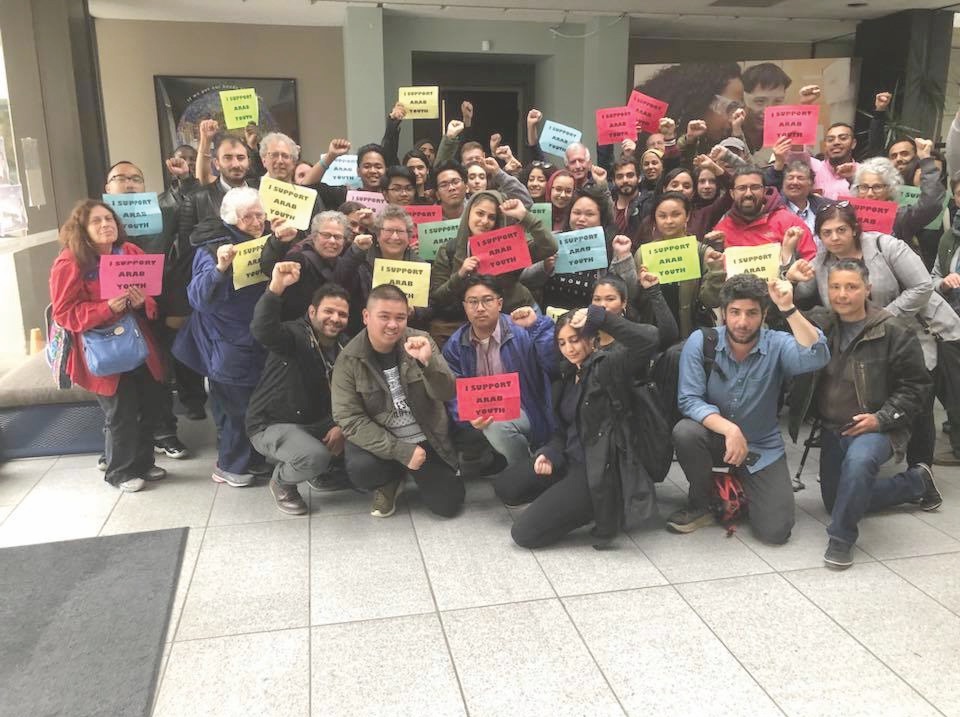
The Jewish community is pushing back against the San Francisco Unified School District (SFUSD) after it provided a contract to an anti-Zionist organization to hold workshops on “cultural empowerment.”

SFUSD’s board voted 6-1 on May 22 to provide the contract to the Arab Resource and Organizing Center (AROC). The contract allows the organization to offer workshops once a week at five San Francisco high schools.

Jewish Community Relations Council (JCRC) spokesman Jeremy Russell told the Jewish News of Northern California after the May 22 vote that it would “be very difficult for the district to enforce its nondiscrimination policies on an organization that fundraises on an anti-Zionist platform.”

AROC has a long history of anti-Zionism, including a 2014 tweet from the organization stating, “Help us kick Zionism out of the Bay Area.” Its website also refers to Israel as “racist” and “exclusionary.” AROC Executive Director Lara Kiswani said in November 2014, “Bringing down Israel really will benefit everyone in the world and everyone in society.”

In 2015, Kiswani told Al Jazeera, “No Arab is going to be OK with the ethnic cleansing of Palestinians, so inherently we must take a position of solidarity with the Palestinian people.”

AROC also led the 2014 Block the Boat campaign to prevent a cargo ship partly owned by an Israeli company from reaching the Port of Oakland.

Anti-Defamation League Central Pacific Regional Director Seth Brysk said in a statement to the Journal, “ADL has deep and continuing concerns about the Board of Education’s selection of [AROC] to conduct trainings for SFUSD. AROC has a long history up to the present of consistently engaging in strident and extreme anti-Israel activism and trafficking in anti-Semitic tropes in keeping with their biased views on the Israeli-Palestinian conflict. [Kiswani] has proclaimed as much in multiple instances evoking long-standing, offensive and hurtful anti-Jewish stereotypes of money, power and nefarious motives.”

Brysk added, “SFUSD should only partner with providers that are inclusive and will reinforce the district’s goals of creating respectful schools and communities.”

The Zionist Organization of America (ZOA) also denounced the contract in a letter to SFUSD. “Anti-Semitism, anti-Zionism and other forms of discrimination surely have no place in your schools, either,” ZOA wrote.

After the May 22 vote, AROC posted on its Facebook page, “After 3 years of not being allowed to work with OUR community in SF public schools, 3 years of attacks from Zionist organizations, and 3 years of pressuring the Board of Education, AROC’s MOU (Memorandum of Understanding) is finally reinstated! We can now continue to support Arab youth in the Bay Area!”

S.F. Schools Under Fire Over Anti-Zionist Course Read More »

Lisa Niver JUMPING Rocky Mountaineer train

June 2018 Jumping for Joy: We Said Go Travel News

June News 2018 Jumping for Joy with We Said Go Travel:

Thank you for all of your support for We Said Go Travel and me.

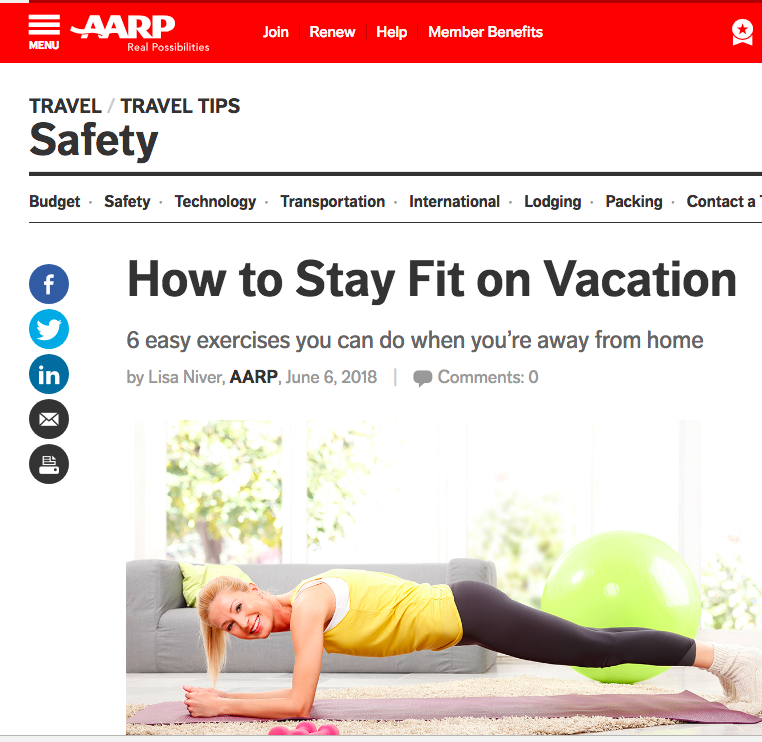
Thank you to AARP for sharing my story: “How to Stay Fit on Vacation: 6 easy exercises you can do when you’re away from home.” Thank you to my three fitness experts, Beth Kageyama, Bryant Johnson and Phong Tran, for making time to talk to me!

Lisa Niver's story for AARP on Travel and Fitness

If you are in the Los Angeles area, please join me at my art studio for our Summer Show: Hooked on Clay June 29 and 30.

The Clayhouse Summer Sale 2018


Thank you to Rise Boarders for their list! Out of over 1000+ travel blogs, I was listed as the top female travel blogger and We Said Go Travel was #4!

Lisa Niver and We Said Go Travel are #4 on the Top 1000+ Travel Blogger ListLisa Niver and We Said Go Travel are #4 on the Top 1000+ Travel Blogger List yay

Thank you to Scuba Diver Life for publishing my story about swimming with the Jellyfish!

Lisa Niver swum with the Jellyfish , ScubaDiverLife

I absolutely LOVED my adventures in May in Canada!
Read and watch here:

Lisa Jumping for JOY rocky Mountaineer


WHERE CAN YOU FIND MY TRAVEL VIDEOS?

Here are links to my video channels on YouTubeAmazon Fire Tv, and Roku Player. My views on Roku alone are now over one million! My total video views across all platforms is now over 1,913,089 (1.9Million)! ! Thank you for your support! What should I do to celebrate when I get to 2 MILLION views?

Recent videos from my Adventures Across Canada: to see them all CLICK HERE !

I am now planning and booking travel! Where do you want to wander? Find more information about me and my luxury travel advising as an independent affiliate of CRUISE and RESORT, Inc with Virtuoso Luxury Travel Network on my new microsite!

My fortune cookies said “Failure is the tuition you pay for success” and “It’s not only important to add years to your life but to add life to your years!”

Thank you for your support. Lisa

Discover more on my social media accounts:  InstagramFacebookTwitterPinterestYouTube, and at LisaNiver.com. My social media following is now over 100,000 and I am verified on both Twitter and Facebook.

TRAVEL PHOTO AWARD:

All of the entries from our first Travel Photo award have now been scheduled. After July, when all the entries are published, we will announce the winners.  Thank you to everyone who participated and to our judges, Gary Arndt from Everything Everywhere and Jeana from Surf and Sunshine. We hope you will submit a photo in our next award starting SOON!

TRAVEL WRITING AWARDS: 

Thank you to everyone who has participated in our 13 We Said Go Travel Competitions! Find the winners for all of them here.

The sunny view at Fairmont Chateau Lake Louise in May 2018 by Lisa Niver
The sunny view at Fairmont Chateau Lake Louise in May 2018

More from We Said Go Travel.

June 2018 Jumping for Joy: We Said Go Travel News Read More »