fbpx

May 16, 2018

Commerce and Ethical Guidelines Can Clash

Stories of scandals in the world of big business are splashed across the front pages of newspapers with dismaying frequency in the United States, about insider trading, the failures of deregulated savings-and-loan institutions, and the bankruptcy of corporations whose senior managers emptied them of assets for their own gain.

In Israel, the scandal stories are about the collapse of the banking system after banks encouraged potential depositors to invest in bank shares instead.

Such well-publicized revelations reflect only the most egregious violations of ethical norms in commerce and finance on a grand scale. Ethical decisions pervade our economic behavior.

Wherever fresh forms of business relationships develop, new ethical questions emerge.

Scholars and rabbis have explored the implications of the ethical principles and economic regulations of rabbinic tradition for contemporary problems of previously unimagined complexity. They often have done so with ethical sensitivity and economic subtlety.

But their judgments inevitably reflect their own views of economic life and of ethics as much as they reflect those of the authors whose precedents they cite. Consequently, there often is lively debate about which rules are to be applied to a given situation and in what way those rules should be interpreted.

This emphasis on modesty in consumption is echoed in the criticisms leveled by some Jewish scholars against the advertising industry, for arguably disseminating inaccurate information about goods and services.

Insider trading has been categorized by Jewish scholars as a violation of ethical norms and of specific commercial legislation. Jewish commercial law makes specific demands on sellers and buyers. It requires full disclosure of information relating to the value of the goods being traded. This is no less true if the goods are shares of a corporation than if they are physical items.

A transaction effected under falsified conditions may be canceled. If the information withheld by buyer or seller was gained by virtue of some office or task that provided access to privileged information, the sale or purchase made on the basis of this information also constitutes dealing in stolen property.

Intellectual property protection developed late in Jewish law, beginning with early modern rabbis’ bans on republication of printed materials. Such restrictions were designed to protect the printers’ investments, both for reasons of economic justice and because of cultural concerns — to help ensure the wide availability of Jewish religious texts once the printing industry began to make that possible. (Allowing printers’ works to be pirated would have reduced their expected profit and thus curtailed Hebrew printing ventures.)

Many pre-modern Jewish communities enacted sumptuary laws. These are regulations limiting the extent to which one could engage in ostentation in celebrations or conspicuous consumption in everyday life.

This emphasis on modesty in consumption is echoed in the criticisms leveled by some Jewish scholars against the advertising industry, for arguably disseminating inaccurate information about goods and services, and seeking to stimulate consumption by encouraging us to covet what others have.

The latter flies in the face of the sentiment expressed in the rabbinic adage, “Who is wealthy? He who is satisfied with his lot.”

An issue of social and economic policy that has divided Jews no less than other citizens is the question of gun control. A case can be made that Jewish law forbids the sale of weapons to those who will use them for offensive purposes in illegitimate ways.

This debate has implications both for individuals and for governments, including that of the State of Israel, whose military industries provide a significant proportion of its exports.

Commerce and Ethical Guidelines Can Clash Read More »

Books: The Jewish DNA

“I cannot live without books.” These famous words were spoken by Thomas Jefferson on June 10, 1815, but they were most likely born on the 6th of Sivan — Shavuot — some 3,300 years ago at Mount Sinai. On that day, when God gave the Jewish people one book — the Torah — the 3,000-year-plus Jewish love affair with books began.

On a daily basis in our evening prayers, we affirm that we cannot live without books, “for they are our life and the length of our days.” In their jointly written book “Jews and Words,” Amos Oz (father) and Fania Oz-Salzberger (daughter) say that “Jewish continuity has always hinged on uttered and written words,” and that Judaism’s lineage is “not a bloodline, but a textline.”

Drawing on a personal example of this “textline,” I was raised by a Moroccan father whose mother was the descendant of a long line of kabbalistic rabbis originally from Spain. My father’s grandfather, Rabbi Yosef Pinto (died in 1953), was the last in that line in Marrakesh. In Pinto’s old age, his eyesight was weary, and my father told me that he became his “grandfather’s eyes.” Pinto had an extensive library filled with classic Jewish books — Torah, commentaries, Talmud, Midrash and kabbalah — and my father spent every Shabbat and holiday in his youth reading from these books to his grandfather, and listening to his explanations.

My father was curious about his grandfather’s distinguished lineage, so one day he asked him, “Please tell me about our family. Where do we come from?” Pinto answered, “We come from a book.” Perplexed, my father asked for a further explanation, and his grandfather replied, “A long time ago, our ancestor Rabbi Jacob Pinto wrote a book called ‘Mikdash Melech.’ It’s a kabbalistic commentary on the Torah. That’s where we come from, that is our origins, that book.”

When my father asked his grandfather to point him to the place on the bookshelf where the book could be found, Pinto’s face turned sad and he said, “We don’t have the book. It was borrowed many years ago by students who left on a long journey, and they never returned. Not them, not the book.”

From childhood, I grew up with this story. I was blessed to live in a home whose bookshelves were filled with hundreds of Jewish books, but I nonetheless felt that one book was missing. As a child, I Imagined what that book might look like, its font, its pages, its binding. What would it feel like to hold the book that, according to my great-grandfather, is my roots, my origin, my DNA. I left a symbolic empty spot on one of my bookshelves, with the hope that one day this special book would find it’s rightful place in my home.

My journey to “Mikdash Melech” is but one of millions of Jewish journeys within the world of sacred books.

At the age of 17, I left Los Angeles to study in Yeshivat Kerem B’Yavneh in Israel. The yeshiva’s main building comprised a large beit midrash — the study hall where we spent most of our day studying Talmud in pairs (chavrutot) — and a smaller library of rare books upstairs. The upstairs library was barely used, as most of the books were rare, out of print, and often not in readable condition.

One day, my study partner was sick and didn’t come to the beit midrash. Being a bibliophile, I took this opportunity to venture upstairs and check out the rare books. As I browsed through shelves of ancient books, I thought of my family’s missing book. I chanced upon a small card catalogue, and I flipped to the Hebrew letter “mem,” in search of “Mikdash Melech.” I flipped and flipped the cards, and almost flipped out when I saw one card that read “Mikdash Melech.” I nervously followed the catalog number to the shelf. My heart was filled with hope that this was the book, but my mind kept saying, “It’s probably another book by the same name.”

I found a book named “Mikdash Melech,” and with trembling hands I opened its frail pages, soon to find a name on the title page that had me jumping for joy like a little boy in a candy store: Rabbi Yaakov Pinto.

I ran to a pay phone to call my father, and when he answered the phone, I told him, “Guess what I’m holding in my hands? I’m holding our family’s DNA, what your grandfather called the book of our origins, the book where I come from, where you come from, where our family comes from.”

With tears of joy my father said, “Please read to me.” Here I was, long distance, doing for my father what he did for his grandfather. For that moment, I became his eyes, and over the phone, I read to him from the opening page of this one magical book, the book that represents my family’s textline.

My journey to “Mikdash Melech” is but one of millions of Jewish journeys within the world of sacred books. We are a people for whom reading is not just a pastime, it’s an act of spirituality. Studying is not something we do for exams; rather, it’s our primary mode of religious expression. We treat our books with respect, admiration and love. Every word is sacred, and every letter can give birth to a wealth of new ideas.

While Islam referred to the Jewish people as “The People of the Book,” I would say a more accurate title for us is “The people of the interpretation of the book.” Through thousands of years and millions of pages of interpretation, we have helped our original book give birth to innumerable other books, all that tell the Jewish story in one way or the other, and all that collectively speak to our passionate love affair with books.

In his book “The Genius of Judaism,” French philosopher Bernard-Henri Levy writes, “The genius of Judaism is the Book and books. And it is when one chooses to close these books — that is, to comment on them no further, to challenge and oppose them no more — that the genius dies.”

As we enter our festival of books — Shavuot — let us renew our commitment to reading, studying, discussing, arguing, commenting, explaining and exploring the meaning of our ultimate symbol — our books. As we spend the night of Shavuot expressing our love for Torah and contemplating our Jewish identity, let us remember that, in my great-grandfather’s words, we all “come from a book.” Our DNA is not found in labs, but in libraries. I know that when I was 17, that’s where I found mine.


Rabbi Daniel Bouskila is the director of the Sephardic Educational Center.

Books: The Jewish DNA Read More »

Reclaiming Our Mystical Mojo on Shavuot

It is time to take back mysticism, and Shavuot is the perfect time to reclaim our mystical mojo.

Modern man has become skeptical and cynical. We demand evidence and logical arguments. Usually, that is a good thing, but without an unreasonable suspension of disbelief or religious imperative, modernity turns mysticism from inspiration into “fake news.”

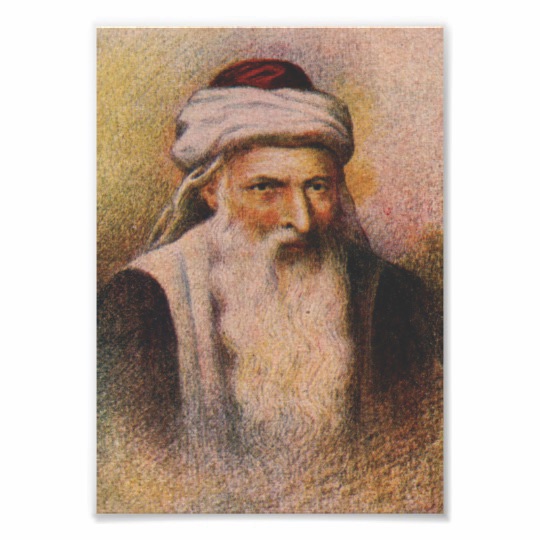
There is a tradition to study Torah all night on Shavuot. The origins of this practice are cloaked in mysticism and mystery. Rabbis Joseph Karo and Shlomo Alkabetz lived in 16th century Safed, Israel, with a small group of dedicated disciples. Alkabetz, who composed “Lecha Dodi,” was an extraordinary poet and musician. He was pure soul. Karo, compiler of the “Shulchan Arukh” — Jewish Code of Law — was a halachist without peer. His study partner could only be an angel of God. Karo studied with an angel and he recorded their conversations in a book called “Maggid Meisharim.” Nobody knew about Karo’s special chavruta until Shavuot night 5733.

Karo and Alkabetz made a pact to study Torah for the entire night with their students, reverently chanting the holy words. At midnight, a disembodied voice began to speak through Karo:

“You are blessed in this world and the next word because of the crown you have returned to my head. Years ago, I was thrown into the garbage heap and my crown was taken from me. I was inconsolable but tonight you have restored my crown to its glory. Be strong! Be courageous, my loves! Rejoice and celebrate!”

Alkabetz understood this heavenly voice was Karo’s study partner.

Stories do not need to be true to inspire and invigorate us spiritually. They just need to be good.

After the monologue, the group studied mystical secrets of the Torah together with the voice. However, they were informed that they lacked a minyan (a quorum of 10 men), so they could not hear all the secrets of the Torah.

The group diligently completed their vigil of Torah study until morning. Three students missed the learn-a-thon because they went to sleep. When they heard the story, they were heartbroken. So they decided to do study for a second consecutive night.

On the second night, the voice did not wait until midnight. When the group began to study, the voice returned with more praise, love and insights. The angel said that on both nights, their Torah was able to touch God and hasten the redemption.

And so, a tradition was born.

Judaism ceded mysticism and mystery to the Charedim. Everyone else is a skeptic. But we all need the legends of the mystics in our Judaism. Stories do not need to be true to inspire and invigorate us spiritually. They just need to be good.

We need great stories like Karo and the voice of God on Shavuot night to inspire another 500 years of Judaism.


Eli Fink is a rabbi, writer and managing supervisor at the Jewish Journal.

Reclaiming Our Mystical Mojo on Shavuot Read More »

Moldovan Jews’ Tragic History in ‘Absent’

When Los Angeles filmmaker Matthew Mishory set about making his 2015 documentary, “Absent,” about the ghost village of Marculesti in Moldova, it was personal.

Mishory’s father and grandparents left Moldova prior to World War II, and the 35-year-old Mishory is the only family member who has ever returned. The documentary explores what became of the once vibrant Jewish mercantile community in Bessarabia (now Molodova), which flourished for more than 100 years.

The  71-minute film begins with Mishory narrating, “On a July day in 1941, nearly a thousand people, the entire population of Marculesti, were shot by the Romanian army. I wanted to find out what the current residents thought about the village’s history.”

The village is now one of Europe’s poorest, most remote and least-visited places.

Mishory titled the film ”Absent” because “ultimately, I thought the village and the film were as evocative for what wasn’t visible as what was. This is my only film without complex camera movements or even music. The silence of the place became the score.”

“On a July day in 1941, nearly a thousand people, the entire population of Marculesti, were shot by the Romanian army. I wanted to find out what the current residents thought about the village’s history.” – Matthew Mishory

By the time the film went into production, Mishory’s father was already quite ill.

“I had the memorable experience of calling [my father], after a day of filming, from the former schoolhouse building in the center of the village, where my grandfather had once been a teacher,” Mishory said. “I think my father was pleased somebody had finally paid tribute in some small way to what it had been but no longer is. It was the settling of a very old account.”

Mishory began filming in the fall of 2013. Heading to Marculesti, he said he was aware of the state of the Jewish cemetery. “I knew it had been abandoned to the overgrowth, so I had a sense that this was a place that had a difficult and tenuous relationship with its history.”

Mishory interviewed residents who said they had no idea of the village’s history, a  historian who adamantly denied the massacre, and a village elder who seemed to have been waiting her whole life to share what happened to the village’s Jews. The film ends with the mayor’s 14-year-old son leading the filmmakers to the location of a mass grave, the site of the massacre.

“You really see the full spectrum [in the film] of denial to acceptance with quite a lot of misinformation and, I would say, willful avoidance in the center of the spectrum,” Mishory said. “And that’s closest to the truth of the place.”

Mishory completed the film in 2015 and “Absent” premiered at the Astra Film Festival in Sibiu, Romania, in October that year.

“In a broader sense, the film isn’t about the past, it’s about the present,” Mishory said. “It’s about how we talk about [what happened] and if there’s something to be gained or lost from that history slowly eroding.”

“Absent” is streaming on Amazon. 

Moldovan Jews’ Tragic History in ‘Absent’ Read More »

Photographer’s Exhibit Honors Her Holocaust Survivor Father

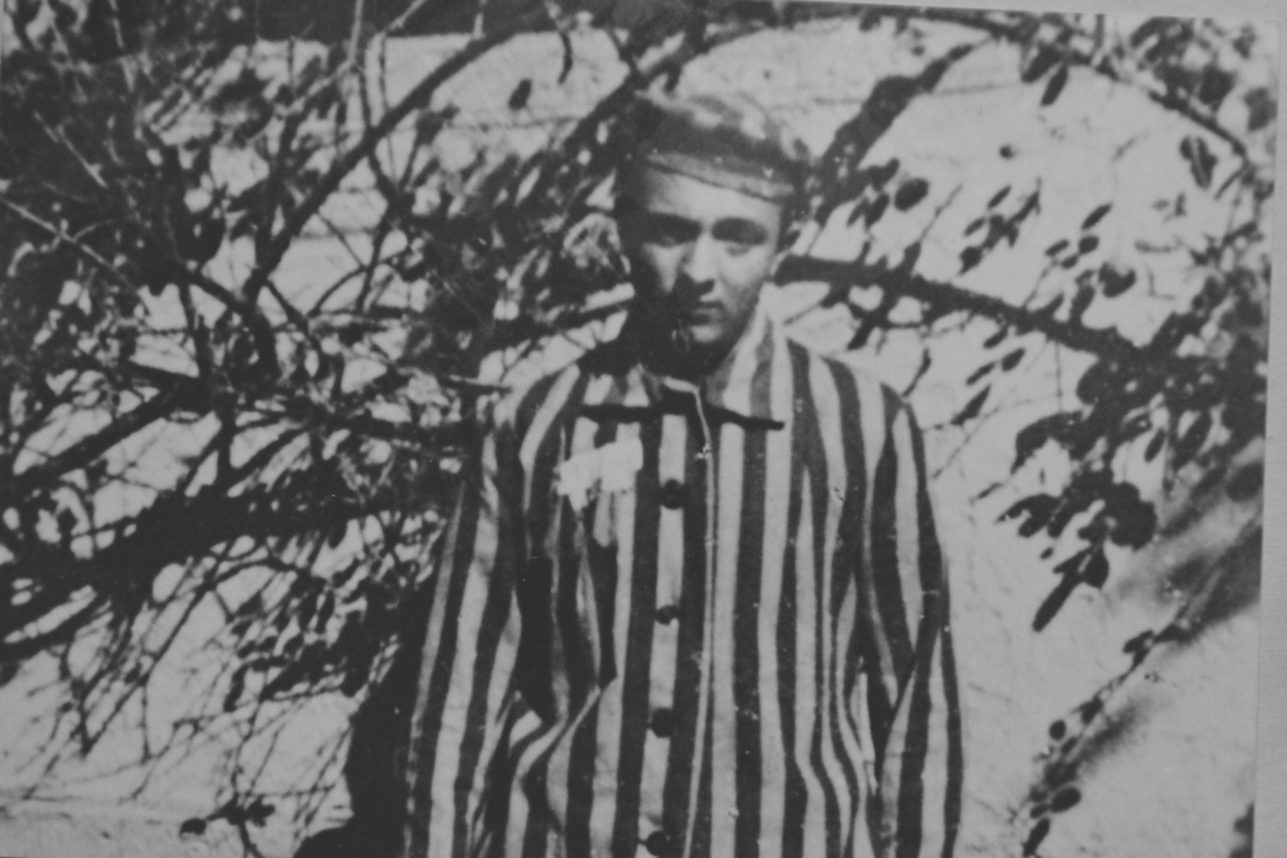
Of the 3.3 million Jews living in Poland before World War II, only 10 percent survived the Holocaust. Photographer Hannah Kozak’s father, Sol, was one of them, and his life-altering experiences have also profoundly impacted her life.

After Sol’s death in December 2012, Kozak made multiple trips to Europe to visit the sites of the eight labor camps where he was interned from 1943-45. She also visited 10 concentration camps, including Auschwitz-Birkenau, Sobibor and Belzec. Forty of the black-and-white photographs she took there are now on display at the Los Angeles Museum of the Holocaust in the exhibition “Survivor: My Father’s Ghosts.”

The images include remnants of barbed wire fences, train tracks and trees “that bore witness. I think they absorbed the sadness,” Kozak told the Journal. She began reading about World War II and the Holocaust as a child and felt compelled to learn more. However, she said being at the sites where her father struggled to live and members of his family were murdered was overwhelmingly difficult. “So many ghosts,” she said. But she kept going back “because to fully flesh out the project, I wanted to try to understand the breadth of [the Shoah].”

Using a 1961 Rolleiflex camera, Kozak shot on film and made 200 prints, ultimately choosing one-fifth for the exhibit. “Digital didn’t have the look I was trying to achieve,” she said. “There’s layers and depth to film, a richness that can’t be reached digitally. Shooting on film slows me down, makes me more present and gives me a tangible product. To me, a picture is not a photo unless it’s a print.”

Kozak also began shooting a film in 2009 about her father’s life, and it accompanies her photographs in the exhibition. “I’d been making a movie that I thought would be for my brothers and sister,” she said. “And then I realized the depth of the story was much bigger than a family movie.” Her film also incorporates Kozak’s visits to the camps and her father’s hometown in Poland.

Hannah and Sol c. 1970

“My father’s life is a story of tragedy and inspiration, all at once. I feel as if I was chosen to tell it. I don’t think I had a choice.” — Hannah Kozak

Kozak said her father “wouldn’t talk about his experiences during the war when we were growing up because he wanted to spare us the pain. But as he got older, the memories started to flood him and it was very important to him that I tell his story.”

Along with archival footage she shot herself, a clip from the interview Sol gave to the Shoah Foundation Project in 1995 is included in the film. Hannah believes her father survived because he never lost hope. “He had an unwavering belief in God,” she said in her narration. “I think he survived so he could give testimony.”

Guatemalan-Jewish on her mother’s side, Kozak is “on a spiritual path” that has included living on an Israeli kibbutz at 20 and having a bat mitzvah at 27. “I’m proud of being Jewish,” she said.

The middle of five children, Kozak, 57, fell in love with photography when her father gave her his Kodak Brownie Hawkeye camera when she was 10. “I’d photograph our dogs, my siblings. The way I express myself is through photos,” she said. “Photography taught me to see even when I didn’t have a camera in my hand. It made me slow down, made me see minutiae.”

For 25 years, the Los Angeles native worked as a Hollywood stuntwoman, working on such films as “Transformers” and “Iron Man” and doubling for actresses such as Cher, Angelina Jolie and Lara Flynn Boyle. “I was scared of everything when I was little. I had a lot of anxiety. It was a way of overcoming fear,” she explained of her career choice.

For the last five years, Kozak has worked as a location manager on the TV series “Brooklyn Nine-Nine,” and she’s also a writer, currently seeking a publisher for the book she has written about Michael Jackson, whose death, she said, deeply affected her. “Storytelling helps to process the confusion in our world and to help make sense of it,” she said.

She also wants to travel more, including returning to Israel, Eastern Europe and Berlin. “I recharge by traveling. I like to wander alone, and things come to me,” she said. Kozak also would like to get a doctorate in Holocaust studies. “It’s such a layered subject. The more I delve into it, the less I understand.”

Kozak also plans to publish a book of her “My Father’s Ghosts” photographs and take the show to other Holocaust museums. “My father’s life is a story of tragedy and inspiration, all at once,” she said. “I feel as if I was chosen to tell it. I don’t think I had a choice.”

She finds the lessons of the Holocaust especially urgent in today’s sociopolitical climate. “This is all happening again. It’s important for us to remember the past,” she said. “If we don’t learn from our mistakes, we just repeat them.”

“Survivor: My Father’s Ghosts” runs from May 20 through Aug. 30 at the Los Angeles Museum of the Holocaust.

Photographer’s Exhibit Honors Her Holocaust Survivor Father Read More »

Simms/Mann Think Tank Focuses on Children

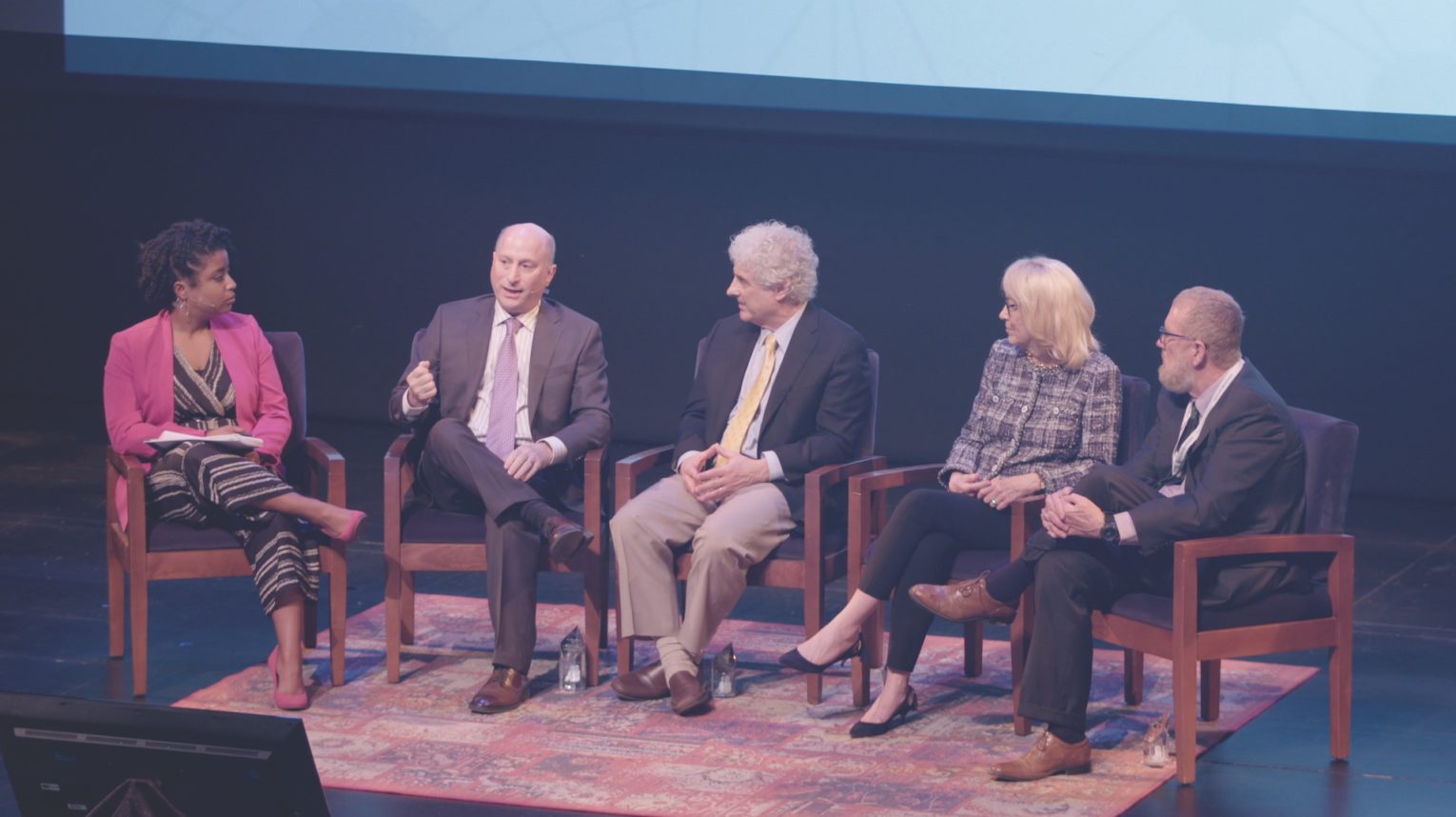
It was an unusual day for Jay Sanderson. Rather than taking meetings and calls from his office on Wilshire Boulevard, The Jewish Federation of Greater Los Angeles’ president and CEO was attending the Simms/Mann Institute Think Tank conference at the Wallis Annenberg Center for the Performing Arts in Beverly Hills.

The conference, which took place on May 2, is an annual, daylong event on early childhood development that brings together world-renowned neuroscientists studying how the brain develops during the first three years of life with professionals who can translate new insights into best practices and then put them into action — pediatricians, OB-GYNs, social workers, educators and nonprofit leaders, among others.

Dr. Victoria Mann Simms, president of the Simms/Mann Family Foundation and Institute, and a child development specialist, told the Journal the think tank is designed to help close the information gap between researchers and practitioners so that more children and families can thrive in our high-pressure world.

Sanderson was among more than 500 people who signed up for the sold-out conference months in advance, to hear researchers talk about early factors that promote lifelong resilience. Presentations covered how parents can help their children feel less stressed; how involved fathers in particular can influence their children’s development of language and reading skills; and how helping children learn to recognize, understand and name their feelings from a very young age prepares them to successfully navigate the social and emotional challenges that crop up in adolescence and beyond.

“Every challenge that we face would be easier if we created healthy Jews,” Sanderson told the Journal after the event. “If we could start looking at a child’s health and well-being — as well as their Jewish connections — from birth, we would have fewer problems when they enter adulthood.”

“If we could start looking at a child’s health and well-being — as well as their Jewish connections — from birth, we would have fewer problems when they enter adulthood.” — Jay Sanderson

The Simms/Mann Institute partnered with Federation and Builders of Jewish Education in 2015 to pilot the First 36 Project, a fellowship program that teaches parent-and-me class facilitators about child development theory and cutting-edge neuroscience research. Thirty-six educators representing 18 early childhood centers ranging from Orthodox to Reform have participated to date, and the Simms/Mann Institute is now in conversation with organizations outside Los Angeles about expansion.

Rabbi Nicole Guzik, who works at Sinai Temple, spoke during a panel discussion at the General Assembly last November. She said that as a result of the training she received — which covered topics such as attachment, temperament, communication and empathy — she has felt more comfortable engaging other parents about the importance of early relationships and has incorporated more rituals and routines, which promote healthy brain development, into her family’s home life. In addition, she said the number of families engaged in Sinai’s Dor Chadash community for young families has increased dramatically in the past few years.

Another First 36 Project alum, Nicole Mevorakh, said the program gave her and a colleague the confidence they needed to launch a new class at Stephen Wise Temple and Schools. That class has recently doubled in size and has a waiting list for the summer.

“The First 36 Project is a proactive strategy to help create the strongest Jewish community by creating the strongest, most resilient Jews from the beginning,” Sanderson said.

“The work that we are doing, from the think tank to the First 36 Project to the CuddleBright Experience [a parenting tool the Simms/Mann Institute designed and produced to help parents and young children develop secure attachments and reduce anxiety during periods of separation] is about the power of relationships from birth,” Simms said. “If we can help people understand that our social, emotional and cognitive health are connected and interdependent, then we can improve the future of medicine and education, and we can improve lives.”

Dr. Pat Levitt, the Simms/Mann Chair in Developmental Neurogenetics at Children’s Hospital Los Angeles, emceed the conference, while Simms handed out this year’s Simms/Mann Institute Whole Child Awards to exceptional leaders working in the early childhood fields. Pediatrician Thomas Boyce, I-LABS Co-Directors Dr. Patricia Kuhl and Dr. Andrew Meltzoff, and Zero to Three Executive Director Matthew Melmed were recognized in the areas of medicine, community education and visionary leadership, respectively.

“We now know that healthy bonds build healthy brains, but our society doesn’t prioritize or make room for deep connections,” Simms said. “There’s so much pressure to be perfect, but it’s important for parents to understand that long-term contentment is something one builds piece by piece. Creating a meaningful life is an active, not a passive, process. This is what we need to teach our children so that they value themselves more than things.”


Shayna Rose Triebwasser is a philanthropic adviser who consults for the Simms/Mann Family Foundation and Institute.

Simms/Mann Think Tank Focuses on Children Read More »

Touring Downtown L.A.’s Skid Row

A group of 20 people sits perched on the steps at Biddy Mason Memorial Park in downtown Los Angeles. Standing before them, their guide, Avram Mandell, issues the following instructions:

“Make sure to stare people in the eyes. Treat them like they’re human beings.”

The instructions come ahead of a visit to Skid Row as part of “Collaboratory,” an annual gathering with diverse programming for more than 250 Jewish community visionaries and activists from all over the world.

This particular event, which took place on May 2, was a  “Homelessness Tour,” and is a staple of Tzedek America, the organization Mandell founded that provides social justice experiential education through a Jewish lens — often in the form of the immersive tours he leads.

After departing on foot from downtown’s Japanese American National Museum, home base for “Collaboratory,” Mandell distributed “Understanding Homelessness” field guides. The four-page pamphlets included passages from Jewish texts and startling statistics on the homelessness crisis in Los Angeles, including that there are only nine public toilets available to the 1,800 homeless people who sleep on Skid Row’s sidewalks and alleys each night.

“That’s 200 people per toilet every night,” Mandell said. “That ratio is way worse than what the United Nations recommends for refugee camps.”

Mandell enlisted the help of his friend Neel Sodha, a private tour guide, to lead what he coined a “Gentrification Tour.” The group made stops at landmarks such as the Bradbury Building, the Grand Central Market and the historic Spring Street District, learning about downtown’s heyday during the first half of the 20th century. Sodha gradually segued into how a combination of factors, including real estate development, legislation and “Greyhound therapy” — the practice of cold, East Coast cities bussing their homeless to warmer climes — led to the present-day situation of 58,000 homeless people in Los Angeles County and the creation of a 60-block confined area of homeless encampments (Skid Row) a few streets over from the wealthy epicenter of downtown’s resurgence.

“Skid Row slowly immerses you into the stark realities of poverty in our city and the issues we are dealing with.” — Avram Mandell

“This part slowly immerses you into the stark realities of poverty in our city and the issues we are dealing with,” Mandell said. “With any tour, we try to provide ample background and context.”

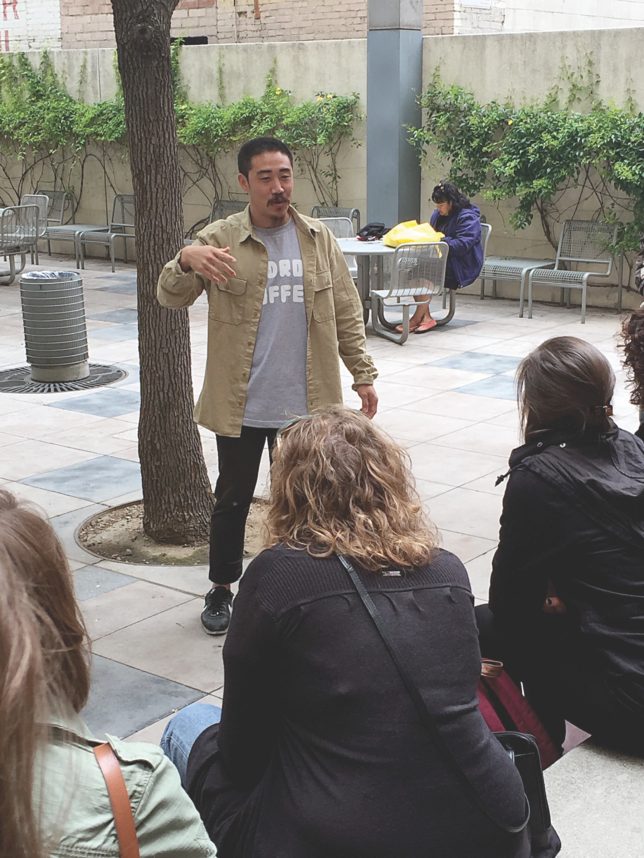
After a short break at Biddy Mason Memorial Park, which included a group analysis and discussion of a Maimonides quote on charity, Danny Park, a Korean American who grew up near Skid Row, joined the group. Park, 33, quit his job at Nike two years ago to start “Skid Row Coffee,” a pop-up coffee shop run by and for local residents. Park, whose family has operated a small market in the neighborhood for more than 20 years, told the group about his plans for the pop-up.

“The goal is to provide a social space for Skid Row residents with a focus on job training, job creation and addressing food insecurity,” he said. Mandell then urged Park to share a piece of exciting news about the budding catering side of his pop-up business.

“Oh, yeah, we’re catering our first bar mitzvah in June,” Park said.

Standing alongside him was Javon Burnett, 30, an African-American resident of Skid Row who works for Park’s pop-up. Charming and affable in a black hoodie, Burnett told the group that he produces his own podcasts about the African-American experience, and welcomed the group to his neighborhood.

“There are a lot of great things happening around here,” he said. “I’m just happy you’re here to see what’s going on and to learn about it.”

As the group traversed sections of Skid Row past tents, Arielle Sokoloff, 29, who works for a Jewish nonprofit in New York, walked and chatted with Burnett. Afterward, she said talking to him “gave a face” to homelessness.

“In New York, I haven’t done much research or engaged with the issue of homelessness much and I wasn’t expecting anything like that to happen here,” Sokoloff said. “I was just really drawn to his personality and passion for his community. He’s around my age and leads such a different life. I just kept asking him questions and enjoyed hearing his take on how things work in Skid Row. I felt like he really opened up to me.”

The group also paid visits to the Downtown Women’s Center (DWC), a nonprofit organization that serves and empowers homeless and formerly homeless women, and the Union Rescue Mission (URM), a private Christian homeless shelter.

“It’s a very humbling experience coming to places like this,” Reuven Margrett, 41, who lives in Jerusalem, said from inside the DWC. “It’s great knowing there are social institutions that very sensitively try to find solutions to help people. There are good people — very good people — out there.”

One of them is Peter Coward, a case manager providing social services at the URM who spoke about the Skid Row clients he works with on a daily basis, including those who have trouble getting children enrolled in school without proof of a home address.

That struck a chord with participant Michelle Ruggier, 41, a mother of three who lives in North Hollywood and works for a Jewish nonprofit that serves adults with disabilities.

“Enrolling kids in school is something so straightforward that most of us just take it for granted,” she said. “It seems like it should be a no-brainer that kids should be able to go to school. Apparently, it’s not.”

After the tour, a hopeful Mandell told the Journal that personal stories more than anything are what drive change in everyday people.

“I think what moves the needle in our society and inspires people to action is hearing other people’s stories about how they’ve made change in the world,” he said. “If you see how [Park] saw his community from the viewpoint of his family’s market and wants to help residents in the neighborhood where he grew up, then you start to think about what you can do to help. That’s the question you need to ask once you know things like Skid Row Coffee exist.”

A few days after the tour, Ruggier told the Journal that she was still processing what she saw and planning how to get involved.

“I was just talking to my friends about Skid Row Coffee and we’re going to try to take our kids to volunteer at some of their events,” she said. “There’s just so much more that we can do as a community.”

Touring Downtown L.A.’s Skid Row Read More »

Adat Ari El Shakes Up Dues Model

Earlier this month, members of Adat Ari El, a Conservative synagogue in Valley Village, received a letter informing them of “an entirely new membership structure.” The new “Sustainability Model” is a give-what-you-can (at the highest level possible) approach that replaces a more traditional system that featured 22 levels of membership based on things such as marital status and age.

This radical shift comes following the hiring last summer of Adat Ari El Executive Director Eric Nicastro, after a steady drop in families joining the synagogue over the past decade. The temple also had several “negative budget years,” Nicastro told the Journal.

However, Nicastro said the move to make the change was not his idea, although it was one he wholeheartedly embraced. Rather, it was part of the interview process.

“One of the reasons I was selected,” he said, “is I came in with this idea of what synagogues were like in L.A. and really around the country, and the antiquated model of membership dues and not being accessible. It’s expensive being Jewish. Finances become this massive roadblock.”

Indeed, before Adat Ari El’s new model, a family of four could pay close to $4,000 in annual dues. The new model has an average “sustainability level” of $2,800, but it also gives families and individuals the option to pay as little as $500 annually (which includes High Holy Days tickets), without having to supply financial information.

“I came in with this idea of what synagogues were like in L.A. and really around the country, and the antiquated model of membership dues and not being accessible.” — Eric Nicastro

“When I read [the letter], my first reaction was relief,” said Talia Strauss, a Studio City resident who has been a member of Adat Ari El for about 10 years. Strauss also has children at the temple’s early childhood center and day school. “A lot of people have complained about temple memberships, especially for families like us [also] paying tuition for school. To have to pay a temple membership, it’s an extra that you say, ‘Wow. That’s great. Maybe this year I don’t want to do the full temple dues, and I would love to pay a quarter of that.’ That would make me be able to breathe the rest of the year.”

While some newer and progressive congregations are using alternative membership models — some are even abandoning the use of the word member altogether — it is still a relatively new concept at Conservative temples, and some Adat Ari El stakeholders were resistant, or at least uncertain.

“What we had to get [the 67-member board] past was the fear that everyone is going to pay the lowest amount possible,” Nicastro said. “However, the data is the opposite. People actually pay more.”

Rabbi Jonathan Jaffe Bernhard counts himself among “those people who were a little more cautious.” But ultimately, he told the Journal, “we felt that the risk was one we could absorb. The other thing is, the dues model is a risk in and of itself. We just weren’t as cognizant to it because it’s what we had been doing.”

Although the change is very new, Nicastro and Bernhard are buoyed by the early response. Several households have made commitments of $4,000 or $5,000. One congregant who had been paying $100 per year for many years upped the contribution to $250.

“What it allows us to do more than anything else,” Bernhard said, “is take the feeling that being part of the Jewish community is transactional and move it toward a partnership you enter with other people to create the kind of community that you want to live in and reflects your values.”

Adat Ari El Shakes Up Dues Model Read More »

Milken Schools Head Steps Down

Gary Weisserman, head of school at Milken Community Schools, is stepping down from his position at the end of the current academic year.

In a May 11 open letter to the Milken community, Weisserman said, “After much discussion with our Board of Trustees, I have decided to step down as Head of School at the end of this school year to pursue some new opportunities which have been presented to me, including some here in Los Angeles.” He added, “I leave the school in the very finest hands, and I am confident that Milken will continue to go from strength to strength.”

In an email to the Journal, Weisserman declined to immediately elaborate on his future plans.

Milken Community Schools Board Chairman Richard Sandler also issued a statement, saying, “The Board respects this decision and thanks Gary for his leadership these past five years following the separation from Stephen S. Wise Temple.” He added the school will convene a search committee to find Weisserman’s replacement.

Milken hired Weisserman as head of the 750-student middle and high school prior to the start of the 2013-14 school year, after the school had severed ties with the Reform congregation Stephen Wise Temple in 2012.

During his tenure, Weisserman focused on technology in the classroom. In 2016, Milken opened the Guerin Family Institute for Advanced Sciences at Milken — equipped with 3D printers, laser cutters, a milling machine and programming tools — as part of its commitment to advancing STEM (science, technology, engineering and math) education.

Weisserman also emphasized Jewish learning that takes into account contemporary challenges facing students daily, as opposed to Jewish studies that may not be relevant to students.

“For the better part of this decade, I have had the extraordinary privilege of leading this amazing institution through one of its most important and transformative periods.” – Gary Weisserman

“My interest isn’t so much in leading the best Jewish school as it is to make sure the best school in the country is a Jewish one,” he said in a 2014 interview with the Journal.

Prior to joining the faculty at Milken, Weisserman, who grew up in Detroit, served as chief academics officer at Scheck Hillel Community School in North Miami Beach, Fla., one of the largest Jewish day schools in the nation.

Weisserman’s decision is one of two recent leadership shakeups at Milken. Last month, Metuka Benjamin, president of Milken Community Schools, announced her decision to move on from Milken at the end of the current academic year.

Weisserman said he was grateful for, and proud of, the time he spent leading Milken.

“For the better part of this decade, I have had the extraordinary privilege of leading this amazing institution through one of its most important and transformative periods. Serving as your Head of School has been — and continues to be — a joyful, fulfilling experience,” he said in his letter to the Milken community. “I am enormously proud of what we have accomplished together, and believe Milken now stands not only as the finest Jewish school in the nation, but one of the finest schools.”

Milken Schools Head Steps Down Read More »

Photographer Trains Her Eye on Vanishing Jewish Communities

In 2007, while working on a Jewish-themed photography project in India, New York-based photographer Chrystie Sherman decided to travel from Delhi to Kabul to photograph the last living Jew in Afghanistan.

Getting there, however, was tricky. Since 2001, the United States had been at war with Afghanistan, and many parts of the country were still dangerous. Sherman took great precautions in arranging the trip, first tracking down an NPR journalist working in Kabul who could advise her on travel plans and facilitate local connections. Then she hired a fixer who could help her navigate a city in which bombings still rocked civilian life on a regular basis.

When Sherman finally arrived in Kabul, Zabolon Simantov, Afghanistan’s best-known and only remaining Jewish resident, kept her waiting for three days.

“As it turned out, all I needed to do was just show up with the two bottles of promised scotch that I smuggled in for him at great risk, to get into the synagogue on Flower Street called the ‘Jewish Mosque,’ ” Sherman wrote in an unpublished reflection she shared with the Journal.

Since Afghanistan is a strict Muslim country that adheres to Sharia law, it is illegal for most Afghans to possess or consume alcohol (drinkers can be fined, imprisoned or lashed), but foreigners are permitted to import two bottles. When Sherman arrived at Simantov’s modest one-room apartment located on the second floor of the synagogue, she noticed she wasn’t the only one who had brought outside offerings. An open box of Manischewitz matzo also sat on the table. Simantov, she wrote, had become a “cause celebre” — a one-man tourist attraction and living relic of history who offered to tell the story of his Jewish experience in exchange for gifts.

“I started realizing that no matter where I would go, I’d run up against the same problem, which is that these communities are small and disappearing. I began to think of my work as saving the memory of Jewish life through photography.” — Chrystie Sherman

At the end of their meeting, Sherman offered a donation to the synagogue, which had been ruined since the Taliban had ransacked it years earlier. “It looked like a bombed-out bunker,” she wrote in her reflection. The militant Islamist group also had stolen most of the synagogue’s valuable Judaica. So when Sherman offered Simantov a crisp $100 bill, she thought he’d be pleased. But instead, he grew angry and threw the money on the ground. “He said, ‘I want $1,000,’ ” Sherman recounted in an interview. When she didn’t comply, she said Simantov declared the photoshoot over. “And then he locked himself in his room.”

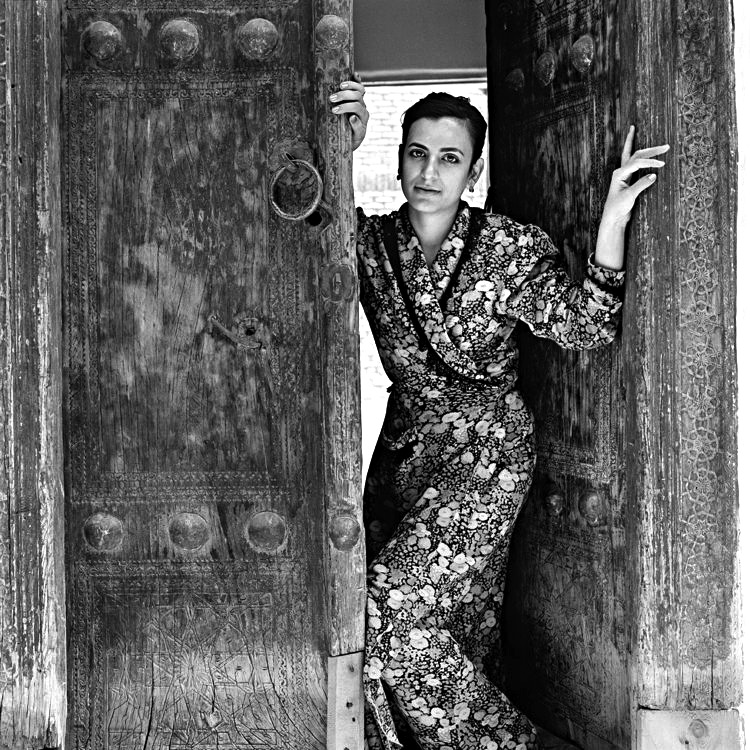
This tense encounter offers a privileged view of the psychic toll that living in a disappearing community can have on its residents. It’s a subject Sherman knows well, having spent the past 16 years traveling the world to document what is left of once-thriving Jewish communities from the Caribbean to North Africa to Central Asia. Her resulting gallery, “Home in Another Place” is a collection of nearly 300 portraits that capture everyday life in Jewish communities least touched by globalization, where life is still lived in small towns and cities, agrarian suburbs and old, decaying buildings.


“Lucia, Survivor / 24415”
The last Holocaust survivor in Rhodes, Greece.

Since 2002, Sherman has focused her lens on what she describes as “overlooked” Jewish communities in nearly a dozen countries, including Uzbekistan, India, Greece, Turkey, Tunisia, Morocco and Cuba, many of whose residents trace their roots into ancient Babylonia and Persia, and whose personal histories of persecution mirror the global story of Jewish exile in the Diaspora. Sherman’s work has been exhibited in New York, Rome, Philadelphia and Washington, D.C., and she is at work on a book that was waitlisted at the prestigious German publishing house Steidl.

The subtext of Sherman’s portraits is painful: Not one of these communities is growing, but they are surviving, and Sherman’s photographs suggest that the secret behind their survival is at least, in part, a stubborn drive to cling to tradition: It is a family lighting candles together in Kottareddipalem, India; or a minyan of men wrapped in tallitot in Tashkent, Uzbekistan; or young boys wearing kippot in Berdychiv, Ukraine. Though many of these communities have faced varying degrees of discrimination and poverty, and today face the threat of emigration of their young, survival, we learn from Sherman’s portraits, is about maintaining tradition even in the face of extinction.

“I’ve always been interested in people,” the 60-something Sherman said during a recent phone interview from New York. “I’ve always been interested in where they came from, what are they doing now and where are they going.”

But “Home in Another Place” is tied more to her own Jewish journey than her interest in exploring those of others. Raised in a secular household, Sherman decided to deepen her Jewish connection as an adult and in the 1990s joined the Society for the Advancement of Judaism on the Upper West Side of Manhattan. When the synagogue received a grant for projects that explored Judaism through art, Sherman became inspired. She decided to self-fund a photography trip to Ukraine, where her great-grandfather was born, and arranged to spend three weeks driving through “every little shtetl between Odessa and Kiev.”

“All along the way, we’d stop and I’d take portraits of the people I met,” she said.

“I couldn’t believe my chutzpah.”


“Candle Lighting”
A family ushers in Shabbat in Kottareddipalem, India.

Sherman also interviewed her subjects about their past. “There’s so much Jewish history in the former Soviet Union,” she said. “There were so many pogroms, all the way up through the Second World War. And then most of the community was killed off between 1941 and 1943 when the Germans arrived. So you felt a huge amount of sadness knowing what had happened in the country and what these Jews had to do to survive.”

When she got home and looked at her contact sheets, she was surprised by the results. “I had never taken portraits before, and I thought, ‘This could be something I could build on.’ So the following year, I went to Central Asia; the year after that, I went to India. I just kept going and going. I became obsessed.”

In Uzbekistan, Sherman encountered a small community of Bukharan Jews — a Mizrahi group from Central Asia — who were once populous but whose numbers in Uzbekistan have dwindled to 150. “I said [to the locals], ‘Where did they go?’ Sherman said. “They answered, ‘Queens, New York.’ ” (Some estimates suggest that around 50,000 Bukharan Jews live in Queens, while more than 100,000 have emigrated to Israel.)

“All of a sudden, I was confronted with this dilemma,” Sherman said. “You’ve got this country that has a really rich history and a really rich culture, and it’s like, not there anymore. What I was doing took on a totally different meaning, because I started realizing that no matter where I would go, I’d run up against the same problem, which is that these communities are small and disappearing. I began to think of my work as saving the memory of Jewish life through photography.”

Sherman was born in Chicago to secular parents who provided little exposure to Judaism. The only times Sherman ever went to shul was with her grandmother. She took her first photographs in high school, after her father gave her a Pentax camera and she followed a Gypsy woman around as she wandered the streets. After graduating from the University of Vermont, she had a brief spell in California working at Universal Studios before moving back East to attend a graduate filmmaking program at New York University.

In the 1980s and ’90s, Sherman built her career as a photo assistant at the Jim Henson Co., a photojournalist with the Associated Press, and a set photographer for “Sesame Street.” When the AP offered her the opportunity to choose her own assignments, she gravitated toward Jewish subjects. One year, she went to Brooklyn right before Passover to photograph Chasidim making shmurah matzo.

The contrast between the vibrancy of Jewish life in America and the vanishing Jewish communities Sherman encountered in her travels has only emboldened her mission. In addition to her portraiture, she is working on the Diarna Project (“our home” in Judeo-Arabic), which aims to preserve relics of Jewish history, such as cemeteries and synagogues through “digital mapping” in video and photography.

“It feels like everything is disappearing,” Sherman said. “Traditional societies around the world are vanishing. Something precious is being lost.”

Sherman’s personal connection to her subject matter emerges in her portraits, which evoke a raw, emotional realism. It’s as if her subjects know that they’re fighting against the inevitability of time and history, standing as the last living monuments of a bygone age. “I think they all realize what’s going on and they’re very saddened by it,” Sherman said of the communities she visited. “It was good when everybody was together; generations of Jews living in one place, eating together and praying together.”

Sherman doesn’t date her photographs, she said, because she wants them to stand as testaments of timelessness. Even though the physical communities may decline and fade away, there is something eternal in the way they lived their lives.

“Synagogue on Shabbat,” Sherman said, noting the one practice that united all of the communities she visited. “That’s the common denominator.”

Sherman said that wherever she went, despite the hardships, she encountered communities stubborn in their refusal to succumb to despair.

“The name of my project used to be called ‘Lost Futures,’ ”she said. “But several communities had a problem with that title. There may not be a lot of these Jews left, but they want to stay where they are and continue to preserve their community. They don’t want to be called a ‘Lost Future.’ ”

You can see some of Sherman’s “Home in Another Place” portraits at chrystiesherman.com

Photographer Trains Her Eye on Vanishing Jewish Communities Read More »