Red poppy flowers bloom in the Shokeda Forest in southern Israel. “Boy in Shokeda Forest” is part of the international exhibition “Passage to Israel,” at the Sagamore Hotel in the South Beach area of Miami Beach until May 30, as part of a three-month “Peace 70” initiative (passagetoisrael.org).
The United States, Great Britain and France on April 13 launched a coordinated military strike targeting three chemical weapons facilities in Syria, in response to the reported use of such weapons by the regime of Syrian President Bashar Assad the previous week in Douma. The Western intervention — the most significant during the seven-year Syrian civil war, with some 100 missiles having been fired — received mixed reviews in Washington, London and Paris, with some praising the resolve of leaders to uphold the longstanding international norm of preventing the use of nonconventional weapons, whereas others maintained that Assad got off too easy or altogether denounced the West’s interjection of itself into another war abroad.
Where the Middle East is concerned, much of the public, as well as some governments, are perennially weary of any Western involvement in regional conflicts, especially in the wake of the 2003 U.S. invasion of Iraq and the 2011 NATO operation that removed from power longtime Libyan strongman Moammar Gadhafi. Given that coalition forces did not uncover stockpiles of weapons of mass destruction in Libya (in fact, there is evidence that Saddam Hussein transferred them to Syria), and taking into account that Tripoli had voluntarily ended its nuclear program in exchange for better relations with the West, many are skeptical that the latest attack was, in fact, geared toward preventing Assad’s use of chemical arms rather than advancing Western interests.
There is a divide largely along political and religious lines, with Shiite-ruled countries aligned with Iran, Assad’s main backer along with Russia, having denounced the attack. For instance, the defense minister of Lebanon — controlled by Tehran’s Hezbollah proxy, which itself is heavily involved in the fighting in Syria — described the mission as “a flagrant violation of international law.” Iraq, which is increasingly being pulled into the Islamic Republic’s orbit, warned that such action “threatens the security and stability of the region and gives terrorism another opportunity to expand.”
By contrast, Sunni Muslim states, led by Saudi Arabia, expressed support for the Western strikes, with the Arab League having called for an international probe into the “criminal” use of chemical weapons. Nonetheless, some analysts deemed the reaction relatively muted, perhaps a reflection of the concern on the part of Persian Gulf states that the U.S. could use the mission as a pretext to pull American troops out of Syria.
The destroyed Scientific Research Centre is seen in Damascus, Syria April 14, 2018. REUTERS/Omar Sanadiki
“[The Western attack on Syria] was very limited, as it was designed to show Assad that there will be consequences any time he uses chemical weapons against his people, but at the same time not to make the Russians mad.” — Gad Shimron
Sulaiman Al-Akeily, a Saudi political analyst, said that, given its limited scope, the attack did not achieve its intended effect — a position shared by many in Riyadh, which may explain why King Salman made no mention of it during a high-profile summit the next day.
“The strikes served only to give Assad legitimacy because [they] did not reduce his military power and his position on the ground was not weakened,” Al-Akeil said. “Moreover, the operation did not cover enough locations in Syria, especially strategic military bases, which are the most important things to be destroyed. It also did not target any Iranian assets.”
Instead, Al-Akeily contended that the West’s motivation was “to wash away the guilt” of having done relatively little to prevent Assad’s massacres. But even this, he explained, was largely a show, given that “the Syrian regime was threatened for a whole week, which gave it time to transfer chemical weapons to Russian warehouses.”
Eran Singer, an Israeli political analyst specializing in the Arab world, agreed that the Western assault had little effect on the overall dynamics of the war, an assessment reinforced by former Mossad agent Gad Shimron. “It achieved the goal of putting restrictions on Assad’s regime,” Singer said. “The Syrian government is still winning many battles around the country, and this will not change.”
Shimron, while describing the strikes as moderately successful, stressed that the operation should have been broader in scope: “It was very limited, as it was designed to show Assad that there will be consequences any time he uses chemical weapons against his people, but at the same time not to make the Russians mad.”
Hanna Issa, a Palestinian law professor, slammed the Western “aggression,” which he argued contravened international law. “It is totally unacceptable for three countries that are members of the [United Nations] Security Council to behave like that,” he said. Furthermore, he noted that the attack occurred before international inspectors arrived in Douma to investigate whether chemical weapons had indeed been used.
Despite the criticism, U.S. Ambassador to the United Nations Nikki Haley asserted that the strikes were “justified, legitimate and proportionate,” adding that U.S. military forces remained “locked and loaded” in the event Assad were to use nonconventional arms in the future.
We all live with dichotomies, but possibly none is more powerful than our differing views about the idea of nationhood. In the 19th century, the emancipated Jew emerges with a profound belief in the power of modernity and the capacity to dream about and act upon the idea of forming a national homeland for the Jewish people. For the first time in 2,000 years Jews would be able to affirm their national pride and gain their own political identity.
Indeed, the unfolding events of the 20th century would embolden the Jewish people, both as Zionists reclaiming their dream of statehood and as political actors operating within the modern world. The Zionist case was built in part around the illusion that once the Jewish people obtained their homeland, anti-Semitism would dissipate, as Jews would no longer be treated as a marginalized community. To the contrary, as Jews were claiming their political legitimacy, the forces that have historically haunted our people, the enemies of our community and the emerging opponents of the Jewish state, were reinventing their case against Judaism and Zionism. The seeds of modern anti-Semitism would be established.
At each turn of this experiment in nation-building, there would exist “the idea,” with its various proponents offering definitions of the perfect Jewish national model; and then there would be the haunting realities of constructing and defending a new state amid an array of political and religious threats.
Just as the saga of Jewish nation-building culminated with the establishment of the State of Israel 70 years ago, the very political powers that endorsed the creation of Israel began to move beyond their own historic commitment to the nation-state system. In the post-World War II era, governments began constructing military, political and economic alliances, in part leaving Israel in an isolated and vulnerable position, bereft of any immediate partners. Jews had been given a state, absent any assurances that it could be sustained as a viable enterprise.
At the same moment, Jews would come to terms with their uneasy historic encounter with Christianity, as the Roman Catholic Church charted a new pathway forward in advancing Christian-Jewish understanding. These extraordinary events would be offset by the rise of radical Islam with its commitment to the destruction of Israel and the marginalization of the Jewish people. If Christianity defined much of Western Jewish history, Islam would emerge as the significant religious player in these times.
Over the course of its history, Israel’s relationship with its Jewish world partners has undergone a series of transitions. Against the backdrop of the Holocaust during the middle years of the 20th century, we would be reminded that Israel’s “survivability” would be seen as critical to the welfare of the Jewish enterprise. “One people, one destiny” would be the dominant motif during the first 20 years of statehood. In that era, Israel would enjoy a broad degree of Diaspora support.
“Sustainability” would be the defining element for the next quarter of a century. Here, the nature of the Jewish partnership, symbolized by the United Jewish Appeal campaign theme of the time, “We are One,” would rest on garnering and maintaining the political, economic and military support vital to Israel’s standing. This period would profoundly change Israel’s partners as much as it transformed the State of Israel.
As a result of the Six-Day War of 1967, we all became Israelis, as our pride and confidence soared. This transformative moment fundamentally changed a particular generation from being identified as “Jewish Americans” to becoming “American Jews,” as we no longer defined ourselves only through our religious standing but now saw our Jewishness as core to our identity.
Jews had been given a state, absent any assurances that it could be sustained as a viable enterprise.
Jews would be reborn as a new class of people, empowered to reconstruct its identity as well as the image of what Israel represented. For those of us who recall the extraordinary week of June 6, 1967, it would be transformative to our Jewish consciousness. There existed a unique sense of awe at what had happened and what it would mean. Over time, we romanticized these events, creating new images of the war while allowing its memories to forever shape our lives. That moment, however, also represented a distortion of the coming realities.
That time frame would also lay the foundation for the fundamental divisions over Israel’s definition of its character. It would generate the seeds defining the great political divide. Again, the idea of Jewish nationalism would be set against its core realities. The divisive issues of settlements, Palestinian rights, the divisions between religion and state, and a conversation around the character and substance of what it may mean to be a “democratic, Jewish state” would emerge over the succeeding decades.
Over these past 25 years, Israel would move away from those themes that reflected its earlier vulnerable position to one that might be seen as “symbolic” or even as an exemplar of political and social ingenuity as the Jewish state emerged as a technologically accomplished “startup” nation with a sophisticated economy and an advanced military. In this third phase, Israel transformed itself from its dependency role to being the dominant player in global Jewish matters. But this moment in time also created a fundamental disruption in its historic partnership with its Diaspora as a widening divide unfolded.
One can find deep divisions today between the liberal-orientated attitudes of a majority of American Jews and the center-right views of the government in Jerusalem and its supporters over such complex issues as settlements and human rights. More particularly, some Jewish Americans are uncomfortable with recent Israeli initiatives and proposals that seek to curb the free speech rights of Boycott, Divestment and Sanctions movement supporters and legislation denying admission into the Jewish state of individuals associated with specific anti-Israel movements. Just as American-Jewish liberals defended the Obama administration’s record on Israel, supporters of President Donald Trump embrace his policies in connection with the Jewish state, creating a significant political conflict among Israel’s historic partners.
Israel defenders have argued on what basis should Diaspora communities have the right to publicly critique Israel over its policies and actions? Ought that “right” be left to the citizens of the Jewish nation? Responders from the Diaspora push back, challenging that assumption, noting that Israel was created as the collective expression of the Jewish people, and as such, all Jews not only have the right to express their views but have an obligation to assert their ideas. Once again, the idea of Israel would come up against the realities of its politics.
Beyond these internecine battles, the question of how the international community ought to engage Iran or the issue of what constitutes anti-Semitic behavior in connection with dissent around Israel remind us of other elements contributing to this deep crevice that today defines these conversations.
In place of creative dialogue, one finds only disagreement and discord. Some American-Jewish critics’ arguments are framed in moral terms, suggesting that Israel “ought” to be held to a higher standard. In their minds, Israel is failing at this point to live up to the Jewish values that have informed and shaped the state’s Zionist heritage. For Jewish Americans who express their disappointment or despair over Israel’s move to the political right, the state has lost their trust. Israel’s political establishment is seen as either politically corrupt or operating around a set of deeply flawed assumptions. Adding to these divisions, as demonstrated by the most recent population studies, the declining levels of Jewish engagement with Israel, especially on the part of younger Jews, present another challenge to Israeli authorities and to American-Jewish leaders. The image of a perfect Jewish society is yet again challenged by its political realities.
As these debates unfold, the Jewish opponents of Israel’s politics are dismissed as misguided or worse, undermining the Jewish state by their betrayal to defend and protect this historic experiment in nation-building. Each side offers descriptions of the other seeking to minimize the political standing of their opponents, while reasserting their own definition of the state’s meaning. To advance our various perspectives, we have introduced terms such as naïve, foolish, destructive and disingenuous, which we employ to define the “other.”
Israelis and American Jews have their respective visions or images of the Jewish state. Some of these fixed notions today have become labels that we place on one another. Israel’s “romantics” are identified as individuals still holding onto an earlier image of the state’s Zionist origins. Others might be described as “political realists” because they focus on the multiple military and security threats that have defined the state’s history and remain its core challenges. Possibly, a third constituency could be defined as “bound by history,” in which specific events, such as the Oslo Accord and its promise of peace, resonate as the pivotal moment in Israel’s diplomatic journey. For this cohort, particular personalities or events have ultimately defined their vision of how the state ought to act and what it must become.
Upon reflection, with its enthusiastic endorsement of Donald Trump, Israel symbolically might serve as an ideal “red state” base for this president; contrastingly, many American Jews might metaphorically represent a “blue state” constituency, with their overriding opposition to this White House along with their current discomfort, even disillusionment, with Israeli policies. Again, labels and images are employed to establish our credentials as “realists” or “idealists” in constructing our expectations for Israel.
The internal disagreements among Israelis represent a different type of contest over the Jewish state’s political destiny. Inside the land, these wars around national perspectives take on a geopolitical battleground engaging “the state of Tel Aviv,” with its secular, liberal orientation, against “the state of Jerusalem,” with its traditional religious, politically conservative orientation.
With the rise of the “intersectionality” debate in this nation, many American Jews are being forced to choose between their social justice priorities and their Zionist passions. Maybe for the first time in American history, Jews are engaging with allies on specific issues of discrimination and victimhood where they find common ground, yet knowing that these “friends” espouse views that may be perceived as anti-Israel because this movement seeks to incorporate Israel as a purveyor of racism.
On this anniversary of Israeli statehood, how can we find common ground as our various images and expectations of Israel come up against its political realities? We are dramatically reminded that this experiment in state-building is a relatively new venture in the annals of Jewish history, hardly a significant period of time to develop a mature, sophisticated understanding of how a nation, its citizens or its Diaspora partners “ought” to behave and operate. Jewish history readily informs us that where our people remain in discord between our historic expectations and the realities of nation-building, the political outcomes have been unsettling and even problematic.
Steven Windmueller is the Rabbi Alfred Gottschalk Emeritus Professor of Jewish Communal Studies at the Hebrew Union College-Jewish Institute of Religion, Los Angeles. Windmueller’s writings can be found on thewindreport.com. A version of this article originally appeared on eJewishphilanthropy.com.
Last week, I was kicked out of a Jewish museum in Granada, Spain.
I wish I were being funny or ironic, but this unfortunate event actually happened. It was my first Jewish stop on a trip tracing the roots of Sephardic Jewry throughout southern Spain, when a friend and I visited a small family-run museum that fills the bottom floor of the family’s home.
In accordance with the diminished Jewish presence that is a fact of modern Spain, Granada’s Jewish museum is small and modest. There are a handful of rooms cluttered with Jewish symbols and memorabilia, clearly curated out of love but not, evidently, with much scholarship.
My friend, a rabbi and published author, quickly noticed a significant error in the museum literature: It claimed that Yehuda Ibn Tibbon, one of Granada’s most famous former residents (a monument of him appears in a public square) had translated Maimonides’ “Guide for the Perplexed,” when in fact it was his son, Samuel Ibn Tibbon, who translated the work from Judeo-Arabic to Hebrew. My friend asked to speak to the museum owners and offered to help correct the error.
It certainly wasn’t the first time Jews have been at odds with one another.
Soon, a middle-aged woman and an older man descended the stairs and introduced themselves. Things went south quickly.
“You no respect museum. You get out of my house!” the woman yelled.
We tried to explain that we were deeply appreciative of the museum, but we simply wanted to help correct the error. But they wouldn’t hear it. None of us could really understand one another — I speak broken Spanish; the museum owners spoke broken English — and I’m sure the language barrier was responsible for the miscommunication that ensued.
But a language barrier does not explain what came out of the woman’s mouth next, which was very clear:
“You’re liberal,” she sneered at my friend, a Conservative rabbi who was wearing a kippah and tried to speak to her in Hebrew. “You’re Reform.”
I was raised in a Reform community, so I had never heard the word Reform uttered with such disdain.
“I’m Orthodox,” the woman said, stomping her foot.
Then she turned toward me, standing stunned and silent in gray jeans and a wool coat.
“Look how she’s dressed,” she sniped. “You’re liberal! You’re Reform!”
That’s when we headed for the exit.
Afterward, I wondered how the museum lady could possess such hostility toward liberal Jews when she devotes an entire wall to Jews like Sigmund Freud and Karl “Max” who I’m pretty sure were not as observant as she is.
A week later, I still can’t get this episode out of my mind. It wasn’t the first time I’ve been made to feel inferior for my status as a non-halachic liberal Jew, and it certainly wasn’t the first time Jews have been at odds with one another. The rabbis tell us that sinat hinam — “baseless hatred” among the Israelites — was the reason the Second Temple was destroyed. And although Maimonides commands tremendous reverence today, there were rabbis so disapproving of his “Guide for the Perplexed” when it was first published that the book was burned in Montpellier and Paris.
What I encountered last week wasn’t unprecedented, but it does reflect the dangerous and growing divide among Jews that is driven by political and ideological difference, and which has intensified during the Donald Trump era. Today, Jews of different persuasions are more likely to meet at the combustible intersection of religion and politics than around the Shabbat table. The idea of “am Yisra’el” seems almost quaint. And I fear we’re reaching an inflection point in the disruptive and demeaning way we relate to one another.
In Israel, the ongoing battle over who has the right to pray at the Kotel has driven a wedge between liberal American Jews and Israeli Prime Minister Benjamin Netanyahu’s government. Also, enduring tensions exist between secular Israelis and the Orthodox power structure.
More than any time in recent memory, our community seems perilously close to the atmosphere of sinat hinam that once wrought destruction and tragedy. On April 25 in Los Angeles, I’m moderating a panel for the Shalom Hartman Institute at a conference titled “Israel and Diaspora: Peoplehood in Crisis?”
And I’m here to take back the word from those who have hijacked it for their illiberal agendas.
I am a liberal
Which means I believe unconditionally in the Enlightenment principles of freedom of speech, freedom of the press, freedom of religion, democracy and civil rights.
I am a liberal
Which means I understand that different policy stances can emanate from these principles, that an orthodoxy of opinion is the opposite of liberalism.
I am a liberal
Which means I understand that unbiased reporting is part of the responsibility of a free press.
I am a liberal
Which means I understand that unbiased teaching is a prerequisite for civil society.
I am a liberal
Which means I understand that shutting down dissent, especially at universities, is an act of fascism.
I am a liberal
Which means I understand that boycotting a group or country based on race or religion is also an act of fascism.
I am a liberal
Which means I understand that individuality — not group identity or conformity — is the foundation of liberal ideology.
I am a liberal
Which means I am obliged to speak out against injustice and tyranny wherever it arises.
You are not a liberal
If you attempt to shut down speech just because you disagree with it.
You are not a liberal — if you attempt to shut down speech just because you disagree with it.
You are not a liberal
If you engage in biased journalism.
You are not a liberal If you teach your students your opinions rather than the truth.
You are not a liberal
If you judge people by the color of their skin, rather than the content of their character.
You are not a liberal
If you engage in moral or cultural relativism; if you don’t apply the same standards to everyone.
You are not a liberal
If you call yourself a feminist but never call out the very real oppression of women in countries like Iran or Pakistan.
You are not a liberal
If you oppose Zionism, the self-determination of the Jewish people, the return to our ancestral homeland.
You are not a liberal
If you don’t understand that, as long as force is not involved, sexuality is private; my life doesn’t revolve around your sexuality.
You are not a liberal
If you think maintaining your status is more important than telling the truth.
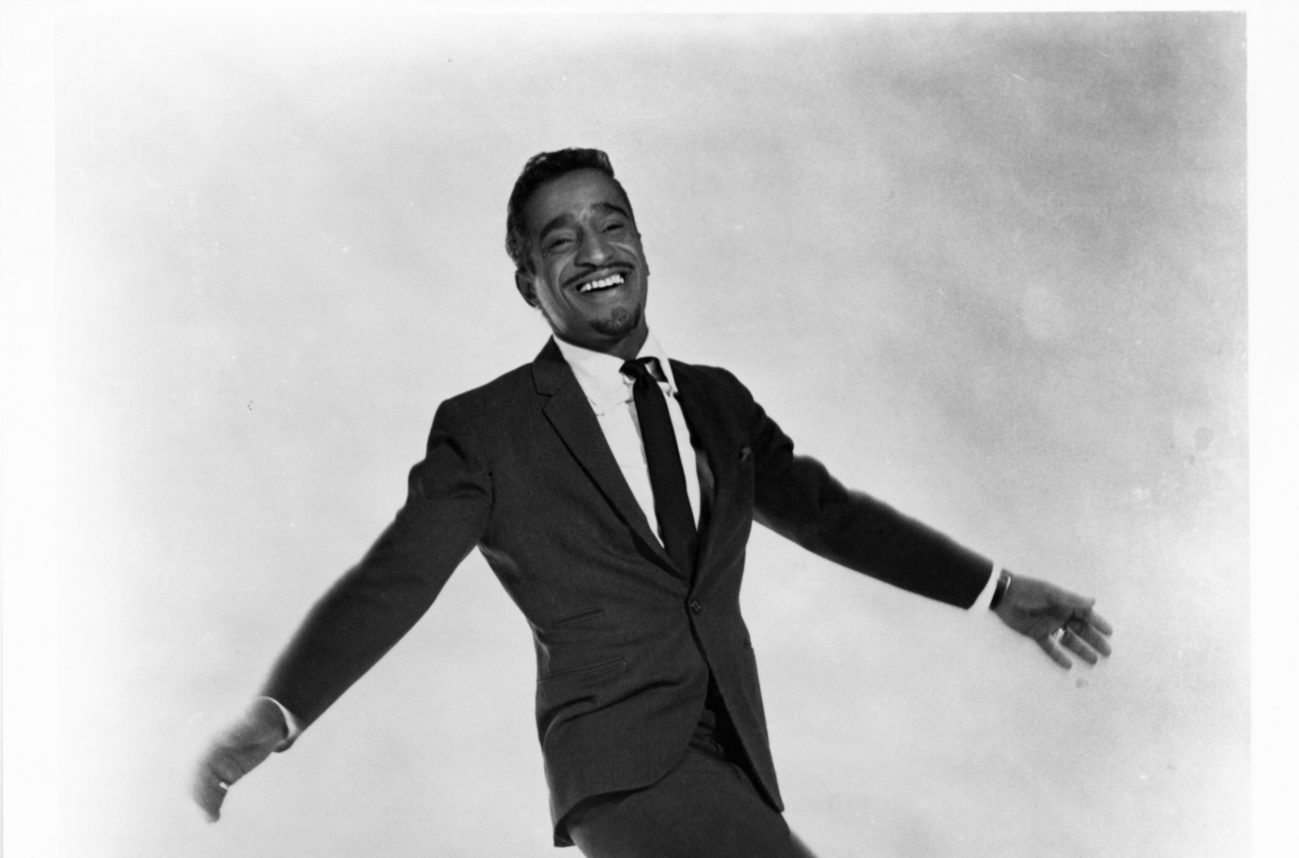
The recently released documentary, “Sammy Davis Jr: I’ve Gotta Be Me,” begins with a clip of Davis performing onstage, in which he tells the audience: “I’m colored, Jewish and Puerto Rican. When I move into a neighborhood, I wipe it out.”
The line, which elicits raucous laughter and thunderous applause, serves as an introduction to the documentary’s attempt to unravel the complexity of one of America’s greatest entertainers.
Written by Laurence Maslon and directed by Emmy Award-winner Sam Pollard, the documentary premiered at the Toronto Film Festival last year and will be screened at the April 25 opening gala of the Los Angeles Jewish Film Festival. It will also be shown on PBS stations later this year as part of the American Masters series.
“It’s such an extraordinary film about an extraordinary entertainer, not just in how Davis made his way through America over decades, but also his role as an activist,” said the film festival’s executive director, Hilary Helstein.
After the film’s screening, there will be a Q-and-A with George Schlatter (creator of “Rowan & Martin’s Laugh-In”), actor Tom Dreesen and Davis’ son, Manny Davis. Actor Stan Taffel — Davis’ archivist, will moderate the Q-and-A.
In the 100-minute documentary, Pollard has rounded up Hollywood legends such as Schlatter, Billy Crystal, Norman Lear, Kim Novak, the late Jerry Lewis, Whoopi Goldberg and Quincy Jones to share their memories and insights about the legendary performer who died in 1990 at the age of 64.
“I know there’s sort of a kinship between the plight of a Negro and the plight of a Jew: the oppression, the segregation, the constant trying to survive and trying to achieve dignity.” — Sammy Davis Jr.
The film shines a light on Davis’ formidable talents as a singer, dancer, actor and impressionist. It homes in on his hardscrabble childhood, when he began performing with his family at the age of 3 and never went to school. And it focuses on Davis’ struggles as a Black man trying to live in a white-dominated world.
“[Davis] was such a unique blend of talent and insecurity and anger and perseverance — in what he went through to being accepted,” we hear from one of the film’s voiceovers. “He was a complicated Black man in a society where race and culture have always posited certain challenges.”
Davis was one of the members of the “Rat Pack,” a group of entertainers including Frank Sinatra, Dean Martin, Peter Lawford, Joey Bishop and others who socialized together while performing in Las Vegas and in Hollywood movies in the 1960s. Yet, as the film points out, while his Rat Pack buddies would stay in hotels on The Strip, Davis was forced to head to the outskirts of town to stay at ‘Black Only’ hotels.
When he fell in love with white actress Kim Novak, Columbia Studios threatened to ruin both their careers if they married. Davis ended up marrying a Black woman to quell the brewing scandal.
In 1943, at the age of 18, Davis was drafted into the U.S. Army’s first integrated infantry unit, where he was subjected to such overt racial prejudice that he eventually punched out one of his colleagues. In an interview in the film, Davis speaks about how he was painted white and had urine poured into his beer.
Despite working with his Rat Pack friend Frank Sinatra to help campaign for John F. Kennedy’s presidential run, Kennedy refused to allow Davis to perform with the Rat Pack at his inauguration, because Davis had married Swedish actress May Britt, a white woman, at a time when interracial marriages were still illegal in 31 states.
Davis was deeply involved in the civil rights movement and participated in the 1963 March on Washington alongside the Rev. Martin Luther King Jr.
And yet, he would later end up alienated by many people within the Black community due to his support of Republican President Richard Nixon’s 1972 re-election campaign — even though he had been a lifelong Democrat.
Davis and his new wife, Altovise — at Nixon’s invitation — would become the first Black people invited to stay at the White House (sleeping in the Lincoln Bedroom no less). But in a clip included in the documentary, he speaks about how he later apologized for supporting Nixon, which he considered a mistake.
Sammy Davis Jr. in a scene from the documentary “Sammy Davis Jr.: I’ve Gotta Be Me.” Photo from the Estate of Altovise Davis.
The episode cements the movie’s title, which, while also the name of Davis’ signature song, underscores his role as a trailblazer who did things on his own terms, no matter the consequences.
Davis was the first Black man to do impressions of white people. Norman Lear, who produced “All in the Family,” says in the documentary that it was Davis’ idea to plant a kiss on the cheek of Carroll O’Connor’s character Archie Bunker — a bigoted white man — in his guest appearance on the show.
And, of course, in 1961 Davis was the first famous Black entertainer in Hollywood to convert to Judaism — at a Las Vegas ceremony after studying with Rabbi Max Nussbaum at Temple Israel of Hollywood.
In 1953, Davis met and would go on to become lifelong friends with performer Eddie Cantor. Cantor gave Davis a mezuzah, which Davis wore around his neck as a good luck charm.
On Nov. 15, 1954, Davis was in a horrific car accident in San Bernardino while driving back to Los Angeles from a show in Las Vegas. He lost his left eye in the crash and later said it was the one night he forgot to wear the mezuzah. During his stay in the hospital, the hospital’s chaplain rabbi visited him.
In the documentary Davis says that despite his mother being Catholic and his father Baptist, “After the accident I needed something desperately to hold onto. I found myself being more and more convinced that Judaism was it for me. I know there’s sort of a kinship between the plight of a Negro and the plight of a Jew: the oppression, the segregation, the constant trying to survive and trying to achieve dignity.”
Davis also speaks about the difficulty of coming back from the accident. He recalls how his great friend Jerry Lewis flew out in his private plane to Davis’ hospital bedside. “All I did was sit with him for seven days,” Lewis says in the film.
Davis also speaks openly about how it took him two years to achieve the simple act of pouring water into a glass from a pitcher.
Davis didn’t merely pay lip service to his newly embraced religion. While filming “Porgy and Bess” in 1959, he told studio head Samuel Goldwyn that he would not work on Yom Kippur. He would continue to publically embrace his Judaism.
At the beginning of the documentary, Davis, Sinatra and Martin are performing onstage when Sinatra says, “I’ve got to catch a train soon.” Davis quips, “What are you complaining about? I’ve got to go to a bar mitzvah in a minute.”
Davis’ adopted son, Manny, recently told the Journal in an email, that he had found his father’s conversion “strange.” Initially raised not practicing any religion, Manny said he always thought that Jews and Catholics were white. After being adopted by Davis and Altovise, Manny wrote, “I now had a Black Catholic mother and a Black Jewish father. I didn’t know what to think.” However, he added, his parents had a plaque on their front door that read, “Anyone of any race, creed, color or religion is welcome in this home, as long as you bring love in your heart.”
Davis spent his personal and professional lives trying to be both included and inclusive. In the documentary, American Jewish historian David Kaufman notes, “Sammy was a one-eyed Negro Jew appearing together on the same stage [as the Rat Pack]. It was a pretty powerful statement of inclusion. He [was] one of the boys.”
It was precisely Davis’ combination of being Black and Jewish that made him such an iconic touchstone. In an email to the Journal, Kaufman said, “These two outsider groups are arguably the most representative minorities in the American historical experience, and, inarguably, together they have been the most essential contributors to American popular culture — a culture which cannot be imagined without the Jews who created Hollywood, the Blacks who created Jazz, the Jews who dominated American comedy, the Blacks who dominated American sports, the Jews who monopolized the Broadway musical, the Blacks who monopolized popular dance, and the many, many artists of both groups who gave us the American songbook.”
Manny Davis said he believed the Jewish community embraced his father because “he was an extremely talented entertainer who, at the time, experienced a horrible tragedy that could’ve made most people give up on the hope of having a better life. The fact that he was ‘colored’ lent a certain dynamic that was ahead of its time. He embraced the religion for the rest of his life.”
It’s also something Sammy Davis Jr. addresses in a clip in the documentary, when he says, “When you are a performer, you deal with such intangibles that you really need a religion to hold onto.”
Sammy Davis Jr. takes aim in a backstage photo with dancers from one of his shows in a scene from “Sammy Davis Jr.: I’ve Gotta Be Me.” Photo from the Estate of Altovise Davis.
However, it was the “tangibles” that also played a role in the entertainer’s demise. Much like the dancer in “The Red Shoes,” Davis could not stop performing and could not stop seeking the limelight and the embrace of audiences.
That urge to keep going, to keep performing, to keep traveling and to keep entertaining led to the unraveling of his marriage to May Britt, and to complicated relationships with his children.
Coming from a life of poverty, Davis embraced all the excesses that came with his hard-won successes. He always had to wear the most expensive clothes and buy the most expensive cars.
His excesses literally killed him. Davis was always smoking. In a clip in the documentary with talk-show host Larry King, Davis tells of how he promised his doctors he would quit smoking, and then, cigarette in hand, tells King on national television that, yes, he lied to his doctors.
The King appearance would be Davis’ last major interview. Barely two years later, on May 16, 1990, he died in his Beverly Hills home from laryngeal cancer.
The documentary is a fitting legacy for a man nicknamed “Mr. Show Business,” who nevertheless felt he wouldn’t be remembered. Although his only No. 1 hit would come in 1972 from the song “The Candy Man” — written by Leslie Bricusse and Anthony Newley for the 1971 film “Willy Wonka & the Chocolate Factory” — Davis would always be “Mr. Bojangles,” for one of his famous songs. Originally penned as a country song in 1968 by Jerry Jeff Walker, Davis made it his own when he first recorded it in 1972.
“Mr. Bojangles” focuses on a phenomenally talented entertainer who ultimately disappears into oblivion. “That’s my fear,” Davis says in the documentary. “I’ll land up like Mr. Bojangles.”
The documentary proves otherwise. As a voice-over in the film states: “Sammy was show business from the tip of his toes to the top of his head.”
In November 1989, the Shrine Auditorium in Hollywood hosted an event celebrating Davis’ 60th year in entertainment. Although he was very ill, Davis slipped on his tap shoes and literally went toe-to-toe onstage with a much younger Gregory Hines, the renowned tap dancer, singer and actor.
Pop music legend Michael Jackson then came onstage and sang a moving tribute to Davis with the song, “You Were There.”
As the camera pans across Davis’ face, he can be seen fighting back tears.
He died six months later.
As Billy Crystal notes at the end of the documentary:
“He was a wonderful, one-of-a-kind comet who flew past the Earth way too quickly.”
There’s something inexplicable about Israel. On the surface, we know it’s one of the most maligned countries on earth. If I told you that the U.N. General Assembly adopted 97 resolutions that singled out a specific country for condemnation from 2012 to 2015, and that 83 of those were against Israel, you might yawn, right? So what else is new?
But as the Journal’s Aaron Bandler mentions in a column this week, CNN’s Jake Tapper wasn’t too jaded to tell his viewers:
“Considering the genocide of the Rohingya people in Myanmar, the lack of basic human rights in North Korea, the children starving in the streets of Venezuela, the citizens of Syria targeted for murder by their own leader using the most grotesque and painful weapons, you have to ask, is Israel deserving of 86 percent of the world’s condemnation?”
Of course not, but we already knew that. In any case, the extreme bashing of Israel is not the point of this column — which I happen to be writing from Israel this week. My point is to understand what makes Israel tick, in particular: How does a country function when it’s so hated?
The first thing that comes to mind is “busyness.” Everyone in Israel seems superbusy, whether they’re working, playing, praying or arguing. It’s like when people go through a difficult time — a divorce, a job loss, etc. — and friends tell them, “It’s important to always stay busy,” because the more one wallows in angst, the worse things get.
I’ve been walking around the streets of Tel Aviv for the past couple of days — the kind of thing I’ve done hundreds of times over the years, in areas throughout the country — and I’ve been struck again by this Israeli busyness. They might have read this morning that some famous singer has canceled a performance under pressure from BDS, but they’re too busy to let it affect their reality. There’s a family to feed, a party to plan, a cause to advance, a film to complete, an argument to win, a country to protect.
I’m sure it annoys many Israelis to live in the most condemned country on earth, but since this is not a problem they can solve, they just move on to other concerns, like their daily lives.
I’m sure it annoys many Israelis to live in the most condemned nation on earth, but since this is not a problem they can solve, they just move on to other concerns, like their daily lives.
But there’s something else. Israelis are busy because they have the freedom to live as they wish. This freedom is a rare commodity in their neighborhood. On the Freedom House website, a chart from 2013 shows 18 countries in the Middle East and North Africa. Twelve are listed as “not free,” five are listed as “partially free,” and one is listed as “free.” Can you guess which country is free?
Here’s how Freedom House summarized the state of the region:
“The Middle East and North Africa holds some of the worst records of freedom of expression in the world. Many countries in the region lack legal protection for human rights and the rule of law is undermined by a lack of independent judiciaries.
“The 2011 Arab Spring popular protests brought hope for improvements but devastating wars, foreign intervention and instability have since made it an extremely dangerous environment for journalists, civil society and human rights defenders, forcing millions to leave in search of safety.”
Note the absurdity: The one country out of 18 deemed “free” gets 86 percent of the U.N.’s condemnations. Israelis must feel this absurdity. They know they live in a messy, flawed country that is far from perfect, but they also feel the blatant injustice of being singled-out for condemnation more than any other country.
What’s more, they know they live in a free country where they can express themselves anyway they like. Arab Israelis, for example, are free to publicly mourn Israel’s most joyous day of the year, its Day of Independence, as their official Nakba, or catastrophe.
Notwithstanding that freedom, my guess is that most of those Arab-Israelis would not want to leave this “catastrophe” for one of those “partially free” or “not free” Arab countries. In fact, in a poll conducted last year by the Israel Democracy Institute, 66 percent of Arab Israelis said they see Israel’s situation as “good” or “very good,” while 57 percent said their personal situation was “good” or “very good.”
Which brings me to the “B” word: Better.
A society that allows you the freedom to express yourself is better than one that doesn’t. On that level, yes, Israel is better.
“Better” is one of those politically incorrect words you never want to say in polite company. Different, yes, but not better. If you claim, for example, that Country A is better than Country B, someone might get offended and say, “Who gives you the right to judge?”
Well, in the case of Israel, the world does. If groups like the U.N. have enough chutzpah to treat one country, Israel, worse than all others, then Israel can certainly push back with this simple truth: A society that allows you the freedom to express yourself is better than one that doesn’t. On that level, yes, Israel is better.
It’s a tragic irony that this “better” country of the Middle East is also the most reviled. But Israelis are not agonizing over this state of affairs. They’re too busy expressing themselves.
Naomi Shemer’s beautiful song Al Kol Eleh (“For all these things”) was written after the Yom Kippur War. It remains one of my favorite Hebrew poems and Israeli songs.
23,646 Israelis have died defending the State of Israel, and many more injured. Trumpeldor put it poignantly before he was killed in the early 20th century – “Tov lamut b’ad Arzenu – It is good to die for our Land.” His courage, the courage of these Israeli martyrs, and the ultimate sacrifice that they gave to builld and secure the State of Israel as a Jewish homeland will be forever impressed upon the memory of our people. Zichronam livracha – May they all be remembered for a blessing!
Yom Haatzmaut-Israel Independence Day is a time for massive Jewish celebration even with all the challenges internal and external that Israel and the Jewish people continue to face. Shemer’s words ring true and whenever I hear this song, my heart at once breaks and is fortified.
“Every bee that brings the honey / Needs a sting to be complete / And we all must learn to taste the bitter with the sweet.
Keep, oh Lord, the fire burning / Through the night and through the day / For the man who is returning / from so far away.
Don’t uproot what has been planted / So our bounty may increase / Let our dearest wish be granted: / Bring us peace, oh bring us peace.
For the sake of all these things, Lord, / Let your mercy be complete Bless the sting and bless the honey / Bless the bitter and the sweet.
Save the houses that we live in / The small fences and the wall / From the sudden war-like thunder / May you save them all.
Guard what little I’ve been given / Guard the hill my child might climb / Let the fruit that’s yet to ripen / Not be plucked before its time.
As the wind makes rustling night sounds / And a star falls in its arc / All my dreams and my desires / Form crystal shapes out of the dark.
Guard for me, oh Lord, these treasures / All my friends keep safe and strong, Guard the stillness, guard the weeping, / And above all, guard this song.”
I am a third generation of the Holocaust, and a former soldier in the IDF.
I was born in a small town in the center of a well-developed country. My most vivid memories from my childhood are music, laughter and quality family-time. My worst experience as a child was when I crashed my bike at the age of five, getting scratches on my knees. My parents gave me everything I wanted and needed, and my night’s sleep was tight and calm.
Since a very early age, my fellow classmates and I were taught that all of this was made possible thanks to our grandparents. At first by our parents, then by our Kindergarten teachers, our teachers, our commanders in the army and now – our professors at the University. When my grandparents were my age, they did not have a comfortable life or a calm night’s sleep. They woke up every day to the scenery of sand, mud and swamps and often to the sound of gunfire. They fought hard, every day, with the dream in their heart that their children and children’s children would have a normal life and safe happy, safe childhood.
My mother’s parents were native Israelis, because their families were smart enough to escape to the swampy state-to-be from Poland, before it was too late. Not all of their relatives were that alert, and were brutally murdered by the Nazi killing machine.
My father’s parents came from Iraq in the 1950’s, and lived in a transit camp until there was a place for them to live in at the newly established State of Israel. Many of my friends’ grandparents are Holocaust survivors, some of them are still unable to talk about those dark times. Together, natives, survivors and patriots from east and west, joined forces for us, their descendants.
Now, as they become older, it is our time to step to center-stage and do our part, as the third generation of the Holocaust. We are the last generation to hear about “those days,” where the country was built after the nightmares of the Holocaust, from first hand. We are the last generation to speak to the heroes who built this country and the heroes who survived the worst, and our life- mission of commemorating and educating will soon begin. If I heard a testimony from a Holocaust survivor every year from first to 12th grade, and could ask my grandparents questions every day, my children would not have that privilege. They will have to rely on the stories, documentaries, and recorded testimonies.
It is our mission to keep the memory alive, and in this time of the year it becomes clearer than ever. This special week of the year reminds us all the story of Israel, which is often being described here with the sentence: From Holocaust to Revival (free translation from Hebrew- משואה לתקומה).
With the memory of the Holocaust, we carry constant personal and public grief of the people we lost while fighting to keep our home in Israel – soldiers and civilians, brothers and sisters, mothers and fathers, sons and daughters, who died protecting our country, or during a normal day that ended in a tragic terror attack.
This story of Israel, which is still being written, is told every year, during one week in April or May (The Hebrew months Nissan and Iyar). On the 27th of Nissan, we mention the national Holocaust Day; on the 4th of Iyar we mention the national Memorial Day; on the 5th of Iyar we mention our Independence Day. Those three dates tell the story of Israel, in order: we survived the Holocaust to build the state of Israel. From having nothing, we got to have everything, but sadly, this “everything” had its toll, when we lost many in our never-ending battle for our home.
During these days of remembrance, schools change their itinerary and people are allowed to skip work. Ceremonies are held in every public facility, and a grand nation – wide ceremony takes place in Jerusalem and is aired on national television. During these three days, stores are closed, and the entire nation is committed to the essence of the special day. During these days, for a brief moment, everyone stops everything and bow their heads down in grief as a siren is heard throughout the country. During those three days, the television and radio broadcasts are altered, and are dedicated to tell the story, for everyone to know.
With time, the reasons to fully commit to those days could become vaguer and it would be our responsibility to remember and cherish them, making sure our children would not forget them either. In times of Holocaust denial, growing anti-Semitism, growing indifference and threats from our neighboring countries, those reasons must burn in our guts and be our guiding light.
I am a third generation of the Holocaust and a former IDF soldier. Israel was given to me on a silver platter, with the promise to remember those who handed it to me, 70 years ago, and every single day since.
I promise to always remember and never forget. I promise to remember and remind my past, so that my children would be able to create the future.
For more updates about the day-to-day life in Israel, you can follow Israelife on Facebook here.