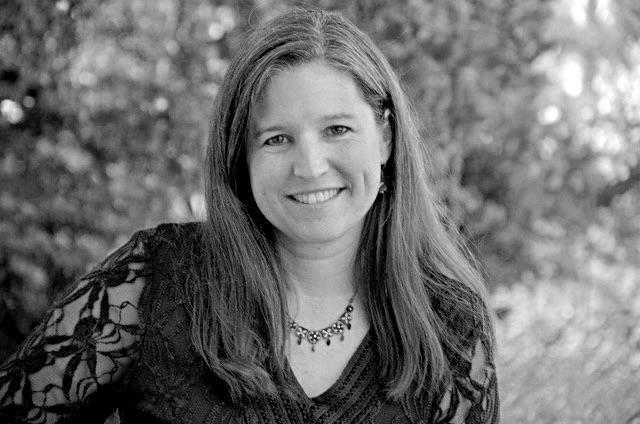
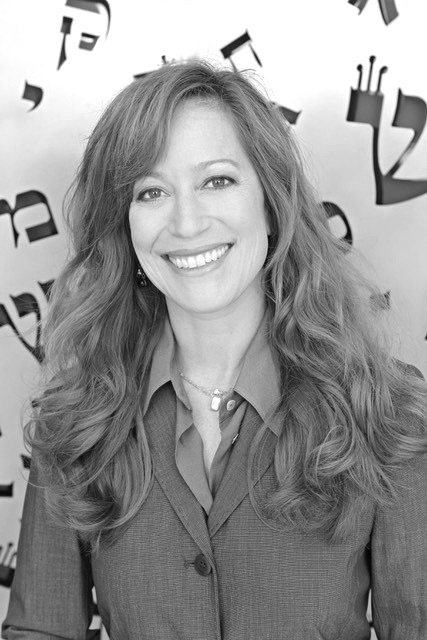
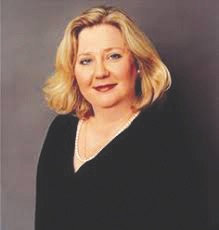
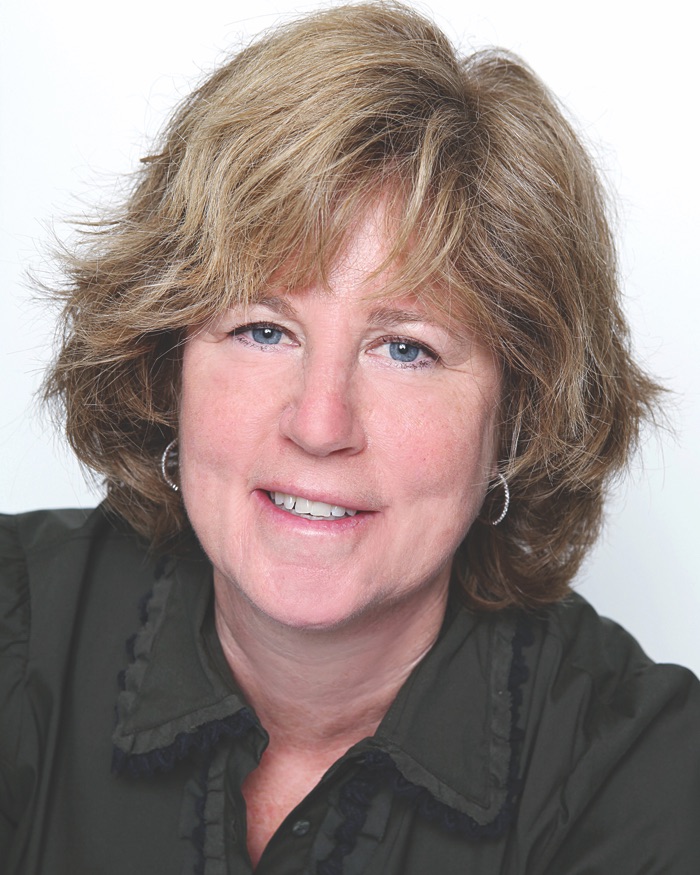
Our guest this week is Rabbi Elissa Sachs-Kohen. Rabbi Sachs-Kohen has served for 14 years as one of the rabbis at Baltimore Hebrew Congregation. She is the Director of BHC Cares and advises the Social Justice Team, concentrating in recent years on racial justice, immigration, poverty, and environmental issues.
Rabbi Sachs-Kohen annually leads Rosh Hashana Under the Stars at Oregon Ridge Park, Baltimore Hebrew Congregation’s Erev Rosh Hashana service which is free and open to the public. For the past 11 years the service has attracted as many as 6000 participants and has continued to grow.
Before coming to Baltimore, Rabbi Sachs-Kohen served for 5 years at Congregation Beth Israel in West Hartford, CT. She was ordained in 1999 from Hebrew Union College-Jewish Institute of Religion, Cincinnati. She earned her BA in theater and drama at University of Michigan. She currently learns with the Institute for Jewish Spirituality in the Clergy Leadership Program.
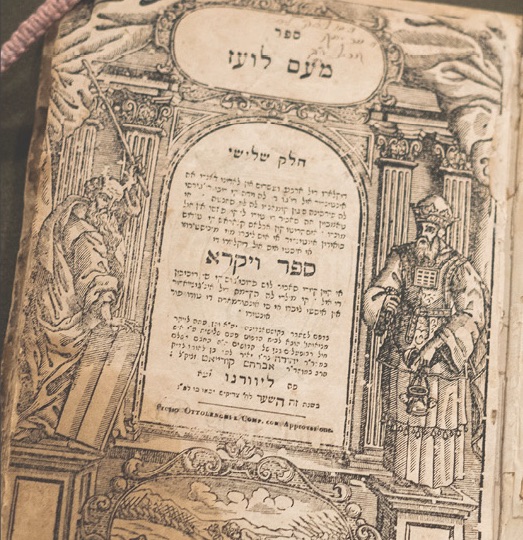
We read two parashot this week: The reading of Vayakhel-Pekudei – (Exodus 35:1-40:38) – begins with Moses commanding the people of Israel to observe the Shabbat and continues to tell us in great detail about the building of the Tabernacle. Pekudei, the last reading from Exodus begins with an audit of how the contributions for the Tabernacle (the Mishkan) were used. The portion goes on to describe the completion of the Tabernacle and its assembly and concludes by depicting the glory of the lord entering it. Our discussion focuses on the similarities and differences between the Mishkan and the temples of today.
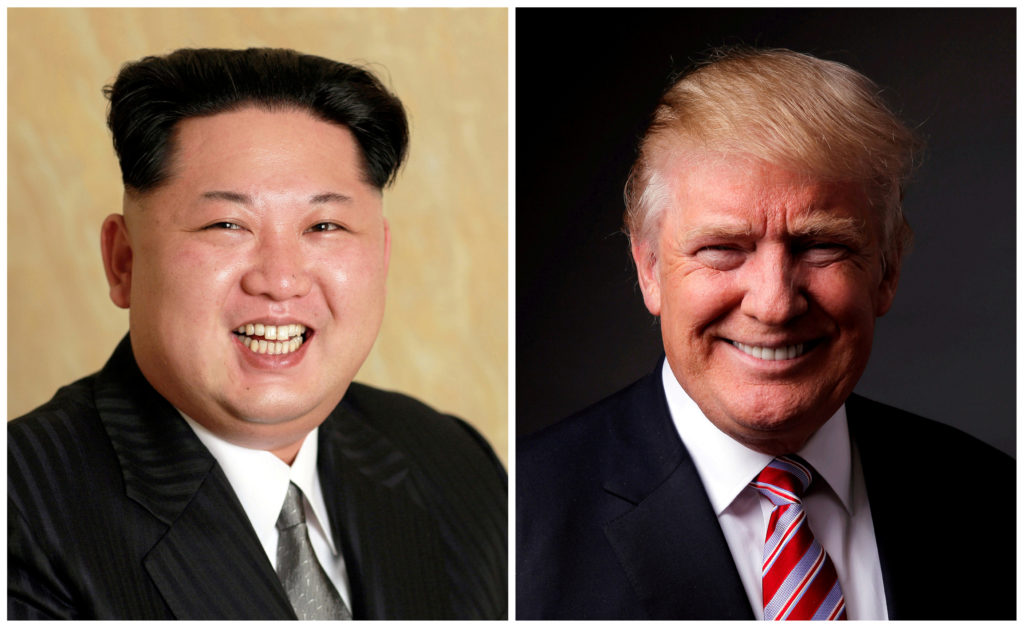
President Trump is reportedly set to meet with North Korean dictator Kim Jong Un sometime in May.
South Korean officials issued the announcement on Mar. 8, stating Trump was doing so as part of an invitation from the South Korean government to get the hermit kingdom to talk about possible denuclearization.
Chung Eui-yong, the national security adviser to the South Korean government, stated that Kim Jong Un “pledged that North Korea will refrain from any further nuclear missile tests” until the talks take place and that the North Korean dictator had been yearning to meet with Trump.
Chung praised Trump’s handling of North Korea as the reason for the hermit kingdom agreeing to such a proposition and was hopeful that North Korean denuclearization could actually occur.
White House Press Secretary Sarah Huckabee Sanders confirmed that Trump will indeed meet with Kim Jong Un.
“President Trump greatly appreciates the nice words of the South Korean delegation and [South Korean] President Moon,” Sanders said in a statement. “He will accept the invitation to meet with Kim Jong Un at a place and time to be determined. We look forward to the denuclearization of North Korea.”
However, Sanders added that “all sanctions and maximum pressure must remain” for the time being.
Trump tweeted about the scheduled meeting:
Kim Jong Un talked about denuclearization with the South Korean Representatives, not just a freeze. Also, no missile testing by North Korea during this period of time. Great progress being made but sanctions will remain until an agreement is reached. Meeting being planned!
Prior to this announcement, Trump and Kim Jong Un had been throwing barbs each other, most notably Trump warning the North Korean dictator that he would face the full “fire and fury” from the U.S. if North Korea struck the country and Trump tweeting that he had a larger nuclear button than Kim Jong Un.
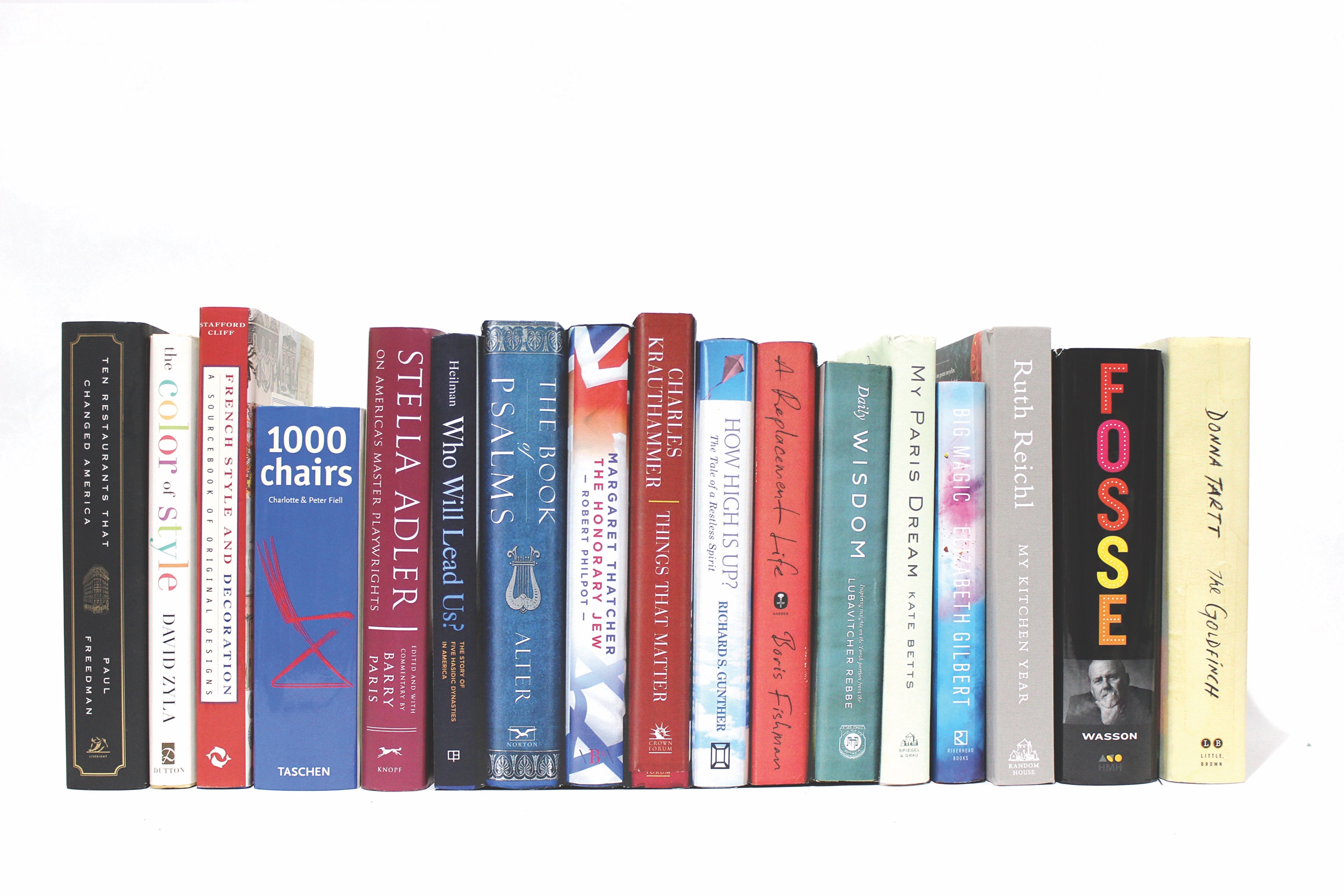
Nice set of books, right? Ah, but it’s a trompe illusion, art that tricks the eye into thinking it’s looking at a three-dimensional object. What you’re actually seeing is a book façade hiding a secret storage box.
The key to making the façade look real is to line up the spines of actual books on a photocopier so that the photocopy captures the shadows between the books. The photocopy is then mounted on a piece of foam core board, trimmed and glued onto a box. To the casual visitor, they look just like any other books on the bookshelf. Only you know that they’re not really books, but a secret compartment that hides precious valuables — like your personal stash of Girl Scout cookies.
What you’ll need:
Books of your choice
Photocopier
Foam core board
Hobby knife
Cutting mat
Glue or spray adhesive
1.
1. Line up the spines of your books on a color photocopier. Choose enough books so that they measure about a foot. I recommend using a laser copier at the copy store instead of your inkjet printer at home. The resulting image will be more realistic, capturing both shadows and reflections. Oh, and you’ll probably have to use the 11-by-17 paper.
2.
2. Apply glue or spray adhesive to the back of the photocopy, and adhere it to a piece of foam core board. I used spray adhesive for this project because it provided a more even coating of glue, but it does get everywhere, so many people prefer regular glue or a glue stick. Then I cut around the image of the books with a hobby knife.
3.
3. Find a box that is narrower than the width of the books. My box happened to be almost exactly the same width. It can be shallow or tall, as long as it doesn’t extend over the top of the book façade. Apply glue to one side of the box, and adhere the “books” to it. This storage box is best displayed at or above eye level so you can’t see behind the façade.
Lorraine Aronson died Feb. 5 at 80. Survived by husband Nathan; sons Jeff, Mitch (Elizabeth); 6 grandchildren; 1 great-grandchild. Groman Eden
Alan Joseph Arouh died Jan. 26 at 74. Survived by daughters Elise, Stacy (Jack) Timar-Arouh; 2 grandchildren; sister Vicky (Richie) Noll; brother Sidney (Sue). Mount Sinai
Harold Daniel Barton died Jan. 23 at 92. Survived by wife Regina; daughter Karen (Randall) Barton-Maycock; sons Richard (Elaine Feuer-Barton), Michael (Agnes); 5 grandchildren. Mount Sinai
Ted Basch died Jan. 16 at 92. Survived by wife Rita; daughter Michelle (Jess) Dolgin; son Myron (Karen); 5 grandchildren. Home of Peace
Sheldon Becker died Jan. 29 at 84. Survived by wife Elissa; brother Warren (Norma). Mount Sinai
Richard Beer died Jan. 25 at 69. Survived by wife Janice; daughter Brittany (Bryan) Langer; 1 grandchild; mother-in-law Charlotte; brother-in-law Steve (Irinka) Schwimer. Mount Sinai
Sylvia Bidna died Jan. 11 at 89. Survived by daughter Lisa (Ross) Garfield; sons Howard (Beth), Eric (Diana); 6 grandchildren; sister Ruth Spector Webster. Mount Sinai
Grigoriy Binder died Jan. 19 at 84. Survived by wife Anna; daughter Larisa (Steven) Leshchinskaya; son Mark (Dina); 2 grandchildren; 1 great-grandchild. Mount Sinai
Roselie Brenner died Jan. 25 at 97. Survived by daughter Devra Lopowitz; son Allen Joel; 1 grandchild. Mount Sinai
Judith Bridge died Jan. 28 at 72. Survived by daughter Ruth; son Jeffery (Rachel); 4 grandchildren. Hillside
Frances Chaplan died Jan. 22 at 96. Survived by daughter Debra; sons Larry, Mickey (Hiroko); 5 grandchildren. Mount Sinai
Muriel Colman died Jan 20 at 86. Survived by daughters Stacy (Trevor), Louise (Brad); 5 grandchildren. Hollywood Forever
Shelley Daniels died Jan. 24 at 68. Survived by son Jason; brother Gary Margolis. Hillside
Eric Marshall Denner died Jan. 12 at 68. Survived by wife Cheryl Chaddick; mother Pearl; sister Sharon Denner Horowitz; brother Arthur. Austin Memorial Park (Austin, Texas)
Gayle Deutch died Jan. 30 at 98. Survived by daughters Teri (Richard) Rosen, Joyce Saitman; 5 grandchildren; 6 great-grandchildren. Hillside
Florence Dwek died Jan. 17 at 65. Survived by husband Eliahu; daughters Ilana, Liz Saidi. Mount Sinai
Evelyn Evans died Jan. 13 at 93. Survived by daughters Melissa (Steven) Moritz, Ina (Victor) Landweber; 4 grandchildren. Hillside
Robert Feinerman died Jan. 12 at 91. Survived by wife Sarah; daughter Carol (Ira) Diamond; son Mark (Crystal Tu); 5 grandchildren. Hillside
Edward Fine died Jan. 25 at 94. Survived by wife Corinne; daughter Debra (William) McGuire; son Martin; 2 grandchildren; brother Harold. Hillside
Eleanore Forer died Jan. 21 at 89. Survived by sons Robert (Noriko), Jeffrey (Margaret); 4 grandchildren. Mount Sinai
Joel Freeman died Jan. 21 at 95. Survived by wife Betty; sons Josh (Patricia Payro), Jeff; stepson Daniel Bresler; stepdaughter Kurina Hale; 3 grandchildren. Hillside
Carol Gold died Jan. 19 at 91. Survived by husband Herbert; daughter Philippa; son Julian (Michele); 1 grandchild. Hillside
Hannah Roth Gordon died Jan. 26 at 96. Survived by daughter Gail (Richard) Gordon-Drapkin; son Roger (Linda); 3 grandchildren; 2 great-grandchildren. Mount Sinai
Melvin Hoffman died Jan. 30 at 85. Survived by son Robert. Mount Sinai
James M. Honigman died Jan. 23 at 91. Survived by wife Carol; daughter Amy; sons Daniel (Nicole), William (Carolyn); 6 grandchildren; sister Eva Shatkin. Mount Sinai
Ellen Horner died Jan. 30 at 90. Survived by daughter Debbie; son Rick; 3 grandchildren; brother Larry (Christa) Diamant. Groman Eden
Stephen Isaacs died Jan. 15 at 67.Survived by mother Lois; sister Patricia Roberts. Hillside
Paul Sherman Jarett died Jan. 20 at 91. Survived by son Michael. Mount Sinai
Karl Kates died Jan. 15 at 96. Survived by son Bruce; daughter-in-law Cynthia Zanghi; 2 grandchildren. Hillside
Florence Kaufman died Jan. 17 at 89. Survived by daughter Lynn (Morty Moskowitz); son Arthur (Helen); 5 grandchildren. Hillside
Elsie Koff died Feb. 4 at 98. Survived by daughter Elizabeth Jacobs; son Dennis (Cynthia) Koff; 6 grandchildren; 3 great-grandchildren. Mount Sinai
Zvi Lamberti died Jan. 12 at 68. Survived by wife Anna; daughter Nicole. Hillside
Julianne Lederer died Feb. 2 at 96. Survived by daughters, Jackie (Dennis) Horlick, Jeannie Borin; 5 grandchildren; 3 great-grandchildren. Mount Sinai
Arthur Lederhandler died Jan. 19 at 75. Survived by wife Joan; daughters Juli (Forrest) Lawrence, Jami (Peter) Eisenberg; stepsons Andrew, Brian, Matthew Monarch; 7 grandchildren; sister-in-law Laurie (Allen) Stalic. Mount Sinai
Stanley Levin died Jan. 15, at 94. Survived by wife Anita; daughters Judith, Amy, Laurie; son Andrew. Mount Sinai
Lilly Love died Jan. 28 at 80. Survived by sister Evelyn (Gary) Freeman. Mount Sinai
Feliks Lyudmirskiy died Jan. 12 at 87. Survived by wife Yevgeniya; daughter Marina (Mikhail Suris); 1 grandchild; sister Polima Telebaum. Hillside
Clara Markowicz died Jan. 17 at 88. Survived by niece Ana (Larry) Rofe. Mount Sinai
Bates Metson died Jan. 17 at 96. Survived by wife Libby; daughter Janet (Harold Burman) Metson Burman; sons Philip (Adria), Ralph (Taren); 7 grandchildren; 15 great-grandchildren. Mount Sinai
Shelley Mintz died Jan. 24 at 92. Survived by son Kenneth (Linda); 3 grandchildren; 2 great-grandchildren; sisters Vicki Gahlbeck, Sandra Kristal; brother Jerry Kristal. Hillside
Michael James Morse died Jan. 29 at 71. Survived by daughter Jennifer (Jonathan) James; son Adam (Erin); 3 grandchildren; brother Stephen. Mount Sinai
Stephen Neil Myers died Feb. 4 at 78. Survived by wife Roslyn; daughters Marsha (Louis) Kamer, Ruth, Ellen; 2 grandchildren. Mount Sinai
Norbert Nemon died Feb. 4 at 91. Survived by wife Alice; daughter Jeannette Nemon-Fischman (Joel); sons Binyomin (Sarah Rivka), Alec; 12 grandchildren. Mount Sinai
Aaron Richard Rabin died Jan. 18 at 98. Survived by wife Dolores; daughters Michele (Jerry) Kuznetsky, Janice; son Robert; 3 grandchildren; 10 great-grandchildren. Mount Sinai
Ida Fay Robbins died Jan. 19 at 98. Survived by daughter Roberta (Gary) Decker; sons Jeffrey (Timea), Michael (Mary Ann); 3 grandchildren; 3 great-grandchildren. Mount Sinai
Hannah Rome died Jan. 10 at 95. Survived by daughters Donna Glassman, Arlene (Terry) Ferguson; 3 grandchildren; 1 great-grandchild. Hillside
Fay Ross died Feb. 5 at 93. Survived by daughters Linda Fultz, Susan (Stanley) Taub; Jeffrey (Sonya); 7 grandchildren; 6 great-grandchildren; 3 great-great-grandchildren. Mount Sinai
Susan Panfill Rubin died Feb. 4 at 102. Survived by daughter-in-law Susan (Ned) Fenton; 3 grandchildren; 2 great-grandchildren. Mount Sinai
Joseph Russo died Jan. 22 at 89. Survived by wife Sally; daughter Linda; son Gary (Faith Claman); 2 grandchildren. Mount Sinai
Steven L. Saldo died Jan. 30 at 67. Survived by wife Marian; son Tyler; daughters Lauren Aandahl, Sarah; 1 grandchild. Mount Sinai
Connie Sawyer died Jan. 21 at 105. Survived by daughters Lisa (Seth) Dudley, Julie (John) Watkins; 4 grandchildren; 3 great-grandchildren. Hillside
Alex Shmuel Schneider died Jan. 30 at 85. Survived by wife Dafna; daughters Orly, Cara; son Benjamin. Mount Sinai
Deanna Schor died Jan. 18 at 67. Survived by husband Allen; mother Sue Paulson; sisters Terry Forward, Penny Nelly; stepdaughter Andrea; stepson Eric; 2 grandchildren. Hillside
Michele Shack died Jan. 27 at 75. Survived by son Darren (Heather) Shack; 2 grandchildren; sister Ann (Bernie) Grossman. Mount Sinai
Jacob Shaya died Jan. 16 at 97. Survived by 3 daughters; 1 son; 7 grandchildren; 10 great-grandchildren. Groman Eden
Allison Ivy Shearmur died Jan. 19 at 54. Survived by husband Edward; daughter Imogen; son Anthony; mother Rhoda Brecker; father Martin Brecker; sisters Jodi (Fred Proust) Kahn, Lisa (Alan) Hartstein; brother John (Heather) Brecker; sister-in-law Bryony. Mount Sinai
Sam Stawisky died Jan. 26 at 103. Survived by daughters Andrea (Philip Schwartz) Wagner, Janet (Steven) Cooper, Jean (Don) Houts; 8 grandchildren; 5 great-grandchildren. Hillside
Sarahlie Strassberg died Jan. 12 at 83. Survived by sons Neil, Gary, Herbert; 1 grandchild. Mount Sinai
Marvin H. Strick died Jan. 17 at 99. Survived by son Richard; daughter Susan Strick Mackenzie; 3 grandchildren; 3 great-grandchildren. Mount Sinai
Robert Raymond Sutton died Jan. 11 at 82. Survived by wife Chalouy; sons Apiluck, Supasit Sukviruch. Chevra Kadisha
Max Translateur died Jan. 21 at 65. Survived by wife Vivian; daughter Tiffany (Steve) Krupnik; son Jason (Danica); 3 grandchildren. Mount Sinai
Ilya Vadievichishayev died Dec. 1 at 90. Survived by wife Bela Shimonova; daughter Eleonora (Roshel) Shamayev; son Vladimir Ishayev; 4 grandchildren. Chevra Kadisha
Diane Frances Wagner died Jan. 31 at 83. Survived by daughter Cheryl Frederiksen; son Steven; 1 grandchild. Mount Sinai
Julio Wahl died Jan. 12 at 84. Survived by wife Esther; daughter Linda Gittelson; sons Joseph (Lynn), Jay; 7 grandchildren; 2 great-grandchildren. Mount Sinai
Roy Wallenstein died Jan. 29 at 92. Survived by daughters Hilary (Robin) Rogers, Heather (Louis) Vargas; 5 grandchildren; 3 great-grandchildren; sister Charlotte Hyatt; brother Aubrey. Mount Sinai
Herbert Wallerstein Jr. died Jan. 13 at 96. Survived by sons Robert (Susan), Barry (Margaret); 5 grandchildren; 5 great-grandchildren. Hillside
Beverly Weisz died Jan. 18 at 93. Survived by daughter Amy (Jim) Weisz Leserman; 4 grandchildren. Chevra Kadisha
Jane M. Whittaker-Gottschalk died Feb. 1 at 93. Survived by sons Jay (Judy) Messinger, Craig (Lori) Messinger; grandchildren; great grandchildren. Mount Sinai
Lila Wolkoff died Jan. 20 at 92. Survived by daughter Meaggin Tatarabis; son Garth; stepdaughter Karol Schnaufer; 6 grandchildren. Hillside
Joseph Yousem died Jan. 18 at 88. Survived by daughters Robyn (Brian) Ritter-Simon, Jennifer (Kevin), Michelle Bernstein; sons Joshua (Maja), Jordan (Jessica); 9 grandchildren; sister Mollyanne (Jack) Shroeder; brother Michael (Sheila). Hillside
Susan Penny Zeserson died Feb. 5 at 69. Survived by husband Joel; father Sidney Mendel; sisters Ellen (Kenneth) Sears, Nancy White. Mount Sinai
“These are the things that the Lord has commanded you to do: On six days work may be done, but on the seventh day you shall have a sabbath of complete rest, holy to the Lord; whoever does any work on it shall be put to death. You shall kindle no fire throughout your settlements on the sabbath day.”
Rabbi Susan Leider Congregation Kol Shofar, Tiburon, Calif.
What kind of death does someone die if they don’t observe Shabbat? Isn’t this just the kind of verse that you don’t want to read in the Torah? You’re at a bar or bat mitzvah with a bunch of people who don’t usually find themselves in the synagogue and you shrink in embarrassment, saying, “What kind of a tradition would enshrine this harsh decree in its holy books?”
There are some who would read this literally: Break Shabbat and you die. But we know that we don’t live in that kind of world. God is not coming down from on high and smacking us when we pick up our iPhone on Shabbat or smiting us when we go to the mall on Saturday afternoon. So what is going on here?
God is a partner, Shabbat is date night. Like Moses at the burning bush, we get an invitation to dance with God. But we must turn aside from our work so that we don’t miss the holy invitation, for if we miss it, it doesn’t come our way again until next week. That moment dies — along with all that, it could have made possible. We move on and another week begins.
When we work without ceasing, a part of us dies. But when we wake up to the potential of Shabbat — the possibility of a loving partner, the opportunity to be swept off our feet by the grandeur of a beautiful world, the renewal of our breath, a sacred meal shared in the company of those we love — we choose life. Choose Shabbat. Choose life.
Rabbi Mel Gottlieb Academy for Jewish Religion, California
Shabbat, a gift from eternity, is the unending source of inspiration, creativity, ideas and meaningful visions bestowed upon us by the Eternal. Each soul is blessed with inner qualities intended to be woven into the world and added to the garment of creation.
Each living being brings a meaningful story to the world and participates in its cycle of collapse and renewal, ready to redeem the world, moment by moment. Behind all the roaring and confusion of this world, the living spirit of the Eternal waits to be found again and again. This is Shabbat.
The Talmud (Berachot 56) calls Shabbat a gift, “1/60th of the World to Come.” It is a day of rebalancing, of remembering that our true, holy purpose is to connect to the soulful reality of our existence. We get caught up in our daily duties and forget that these endeavors are a means to an end. To forget and neglect that we are working toward holiness is to risk the death of our soul. This day is given to us to remember why we are here.
Some attain rebalance through the Sabbath meal and song, through prayer and learning Torah. Others by walking along the ocean.
The Torah also teaches that when we sit around our Shabbat tables, “we should not light a fire in all our dwelling places” — that is, not lose our tempers, not spread words of hatred that light fires of strife, but keep our balance, which spreads peace and joy on this holy day.
Rabbi Cantor Alison Wissot Temple Judea
Shabbat is arguably one of the most precious and most protected aspects of being a Jew. It seems absurd that given the benefits, we’d have to persuade anyone to keep this unique and holy gift.
Shabbat is special and holy because in one fell swoop, it connects a Jew to God, Torah and Israel. At its core is humility, a midpoint between arrogance and humiliation, a deep understanding of one’s place in the world. We do not control the universe and we need to acknowledge that regularly. We also deserve time to contemplate and celebrate our existence.
Shabbat creates enforced moments to learn Torah, ethics, values — the things that make us better. It enables a real community to come together, not merely people who are friends, or who are like-minded. This is for everyone, whether you like them, whether you agree with them or not. Clearly this is good for society.
Why then, does it need to be framed in such caustic and horrible language?
Human nature is such that we will always find ways to do what is not good unless somehow we are held accountable. With accountability, human beings rise. And even if we can allow an individual to slip, we cannot let the needs of society slide. It is fundamental to the Jewish world that at least once each week, society is immersed in training our character and studying our ethics.
Shabbat needs to be not only observed, but protected, for the good of our world.
Daniel Stein Kokin Visiting assistant professor of Jewish and Israel Studies, UCLA
Imitation of God’s rest, reminder of the Exodus, marker of God’s consecration of Israel — the Torah’s explanations for Shabbat vary widely. Here, by contrast, its seeming sole purpose is obedience to divine decree. And here — uniquely — a specific injunction against the kindling of fire supplements, the oft-repeated prohibition on work. What sparks this?
Fire is arguably the critical physical interface between God and the world. With fire, God commenced creation (is light not fire at its root?), first communicated with Moses, and guided the Israelites in the wilderness. Similarly, with fire, he blocked off Eden, destroyed Sodom and Gomorrah, and consumed Aaron’s sons (for offering, of all things, “foreign fire”). We, too, address God through fire, formerly via animal sacrifice, now through ritualized candlelighting (ironically, in light of this passage, to mark the onset of Shabbat). And thanks to fire, we re-create the world to serve our needs and desires. In short, fire is a divine substance we have somehow acquired (the ancient Greek explanation: Prometheus stole it from Olympus).
Fire can be physically deadly, but no less dangerous is its ability to seduce us into thinking away our limits. Might this be the key to this passage’s teaching?
Perhaps instead of allowing us to imitate God, or celebrate our relationship with God, Shabbat highlights the great chasm between us. Six days we “play” divinity in transforming creation; on the seventh, we acknowledge our folly in doing so.
Or perhaps this is but one further explanation, fated to converse and compete with all the rest. Fire away!
Rabbi Daniel Bouskila Sephardic Educational Center
Parashat Vayakhel opens with Moses gathering the entire community and instructing them to observe Shabbat. He immediately follows this with the full instructions for building the Mishkan (the Tabernacle). From this juxtaposition of Shabbat to the Mishkan, talmudic tradition established a relationship between the two.
The rabbis read this Torah portion like architects and artists, breaking it apart into different categories and genres of labor. They derived a total of 39 forms of labor needed to build the Mishkan, and they ruled that these 39 forms of labor are, in fact, the prohibited labors on Shabbat. But is Shabbat observance exclusively defined by a list of prohibited labors?
The prophet Isaiah articulates God’s vision for what we call the “spirit of Shabbat”: “If you shall refrain from pursuing business on My holy day, and declare Shabbat a delight … and shall honor it, not doing your own ways, nor pursuing your own business, nor speaking of vain matters — then shall you delight yourself in the Lord” (Isaiah 58:13-14).
Isaiah outlines an expanded vision for Shabbat: In addition to refraining from the 39 labors, we cease from pursuing our mundane business. In the words of Abraham Joshua Heschel, “The essence of Shabbat is completely detached from the world of space. The meaning of Shabbat is to celebrate time rather than space. Six days a week we live under the tyranny of things of space; on Shabbat, we try to become attuned to holiness in time.” Shabbat remains our greatest gift from God.
Congregations Hollywood Temple Beth El, Hillel at UCLA, Congregation Kol Ami and Pacific Jewish Center celebrate Shabbat as part of the 22nd annual Shabbat Across America and Canada, a National Jewish Outreach Program initiative. Singles, couples, families and people of all ages are invited to the explanatory services, traditional rituals, delicious meals and lively discussions. Various times, prices and locations. For more information, call (646) 871-4444. For a full list of participating synagogues visit njop.org/programs/shabbat/saac.
UNPLUG L.A. | EASTSIDE
Jewish organizations Reboot and East Side Jews celebrate Shabbat at an off-the-grid, unplugged party, marking Reboot’s fifth annual, device-free commemoration of the National Day of Unplugging. Attendees check their phones at the door before enjoying an evening of live music, spoken word, storytelling, arts and crafts, food trucks and more. Performers include comedian Danny Lobell, spiritually charged band Bles’d, country-folk acoustic duo S+M, poet Rachel Kann, self-proclaimed pop culture guru Erika Brooks Adickman and actress Avital Ash. Writer and producer Jessie Rosen (“Sunday Night Sex Talks”) hosts. For ages 21 and older. 7–11 p.m. $18. The Box @ SIJCC, 1110 Bates Ave., Los Angeles. (323) 663-2255. sijcc.net/east-side-jews.
CHARLEMAGNE PALESTINE
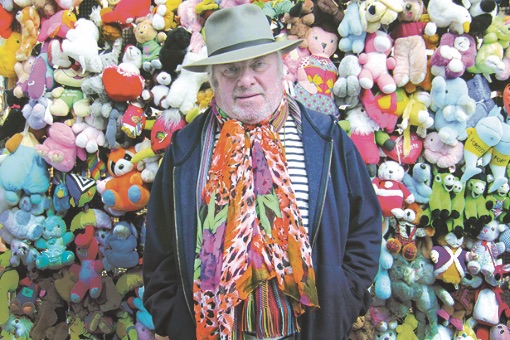
Charlemagne Palestine
An installation by conceptual artist Charlemagne Palestine, born Chaim Moshe Tzadik Palestine, continues with his collection of 18,000 discarded stuffed animals. The orphaned plush bears, Disney characters and cuddly bunnies are a metaphor for the tens of thousands of refugees in the world today. Palestine, who began his career singing sacred Jewish music, brings a maximalist sensibility to this whimsical display. Through April 15. Wednesday–Sunday, 11 a.m.–6 p.m. Free. 356 Mission, 356 S. Mission Road, Los Angeles. (323) 609-3162. 356mission.com.
SAT MARCH 10
RABBI JOSEPH TELUSHKIN
Spiritual leader, scholar and author Rabbi Joseph Telushkin delivers the Saturday morning talk on the weekly Torah portion at modern Orthodox synagogue Young Israel of Century City (YICC). Telushkin’s rare local appearance is one of three he is making during his weekend-long visit to Los Angeles. On Saturday afternoon at Pat’s Restaurant, he participates in a luncheon discussion on “The 50 Best Jewish Jokes and What They Say about the Jews.” On Saturday night at a private Pico-Robertson residence, he discusses “The Rebbe: Teachings That Will Change Your Life.” Address provided upon RSVP at pvaldez@jnf.org or (323) 964-1400, ext. 958. YICC event: 9 a.m. Free, no RSVP required. Young Israel of Century City, 9317 W. Pico Blvd., Los Angeles. (310) 273-6954. yicc.org. Saturday luncheon: 12:30 p.m. Pat’s Restaurant, 9233 W. Pico Blvd., Los Angeles. To RSVP and purchase tickets call YICC at (310) 273-6954. yicc.org.
“CROSSING OUR RED SEA”
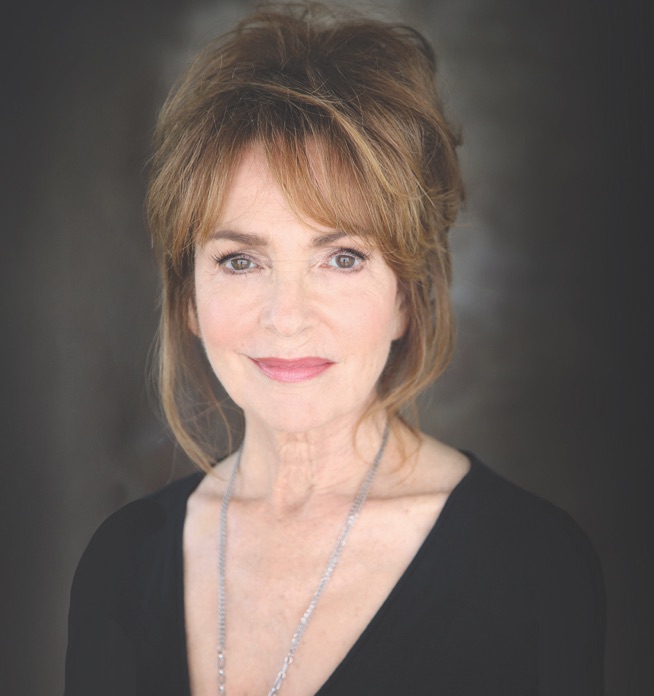
Melanie Chartoff
Comedian Melanie Chartoff and actors Kate Zental, AJ Meijer and Tiffany Mualem stage a dozen original stories transforming the Passover story into contemporary Jewish women’s theater. The actors will perform the piece at six L.A. locations through March 26. An art exhibition of the same name, featuring 11 local female artists re-examining the Passover story through painting, sculpture, photography, textile design and ceramics, coincides with the opening night performance of the theater work. The exhibition runs through April 30. The free art talk with the curator and the artists begins at 7 p.m. Stay for the 8 p.m. salon show. Tickets are required for the performance. $40 presale, $45 at the door. The Braid, 2912 Colorado Ave., #102, Santa Monica. (310) 315-1400. jewishwomenstheeatre.org
SUN MARCH 11
“A SEPHARDIC ANTIQUE ROADSHOW”
The Sephardic experience and the history of Sephardic Los Angeles come alive during this show-and-tell event. Members of the public share their collections of Sephardica, including photographs, family albums, travel documents, family heirlooms and ritual objects, while archivists, rare-book experts and historians evaluate the meaning and importance of the materials. Participants will gain context surrounding their memories and family histories. Kosher refreshments provided. 2–4 p.m. Free. UCLA, Charles E. Young Research Library, Los Angeles. (310) 267-5327. uclasephardic.com.
MATZO BALL RUN
Promoting wellness, togetherness and community, the second annual Matzo Ball Run, a 5K run/walk, raises funds for local day school Harkham Hillel Hebrew Academy. Lace up those running shoes and turn out for this fitness-fun event, which also features a kids’ fun run for the little ones. A portion of the proceeds benefits Children’s Hospital Los Angeles. 6:30 a.m. onsite registration; 8 a.m. 5K run/walk; 9 a.m. kids’ fun run. $40 adults advance registration; $50 adults day of event; $30 kids’ fun run advance registration; $36 kids’ fun run day of event. Dockweiler State Beach, 12000 Vista Del Mar, Playa Del Rey. matzoballrun.com.
“ANTI-SEMITISM AND ISLAMOPHOBIA IN THE MIDDLE AGES AND TODAY”
Historians Sara Lipton and Hussein Fancy examine the fraught status of Jews and Muslims in Western Europe during the Middle Ages and discuss the often-entwined histories of these two groups, both of whom were cast as outsiders. Jihad Turk, president of the Claremont School of Theology, moderates the discussion, which sheds light on contemporary issues as well. The event is part of the temporary exhibition, “Outcasts: Prejudice and Persecution in the Medieval World,” which explores how medieval manuscripts’ caricature and polemical imagery can educate about historical prejudices against Jews and Muslims, among other groups. 3 p.m. Free. Getty Center, Harold M. Williams Auditorium, 1200 Getty Center Drive, Los Angeles. getty.edu.
KOL SEPHARDIC CHOIR AND FLAMENCO DANCERS
Celebrate Sephardic culture with Ladino music and flamenco dancers. Performers include Pasion Flamenca de Los Angeles, a contemporary flamenco fusion dance group, and flamenco and classical guitarist Adam del Monte. $25 general, $30 preferred seating. Temple Emanuel of Beverly Hills, 8844 Burton Way, Beverly Hills. brownpapertickets.com.
“ROADMAP JERUSALEM”
Filmmaker and Adat Shalom Rabbi Nolan Lebovitz screens “Roadmap Jerusalem,” a documentary exploring the connection between Jerusalem and the Jewish people. The short film examines the biblical, archaeological and political history of the holy city and argues for Israeli control. A Q-and-A with Lebovitz follows the premiere. 7 p.m. cocktail hour featuring Israeli wine, 7:45 p.m. film screening. Free. Adat Shalom, 3030 Westwood Blvd., Los Angeles. (310) 475-4985. adatshalomla.org.
MON MARCH 12
“NO MORE ‘SAME-OLD’: A MIDEAST IMBUED WITH NEW ALLIANCES”
Felice and Michael Friedson of The Media Line, an American news agency dedicated to providing accurate and trustworthy fact-based news from the Middle East, discuss their first-hand experiences of accurately representing the most complex conflicts and countries in the world. The Friedsons have six decades of experience between them in TV, print and radio journalism and have propelled Media Line to become one of the most prolific providers of Middle Eastern news content to the region and the world. 7 p.m. Free. Beverly Hills private residence. Location provided upon RSVP to info@beverlyhillsjc.org (310) 276-4246. beverlyhillsjc.org.
TUE MARCH 13
“LA RAFLE (THE ROUNDUP)”
“La Rafle”
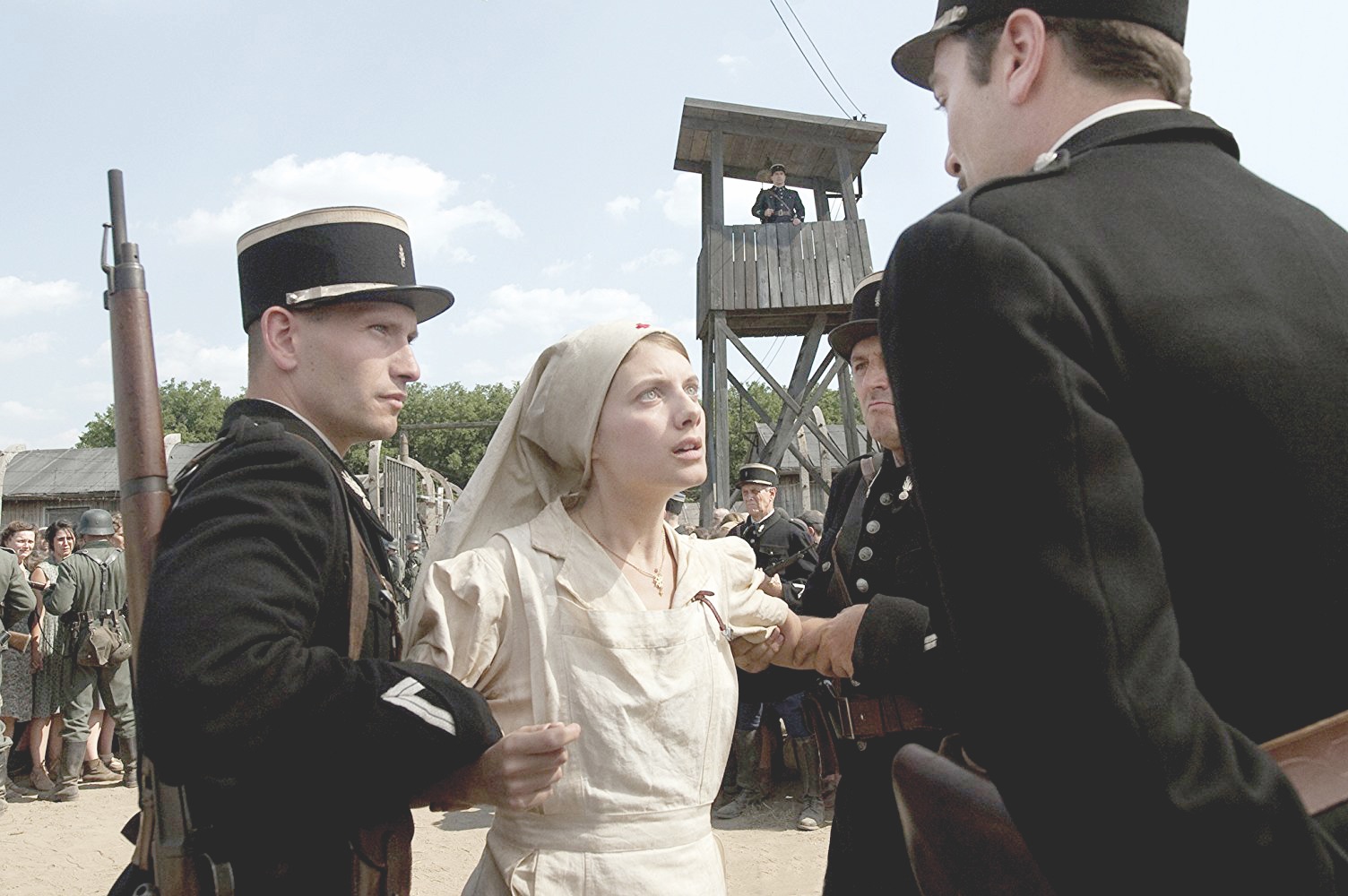
The 2010 film, “La Rafle,” recounts the true story of the infamous Vel’ d’Hiv Roundup of July 1942 in Paris, when the Nazis forced 13,000 Jews into an indoor velodrome before deporting them to Auschwitz. The film, screening at American Jewish University, focuses broadly on the Nazis and their collaborators, including the Vichy government and the French police. A post-screening discussion features writer-director Rose Bosch, historian Michael Berenbaum and Consul General of France in Los Angeles Christophe Lemoine. 7:30 p.m. $8. American Jewish University, 15600 Mulholland Drive, Los Angeles. (310) 476-9777. wcce.aju.edu.
WED MARCH 14
“UCLADINO SYMPOSIUM: NEW DIRECTIONS, OLD ROOTS”
The seventh annual ucLadino Judeo-Spanish Symposium focuses on themes and issues relating to new and up-and-coming topics and approaches within the study of Ladino and Sephardic life and culture. Panels and lectures explore current projects aimed at preserving, sharing and transmitting Ladino-related texts, music and archival material, including UCLA’s own Sephardic Archive Initiative. Hebrew University of Jerusalem Professor David Burns and St. Mary’s College of Maryland Latin-American History Associate Professor Adriana Brodsky deliver the keynote addresses. Through March 15. 10 a.m. Free. UCLA, Royce Hall 314, Los Angeles. (310) 267-5327. cjs.ucla.edu.
THU MARCH 15
“A CONVERSATION ABOUT MODERN ORTHODOXY”
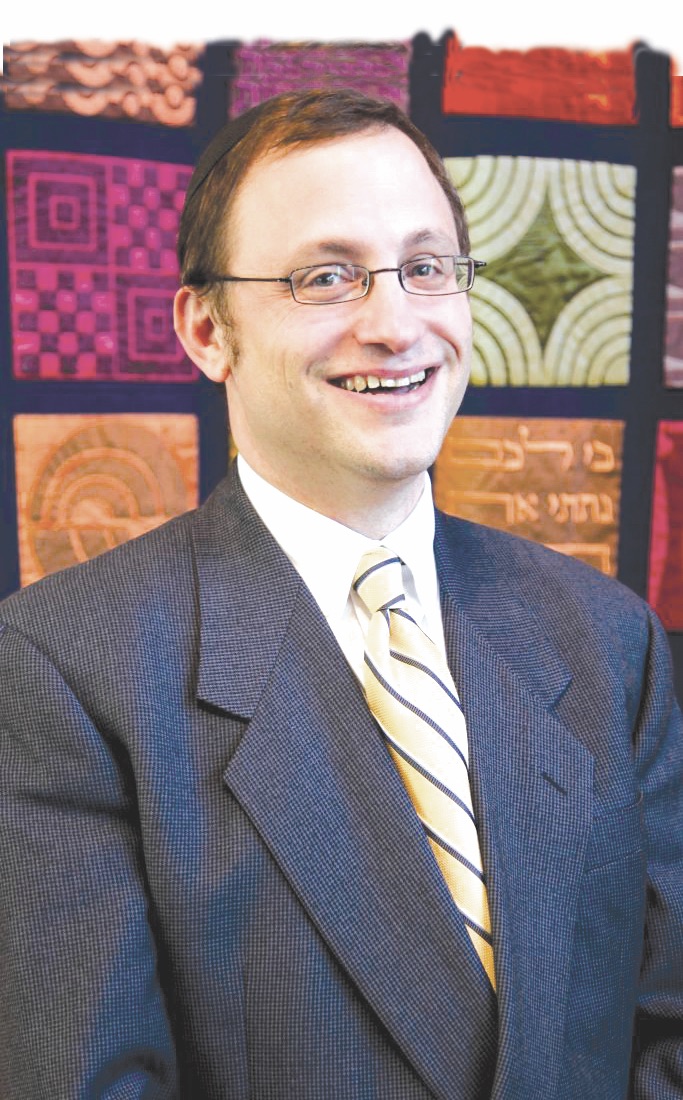
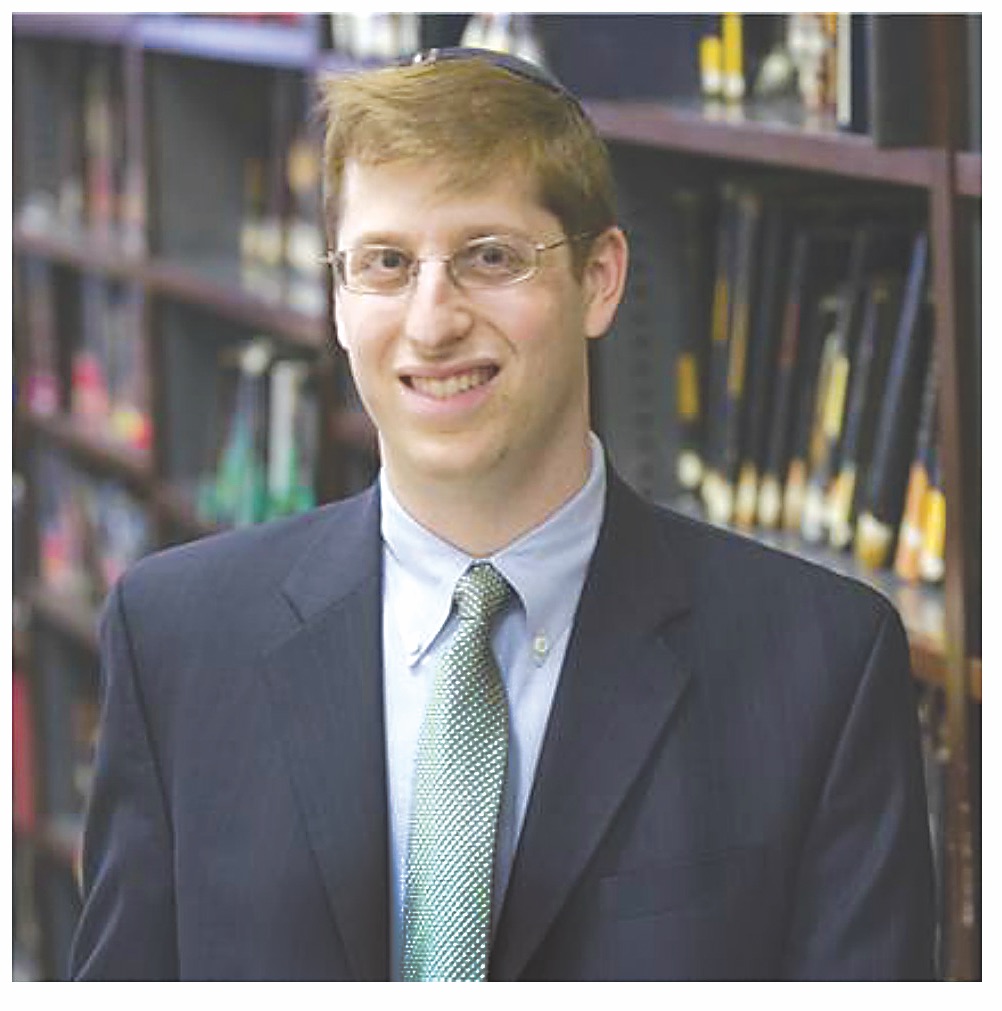
Rabbi Dov LinserRabbi Jeremy Wieder
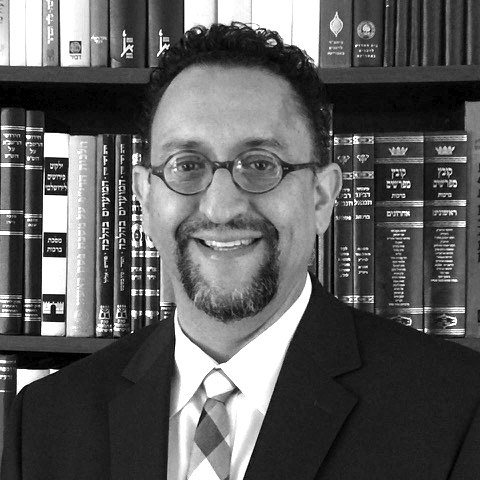
Rabbis Dov Linzer and Jeremy Wieder, leaders of Yeshivat Chovevei Torah Rabbinical School and the Rabbi Isaac Elchanan Theological Seminary, respectively, discuss “Between Values, Observance and Purpose: A Conversation About Modern Orthodoxy.” The panelists examine the complex dynamic in the Modern Orthodoxy community, where religious observance and religious values are both definitional to Jewish life. Moderated by Rabbi Ari Segal, head of school at Shalhevet High School. 7:45 p.m. Free. Beth Jacob Congregation, 9030 W. Olympic Blvd., Beverly Hills. (323) 930-9333. shalhevet.org.
“LAST GIRL BEFORE THE FREEWAY”
AUTHOR LESLIE BENNETTS
Leslie Bennetts
Best-selling author Leslie Bennetts discusses “Last Girl Before the Freeway: The Life, Loves, Losses and Liberation of Joan Rivers,” an intimate biography of the legendary comedian, an icon and role model to millions. Rivers set a precedent of honest femininity in public life,
never afraid to break barriers and push boundaries. Bennetts and journalist Tess Cutler unpack Rivers’ legacy. 7:30 p.m. $10. Burton Sperber Jewish Community Library, American Jewish University, 15600 Mulholland Drive, Los Angeles. (310) 476-9777. wcce.aju.edu.
Rabbi Marvin Hier, founder and dean of the Simon Wiesenthal Center (SWC), a two-time Academy Award-winner and a voting member of the Academy of Motion Picture Arts and Sciences, attended the 90th Academy Awards ceremony on March 4 at the Dolby Theatre in Hollywood.
“I’m proud to say, as an active member of the academy, I’ve voted ever since I won my first Oscar in 1981. I never missed the opportunity,” he said. “I exercise my membership obligations every year faithfully, because I think you should not be a member of theAcademy if you don’t intend to vote.”
Hier, one of more than 6,000 Academy members, attended the event with his grandson.
“I met a lot of interesting people and, of course, my grandson was thrilled,” Hier said. “A lot of people came over to me because I was wearing a yarmulke.”
It marked the third time Hier attended the Academy Awards. The first time, in 1981, was when the SWC’s film division, Moriah Films, won the Oscar for best documentary feature for “Genocide.” Moriah Films’ “The Long Way Home,” a documentary about Jewish refugees, also won an Oscar in 1997.
At the Dolby, Hier schmoozed with industry friends, including Ted Sarandos, chief content officer at Netflix, and Ron Meyer, vice chairman of NBCUniversal and a past SWC honoree.
Although he was unable to discuss which nominees he voted for, Hier said he was happy to see Gary Oldman win the lead actor award for his portrayal of Winston Churchill in the biopic “Darkest Hour.” Last year, Oldman spoke at the SWC’s Museum of Tolerance, after a members-only screening of the film.
Julie Platt, chair of the Foundation for Jewish Camp. Photo courtesy of the Foundation for Jewish Camp
The Foundation for Jewish Camp (FJC) has selected Los Angeles philanthropist, community leader and activist Julie Platt as its board chair.
Platt will serve a three-year term at the charitable group, which works with more than 250 day and overnight camps, creates additional Jewish camps, works to increase camp enrollment and retention and trains camp professionals.
Platt, whose selection was announced on Feb. 23, will deliver her initial address as board chair on March 17 in Baltimore during the biennial FJC Leaders Assembly.
“Building on FJC’s track record of success, I am excited to help lead the Jewish camp field to adapt and evolve to remain competitive and compelling,” Platt said in a statement. “In our rapidly changing world, Jewish camp becomes even more vital for developing leaders and building a stronger community. I look forward to encouraging generous philanthropists across North America to support the FJC board and staff as we continue to grow the field.”
In her youth, Platt attended Camp Ramah in Ojai, a Conservative summer camp. She is the fifth chair in the history of FJC, which was established in 1998.
“We are thrilled that she has now assumed this important leadership role,” said the organization’s CEO, Jeremy Fingerman.
Platt also serves as board chair at the Jewish Federation of Greater Los Angeles. Her husband, Marc, is a successful film producer whose credits include “La La Land.” They have five grown children, including their son Ben, who appeared on Broadway in the title role of “Dear Evan Hanson.”
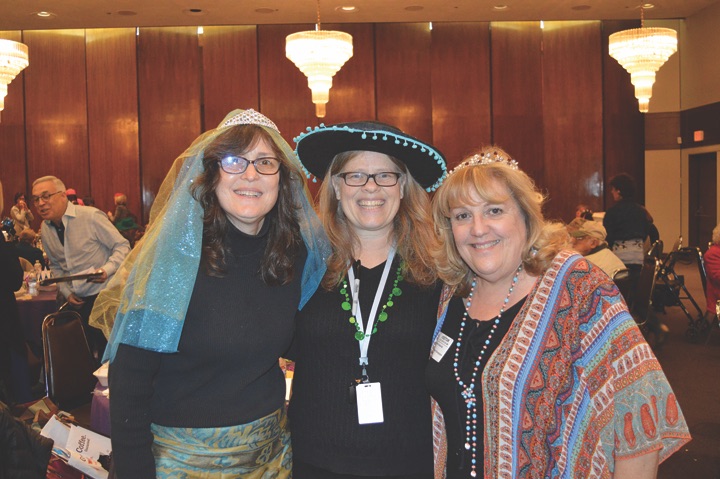
From left: Sheila Moore, JFS senior director of comprehensive senior services; Heather Angel-Collin, director of Holocaust Programs and Valley Storefront Senior Center; and Sherri Kadovitz, program coordinator at the Israel Levin Senior Center, attend the Cafe Europa Purim party. Photo by Michael Sidman.
More than 250 guests attended Jewish Family Service of Los Angeles’ (JFS) lively Cafe Europa Purim Party on Feb. 27 at Valley Beth Shalom (VBS) in Encino.
Café Europa, a social club offering Holocaust survivors educational and social activities — including organized trips, holiday celebrations and entertainment — is one of JFS’ signature programs. Guests at VBS included survivors and their families, as well as program donors, caregivers and staff.
The event included a Purim spiel with JFS President and CEO Eli Veitzer playing the role of King Ahasuerus. VBS provided a catered lunch, hamantashen and mishloach manot gift bags and a photo booth for attendees. Klezmer Juice, a traditional Yiddish band, played music that spurred many onto the dance floor.
“Every Purim is a special event for our survivors because some of our survivors each year become too frail to attend, so it’s very meaningful for them to be at the synagogue, to be with their friends, hear familiar music, sing and dance and eat together,” said JFS Director of Holocaust Programs Heather Angel-Collin.
Café Europa has two locations, in the Los Angeles basin and the San Fernando Valley, where social gatherings for survivors are held regularly. For the Purim celebration, survivors were invited to come together from across the city.
“Having our two Café Europa groups together at Purim allowed survivors from the city to see their Valley friends and vice versa, so our Purim party was something of a ‘family reunion’ for many of the survivors,” Angel-Collin said.
The photo booth, in particular, was a big hit, she added.
“Being able to take pictures with their friends at the photo booth and to have that photo as a memento really meant a lot,” Angel-Collin said.
— Oren Peleg, Contributing Writer
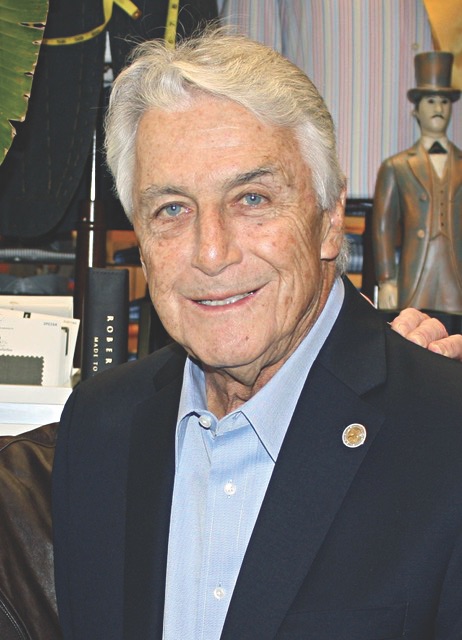
Joseph Siegman, who was recognized by the International Jewish Sports Hall of Fame. Photo Courtesy of Siegman
Joseph (Joe) Siegman of West Los Angeles has received the 2018 Lifetime Achievement Award from the International Jewish Sports Hall of Fame in Netanya, Israel, in recognition of his decades-long work to promote sports in Israel and California.
Siegman, a television producer and writer, founded the Hall of Fame in 1979 and served as its chair from 1981 to 1989. He has since served as chairman of its selection committee and for 15 years was a member of the U.S. Maccabiah Games Organizing Committee.
Not merely a sideline supporter, Siegman represented the United States on the cricket and lawn bowling teams at five Maccabiah Games in the 1970s and ’80s.
“I didn’t bring home any gold, silver or bronze medals from my five Maccabiah forays, but I did capture the United States national lawn bowling championships in 1989 and 2003, representing the Beverly Hills Lawn Bowling Club,” Siegman told the Journal.
The Hall of Fame, located at the Wingate College of Physical Education in Netanya, has inducted nearly 300 top Jewish athletes. The Lifetime Achievement Award is presented annually. For details, visit jewishsports.net.
Siegman has been a publicist and manager for numerous Hollywood stars, ranging from Ed Asner to Henny Youngman, and a producer of live shows and television shows. His producing credits include the seminal reality series “Celebrity Bowling” and “The Comedy Shop,” hosted by Norm Crosby, which featured such veteran comics as Don Rickles, Buddy Hackett, Youngman, Garry Shandling, Nathan Lane, Howie Mandel, Arsenio Hall, Michael Keaton and many others.
Between all these activities, Siegman has written a series of historical reference books under the title “Jewish Sports Legends.”
— Tom Tugend, Contributing Editor
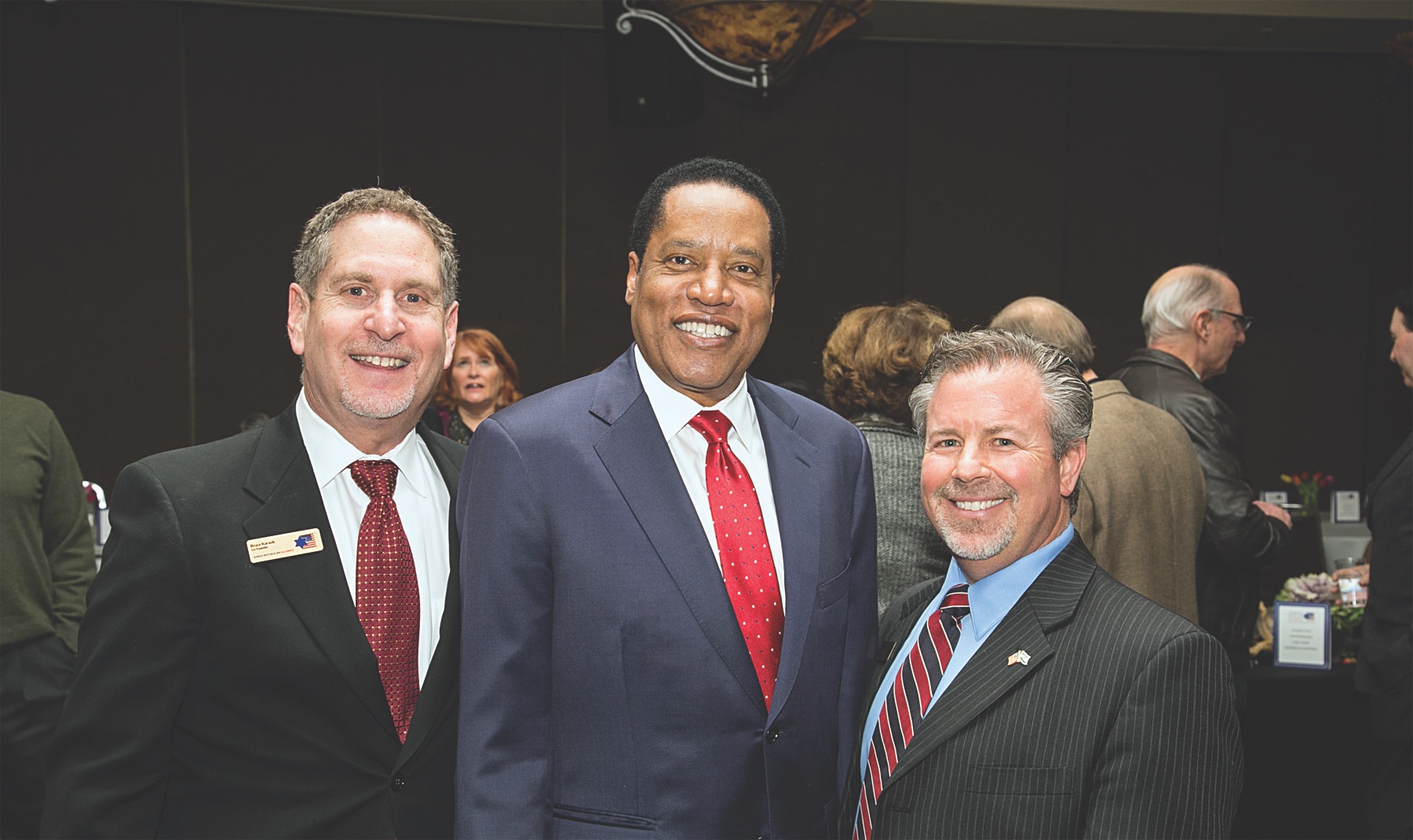
From left: Jewish Republican Alliance (JRA) co-founder Bruce Karasik, author and radio talk show host Larry Elder and JRA co-founder Mitch Silberman attend a JRA event at Valley Beth Shalom featuring Elder. Photo by Tracie Karasik, TLK Multimedia
Republican author and radio talk show host Larry Elder shared his conservative views and discussed the challenges of being conservative in the era of Donald Trump during a Feb. 26 lecture at Valley Beth Shalom.
“The 800-pound gorilla in this room is a man named Donald Trump,” Elder said. “Trump was not my first choice. Out of 17 Republicans, I think he was my 20th…But I’ve never seen anybody connect with people like that since Ronald Reagan.”
“Donald Trump understands this country,” he said.
The Jewish Republican Alliance (JRA) organized the event, during which Elder acknowledged the president’s inability to apologize for ill-advised remarks, including criticism of President George W. Bush’s decision to send troops to Iraq after the 9/11 attacks. Elder said criticism of the Iraq War, specifically that Republicans lied about Saddam Hussein having weapons of mass destruction, has hurt the Republican brand.
Camaraderie among community members supportive of the Trump administration permeated the event, which drew about 750 attendees to the Encino synagogue.
“Look to your right, look to the left — no, not the left,” said JRA co-founder and financial adviser Mitch Silberman, garnering laughs. “Aren’t you excited to know you’re not alone?”
Additional participants included JRA co-founder Bruce Karasik, a real estate broker who spoke in praise of Vice President Mike Pence’s support for Israel, and Valley Beth Shalom Cantor Phil Baron, who started the event by leading the attendees in the singing of the national anthem and “Hatikvah.”
Karasik and Silberman, who live in the Conejo Valley, co-founded the JRA in 2016 to support Republicans in heavily Democratic California. The organization operates chapters in the Conejo Valley, the San Fernando Valley, West Los Angeles and Newport Beach.
During his remarks, Elder, known as “The Sage From South Central,” said his views have not always won him fans among his fellow African-Americans. He said he has been called everything from an Uncle Tom to a sellout, but has seldom been called wrong.
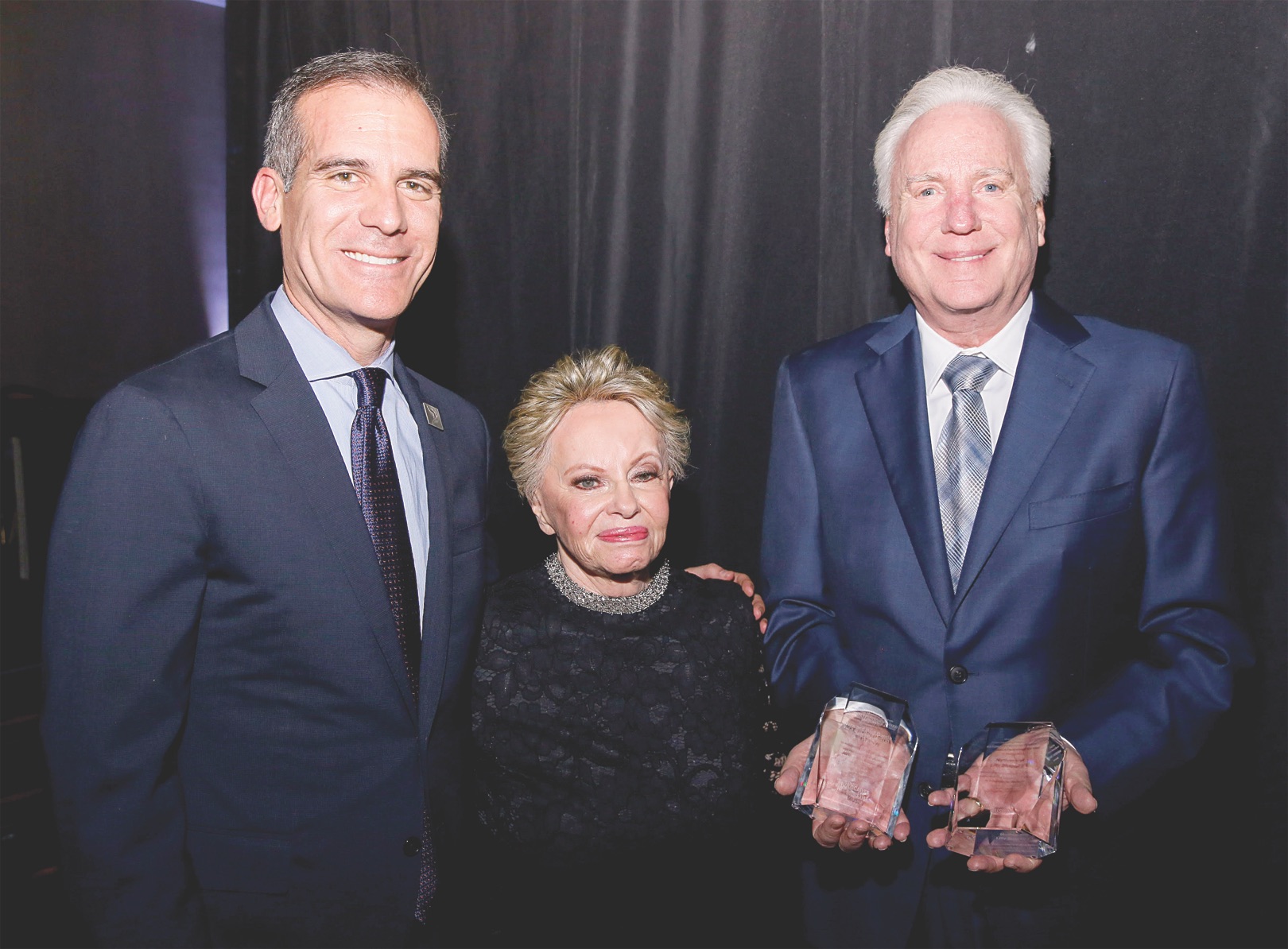
From left: L.A. Mayor Eric Garcetti and U.S. Holocaust Memorial Museum honorees Vera and Paul Guerin, attend the USHMM 25th anniversary dinner, which honored the Guerins. Photo courtesy of U.S. Holocaust Memorial Museum.
The United States Holocaust Memorial Museum commemorated its 25th anniversary with a dinner on March 1 at The Beverly Hilton.
The event honored Vera and Paul Guerin, their family and the memory of Vera’s parents, Lilly and Nathan Shapell, with the National Leadership Award. Nathan Shapell survived two concentration camps, Buchenwald and Auschwitz, and became a successful real estate developer in California. He was one of the founders of the museum. In 2013, Vera sold her late father’s business, Shapell Industries, and is involved in philanthropy in the Jewish community. The event raised more than $1.3 million.
Evening participants included Los Angeles Mayor Eric Garcetti, who presented the Guerins with their award. During his remarks, Garcetti called the Washington, D.C., museum the “moral conscience of our entire nation.”
Broadcast journalist Pat Harvey emceed the event, which began with Wilshire Boulevard Temple Senior Rabbi Steve Leder leading the 1,000-plus crowd in the ha-Motzi.
Before the award ceremony, museum Director Sara Bloomfield and Daniel Greene, curator of the museum’s exhibition “Americans and the Holocaust,” discussed films including “Confessions of a Nazi Spy” and “Casablanca,” which influenced how Americans thought and felt about the Germans during World War II, Greene said. Just as those films did not mention the Jewish people in their depiction of the war in Europe, Americans at the time were less concerned about the treatment of Jews under the Nazis than they were about the threat the Nazis posed to American principles such as democracy.
Attendees included L.A. City Controller Ron Galperin;Samara Hutman, director of Remember Us; Andrew Cushnir, executive vice president of the Jewish Federation of Greater Los Angeles; Los Angeles Museum of the Holocaust Executive Director Beth Kean; and Jewish Journal Publisher and Editor-in-Chief David Suissa.
Adele and Beny Alagem,Hella and Charles Hershson, and Cheryl and Haim Saban co-chaired the dinner, the theme of which was “What You Do Matters.”
The underlying argument of gun law reform: Public safety will be achieved through legislature (“When Will It End?” Feb. 23). In light of the Florida school shooting, this argument is shaping the modern U.S. political and sociocultural landscape. However, the dialogue on gun control has diverted the public from the underlying cause of shootings: pathology.
In Europe, multiple acts of terror have taken place through the use of cars. By driving through crowds of people, terrorist attacks have killed people in masses. Even in the absence of legal gun purchases, assuming black market sales are somehow nonexistent, pathological individuals can find means to fulfill their destructive motivations.
While empathizing with the victims of this tragedy, this conversation lacks this simple empirical observation: Pathology is a problem of being; it is not a problem of legislature.
Mahmut Alp Yuksel, Los Angeles
Former President Barack Obama and the left are partly responsible for the Parkland, Fla., shooting. Obama’s Promise Program lowered Parkland’s juvenile arrest numbers from 3,000 to 600. Then it lowered the number of children disciplined and expelled; it reduced the treatment of problem children; it lowered the number of children arrested. So when the killer attacked, the police did nothing because they were part of the Promise Program.
Robin Rosenblatt, Sebastopol
What a great column by Danielle Berrin (“In America, Life Should Come Before Total Liberty,” Feb. 23)! Thank you so much for bringing up the essence of the prophetic words of Isaiah Berlin. Having lived for 33 years in a society that believed in the absolute ideal of socialism, I experienced firsthand the truthfulness of his words: Everything is justified by the goal of attaining an ideal society. I would add only this: The more noble the ideal is, the more paranoid and fanatic the society becomes. Total liberty is possible only if a single person lives on an isolated island. If two or more people are to live together as a family, society, etc., then total liberty must be replaced by other values that put life at the center of everything.
Svetlozar Garmidolov, Los Angles
It seems to me that Ben Shapiro is a tad defensive about his hardline interpretation of the Second Amendment (“The Parkland Dilemma,” March 2). He harshly criticizes the students from Marjory Stoneman Douglas High School (MSD) for becoming strong advocates for gun safety. How dare they criticize Sen. Marco Rubio (R-Fla.) for his support of lax gun safety measures? In the very next sentence, he comes to the defense of NRA spokeswoman Dana Loesch, arguing that she cares “deeply about their (students’) safety.”
These MSD students experienced a horrific massacre. If some of them spoke in hyperbole, it is understandable. What is Loesch’s excuse for her screed at CPAC? She accused those of us who support strong gun safety laws of being ill-informed, ignorant of the Constitution and anti-American. Yet, Shapiro does not chastise her for these comments.
Andrew C. Sigal, Valley Village
In his opposition to gun regulations, Ben Shapiro says he refuses to give up his guns to “browbeating gun control advocates.” We’re not asking him to give up his guns if he feels that they truly give him a sense of security. What we are asking is for improved background checks, introduction of “smart” guns to reduce the likelihood of accidental shootings, and restrictions on assault weapons. If people like Shapiro would listen and consider such reasonable proposals, then we wouldn’t have to shout at one another.
John Beckmann, Sherman Oaks
The “tribalism” David Suissa describes arises from a failure to develop “team skills” (Trapped Inside of Our Tribes,” March 2).
The deepening political divisions and increase in violence, such as the murder of schoolchildren in Florida, have cultural and interpersonal roots. As our culture has become increasingly technological, individuals have become focused on their smartphones and video games at a young age rather than being encouraged to develop relationships with others. Developing and maintaining relationships with others is a skill that is becoming increasingly difficult for some growing children and increasingly difficult for many adults. Violence and primitive tribalism are the consequence of deep personal isolation.
William E. Baumzweiger, Studio City
Phil Rosenthal’s Modesty
Phil Rosenthal significantly understated the level of his and Monica’s generous philanthropy to Jewish and Israel-based causes (“Phil Rosenthal’s 3 Desires,” March 2).
Just a sampling: They supported the production of the award-winning 2008 documentary about the life and death of Hannah Senesh; Monica received the JNF’s Tree of Life Award; and the couple made a significant gift to underwrite the Department of Religious Services, in memory of Phil’s uncle, Rev. A. Asher Hirsch, at the Shaare Zedek Medical Center in Jerusalem.
Paul Jeser via email
There is at least a third trait that “Italians and Jews share”: We talk with our hands. Hence the Yiddish joke: “How do you keep a Jew from talking? Tie his hands behind his back.”
Warren Scheinin, Redondo Beach
The Truth of Deir Yassin
The deceitful and perverse Deir Yassin “massacre” fraud was a deliberate, manipulative propaganda effort by Palestinian leadership (“The Truth of Deir Yassin,” March 2).
Perhaps anticipating the sacrosanct status of the Palestinian narrative, Jonathan Swift wrote that “Falsehood flies, and the truth comes limping after it.” This would explain why professor Eliezer Tauber is still looking for an American publisher among those affiliated with the apparently now moribund “marketplace of ideas.”
Julia Lutch via emaill
What Protests Mean
Thank you, David Suissa, for writing “Obama and #IranianWomenToo,” Feb. 16).
Most of us are not brave enough to do what these women (and men) did, openly protesting an evil power —a real one, not from a movie or a novel.
I know this because I used to live in the evil empire, and I knew what an open protest would lead to. We did listen to Voice of America and Free Europe and knew of protests going on in front of the Soviet embassy, United Nations, etc. These people fought for our rights to leave, and for “refusniks” it meant a lot.
In light of this, the pretentious marches, resist movements, demands to remove old statues, and other political demonstrations seem meaningless compared with real issues of liberty (including women’s rights) that some societies face. It is very easy to participate in some march, feel good about it, then go home, knowing that there will be no consequences.
Andy Grinberg via email
A Rabbi’s Spiritual Journey
Thank you, Rabbi Adam Kligfeld, for poetically sharing your experience integrating yogic and Buddhist meditation practices with Judaism (“My Sabbatical Journey: Feeling the Drumbeat of Life,” March 2). In addition to spotlighting the enormous need for tikkun olam, meditation helps me to discern how best to use my God-given gifts to serve our world. None of us is expected to do it all, but each one of us is expected, even commanded, to do what we can. Whatever comes easily and naturally to us is exactly how to help, so go ahead, pick the low hanging fruit! What comes easily for you is difficult for others. Paralyzing guilt has no function in Jewish life.
Cathy Okrent via email
Listen and Learn
I strongly recommend to your readers a recent edition of “Two Nice Jewish Boys,” a Journal-associated podcast. It features Einat Wilf, a former Labor Party MK, who grew up supporting the two-state solution, but has since changed her mind.
It wasn’t just the failure of the Oslo Accords, the atrocities of the Second Intifada, ceaseless terrorism and repeated Palestinian rejection of good-faith offers that prompted her to “get real,” but her conversations with Palestinians themselves. She now believes, sadly, the Palestinian mindset makes a peaceful solution impossible.
Rueben Gordon, Encino
Inclusion at Sundance
Very glad to read about the Shabbat Tent at Sundance (“Sharing Some Light,” Feb. 2). I attended Sundance for 10 years — from 1998 to 2007— first as a programmer for another festival, and then as a filmmaker with a short that played Sundance in 2004. The only year I ever managed to participate in anything remotely Jewish was the year that “Trembling Before God” was an official documentary selection at the festival (in 2001). Very glad to hear that now there’s so much more, and that it is so welcoming and accessible.
Paul Gutrecht via email
The Power of Poetry
Thank you, Hannah Arin, for providing the lovely poetic parameters for wishing upon a star.
Charles Berdiansky, Culver City
New-Look Journal
Your new design format for stories is more conducive to reading all the material than the old design of presenting a starting story and continuing it on the back pages. Thank you for the change.
Long a cornerstone of the American Jewish experience, Jewish summer camp provides kids an unbreakable link to their past and a head start into their future.
For years, most Jewish camps offered a general program of swimming, sports, and arts and crafts, along with color wars, song sessions and, my personal favorite, Capture the Flag. But the world is changing and if our Jewish communal institutions do not adapt, our aspirations for a more vibrant Jewish future are at risk.
In camping, for example, we have noted parents’ growing demand for specialty camps to bolster their children’s skills and to address their increasingly sophisticated interests. Indeed, to remain competitive and to attract and retain even more campers, the field of Jewish camp has had to evolve.
Ten years ago, Foundation for Jewish Camp (FJC) created our Specialty Camps Incubator with the support of the Jim Joseph Foundation, later joined by the AVI CHAI Foundation. The Specialty Camps Incubator has launched Jewish specialty camps with a new model of high-quality skill-building activities combined and integrated with vibrant, experiential Jewish education. These new camps — including outdoor adventure, environmental sustainability, science and technology, and sports — have created a new dynamic in the field of Jewish overnight camping, offering alternatives to existing secular models, while infusing Jewish wisdom, tradition and joy into daily life.
To date, the new specialty camps have drawn more than 7,000 unique campers, most of whom had never considered Jewish camp as an option. Independent evaluations of the Specialty Camps Incubator demonstrate the lasting impact on campers who have not only improved their skills related to their passion, but also have become more engaged in Jewish life year-round.
Lessons learned from creating these camps from scratch inform and motivate the entire field of Jewish camping in forward-thinking adaptation and innovation. Not only do these new camps offer expertise and elite personnel in fresh, new areas of interest, they offer a new model in leasing existing spaces at universities and boarding schools with outstanding facilities. This efficient approach to creating sacred communal spaces
opens up opportunities across the field and beyond.
The Specialty Camps Incubator is dramatically changing the Jewish camp landscape in California and throughout North America, serving as an example of how the larger Jewish community must adapt and grow.
The Specialty Camps Incubator is dramatically changing the Jewish camp landscape in California.
This summer, six new overnight specialty camps will open, including two in Southern California. Havaya Arts will offer a unique creative and performing arts experience on the campus of the University of Redlands. The new URJ 6 Points Sci-Tech Academy West will engage campers’ curiosity about the world through hands-on scientific and technological exploration, experimentation, and reflection, while immersing them in a vibrant Jewish community on the campus of Cal Lutheran University in Thousand Oaks.
With funding from AVI CHAI, FJC’s Specialty Camp Accelerator launched two additional camps in 2016, including URJ 6 Points Sports Academy California, on the campus of Occidental College.
The new camps created through the Incubator and Accelerator programs have motivated all Jewish camps to think creatively and maximize their reach and Jewish learning.
This means that traditional camps are beginning to create and implement specialty tracks within their regular offerings in an effort to retain older campers and to attract those who might want to specialize in a particular activity. Some traditional camps also are rethinking session length influenced by the Incubator camps’ models, recognizing that shorter sessions
might attract campers who have a packed summer. The way Incubator camps approach integrating Jewish learning, values and reflections into their programming has had a lasting impact on campers’ Jewish engagement.
The evolving work of Jewish camp encourages our communal organizations across North America to raise the bar and attract more young people, engaging them in Jewish life for years to come.
Jeremy J. Fingerman is CEO of Foundation for Jewish Camp.