fbpx

March 1, 2018

Israeli Technion Students Share Knowledge with L.A.

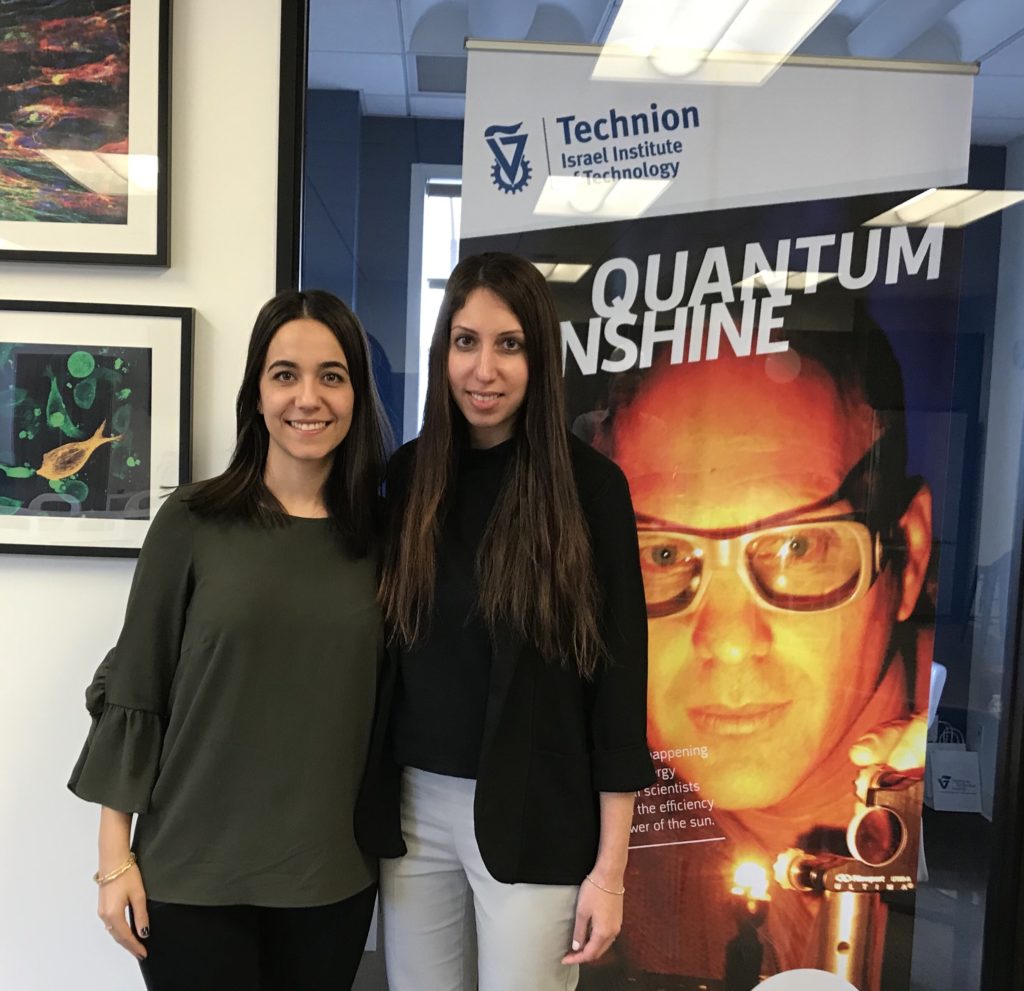
A couple of students from the Israeli Technion visited Los Angeles from Feb. 26-28 to share their knowledge about Israel’s tech startup culture.

Roni Hillel is studying environmental engineering and working toward her Ph.D. in environmental quality sciences. She is currently researching water and wind flows to help ameliorate pollution from areas that are surrounded by mountains.

“Winds on mountain slopes – or the actual microclimates – are actually determined by the slopes themselves of the mountains, so how steep or not steep these slopes are,” Hillel told the Journal. “As of today, there is not much physical understanding of these types of slopes.”

Hillel is modeling these slopes in a lab through a water tank, heating and other methods to simulate the climate itself on these particular slopes.

“We’re trying to get the best picture that we can to generate a model to be able to determine these little microclimates in the region and eventually to be able to predict how to drive pollution out of areas like that, urban areas,” Hillel said.

Hillel predicts that by the end of her Ph.D. program – which is expected to February 20 – her research will have advanced to the point where technology can be developed that can exterminate pollution from these areas while keeping the natural environment intact. However, it’s too early to get an idea of what exactly this kind of technology would look like.

“We don’t understand 100% the physical phenomena that’s occurring in nature, but right now we are trying to understand it as much as we can,” Hillel said. “The initial phase would be able to predict weather predictions better, to able to predict climate change better than we do today, because weather predictions today are only 33% accurate, and they’re proud of that, and they’re only based on statistics. So if we add a little bit of physical background into it, we can get much more accurate weather predictions.”

Hillel added, “Ultimately, driving pollution areas or urban areas like that, that would be the next step. But we’re not there yet.”

When it comes to environmental technology as a whole, Israel is ahead of the curve, as evident by numerous Israelis using solar power to heat their water and the use of desalination to obtain drinking water. Hillel suggested that the latter would be useful for California to embrace given the state’s prior droughts.

“It works amazing in Israel,” Hillel said. “Most of the water that’s supplied in Israel is actually from desalination plants and we even export water to countries around us Israel. It’s great technology, it’s always progressing because it has such a high demand and the water prices are dropping as technology advances.”

The other student, Moran Lazar, is studying behavioral sciences and management at The Technion’s William Davidson Faculty of Industrial Engineering and Management. Her focus is on the kind of relationships among team members that cause startups to thrive and fail. Lazar cited a startup that provided imaging for apartment furniture as an example, as they were on the verge of receiving seed funding when the two founders ended their partnership over a business disagreement. Consequently, the startup failed.

“If I’m the best in technology, I would look for the best in marketing, the best in finance, the best in operations, and I would also look for partners that I trust, that I can build a strong connection and trustful connection with, so both the interpersonal connection and expertise and resource seeking are important,” Lazar told the Journal.

Lazar credited the Technion for how they “support women in academia” and provide “fertile ground for young researchers like Roni and I to become the best in Israel.”

Robert Rothschild, the Technion’s Director for Leadership Giving of Western Region, told the Journal that students like Hillel and Lazar sharing their Technion experience “makes them truly connect to the importance of the fellowships.”

“The qualities of these two women and others like them who are exceptional, and that this is what the Technion produces is great for Israel, it’s great for Technion, it’s great for all of us,” Rothschild said. “As far as I’m concerned, they are the gift that we provide all of our donors when they come every year because this is the future of Israel, and that’s the purpose of their trip.”

Israeli Technion Students Share Knowledge with L.A. Read More »

DOJ Announces Indictments of Israeli-American Over Alleged Bomb Threats of Jewish Organizations

The Department of Justice (DOJ) announced on Feb. 28 that 19-year-old dual Israeli-American citizen Michael Ron David Kadar has been hit with multiple indictments for allegedly issuing bomb threats toward various Jewish organizations.

The indictments charge Kadar of sending bomb threats to both the Israeli embassy and the Anti-Defamation League (ADL) in Washington, D.C. Kadar also faces up to 32 counts of issuing 245 bomb and shooting threats numerous Jewish organizations in Florida, including numerous Jewish Community Centers, Chabads, schools and even Orlando International Airport. The third indictment charges Kadar of providing false information to the police about a hostage situation in Georgia.

Kadar’s alleged threats resulted in “resulted in the temporary closure and evacuation or lockdown of the targeted facilities, and required law enforcement and emergency personnel to respond to and clear the area,” according to the DOJ. Additionally, the threats “caused fighter jets to scramble, planes to dump fuel and make emergency landings, large numbers of schools to evacuate, and numerous other chaotic consequences,” per the Times of Israel.

“When individuals target victims of their crimes based on who they are, what they believe, or how they worship, they target the bedrock principles on which our nation was founded,” Attorney General Jeff Sessions said in a statement. “These alleged threats of violence instilled fear in the Jewish community and other communities across the country, and it is the Justice Department’s duty to make sure all Americans can live their lives without this type of fear.”

Kadar’s threats toward Jewish organizations are being treated as a hate crime and could face up to 20 years in prison for each one. He also faces up to 10 years in prison for each bomb threat and five years for the false information he provided to police in Georgia.

“Make no mistake, these threats were acts of anti-Semitism and deserve to be treated as a hate crime,” ADL CEO Jonathan Greenblatt said in a statement. “They targeted Jewish institutions in order to stoke fear and anxiety, and put the entire Jewish community on high alert.”

In August 2017, an FBI affidavit reportedly accused Kadar using a platform called AlphaBay where he sold his services of issuing bomb threats.

“I email bomb threats to schools on your requests,” Kadar allegedly wrote on the site. “If you feel you need someone to do this job for you then this service is for you.”

His price ranged anywhere from $30 to $500, per the affidavit.

Kadar is currently being held in custody in Israel, where he faces 1,000 counts of various charges from a Tel Aviv District Court. His attorney has argued that Kadar was dealing with “a brain tumor” at the time he made the alleged threats and that he “is on the autistic spectrum,” per the Times of Israel.

DOJ Announces Indictments of Israeli-American Over Alleged Bomb Threats of Jewish Organizations Read More »

TABLE FOR FIVE: Five takes on the weekly parsha

PARSHA: KITISA, EXODUS 31: 1-5

“The Lord spoke to Moses: See, I have singled out by name Bezalel son of Uri son of Hur, of the tribe of Judah. I have endowed him with a divine spirit of skill, ability, and knowledge in every kind of craft; to make designs for work in gold, silver, and copper, to cut stones for setting and to carve wood — to work in every kind of craft.”

David Brandes
Screenwriter and Producer

Of all the artists available to God (including the disgraced sinner who built the golden calf), why do you suppose he chose Bezalel? The Master Creator understood that creativity has a life and energy of its own. It’s chaotic, often intuitive, even amoral. In addition — and you can ask any Hollywood writer to confirm this — you just never know how the work is going to actually turn out. Even God had to make some adjustments in his design. After creating his greatest achievement, Adam, God realized that “It is not good for man to be alone.” He summarily added Eve to the mix. And when mankind turned ugly several chapters later, God brought down the great flood so that he could start again.

Because God had a specific design in mind for the holy Tabernacle, He knew that he had to choose an artist who was brilliant but was on the Master’s wavelength. Someone who could make the artistic leap, yet follow the grand intention. This was not, after all, to be an eye-catching designer home. It was to be the exalted home of God — something magisterial, yet warm, familiar. I think it is fair to say that if the brilliant futuristic architect Frank Gehry had lived in that time, he would not have been on the short list.

The reason God specifically chose Bezalel is evident when we examine the two parts of his name in Hebrew: “B’tzel” and “Elohim” —  he who dwells in the shadow of God.

Rabbi Stan Levy
Congregation B’nai Horin and The Academy for Jewish Religion

When I was a boy in Hebrew school, my Chasidic teacher taught us to hear Torah as personally addressed to us. Every personal name is a dimension of our own personality and the name of every location is a place in our own life.

This translation renders the Hebrew phrase ruakh Elohim as “divine spirit.” I prefer to translate it differently, as “the spirit of the force of life.”

The ruakh Elohim in this passage echoes the the ruakh Elohim described in the opening verses of Genesis, the force of life that permeated the waters of the Earth. This week’s Torah portion teaches us that every person is encoded with ruakh Elohim, the spirit of the force of life. It is part of our DNA, the spiritual DNA of God. It is how each of us is created in the image and likeness of Elohim, the force of life. With every breath we take, we are infusing ourselves with divine spiritual energy. Each of us is a living embodiment and expression of the presence of the Divine in our world.

These verses teach us that to be a wise person, to know how precious, fragile and time-limited life is, we need a wise heart. And we need to integrate our knowledge and intuition into our hearts in order to attain hearts of wisdom.

Finally, regardless of what our work in the world is, we should, as Albert Einstein said, lead our lives as works of art.

Rabbanit Alissa Thomas-Newborn
B’nai David­-Judea Congregation

God gives Bezalel wisdom, understanding and knowledge. But these seem to just be synonyms. Why does the Torah use these three specific words?

In Tanya, the Alter Rebbe refers to these same three words as levels of connection in learning Torah. They are referred to as CHaBaD (cHochmah, Binah and Daat). Chochmah is a spark, an interest that pulls us to want to know more. Binah is the process of understanding the spark, going deeper to comprehend. And Daat is the point at which an idea becomes a part of us — integral to who we are. This learning process is a gift because it enables us to connect with God at our core.

With this in mind, we see that the words in our verse are not three random synonyms. God provided Bezalel with three life-altering tools and through them, he merited to be known as Bezalel, “in the shadow of God.” He entered God’s embrace through Chochmah, Binah and Daat — through exploring and mastering God’s Torah.

But Bezalel is not the only one to have access to these tools. We can all find our spark in Torah (Chochmah), choose to learn more in depth (Binah) and make it a part of our lives and selves (Daat). It’s the process we would go through with anything we are committed to — with anyone we love. Let’s choose to do the same in our Torah lives and in our relationship with God. This week, find your spark!

Rabbi Michelle Missaghieh
Temple Israel of Hollywood

Just like Bezalel, who worked in “every kind of craft,” children in school are expected to be good at everything: math, science, physical education, English, a foreign language, history, reading, writing, art, interpersonal skills, organizational skills and more. They are graded and judged. It’s exhausting. We set up unreasonable expectations for our youth: to be super-accomplished, résumé-armed, college-bound teens who are also “do-gooders,” caring and ethical.

No wonder many teens suffer from chronic anxiety and depression. No wonder our kids feel like they’re cracking under pressure and sometimes self-medicate with alcohol or drugs, or even take their own life.

In this week’s portion, God senses that it’s the exceptional person, Bezalel, who could paint and sculpt, draw and weave, carve and build with wood, solder metals and dye wool — because he was singled out by God and endowed with the divine spirit. There are artists who can do this today, but they are the exception, not the rule.

Things used to be different. For centuries, children would find themselves a mentor and then learn a trade. Want to make shoes? Find a shoemaker and study his craft. Want to farm land? Find a farmer and shadow him in the field. Want to sell goods around the world? Attach yourself to a traveling salesman and dream big. As adults, we don’t require one another to be proficient in “every kind of craft”; instead we allow ourselves to zero in on our strengths and pursue the talents and skills that interest us. Why can’t we allow our teens that same flexible mindset? Expecting that any person excel in “every kind of craft” is burdensome and potentially destructive.

Rabbi Bradley Shavit Artson
American Jewish University

How powerful that “wisdom” is the attribute that God uses for an artist, for someone who has the talent, discipline and has put in the time to master a craft. Judaism has never been about disembodied thought, about platonic concepts or values distilled and separate from life. Instead, Torah recognizes that wisdom is about living in the world, with the world. And that we, like Bezalel, are invited to live so mindfully that we — like God — become capable of creating.

When we intuit life deeply, when we resonate with its possibilities and opportunities, then we can birth new realities. For Bezalel, that new reality was a beautiful, multicolored venue where the Children of Israel would be able to be aware of God’s presence. Using fabrics, pelts, metals and woods, in a raucous blend of texture and hues, Israel’s mindfulness of God erupts out of mixed colors, sensations of touch and sight and (later) smell. All our senses praise God, who dwells with us in our worldliness. Art is thus placed at the very center of Jewish spirit; creativity and craft open our senses to the ways that the entire world is filled with God’s glory.

There are so many ways to bring people to the portal of the Divine. Surely, when we bring life wisdom to bear — in how we treat one another, fight for dignity and all creation, when we make new and beautiful objects to heighten our awareness, lift each other’s spirits or to soothe broken hearts — then we take our place, like Israel’s ancient artists, as God’s skilled and wise creators.

TABLE FOR FIVE: Five takes on the weekly parsha Read More »

Top 10 Fail Moments of Berlin’s Jerusalem Exhibition [Photo Essay]

As Jewish Museum Berlin’s Director, Peter Schaefer, stated in our interview for the Jewish Journal of Los Angeles, the Museum seeks for its temporary exhibitions, whenever possible, to explore topics of importance to all three major religions (which makes one wonder why it’s called the “Jewish Museum”). No topic captures the interreligious imagination more than Jerusalem, but the “Welcome to Jerusalem” exhibition seems to serve as a platform for the Museum to subtly impose its political bias regarding Israel, despite proclamations to the contrary.

As someone who has lived, loved, and cried in this troubled and glorious city through some of its bloodiest and most exciting times, I present to you the exhibition’s top ten fail moments:

10. Islam is the rightful heir to Jerusalem. The Islamic crescent topping the Dome of the Rock is the only religious ornament on the Museum’s brochure and initial city ads. Forget the Jewish star. Forget the cross. In the “The Holy City” section, Conrad Schick’s impressive model of Dome of the Rock takes center stage, flanked by a modest model of the Western Wall and the Church of the Holy Sepulcher, thereby giving “Haram esh-Sharif” (or Noble Sanctuary) dominance.

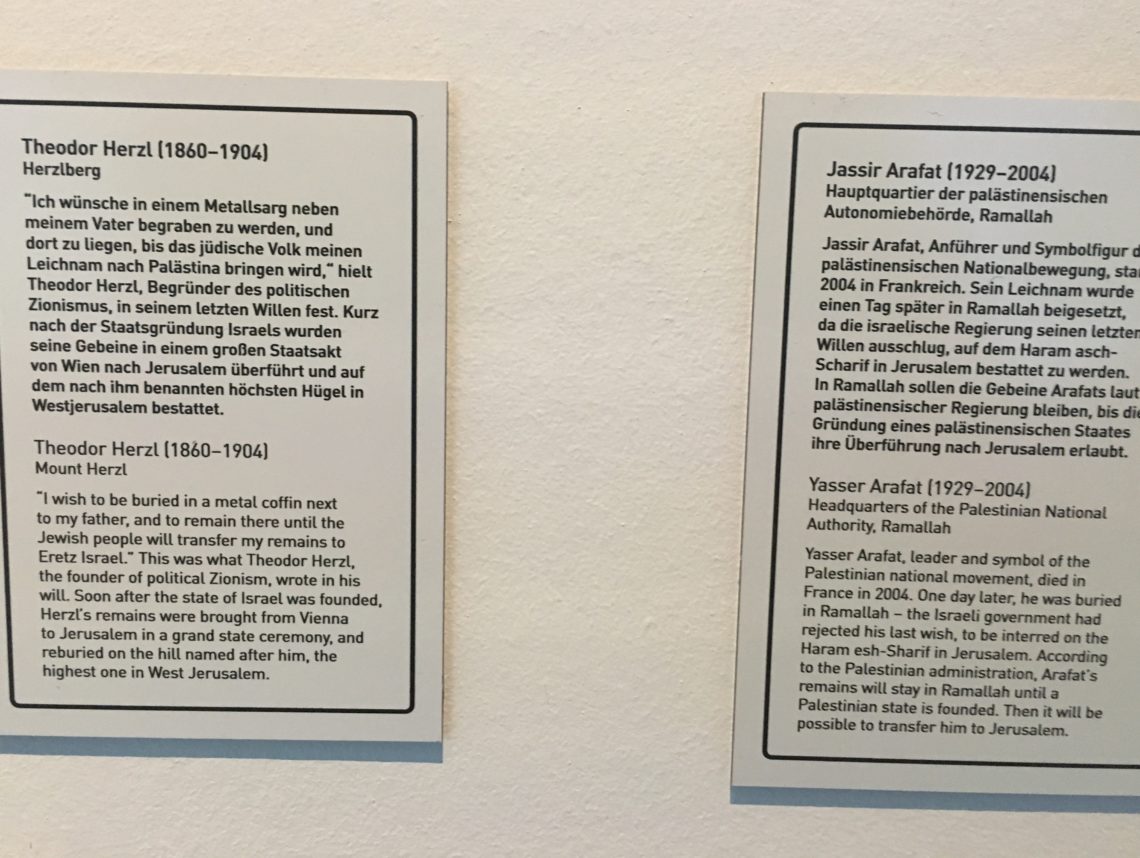
9. Theodor Herzl and Yasser Arafat are moral equals. In a strange section on dignitaries buried in Jerusalem, Herzl and Arafat are listed side-by-side, as if this intellectual, non-violent Zionist leader and this antisemitic arch-terrorist are moral equals. As if the Zionist cause that turned swampland into civilization is equal to the Palestinian cause that turned nails and screws into shrapnel. No mention is made of Arafat’s role in mercilessly murdering Jews via suicide bombings at bus stops, cafes, and nightclubs. While Arafat’s mausoleum is in Ramallah, the placard suggests he should be buried in East Jerusalem, as the future capital of “Palestine.”
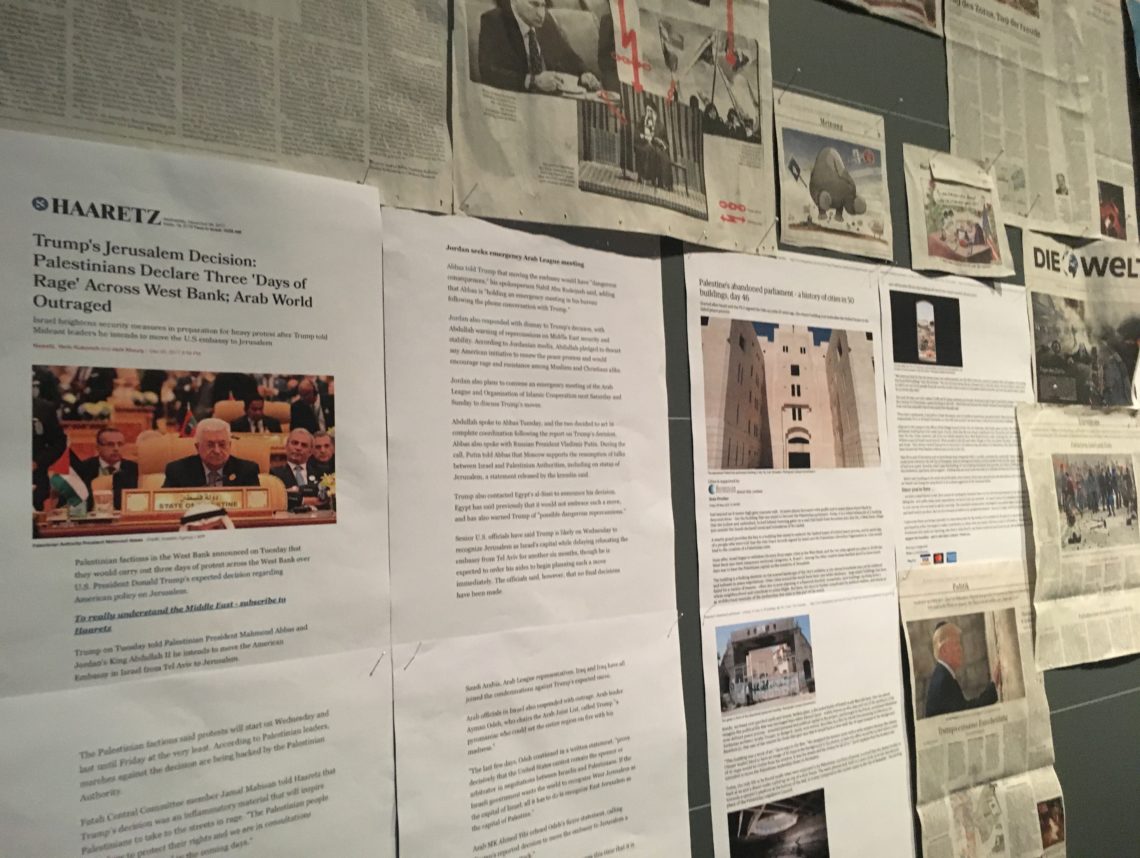
8. Left-wing perspectives inform the exhibition. In the final hall, a panel consists of excerpts on Jerusalem current affairs from mainly Left-wing publications, allowing for little ideological diversity: Ha’aretz, The Guardian, New York Times, to name a few.
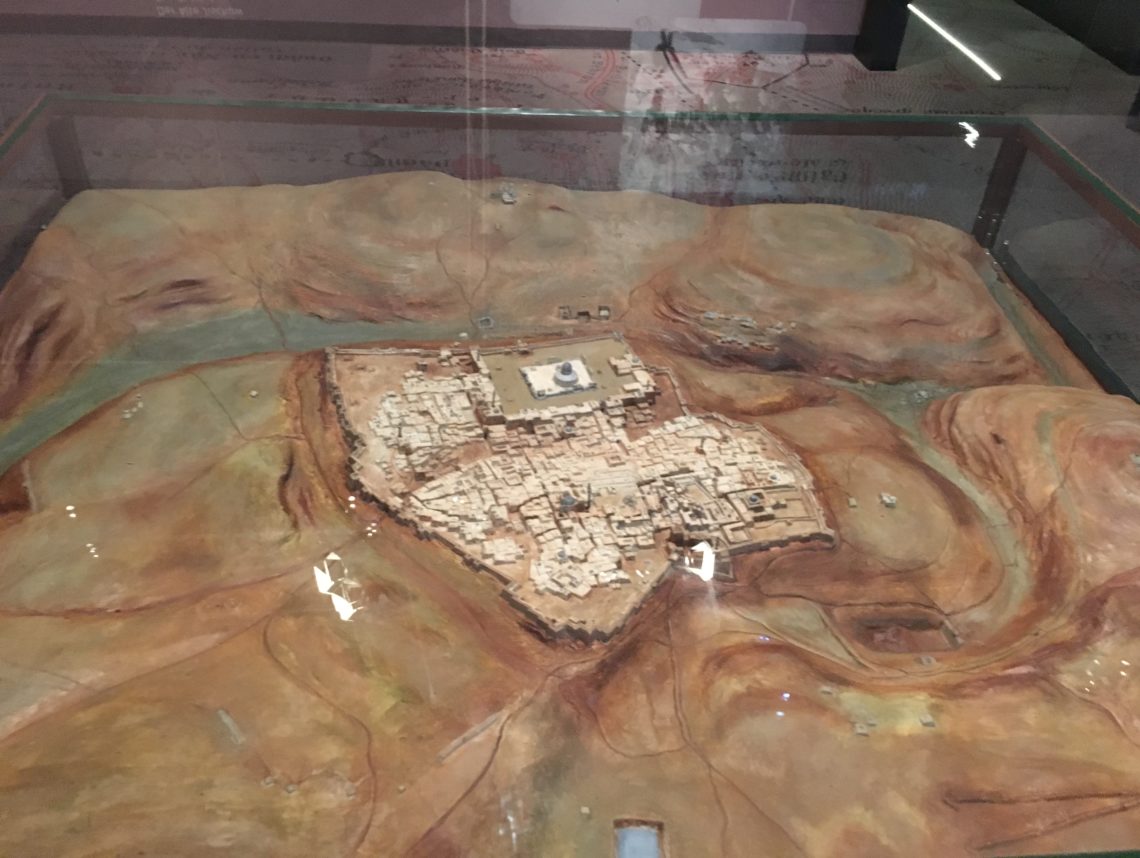
7. Israel is a land hoarder. In an illustration of Jerusalem’s changing boundaries, Israel is blamed for robbing the Palestinians of land, saying: “Arab eastern Jerusalem has become increasingly separated from its hinterland” because of the security barrier. No context is given for it: a response to the relentless, cruel terrorist attacks against Israel coming from the West Bank/Judea and Samaria.

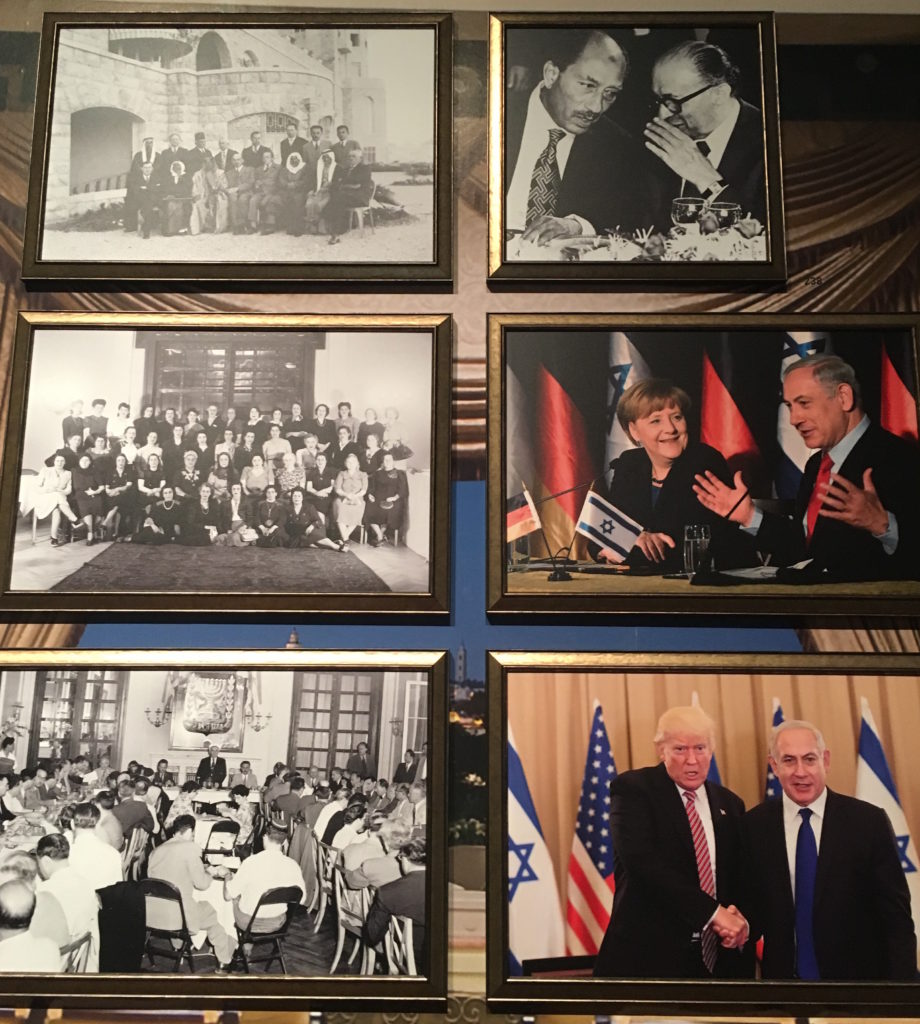
6. Even hotels are political. Another strange exhibit on famous Jerusalem hotels seems to have been devised to showcase the most famous Zionist “terrorist” attack when, in 1946, the Irgun military underground blasted the wing of the King David Hotel housing the British administrative headquarters. (It also affords the Museum an opportunity to portray dignitaries who visited Jerusalem, with an unflattering picture of Trump.)

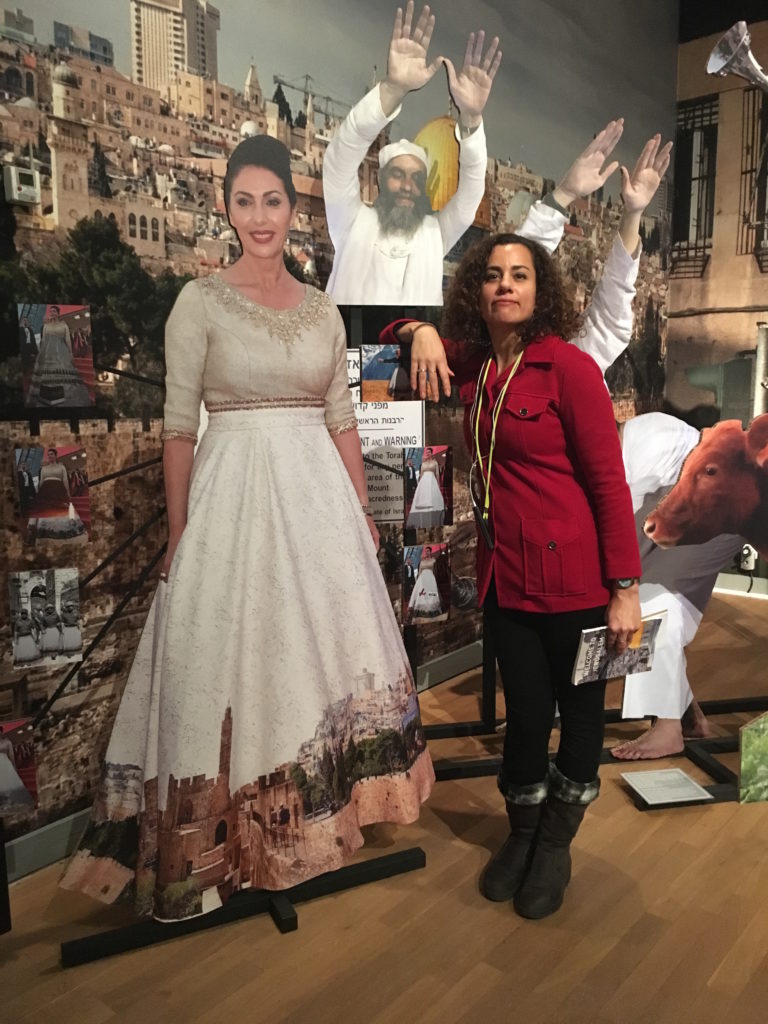
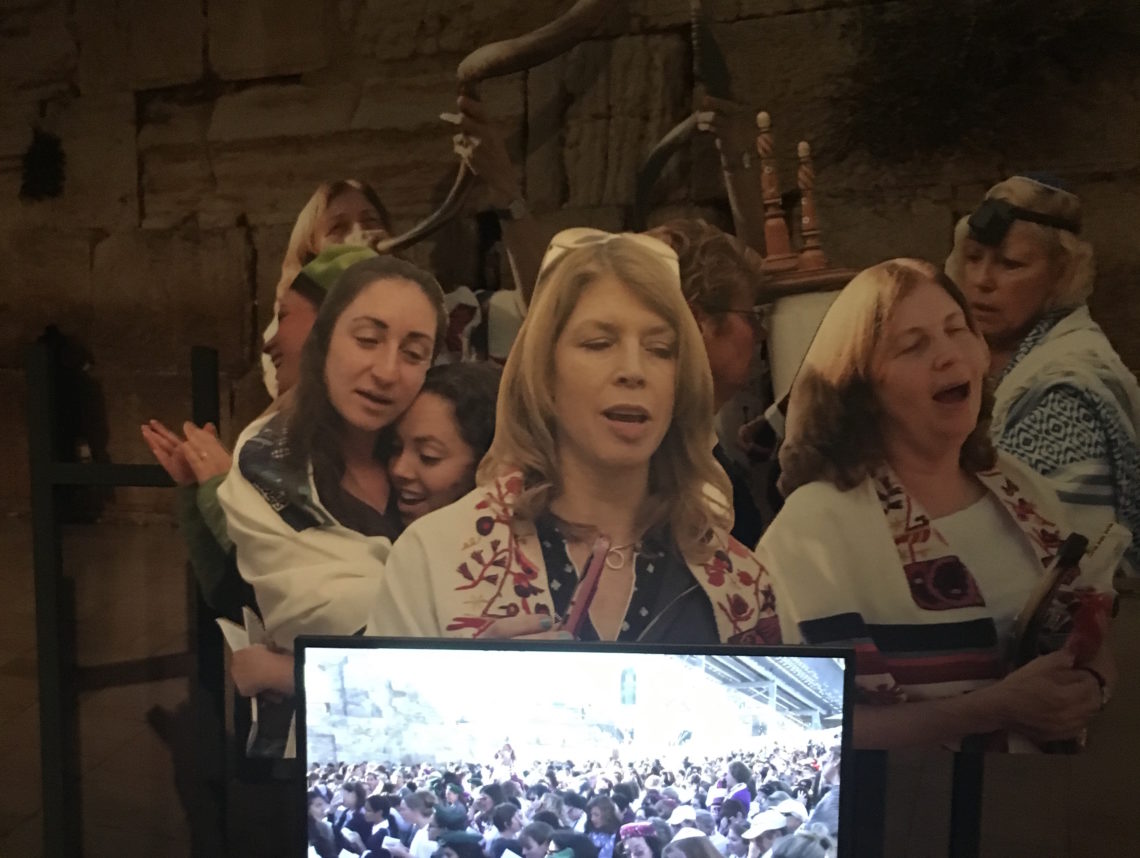
5. Only Jewish “extremists” exist. Another odd room is dedicated to Jewish fringe groups: the liberal “Women of the Wall”; the anti-Zionist “Neturei Karta”; and “Temple Mount Faithfuls” who seek to rebuild the Third Temple, which, according the Museum, “exacerbate[s] the conflict between Israel and Palestine.” Where’s the room dedicated to the far more numerous Muslim extremists who do more than just practice outdated rituals? Why not dedicate a room to Koran passages that incited the attempted murder of Yehuda Glick (now a Knesset member) who advocated for freedom of worship on the Temple Mount, where the Islamic Waqf forbids Jewish prayer? And what about the terrorist gang that gunned down young Arab Druze policemen who protected Jews during “non-Muslim” visiting hours?

The author posing with the Temple Mount “faithfuls” and cutout of MK Miri Regev

4. Mocking Israeli leaders. Next to the Jewish “extremists,” the Museum placed a cutout of Israeli Minister of Culture Miri Regev sporting the dress she wore at the Cannes Film Festival whose hem was decorated with the Jerusalem landscape. Next to her are samples of social media posts mocking her. Why pick on an Israeli leader? Why not mock Arab lawmakers who spew the kind of antisemitism that would make Hitler proud?

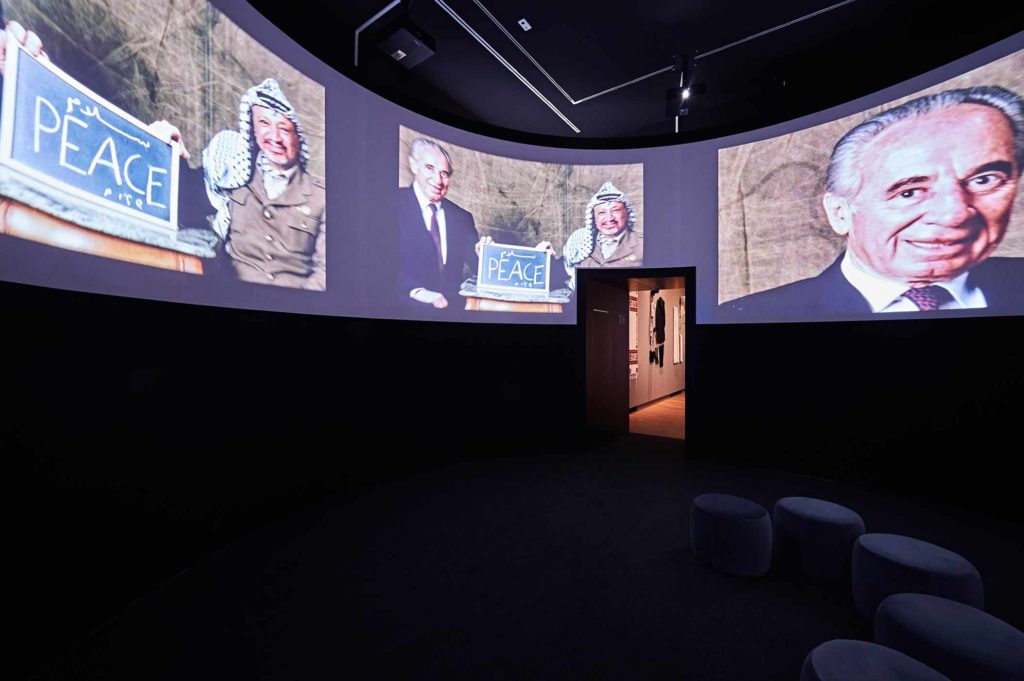
View of the rotunda film “Conflict”; Jewish Museum Berlin; Photo: Yves Sucksdorff

3. Israel was a “Catastrophe” (Naqba). The climax of the exhibition is a short film, “Conflict,” that paints the conflict with anti-Israel canards. The wondrous 1967 Israeli victory is described to ominous, eerie music; the Museum was clearly not happy Jews won the self-defensive war that enabled them to liberate Biblical lands from Jordan’s illegal occupation. The film describes how hundreds of thousands Palestinians were displaced during the War of Independence and singles out the Israeli army’s Der Yassin “massacre,” which, according the film, became the symbol of the “Naqba” (as Arabs termed Israel’s victory). We are hardly told of the countless massacres against Jewish innocents that Arabs perpetrated since before Israel’s founding. Arafat reappears as a “freedom fighter” against the “Occupation.”

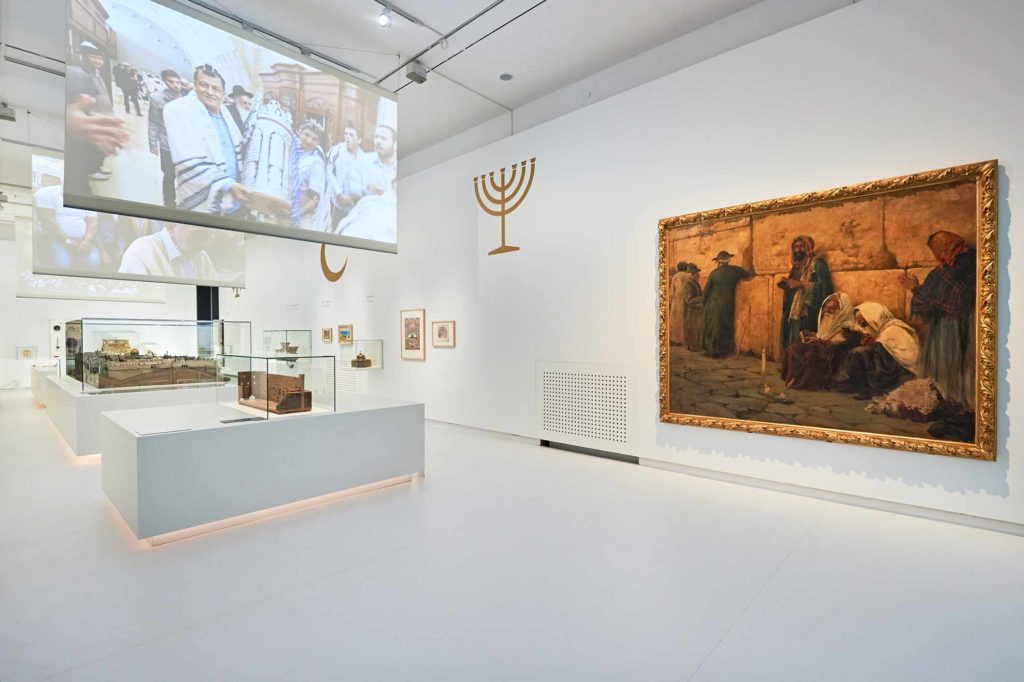
2. Jews are insects. The exhibition hardly includes any original constructions, except for a model of Herod’s Temple, but it doesn’t seem to have been made as homage to Jewish claims to the precinct. Around the Temple, goggles take the viewer through 3D images of esoteric Temple practices, like burnt offerings, as if to portray Jews as primitives who slaughtered sheep for their weird cults. But the strangest choice is the decision to map movements of Jews through black dots. (Who really cares about Jewish foot traffic?) They don’t look like people. They’re ants, recalling the antisemitic comparison of Jews to insects. Anyone up for a job of extermination?

View of the main hall “The Holy City”; The Jewish Museum Berlin; Photo: Yves Sucksdorff

1. Jerusalem is only politics. There is so much more to Jerusalem than just conflict. There’s Arab-Jewish coexistence, culture, cafes, delicious restaurants, colorful souks, new boutique hotels and hostels, student hangouts, university life, beautiful landscapes. Hardly any deep love, intimacy, empathy, or passion for the city comes through. So my suggestion is to go instead to the real thing. This year in Jerusalem.

Orit Arfa is a journalist and author based in Berlin. Her second novel, Underskin, is a love story of Berlin and Tel Aviv.

Top 10 Fail Moments of Berlin’s Jerusalem Exhibition [Photo Essay] Read More »

What’s Happening in Jewish L.A. Mar. 2-8: Special Film, Comedy and Debates

FRI MARCH 2
“FOXTROT”

Foxtrot

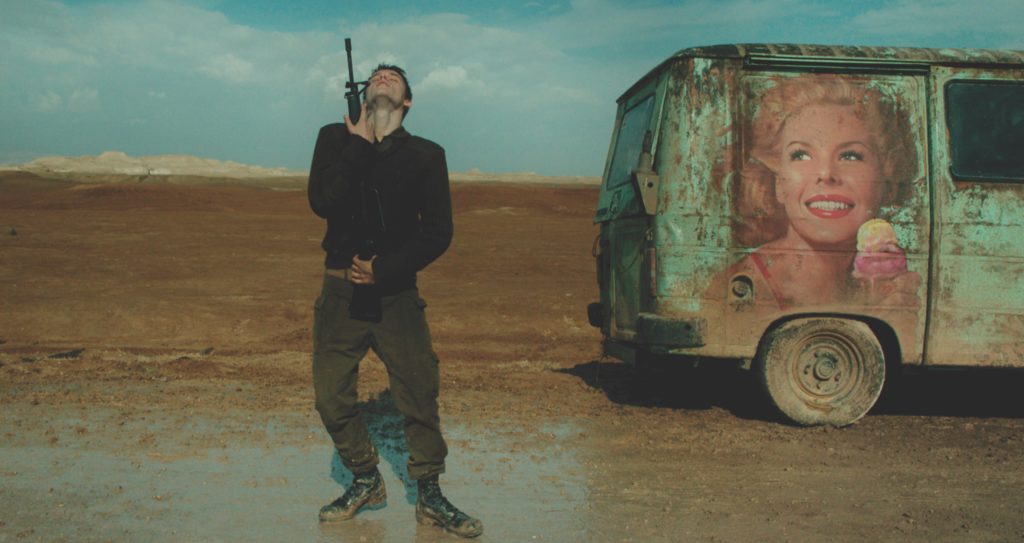
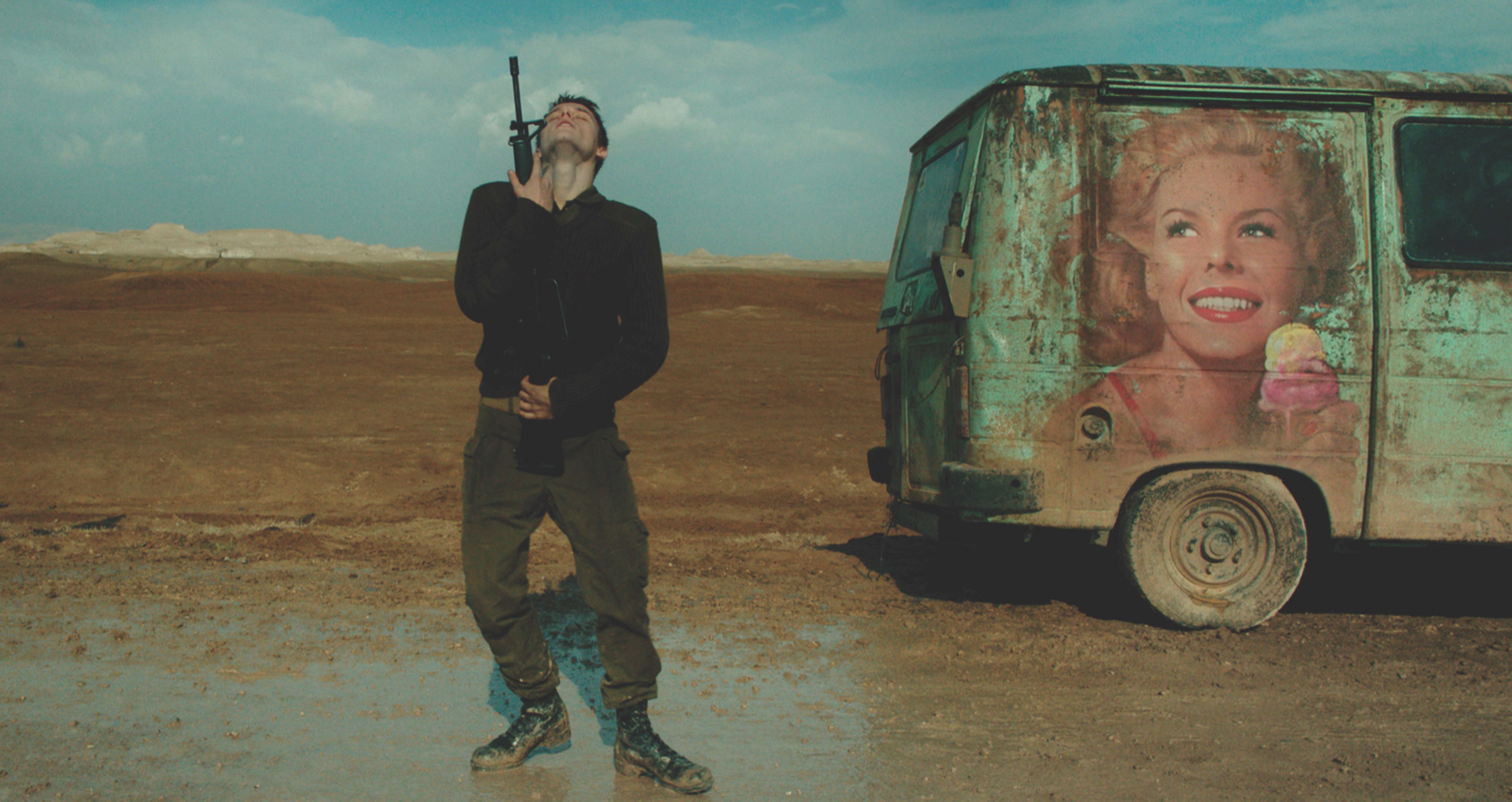
In the movie “Foxtrot,” Israeli director Samuel Maoz depicts the gut-wrenching grief, the overzealous mourning relatives, the well-meaning bureaucrats, and the downward spiral of depression and anger that come with losing a son in the military. Israel’s entry in the Oscar race for best foreign language film (which, ultimately, was not nominated) is a wrenching portrayal of parental grief, the joys and stresses of marriage, the boredom of army life and how Israel’s occupation policy humiliates the occupied and hardens the occupiers. The film opens at Laemmle’s Royal Theatre before expanding to additional screens on March 9. Various times. Friday-Sunday: $13, general; $10, seniors and children. Monday-Thursday: $12, general; $9, seniors and children. Laemmle’s Royal Theatre, 11523 Santa Monica Blvd., Los Angeles. (310) 478-3836. laemmle.com.

FRIDAY NIGHT UNPLUGGED

Friday Night Unplugged

Friday Night Unplugged injects soul and meaning, through mindful meditation and a cappella prayers, into Shabbat services. Get into the zone for a meaningful and uplifting Friday night led by Rabbi Mendel Simons, director of Young Jewish Professionals of Los Angeles. A burgers-and-beer cocktail hour follows. 5:30-7:30 p.m. $10. The YJP Loft, 7122 Beverly Blvd., Los Angeles. (310) 692-4190. yjplosangeles.com/unplug.

NEFESH SHABBAT

Nefesh Shabbat

Uplift the soul and experience Shabbat during this biweekly service led by Wilshire Boulevard Temple Rabbi Susan Goldberg and the WBT Nefesh band. Come early for a potluck at 6:30 p.m. and stay for the acoustic guitars and vocal harmonies. A musical, spiritual and community-oriented evening awaits. 7:30 p.m. Free. Wilshire Boulevard Temple, 3663 Wilshire Blvd., Los Angeles. (213) 835-2146. wbtla.org.

SUN MARCH 4
SUNDAY SYMPOSIUM

Rabbi Keara Stein, director of InterfaithFamily/LA, leads the final session of a four-part speaker series, “There’s Nothing New Under the Jewish Sun: A Look at Modern Issues Through a Jewish Lens.” The program has examined the hot-button topics of the day, including sexual harassment, fake news and the internet. 9-10:45 a.m. Free. The Studio @ SIJCC, 1110 Bates Ave., Los Angeles. (323) 663-2255. sijcc.net.

PURIM CARNIVAL

San Fernando Valley-based Temple Judea encourages the entire family to enjoy a day of festivities, featuring rides that are bigger and better than ever, including a Ferris wheel, zip line, giant slide, bouncy houses, obstacle course and Lego pit. Of course, no carnival would be complete without nosh, and this event serves up plenty, with hot dogs, burgers and cotton candy among the options. 10 a.m.-4 p.m. Wristbands ($40 for unlimited rides and food) and tickets ($25 for 20) are available for purchase in advance or at the event. Temple Judea, 5429 Lindley Ave., Tarzana. (818) 758-3800. templejudea.com/purim.

WOMEN AGAINST GUN VIOLENCE

As the nation grapples with gun violence in schools and public spaces, Temple Isaiah holds a timely discussion with representatives of Women Against Gun Violence, which seeks stringent gun laws. The morning event will focus on how to talk to children about guns; how to keep children and communities safe; how to ask your family, friends and neighbors if they have guns and whether the guns are locked up; and what gun owners should know about locking up their guns. Light breakfast served. 9:30 a.m. Free. Temple Isaiah, 10345 W. Pico Blvd., Los Angeles. (310) 277-2772. templeisaiah.com.

FIFTH ANNUAL OSCAR NIGHT AT KEHILLAT ISRAEL

Kehillat Israel marries Hollywood’s most glamorous night with tikkun olam. Guests are invited to watch the Academy Awards on the big screen while packing 1,500 lunches for homeless people. Don’t miss this “golden” opportunity to mingle, gossip about the winners and repair the world. Recommended for guests at least 8 years old. Free and open to the public. 5-9 p.m. Sign up to attend or sponsor at ourki.org. Kehillat Israel Social Hall, 16019 W. Sunset Blvd., Pacific Palisades. (310) 459-2328. ourki.org.

MARC MARON

Marc Maron

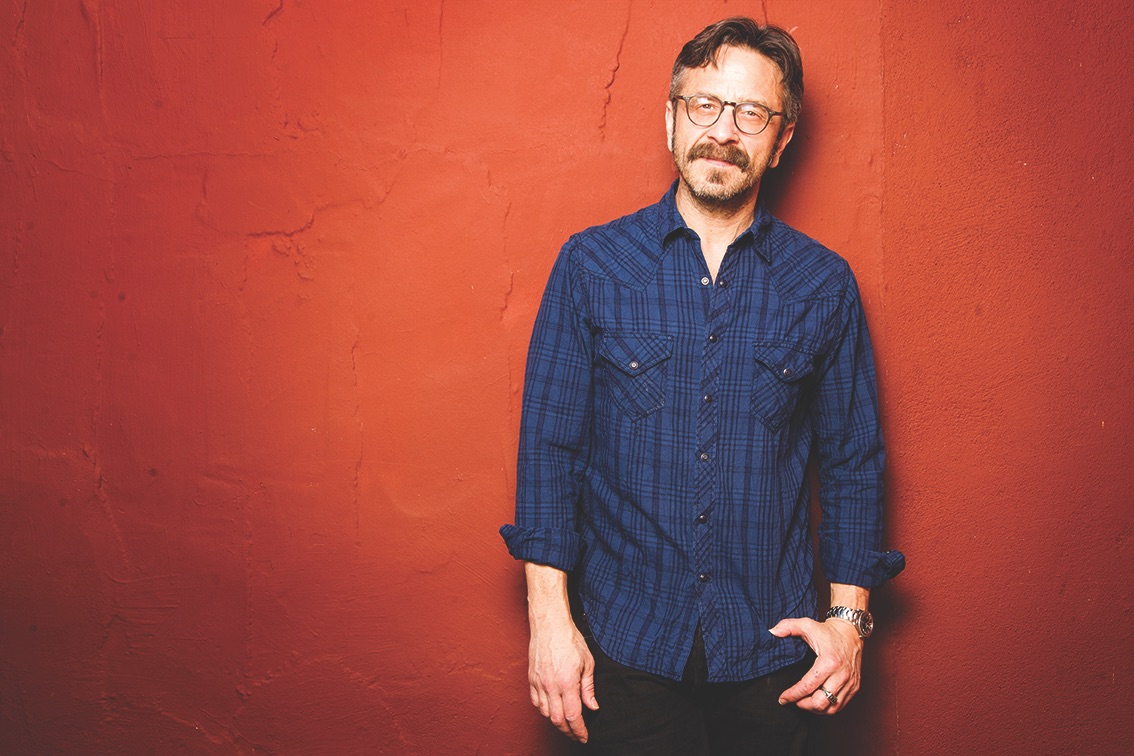
Jewish comedian Marc Maron headlines a special event that is sure to have audiences laughing out loud all night long. The veteran stand-up comic draws on 20 years of writing and performing experience, which includes conducting intimate interviews with iconic personalities on his hit podcast, “WTF With Marc Maron.” Don’t miss an opportunity to spend the night with one of the sharpest funnymen working today. For ages 18 and older only. 6 p.m., doors; 7 p.m., performance. $20. The Ice House, 24 N. Mentor Ave., Pasadena. (626) 577-1894. icehousecomedy.com.

MON MARCH 5
IMMIGRATION CONFERENCE

One LA, a coalition of faith-based organizations committed to social justice, including Temple Beth Am, Temple Emanuel of Beverly Hills and Temple Judea, holds a conference focused on the moral and economic framework for supporting immigration. 6-8 p.m. Free. Temple Emanuel of Beverly Hills, 8844 Burton Way, Beverly Hills. (310) 488-1167. onela-iaf.org/immigration_conference.

“JEWISH SOLDIERS IN BLUE & GRAY”

“Jewish Soldiers in Blue & Gray”

More than 10,000 Jewish soldiers fought in the Civil War, the nation’s deadliest war, which pitted brother against brother and Jew against Jew. The film “Jewish Soldiers in Blue & Gray” tells a remarkable history, including Gen. Ulysses S. Grant’s order expelling Jews from Kentucky, Tennessee and Mississippi; the rise of Sephardic Jew Judah P. Benjamin to secretary of state of the Confederacy; the imprisonment of Confederate spy Eugenia Levy Phillips; and the story of Abraham Lincoln’s Jewish doctor, who moved through the South as a Union spy. Sponsored by the Jewish Genealogical Society of the Conejo Valley and Ventura County. 7-9 p.m. Free. Temple Adat Elohim, 2420 E. Hillcrest Drive, Thousand Oaks. (818) 889-6616. jgscv.org.

“ELIE WIESEL: WHEN A DISSIDENT SETS THE AGENDA FOR ESTABLISHMENT”

Elie Wiesel

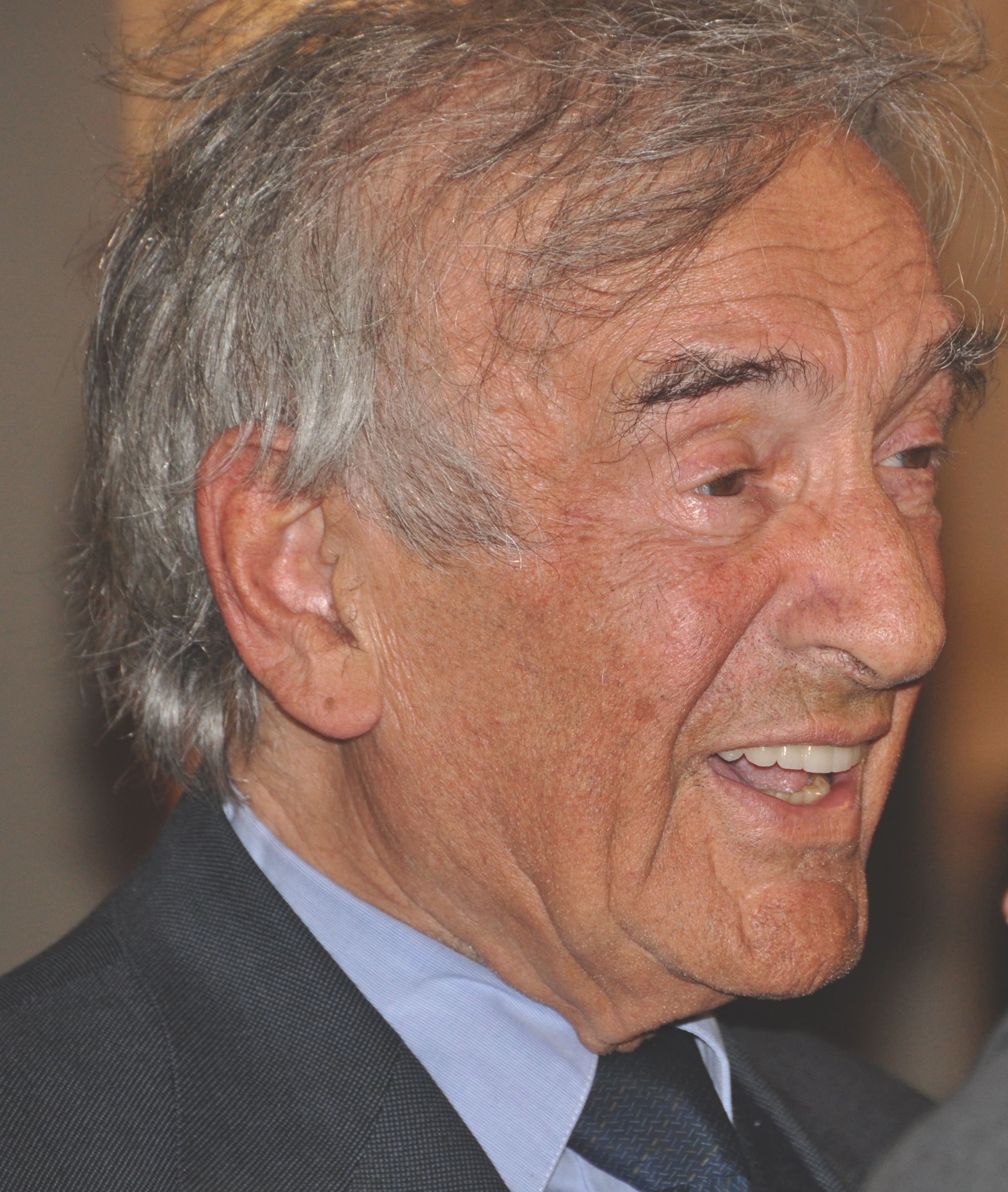
Elie Wiesel played many roles in his life: Holocaust survivor, activist, author, educator and Nobel laureate. Join scholar Michael Berenbaum as he discusses Wiesel as a dissident against Jewish passivity, indifference and complacency. Berenbaum will examine Wiesel’s early years and his dissidence that ultimately became part of the Jewish agenda. 7:30 p.m. $18. David Alan Shapiro Memorial Synagogue, 15600 Mulholland Drive, Bel Air. (310) 476-9777. aju.edu.

WED MARCH 7
“STORY TIME AT NOAH’S ARK”

“Story Time at Noah’s Ark”

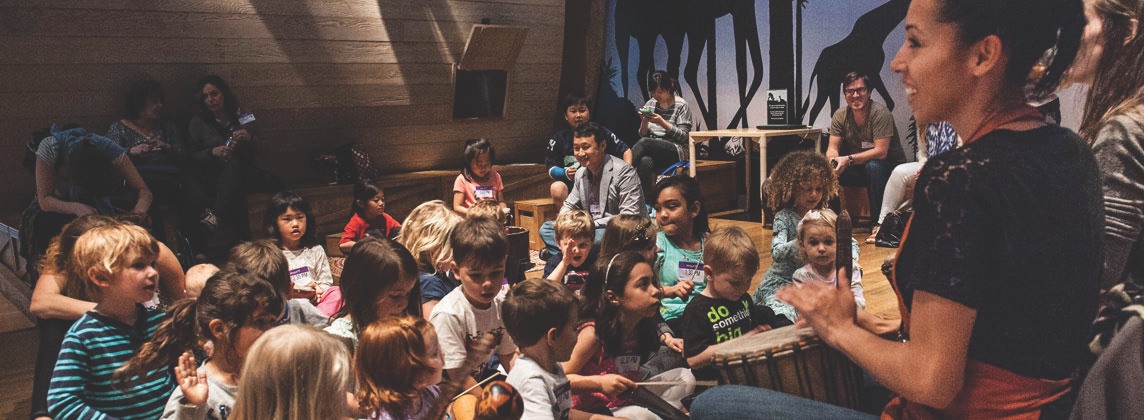
Accompany your children to a one-of-a-kind, story-time experience. Listen as flood stories from cultures around the world are brought to life through the timeless tradition of oral storytelling. The program is presented weekly on Wednesdays at 2:30 p.m. $12, general; $7, children 2-12. Skirball Cultural Center, 2701 N. Sepulveda Blvd., Los Angeles. (310) 440-4500. skirball.org.

ATID YOGA

Atid, Sinai Temple’s group for people in their 20s and 30s, holds an evening yoga class for all levels, from beginners to seasoned yogis. 7:30-8:30 p.m. Free. Sinai Temple, 10400 Wilshire Blvd., Los Angeles. (310) 474-1518. atidla.com/calendar.

THU MARCH 8
“MENTAL ILLNESS AND CREATIVITY”

Ayelet Waldman

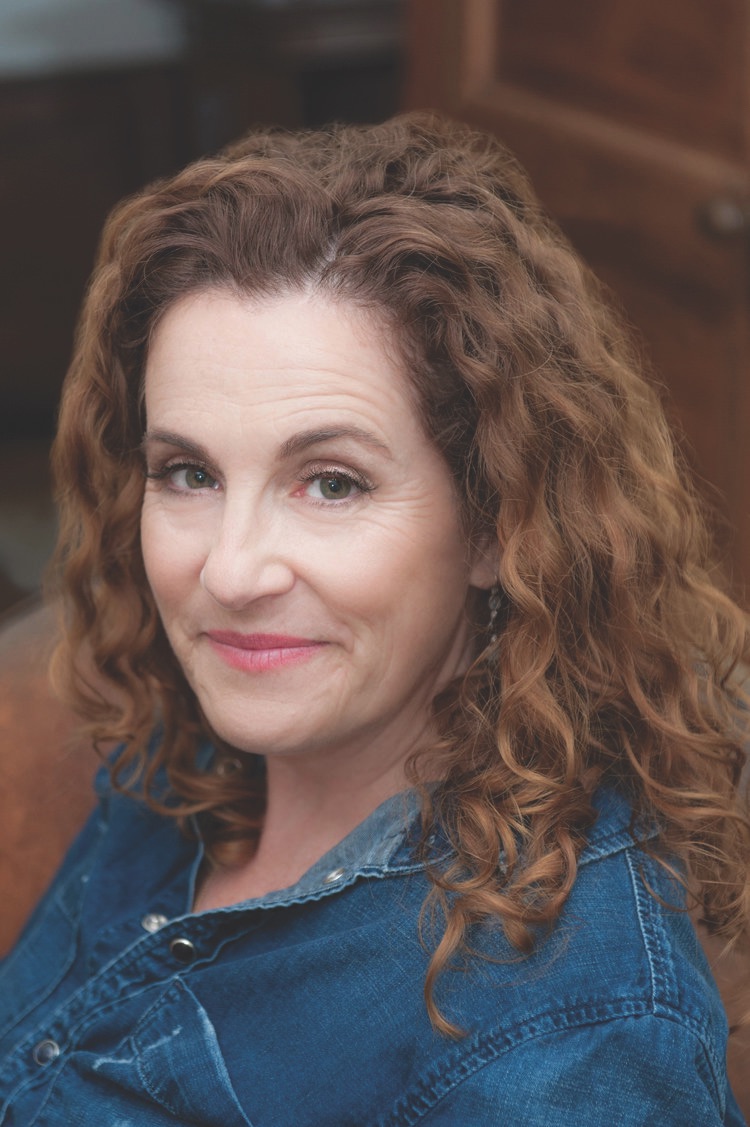
Kay Redfield Jamison, author of the 2017 book “Robert Lowell: Setting the Stone on Fire,” which illuminates the interplay of mania, depression and creativity, and Israeli-American author Ayelet Waldman discuss “Mental Illness and Creativity.” Waldman explored similar themes in her 2016 book, “A Really Good Day,” which told of the author’s experiments with small doses of LSD to brighten her mood. The two authors challenge the audience to think differently about a misunderstood condition. 7 p.m. Free, advance ticket required. Getty Center Harold M. Williams Auditorium, 1200 Getty Center Drive, Los Angeles. (310) 440-7300. getty.edu.

“JEWS, MUSIC AND MODERNITY IN BUENOS AIRES”

Lillian M. Wohl

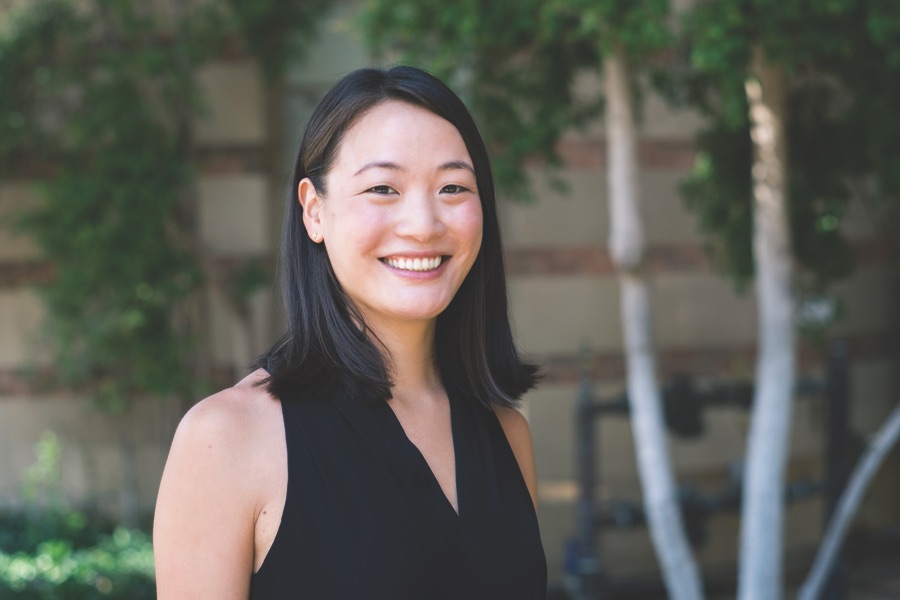
Since 1994, “Jewish music” has emerged as an important yet ambiguous mode of cultural expression in Argentina, making audible Jewish history in Latin America and affirming a contemporary Jewish presence in the region. Lillian M. Wohl, the Lowell Milken Fund for American Jewish Music Post-Doctoral Fellow at UCLA, discusses the intersection of  cultural renewal and memory in Jewish music performed in public and private spaces in Buenos Aires. 4-5:30 p.m. Free. RSVP to cjsrsvp@humnet.ucla.edu. UCLA Faculty Center, 480 Charles E. Young Drive East, Los Angeles. (310) 267-5327. cjs.ucla.edu.

What’s Happening in Jewish L.A. Mar. 2-8: Special Film, Comedy and Debates Read More »

Rosner’s Torah Talk: Parashat Ki Tisa with with Rabbi David Kosak

David Kosak of Congregation Neveh Shalom in Portland Oregon is a 30th generation rabbi, but his path to the rabbinate had its own plot twists. His first career as a chef and entrepreneur brought him out West from his native New York, where he had earned a BA in Philosophy from NYU.  His formal education includes an MA in Rabbinics from the American Jewish University (formerly the University of Judaism).  David pursued advanced studies at Mechon Schechter, Hebrew University, Yakar Torah Center for Tradition and Creativity, and the Hartman Institute, all in Jerusalem.  He received his Rabbinic Ordination in 2006 from the Ziegler School of Rabbinic Studies in Bel Air, California. His post-ordination studies include a stint as a STAR fellow and advanced courses on areas of Jewish law such as Gittin (Jewish divorce) and industrial kashrut.

This Week’s Torah Portion – Parashat Ki Tisa (Exodus 30:11-34:35) – begins with the census of the people of Israel and with further instructions concerning the Tabernacle and the Shabbat. The portion then proceeds to tell the story of the Golden Calf, Moses’ plea to god, the splitting of the Tablets into two, and the giving of the second tablets. Our discussion focuses, among other things, on the reason behind the people of Israel’s discontent and on the possible role of Moses’ leadership in their sin.


More Rosner Torah Talks on Ki Tisa:

Rabbi Rachel Ain

Rabbi Gabe Greenberg

Rabbi Gerald Skolnik

Rabbi Charles Arian


Rosner’s Torah Talk: Parashat Ki Tisa with with Rabbi David Kosak Read More »

Elevating Speech – D’var Torah Ki Tisa

This week I spent an hour with 225 ninth and tenth grade students at the Los Angeles County High School for the Arts talking specifically about why words matter. We discussed the ethics of speech, the dangers in social media, and how what we say privately and publicly have in the last several years coarsened to the detriment of civility our society.

I showed them a passage from the California Civil Code section 44 that defines “Defamation” as

“an act of communication that causes someone to be shamed, ridiculed, held in contempt, lowered in the estimation of the community, or to lose employment status or earnings or otherwise suffer a damaged reputation.”

We discussed the difference between someone who incessantly lies as opposed to calling out such a person publicly as “liar.” One young lady rightly explained that the first describes a bad behavior and the second attacks a person and fits the definition of “defamation.”

I began my talk with this elite group of young people (thousands applied to this school for 600 spots) by sharing with them language from a blog that followed an op-ed by David Brooks of the NY Times.

In his piece that he called “Respect First, Then Gun Control” (NY Times February 19) Brooks talked about the importance of civility as opposed to rudeness. In response, a blogger named Drew Magary went ballistic. I happened to agree with Magary’s position (which is not the purpose of me raising this matter here), but I found his piece offensive and defamatory (see “The Importance of Rudeness | GQhttps://www.gq.com/story/on-rudeness)

Here is some of what Magary wrote:

“So let’s talk about rudeness for a moment, because we live in rude times. The president is a pig. His underlings are nothing but a bunch of opportunists and enablers. And the rest of GOP is staffed by a wide range of scum, from camera-friendly establishment monsters like Paul Ryan to outright crackpots like this guy. When the president’s own little pukeson decides to endorse a conspiracy theorist truthering the motives of the Marjory Stoneman Douglas teenagers, I feel like that’s a much greater sign of the end of civilization than someone rightfully telling a lady at the Times that she should take the L.

None of these people deserve civility. In fact, civility only serves to enable them. The fact that Trump can go party at his f_ _ _ing country club on the same weekend 17 teenagers were slaughtered inside a school, and have NO ONE surrounding him say an unkind word to him, is damnable.”

Again – I happen to agree with Magary’s moral positions, but he went on using the vilest of language reflecting the vulgarization of this era in American life. His are angry words, and I understand that because I’m angry too, but uncontrolled rage can get us the opposite of what we really want besides an opportunity to vent.

This week’s Torah portion, Ki Tisa, highlights Moses’ anger at his people at the scene of the golden calf.

We learn that Moses had brought down the tablets from Mount Sinai after spending forty days and nights communing with God. As he was returning to the Israelite camp he heard the celebratory voices around a golden calf and then saw the revelry. Enraged by the idolatry, he smashed the tablets, burned the golden calf, ground it to powder, and force fed it to the guilty Israelites before he killed ten thousand Israelites who participated in this calumny. (Exodus 32:15-20).

In the next chapter we learn that Moses pitched his tent outside the camp (Exodus 33:7) “…because he was tired of the people’s constant complaining and criticism.” (Yerushalmi B’chorim 3:3)

God then approached Moses and said: “I want you to change your mind, go back to the camp, and deal with the people face to face.” (Midrash Rabbah (45:2) based on Exodus 33:11)

In other words, God was saying: ‘Moses – get it together and control your rage.’

Of course Moses was angry just as so many Americans are angry at Congress’ and this President’s inaction to curb gun violence in America.

I don’t at all blame Moses for his weariness and impatience with the people. He had dealt with their obstinacy since leaving Egypt. He’d had enough. God reminded him, however, that leading a community while angry is no way to lead.

I’ve learned that once leaders lose their temper they lose not just the argument they are advocating but the faith of the people in their leadership.

The worst thing a leader can do is to respond to others with whom we disagree intemperately, impatiently, angrily, and judgmentally. Inner calm is a virtue, and demeaning an opponent personally who we may dislike intensely is nevertheless from an ethical perspective the greatest sin.

I made this point loud and clear to these 225 students. ‘Use your words,’ I said, ‘but say what you say with calm and focused dignity, thoughtfully, and without demeaning the “other.”

Judaism ascribes Moses’ loss of the right to enter the Promised Land as a result of his hitting the rock from anger instead of speaking words to it as God had commanded him.

The Talmud says: “If a person loses his temper – If she is originally wise, she loses her wisdom, and if he is a prophet, he loses his prophecy.” (Babylonian Talmud, Pesachim 66b).

The coarsening of our society is a sign of our society’s demise, and I believe each of us should do everything we can to avoid being engulfed in that spirit. It’s bad for us and it’s bad for everyone.

Shabbat shalom.


Elevating Speech – D’var Torah Ki Tisa Read More »