fbpx

February 15, 2018

A Guide to Dating After 50

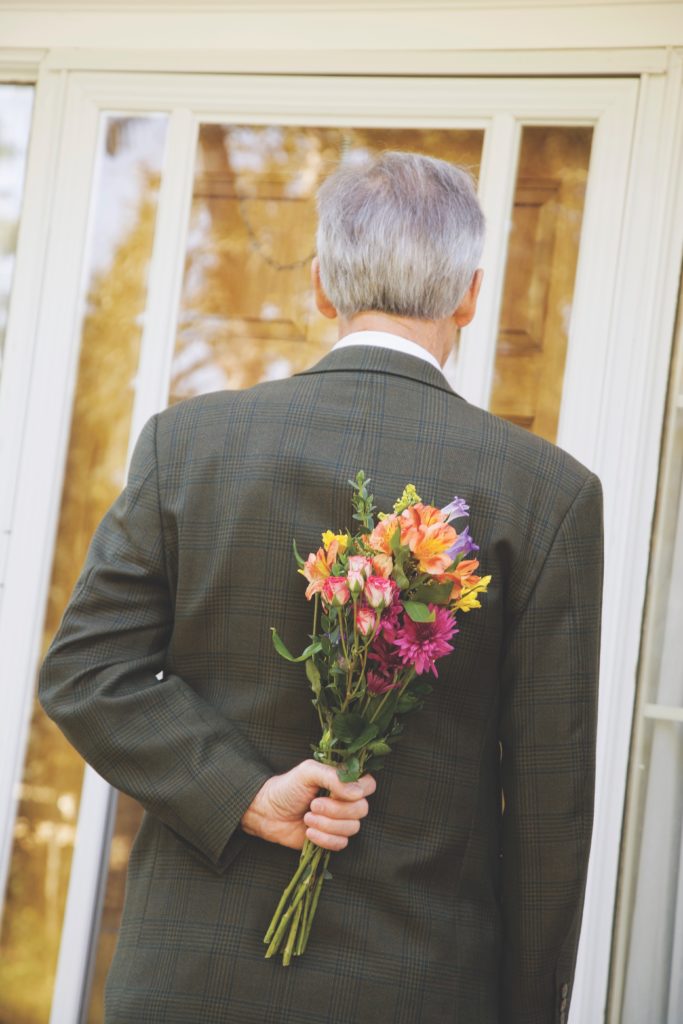
Paired-off couples aren’t hard to spot — you see them in airports, restaurants, museums and shops. If you are single and over 50, maybe also widowed or divorced, becoming part of a couple again may be on your mind. Although dating at this point in life may raise a few uncertainties, it holds great potential for fun and excitement.

Seniors who are starting to date should arm themselves with revised expectations, an open mind and a willingness to encounter a few rejections. Then they should go out and enjoy themselves.

The following tips may help both men and women who are seeking friendship, companionship, love and intimacy:

Change your expectations without lowering them. 

At 50 or older, you’re not going to raise children with someone your age, so the personal qualities you look for in a partner may need to shift. Also, be ready for a range of relationship goals that people now bring to dating. Some may seek marriage, others a monogamous relationship without marriage, while others may simply want a companion.

If you were married before, acknowledge what being single again means to you. 

Losing a spouse to divorce or death can cause pain you may never completely put behind you. However, when you realize you are missing intimacy and connection with the opposite sex and want to rekindle it, you are ready to date.

Start making connections through friends and family. 

Word-of-mouth is the easiest and safest way to find a match. Tell your friends and relatives you are looking. And if someone invites you out — accept. You’ll get reacquainted with how to date, and you never know … you could meet someone terrific.

Plan easy first and second dates. 

On your first time out, try meeting in a public place for a short date, such as an afternoon cup of coffee. For a second date, especially if you’re not quite sure it’s a good match, suggest going to a movie or participating in an event together, followed by coffee or dessert. However, if things go well on a first or second date, lunch or dinner together may give you more opportunities to get better acquainted.

You and other singles older than 50 have the advantage of bringing greater perspective, life experience and self-awareness to a new relationship.

Always be yourself on a first date. 

If you wear sweats all the time, go in sweats. Women who don’t usually wear makeup shouldn’t start wearing it now. You want the first date to lead to a second, so let the new person know what you are really like.

With someone new, give only the executive summary of your life. 

Keep personal information brief and positive. For instance, you could say, “I have two wonderful kids,” without giving details of their lives. Other good topics of conversation are movies, books or interesting places you have visited or would like to see. Steer away from discussing medications, ailments or your past relationships.

At the end of a date, be clear about your interest in continuing. 

If you think you want to see the person again, say something like, “It was lovely meeting you, please feel free to give me a call.” If not, say, “It was lovely meeting you, and I wish you all the best.” It is fine to politely say that “you’re very nice, but you’re not the one for me.” Dating inevitably involves some rejections.

As a relationship develops, consider factors that impact intimacy and sex. 

Age, health and mindset can set limits on the wants and needs for intimacy and sex for each member of the couple. Once a friendship has bloomed, talk to your partner about his or her expectations as one mature adult to another. Or consider talking confidentially to a counselor or therapist before addressing sex and intimacy with your new companion.

Remember you have much to offer in a relationship. 

Romantic ideals that many men and women hold deep down can undercut enjoyment and success in dating. Let go of fantasies of being swept off your feet by a handsome prince or beautiful princess. New prospects you meet may look older to you than a partner who was aging alongside you gradually. Remember, you and other singles older than 50 have the advantage of bringing greater perspective, life experience and self-awareness to a new relationship.

A Guide to Dating After 50 Read More »

Getting Care for Elderly Requires Planning Now

There’s nothing quite like confronting your mortality with some stark truths about aging, and that was Eldercare Consulting Group founder Justin Levi’s plan when he spoke Feb. 6 at The Community Shul.

“The odds are very high your parents, your grandparents or yourself are going to need some sort of outside care as you age,” Levi said to about 40 people who came to learn about the key issues involved in caring for aging parents.

Levi, who has been in the eldercare industry for 11 years and is also the president of The Community Shul, said he wanted to hammer home the importance of the myriad issues surrounding eldercare and how it affects everyone. He said there is a built-in assumption as we get older that our longevity expands “and we can put off the time we experience age-related conditions — but it doesn’t happen that way.”

He noted that when Social Security was enacted in the 1930s, the average life expectancy was less than the current retirement age. “Today we are living longer but living sicker, and that’s the most blunt way I can put it,” he said. He noted that once-terminal diseases are now chronic diseases, which creates a greater burden on families and society.

Although Judaism emphasizes caring for aging parents, moving them into your home is not always possible nowadays, Levi said. His mention of that issue then provided the perfect segue into what he called the elephant in the room: dementia.

“It’s something many people don’t understand and can’t handle,” Levi said. “It’s difficult even for the professionals. The old notion of ‘Mom can come live with us when she gets older’ simply doesn’t work anymore.”

In the case of a parent with dementia, Levi said, “you are not going to be able to take care of them alone. You’ll need outside help to prompt your loved one to eat, to bathe, to supervise them.” Finding the right care is crucial, he said.

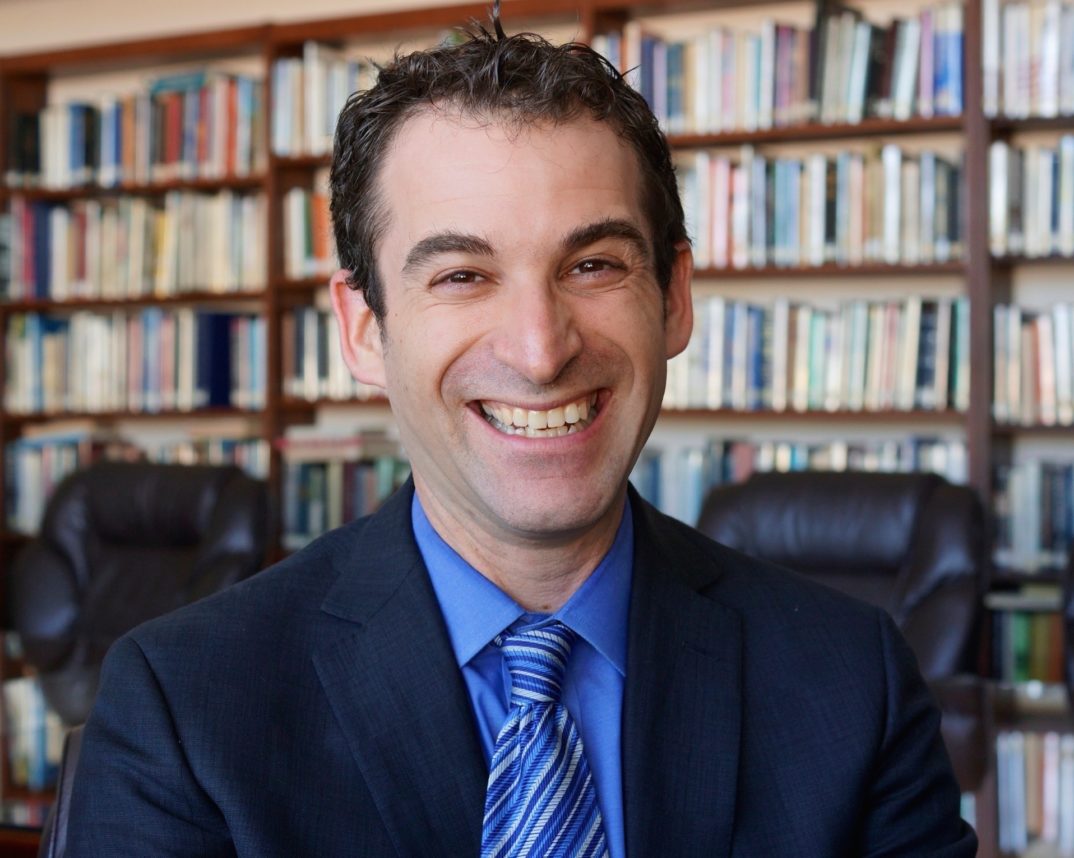
Justin Levi speaks at The Community Shul on issues related to caring for aging parents. Photo by Kelly Hartog

“I have met so many people who did not prepare financially, emotionally or practically for their parents or grandparents or themselves getting older.” — Justin Levi

Levi then spoke of the different types of outside care facilities or services available:

Independent living — A nonlicensed senior community facility

Assisted living — A residential care facility licensed by the state

Skilled nursing — Commonly known as a nursing home, it is licensed for short-term rehabilitation

In-home care — A professional caregiver, home health care service or a hospice-licensed nursing agency that sends nurses and other professionals to the home to perform certain services (e.g., physical therapy). Hospice care is for people in the end-stage of a disease or condition when treatment is stopped. Medicare funds hospice care.

Learning the best option for your loved one is only part of the hurdle, Levi said, citing a conservative estimate that, by 2030, California will need at least 1 million beds for assisted living. “Right now in California we have 186,000 beds, which is less than 20 percent of what’s currently needed,” Levi said.

In addition, in-home care has become “basically a service for wealthy individuals,” Levi said. “If you need round-the-clock care, you could be paying around $13,000 or $14,000 per month. On top of that, there is also a current caregiver shortage.”

Coming back to his opening remarks, Levi said the secret is in planning ahead. If there was one thing he wanted the attendees to do right now, he said, it was to immediately take out long-term-care insurance because 70 percent of people over the age of 65 will need it.

“Many people have homeowners insurance,” he said. “You spend all that money on a thing — granted, it’s the biggest thing you own — but you could be putting that money away for a person instead. I’m not saying you shouldn’t have home insurance, but you should start planning ahead financially and start saving now.”

And while Levi made it clear he was not a rabbi and therefore could not speak to specific halachic issues, he said it was important to check into unique Jewish issues.

“For instance, there are very few facilities that are kosher,” he said. “If you can’t get into a kosher facility, you’ll need to order food from a kosher caterer. And that gets very expensive.”

Hospice issues regarding rules about the treatment of and removal of treatment from a dying person also need to be discussed with a rabbi, he counseled.

“I have met so many people who did not prepare financially, emotionally or practically for their parents or grandparents or themselves getting older,” Levi said. “So know what’s out there. Get educated. This is heavy stuff. It’s not pleasant and requires a lot of research. However, if you do things the right way, you can avoid problems by planning ahead.”

Getting Care for Elderly Requires Planning Now Read More »

A Moment in Time: The Shema – A Reflection on the Florida School Shooting

Shema Yisrael, Adonai Eloheinu, Adonai Echad.
Listen up, those who wrestle with God, Adonai is our God, Adonai is One.
And you shall love Adonai Your God
Every human being is in God’s image.  We love God by loving people.
With all your heart,
Every heart-beat reminds us that life can start and stop at any given moment in time.
With all your soul,
The soul You have given us, oh God, is pure.  We make choices that can deepen goodness.  And we make choices that can expose inhumanity.
And with all your might.
It can take an act of incredible might and courage to pierce the plague of intellectual darkness that has prevented our nation from doing something about gun violence.
And these words that I command you today.
Today!  Not next week.  Not next year.
Shall be upon your heart.
Again, every heart-beat reminds us that life can start and stop at any given
moment in time.
And you shall teach them over and over to your children.
How many children will never hear words again because they were murdered by guns?
And you shall speak of them when you sit in your house.
How many people stored guns without protective locks in their houses?
When you walk along the way, when you lie down, and when you rise up.
Do we count our blessings when we lie down?  Do we wake up with a sense of purpose to help bring goodness into the world?
And you shall bind them as a sign upon your hands.
Imagine, just image what our hands can do if we join together to make a difference.
And they shall be a symbol before your eyes.
What can our world look like if nation stops lifting sword against nation?  If human stops pointing guns to another human?
And you shall write them on the doorposts of your house and upon your gates.
We can’t shut out the realities of the world in our homes and in our houses of prayer.  The mezuzah is like a post-it note, reminding us that we have a mission.
Be mindful of My Mitzvot – and do them.  
Yes, we should be mindful and offer prayers.  But we should also take action and make a difference.
And be Holy unto your God.
With love and shalom,


Rabbi Zach Shapiro

A change in perspective can shift the focus of our day – and even our lives.  We have an opportunity to harness “a moment in time,” allowing our souls to be both grounded and lifted.  This blog shows how the simplest of daily experiences can become the most meaningful of life’s blessings.  All it takes is a moment in time.
Rabbi Zach Shapiro is the Spiritual Leader of Temple Akiba, a Reform Jewish Congregation in Culver City, CA.  He earned his B.A. in Spanish from Colby College in 1992, and his M.A.H.L. from HUC-JIR in 1996.  He was ordained from HUC-JIR – Cincinnati, in 1997.

A Moment in Time: The Shema – A Reflection on the Florida School Shooting Read More »

Obituaries: Week of Feb. 16, 2018

Boris Adler died Jan. 10 at 94. Survived by daughters Susan (Roger) Marshall, Simone; son Jeff; 6 grandchildren; sister Shoshana Shnal; brother Howard. Mount Sinai

Lore Aron died Jan. 3 at 98. Survived by daughter Carol Lester; son Robert (I-Ming); 2 grandchildren; 1 great-grandchild. Hillside

Sandra Bakelman died Dec. 27 at 79. Survived by sons David (Cynthia), Cliff; sisters Elaine Greene, Beverly Lerner. Mount Sinai

Alan David Bleviss died Dec. 30 at 76. Survived by daughters Lisa Aviva, Sarah Jenny; son Joshua Eli. Kensico Cemetery, Valhalla, N.Y.

Harry Blumstein died Jan. 2 at 93. Survived by daughter Ann. Hillside

Elie Borenstein died Jan. 7 at 96. Survived by sons Jack (Renee), Henry (Jackie); 6 grandchildren; sister Helena Hefter. Mount Sinai

Morton Bowmann died Jan. 6 at 96. Survived by wife Barbara; daughters Gayle Rosenberg, Andrea (Joe) Straus, Linda Caplan; 8 grandchildren; 11 great-grandchildren. Hillside

Scott Brachman died Dec. 21 at 47. Survived by wife Rachel; son Ben; mother Sherryl; father Michael; brother Peter. Malinow and Silverman

Harold Brourman died Dec. 28 at 88. Survived by wife Phyllis; daughter Debra (James) Schellenberg; son Steven; 6 grandchildren; 1 great-grandchild. Hillside

May Brufner died Dec. 22 at 93. Survived by daughter Barbara (Darryl) Gordon; 3 grandchildren; 2 great-grandchildren. Mount Sinai

Gary Canter died Dec. 26 at 58. Survived by wife Traci; mother Elizabeth; father Alan; sister Jacqueline (Randy Schnitman); brother Marc. Mount Sinai

Arthur Cohen died Jan. 9 at 87. Survived by daughters Cathy (Larry) Ross, Karyn (Jason) Newman; son Jeff (Beth); 5 grandchildren. Mount Sinai

Max Colton died Jan. 4 at 93. Survived by sons Bruce (Kathleen), Rick; 5 grandchildren. Mount Sinai

Morton Harold Crystal died Dec. 31 at 86. Survived by wife Dorothy; daughters Robin (David) Gilmore, Diane (Pulle) Crystal-Nath, Jan; 4 grandchildren; brother Howard. Mount Sinai

Isabelle DeKoven died Jan. 5 at 78. Survived by sons James (Jill), John (Julie); sister Jenny Block; brother Victor Batlas. Mount Sinai

Joy Dell died Jan. 9 at 88. Survived by daughters Gloria (Larry) Behman, Adrienne; 4 grandchildren. Hillside

Susan DuBois died Jan. 7 at 75. Survived by niece Jennifer Haber; nephews Eric Diamond, Peter Diamond. Mount Sinai

William Noah Ebersman died Nov. 25 at 63. Survived by wife Martha; daughter Beth Ann Wahba; 1 grandchild; sister Francine. Mount Sinai

Rhea L. Fierberg died Jan. 2 at 83. Survived by husband Walter; daughters Dena Bialick, Andrea Bialick; son Mark Bialick. Mount Sinai

Lila Gable died Jan. 4 at 89. Survived by husband Irving; daughter Lisa; son Jonathan; 2 grandchildren; 1 great-grandchild. Groman Eden

Stephen Garrett died Jan. 1 at 66. Survived by son Adam (Angelica). Hillside

Simone Glassman died Jan. 2 at 79. Survived by son Barry; sister Myrna Goldstein. Hillside

Marsha Goldenfeld died Dec. 27 at 76. Survived by husband Michael; daughter Lisa (Carl) Weiselberg; son Brian; 2 grandchildren; sister Arlene (Michael) Williams. Chevra Kadisha

June Gordon died Dec. 29 at 99. Survived by daughters Marlene, Joanie; 5 grandchildren; 4 great-grandchildren. Mount Sinai

Donald Aaron Gralla died Jan. 8 at 84. Survived by daughter Judith (Marty) Feldman; son Daniel; brother Michael (Ruth). Mount Sinai

William Gross died Jan. 2 at 80. Survived by daughter Jennifer (David) Gross-Koenig; son Adam; 3 grandchildren; sisters Lola Heller, Judi Schwartz; brother Lewis. Mount Sinai

Davieda Handel died Jan. 6 at 75. Survived by daughter Lisa; son James; 4 grandchildren; 4 great-grandchildren; sister Ellen Collins. Hillside

Marilyn Horwits died Jan. 9 at 84. Survived by husband Alan; daughter Gayle (Stuart) Sherman Crandell; stepdaughter Vicki (Jay) Stern; sons Glenn (Cindy) Sherman, Brian Sherman, Wyane (Susan) Sherman, Danny (Katie); stepson Mitch (Corinne); 12 grandchildren; sister Fran Reicher. Mount Sinai

Sara Kabachnick died Jan. 6 at 97. Survived by daughter Maruschka Kabachnickova; son David (Marilyn Cohen). Mount Sinai

Lee Kapelovitz died Jan. 3 at 90. Survived by sisters Susie, Noddy Epstein. Hillside

Jack Kaplan died Jan. 1 at 91. Survived by wife Geraldine; daughter Cathie (Bruce) Cook; sons Craig (Eva), Donald (Clara); 5 grandchildren; 6 great-grandchildren. Hillside

Marvin Kaplan died Dec. 30 at 91. Survived by daughters Judy Zeidler, Lisa; son Gregg; 2 grandchildren. Hillside

Bernice Ruth Klass Kaplan died Dec. 31 at 91. Survived by sons Gary (Robin), David (Tracy), Robert (Amy), Gordon (Lori); 11 grandchildren; 6 great-grandchildren. Groman Eden

Rosina Korda died Dec. 19 at 65. Survived by husband Bob; sons Daniel, Aaron, David; 1 grandchild; sister Esther Holm; brother Larry Pardo. Home of Peace

Major Langer died Dec. 29 at 75. Survived by wife Shirley; daughters Alexis (Gregory Sonstein), Jessica (Joseph Sousa); son Ryan; 2 grandchildren. Hillside

Jerry Lawrence died Jan. 11 at 82. Survived by wife Helene; daughter Blaire (Aaron) Kaplan; son Darin (Katherin); 5 grandchildren. Mount Sinai

Dauby D. Lazarus died Dec. 28 at 97. Survived by daughter Debra (Michael) Doria; son David; stepdaughter Helena (Larry) Harris; 2 grandchildren. Mount Sinai

Eugene Gerald Lederer died Jan. 4 at 84. Survived by son Michael (Stacy); 5 grandchildren; brother Jerry. Mount Sinai

Hilda Lewis died Jan. 7 at 92. Survived by daughter Gail (Kenneth) Jacobs; son Mark (Florenza); 2 grandchildren. Mount Sinai

Eleanor Miggins died Jan. 5 at 90. Survived by husband Robert; sons Mark (Rhonda), Richard (Lenore); brother Dennis (Lisa) Applebaum. Hillside

Esther Nugiel died Jan. 6 at 92. Survived by daughter Nellie; sons Martin (Mary Faith), David (Lisa); 12 grandchildren; 10 great-grandchildren. Netanya Shikun Cemetery, Israel

Joseph Palty died Dec. 25 at 91. Survived by daughter Francine (Tom) Hammer; Robert (Karen); Steven; 3 grandchildren; brothers Jack, Israel. Malinow and Silverman

Sylvia Piltz died Dec. 31 at 98. Survived by daughter Janice (Rob) Keith; son Frederick (Kathryn); 5 grandchildren; 1 great-grandchild. Hillside

Zoltan Remeny died Dec. 29 at 99. Survived by wife Eva; son John (Renee); 2 grandchildren; 4 great-grandchildren. Hillside

Molly Rendel died Jan. 5 at 90. Survived by daughter Shirl Kelemer; 1 grandchild; 2 great-grandchildren. Chevra Kadisha

David Reznik died Jan. 1 at 90. Survived by wife Helen; daughter Carolyn (Richard) Camros; sons Benjamin (Janice), Oran (Julie); 7 grandchildren; 1 great-grandchild. Mount Sinai

Eva Rich died Dec. 28 at 90. Survived by son George; 3 grandchildren. Mount Sinai

Charles Rivlin died Jan. 1 at 93. Survived by wife Lillian; son Alan (Linda); 3 grandchildren; 5 great-grandchildren. Mount Sinai  

Beth Rose died Dec. 16 at 100. Survived by daughter Joan Pesi (Yosef) Hammer; son Stan Helfman; 4 grandchildren; 4 great-grandchildren. Chevra Kadisha

Seymour Martin Rosen died Dec. 21 at age 93. Mount Sinai

Arthur Rosenthal died Jan. 8 at 91. Survived by wife Marjorie; daughters Stacy (Steven) Primack, Lisa (Jay); 6 grandchildren; sisters Nadja Kohn, Cesia Kingston. Mount Sinai

Maxwell Roth died Jan. 6 at 90. Survived by wife Sylvia; daughter Susan; son David (Shelly); 2 grandchildren. Hillside

Doris Rudy died Jan. 9 at 103. Survived by sons Irwin (Marilyn), Robert (Stacy), Stuart; 4 grandchildren; 2 great-grandchildren. Mount Sinai

Mildred L. Sachse died Dec. 31 at 93. Survived by daughters Joy Carter, Wendy (Fane) Joseph; 5 grandchildren; great-grandchildren. Mount Sinai

Melvin Louis Schwartz died Jan. 2 at 92. Survived by wife Joyce; sons Daniel (Paola), David (Nancy); 5 grandchildren; sister Barbara Green. Mount Sinai

Lotte Seelman died Dec. 28 at 95. Survived by daughters Linda Gati, Helen (Gary); 3 grandchildren; 7 great-grandchildren. Malinow and Silverman

Alan Segal died Dec. 25. Survived by daughters Helene (George Fonstantinow), Gail (Alan) Smith; 1 grandchild. Mount Sinai

Lois Sein died Dec. 29 at 87. Survived by husband Morey; daughters Deena Riemer, Mindy (Ralph Glance) Richmond, Carole Carpenter; 6 grandchildren; 2 great-grandchilren. Mount Sinai

Suzanne Shapiro died Dec. 23 at 55. Survived by daughters Samantha, Emily; sisters Elaine (Gary) Beard, Joan (Charles) Schwarta. Mount Sinai

Arnold Sigesmund died Dec. 30 at 83. Survived by daughter Lana Etzioni; son Bradley (Jack); 3 grandchildren. Hillside

Maxwell Emerson Snow died Dec. 28 at 68. Survived by husband Frank Ellison; brothers Marshall, Milford, Marvin, Melvin. Malinow and Silverman

Lila Soler died Jan. 9 at 90. Survived by sons Jeff (Judy Ditchey), Michael (Denise); grandchildren. Mount Sinai

Alberta Stahl died Dec. 28 at 80. Survived by daughter Judy (Curt Baker); sons Bob, Howard (Michael Frese); brother Al (Bobbie) Sapper. Mount Sinai

Ann Stockhamer died Jan. 11 at 91. Survived by daughter Daryl; sons Alan, Barry, Dean; 3 grandchildren; sister Sheila Fishman. Malinow and Silverman

Mark Tenser died Jan. 1 at 87.  Survived by wife Marilyn, sister Dorothy. Hillside

Mario Testa died Dec. 28 at age 86. Survived by wife Susan; daughters Patricia (Michael Kuhn), Myriam, Silvia; sister Rebecca. Mount Sinai

Barbara Tidus died Jan. 1 at 89. Survived by son Mike (Carrie); daughter Amy (Marc) Zeidler; daughter-in-law Sheryl; 4 grandchildren. Mount Sinai

Donald Unger died Dec. 31 at 91. Survived by wife Tamara; daughter Debby (Aaron) Weissman; sons Jeffrey (Lisa), Michael; stepdaughter Ninoska Lister; 17 grandchildren; 52 great-grandchildren; brother-in-law Rudolfo Roos. Mount Sinai

Samuel Waxman died Jan. 4 at 91. Survived by wife Patricia; daughter Lisa; sons Eric (Thelma), Robert (Linda); 4 grandchildren. Hillside

Thomas Weston died Dec. 27 at 68. Survived by wife Betsy; son Michael; daughters Lindsey (Craig) Housenick, Allison (Aaron) Wolpoff; stepson Brent (Candice) Goldberg; stepdaughter Jaymi Naciri; 8 grandchildren. Hillside

Robin Lee Wolf died Dec. 22 at 66. Survived by daughter Julia (Erik) Vitman; sister Joanie Thau. Mount Sinai

Burton Zuckerman died Jan. 1 at 85. Survived by daughter Gina; sons Gary (Lori), Gregg (Debbie); 4 grandchildren. Hillside 

Obituaries: Week of Feb. 16, 2018 Read More »

Letters to the Editor: Fake News, #MeToo, Table for Five, Larry Greenfield and Ruth Ziegler

Truth, ‘Fake News’ and American Politics

Regarding the Journal’s cover story “Can Truth Survive?” (Feb. 9): Reporter Shmuel Rosner probably doesn’t believe it can. His story is devoted mostly to a critique of a Rand Corp. study called “Truth Decay.” I confess I have not read the study and therefore am unable to comment on it.

Rosner recounts many of President Donald Trump’s falsehoods, the intentional conflation of opinion with fact, the tedium of cable news and even the cost of the decay of truth. It wasn’t until the end of his story that he disclosed his opinion: that truth decay “stems not just from the evil doers but also from the do-gooders who drown us in so much information that we no longer know what’s true and what’s not.”

Is he kidding? Because if he is serious, he believes that we do not have the ability to understand, to judge, to evaluate, to choose, to be capable of rational thought, or simply that we are just too lazy and don’t care. For our collective sake, I hope he is dead wrong.

Louis Lipofsky via email

Shmuel Rosner laments the decay of truth and writes, “Trump is a result of this trend as much as its instigator.” But Rosner doesn’t state the obvious: Republicans voted this compulsive liar into office and Republicans have long had an enormous problem with truth.

Why do so many Republicans believe President Barack Obama is a Muslim, that he was born in Kenya, that global warming is a hoax, that there is widespread voter fraud, that the Russia investigation is a hoax? Because too many of them self-censor and listen only to conservative media like Fox News and conservative talk radio, so they are easily duped.

And why do they self-censor? Because they have bought into the argument that the mainstream media are biased. Yes, the mainstream media have a liberal bias. But it doesn’t invent outright lies like the ones listed above.

Trump doesn’t care about the truth because he knows his supporters don’t care about the truth. That’s why he calls everything “fake news” and gets away with it.

Michael Asher via email


Hysteria, Obscurity and the #MeToo Movement

Having just read Danielle Berrin’s column on male hysteria (“Male Hysteria,” Feb. 9), I’m now even more convinced of the female hysteria of the #MeToo movement, a movement that will quickly be hoisted by its own petard.

She claims that a few of these powerful and predatory men have actually been charged with a crime. I haven’t heard of any of these powerful men being charged with a crime, notwithstanding the fact that being charged with a crime is not the same as being found guilty of a crime.

Berrin complained that far too many female artists live and continue to live in obscurity. This might be true, but there are undoubtedly far too many talented male artists who also continue to live in obscurity.

Giuseppe Mirelli, Los Angeles


Table for Five Is Weekly Food for Thought

In your “Table for Five” section for Parashat Mishpatim (Feb. 9), Rabbi Shmuly Yanklowitz, of Uri L’Tzedek: Orthodox Social Justice, argues for “the ethical imperative to protect and secure the needs of the stranger,” and “make the marginalized — rather than the elite  — our priority.”

I am a Conservative convert to Judaism, having embraced Judaism more than 50 years ago. I am a dues-paying member at an Orthodox synagogue near my home, where I go daily to minyan. I am also a member of four other non-Orthodox synagogues, where I regularly go and lead services in Hebrew, and am a cantor at one during the High Holy Days. While I can fully participate in those other synagogues, I am not permitted to get an aliyah to the Torah or be counted for a minyan at the Orthodox one. If I were to go to Israel, I could not be married there or be buried in a Jewish cemetery. Non-Orthodox convert women also know that their children will not be counted as Jews in parts of the Jewish world. Yet Jews born of a Jewish mother are considered fully Jewish even if they repudiate their Judaism, castigate it and couldn’t care less about being counted for a minyan or getting an aliyah.

Our people were made to feel like invisible outsiders when we were slaves in Egypt. Why should those of us who turned our lives around to incorporate Judaism into it now be made to feel like we are invisible outsiders in some Jewish circles? I call on Rabbi Yanklowitz and his fellow Orthodox of conscience and morality to work to change what I feel is an unjust standard, so that those of us who have transformed our lives to embrace the Jewish people and God’s Torah are not made to feel like marginalized strangers within the Jewish world.

Peter Robinson, Woodland Hills

I was delighted at Rabbi Mordecai Finley’s teaching on the Torah portion in your Tu B’Shevat issue (“Table for Five: B’Shalach,” Jan. 26). He admonished the Israelis for their sarcasm. Indeed, rightfully so; such humor can be a sign of contempt.

Irony or sarcasm is indeed biting. Hurt people hurt people. The conclusion of Rabbi Finley’s commentary made the greatest impression: Because you have been done wrong does not give you license to do someone else wrong.

Thanks to your wonderful newspaper and your knowledgeable contributors and staff.

Daniel Kirwan via email


Remembering Ruth Ziegler, a True Community Supporter

We join the Jewish community in mourning the loss of Ruth Ziegler, a dear friend, supporter and member of Jews for Judaism’s board of governors (“Philanthropist Ruth Ziegler, 98,” Feb. 9).

For two decades, Ziegler supported our innovative educational services. After being honored at our 2005 gala, she funded a major endowment to ensure that Jews for Judaism’s life-saving counseling services would be available in perpetuity.

When I asked Ziegler what motivated her to make such a generous gift, she responded, “At the gala, I heard a mother share her pain after losing her daughter to another religion, and how you rescued her. I want to make sure no one else experiences that pain.”

Ziegler believed in saving a Jewish life and saving the world. Jews for Judaism is honored to play a role in perpetuating her legacy.

Rabbi Bentzion Kravitz, founder and executive director of Jews for Judaism, International


Polish Law Demonstrates Dangers of Altering History

When any government, including Poland, attempts to whitewash its history, it usually ends up with paint stains on its hands (editorial cartoon, Feb. 9). Although we can’t compare the two, Americans should not be so quick to condemn others for their behavior without first checking our history. This month it will be 76 years since Franklin D. Roosevelt issued his executive order to intern Japanese-Americans after the U.S. entered World War II. Congress and the U.S. Supreme Court avoided answering whether these people’s constitutional rights were violated.

Barry Bereskin via email


Write, Larry Greenfield, Keep on Writing

I love reading Larry Greenfield’s work. If I was not married happily, I would want to marry his brain! Keep his writing coming!

Allyson Rowen Taylor, Valley Glen


Letter to the Editor Overlooks Certain Facts

In last week’s letter from Reuben Gordon, he completely misunderstood the media coverage regarding President Donald Trump’s comment that there were good people on both sides of the Charlottesville, Va., march. Gordon states that it was in regard to the Confederate monument debate and that there were good people in support of keeping Confederate statues. The people he is referring to were Neo-Nazis; there are no good people on that side and I guess Gordon did not hear or did not want to hear their continual shouts of “Jews will not replace us.”

Edward A. Sussman, Fountain Valley

Reuben Gordon’s letter supporting President Donald Trump just because Trump supports Israel is a sad example of tunnel vision. Trump is an aggressive, ignoramus racist who is in the process of inflicting severe harm on Americans (Jews included), … so to excuse his arrogant, narcissistic self because of his support of Israel is foolish and perhaps even dangerous.

Rick Edelstein via email


He Asked and He Received a Small Change in Journal

When I ran into my friend David Suissa a couple of months ago while strolling down Pico Boulevard, I congratulated him on his new position at the Jewish Journal and the upgraded look of the paper. I then told him that Rhina, my elderly parents’ non-Jewish caregiver, noticed that the time Shabbat ends was no longer listed. As their caregiver, she needs to know when Shabbat concludes, and she wants to consult the Jewish Journal for that information. Suissa promised to correct it. Sure enough, in the next week’s edition, the time of Havdalah was once again listed! So thank you, David, for magnificently upgrading the paper, and on behalf of Jews and non-Jews who care when Shabbat ends, thanks for the weekly notice! Keep on publishing a great newspaper. Kol ha-kavod!

Mark Goldenberg, Beverly Hills


CORRECTIONS

The Feb. 9 edition of Moving and Shaking misreported the venue for the L.A. Jewish Home’s Celebration of Life: Reflections 2018 gala. The event took place at the Beverly Wilshire hotel.

In a Feb. 2 Calendar item, visiting scholar Andrew Porwancher was misidentified.

Letters to the Editor: Fake News, #MeToo, Table for Five, Larry Greenfield and Ruth Ziegler Read More »

San Francisco: Jewish Hopes at Bay

How does one tell the leaders of a Jewish community that there’s not much they can look forward to achieving? It’s possible that one just doesn’t tell them. And if one does, one does it delicately – projecting optimism even when there is none, or little.

Reading the newly released Jewish community study of the Bay Area I could not avoid thinking about the complicated task befitting its authors, Professor Steven M. Cohen and Dr. Jacob B. Ukeles. Did they say to the leaders of the Jewish Federation: keep your expectations down? I assume they did not. At least, not in such blunt way. Still, the way I see it, this is the story their study of the fourth largest Jewish community in the United States – following New York, southeast Florida and Los Angeles (or maybe fifth? The newly released Washington study makes such claim)  – tells these leaders. Or as the authors framed it: the story of “a relatively small, highly engaged affiliated population [that] is offset by a much larger unaffiliated population that is substantially less engaged”.

Well, you might say: make these missing Jews more engaged. Good idea. But what if they have no, or just very little, interest in being engaged? Almost half of Bay Area Jews (43%) are “unaffiliated”. And as you’d expect, few of them are Jewishly active, few of them attach special importance to being Jewish. The “marginally affiliated” are not much different. They are another 22% of Bay Area Jews. The two groups of Jews that show high commitment to Judaism – “highly engaged” and “activists and leaders” – are merely 17% of the community.

Do these unaffiliated Jews have “interest in increasing” their “connection to being Jewish”? The sobering truth is that they don’t – hence, the need for realistic expectations. The study divides all Jews into three types: Jewish couples, intermarried couples, and singles. In all three groups the percentage of those “very interested” in increasing their Jewish connections is low: 17%, 9%, 14%. The percentage of the “somewhat interested” is higher – close to half of all Jews. And of course, this could be a cause for slight optimism. Or (in my case) a cause for thinking that people just want to be polite and prefer the mild “somewhat” to the ultimate “no”.

Why aren’t Jews interested? The study doesn’t give an answer to this question. But it does eliminate a few options. The most important of which: it is not because they do not feel “welcome” in the community. Those days of arguing that certain Jews – be it intermarried couples, or LGBT Jews, or Jews of color – do not engage because of community rejection are over. Only 2% of the intermarried couples said that they feel unwelcome. Only 5% more said they feel “somewhat unwelcome”. So the fact that only 26% of these couples raise Jewish children is not due to rejection. It is because of something else. Probably, their lack of interest in being Jewish.

25% of Bay Area Jewish households include a member “who is Hispanic, Asian-American, African-American, or of mixed or other ethnic or racial background (other than white)”. The community is diverse, it is more educated than other Jewish communities (42% have a graduate degree – this was, to me, the most tantalizing fact included in this study!), it is highly mobile – most Jews in the area just arrived or are planning to move in the coming years. Mobility is obviously a challenge for institutions that seek engagement. Diversity is another way of saying that the rate of inter-group marriage is high – a fact that highly impacts the level of Jewish engagement. Education probably means that Jews are not engaged not because of lack of awareness.

There are 350,000 Jews in the Bay Area, and most of them are not interested in being active Jewishly. The tools for making them more engaged are self evident. If they belong to a synagogue, if they have Jewish friends, if they marry Jewish, the intensity of their Jewishness will be much higher – 96% of Jewish couples say they raise Jewish children. Alas, convincing them to join a synagogue, or to marry Jewish, is a tough task. It is tough because there needs to be motivation that precedes convincing. There needs to be a glimpse of want, a shred of interest.

Maybe the smart leaders of the Bay Area Jewish community will find a way to rekindle the interest of the many unengaged Jews. Maybe there is no point in telling them to keep their hopes down. What can they do with such recommendation? What can we do with such conclusion?

—–

Here are some more numbers from the Jewish Bay Area study.


San Francisco: Jewish Hopes at Bay Read More »